




Abstract
This study examines the factors and motivations behind social entrepreneurial behavior in Saudi Arabia, specifically highlighting the main findings. The research employs the Web of Science and Scopus databases to conduct a literature review following the PRISMA statement guidelines. Using the VOS viewer software, the analysis and identification of key terms result in three primary classifications. (1) The study of social entrepreneurial behavior and its consequences. (2) The examination of organizational dynamics and the creation of social value, including social innovation and corporate social responsibility. (3) The exploration of the relationship between the entrepreneurial ecosystem and planned behavioral constructs. The study explores Saudi Arabia’s efforts to promote entrepreneurial development and tackle ongoing challenges like high unemployment rates. The research highlights the potential of social entrepreneurship to create positive societal change. The text emphasizes the importance of improving the entrepreneurial ecosystem by focusing on cultural factors, social networks, institutional frameworks, investment capital, and economic policies. The findings enhance our comprehension of planned behavior outcomes in the context of social entrepreneurial behavior in Saudi Arabia.
Keywords
Introduction
Social entrepreneurship has emerged as an essential study subject for businesses and academics (Salamzadeh et al., 2013). Several challenges, such as poverty and human welfare, have driven numerous businesses to conduct business with an embedded social motive (Gupta et al., 2020). Kruse et al. (2021) discovered that every enterprise has a social role. However, social entrepreneurship differs from typical entrepreneurship in that it primarily aims to create social value rather than individual economic advantages (Young & Grinsfelder, 2011). The term social entrepreneurship has subsequently attracted scholarly attention in many fields. The double-bottom-line problem, managing the combined profit-making aims while meeting the enterprise’s social mission, is a distinctive element of social entrepreneurship (Tan et al., 2020). In essence, social entrepreneurship entails a pronounced commitment to inclusivity and creativity in addressing societal challenges, all while taking into account the adaptive capacity of the populace (Aquino et al., 2018). This concept is frequently associated with social entrepreneurs’ ability to innovate, make wise judgments, and remain proactive in facing difficult situations and problems (Maciej Serda et al., 2013). In addition, (Khalid Almutairi & Tarifi, 2021) claimed that social entrepreneurs play an aggressive role that directly or indirectly assists societies and citizens of various target groups, while supporting the economy. Furthermore, social entrepreneurs pursue establishing and preserving social values by discovering possibilities that are not evident to the average human eye (Qureshi & Khan, 2022).
Conversely, emphasizing the social entrepreneurial ecosystem is critical for developing social entrepreneurial behavior in the corporate community (Kabbaj et al., 2016). According to (Motoyama & Knowlton, 2017) there are several barriers to developing social entrepreneurship, including the legal background, associated infrastructure, support for social innovation, finance, training, promotion, communication, and assessment. These components describe the entrepreneurial environment that surrounds the social entrepreneur. In addition, the organization’s corporate social responsibility is also vital for social entrepreneurial behavior development. According to (Singh et al., 2017), integrating social and corporate aims can be accomplished in various ways. Firms may help social entrepreneurs conceptualize, invent, and implement corporate social responsibility and social entrepreneurship projects, and companies can help them realize their social entrepreneurial behavior in the long run. However, in the social entrepreneurship area, the desire to pursue a social opportunity and launch a social enterprise is based on the perceived attractiveness and viability of the endeavor (Urban & Kujinga, 2017). Perceptions of the desirability and feasibility of entrepreneurial activity are the primary antecedents of social entrepreneurship intention (Tran & von Korflesch, 2016). Desirability pertains to the extent to which an individual is inclined toward a social opportunity, whereas perceived feasibility encompasses the level of confidence individuals have in their capability to initiate a social venture (Henley et al., 2017).
For developing nations, notably Saudi Arabia, social entrepreneurship can be regarded as a precise developmental instrument for ameliorating a plethora of pressing social challenges. These encompass issues such as the pervasive predicaments of youth unemployment, educational deficiencies, limited integration and empowerment opportunities for women, equitable wealth distribution, entrenched corruption, healthcare and housing disparities, and prevailing instances of social injustice (Acs et al., 2013). Several macro-data sources show that social entrepreneurship is neglected in Arab nations such as Saudi Arabia (Mustapha, Khan, & Qureshi, 2022). In addition, Saudi Arabia is not immune to the problems and issues (Aleksejeva, 2016). The government is facing new challenges because of the changing global picture, which has resulted in a substantial drop in oil earnings. Economic problems have created new societal challenges. Regardless of these issues, there is a clear and pressing necessity to maintain the country’s growth rate (Shahatha Al-Mashhadani et al., 2021). Social entrepreneurship has the potential to be a revolutionary tool, ushering in economic success and beneficial social change. According to (Hishan et al., 2021) education, health and sanitation, community development and civic participation, sustainable development, environmental management, and income creation activities are possible areas where social entrepreneurs may make a difference. However, In Saudi Arabia, social entrepreneurship is still a popular destination for the government and the public. It is intended to increase job opportunities, diversify the economy, and promote growth. Saudi Arabia has long relied on its vast oil economy share (Hakami, 2021).
The absence of comprehensive research on the antecedents and motivators of social entrepreneurial behavior in Saudi Arabian organizations represents a significant research gap, hindering the understanding of factors crucial to the development of this behavior in the context of the country. In addition, Saudi Arabian organizations, despite recognizing the potential of social entrepreneurship in addressing various issues such as youth unemployment, educational deficiencies, and gender empowerment. Considering the potential of social entrepreneurship to tackle these challenges, it is crucial to examine the factors that impact the development of social entrepreneurial behavior within organizations in Saudi Arabia. This study emphasizes the importance of comprehending the fundamental factors and variables that influence social entrepreneurial behavior within a specific context, considering the limited existing research in Saudi Arabia. The study seeks to investigate the factors that influence and drive social entrepreneurial behavior in organizations in Saudi Arabia, addressing a gap in existing research. This study aims to explore the factors influencing the development of social entrepreneurial behavior in Saudi Arabian organizations, considering the limited existing research in this area. By doing so, it will provide valuable insights to the field.
Literature Review
The study of social entrepreneurship has become increasingly important, especially in the specific context of Saudi Arabia. Understanding the dynamics of the emerging field of social entrepreneurship in the Kingdom requires a thorough examination of the antecedents and driving factors that influence this behavior. Social entrepreneurship has been recognized as significant by numerous researchers, who highlight its importance in tackling urgent societal issues. The growing trend of businesses incorporating a social motive into their operations (Salamzadeh et al., 2013). This shift is primarily motivated by the need to address challenges related to poverty and human welfare (Lamb & Steinberger, 2017). In the specific context of Saudi Arabia, several challenges arise, including youth unemployment, educational deficiencies, limited opportunities for women, wealth distribution disparities, and social injustice (Acs et al., 2013). In addition, the key distinction between social entrepreneurship and traditional entrepreneurship, emphasizing that the primary objective of social entrepreneurship is to generate social value rather than solely focusing on individual economic benefits (Santos, 2012). The user’s statement is in line with the Saudi Arabian government’s strategic efforts to promote entrepreneurial development in the country, particularly as a response to ongoing high unemployment rates. The need to promote social entrepreneurship is seen as a powerful force that can bring about significant change in addressing the various complex issues faced by Saudi society (Gupta et al., 2020).
Furthermore, the importance of the entrepreneurial ecosystem in influencing social entrepreneurial behavior is emphasized in the literature. According to (Kabbaj et al., 2016), it is crucial to take into account various factors when promoting social entrepreneurship. These factors include the legal background, infrastructure, support for social innovation, finance, training, promotion, communication, and assessment (Živojinović et al., 2019). In addition, it is crucial for organizations to incorporate corporate social responsibility (CSR) in order to foster the growth of social entrepreneurial behavior (Buendía-Martínez & Monteagudo, 2020).
The literature acknowledges the difficulties that social entrepreneurs encounter, despite the potential for social entrepreneurship to create beneficial societal impact. According to (Alyoussef & Al-Rahmi, 2022), entrepreneurs may face various difficulties such as financial disadvantages, challenges in securing financing, and struggles in recruiting qualified employees. Moreover, it is widely recognized in the literature that there is a significant requirement for a thorough analysis and comprehension of the entrepreneurial ecosystem in Saudi Arabia. This analysis should encompass various factors such as cultural elements, social networks, institutions, investment capital, and economic policies.
Research Methodology
The decision to utilize the PRISMA statement of 2020 in this research is supported by several justifications. The PRISMA framework is highly regarded and supported for its thorough reporting guidelines, particularly for systematic reviews. This makes it an appropriate framework to promote transparency and rigor when conducting literature searches. The study utilized the PRISMA statement of 2020 as a comprehensive framework to determine the criteria for including and excluding articles in the selection process. The set of recommendations for systematic reviews is widely recognized and highly regarded (Mustapha et al., 2023). It is known for its comprehensive reporting guidelines specifically focused on the literature search phase (N. Khan et al., 2021). A comprehensive online search was conducted in late July 2022, using the Scopus and Web of Science databases. These databases were specifically chosen for their collection of current articles, book chapters, and review papers that closely relate to the research focus. The search was conducted with great attention to detail and thoroughness. The time frame under scrutiny spanned from 2011 to 2021, a period chosen to ensure the incorporation of the most recent reports and studies pertaining to the domain of digital learning (Mustapha, Khan, Qureshi, et al., 2022). The databases were subjected to a rigorous analysis of records to identify pertinent material suitable for inclusion in the study. The search queries employed encompassed the terms “social entrepreneurship,”“social entrepreneurship AND behavior,” and “social entrepreneurship AND Saudi Arabia.” The selection criteria for this study were as follows:
(a) Relevance to the topic of social entrepreneurship behavior in Saudi Arabia.
(b) Language restriction, limited exclusively to English.
(c) Availability of full-text articles.
(d) Publication date post-2011.
The initial selection process centered on the primary keyword criterion, “social entrepreneurship AND behavior,” yielding a total of 1,739 articles. Subsequently, the discipline-specific criterion encompassing fields such as business, management, accounting, economics, and psychology further refined the selection, yielding 322 articles. The subsequent application of the PRISMA statement’s fourth stage criteria addressed the type of publication, leading to the exclusion of all publication types except journals (93), receptacles (3), and book chapters (2), culminating in a total of 98 records (as depicted in Figure 1). The fifth and final criterion involved the selection of scientific papers solely from Saudi Arabia, resulting in 46 articles eligible for comprehensive analysis. Figure 1 provides a visual representation of the selection and rejection criteria adhering to the PRISMA statement of 2020.

PRISMA statement 2020 research methodology criteria.
Descriptive
The majority of the records included in the study, pertaining to the behavior of social entrepreneurship in Saudi Arabian organizations, conform meticulously to the stringent selection criteria applied. Figure 2 elucidates the analytical perspective predicated on the categorization of document types. Notably, the distribution reveals that articles make up a substantial portion, comprising 89% of the selected records, followed by review articles at 7%, and book chapters at 4%, as visually depicted in Figure 2.

Distribution of types (articles, reviews, and book chapters) of records selected for the study.
Furthermore, it is noteworthy to emphasize that the subject criteria employed to extract records for the data analysis segment encompassed substantial domains within the academic landscape, namely social sciences, business, management, and accounting. These domains were deemed highly relevant and instrumental in contributing to the depth of the current study. On the contrary, Figure 3 serves to illustrate the relatively lower number of articles selected from a broader array of disciplines, including economics, computer science, engineering, mathematics, and psychology.
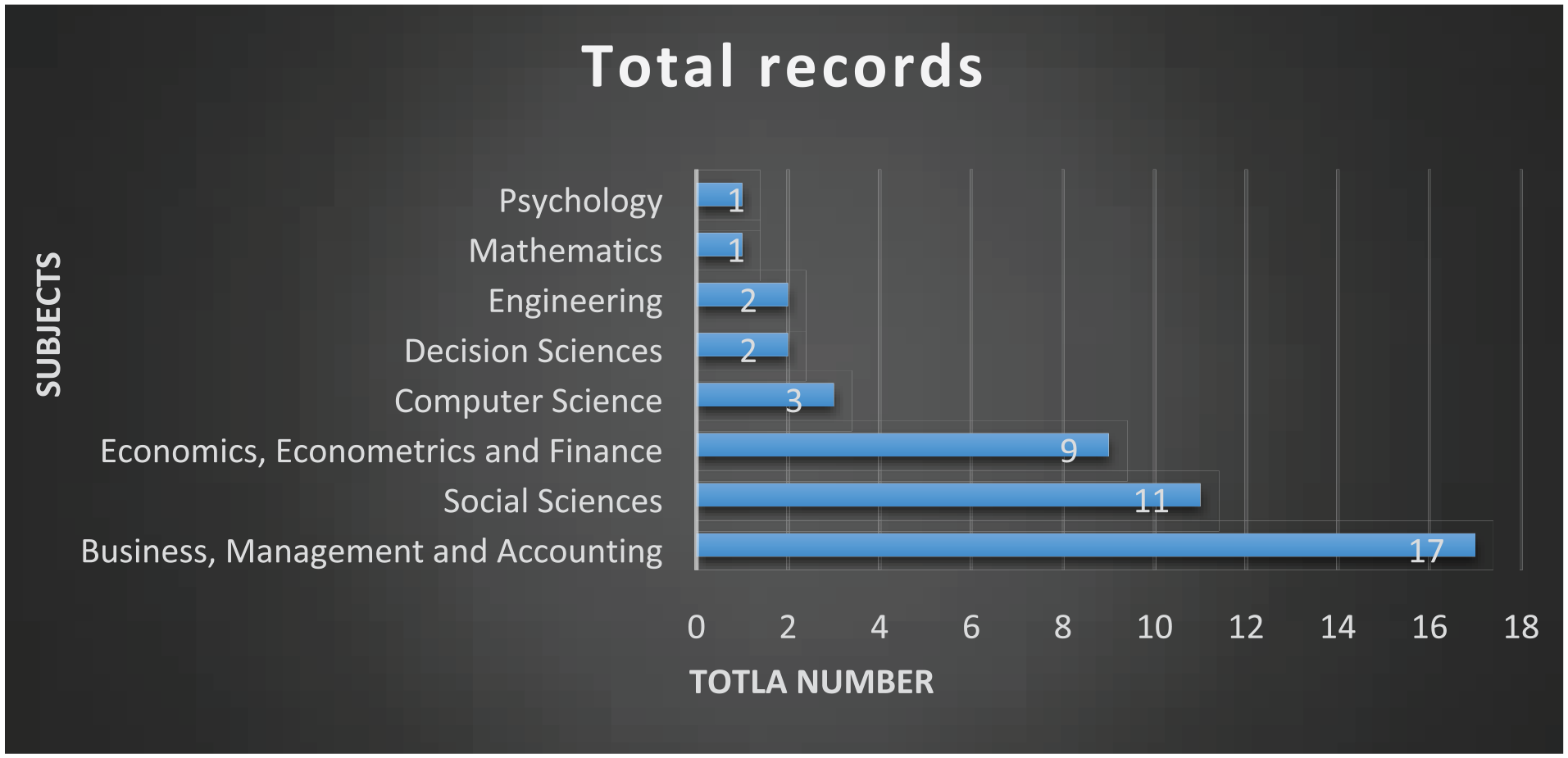
Distribution of subjects.
Figure 4 provides a comprehensive overview of the selected articles published within the timeframe of 2011 to 2022. Notably, a substantial proportion of these publications have emerged during the period spanning from 2020 to 2022, with comparatively fewer articles originating from the years 2011 to 2019. This discernible trend underscores the burgeoning interest and mounting scholarly engagement with the subject matter of social entrepreneurship behavior in the context of Saudi Arabia. The annual escalation in the number of publications aptly attests to the escalating prominence and relevance of this research area, as aptly depicted in Figure 4, which visually delineates the annual distribution of selected articles.

Distribution of articles selected from each year.
Moreover, the source-based analysis of publications conducted within the purview of this study discloses intriguing findings. Specifically, the International Journal of Entrepreneurship emerges as a noteworthy contributor, featuring prominently in two publications and commanding an average of 22% of total citations. Following closely is the domain of Education and Training, which boasts three publications accounting for 21% of all sourced materials.
To streamline the focus and maintain the integrity of the present study, prior studies’ references are gradually being phased out. In their stead, the research endeavors to underscore the significance of novel contributions, a curated selection of which is presented in Table 1. This tabular presentation furnishes essential details, including the source’s title, the count of publications incorporated, the frequency of citations garnered, and the average citation per instance.
Source Titles, Number of Articles Cited, and Average Citations.

Concurrently, our examination extended to an evaluation of the role played by higher education institutions within Saudi Arabia in advancing the domain of social entrepreneurship for the enhancement of organizational behavior. Foremost among these institutions, King Abdulaziz University emerges as a frontrunner, actively engaged in fostering social entrepreneurship behavior, as evidenced by a noteworthy seven research records. In a similar vein, Imam Abdulrahman Bin Faisal University stands as a significant contributor, having made substantial contributions through six research studies.
As depicted in Figure 5, this assessment underscores the substantial contributions rendered by Saudi Arabian academic institutions in the realm of social entrepreneurship behavior, particularly in publications emerging after the year 2011. Notable mention must also be made of the commendable contributions made by Prince Sultan University and the University of Hali, both of which have enriched the scholarly discourse with their exemplary articles. Figure 5, in a graphical representation, elucidates the compilation of research records emanating from these esteemed Saudi Arabian universities pertaining to the realm of social entrepreneurship.

Distribution of articles by affiliation.
Content Analysis
Social entrepreneurship represents a relatively nascent and evolving phenomenon within the landscape of Saudi Arabian organizations, and scholars are diligently probing its intricacies in a gradual and systematic manner. The present study, which endeavors to assess the behavioral aspects of social entrepreneurship in the Saudi Arabian context, employed a diverse set of keywords to meticulously extract pertinent scholarly material. This multifaceted classification process serves as a driving force, steering the discourse within published literature and guiding the perspectives of researchers toward the dynamic processes of social entrepreneurship adaptation within Saudi organizations.
Our initial step involved the identification of recurring keywords utilized across the 46 selected studies during the first stage of the literature review. Subsequently, these studies served as the foundational basis for unveiling the various thematic categories engendered by these keywords. This categorization process was executed employing the VOS viewer software, which played a pivotal role in discerning the prevalence of the most commonly occurring terms and the 48 essential phrases, each of which manifested in the selected documents at a minimum of nine instances. Table 2 presents a detailed analysis of important terms associated with social entrepreneurship in the context of Saudi Arabia. The terms are organized based on their classification, frequency of occurrence, and relevance scores. The text highlights the presence of the term “corporate social responsibility (CSR)” in the literature. It is mentioned 19 times and has a high relevance score of 1.4659, indicating its significance. The user mentions terms like “entrepreneurial self-efficacy,”“barrier,” and “enterprise,” which all bring different viewpoints to the conversation. The term “changemaker” has a high relevance score of 2.5626, indicating its significance in discussions about social entrepreneurship. Furthermore, it is worth noting that terms such as “social innovation,”“social impact,” and “social change” are closely linked to high relevance scores. This highlights the significant role that innovative solutions play in bringing about positive transformations in society. The table provides both quantitative analysis of occurrences and relevance scores, which can help researchers identify the most impactful and recurring themes in the Saudi Arabian social entrepreneurship literature. In addition to this, our research delineated four overarching themes predicated on the frequency of term occurrences, with the relevance score of each phrase meticulously detailed in Table 2, thus providing a comprehensive and structured overview of the salient themes discerned from the research corpus.
Keyword Occurrences, Classification, and Relevance Score.

A comprehensive and rigorous inquiry into the records was conducted, involving an in-depth content analysis aimed at the establishment and validation of the research’s categorical framework. The examination of the extant published literature was facilitated through the utilization of the VOS Viewer software, a powerful tool that effectively clusters textual data into cohesive groups centered around interrelated themes. This approach is further substantiated by recent scholarly findings, which affirm the relevance of both the keywords initially employed by researchers and those subsequently incorporated during the indexation of journals within databases. This dual emphasis on keywords is pivotal for bibliometric analyses, as it enables the elucidation of the underlying structural dimensions within the field of investigation (Van et al., 2022). In our exploration of the research domain pertaining to social entrepreneurship, we conducted a comprehensive co-occurrence analysis using a dual set of keywords. This analytical endeavor encompassed a dataset of 46 distinct documents, yielding a total of 48 keywords. We judiciously filtered and retained only those 48 keywords that exhibited a minimum frequency of occurrence, defined as at least nine instances.
The outcomes of this rigorous analysis are visually represented in Figure 6, where four noteworthy clusters are discernible, each delineated by a distinct color code. The yellow cluster prominently encapsulates research themes related to the entrepreneurial ecosystem, social entrepreneurship intent, and the impacts of COVID-19. Meanwhile, the blue cluster signifies areas of inquiry focused on corporate social responsibility, barriers encountered, and entrepreneurial intentions. Within the grey-colored cluster, one encounters the thematic threads of organization dynamics, social value creation, and sustainability, all intertwined with considerations of planned behavior, entrepreneurial intent, the role of enterprises, and governmental contributions. Figure 6 serves as an illustrative compendium, presenting a granular breakdown of key-term occurrences and the classification schema meticulously tailored for the current investigation.

Distribution of data streams.
Classification
Organizations and Social Value Creation
Policymakers in Saudi Arabia, for example, have implemented a promising strategy to foster entrepreneurial development in the country. A persistently high unemployment rate has been a primary social and economic concern in Saudi Arabia for many years (Alshagawi & Ghaleb, 2022). According to (M. M. Khan et al., 2022) one of the issues confronting Saudi policymakers is the vast and growing population of jobless youngsters. As a result, policymakers must consider offering young Saudis the chance to start new businesses and head enterprises that can produce more jobs for Saudi men and women while also facilitating national economic progress (Sikandar et al., 2022). According to (Zamberi Ahmad, 2011) women entrepreneurs, particularly in the small company sector, may be essential in promoting economic and social growth. Women entrepreneurs have been highlighted as contributors to societal change, encouraging economic regeneration and development, technical innovation, and job creation. Even though women are active in entrepreneurship and their participation is an essential contributor to the nation’s economic progress, they face difficulties connected to gender and sociocultural norms in the Kingdom of Saudi Arabia (KSA) (Alessa et al., 2021). In addition, Female engagement in entrepreneurial activity is critical to any society’s economic and social growth (Badghish et al., 2023). Although women tend to be more socially motivated and inventive than males, female entrepreneurs are viewed differently than their male counterparts. Their engagement in entrepreneurial activities has historically been substantially lower than men’s (Staniewski & Awruk, 2016). However, due to increased societal awareness of entrepreneurial behavior, the participation of women entrepreneurs has increased dramatically in recent years (Kiani et al., 2023). Tale two illustrates the details of the author’s contributions, year of publication, citations of the article, segments in the research conducted and settings details. Table 3 below illustrate the studies discussed the organizations and social value creation literature.
Author, Year, Citations, Segments, and Settings Details.

On the other hand, entrepreneurship has been regarded as an essential component of progress and even as part of the answer to the present economic crisis. Entrepreneurship has emerged as a driving force in economic and social growth, productivity, and, in some instances, creativity (Akinwale et al., 2019). Given this environment, the foreign policy focuses some of its efforts on promoting entrepreneurship, particularly preparing entrepreneurs whose activities would promote economic sustainability (Iglesias-Sánchez et al., 2016). According to (Aljuwaiber, 2020) Entrepreneurship can be defined as the role of an individual, who assumes ownership, undertakes the initiation, manages the operations, and shoulders the inherent risks associated with economic ventures. This role not only serves as a catalyst for stimulating economic growth but also plays a pivotal role in fostering employment opportunities, driving innovation, and facilitating international political engagement and openness. Similarly, a successful firm must maintain its operations, while contributing to the long-term development of a more excellent social-ecological system. In addition, entrepreneurship characteristics have been discovered to differ between countries and cultures. Cultural variables are essential in promoting social entrepreneurship (Rumzi Tausif et al., 2021). However, the ability to mobilise external resources tied to the company through personal contacts is a fundamental part of entrepreneurship (Kiani et al., 2023). According to (Ahmad & Iqbal, 2022), social entrepreneurs with limited organisational resources would strive to exploit, access, build, and combine relationally embedded linkages or relationships to advance social and economic aims.
Furthermore, entrepreneurs who use their enterprises to promote social benefit are crucial change agents who may produce significant, positive results. However, these entrepreneurs face various hurdles and may face substantial barriers or opposition when running their businesses (Alyoussef & Al-Rahmi, 2022). Because they place a more significant emphasis on social aims, these entrepreneurs may be financially disadvantaged, struggle to acquire adequate finance, and have more difficulty attracting competent staff than their competitors, who focus solely on commercial purposes (Najmul & Mahmoud, 2022). In addition, social value is the critical integrating engine that underpins the mission, organizational architecture, business operations, and outcomes of Social Entrepreneurship activities (Parveen et al., 2018). Although experts have yet to reach a specific definition, social value creation in Social Entrepreneurship has been defined as improving people’s lives, social groups, communities, and society. It is a rise in the well-being of the poor and marginalized because of increased access to opportunities that allow them to become self-sufficient and autonomous (Caliendo et al., 2020).
Social Innovation and Corporate Social Responsibility
In recent years, a considerable body of literature has emerged around social entrepreneurship and social business, signifying a significant break from traditional entrepreneurship and the familiar non-profit and for-profit firms (Alshareef, 2022). According to (Ajina, 2019) the fundamental impetus driving social entrepreneurship lies in the pursuit of generating social value, as opposed to personal or shareholder wealth accumulation. This distinctive approach to entrepreneurship is characterized by a commitment to effecting transformative change or innovation, often manifesting through the creation of novel configurations of products, services, organizational structures, or production methodologies. Moreover, at its core, social entrepreneurship embodies the belief that social innovation represents a fresh and innovative solution geared toward enhancing the well-being of individuals or communities. It is distinguished by its social nature and goal related to reasonable societal concerns (Soomro et al., 2020). Furthermore, it asserts that social innovation encompasses multifaceted processes that have several aspects of creating new or reworking what already exists to effect social change at various levels (N. U. Khan et al., 2021). However, a recent assessment revealed few academic studies, broadly shared notions, extensive histories, comparative research, or quantitative analysis in the existing literature (Samad & Alharthi, 2022). Despite comprehensive studies into commercial innovation, particularly technical innovation, social innovation remains under-researched (Arain et al., 2020). Tale three illustrates the details of the author’s contributions, year of publication, citations of the article, segments in the research conducted and settings details. Table 4 below depicts the authors contributed on the social innovation and corporate social responsibility.
Author, Year, Citations, Segments, and Settings Details.

Furthermore, organizations continually engage in Corporate Social Responsibility (CSR) activities to create dynamic capacities, which reconfigure and modify individual values, making them more socially and environmentally focused (Cheema et al., 2020). According to (Afridi et al., 2020), corporate entrepreneurship adds dynamism to reconfigure or change workers’ current values into prosocial environmental behaviors. In the meantime, social sustainability fosters the development of individuals, societies, and cultures to achieve a satisfying social existence based on good health care and education quality, gender equality, peace, and stability worldwide (Dhahri et al., 2021). In addition, (Zahrani, 2021a) states that social sustainability encompasses significant concerns like human rights, public involvement, the rule of law, and justice for peace and social stability. Additionally, CSR allows organizations to distinguish themselves from other organizations that are not active in social programs, providing them with a competitive advantage in the marketplace (Zahrani, 2021b). According to (Dai et al., 2022) understanding the motivations that motivate organizations to sponsor sporting events is therefore critical to systematize knowledge that may be valuable to decision-makers, particularly when defining sponsorship policies. Notwithstanding the burgeoning scholarly attention directed toward academic publications focused on social innovation and social entrepreneurship, endeavors that seek to address a multitude of contemporary challenges, it is conceivable to posit that within this nascent research domain, there exists a conspicuous absence of consensus among researchers regarding the precise definitions and delineations of both social innovation and social entrepreneurship (Grilo & Moreira, 2022).
Nonetheless, according to (do Adro & Fernandes, 2021) the evaluation of the potential of social innovation and social entrepreneurship to offer enduring and impactful solutions to the multifaceted economic, social, and environmental challenges of the 21st century presents an intricate and formidable task. Within the sphere of scholarly discourse, a pivotal argument arises, when examining the manifold repercussions stemming from the pursuit of social and economic value, particularly in contexts where social innovations are devised to address ecological, social, or financial issues. While both concepts have enjoyed a historical presence within the realms of social, corporate, and scientific activities, they have each charted distinct trajectories, thereby contributing to a lack of shared conceptual ground. This divergence becomes more pronounced when scrutinizing the intricate interplay between the two (Cagarman et al., 2020). Based on the findings of (do Adro & Fernandes, 2021). It is arguable that a substantial distance remains to be traversed in the endeavor to establish the requisite social, political, and environmental frameworks conducive to nurturing the emergence of social entrepreneurship initiatives that, in turn, engender social innovations. Moreover, the development of comprehensive social innovation systems capable of catalyzing the activities of social entrepreneurs towards meaningful and sustained societal transformations also represents a formidable journey that lies ahead.
Entrepreneurial Ecosystem and Planned Behavior
In Saudi Arabia, the government has highlighted entrepreneurship as a critical enabler in attaining the Saudi Vision 2030 reform plan (Shabir & Ali, 2022). Entrepreneurship may help diversify away from the oil-based economy, economic reform, and unemployment reduction. According to (Hoda et al., 2020), Saudi Vision 2030 seeks to modernise the economy by diversifying it away from oil and other industries and eliminating unemployment. According to Saudi Vision 2030, the unemployment rate must be lowered from 12.9% to 7%, the percentage of SMEs in GDP must be increased to 35%, and around 6 million jobs must be created by 2030 (Shah & Soomro, 2017). Due to this, there has been a rise in interest in entrepreneurship and entrepreneurial purpose as vehicles of national and international economic progress (Alayis et al., 2018). Government and educational institutions have been paying close attention to and focusing on developing entrepreneurship among the younger generation and potential entrepreneurs to encourage them to start their businesses (Yamini et al., 2022). However, there is a need to improve the entrepreneurial ecosystem among the many economic stakeholders. According to (Alshebami et al., 2020), the approach to entrepreneurial ecosystems has arisen within the last decade. Entrepreneurial ecosystems have been utilized as a conceptual framework to examine the growth of entrepreneurship in various geographical regions. Entrepreneurial ecosystems include culture, social networks, institutions, investment capital, and economic policies encouraging technological innovation-based companies (Abdullah Alnemer, 2021). Table 5 illustrates the details of the author’s contributions, year of publication, citations of the article, segments in the research conducted and settings details.
Author, Year, Citations, Segments, and Settings Details.

According to (Meeralam & Adeinat, 2022), the sharing economy, as an economic model that may provide several advantages to the environment, society, and economy, may have a more significant influence on social entrepreneurship than commercial entrepreneurship. Commercial entrepreneurship is geared toward building wealth and maximizing economic profit, yet it has drawbacks (Alshareef, 2022). Social entrepreneurship is rapidly recognized as a viable method for alleviating and resolving these complicated challenges. Despite this, the entrepreneurial intention is recognized as one of the primary variables contributing to entrepreneurship formation, development, and expansion (Al-Mamary et al., 2020). In addition, Because the literature on entrepreneurship intention mode is a fast-expanding field of research with several vital contributions, our knowledge of entrepreneurship intention is guided by Ajzen (1991) TPB, which is one of the most extensively utilized theories in this area. This theory proposes that behavioral intentions determine conduct, providing a valuable framework for understanding the intricacies of human social interaction (Aloulou, 2016). Furthermore, in the social entrepreneurship literature, many studies in Saudi Arabia applied the Theory of Planned Behavior (Aloulou, 2016; Przygoda et al., n.d.). According to (Ettis, 2022) elements of the entrepreneurial ecosystem are critical for increasing intention. This associative and complimentary link between the entrepreneurial environment and social entrepreneurship may assist policymakers in utilizing this synergy to build and improve entrepreneurial intentions in Saudi Arabia.
Results and Discussion
When examining social entrepreneurship in Saudi Arabia, it is crucial to analyze and discuss the findings in the context of the wider research conducted by previous scholars. The current study has provided valuable insights, but it is important to recognize the contributions of other scholars. Their perspectives can enhance and add complexity to the interpretation of our results. Social entrepreneurship has emerged as a critical study subject for businesses and academics. Several challenges, such as poverty and human welfare, have prompted numerous enterprises to do business with a social component (Gupta et al., 2020). The current study’s objective was to explore the antecedents and motivators of social entrepreneurial behavior in Saudi Arabia. For the present analysis, we used the PRISMA statement 2020 to include and exclude findings, and records were acquired from Web of Science and Scopus. The scope of the investigation was limited to the last decade, from 2011 to 2021. Following a thorough examination of the data screening technique, only 46 relevant records were included in the current study. Second, we focused mainly on papers on social entrepreneurship behavior in the Saudi Arabis context. On the final records included in the present investigation, we used the VOS viewer software to identify data streams and perform cooccurrence of word analysis. The 50 key phrases were used to select the literature categories to be addressed in the current review; a term is included in the present study if it appears at least nine times. We identify three major data streams: Organizations and social value creation, Social Innovation and Corporate Social Responsibility (CSR), and Entrepreneurial ecosystem and Planned Behavior, which were thoroughly discussed in the categorization section.
The study’s findings provide valuable information about important aspects of social entrepreneurship in Saudi Arabia. These insights have significant implications for policymakers, entrepreneurs, and the overall development of society. Saudi policymakers have implemented a strategy aimed at tackling the ongoing issue of high rates of youth unemployment. The research highlights the importance of supporting young Saudis in starting new businesses (Gupta et al., 2020). This will not only help address the issue of unemployment but also contribute to the overall economic growth of the nation. In addition, the findings of (Badghish et al., 2023) emphasize the importance of women’s involvement in entrepreneurial activity for both economic and social development. Female entrepreneurs encounter various challenges, such as financial disadvantages, struggles in securing adequate financing, and difficulties in recruiting qualified employees. It is crucial to tackle these challenges in order to establish a supportive environment for diverse and inclusive entrepreneurship. Additionally, the study highlights the unique qualities that define social entrepreneurship in Saudi Arabia (Alyoussef & Al-Rahmi, 2022). The focus is on generating social value as a primary motivation, setting it apart from entrepreneurship driven solely by profit. Social entrepreneurship is often depicted as a powerful force that drives significant change and promotes innovation. It places a strong emphasis on tackling urgent social problems and promoting positive transformations in society.
Moreover, the integration of corporate social responsibility (CSR) into businesses and organizations is recognized as a significant element in fostering social entrepreneurial behavior (Najmul & Mahmoud, 2022). The study acknowledges that continuous CSR operations have a positive impact on dynamic capacities and promote socially and ecologically focused values. However, it also highlights the challenges and complexities associated with adopting social entrepreneurial behavior in Saudi Arabia. The implementation of these changes necessitates significant modifications in the organizational structures, routines, and behaviors of individuals, which are influenced by socio-political factors (Caliendo et al., 2020). Furthermore, the entrepreneurial ecosystem in Saudi Arabia requires enhancement across various dimensions, including cultural factors, social networks, institutions, investment capital, and economic policies that foster the establishment of enterprises based on technical innovation (Ajina, 2019). According to (Cheema et al., 2020), the sharing economy has the potential to have a significant impact on social entrepreneurship, setting it apart from commercial entrepreneurship. This impact is attributed to the various benefits that the sharing economy offers to the environment, society, and the economy.
Conclusion
This study provides valuable insights into social entrepreneurship in Saudi Arabia, which have significant implications for different stakeholders. The findings highlight the urgent issue of high youth unemployment rates and emphasize the need for Saudi policymakers to implement a promising strategy for promoting entrepreneurial development. The importance of addressing this issue cannot be overstated, as it has significant implications for both economic growth and the overall well-being of the nation. The study proposes a multifaceted approach to empower young individuals in Saudi Arabia to start their own businesses. This approach aims to create more job opportunities for both genders and contribute to the overall economic growth of the country. In addition, the study highlights the importance of women’s involvement in entrepreneurial activity, which is in line with the global recognition of women’s significant contribution to economic and social development. The challenges experienced by female entrepreneurs, including financial disadvantages and obstacles in securing funding, underscore the necessity for specific interventions aimed at fostering a more inclusive and supportive entrepreneurial environment.
Moreover, the research highlights the significance of social value creation within the realm of social entrepreneurship. It specifically emphasizes the positive impact it has on enhancing the well-being of individuals, social groups, communities, and society. Saudi Arabia’s social innovation is characterized by a distinct approach that focuses on addressing positive societal issues. This approach sets it apart as a valuable contributor to the well-being of individuals and communities. In the Saudi context, social entrepreneurship is primarily motivated by the desire to create social value, distinguishing it from activities that prioritize personal or shareholder wealth accumulation. Additionally, the study acknowledges the significant impact of social entrepreneurship, which is evident through the development of creative solutions to address urgent social problems and drive positive change in society. The integration of corporate social responsibility (CSR) into businesses highlights the growing importance of fostering social entrepreneurial behavior. Continuous corporate social responsibility (CSR) operations have a significant impact on both dynamic capacities and individual values, leading to a greater emphasis on social and ecological concerns. Also, the findings indicate that the adoption of social entrepreneurial behavior in Saudi Arabia is a multifaceted process that necessitates substantial modifications in organizational structures, routines, and individuals’ behaviors. The complexity of CSR is influenced by socio-political factors, which connect the broader socio-political features of CSR with its organizational impacts.
Figure 7 depicts the developmental trajectory of the present study, highlighting the results of social entrepreneurial behavior in Saudi Arabia. The study highlights the importance of enhancing the entrepreneurial ecosystem, specifically focusing on cultural factors, social networks, institutions, investment capital, and economic policies that encourage the establishment of technical innovation-based enterprises. According to the study’s findings, the sharing economy has the potential to significantly influence social entrepreneurship in the Saudi context, more so than commercial entrepreneurship. This is due to the various advantages it offers in terms of the environment, society, and the economy.
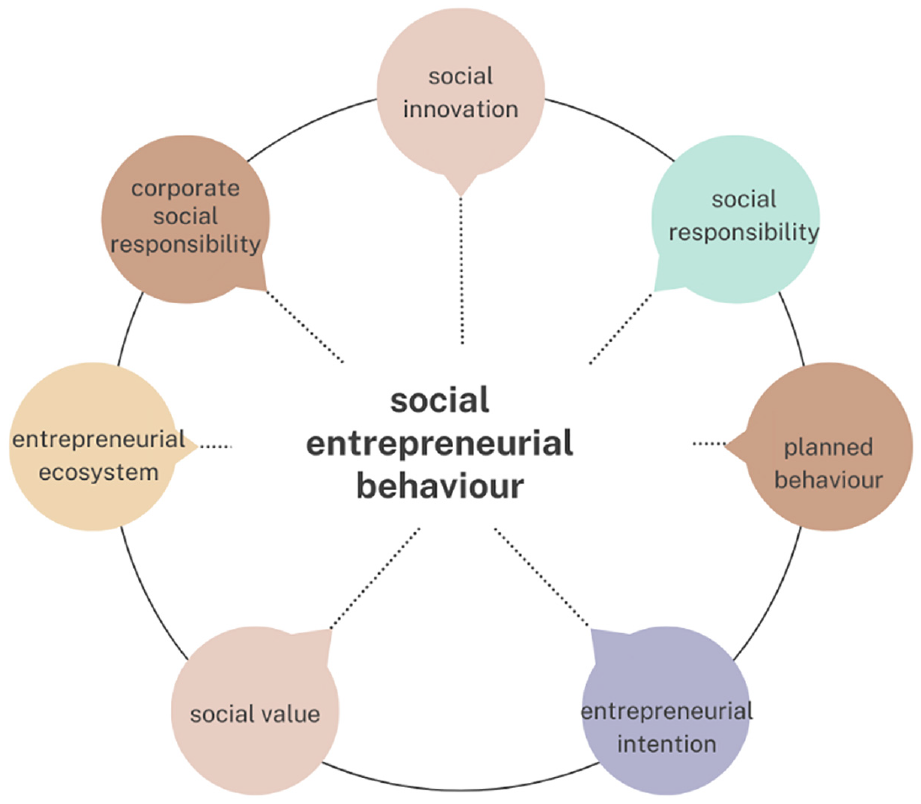
The outcome of social entrepreneurial behavior.
The Future Direction of Social Entrepreneurship
Social entrepreneurship in Saudi Arabia remains in its nascent stages, offering abundant insights and practical applications for both researchers and practitioners. Researchers delving into this domain should appreciate that entrepreneurship demands a bona fide product that leaves a strong initial impression, along with the virtues of patience and self-sustained financial support during the initial phases of venture development.
Significantly, one of the notable outcomes of the present study is the emphasis on the participation of female entrepreneurs, a factor that holds the potential to exert a favorable influence on societal behavior and dynamics. It is imperative that government entities and policymakers actively promote the engagement of young individuals in the realm of social entrepreneurship as a means of advancing societal development.
Furthermore, it is noteworthy that the findings of this study acknowledge several limitations, thereby delineating potential avenues for future research inquiries and investigations. These identified limitations present opportunities for researchers to delve deeper into the nuanced facets of social entrepreneurship in Saudi Arabia, thereby contributing to a richer and more comprehensive body of knowledge in this evolving field.
Footnotes
Acknowledgements
We would like to express our sincere gratitude and appreciation to all those who have contributed to the completion of this research article entitled “The Antecedents and Driving Factors of Social Entrepreneurial Behavior in Saudi Arabia: A Systematic Literature Review from the Last Decade.” First and foremost, we extend our heartfelt thanks to our supervisor and mentor, Professor Sabrinah Adam, from the Faculty of Management, Universiti Teknologi Malaysia. Her valuable guidance, encouragement, and insightful feedback were instrumental in shaping the direction and scope of this study. We would also like to acknowledge the support and resources provided by Azman Hashim International Business School (AHIBS), Universiti Teknologi Malaysia, and the Faculty of Management during the course of this research. Their academic environment and facilities have been essential in facilitating the smooth progress of our study. This study would not have been possible without the collective support, encouragement, and expertise of everyone involved. Our heartfelt thanks go out to all those who have contributed to the successful completion of this research.
Declaration of Conflicting Interests
The author(s) declared the following potential conflicts of interest with respect to the research, authorship, and/or publication of this article: The authors confirm that this research was conducted with the utmost academic integrity and adherence to ethical standards. The findings and interpretations presented in the manuscript are solely based on the objective analysis of the included literature and the authors’ critical assessment. If any potential conflicts of interest arise during the peer-review process or the publication of this article, the authors are committed to promptly informing the editorial team of the journal.
Funding
The author(s) received no financial support for the research, authorship, and/or publication of this article.
Ethical Approval
Not applicable.

Data Availability Statement
Data sharing not applicable to this article as no datasets were generated or analyzed during the current study.

