




Abstract
Economic and social structure along with globalization influence income inequalities. In this era of globalization, all economies are interconnected, and their economic and social disparities generate more unequal income distribution. This study was planned to explore the determinants of income inequality within a single framework and test their causality based on a panel of 58 economies over the time period of 2005 to 2021. For this purpose, different econometric approaches (fixed effect, random effect, cross-sectional feasible generalized least square, and system GMM) were applied to get robust estimations. The findings revealed that two economic indicators, economic growth and government final consumption expenditures significantly reduced income inequalities. Among the different dimensions of globalization, only economic and social globalization have a significant negative impact on income inequalities. The social structure dynamics including institutional quality, had a negative role in income inequality, while urbanization increased income inequalities. The Dumitrescu and Hurlin causality tests revealed the bidirectional causality between income inequality and all other variables under consideration except foreign direct investment. Therefore, the economies must promote inclusive growth that provides widespread employment opportunities for marginalized individuals in society, support small and medium enterprises, enhance public benefit-orientated government expenditures, develop effective governance frameworks in order to control corruption and protect property rights, implement fair trade practices, and retrain the workers affected by globalization to lower income inequalities.
Keywords
Introduction
Structural changes continuously transform society, greatly affecting people’s social well-being. Income inequality (IIE) is a crucial factor in well-being that extensively demonstrates how income is distributed within society (R. Wu et al., 2024). A high IIE is a result of the prevailing inequality of opportunity within a society. Therefore, high inequality is considered the major root cause of economic crises (Stiglitz, 2009). The increasing gap between the rich and other groups in society has made the IIE a global issue. For example, the 1% rich population owned more assets than the other 99% population in 2015 (Ha et al., 2019). Furthermore, in Asia, the IIE has significantly increased, as the income of 70% of poor Asians has decreased, while the income of 10% of rich people has significantly increased between 1988 to 2011 (Hardoon et al., 2016). Therefore, IIE is a major societal concern for all types of economies, whether they are emerging, developed, or underdeveloped. In many economies, IIE has increased alongside income growth (Piketty, 2014). Many East Asian economies that have succeeded in achieving the miracle growth have not been able to control income inequality (Jain-Chandra et al., 2019; Zhuang et al., 2014).
Figure 1 clearly shows that the economies under consideration, irrespective of whether they are developing or developed, have a low to very high level of IIE. No economy has a Gini score of less than 10%. Among the major economies of the world, including the US, China, Germany, Japan, the UK, and Russia, all have a medium (20%) to high (40%) level of IIE. Among all economies, Colombia, Panama, Brazil, and Honduras had very high IIE levels over the 2000 to 2021 period. Bolivia experienced a sharp decline in IIE, while Mexico has great fluctuations in IIE with ups and downs, but the overall IIE is greater than 40%. In general, all economies have had little stability in their Gini coefficients over the period under consideration, implying that countries still need more effective initiatives to reduce IIE significantly.

Income inequality in 58 economies over 2005 to 2021.
The rise of IIE around the globe has become a core societal concern for economies due to the noteworthy range of their economic, social, and political differences. Therefore, IIE has strong social and economic impacts (Law & Soon, 2020), such as providing low educational opportunities for brilliant yet deprived individuals. This makes society more unstable, leading to low investment. To reduce IIE, economies are taking initiatives by providing earning opportunities to the underprivileged and poor through social security programs and redistribution policies (J. W. Lee & Lee, 2018).
The equity-income hypothesis (Kuznets, 1995) indicates that IIE can be solved through economic development of a society. According to this hypothesis, economic output is the major factor determining IIE (R. Wu et al., 2024). Moreover, other factors can also affect income distribution among inter- and intra-country populations. Among these factors, globalization (GLOB) may have a strong impact on IIE.
GLOB indicates increasing interdependencies of economies through the movement of human resources, capital, and trade of goods and services across borders. This universal phenomenon dominates global economies. GLOB has impact on every country’s economy in 21st century and it is very difficult to find an economy without GLOB (Villanthenkodath et al., 2024). GLOB has very strong macroeconomic implications that directly affect economic growth, policymaking, and economic structure across the world. For example, GLOB boosts the flow of capital, goods, and services across borders through investment and trade, enhancing economic growth, particularly in developing economies (Bohn et al., 2018). The share of world trade in gross domestic product has nearly doubled in the present century compared to the last century, indicating a market increase in economic integration among nations through trade openness (De Soyres & Gaillard, 2022). Although, GLOB has contributed to poverty alleviation in some regions of the world, it has also provoked inequality and environmental concerns, resulting in significant opposition (Eriksen, 2014).
The literature highlights mixed findings of GLOB on IIE. GLOB substantially affect IIE through various social and economic dynamics. However, the effects vary across economies and contexts. GLOB promotes trade liberalization, leading to low IIE, particularly in emerging and least developed economies, by providing easy access to international markets (Chisadza & Yitbarek, 2024; Tabash et al., 2024). Conversely, financial GLOB tends to increase IIE because it can lead to capital concentration (Chaudhury et al., 2023). Anderson (2020) argued that GLOB increases inequality among nations. They state that small traders and producers in emerging economies have no capacity to compete with large producers and traders in developed economies. Considering social dynamics, GLOB results in job displacement in emerging economies, which enhances IIE, as low-skilled labor can face unemployment or wage stagnation (Uche et al., 2024; Xiao, 2024). Moreover, the social aspect of GLOB, such as cultural exchange, which promotes social mobility and may lower the IIE in some contexts, but it may cause cultural homogenization that disempowers the local communities (Uche et al., 2024). GLOB has three different dimensions that have been constructed based on other sub-indicators. All these dimensions have their own impact on economies, especially in the management of capital, trade, and human flows across borders (Adam & Ftergioti, 2019; Balli et al., 2018). Moreover, several studies describe the positive impact of GLOB on inequality in emerging economies (Atif et al., 2012). Several studies have pointed out that some dimensions of GLOB positively affect inequality (R. Wu et al., 2024).
These findings lead to ambiguity in reaching an agreement on the impact of GLOB on inequality. However, the Neoclassical theory of GLOB fosters growth and efficiency through easy transfer of advanced technologies and resource distribution across economies. Moreover, GLOB increases the flow of foreign investment and enhances export and deposit mobilization. The basic assumptions of the neoclassical theory of GLOB, such as free markets, mobility of factors of production, and the idea that GLOB leads to efficient resource allocation, influence the impact of GLOB on IIE. Free markets promote optimal resource allocation, contributing to economic growth, but this growth can disproportionately benefit skilled labor, aggravating IIE within economies (Chusseau et al., 2012). The mobility of free factors can generate wage disparities and result in stagnant wages for unskilled labor, particularly in developed economies (Hellier, 2019). Similarly, GLOB also promotes technological transformation in production, which enhances the productivity and efficiency of resource use, but it also widens the income gap between unskilled and skilled labor (Kanbur, 2014). Similarly, exogenous growth theory also endorses the negative impact of GLOB on inequality. This theory states that GLOB promotes technological development, which leads to economic growth (Haseeb et al., 2020).
Increasing social and economic interconnections among nations extensively demonstrate that domestic factors also affect inequalities alongside the GLOB. These factors include the economic and social aspects of a nation. Social structure dynamics, such as urbanization (URB) and institutional quality (IQ), are the core social aspects of a nation that create differences in income distribution. The rise in URB demonstrates internal migration from rural to urban areas, which transforms the labor market and policies. URB may create pressure on wages in urban areas, and wages can decline due to labor transition to cities from rural areas (Oyvat, 2016). Therefore, URB generates social and economic disparities (Hu et al., 2020; Sulemana et al., 2019) and makes access to public services more difficult (R. Wu et al., 2024), leading to inequalities in income distribution within society. Similarly, IQ has a strong impact on inequality. A high IQ leads to inclusive growth and increases equal income distribution across the regions of an economy. A country with a good IQ may have better judicial protection for deprived individuals, reduce the advantages of individuals with high access to financial resources, and enhance the productive and efficient use of financial resources (Law & Soon, 2020).
Along with social structure dynamics, economic factors such as GDP per capita, foreign direct investment (FDI), and government final consumption expenditures (GFCE) are also important elements that increase or decrease the IIE. The literature widely highlights the impact of IIE on economic growth (Aiyar & Ebeke, 2020; Ceesay et al., 2019; Le & Nguyen, 2019; Santiago et al., 2019; Vo et al., 2019). However, a rise in GDP per capita indicates economic growth, which is also a crucial aspect of the IIE. High economic growth means more opportunities for social programs, welfare activities, and employment, which may reduce inequalities across regions. FDI is an essential element of an economy that can extensively transform economic activities. FDI also contributes to the efficient utilization of natural resources, as does GLOB (C. C. Lee et al., 2022). Asia has the largest volume of FDI inflows, hosting 45% of the global inflows in 2018 (Huynh, 2021). FDI plays a crucial role in reducing IIE by eradicating poverty and improving income flows to low-skilled workers (Farhan et al., 2014). GFCE refers to government expenditures on providing goods and services to the public according to their interests and welfare.
Although the literature provides extensive research on the factors affecting IIE, there is still a research gap that simultaneously explores the combined effects of economic structure, social structure, and globalization. Moreover, the literature demonstrates the impact of IIE on economic growth, which is also a positive point that supports this study. Additionally, GFCF has not been extensively studied in the context of its impact on inequalities based on the panel dataset. Similarly, the three different dimensions of GLOB, along with economic and social aspects, provide comprehensive insights into how to develop effective income distributional policies. Thus, the collective impact of these variables is still not well understood, which will result in a holistic examination of all these variables. It is critical to explore the far-reaching impacts of social, economic, and global factors on the IIE. Thus, understanding the determinants of IIE in the era of globalization, where social and economic systems are highly interconnected, is important. Therefore, in this era of GLOB, there is still a gap in exploring the more crucial factors of IIE within a single framework to obtain convincing empirical evidence for all the variables under consideration. This study highlights the urgent need to explore how different dimensions of GLOB and domestic factors, such as social structure and economic dynamics, affect IEE.
Thus, the collective impact of all these variables is still not well understood, which will result in a holistic examination of all these variables. It is critical to explore the far-reaching impacts of social, economic, and global factors on IIE. Thus, understanding the determinants of IIE in the era of globalization is very important, where social and economic systems are highly interconnected with each other. Therefore, in this era of GLOB, there is still a gap in exploring the more crucial factors of IIE within a single framework to reach convincing empirical evidence for all the variables under consideration. This study highlights the urgent need to explore how different dimensions of GLOB and domestic factors such as social structure and economic dynamics affect the IEE. The objective of the current study is to analyze the impact of three different types of GLOB (economic, social, and political) on IIE, along with economic dynamics and social structural indicators, based on a panel of different economies.
Review of Literature
Globalization, Economic Dynamics, Social Structural Indicators, and Income Inequality
Positive Relationship with Income Inequality
Economic dynamics emphasize economic growth and resource allocation over time. These economic dynamics have a strong impact on IIE, as they affect economic growth, create employment, attract investment, and increase government expenditure on public services. An increase in economic growth positively affects IIE (Lundberg & Squire, 2003; Wahiba & El Weriemmi, 2014). Şenol and Onaran (2023) found that economic growth increases IIE in BRICS economies. They found that the rate of economic growth correlated positively with IIE.
The second variable under economic dynamics is foreign direct investment (FDI). FDI has a complex relationship with IIE, exhibiting both negative and positive relationships, depending on the economic context and sectoral distribution. Moreover, the impact of FDI on IIE can vary across nations and regions, and is highly sensitive to domestic policies and sectors that attract investment and human capital. Reuveny and Li (2003) used panel of 69 different economies, and found that FDI significantly enhances the IIE. Similarly, Choi (2006) used data from 119 different economies and found that an increase in FDI enhances IIE. Moreover, Basu and Guariglia (2007) also find that FDI increases IIE in host countries.
Concerning the impact of GLOB on IIE, C. C. Lee et al. (2020) analyzed the impact of economic, social, and political GLOB on IIE using a panel of 121 different economies from 1984 to 2014. They found that GLOB adversely affected IIE, and in lower-income and non-OECD economies, GLOB caused a higher IIE than other categories of economies. Haseeb et al. (2020) employed Morlet’s wavelet approach on monthly data series from 1990 to 2016, and found that GLOB enhances the IIE in Indonesian economies. Dorn et al. (2018) used a panel of 140 economies over the period of 1970 to 2014, and found a significant positive relationship between GLOB and IIE in transition economies by applying ordinary least squares and two-stage least squares techniques. Munir and Bukhari (2020) also determined that financial GLOB significantly increases IIE in emerging Asian economies.
Negative Relationship with Income Inequality
Majumdar and Partridge (2009) and Nissim (2007) state that economic growth negatively impacts IIE. The relationship between economic growth and IIE has been debated globally. Economic growth negatively affects IIE, particularly in developing economies (Temerbulatova et al., 2022). Madsen et al. (2018) also found negative relationship between economic growth and IIE. Kim (2016) found negative relationship between economic growth and IIE by applying fixed effect and GMM econometric techniques on the panel data of 40 different economies from Organization for Economic CO-operation and Development (OECD) and European Union, and applied fixed effect and GMM econometric techniques
Yuldashev et al. (2023) investigated the impact of FDI on IIE by using the panel of 10 different Asian economies over the period of 1990 to 2020. They analyzed this relationship by applying the augmented mean group and Westerlund cointegration techniques and found that FDI significantly reduced IIE. Similarly, Rezk et al. (2022) explored the impact of FDI on IIE in Egypt using time-series data from 1975 to 2017. The results indicate that FDI has a strong negative impact on IIE.
Owusu-Akomeah et al. (2025) used 27 years’ time series data and applied ordinary least square and seemingly unrelated regression. They found a negative effect of FDI on IIE. According to them, FDI increases capital availability, generating more economic activity and leading to low IIE in the economy. FDI in profitable sectors creates more employment opportunities and increases wages, particularly in developing economies, thereby improving income distribution through sectoral growth (Hekmatpour, 2024).
Anderson et al. (2017) explored the impact of government spendings on IIE by using meta-regression analysis. They found a strong negative relationship between government spending and IIE. Similarly, Doumbia and Kinda (2019) emphasize that reallocating government spending from defense expenditures toward infrastructure and social protection may substantially reduce IIE. Ulu (2018) determined the favorable impact of governmental social spending on IIE in 21 OECD economies and argued that governmental social spending is more effective than educational expenditure.
Munir and Bukhari (2020) studied the impact of three different modes of GLOB on IIE in 11 emerging Asian economies using the GMM method. They used pooled least squares and instrumental least squares and found that trade and technological GLOB significantly reduced IIE in emerging Asian economies. Amani and Ahmadzadeh (2022) investigated the impact of economic GLOB on IIE in low-income, middle-income and high-income economies. They used panel data from 2008 to 2019. They found that economic GLOB enhances IIE in low-income countries in the lower quantiles while lowering IIE in the middle and higher quantiles. Moreover, they find a significantly negative impact of economic GLOB on IIE in middle- and high-income countries.
Abbas et al. (2024) used the panel of SAARC economies spanning 2000 to 2021, and explored the synergistic impact of institutional quality and corruption on IIE. The outcomes of the FMOLS econometric approach indicate that institutional quality strongly lowers IIE. However, the combined impact of corruption and institutional quality significantly increases IIE in an economy. Rashid et al. (2024) explored the impact of institutional quality alongside of financial development and economic growth on IIE in Asian economies. They applied GMM to panel data from 2008 to 2018 and found that institutional quality had a significantly negative impact on IIE in the selected Asian economies. Adeleye (2024) used unbalanced data from 83 Latin American and Sub-Saharan African economies from 2010 to 2019 to, and found that institutional quality lowers the IIE in Sub-Saharan African economies and fully sampled economies.
Kouadio and Koffi (2024) determined the strong positive impact of urbanization on IIE, while this effect reduces with the high economic growth in 33 Sub-Saharan Africa. Kanbur and Zhuang (2013) also found the positive impact of urbanization on IIE in Asia. Suleman et al. (2019) employed unbalanced panel data of 48 different Sub-Saharan African economies spanning 1996 to 2016. They demonstrated that urbanization has a strong positive impact on IIE in the region. Ali et al. (2022) categorized the economies into low-, middle- and high-income groups and applied methods of moments quantile regression on panel data of each group of economies over the period 1990 to 2014. They found different impacts of urbanization on IIE across groups of economies. Urbanization increases IIE in high-income economies in the third quantile, has no significant impact on IIE in upper-middle-income economies at lower quantiles, and lowers IIE in lower-middle-income economies across all quantiles.
Mixed Relationship with Income Inequality
Yang and Greaney (2017) have found the dual effect of economic growth on IIE. They found an inverted N-shaped relationship between economic growth and the IIE. They found that initially, a rise in economic growth reduces IIE; after reaching a certain point, the rise in economic growth causes IIE; and again, after extensive economic growth, IIE reduces significantly. Saipudin (2024) also found a non-linear relationship between economic growth and income inequality. They highlight that income inequality initially increases with economic growth, and after reaching a certain level of economic growth, IIE starts to decline. Gan (2023) also determined a nonlinear relationship between economic growth and IIE.
Le et al. (2021) examined the secondary data of 63 provinces of Vietnam from 2012 to 2018 by applying two-step generalized methods of moment. Their findings indicate a non-linear relationship between FDI and IIE. R. Wang et al. (2023) used panel of 126 economies including 95 developing and 31 developed economies, and applied generalized least squares methods on panel data over the period of 1974 to 2019. They found that FDI lowers IIE in developing economies, while widening wage disparities in developed economies.
Sidek (2021) used a panel of 122 economies, including 91 developing and 31 developed countries. The outcomes of the dynamic panel threshold regression indicate that government expenditure reduces IIE while holding the inverted U-shaped relationship between the variables. Zungu (2024) used the panel of 15 emerging economies, and applied Bayesian spatial lag panel smooth transition regression and fix effect model. The findings indicate a non-linear relationship between government expenditure and IIE.
With the increase in the global integration of economies, the impact of GLOB on IIE remains unclear and is context-dependent. The literature presents mixed findings: while a few studies describe the favorable impact of GLOB on IIE, others elucidate the increasing impact of GLOB on IIE, particularly in developing economies. Moreover, most studies focus either on isolated dimensions of GLOB or aggregated GLOB. Additionally, the literature does not provide a comprehensive understanding of how the three dimensions of GLOB interact with key economic and social structural variables. This study provides comprehensive insights into the complex relationship between the variables based on the cross-country panel data of 58 economies.
Hypothesis Development
Economic Dynamics
Economic Growth
This implies a positive relationship between economic growth and inequality (Rubin & Segal, 2015). Based on the aforementioned discussion on the impact of economic growth on IIE, it is clear that the growth of a nation and its IIE have an intricate relationship. Economic growth causes multidimensional economic and social changes, indicating the importance of including it in the study model. Therefore, economic growth in terms of GDP per capita may decrease or increase IIE. The following hypothesis is proposed:
GDP per capita was used as a proxy variable for economic growth. The impact of economic growth on IIE can be explained by the wealth hypothesis. This hypothesis states that small but permanent changes in growth have a strong impact on the IIE. As growth primarily affects the value of wealth and human capital, wealth is more liquid than human capital. Wealth can be more easily converted into cash compared to human capital, which cannot be easily converted because of labor laws and incentive difficulties. The wealth hypothesis demonstrates that labor income is less sensitive to economic growth than wealth-derived income. Therefore, the benefits associated with wealth income are greater than those linked to labor income during economic growth. This implies a positive relationship between economic growth and inequality (Rubin & Segal, 2015). Based on the aforementioned discussion on the impact of economic growth on IIE, it is clear that the growth of a nation and its IIE have an intricate relationship. Economic growth causes multidimensional economic and social changes, indicating the importance of including it in the study’s model. Therefore, economic growth in terms of GDP per capita may decrease or increase the IIE. The following hypothesis was proposed:
H1: Economic growth significantly affects IIE.
Foreign Direct Investment (FDI)
There are two views on the impact of FDI on IIE. The first is the endogenous model (EM) of the nonlinear hypothesis (Aghion & Howitt, 1998), and the second is the north-south model (NSM) of the linear hypothesis (Feenstra & Hanson, 1997). The first model emphasizes that changes in technology cause income differences among skilled and non-skilled laborers. According to this model, new technology is transferred from multinational firms to the host nation in two stages. In the first stage, domestic firms initially learn about the new technology to adopt, and firms need a portion of skilled labor to conduct research to understand and implement the new technologies. During this process, firms invest a small portion of their budgets in new technologies because they primarily use old ones. This causes a low demand for skilled labor, which does not cause a difference between the income of skilled and unskilled labor. In the second stage, firms successfully adopt the technology, and their demand for skilled labor increases, leading to high wages for skilled labor and causing IIE during this stage. The IIE declines as the firm completes its technological transformation and provides necessary skills. Moreover, low-skilled laborers start to learn new skills and improve their qualifications, which further decreases IIE.
The NSM (Feenstra & Hanson, 1997) states that FDI positively affects IIE. This implies that higher FDI means higher IIE. They stated that the countries in the north are highly developed, while those in the south are underdeveloped. Similarly, developed nations have skilled labor, while underdeveloped nations have unskilled workers. Moreover, firms in the northern areas have more skilled labor than those in the southern areas. Unskilled workers in the southern areas produce only intermediate goods. The NSM describes the globalization of production. This explains why the rise in capital in the southern countries compared to the northern countries may increase the relative wage of skilled workers in both regions. Feenstra and Hanson (1997) emphasized that unskilled and cheaper labor in underdeveloped nations is a major determinant of FDI from developed nations. Moreover, northern countries are more likely to transfer production businesses to southern nations, where these production activities are considered more skilled. Therefore, activities considered low-skilled in one country may be considered high-skilled in another. This type of FDI causes a rise in the demand for skilled labor and their wages in both less developed and developed countries. This hypothesis is also supported by Lipsey and Sjöholm (2004) and Aitken and Harrison (1999). Therefore, the following hypothesis is proposed:
H2: FDI significantly affects IIE.
Government Final Consumption Expenditures (GFCE)
Welfare state theory (Andersen, 2012) describes that the GFCE can play a crucial role in lowering the IIE. According to this theory, high public spending on social protection and infrastructure can substantially mitigate economic inequality. The GFCE is also a very important factor in reducing IIE because it includes all types of government expenditures to provide goods and services that are beneficial to the public. GFCE contributes significantly to social welfare, leading to a high quality of life. However, social services and welfare programs, which majorly reduce IIE and support vulnerable social groups, lead to high social equity. The government is very influential during economic downturns as it enhances social services and income supplements, invests in capital, and manages the economy (Shonchoy, 2010). Government spending is a major contributor to poverty reduction by providing education and health services, along with other types of infrastructure that increase the productivity and earning potential of low-income groups (Anderson et al., 2018). Government spending reduces IIE, but the size of the effect varies substantially depending on how effectively low-income groups are targeted (Anderson et al., 2017). The dual (negative and positive) impact of government expenditure has been discussed by Deyshappriya (2017) in the context of different nations. We can expect that the GFCE may have a negative impact on IIE because of its favorable impact on low-income groups across nations through social and welfare programs.
H3: GFCE significantly lowers the IIE.
Globalization
GLOB plays a crucial role in shaping economies, whether they are less developed or developed. IIE is a by-product of GLOB; when GLOB increases GDP, income levels are not evenly distributed among nations (Villanthenkodath et al., 2024). Ravallion (2018) emphasized that GLOB is an important driver of IIE between and within economies. The rise in GLOB describes trade and financial integration among nations. The impact of GLOB on IIE is unclear due to sample and methodological differences worldwide (Villanthenkodath et al., 2024). GLOB refers to a uniform system in the context of social, economic, and political aspects across nations. As concern with IIE increases in nations, they are strongly linked to each other due to GLOB. This rise in GLOB has diverse impacts on the nation’s sustainable development. GLOB may positively contribute to financial expansion, business capabilities and human welfare (Haseeb et al., 2020; Helleiner, 2001).
Globalization theory (Stiglitz, & Pike, 2004), particularly within the framework of world system theory (Wallerstein, 2015), highlights that economic, social, and political global integration of economies generates uneven effects on economies. Among the three different types of GLOBS, the role of economic GLOB (ECOG) is to stabilize the economy by creating new jobs in export-oriented industries and transferring technologies and skills across nations to enhance their productivity and income levels. However, the ECOG may cause income disparities among workers due to their skill differences caused by technological change and labor market competition. Moreover, capital mobility and industry shifts in ECOG may cause IIE. Social GLOB (SOG) also influences IIE because of its greater exposure to global culture, values, and norms, leading to the development of more equitable social practices and policies. The SOG also creates awareness of human rights and labor standards, leading to more equal earning opportunities and working conditions. Finally, the third GLOB type, political GLOB (POG), also plays a role in IIE. An effective POG primarily demonstrates that international cooperation and agreements create high economic equity and social welfare across countries. Moreover, policy harmonization in the POG fosters the development and adoption of policies that effectively reduce IIE.
H4: ECOG has significant effect on IIE.
H5: SOG significantly influences the IIE.
H6: POG affects the IIE.
Social Structure Indicators
There are various aspects of the social structure that play a major role in creating an equitable social environment, along with low-IIE. In the current study, we have considered two more important indicators that may play a crucial role in reducing IIE in a country.
Institutional Quality (IQ)
Institutions are the formal and informal rules governing the behavior of humans in an economy, this shapes economic outcomes and distributional patterns (North, 1990). Six different government indicators were used to measure IQ: rule of law (RL), regulatory quality (RQ), corruption control (CC), political stability (PS), government effectiveness (GE), and voice and accountability (VA). These worldwide government indicators have also been found in the empirical studies of Wong (2017) and Blancheton and Chhorn (2021). All six IQ indicators indicate formal and informal rules, which further determine quality governance, legal systems, social norms, and regulatory frameworks. All these aspects of IQ play an important role in determining economic outcomes, including IIE.
The first indicator of the IQ, such as the RL, protects property rights and ensures fair and consistent law enforcement, leading to a more stable economy (Peerenboom, 2004). It also creates equal opportunities for all citizens to participate in economic activities (Zolo, 2007). Second, indicators like the RQ facilitate more equitable and secure business opportunities and protect labor, promoting the equitable economic participation of workers (Agostino et al., 2020) across all segments of society. A consistent and fair regulatory framework encourages SMEs to grow alongside large corporations (Hoekman & Tas, 2019). CC is a crucial aspect of IQ, which indicates that the resources are fully utilized solely in the favor of the public interest (S. Wang et al., 2020). This creates an environment that fosters fair wealth distribution. PS is one of the major elements crucial for attracting investment (Khakimovna, 2024), leading to job creation and increasing opportunities for income earnings. Alongside all IQ indicators, GE is important for efficient public services (Garcia-Sanchez et al., 2013). GE can promote effective policy implementation, leading to a stable economy and low-income disparities. The VA creates inclusive political processes (Osmani, 2002), which create equal opportunities for diverse social groups. when different groups of society are encouraged to raise their voices toward effective decision-making and policy development. This may address the needs of marginalized people, leading to a fair distribution of resources and opportunities that lower IIE and promote social equity. Therefore, according to institutional theory (North, 1990), well-functioning formal institutions substantially contribute to inclusive economic growth while reducing inequalities. Thus, the inclusion of IQ as the sole independent variable in this study aligns with the theoretical grounds that institutions are crucial to understanding how economic benefits are distributed across society, independent of GLOB and economic performance. Therefore, the following hypothesis is proposed:
H7: IQ is significantly and negatively associated with IIE.
To combine all six indicators to measure the single index of IQ, we used principal component analysis (PCA). The outcomes of PCA retained only one component based on the principle of retaining components with eigenvalues greater than 1. Table 1 presents the eigen values and variances explained by each component.
Total Variance Explained and Eigenvalue of Components.

Urbanization
Urbanization (URB) is a crucial element of the social structure (Guan et al., 2018). URB plays a vital role in the modernization and growth of an economy, leading to irreversible human and social development (Bai et al., 2014). URB also contribute significantly to social and economic transformation (X. R. Wang et al., 2015). Urban areas have more job opportunities and better public services than rural areas do. Effectively managed urban areas may offer attractive opportunities for rural residents in the form of off-farm jobs (Knickel et al., 2018). Although URB has more attractive earning opportunities and better access to public services, if the benefits associated with URB growth are not evenly distributed, it may cause significant income disparities across different societies or groups within a city. Moreover, the high cost of living in urban areas compared to rural areas is another source of income disparities. Similarly, the high availability of informal jobs in urban areas creates low-wage and insecure jobs with no social protection, which is another cause of income disparity. The urban dualism view (Todaro, 1997) highlights that although URB generates many economic opportunities along with rapid urban growth, it causes spatial inequality. Thus, the following hypothesis is proposed.
H8: URB has a positive impact on IIE.
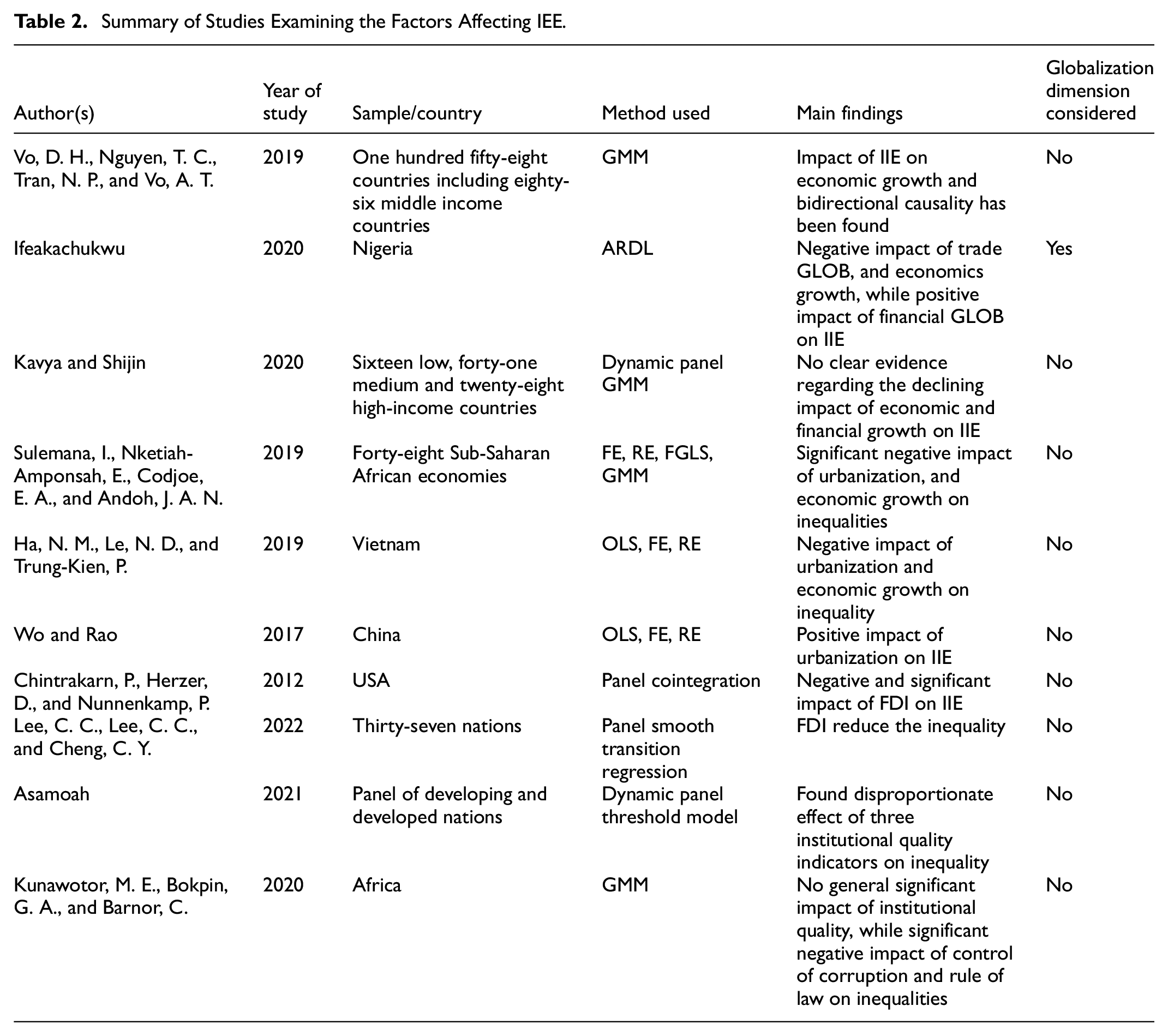
Table 2 provides a summary of the studies that shed light on the determinants of IIE. Moreover, it provides knowledge about how many collective variables under consideration are focused on in a single study for a specific period. It is worth saying that the current study extensively extends the literature by incorporating the multiple dimensions of GLOB along with domestic factors such as economic and social structure dynamics into a single analytical framework. This supports all the above hypotheses about the individual and collective impact of all these variables on inequalities.
Summary of Studies Examining the Factors Affecting IEE.
Materials and Methods
Data and Variables
The findings of this study are based on a panel of 58 countries from 2005 to 2021, according to data availability. These 58 economies were selected based on the availability of consistent and complete data on the variables considered in this study. Countries with missing or highly inconsistent data on the variables across the years were excluded from the panel. Moreover, the panel of 58 economies represents broad aspects of globalization along with different economic and social dynamics, which ensures a reliable estimation of the relationship between the variables. Similarly, the panel includes economies with different economic sizes, varying levels of institutional development, and globalization levels. This variation is important for analyzing how variables interact based on the specific characteristics of various economies.
IIE is the dependent variable of this study, measured using the Gini index. Gini index data were obtained from the World Development Indicators (WDI). Eight different independent variables were included in the study model. These variables can be categorized into different categories. The first category describes “economic dynamics,” which consists of economic growth (measured by GDP per capita in current US dollars), foreign direct investment (FDI), and government final consumption expenditures (GFCE). The second category includes globalization indicators, which include three types of globalization: economic globalization (ECOG), social globalization (SOG), and political globalization (POG). The third category describes social structure indicators, which include urbanization (URB) and institutional quality (IQ). Table 3 presents a detailed description and source of each variable.
Description of Variables.
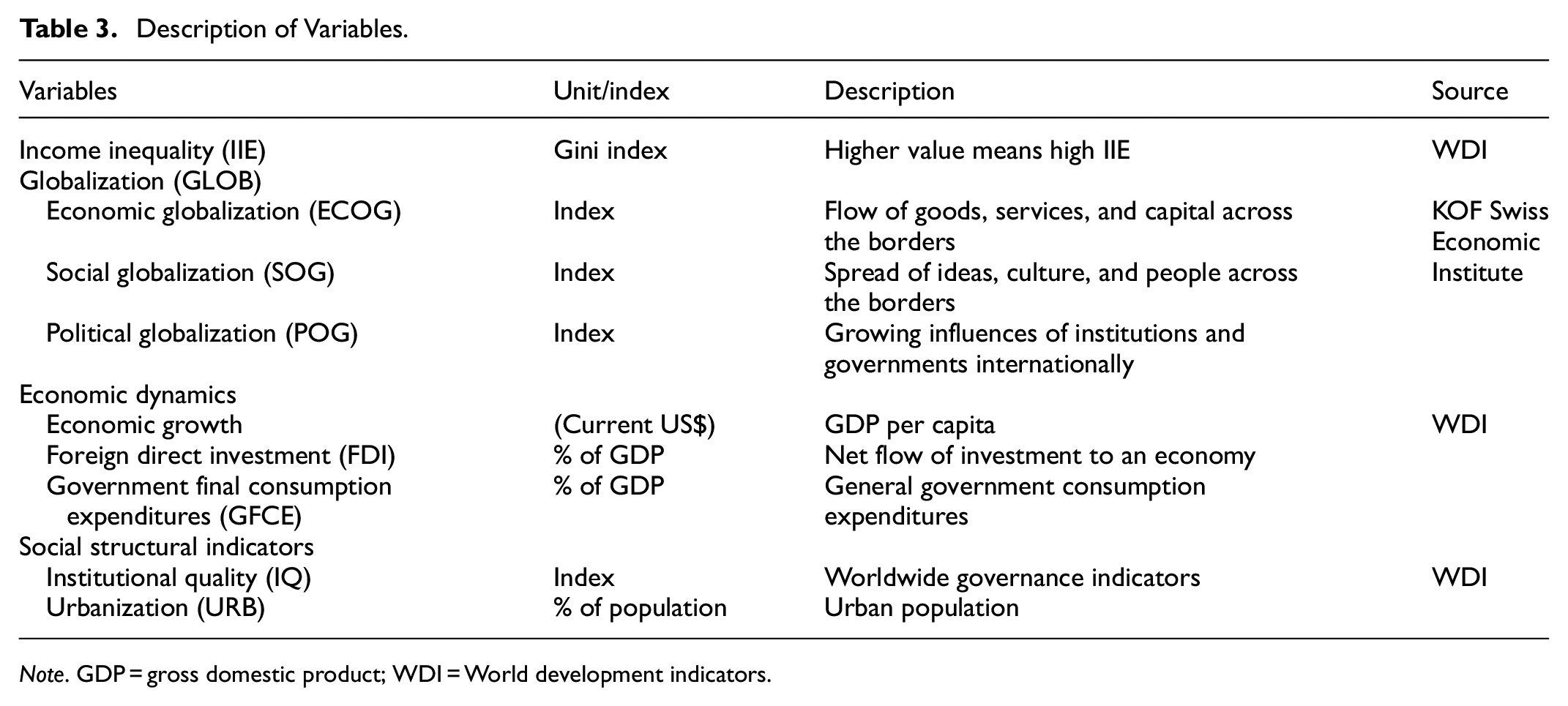
Note. GDP = gross domestic product; WDI = World development indicators.
Argentina, Armenia, Austria, Belarus, Belgium, Bolivia, Brazil, Canada, China, Colombia, Costa Rica, Croatia, Cyprus, Czechia, Denmark, Dominican Republic, Ecuador, El Salvador, Estonia, Finland, France, Georgia, Germany, Greece, Honduras, Hungary, Iceland, Indonesia, Ireland, Israel, Italy, Kazakhstan, Kyrgyz Republic, Latvia, Lithuania, Luxembourg, Malta, Mexico, Moldova, Netherland, Norway, Panama, Paraguay, Peru, Poland, Portugal, Romania, Russia, Slovak Republic, Slovenia, Spain, Sweden, Switzerland, Thailand, Ukraine, UK, USA, Uruguay.
Methods
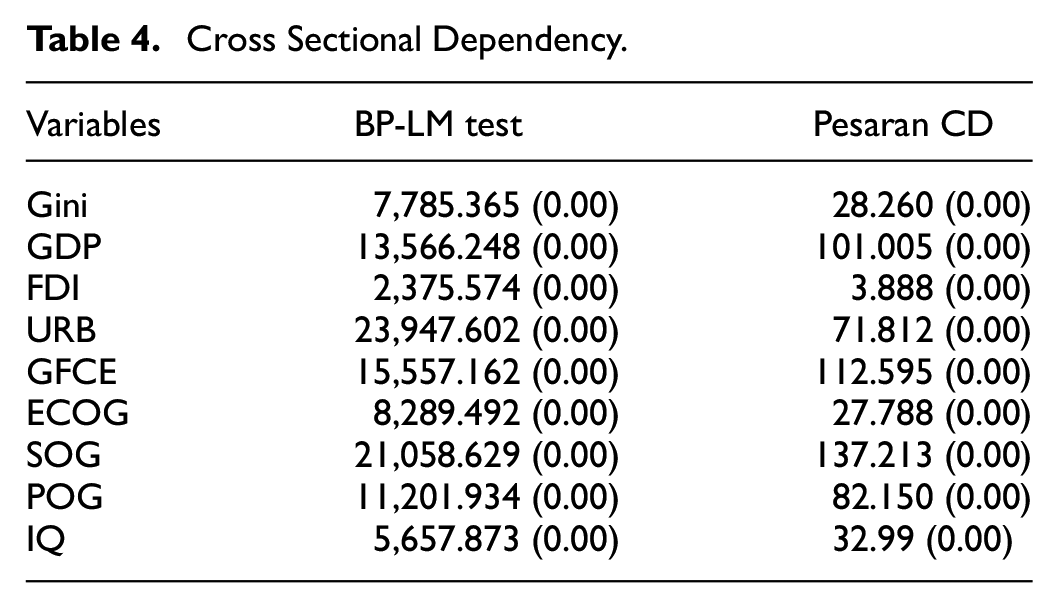
The cross-sectional dependency and stationary characteristics of the panel data were assessed before applying the econometric approach. To analyze cross-sectional dependency, two methods were used: the Brische-Pagan LM test and Pesaran’s CD test. The outcomes of both tests confirmed that the variables have cross-sectional dependency. Table 4 presents the results of the cross-sectional dependency tests.
Cross Sectional Dependency.
After analyzing the cross-section dependency among the variables, the next step was to examine the unit root of the variables. The outcomes of the LLC and IPS panel unit root tests in Table 5 confirm that all variables are stationary at their first differences.
Unit Root Test.

Note.***p < .01, **p < .05, *p < .1.
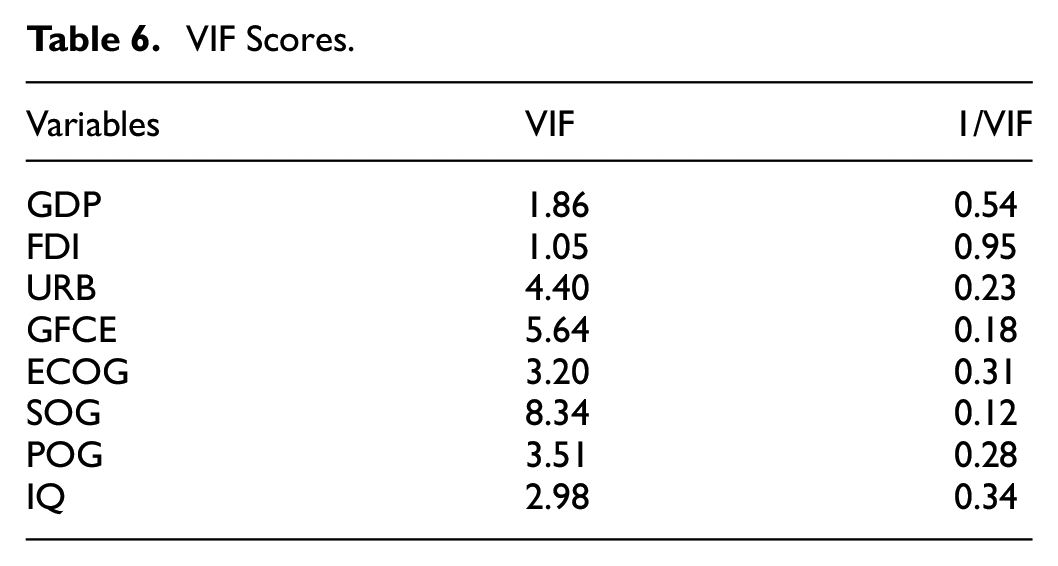
To confirm multicollinearity among variables, the VIF scores in Table 6 indicate that there is no serious issue of multicollinearity among variables. The values of VIF do not exceed the threshold limit, which confirms that multicollinearity issues do not exist among variables.
VIF Scores.
The following empirical method has been extensively used as an econometric approach to analyze the impact of different variables on IIE (Sulemana et al., 2019). In this study, a combination of different econometric techniques was applied to counter diverse econometric issues and obtain robust outcomes. The application of FE and RE models generates outcomes that provide baseline static estimators. First, we specified the following model for IIE:

Where Gini is the Gini index, Z is a vector of independent variables as described above, I depict country and t shows time. is the vector of parameters to be estimated,
Country-specific heterogeneity may cause inappropriate estimation of FE and RE. Moreover, FE and RE may provide weak coefficients in the presence of serial correlation and a possible endogeneity issue that may exist because of the bi-casually interlinked independent variables (Sulemana et al., 2019). For example, an increase in URB may increase the IIE in the presence of endogeneity. To address these problems, we adopt two approaches. First, we transformed the variables by taking their natural log and then applied the FGLS regression to tackle heteroskedasticity. To test heteroskedasticity, we used two approaches: the modified Wald test for groupwise heteroskedasticity in the fixed effect model and the White test for heteroscedasticity. The first test null hypothesis “homoskedasticity” was rejected based on the chi-square value (2,820.43) and a p-value equal to .00. Moreover, the White test for heteroskedasticity confirms the existence of heteroskedasticity as a squared residual significantly affected by the independent variables. This justifies the use of the FGLS.
Additionally, we used the system GMM, which effectively addresses the endogeneity issue. The correlation between explanatory variables and error terms generates endogeneity. This violates OLS regression, which generates biased estimates. In this case, system-GMM is highly recommended, as it effectively tackles the issues of mitigation bias, variable omission, heterogeneity, and endogeneity (Arellano and Bond, 1991; Caselli et al., 1996). Moreover, the system-GMM effectively deals with the problem of autocorrelation and heteroskedasticity, and generates reliable and consistent estimates when explanatory variables are not strictly exogenous (Konstantakopoulou, 2022; Ramzan et al., 2024; Roodman, 2009). The consistency of system-GMM can be confirmed by two diagnostic tests, the Sargan test of over-identification and the Arellano-Bond (AR2) test, which confirms the absence of autocorrelation. Similarly, N > T (N = 58 > T = 17) also endorsed the utilization of system-GMM in this study. The following model is specified:

where
Equation 2 contains the first difference of dependent variable which yields:

where
Results
Table 7 presents the descriptive analyses of the variables used in this study. The Gini for the panel of 58 economies ranged from 21.70% to 59.5%, with an average value of 35.79%. The average GDP per capita (a proxy variable for economic growth) was US$ 24951.01, with a range of US$ 476.55 to US$ 133711.80 from 2005 to 2021. The negative average value of FDI (−1.7e+09) indicates that the outflow of investment is higher than the inflow of investment to the economies in the study panel. The greater negative value of FDI than the positive maximum value also confirms this higher outflow of investment from the nation. The average urban population is 36.8 million, ranging from 276072 to 883 million. The average GFCE is 163 billion during the period under consideration. The averages of ECOG, SOG, and POG are 68.65, 74.75, and 80.93, respectively, indicating that the economies under consideration over the period of 17 years are strongly integrated politically compared to economically and socially. However, the economies have a relatively high level of ECOG, which highlights that the nations actively participate in trade and financial activities. The SOG (=74.75) indicates that the nations have a strong level of interpersonal, informational, and cultural integration among themselves. Negative value of IQ indicates that the nation’s IQ is marginally below the average level determined by the PCA. This implies that institutions in the nations of the panel under consideration indicate underperformance.
Descriptive Analysis.

Table 8 presents the partial correlation scores among the variables. The correlations between IIE and GDP, FDI, ECOG, SOG, POG, and IQ were negative and significant at the 1% level. URB is positively and significantly correlated with IIE. The GFCE was negatively correlated with the IIE, but the result was not statistically significant.
Partial Correlations.

p < .1.
Table 9 presents the findings of the FE, RE, and cross-sectional FGLS models. The results indicate that economic growth (=−0.065) has a negative impact on Gini, which implies that with the rise in economic growth, the IIE declines. The other two models, RM-M2 (−0.042) and CS-FGLS-M3 (−0.245), also demonstrate the significant negative impact of economic growth on IIE. The results regarding GFCE, FE-M1 (=−0.127), RE-M2 (−0.04), and CS-FGLS-M3 (−0.244) provide robust evidence of their significant negative impact on the Gini index. Therefore, two (economic growth and GFCE) of the three indicators of economic dynamics significantly reduce the IIE in the economies of the panel.
Findings of FE, RE, and FGLS.

Note. FE-M1 = Fixed effect-model1; RE-M2 = Random effect -model2; CS-FGLS-M3 = Cross sectional FGLS-Model3.
p < .01, **p < .05, *p < .1.
Among the three types of globalization, only ECOG and SOG had a significant impact on the Gini coefficient. All models provided robust evidence of the impact of ECOG at 1% on IIE. The negative sign of the ECOG coefficient in all three models implies that as economies are highly integrated globally through trade and financial activities, their IIE tends to decline significantly. In contrast, FE-M1 and CS-FGLS-M3 reveal a significant negative impact of SOG at the 5% level, and RE-M2 indicates a significant negative impact of SOG at the 1% level on the Gini index. This confirms the favorable impact of the SOG on the IIE.
From the first indicator of social structure, all models reveal the positive impact of URB on Gini, which indicates that as the population of urban areas increases, the IIE also increases. Concerning the impact of IQ on Gini, all models confirm the significant negative impact of IQ on Gini. This shows that institutions perform well and play a positive role in reducing IIE.
From the first indicator of social structure, all models reveal the positive impact of URB on Gini, which indicates that as the population of urban areas increases, IIE also increases. Concerning the impact of IQ on Gini, all the models confirm the significant negative impact of IQ on Gini. It shows that institutions performed well and played a positive role in reducing IIE.
Robustness
For robustness, the results of the system-GMM in Table 10 reveal similar findings regarding the effect of all variables on IIE in Table 9. The system-GMM indicates a significant negative impact of GDP (−0.091), GFCE (−0.084), ECOG (−0.037), SOG (−0.086), and IQ (−0.037) and a significant positive impact of URB (0.081) on IIE. These results are consistent with those in Table 9. The Hansen test highlights insignificant statistics, which confirms that there is no model mis-specification (Hansen, 1982). Additionally, AR(2) statistics are also statistically insignificant (Arellano & Bond, 1991), which confirms that there is no serial correlation in the errors. Therefore, this study provides robust findings regarding all variables included in the study.
System-GMM.

p < .01, *p < .1.
Causality Among Variables
Table 11 presents the results of the Dumitrescu and Hurlin causality tests. The z-bar scores in the first column and row reveal the bidirectional causality between the Gini index and all the other variables under consideration, except FDI. FDI (z-bar = 1.001, p > .05) does not cause IIE (Gini), while Gini (z-bar = 4.42, p < .01) causes the FDI. Figure 2 shows the direction of causality among all variables.
Dumitrescu and Hurlin Causality Test.

p < .01, **p < .05, *p < .1.

Causal relationship among variables.
Discussion
IIE is a crucial macroeconomic factor that is affected by various factors. The economies are greatly interconnected through different economic, social, and political activities, which have a strong impact on the IIE. Understanding the impact of economic, social, and global factors on IIE is crucial in the context of globalization. Thus, this study considers three categories of variables: economic dynamics, social structure indicators, and globalization. To obtain robust estimations, this study used FE, RE, and cross-sectional FGLS, and for robustness, system-GMM was applied.
The findings reveal a significant negative impact of the two variables from the three economic dynamic indicators. First, GDP per capita, which has a strong negative impact on IIE, implies that a rise in GDP means high economic growth, which reduces IIE (Majumdar & Partridge, 2009). This negative relationship between economic growth (increase in GDP per capita) and IIE can be described by the favorable impact of growth on economic activities. As the economy grows, new investments and business opportunities develop (Teixeira & Queirós, 2016). This has led to the generation of multiple jobs across different regions of the country. This may reduce unemployment (Chand et al., 2017) and provide equal opportunities for skilled and low-skilled laborers. High new investment and more business activities increase the demand for labor, which may increase the wage level, leading to more benefits for low- and middle-income workers. Similarly, high economic growth increases government revenue (Enyinnaya et al., 2024), which may be invested in social programs along with health and education services. More effective social programs can support the poor in a country, and the provision of skills and education can enable people to access better paying jobs. Additionally, economic growth can foster innovation and entrepreneurship, generating more economic activities through the establishment of small and medium enterprises (Gherghina et al., 2020). This creates different economic opportunities across different regions and sectors of a country, thereby reducing income disparities.
The results also confirm the significant negative impact of the GFCE on IIE. Our results are in line with Sánchez and Pérez-Corral’s (2018) findings, who also found a negative relationship between government social spending and IIE. Government in-kind expenditures on health and education services contribute more to the reduction in IIE. Sánchez and Pérez-Corral (2018) and Dotti (2020) stated that in-kind health and educational government expenditures have more identical redistributive effects on lowering IIE. Scholars worldwide agree on the negative impact of government spending on IIE (Lustig, 2016). Anderson et al. (2017) also signified that government spending on social transfers can lower IIE.
Several studies have explored the impact of GLOB on IIE (Dorn & Schinke, 2018; Gozgor & Ranjan, 2017; Jaumotte et al., 2013). These studies revealed different results depending on the methodology used to measure the variables and the sample economies. This has created considerable controversy regarding the impact of the GLOB on the IIE (Munir & Bukhari, 2020). GLOB is a multidimensional phenomenon that considers economic, social, and political aspects. Among the GLOB indicators, only ECOG and SOG had a significant impact on the IIE. This negative impact implies that an increase in ECOG means that economies are integrated with each other through trade and investment agreements, leading to the flow of goods, services, and information across borders (Gallagher, 2009). The ECOG enhances economies’ access to international markets, generates more jobs, increases competition, and improves productivity and efficiency, leading to higher wages for workers. Consumers purchasing power increases, and they can buy a wider variety of goods at affordable prices. The ECOG also enhances skill development opportunities. It also enhances the exchange of capital, technology, and experts, thereby creating a successful business environment for SMEs. Ogunyomi et al. (2013) have explored the impact of ECOG on IIE in Nigeria. They found a dual impact in terms of trade and financial GLOB. They found that trade GLOB reduces IIE, while financial GLOB contributes positively to IIE. Baek and Shi (2016) have also found contradictory impacts of both dimensions of ECOG on IIE in developed and developing economies. As trade ECOG reduces IIE in developing countries, financial ECOG increases it. They find the opposite impact of both ECOG dimensions in a panel of developed economies.
The negative coefficient of SOG also demonstrates the crucial role of social aspects in lowering the IIE. Changes in social norms (which may follow high integration and interaction among economies) can influence economic inequality. This implies that changing union behavior results in favorable and unfavorable outcomes in the labor market (Bergh & Nilsson, 2010). Similarly, SOG includes information exchange, cultural proximity, and personal contact (Tabash et al., 2024). The SOG enhances interaction, understanding, and cooperation among people of different economies belonging to different cultures (Goryakin et al., 2015). This interconnectedness among nations enables them to build effective global networks, resulting in equitable economic opportunities through socially acceptable governance and businesses. Moreover, SOG facilitates information exchange through easy access to international online courses, scholarships, and other literacy programs, thereby creating more opportunities for skill development.
Social structure, especially URB, is a major contributor to IIE, as the findings reveal its positive impact on the Gini index. Clark’s (1967) law states that labor must flow from rural to urban areas due to the higher industrial productivity compared to the agricultural sector, leading to high URB, which fosters growth because of the benefits of economies of scale, best business location, and agglomeration economies (clustering of industries) (Glaeser, 2008). This highlights that when economies grow, growth largely occurs in urban areas, which creates large sectoral growth differences between the rural and urban sectors of manufacturing and services, leading to national inequality (Wan et al., 2022). Moreover, our results are consistent with those of Adams and Klobodu (2019), who also found a positive impact of URB on IIE in 21 sub-Saharan African countries.
The findings of this study revealed a significant negative impact of IQ on IIE. High-quality institutions provide efficient and fair economic environments. For example, by upholding the RL, the legal system protects property rights and enforces contracts, which attracts investment and fosters economic activities across the regions of an economy. This causes a low IIE (Sonora, 2019). Moreover, a transparent and effective government, control over corruption (Pedauga et al., 2017), political stability, and high accountability ensure the equitable allocation of public resources, which promotes economic stability, equitable government spending, and mitigates IIE. Our results are similar to those of Blancheton and Chhorn (2021). They found a long-run negative impact of IQ on IIE. They confirmed the favorable impact of a high IQ on increasing IIE. Similarly, Anyanwu et al. (2016) found a significant negative impact of IQ on IIE. As North (1990) highlights the role of institutions in developing an effective distributional outcome along with good economic performance, the current study endorses this view, as IQ has a strongly negative impact on IIE. A high IQ discourages rent-seeking behavior and limits the discretionary power of elites to improve access to resources and economic opportunities. This ultimately reduces IIE by providing fair participation in markets and equal access to public goods. Therefore, IQ affects IIE by determining how resources, opportunities, and protection are distributed across society. High-quality institutions ensure the rule of law, reduce corruption, establish strong property rights, and develop a more inclusive economic environment. Therefore, strong institutions lead to equitable enforcement of contracts, lower transaction costs, and foster participation in economic activities, which ultimately lowers IIE. On the other hand, weak institutions mean low institutional quality, which generates discriminatory practices, distorts market opportunities, and embeds elite interests, all of which further increase IIE.
Conclusion
Structural changes in a society and economy primarily contribute to the unequal distribution of income among individuals in society, which leads to an economic crisis. Therefore, the IIE has become the global issue, and evolved as core societal-concern of all types of economies irrespective they belong to developing or developed economies. Therefore, increasing social and economic interconnections among economies, exploring the determinants of IIE is a crucial research topic around the globe. This study explores the affect of domestic factors, such as economic and social structural dynamics, alongside the three different dimensions of globalization on IIE based on a panel of 58 countries over the period of time form 2005 to 2021. The application of different econometric approaches, including FE, RE, cross-sectional FGLS, and system GMM, provides robust estimates. This study is expected to extend the literature by providing comprehensive insights into the individual and collective impacts of all the variables in a single analytical framework.
The findings reveal a significant negative impact of economic growth and GFCF on IIE. This implies that high economic growth and GFCE reduce inequality. Among the social structural dynamics, both URB and IQ have a significant impact on inequalities, but URB increases inequality, whereas IQ reduces inequality. This implies that strong, high-quality institutional economies may reduce IIE by protecting poor and disadvantaged individuals across regions. Similarly, among the dimensions of the GLOB, only ECOG and SOG significantly reduced IIE. It highlights that ECOG through trade and financial links among nations can play a role in lowering inequalities. Moreover, SOG through information, cultural, and labor exchanges also reduces income gaps. Based on the causality test, the Gini index has bidirectional causality with all other variables under consideration, except FDI.
Economic growth should be inclusive, to reduce inequality. Policymakers must develop strategies at the national level that promote more equitable growth and investment that generates widespread employment and earning opportunities, especially for deprived and lower-income individuals and groups. SMEs can be supported by creating jobs and promoting innovation. Moreover, the government must enhance its spending to benefit the public. The government must prioritize spending on healthcare, education, and social welfare programs to create a safety net for deprived and marginalized individuals. Moreover, the government must develop an effective framework that enhances the targeting and efficiency of expenditure to ensure that resources reach the target population.
Although the economy is growing, economic and social globalization must be managed properly to lower IIE. Economies must promote fair trade practices and train workers who are highly affected by globalization. Similarly, along with cultural exchange, economies must discourage discrimination and social exclusion to increase the positive role of globalization in reducing IIE. Developing an effective government framework, proper mechanisms to control corruption, and enhancing transparency can increase the quality of institutions and lead to lower inequalities. When institutions work equitably and efficiently, they generate public trust in the government, which promotes the fair allocation of resources. Therefore, policy responses to IIE must align with the quality of the economy’s institutional framework. Therefore, countries with strong institutions must focus on revising their redistributive policies such as targeted social transfers, progressive taxation, and inclusive financial systems. On the other hand, countries with weak institutional capacities must focus on improving their governance, lowering corruption, and strengthening their rule of law. Governments may focus on social spending adjustments, emergency financial assistance, and subsidies for fundamental services to address inequality in the short run. In the long term, governments must focus on structural reforms such as independent judicial systems, capacity building in public administration, and anti-corruption frameworks, which are necessary to improve the quality of institutions to grab sustainable and inclusive economic outcomes in order to lower inequality.
This study had some limitations. First, the IQ index, measured by six different worldwide governance indicators, may not fully capture the impact of governance dynamics on inequality. Moreover, the 58 economies are due to the availability of fully balanced data for all other missed economies is also a limitation of the study. Similarly, the study did not focus on the digitalization of the economy, which may also majorly contribute to inequality as economies become more digitalized, and the more people may have easy access to economic activities.
Future studies may focus on sector-specific mechanisms through which GLOB and IQ affect IIE, particularly within healthcare, education, and labor markets. Moreover, the threshold effect of GLOB across different developmental stages could be a promising avenue for future investigations. This will help us understand whether the effect of GLOB on IIE is linear or dependent on institutional maturity or social resilience.
Footnotes

Funding
The authors received no financial support for the research, authorship, and/or publication of this article.
Declaration of Conflicting Interests
The authors declared no potential conflicts of interest with respect to the research, authorship, and/or publication of this article.
Data Availability Statement
The data can be obtained from the corresponding author on request.