




Abstract
This study examined how Chinese university English as a foreign language (EFL) students engaged in a language massive open online course (LMOOC) on source culture to meet their learning needs. Learning analytics data from 818 course participants revealed a funnel-shaped pattern of participation, with a significant decline in video-watching and discussion forum participation occurring before the midpoint of the course. However, the quality of student contributions remained stable, as no significant decline was observed in the length or syntactic complexity of discussion board posts. To further investigate these engagement behaviors, we conducted interviews with 47 participants and identified three types of learners with distinct learning objectives: culture-learning-oriented learners, language-learning-oriented learners, and culture- and language-integrated learning-oriented learners. Our findings highlight the selective nature of learner engagement in LMOOC activities, where learners exercised agency in choosing how to interact with course resources. Despite not always adhering to traditional course completion patterns, they continuously engaged in deep reflection on language and culture learning, which led to extended learning practices and increased awareness of cultural identity both within and beyond the LMOOC. This study offers practical implications for LMOOC designers and addresses the need for EFL educators to reassess the goals and methods of culture teaching, promoting reflective engagement in culture learning in today’s globalized, technology-driven world.
Introduction
“Language does not exist apart from culture” (Sapir, 1921, p. 207). Given this interconnectedness of language and culture, culture learning has been considered an integrative part of language education (Byram & Morgan, 1994; Kramsch, 1993; Spenader et al., 2020). For English as a foreign language (EFL) educators, the central concern has moved from whether to teach culture to questions such as “whose culture should be taught, what goals should guide culture teaching, and how culture-related course materials should be designed and selected” (Nault, 2006, p. 314).
The past few decades have witnessed the evolution and development of our understanding of culture teaching in seeking answers to these questions. Of particular concern is the importance of home culture, or “source culture” in Cortazzi & Jin’s (1999, p. 204) term, and how it should be acknowledged in EFL education (Huang & Fang, 2023; McKay, 2002). With Global Englishes (GE) challenging the traditional native-oriented norm of English teaching (Fang et al., 2022; Rose et al., 2021), it is widely acknowledged that focusing solely on Anglo culture in EFL curricula can be insufficient and even problematic (Chao, 2013; Harumi, 2002; Holliday, 2011). Since the number of people using English as a second or foreign language today has surpassed that of native speakers (Crystal, 2001), it is equally important, if not more beneficial, for EFL learners to critically reflect on their home culture while actively engaging with internationalized cultural forms (Shin et al., 2011). In line with this perspective, researchers suggest using source culture content in English teaching to challenge the hegemony of Anglocentric cultures (J. Liu & Fang, 2017) and to “minimize the potential of marginalizing the values and lived experiences of the learners” (McKay, 2003, p. 19). Guo and Beckett (2007) even point out the need for policy shifts toward implementing critical multiculturalism to reclaim local cultures and knowledge.
Against this backdrop, many countries have introduced policies that promote the integration of home culture into foreign language education, with China being a notable example (Prastiwi, 2013; Wen, 2016). For example, the recent college English curriculum reform in China (Ministry of Education, 2020) identifies the goal of enabling students to express their cultural identity more effectively in international contexts. This reform aligns with the country’s diplomatic mission of “Telling China’s Stories Well” and its broader initiative to promote Chinese culture abroad.
Despite the interest shown by scholars and policymakers in the potential of source culture learning to enhance EFL learners’ intercultural communicative competence (Fenner, 2000; Soria & Troisi, 2014), there have been few studies that explore how students actively engage with their home culture for language learning purposes. As Weninger and Kiss (2013) point out, the paradigm shift in language and culture teaching calls for a more dynamic understanding of “acts of meaning-making in actual learning situations” (p. 700). This shift is particularly relevant in the digital age, where learning environments extend beyond formal classroom settings to include informal learning opportunities, such as massive open online courses (MOOCs). A more in-depth investigation of EFL learners’ meaning-making processes in source culture learning within MOOC environments can provide insights for language teachers and language MOOC (LMOOC) designers, enabling more effective integration of source culture into EFL pedagogical practices, material development, and curriculum design. Therefore, the present study aimed to explore the practices and motivations of LMOOC course-takers in learning source culture, providing guidance for LMOOC designers and EFL educators.
Literature Review
Source Culture in EFL
The integration of source culture into cultural teaching resources has gained prominence as scholars seek more transformative and critical approaches to EFL education. As Byram and Morgan (1994) put it, “Learners cannot simply shake off their own culture and step into another. It is not a question of putting down their ‘cultural baggage,’ for their culture is a part of themselves, has formed them and created them as social beings” (p. 43). This understanding of source culture calls for pedagogies that cultivate students’“awareness of their own cultural situatedness” (Blasco, 2012, p. 476). For example, Bennett (2004) suggests a self-reflexive approach to intercultural development, in which learners use their own culture as a point of departure and expand this reflection to include other cultures. Larzen-Ostermark’s (2008) affective approach to culture teaching emphasizes the significance of a reciprocal, dialogic process where students’ home culture interacts with foreign cultures. In the same vein, researchers have argued that students should develop an understanding of their local cultures to turn into ethnographers and anthropologists, or as Byram et al.’s (2002) term, the “intercultural mediators” (p. 9), when tackling cultural differences issues in foreign language learning (Cortazzi & Jin, 1999; Levy, 2007).
Literature also reveals a series of factors that impede the extent to which EFL teachers can benefit from drawing on learners’ home culture in target language learning. One limitation lies in the teaching materials, which characterize a facts-oriented representation of both target and source cultures (Nguyen, 2017). According to Davidson and Liu (2020), cultural texts that prioritize products rather than practices and perspectives are culturally simplistic, which runs counter to the aim of fostering student agency in experiential culture learning and engagement. Another obstacle is the teachers’ ambivalence in integrating source culture with EFL teaching. Although a positive correlation has been found between the involvement of local cultural elements and students’ linguistic development (Bayyurt, 2006), teachers are uncertain about the legitimacy of using non-target cultural content as language curriculum material. For example, the participating teachers in Luk’s (2012) study considered the local culture-integrated activity as a “sweetener” that is supplementary, or at best of secondary importance to exam-oriented and skills-related practice, due to the conflict between the tight curriculum and the time-demanding task of teaching culture.
While much of the existing research has examined teachers’ strategies and attitudes toward culture teaching in EFL classrooms, few studies have focused on learners’ perceptions and practices in relation to learning about the source culture within the context of foreign language education. Among the limited research, J. Liu and Fang (2017) investigated Chinese university students’ perceptions and awareness of source culture in intercultural communication, finding that while most of them recognized the critical role of home culture in intercultural negotiation, they also acknowledged their difficulty in communicating deeper and more abstract aspects of their home culture to speakers of other backgrounds. Kiss and Weninger (2017) explored how language learners engaged in the process of meaning-making in culture learning within the EFL classroom. Their results showed that the learners constructed diverse and unique meanings and cultural understandings based on their personal experiences and prior knowledge of their local culture.
LMOOCs and Culture Learning
EFL educators have advocated technology-mediated culture learning as a response to the new realities surrounding intercultural language pedagogy (Levy, 2007; Sokolik, 2014). In particular, LMOOCs, characterized by multimodal input integrating both linguistic and cultural content, stand a chance of revolutionizing the landscape of language and culture learning (Bárcena & Martín-Monje, 2014).
Previous studies of LMOOCs have revealed a mixed picture of their effectiveness on language learning. For example, Martín-Monje et al. (2018) reported that course-takers accessed the learning objects in LMOOCs in various ways, with a predominant group of students acting as viewers who only watch videos. Vorobyeva (2018) found that while LMOOCs are effective for developing receptive skills, they are less helpful in improving productive skills, as the courses fail to provide adequate feedback on L2 learners’ speaking and writing performance. Bárkányi (2018) noted that learners may experience foreign language anxiety in the MOOC context, which can inevitably diminish their intention to participate in MOOC-mediated interactions. Zeng et al. (2020) argued that despite its affordance for self-regulated language learning, the massive amount of L2 resources available online is more likely to consume learners’ limited attention in LMOOCs. Among these studies, all except Bárkányi (2018) adopted a learning analytics approach, providing valuable insights into how learners engaged with LMOOCs and how effective they were for language learning.
However, research into LMOOCs is still “a fairly unexplored field” (Martín-Monje et al., 2018, p. 268), let alone research on their potential to enhance EFL learners’ cultural learning. In addition, Godwin-Jones (2017) cautioned that the tendency to overreliance on learning analytics could “reduce the complex process of learning to a numbers game” (p. 11). Indeed, very little empirical research has examined how EFL learners make sense of their learning experiences in the context of LMOOCs. In particular, there is little understanding of why students engage in some activities while avoiding others. Therefore, the current study adopted a mixed-methods research approach, supplementing learning analytics with narrative data elicited from interviews to investigate students’ engagement patterns and motivational factors in LMOOC-based culture learning. The following research questions were formulated.
(1) How do university EFL learners engage with various LMOOC activities, such as watching lecture videos, downloading supporting materials, and participating in discussion boards?
(2) What motivates university EFL learners in culture learning practices within the LMOOC on source culture?
Methodology
The LMOOC and Participants
The LMOOC, “An Introduction to Modern China,” consisted of 12 units on cultural themes such as Chinese educational systems, cuisine, and holidays. Each unit contained five to six short videos, each with a total duration of 40 min, and all were taught in English as the medium of instruction. The videos were followed by quizzes that contained comprehension check questions, such as multiple-choice and true-or-false questions. Each unit provided supplemental resources, including lecture notes, additional reading materials, and further explanations of language points. Furthermore, essay questions related to each unit (except for Unit 10) were posted on the discussion board, allowing learners to reflect on the course content and interact with other course participants.
The LMOOC was offered on the UMOOCs platform (https://umoocs.unipus.cn/), a dedicated online course platform for foreign language learning in China. The course was updated weekly and delivered over 12 weeks. The assessment consisted of four modules: video watching (40%), discussion participation (20%; total score can be obtained by posting four times), quizzes (20%), and the mid-term and final examinations (20%). Course learners needed to score at least 60 out of 100 points to receive a certificate. They were advised but not required to complete the supplemental resources.
The Participants
A total of 818 participants took the course. They were Chinese undergraduate students aged between 18 and 22. Among them, 47 participants volunteered and completed the interview process. See Table 1 for a summary of the interview participants’ demographic information.
Summary of Demographics of Interview Participants.

Data Collection
We used a mixed-methods approach, combining learning analytics and semi-structured interviews. This approach enabled us to investigate the research questions in depth and triangulate the data to better capture the complexity of EFL students’ engagement with culture learning through the LMOOC.
Learning analytics involves “data about learning recorded automatically through learning management systems ……, giving insight into the daily (or even more fine-grained) levels of engagement and performance of individual learners” (Jitpausarnwattana et al., 2019, p. 29). For the purpose of this study, data on learner engagement in the LMOOC were collected through the learning analytics tools available as part of the UMOOCs platform. The logged online learning behaviors, including watching lecture videos, downloading supporting materials, and posting to the discussion board, were collected and analyzed to understand the participants’ engagement with the LMOOC activities.
While learning analytics enabled us to gather data on the learning objects that participants engaged with in the MOOC environment, we recruited course learners for semi-structured interviews to gain a deeper understanding of their learning experience through the LMOOC. Each interview lasted between 45 and 60 min. The language used in the interviews was the participants’ native language, Chinese. During the interviews, participants were first asked to provide their demographic details and language learning background. Then, to explore participants’ LMOOC learning experiences, they were asked to reflect on their engagement with different LMOOC activities and elaborate on the motivations behind their online learning behavior.
Data Analysis
The learning analytics fall under three categories: (1) watching lecture videos, (2) accessing supporting materials, and (3) participating in discussion boards. The analysis primarily focused on identifying general patterns over the course period to help “summarize findings by describing general tendencies in the data” (Dörnyei, 2007, p. 213). In the first category, the number of learners watching lecture videos in each unit was calculated. For the second category, the number of downloads for different types of course materials was calculated and compared, as the availability of supporting materials varied across units. Finally, learners’ participation in the discussion board was measured both quantitatively and qualitatively. In addition to counting the number of replies in each unit, the quality of learners’ posts was evaluated in terms of syntactical complexity using a software tool called the L2 Syntactic Complexity Analyzer. The features examined included: (1) the total number of sentences (t-units) in the replies for each unit; (2) the total number of complex sentences, defined as those containing a dependent clause, in the replies for each unit; and (3) the proportion of complex sentences to the total number of sentences in each unit. The use of software tools for data extraction and analysis enhanced the reliability and validity, ensuring that the quantitative data analysis was consistent and accurate.
The data from semi-structured interviews was analyzed using Carspecken’s (1996) approach of reconstructive analysis. During the initial coding process, the researchers conducted a meaning field analysis while reading through the participants’ interviews to explore possible meanings underlying their verbal accounts. The validity horizontal analysis was then applied for a deeper-level examination. In particular, subjective, objective, normative, and identity validity claims were identified at the horizontal level, while foregrounded and backgrounded claims were identified at the vertical level. Following the meaning field analysis and the horizontal analysis, line-by-line coding was conducted to develop a coding scheme. In the final step, we classified the codes from which themes were derived. To ensure inter-coder reliability, the researchers independently performed the first two phases of coding and then discussed and agreed to the differences together. At the coding scheme and theme generation stages, the researchers collaboratively edited and discussed the emerging codes and themes through shared documents and online meetings. This collaborative process enabled continuous refinement and ensured consensus on the categorization and interpretation of the data. To enhance trustworthiness, peer debriefing and member checking were adopted (Lincoln & Guba, 1985).
The design of the mixed-method study itself increased the overall reliability and validity of the study (Creswell & Plano Clark, 2017). Specifically, this study examined learners’ LMOOC engagement using both learning analytics and interview data, allowing triangulation and enabling a comprehensive analysis that not only identified learner behavioral patterns through descriptive statistics but also revealed the underlying reasons behind their behaviors through qualitative data.
Results
In this section, we first discuss the learning analytics results, providing a general overview of students’ engagement in LMOOC activities, including watching lecture videos, downloading supporting materials, and participating in discussion boards. Following this discussion, we report on the themes identified during the reconstructive analysis of the 47 semi-structured interviews.
The Learning Analytics
To address the first research question, we analyzed logged online behaviors, including participants’ access to course videos and supporting materials, as well as their discussion board posts, to gain an understanding of their actual engagement with the LMOOC.
The decline in video viewing across course units was evident, highlighting learner attrition—a common trend in MOOC participation, as shown in Figure 1. Out of the 818 students who initially registered for the course, only 315 (38.5%) watched the lectures in Unit 1, with the numbers continuing to drop as the course progressed. By the end of the course, the viewing rate had fallen to just 6.2%. This pattern aligns with findings in the MOOC literature, which indicate that a significant proportion of course-takers are either no-shows or lurkers, leaving no recorded activity beyond clicking the registration button (Hristova et al., 2018; Milligan et al., 2013; Veletsianos & Shepherdson, 2016).
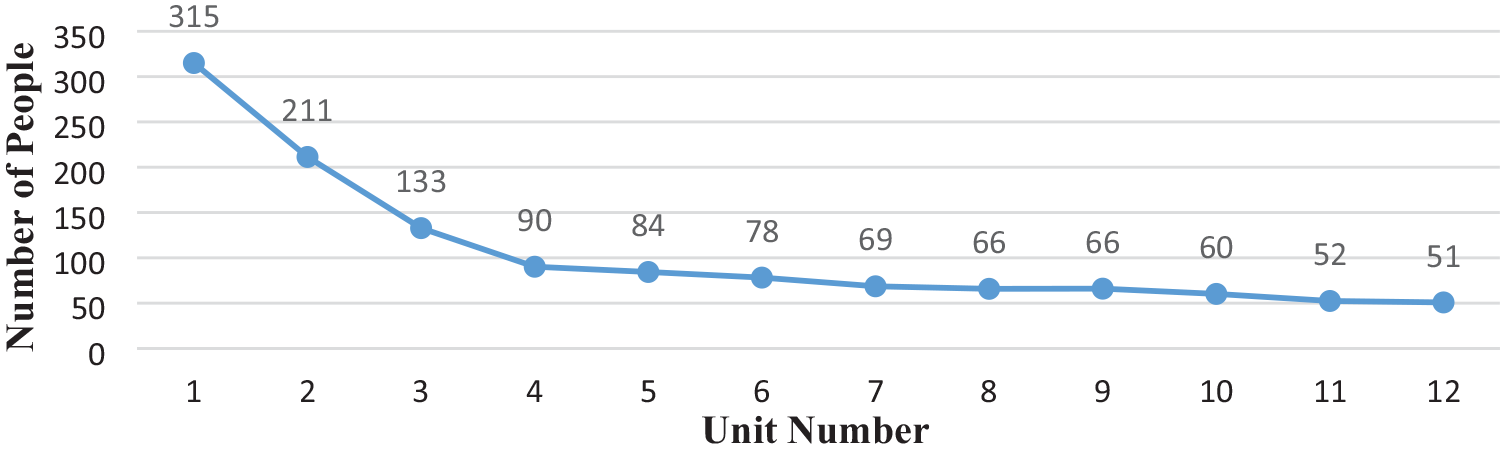
Number of people viewing videos of each unit.
Learners’ downloading behavior of supporting materials reflects their engagement and preferences in the online learning process. The three types of supporting materials—lecture notes, language point explanations, and additional reading materials—were downloaded 255 times, 264 times, and 151 times, respectively. The variation in download frequency suggests that learners tend to focus on mastering fundamental course content rather than engaging with supplementary materials beyond the lectures. Another possible explanation for the lower download rate of additional reading materials is the interface design of the MOOC platform. Unlike the other two types of materials, additional readings were not automatically pushed to course participants; instead, they could only be accessed via a course material link located at the bottom of each webpage.
The pattern of discussion board engagement reflects both participant attrition and the influence of course assessment criteria on learner interaction. As illustrated in Figure 2, the highest number of replies occurred in the first three units, with a noticeable decline in engagement in the later units. This trend can be attributed, at least in part, to participant attrition, as evidenced by the substantial drop in video viewing across course units. Additionally, the decrease in discussion board participation can be linked to the course’s assessment criteria, which require learners to post at least four times to fulfill the discussion requirement. Consequently, many participants may disengage from further discussions once they have met this threshold.

The number of replies on the discussion board of the MOOC course.
The length of posts varied considerably across units, ranging from as many as 200 words per post to as few as ten words, reflecting differences in learner engagement and the depth of discussion. On average, course participants produced 47.58 words and 2.93 sentences per reply. The average post length by unit ranged from 20.08 words and 1.28 sentences (Unit 11) to 67.91 words and 4.25 sentences (Unit 1), with fluctuations observed across units. A detailed description of these data, including the mean and standard deviation of post length per unit, is presented in Table 2.
Length and Syntactic Complexity of the Replies in the Discussion Board.

Similarly, the syntactic complexity of discussion board replies varied across units, as indicated by the number and proportion of complex sentences in each post (see Table 2). On average, each post contained 1.10 complex sentences. Participants produced more than 1.50 complex sentences per post in Units 3, 6, 7, and 12, while fewer than 0.5 complex sentences per post in Units 5 and 11. The average ratio of complex sentences to total sentences was 0.37, with the highest ratio, 0.77, observed in Unit 7 and the lowest ratio, 0.14, observed in Unit 5. Unlike the decline observed in video viewing and discussion participation, neither post length nor syntactic complexity followed a downward trend across units. Notably, Unit 12, the final unit, ranked second in the ratio of complex sentences to total sentences and fourth in both average post length and the number of complex sentences, suggesting sustained engagement among some participants.
A noticeable engagement pattern observed in this study aligns with the “funnel of participation” (Clow, 2013), a common phenomenon in MOOC research (e.g., Greene et al., 2015). In particular, there was a substantial drop in video watching (approximately 75%) and forum posting (approximately 45%) before the midpoint of the course. However, this trend did not extend to the quality of student contributions. No significant decline was found in the length or syntactic complexity of discussion board posts, suggesting that while overall participation decreased, those who remained active continued to engage in a meaningful way.
These findings highlight the selective nature of student engagement in LMOOC activities, where learners exercise agency in choosing how to interact with course resources (Godwin-Jones, 2019). Rather than uniformly engaging in all available activities, students appear to create their own learning path, picking and choosing digital learning resources based on their individual learning needs and priorities (Castrillo, 2014). It is interesting to note that beyond learner preferences, engagement patterns may also be shaped by course and interface design. For instance, lower engagement with additional readings may be attributed not only to perceived irrelevance but also to interface design constraints that affect accessibility. Likewise, discussion board engagement was influenced by both student interest and assessment requirements, highlighting the role of course design in shaping learning behaviors.
It is important to note a caveat here: the study does not aim to establish correlations between different forms of learner engagement, nor does its design allow for such conclusions. Instead, the analysis of learning analytics enables a nuanced understanding of how learners navigate the course, offering valuable insights into their learning preferences and engagement patterns. To further explore the motivations and experiences underlying these LMOOC learning behaviors, the following section presents qualitative findings from semi-structured interviews with course participants.
The Interviews
Our analysis of the interviews revealed three broad purposes for which participants engaged with the LMOOC. We categorized interviewees into one of these three groups based on their reported engagement with the LMOOC and their perception of how the experience supported their learning goals. Among the interviewees, 9 were identified as culture-learning-oriented learners, 23 as language-learning-oriented learners, and 15 as learners with an integrated goal of learning both culture and language. However, these numbers cannot be generalized to the larger sample, as the interviewees were self-selected.
Culture-Learning-Oriented Learners
Culture-learning-oriented learners’ emphasis was mainly on the course’s cultural content rather than its instructional language. To them, the course videos were “more like a cultural documentary than a language learning material.” These participants reported knowing much more about their own culture after watching the lecture videos. As Participant 05 mentioned, “There are interesting facts and trivia that even most native Chinese people may be surprised by.” Several students informed us that they were drawn to the course due to its distinctive perspective. As Participant 23 said, … The main characters in the videos are international students in China. It is like learning Chinese culture through the eyes of foreigners. Many cultural facts we take for granted actually seem strange to people from different cultures. … I did not really think much of that before [taking the MOOC].
In the excerpt, the participant demonstrated her appreciation for the MOOC design, which extends beyond a simple presentation of cultural facts and presents familiar cultural practices from a global and multicultural perspective.
Since they made little or no attempt to expand their language learning through the LMOOC experience, learners in this category paid little attention to the language points presented in the course. They reported rarely using the learning material uploaded on the platform, nor did they participate adequately in the discussion forum. “It would otherwise be too time-consuming if you go through all the materials and activities” (Participant 11). Therefore, they decided to be selective about what and how much to study. Some participants mentioned a general strategy of using subtitles for adequate content comprehension. Others said that they did not encounter many barriers in understanding the course content as the video visualized unfamiliar cultural artifacts in comprehensible ways. Interestingly, Participants 19 and 36 introduced the LMOOC to some international students on campus, stating, “I think the MOOC would familiarize them with Chinese culture so that they can acculturate into the school more easily.”
Language-Learning-Oriented Learners
Unlike culture-learning-oriented learners, language-learning-oriented learners intend to meet their language learning needs through the MOOC experience. Instead of appreciating the cultural components of the course, this group of participants tended to focus on specific aspects of language learning, such as grammar learning and vocabulary building. The following excerpt of one participant discussing how she practiced and improved her English ability with the MOOC nicely illustrates these language-learning-oriented learners’ awareness of the potential the course has to expand their language learning beyond the classroom: I watched the course videos multiple times. While watching for the first time, I avoid reading subtitles and try to understand the main idea. Then, I download and work on the lecture notes and language points, hoping to remember as many new words and expressions as possible. After that, I review the video and test my understanding by completing the quiz. … I appreciate the learning materials available on the platform, and I am pretty satisfied with my learning in the MOOC (Participant 40).
Some language-learning-oriented learners reported that the LMOOC also helped them cope with examinations, as Chinese culture is among the topics covered in the Chinese-to-English translation section of the CET 4 (i.e., College English Test, a national English proficiency test in China). For example, Participant 12 said, “I noticed that most of the subtitles are not translated word for word, especially idioms, and customs that are unique to Chinese culture, … [because it is] almost impossible to find the corresponding words in English.” She said she tried to adjust her strategy when translating cultural elements: “to focus more on meaning.”
When asked what could be improved in the course design, a few participants in this group mentioned that they felt less motivated to participate in the discussion forum. Participant 35 said, “I wish the teacher could check my posts for grammar and word choice so I know how to improve.” This excerpt reveals a reason for non-participation: The participant’s need to improve language accuracy was not met within the MOOC setting.
Although language-learning-oriented learners focused on linguistic development, most recognized that their familiarity with local cultural content compensated for their limited language skills, making them “feel more at ease with the MOOC learning” (Participant 01). They also noted that the multimodal environment created by the MOOC makes learning more interesting than they expected: “The background music is lovely” (Participant 01). “It is not just lecturing in the video. There are also short plays and film clips. You will never be bored” (Participant 21). “I was attracted by the traditional Chinese cheongsams the teachers wear. [They look] so classic and elegant” (Participant 44).
Culture- and Language-Integrated Learning-Oriented Learners
Like language-learning-oriented learners, learners oriented toward integrated culture and language learning viewed the LMOOC as a valuable opportunity to engage in various activities within a seamless language learning environment. Unlike the language-learning-oriented learners, these participants reported that they actively and knowingly connected their language learning with cultural resources. While watching the videos, the participants in this group took notes on not only lexical-grammatical knowledge but also cultural information. Participant 30 described his LMOOC experience this way, “It opens a whole new door to English learning. Using a foreign language to learn your familiar culture is no easy task. There are many new terms for Chinese cultural items that did not exist in the English language.” He saw learning English in the context of local culture as a valuable way to be exposed to new words and phrases, a common view among integrated learners.
Unlike language learning-oriented learners, many participants in this group identified the discussion forum as a platform to practice their language skills, discuss cultural content, and socialize with other participants. Some integrated learners frequently posted in the forum, attempting to apply the knowledge they had acquired in the course. “I am not worried if my grammar is imperfect or my sentences are not polished. As long as I express my ideas clearly, I get feedback [from the instructor and other course-takers]. These interactions encouraged me to participate more” (Participant 31). Other integrated learners participated in the discussion in different ways. “I don’t post [on the forum], but I enjoy reading the posts from others. Some posts are thought-provoking, some are informative, and some are just fun to read. I will give them a like” (Participant 02).
In addition, many integrated learners reported that the LMOOC made them proud of their Chinese heritage, and they felt more confident and passionate about discussing Chinese culture in English after participating in the course. Participant 06 mentioned her progress in the conversation practice with the native-speaking teacher: “I always have a lot to say when we chat about Chinese culture. … [I feel] less nervous. At least, I’m the expert in terms of cultural content. Moreover, the course provides me with adequate materials to share.” Participant 03 described his experience of making a presentation about Chinese culture in the College English class. “It [the presentation] was quite a success. … I was inspired by the course, which showed that Chinese culture can be a unique and more relevant topic.” These participants’ willingness to extend their language use to a cultural context separated the integrated learners from those in the other two categories. They were aware of the interrelationship between language and culture and, therefore, took an integral approach to LMOOC learning, engaging in activities with dual goals of language development and cultural learning.
In accordance with the learning analytics findings, the interview results further illustrate that students engage with LMOOC activities in a selective and diverse manner. All interviewees reported only partial engagement with the LMOOC, and fewer than one-third recognized both the language and cultural objectives outlined in the course. This result is not surprising, given the nature of MOOCs, which are structurally flexible and highly learner-directed (Koller et al., 2013). However, it would be misleading to conclude that these participants lacked the agency to learn effectively or were unaware of the learning opportunities provided by the LMOOC, as the interview data allowed an in-depth understanding of the underlying motivations and strategies behind their engagement choices.
For example, although culture-learning-oriented learners showed little interest in the opportunities the LMOOC offered for extended language learning experiences, they were keenly aware of its potential for deepening their cultural knowledge. Conversely, language learning-oriented participants approached the LMOOC as an additional resource for English learning, selectively engaging with activities that directly aligned with their linguistic development. Even those who sought to integrate both culture and language learning did not allocate their time and attention equally across all course components. Instead, they prioritized activities based on their specific goals, demonstrating a rather individualized approach to engagement.
These interview findings confirm the patterns observed in learning analytics, where participants deliberately engage with particular course components while disengaging from others, according to their individual learning needs and priorities. They actively employed strategies to tailor the course to their own goals, even if this meant deviating from traditional expectations of student achievement and engaging only with selected course objectives. This strategic engagement reflects a strong sense of learner agency, echoing the findings of research on self-regulated learning in MOOC environments (Ding & Shen, 2022; Littlejohn et al., 2016). Rather than following a uniform path, they shaped their own learning trajectories within the structural affordances of the LMOOC, reinforcing the idea that engagement in online learning is not a one-size-fits-all process.
Discussion and Implications
This study examined how LMOOC participants engaged in language and culture learning activities. Results from learning analytics revealed the well-documented issue of low engagement with MOOCs, with completion rates for course activities significantly lower than in traditional learning settings (Eriksson et al., 2017; Pursel et al., 2016). In this study, only 13.0% of learners watched the course videos, and just 5.6% participated in forum discussions. However, a closer examination of learner experiences through interviews suggests that learning analytics alone cannot fully capture the complexity of learner engagement in the LMOOC (Galikyan et al., 2021). In our analysis, we identified three broad approaches taken by the interviewees in engaging with the LMOOC: culture-learning-oriented, language-learning-oriented, and integrated-learning-oriented. Notably, interview data revealed that despite low participation rates, participants from all three categories demonstrated a profound understanding and reflection on language and culture after completing the course.
One such case of reflection was provided by the cohort learners, who recognized a different perspective on Chinese culture from the LMOOC and attempted to comprehend, accept, and reflect on cultural differences they were previously unaware of. Just as Participant 23 told us, some of his taken-for-granted cultural beliefs were challenged as the international students in the MOOC videos expressed their surprise about standard cultural practices and values widely shared in China. This reflection aligns with Vinall and Shin’s (2019) advocacy for the construction of a tourist gaze in culture teaching, which suggests that learners should be provided with opportunities to view their own culture from the perspective of the “other” in order to develop intercultural awareness and manage the tensions between internationalization and nationalization. On the other hand, language learning-oriented learners, such as Participant 12, who seemed more interested in exam-oriented and skills-related practice in language learning, ultimately recognized that linguistic competence alone may not guarantee success in translation tasks. Thanks to the LMOOC, she said she finally understood that translation requires a good understanding of both language and culture. As pointed out by Chen (2014), understanding the cultural context of both the target language and the learners’ native language leads to greater awareness of the interdependent relationship between languages and cultures.
Participants’ reflective engagement with the LMOOC involved extended learning practices in their own ways, although some of which were neither as they nor as the course designers had expected. Participants 19 and 36, the culture-learning-oriented learners, for example, created opportunities for intercultural communication when they shared this MOOC resource with their foreign friends. As such, their learning practice has been extended to oral communication in the target language, going beyond their initial intention of MOOC learning, which was previously limited to cultural development. As for integrated learners, who considered language development and culture learning as mutually supportive practices and sought opportunities to integrate these two learning needs whenever possible, their self-initiated practice was more varied. They seemed to be able to transfer what they had learned from the MOOC to their formal learning contexts, as participants 03 and 06 reported that they became more confident and excited in expressing their own culture in English when fulfilling tasks in the formal English course they took. Previous research in intercultural language education (Alptekin, 2002; Liaw, 2006) has underscored the importance of engaging students in opportunities to use the target language to reflect on their native culture before they are expected to develop a positive cultural identity and gain an understanding of the other cultures. Integrated learners have also intended to expand the sphere of their social learning into a community of discussion forum participants, although most of their participation was somewhat peripheral and limited, as it involved acting only as observers or lurkers, such as Participants 02 and 31. As previous studies have confirmed that posting in the course forums stimulates students’ interest in MOOC learning (Barak et al., 2016), this result suggests that purposeful observation in online forums can also encourage sustained participation among MOOC learners.
Participants’ reflective engagement in various learning activities, both within and beyond the LMOOC, also led to increased awareness of their cultural identity as they began to recognize the relevance of their own cultural background in relation to language learning. For example, participants in this study appeared to have overall positive perceptions of the pedagogical benefits of using culturally familiar material, not only for developing their performance in the target language but also for learning about culture more reflectively. Most of them considered Chinese culture more relevant than English-speaking culture as they are most likely to use English as a foreign language in the local setting. Therefore, they were equally motivated, if not more so, to learn language through these localized materials. This result confirms the legitimate role of source culture in the foreign language learning context, which “should not be relegated to marginal status” (Shin et al., 2011, p. 255).
This study has several practical implications for LMOOC designers. First, rather than getting caught up in low participation rates, LMOOC designers and instructors need to accept them as the norm and acknowledge the diversity of online learning trajectories as an expression of learner agency. In turn, language and culture learning activities and materials should be introduced in more engaging and varied forms to accommodate different learning goals and encourage extended practices and deeper reflection on the LMOOC experience. Second, LMOOC designers may collaborate with technological designers to develop interface features for MOOC platforms that enhance accessibility and improve the user experience. Such features may include the use of visualization tools to provide learners with summaries of their learning paths, personalized recommendations based on their engagement patterns, and interactive progress tracking to enhance self-regulated learning. Third, for professionals developing similar courses, this study suggests a broader goal of building a “sphere of interculturality” (Kramsch, 1993, p. 105) in course design. This involves purposefully creating opportunities for students to explore and discuss intercultural issues, as well as abstract concepts such as values, beliefs, and social relationships in the source culture so that they can take on the role of cultural mediator between their own culture and foreign cultures.
Conclusion
This study aimed to investigate the language and culture learning experiences of participants in a language MOOC focused on the source culture. Through our analysis of learning analytics and interviews, it became clear that the question of how learners engage with MOOCs cannot be addressed using a traditional binary approach that categorizes learner behavior as either participation or non-participation (Kizilcec et al., 2013). Instead, more efforts should be made to collect contextually rich data about learner intentions and sense-making behind their behaviors when evaluating MOOC learning effectiveness and designing a MOOC environment that promotes optimal learning. The focus should shift from whether learners engage to why and how they cognitively engage with MOOC tasks (Kizilcec et al., 2013; Q. Liu & Li, 2021).
The semi-structured interviews helped us understand how the participants used the LMOOC to further their language and culture learning, as well as how they perceived their participation in these course activities in relation to their learning goals. The interviewees reported using the LMOOC resources to support their distinct learning goals, which were culture-learning-oriented, language-learning-oriented, or culture- and language-integrated learning-oriented. Overall, the results suggest the vital role that the LMOOC played in the participants’ self-directed learning of both the English language and their source culture. These participants demonstrated a high level of agency in their LMOOC learning, making personalized connections between informal learning opportunities and formal learning contexts. Through their LMOOC experience, these participants continuously review and refine their understanding and practice of language acquisition and culture learning.
The study addresses a need for EFL educators to rethink the goal and methods of culture teaching and learning. As the trend of globalization continues to evolve, learners are expected to become “global citizens” who not only have a proper understanding of foreign cultures but also construct a cultural identity of their own (Baker & Fang, 2020). Although engaging students in ongoing reflection on culture learning in language education is still important, students also need to be inspired outside of the classroom. The experiences reported here suggest that engaging students in informal language and culture learning opportunities, such as LMOOCs, may provide a lens through which learners can expand their cultural awareness and reflect on their language learning experiences.
This study has some limitations. First, it focused on a single group of learners from one LMOOC in China. Larger-scale studies could be conducted in various contexts, involving more participants from different LMOOCs, to further unpack the interplay between student engagement and course design. Second, as culture learning is a complex and dynamic process of being and becoming, the present study highlights the need for more longitudinal research to examine how EFL learners build their own connections between language and culture learning over time. It is hoped that this study will provide insights into the importance of further research on the complexity of EFL students’ perceptions and practices related to their source culture learning, thereby informing the development of foreign language curricula that are more culturally responsive and relevant.
Footnotes
Acknowledgements
The authors are grateful to the participants in this study, and to the editors and reviewers for their kind support and constructive suggestions.

Ethical Considerations
The research in this paper does not include ethical issues.
Funding
The author(s) disclosed receipt of the following financial support for the research, authorship, and/or publication of this article: This study was funded by Ministry of Education of the People’s Republic of China Humanities and Social Sciences Youth Foundation (No. 24YJC880084).
Declaration of Conflicting Interests
The author(s) declared no potential conflicts of interest with respect to the research, authorship, and/or publication of this article.
Data Availability Statement
The datasets generated during and/or analyzed during the current study are available from the corresponding author upon reasonable request.