



Abstract
As online teaching continues to be widely recognized and valued in global K–12 education, understanding the factors influencing teachers’ continuance intention is crucial, particularly in light of rising technostress. This study applied an extended COACTIV model to investigate how personal competencies and school environmental factors predict teachers’ intent to continue online teaching. Survey data from 573 in-service teachers in China were analyzed using structural equation modeling to assess relationships among key variables, including technological pedagogical content knowledge (TPACK), attitudes toward technology, teaching goal orientation, self-efficacy, teaching enthusiasm, resilience, technostress, administrative support, and workload. The findings reveal that while technostress and performance goal orientation negatively impact continuance intention, positive attitudes toward technology and robust administrative support enhance it. Moreover, teachers’ resilience, teaching goal orientation, and administrative support indirectly affect continuance intention by mediating technostress. These results provide valuable insights for improving the sustainability of online teaching practices in K–12 education.
Plain language summary
The importance and necessity of online teaching have been recognized by education systems globally, after several years of an epidemic. However, it is unlikely to be successful if teachers are reluctant or excluded from implementing online teaching, as they are the central figures in the school. Particularly in the current era of technological transformation in education, teachers are being technostressed by the use of technology. There has been a lot of previous research on teachers' sustained intentions, but little consideration has been given to the impact of teachers' technostress and professional competence. This paper attempts to explain teachers' continuance intention to teach online from three perspectives: universal personal characteristics, professional competence characteristics, and school environment characteristics. The impact of technostress was also taken into account. The results indicated varying degrees of direct correlations between technostress, attitudes toward technology, performance goal orientation, administrative support, and teachers’ intentions to continue teaching online. In addition, teacher resilience, performance goal orientation, and administrative support indirectly influence teachers' continued intentions by moderating technostress. Implications for policymakers and educators are discussed in the conclusion section.
Keywords
Introduction
Online education demonstrated value as an alternative to traditional teaching methods during the COVID-19 pandemic. The pandemic disrupted the academic trajectories of over 1.6 billion students (UNESCO, 2021), introducing unpredictability and disorder to educational activities. To minimize its adverse impact on students and teachers while ensuring the sustainability and effectiveness of education in an uncontrollable environment, educational authorities adopted technological solutions, with the implementation and expansion of online teaching being the most prominent example. Online teaching has continued to garner widespread recognition and appreciation in K–12 education globally (Scherer et al., 2021), driving modernization and digital transformation. In the post-pandemic era, online teaching continues to thrive, evolving into an adaptable mode of instructional delivery.
While initial adoption is a crucial first step, the long-term viability and ultimate success of online teaching hinge more on teachers’ continued use of the approach (Bhattacherjee, 2001). The link between sustained use and continuance intention (CI) is well documented across studies (Al-Debei et al., 2013; Zhou et al., 2019). Teachers play a central role in online teaching, and without their ongoing engagement, implementation efforts may falter. Therefore, understanding teachers’ CI to teach online should be regarded as important, as a key indicator for predicting the development prospects of online teaching and for promoting the digital transformation of education.
Literature reveals a growing body of academic research on technology CI. However, these investigations typically employ the same theoretical frameworks to develop predictive models, with the Technology Acceptance Model (TAM) being a notable example. Consequently, certain variables have been repeatedly examined, while other potential antecedents remain underexplored—particularly those related to teachers’ competencies, emotions, and motivational beliefs (Yan et al., 2021). Replication is a cornerstone of research, but the well-trodden paths of established relationships in this field now call for broader exploration. This study addresses this gap by moving beyond conventional models to investigate underexamined psychological and contextual factors influencing teachers’ CI.
Technostress, the pressure that educators frequently face when switching to online teaching, is another critical yet often overlooked challenge (Marek et al., 2021; Penado Abilleira et al., 2021; Şahin & Çoklar, 2009). Aligned with the tenets of Person–Environment Fit theory (P–E fit theory), this stress can be ascribed to an incongruity between occupational demands and an individual’s capabilities (Qi, 2019). We aimed to explore how technostress and competence influence teachers’ intent to continue online teaching. Moreover, while environmental factors such as administrative support and workload are acknowledged as influences on technology adoption (Drossel & Eickelmann, 2017), their role in shaping CI remains insufficiently studied.
This study makes a novel contribution by integrating P–E fit theory with an extended COACTIV model, allowing for a comprehensive analysis of teachers’ CI in demanding work settings. Unlike studies that focused primarily on external incentives or technological ease-of-use, we emphasize the integration of personal (e.g., technostress, teaching enthusiasm, and attitudes toward technology) and environmental (e.g., administrative support and workload) factors. By expanding the theoretical framework of CI research, this study provides a fresh lens through which to unveil novel predictors of teachers’ intentions to persist with online teaching. The insights derived from the study may be instrumental in guiding the efforts of current and future policymakers, researchers, teachers, and administrators to refine strategies for online teaching practices and adapt the organization of educational activities to better align with the demands of a digital learning environment (Johnson et al., 2023).
Literature Review
CI delineates a user’s discernment to persist in employing a specific information technology (IT) resource they are already accustomed to, in contrast with the initiation or novel use of said technology (Nabavi et al., 2016). Comprehending CI within the technology domain is important because it facilitates the effective strategizing of IT implementation across contexts (Choudrie et al., 2018). In the field of education, CI is an important cognitive decision and a crucial determinant in elucidating teachers’ conduct post technology adoption (Hooi & Cho, 2017). For this study, we interpreted teachers’ CI as the degree of inclination to persist with online teaching in future instances following the use of an online teaching model.
Online teaching has become increasingly recognized and valued in K–12 education in many countries following the COVID-19 pandemic, and will likely persist as a thriving component within educational systems, evolving into a prevalent and adaptable method of educational delivery. Consequently, it is essential to examine the factors that may influence teachers’ CI to teach online in the post-pandemic era. Research highlights that the sustained use of technology is crucial for its successful and enduring implementation, in contrast with mere acceptance and initial adoption (Gupta et al., 2020; Wang et al., 2017). Such analysis may enable policymakers to better understand in-service teachers’ perceptions of online teaching, thereby informing adjustments in teacher education and school practices.
Several factors have been identified as having a direct or indirect impact on a person’s CI. For example, Bhattacherjee (2001) found that users’ willingness to continue using an information system is contingent on their satisfaction with the system and their perception of its continued usefulness. User satisfaction, in turn, is influenced by their expectations and confirmation of the usefulness of their application of the system. Lai et al. (2018), drawing on self-determination theory and motivation-opportunity-ability, found that teachers’ motivational factors, self-efficacy, and access to supportive resources for flipped teaching mutually reinforced the sustainability of such practices. Additionally, Chou and Chou (2021) demonstrated through multi-group analysis that technological stress, self-efficacy, and school support differentially influenced teachers’ CI for teaching online at varying instructional levels. Khong et al. (2023) further revealed that Technological Pedagogical Content Knowledge (TPACK), perceived technological usefulness, and innovativeness collectively shaped teachers’ behavioral intentions to teach online. Their study also highlighted the critical role of school-provided training and support as predictors of teachers’ TPACK and perceived technology usefulness.
The factors influencing teachers’ CI can be divided into two main categories. The first includes personal factors such as satisfaction with technology, perceived usefulness, and self-efficacy. The second encompasses environmental factors, such as the quality of the technology and support from schools and social networks. Both categories are important and should be considered comprehensively. In practice, however, certain variables have been repeatedly examined, while others have received less attention. Teachers’ affective and professional competencies are seldom-investigated aspects, with Kim et al. (2007) noting that few studies have incorporated emotional factors as predictors of CI. The scarcity of research probing the nexus between teacher professional competency and CI is even more pronounced. Teaching online is a rigorous test of teachers’ competencies and beliefs, and thus the impact of these aspects on CI cannot be ignored.
Prior findings suggest that teachers’ competencies influence behavioral intentions in educational contexts (de la Rama et al., 2020; Jepson & Ryan, 2018) and other sectors (Balikoğlu & Dinç, 2022; Rodrigues et al., 2023). Teachers’ professional competence is a broad concept and scholars have focused on several aspects. For instance, Spector and De la Teja (2001) found that online teaching necessitates a distinct set of competencies tailored to the virtual classroom, with some specifications detailed. Typically, a competency is delineated into specific indicators that describe the necessary knowledge, skills, attitudes, and context in which performance occurs. However, the connection between teacher professional competencies and CI has not been well researched, with most studies selectively examining competencies such as TPACK (e.g., Dong, Huang, et al., 2020; Dong, Xu, et al., 2020; Joo et al., 2018). The examination of teacher competencies should extend beyond a singular dimension, encompassing attitudes toward technology, teaching enthusiasm, and self-efficacy, among other factors. These components are equally critical in understanding and explaining the effective integration of technology in schools (Antonietti et al., 2022; Backfisch et al., 2021).
The main purpose of this study was to examine the effects of personal and school environment factors on teachers’ ongoing intentions to teach online. The novelty of the research lies in its model conceptualization, which integrates technology-based constructs with teacher competency-based characteristics. Specifically, we sought to develop a derived model grounded in the COACTIV model and P–E fit theory, providing a comprehensive examination of the relationships between teachers’ professional knowledge, value beliefs, motivational orientation, self-regulatory competencies, and school environment on their CI to teach online. Given the significant increase in technostress experienced by teachers during and after the pandemic (Chou & Chou, 2021; Truzoli et al., 2021), the study of teachers’ technostress and resilience as components of self-regulatory capacity were considered important aspects to include.
The following section provides a detailed overview of the theoretical background that underpins this study, followed by a comprehensive description of each of the variables and the hypothesized relationships between them.
Theoretical Background
Existing literature on technology continuance intentions addresses a variety of information technology (IT) adoption models (Bhattacherjee, 2001; Limayem & Cheung, 2008; Yan et al., 2021), but our focus is on assessing the influence of comprehensive teacher competencies on continuance intentions (i.e., specifically examining how TPACK levels, attitudes toward educational technology, teaching enthusiasm, and teaching self-efficacy jointly shape teachers’ long-term adoption decisions, which prior IT adoption models have overlooked). We applied the extended COACTIV model as a theoretical foundation for the study considering that the model represents an initial research effort to yield dependable data regarding variances in teacher competence and its influence on teacher professional behaviors (Kunter et al., 2013). Aspects of P–E fit theory were also included to compensate for the lack of environment-related factors in the COACTIV model.
COACTIV Model
COACTIV is an expansive research initiative exploring the intricate landscape of teacher competencies, having yielded significant insights and evoked substantial interest among academic and professional circles in the realm of teacher education (Baumert et al., 2010; Kunter et al., 2011, 2013). The COACTIV framework delineates four principal components of teacher professional competencies: professional knowledge, professional beliefs, motivational orientations, and self-regulation abilities. Professional knowledge is broad and encompasses content knowledge, pedagogical content knowledge, pedagogical/psychological knowledge, organizational knowledge, and counseling knowledge. Professional beliefs are constituted by value commitments, epistemological beliefs, subjective theories of teaching and learning, and goal systems. Motivational orientations are characterized by control beliefs, self-efficacy beliefs, and intrinsic motivation, with an emphasis on teaching enthusiasm. Self-regulation abilities are concerned with the effective management of stress and the cultivation of resilience. These components are indispensable for adeptly navigating the demands inherent in the teaching profession (Kunter et al., 2013).
The COACTIV model presents a generic and non-tiered structure of professional competence that requires contextual tailoring, especially within varied instructional settings (Krauss et al., 2008). This research concentrates on online teaching, seeking to enhance the operationalization and practicality of the model by grounding the variables of the four professional competence dimensions in extant literature. More specifically, in this study, teachers’ professional knowledge refers to TPACK, value beliefs include attitudes toward the use of technology and teaching goal orientation, motivational orientation refers to self-efficacy and teaching enthusiasm, and self-regulatory competencies include teachers’ resilience and technostress. These variables are reviewed in more detail below.
Person–Environment Fit Theory (P–E Fit Theory)
Person–environment fit is conventionally characterized by the degree of consistency, congruence, or similarity between an individual and their surrounding environment (Edwards et al., 1998). A range of outcomes, such as job satisfaction, organizational commitment, psychological well-being, job performance, and employee engagement, have been demonstrated to correlate with P–E fit (Cable & DeRue, 2002; Pacquing, 2023; Silverthorne, 2004), with CI also falling under this paradigm (Chou & Chou, 2021). The fundamental principles of P–E fit theory elucidate that (a) the interplay between individuals and their environments provides a more comprehensive prediction of human behavior than either factor in isolation, and (b) outcomes are generally more favorable when personal attributes and the characteristics of the environment align.
COACTIV does not directly incorporate environment-related factors into the teacher competence framework, although it demonstrates that teachers’ professional competence varies systematically depending on their training and school environment (Kunter et al., 2013). P–E fit theory remedied this gap and allowed us to develop an extended COACTIV model to examine the impact of school environmental factors, including administrative support and workload, on teachers’ CI.
This study draws on the COACTIV model and the P–E fit theory to further explore the factors that influence teachers’ intention to continue online teaching. The following hypotheses were developed based on past theory and research.
Hypotheses Development
TPACK
The TPACK framework has gained widespread acceptance as a model for elucidating the interplay and integration of technology, pedagogy, and content knowledge essential for the effective incorporation of technology into teaching practices (Schmidt et al., 2009). Evidence from prior research underscores the utility of TPACK in facilitating the evaluation of teachers’ competencies and in forecasting their teaching efficacy in the context of educational technology (Tsankov & Damyanov, 2019). Teo (2019) and Scherer et al. (2019) consider TPACK as instrumental in understanding the key factors influencing teachers’ preparedness for online teaching. Joo et al. (2016) revealed that a higher proficiency in TPACK among teachers correlates with reduced stress related to computer use in environments centered around technology. Building on these findings, the first hypothesis is proposed:
Attitudes Toward the Use of Technology in Education
Attitude is defined as an individual’s positive or negative disposition towards engaging in a specific behavior (Fishbein & Ajzen, 1975). Research suggests that attitudes exert a direct or indirect influence on users’ CI with respect to new systems or services (Bhattacherjee & Sanford, 2006), and are often regarded as a mediating factor between other antecedents of CI, such as trust and perceived enjoyment, and CI itself (Amoroso & Lim, 2017). Syvänen et al. (2016) identified a linkage between attitudes toward ICT usage and levels of technostress, a finding supported by Çoklar and Bozyiğit (2021), who observed a correlation between the attitudes of geography teachers and their experiences of technostress. On the basis of these insights, the second hypothesis is proposed:
Teaching Goal Orientation
Goal orientation is an individual’s inclination to either develop or exhibit competence in a given task (Dweck & Leggett, 1988). “Goals towards teaching” differ from “goals as a teacher,” with the latter primarily defined by objectives related to student engagement and performance. The underlying motivational factors that drive teachers’ objectives in relation to teaching, and the subsequent behavioral patterns that emerge, can be considered as reflecting a teacher’s goal orientation toward their teaching practice (Kucsera et al., 2011). Teacher goal orientation can significantly impact classroom structuring, student motivation, and teacher–student interactions. Two achievement goal orientations have been identified in the educational milieu: mastery (or learning) orientation and performance orientation (Kaplan & Maehr, 2007). Individuals with a mastery orientation toward a task or objective are predisposed to enhance their competencies and acquire knowledge in unfamiliar contexts. They demonstrate increased perseverance in the face of obstacles, set ambitious goals, and are avidly interested in embracing innovative methodologies. Conversely, those with a performance orientation primarily focus on their actions, endeavor to secure affirmative assessments or eschew negative judgments of their capabilities, and generally shun the adoption of novel activities, often favoring less complex tasks (Kucsera et al., 2011). Hypothesis 3, predicated on these insights, is as follows:
Self-efficacy
Bandura (1986) considers self-efficacy as the pivotal mechanism that undergirds all forms of motivated behavior. This tenet has been substantiated in several fields, evidencing that self-efficacy can buffer against the burdens of techno-overload and techno-insecurity, and effectively counter the adverse consequences of technostress and decreased productivity (Kim & Lee, 2021). Researchers have confirmed teachers’ self-efficacy in their propensity to integrate technology within their pedagogical practices (Anderson et al., 2011). As delineated in prior research (Brouwers & Tomic, 2003; Henson, 2001), teacher self-efficacy plays a critical role in embracing innovative technological tools in educational settings, leading to Hypothesis 4.
Teaching Enthusiasm
Enthusiasm is a vital component of teacher competence (Long & Hoy, 2006). As a motivational trait that epitomizes an inherent orientation among educators, it involves a dynamic presentation style marked by positive affective expression (Kunter et al., 2013). Enthusiastic teachers feel happier, healthier, and more productive, and can motivate, inspire, and energize their students (Keller et al., 2014). However, stress (including technostress) can cause teachers to lose enthusiasm (Ansley et al., 2021; Wahab et al., 2022). Conversely, it remains to be seen whether teacher enthusiasm affects teachers’ perceived technostress. Thus, Hypothesis 5 was generated:
Resilience
Teacher resilience, understood as the interplay of personal resilience and environmental support, shields against stress and promotes adaptability in challenging educational scenarios (Beltman et al., 2011). Resilient teachers are less impacted by institutional stressors, maintaining a positive outlook that contributes to effective teaching and problem-solving (Lee & Pang, 2015). Notably, resilience has been inversely linked to technostress, suggesting that resilient teachers are better at managing technological changes (Kim & Lee, 2021). Their resilience enables them to stay composed and positive, even when faced with technological hurdles (Fadli & Rukiyati, 2020). A study of students’ distance learning CI indicated that resilience is also associated with behavioral continuance intentions by influencing eustress (Van Slyke et al., 2023). Hence, we propose the following hypothesis:
Technostress
Technostress exerts a detrimental effect on user performance and the sustained inclination to employ technologies. It has an inverse relationship with job satisfaction and organizational commitment in individuals (Jena, 2015). Furthermore, this form of stress adversely influences users’ enduring intentions to engage with diverse technology (Maier et al., 2015). The stress associated with technology usage has been seen as a factor that negatively impacts teachers' feelings and their willingness to integrate IT into their instructional practices (Joo & Shin, 2020). Drawing from previous research, the seventh hypothesis of this study is as follows:
Administrative Support
Support from the school is a critical contextual factor that significantly fosters teachers’ intention to utilize technology. Thus, the provision of technical support to educators is a critical factor (Drossel et al., 2017), playing an instrumental role in altering their intention to employ technology for educational objectives. A substantial correlation has been established between the types of support provided (both administrative and collegial) and educators’ inclination to use technological resources (Joo et al., 2016). On the other hand, such support can work in reducing technostress (Tarafdar et al., 2011). Guided by these studies, we focused on administrative support, encompassing infrastructure and technical assistance, as sub-components of school support. Drawing on prior literature, we propose Hypothesis 8:
Workload
Workload, as defined by Carlson (2003), refers to the quantum of tasks required to be executed by an individual or team within a specified timeframe under typical conditions. Online teaching can intensify teachers’ workload because it requires development of new or advanced skills to meet technological demands (Dong, Huang, et al., 2020; Dong, Xu, et al., 2020). At the same time, literature indicates a substantive link between workload levels and technostress, positing that elevated workload scenarios intensify technostress experiences (Rolón, 2014; Suharti & Susanto, 2014). Specifically, high workloads precipitate a sense of urgency to escalate work pace and duration, known as techno-overload, and heighten perceptions of technology encroaching on personal life (Molino et al., 2020). Workload also moderates an individual’s willingness to continue using technology (Sorgenfrei et al., 2013). Therefore, the hypothesis is as follows:
In sum, this study integrated individual and environmental variables, guided by the COACTIV model and P–E fit theory, to develop the aforementioned nine hypotheses. We aimed to provide new insights into the predictors of intention to continue teaching online from the perspective of teachers’ professional competence. Figure 1 illustrates the research model for this study.

Hypothesized path of the proposed model.
Methods
Data Sources and Sample
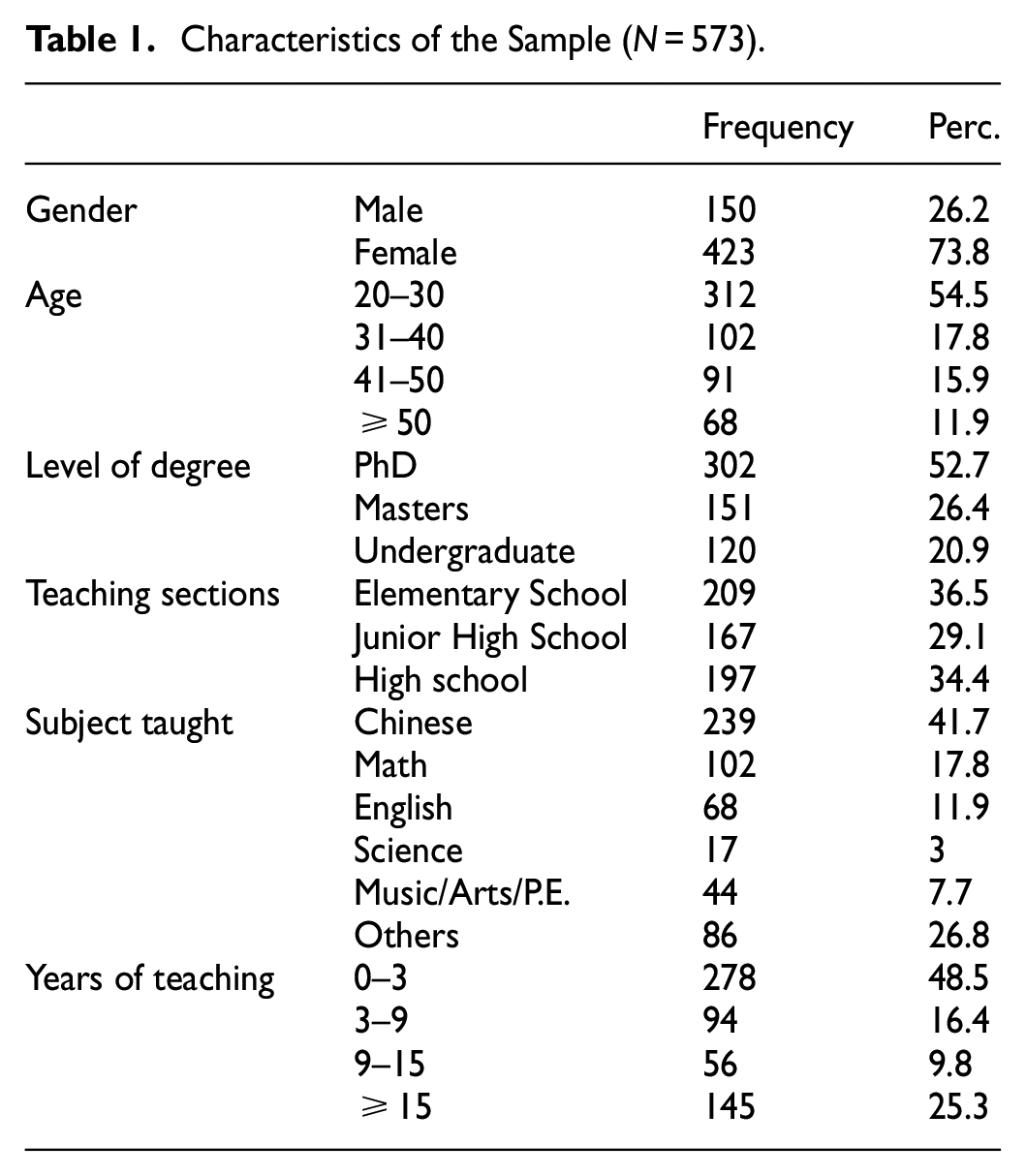
Informed consent was obtained verbally from all participants before participation. All participants voluntarily agreed to take part and consented to the publication of the research findings. Their information was anonymized to ensure confidentiality, and they were aware that the study design posed no foreseeable risks of harm to the participants. Before conducting statistical analysis, variables were checked for outliers and normal distribution characteristics. Using standardized scoring to screen for univariate outliers, absolute values greater than 2 were considered potential outliers. A total of 573 in-service teachers participated in the study (Table 1).
Characteristics of the Sample (N = 573).
Instruments
Ten established measurement scales were employed, after comprehensive assessment of the reliability and validity of each instrument, considering the translation and implementation of these scales within a specific educational environment. This evaluation necessitated modifications to the scales and the omission of some specific items. For instance, Sang et al. (2016) modified a TPACK scale for Chinese pre-service teachers. One item originally read, “I can structure activities to help students to construct different representations of the content knowledge using appropriate ICT tools (e.g., Webspiration, Mindmaps, Wiki)” but we revised that item to include culturally relevant tools such as Baidu.
Van Braak’s (2001) investigation entailed teachers self-reporting their perspectives regarding the use of computers in education. In the current research, selected items were adapted for use, such as “The efficiency of the learning process is increased through the use of computers.” The measurement of teaching goal orientation incorporated mastery and performance pedagogy subscales. An example of a mastery goal item is “I consider how much students have improved when I give them report card grades,” and a performance goal orientation example statement is “I give special privileges to students who do the best work” (Midgley et al., 2000). The teacher self-efficacy scale by Tschannen-Moran and Hoy (2001) initially featured questions such as, “To what extent can you use a variety of assessment strategies?” For consistency across instruments, these items were rephrased as declarative statements (“I can use a variety of assessment strategies to some extent”). Kunter et al. (2008) evaluated teachers’ enthusiasm for the subject of mathematics and the pedagogical aspect of teaching mathematics. To make the scale usable for a wider range of studies, we modified the items, for example, replacing “I really enjoy teaching mathematics in this class” with “I really enjoy teaching in this class.”
To measure resilience, we used the Brief Resilience Scale (BRS) developed by Smith et al. (2008), which includes items such as “I tend to bounce back quickly after hard times.” The original technostress and administrative support questionnaires were sourced from Verkijika (2019) and Lam et al. (2010). However, we opted for the versions adapted by Chou and Chou (2021) to better align with our study context. An example of a technostress item includes “I felt drained from tasks requiring me to implement online teaching.” An example of an administrative support item is, “School administrators cared about the needs I have encountered in the process of online teaching.” Teachers’ workload perceptions were gauged using the 2019 TIMSS study, with items such as “I have too much material to cover in class” (Fishbein et al., 2021). Finally, assessment of teachers’ CI to engage in online teaching was based on a questionnaire by Panisoara et al. (2020), including items like, “I intend to use online tools for remote teaching in the future.”
Data Analysis
Data analysis consisted of two stages. First, SPSS 24 was used for descriptive statistical analysis. Then, the structural equation modeling (SEM) approach took place using Mplus 8.3 (Muthén & Muthén, 2017) to scrutinize the model fit and effect analysis.
Results
Analysis of the Measurement Model
Table 2 shows the skewness and kurtosis values were less than 3.00 and 8.00, respectively. Thus, all the constructs conform to the normal distribution (Kline, 2023). Factor loadings for all items were between .436 to .909, above the recommended value of 0.40 (Hair et al., 2014). The composite reliability (CR) and AVE values were checked for convergent validity. All AVE values were higher than .40, and CR values were above .60, indicating acceptable convergent validity (Nunnally & Bernstein, 1994). The measurement model fit was good with values of χ2/df = 2.341 (p < .01), CFI = 0.913, TLI = 0.905, RMSEA = 0.048, and SRMR = 0.048. Table 3 shows that the square root of the AVE statistics for each component was higher than its correlation with other components, indicating good discriminant validity.
Results of the Descriptive Data and Measurement Model.

Note. RE = Resilience; SE = Self-efficacy; TE = Teaching enthusiasm; MGO = Mastery goal orientation; PGO = Performance goal orientation; AT = Attitudes toward the use of technology in education; AS = Administrative support; CI = Continuance intention.
Results of Discriminant Validity.

p < .05; **p < .01.
Testing the structural model and hypotheses.
Table 4 shows a moderately acceptable model fit with χ2/df = 2.350, GFI = 0.854, CFI = 0.913, and RMSEA = 0.049.
Model-fit Indices for the Model.

The findings supported seven out of the 18 hypothesized paths. Figure 2 indicates the relationships among the variables in the structural model. SEM revealed that technostress and performance goal orientation had a significant negative impact on CI, while attitude and administrative support scores had a significant and positive impact on CI. Furthermore, performance goal orientation, resilience, and administrative support indirectly influence CI through technostress. By contrast, TPACK, mastery goal orientation, self-efficacy, teaching enthusiasm and workload had no impact on CI. Comparing the standardized path coefficients, attitudes toward the use of technology in education seem to have the strongest effect on the CI of the model.

Results of the final model.
Discussion
This study demonstrated that three of the seven teacher individual-level variables directly predicted CI: technostress, performance goal orientation, and technology attitudes. Of these, the first two were significantly negatively correlated with CI, meaning that teachers who perceived more technostress and scored high on performance-based goal orientation were more likely to resist continuing online teaching in the future. This observation aligns with preceding studies (Al-Emran et al., 2020), and may be attributable to the intensification of teachers’ feelings of exhaustion due to technostress, as suggested by Hossain et al. (2021). Additionally, teachers with a performance goal orientation were prone to experience more technostress. Thus, they preferred less challenging tasks and were less inclined to engage in complex, online teaching that required new technological skills, a conclusion that echoes the findings of Kucsera et al. (2011) and is partially supported by Noe (2008). Conversely, positive attitudes toward technology facilitate sustained technology use in education, aligning with Chen et al. (2021) and Khlaif et al. (2023), who emphasize the importance of attitudes in the initial adoption and long-term integration of technology in education. This finding underscores the pivotal role of teachers’ attitudes in fostering sustained engagement with online teaching, making it a central factor for the successful continuation of digital education practices.
Of the remaining four personal variables, TPACK and resilience indirectly predicted teachers’ CI through technostress. Specifically, a greater mastery of TPACK, higher levels of enthusiasm, and greater resilience were associated with lower technostress, which in turn supported the continued use of online teaching. However, the anticipated link between self-efficacy, teaching enthusiasm, and CI or technostress was not substantiated, which differs from previous studies (Kwon et al., 2019). This deviation may stem from the diminishing influence of self-efficacy and enthusiasm over time, particularly in high-stress teaching environments where technostress exerts a predominant effect. This study was distinguished by its focus on teachers’ willingness to continue online teaching in the long term rather than the initial adoption of technology. Most research has prioritized adoption intentions, leaving a gap in understanding teachers’ long-term commitment to online teaching. This shift in focus is crucial because it moves beyond the initial phase of technology acceptance and addresses the sustainability and scalability of online teaching practices.
Viewed through an environmental lens, the results of this study disclose a notably positive correlation between administrative support and CI. By contrast, a negative relationship was found between administrative support and technostress, highlighting the essential role of administrative support as a cornerstone in bolstering teachers’ capacity to navigate and implement teaching within technologically enhanced educational settings. When teachers receive strong support from school administration, such as professional development opportunities, technical assistance, and encouragement, they are more likely to overcome the challenges posed by online teaching environments. Literature corroborates this observation, recognizing school support as a key indicator of teachers’ intention or preparedness to engage in online teaching (Scherer et al., 2021).
Conversely, no substantial link was observed between workload and CI or technostress. This is consistent with Hunutlu and Küçük (2022), who noted that variations in workload did not significantly alter teachers’ use of technology tools. A possible explanation is that teachers may perceive workload increases differently depending on how they assess their overall teaching efficiency. If they view additional tasks as necessary but manageable adjustments rather than excessive burdens, their stress levels may remain stable. Furthermore, administrative support may act as a mitigator. When schools provide adequate resources, training, or digital tools, teachers may feel more equipped to handle increased responsibilities without experiencing heightened technostress.
Implications
The findings of this research hold considerable implications for enhancing online teaching methodologies and refining professional development initiatives for educators, necessitating comprehensive support across theoretical, practical, and policy domains.
First, the findings indicate that positive attitudes toward technology significantly enhance teachers' continuance intention to teach online. Thus, all educational stakeholders should prioritize fostering positive technology attitudes among educators, ensuring that professional development initiatives emphasize the long-term benefits of online teaching, not just the technical skills. This can be achieved through technology incentive systems. Implement a system of recognition and rewards for teachers who show initiative in adopting technology. This could involve public acknowledgment, certificates, or even professional development credits. Moving beyond externally imposed compliance measures, efforts should focus on cultivating teachers’ internal drive for online teaching.
Second, this study reveals that technostress and performance goal orientation negatively impact teachers’ continuance intention to teach online. Therefore, caution is advised regarding performance-oriented goals because competitive and evaluative goal structures may inadvertently deter educators from embracing complex digital tools and undertaking challenging tasks. Scholars and practitioners are encouraged to explore alternative motivational frameworks, such as mastery-based goal orientation, which emphasizes personal growth over external validation, thereby mitigating technology-related stress and avoidance behaviors. In addition, mentorship programs and peer learning networks could be established, alleviating the anxiety associated with technology. Simulated teaching environments, such as sandbox platforms, could also provide teachers with low-risk opportunities. Concurrently, structured stress management interventions should be implemented, including regular “tech-free” periods, psychological support services, and workload redistribution policies, which are all aimed at preventing burnout.
Third, the research further demonstrates that resilience and administrative support indirectly influence teachers’ continuance intention through technostress. To address this, proactive and structured support mechanisms must be prioritized. In mainland China, where schools and government agencies are primarily responsible for teacher professional development, sustained investment in technological infrastructure, including high-speed internet, updated software, and digital learning tools, is necessary to bridge accessibility gaps. Institutionalized technical support teams should be available to offer real-time IT troubleshooting and pedagogical guidance, reducing frustration and bolstering confidence.
Future research should consider exploring these dynamics, particularly the role of technostress and performance goal orientation, which were found to negatively impact teachers’ continuance intention to teach online, in diverse cultural contexts and incorporating multi-source data to further validate and extend these findings. Additionally, given that resilience and administrative support were shown to indirectly influence online teaching sustainability, further studies should explore how these factors operate across different educational systems. By addressing these issues, the educational community could develop policies that provide more support for teachers, ensuring the sustainability of their participation in online teaching and long-term success in the evolving landscape of educational modernization and digital transformation.
Limitations
The research has some limitations. First, we relied on self-reported data regarding the use of online teaching tools, which may not fully capture actual usage patterns. Future studies could enhance data accuracy by incorporating observational or multi-source approaches. Second, the theoretical framework and instruments administered warrant further refinement. For example, we measured teacher self-efficacy rather than teacher computer self-efficacy, which may have influenced the final results. Third, the cultural context of this research was confined to Chinese society, suggesting a need for replication across diverse cultural settings to validate the findings.
Conclusion
This study uniquely focused on teachers’ long-term willingness to sustain online teaching rather than their initial adoption, as it better predicts the success of online teaching. The comprehensive analysis revealed a negative correlation between technostress, performance-based goal orientation, and teachers’ CI, whereas positive attitudes toward technology and strong administrative support serve as driving factors. Resilience and administrative support also indirectly alleviate technostress, highlighting their importance in addressing online teaching challenges. On the basis of these insights, we offer theoretical, practical, and policy recommendations, such as establishing mentorship programs and peer learning networks, implementing structured stress management interventions, increasing investment in technological infrastructure, and creating technical support teams to provide teachers with real-time assistance and guidance. Future research should consider exploring these dynamics in diverse cultural contexts and incorporating multi-source data to further validate and extend the findings. By addressing these issues, the education sector could develop more effective policies to support teachers, ensure the sustainability of their continued engagement in online teaching, and navigate the ongoing evolution of educational modernization and digital transformation.
Footnotes

Ethical Considerations
This study was approved by the Research Ethics Committee of the Faculty of Education at Beijing Normal University (approval no. BNU202401100003) on March 8, 2024.
Consent to Participate
Informed consent was obtained verbally from all participants before participation. All participants voluntarily agreed to take part and consented to the publication of the research findings. Their information was anonymized to ensure confidentiality, and they were aware that the study design posed no foreseeable risks of harm to the participants.
Funding
The author(s) disclosed receipt of the following financial support for the research, authorship, and/or publication of this article: This work was supported by the [Fundamental Research Funds for the Central Universities] under Grant [number 2022NTSS17]; and the China Association of Higher Education under Grant [number 23JS0306].
Declaration of Conflicting Interests
The author(s) declared no potential conflicts of interest with respect to the research, authorship, and/or publication of this article.
Data Availability Statement
All data generated or analyzed during this study are included in this published article [and its supplementary information files].