




Abstract
In recent years, there has been a notable increase in empirical research on counterproductive work behavior (CWB), owing to its widespread prevalence among employees and its adverse effects on organizations and individuals. Despite the abundance of research on this topic, no comprehensive effort has been made to provide an integrative review to reveal the development of this body of knowledge. The objective of this study is to scrutinize the literature on CWB, identifying the most influential publications, leading universities, the most prolific and highly cited scholars, and seminal studies in the field. The Web of Science (WoS) database was systematically searched from 2001 to 2023 using bibliometric analysis. The findings revealed that interest in CWB, primarily within the disciplines of management, business, and psychology, continues to exhibit a sustained upward trend. The analysis indicates a significant increase in publications on counterproductive work behavior (CWB) since 2001, with the USA emerging as the most productive and influential countries based on publication and citation metrics.
Keywords
Introduction
One of the main themes in the field of Industrial/Organizational Psychology is the development of work behavior models that reveal the links between individual differences and components of job performance. Understanding these links is important since they enable organizations to select individuals with traits associated with desired workplace behavior; when it comes to a historical perspective, studies conducted on personnel selection have primarily focused on candidates who seem to have been engaged in the desired job behavior (i.e., candidates who are likely to generate high-quality work). However, based on recent studies, interest in this subject matter started to increase based on the idea that dysfunctional workplace behaviors should be examined as another important behavioral class representing a component of job performance (Gruys & Sackett, 2003; Mount et al., 2006).
Dysfunctional behaviors, which constitute significant violations of established workplace norms, can be highly detrimental to overall organizational performance. These behaviors typically involve voluntary actions that have the potential to harm both the organization and its members. Within the work environment, such dysfunctional conduct may adversely affect employees’ sense of self-worth, elevate stress levels, and disrupt interpersonal relationships with colleagues. Consequently, these negative outcomes can lead to decreased job satisfaction, motivation, and individual performance, ultimately impairing the organization’s overall effectiveness and public image (Burlita & Rudawska, 2021). Therefore, it is imperative for organizations to take proactive measures to minimize, manage, or prevent such behaviors, as they may result in substantial financial and reputational costs, and may also expose the organization to legal liabilities (Van Fleet & Griffin, 2006).
Dysfunctional behaviors encompass a wide spectrum, ranging from relatively minor infractions—such as wearing inappropriate attire, consuming alcohol, smoking, exhibiting improper conduct, speaking loudly, or arriving late—to more severe actions involving sabotage or acts of violence directed at individuals or the organization as a whole (Griffin & Lopez, 2005; Van Fleet & Griffin, 2006). Despite varying in severity, these behaviors share a common underlying intention to harm the organization and are therefore classified as CWB (Anjum & Anjum, 2013).
CPW is defined as voluntary behaviors that are associated with potentially destructive or harmful actions, violate organizational norms, and negatively impact the well-being of both employees and the organization (Robinson & Bennett, 1995; Spector & Fox, 2005). The growing prevalence and substantial costs of such behaviors in organizations have made this issue an increasing focus of attention for both researchers and practitioners (Penney & Spector, 2002). In addition to causing financial losses, workplace deviance can have negative psychological effects on employees. Employees who are the target of or witness to deviant behavior may experience mental and emotional stress, frustration, confusion, anger, fear, or alienation, which can reduce employee satisfaction, self-esteem, and performance, all of which impact organizational environments, efficacy, and long-term success, thereby disrupting relationships (Chaudhary et al., 2022). Given the detrimental effects of the CWB on the organization and employees, a great many studies (Chinwuba, 2023; Pugliese et al., 2024; Romascanu & Dan Florin, 2023; Sackett, 2002; Spector et al., 2006) have been conducted to examine its dimensions, measures, predictors, and relationships with other employee volunteer behaviors (e.g., organizational citizenship).
Within the scope of the present study, studies available in the Web of Science Core Collection database on CWB were examined using bibliometric analysis. This study aims to reveal the most influential publications, leading universities, the most productive and most-cited academics, and pivotal studies in the field and to make suggestions for future research directions. Accordingly, this study conducts a systematic analysis of publications focusing on CWB and seeks to address the following research questions.
What are the main types of documents published, and how are they distributed?
How are the documents distributed across different citation indexes?
How have publication and citation trends changed over time?
Which countries, institutions, and authors are the most productive and influential based on publication and citation metrics?
Which journals are the most active and receive the highest number of citations?
Which documents have received the highest citations and can be considered the most influential?
What are the most frequently used author keywords, and what do they indicate about the thematic focus of the literature?
What are the collaboration patterns among authors?
By systematically addressing these research questions, this study endeavors to provide a comprehensive and structured overview of the current landscape of CWB research. It is crucial to uncover the emerging trends and research components related to the CWB concept, which have been extensively studied through meta-analyses and empirical research by scholars from different countries. This study contributes to a deeper understanding of the potential developments of this concept.
Literature Review
CWB, which is common among employees in many organizations, is often defined in two ways. Sackett and DeVore (2005) adopted an organizational perspective, defining CWB as actions that go against an organization’s legitimate interests. The specific behavior listed by the authors is primarily target-get organizations, although it also includes inappropriate verbal (harassing a co-worker) and physical (attacking a co-worker) actions. Spector and Fox’s (2005) definition adopts the employee perspective, stating that CWB consists of behaviors that harm or aim to harm others or organizations. In this definition, CWB does not necessarily, at least not directly, harm the organization, which may be the biggest difference between the definitions (Spector, 2010).
CWB includes behaviors such as theft, sabotage, interpersonal aggression (both physical and verbal), intentionally slow work, wasting time or material, absenteeism or delay, and quitting, all of which are targeted against the organization or its members or designed to interfere with its functioning (Pratama & Parahyanti, 2019). From this standpoint, destroying organizational property, purposely doing work incorrectly, and taking unauthorized work breaks are examples of counterproductive behavior toward an organization (CWB-O); meanwhile, hitting a coworker, insulting others, being rude, and shouting at a coworker are counterproductive behaviors towards individuals (CWB-I; Cohen, 2018; Dalal, 2005; Robinson & Bennett, 1995). Many studies have examined these behaviors using different terms, such as antisocial behavior in organizations (Giacalone & Greenberg, 1997), workplace aggression (Neuman & Baron, 1998), and workplace deviance (Robinson & Bennett, 1995). Despite the differing terminology and theoretical bases used to define CWB, researchers agree that such behaviors are harmful to organizations and those associated with the organization (e.g., employees and customers), and include voluntary behavior (Penney & Spector, 2002).
Many researchers have conducted studies revealing both situational and individual antecedents of CWB to reduce their emergence, as they create significant problems in the functioning of organizations. From a situational perspective, CWB has traditionally been studied within the conceptual framework of several theories (e.g., equity theory, leader-member exchange, and social exchange theory). Therefore, several studies have focused on identifying environmental or situational predictors of CWB, such as under-distribution, and procedural or interactional justice (Penney & Spector, 2002). Accordingly, employees who are dissatisfied with the results of their work experience are more likely to engage in CWB when they attribute the cause of the results to the injustice of the organization (Martinko et al., 2002; Wilden 2022). The results of many studies examining the relationship between CWB and the perception of injustice (Aquino et al., 1999; Skarlicki & Folger, 1997) also reveal a relationship between employees’ perceptions of injustice and their deviant behavior that violates organizational norms to retaliate against the organization.
The interaction between employees and employers, which includes a simple understanding of mutual exchange, is based on the theory of social exchange. According to the social exchange theory, employees and employers establish an interdependent relationship in which one party’s behavior influences the other (Blau, 1964; Guay et al., 2016). If employees feel that their employer does not properly appreciate their efforts, they may behave rudely and engage in deviant behavior (Chaudhary et al., 2022). Job characteristics, such as task diversity, job autonomy, and job demands, are situational factors that may influence the presence of CWB. In this context, employees with low task diversity (few repetitive tasks) and low job autonomy (inability to decide how and when a job is to be completed) may exhibit more unproductive work behaviors than those with more task diversity and more autonomous jobs (Wilden, 2022).
The leader–member exchange (LMX) approach, developed by applying social change theory to organizational research, reflects the evolving relationships between employees and their managers. Perceived LMX interaction, which refers to the quality of relationships between leaders and group members or supervisors and subordinates, has a significant impact on employees’ perceptions of the workplace. High-quality LMX indicates a strong level of information exchange, interaction, trust, respect, consideration, support, mutual influence, and rewards. Meanwhile low-quality LMX suggests limited interaction, trust, formal relationships, unilateral influence (manager-employee), limited support, and few rewards (Bauer & Green, 1996). These varied relationships between managers and subordinates can lead employees to perceive injustice in certain situations (Chernyak-Hai & Tziner, 2014).
Similar to the situational approach, a substantial amount of research shows a correlation between personality traits and CWB (Douglas & Martinko, 2001; Hershcovis et al., 2007; Penney & Spector, 2002; Spector, 2010). Personality traits can influence how individuals perceive their environment, interpret events, regulate emotions, and control aggressive impulses (Spector, 2010). Research has linked both specific traits, like trait anger (Douglas & Martinko, 2001; Fox & Spector, 1999), and broader traits from the Five Factor Model—such as agreeableness, conscientiousness, and emotional stability (Berry et al., 2007)—to CWB.
One of the important personality traits potentially associated with the CWB, is trait anger, which is considered a manifestation of behavioral tension; it refers to the possibility of individuals perceiving a wide variety of situations as anger-inducing (Fox et al., 2001; Spielberger et al., 1988).
Individuals with high levels of trait anger are more likely to experience emotional anger (distress, anger, and related physiological arousal) when faced with frustrating or disturbing circumstances (Fox & Spector, 1999). Research (Deffenbacher, 1992; Fox & Spector, 1999) has shown that individuals with a high level of trait anger experience more frequent and intense anger daily in the face of provocative events, show stronger tendencies to respond to provocations with physical and verbal hostility, and are less likely to engage in constructive behavior. Therefore, employees with high trait anger levels are highly likely to respond to organizational pressures with behavioral anger (Ilie et al., 2012).
As important determinants of individual behavior in the workplace (Penney et al., 2011), conscientiousness and agreeableness, as dimensions of personality, are the two personality traits that have the strongest relationships with CWB, even if they are negative (Salgado, 2002). The negative correlation between conscientiousness and CWB can be attributed to individuals’ higher ability to control their impulses; meanwhile, the negative correlation between agreeableness and CWB may be rooted in the fact that people with high agreeableness tend to avoid conflict in the workplace, and that maintaining harmony within the group is the highest priority (Pashiri, 2016).
Defined as behavior aimed at harming the organization and its members (Spector & Fox, 2005), CWB has emerged as a serious, destructive organizational problem that can cause financial losses and negatively affect employees’ emotional well-being. Costs based on discretionary employee behaviors such as theft and fraud are estimated to be billions of dollars per year. Additionally, the number of lawsuits filed for alleged corporate harassment or abuse is increasing, imposing additional costs on businesses (Ferris et al., 2012). As organizations try to compensate for resources lost due to deviant behavior, they often raise prices and lower incentives, but those who cannot bear these costs file for bankruptcy. Therefore, these factors negatively affect the economy and organizations in the long run (Chaudhary et al., 2022).
Method
Bibliometric analysis, which has gained significant popularity in recent years in social science research owing to the development of bibliometric software and increased database accessibility, is employed for the quantitative analysis of written publications. Academics use bibliometric analysis for various purposes, including unveiling emerging trends in article and journal performance, exploring collaboration models and research components, and investigating the intellectual structure of a specific field within existing literature (Donthu et al., 2021; Ellegaard & Wallin, 2015). In the present study, using bibliometric analysis, the literature on the subject was systematically examined. This study presents a comprehensive view of the literature in the context of authors, articles, journals, institutions, countries, and keywords.
Data Collection
The Web of Science database was used to obtain data. The Web of Science database contains approximately 34,000 journals, books, proceedings, 155 million records, and 7.3 million data (Birkle et al., 2020). The Web of Science database is frequently preferred (Birkle et al., 2020) for its extensive coverage by researchers of data attainment in bibliometric studies. The search was conducted in the fields of title, abstract, author keywords, and Keywords Plus the keyword “counterproductive work behavior” in February 2023. The search yielded 743 studies conducted between 2001 and 2023. In this study, no exclusion criteria were applied and all records retrieved from the database by document type (e.g., articles and reviews), time period and language were included in the analysis. This inclusive approach enables an extensive identification of the domain and mitigates bias resulting from arbitrary filtering. The dataset encompasses all elements of the chosen research domain as represented in the database. Data were exported as two sets of text files with full records and cited reference options.
Data Analysis
Analyses were conducted using VOSviewer version 1.6.18 (van Eck & Waltman, 2010), R 3.3.0 (R Core Team, 2023), R Studio (version 2022.12.0-353; Posit team, 2023), Bibliometrix and Biblioshiny (Aria & Cuccurullo, 2017), and Microsoft Excel 365 Apps for Enterprise (Microsoft Corporation, 2021). and Harzing’s Publish and Perish 8.8.4275.8412 (Harzing, 2023).
To explain the implications of the network maps, the thickness of the lines, the size of the nodes, and the distance between them should be examined. Accordingly, as the distance between nodes decreases, the level of association increases, indicating close bonds between nodes (van Eck & Waltman, 2010). Moreover, the scale of the nodes indicates the frequency of the items, and the thickness of the lines between the nodes indicates the recurrence of both items together (Moosa & Shareefa, 2020).
Results
An Overview of Descriptive Results
The results of the CWB keyword search in the WoS database extracted 743 studies. Most of these publications were research articles, and the second most common type of document was book chapters. The majority of publications were indexed in the SSCI, and the second most common index was ESCI. However, due to cross-indexing, some publications were indexed to more than one index. Table 1 presents detailed data regarding document types and indices.
Publication Types and Indexes.

Figure 1 shows the distribution of the total publications and citations between 2001 and 2023. Table 2 provides detailed results regarding the total publications, total citations, cited reference count, average citations per publication, and average citations per cited publication per year. The results indicated an increasing trend in the number of publications. Although there was an increasing trend in total citations, there was a declining tendency after 2019, whereas the cited reference count continued to increase.

Number of publications and citations per year.
Number of Publications and Citations.

Table 3 presents the distribution of the languages used in the publications. The most commonly used language in the publications was English, and the next second most frequently used language was German. The remaining papers were published in Czech, Dutch, Italian, Turkish, Chinese, Croatian, French, or Russian languages.
Distribution of Used Languages in the Publications.

Analysis of Most Productive and Highly Cited Countries
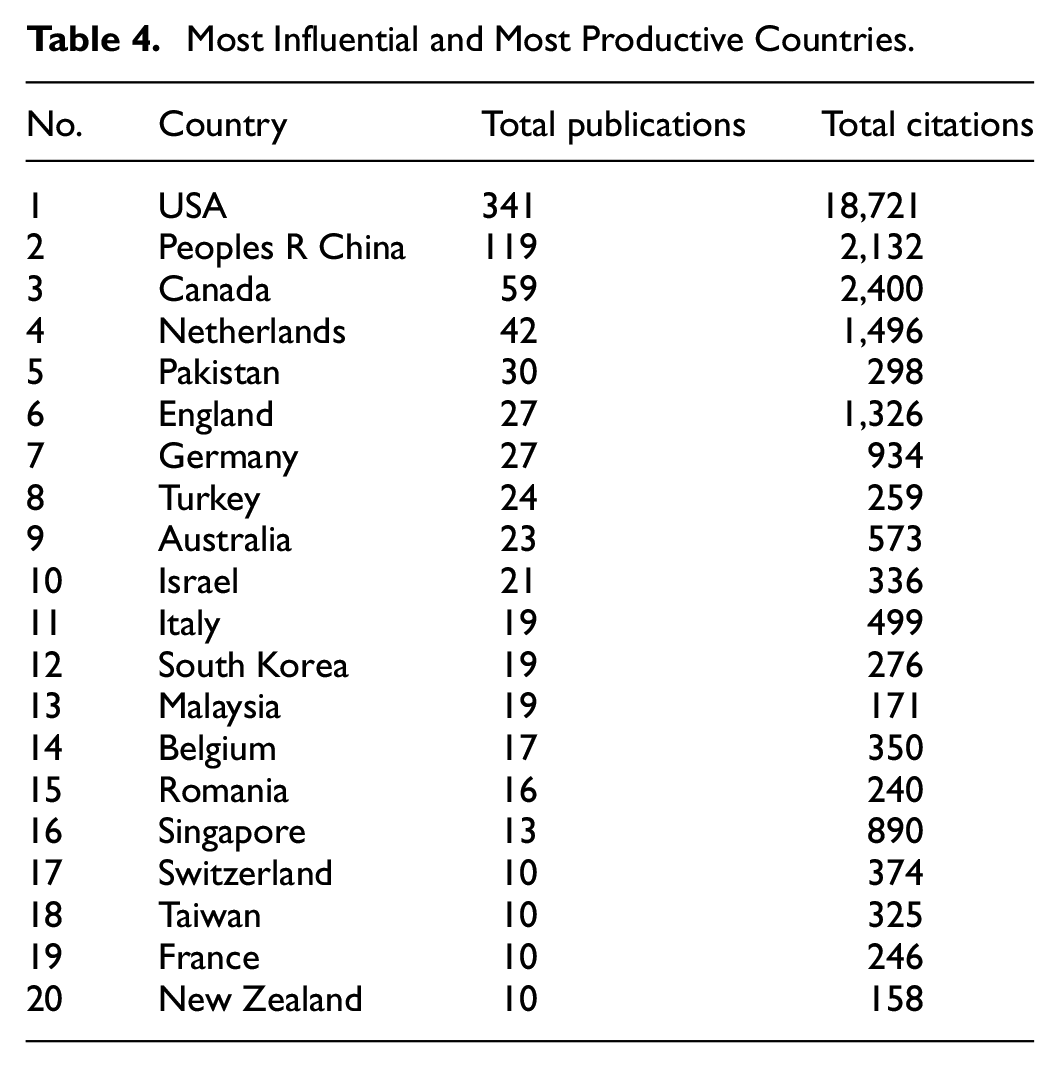
Figure 2 illustrates the network visualization of the most influential countries in studies related to CWB. According to the results of the analysis, studies on CWB originated from 62 countries. Most of these studies were conducted in the USA (341). The USA is followed by China (119), Canada (59), the Netherlands (42), and Pakistan (30). The analysis revealed that the USA ranked first with the highest number of citations (18,721). Canada ranked second in citation counts (2,400), followed by China (2,132), the Netherlands (1,496), and England (1,326). The total number of publications and citations in each country are presented in Table 4.
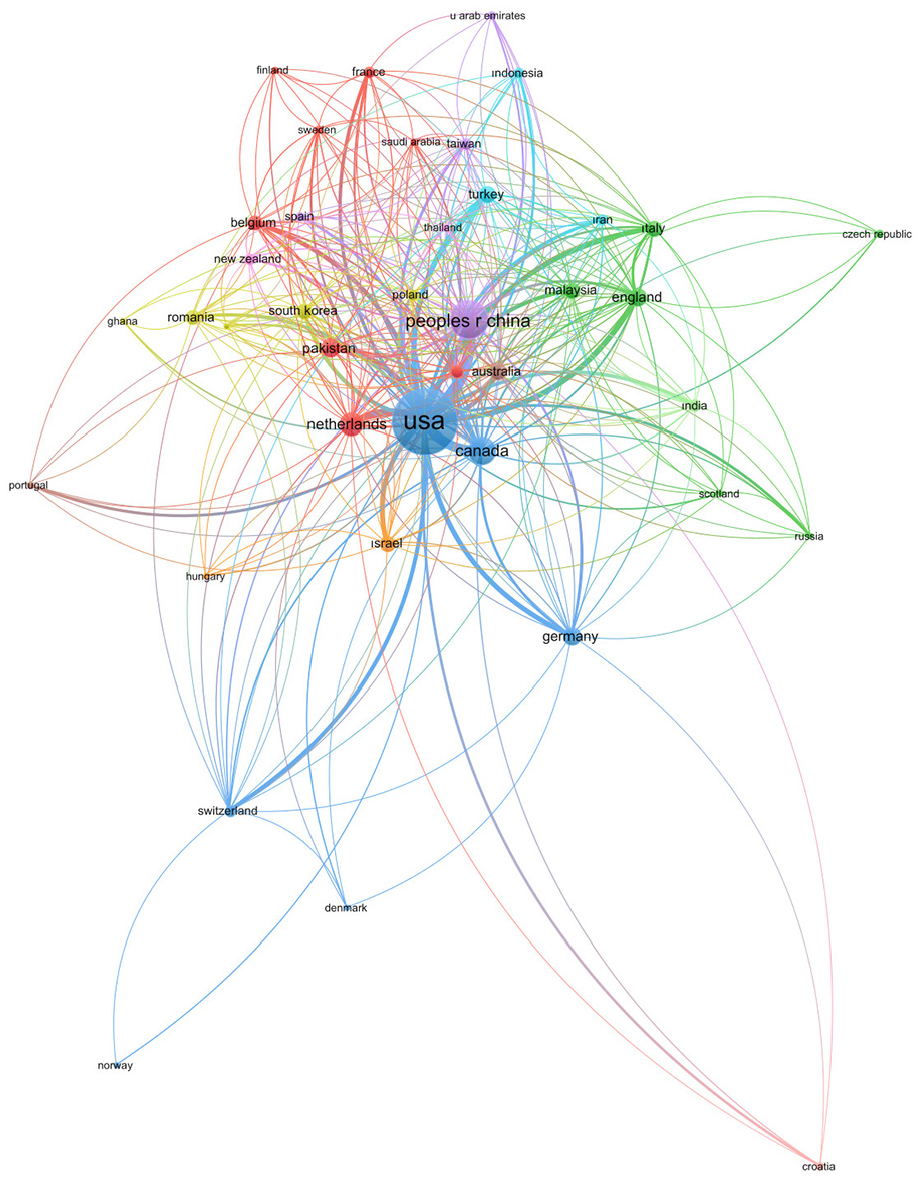
Network visualization of most influential countries.
Most Influential and Most Productive Countries.
Analysis of Most Productive and Highly Cited Institutions
Figure 3 shows a network visualization of the most influential institutions regarding CWB. Table 5 presents the top 20 most productive and highly cited institutions among the 813 that contributed to the publication of CWB. The analysis results revealed that the University of South Florida took the first place with the greatest number of publications (38). This was followed by the University of Illinois (16), Purdue University (14), and University of Oklahoma (13). In the ranking of the top 20 institutions contributing to publications on CWB, the USA led with 17 universities on this list, whereas Canada, Singapore, and the Netherlands took part in this ranking with one university each.
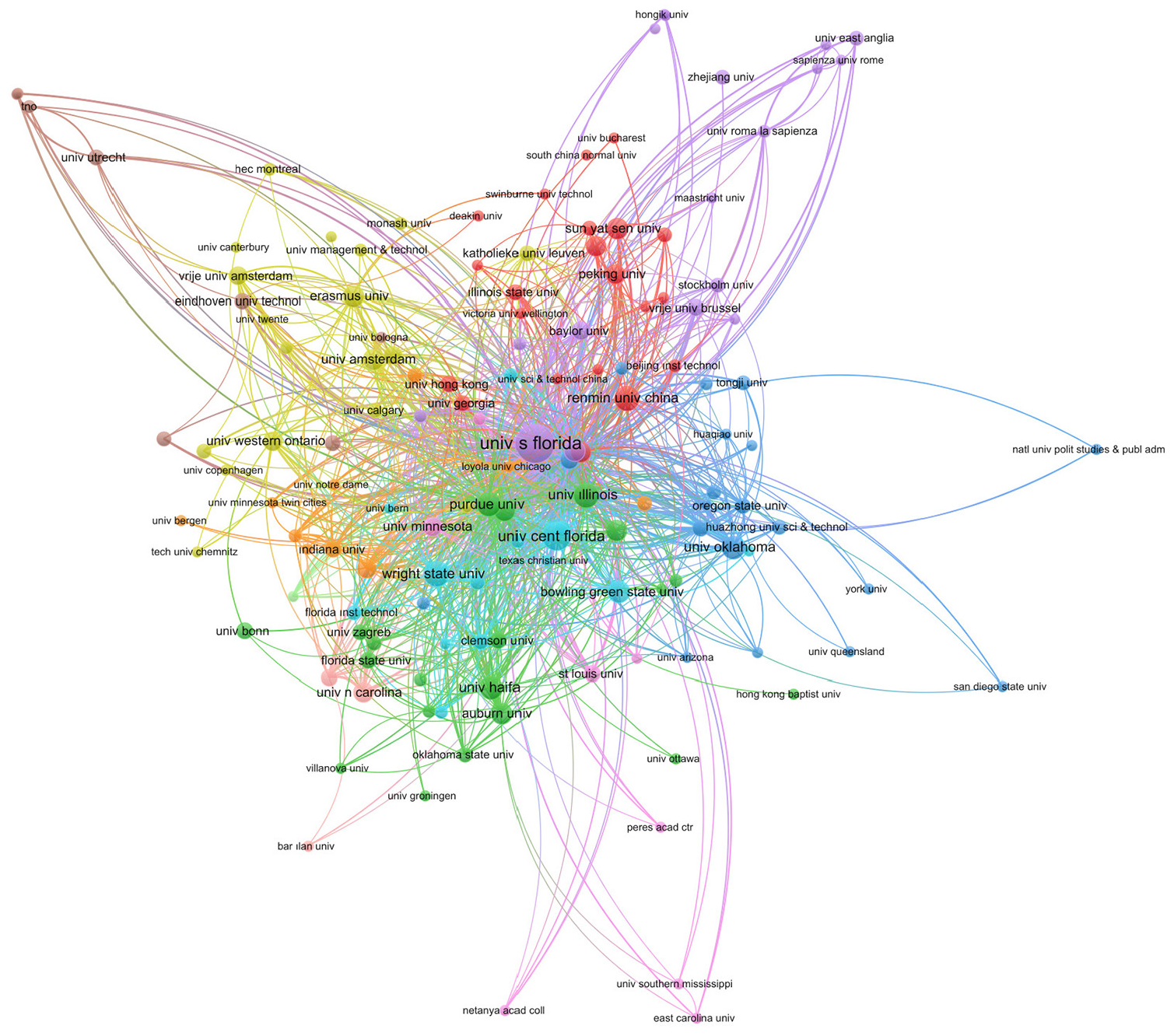
Network visualization of most influential institutions.
Most Influential and Most Productive Institutions.

University of South Florida has the highest number of citations (3,707) as well and it ranks as one of the most productive institutions. This was followed by Loyola University (1,853), Purdue University (1,790), and University of Houston (1,760). The analysis revealed that universities in the USA appeared to be the most influential institutions with a high number of citations as well as their contributions to the number of publications.
Analysis of Most Active and Highly Cited Journals
Figure 4 illustrates the network visualization of the most active and highly cited journals on CWBs. According to the analysis results, the most active journal was Frontiers in Psychology (35), followed closely by the Journal of Applied Psychology (34), Journal of Business Ethics (28), and Personality and Individual Differences (25).
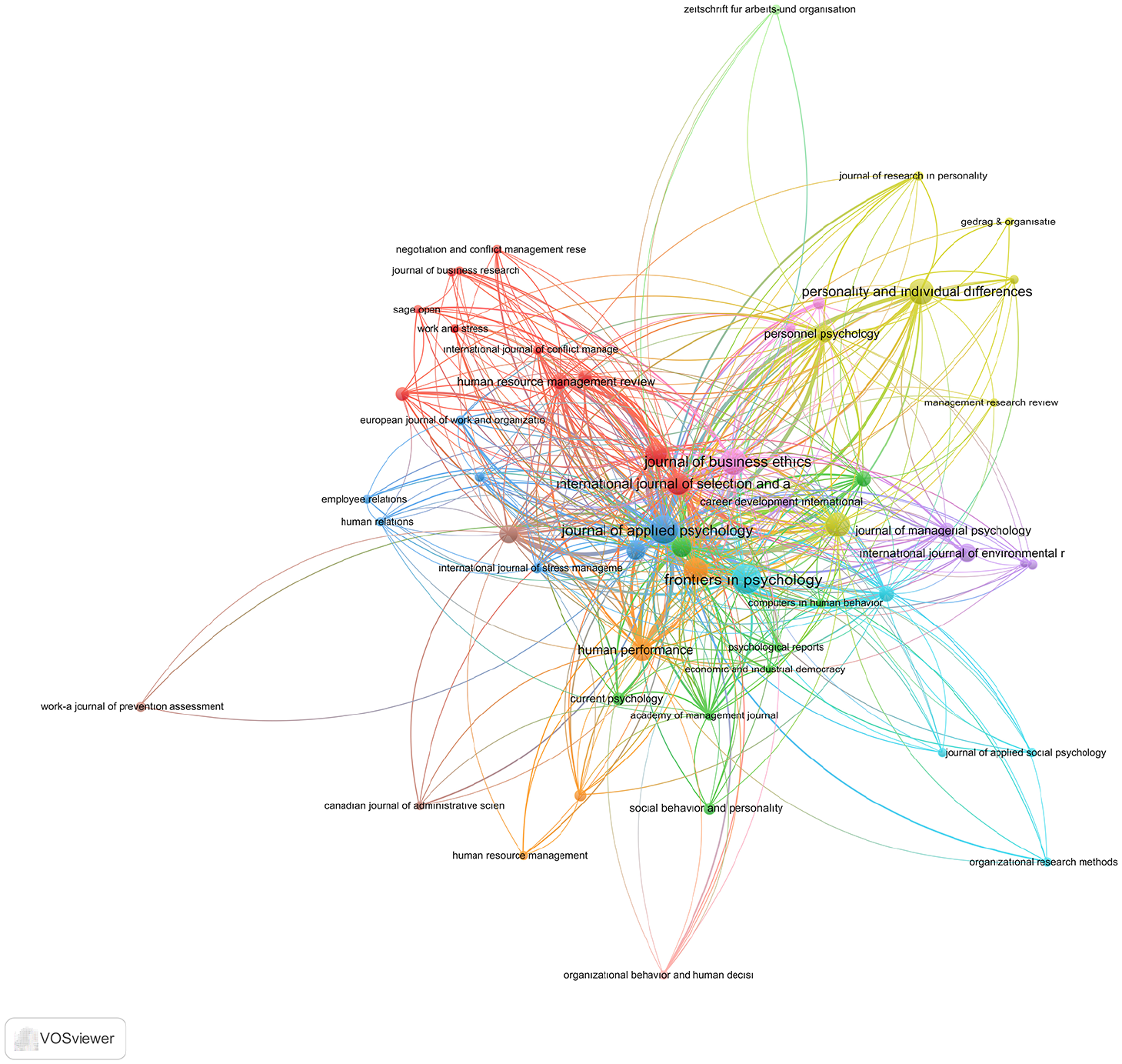
Network visualization of most active and highly cited journals.
Considering the most influential journals, as seen in Table 6, although the Journal of Applied Psychology ranked second in terms of the number of publications, it ranked first in terms of the number of citations (5,916). This was followed by the Journal of Organizational Behavior (2,042), Journal of Vocational Behavior (2,005), Journal of Business Ethics (1,256), and Journal of Occupational Health Psychology (1,236).
Journals’ Impact.

Analysis of Most Productive and Influential Authors
Figure 5 shows a network visualization of the most productive and influential authors on CWB. As shown in Table 7, Paul E. Spector (28) was the most productive and influential author, followed by Nathan A. Bowling (15), Suzy Fox (11), and Roberta Fida (10). Paul E. Spector was also the most influential author, with the highest number of citations (3,279), followed by Suzy Fox (2,210), Penney (1,641), Berry (1,491), Reeshad Dalal (1,358), and Nathan A. Bowling (1,121).

Network visualization of most influential authors.
Authors’ Impact.

Analysis of Highly Cited Documents
Figure 6 illustrates the network visualization of the most influential articles on CWBs. As shown in Table 8, the article with the highest number of citations was authored by Berry et al. (2007) in the Journal of Applied Psychology (768). This paper was followed by an article written by Dalal (2005) in the Journal of Applied Psychology (752) and by Bowling and Beehr (2006) in the Journal of Applied Psychology (737). All three influential papers were meta-analyses and were published in the Journal of Applied Psychology.

Network visualization of most influential documents.
Most Influential Documents.

Analysis of Most Frequently Used Author Keywords
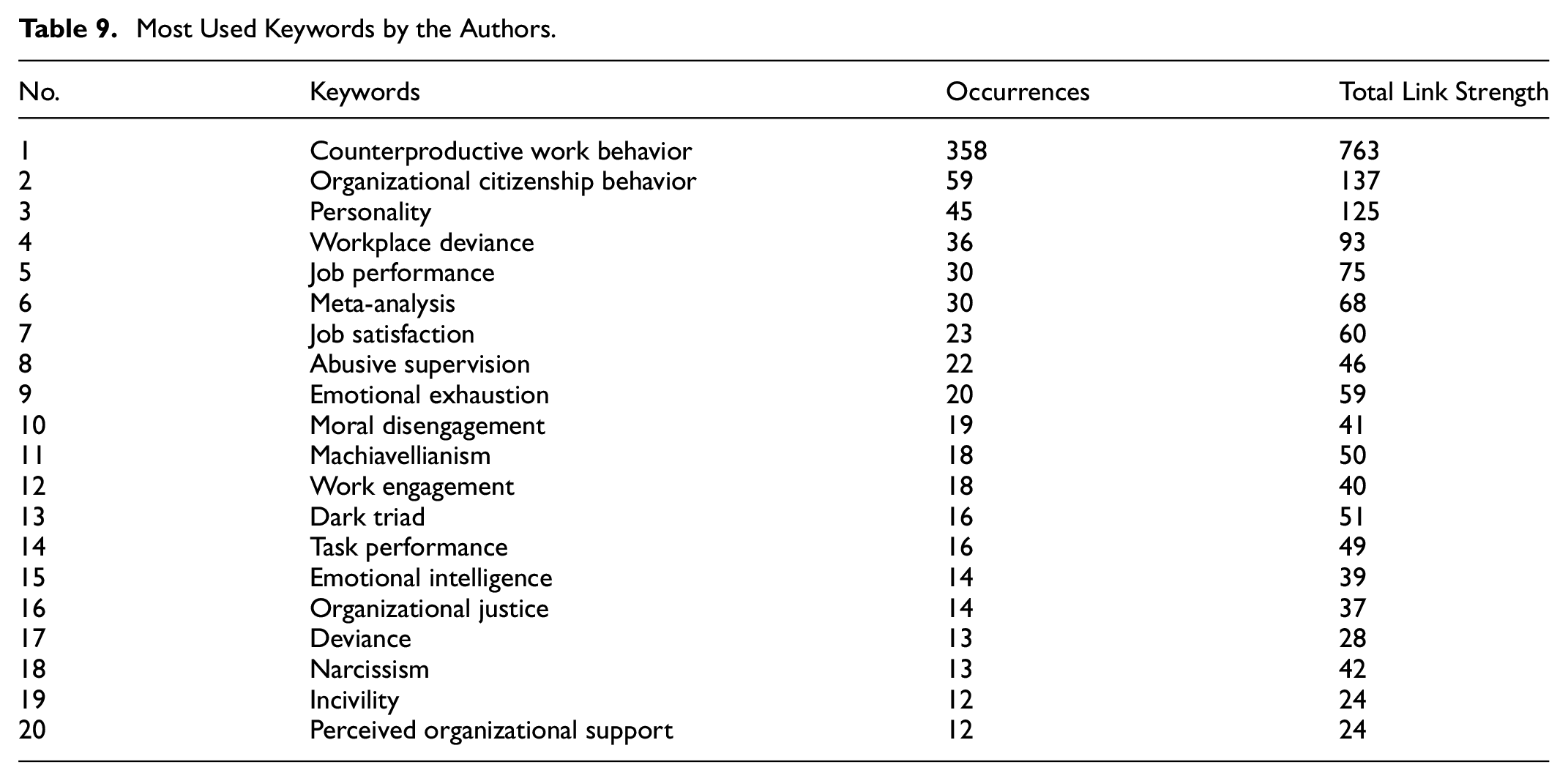
Co-occurrence analysis shows the relationships between keywords. According to the resulting map, as the distance between words decreases, the level of association increases, indicating close bonds between words (van Eck & Waltman, 2011). A total of 1,525 author keywords were used in the publications. The minimum number of keyword occurrences was set to three, and 207 author keywords met this threshold. Figure 7 illustrates the co-occurrence analysis network with 13 clusters. Each cluster indicated an associated keyword and was illustrated in a different color. The sizes and shapes of the nodes and lines indicate the intensity of the relationships between keywords (Mansour et al., 2022). The scale of the nodes shows the recurrence of the keywords and the strength of the bonds with other keywords, whereas the thickness of the lines indicates the frequency of keyword occurrence (Molontay & Nagy, 2021; Table 9).

Network visualization of most used keywords by the authors.
Most Used Keywords by the Authors.
Co-Author Analysis of Authors (Collaboration)
Co-author analysis indicates a collaborative network between authors (Molontay & Nagy, 2021). Co-author analysis reflects the cooperation network at the individual, institutional, and international levels by analyzing author, institution, or country units (Kumar, 2015). According to the analysis, when the minimum number of publications of an author is set to three and the minimum number of citations of is set to one, 116 of the 1,726 researchers met this threshold. However, some of these 116 authors were not connected in this network; as the software suggested, the largest set of connected network results comprising 31 authors was accepted. Figure 8 illustrates the co-author network of CWB publications.

Network visualization of publication co-authors by the authors.
According to this network, eight distinct clusters showed collaboration between authors. According to general indicators in the interpretation of the network map, the size of the nodes, their colors and distances, and the thickness of the lines indicate the number of documents or citations of the authors, the strength of the link between the authors, the number of repetitions of the relationship, and the authors in the same network (Moosa & Shareefa, 2020; Wahid et al., 2020).
Discussion
CWB includes voluntary behaviors of organization members that significantly violate accepted organizational norms, harm other employees, and disrupt overall organizational performance. In recent years, with advances in technology and globalization, new behaviors such as cyberloafing, cyberbullying, and addiction to online activities (e.g., shopping sites and news) have become common among employees in many organizations. CWB has garnered the attention of researchers and practitioners owing to its substantial financial impact, causing billions of dollars in damage to organizations annually. Researchers from various countries have conducted studies to determine when, how, and why employees engage in such behaviors to address this problem. In this context, this study aims to examine the literature on CWB and identify the most influential publications, leading universities, productive and highly cited academics, and pivotal studies in the field. To accomplish this, we conducted a bibliometric analysis of the Web of Science (WoS) database from 2001 to 2023.
Out of the 743 studies extracted from the Web of Science (WoS) database, the majority consist of research articles indexed in Social Sciences Citation Index (SSCI). Since 2001, there has been a notable upward trend in the number of publications on CWB. However, while the total citations exhibited an upward trend until 2019, they have been on a downward trajectory since then. The analysis revealed that the USA, Canada, and China were the most productive and effective countries in the field of CWB research, both in terms of the number of publications and citations. This is not surprising, as most CWB theories have been developed based on studies conducted in the US and Canada (Taylor, 2012). China, a country that plays an increasingly important role in the world economy, ranked second in the number of CWB studies. Due to the sharp contrast between Chinese and Western cultures, it is a suitable area for cross-cultural research on Western-centered management practices (Rotundo & Xie, 2008). Consequently, CWB has been studied extensively in the Chinese context, similar to many other concepts measured and defined in Western culture. This is probably the main reason China is one of the most studied countries.
The results indicate that the University of South Florida is the most influential institution in this field, and Paul E. Spector is the most productive and influential author in terms of both the number of publications and citations. Spector, who specializes in industrial/organizational psychology, was the first researcher to define organizational aggression as behaviors aimed at harming an organization (Spector & Fox, 2002) and label such negative behaviors as “counterproductive behavior.” As a result, Spector is the most cited author, and the University of South Florida, where he works, is prominent in CPW studies.
The most-cited articles on CWB are meta-analyses by Berry et al. (2007) and Dalal (2005), published in the Journal of Applied Psychology. Meta-analyses combine the results of multiple previous scientific studies to provide more generalizable findings (Gopalakrishnan & Ganeshkumar, 2013). They are useful in identifying what is known or not yet known about a topic, often to a greater extent than a single study (Owens, 2021). Therefore, meta-analyses of CWB are valuable resources for researchers in this field. The Journal of Applied Psychology is the most active journal in publishing research on CWB, with the two most cited publications found in this journal.
Within the scope of the study, the analysis of the relevant literature revealed that the most frequently used keywords by authors were counterproductive work behavior, organizational citizenship behavior (OCB), and personality, respectively. The predominance of counterproductive work behavior as the primary focus in the reviewed literature explains the fact that this concept ranks first in the frequency of keyword usage. Furthermore, the analyses indicate that organizational citizenship behavior is the second most frequently used keyword in studies related to CWB.
CWB and OCB are two forms of active and voluntary employee behaviors that have received significant attention in organizational behavior research (Sypniewska, 2020). While CWB refers to actions that may harm the organization, OCB encompasses behaviors intended to enhance organizational effectiveness. Initially, these two constructs were examined independently and considered as oppositional in terms of their antecedents and outcomes (Sackett, 2002; Spector & Fox, 2002). However, in subsequent research (e.g., Bennett & Stamper, 2001; Dineen et al., 2006; Kelloway et al., 2002; Miles et al., 2002) CWB and OCB began to be examined together both conceptually and empirically. This growing body of work has increasingly focused on the interplay between these behaviors, suggesting that they may not be entirely distinct or mutually exclusive (Dalal, 2005; Spector & Fox, 2010). Accordingly, examining CWB and OCB in conjunction has emerged as a prominent trend in the literature.
The results of the analysis indicate that personality is the third most prominent keyword in studies on CWB. In the theoretical model developed by Spector and Fox (2002), which integrates findings from various disciplines to explain employees’ voluntary behaviors, it was demonstrated that such behaviors can be influenced by both environmental and personal factors. Given that CWBs are voluntary and intentional actions, it has been argued that they are more likely to be shaped by individual personality traits rather than by factors such as ability (Mount et al., 2006). Supporting this view, numerous studies investigating the potential antecedents of CWB (Berry et al., 2007; Hafidz, 2012; Marcus & Schuler, 2004; Oliveira et al., 2020) have concluded that these behaviors are significantly associated with employees’ personality characteristics.
Conclusion
The present study, offering a comprehensive retrospective review of CWB research, significantly contributes to the advancement of the literature on the subject. It evaluates the evolution of this field over the past 22 years and assesses the knowledge accumulated in existing literature. This study reveals a gradual increase in interest in CWB during this period. Given the substantial direct and indirect costs associated with CWB for organizations, interest in this issue is anticipated to continue to grow. This growth is driven by the need to understand the antecedents and potential consequences of CWB better. Consequently, expanding the relevant literature by exploring the relationships between different variables and CWB in future studies is of paramount importance to gain a deeper understanding of this concept. In this context, bibliometric analysis identified the variables most frequently studied in conjunction with CWB. These findings serve as valuable guidelines for future research.
This study has some limitations. First, the analysis was confined to articles in Web of Science databases. Although the Web of Science is a globally recognized database that includes over 21,000 peer-reviewed, high-quality journals, it does not encompass all publications on the subject. Hence, future research, including the exploration of databases such as EBSCO and Scopus, may yield different results. For this study, the analysis focused on English-language articles published between 2001 and 2023, utilizing the keyword “CWB” in the WOS database. In subsequent studies, researchers can conduct a more detailed analysis by varying the criteria, such as publication type and language. Additionally, diversifying the keyword could provide access to studies addressing different dimensions of “counterproductive work behavior,” recognizing its multidimensional nature.
This bibliometric study provides comprehensive insights into the current state of the research field by evaluating the authors, countries, institutions, and journals that have contributed most significantly to the development of the CPW literature. In addition, by identifying the most highly cited publications and mapping collaboration networks, the study highlights the most influential efforts shaping the field. Through the analysis of frequently used keywords, it also reveals the most common research themes and subject areas. Despite certain limitations, this study enhances the visibility of the existing body of knowledge in the field, provides a solid foundation for future research, and enables researchers to identify emerging research trends and opportunities.
Footnotes
Acknowledgements
We would like to express our sincere gratitude to the Editor and the anonymous reviewers for their valuable comments and suggestions, which greatly contributed to improving the quality of this manuscript.

Ethical Considerations
Not applicable.
Funding
The author(s) received no financial support for the research, authorship, and/or publication of this article.
Declaration of Conflicting Interests
The author(s) declared no potential conflicts of interest with respect to the research, authorship, and/or publication of this article.
Data Availability Statement
The research data supporting the findings of this study are available from the corresponding author upon reasonable request.