




Abstract
This study aims to identify the main motivations and challenges universities face in the patent filing process. The study employs a systematic literature review using the Methodi Ordinatio to select and rank articles. Initially, 14,559 articles were collected, which were reduced to 257 after several filtering stages. The final sample was limited to the top quartile of articles with the highest positive scores from the InOrdinatio equation to focus the analysis on the most relevant studies. Nvivo Pro 14 software was used for content analysis of these articles, identifying relevant concepts and categories related to the topic. The results highlight that patents’ motivations include revenue generation, strengthening academic reputation, technological advancement, and supporting research. However, universities face significant challenges, such as institutional barriers, financial constraints, and a need for incentives for commercialization. The study concludes that overcoming these barriers is crucial to maximizing the potential of patenting activities and enhancing the role of universities as drivers of innovation. Institutional reforms and incentive policies are essential to creating a more favorable environment for technology transfer, benefiting academia and the productive sector.
Introduction
Patent filing by universities has become an essential strategic practice, significantly influencing innovation management and facilitating technology transfer to the productive sector (Caviggioli et al., 2023; Grimpe & Fier, 2010). In higher education, patents protect the intellectual property generated through research and foster a direct bridge between scientific discovery and its practical applications, thus amplifying the societal impact of university research (Mowery & Sampat, 2004; Zucker & Darby, 2001). Patents enable universities to generate additional revenue through licensing and royalties, attract industry investments, and establish strategic partnerships (Fini et al., 2009; Huyghe & Knockaert, 2015). Furthermore, patent activities significantly enhance universities’ academic reputation, positioning them as leaders in research and innovation and facilitating participation in global innovation networks (Filippetti & Savona, 2017; Fitzgerald & Cunningham, 2016). Despite these clear benefits, universities frequently encounter numerous challenges in the patenting process, including bureaucratic hurdles, financial constraints, and limited incentives for researchers to engage in commercialization activities (Bercovitz et al., 2001; D’Este & Perkmann, 2011; Hottenrott & Lawson, 2017). Given this scenario, understanding the motivations and obstacles related to university patent filing is essential to inform policies and institutional practices that effectively support innovation and maximize contributions to economic and social development.
Furthermore, effective patent filing by universities plays a critical role in promoting technological innovation, directly impacting society and the economy. By legally protecting their innovations, universities expand their opportunities for technology transfer, facilitating the transformation of research into new products and services demanded by the market (Filippetti & Savona, 2017; Fitzgerald & Cunningham, 2016). Such activity increases institutional revenue through licensing and royalties and directly contributes to regional and national economic development, creating jobs and driving the growth of specific industrial sectors (Cunningham et al., 2019; Fischer et al., 2018). Additionally, patent registration enhances the academic reputation of institutions, attracting private investment and strategic partnerships with industries—fundamental elements for the sustainable advancement of science and technological innovation (Caviggioli et al., 2023; Grimpe & Fier, 2010). Thus, effective patenting emerges as a strategic practice crucial for financial sustainability and competitive positioning of universities in the global innovation landscape.
The motivation for patenting in universities is a complex and multifaceted phenomenon, closely connected to broader processes such as technology transfer and innovation management. Studies indicate that patenting activities can enhance institutional prestige, attract talent, and facilitate participation in global innovation networks (Fini et al., 2009; Huyghe & Knockaert, 2015). At the same time, patents function as a channel for knowledge transfer, facilitating interaction between academia and industry and contributing to creating new products and services that meet market demands (Filippetti & Savona, 2017; Fitzgerald & Cunningham, 2016). Thus, patenting in universities strengthens research and plays a crucial role in the innovation and competitiveness of knowledge-based economies. This research explores how broader innovation strategies influence universities’ motivations for patenting and identifies the main obstacles that hinder this process.
However, the patenting process in universities faces several challenges that can limit its potential. Institutional and bureaucratic barriers, such as rigid policies and inflexible organizational structures, often restrict researchers’ ability to engage in patenting and licensing activities (Bercovitz et al., 2001; D’Este & Perkmann, 2011). The lack of financial resources also stands out as a significant obstacle, compromising the necessary investment to protect innovations and promote the commercialization of technologies (Hottenrott & Lawson, 2017; Lee, 2021). Moreover, collaboration between universities and industries is often hindered by cultural differences, misaligned objectives, and a lack of effective governance, which undermines technology transfer and collaborative innovation (Crescenzi et al., 2017; Schlegel et al., 2022).
Other critical challenges include the lack of technical training and specialized knowledge to manage the patenting process, which can compromise the effectiveness of intellectual protection activities and their subsequent commercialization (Kirchberger & Pohl, 2016; Messeni Petruzzelli & Murgia, 2020). Intellectual property issues and patent rights also pose significant barriers, especially in emerging technologies, where regulatory and legal complexities increase the risks and costs associated with patenting (Egelie et al., 2016; Gorazda et al., 2018). Furthermore, the lack of clear incentives for commercialization and technology transfer reduces researcher engagement and limits the impact of academic innovations in the market (Markman et al., 2008; Mejia & Kajikawa, 2020).
Given this scenario, this study aims to investigate the motivations and challenges that influence patent filing by universities. Through a systematic literature review and content analysis of 65 selected articles, this work seeks to understand the factors that drive and hinder academic patterns. The theoretical contribution of this research lies in clarifying the interplay between patent motivations, institutional barriers, and the broader context of technology transfer and innovation management within academic settings. From this analysis, the study intends to contribute to developing strategies that can optimize the innovation process in universities, enhancing their ability to generate economic and social impact through intellectual protection.
Method
This study employs a systematic literature review using the Methodi Ordinatio (Pagani et al., 2015; 2023) to build the portfolio and select and rank articles. The Methodi Ordinatio was chosen for its suitability to areas such as university management. Although it relies on the impact factor to build the portfolio, this method aligns with contemporary academic practices. Miranda and Garcia Carpintero (2019) highlighted the predominance of first-quartile publications in citations within the Scopus database, emphasizing the importance of the impact factor. The Methodi Ordinatio differentiates itself from methods in health sciences, such as PRISMA, and software engineering methods, like Kitchenham and Charters, by balancing academic rigor and practical relevance, making it suitable for the scope of this study.
The Methodi Ordinatio is developed in nine steps, as illustrated in Figure 1.

Stages of Methodi Ordinatio.
In the first step, the research intention was established by exploring the following question: What are the main motivations and challenges faced by universities in patent filing?
After setting the search intention, relevant keywords were determined, and their possible combinations were explored. During this phase, different keyword combinations and filters were tested in the databases to assess their alignment with the search objectives and identify related terms. The descriptors and combinations identified in the initial stage were tested in the Web of Science, Scopus, and ScienceDirect databases. During this stage, period and document type were not adjusted, as the main objective was to search for everything published on the topic. Additionally, the Mendeley software was used to remove duplicate articles.
Following the exploratory search in the initial stage, relevant keywords were defined, and appropriate databases were selected for the study. The databases tested in the previous step were considered suitable due to the significant volume of publications identified with the searched descriptors and comprehensive access to published materials. The descriptors “patent*” and “university*” were defined as the most relevant for the study, using the Boolean operator AND to combine the keywords. No time limit was set during this stage of the search. Additionally, the Mendeley software was used to remove duplicate articles.
The search yielded 14,559 articles (Science Direct—n = 2,166; Scopus—n = 8,289; Web of Science—n = 4,104). The outcome was considered satisfactory. Mendeley software was used as the reference manager for data collection and storage.
In the next stage, duplicate works, books or book chapters, and gray literature were eliminated. Titles and abstracts were read to verify adherence to the theme of the present study, and non-adherent studies were excluded. Mendeley (2024) and JabRef (JabRef Development Team, 2024) software were used sequentially for portfolio construction during this stage. After applying the filtering procedures, 774 articles were obtained.
Using the RankIn spreadsheet provided by the authors of Methodi Ordinatio (Pagani et al., 2023), the impact factor of the publications (last year JCR or SJR) was identified. The number of citations was collected from Google Scholar (http://scholar.google.com) on February 20, 2024, using the links available in the RankIn spreadsheet.
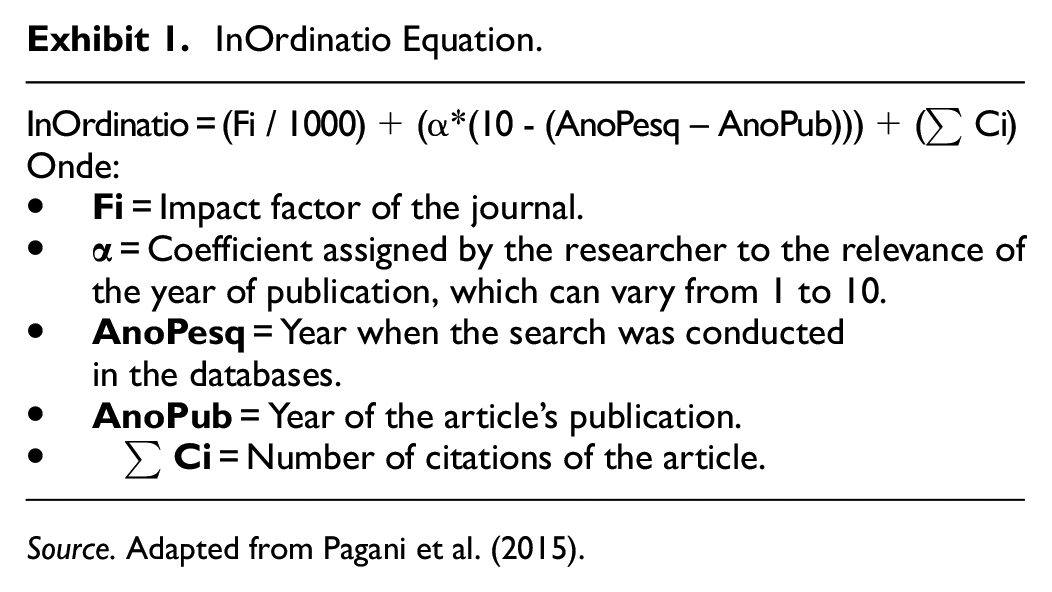
The ordering of the identified studies was conducted using the InOrdinatio equation (Pagani et al., 2015) depicted in Exhibit 1.
InOrdinatio Equation.
Source. Adapted from Pagani et al. (2015).
In the research, the value assigned to α was 10, considering that the timeliness of the articles is essential. Articles that showed a negative result in the InOrdinatio equation (n = 254) were removed. The 520 papers were located directly on the journal websites through the CAPES Journal Portal, using the CAFe access provided by the institution to which the authors are affiliated.
In the final stage, the selected articles were read. Articles that did not provide elements to answer the research question were excluded after reading (n = 263), resulting in a portfolio of 257 articles. To ensure relevance and analytical depth, the composition of the document corpus was limited to the upper quartile of the portfolio, selected based on the articles that presented the most significant results in the InOrdinatio equation (n = 65).
Nvivo Pro 14 software (QSR International, 2024) analyzed the content of the selected articles. The 65 selected articles were initially imported into the tool in .pdf format. First, the themes were coded to identify relevant concepts or categories based on the topic. Nvivo’s auto-coding tool was used to allow for initial automatic coding. The identified themes were labeled as codes by Nvivo.
Subsequently, a second analysis was conducted to check word frequency. A minimum length of four words was established, considering their synonyms (including derived words) and limiting the search to the 30 most frequent words. This approach provided a more accurate understanding of the most discussed themes in the articles. Short and common words, such as “for” and “of,” were excluded to avoid interference in the primary analysis.
The data exploration and analysis stage was conducted using the query tools of Nvivo Pro 14, which allowed detailed searches for specific codes, comparison of cases, identification of patterns and trends, and organized data visualization. The 65 selected articles were thoroughly analyzed, with 100% coverage, based on the codes created and the number of references associated with each coding. This initial analysis identified the main themes related to the motivations and challenges in patenting by universities.
Categories and subcategories were then defined based on the content analysis of the articles, which involved automatic coding followed by a detailed evaluation of the most frequent words and coded references. This process allowed for refining the initial categories and the creation of specific subcategories for each motivation and challenge based on the frequency and relevance of the identified themes. Thus, the final categories were constructed to accurately reflect the main aspects discussed in the literature, ensuring a comprehensive and well-founded data analysis.
Results
The selected articles were classified based on the InOrdinatio equation, considering factors such as the journal’s impact, the year of publication, and the number of citations. Table 1 presents the ranking of the 65 articles that comprise the research corpus, according to the results obtained from the InOrdinatio equation.
Research Corpus Classified by the InOrdinatio Method.

Source. Created by the authors from the research data.
Applying the InOrdinatio equation allowed for a systematic ranking of the selected literature, considering the journal’s impact factor, citation count, and publication recency. The top-ranked articles prominently address critical issues related to university-industry interactions, emphasizing factors influencing the success or failure of innovation transfer processes. Among the most significant findings, D’Este and Perkmann (2011) discuss academics’ motivations for engaging with industry. Meanwhile, Thursby et al. (2001) highlight key challenges researchers face in disclosing and licensing their inventions. Additionally, Mowery and Sampat (2004) underline the pivotal role of legislation, such as the Bayh-Dole Act, in fostering effective technology transfer. These studies represent recurring themes in literature and illustrate priority research topics explored over the years.
The auto-coding performed by Nvivo identified 11 main themes addressed in the 65 articles analyzed. The codes identified by Nvivo were challenges, competition, complexity, economic impact, financial, protection, recognition, sectors and areas, social impact, technology transfer, and types of patents. These 11 codes were found in all the articles, with a significant number of coding references associated with each, indicating that these themes were applied in some form in all the articles analyzed. The number of coding references for each code reveals how often these themes were found in the articles and how many instances were identified throughout the entire dataset.
To enhance understanding of the main themes generated during the content analysis, Table 2 presents examples of each theme, accompanied by representative articles and key findings related to these themes.
Exemplary Themes Generated from Content Analysis.

Source. The authors elaborate on data analyzed in NVivo Pro 14.0.
After auto-coding using Nvivo Pro 14 software, a thorough manual review of the results was performed to refine the categories and ensure their accuracy and relevance to the study objectives. Initially, the software identified main themes automatically based on word frequency and semantic relationships within the corpus. Subsequently, the research team manually reviewed these automated codings, merging overlapping categories, removing redundancies, and clarifying ambiguous classifications. The refined categories and subcategories were subjected to expert validation to strengthen the research validity. A panel of two external researchers experienced in university innovation management and patenting activities was evaluated. It validated the final set of categories, providing suggestions for adjustments that improved clarity and consistency. This step ensured robust categorization, accurately reflecting the motivations and challenges identified in the literature.
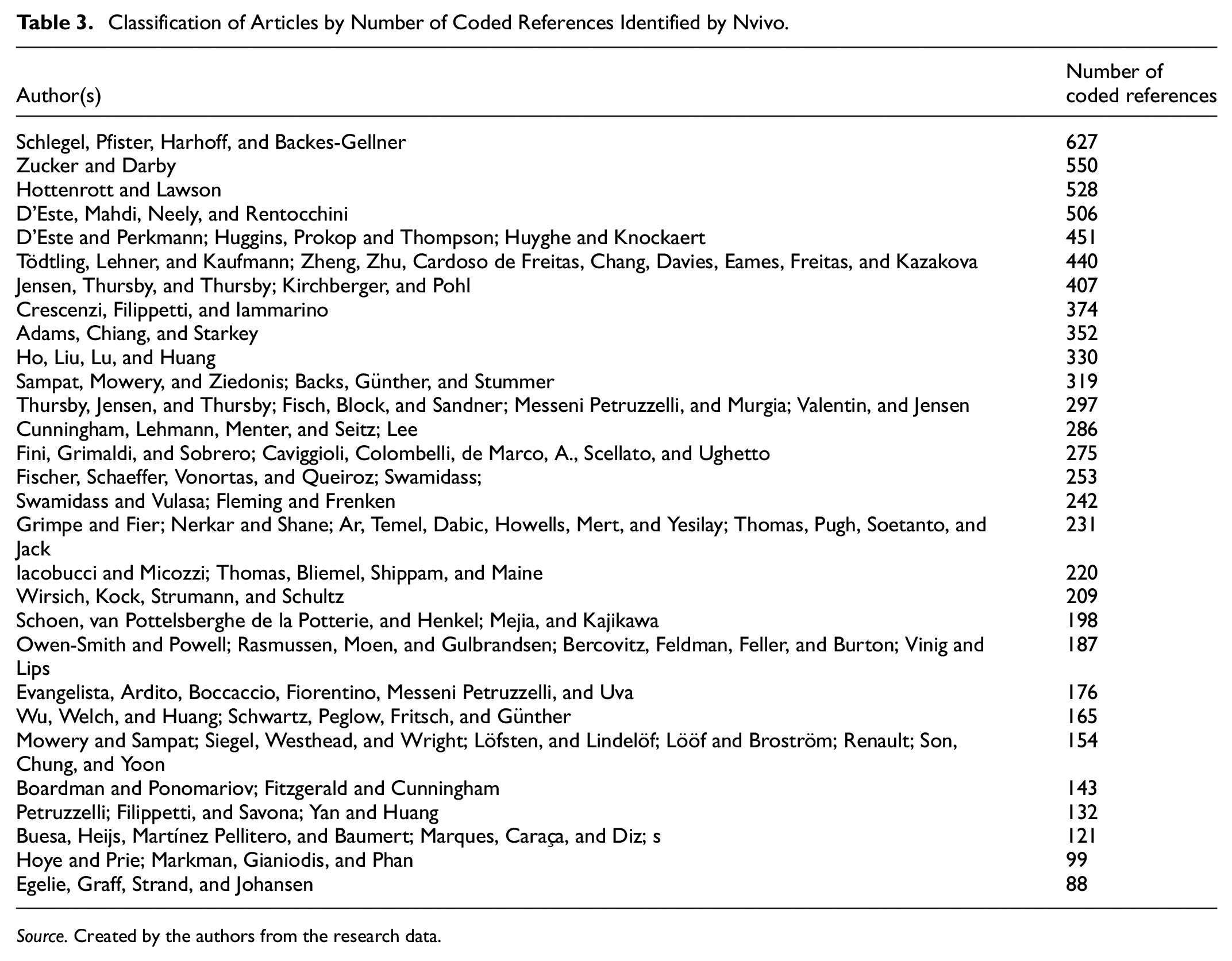
The higher the number of coding references, the more information or instances of that specific theme were found in the articles. This suggests that the theme is more prominent or recurring than others. Table 3 presents, in descending order, the number of coded references in each article:
Classification of Articles by Number of Coded References Identified by Nvivo.
Source. Created by the authors from the research data.
A combined figure was created to integrate the relationship between the articles and the identified coding categories to deepen the coded references’ analysis and facilitate data comprehension.
Figure 2 presents, in the first panel, the total number of coded references associated with each article, arranged in descending order. Each horizontal bar represents a specific article, and the length of the bar indicates the total number of coded references. In the second panel, a heatmap illustrates the association between the articles and the coding categories. The numerical values inserted into the graph cells indicate the number of coded references associated with each category per article. This combined visualization facilitates identifying relationships between the articles and the main analyzed categories.
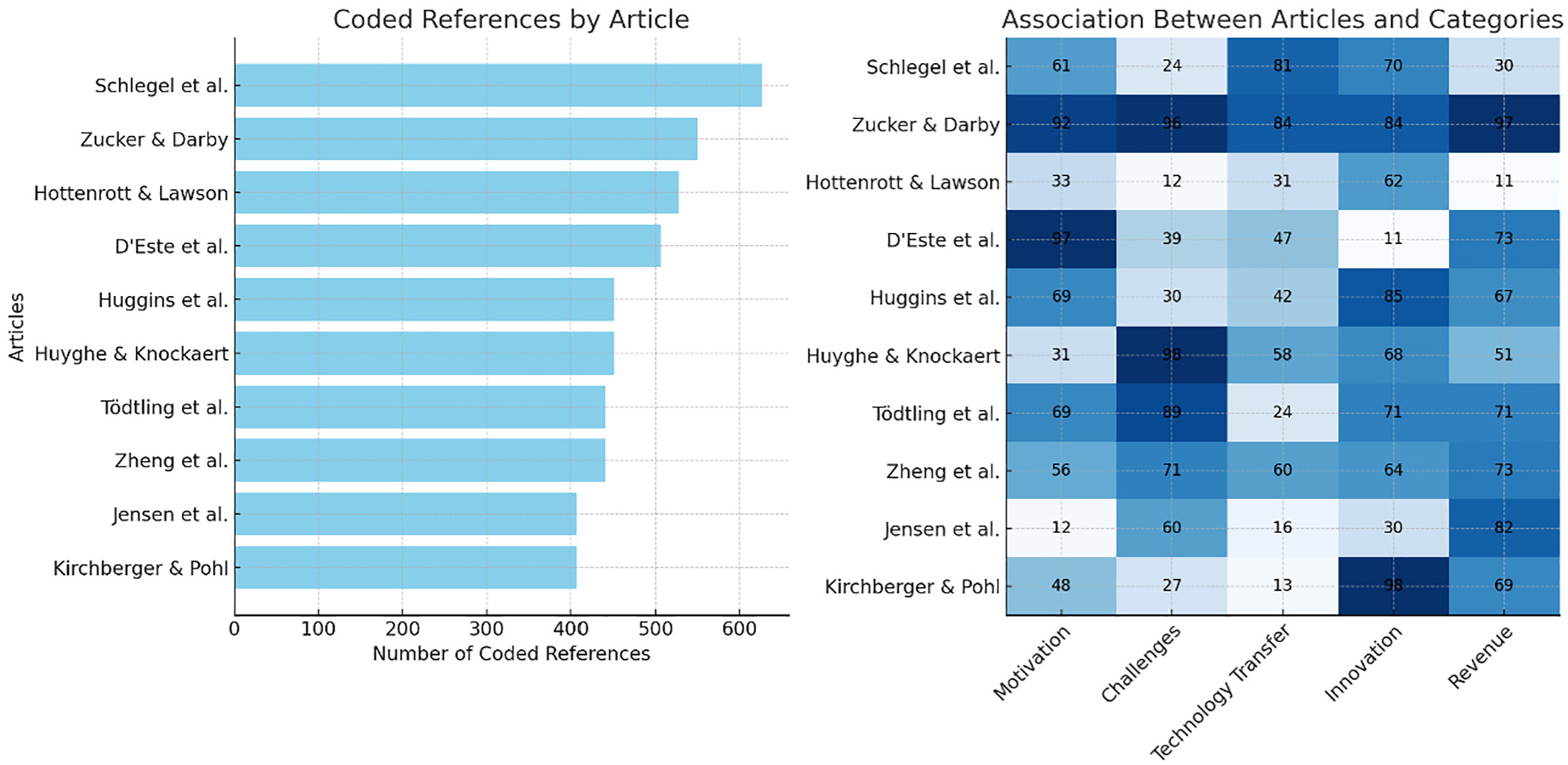
Relationship between articles and coding categories.
Additionally, Table 4 presents the quantitative breakdown of the most frequent words identified in the research corpus, contributing to understanding the predominant themes in the analyzed literature.
Count and Weighted Percentage of Frequently Used Words.

Source. Own authorship.
The progression from identifying frequent words and coding references to establishing final subcategories involved a meticulous refinement process. Initially, Nvivo’s auto-coding broadly mapped recurring themes and concepts. However, these initial results underwent manual validation to ensure analytical rigor and alignment with the research objectives. This involved consolidating similar themes, eliminating redundancies, and clarifying ambiguous categories. The refined themes were then systematically organized into subcategories that reflected the nuanced dynamics of motivations and challenges associated with university patenting.
This transition from broader codes to detailed subcategories was essential to accurately capture the complexity of the data. By integrating automated and manual analyses, the study ensured that each subcategory was grounded in robust evidence while maintaining clarity and relevance. This approach not only reinforced the validity of the findings but also provided a comprehensive framework for the subsequent discussion.
In addition to identifying motivations and challenges, an analysis was conducted to assess temporal trends in the themes identified. The literature reviewed suggests evolving patterns in the motivations and challenges of university patenting over time. Earlier studies often emphasized fundamental issues related to institutional policies and incentives, especially following influential legislation such as the Bayh-Dole Act. Recent studies, however, have increasingly highlighted complexities associated with emerging technologies, interdisciplinary collaboration, and international partnerships. This shift indicates a growing recognition of the need for more nuanced and adaptive institutional strategies to manage patents effectively. Moreover, there has been a noticeable increase in attention to the challenges posed by financial constraints and bureaucratic barriers, emphasizing that these are persistent issues requiring ongoing policy interventions. These temporal trends and shifts in research focus underscore evolving priorities in patenting and innovation management within academia, providing valuable direction for future research and policy development.
Discussion
This study aimed to investigate the motivations and challenges influencing patent filing by universities, contextualized within a theoretical framework that addresses the importance of intellectual protection in the academic environment and its implications for innovation and technology transfer. To achieve this objective, a content analysis of the 65 selected articles was conducted using Nvivo Pro 14 software for data coding and categorization. The categories and subcategories were defined based on analyzing the most frequent words and coded references, resulting in a structure that accurately reflects the main themes addressed in the literature on academic patenting.
The category “Motivations of Universities for Patenting Innovations” was subdivided into four main subcategories: “Commercialization and Revenue Generation,” “Academic Reputation and Visibility,” “Advanced Innovations and Technology Transfer,” and “Support for Academic Research and Access to Complementary Resources.” These subcategories capture the different objectives and strategies adopted by universities to maximize the impact of their inventions.
The subcategory “Commercialization and Revenue Generation” explores how universities seek to turn innovations into sources of revenue through royalties, licensing, and sponsored research. Boardman and Ponomariov (2009) discussed how the pursuit of additional income sources drove collaboration with private companies, while Buesa et al. (2006) and Cunningham et al. (2019) analyzed the impact of technology transfer policies on universities and their regional economic implications. Caviggioli et al. (2023) and Fischer et al. (2018) emphasized the importance of patents as a strategy to generate revenue and promote academic entrepreneurship. Fini et al. (2009) and Hoye and Pries (2009) analyzed incentives for academics to commercialize their inventions, highlighting revenue generation as a critical factor. Grimpe and Fier (2010) investigated differences in technology transfer between universities in the USA and Germany, highlighting the financial impact of these practices. Fisch et al. (2016) examined how subsidies and patents affected revenue in Chinese universities. Iacobucci and Micozzi (2015) discussed the impact of academic spin-offs on the local economy, highlighting the importance of commercialization for economic success. Mowery and Sampat (2004) and Nelson (2001) reflected on the impact of the Bayh-Dole Act in promoting the commercialization of university inventions. Owen-Smith and Powell (2001) and Renault (2006) showed how internal incentives influenced academics’ decisions to license their inventions for commercial purposes, while Swamidass (2013) and Swamidass and Vulasa (2009) explored barriers that hindered revenue generation through the commercialization of university inventions. Wu et al. (2015) analyzed factors affecting the licensing of university patents. Zucker and Darby (2001) discussed how collaboration with prominent scientists could boost patent revenue.
This body of studies reveals that the commercialization of innovations is an essential strategy for universities, contributing to financial sustainability and strengthening their research capabilities. By turning patents into revenue sources, universities can reinvest in new research, attract talent, and increase competitiveness. Moreover, revenue generation through licensing and royalties fosters a culture of continuous innovation, promoting a development cycle that benefits both academia and the industrial sector. This process expands funding opportunities for universities and consolidates their position as relevant players in the knowledge economy.
The subcategory “Academic Reputation and Visibility” reflects the motivation of universities to enhance their prestige and consolidate their position in the scientific and industrial landscape through patenting activities. Anckaert and Peeters (2022) highlighted how university-industry collaborations could increase academic visibility. Backs et al. (2019) demonstrated that academic patenting was a strategy for universities to stand out in innovation ecosystems. Fini et al. (2009) and Huyghe and Knockaert (2015) showed that engagement in entrepreneurial and patenting activities contributed to building a solid reputation among academic peers. Fleming and Frenken (2007) analyzed inventor networks, demonstrating how extensive connections could enhance the visibility of universities.
Petruzzelli (2011) discussed the impact of technological proximity and prior collaborations on academic reputation. Ho et al. (2014) and Rasmussen et al. (2006) addressed the efficiency of technology transfer as a factor that elevated the recognition of universities in the industrial sector. Schlegel et al. (2022) and Schoen et al. (2014) investigated the governance of universities and how their technology transfer strategies influenced institutional reputation. Thomas et al. (2023) and Thomas et al. (2020) explored how universities adapted their roles to maintain relevance and visibility in challenging times, while Tödtling et al. (2009) and Valentin and Jensen (2007) discussed how interactions with industry shaped academic reputation. Wirsich et al. (2016) examined the impact of university-industry collaborations on technological innovation, strengthening the academic image. Yan and Huang (2022) addressed how university research in the context of open innovation contributed to global visibility.
These authors’ investigations show that pursuing academic reputation and visibility is a significant motivator for patenting, reinforcing universities’ positions as centers of excellence and innovation. Patents are used to protect innovations and signal prestige and scientific quality, attracting new talent, funding, and strategic partnerships. This visibility helps consolidate universities’ positions in collaboration networks, facilitating access to exclusive opportunities and expanding their influence in the global innovation landscape. By strengthening their image, universities stand out as leaders in research and development, contributing more effectively to scientific and technological progress.
The subcategory “Advanced Innovations and Technology Transfer” highlights universities’ pursuit of strengthening innovation capabilities and promoting knowledge transfer to industry. Crescenzi et al. (2017) explored how collaboration between academia and industry facilitated the development of academic inventors, while Evangelista et al. (2020) analyzed emerging technological trends, such as augmented reality, through patents. Filippetti and Savona (2017) and Fitzgerald and Cunningham (2016) examined academic engagement behaviors and the challenges university technology transfer offices face. Gorazda et al. (2018) discussed resource recovery in industrial processes, while Kirchberger and Pohl (2016) reviewed success factors in technology commercialization. The importance of R&D networks and knowledge diffusion was explored by Löfsten and Lindelöf (2005) and Lööf and Broström (2008). Markman et al. (2008) focused on the tensions between faculty members’ academic and entrepreneurial roles. Messeni Petruzzelli and Murgia (2020) investigated how university collaborations impacted international knowledge. Sampat et al. (2003) reexamined the quality of university patents after implementing the Bayh-Dole Act, while Schwartz et al. (2012) discussed innovation outcomes from subsidized R&D cooperation. Son et al. (2022) addressed how university technology companies could overcome the “Valley of Death.”Vinig and Lips (2015) assessed technology transfer performance at Dutch universities. Zheng et al. (2019) mapped a development roadmap for magnetoresistive sensors, and Zucker and Darby (2001) explored technological opportunities captured by prominent scientists.
This body of research reinforces the importance of technology transfer as a driver of innovation, allowing universities to advance their economic and social impact missions. Through these collaborations, universities drive the development of new technologies and expand their research and innovation capacities. Technology transfer facilitates the creation of collaborative environments that integrate academic knowledge and industrial demands, promoting technological advances with significant practical applications. Furthermore, technology transfer helps translate academic discoveries into market solutions, providing financial returns that can be reinvested in new research. Universities expand their global reach by overcoming challenges such as the “Valley of Death,” establishing international cooperation networks, and strengthening their positions as innovation centers. Therefore, patenting and technology transfer activities are essential for connecting academia with the productive sector, creating a virtuous cycle that fuels scientific progress and sustainable economic development.
Finally, the subcategory “Support for Academic Research and Access to Complementary Resources” addresses the role of patents as a crucial source of financial support and knowledge for academic research. Adams et al. (2000) explored cooperative research centers as vehicles for funding and collaboration, while Ar et al. (2021) examined how support factors influenced patenting activity in entrepreneurial universities. Bercovitz et al. (2001) highlighted the influence of organizational structure on patenting decisions, and D’Este and Perkmann (2011) addressed the individual motivations of academics to engage with industry. D’Este et al. (2012) analyzed which skills were necessary for academic inventors, while Filippetti and Savona (2017) discussed the behavioral and organizational barriers faced in interactions with industry. Hottenrott and Lawson (2017) showed that research funding increased academic productivity. Huggins et al. (2020) examined the centrality of universities in open innovation networks. Jensen et al. (2003) investigated the challenges in disclosing and licensing university inventions, while Lee (2021) highlighted the role of funding in research productivity at Korean universities. Levin (2004) and Marques et al. (2006) addressed how the patent system influenced innovation. Sampat et al. (2003) reexamined changes in the quality of university patents after the Bayh-Dole Act. Santoro and Gopalakrishnan (2001) discussed the dynamics of relationships between university research centers and companies, and Thursby et al. (2001) investigated the outcomes of university licenses.
These studies underline that access to additional resources, complementary knowledge, and financial support are essential motivators for academic patenting, facilitating significant advances in research. Patents provide a platform to strengthen collaborations between universities and industry, offering funding and access to essential infrastructure and technical expertise for developing new technologies. Additionally, the financial support derived from patents allows universities to diversify their income sources and reduce their dependency on public resources or direct government funding. This financial support is particularly relevant in budget constraints, where the ability to attract external funding can determine the continuity of research and innovation programs. The ability of patents to attract investments, partnerships, and additional talent thus becomes a strategic factor in maintaining academic and scientific competitiveness, promoting a more robust and dynamic research environment.
The four subcategories highlight that the motivations for patenting in universities are varied, ranging from revenue generation to reputation building, technological advancement, and research support. These studies illustrate how universities strategically position themselves in the global innovation landscape. Patenting activities help generate revenue, strengthen academic visibility, drive technology transfer, and advance research. This complex mosaic of motivations demonstrates that patenting is a multifaceted tool essential for the financial sustainability, competitiveness, and relevance of academic institutions in contemporary society.
To synthesize the key findings related to motivations for patenting, Table 5 summarizes the main conclusions drawn from the analysis of each subcategory. This table aims to provide a concise overview for readers, facilitating a clearer understanding of the primary motivational factors identified in the literature. This table aims to provide a concise overview for readers, facilitating a clearer understanding of the primary motivational factors identified in the literature.
Summary of Motivations for Patenting.

Source. Own authorship.
The category “Challenges Faced by Universities in the Patenting and Technology Transfer Process” was subdivided into six main subcategories: Institutional and Bureaucratic Barriers, Limited Financial Resources, Complexity in University-Industry Collaboration, Lack of Training and Technical Knowledge, Intellectual Property and Patent Rights Challenges, and Low Incentives for Commercialization and Technology Transfer. These challenges highlight the main obstacles that impact universities’ ability to manage their innovations, revealing a complex and multifaceted landscape.
The “Institutional and Bureaucratic Barriers” subcategory includes studies on administrative rigidity and internal structural difficulties that negatively affect innovation. Adams et al. (2000) and Bercovitz et al. (2001) highlighted how organizational structure limited patenting and licensing behavior. D’Este and Perkmann (2011) and Filippetti and Savona (2017) emphasized that institutional policies often discouraged academic engagement in technology transfer activities. Studies such as Jensen et al. (2003) and Owen-Smith and Powell (2001) addressed the impacts of bureaucracy on researchers’ licensing decisions. Santoro and Gopalakrishnan (2001) and Renault (2006) explored the dynamics of relationships between research centers and companies, highlighting the lack of institutional incentives. Works by Siegel et al. (2003), Swamidass and Vulasa (2009), and Sampat et al. (2003) highlighted how internal governance and lack of flexibility hindered the success of technology transfer. Other studies, such as those by Grimpe and Fier (2010), Schoen et al. (2014), Huggins et al. (2020), and Levin (2004), investigated bureaucratic obstacles that limited collaboration with industry, emphasizing the need for a more dynamic and adaptable environment within academic institutions.
Findings in this category show that institutional and bureaucratic barriers are among the main obstacles to the innovation process in universities. Rigid policies, lack of appropriate incentives, and inflexible organizational structures restrict researchers’ ability to engage in patenting and technology transfer activities. These barriers limit not only collaboration with the private sector but also the potential of universities to position themselves as leaders in technological innovation, highlighting the urgent need for institutional reforms that promote a more favorable environment for innovation.
The “Limited Financial Resources” subcategory addresses the scarcity of financial resources that compromise patenting and technology transfer activities. Boardman and Ponomariov (2009) and and Lawson (2017) showed how lack of funding affected research and innovation protection. Lee (2021) and Ho et al. (2014) demonstrated that resource shortages prevented investments in patents and commercialization. Fischer et al. (2018) and Fini et al. (2009) explored the impact of financial constraints on academic participation in entrepreneurial activities. Hoye and Pries (2009), Swamidass (2013), and Thomas et al. (2023) analyzed the financial constraints that hindered the continuity of innovation projects. Finally, Rasmussen et al. (2006) highlighted how resource limitations affected commercialization support policies.
The findings of this subcategory show that lack of financial resources is one of the most significant challenges universities face in sustaining their patenting and technology transfer activities. Funding shortages limit the ability to protect innovations and restrict academics’ participation in entrepreneurial projects and collaborations with industry. This underscores the need for strategies and policies that provide more significant financial support, allowing universities to turn their innovations into technological advances with market impact effectively.
The “Complexity in University-Industry Collaboration” subcategory reflects the challenges in interactions between academia and the business sector. Crescenzi et al. (2017) and Caviggioli et al. (2023) examined the difficulties of aligning interests between these two worlds. Ar et al. (2021) and Buesa et al. (2006) showed how differences in objectives and inadequate communication hampered partnerships. Petruzzelli (2011) analyzed barriers related to technological proximity and prior collaboration. Mowery and Sampat (2004) and Schlegel et al. (2022) discussed governance challenges in interinstitutional partnerships. Valentin and Jensen (2007), Iacobucci and Micozzi (2015), and Vinig and Lips (2015) highlighted organizational complexities that hindered effective partnerships, while Filippetti and Savona (2017) and Zucker and Darby (2001) investigated cultural barriers that limited technology transfer.
Findings from this subcategory show that the inherent complexities of university-industry collaboration are significant barriers to innovation. Issues such as misaligned objectives, communication failures, cultural barriers, and governance challenges hinder the development of effective partnerships. These difficulties compromise the flow of knowledge and technology transfer, highlighting the need for greater integration between the academic and industrial sectors, with policies that promote cooperation, mutual understanding, and more flexible governance to maximize the impact of collaborations.
The “Lack of Training and Technical Knowledge” subcategory addresses the absence of specific skills needed to manage patents and transfer technology. Anckaert and Peeters (2022) and Backs et al. (2019) showed that technical training hindered innovation. Fleming and Frenken (2007) and Fitzgerald and Cunningham (2016) highlighted the need to develop specialized competencies. Kirchberger and Pohl (2016) and Messeni Petruzzelli and Murgia (2020) emphasized the relevance of advanced technical skills for successful patenting. Tödtling et al. (2009) and Thomas et al. (2020) analyzed how inadequate training limited the impact of industry research.
The findings of this subcategory indicate that the lack of training and technical knowledge represents a significant obstacle for universities in managing patents and technology transfer. The absence of specialized skills limits researchers’ ability to turn scientific discoveries into marketable innovations. This deficiency affects patenting success and diminishes the effectiveness of collaborations with the industry. Therefore, investing in technical training and continuous education for researchers and innovation managers is essential to maximize the potential of patenting activities and strengthen the connection between academia and the market.
The “Intellectual Property and Patent Rights Challenges” subcategory explores the complexities of managing intellectual property rights. Egelie et al. (2016) and Evangelista et al. (2020) discussed patenting issues in emerging new technologies. Gorazda et al. (2018) and Fisch et al. (2016) analyzed regulatory barriers that affected innovation protection. Zucker and Darby (2001) and Sampat et al. (2003) addressed the legal implications of patents for universities, while Nerkar and Shane (2003), Yan and Huang (2022), and Schwartz et al. (2012) investigated challenges in protecting and managing patent rights.
The findings of this subcategory reveal that challenges to intellectual property and patent rights are critical for universities, especially in the era of emerging technologies. Regulatory barriers and legal complexities often hinder the protection of innovations, exposing universities to risks and reducing their competitive potential. Moreover, difficulties in managing intellectual property rights limit institutions’ ability to maximize returns on their innovations. Bureaucracy and delays in granting patents also stand out as significant obstacles. Overcoming these challenges requires a deep understanding of patent laws and a strategic approach to intellectual property management, ensuring that academic discoveries are adequately protected and leveraged.
The “Low Incentives for Commercialization and Technology Transfer” subcategory addresses the lack of incentives to commercialize innovations. Cunningham et al. (2019), Markman et al. (2008), and Mejia and Kajikawa (2020) analyzed factors that discouraged researchers from seeking to transfer their innovations. Löfsten and Lindelöf (2005), Son et al. (2022), and Wu et al. (2015) explored how the lack of financial incentives negatively impacted commercialization. Renault (2006), Mowery and Sampat (2004), Swamidass and Vulasa (2009), Buesa et al. (2006), and Owen-Smith and Powell (2001) discussed institutional barriers that limited technology transfer.
Findings from this subcategory indicate that the absence of adequate incentives for the commercialization of innovations is a significant obstacle for universities. The lack of financial stimuli, institutional support, and incentive policies restricts institutions’ ability to turn their academic discoveries into market products and services. This gap discourages researchers from engaging in technology transfer activities, contributing to a divide between academic research and the productive sector. Additionally, institutional barriers hinder the creation of an environment conducive to innovation, highlighting the need for policies that encourage commercialization and more effectively integrate academia and industry.
These subcategories of challenges reveal the need for structural, financial, and cultural changes in universities. To overcome these barriers and create a more conducive environment for innovation, academic institutions must adopt policies that foster collaboration, training, and commercialization of innovations, thereby strengthening the link between academia and industry.
The findings discussed in this study reveal that universities face a complex set of motivations and challenges in the patenting and technology transfer process. Motivations are diverse, including the pursuit of revenue generation, increased prestige and academic visibility, strengthened innovation, and research support through complementary resources. These motivations highlight patenting as a strategic financial sustainability and competitiveness tool, allowing universities to consolidate their leadership positions in the global innovation landscape.
However, the analysis revealed significant challenges that limit universities’ ability to maximize the impact of their innovations. The main obstacles are institutional and bureaucratic barriers, financial constraints, complexities in industry collaborations, lack of technical training, difficulties in intellectual property management, and insufficient commercialization incentives. These challenges restrict researchers’ involvement in patenting activities and hinder the transformation of academic discoveries into market innovations.
These findings underscore the urgent need for institutional reforms, incentive policies, and capacity-building strategies that promote a more favorable university innovation environment. By implementing these changes, universities can create a collaborative and flexible environment that facilitates connection with the productive sector, strengthening their role as scientific, technological, and economic development agents. Overcoming these barriers will allow the impact of academic innovations to be maximized, creating a virtuous cycle of development that benefits both the economy and society as a whole.
To synthesize the key findings related to the challenges faced in the patenting process and technology transfer, Table 6 summarizes the main conclusions drawn from the analysis of each subcategory. This table aims to provide a concise overview for readers, facilitating a clearer understanding of the primary obstacles identified in the literature and highlighting the critical barriers that universities face. This summary table is intended to enhance the clarity of the discussion by offering a concise overview of the key obstacles outlined in the literature.
Summary of Challenges in the Patenting Process and Technology Transfer.

Source. Own authorship.
Conclusion
This study emphasized the motivations and challenges universities face in the patenting process, reinforcing how these factors influence their capacity to act as drivers of innovation. The focus was directed toward understanding the strategic motivations for patenting, such as revenue generation, academic visibility, technological advancement, and research support while recognizing the relevance of technology transfer and commercialization as contextual outcomes of successful patenting.
The theoretical contribution of this research lies in elucidating how institutional barriers and motivational drivers intersect within the patenting process, offering insights into how universities can align their innovation strategies with broader economic and societal development goals.
Practically, this study provides valuable information for academic managers and policymakers, supporting the development of more effective strategies to overcome barriers and enhance the patenting process within universities.
Overall, this research contributes to a deeper understanding of the dynamics of university patenting, reinforcing its significance within the context of global innovation ecosystems.
Additionally, although various studies have explored university patenting, this research is distinguished by employing the Methodi Ordinatio for a rigorous and systematic selection of high-impact articles. It analyzes contemporary challenges and motivations, emphasizing recent trends and persistent gaps. The study also offers practical recommendations for institutional policies to overcome barriers identified in the patenting process. This differentiation ensures that the study adds to theoretical understanding and contributes to practical strategies that can enhance university innovation practices.
Limitations
Despite the rigorous methodology, this study is subject to certain limitations. The selection of articles was restricted to publications indexed in specific databases, which may have excluded relevant studies published elsewhere. Additionally, while ensuring academic rigor, the focus on high-impact articles may have overlooked emerging research that has not yet accumulated significant citations. Despite efforts to mitigate bias through validation processes, the subjective element in coding and categorizing themes also represents a potential limitation.
Implications
The findings of this research have practical implications for university administrators and policymakers. Understanding the evolving challenges and motivations in the patenting process can inform more effective institutional strategies and policies to foster innovation and improve technology transfer. The research also provides insights into addressing persistent barriers, such as financial constraints and bureaucratic hurdles, supporting the development of more adaptive and responsive institutional frameworks.
Future Research Directions
Future research could expand the scope of analysis to include diverse geographical and institutional contexts, offering comparative perspectives on patenting practices. Longitudinal studies could further explore how motivations and challenges evolve over time, particularly in response to changing regulatory and technological environments. Additionally, qualitative investigations involving interviews with stakeholders engaged in the patenting process could provide deeper insights into institutional dynamics and decision-making processes.
Footnotes
Acknowledgements
We would like to acknowledge the support received by the Coordenação de Aperfeiçoamento de Pessoal de Nível Superior - Brasil (CAPES) - Finance Code 001.

Consent to Participate
This article does not contain any studies with human or animal participants.
Consent for Publication
The authors confirm that this manuscript has not been published elsewhere and all authors approved the manuscript for submission.
Author Contributions
Juliana Moletta: Conceptualization, Methodology, Writing – original draft, Writing – review & editing, Validation. Luiz Alberto Pilatti: Conceptualization, Methodology, Writing – original draft, Writing – review & editing,Validation, Supervision.
Funding
The author(s) disclosed receipt of the following financial support for the research, authorship, and/or publication of this article: This work was supported in part by the Coordenação de Aperfeiçoamento de Pessoal de Nível Superior—Brasil (CAPES)—Finance Code 001.
Declaration of Conflicting Interests
The author(s) declared no potential conflicts of interest with respect to the research, authorship, and/or publication of this article.
Data Availability Statement
Data sharing not applicable to this article as no datasets were generated or analyzed during the current study.