



Abstract
This study investigates the processes of Technology Transfer within Brazilian public universities across the country’s five regions. As an applied research project employing quantitative methods, it provides a detailed analysis of these processes. An exploratory approach was adopted, utilizing metrics such as the mean, standard deviation, and coefficient of variation to analyze dispersion variability within the dataset. The Pearson correlation coefficient (R) was also used to examine correlations among dimension variables, further evaluating data variability. The findings reveal significant variability among the universities surveyed, largely due to differences in structural conditions. Notably, the “people” dimension displayed the highest average and the lowest dispersion at 18.23%, indicating moderate variability, while other dimensions, including valuation, marketing, environment, and society, showed comparatively lower results. These outcomes offer a comprehensive overview of Technology Transfer activities within Brazilian public universities, aiding decision-makers in enhancing research knowledge dissemination. The research advocates for a data-driven approach to improve innovation, strengthen infrastructure, and increase the overall effectiveness of knowledge transfer initiatives across the country. By highlighting the critical role of Technology Transfer in promoting innovation and technological advancement, this study provides empirical insights and actionable recommendations that could enhance collaboration between academia, industry, and government, fostering sustainable socioeconomic development and a culture of innovation in Brazil.
Plain language summary
This research endeavors to assess the processes of Technology Transfer within Brazilian public universities across the country’s five regions. Conducted as an applied study, this research employs quantitative methods to provide a comprehensive analysis. The study adopts an exploratory approach, utilizing quantitative measures to gauge dispersion variability within the dataset. Metrics such as the mean, standard deviation, and coefficient of variation are employed for results analysis, offering insights into the variability of the investigated universities’ Technology Transfer processes. Additionally, correlations among dimension variables are scrutinized using the Pearson correlation coefficient (R) to further evaluate data variability. The results reveal a significant degree of variability among the surveyed universities, primarily attributable to differences in structural conditions. Notably, the “people” dimension emerges with the highest average and the lowest dispersion at 18.23%, indicative of moderate variability, while dimensions such as valuation, marketing, environment, and society exhibit comparatively lower results. These findings furnish a comprehensive overview of Technology Transfer activities within Brazilian public universities, thereby contributing to a more efficient dissemination of research knowledge to decision-makers. Moreover, the research advocates for a data-driven approach to enhance innovation, bolster infrastructure, and augment the overall effectiveness of knowledge transfer initiatives across the country.
Keywords
Introduction
This paper examines the perspectives and challenges of the technology transfer process in Brazilian public universities, aiming to enhance the understanding of its significance and impact on societal development and innovation. Technology Transfer (TT) plays an important role in fostering innovation within public universities, and it has increasingly attracted the attention of researchers and professionals worldwide. This process is relevant not only for universities but also for industry, government, and society, offering wide-ranging benefits.
At the heart of Technology Transfer is the production of knowledge and its subsequent assimilation by the organizations responsible for its creation. Despite the importance of this process, few studies have focused on evaluating the infrastructure of Technology Transfer Offices (TTOs) within public universities—an aspect that directly influences both internal and external capabilities. While TT activities can lead to numerous benefits, such as the creation of new enterprises, job generation, commercialization of innovative technologies, and addressing societal challenges, significant obstacles persist.
Key challenges include resource scarcity, the gap between research and industry, and the absence of an entrepreneurial culture within universities. These issues impede the efficiency of the technology transfer process, limiting the ability of public universities to compete in the market and fully realize their potential for technological advancement. The literature highlights the necessity of an appropriate infrastructure for university-industry cooperation, as well as the need for alignment between the interests of the university and the productive sector (Amry et al., 2021; Necoechea-Mondragón et al., 2013; Philbin, 2008; Swinnen & Kuijpers, 2019).
Many authors such as Arza and López (2011) and Kovaleski et al. (2022) have pointed out the importance of technology transfer in promoting innovation, and economic and social development. On the other hand, authors such as Audretsch (2018) and Hagedoorn (2002) have studied the challenges and obstacles in technology transfer, such as the lack of collaboration between academia and industry, and the lack of incentives for technology transfer.
However, TT activities in Brazilian universities face numerous gaps. These include insufficient financial and human resources, inadequate TTO infrastructure, a lack of entrepreneurial culture, and weak university-industry interaction (Pires, 2014). Given the critical role that industries play in this context, analyzing the interaction between universities and industries and understanding the benefits and limitations of this process is essential, particularly in light of the importance of research for societal socioeconomic development.
In Brazil, factors such as the technological and innovation capabilities of local companies and universities, poor infrastructure, and regulatory barriers significantly impact the TT process. Although Brazil has managed to attract foreign investment in technology and build a robust technological foundation in several sectors, these challenges remain significant.
This research aims to assess the technology transfer processes and the infrastructure of TTOs in Brazilian public universities across the country’s five regions. To this end, three hypotheses have been formulated based on the study’s objectives and methodology:
Hypothesis 1: Significant variations exist in TT processes among Brazilian public universities across different regions, driven by differences in infrastructure, industry connections, and research capabilities.
Hypothesis 2: The “people” dimension, which includes human resources and skills, will show the highest positive correlation with effective Technology Transfer activities in Brazilian public universities.
Hypothesis 3: A lack of resources will be identified as a major obstacle in the TT process at Brazilian public universities, hindering effective technology transfer due to financial and human resource constraints.
This paper seeks to elucidate the perspectives and challenges associated with the technology transfer process in Brazilian public universities, thereby contributing to a deeper understanding of its significance and its impact on societal development and innovation.
Literature Review
Technology Transfer
The Industrial Revolution, characterized by technological, socioeconomic, and cultural transformations, marked a significant turning point in history. It introduced new methods of production and lifestyle changes, beginning in Britain in the 18th century and eventually spreading across the globe to regions such as America, Europe, and Russia. The technology transfer (TT) process, which played a relevant role during this period, extended throughout the 19th century and continued to expand significantly in the 20th century, influencing various sectors at the onset of the 21st century (Cysne, 2005; Jevnaker & Misganaw, 2022; Radin Firdaus et al., 2020; Siegel et al., 2023).
Technology transfer has been broadly defined in the literature as the process of acquiring, developing, and utilizing technological knowledge by individuals who generated it (Lima, 2004; Ren et al., 2023). More specifically, it involves the implementation of new technologies in environments that previously lacked them. Artyukhov et al. (2023) and Chesbrough (2003) describe TT as the transmission of knowledge, skills, and technical capabilities between organizations, which can occur across companies, universities, research centers, and other actors within the innovation ecosystem. Similarly, Barge-Gil and López (2014) and Hayter et al. (2023) emphasize that TT involves transferring knowledge and technical skills to achieve economic or social benefits.
The evaluation of technology transfer activities is essential to ensure their success and effectiveness. Various approaches have been proposed in the literature to assess the TT process. One prominent method is the impact-based approach, which focuses on measuring the effects of TT on the economy, society, and the environment. Barge-Gil and López (2014) and Bejarano et al. (2023) argue that this approach is vital for assessing the return on investment and the benefits obtained by end users.
Another method is the quality-based approach, which emphasizes evaluating the quality of transfer activities and identifying areas for improvement. Geuna and Muscio (2009) assert that quality assessment is important to ensure the effectiveness and efficiency of TT activities.
However, existing research methods for evaluating the TT process exhibit several deficiencies. Most studies, for instance, concentrate on knowledge production and assimilation, neglecting the infrastructure of Technology Transfer Offices (TTOs) in public universities, which directly impacts their internal and external capabilities (Barge-Gil & López, 2014; Hayter et al., 2023). Additionally, many TT evaluations adopt segmented approaches that fail to capture all dimensions of the transfer process, including social and environmental aspects alongside economic ones (Geuna & Muscio, 2009; Silva, 2016). Moreover, there is often a lack of integration between qualitative and quantitative data, resulting in an incomplete view of TT activities (Khiew et al., 2020; Ramírez-Hurtado et al., 2018).
To address these deficiencies, a comprehensive analysis is proposed based on the Green Technology Transfer Radar (GTTR) developed by Silva (2016) and Santos Silva et al. (2023). This framework (Figure 1) considers various dimensions that influence the TT process, including People, Processes, Budget, Relationships, Integrated Management, Research and Development (R&D) in Technologies, Intellectual Property, Valuation, Marketing, Environment, and Society. These dimensions are important for developing a holistic understanding of TT activities and improving their implementation.

Dimensions on the green technology transfer radar.
Several factors influence the effectiveness of technology transfer, particularly in the context of university-industry collaborations. In the Brazilian context, the importance of TT in enhancing the efficiency and competitiveness of universities and companies has been highlighted as important for promoting innovation and technological development. For example, Cassiolato and Lastres (2013) view TT as a critical tool for improving the competitiveness of companies and fostering economic and social development.
Garnica and Torkomian (2009) explore technology management in universities and identify several barriers to effective TT, such as a lack of financial resources, insufficient incentives, and bureaucratic hurdles. They emphasize the importance of collaboration between universities, companies, and the government to overcome these barriers and foster TT in Brazil. Furthermore, Closs and Ferreira (2012) and Silva et al. (2023) argue that TT between universities and companies has become a significant issue on Brazil’s political and business agenda, as it is essential for national development.
Stal and Fujino (2005) analyze university-company relations in Brazil, highlighting the importance of public policies and specific programs to promote TT. They argue that TT should be a priority on the national public policy agenda, with effective mechanisms to identify the needs of the business sector and other organizations.
While the reviewed literature provides valuable insights into the methods for assessing TT activities and the factors influencing their effectiveness, it is essential to critique and build upon these findings to ensure a more objective understanding of the TT process. The existing assessment methods, such as the impact-based and quality-based approaches, offer a solid foundation but require further refinement to address their limitations. The proposed Green Technology Transfer Radar (GTTR) framework, for example, provides a more comprehensive approach by integrating various dimensions that influence TT, thus addressing some of the gaps identified in previous studies.
Moreover, the factors influencing TT, particularly in the Brazilian context, highlight the need for stronger collaboration between universities, companies, and the government. However, there is still a lack of effective policies and mechanisms to support these collaborations, which calls for further research and policy development in this area. By critically evaluating and building upon the existing literature, this paper aims to contribute to a more nuanced understanding of the TT process and its implications for national development.
The reviewed literature underscores the importance of technology transfer as a critical driver of economic and social development, particularly in the context of university-industry collaborations. However, existing assessment methods and influencing factors require further refinement to address their limitations and ensure a more comprehensive understanding of the TT process. By adopting a more holistic approach, such as the Green Technology Transfer Radar (GTTR), and addressing the barriers to effective TT, particularly in the Brazilian context, it is possible to enhance the effectiveness of TT activities and contribute to national development.
Methodology
Population and Sample (Sample Design)
The sample was composed of 59 universities from a population of 302 public universities in the five regions of Brazil. According to information from the Anísio Teixeira National Institute of Educational Studies and Research (INEP), there are currently 2,608 higher education institutions in Brazil, of which 2,306 are private and 302 are public. These data are part of the 2019 Higher Education Census, conducted by INEP and released by the Ministry of Education (INEP, 2019).
The sample was composed of the following equation:

n = population size (302),
Zα/2 = critical value that corresponds to the desired degree of confidence,
σ = population standard deviation of the variable,
E = margin of error or maximum estimation error.
After applying this equation, with a desired confidence level of 90%, and a margin of error of 9.60%, the sample size corresponded to 59 universities. The chosen sample is considered safe and with a good margin of error.
By its nature, this is an applied study. Considering the objectives, it is exploratory research. The approach is quantitative, as a technical procedure, an exploratory study was carried out in public universities in Brazil and the research population involved was a sample of public universities from the five Brazilian regions. The analysis was divided into five regions (North, Northeast, South, Southeast, and Midwest) to account for the geographical, economic, and cultural diversity across Brazil. This division allows for a more nuanced understanding of the technology transfer dynamics in different parts of the country.
Initially, the research consisted of the analysis of secondary sources, such as bibliographic references in international and national journals, theses, dissertations, international and national books, and proceedings of international and national events. The references analyzed in the theoretical framework served as a basis for the structuring and understanding of the topic and were applied in the other stages of the investigation.
In the next stage, research procedures consisted of diagnosing and evaluating the structure of the technology transfer process considering the investigated public universities. To accomplish such a task, a structured questionnaire consisting of 33 questions suggested by Silva (2016), and adapted to the reality of the investigated sector, was applied. The questions were distributed in a set of three questions for each dimension of the radar.
The Technology Transfer Radar (TTR) questionnaire consists of eleven dimensions, namely: (People, Processes, Budget, Relationships, Integrated Management, Research and Development “R&D” in Technologies, Intellectual Property, Valuation, Marketing, Environment and Society). Such dimensions represent the main elements to be managed during any technology transfer process in the university-industry sphere, from the strategy, the idea transformation process to patenting, as well as the monitoring of the impacts generated by the transferred technology,
The dimensions proposed in the tool refer to the following aspects:
- People: how is technology transfer supported, what are the incentives and the diversity of knowledge involved?
- Processes: how are technology transfer opportunities created, developed, and evaluated?
- Budget: how are technology transfer initiatives financed?
- Relationship: how does the university use its stakeholders in the creation and improvement of ideas?
- Integrated Management: how are activities and decisions planned and managed in the conduction of projects that involve technologies in laboratories, innovation centers, and academic departments?
- Research and Development (R&D) in Technologies: how are scientific projects for technologies researched and developed?
- Intellectual Property: how are the measures for the patenting process and registration of technology transfer contracts carried out?
- Valuation: how are tools applied to measure the valuation of technologies before entering the market?
- Commercialization: how are the negotiations and commercialization of the transferred technologies performed?
- Environment: how are the environmental impacts resulting from the insertion of the transferred technologies measured and monitored?
- Society: how was the history of the society and its consumption pattern before the technology transfer been studied and evaluated? How are the impacts of the use of technology on the lives of people in society measured and monitored?
The tool uses a Likert scale, with scores from 1 to 5, where 1 means “Never” and 5 means “Very Often.” The higher the score applied, the better the structure and technology transfer capacity of the university will be.
The respondents selected to answer the questionnaire were employees and/or managers of the innovation office who work directly in the activities of the sector. This sector was chosen because it is responsible for the development of innovation and TT activities at universities. None of the names of the respondents or the universities will be identified in the research, for reasons of confidentiality of the information. Acronyms and numbers were assigned to them for the treatment and analysis of the data.
For the analysis of the results, at first, the dimensions of the developed radars (TTR) of the five regions were analyzed, in the later stage quantitative methods of variability dispersion measures were applied, such as (mean, sample standard deviation, and coefficient of variation), and then the correlations of the variables of the dimensions were analyzed, using the Pearson correlation coefficient (R) to verify the variability of the data between −1 and +1, whose values close to −1 and +1 indicate a strong linear correlation and values close to 0 indicate no linear correlation, as shown in Table 1 of Callegari-Jacques (2009).
Categorization for the Values of the Correlation Coefficient.
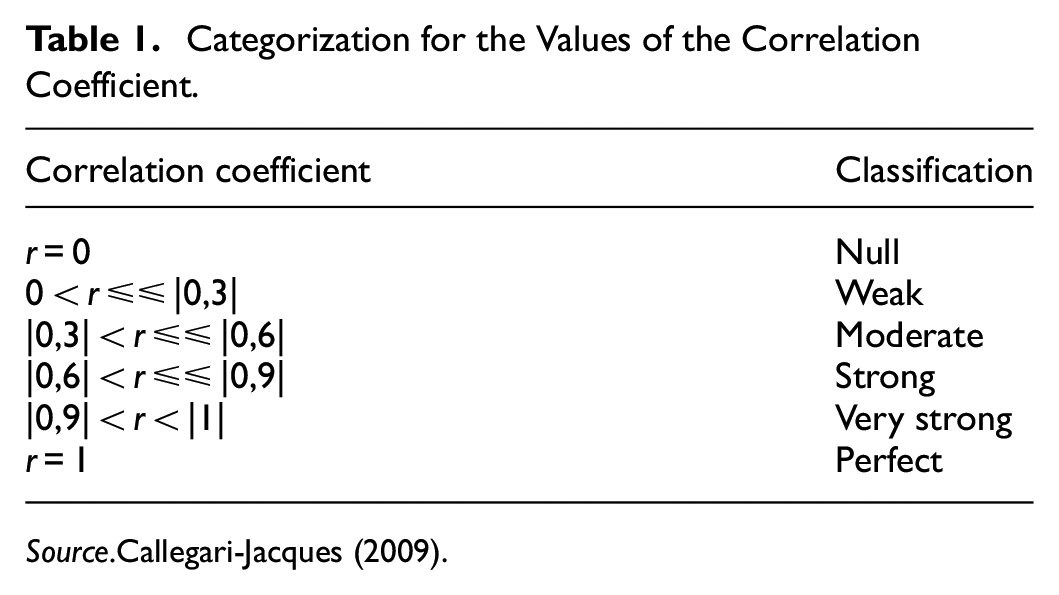
Source. Callegari-Jacques (2009).
The 33 questions of the questionnaire were submitted through Google Forms during the period from January to February 2023. After the research period, the collected data were tabulated and analyzed in Microsoft Excel.
Results and Discussion
Results have been divided into four themes for a better presentation of the information. Firstly, we present the radar graphs and the tables of the means of the TT radars of the 59 universities investigated from the five Brazilian regions. Secondly, a table of the general means of the dimensions of all the universities is presented, as well as the dispersion measures of the variability, such as (mean, sample standard deviation, and coefficient of variation). Finally, scatter plots are presented to verify the correlation of the dimension variables using the Pearson Correlation Coefficient (R) to verify the variability of the data.
University Technology Transfer Radars
In each of the 11 dimensions of the radar, the means obtained in the three questions of each dimension of the questionnaire are presented.
The investigated universities were assigned U1, U2, U3, U4, U5…, and so on, depending on the number of investigated units.
Figure 2 presents the average scores attributed to different aspects related to the management of technology transfer in ten investigated units (U1 to U10). Each column represents a management dimension, such as People, Processes, and Budget, among others. The scores obtained in this radar range from 1 to 4, indicating the average perception of the evaluators about the management of each dimension. Score 1 indicates the lowest and 4, the highest evaluation.

Technology transfer radar of Northern universities of Brazil.
The unit (U10) was the best evaluated in all dimensions, with a general average of 3.4 which is considered regular. Six investigated units (U1, U2, U4, U5, U6, and U7) obtained scores between 2.2 and 2.9, which are considered low, while three (U3, U8, and U9) obtained scores between 1 and 1, 9, which are considered very low. Dimensions with the lowest scores are Marketing and Environment, with means below 1.8. People, R&D in technologies and Intellectual Property received the highest average among all the dimensions, with a score between 2.8 and 3.4.
Figure 2 can be useful to identify management areas that need more attention and resources to improve technology transfer at the university. For example, Marketing and Environment seem to need improvement, while R&D in technologies seems to be an element of competitive advantage for the North region of Brazil.
Figure 3 presents the average scores attributed to different dimensions related to the management of technology transfer in twelve investigated units (U1 to U12). Obtained scores in this radar range from 1 to 5, indicating the average perception of the evaluators about the management of each dimension, where 1 indicates the lowest and 5 the highest evaluation.

Technology transfer radar of universities in the Northeast of Brazil.
The unit (U6) was the best evaluated in all dimensions, with a general average of 4.6 considered very good. Seven investigated units (U1, U4, U5, U8, U9, U10, and U12) obtained scores between 3.1 and 3.9, which are considered fair and good, while three units (U2, U3, and U11) obtained scores between 2 to 2.2 which are considered low.
Dimensions with the lowest scores are Processes, Valuation, Commercialization, Environment, and Society, with means below 2.6 to 2.8. People, Budget, Integrated Management, R&D in technologies, and Intellectual Property received the highest average among all areas, with a score between 3.1 and 4.0.
Figure 3 can be useful to identify management areas that need more attention and resources to improve technology transfer at the university.
For example, Processes, Valuation, Commercialization, Environment, and Society can be improved by universities, while People, Budget, Integrated Management, R&D in technologies, and Intellectual Property seem to be elements in which universities have already achieved a competitive advantage for the Northeast region of Brazil.
Figure 4 presents the average scores attributed to different aspects related to the management of technology transfer in thirteen investigated units (U1 to U13). Scores obtained in this radar range from 1 to 4, indicating the average perception of the evaluators about the management of each element, where 1 indicates the lowest and 4 is the highest evaluation.

Technology transfer radar of Southern Universities in Brazil.
Units 7 and 9 (U7 and U9) were the best evaluated considering all dimensions, with a general average of 4.1, considered very good. Four investigated units (U2, U4, U10, and U13) obtained scores between 3 and 3.4, which are considered regular, while seven (U1, U3, U5, U6, U8, U11, and U12) obtained scores between 2, 2 to 2.7 which are considered low.
Dimensions with the lowest scores are Valuation, Marketing, and Society, with means below 2.2 to 2.4. People, R&D in technologies and Intellectual Property received the highest average among all the areas, with a score between 3.6 and 4.0.
Figure 4 can be useful to identify management areas that need more attention and resources to improve technology transfer at the university.
For example, Valuation, Commercialization, and Society may be areas of improvement for universities, while People, R&D in technologies and Intellectual Property appear as a competitive advantage for the southern region of Brazil.
Figure 5 presents the average scores attributed to different aspects related to the management of technology transfer in fourteen investigated units (U1 to U14). The scores obtained in this radar range from 1 to 4, indicating the average perception of the evaluators about the management of each dimension, where 1 indicates the lowest and 4 the highest evaluation.

Technology transfer radar of universities in the Southeast of Brazil.
The unit (U8) was the best evaluated in all dimensions, with a general mean of 4.2 considered very good. Four investigated units (U3, U9, U10, and U14) obtained scores between 3 and 3.3, which are considered regular, while seven (U1, U2, U4, U5, U6, U7, and U11) obtained scores between 1, 9 to 2.4 which are considered low.
Dimensions with the lowest scores are Valuation, Marketing, and Society, with means below 2.1 to 2.2. People, R&D in technologies and Intellectual Property received the highest mean among all the areas, with a score between 3.1 and 3.9.
Figure 5 can be useful to identify management areas that need more attention and resources to improve technology transfer at the university.
For example, Valuation, Commercialization, and Society may be areas of improvement for universities, while People, R&D in technologies, and Intellectual Property seem to be a competitive advantage for the Southeast region of Brazil.
Figure 6 presents the average scores attributed to different aspects related to the management of technology transfer in ten investigated units (U1 to U10). The scores obtained in this radar range from 1 to 4, indicating the average perception of the evaluators about the management of each area, where 1 indicates the lowest and 4 the highest evaluation.

Technology transfer radar of Midwest universities of Brazil.
The units (U1 and U4) were the best evaluated in all areas, with a general average of 3.9 which is considered good. Four investigated units (U5, U6, U7, and U10) obtained scores between 3.2 and 3.7, which are considered regular, while four (U1, U2, U8, and U9) obtained scores between 1.6 and 2, 9 which are considered low.
Dimensions with the lowest scores are Processes, Valuation, Commercialization, Environment, and Society, with means below 2.7 to 2.8. People, R&D in technologies and Intellectual Property received the highest average among all the areas, with a score between 3.6 and 3.8.
Figure 6 shows management areas that need more attention and resources to improve technology transfer at universities.
Dimensions like Processes, Valuation, Commercialization, Environment, and Society may be foci for improvement for universities, while People, R&D in technology, and Intellectual Property are shown as a competitive advantage for the Midwest region of Brazil.
Results of Dispersion Measurements (Variability)
Measuring the spread of variability in data is essential to understand the distribution and shape of the data. It allows researchers to determine how concentrated or dispersed the data is around the mean and whether any outliers or extremes are present in the data set. According to Graham and Upton (1996), the measurement of the dispersion is important to obtain information about the precision of the measurements, the variability of the data, and the capacity of a model to fit the data.
In measuring the dispersion of the data in this research, different statistics were used, such as the general mean, the standard deviation, and the coefficient of variation.
These measures of dispersion provide valuable information about the variability of the data and they can help researchers make informed decisions about the interpretation of the results and the selection of the most appropriate statistical method. According to Ghasemi and Zahediasl (2012), the measurement of dispersion is essential in research, since it may indicate the need for adjustments in the study design or the interpretation of the results.
Table 2 displays the measures of dispersion of the variability of the data of the means obtained from the eleven dimensions in 59 Brazilian universities that were subjects of the study. The dimension with the greatest dispersion of the variation of the data about the average was “assessment” obtaining 47.48%, another seven dimensions—Marketing, Society, Processes, Environment, Relationship, Integrated Management, and Budget—all got a very high percentage, higher than 30% which is considered high dispersion.
Dispersion Measurements(Variability) of Technology Transfer Radar dimensions of the Five Regions of Brazil.

This result can be explained because Brazil has different regions and different levels of technological and social development, some Brazilian cities and regions are considered much more advanced than others.
The dimension that obtained the lowest dispersion was “People,” 18.23%, a percentage that represents medium dispersion. None of the dimensions obtained low dispersion. It is called low dispersion when it is less than or equal to 15%. This result in this dimension is explained by the fact that in recent years, the Brazilian government and universities have invested in training personnel to improve the culture of innovation and technology transfer inside universities.
Results of the Correlation of the Variables
Analyzing influence and correlation in the TTR dimensions, the Pearson correlation coefficient (R) was applied, which is a measure commonly used to evaluate the linear correlation between two continuous variables. Variable correlation is important because it can help researchers understand the relationship between variables and thus identify patterns, and causal relationships, and predict future changes in variables.
According to Field (2013), correlation allows researchers to assess the validity of their hypotheses and theories. If two variables are highly correlated, there may be a causal relationship between them. On the other hand, if the variables are not correlated, it is possible that there is no causal relationship or that the relationship is complex or non-linear. Therefore, the correlation of variables can help researchers to refine and develop more precise theories and hypotheses. Furthermore, according to Gravetter et al. (2014), the correlation of variables can also be useful in practical decision-making.
Carrying out the correlation analysis of the variables of this TTR research, the People dimension was chosen, since it was the one that obtained the best global average (3.78) and the lowest dispersion about the average, with a coefficient of variation of 18.23%. The purpose is to measure to what extent the “people” factor can influence the other dimensions of the TTR.
Pearson correlation coefficient (R) varies between −1 and +1, with values close to −1 and +1 indicating a strong linear correlation and values close to 0 indicating no linear correlation.
Scatter plots represented by graphs 1 to 10 show linear dispersion among TTR variables related to the People dimension, as well as the values of the coefficient of determination (R2) and the correlation coefficient (R). Processes and Environment dimensions were those that presented a greater correlation between the variables and with People dimension.
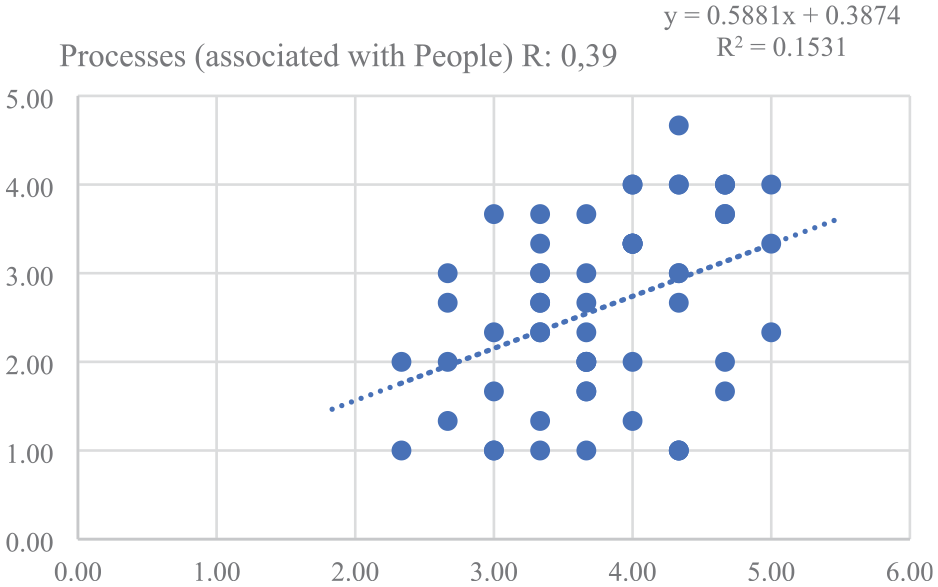
Correlation coefficient for processes dimension.

Correlation coefficient for relation dimension.

Correlation coefficient for budget dimension.

Correlation coefficient for integrated management dimension.
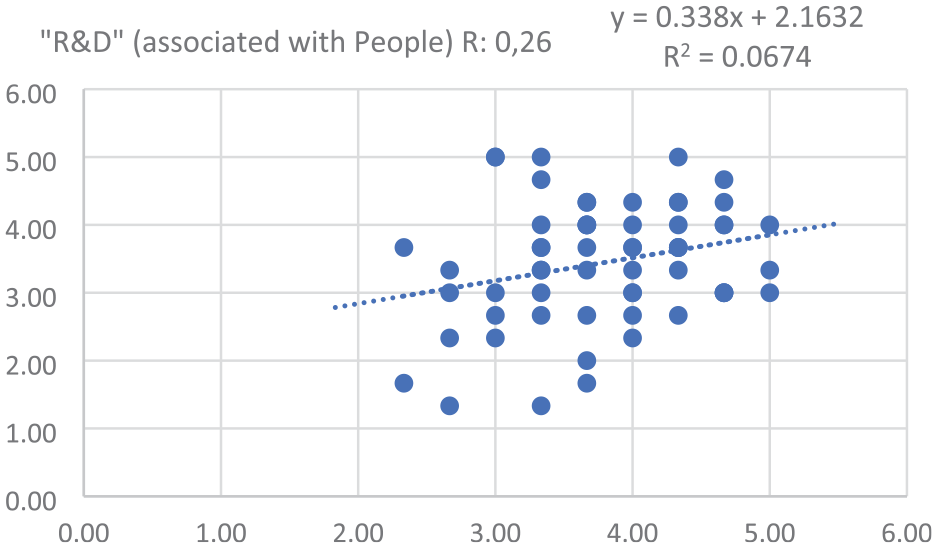
Correlation coefficient for R&D dimension.
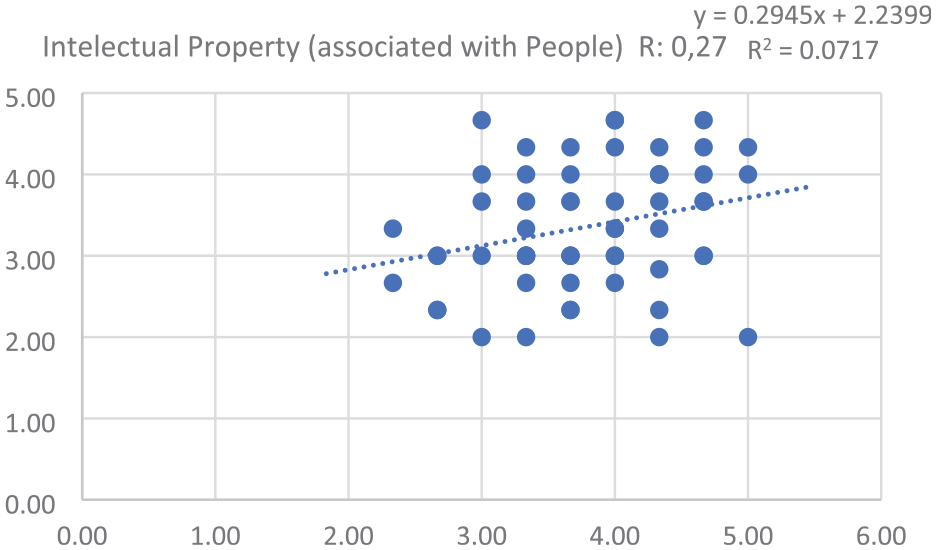
Correlation coefficient for intellectual property dimension.

Correlation coefficient for valuation dimension.

Correlation coefficient for commercialization dimension.
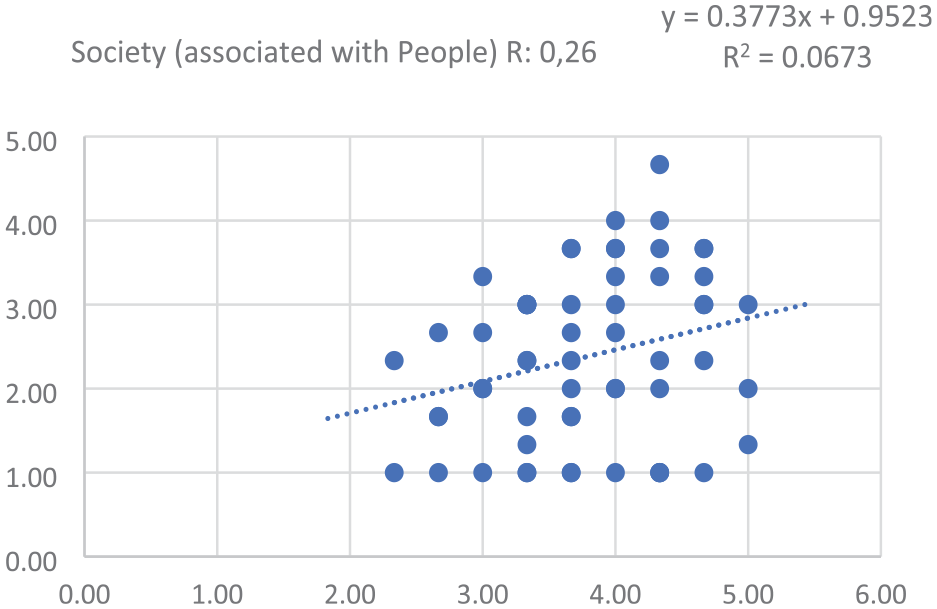
Correlation coefficient for society dimension.
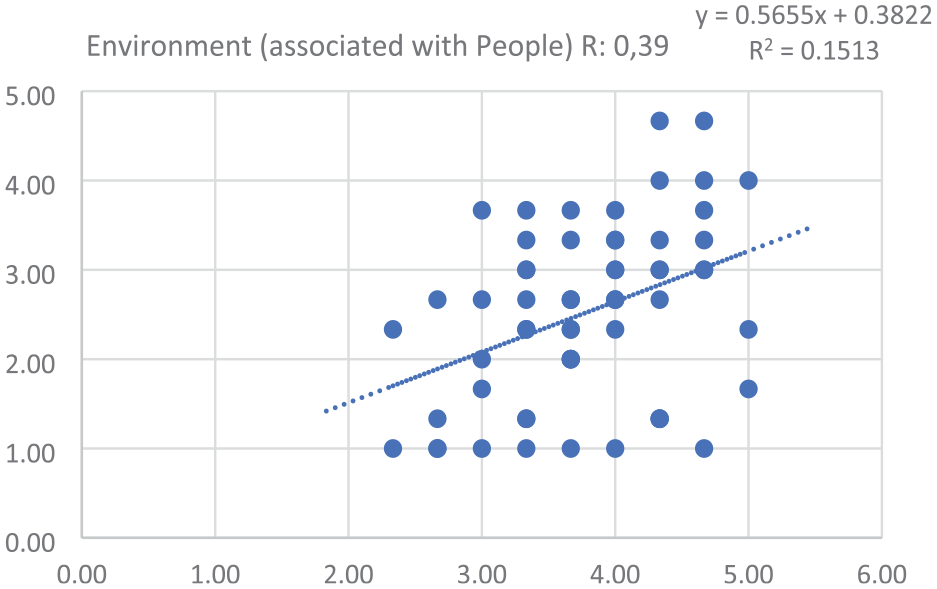
Correlation coefficient for environment dimension.
Graph 01 shows that 15.31% (R2) of the variation in the People dimension at universities is explained by the variation in the Processes dimension. The correlation coefficient (R) was 0.39, considered weak and positive according to Callegari-Jacques (2009).
In graph 10, 15.31% (R2) of the variation in the People dimension at universities is also explained by the variation in the Environment dimension. There is a correlation between the People dimension with the increase in the indicators of Processes and Environment at universities, but it is still considered weak and not strong and decisive enough to influence the development of these dimensions.
Other correlations of the dimensions had the following values and are presented below in decreasing order.
In Graph 8, the percentage of 11.96% (R2) of the variation in the People dimension is explained by the variation in the Marketing dimension, and the correlation coefficient (R) was .35.
In graph 7, the percentage of 12.57% (R2) of the variation of the People dimension is elucidated by the variation of the Valuation dimension, and the correlation coefficient (R) was .35.
In Graph 4, the percentage of 11.65% (R2) of the variation of the People dimension is explained by the variation of the Integrated Management dimension, and the correlation coefficient (R) was .34.
In graph 02, the percentage of 10.4% (R2) of the variation of the People dimension is elucidated by the variation of the Relationship dimension, and the correlation coefficient (R) was .32.
Graph 03 shows a percentage of 8.17% (R2) of the variation for the People dimension which is correlated to the variation of the Budget dimension, the correlation coefficient (R) was .29.
In graph 6, the percentage of 7.17% (R2) of the variation for the People dimension is explained by the variation of the Intellectual Property dimension, and the correlation coefficient (R) was .27.
Graph 9 shows a percentage of 6.73% (R2) of the variation for the People dimension which is elucidated by the variation in the Society dimension, and the correlation coefficient (R) was .26.
In Graph 5, the percentage of 6.74% (R2) of the variation for the People dimension is explained by the variation of the Research and Development dimension, and the correlation coefficient (R) was .26.
There is also a correlation of the People dimension among all the universities that took part in the study. However such correlation is considered weak and not so strong or decisive to influence other dimensions.
This research allowed an evaluation of the structure of activities related to the Technology Transfer processes in Brazilian public universities in its five regions, through the application of the TTR model. Based on the bibliographical and documentary review and the results of the investigation, it was possible to understand the current scenario for Technology Transfer in Brazil detailing different regions. Furthermore, this study brings suggestions to improve specific areas involved in such a process through the investigation of the Radar dimensions.
One of the primary benefits of this research is that it identifies specific areas for improvement within the Technology Transfer Offices (TTOs) of Brazilian public universities. By categorizing proposed actions across various dimensions (People, Processes, Budget, Relationship, Integrated Management, R&D in Technology, Intellectual Property, Valuation, Commercialization, Environment, and Society), it provides a comprehensive roadmap for TTOs to enhance their capabilities.
One of the primary benefits of this research is that it identifies specific areas for improvement within the Technology Transfer Offices (TTOs) of Brazilian public universities. By categorizing proposed actions across various dimensions (People, Processes, Budget, Relationship, Integrated Management, R&D in Technology, Intellectual Property, Valuation, Commercialization, Environment, and Society), it provides a comprehensive roadmap for TTOs to enhance their capabilities.
Table 3 presents a set of 26 proposed actions for Universities Technology Transfer Offices (TTOs) to improve their results and accomplishments. The table was divided by the 11 dimensions of the Radar to facilitate and distinguish the understanding of the actions by area.
Actions Proposed to Improve Technology Transfer Processes.

Furthermore, the 26 actions (Figure 1) prepared allow TTOs to improve the following gaps:
Knowledge Exchange and Collaboration: The proposal suggests establishing partnerships with companies and professionals, which can foster knowledge exchange. This aligns with the works of authors like Chesbrough (2003) who emphasized the importance of open innovation and collaboration between universities and industry in his "Open Innovation" concept. Collaborative efforts can accelerate the technology transfer process and increase the chances of successful commercialization.
Standardized Methodology: The creation of a standardized methodology for managing technology transfer is essential. Teece (2009), in his work on “Dynamic Capabilities and Strategic Management,” stresses the importance of dynamic capabilities, which include the ability to adapt and refine processes continuously. A standardized methodology can enhance the efficiency and effectiveness of technology transfer activities.
Funding and Resource Mobilization: The proposal highlights the need for increased funding and resource mobilization, aligning with the research of Etzkowitz and Leydesdorff (2000) on the “Triple Helix” model, which underscores the importance of collaboration between universities, industry, and government. Seeking resources from multiple sources can bolster technology transfer initiatives.
Sustainability and Social Impact: Prioritizing sustainable technologies and promoting social inclusion align with the global emphasis on sustainable development (United Nations, 2015). This approach can not only lead to environmentally friendly innovations but also have a positive societal impact by making technologies accessible to a broader population.
Knowledge Dissemination: Creating knowledge dissemination programs for society can raise awareness about the importance of technology transfer. Rogers et al. (2014) in their “Diffusion of Innovations” theory emphasize the role of communication and information diffusion in the adoption of innovations.
Multidisciplinary Collaboration: The proposal suggests involving multidisciplinary teams for technology evaluation. This interdisciplinary approach, advocated by authors like Jasanoff (2004), can lead to a more holistic assessment of technologies, considering not only technical but also social, ethical, and cultural factors.
Competitive Pricing: Establishing a competitive pricing policy for technologies is relevant for their successful commercialization. This resonates with the principles of industrial organization and pricing strategies (Tirole, 1988), which emphasize the importance of pricing in market outcomes.
Social and Economic Impact: By encouraging students and professors to participate in technology transfer projects, universities can strengthen their connections with the local community. The proposal aligns with the concept of the “triple bottom line” in business, which emphasizes not only economic but also social and environmental impacts (Elkington, 1999).
Furthermore, the 26 actions (figure 1) prepared allow TTOs to improve the following gaps:
Knowledge Exchange and Collaboration: The proposal suggests establishing partnerships with companies and professionals, which can foster knowledge exchange. This aligns with the works of authors like Chesbrough (2003) who emphasized the importance of open innovation and collaboration between universities and industry in his “Open Innovation” concept. Collaborative efforts can accelerate the technology transfer process and increase the chances of successful commercialization.
Standardized Methodology: The creation of a standardized methodology for managing technology transfer is essential. Teece (2009), in his work on “Dynamic Capabilities and Strategic Management,” stresses the importance of dynamic capabilities, which include the ability to adapt and refine processes continuously. A standardized methodology can enhance the efficiency and effectiveness of technology transfer activities.
Funding and Resource Mobilization: The proposal highlights the need for increased funding and resource mobilization, aligning with the research of Etzkowitz and Leydesdorff (2000) on the “Triple Helix” model, which underscores the importance of collaboration between universities, industry, and government. Seeking resources from multiple sources can bolster technology transfer initiatives.
Sustainability and Social Impact: Prioritizing sustainable technologies and promoting social inclusion align with the global emphasis on sustainable development (United Nations, 2015). This approach can not only lead to environmentally friendly innovations but also have a positive societal impact by making technologies accessible to a broader population.
Knowledge Dissemination: Creating knowledge dissemination programs for society can raise awareness about the importance of technology transfer. Rogers et al. (2014) in their “Diffusion of Innovations” theory emphasize the role of communication and information diffusion in the adoption of innovations.
Multidisciplinary Collaboration: The proposal suggests involving multidisciplinary teams for technology evaluation. This interdisciplinary approach, advocated by authors like Jasanoff (2004), can lead to a more holistic assessment of technologies, considering not only technical but also social, ethical, and cultural factors.
Competitive Pricing: Establishing a competitive pricing policy for technologies is important for their successful commercialization. This resonates with the principles of industrial organization and pricing strategies (Tirole, 1988), which emphasize the importance of pricing in market outcomes.
Social and Economic Impact: By encouraging students and professors to participate in technology transfer projects, universities can strengthen their connections with the local community. The proposal aligns with the concept of the “triple bottom line” in business, which emphasizes not only economic but also social and environmental impacts (Elkington, 1999).
This research proposal offers a comprehensive set of strategies to improve technology transfer activities in Brazilian public universities. By addressing multiple dimensions and drawing on insights from various academic fields, it provides a holistic approach to enhancing the effectiveness of technology transfer processes. The implementation of these proposals has the potential to create a more dynamic and impactful technology transfer ecosystem in Brazil, benefiting both universities and society at large.
These are some proposals and strategies to improve the technology transfer activities of Brazilian public universities. It is important to highlight that technology transfer is a complex process that requires the collaboration of various areas and professionals. The implementation of these proposals can help Brazilian public universities to have a more effective performance in technology transfer generating a greater impact on society and the country’s economy.
Conclusion
Considering the fundamental role of public universities in the technological, economic, educational, and social development of Brazil, the evaluation of technology transfer becomes a relevant topic of great interest to researchers and managers of these institutions. This study sought to present an overview of the structure of technology transfer in Brazilian public universities in its five regions, and based on the results, it highlights the main challenges and prospects for the future.
As this study aimed to evaluate the structure of technology transfer in Brazilian public universities, identifying the main barriers and proposing solutions to improve the management of activities, it was possible to observe that the evaluation of technology transfer is a complex and multifaceted process, which involves the analysis of various dimensions, such as People, Processes, Budget, Valuation, Intellectual Property, Marketing, Integrated Management, R&D in technologies, Relationship, Environment, and Society.
Through the diagnosis carried out in the five regions of the country, the evaluated dimensions based on qualitative-quantitative methods were analyzed, which resulted in a clearer understanding of the current situation of technology transfer in these universities. It was evidenced that various barriers prevent the effective transfer of technology, such as the lack of infrastructure, adaptation of processes, technological evaluation, commercialization of technologies, as well as issues related to bureaucracy and the lack of financial incentives.
Through research, it was evidenced that one of the main gaps is the scarcity of financial and human resources. The lack of continuous and adequate funding prevents the consolidation of a robust structure for technology transfer. Although there are funding programs and occasional investments, they are generally insufficient and poorly distributed, failing to meet the actual needs of universities. To address this issue, a national fund dedicated exclusively to technology transfer could be created. This fund should be managed efficiently and transparently, ensuring an adequate and continuous allocation of resources to support TT activities.
Another significant gap is the inadequate infrastructure of Technology Transfer Offices (TTOs) at public universities in Brazil. The infrastructure varies considerably among institutions, directly affecting the internal and external capabilities of the TTOs. Improvements made so far have been sporadic, and there is no national plan for standardization and optimization of infrastructure. Therefore, a national plan for the modernization and standardization of TTO infrastructure could be developed and implemented. This plan should ensure that all public universities have the adequate infrastructure needed to operate efficiently and effectively.
Additionally, the lack of an entrepreneurial culture within universities constitutes a substantial barrier to the commercialization of innovative technologies. The absence of an environment that fosters entrepreneurship hinders the transition of academic innovations to the market. Existing initiatives, such as training and entrepreneurship events, are generally isolated and insufficient. Therefore, integrating entrepreneurship programs into academic curricula and promoting strategic partnerships with the business sector could be developed. Such measures aim to cultivate an entrepreneurial mindset among students and researchers, facilitating technology transfer.
Finally, insufficient interaction between universities and industries is another critical gap. Collaboration between these sectors is essential for technology transfer, but it faces significant challenges, including a lack of incentives and a mutual understanding of objectives and benefits. It is recommended to develop policies that encourage and promote closer collaborations between universities and industries. Creating innovation networks and organizing joint events can strengthen these ties, fostering a more conducive environment for technology transfer.
The gaps identified in technology transfer at public universities in Brazil require structural and systemic solutions. The implementation of the aforementioned proposals could significantly contribute to overcoming current challenges, promoting a more favorable environment for innovation and technological development in Brazil.
In this sense, public universities must adopt a strategic and systematic approach to the evaluation of technology transfer, to maximize results and the impact of their actions.
The research also presented 26 proposals for solutions to improve the management of technology transfer activities, including the strengthening of collaborations among universities and companies, the creation of government policies that encourage technology transfer, and the training of the professionals involved in managing these activities.
This research provides a detailed description of technology transfer activities in Brazilian public universities, contributing to making more informed and effective decisions about this area of knowledge, highlighting that the adoption of strategic approaches and the promotion of partnerships between universities and companies are promising ways to maximize the results of technology transfer boosting scientific and economic development of the country.
Limitations and Prospects
This study's limitations should be considered when interpreting the findings, particularly regarding the following hypotheses:
Hypothesis 1 assumes regional disparities in technology transfer (TT) processes but does not account for confounding variables such as funding, university size, or regional economic conditions that may also influence these differences.
Hypothesis 2 narrows the focus to the “people” dimension, overlooking other important factors like infrastructure and collaboration, and the interactions between these dimensions are not considered.
Hypothesis 3 relies on self-reported data, which may be biased. It also does not specify the types of resources that are lacking or their impact on TT.
Despite these challenges, effective public policies, stronger collaboration between universities and companies, and better training and assessment of faculty, researchers, inventors, and university staff can help overcome them.
While the study provides valuable insights into the state of TT processes in Brazilian public universities, several limitations should be noted:
Quantitative Approach: The study relies mainly on quantitative data collected via a survey questionnaire. Although this approach offers numerical data and statistical analysis, it may lack the depth and context that qualitative methods could provide. Interviews or case studies, for instance, could offer a richer understanding of the challenges and opportunities within TT processes.
Survey Design: The survey includes 33 questions, which, while comprehensive, could lead to respondent fatigue and affect the quality of responses, potentially introducing bias.
Limited Focus on Infrastructure: The study examines the infrastructure of Technology Transfer Offices (TTOs) in public universities, primarily focusing on internal and external infrastructures and institutional capacity.
Regional Variation: While the study covers universities from different regions of Brazil, regional variations in socioeconomic factors and government policies might influence TT differently across regions. This complexity may not be fully captured in the study.
Prospects for Future Research:
To address these limitations and deepen understanding of TT processes, future research could consider the following approaches:
Longitudinal Analysis: Conduct longitudinal studies to track changes and trends in TT processes over time across Brazilian public universities, offering a more comprehensive view of TT evolution.
Qualitative Investigation: Complement quantitative data with qualitative research to explore contextual factors and challenges in greater depth, providing a richer understanding of the complexities involved in TT.
Policy Analysis: Investigate policies and regulations affecting TT in Brazil, to inform policy recommendations to enhance TT processes.
Stakeholder Engagement: Engage with industry partners, government agencies, and university stakeholders to explore their perspectives and expectations, ensuring a more integrated approach to improving the TT ecosystem.
Footnotes
Declaration of Conflicting Interests
The author(s) declared no potential conflicts of interest with respect to the research, authorship, and/or publication of this article.
Funding
The author(s) disclosed receipt of the following financial support for the research, authorship, and/or publication of this article: The author(s) received partial funding from the Federal University of Parana, Curitiba, Brazil.
Data Availability Statement
Data sharing not applicable to this article as no datasets were generated or analyzed during the current study.
