



Abstract
Building on existing models, we theorized a dimensional model which quantifies forgiveness in terms of incongruence among forgiveness aspects. In the present research we aimed to draw on attitudinal theory to validate a measure of forgiveness which assessed cognition, behavior, and affect. Our goal was to develop a measure of forgiveness which captures incongruence between domains. To do this, we examined the validity and reliability of the Multi-dimensional Forgiveness Inventory (MDFI), which assess forgiveness-relevant behavior, cognition, and affect. In Study 1 we assessed convergent/divergent validity and assessed predictive associations among dimensions and theoretically relevant constructs. In Study 2 we assigned participants to rate their forgiveness for transgressions (small or large), at two different time points. This allowed us to assess temporal stability of dimensions across similar and dissimilar transgressions. In Study 3 we replicated research on embodied remorse using the MDFI to assess forgiveness. We found that for transgressors demonstrating embodied remorse (i.e., kneeling), participants were more willing to communicate forgiveness, but we found no difference in cognitive or affective forgiveness (in line with past research). The present research provides a novel model and measure to assess incongruent forgiveness.
Plain language summary
Internal processes such as people’s thoughts and feelings are typically in alignment. However, it is not unusual for people’s thoughts, feelings, and behaviours to become incongruent with one another. For instance, people may feel negatively toward a person (feelings) but act friendly to avoid conflict (behaviour). The present research aims to validate a measure which can capture these sorts of incongruence between thoughts, feelings, and behaviour in people’s experiences of forgiveness. In Study 1 we demonstrated the proposed measure was associated with other common measures of forgiveness. In addition we demonstrated that thoughts and feelings about forgiveness are associated with unique perceptions of a given relationship (commitment and satisfaction, respectively). In Study 2 we demonstrated that these measures have acceptable reliability over time, but different facets of forgiveness may have different reliabilities depending on the transgression. Lastly, in Study 3 we replicate effects of embodied remorse with the proposed measure. We extend the prior findings by demonstrating that embodied remorse enhances behavioural forgiveness compared to standard apologies, and reduces the gap between thoughts and actions of the forgiver.
Introduction
But there was a difference, as Ralph often said to himself—there was a difference. She had not forgiven him, she never would forgive him: that was all he had gained. She thought she had forgiven him; she believed she didn’t care; and as she was both very generous and very proud these convictions represented a certain reality.
In Henry James’s The Portrait of a Lady, protagonist Isabel Archer is harshly criticized by her cousin Ralph for her decision in marriage. While Isabel claims to have forgiven Ralph (and perhaps believes utterly and completely that she has), the transgression continues to strain their relationship. Ralph observes this in the quote above, which raises an important question: when does one know they have forgiven a transgression? Is it when they have said they forgive or when they believe they have forgiven? Or perhaps it is when they let go of their negative feelings towards the transgressor?
Forgiveness is almost never considered to be defined by a singular feature (e.g., only a reduction in vengeful desire), as such there is potential for inconsistency among defining features. These inconsistencies could lead to people with different profiles of forgiveness being combined into a similar category of “moderate” forgiveness. The inconsistency among internal aspects of forgiveness could be referred to as “incongruent” forgiveness (i.e., there is a presence of at least one feature of forgiveness and an absence of other feature[s]). Isabel’s forgiveness of Ralph could be described as incongruent. That is, she believed she had forgiven and expressed this forgiveness, but maintains negative feeling, as Ralph points out, and thus the forgiveness was not fully realized. The goal of the present research is to validate a measure which better assesses forgiveness which is has incongruency between internal dimensions.
Psychological Incongruence
It is important to consider the internal dimensions upon which forgiveness could be incongruent. Complex psychological processes are often researched in terms of both composites of components (e.g., general attitudes), individual components (e.g., behavioral, cognitive, affective components of an attitude, see Breckler, 1984), but also incongruence among their individual components (e.g., discrepancies between cognitive attitudes and relevant behaviors, see Ajzen, 1991). Among the first to assess this was Festinger (1957) who observed inconsistency or incongruence among cognitions, or cognitions and behaviors leads to people feeling a tension or psychological discomfort. While Festinger found people tried to alleviate this tension by changing their beliefs, subsequent research found people might also justify their beliefs (Aronson, 1997, Cooper & Fazio, 1984) or engage in self-affirmation (Steele, 1988).
Given the roots of this work coming from cognitive dissonance it comes as no surprise that the most comprehensive work on incongruence has been done in the field of attitudes. While many terms have been used for more specific instances (e.g., incongruent, discrepant, ambivalent) the notion that two components of an attitude toward the same object can diverge from one another is a regular point of study within the field. For instance, Briñol et al. (2006) have shown that incongruence among explicit and implicit attitudes leads to increased processing of persuasive information. Other work has sought to assess under what conditions people’s cognition (e.g., attitudes or beliefs) may be incongruent with their behaviors (Ajzen, 1991).
Of course, this conceptualization has been applied widely outside of attitudes research as well. For instance, emotions research has assessed how people’s experienced affect may be incongruent with what they believe is a correct emotional experience (e.g., an individual ending a long-term relationship and feeling happy despite believing one should feel sad in this context; Centerbar et al., 2008). Research on the self has explored incongruence between one’s ideal self and how they actually perceive themselves (Higgins, 1987) and their moral self and actual self (e.g., Grubbs et al., 2015, Lewczuk et al., 2021). Both the emotional and ideal-self inconsistencies are associated with increased negative affect.
Incongruence is largely aversive and typically motivates people to take actions to reduce it such as changing attitudes or seeking validation (e.g., Festinger, 1957; Higgins, 1987). Despite this, there is ample research showing people hold incongruent components of a single attitude (e.g., Thompson et al., 1995). Incongruence between cognitive and affective components of an attitude has been shown to make people more susceptible to salient attitudinally relevant information (Chaiken & Baldwin, 1981). Further, when there is more incongruence between cognitive and affective components of an attitude people are more willing to behave in ways inconsistent with their explicitly stated attitudes (Norman, 1975). In attitudes, incongruence generally arises when different motivational factors underly different components of an attitude. For instance, strong positive emotions toward an object may be incongruent with cognitive beliefs that it is harmful thus resulting in overall incongruence (e.g., eating unhealthy food; Conner et al., 2021). Similarly, strong negative affect (e.g., sadness or anger in response to a transgression) could be incongruent with beliefs or convictions (e.g., it is right to forgive). Given these antecedents, it seems likely for incongruence to arise in people’s forgiveness. Further, people are motivated to resolve not just inconsistencies within their own cognition, but also between themselves and others (e.g., Hillman et al., 2024). Forgiveness as a conflict resolution behavior is at the cross-section of both potential internal inconsistency and external social inconsistency.
Incongruent Forgiveness
The extant literature has seen several “types” of forgiveness introduced as a means of categorizing potential incongruencies. These attempts typically take the form of identifying a specific incongruence and codifying it as a unique “type” of forgiveness. Various typologies have been devised to identify specific incongruences. Hollow and silent forgiveness (Baumeister et al., 1998) are among the most cited. Both identify an incongruence between behavioral and mental processes. Hollow forgiveness describes the presence of interpersonal communication without intrapsychic aspects of forgiveness, whereas silent forgiveness describes the presence of intrapsychic aspects of forgiveness without the interpersonal communication. Insincere forgiveness (Merolla, 2014) describes a similar incongruence, an external communication of forgiveness, which retains an “underlying negativity.” A key distinction, however, is while those who forgive insincerely are aware of their insincerity, individuals exhibiting hollow forgiveness need not be aware of their hollowness. A variety of other typologies exist, similarly attempting to capture individual incongruences (see Nelson, 1992; Trainer, 1981).
While many programs of research have sought to assess some “type” of forgiveness, it is much more common that only a composite or individual component is measured. For instance, both McNulty (2011) and Merolla and Zhang (2010) have measured communication of forgiveness in isolation from other features. Similarly, recent work by Hornsey et al. (2020) found that a transgressor embodying their remorse (e.g., kneeling or crying) increased individuals’ perceptions of remorse, yet did not affect forgiveness. This is surprising, as apologies and perceived remorse tend to be robustly linked with strong increases in forgiveness (e.g., Fehr et al., 2010). However, it is possible that there are indeed individual components in this forgiveness which are incongruent in each situation, yet a general composite measure would overlook them. The literature, therefore, is in need of a measure which allows for a holistic assessment of various incongruencies between key internal domains, such as behavior, cognition, and affect.
Modelling Incongruence
As previously mentioned, hollow and silent forgiveness are among the most cited conceptualizations of incongruent forgiveness. These conceptualizations found their origin in the Two-dimensional Model of Forgiveness (Baumeister et al., 1998). This model identifies forgiveness as being comprised of intrapsychic (e.g., reduced negative affect) and interpersonal (e.g., communicating forgiveness) dimensions. However, while the two-dimensional model points out that intrapsychic forgiveness is important, Baumeister et al. (1998), define it as “an emotional attitude based on cognitive appraisals and interpretations.” Under this definition, intrapsychic forgiveness could be understood as a strictly spontaneous process, a strictly deliberate process, or a mix of both. All three ideas fit the definition put forward by the authors but have vastly different implications for the respective incongruence. For instance, if intrapsychic features are cognitive (e.g., a belief or metacognition), hollow forgiveness appears to be a deliberate falsification, similar to insincere forgiveness (which Baumeister and colleagues assert it is not). Alternatively, if intrapsychic features are largely affective (e.g., a feeling of hurt or desire for compensation) the latter suggests hollow forgiveness it is more of an internal struggle, where one wants to forgive but is unable to overcome some emotional hurdles.
Models which divide intrapsychic processes into cognitive and affective aspects are common in psychology. If a measure of intrapsychic forgiveness contains items assessing both thoughts and feelings, both theoretical profiles (i.e., hollow forgiveness as a deliberate falsification and hollow forgiveness as an internal struggle) would look mathematically similar. However, one ought to expect that the antecedents and outcomes of these theoretical profiles be distinct from one another. Subdividing the two-dimensional model in such a way, would give three theoretical factors for forgiveness, interpersonal communication, thoughts, and feelings (see Figure 1). This delineation also parallels prominent models in other domains of psychology, such as the behavior, cognition, affect model of attitudes (Breckler, 1984). This also fits with previous research on incongruence, which typically contrasts at least two of behavioral, cognitive, or affective features.
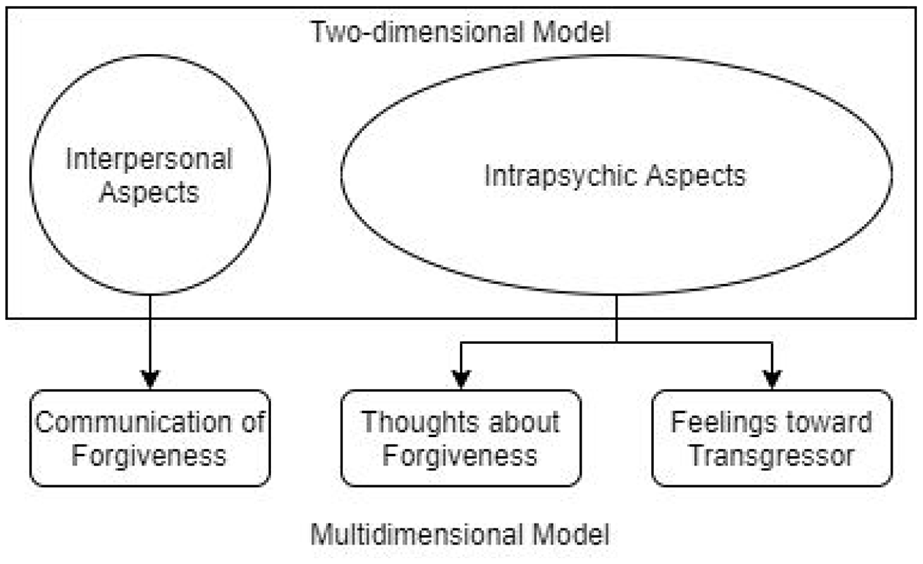
Delineation of intrapsychic forgiveness.
This model presents a three-dimensional model which can subsume many different types of incongruent forgiveness. The interaction between different permutations of these dimensions represents a wide array of potential profiles of forgiveness. For instance, an individual who says they forgive and believes they want to forgive but struggles to release negative emotions toward the transgressor surely has some degree of forgiveness, though it could not be described as “full” forgiveness. Rather, they demonstrate forgiveness which is incongruent between communication and thoughts, and their feelings. Similarly, an individual who says they forgive, but neither wants to, nor releases negative emotions could be seen as also be seen has having a vastly different kind of incongruent forgiveness. These two incongruences are qualitatively different experiences of forgiveness, and ought to be associated both with different antecedents and outcomes. However, the literature presently has neither model nor measure to capture the difference between these and other incongruences.
Prior research has taken initial steps in developing a measure which behavioral, cognitive, and affective components of forgiveness (MDFI; Hillman, 2019). The MDFI is a three-factor scale which measures communication (behavior), willingness and desire to forgive (cognition), and emotion and vengefulness (affective). While this work as demonstrated good psychometric properties, the MDFI has yet to receive extensive testing of both reliability and validity. In Study 1 we aimed to assess convergent validity of MDFI with other prominent forgiveness measures. Also, we aimed to assess the predictive validity of MDFI subscales in uniquely predicting important aspects of relationships (satisfaction and commitment). In Study 2, we assessed the internal reliability and temporal stability of MDFI subscales. In Study 3, we apply MDFI in a previously published experimental method, demonstrating how one may detect incongruency not found in previous work. We report all studies, manipulations, measures, and exclusions. Studies not included in this article, as well as raw data, materials, and analysis code are openly available at OSF.
Study 1
Purpose
To assess convergent validity of each subscale of the MDFI, we included forgiveness measures which focused on specific aspects of forgiveness, such as direct communication (Waldron & Kelley, 2005), emotional forgiveness (Worthington et al., 2013), and decisional forgiveness (Davis et al., 2015). We expected moderate to high correlations between the MDFI behavioral forgiveness factor and Waldron and Kelley’s (2005) discussion subscale and explicit forgiveness item. We expected moderate correlations between the decisional forgiveness and the cognitive forgiveness subscale because the decision to forgive is one aspect of cognitive forgiveness. We also expected moderate to high correlations between affective and emotional forgiveness as emotional forgiveness and affective both reflect the degree to which people have let go of negative emotions. We expected to replicate Hillman’s (2019) moderate correlations between TRIM subscales and the cognitive forgiveness and affective subscales.
In assessing predictive validity, it is important that interpsychic subscales both significantly predict relevant outcome measures, but also that these subscales predict different outcome measures. We measured people’s commitment and satisfaction in the relationship for which participants recalled the transgression. Both commitment and satisfaction have been associated to general forgiveness measures in the past (Allemand et al., 2007; Braithwaite et al., 2011; Tsang et al., 2006). The differences between these relationship outcomes are important to notes as well. For instance, commitment reflects cognitive decisions to remain in a given relationship, while satisfaction reflects the relative positivity of people’s emotions from moment to moment (Arriaga & Agnew, 2001). Because cognitive forgiveness reflects decisions and thoughts about forgiveness, we expected it would predict commitment to one’s relationship above and beyond affective forgiveness. Conversely, because affective forgiveness reflects people’s release of negative emotions, we expected it would predict people’s satisfaction above and beyond cognitive forgiveness.
Methods
Participants
Because we expected moderate correlations, a power analysis indicated 100 individuals would be sufficient for 90% power. However, because we aimed to ask relationship-specific questions, and we anticipated that not all participants would be in relationships, we recruited 253 participants in total. We recruited adult individuals from the United States. Of the 253 recruited, 11 were removed for failing the comprehension check. Of the 242 retained for analysis, 133 (55%) identified as male, 119 (45%) identified as female, and 1 individual declined to provide a gender. The age of participants ranged from 20 to 80 years (M = 37.9, SD = 11.8). We remunerated participants at a rate of about $ 0.15 per min of their time.
Materials
Multidimensional Forgiveness Inventory
Our primary measure of forgiveness was the Multidimensional Forgiveness Inventory (Hillman 2019), which assesses behavioral, cognitive, and affective components of forgiveness. The MDFI subscales demonstrated acceptable reliability across all three domains, behavioral forgiveness (α = .89), cognitive forgiveness (α = .88), and affective forgiveness (α = .88).
Transgression-Related Interpersonal Motivation
As a general measure of forgiveness, we used the Transgression-Related Interpersonal Motivation Scale (TRIM; McCullough et al., 1998). The TRIM is a 19-item measure that assesses forgiveness motivations following a transgression. Although the TRIM can be (and has been) used to measure forgiveness, it specifically assesses motivations toward a transgressor after a transgression. These motivations are divided into three subscales. TRIM-R assesses vengeance seeking motivations. TRIM-A which assesses motivations to increase distance or limit time with transgressor. TRIM-B (McCullough & Hoyt, 2002) was later added to assess positive emotion-related motivations. The alpha for this sample was good for TRIM-R (α = .94), TRIM-A (α = .94), and TRIM-B (α = .93).
Forgiveness Granting Strategies
As a measure of convergent validity of behavioral forgiveness, we used the Forgiveness Granting Strategies (Waldron & Kelley, 2005) scale. Specifically, we used the direct communication relevant items (discussion and explicit communication subscales). Because the explicit subscale was a single item it was combined with discussion for a composite measure of direct forgiveness. These items assess the degree and depth to which forgiveness has been communicated. Reliability was good for this sample (α = .79).
Emotional Forgiveness
As a measure of convergent validity of affective forgiveness, we used Emotional Forgiveness (Worthington et al., 2013). The emotional forgiveness measure assesses the degree to which individuals have let go of negative emotions toward their transgressor. Reliability was good for this sample (α = .81).
Decision to Forgive
As a measure of convergent validity of cognitive forgiveness, we used the Decision to Forgive (Davis et al., 2015). The decisional forgiveness measure assesses the degree to which individuals have made the commitment to begin and continue forgiving their transgressor. Reliability was good for this sample (α = .94).
To measure relational outcomes, we used the Investment Model Scale (IMS; Rusbult et al, 1998). The IMS is a measure of the factors which make up people’s decisions to maintain relationships. For this study we used the commitment and satisfaction subscales. After participants recalled a transgression, we asked them whether the individual who transgressed against them was a romantic partner, if they indicated this was the case, we asked them to complete the IMS subscales in addition to the other measures. The reliability was good for both of these measures (commitment α = .91; satisfaction α = .92).
Results
Convergent Validity
To assess convergent validity, we compared correlations among all three forgiveness dimensions with relevant forgiveness measures as well as the TRIM subscales. Behavioral forgiveness correlated highly with the discussion and explicit subscales of the forgiveness granting strategies measure, r(234) = .76, p < .001. Cognitive forgiveness correlated modestly with the decisional forgiveness measure, r(235) = .23, p < .001. Affective forgiveness correlated highly with the emotional forgiveness measure, r(232) = .62, p < .001. All subscales of the TRIM correlated significantly with behavioral forgiveness (rs = .07–.30), cognitive forgiveness (rs = .27–.30), and affective forgiveness (rs = .23–.39), all ps < .05. The only correlation which was not moderate was between behavioral forgiveness and TRIM revenge subscale, which was a smaller but still significant correlation (r = .07).
Predictive Validity
To assess unique predictive validity of cognitive forgiveness and affective forgiveness we computed two simultaneous regression models with both subscales (cognitive forgiveness and affective forgiveness) predicting each outcome measure. When predicting commitment to a relationship cognitive forgiveness B = .22, t(77) = 2.90, p = .004, predicted unique variance above and beyond affective forgiveness B = .09, t(77) = 1.17, p = .247. When predicting satisfaction in a relationship, affective forgiveness B = .30, t(77) = 2.79, p = .007, predicted unique variance above and beyond cognitive forgiveness B = .10, t(77) = 1.00, p = .322.
Discussion
Study 1 demonstrated the convergent validity of MDFI subscales to specific, relevant forgiveness measures. Further, Study 1 also demonstrated the predictive validity of these subscales in assessing some major relevant outcome measures. Notably, as we hypothesized, cognitive forgiveness uniquely predicted commitment (above and beyond affective forgiveness) and affective forgiveness uniquely predicted satisfaction (above and beyond cognitive forgiveness). This provides further support for the validity of dividing of intrapsychic forgiveness into two dimensions, as well as demonstrating the predictive value of this division. Further, this suggests that some outcomes are more related to individual domains than others, this also suggests some antecedents are similarly related to other domains. While these scales provide some evidence of validity, it is important to consider also reliability and temporal stability.
Study 2
Purpose
Forgiveness presents a unique challenge to the assessment of temporal stability. Because forgiveness is a process, any cross-sectional measurement should be expected to change given enough time. Forgiveness offers further challenges to assessing test-retest reliability because levels of forgiveness may vary both between individuals but also within a given individual across different situations (the same person might forgive different transgressions differently). Because the MDFI asks participants to recall a transgression for which they previously forgave, there is potential for a large degree of variance among recalled transgressions even within a given individual. Further, unlike many contemporary measures of forgiveness (which address individuals’ perceptions of the transgressor) the MDFI contains items directed both at perceptions of the transgressor and transgression. Because of these factors, it is important to assess the reliability of the MDFI factors across transgressions within and between individuals. The purpose of Study 3 is to assess test-retest reliability of MDFI dimensions both in similar and dissimilar transgressions. For stable personality constructs a reliability coefficient of .70 to .80 is typically expected. However, for the previously explained reasons we expect lower, but still moderate, reliability coefficients (around .40–.50) when transgression characteristics are similar. We expect notably lower correlations when transgressions are dissimilar.
Method
Participants
Because we assessed stability across time, we expected correlations to be relatively large, at least .3. Power analysis indicated that to achieve 90% power with that size of correlation we would need approximately 112 participants. As we anticipated some attrition, we attempted to recruited more than what the power analysis indicated. We sent two waves recruitment emails 5 weeks apart to psychology undergraduates. Of the emails sent, 161 students responded to both Times 1 and 2 emails. Of this sample, 80% (129) identified as female and 18% (29) identified as male, (3 participants declined to respond). The mean age for the sample was 20.75 years (SD = 6.26).
Measures
To measure forgiveness, we used the MDFI as with previous studies. The prompt provided with the MDFI directed participants to either recall a “relatively minor” or “relatively severe” transgression, depending on condition. This allowed us to compare reliability across similar and dissimilar transgressions, allowing us to assess potential limits to the test-retest reliability of these measures.
Procedure
We recruited participants via email, providing a link to an online study page. Participants were invited to follow the link and complete the study for course credit. At each time point participants were randomly assigned one of two conditions (minor vs. severe). We asked them to recall a relatively recent transgression which they forgave that was either minor or severe. As per previous studies, participants then rated the severity of the transgression and completed the MDFI. To link student’s data across time point we collected student numbers at both time point.
Results
Manipulation Check
First, to be certain that our manipulation worked, we compared reported severity between conditions at both Times 1 and 2. For Time 1, individuals in the severe condition reported more severe transgressions (M = 6.00, SD = 2.50) than those in the minor condition (M = 4.41, SD = 2.47), t(156) = 4.026, p < .001. Similarly, at Time 2, individuals in the severe condition reported more severe transgressions (M = 6.04, SD = 2.21) than those in the minor condition (M = 4.78, SD = 2.23), t(154) = 3.54, p = .001.
Correlations
We separated participants based on whether the conditions they were assigned to in Time 1 and Time 2 were matched (severe and severe; minor and minor) or unmatched (severe and minor; minor and severe). We assessed Pearson correlations of MDFI dimensions between time points. For the matched condition, test-retest correlations were significant for behavioral forgiveness, r(78) = .42, p < .001, cognitive forgiveness r(78) = .38, p < .001, and affective forgiveness r(78) = .39, p < .001 forgiveness dimensions. In the unmatched condition, test-retest correlations were significant for cognitive forgiveness r(76) = .55, p < .001, and affective forgiveness r(76) = .41, p < .001, forgiveness dimensions, but not significant for behavioral forgiveness, r(76) = .10, p = .401 forgiveness. The test-retest correlations were only significantly different between matched and unmatched conditions for behavioral forgiveness (z = 2.11, p = .035).
As with previous studies we assessed correlations with transgression severity between participants as well at Times 1 and 2. At Time 1 correlations were significant for cognitive forgiveness r(157) = −.16, p = .041, and affective forgiveness r(157) = −.50, p < .001 forgiveness dimensions but not for behavioral forgiveness, r(157) = −.09, p = .261, forgiveness. At Time 2 correlations were significant for affective forgiveness r(156) = −.46, p < .001, forgiveness, but not behavioral forgiveness, r(156) = .15, p = .056 or cognitive forgiveness r(156) = −.150, p = .062, forgiveness dimensions (Table 1).
Temporal Stability of MDFI Dimensions Across Similar and Dissimilar Transgressions.

Note. Z indicates Fisher’s r-to-z transformation to test the difference between matched and unmatched groups.
p < .05. **p < .01.
Discussion
The present findings suggest that recalling transgressions (even transgressions of deliberately different severity) does not have marked effects on levels of cognitive forgiveness or affective forgiveness. Behavioral forgiveness does demonstrate attenuated stability only when transgressions are dissimilar. These findings suggest that behavioral forgiveness (an interpersonal factor of forgiveness) is more variable across situations that cognitive forgiveness or affective forgiveness. Cognitive forgiveness seemed relatively stable within a given individual across time regardless of whether transgressions were similar or dissimilar. Interestingly, affective forgiveness shows notable stability within individuals in even in dissimilar transgressions. However, as Hillman (2019) found, affective forgiveness is reliability correlated to transgression severity between subjects.
While many psychological constructs exist at both a state and trait level (e.g., self-esteem) we theorized that the forgiveness dimensions were more state-level dimensions which would vary a great deal depending on specifics of each transgression and relationship. Notably, each dimension displayed a different degree of stability across different situations. These results suggest that behavioral forgiveness is mostly related to state-level variance (varying based on differences in transgressions), while cognitive forgiveness seems to be related more to trait-level variance (demonstrating temporal stability across different transgressions and strong associations to individual differences and commitment), and affective forgiveness seems to be related to variance at both the state level (severity of a given transgression) and trait level (demonstrating temporal stability across different transgressions). While these are still preliminary data, these findings further demonstrate the importance and utility of assessing the construct of forgiveness as multiple dimensions.
Study 3
Purpose
The MDFI demonstrated acceptable validity and reliability of the MDFI in Studies 1 and 2. As such, the purpose of Study 3 was to demonstrate the MDFI’s utility in enhancing the present literature by further developing existing theory. Most importantly, in the present research we propose the notion that moderate forgiveness can often be understood as incongruent among aspects (specifically, behavioral forgiveness, cognitive forgiveness, and affective forgiveness). Further, we suggest that contemporary measures of forgiveness often overlook incongruent forgiveness. As such, it is important to demonstrate how the MDFI’s dimensional approach to assessing forgiveness can build on the existing literature.
To this end we searched the literature recent research which used paradigms in which incongruent forgiveness might be more likely (hypothetical situations where forgiving would not be easy). In our search we found Hornsey et al (2020)’s recent, comprehensive research program on embodied remorse. In their research Hornsey and colleagues assessed the degree to which participants were more willing to forgive hypothetical transgressions when the transgressor apologized plainly, as opposed to when the transgressor apologized with embodied expressions of remorse (such as kneeling, pleading, or crying). Hornsey and colleagues’ comprehensive program of research presented a good candidate for the use of the MDFI for two reasons.
First, in Hornsey and colleagues’ Study 1, participants rated their forgiveness of Tokyo Electric Power Company (TEPCO) members who apologized for their role in the Fukushima Daiichi nuclear disaster. As noted in Study 1, different aspects of forgiveness may predict different antecedents and outcomes. For instance, while high severity transgressions are associated with less affective forgiveness, a moral or social obligation (such as ideology, or a public apology) may be more associated with cognitive forgiveness. As such, the severity and far-reaching consequences of this disaster suggest that the process of forgiveness should be difficult for participants (even hypothetically). Coupled an honest public apology, this presents a good example of a situation where incongruence should arise.
However, Hornsey and colleagues found that while embodied remorse increased perceived remorse among participants, there was no effect of forgiveness across their studies. This is a surprising lack of a difference, as apologies and perceived remorse tend to be robustly linked with strong increases in forgiveness (e.g., Fehr et al., 2010). If there is indeed an incongruence between aspects of forgiveness the results can only be fully understood when multiple aspects are assessed together.
Because measures used by Hornsey and colleagues reflect, to some extent, a combined intrapsychic forgiveness, we expected no differences between conditions (embodied remorse and no embodied remorse) on levels of cognitive forgiveness and affective forgiveness. However, because the nature of the transgression involves both a severe transgression and an earnest public apology, we expected a sizable difference between affective and cognitive forgiveness (and thus incongruity). The findings of Study 2 demonstrated that levels of behavioral forgiveness seem more associated with situational factors than cognitive forgiveness or affective forgiveness did (as demonstrated by attenuated reliability in unmatched severity conditions). While neither cognitive forgiveness nor affective forgiveness should be affected by embodied remorse, it stands to reason that these displays should result in a social impetus to act, and thus elicit more behavioral forgiveness compared to non-embodied apologies. As such, we hypothesized that embodied remorse would elicit significantly more behavioral forgiveness than the control condition, but no difference in cognitive forgiveness or affective forgiveness. In terms of incongruence then, embodied remorse should reduce the incongruence between behavior and cognition.
Methods
Participants
Power analysis indicated that to have at least 80% power to replicate the smallest between-subjects effect (Partial η2 = .02) we would need 180 participants (assuming small correlation between forgiveness dimensions). To ensure we had ample power for any between within effects, we recruited 248 participants (11 participants were removed for failing to respond to our comprehension check). Ages ranged from 17 to 46, with a mean age of 19 years old (SD = 4.57). Of the sample 191 participants identified themselves as female (81%) and 44 participants identified themselves as male (19%).
Materials
To measure forgiveness, we used the MDFI (which was reworded to assess a hypothetical situation), with the following prompt: “Please take a moment to imagine that you were one of the people hurt by this disaster, and you were present in this private meeting. On a scale of 1 to 7 please rate how much you feel these statements would apply to you if you were to forgive this transgression, where 1 is strongly disagree and 7 is strongly agree.” To measure perceived remorse, we used 7 items used by Hornsey et al. (2020).
Procedure
We used images of TEPCO employees either kneeling in apology (embodied remorse condition) or standing (control condition). Each image was paired with the same description of the Fukishima nuclear disaster and TEPCO’s part in it that Hornsey and colleagues used. The paragraph was also followed with a brief description which either stated that employees kneeled in apology or simply apologized. After reading the paragraph and viewing the images we asked participants to complete measures of forgiveness and perceived remorse.
Results
Manipulation Checks
First, we assessed whether there were between-subjects differences in both perceived remorse and perceived transgression severity. There was a significant difference in perceptions of remorse, such that apologies demonstrating embodied remorse were rated as more remorseful (M = 4.62, SD = 1.18) than the control apologies (M = 3.85, SD = 1.31), t(233) = 4.76, p < .001 replicating Hornsey et al.’s (2020) findings. Average perceived severity was high across both groups (M = 8.38, SD = 1.47), but there was no difference between conditions (p = 0.707).
Forgiveness
To compare all types of forgiveness simultaneously, we used a 2 × 3 (embodied remorse vs. control) × (behavioral forgiveness vs. cognitive forgiveness vs. affective forgiveness) mixed model ANOVA. Mauchly’s test indicated the assumption of sphericity was violated, (W = .94, p < .001) so we used a Greenhouse-Geisser correction. This analysis yielded a significant main effect of forgiveness type, F(2, 466) = 90.03, p < .001, η2 = .279, 95% CI [.212, .334], qualified by a significant interaction between group and forgiveness type, F(2, 466) = 4.22, p = .017, η2 = .018, 95% CI [.001, .046]. As per our hypothesis we assessed only contrasts between the same forgiveness dimensions across each group. Post hoc t-tests revealed that behavioral forgiveness was significantly higher in the embodied forgiveness group (M = 3.94, SD = 1.41), than the control group (M = 3.41, SD = 1.20), t(232) = 3.16, p = .002, g = .41, 95% CI [.15, .67] even with Bonferroni adjusted alpha level (p < .01). Between subject differences for cognitive forgiveness and affective forgiveness were not significant (ps > .50).
Within-subjects pairwise contrasts also revealed that across both conditions affective forgiveness (M = 2.86, SD = 1.05) was significantly lower than behavioral forgiveness (M = 3.69, SD = 1.34), p < .001, g = .67, 95% CI [.52, .84], or cognitive forgiveness (M = 4.10, SD = 1.31), p < .001, g = 1.03, 95% CI [.87, 1.22]. There was also a smaller but still significant difference between behavioral forgiveness and cognitive forgiveness as well p < .001, g = .31, 95% CI [.15, .47]. While we did not hypothesize this pattern of results, it is consistent with previous findings, as this transgression was perceived to be quite severe across both groups.
To assess incongruence, we calculated the difference between each pair of behavioral/cognitive and behavioral/affective forgiveness. This demonstrated that in terms of behavioral-cognitive incongruency apologies with embodied remorse (M = −.18, SD = 1.49), compared to normal apologies (M = −.66, SD = 1.73), demonstrate less incongruency t(233) = 2.31, p = .011. Inversely, in terms of behavioral-affective incongruency, apologies with embodied remorse (M = 1.05, SD = 1.39), compared to normal apologies (M = .59, SD = 1.31), demonstrate more incongruency t(233) = 2.60, p = .005 (Figure 2).

Mean forgiveness as measured by MDFI for embodied and non-embodied remorse.
Discussion
We successfully replicated Hornsey et al.’s (2020) key findings. Expanding on their paradigm, and consistent with our hypothesis, apologies with embodied remorse had significantly higher levels of behavioral forgiveness than apologies without embodied remorse. First, these findings also bring more clarity to the effects of remorse generally. That is, based on these findings, more perceived remorse doesn’t seem to increase peoples’ cognitive forgiveness (e.g., willingness or sincerity) or affective forgiveness (e.g., reduction of sadness or vengefulness) but only their behavioral forgiveness (e.g., telling their transgressor they forgave). While increased perceived remorse has been associated to increased forgiveness in the past (Davis & Gold, 2011), these findings expand on this relationship.
In terms of incongruent forgiveness, it seems that embodied remorse decreases behavioral-cognitive incongruence, aligning people’s intention to behave and their thoughts. However, because this paradigm demonstrates a strong incongruence between cognitive and affective aspects at baseline, this is coupled with an increase in incongruence between behavior and affect. Thus, embodied remorse increases behavioral intention, aligning thoughts and actions but increasing the discrepancy between actions and emotions.
General Discussion
Convergent Validity
The MDFI demonstrated moderate correlations with other commonly used forgiveness measures such as the Rye et al. (2001) or TRIM (McCullough et al., 1998). The correlations were high enough to conclude these scales measured similar constructs but not so high as to imply redundancy between them. Because many forgiveness measures are more likely to assess some combination of thoughts and feelings, we expected correlations among general forgiveness measures and both cognitive forgiveness and affective forgiveness to be of similar magnitude. Because interpersonal factors, such as behavioral forgiveness are rarely assessed in general forgiveness scales, we expected behavioral forgiveness to have a lower correlation, similar to its correlation between cognitive forgiveness and affective forgiveness. This pattern of results emerged as expected across samples, supporting our initial hypothesis.
Temporal Stability
Studies 1 and 2 we prompted participants to think of a transgression they forgave in their past. While this paradigm gives an ecologically valid context of forgiveness (i.e., meta-analysis has found hypothetical paradigms tend to yield inflated forgiveness effects; Riek & Mania, 2012), this paradigm can be criticized in that an individual’s forgiveness cannot be generalized beyond that specific transgression. In Study 2, we found that all forgiveness dimensions demonstrated good reliability across a 5-week period when participants recalled similar severity transgressions. Even when the type of transgression was systematically varied, reliability only varied significantly for behavioral forgiveness. This suggests that MDFI forgiveness dimensions are quite generalizable across similar transgressions. This also suggests that different dimensions of forgiveness are influenced by the situation or individual differentially. This stands to reason as something like cognitive forgiveness is likely to be affected by convictions, for instance a person who believes forgiveness is more likely to want to forgive. However, they may only communicate that forgiveness when certain conditions are met (e.g., they are still in regular contact with their transgressor, or the transgression was relatively recent).
Potential Contributions
Our hypothesis across these studies is that a model of forgiveness which accounts for behavioral forgiveness, cognitive forgiveness, and affective forgiveness would provide both a common language for typologies of incongruent forgiveness and a novel understanding of existing forgiveness research. While previous research has found a relationship between severity and forgiveness (Fincham et al., 2005), we found that affective forgiveness specifically (i.e., letting go of negative emotions and desire for revenge), and not cognitive or behavioral forgiveness is associated with transgression severity. This unique relationship consistently existed in previous research (Hillman, 2019) and the present validation. Notably, the consistent relationship between severity and affective forgiveness was found despite moderate correlations between cognitive forgiveness and affective forgiveness and was still found both when severity was rated by both the participant and by external raters. In addition, the consistently distinct relationship between severity and both cognitive forgiveness and affective forgiveness supports the notion that intrapsychic forgiveness should be measured as both cognitive forgiveness and affective forgiveness domains.
Beyond providing novel insights to previous relationships, our close replication of Hornsey et al.’s (2020) work demonstrated how the MDFI can identify associations where measures of forgiveness might not. Hornsey and colleagues found no differences in forgiveness between a standard apology and an apology with embodied remorse given by the Japanese company (TEPCO) responsible for the Fukishima nuclear disaster. We found a significant difference between subjects, such that apologies with embodied remorse elicited significantly more behavioral forgiveness than standard apologies. Further, we also found that in both conditions, participants indicated significantly lower affective forgiveness than behavioral forgiveness or cognitive forgiveness. Notably, rather than having no effect on forgiveness, embodied remorse actually aligns communication and thoughts, but at the cost of increasing the discrepancy between communication and emotions. These differences illustrate how the measure of a complex interpersonal process such as forgiveness is benefited by a dimensional model such as the MDFI. Together, the findings of the present research program provide a valid and reliable means of measuring incongruent forgiveness which is not otherwise available. This provides researchers a model and measure for more comprehensive evaluation forgiveness.
Because of the complex nature of forgiveness, many researchers have taken multifactorial approach to measuring it. While other work has aimed to assess different factorial aspects for forgiveness such as motivations (TRIM, McCullough et al., 1998), target (Heartland, Thompson et al., 2005), valence (Rye et al., 2001), factors inhibiting and facilitating forgiveness (Blatt & Wertheim, 2015) the present research is distinct from these, however, as it is the first to capture internal qualities of forgiveness which align with the tripartite model, prominent factors of attitudes. This allows for further research on the application of theoretical work in attitudinal domains (e.g., ambivalent/incongruent attitudes, Kaplan, 1972; attitudinal bases, Breckler & Wiggins, 1989). The MDFI also presents the first validated measure which addresses the two-dimensional model of forgiveness as described by Baumeister et al. (1998). We expand on the ideas presented in the two-dimensional model, introducing both cognition and affect as meaningfully distinct constructs of intrapsychic forgiveness. This allows for the contrasting of different features of a given experience of forgiveness within individuals, something which has been suggested in theoretical work but has been rarely undertaken in empirical work (likely because there are few scales which are intended to be used in such a manner). The MDFI thus would be highly beneficial in deepening the understanding of forgiveness in the literature, particularly in cases where incongruence is likely, such as the TEPCO stimulus used in Study 3.
Limitations
While these studies provide a compelling starting point for this scale it is important to acknowledge their limitations. In Studies 1 and 2, participants were asked to recall a transgression they had experienced and rate their forgiveness for that transgression. While this paradigm is a practice way of assessing forgiveness, it may result in substantial variance between individual responses. Further, certain incongruencies (e.g., high affective forgiveness with low cognitive and behavioral forgiveness), may not be understood by the forgiver. As such, the recall paradigm would be less able to capture these incongruencies as participants may not consider these transgressions as having needed forgiveness. Relatedly, because the transgression severity was rated by participants who had experienced the transgression, there is likely a tendency to inflate retrospective severity. This is particularly likely when participants have little forgiveness. As such, this could inflate the association between subjective severity and (lack of) forgiveness. However, it’s worth noting that this should have little to no impact on the differences in the associations we found between forgiveness domains (i.e., affective forgiveness is more robustly correlated to severity than cognitive forgiveness is).
Future Directions
It will be important to examine not just forgiveness dimensions individually, but also how incongruence among dimensions predicts unexpected results. For instance, McNulty’s (2011) findings demonstrated associations between high tendency to communicate forgiveness and a subsequent transgressor aggression. While McNulty’s findings focused on communication alone, the MDFI suggests that a high degree of behavioral forgiveness may also correspond with less cognitive or affective forgiveness. Rather than high behavioral forgiveness alone, McNulty’s results may be explained by incongruent forgiveness. For instance, this incongruence between behavior and both cognition and affect could be what is associated with heightened hostility. If a transgressor is continuing to transgress, it may not be possible to foster feelings of forgiveness. In order to maintain harmony, people may still communicate forgiveness despite lacking feelings of genuine forgiveness. Incongruence between behavior and cognition or affect may thus be more likely than full forgiveness to be associated with subsequent reoffence. In addition, this model could be used to assess contexts where forgiveness is implemented strategically. For instance, business relationships as opposed to intimate relationships may have more forgiveness due to external motivation, rather than internal motivations. These different motivations may correspond to certain types of forgiveness, (e.g., more behavioral forgiveness but less affective forgiveness).
While self-report is a useful method, it need not be the only means by which this scale is implemented. Future research could explore the implementation of the MDFI in dyadic contexts, as both a self and partner evaluation. This additional perspective could be used to assess not only an individual’s forgiveness but their perception of their partner’s forgiveness as well. The associations of individual and partner evaluations with outcome variables could be explored as simple associations, or a difference score could be calculated to assess discrepancy between individual and partner perceptions. Both the simple associations and difference score methods offer potentially insightful findings.
Conclusions
The three subscales of the MDFI (behavioral forgiveness, cognitive forgiveness, and affective forgiveness) demonstrated convergent and discriminant validity as well as predictive validity of relationship outcomes and high internal consistency. The MDFI also demonstrated generally good temporal stability, even across situations which varied in transgression severity. Finally, we demonstrated the use of the MDFI in bringing new insight to previous research paradigms. This research provides a strong starting point for use of the MDFI as a measure in the forgiveness literature. It is our hope that the MDFI finds use in the integration of the many disparate forgiveness typologies.
Footnotes

Ethical Considerations
Ethical permission was granted through Queen’s General Research Ethics Board (GREB) File number 6020716. Written informed consent was obtained for all participants prior to their participation in these studies.
Funding
The author(s) received no financial support for the research, authorship, and/or publication of this article.
Declaration of Conflicting Interests
The author(s) declared no potential conflicts of interest with respect to the research, authorship, and/or publication of this article.