




Abstract
The research was driven by the need to urgently address environmental issues in light of Pakistan’s fast industrialization. It aimed to examine the dynamics of policy success in environmental protection and contribute to the conversation on sustainable development. Therefore, the intervention of financial mechanisms in the adoption process was deemed inevitable to enhance its effectiveness. Financial incentives and disincentives were identified as pivotal intermediaries influencing the effectiveness of government actions promoting eco-friendly innovations in Pakistan. The presence or absence of these incentives significantly shaped individuals’ attitudes and behaviors toward adopting environmentally friendly technologies. To investigate these dynamics, a structured questionnaire was administered to 799 individuals, and data was analyzed using Smart-PLS, SEM, or partial least squares structural equation modeling and SPSS. The methodology details how these data were collected and processed, ensuring a robust analysis. The analysis revealed the crucial role of government policies, financial incentives, and disincentives in promoting sustainable product adoption in Pakistan. It extends the diffusion of innovation theory, emphasizing the critical influence of government intervention in promoting sustainable practices. By showing how well-planned financial mechanisms might increase the influence of environmental regulations, the study provides useful information for politicians. Policymakers can encourage the adoption of environmentally friendly technology and promote long-term economic growth by using these incentives and disincentives. Additionally, other developing nations encountering comparable environmental difficulties can use this research as a model to apply these solutions to their own situations. This research is unique in providing theoretical support and guidance for the government and other stakeholders to encourage individuals to engage actively in practical and empirically supported green product innovation and an economically efficient ecosystem. Furthermore, it enables the achievement of global sustainability goals by examining methods to improve the adoption of eco-friendly technologies. It offers a replicable framework for other regions facing similar challenges.
Keywords
Introduction
In the past few years, there has been a growing worldwide awareness and concern over the issue of sustainability on a global scale. This elevated concern can be attributed to the increasing recognition of the significant impacts of climate change, resource depletion, and pollution (Guo et al., 2021). Integrating novel digital technologies and precision equipment has facilitated green manufacturing, emphasizing environmental sustainability and resource efficiency (Forcadell et al., 2021). Similarly, sustainable development goals (SDGs) are becoming more and more relevant in the context of green innovation. As highlighted by SDG 9 on industry, innovation, and infrastructure, adopting eco-friendly technologies is crucial to achieving sustainable economic growth, which addresses environmental concerns (Schot & Steinmueller, 2018). These advancements have led to higher quality and increased value, reducing development and market time and promoting sustainable practices (Skare & Porada-Rochon, 2022). However, the increase in such development, industrialization, and urbanization has yielded environmental contamination (Makhloufi et al., 2023), which needs practical solutions, too. The rise of green manufacturing reflects a broader commitment to sustainable development, aiming to mitigate the environmental impact of domestic and industrial activities (Shahzad et al., 2022). Finding a sustainable balance between economic growth and ecological sustainability is one of the critical goals of this research. The other is to determine how successful environmental policies and financial incentives have been in encouraging the adoption of green innovation in Pakistan. For countries like Pakistan, where environmental degradation is a serious problem, it is critical to know how to improve green innovation performance by optimizing environmental legislation. It directly impacts consumers’ capacity to effectively embrace sustainable practices (Akhtar et al., 2024).
Government rules, financial incentives, and customer demand for environmentally friendly goods are some of the global variables that have impacted the development of green innovations. For example, the European Union has spearheaded the charge toward more environmentally friendly technology by enforcing stringent regulations. Similarly, the necessity to decrease carbon emissions and increase energy efficiency is driving nations like the US and China to make enormous advances in green innovation (Jackson, 2005). Pakistan, a rapidly industrializing country with a population of over 225 million located at the nexus of South Asia and the Middle East, faces a distinctive range of environmental difficulties. The nation struggles with problems like resource scarcity, deforestation, and air and water pollution (Ajani & van der Geest, 2021). Pakistan’s economy primarily depends on sectors like manufacturing, textiles, and agriculture, all of which have significant environmental impacts (Young et al., 2019). These issues highlight the urgent need for sustainable development measures that encourage eco-friendly innovations to lessen the adverse environmental effects of industrialization and urbanization.
Studying the adoption of green innovation in Pakistan is significant for several reasons. Environmentally, the country is experiencing severe degradation that threatens public health and economic stability. According to a report by the World Bank 2019/2020, the financial cost of environmental degradation in Pakistan amounts to approximately 6% of the country’s GDP, while 22,000 adult premature deaths annually in Pakistan due to the depletion of resources (Anjum et al., 2021; Baloch et al., 2022). To ensure the populace’s well-being and foster economic stability, a transition towards renewable and sustainable alternatives is necessary (Jaiswal et al., 2022). Simultaneously, the rapid expansion of urban centers and rapid industrialization have increased pollution levels, while the escalating energy demand exacerbates ecological and financial burdens on Pakistan. However, a solution lies in the embrace of green product adoption innovation. This adoption presents a viable avenue to lighten a spectrum of environmental concerns. By adopting green product innovation, Pakistan can pave the way for developing a sustainable and fair economy, effectively addressing carbon emissions and conserving precious natural resources, thereby enhancing the well-being of future generations. Furthermore, Barbier and Burgess (2017) argue that financial mechanisms play an increasingly important role in promoting green innovation as countries work to fulfill their SDG commitments, especially those about climate action (SDG 13) and sustainable production (SDG 12). However, the adoption of green innovations among individuals in Pakistan, particularly regarding the use of solar panels for daily life, is still at a nascent stage. This necessitates a comprehensive understanding of the government’s environmental policy intervention while influencing individual perceptions and behaviors toward green product innovation. Previous studies have primarily focused on manufacturing industries or developed economies, leaving a significant gap in understanding the challenges faced by individuals in emerging markets. And how policies can shape individuals’ behavior to adopt green product innovation. Additionally, the Global Green Economy Index has shown that adopting green technologies can increase a country’s attractiveness to foreign direct investment and strengthen its resilience to changes in the global sustainability paradigm (Dual Citizen, 2016). Similarly, environmental stringency effectiveness in promoting green innovation adoption plays a significant role (J. Zhang et al., 2021). As well as, policy effectiveness largely depends on the incentives and disincentives provided to multiple stakeholders (Aguilera-Caracuel & Ortiz-de-Mandojana, 2013; Borsatto & Amui, 2019; Pan et al., 2021). The previous literature vilifies the objective of this research. The studies suggest further exploration and successful implementation of environmental strategies that could help out developing countries like Pakistan regarding sustainable development goals. However, the adoption of green innovations among individuals in Pakistan, particularly regarding the use of solar panels for daily life, is still at a nascent stage. This necessitates a comprehensive understanding of the government’s environmental policy intervention while influencing individual perceptions and behaviors toward green product innovation. Previous studies have primarily focused on manufacturing industries or developed economies, leaving a significant gap in understanding the challenges faced by individuals in emerging markets. And how policies can shape individuals’ behavior to adopt green product innovation.
Furthermore, Governments can develop regulatory frameworks, provide incentives, and establish supportive systems to foster the development and adoption of environmentally sustainable technology. One potential approach to encouraging firms to invest in cleaner technology is implementing tax incentives for renewable energy projects or establishing emission reduction objectives. Various incentives, such as subsidies, grants, and tax breaks, can alleviate the economic strain of adopting environmentally friendly technology (Čiegis & Gineitienė, 2004; Lorek & Vadovics, 2016). These incentives enhance the appeal for corporations to allocate resources toward sustainable solutions.
On the other hand, implementing disincentives, such as carbon emission taxes or fines for pollution, catalyzes firms to mitigate their environmental footprint and embrace more sustainable approaches to evade potential financial consequences (Čiegis & Gineitienė, 2004; Isik, 2004). Such policy enforcement frequently entails the establishment of regulatory frameworks that provide benchmarks and prerequisites for environmental performance. These laws can incentivize enterprises to use innovative practices to reach or surpass the established criteria. For example, implementing more stringent emission rules may catalyze non-renewable resource users into renewable to meet environmental requirements (Isik, 2004; O’Neill et al., 2020).
Researchers (Bollinger, 2015; Zhong & Peng, 2022) have highlighted the substantial impact of EPP in shaping the adoption of green product innovation, encompassing establishing regulatory benchmarks, providing financial incentives, and creating supportive frameworks. This effort must include ensuring institutional rules and incentive structures encourage sustainable behavior, facilitating access to environmentally friendly options, encouraging people to act to better their circumstances, and setting an example of the desired changes through the government’s policies and practices. Conversely, well-defined legislative regulations can set precise environmental standards that foster adherence and compliance. However, it is crucial to strike a balance, as overly stringent regulations might hinder creative minds from investing in eco-friendly solutions due to financial uncertainties. Accordingly, this study explores the role of EPP and economic mechanisms in promoting the adoption of green product innovation. Grounded in the diffusion of innovation theory, this research investigates: How significant are subsidies and tax benefits in influencing the decision to use green products? How do individuals respond to regulatory restrictions and monetary fines related to environmental policies? When a government imposes ecological policies, how do they shape individuals’ behavior in adopting green technologies? How does the government determine which policies are more appropriate for eco-friendly products?
This understanding becomes pivotal for policymakers to formulate targeted and pragmatic strategies that expedite Pakistan’s transition towards a more environmentally conscious and environment-friendly future.
The principal contribution of this study lies in its meticulous examination of how environmentally sound policies and practices can foster the promotion of green product innovation in Pakistan. However, Empirical research based on individuals’ perceptions has been lacking. This study probes into the factors, such as the aggregation of financial incentives (FI) and disincentives, that drive individuals to embrace environmentally conscious innovations. Second, This research examines the successfully implemented environmental policies in the region to provide ideas for the design and implementation of green practices. The third goal is to arm policymakers and individuals in Pakistan with empirically grounded concepts that can effectively facilitate constructing an environmentally sustainable and economically viable ecosystem, bridge geographical boundaries, and offer valuable insights for regions grappling with similar challenges. Fourth, it contributes to supporting global sustainability goals by identifying ways to increase the adoption of green technologies and providing a model that can be replicated in other regions facing similar challenges. Ultimately, this research seeks to safeguard the environment and elevate the level of green innovation, and as a result, it suggests that society should be provided with a healthful lifestyle.
Finally, from a policy perspective, to improve the efficiency of environmental regulations and achieve international commitments under agreements like the Paris Accord, it is necessary to understand the drivers and impediments of green innovation in Pakistan (Arif et al., 2022). From a social perspective, by enhancing the availability of clean energy, water, and sustainable livelihoods, green innovation can potentially alleviate inequities, especially for marginalized communities (Ahmed et al., 2020).
Theory and Hypothesis Development
Diffusion of Innovation Theory
Several organizational behavior and innovation theories are the foundation of the current study subject (Dearing, 2009; Kaminski, 2011; Rogers, 2003). The theory of diffusion of innovation by Rogers et al. (2014) states several factors to consider when a product is in the introduction stage, including a lack of awareness of green products and environmentally friendly endeavors. This theory is particularly relevant to green product innovation in emerging markets like Pakistan, where environmental challenges and the adoption of sustainability are yet to evolve.
In such markets, the DOI theory emphasizes the importance of perceived benefits in driving adoption decisions, including financial savings, environmental effects, and social status. It applies to green product innovation (Rogers, 2003). To increase consumer utility, flaws in green practices still in their early stages may need to be fixed. The theory also states that several essential elements, such as perceived benefits, simplicity of use, and social impact, determine the probability of individuals or organizations accepting new technology.
Whether innovations are related to products, services, or regulations, innovation dissemination fundamentally explains the mentality and process by which they are accepted (Lundblad, 2003). Innovation must be adopted across various individuals and industries to achieve sustainable development. Studies highlighting this theory’s critical role in pursuing sustainable development are already available in the literature (Dearing & Cox, 2018). Social norms support adopting sustainable practices, which speeds up the proliferation of green inventions in countries where environmental awareness is expanding (Schot & Steinmueller, 2018).
However, it is essential to note that FI can reduce barriers to entry and speed up the adoption of green innovations in the short term. Still, social and regulatory pressures are just as crucial in the long run for keeping adoption rates high. When taken as a whole, these variables shape the diffusion curve of how environmentally friendly technology spreads in developing markets, where adoption trends may vary significantly from those in developed nations (H. Zhang & Zhong, 2022). While earlier research has examined various aspects of innovation adoption, there is still a gap in our understanding of how incentives and disincentives encourage individuals to adopt sustainable innovations and the sustainability of the environment.
Thus, the foundation of this theory led to the development of hypotheses (see Figure 1) in this study, investigating how environmental policies and financial mechanisms influence the adoption of green product innovations in Pakistan.
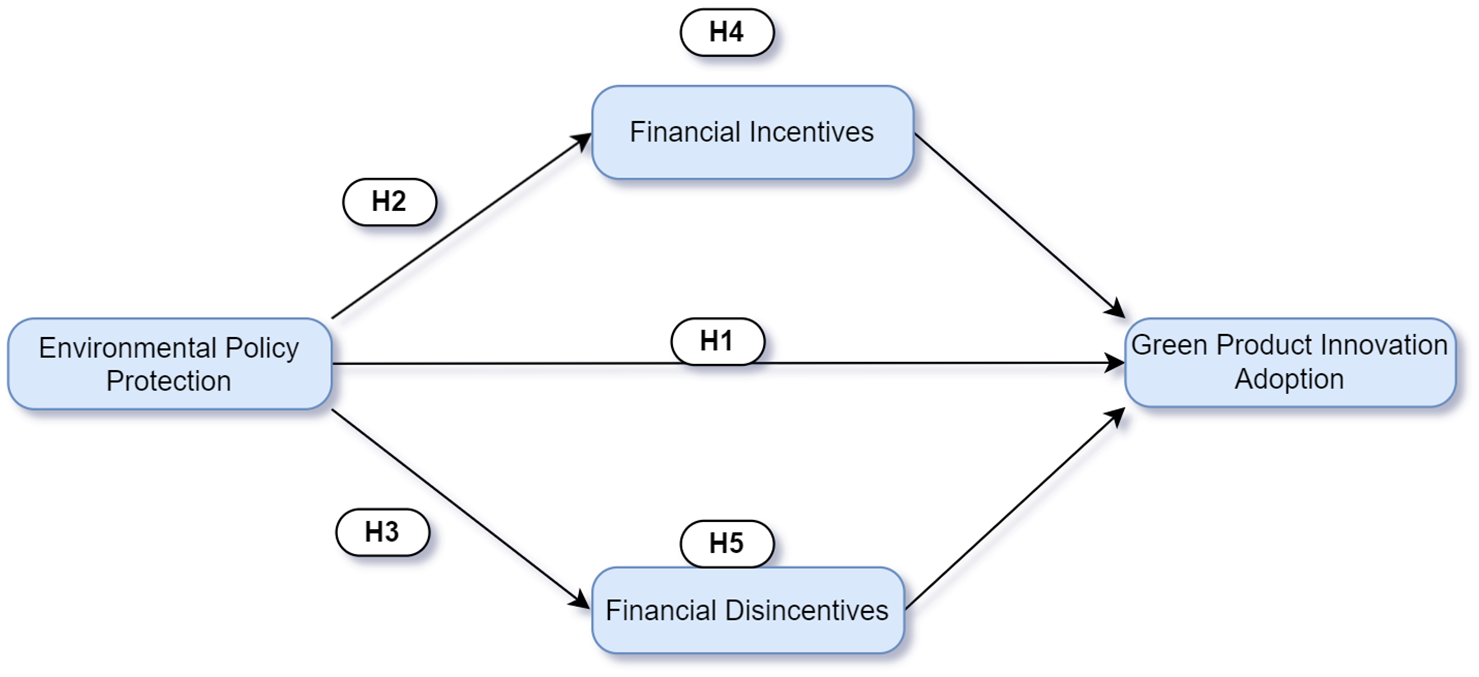
Proposed research model.
Environmental Policy Protection and Green Product Innovation Adoption
The broad nature of the relationship between EPP and GPIA has been the subject of significant studies. Environmental policies, incredibly stringent and well-enforced, are essential to encouraging businesses to use eco-friendly technology. Therefore, The scholarly literature has investigated the correlation between EPP and GPIA uptake that necessitates compliance with sustainability standards (Bakkabulindi, 2014; Javeed et al., 2023; Peng et al., 2020).
Implementing stringent governmental rules and incentivizing environmentally friendly behaviors tend to increase the likelihood of corporations investing in research and development endeavors to create and implement sustainable technology (Boffo & Patalano, 2020; H. Zhang & Zhong, 2022). These regulations establish a distinct economic motivation for companies to embrace environmentally friendly technology to meet regulatory requirements.
Multiple studies have indicated that the implementation of environmental legislation has the potential to foster innovation across various industries. Companies that embrace environmentally friendly solutions frequently get a competitive edge by reducing resource usage, enhancing efficiency, and decreasing operating costs (Kemp, 2000; Meng et al., 2020). The existing literature frequently distinguishes between “technological push” and “market pull” aspects where customer demand for sustainable products drives innovation. Both forces can work together to support the adoption of green innovation (Karmaker et al., 2021; Kemp, 2000). Similarly, the usefulness of different policy instruments, such as emission trading systems, carbon taxes, and subsidies, in fostering environmentally sustainable innovation has also been examined for selecting a specific tool that may influence the pace and trajectory of innovation (Krupnick & Parry, 2012).
However, the correlation between the implementation of environmental policies and the uptake of green innovation may exhibit industry-specific variations. Specific sectors may display varying levels of responsiveness to regulatory pressure, influenced by factors such as their operational characteristics and customer demand (Sezen & Cankaya, 2013). Still, there is a positive link; it is important to acknowledge the existence of constraints and problems that hinder the adoption of green innovation, particularly environmental legislation. Other factors may be considered, such as the initial capital expenses, the uncertainties surrounding the future regulatory environment, and the requirement for a proficient workforce. Comprehending and effectively tackling these difficulties is important for politicians and policymakers alike. In brief, the association between the preservation of environmental policies and the adoption of green product innovation is a subject of scholarly inquiry characterized by its dynamic and progressive nature. The specific methods and effects may exhibit considerable variation contingent upon the individuals, setting, industry, and environmental policy protection under consideration. Therefore, it is hypothesized:
H1. Environmental policy protection has a direct positive effect on green product innovation adoption.
Environmental Policy Protection and Financial Incentives
Financial incentives, a cornerstone of EPP, are essential for encouraging business innovation in environmentally friendly products. Several incentives have been implemented to lessen the financial strain of creating and implementing environmentally friendly goods and practices, such as tax rebates, financial aid, and grants (Boffo & Patalano, 2020; H. Zhang & Zhong, 2022). For instance, Kemp (2000) and Meng et al. (2020) point out that tax incentives for renewable energy projects can reduce initial costs, making green technology more financially feasible.
An empirical study confirms that FI may significantly impact the connection between EPP and the adoption of green product innovation. Having incentives increases the attractiveness of investing in sustainable solutions for companies, as they are more inclined to invest in environmental innovation when they see a clear economic advantage or when they can balance out the expenses related to environmental regulations. Governmental monetary assistance, such as direct subsidies or tax reductions, stimulates enterprises to prioritize and accelerate the development of green technology. This is especially true when policies are coherent and offer a distinct, enduring structure for firms to function under (Growth & Countries, 2011; Okereke, 2007).
However, financial incentives may not work the same way in different sectors. It depends on several things, such as the current regulatory environment, market circumstances, and the unique operating features of the industry. Based on their unique cost structures or environmental impacts, various sectors could be more receptive to specific incentive programs (Sezen & Cankaya, 2013). In short, EPP and FI have multiple aspects and complex connections. Although a positive correlation exists between adopting green innovations and implementing environmental policies, FI’s role as a mediator in this relationship is complex. It requires specific approaches to consider various individuals and industries’ unique requirements and conditions. Therefore, from the above literature, it is hypothesized:
H2. Financial Incentives positively influence the success of environmental policy protection efforts.
Environmental Policy Protection and Financial Disincentives
The interaction between FDI and EPP is a crucial component of the regulatory system intended to boost the development of environmentally friendly products. Using FDI, such as taxes, fines, and other monetary penalties, discourages environmentally detrimental actions and practices. Businesses and people will be encouraged to reduce their ecological footprint and look for greener alternatives if negative environmental consequences are costly. According to Porter and Linde (1995) and Porter and van der Linde (2002), strict ecological laws may spur inventions that make up for compliance expenses and even profit the business. This is compatible with the “Porter Hypothesis,” which posits that innovative environmental rules can potentially boost economic and environmental performance.
Empirically, several studies have looked at how well FDI works to promote environmental innovation. Disincentives might motivate businesses to create ecologically friendly products to prevent the financial consequences of breaking environmental laws, according to the OECD (2016). Evidence suggests that subsidies might encourage investment more successfully when there are market failures or obstacles to adoption than carbon levies aiming to lower the upfront costs. However, when disincentives are formulated and put into practice, they may determine how successful they are (Gerarden et al., 2017).
In conclusion, FDI plays a critical role in enforcing environmental regulations and promoting the development of environmentally friendly products, even as EPP seeks to preserve natural resources and guarantee sustainable practices. One potential means of directing economic activity toward sustainability is the dynamic interaction of FDI and equity pricing policies. However, their impact’s intricacy demands careful thought and more research to fully realize their potential in fostering environmental innovation. Hence,
H3. Financial Disincentives positively influence the success of environmental policy protection efforts.
The Role of Mediators
Incorporating mediators into this research is necessary due to the numerous aspects between GPIA and EPP. In situations where direct effects might not account for all the variation in results, mediators are crucial for capturing the indirect pathways by which EPP affects GPIA.
A straight relationship between policy and innovation does not exist in Pakistan’s context due to the ever-changing nature of environmental restrictions. Many variables can increase or decrease the effect of EPP on GPIA. If this study takes environmental policies as an example, it can pave the way for green innovation. However, whether or not enterprises implement these innovations is often contingent on factors like how profitable they are and the state of the economy. More sophisticated knowledge of the hows and whys of EPP leading to innovation can be gained with the assistance of mediators, which help to unveil these dynamics.
In underdeveloped nations, where financial constraints and market conditions typically make adopting green technologies more difficult, mediators become even more crucial. This work intends to provide important insights for policymakers attempting to build more effective environmental policies by adding mediators to reveal how EPP can effectively improve GPIA.
The Mediating Role of Financial Incentives
One important intermediary between EPP and GPIA is FI. Economic benefits make it more financially feasible to use eco-friendly technology by delivering economic rewards that reduce the costs of green innovation. This is achieved by offering enterprises and individuals various FI, encouraging them to develop and produce more environmentally friendly products (Huang, Zhang, Zhang.
To explain it further, government entities can provide financial assistance to companies that develop environmentally friendly goods, commonly called green product innovation. Alternatively, governments may implement policies that reduce the tax burden on enterprises producing and distributing green products (Growth & Countries, 2011; Okereke, 2007). Incentives can serve as a mediating mechanism in this association by enhancing the financial viability of green product creation for businesses. For instance, if a company is granted a subsidy to invest in innovative green products, there is a higher probability that the company will engage in such activities. Moreover, suppose a company knows about the impending escalation of expenses associated with producing and selling environmentally unfriendly items. In that case, it is inclined to allocate resources towards developing eco-friendly product innovations. An investigation by Cai and Li (2018) proved that implementing environmental rules coupled with financial assistance favorably impacts the development of environmentally friendly products.
Furthermore, In general, the available research indicates that incentives can serve as a beneficial mediator in the association between EPP and the creation of green products. Governments may play a crucial role in expediting the shift towards a more sustainable economy by incentivizing enterprises to develop and produce environmentally friendly products. Therefore,
H4. Financial Incentives mediate the relationship between environmental protection policies and green product innovation adoption, positively affecting the adoption rate.
Financial Disincentives
Disincentives may also serve as a mediating factor that positively influences the association between FDI and the creation of green products. This implies that implementing disincentives might motivate companies to develop environmentally friendly products to circumvent the monetary costs associated with non-adherence to environmental policies and laws (Horbach et al., 2012). Moreover, disincentives can engender heightened urgency and catalyze enterprises to expedite their innovation processes.
Research conducted by Downing and White (1986) revealed that implementing more stringent environmental rules might result in elevated pricing for environmentally friendly items, potentially impeding their widespread adoption. However, one potential strategy for enhancing the efficacy of disincentives in fostering innovation of environmentally friendly products is the development of policy designs that mitigate adverse repercussions.
Furthermore, disincentives might potentially provide beneficial outcomes in promoting green product innovation, but it is crucial to acknowledge that they may also give rise to unfavorable repercussions. When disincentives are excessively stringent, they can dissuade enterprises from engaging in innovative activities altogether (Goldman, 1995; Growth & Countries, 2011). Moreover, disincentives may increase pricing for environmentally friendly items, potentially impeding their widespread adoption. However, environmental degradation in Pakistan is a significant obstacle to sustainable development, yet FDI might be an effective tool to encourage green innovation there. For these penalties to have any impact, they need to be implemented as part of a more comprehensive regulatory framework that incorporates incentives. So, it is assumed that:
H5. Financial Disincentives mediate the relationship between environmental protection policies and green product innovation adoption, positively affecting the adoption rate.
Methodology
Research Development
The respondents to this questionnaire were individuals from different institutions in Lahore, a metropolitan city, and in the provincial capital of Punjab, Pakistan, as shown in Figure 2 Lahore was chosen because of its diverse population (11%, the highest of Punjab districts), and urban environment, encompassing people from various socioeconomic backgrounds, educational levels, and occupations. Additionally, it is well-connected with modern communication infrastructure, making online surveys and virtual participant interactions more accessible
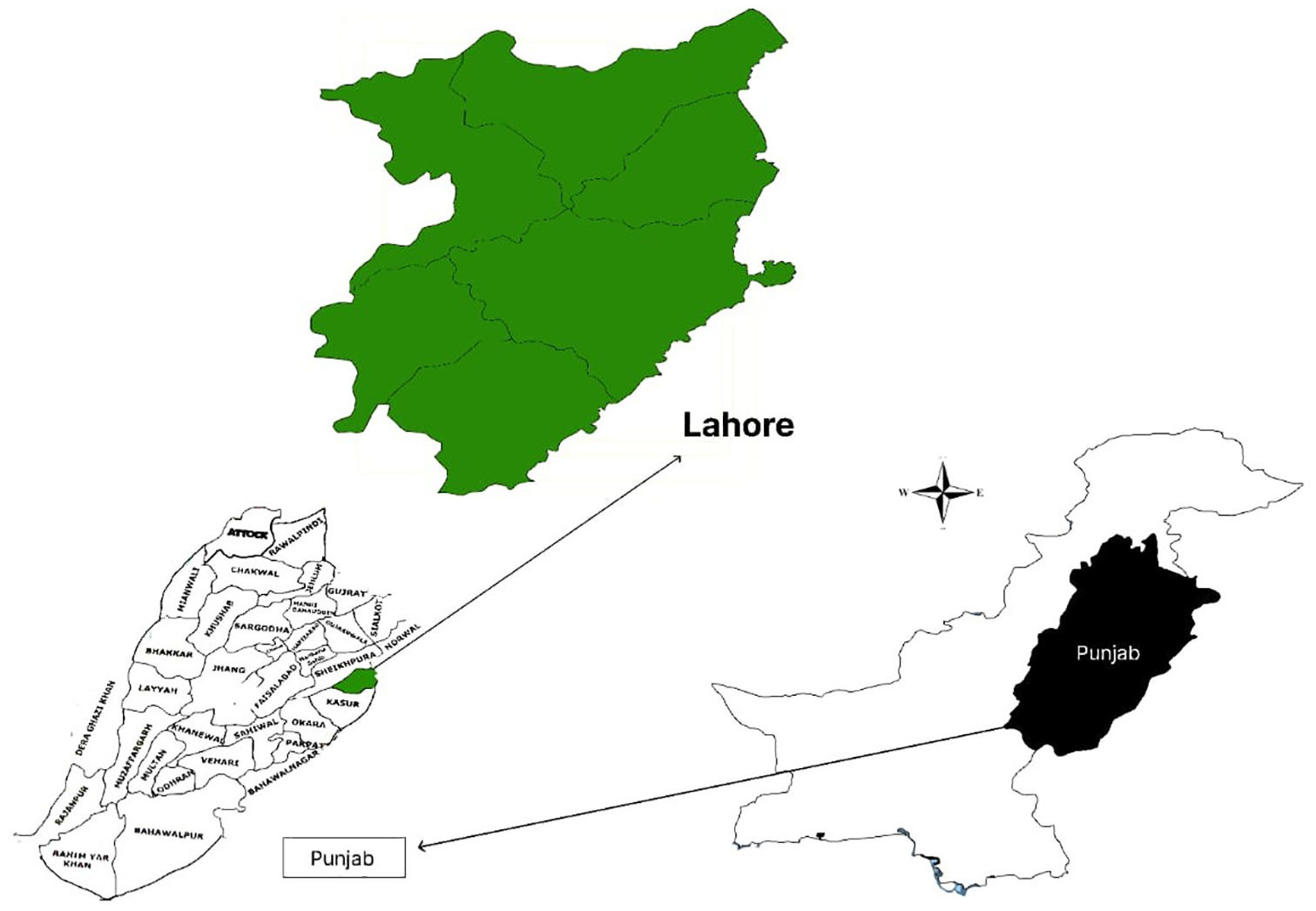
Geographical location of Lahore.
The study employed a quantitative research approach and non-probability, or convenience sampling technique with a close-ended questionnaire to gather data from a representative sample of the local population as they are actually concerned about inappropriate environmental policies and could be engaged in decision-making effectively. As a result, the questionnaire was undertaken in a sample population that varied in sexual identity, education level, organization type, and regularity with using eco-friendly products to represent the entire population to measure the constructs (EPP, FI, FDI) of using green product innovation among individuals within the target region where the EPP is in place.
Data Sample and Process
The data was collected from 799 individuals after screening and finalizing the entire data. Initially, 1,000 to 1,100 samples were targeted, but 761 responses were received. However, to make a total of 800, 39 samples were collected again. Yet again, we received 38 responses. Collaborating with my colleagues and contacts in the education sector, we obtained the data sample. Google Forms was used to create the survey, which was circulated over WeChat and WhatsApp. Because of a growing number of people using the internet, multiple studies have shown that this method is adequate for gathering data rapidly and efficiently (Singh et al., 2022). They also played a crucial role in improving the data collection and depth by spreading the survey link with their networks. Responded connected to numerous colleges, universities, and medical institutes were the target audience for this broader outreach. The online method was preferred over offline because it provided convenience and accessibility to participants. The barriers of time restraints and geographic restrictions were lessened because they completed the surveys or participated in discussions at their preferred time and location. Online data collection techniques are typically more time and cost-efficient than face-to-face, with a sense of anonymity provided.
Furthermore, Lahore is known for its diverse population and urban environment, encompassing people from various socioeconomic backgrounds, educational levels, and occupations. Additionally, Lahore is well-connected with modern communication infrastructure, making online surveys and virtual participant interactions more accessible.
Individuals from this district can shed light effectively on their preferences, behaviors, and driving forces behind the adoption of green products innovation and enforcing eco-friendly policies because Lahore is the second most polluted city in the world, and the most polluted city in Pakistan (Bilal et al., 2021). It is essential to comprehend their viewpoints to evaluate how regulations and incentives affect their choices. A thorough understanding of the factors impacting adoption decisions can be gained by surveying green product adopters and non-adopters among individuals. This data can be used to identify adoption obstacles and places where regulations and financial adds can have an impact.
The online method was preferred over offline because it provided convenience and accessibility to participants. The barriers of time restraints and geographic restrictions were lessened because they completed the surveys or participated in discussions at their preferred time and location. Online data collection techniques are typically more time and cost-efficient than face-to-face, with a sense of anonymity provided.
Scales and Construct Measurement
A questionnaire survey of two parts was used to collect the data. The first part relates to the individual’s or respondents’ demographic information regarding gender, age, educational background, and organization type (public or private). The second is made up of several measurements connected to the desired variables. Furthermore, the gender distribution of 799 entries reveals a small male predominance, with 432 men (54.1%) and 367 females (45.9%), showing no missing data because valid percentages match total percentages. The age distribution is divided into four categories: 20 to 30 years (43.5%), 30 to 40 years (38.6%), 40 to 50 years (14.7%), and 50 years and above (3%), with cumulative percentages totaling 100%, indicating a young tilt in the dataset. Educational background reveals a preponderance of higher education degrees, with Bachelor’s degree holders leading at 36.2%, PhD holders (31.9%), and master’s degree holders (26.7%), indicating a well-educated group. Finally, organization types are classified as Public (74.2%) and Private (25.7%), with no data errors recorded, suggesting an accurate categorization of the information. Moreover, the questionnaire contains a total of 24 questions items. Every question was answered on a seven-point Likert scale, where one meant “strongly disagree” and 7, “strongly agree.” The questionnaire item measurement scale was derived from past research (Venkatesh et al., 2012). The instrument has many trustworthy and validated items taken from earlier investigations.
Correlation is a statistical term that indicates the degree and direction of a link between two variables. It is frequently used to investigate how changes in one variable correlate with changes in another. The correlation coefficient, which runs from −1 to 1, measures the strength of a relationship. A coefficient near 1 implies a significant positive correlation, which means that when one variable improves, so does the other (Dancey & Reidy, 2014).
Table 1 presents a correlation matrix with mean and standard deviation values for four variables: EPP, GPIA, FI, and FD. Each variable’s mean suggests its average score in the dataset, with EPP having the highest average at 51.7 and FD the lowest at 30.8. The standard deviation indicates the dispersion around the mean, and again, EPP shows the highest variation. The correlation coefficients range from .427 to .668, indicating moderate to strong positive relationships between all variables, with EPP and GPIA showing the strongest correlation. All correlations are statistically significant at the .01 level, suggesting high reliability in the relationships observed. The significant positive correlations imply that the others also tend to increase as any of the variables increases. However, the degree of this synchronized increase varies among the pairs of variables.
Correlations.

Correlation is significant at the .01 level (two-tailed).
The question items that were adapted for the measurement of the independent variable of EPP had been previously tested by Wan and Ha (2021) and Zaccaï (2008); the dependent variable of GPIA was tested by Xue et al. (2019), and for the mediating variable of FI and FDI, items were previously tested by Abila (2018), Shaw and Maynard (2008), and Vorobeva et al. (2022), respectively. Furthermore, this study’s primary concern is the variations in Pakistani individual’ behavioral intention to adopt green product innovation according to their gender, age, level of education, type of organization, and other factors.
Data Analysis and Tools
Data analysis was performed using IBM SPSS 26 and Smart-PLS 4. SPSS was used to clean and treat missing values and outliers. It is commonly used in research to analyze complex relationships between latent variables and observed indicators; this study evaluates the effectiveness of EPP in promoting green product adoption in the region. Additionally, descriptive statistics like mean, standard deviation, and correlations were calculated for this study variables through IBM SPSS 26. Smart-PLS 4 was utilized in a partial least squares structural equation modeling (PLS-SEM) strategy, specifically performing confirmatory factor analysis or measurement model, and also assessing the structural model. It can also examine the relationships between various constructs, test the proposed theoretical model, and assess the overall fit and significance. It provides a user-friendly interface and offers a range of statistical analyses and visualization options to support this research.
Measurement Model Analysis
This research’s criteria to evaluate and validate the data were consequently characterized as validity, reliability, quality, and consistency, as Heale and Twycross (2015) emphasized. Reliability and validity are assessed using Cronbach’s alpha, composite reliability (CR), and average variance obtained (AVE) to evaluate convergent and discriminant validity (Leguina, 2015) (see Figure 3).

Measurement model analysis.
Factor Loadings and Validity (Convergent and Discriminant)
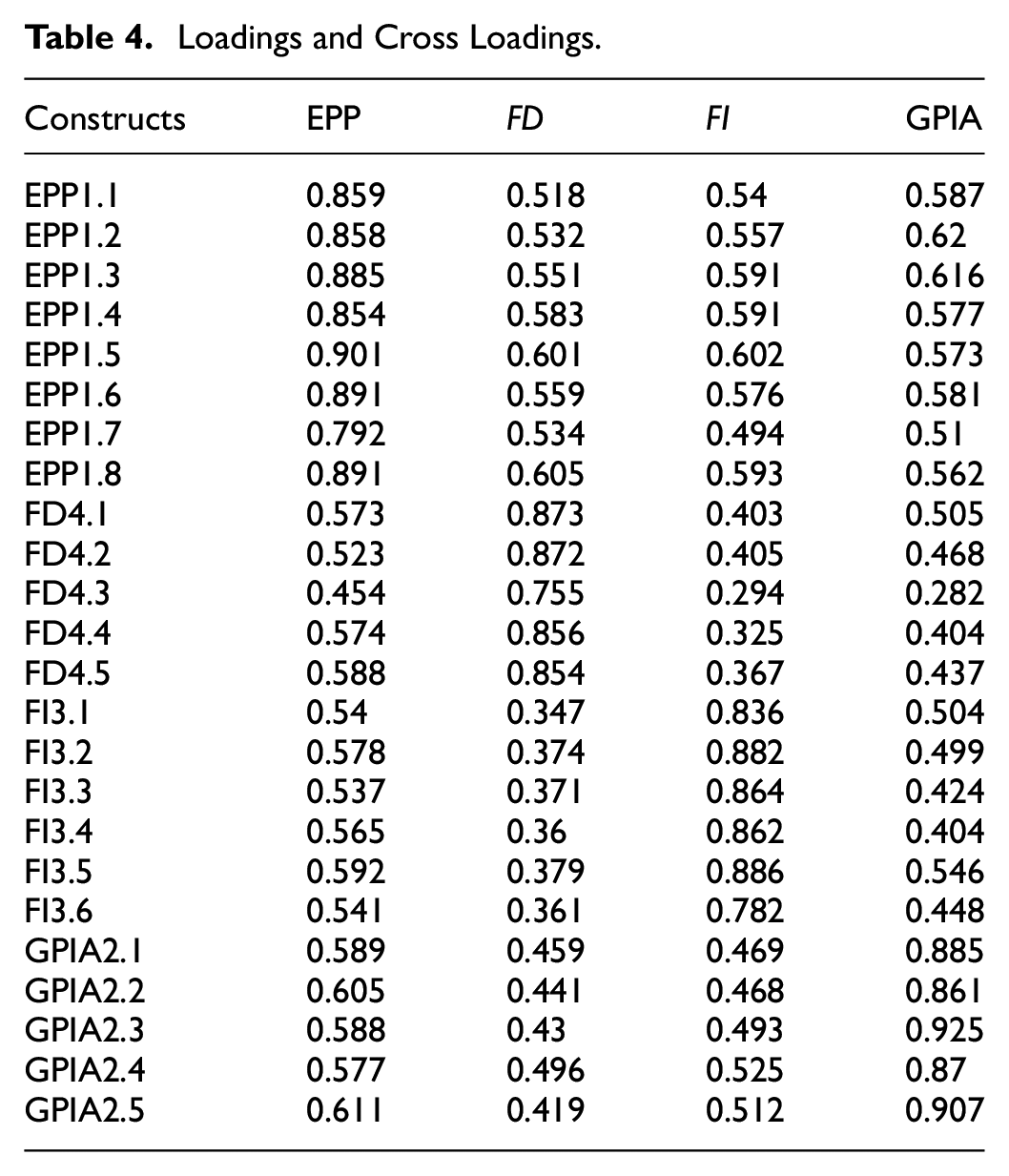
This study examines the validity issues related to the use of Smart PLS 4. Reliability and validity are assessed using Cronbach’s alpha, composite reliability (CR), and average variance obtained (AVE) to evaluate convergent and discriminant validity (Leguina, 2015). Therefore, there is no convergent validity concern because all loading factors are above threshold 0.5, and CR (0.960–0.950) and AVE (0.751–0.792) are more significant than .7) (Henseler et al., 2009) (Table 2).
Factor Loadings.

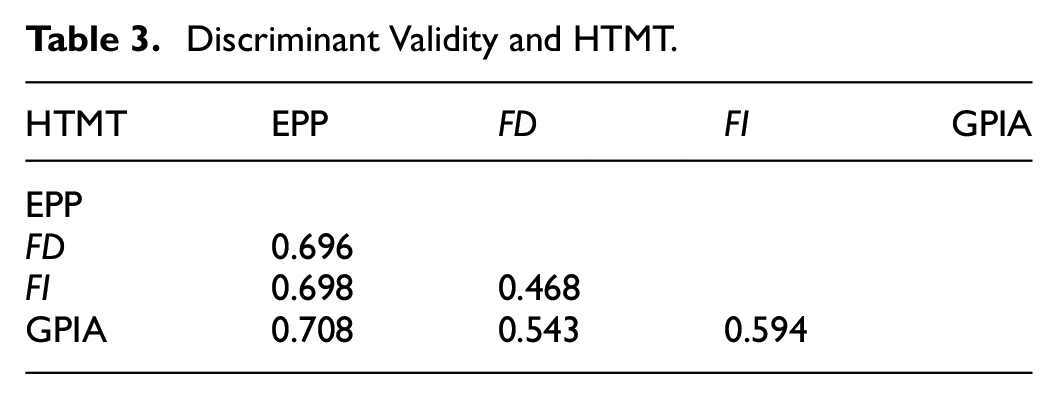
The standard threshold for HTMT is 0.90, indicating strong discriminant validity (Hair et al., 2021). It also includes the results of the discriminant validity test using the Fornell and Larcker (1981) criterion (Henseler et al., 2015). The results (range from 0.468 to 0.708) are below the common criterion 0.90, demonstrating high discriminant validity among the components EPP, FDI, FI, and GPIA. The HTMT ratio between FDI and FI is 0.468, much lower than other pairings, demonstrating strong discriminant validity between these two constructs (see in Table 3). There is no multicollinearity among the construct items, which displays the discriminant validity at each item level (see Table 4).
Discriminant Validity and HTMT.
Loadings and Cross Loadings.
Model Fitness Evaluation
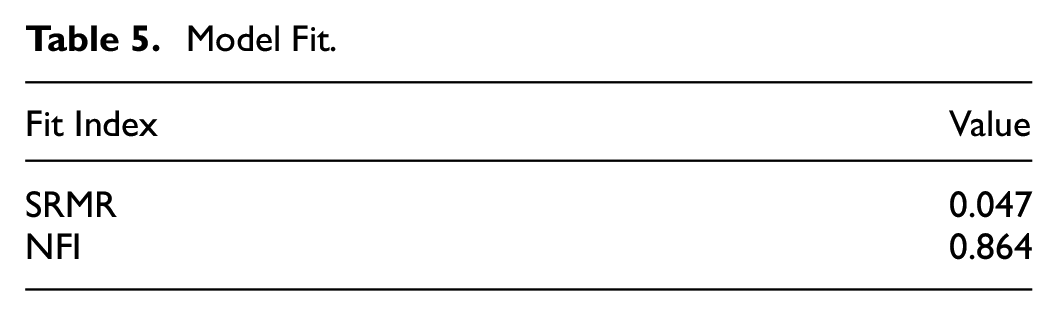
Table 5 shows the results of our SmartPLS4-measured Standardized Root Mean Square Residual (SRMR) for PLS-SEM model fitness. According to Gaskin and Lim (2016), the statistical model of fitness is met with an SRMR value of 0.047. Other metrics, such as a Chi-square value of 2,475.783 and a normed fit index (NFI) of 0.864, show that the model is adequately suited.
Model Fit.
Common Method Bias (CMB)
Table 6’s data is free of CMB since, as demonstrated in the test results below, the VIF values are below the permissible level of 3. However, a correlation of .9 or above among the variables is necessary for the correlation matrix to be used for bias analysis (Tehseen et al., 2020).
Collinearity Statistics.

Structural Model
Dependent and independent variables could be items or measurable concepts. Regression assessment of variables is one way that SEM enables research questions to be addressed. To assess the direct and mediating hypotheses of the research model, this study used SEM as a variance-based technique with Smart PLS (4.0), as followed by studies by Legate et al. (2023).
The constructs’ causal links are shown in the structural model, and the relevance of the path coefficient R2 values and determination coefficients is illustrated (Hair et al., 2017). The path coefficients values and significance levels for the Pakistan dataset, as shown in Table 7, were obtained using the bootstrapping method with a 5,000 bootstraps as suggested by Hair et al. (2019) and Leguina (2015). In addition, as shown in Table 7, the value of R2 explains that a 20.30% change can be attributed to government support through environmental regulations and a 33.50% change to green innovation performance.
Hypotheses Testing.

Table 7 present the study’s hypothesis results and indicate that all the hypotheses (H1 to H5) were supported by values β. Dependent and independent variables could be items or measurable concepts. Multiple regression assessment of variables is one way that SEM enables research questions to be addressed. To assess the direct and mediating hypotheses of the research model, this study used SEM as a variance-based technique with Smart PLS (4.0), as followed by studies by Legate et al. (2023).
All hypotheses from H1 to H5 were supported with the t-value > 1.96, p < .000, and considerable R2 > 0, which together demonstrate strong support for the hypotheses (Figure 3). Therefore, it is concluded that EPP is significant for green product adoption to achieve environmental sustainability. Thus, Hypothesis 1, (EPP → GPIA) was supported (β = .452; p < .000 and t-statistics of 9.982), showing strong association. This aligns with findings from previous studies (Bakkabulindi, 2014; Javeed et al., 2023). These findings are also consistent with the theory of innovation diffusion (Rogers, 2003).The relationship of EPP → FI, Hypothesis 2, is statistically significant with strong statistical values (β = .656; p < .000 and t-statistics of 15.606). These results are consistent with prior research, which emphasizes that regulatory policies foster financial incentives (Ghesla et al., 2020; Ling & Xu, 2021)., Hypothesis 3, EPP → FDI, indicated as a significantly effective, having efficient statistical data (β = .647; p < .000 and t-statistics of 23.765). Previous studies suggested by Afzal et al. (2022) and Hawkes (2009) have yielded similar results.
Because of testing, mediator effects found that direct incentives mediate the connection between GPIA and EPP, favorably influencing the adoption rate. Therefore, Hypothesis 4 (FI → GPIA) indicates that FI positively mediates the EPP and GPIA relationship. Hypothesis 4 was supported with significant values (β = .205; p < .000, and t-statistics of 4.787) confirming the mediation effect. Similar results were found in the studies by Ghesla et al. (2020) and Ling and Xu (2021). Finally, Hypothesis 5 (FD → GPIA) designates the financial disincentives positively mediating the connection between EPP and the adoption of green product innovation, which benefits the adoption rate. Hence, Hypothesis 5 was supported too (β = .125; p < .000, and t-statistics of 4.44), indicating a statistically significant relationship in line with studies such as Rennings and Rammer (2011), and D. Zhang et al. (2022). Thus, the data is analyzed, and the results indicate that the proposed model is supportive.
Furthermore, we reported an R2 value of .479 for the GPIA, and the adjusted R2 value is .477 for the GPIA. The final results of 97.5% of the R2 value explained that the model can investigate the relationship between EPP and GPIA.
Specific Indirect Effect
Examining the indirect effects sheds light on the functions of FI and FD as mediators between EPP and GIPA for the robustness check (see Table 8). With a p-value of .000, a t-statistic of 4.207, a standard deviation of 0.032, and an indirect effect of 0.134 on GIPA through FI, EPP has a moderate and statistically significant effect. Like the direct effect, the indirect impact through FD is 0.081, statistically significant with a p-value of .000, a t-statistic of 4.244, and a standard deviation of 0.019.
Specific Indirect Effects.

Findings suggest FD and FI as major EPP–GIPA interaction mediators. The fact that FI has a more significant effect size (0.134) than FD (0.080) suggests that FI is more critical in mediating this process. The results are robust and trustworthy, with high t-statistics and low p-values across both routes. This suggests that treatments focusing on strengthening FI may have a more significant influence on improving GIPA outcomes than FD.
Discussion and Conclusion
This study thoroughly examines the impact of EPP on GPIA in Pakistan, specifically focusing on the mediating effects of FI and disincentives. Our research shows (H1) that implementing stringent environmental regulations may encourage individuals to adopt eco-friendly practices in domestic and non-domestic settings, including businesses and industries, as EPP directly impacts GPIA. Indeed, this is supported by our result that the imposition of regulation with a high cost of punishment in terms of environmental fines for violating firms would lead to acquiring technology that allows imitation-proof environmentally friendly practices on both household and firm levels. This result agrees with Javeed et al. (2023), who confirmed that companies must implement eco-friendly technology to comply with strict environmental regulations.
Financial incentives such as subsidies, tax advantages, and public recognition are crucial in promoting adopting and using environmentally friendly technology. These incentives probably reduce the economic obstacles to implementing environmentally friendly measures, thereby increasing their appeal to stakeholders. Hence, the results of hypothesis 2 uphold the findings of Cai and Li (2018), who believe that eco-innovation requires financial support from a relevant government. Still, they did not further elaborate on why it is necessary. The consistency underscores the importance of financial rewards in making green innovation economical for businesses, mainly coming from developing markets.
On the other hand, financial disincentives, including regulatory restrictions, monetary fines, and punitive actions for not following rules, successfully discourage unsustainable activities. The study also suggests that financial penalties help to catalyze the industry turnover towards green innovation and dissuade unsustainable behaviors. This is supported by Meng et al. Regulatory pressures could also trigger companies to innovate and minimize their environmental footprint, as demonstrated by Meng et al. (2020). One thing that is clear from Hypothesis 3 is that financial disincentives remain a crucial factor for incentivizing businesses to act sustainably.
The current analysis also highlights the crucial role of mediators. FI and FDI exist in a fragile equilibrium. Monetary incentives mediate the relationship between EPP and GPIA, tested in one path. The findings of hypothesis 4 suggest that financial incentives lessen this relationship, mainly through reducing the entry barriers and economic risks associated with adopting new technology. That would push businesses to invest in less wasteful processes. However, a combination of environmental regulations and FI can yield better economic and ecological results, according to G. Zhang et al. (2023) and Zhong and Peng (2022). While financial disincentives may seem like a deterrent for investing in environmentally friendly solutions due to economic concerns, it is important to recognize that they can also catalyze the promotion of green technology. Hypothesis H5 shows how financial disincentives underline the nexus between EPP and GPIA. The study found that monetary disincentives, such as penalties and fines for non-compliance with environmental regulations, are positively mediated in this relationship. These disincentives work to raise the monetary costs of other alternatives for businesses, encouraging them to adopt environmentally friendly technology and practices. The results are parallel with the finding of Bakkabulindi (2014) that companies are more likely to invest in green technology when they are hit with fines or penalties for non-compliance.
Another key consideration is the “crowding-out” effect, which could occur if financial incentives are overused and dampen internal motivation for green innovation. Given the need for a long-term engagement in innovation and considering that intrinsic motivations can mitigate some of the opportunities to misbehave incentives create, we argue that policymakers must choose an appropriate balance between enabling extrinsic motivation through incentives while maintaining enough opportunity from work to leave room for personal worth. It follows that a blend of policies has the potential to achieve a sustainable economy, environment, and society when both FI and FDI play concrete functions as significant intermediaries between EPP and GPIA.
This article concludes how EPP, FI, and FDI impact GPIA among individuals, which means a lot for perspectives on sustainable policy frameworks in Pakistan. Lessons from the findings can inform lawmaking that would allow rigorous regulations and make beneficial financial instruments. Through these actions, they can create an enabling environment for greener innovation and assist in achieving sustainable development goals. This research also intends to facilitate transformational change at the regional level by thoroughly understanding the factors influencing the uptake of green product innovation.
Theoretical and Empirical Implications
This study significantly adds to our knowledge of environmental policies and the adoption of new technologies, especially in Pakistan. The study reveals the intricate relationship between financial incentives, environmental legislation, and GPIA by combining innovation diffusion theory with actual data. Applying the Diffusion of Innovations Theory provides valuable insights into the particular drivers and hurdles to adoption in developing economies such as Pakistan, where the spread of environmentally friendly technologies is in its early stages. Financial incentives play a significant role in reducing initial opposition to green innovations. Still, social influence and regulatory pressures are just as crucial for maintaining acceptance over the long run, according to D. Zhang et al. (2022).
Furthermore, green innovation adoption is crucial for Pakistan’s long-term sustainability in economic development and environmental sustainability, which is unique to the country. First, farming, garment production, and manufacturing are vital to Pakistan’s economy and significant polluters (Young et al., 2019). According to the study, Pakistan may balance developing economically and protecting the environment by encouraging the development of environmentally friendly products through well-thought-out environmental legislation. Maintaining a healthy population and safeguarding the nation’s natural resources from industrialization requires a delicate balancing act.
Moreover, when formulating environmental policy in Pakistan, it is crucial to consider cultural and societal aspects. Policy interventions must match the cultural context to be effective because traditional customs and societal norms greatly influence (Ajani & van der Geest, 2021). For instance, higher adoption rates will likely occur when incentives are presented through culturally relevant methods or strike a chord with local values. To help get people on board with green innovations and reduce their reluctance to change, policymakers should also launch public education and awareness campaigns. These programs are crucial for making Pakistan a place where sustainable practices can flourish since the general population may have a poor grasp of environmental issues (Ahmed et al., 2020).
When designing an accountability system for improvement in behavior, it’s important to consider the potential psychological and behavioral reactions to nearby regulations. Policies are seen as more legitimate and helpful for the larger public. These policies can, in turn, accelerate the dissemination of environmentally friendly innovations by increasing acceptance and compliance. The paper argues that the stick and carrot policy can encourage consumers to install environmentally friendly technology. To adapt policies that continue to meet the needs and challenges of green market consumers today, they must change in line with global policies from other sectors.
Finally, the risk of such a “crowding-out” variant stresses the importance of realizing an integrated strategy extending purely financial inducements in green innovation into infinity and keeping growing may dilute its intrinsic motivation. Policymakers must create incentive structures that encourage long-term intrinsic motives for sustainability and short-term monetary incentives. This equilibrium is the key to the sustainability of further innovative efforts, thus making green practices organic parts of organizational and personal behaviors.
Limitations and Suggestions for Future Research
The paper provides a thorough examination yet has several limitations. The study primarily focuses on Pakistan, which has unique environmental, economic, and regulatory factors. As a result, the conclusions may not be as relevant to places with different socio-economic contexts or environmental policies. The cross-sectional methodology restricts the capacity to establish causal relationships or track changes over time, thereby failing to consider how the influence of environmental policy on the uptake of green product innovations may evolve. Additionally, using self-reported data may create biases, as respondents might either inflate their usage of green items owing to social desirability or underestimate it due to a lack of knowledge. Emphasizing financial rewards and penalties may overlook essential aspects such as cultural norms, organizational capabilities, technology access, and market conditions that substantially impact green innovation uptake.
Future studies should conduct a multi-country analysis to investigate the effectiveness of EPP in different regulatory, cultural, and economic contexts, aiming to provide a broader understanding of the dynamics at play. Similarly, It would be beneficial for future studies to investigate how various financial incentives and disincentives affect the adoption of green innovations in various industries over the long run. To better understand how context-specific variables impact the efficacy of environmental policy, comparative studies between industrialized economies and emerging countries, such as Pakistan, could yield valuable insights.
Moreover, Longitudinal study methods help monitor changes in the uptake of green product innovations over time, providing insights into the sustainability and lasting effects of FI and disincentives. Exploring the psychological and cultural factors influencing the adoption of green innovation might offer a better understanding of environmental behavior change, which could help create more precise and efficient regulations. Studying technology transfer and international collaboration can demonstrate how global partnerships and information sharing improve the effectiveness of environmental policies. Utilizing qualitative methodologies like interviews and focus groups may provide a more comprehensive insight into the motives, attitudes, and obstacles associated with adopting green product innovation.
This study provides valuable insights on how EPP might promote green product innovation. However, there is a significant need for more research to expand on and enhance these findings. By addressing the identified constraints and investigating the recommended areas, we may significantly improve our comprehension of environmental policy efficacy and the advancement of sustainable practices.
Footnotes

Ethical Considerations
All participants provided informed consent before their involvement in the study. The purpose and procedures of the research were explained to each participant, emphasizing their voluntary participation and the assurance of confidentiality. Participants were made aware of their rights to withdraw from the study at any time without repercussion. Special care was taken to ensure the anonymity of participants. Personal identifiers were removed from data during analysis, and any potentially identifying information was handled with utmost confidentiality.
Funding
The author(s) disclosed receipt of the following financial support for the research, authorship, and/or publication of this article: The publication of this research will be supported by personal funds provided by me as per the arrangement made with my supervisor. He will facilitate the publication process and guide the research efforts.
Declaration of Conflicting Interests
The author(s) declared no potential conflicts of interest with respect to the research, authorship, and/or publication of this article.
Data Availability Statement
The data that support the findings of this study are available from the corresponding author upon reasonable request.