




Abstract
This study aims to enhance the curriculum literacy competence of aspiring English teacher candidates through lesson study and assess its influence. Additionally, it aims to investigate the impact of lesson study, as a professional development model, on the competence of teacher candidates in curriculum literacy. The research employed the parallel mixed methods approach, which is one of the approaches utilized in mixed methods research. The study utilized a single-group pretest-posttest experimental design to collect quantitative data. The criterion sampling method was employed to choose English Language Education teacher candidates while generating the research sample. “Curriculum Literacy Scale” designed by Bolat was used to collect quantitative data. A semi-structured interview form and a reflective thought sheet were used to gather qualitative data on the program’s material and expectations. The dependent samples t-test was employed in the examination of quantitative data. Qualitative data was analyzed using descriptive and content analytic techniques. Based on the research results, it can be concluded that competence in programming is a crucial ability for the advancement of teaching professionals and has a favorable impact on the development of their professional abilities. Implementing practice-based professional development techniques is crucial in supporting the education of undergraduate teaching students and ensuring they start their careers with better preparation. In this context, it is believed to be crucial to bolster teaching professional practices through professional development models and ensure the efficacy of practice-based approaches in undergraduate education.
Introduction
Program refers to the process of attaining the objectives outlined in specific criteria or benchmarks. The teaching and learning program comprises lesson plans, activities, workbooks, computer applications, and associated process and outcome evaluations (Flores, 2020). On a global scale, standards are established to outline the objectives that learners should achieve. The evaluation of learner objectives within the program might be based on five distinct criteria. The following features are outlined by Sarıgöz and Bolat (2018).
- The curriculum should be relevant to real-world contexts and practical experiences.
- The curriculum should consist of content that is purposeful, organized in a logical order, and interconnected.
- The objective is to provide educational materials that allow pupils to utilize their advanced cognitive abilities.
- It is essential for all disciplines and learning objectives to be interconnected.
- The program should inspire and exert a positive impact on learners.
The program facilitates pupils in engaging in interactive experiences under the supervision of the institution. In this regard, the curriculum serves as the structural foundation of the program, ensuring coherence and alignment between instructional activities and learning objectives. Remillard (2005) provides a precise definition of the curriculum as a comprehensive framework that guides teachers in designing and selecting classroom activities. Lesson study is a collaborative professional development technique wherein educators gather data to construct a lesson plan, deliver instruction, monitor students, and utilize the collected data to refine their course. Lesson study is a form of classroom inquiry that enables educators to examine teaching and learning within the actual classroom setting. Educators document their methodologies on lesson design, implementation, and the associated learning and teaching experiences (Lewis & Lee, 2017). In this scope, the curriculum functions as a directive for educators in the process of imparting knowledge via lesson study, while the program represents the dynamic implementation of these curricular guidelines in real classroom settings. It provides guidance to teachers on the methods and degree to which learner goals are accomplished and the resulting learning materials. Additionally, it furnishes details on the content, methodology, timing, and rationale behind students’ learning. Curriculum literacy assists teachers in the creation, execution, and planning of new programs, ensuring that educational strategies align with curricular goals. Additionally, it aids in comprehending and analyzing the curriculum (Aydın & Kurt, 2022). Thus, curriculum literacy enhances teachers’ ability to develop and adapt programs effectively, bridging theoretical curriculum design with practical implementation. Curriculum literacy refers to the ability to understand, strategize, and execute programming tasks (Aslan, 2019).
Foreign language curriculum literacy refers to the educational process through which teachers acquire the essential abilities to ensure that students can fully benefit from engaging in foreign language programs. This technique facilitates teachers in providing guidance to students, assisting them in overcoming challenges they may have during the process of learning a foreign language, and enabling them to attain their desired foreign language learning objectives. Foreign language curriculum literacy aids students in overcoming the challenges they may have while acquiring competence in a foreign language. The challenges encompass enhancing competence in reading, writing, listening, and speaking in a foreign language, broadening lexical knowledge, acquiring grammatical principles, and enhancing communicative abilities in a foreign language. The foreign language curriculum literacy provides a range of methods and tactics to assist pupils in overcoming these difficulties. Foreign language curriculum literacy facilitates students in attaining their foreign language learning objectives. These aims include achieving fluency in a foreign language, enhancing writing skills in a foreign language, improving reading and listening skills in a foreign language, and being able to conduct business and receive education in a foreign language.
Despite being a means of communication, the importance of foreign languages is overlooked in Turkish traditions. The literature indicates that there are issues related to the teaching of foreign languages, particularly in Turkey (Acat & Demiral, 2002; Coşkun-Demirpolat, 2015; Ege, 2011; Haznedar, 2004; Işık, 2008; Memiş, 2019; Oflaz, 2015). According to Coşkun-Demirpolat (2015), variations occur among universities regarding the pre-service education offered to English teachers. It was observed that teacher candidates graduated lacking proficiency in the language they were required to teach in a practical context. In the context of pre-service English teacher education, teacher candidates undergo training in several competences and teaching philosophies. This circumstance impacts the teacher’s competence, drive, classroom atmosphere, and their ability to communicate effectively in the context of language instruction across various dimensions. English teachers have the ability to comprehend the objective and substance of the program, modify it, and adjust it to the competence level of their pupils, as well as transmit the program to others. By adopting this approach, individuals can attain competence in the field of language instruction (Kuloğlu & Tutuş, 2022). The lack of consensus on a satisfactory curriculum definition leaves educators with insufficient skill in selecting and implementing effective curricular practices necessary for the classroom environment. Merely meeting the professional obligations of teaching is insufficient for language teachers. Nevertheless, it is essential for teachers to engage in activities that enhance their self-efficacy and fulfill their professional obligations. Teachers serve not only as executors of the program but also significantly contribute to its creation and evaluation processes (Kara & Yapıcıoğlu, 2023). Consequently, it is asserted that cultivating program literacy is essential, even in the absence of direct participation in program development activities. Program literacy entails understanding the curriculum, interpreting it from many viewpoints, and applying it to classroom practices (Yılmaz & Kahramanoğlu, 2021). Yılmaz and Kahramanoğlu (2021) characterize the training program as a blueprint, asserting that success in its functionality is unattainable without requisite knowledge. This viewpoint underscores the need of cultivating literacy competencies within teacher education curricula.
Teacher training programs should provide curricular support for their special field competencies, foreign language teaching, to teacher candidates in order to enhance their curriculum literacy and deepen their understanding of their language teaching disciplines. Additionally, these programs should aim to create language learning experiences for students (John Hopkins School of Education, 2018). Teacher training programs should offer teacher candidates the chance to take advantage of teaching prospects. Therefore, particularly in teacher training programs, it is crucial to prioritize the classroom setting as a platform for teachers to showcase their abilities and to endorse models that foster professional development. Curriculum literacy enables teachers to create flexible and practical plans by analyzing the unique circumstances of themselves and their students, rather than following repetitive lesson plans (Nsibande & Modiba, 2012). Mentoring and collaboration-based professional development models, such as lesson study, can be effectively integrated into various professional courses in teacher training programs, providing significant assistance.
Lesson study is widely used in several nations, including Singapore, Japan, and America, because of its attributes that promote professional development, long-term planning, collaboration within schools, focus on student learning, and program-oriented approach. Lesson study is a method that seeks to enhance students’ learning by prioritizing teachers’ interests and desires, drawing from their own personal experiences (Kurt-Birel, 2017; Murata, 2011). Lesson study is a method that employs communication channels to provide feedback to one another based on teacher observations. The literature on lesson study demonstrates that the model enhances teachers’ collaborative learning in the classroom (Arani et al., 2010; Boran & Tarım, 2018; Murphy et al., 2017; Özdemir, 2019). Lesson study plays a crucial function for teachers, particularly in Japan, where it originated. Lesson study enhances teachers’ achievements and recognition, while also deepening their comprehension of educational concepts in relation to their own teaching methods. It fosters a shift in their mindset toward learning and teaching, encouraging them to adopt a more holistic approach by considering different perspectives. Additionally, it cultivates the beneficial aspects of collaborative work with fellow educators. While there are various professional development techniques, most of them share similar traits and practices with lesson study. Lesson study is a collaborative process that involves sharing responsibilities for making lesson plans, conducting and monitoring lessons, managing and evaluating instruction, reflecting on practice, and planning again (Arani et al., 2010).
Lesson study is a process that is self-directed and democratic. Every participant collaborates in all decision-making processes and makes an equal contribution to one another (Lewis & Lee, 2017). Lesson study groups analyze the process of student learning and the ways in which students construct their own learning experiences. This review also assists in revealing the pupils’ areas of interest. During lesson study, educators deepen their understanding and gain insights on establishing links among diverse disciplines and transitioning between them. Nonetheless, educators allocate time to meticulously analyze and reflect on the curriculum and other instructional materials. Simultaneously, educators convert their expertise in the subject matter into valuable learning opportunities for pupils (Stepanek et al., 2007). Lesson study involves a four-stage cycle. The process involves studying, planning, performing researching, and reflecting on the organization of the program and its objectives. The stages exhibit similarities and can be accomplished in conjunction with one another (Fujii, 2014). Another classification categorizes lesson study into three stages: “planning, execution, and observation.” The “studying” phase in the former classification of lesson study is included into “planning” phase in the former cycle of lesson study. Therefore, the three-stage cycle of lesson was preferred in this study. The planning phase commences with the selection of a topic and proceeds with the determination of teaching resources and the formulation of lesson plans. Teachers engage in collaborative efforts to accomplish their objectives. The process of developing instructional materials serves to elucidate ambiguous concepts for teachers and validate and reinforce the essential knowledge required for effective subject instruction (Chichibu & Kihara, 2013; Ono & Ferreira, 2010).
In turkey, teacher candidates don’t participate into the program development practices before their teaching services. The curriculum only focuses on the methodologies of formal education delivery. This is not an official publication regarding effective learning and teaching. It serves as a framework that facilitates efficient learning and instruction. Consequently, all educators, particularly the candidates, must engage actively in literacy initiatives (Karaduman, 2024). Developing a curriculum literacy viewpoint and integrating theoretical and practical knowledge in the pre-service training of teachers, who are responsible for implementing the program, is considered crucial. According to Ornstein and Hunkins (2017), program developers frequently encounter difficulties in integrating theory and practice. They observed that training programs tend to prioritize theory, while practitioners tend to overlook the theoretical aspect in favor of practical considerations. This could result in substantial disparities between the planned training program and the executed training program. It is crucial in this context that teachers, who are responsible for implementing the curriculum, have a clear and accurate understanding of the curriculum. The objective of this study is to identify the necessary skills for English language teacher candidates to comprehend and apply the curriculum effectively. Additionally, the study aims to assess the impact of lesson study on the enhancement of teacher candidates’ competence in curriculum literacy. Furthermore, the study seeks to investigate how lesson study, as a professional development model, influences the teacher candidates’ competence in curriculum literacy. Aligning with this overarching objective, it is believed that assessing the competence of English teacher candidates in the curriculum has a consistency with raising awareness about the curriculum creation course within the English teacher training undergraduate program. The lesson study model would improve the program’s literacy abilities for English teacher candidates. Within this hypothesis, the research questions were searched in the following manner.
Does the lesson study have a significant impact on enhancing the curriculum literacy skills of prospective English teachers in terms of curriculum literacy?
What are opinions of English teacher candidates regarding the lesson study method in the development of curriculum literacy competencies?
How does the lesson study experience of English language teacher candidates impact their skill in curriculum literacy?
Method
Design of the Study
The study was structured based on the mixed method research approach. Mixed methods research involves the amalgamation of results derived from both quantitative and qualitative data (Creswell & Plano Clark, 2018). The rationale for selecting a mixed approach in the research is to enhance the diversity of the data in accordance with the research questions and to enrich the analysis of the curriculum literacy skills of teacher candidates by utilizing their complementary qualities. Another reason for using mixed data is that one method is insufficient for gaining understanding of program literacy, either qualitatively or quantitatively. So, using mixed methods has provided the study with the strengths of both qualitative and quantitative methods (Creswell, 2015). Therefore, the study employed parallel mixed methods research, a design commonly used in mixed methods research. Turkish translates the term “parallel mixed methods research” as “convergent parallel design” (Toraman, 2021). The parallel mixed-method study approach involves the interpretation and integration of results received from both quantitative and qualitative data. The study was conducted with a sophomore students in education faculty of a state university, Turkey. Due to the objective of enhancing the curriculum literacy of future English teachers in the lesson study model, it was necessary to assess both quantitative and qualitative data simultaneously. The research utilized a single-group pretest-posttest experimental design to collect quantitative data. We implemented the research in accordance with the lesson study methodology. We conducted the research procedure in accordance with the research problems presented in this context.
We conducted a preliminary interview with potential English teachers enrolled in the “Curriculum Development in Education” undergraduate course as part of the initial phase of the research. Their participation in the study was voluntary. At this stage, we explained the goal and process of the research to the teacher candidates. The research began with the introduction of the lesson study model. The researcher presented the teacher candidates with theoretical information regarding the fundamental principles of the program, program development models, program elements, design methodologies, and requirements analysis.
After completing the theoretical content on program development, we organized the teacher candidates into groups of five, taking into account the class size. This resulted in the formation of 13 study groups. Each group of pre-service teachers identified the objectives they would select from the curriculum in their respective areas. They then reorganized the accomplishments and objectives based on the classroom atmosphere they intended to establish. After organizing the goals, they established behaviors that aligned with the goals and produced a table of specifications based on Bloom’s taxonomy. After creating the table of specifications, each group proceeded to produce suitable content, teaching techniques, and evaluation methods for the desired behaviors. Following this stage, each group conducted a research lesson within the classroom setting and reorganized the design examples, taking into account the input from other group members and the expert researcher regarding the program design examples. Following the reorganization, all groups engaged in the exchange of views regarding the draft samples and contributed to their final refinement. In this particular scenario, the researcher and participants assessed the program design examples based on their coherence, effectiveness, and suitability in relation to program components. They also evaluated the design examples of each group. In this regard, they discovered shortcomings or areas in need of improvement.
The Sample From the Study
The research comprises a study group of 65 teacher candidates enrolled in the English Language Teaching department at a state university. We determined the research sample using the criterion sampling method. The sample criterion for selecting teacher candidates was based on their choice of the “Curriculum Development in Education” course. The sample included sophomore students who have studied for their education bachelor’s degree.
Data Collection Instruments
Bolat (2017) created the “Curriculum Literacy Scale” to collect quantitative data. The Curriculum Literacy Scale is a 5-point Likert scale that includes 29 items and is composed of two dimensions. The one dimension of the scale is “Reading,” and the other one is “Writing.” The reading dimension of the scale delineates the relationship among goals, content, learning and teaching, and assessment, whereas the writing dimension pertains to the prospective designs for program components. The scale’s internal consistency coefficient is 0.94. The scale accounts for 43.54% of the overall variability. The Cronbach Alpha was used for the reliability coefficient of the scale in the study, whose value is 95. We gathered qualitative data on the program’s material and expectations using a semi-structured interview form and a reflective thought sheet. The opinions of professionals in the field of curriculum and instruction were utilized to conduct validity and reliability tests on qualitative data-gathering instruments.
Data Analysis
Initially, we assessed the normality of the quantitative data by examining the median and arithmetic mean values, performing Kolmogorov-Smirnov and Shapiro-Wilk tests, and analyzing Q-Q plots and box plots. The quantitative data exhibited a normal distribution. Using a single-group experimental design for the pretest and posttest, the study used a dependent samples t-test to see if there was any difference between the teacher candidates’ scores on the pretest and posttest. We used qualitative data analysis methodologies, namely descriptive and content analysis, to analyze the data collected from focus group interviews, semi-structured interview forms, and reflective thought writings.
Results
The Results for the First Research Question
The study utilized the “Curriculum literacy scale” created by Bolat (2017) to assess the impact of implementing lesson study on the ability of English teacher candidates in the reading and writing dimension of curricular literacy. The obtained results of the comparison between the scores of the teacher candidates before and after the implementation using the dependent t-test are presented in Table 1.
Dependent t-Test Results About Proficiencies of Teacher Candidates’ Curriculum Literacy.

Note: * = p < .05.
According to Table 1, the dependent t-test results of the pretest and posttest scores for the curriculum literacy reading ability of the English teacher candidates revealed a significant difference in favor of the posttest (t = −3.27, p < .05). Regarding the reading aspect of the curriculum literacy scale, it can be stated that curriculum literacy practices that follow the lesson study model have a statistically significant impact on future English teachers. Moreover, the dependent t-test results for the pretest and posttest scores of the English language teacher candidates’ curriculum literacy writing skills indicate a significant difference in favor of the posttest (t = −2.46, p < .05). Regarding the writing aspect of the curriculum literacy scale, it can be concluded that curriculum literacy practices that follow the lesson study model have a statistically significant impact on future English teachers.
The Results for the Second Research Question
The research method involved the construction of a program for the English course, which was designed based on the professional development model derived from the lesson study. During the post-application interview, prospective teachers were asked about the implications of the research conducted during the course application process on the program’s course progressitegories and topics derived from the collected opinions are presented in Table 2. Table 2 displays the categories and codes identified during the lesson study process about curriculum literacy competence within the “program design process” theme. Consequently, the data analysis reveals the emergence of the categories “planning, strength, and difficulty.” Prospective teachers highlighted the disparity in their approach to the curriculum design process, while also acknowledging its inherent complexity. Furthermore, they emphasized that engaging in lesson study practice with research groups, particularly during the design phase, is highly beneficial for translating theoretical knowledge into practical application. It helps individuals understand the specific tasks, timing, and actions that need to be consistently performed within the research groups, facilitated by the feedback system. The feedback provided by research groups and specialists, particularly through lesson study, was highlighted as crucial in making the program design process pleasant and enhancing their comprehension of the complex structure of the program. Nevertheless, creating a design may pose difficulties, yet following a systematic approach becomes quite beneficial. Likewise, aspiring educators expressed that creating a program based on the lesson study methodology was notably difficult, and they found the allotted class time inadequate for hands-on implementation. The views of prospective teachers on this matter are as follows.
“The course provided me with highly informative theoretical knowledge.” I have also incorporated these into my routine. Regarding practice, I encountered some minor challenges. For the initial attempt, we endeavored to formulate a specific objective and provide content that aligns with it. However, I am still content with the outcome… G8 “It was highly enjoyable.” However, it would have been more advantageous if we had been allowed to engage in more practice. G5 The course process was highly effective. We developed a program, which was crucial as comprehensive learning and understanding cannot be achieved without practical application. G9 “…” While teacher candidates may initially find it challenging from a theoretical standpoint, with practice it becomes more manageable and enjoyable. G1 The lesson study practices were highly beneficial and helped to increase awareness. G10 The instructional method was effective since it relied on our active participation and engagement, which in turn was driven by feedback. G2
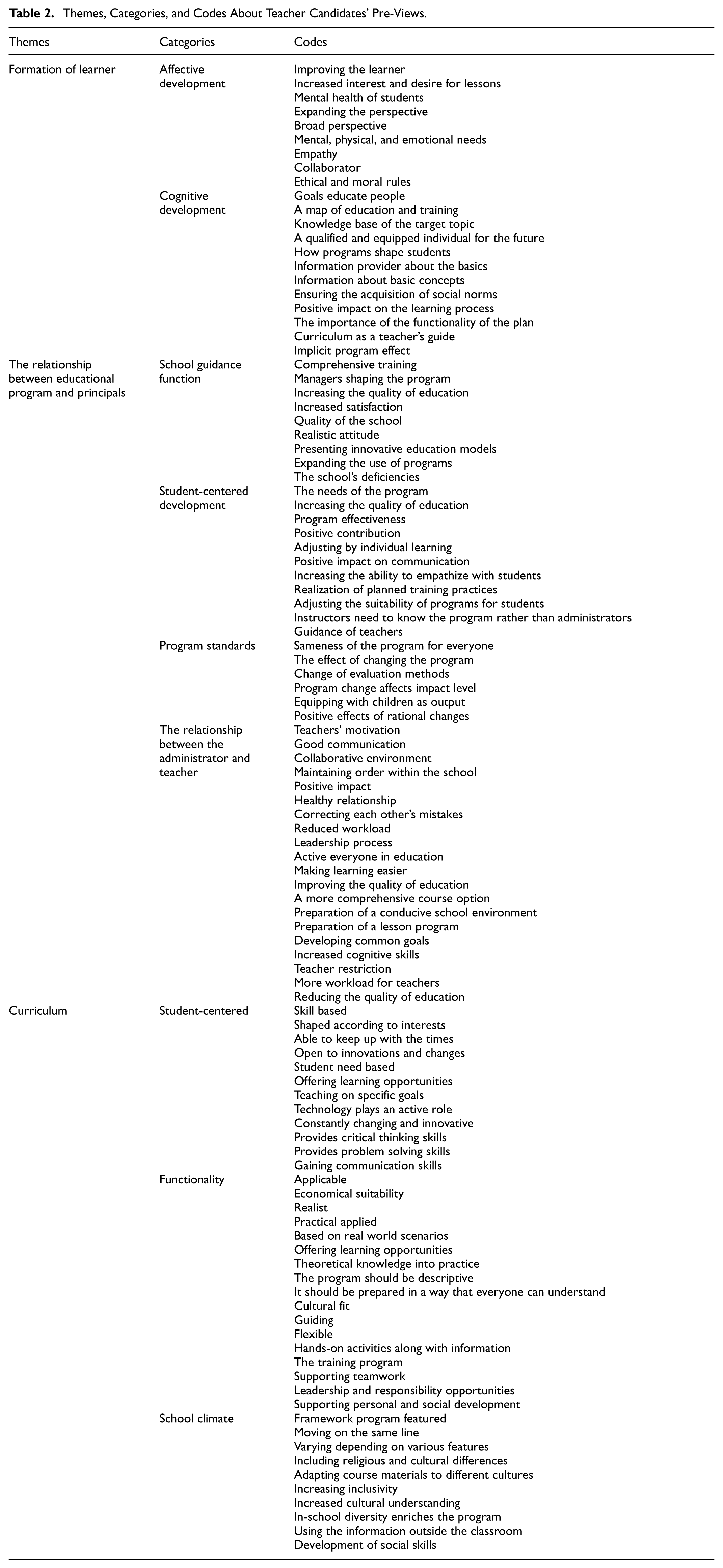
Themes, Categories, and Codes About Teacher Candidates’ Pre-Views.
The Results for the Third Research Question
Before doing the research application, a preliminary interview was conducted with potential English teachers to ascertain their expectations and level of knowledge of the training program. In this context, the categories “affective development, cognitive development, school guidance function, student-centered development, programs standards, the relationship between administrator and teacher, student-centered, functionality and school climate” are identified as themes that emerged from the answers provided by the teacher candidates in response to the questions asked. These themes are related to “the formation of the learner, the relationship between educational program and principals, and curriculum.”Table 2 shows the themes, categories, and codes derived from the pre-interview data.
According to the data gathered from the pre-lesson study interviews with teacher candidates, it can be concluded that the program places significant focus on the relationship between administrators, students, and teachers. Table 3 shows that all participants believe that the programs play a role in molding the learner’s emotive and cognitive development, as indicated by the developing themes. When assessing the expectations of potential teachers regarding educational programs, the focus is on their perspectives that prioritize student needs, are talent-oriented, incorporate up-to-date content, provide diverse learning opportunities, are practical and realistic, facilitate the application of theoretical knowledge, are culturally compatible, and serve as guiding principles. Furthermore, teacher candidates express their belief that the program is grounded in scientific principles and emphasizes the active participation of students, administrators, and teachers in both the development and execution of the program, particularly with regards to fostering a positive school atmosphere. The prospective teachers emphasized the need of education programs having a standardized perspective that is structured like a framework program, inclusive, and incorporates various cultural factors. The participants’ viewpoints on this matter are as follows.
“I desire a school that aligns with my preferences and offers a program that caters to my individual needs as a student.” Every child possesses unique personal deficiencies. It was crucial to assess the student’s requirements and respond accordingly… G1 The primary and paramount feature among these is its compatibility with the culture. Each human community possesses its own set of values. Education is widely regarded as a highly effective means of disseminating culture. The training program has a guidance element as its second component. The program should include clear instructions and guidelines for those who will be responsible for its implementation. The third aspect pertains to the scientific characteristics. The current era is commonly referred to as the age of science and technology. Hence, the educational curriculum must align with the contemporary demands of science and technology and incorporate scientific principles. The fourth characteristic is its economic viability… G9 Firstly, the education quality improves when the administrator possesses a deep understanding of the program. This leads to an evident enhancement in the school’s educational standards and boosts student motivation. The administrator will utilize all available resources to maximize the program’s effectiveness. The information provided is evidently apparent and likely to be beneficial. Furthermore, as the manager holds the power to provide necessary resources and opportunities for the implementation of the educational application, they will utilize these opportunities effectively to enhance education and boost teacher motivation. G10
The Themes, Categories, and Codes Relating to the Post Interviews of Teacher Candidates.
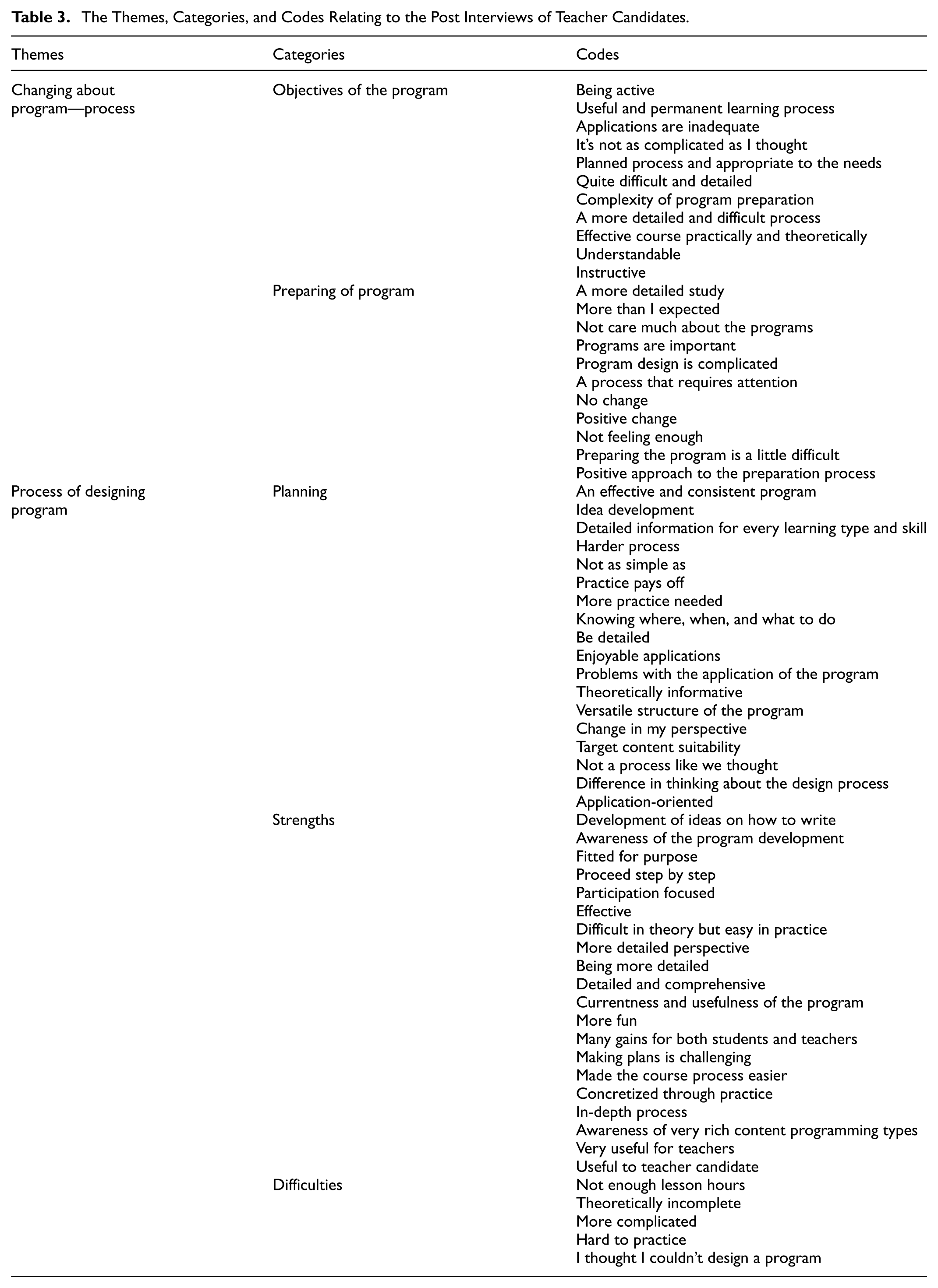
The results of the lesson study application about the competence of teacher candidates in curriculum literacy are presented in Table 3. Prospective teachers’ perspectives on the use of lesson study, particularly about the objective of the programs and the process of preparation and design, result in variations. Throughout the course of the research process, students’ opinions about the program’s design practices may change. This can lead to the emergence of themes such as the objectives of the program, the preparing of program, planning, strength, and difficulty, as well as changes in the program process and program design process. Within this backdrop, aspiring educators assert that the task of developing a curriculum necessitates meticulous and all-encompassing effort, making it a highly challenging endeavor. Every teacher candidate included in the study also expressed that their perspectives on the program preparation process underwent a transformation prior to its implementation. Furthermore, teacher candidates’ strengths are revealed when they actively participate in the program design process. These strengths include having a comprehensive understanding of the programs, identifying numerous benefits for both students and teachers, facilitating the application of theoretical knowledge in practical settings, fostering an understanding of diverse content programming approaches, and providing valuable support to teachers. Furthermore, they assert that it will be particularly advantageous for individuals aspiring to become teachers during the professional progression. In addition, they asserted that its shortcomings lay in its greater difficulty and complexity than anticipated, leading to the perception that the implementation of the technique was unfeasible. Below are the perspectives of teacher:
Upon reflection, I came to the realization that the process of preparing the program was more intricate and challenging than I initially anticipated. Prior to enrolling in the course, I had realized fluous. However, I subsequently came to the realization that the process of program building can be highly advantageous for educators… G3. Throughout and after the procedure, I acquired the realization that my initial stance was indeed incorrect. The program preparation process, contrary to my initial belief, relies on specific principles. Once these principles are comprehended, the process of understanding and creating programs becomes more straightforward. G6 In my perspective, the programs were outstanding, but the execution was lacking. The program design we created during the course changed my perspective on the program preparation process. G1 Initially, I perceived that everything was executed in a disorganized and unsupervised manner. However, upon closer examination, I saw that the process was meticulously planned and continuously adjusted to meet the evolving requirements… G8 Both in a favorable and unfavorable manner. Positively, I acquired more effective and detailed knowledge on how to rectify the errors committed during that procedure. The drawbacks were inefficient time management throughout the preparatory phase… Undoubtedly, the process was beneficial for me, since I am inclined to introspection. However, excessive contemplation occasionally led to confusion on the themes at hand… G7
T-test was used to compare the dependent variable and ascertain if there was a difference in the curriculum literacy competency levels of the English teacher candidates before and after the lesson study. The data acquired in this context are shown in Table 4.
T-test Results About Program Efficiencies of English Teacher Candidates.

Note: * = p < .05.
According to Table 4, the dependent t-test results indicate a significant difference between the pretest and posttest scores of English teacher candidates after the lesson study applications. Specifically, the posttest scores were found to be significantly higher than the pretest scores (t = −2.31, p < .05). Additionally, there was a statistically significant difference observed in the curriculum literacy levels. A notable disparity was discovered in favor of the distinction. Curriculum literacy skills have a statistically significant impact on lesson study applications.
Conclusion and Discussion
The objective of the study was to enhance the curriculum literacy competence of aspiring English teachers through lesson studies and assess their influence. The study aimed to enhance literacy abilities in writing and reading through lesson study methods. In this specific context, the research integrated both qualitative and quantitative data to broaden its scope. Based on the collected data, it is evident that research lessons have a substantial impact on the reading competence aspect of curriculum literacy (t = −3.27, p < .05).
In this specific context, we can assert that prospective teachers possess the ability to distinguish the specific aspect associated with the given objective in the curriculum and then select appropriate material that aligns with that objective. They also understand the objectives’ interconnections and limitations and interpret content and assessment components.
When looking at the study results, the lesson study model applications have a statistically significant effect in favor of the post-test (t = −2.46, p < .05) when it comes to the writing part of literacy. One should analyze the correlation between the program and its intended outcomes to establish appropriate objectives. By selecting suitable strategies aligned with the established objectives, they successfully devised content and subject matter that matched the students’ competence level and implemented acceptable assessment procedures. Research classes have a notable and beneficial impact, particularly on the writing aspect of curriculum literacy.
The interviews conducted to evaluate the impact of the model in the research process using the lesson study model revealed that prospective teachers found the process of designing the program to be more challenging, extensive, and intricate than they had initially anticipated. The data reveals that the implementation of program design techniques with research groups has become highly pragmatic, thanks to the lesson study model. Furthermore, the study groups’ suggested revisions led to the teacher candidates actively participating in the process and understanding the program’s complexity. Aspiring teachers perceive curriculum creation as intricate and theoretical. However, research applications transform the process into a tangible and practical approach, yielding a significant and beneficial impact. In a study conducted by Erdem and Eğmir (2018) on the curriculum literacy of teacher candidates, it was found that these candidates faced weaknesses and encountered challenges in various aspects, such as formulating goals, developing suitable content, designing measurement methods, and planning activities. Erdem and Eğmir (2018) highlight that teacher candidates are prone to facing comparable shortcomings in their careers. This curriculum will significantly enhance the professional skill development of aspiring teachers, particularly in relation to the writing aspect of literacy. Lesson study, a professional development strategy, has shown efficacy in equipping teacher candidates with research skills, facilitating lesson observation and addressing areas of improvement, and fostering the creation of innovative ideas. Therefore, it is considered crucial to enhance teachers’ competence in curriculum literacy by utilizing various professional development strategies. Turhan-Türkkan (2024) asserts that teacher training limits the professional skills associated with the curriculum to cognitive knowledge and comprehension, revealing weaknesses in contributions and abilities related to the sentimental dimension. Incorporating research on professional development strategies such as lesson study into pre-service teacher education is beneficial. The study results indicate that the program planning process plays an important role in fostering effective relationships among administrators, teachers, and students, as supported by both qualitative and quantitative data. The prospective teachers discovered, prior to conducting the research, that the program was based on scientific principles, entailed collaboration among administrators, teachers, and program development experts, and featured a flexible and inclusive structure. This suggests that teacher candidates hold prejudices toward both the curriculum development process and the curriculum itself. Through their program development research, they prioritize the flexibility, inclusivity, and versatility of the program in its theoretical dimension. The analysis has determined that the programs are compatible in terms of the relationship between the intended target and the content. Furthermore, they have proven to be highly effective in translating theoretical concepts into practical applications, aligning with established research techniques, and producing several positive results. Furthermore, a significant outcome of this study is that teacher candidates perceived the program as highly beneficial for enhancing their practical knowledge during their pre-professional undergraduate education.
The study revealed a substantial difference in the curriculum literacy scale scores of the teacher candidates between the pretest and posttest, favoring the posttest. This difference was statistically significant (t = −2.31, p < .05). Analyzing the results reveals that the research produced consistent results by simultaneously collecting quantitative and qualitative data. Research indicates that the implementation of lesson study-based program design practices, a professional development model for English teacher candidates, positively influences the perspectives of pre-service teacher candidates about the program and the program development process. The four fundamental components of the program, namely purpose, content, experiencing scenarios, and testing situations, seem to be successful in enhancing participants’ understanding and practical knowledge of the program’s structure and their interconnections. They engage in a thorough and extensive procedure that enhances their professional experience with program design work. However, the teacher candidates emphasize that despite their lack of academic knowledge, they conducted the procedure through practical applications, which significantly benefited their professional development. Another finding from the research is that the use of lesson study software helps to enhance the curriculum development process and improve the comprehension of course content for teacher candidates. Studies that prioritize hands-on participation have proven to be highly beneficial in enhancing the professional development of aspiring teachers. Curriculum literacy is a significant aspect of teacher competencies and holds an essential position in pre-service teacher education (Bolat, 2017; Çetinkaya & Tabak, 2019).
Understanding the objectives and content of the curriculum, tailoring it to the learners’ readiness, and selecting the appropriate teaching, learning, and assessment methods are crucial elements in developing teaching expertise. For the professional development of teachers, it is significant that they actively participate in the program development processes instead of simply reviewing and implementing programs created by specialists, as they are the ones directly responsible for implementing these programs. In their research, Yıldız and Özdoğan-Biçer (2022) assert that teachers’ competence in curriculum literacy plays an important role in managing classrooms effectively. These skills not only help minimize undesirable behaviors but also contribute to the creation of a positive and adaptable classroom environment that fosters effective communication and active participation. It is crucial to ensure the durability and continuity of programs, which enables program development to adapt to its unique educational environment within its own cycle. Therefore, it is essential to integrate curriculum creation studies into pre-service teacher education. Moreover, research has shown that teacher candidates who participate in online or face-to-face professional development programs during their undergraduate studies experience significant benefits in their professional lives. These benefits include acquiring pre-service experience and cultivating a broadened awareness and understanding of diverse perspectives (Schroeder & Curcio, 2022). Nevertheless, the studies involving educators (Bümen & Yazıcılar, 2020; Sarıca, 2021) do not exhibit full compliance with the curriculum or absolute autonomy in their professional activity. This highlights the significance of program modification. Undergraduate teacher preparation programs must integrate theoretical and practical studies pertinent to the curriculum. Moreover, the design of teacher education programs equips educators with the necessary skills to effectively educate children in various contexts. These programs should offer assistance to teachers in terms of curriculum content, instructional methods, theoretical foundations, and opportunities for practical experience in school settings. Therefore, the enhancement of teaching professional skills directly correlates with the improvement of teacher candidates' competence in curriculum literacy (Ferguson-Patrick et al., 2018).
Curriculum literacy skills are crucial for the enhancement of professional teaching skills and have a positive influence on professional skill development. Implementing practice-based professional development techniques will play a crucial role in supporting the education of undergraduate teaching students, ensuring they enter their employment with enhanced preparation. It is believed that supporting teaching professional practices with professional development models and ensuring the effectiveness of practice-based approaches are significant in the context of undergraduate education. We recommend that future studies integrate various professional development models into undergraduate teaching education. These models should be examined to determine their impact on the curriculum literacy and Professional skills of novice teachers.
Footnotes
Author Note
This study was presented as a oral presentation in May at IX. International Eurasian Educational Educational Research Congress, Kocaeli, Turkiye.

Ethical Considerations
As it is included in human research, the ethics approval was obtained from Ataturk University Social and Human Research Committee, number 18/10.
Funding
The author received no financial support for the research, authorship, and/or publication of this article.
Declaration of Conflicting Interests
The author declared no potential conflicts of interest with respect to the research, authorship, and/or publication of this article.
Data Availability Statement
The datasets used or produced in this study can be obtained from the corresponding author upon reasonable request.