




Abstract
This mixed-methods study investigated 247 senior Turkish preservice teachers’ (PTs) generic competency profiles by conducting a latent profile analysis (LPA), which allows researchers to explore individuals within subpopulations in a holistic way. By using the generic teacher competency framework (GTCF) as data collection tool, the LPA analysis yielded two distinct profiles. The findings showed that the distinctive features between these two profiles were due to the competencies related to content knowledge and teaching, effective communication with stakeholders, and assessment and evaluation. Qualitative analysis of semi-structured interviews and written responses whereby preservice teachers justified the reasons of their self-reports revealed similar results. PTs thought that they were competent at knowledge level because of their theory-laden education neglecting practical teaching aspects, whereas they believed that communication with parents and assessment are the areas they felt the least competent. Therefore, there is a need for a reform in teacher education curriculum in Türkiye to enable PTs to practice and engage in activities regarding teaching, assessment, and communication with families in an extended practicum period. PTs should be given individualized feedback and coaching in the areas they are less competent and should be provided with more opportunities tailored for their actual needs. The findings suggest that the domain specific GTCF with performance indicators can be used for evaluation and self-evaluation of PTs. Finally, using LPA, GTCF can also be used to determine the professional development needs of in-service teachers to organize more effective professional development programs.
Plain Language Summary
This study investigated the teaching competency profiles of 247 Turkish fourth-year preservice teachers who were enrolled at an education faculty just before they graduated. This is a pioneering study which explored the competency levels of preservice teachers according to a particular teaching competency framework in Turkiye. The data were collected based on the self-reports of participant preservice teachers through “generic teaching competency framework” developed by the researcher. The participant preservice teachers chose the best sub-competency level and performance indicator under each competency domain. The data were also obtained through semi-structured interviews. The statistical analyses of the data revealed that the participant preservice teachers were categorized into low- and high-profile competent teachers. The analyses indicated that the distinctive feature between these two groups of teachers derived from their beliefs regarding certain competency domains. These competency domains were (1) content knowledge and teaching, (2) effective communication with stakeholders, and (3) assessment and evaluation. The subsequent interviews carried out with voluntary preservice teachers also supported the statistical results. The preservice teachers believed that those three competency domains mentioned above are the areas in which they felt the least comfortable. This is due to the theoretical structure of Turkish teacher preparation programs squeezing the internship in the last year whereby preservice teachers have limited teaching opportunities and deprived of autonomy and responsibilities. Preservice teachers also demand certain courses specifically on assessment and communication with families as these are the two key competencies preservice teachers will usually engage in their future career, yet these competencies are emphasized very little in their curriculum.
Keywords
Introduction
The 1990s witnessed a worldwide revival of competency-based education (CBE) because of external factors including efficiency in higher education, and accountability and affordability for decision-makers (Burnette, 2016; Day, 2017; Korthagen, 2004; Schilling & Koetting, 2010; Struyven & De Meyst, 2010). In a global economy relying on individuals with complex skills (Burnette, 2016), concerns about the quality and cost of higher education have led to the re-emergence of CBE, which aims to bridge the gap between school systems and labour market (Gervais, 2016). Thus, especially vocational education moved towards the acquisition of competencies required in job market rather than merely obtaining a diploma (Biemans et al., 2004), which was a shift from qualities to capabilities. In addition, the interest of public and private organizations such as the Council on Adult and Experiential Learning, the Lumina Foundation (Burnette, 2016), U.S. Department of Education, Carnegie Institute, and the United Nations (Sullivan & Downey, 2015) in CBE supported the further implementation of the approach.
Although different approaches have been proposed as alternatives to CBE such as capabilities approach (Wheelahan, 2016), education science approach (Billett, 2016), and threshold concepts approach (Hodge et al., 2016), CBE has been prevalent. Similarly, competency-based teacher education (CBTE) has been dominant over some alternatives including situated learning and communities of practice (Wenger, 1998) and humanistic-based teacher education (Korthagen, 2004). According to Hodge (2016), alternative approaches to CBE have not been regarded as persuasive enough for stakeholders because it could be difficult to imagine alternatives to dominant paradigms. For Biemans et al., (2004), the popularity of CBE is more appealing to schools and decision-makers because the word competence emphasizes the positive aspects of education. Developing competent people has also more logical connotations than compensating their deficiencies.
Emerging in 1970s, interest in CBTE originally began in the United States in response to the demands to reform school programs and dissatisfaction with traditional teacher education approaches (Biemans et al., 2004; Mulder & Winterton, 2017; Struyven & De Meyst, 2010). Both CBE and CBTE were historically based on behaviourism objectifying competencies to bits as a reductionist approach (Day, 2017; Hodge, 2016; Schilling & Koetting, 2010). CBTE was conceptualized as a goal-orientation approach by “defining learning objectives as behavioural and assessable terms” for learners (Struyven & De Meyst, 2010, p. 1496). Competencies were associated with performance skills to be acquired as habit formation. Therefore, the early form of CBTE was criticized as behaviourist stimuli-response thinking. Furthermore, long and documented lists of skills as isolated competencies resulting in fragmenting effect (Hodge, 2016; Korthagen, 2004) were also criticized by teacher educators (Korthagen, 2016).
However, in contrast to the old fragmented and reductionist structure of CBE, the new form of the approach has a more holistic understanding. CBE is regarded as the combination of “liberal arts education and professional education movement” (Gervais, 2016, p. 99). Rather than specific competencies to demonstrate knowledge, competence is considered as “the possession and development of integrated skills, knowledge, appropriate attitudes, and experience for the successful performance of one’s life roles” (Struyven & De Meyst, 2010, p. 1496). This holistic definition includes not only performances but also cognitive, affective, and attitudinal dimensions (Blömeke & Kaiser, 2017; Blömeke et al., 2020). CBE is grounded in the acquisition of learning outcomes and assessment of competencies based on experience and performance rather than behavioural objectives (Denami & Adinda, 2023; Gervais, 2016; Wesselink et al., 2017). Nonetheless, while there is a common understanding of what a learning outcome means, –“a statement of what a learner is expected to know, understand and/or be able to demonstrate after completion of a process of learning”– there is no consensus on the meaning of competence (Davies, 2017, p. 7). The word competence lacks a clear definition (Le Deist & Winterton, 2005) and its definition may vary depending on the perspective of the researchers, disciplines, organizations, and countries in which it is defined (Davies, 2017; Haste, 2009; Koenen et al., 2015; Le Deist & Winterton, 2005). However, within the context of European Qualifications Framework for Lifelong Learning (EQF, 2008), competence is defined as the proven ability demonstrated by using knowledge, skills, and attitudes in professional situations, and competence should be defined with respect to responsibility and autonomy. According to Davies (2017), CBE curricula should be established on this definition as it is easier to identify the competencies than to disentangle the epistemological meaning of the term.
Adopting this new holistic view of competence and CBE, the present study employed a person-centred approach to identify the competency profiles of preservice teachers (PTs) by using different variables (i.e. competency areas). While variable-centred approach assumes sample homogeneity and focuses on the relationships between variables, person-centred approach focuses on individuals by assuming heterogeneity among groups and homogeneity within the identified subgroups (Blömeke et al., 2020; Sun & Yin, 2025). Considering that the sample could have subpopulations sharing similar characteristics, this approach allows researchers to explore individuals within subpopulations in a holistic way (Methlagl & Vogl, 2024; Meyer & Morin, 2016).
Person-centred approach provides empirical evidence for implementing adaptive instructional pedagogies (Radkowitsch et al., 2023). Although this analytical strategy does not show the actual performance of PTs, their responses can provide information about the extent to which they have self-efficacy in competencies (Gartmeier et al., 2016). As teaching has increasingly been recognized as a research-based profession to make informed-decisions (Brown et al., 2017; Reuter & Leuchter, 2023), the empirical data obtained from this study would reveal the functionality of the generic teaching competency framework (GTCF) used as data collection tool and serve as a guide for higher education council, Turkish Ministry of Education (TMoE), education faculties, teacher educators, and other stakeholders with regard to teacher preparation and teacher competencies. There is evidence for these premises in the literature with regard to identifying teacher profiles in terms of competencies (Agathangelou et al., 2024; Blömeke et al., 2020; Holzberger et al., 2019). These studies revealed that identifying instructional profiles of teachers enables researchers to determine the instructional needs of teachers, and hence organize more effective professional development programs tailored to the categorized profiles with appropriate amount of extra support or dosage of treatment (Agathangelou et al., 2024) instead of one-size-fits all approach. Besides, although there has been a large body of research in identifying latent profiles of teachers, there is limited research integrating both quantitative and qualitative data. In this regard, this study seeks to fill the gap in this field.
Competency-Based Education
CBE relies on standards and data obtained from learning environments that embrace the application of competencies (Sullivan & Downey, 2015; Wesselink et al., 2017). CBE programs require students to be able to demonstrate their knowledge and skills that are assessed methodically (Burnette, 2016). The main objective of CBE is to provide learners with an appropriate and equitable education in line with the competencies required in a particular discipline (Denami & Adinda, 2023). Therefore, at the heart of CBE is equity through learning activities that challenge students (Levine & Patrick, 2019). CBE curricula provide students with meaningful activities, knowledge bases, and competencies related to the profession (Denami & Adinda, 2023). Experiencing competencies in real settings enhances student engagement in lessons (Lancaster & Lundberg, 2019; Mallillin et al., 2021), their interactions with peers and instructors, and facilitates self-regulated learning (Kirk & Courtner, 2020) with its reflective phase (Denami & Adinda, 2023). Although taught by teachers, students construct their own knowledge by experiencing a variety of student-centred activities that allow students to gauge their own level of learning (Gervais, 2016).
The competencies are developed by the contribution of stakeholders including students, teachers, and community partners (Burnette, 2016; Gervais, 2016; Johnstone & Soares, 2014). In addition to discipline-specific competencies, transversal or cross-curricular competencies, which refer to skills and abilities that are independent of the discipline in solving complex problems and situations, are an essential component of CBE. Transversal competencies include but not limited to synthesis, critical and analytical thinking, problem solving, collaboration, 21st century skills, and noncognitive skills (Denami & Adinda, 2023; Levine & Patrick, 2019).
The European Union’s support for CBE and especially the Bologna Process has given CBE a boost. The Bologna Process entails the establishment of a comparable and integrated higher education system among the member states of the European Union and the acquisition of lifelong learning competencies by its citizens. The Bologna Process was “the shift from teacher-centred training to student-centred learning” (Davies, 2017). In an age of uncertainties and challenges, individuals are expected to use their transversal competencies to solve the problems they face. In order to realize this goal, primarily teachers need to acquire a wide range of knowledge and skills (Halász & Michel, 2011; Koenen et al., 2015; Vogt & Rogolla, 2009), which could be achieved with a flexible teacher education curriculum shaped by the needs of individuals and society. The benefits of CBE for teacher education can be categorized as: “(1) the demystification of teacher education, (2) a clearer role for schools/colleges in the training process, (3) greater confidence of employers in what beginning teachers can do, and (4) clearer goals for students” (Struyven & De Meyst, 2010, p. 1496).
Developing Teacher Competencies for Evaluation Purposes in Türkiye
As a result of the Bologna Process, TMoE introduced the first generic teacher competencies in 2006. Due to the criticisms that competencies lack observable and measurable qualities, and no longer responding to the demands of individuals and society (Alan & Güven, 2022), the 2006 competencies were renewed in 2017 (TMoE, 2017a). Regarding 2017 competency framework, TMoE published Teacher Strategy Paper (TMoE, 2017b) with two major objectives: (a) to create a system for performance evaluation and professional development needs of teachers and (b) to enhance professional development activities for teachers.
In line with the international literature, the holistic 2017 teacher competency framework consisted of three main domains: knowledge, skills, attitudes, and values (Blömeke & Kaiser, 2017; Caena, 2011; Council of Chief State School Officers [CCSSO], 2013). However, Alan & Güven (2022) revealed that competencies without performance indicators are too general that (a) they do not allow education faculties to determine the course contents according to competencies, (b) the framework cannot be used as a professional guide for teachers and PTs, and (c) the framework cannot be used as a reference document for self-evaluation (Koenen et al., 2015). As Education Evaluation Report (TEDMEM, 2018) indicates, the most serious problem for any performance evaluation system is the vague and general statements used in competency frameworks. Therefore, upon conducting a needs analysis, the researcher developed a new GTCF with the participation of PTs, teachers, and teacher educators (Alan & Güven, 2022) as it is suggested in the literature (Burnette, 2016; Gervais, 2016; Johnstone & Soares, 2014).
Developing Domain-Specific Competencies
The GTCF consists of 6 competency domains as competence corresponds with domains of activities to be demonstrated out of performance (Mulder, 2014) and 31 sub-competencies with performance indicators defined at four graded levels; from level A (the highest) to B, C and D (the lowest). The rationale associating human competence with domains of activities has been supported by the research in cognitive psychology (Billett, 2017; Ericsson, 2006) because human performance is usually linked with abilities performed within specific activity domains. This approach is also supported by socio-cultural theory that apprenticeship learning is aligned with knowledge domains (Billett, 2017). Hence, occupational capacities are identified and developed within certain knowledge domains. Billett (2017, pp. 48–49) categorizes competency domains into three groups. The first one is canonical domain of knowledge which is usually used in standard documents of professions as a collection of knowledge, skills, and dispositions in response to the expectation of the society. Second is situated domain of professional knowledge, which refers to performing profession related abilities in certain work conditions in which performance is evaluated. Third is personal domain of occupational knowledge developed as individuals gain experience by engaging in domain specific knowledge in particular circumstances. Even though canonical knowledge is the mainstream way of developing larger-scale professional competency frameworks, including situational and personal domains would enhance the rigor as competence development is also a personal enterprise (Billett, 2017). In this sense, GTCF is aligned with the tenets of developing occupational competencies in that it incorporates all three dimensions. It is canonical with extensive literature review, and it is situational and personal with the participation of teachers with various experience levels and educational experts from different institutions.
In addition to identifying the competency domains and performance indicators of teachers and PTs, the GTCF was also designed to help them engage in self-evaluation and self-reflection. The rationale behind the developmental structure of GTCF lies in the findings obtained from the participants and literature that performance indicators need to be measurable and observable. They should also assist self-evaluation and awareness (Blömeke & Kaiser, 2017; Danielson, 2007; Hatlevik, 2017). Furthermore, a developmentally-oriented framework has both horizontal and vertical continuum (Blömeke & Kaiser, 2017). The developmental framework could also function as a roadmap for novice teachers and a reference document for self-improvement for more experienced teachers (Danielson, 2007). According to GTCF, A level performance refers to the master level of teaching. B level refers to the performance of typical experienced teachers who grasped the concepts in a particular competency field and meet its requirements. C level shows the performance of typical teacher candidates with inconsistent teaching practice due to lack of practice and this is the lowest acceptable level. D level refers to unacceptable performance.
Since GTCF was developed with the participation of teacher trainers and PTs at the university where the researcher works, the researcher aimed to explore the extent to which PTs have acquired the generic competencies based on their self-reports. Four years after the development of GTCF, that is, after a group of PTs graduated, this study addressed the following research questions:
What are the latent profiles of PTs in terms of generic competencies?
What are the competency areas that PTs think they are the most and least competent?
Method
This study was conducted with convergent parallel design, which is one of the mixed-methods research designs (Creswell & Clark, 2017). Its objective is “to simultaneously collect both quantitative and qualitative data, merge the data, and use the results to understand a research problem” (Creswell, 2014, p. 570). Thus, the strengths of one data form offset the weaknesses of the other, the research has a rigorous validation and reliability, and a more comprehensive data set is obtained regarding research questions. In addition, mix-methods research would help better understand the teacher profiles established through latent analysis (Nasiopoulou et al., 2017). The results in this design can be compared in different ways, but the most common approach is presenting statistical quantitative results first and then providing qualitative quotes yielding similar or dissimilar results (Creswell, 2014).
In this study, latent profile analysis (LPA) was conducted to identify the latent profiles of PTs by using six variables within GTCF. LPA is a person-centred approach identifying individuals who share similar profiles. Unlike variable-centred approaches, LPA does not assume a homogenous sample (Sun & Yin, 2025). Through the analysis, it was aimed to group individuals with similar characteristics in line with their responses to the items and to examine the characteristics of the profiles as LPA is an exploratory approach to qualitatively identify the profiles (Blömeke et al., 2020). The six variables used in the LPA are as follows:
Learning and Teaching Process (LTP)
Content Knowledge and Teaching (CKT)
Classroom Management (CM)
Effective Communication with Stakeholders (ECS)
Professional Development and Responsibilities (PDR)
Assessment and Evaluation (EA)
Teacher Education Context and Participants
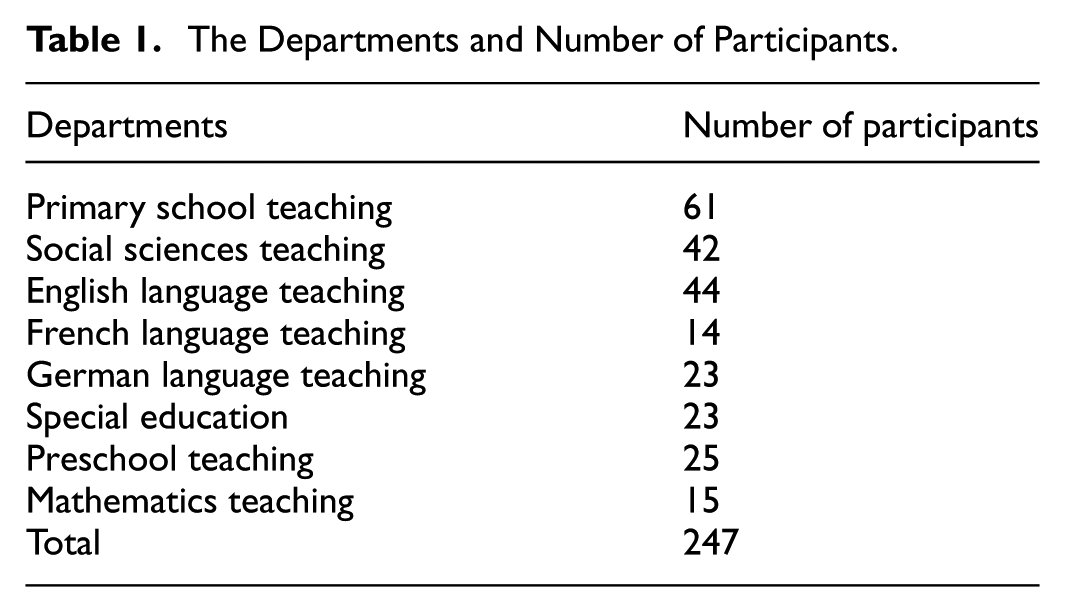
All levels of teacher education are provided in universities in the form of 4-year bachelor programs in Türkiye. The curriculum is mandated by the Council of Higher Education for all teacher education programs. The programs include generic and content-specific courses taught concurrently and an internship in the final year. The participants were senior (fourth grade) 247 volunteered PTs enrolled at eight different departments of an education faculty. Although the sample seem to be heterogenous, PTs from different departments take the same general pedagogical courses as common core courses (professional teaching knowledge) from the department of educational sciences regardless of their department. The rationale for the selection of the participants from senior PTs was that they had completed all the required courses and the first semester of their internship, and hence they had gained teaching experience. Because the objective of the study was to identify the competency profiles of PTs, they had to experience all teacher preparation process. Therefore, purposeful sampling was chosen for this study (Patton, 2015). Table 1 shows the departments and number of participants.
The Departments and Number of Participants.
Data Collection Tools
The data were obtained through GTCF and semi-structured interviews at the end of 2023 to 2024 academic year. The quantitative data were obtained from GTCF – self-report questionnaire developed by the researcher. The structure of GTCF consisting of competency domains, sub-competencies, and quadruple performance indicators allow GTCF to be used as a data collection tool. Therefore, upon receiving the ethic approval from the university and consents of the participants, GTCF was administered to PTs to identify the competency profiles by choosing one of the performance indicators referring to their perceived level from A (the highest level) to B, C and D (the lowest). Table 2 below shows an exemplary section of GTCF used as data collection tool.
Sample Competency, Sub-competency, and Performance Indicators of GTCF.

Table 2 shows the second competency domain (2. Content knowledge and teaching) and its sub-competencies 2.1, 2.2, 2.3, 2.4, with performance indicators (Alan & Güven, 2022, pp. 326–327). The “justification” section under performance indicators was intended to obtain further information about the self-reports of PTs. GTCF was developed as part of the doctoral study of the author (Alan, 2019). Upon extensive literature review on teaching competencies across the world and interviews conducted with MoNE experts, teacher trainers and PTs, the draft form of GTCF was developed by the participation of 397 K-12 teachers from the province where the author’s university is situated. The preliminary GTCF consisted of seven competency domains with two levels as “competent and incompetent.” In the final phase of the development of GTCF, the author carried out an extensive workshop on teaching competencies. Fifty-two experts from educational sciences departments of five different universities participated in the workshop and they scrutinized and evaluated each competency item in terms of structure, content, language, and appropriateness. The final form of GTCF consisted of 6 competency domains, 31 sub-competencies, and quadruple performance indicators, which enable to (self)evaluate teachers at their different career points. Besides, Danielson’s (2007) competency framework consisting of four levels (unsatisfactory, basic, proficient, and distinguished), which inspired the competency frameworks of many countries (Santiago & Benavides, 2009), the CCSSO (2013), and Blömeke and Kaiser’s (2017) developmental perspective of competencies were also influential in structuring GTCF. The second data collection tool was the semi-structured interviews conducted with 10 volunteered PTs upon collection of GTCF questionnaire. The interview protocol is presented in Appendix 1.
Data Analysis
LPA, which was used to answer the first research question, is carried out with interval-level measurements. Therefore, the construct validity of the questionnaire was first tested with confirmatory factor analysis (CFA). Before performing CFA, normality assumption was tested and it was seen that the skewness values of the scales were between 0.94 and 1.86 and kurtosis values were between 0.3 and 6.43. Therefore, Maximum Likelihood Robust (MLR) was used as the estimation method in CFA.
As a result of the CFA, it was concluded that the scales were unidimensional. In order to facilitate the comparison of the scores obtained from the scales, the scores of all variables were equalized on the same scale. In other words, the results were organized so that a minimum score of 25 and a maximum score of 100 could be obtained from all scales. In the next stage, LPA was conducted using the scores obtained by the participants from the subscales of GTCF. Mplus 8 and Jamovi 2.3.28 programs were used at this stage.
Regarding qualitative data, the participants filled in a “justification” section in GTCF under each performance indicator to explain why they chose that particular level. Besides, 10 semi-structured interviews conducted with the participant PTs who volunteered to be interviewed. The participants were the representatives of all departments except French and German Language Teaching from which the data were collected. The interview method is used to identify and interpret feelings, thoughts, beliefs, and values that are not easy to observe in individuals (Patton, 2015). The data obtained from the interviews were analysed by systematic analysis method associated with the research questions by using data summarization and coding techniques (Saldaña, 2009). Although only 10 PTs (5 males and 5 females) volunteered to be interviewed, the researcher decided that this number could be sufficient since the data reached saturation. The interviews and written responses were originally in Turkish. A selection of responses and quotes from the GTCF and interviews which are presented in the following section was translated into English and they were reviewed by another expert to check whether the responses conveyed the same meaning in the original language.
Results
In this study, initially, CFA was conducted through Mplus 8 to obtain a total score for the variables mentioned above and to obtain evidence that the variables are unidimensional. The model-data fit indices obtained through CFA for each variable are presented in Table 3. The path diagrams of the CFA are given in Appendix 2.
Fit Indices for Each Variable.

In models of marked variables, the relationships between residual variances are included in the model.
When the fit indices are analysed, it is seen that all fit values are at the perfect fit level (Kline, 2015) and, therefore, it was concluded that the data obtained from the scales were appropriate for LPA. In identifying the profiles, fit values such as Akaike Information Criteria (AIC), Bayesian Information Criteria (BIC), Adjusted Bayesian Information Criteria (aBIC), Entropy, Adjusted Lo-Mendell-Rubin Test (aLMR) and Bootstrapped Likelihood Ratio Test (BLRT), which are frequently used in the selection of the most appropriate model, were examined.
Model Fit Indices
During the LPA, fit indices were examined for model selection. The fit indices obtained are as given in Table 4.
Model Fit Indices.

p < .05.
When the fit values of the models with varying number of profiles are examined, it is seen that the entropy value for all models is within the desired range. Entropy is a statistical value that measures how accurate the classification process of the established model is (Lim et al., 2024). For a good fit, the entropy value should be above 0.80 (Kim et al., 2024). When AIC, BIC, and aBIC, entropy values, and p-values of aLMR test were taken into account, the two-profile model was chosen as the optimal solution both statistically and substantively. Although the AIC and BIC values, which are desired to be as low as possible are similar for all solutions, the three, four, and five-profile models were eliminated because their p-values for the LMR were insignificant. The correct classification probabilities of the individuals belonging to the two-profile model indicated that the probability of the individuals placed in the high-profile is 94%, while the probability of the individuals placed in the low-profile is 97%.
Characteristics of the Profiles
The mean variables of the two-profile model are as indicated in Table 5.
The Mean Scores and Score Ranges of Each Profile.

Table 5 shows that majority of the PTs (n: 179) falls into high-profile, whereas less than one third (n: 68) of the PTs belongs to low-profile. The line graph of the score levels of the profiles is shown in Figure 1.

Line graph of the low- and high-profile PTs according to LPA.
When the distribution of the departments according to the profiles was analysed with the chi-square test, it was concluded that the two profiles were not equivalent in terms of department membership (χ2 = 21.3, p < .01). The department with the highest proportion of PTs in the high profile is the Social Sciences Teaching Department and this rate is well above the distribution of PTs according to the two-profile model. When Table 6 is analysed, it is seen that these distributions differ according to the department.
Distribution of PTs in Departments According to the Two-Profile Model.

As Table 5 and Figure 1 indicate, it is plausible to say that the difference between low- and high-profile PTs might be related to competency domains of ECS, CKT, and AE respectively, as the difference between the mean scores of low and high profiles are higher than the rest.
Table 5 indicates that mean scores of LTP is the highest of all variables for both low -and-high profile PTs. Regarding the second research question, semi-structured interviews revealed that according to PTs, more importance is given to the LTP and content knowledge (but not teaching) in which theories, methods, approaches, and techniques are emphasized in their education. When PTs were asked “Which of these competency areas do you think were emphasized the most in the training you received?,” PTs expressed their opinions as shown in the following excerpts:
Participant 1: The learning and teaching process is mostly emphasized.
Participant 3: It could be content knowledge.
Participant 4: Definitely learning and teaching process. To me, this is the area the most importance is given.
Participant 7: Content knowledge. I think we put a lot of emphasis on content knowledge because we saw the same things over and over again.
Participant 8: Content knowledge. In other words, we always took courses related to our field. We mostly took courses on education, formation in education.
Participant 9: Learning and teaching process. Because, for example, we always talk about how important assessment and evaluation is, but for example, when we are practicing it ourselves, we always skip that part … They are all focused on the learning and teaching process.
Participant 10: Content knowledge and teaching.
The justification responses written on the GTCF regarding LTP (1) of some of the same PTs match with their interview responses. Sample extracts below taken from the justification responses and the level of performance indicator they chose support their interview responses. For instance, regarding the sub-competencies “1.1. The teacher prepares effective lesson plans and conducts lessons accordingly”; “1.4. The teacher enunciates the objective of the subject and lesson”; “1.5. The teacher gives timely and accurate instructions”; and “1.9. The teacher enables students to actively participate in teaching process,” the participants wrote the following responses, respectively:
Participant 4:
(1.1: B level) because I think I have a middle command of competency.
(1.4: A level): I express the objective of the lesson well.
(1.5: A level) I value mutual communication.
(1.9: A level) I can keep their attention fresh.
Participant 7:
(1.1: B level) I meet all the characteristics of this level.
(1.4: B level) This is the appropriate level for me.
(1.5: B level) It changes according to the level of students.
Participant 8:
(1.1: A level) It is because of the education I have received.
(1.4: A level) (I can) maintain integrity.
(1.5: A level) (I can) facilitate students’ comprehension.
(1.9: A level) (I can) enable students to learn on their own.
Participant 10:
(1.1: A level) I do not go out of the program. I teach in accordance with the learning outcomes. I use technology while doing this.
(1.4: B level) I blend topics with old topics or activities.
(1.5: A level) I use a clear, simple, concise language appropriate for the age group.
(1.9: B level) I ensure that children participate actively most of the time (in the lesson).
The quotes above show that PTs acknowledge their education as theoretical in that more emphasize is given to LTP and content knowledge in their curriculum. The PTs seemed to be benefited from this situation that the least statistically significant difference between low- and high-profile PTs was found in the LTP as seen in Table 5. The interviews also revealed that PTs felt themselves most competent in the LTP and content knowledge, along with classroom management. The following excerpts illustrates their opinions with regard to the interview question “In which competency area do you consider yourself most competent?”
Participant 1: Content knowledge and teaching and classroom management.
Participant 2: Classroom management and content knowledge.
Participant 4: I really find myself competent at classroom management.
Participant 5: I am better at learning and teaching process.
Participant 6: I can say that it is content knowledge and teaching. Content knowledge is my strongest area.
Participant 7: I think I am good at classroom management. … and some content knowledge.
Participant 8: I can say that I have acquired classroom management.
Participant 9: I see myself competent at learning and teaching process.
Participant 10: It could be content knowledge.
The justification responses written on the GTCF regarding CKT (2) of some of the same PTs also match with their interview responses. For instance, regarding the sub-competencies “2.1. The teacher has the knowledge of related discipline and uses it effectively”; “2.2. The teacher adopts teaching process according to the requirements in the face of unexpected situations”; and “2.3. The teacher enables students to use higher-order skills,” the participants wrote the following responses:
Participant 4:
(2.1: A Level) I can build bridges between topics.
(2.2: A level) I do emergency management.
Participant 5:
(2.1: B Level) I believe I am good at it, but I believe I can be improved even more.
(2.3: A Level) It is one of the topics I often try to include in my activity plan.
Participant 6:
(2.1: A level) I cannot teach without knowledge of the subject and the field. It is very important to have complete knowledge.
(2.2: B Level) It is possible to prepare lesson plans flexibly up to a point. But it is necessary to be able to improvise in unexpected situations.
(2.3: A Level) Memorization is not enough for students to acquire a language and its skills. You cannot learn a language without analytical thinking.
Participant 7:
(2.1: B level) This is the appropriate level for me.
(2.2: B Level) I can do all of these (the performance indicators).
(2.3: B Level) A level would be too ideal.
Participant 10:
(2.1: B level) I have more knowledge about basic technology. I combine this knowledge with everyday life.
(2.2: A level) I make changes to the plans according to the wishes of the pupils.
(2.3: B level) I ask pupils questions about metacognitive thinking.
The justification responses written on the GTCF regarding CM (3) of some PTs are in line with their interview responses. Regarding the sub-competencies “3.1. The teacher creates a democratic and free classroom environment”; “3.2. The teacher knows and applies the preventive measures in classroom management”; and “3.3. The teacher supports and appreciates students’ efforts for learning,” the participants stated following responses:
Participant 4:
(3.1: A level) I grew up in a fair structure.
(3.2: B level) I can filter (student behaviours) by observation.
(3.3: A Level) I like to congratulate students every time.
Participant 6:
(3.1: B Level) The teacher can control the rules and behaviour in the classroom, but the character of the students is very important in these situations.
(3.2: B level) Classroom management is as important as subject transfer and teaching process. Discipline must be maintained with respect.
(3.3: A level) Getting feedback from students is the biggest motivation for them.
Participant 7:
(3.1: B level) I definitely do it all (performance indicators).
(3.2: B Level) The teacher must first and foremost build the student’s self-confidence.
The PT responses above are in parallel with the profile analysis and mean scores given in Table 5 that the margins between the competency areas of LTP, CM, and PDR are close to each other with 14, 14.3, and 15.4 respectively.
As shown above, not only the semi-structured interviews but also the written responses to the section on GTCF where the participants justified why they chose a particular performance level revealed findings that supported the LPA. When PTs were asked “In which competency area do you consider yourself least competent?” and “Which of these competency areas do you think are least emphasized in the training you received?,” ECS, AE, and CKT are the competency areas that were mentioned by the majority of PTs. Sample responses given by PTs regarding these competency areas in the interviews and in their justification responses on GTCF are presented in Table 7.
Sample Interview Quotes and Justification Responses about ECS, AE, and CKT Competencies.

The data analysis showed that PTs regard the education they receive as highly knowledge-intensive, based on rote-memorization in that there is little space for practice-based lessons, studies, assignments, and activities. When PTs were asked “What kind of trainings do you think you should receive or carry out activities to be more competent in these competency areas?,” they all highlighted the need for more practice. PTs emphasized the lack of field experience because they thought that the structure of their internship in which they have limited application opportunities did not sufficiently prepared them for their profession. They also wanted to see concrete examples of good practices and they would like to engage in practice opportunities right after the courses so that they could combine theory with practice more easily. Finally, regarding the interview question, “What other areas of competency do you think should be among these competencies?,” participant 2, 3, 4 recommended specific competencies about communication with students and parents, a finding supporting the results above.
Discussion
Following a person-centred approach, the present study explored the competency profiles of 247 senior PTs just before they begin their profession. Using LPA, this study examined whether distinctive and meaningful profiles of PTs could be identified according to their self-reports. The results yielded low-profile and high-profile PTs, who within their profiles showed similar patterns. Further analyses revealed that the most distinctive features between these two profiles occurred because of ECS, CKT, and EA competencies. This indicates that PTs differ primarily in the degree to which they evaluate their ECS, CKT, and EA competencies.
Preservice Teachers’ Competency of Effective Communication With Stakeholders
According to self-reports, ECS competency is the first distinctive pattern distinguishing low and high-profile PTs. This result is similar with research studies conducted by latent analyses. For instance, Gartmeier et al. (2016) explored communication competency of secondary teachers across Germany and they found that only one-fourth of secondary teachers were high confident in terms of communication competency with parents. Majority of the teachers were profiled as medium or low confident teachers. In a recent study, Methlagl and Vogl (2024) explored intraindividual and interindividual emotional regulations of PTs in Austria. They found that half of the PTs fell into the low-profile use of interpersonal strategies in a three-profile model. As the effective use of interpersonal strategies facilitates better communication with students, parents, and colleagues (Methlagl & Vogl, 2024), enhances job satisfaction, well-being, and reduces emotional stress (Barthel et al., 2018; Williams et al., 2018), it is crucial for PTs to develop their communication competency for their self-efficacy (Uzuntiryaki-Kondakci et al., 2022), students’ well-being (Braun et al., 2020), classroom management (Sutton et al., 2009), and teacher-student relationships (Hagenauer et al., 2015).
Similarly, Holzberger et al. (2019) found that the distinctive feature identifying effective teachers from ineffective ones was the teacher-student interactions. The way they deliver instruction, provide constructive feedback, and the degree of their patience in different conditions were significant factors to be regarded as effective teachers by students. The literature supports these studies in that teacher education programs across the world poorly equip PTs with competencies regarding communication with families and other community partners (Evans, 2013; Symeou et al., 2012). Communication with parents is an everyday and core practice of teachers (Aasheim et al., 2018; Gartmeier et al., 2016), yet very few teacher education programs provide PTs with opportunities to interact with families (Walker & Dotger, 2012) except early childhood and special education teachers (Epstein, 2013). However, teacher-parent talk is a delicate practice, responsibility, and competency especially in resolving classroom problems, announcing grades, and evaluating students’ performances as they could be linked to teachers’ instructional practices by parents (Gartmeier et al., 2016; Pillet-Shore, 2015). Hence, teachers should learn to be proactive in such situations while communicating with parents (Gartmeier et al., 2016). Although meeting and communicating with parents who are closely involved in educational outcomes have become more challenging than ever, for instance, due to helicopter parenting (Angert, 2020; Wilhelm et al., 2014), the importance of interacting with families is underscored and teachers are committed to develop their communication competency in informal learning settings (Methlagl & Vogl, 2024).
In order to better prepare PTs for their future profession and reduce the negative effects of reality shock (Evans, 2013), teacher education programs should include comprehensive courses whereby PTs are equipped with necessary and realistic strategies on communicating with parents (Gartmeier et al., 2016; Symeou et al., 2012). As it is widely recognized, teaching is an emotional enterprise (Hargreaves, 1998; Sutton et al., 2009) rather than a technical practice. Hence, regulating emotions through interpersonal strategies in educational contexts is an important competence for teachers as it plays a significant role in conducting classroom practices (Jiang et al., 2016) and building strong relationships with students and parents (Williams et al., 2018). Therefore, PTs should be prepared for the situations in which they could regulate their emotions (Taxer & Gross, 2018) not only for their well-being and self-efficacy (Uzuntiryaki-Kondakci et al, 2022), but also for better pedagogical decisions (Jiang et al., 2016). In addition to the courses and activities in preservice education on communication, PTs should be allowed to interact with parents during their internship. Just after PTs’ first internship experiences, reflective practice activities could be carried out to develop their interpersonal competency (Methlagl & Vogl, 2024).
The LPA findings related to communication competency of PTs is congruent with the responses given in the semi-structured interviews and open-ended justifications written in GTCF. During the interviews, majority of PTs emphasized the need for courses, strategies, practices, or opportunities tailored for developing their parent-talk competencies. They stated that they did not even take a single course on communicating with parents and, therefore, it is regarded as the most frightening component of their future career. In GTCF, they also wrote that they are not allowed to talk to parents during their internship and they cannot experience it. This is an area which is neglected in their 4-year education.
Preservice Teachers’ Competency of Content Knowledge and Teaching
The second characteristic distinguishing high- and low-profile PTs is their CKT competency. This finding is congruent with previous studies in which PTs found teacher education in Türkiye to be quite theoretical (Alan, 2019). They believe they lack opportunities to experience knowledge bases they learn and they find it difficult to link theory with practice. This study yielding a similar result is significant given that effective student learning is the result of high-quality teaching (Agathangelou et al., 2024; Blömeke et al., 2016; Hattie, 2009), which is the most important factor in classroom as the quality dimension is related to teaching process (Kyriakides et al., 2009). Because the quality of teacher instruction matters, the quality of teacher education is also of great importance for PTs (Blömeke et al., 2016) and a determinant on student achievement (Baumert et al., 2010; Kersting et al., 2012). Research shows that effective instruction shares certain characteristics; cognitive activation, clarity of instruction, and supportive environment for individual learning along with classroom management (Baumert et al., 2010; Decristan et al., 2015; Hattie, 2009).
Kyriakides et al. (2009) examined the teaching quality of teachers based on certain behaviours from basic to complex level to distinguish effective teachers from ineffective ones. They identified five types of teacher behaviours. The first three levels of teacher behaviours were more of teacher-centred and routine tasks, which often trivialize cognitive activation (Baumert at al., 2010), whereas teachers in the last two levels engaged in more demanding tasks allowing student engagement. Those teachers’ instructional techniques were regarded as high-quality because they deployed an array of teaching approaches including differentiation according to the needs of students and classroom environment. The structure of GTCF developed by the researcher is similar to the levels identified by Kyriakides et al. (2009) in that performance indicators of each sub-competency are defined at four levels of complexity. The higher levels of performance indicators under the competency domain of CKT consist of teacher behaviours regarding the use of various instructional approaches and are related to higher-order thinking skills. PTs who self-reported their performance at low levels stated that they were either not ready to perform at higher competency levels or they were not trained to teach that way. This concurs with Hattie’s (2009) assertion that there is not a recognized standard for teaching PTs and they must be cognizant of the fact that teaching is not merely related to craft techniques and common sense. Hattie (2009) found that most teacher education programs lack teaching multiple instructional methods and focus on teaching low-level skills, which PTs already possess. This is similar to the findings of this study that PTs feel incompetent about teaching or assigning tasks with regard to higher-order thinking skills and activating cognition.
Although there is not empirical evidence to support it, some responses of PTs suggest that there could be differences and inconsistencies among different departments in the same faculty in teaching generic competencies. Table 6 shows that the two profiles were not equivalent in terms of department membership, which indicates differences among departments. Some PTs who self-reported themselves as low competent in CKT stated that they teach according to the lesson plans they prepare together with mentor teachers or their university advisors. Teacher trainers may also favour content knowledge over pedagogical content knowledge during preservice education. Although pedagogical content knowledge is inconceivable without content knowledge, content knowledge is not merely sufficient for high-quality teaching (Hattie, 2009), but it is the pedagogical content knowledge that is decisive for cognitive activation and individual learning support (Baumert et al., 2010). Therefore, there must be a balance between content knowledge and pedagogical content knowledge in teacher education programs.
Agathangelou et al. (2024) examined teachers’ use of content-generic and content-specific instructional practices through LPA. They found that the high-quality teachers incorporated both content-generic and content-specific teaching practices effectively. Similarly, Blömeke et al. (2020) identified competency profiles of mathematics teachers via LPA. The analysis indicated that the highest competency profile consisted of teachers using high levels of knowledge and skills. The skills including content knowledge and pedagogical content knowledge activating cognition were the most influential factor distinguishing other profiles.
As Blömeke et al. (2016) found out, there are differences between and within countries in terms of teacher quality and instruction. Countries differ in the extent to which teachers have autonomy over how they deliver the curriculum and teaching. While teachers are fully autonomous implementers of instruction in some countries, in others, they are compelled to stick to the prescribed lesson plans, which seems to be the case for PTs in Türkiye at least according to their self-reports. PTs’ responses indicated that they found their education highly theoretical focusing mostly on the “learning and teaching process,” which was supported by LPA. Almost all participants in the interviews highlighted the need for more practice during their education process and in their internship. Whereas PTs learn many theories and approaches regarding teaching, they either lack opportunities to experiment those approaches or they are not provided with exemplars through case stories. PTs also think that the duration of the internship and the number of lessons they teach must be increased to gain more experience. In addition, their responses suggest that they are not prepared to teach for cognitive activation and differentiation, which are key to quality-teaching.
Preservice Teachers’ Competency of Assessment and Evaluation
AE competency is the third distinguishing pattern between low- and high-profile PTs. Teachers need basic knowledge of testing and test instruments to organize educational situations and instruction (Reuter & Leuchter, 2023). Assessment literacy (Stiggins, 1991) requires an understanding of basic principles of assessment, which has gained importance due to accountability. Therefore, it is regarded as a fundamental competence for all teachers (DeLuca & Johnson, 2017). Assessment literate teachers can interpret assessment results better and hence, they can make informed decisions regarding instruction and arrange necessary remediation based on evidence (Massey et al., 2020; Rogers et al., 2022). While assessment literacy was once considered as testing culture, which was mainly summative, it has moved towards formative assessment (Atjonen et al., 2022; Massey et al., 2020). Formative assessment is an essential element of effective teaching because gathering information about what students know and can do using appropriate assessment techniques can improve both students’ learning and teachers’ teaching (Atjonen et al., 2022; Rogers et al., 2022; Sondergeld, 2014).
There are two types of assessment pedagogy; content-based teaching, which is dominant in teacher education programs, and process-based teaching (DeLuca et al., 2013). While the first one is typical teacher-centred didactic instruction based on knowledge transmission, the latter requires “critical reflection, dialogue, experiential and authentic learning” (DeLuca et al., 2013, p. 130). According to DeLuca et al. (2013) there are three types of process-based pedagogies; practicing the art of assessment, field-based teaching experiences, and assessment for learning approaches. It is the assessment for learning approach which should be taught in teacher education thereby PTs gain new insights towards assessment by eliminating their negative conceptions. PTs can also develop a stance of inquiry by systematically examining their own instructional practices leading to continuous professional development.
However, this study indicates that PTs are not sufficiently aware of different formative assessment tools, which have gained importance with the recognition of constructivist approach in teaching (Massey et al., 2020) and the importance attached to the students’ learning process (Cañadas, 2021). PTs also believe that those tools are not applicable due to class size or student level. They do not know how to involve their students in formative assessment processes including co-constructing the assessment criteria or goal setting (Hill et al., 2017). Formative assessment is rarely used in teacher education due to the excuses such as the heavy workload of educators and overcrowded classrooms, or formative assessment is considered as a light form of evaluation (Cañadas, 2021). These might be some of the reasons why (formative) assessment is given less importance in Turkish teacher education landscape. DeLuca and Johnson (2017) assert that some other factors that prevent the development of assessment literacy of PTs include the short and disconnected structure of teacher education programs, less importance given to assessment competency compared to others, and low assessment competent teacher educators. Even if assessment is taught in teacher education, it is usually theoretical and focuses on general issues such as validity and reliability and ignores the practical dimension (Kruse et al., 2020) such as giving effective feedback (Namakshi et al., 2022; Rogers et al., 2022).
The findings of this study are congruent with the studies across the globe concerning assessment competency. The participant PTs stated that they take just one course on assessment throughout their education and it is not tailored for their actual needs. PTs do not develop and apply assessment instruments either on campus or in their internship studies and they cannot experience giving feedback, engaging in peer, self, and portfolio assessment in real environments. They are not allowed to score student papers, too. As a result, they do not feel confident with assessment related tasks, a finding similar to the literature (Kruse et al., 2020; Sondergeld, 2014).
Conclusions and Implications
This study indicates that PTs are not sufficiently prepared for the profession in terms of CKT, ECS, and AE competencies as necessary emphasis is not given to these competencies in teacher education. According to the LPA results, LTP, CM, and PDR do not seem to be a discriminating variable in determining PTs’ profiles. As explained in the findings section, PTs think that they received a very good theoretical education focusing mostly on theories and approaches of learning and teaching process – a domain which is mostly emphasized by the current curriculum and by their teacher educators – almost in all courses. Therefore, it is understandable that there is no difference between PTs in terms of LTP. Congruent with the international studies on teacher competencies, CM was not found to be a significant factor distinguishing high and low-profile PTs (Blömeke et al., 2020). In terms of CM, PTs have a certain level of self-efficacy. This can be explained by the fact that PTs have not yet faced the real classroom environment. Finally, PDR was not a discriminating variable, too. PTs may not be fully aware of the expectations and responsibilities that are expected of them as they have not yet had a real teaching experience. Therefore, they may not have internalized the competency items related to this variable in the competency framework.
PTs believe that they lack practice related to teaching, assessment, and communication with parents. Although PTs have comprehensive knowledge about teaching methods, approaches, and assessment, they believe that they are not provided with opportunities to link theory with practice. PTs feel unconfident with communicating with parents and other community partners although these partners have become more involved in education than ever. Therefore, PTs would like to take courses on communication skills because they are well-aware that communicating with parents is going to be one of their daily routines that they need to be competent enough.
The most influential part of teacher education on PTs is the internship period in which they realize that teaching has multiple conceptions (Hattie, 2009). However, PTs lack opportunities to experience what they have learned and they continue teaching according to their own conceptions, which devalue the impact of teacher education. In fact, teacher education programs can make a difference (Evans, 2013) when designed in accordance with research-informed teaching (Brown et al., 2017; Reuter & Leuchter, 2023) taking into account of PTs’ actual needs and low competency areas (Gartmeier et al., 2016; Symeou et al., 2012). Rather than merely focusing on content knowledge, PTs need to engage in practice, demonstration, micro-teaching, and receive more feedback on their pedagogical content knowledge and skills. Therefore, teacher education curriculum, at least in Türkiye, should be revisited to identify recurring theoretical themes across different courses. Besides, the fragmented structure of the internship needs to be redesigned by bridging the university courses with practicum, where teacher educators and mentor teachers in practice schools collaborate closely so that PTs can engage in meaningful experiences by receiving individualized coaching and feedback. PTs should also be provided with more responsibilities and freedom especially in the areas of teaching, assessment, and communication with parents – the competency domains that are inherently difficult to develop through on-campus training.
Finally, GTCF proved to be useful and functional in identifying the competency profiles and professional development needs of PTs. For instance, it revealed the need for specific courses on parent-teacher communication and assessment. Therefore, GTCF can also be used to determine the professional development needs of in-service teachers to organize more effective professional development programs using LPA (Blömeke et al., 2020) given that most in-service teacher education programs are not tailored for the actual needs of teachers (Agathangelou et al., 2024).
Limitations to the Study
One of the limitations of this study is that it was conducted in a particular teacher education program. The study can be duplicated in other teacher education programs. Hence, a nation-wide and more comprehensive picture of teacher education and competency level of PTs can be obtained. Besides, as Blömeke and Kaiser (2017) assert, it might be difficult to determine the accepted level to be called as competent because of the difficulty of examining whether low competency areas could be compensated by high competency areas. Furthermore, while some teachers may feel competent in instructional strategies, some may feel incompetent such as in classroom management (Sun & Yin, 2025). Another limitation of this study is that PTs may over or underestimate their competencies in their self-reports (Reuter & Leuchter, 2023; Struyven & De Meyst, 2010) rather than observed performances by trained raters (Gartmeier et al., 2016). However, self-report is an acknowledged approach relying on the rationale that the teacher scores for each item on the instrument is directly related to the instructional practices if the instrument is reliable (Halpin & Kieffer, 2015). Finally, only ten PTs volunteered to be interviewed. More interviews with PTs might have revealed additional results.
Footnotes
Appendix 1
Appendix 2
Author Note
During the preparation of this work, I partly used DeepL Write to correct the grammatical errors and to check the language in the original manuscript. After using it, I reviewed and edited some parts of the content and I take the full responsibility for the content of the publication.

Ethical Considerations
This study was approved by Anadolu University Research Ethics Committee (approval no. 649810) on 4 December 2023.
Funding
The author received no financial support for the research, authorship, and/or publication of this article.
Declaration of Conflicting Interests
The author declared no potential conflicts of interest with respect to the research, authorship, and/or publication of this article.
Data Availability Statement
The datasets used or produced in this study can be obtained from the corresponding author upon reasonable request.