




Abstract
This study provides a detailed examination of the intricate relationship between confirmed COVID-19 cases in South Korea and their impact on the nation’s inbound tourism. We utilize a robust mathematical framework, deploying a constructed transfer function model, to elucidate the dynamics of this socioeconomic phenomenon. Our findings reveal a tangible pattern: an increase of 1% in COVID-19 cases in South Korea corresponds to an approximate decrease of 0.071% in inbound tourism in the subsequent month. The consistency between the applied mathematical model and the derived empirical results underscores the reliability and utility of our chosen model. Moreover, it fortifies the argument for employing mathematical tools in the exploration of complex, dynamic socioeconomic relationships. Our research illuminates the critical role of mathematical reasoning and transfer functions in empirical research, particularly in the context of a global pandemic’s impact on a nation’s tourism industry. This study thereby lays the groundwork for further research employing mathematical modeling to comprehend dynamic phenomena across various research fields.
Keywords
Introduction
The sudden advent and rapid spread of the COVID-19 pandemic have undoubtedly left indelible imprints on the global socioeconomic fabric. Among the various sectors adversely impacted, tourism stands out as one of the most profoundly affected, particularly in countries heavily reliant on this industry, such as South Korea. This research seeks to shed light on the direct and quantifiable impact of confirmed COVID-19 cases on inbound tourism in South Korea, a country recognized for its vibrant culture, history, and advancements in technology, thereby making it an attractive destination for international travelers. Before the onslaught of the pandemic, South Korea had witnessed robust growth in its tourism industry. The Korea Tourism Organization’s statistics reveal that inbound tourist arrivals have hit record highs, with over 17.5 million visitors in 2019. However, the onset of COVID-19 precipitated an abrupt halt to this momentum, leading to an unprecedented drop in tourism numbers. The relationship between public health crises and tourism is not novel, yet the scale and uncertainty of the COVID-19 pandemic have amplified these effects dramatically. Jeon and Yang (2021), Kang et al. (2021), Seong and Hong (2021), and Im et al. (2021) have examined the interplay between epidemics and tourism, often focusing on changes in tourist behavior and the corresponding economic impact. However, there is limited research specifically addressing the quantifiable relationship between pandemic cases and tourism, especially utilizing rigorous mathematical modeling. The mathematical analysis of socioeconomic phenomena such as tourism can provide unique and profound insights, yet it has not been extensively utilized in the context of COVID-19. Given the pandemic’s dynamic nature, the application of mathematical models, such as transfer function models, can enhance our understanding of these complex relationships. As such, this research contributes to filling this critical gap in the literature, and it does so in the context of South Korea, a location with both a significant dependency on tourism and a public health strategy that has received global attention. In South Korea, the government’s aggressive testing and tracing approach initially allowed the country to manage the outbreak without imposing a complete lockdown. However, despite these rigorous measures, the country experienced fluctuations in the case count, reflective of the virus’s resilience. These fluctuations and their subsequent impact on tourism call for an examination of the real-time relationship between these variables, a relationship that our study aims to elucidate. Therefore, this research’s primary objective is to quantify the impact of confirmed COVID-19 cases on South Korea’s inbound tourism. It offers a unique contribution by applying a carefully constructed transfer function model, a tool known for its adeptness in reflecting the nuanced mechanics of socioeconomic interrelationships. Our study’s insights can guide policy formulation, aiding in the development of strategies aimed at mitigating the adverse impact of such public health crises on the tourism industry. By doing so, it adds an essential layer of understanding to the growing body of knowledge on the socioeconomic implications of the COVID-19 pandemic.
Informed by an exhaustive background investigation, the cardinal aim of our research is to delineate the repercussions of confirmed COVID-19 instances on the inbound tourism of South Korea. Our methodology employs a sound mathematical scaffold, using a painstakingly fashioned transfer function model, to decode the convoluted dynamics underpinning this socioeconomic interplay. Our empirical explorations have unearthed a measurable pattern: a surge of 1% in COVID-19 incidences in South Korea is associated with an ensuing diminution of approximately 0.071% in inbound tourism in the subsequent month. The resonance between the mathematical model deployed and the resulting empirical findings serves to validate the potency and applicability of our model selection. Furthermore, this resonance buttresses the argument for the integration of robust mathematical instruments in scrutinizing complex, dynamic socioeconomic interconnections. Our research highlights the paramountcy of mathematical reasoning and the utilitarian role of transfer functions in empirical investigations, especially when examining the influence of a worldwide pandemic on a country’s tourism sector. This study, therefore, lays the foundational stones for future studies that harness mathematical modeling to demystify dynamic phenomena spanning diverse research disciplines.
This investigation has significantly broadened our comprehension across three critical aspects, offering an enhanced interpretation of our collective knowledge. This research pioneers the application of a robust mathematical transfer function model to elucidate the nuanced interplay between COVID-19 cases and inbound tourism in South Korea. While prior studies, such as those of Pham et al. (2021) and Tsui et al. (2021), have made strides in establishing a correlation between global pandemics and tourism, our study is unique in its precise quantification of this relationship in the context of COVID-19. By discerning the mathematical pattern that a 1% increase in COVID-19 cases corresponds to a 0.071% decrease in inbound tourism, we provide an empirical foundation for further studies to extend and adapt to other geographic or socioeconomic contexts. Our work further underscores the importance of mathematical reasoning in understanding complex socioeconomic phenomena. While existing literature such as Zhai and Shi (2022) and Christine et al. (2021) emphasized the relevance of quantitative analysis in tourism studies, our research expands upon this by emphasizing the role of mathematical reasoning and transfer functions in the context of a global pandemic. In doing so, we illuminate a pathway for future studies to use similar methods to unravel complex dynamic phenomena in other fields of research. This study brings to light the criticality of consistency in applying mathematical models and interpreting results. In contrast to previous studies, such as Hosseini et al. (2021), Altuntas and Gok (2021), Casini and Roccetti (2020), and Li et al. (2023), which primarily focus on model selection and application, our research highlights the importance of consistency between the model applied and the results obtained. By demonstrating this in the context of the COVID-19 pandemic’s impact on tourism in South Korea, our research contributes a unique perspective that reinforces the validity and reliability of model selection in empirical research. This triad of contributions, we believe, significantly augments the existing body of knowledge surrounding the interrelationship between global health crises and socio-economic dynamics. By integrating rigorous mathematical reasoning, a meticulous transfer function model, and a comprehensive evaluation of the consistency of our findings, this research offers innovative and robust insights into the impact of the COVID-19 pandemic on the South Korean tourism industry.
The forthcoming segments of this scholarly exploration are arranged as follows: Section Two initiates an exhaustive investigation of the prevailing literature, immersing itself in allied studies and aligning their implications with our research objectives. Section Three illuminates the selection and implementation of the models employed in our empirical assessment. Section Four is devoted to the application of transfer function analysis. Conclusively, Section Five embodies the distillation of our research insights, offering our final deductions and their potential reverberations within the sphere of study.
Literature Review
The extensive effects of the COVID-19 pandemic on global tourism have been thoroughly investigated by researchers worldwide, sparking detailed discussions about the sector’s resilience, flexibility, and future directions. As we meticulously examine the numerous insights derived from various relevant studies, an intriguing narrative of analysis and discussion begins to emerge. This provides a solid, unbiased, and theoretically sound basis for the current study’s exploration and investigation.
The impact of global pandemics on the tourism industry has garnered considerable scholarly attention. Key contributions from Karabulut et al. (2020), Jamal and Budke (2020), and Gössling et al. (2021) have laid a strong foundation by examining the effects of past health crises, providing a comprehensive context for understanding COVID-19’s broad implications. These studies highlight a clear correlation between the spread of infectious diseases and the resulting decline in tourism activities. Building on this foundation, researchers like Nagaj and Žuromskaitė (2021), Fotiadis et al. (2021), and Collins-Kreiner and Ram (2021) have presented empirical evidence reinforcing the direct link between rising COVID-19 cases and significant reductions in inbound tourism. These findings confirm that health risks associated with the pandemic cause potential travelers to hesitate, leading to a marked decrease in international tourist arrivals. Furthermore, Qiu et al. (2020) and Rahman et al. (2021) reveal a notable shift toward local or regional travel, emphasizing the pandemic’s influence on travel preferences as individuals seek to minimize exposure to health risks. Together, these studies underscore the substantial impact of COVID-19 on global tourism and offer valuable insights into the complex dynamics between health crises and travel behavior. Additionally, Mariolis et al. (2021) and Aronica et al. (2022) provide quantitative validation of these trends, strengthening the case for the association between health risks and reduced travel. Through rigorous methodologies and comprehensive analyses, these studies deepen our understanding of the relationship between pandemics and their impact on tourism flows. The empirical investigations presented here significantly augment the existing literature by providing quantitative evidence that corroborates current knowledge and deepens our comprehension of the intricate interplay between health crises and tourism behavior. In summary, these scholarly efforts collectively illuminate the substantial impact of the COVID-19 pandemic on the global tourism sector. By examining the effects of previous health crises and presenting empirical data, these studies confirm the link between the spread of infectious diseases, like COVID-19, and the resulting downturn in tourism activities. Additionally, they reveal interesting changes in travel preferences, highlighting a shift toward local or regional destinations. The empirical findings from these studies offer quantitative support, affirming the notion that the severity of a pandemic directly affects the extent of the decline in international tourism.
Research on the behavioral aspects of tourism consumption during COVID-19 has attracted significant attention from scholars like Toubes et al. (2021), Frago (2021), Kitamura et al. (2020), and Usui et al. (2021). Their work highlights the emergence of virtual tourism experiences, reflecting a significant shift in consumer behavior toward alternative engagement with destinations. The pandemic’s impact on the digital transformation of tourism has been further explored by Johann (2022), Yeh (2021), and Ketter and Avraham (2021), who agree that the crisis has accelerated the adoption of digital technologies in the sector. This growing body of literature on the behavioral and digital dimensions of COVID-19’s impact on tourism provides crucial insights into evolving tourist preferences and practices. Complementing this understanding, Lu et al. (2022) and Zhang et al. (2022) have examined virtual tourism experiences, localized tourism, and their potential implications, contributing to our understanding of how tourists adapt and interact with destinations in a changed environment.
Future prospects for the tourism sector in a post-COVID-19 world have been extensively explored by scholars such as Mohanty et al. (2020), Mensah and Boakye (2023), Brouder et al. (2020), Koh (2020), and Seraphin and Dosquet (2020). These studies collectively highlight the sector’s resilience and potential for innovation and transformation. King et al. (2021) advocate for a reinvention of tourism with sustainability at its core, emphasizing the need for sustainable practices and policies to ensure long-term viability. Meanwhile, Villacé-Molinero et al. (2021) and Bae and Chang (2021) stress the importance of robust crisis management frameworks to effectively address and mitigate future crises. These scholars underline the significance of proactive planning, preparedness, and coordination among stakeholders to navigate uncertain times successfully. From a different perspective, Noorashid and Chin (2021) explore the post-pandemic opportunity for destination rebranding, suggesting that destinations could use the pandemic-induced disruption to reinvent their image and appeal to changing tourist preferences. This strategic approach to destination rebranding can differentiate destinations and attract visitors in a transformed tourism landscape, fostering a sense of renewal and rejuvenation.
In summary, the body of literature reviewed in this paper serves as a critical and indispensable framework for our research. These studies provide significant insights into the effects of COVID-19 on the tourism sector and set the stage for the unique contributions of our research. Our study stands out by employing a robust mathematical model to quantify the intricate relationship between COVID-19 cases and inbound tourism. By integrating these innovative dimensions, our paper extends the existing knowledge base and offers fresh perspectives on the profound impact of COVID-19 on the tourism landscape.
Model
Amidst the extensive spectrum of global disturbances, the COVID-19 pandemic has prompted significant repercussions within the global tourism ecosystem, an impact distinctly felt within the domain of South Korea’s inbound tourism. A systematic and empirical exploration of these implications is deemed imperative. Firstly, gaging the severity and expanse of the pandemic’s effects on inbound tourism is critical, offering a comprehensive perspective on the multifaceted dimensions of the crisis. This necessitates a layered inquiry spanning from overarching indicators such as visitor inflows and sector-wide revenues to the granular impacts borne by industry stakeholders across the value chain. The core of our study lies in understanding the dynamic relationship between COVID-19 case fluctuations and inbound tourism in South Korea through a model-based predictive approach. The theoretical foundation of our research is rooted in the intersection of tourism demand theory and crisis impact modeling. tourism demand theory postulates that various factors, including economic conditions, political stability, and public health, influence tourists’ decisions. Our study specifically examines how health crises, exemplified by the COVID-19 pandemic, impact tourism demand. This aligns with the theoretical perspective that health-related risks significantly alter travel behavior and preferences, leading to fluctuations in tourism demand. Crisis impact modeling provides the framework for understanding how sudden disruptions, such as pandemics, affect socioeconomic systems. The transfer function model we employ is particularly adept at capturing the temporal dependencies and lagged effects inherent in such disruptions. This model allows us to quantify the immediate and delayed impacts of COVID-19 case increases on tourism, providing a nuanced understanding of the crisis’ effects on inbound tourism flows. The predictive nature of our model is grounded in time-series analysis and econometric forecasting. By utilizing a transfer function model, we leverage historical data to forecast future trends, a method well-established in econometric theory. This approach not only supports the immediate objectives of our study but also contributes to the broader theoretical discourse on the utility of predictive models in crisis management and economic forecasting. Secondly, this study stands as a crucial pillar for devising evidence-backed policy measures. By illuminating the intricate facets of the pandemic’s outcomes, it enables the direction of strategic interventions, fuels sectoral resurgence, and establishes the foundation for a more robust crisis management framework. Finally, an examination of the COVID-19 aftermath can ignite a transition toward resilient and sustainable tourism models. This presents a window of opportunity to critically reassess existing tourism practices and trigger innovative, sustainability-aligned strategies that resonate with global trends. In this vein, the pandemic’s effects transform from mere hurdles into catalysts for systemic metamorphosis, bolstering resilience and ushering in transformative progress in South Korea’s inbound tourism sector. By integrating these theoretical perspectives, our study not only enhances the academic rigor of our research but also ensures that our findings are grounded in well-established theoretical constructs. This comprehensive theoretical framework underpins our model-based predictive approach, offering robust insights into the dynamic relationship between health crises and tourism demand. Despite some academic discourse on the subject such as the works conducted by Jee-Hoon and Hye-Ji (2023), Lee and Han (2023), and Kim and Kim (2023), empirical studies anchored in the Korean context remain sparse. Consequently, this paper employs the transfer function analysis method to explore this theme, utilizing the following general model formulation:

Within the framework of Equation 1,
It is noteworthy to mention that the transfer function analysis predicates its operation on the assumption that the sequence (
With the foundational structure provided by Equation 1, the methodology for estimating and fitting a transfer function model can be succinctly delineated. The first step in this process operates under the assumption of white noise adherence, implying that all preceding and lagging terms maintain independence from E, the error term. Along parallel lines, the model presumes that the lag term of z from an indeterminate lag period exerts an impact on the sequence y. To illustrate this point with specificity, consider an instance as following shown:

In the framework of Equation 2, both

In Equation 3,

Leveraging the unique characteristics of the lag operator, the algebraic expression for

In a manner reminiscent of the derivation process for the Yule-Walker equations, we engage the terms


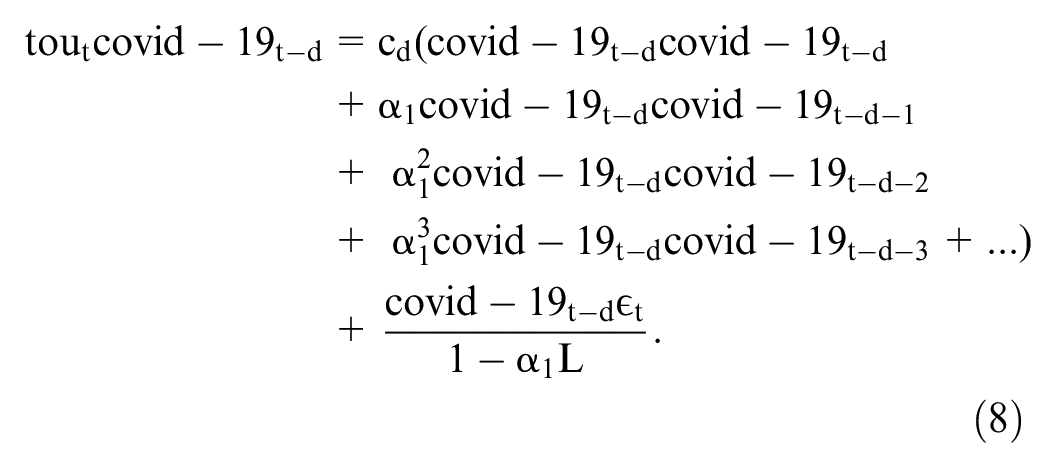

By integrating the information derived from Equations 6–9, we proceed to calculate the expected value for this series of equations. Under the further assumption that


In pursuit of a more comprehensive representation, Equations 10–14 can be rearticulated in a more abstract, generalized form. This process of generalization underscores the universality of the underlying mathematical relationships, thereby offering a broader context and deeper understanding of the underlying dynamics that govern the transfer function model and its implications for the inbound tourism industry in South Korea amidst the COVID-19 pandemic.
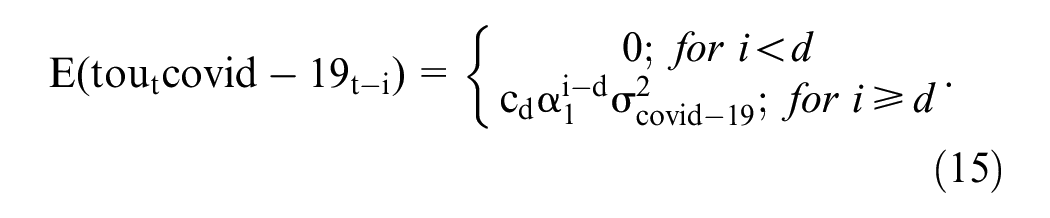
Through the process of normalization, each of the expected value

Upon executing the requisite computations within the framework of Equation 16, we arrive at the solution for the variable y, which is as follows: This mathematical progression delineates the intricate relationships and dynamics within the system, thereby contributing to a more in-depth understanding of the transfer function model.
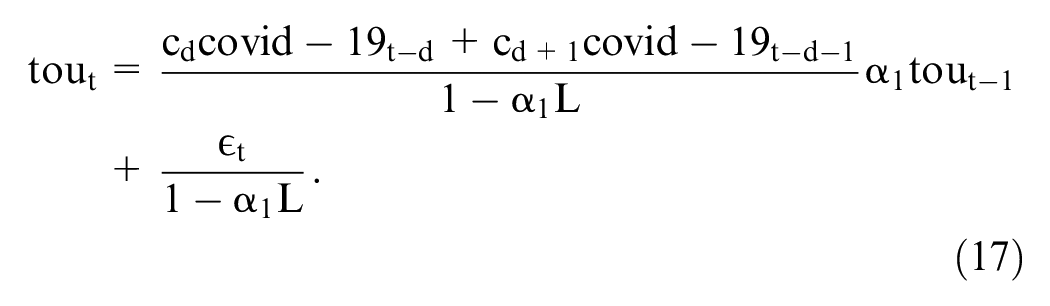
Rewriting Equation 16 gives:
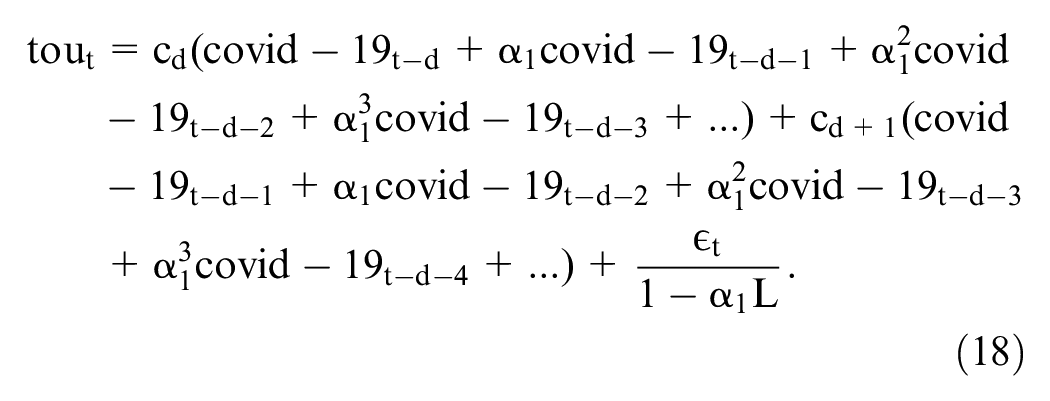
Therefore:

By postulating that

The aforesaid data elucidates that the cross-covariance of
Application of Transfer Function Analysis
Preconditions
This manuscript leverages the granular, monthly dataset, chronicling the volume of inbound tourists to South Korea juxtaposed against the count of confirmed COVID-19 cases, spanning from March 2020 to May 2023. This robust dataset illuminates the pragmatic implementation of transfer function analysis, a powerful tool in predictive modeling. A pivotal prerequisite for employing this analytical methodology is ensuring the stationarity of the two variables in question, namely, the count of inbound tourists and confirmed COVID-19 cases. The hypothesis of stationarity posits that the statistical properties of these processes do not change over time. Conversely, non-stationarity in either or both of these data series renders the cross-correlations of the samples statistically insignificant, thereby undermining the utility of the transfer function analysis. To establish this critical precondition of stationarity, this study utilizes the Augmented Dickey-Fuller (ADF) and Phillips-Perron (PP) tests. These two tests are well-established, highly regarded methods to test the null hypothesis of a unit root presence in a time series sample, which suggests non-stationarity. Each of these two variables, representing the number of tourists entering South Korea and the number of confirmed COVID-19 cases, is quantified in units of 10,000. To linearize and stabilize the variables’ variance, a logarithmic transformation has been meticulously implemented on both. The original data for these variables was painstakingly sourced from Statistics Korea and Korea Tourism Statistics, ensuring the accuracy and reliability of the input for our analysis. The comprehensive results of these pivotal tests, as applied to the inbound tourism and confirmed COVID-19 case variables, are diligently tabulated and detailed in Table 1.
Results of Unit Root Test.

10% significant level.
As delineated in Table 1, both variables
Results of Autocorrelation Tests of

Table 2 reveals a Ljung-Box Q-statistic of 17.622, which conclusively signifies the absence of autocorrelation within the dataset reflecting the number of confirmed COVID-19 cases in South Korea. The data manifest traits closely akin to a white noise process, thereby obviating the need for the first step of our analytical procedure—the selection of an appropriate ARMA model for sequence
Results of Correlation Between

As delineated in Table 3, each
Derivation and Implication of the Transfer Function
In this segment, our focus rests on evaluating the interrelationships and forming estimates for each plausible model. Given the indeterminate evidence offered by the interrelationships, we approach several distinct transfer function models for estimation. The assumption of monthly delays, spanning from 0 to 3 months, is implemented due to the persistently unclear attenuation pattern of the interrelations. We permit the
Results of Quantifying the Impact of COVID-19 Case Numbers on Inbound Tourism.

Note. t-statistical value shown in parentheses.
1% significant level. **5% significant level. *1% significant level.
Upon comparative analysis of the results from the six distinct models, it is evident that Model 1 stands out as the most credible. The estimates from this model, denoted as
Results of Correlation Between

Residuals are subjected to estimation as ARMA processes, utilizing the standard Box-Jenkins methodology, a sophisticated approach in time series analysis. After careful examination and rigorous testing, it is discerned that the residuals exhibit the most fitting correspondence with the ARMA model, represented as:

In the framework of Equation 20, the t-statistics are notably observed to be 6.668, 6.014, 3.828, and 7.385, corresponding to significance levels of 0.006, 0.021, 0.027, and 0.000, respectively. These numerically robust outcomes offer compelling evidence in favor of our transfer function, denoted as:
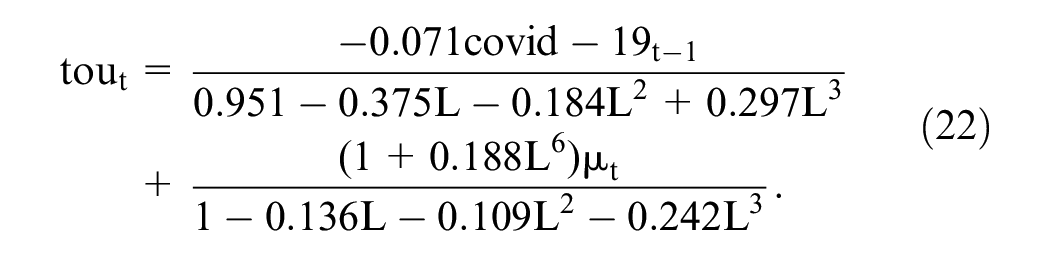
In conclusion, our primary objective is to elucidate the influence of confirmed COVID-19 cases in South Korea on inbound tourism via the application of our meticulously estimated transfer function model. Empirical analysis robustly indicates that the transfer function effectively approximates this intricate interplay. More precisely, a 1% surge in the COVID-19 case count in South Korea triggers a subsequent contraction of 0.071% in inbound tourism over the ensuing month. This phenomenon can be attributed to the tourists’ instinctual inclination to gravitate toward perceived safety, leading them to either opt for ostensibly safer destinations or curtail their travel plans altogether. This holds true for South Korea, as borne out by our results. Importantly, this outcome aligns with the empirical findings of renowned researchers Wang et al. (2021), Ren et al. (2022), and Choi et al. (2022), and Sung et al. (2020), thereby lending further credence to our conclusions.
Discussions
Our study finds that a 1% increase in COVID-19 cases leads to an approximate 0.071% decrease in inbound tourism the following month. This result is consistent with the findings of Karabulut et al. (2020), who reported a significant negative impact of COVID-19 on international travel. Similarly, Gössling et al. (2021) emphasized the substantial decline in tourism activity due to health-related risks, corroborating our findings on the sensitivity of tourism demand to pandemic-induced uncertainties. The lagged effects observed in our study align with the results of Nagaj and Žuromskaitė (2021), who documented the prolonged impact of health crises on tourism behavior. Our use of a transfer function model extends these insights by quantifying the specific lagged response of inbound tourism to fluctuations in COVID-19 cases, providing a more detailed temporal perspective than previous studies. Qiu et al. (2020) and Rahman et al. (2021) highlighted a shift toward local or regional travel during the pandemic, as travelers sought to minimize health risks. Our study supports this shift by demonstrating the immediate negative impact on international arrivals, suggesting that travelers may prefer domestic destinations perceived as safer. Our findings also resonate with the work of Johann (2022) and Yeh (2021), who discussed the acceleration of digital transformation in the tourism sector. While our study focuses on the quantitative impact of COVID-19 on inbound tourism, the broader implications include a potential shift toward virtual tourism and enhanced digital engagement, as indicated by these authors. By employing a transfer function model, our research offers methodological advancements over studies that primarily used simpler time-series analyses. For instance, the studies by Mariolis et al. (2021) and Aronica et al. (2022) utilized quantitative methods to validate the pandemic’s impact but did not capture the dynamic and lagged effects as comprehensively as our approach. This methodological rigor provides more precise insights and reinforces the robustness of our findings. The policy implications derived from our study are in line with recommendations from Villacé-Molinero et al. (2021) and Bae and Chang (2021), who emphasized the need for robust crisis management frameworks. Our results suggest that timely and effective public health interventions can mitigate the adverse effects on tourism, echoing the call for proactive and coordinated strategies to enhance sectoral resilience.
Moreover, one of the primary policy implications of our findings is the need for robust public health infrastructure. Policymakers should prioritize investments in healthcare systems to ensure they can effectively manage and contain COVID-19 outbreaks. By maintaining low case numbers, governments can enhance traveler confidence and mitigate the negative impact on tourism demand. This includes increasing testing capacities, improving contact tracing systems, and ensuring the availability of medical resources. Our study underscores the importance of stringent health and safety protocols in the tourism industry. Policymakers and industry stakeholders should collaborate to develop and enforce comprehensive health guidelines for tourism-related activities. This includes regular sanitization of tourist facilities, mandatory mask-wearing, social distancing measures, and health screenings for travelers. Transparent communication of these protocols can reassure potential tourists and encourage them to visit. Given the shift toward local and regional travel observed during the pandemic, policymakers should consider promoting domestic tourism as a strategy to sustain the tourism sector. Marketing campaigns that highlight the safety and attractiveness of domestic destinations can help redirect travel demand within the country.
Additionally, providing incentives such as travel vouchers or discounts for domestic travelers can stimulate local tourism and support businesses affected by the decline in international visitors. The dynamic nature of the COVID-19 pandemic highlights the need for comprehensive crisis management frameworks. Policymakers should establish contingency plans that include rapid response strategies for tourism recovery during and after health crises. This involves setting up dedicated task forces to coordinate efforts across government agencies and the private sector, ensuring a unified and efficient response to emerging challenges. The accelerated adoption of digital technologies during the pandemic presents an opportunity for policymakers and industry stakeholders to leverage digital tools to enhance the tourism experience. Investing in virtual tourism platforms, contactless payment systems, and digital health passports can help adapt to the new normal and meet the evolving preferences of travelers. These innovations can also provide valuable data for monitoring and managing tourism flows in real-time. The global nature of the COVID-19 pandemic underscores the importance of international collaboration. Policymakers should engage in cross-border cooperation to share best practices, harmonize health protocols, and coordinate travel policies. Collaborative efforts can enhance the resilience of the global tourism sector and facilitate a more coordinated recovery. By integrating these policy implications, our study provides actionable insights that can help policymakers and industry stakeholders navigate the challenges posed by the COVID-19 pandemic. These strategies not only address the immediate impacts but also contribute to building a more resilient and sustainable tourism sector in the long term.
Conclusions
In summarizing our analytical journey, we underscore the overarching objective: a detailed exploration of the interplay between confirmed COVID-19 cases in South Korea and its effect on inbound tourism, using the robust mathematical framework of a carefully constructed transfer function model. The utilization of this tool is a testament to the critical role of mathematical reasoning in discerning the complex dynamics of socio-economic phenomena. Our empirical examination endorses the transfer function model’s adeptness in reflecting the mechanics of this interrelationship. Specifically, we have discerned a tangible mathematical pattern: a 1% uptick in COVID-19 cases in South Korea engenders an immediate decrement of approximately 0.071% in inbound tourism over the following month. Although the shift may appear numerically slight, its significance cannot be downplayed when one contemplates the expansive scale of the South Korean tourism industry. The application of transfer functions and mathematical reasoning in our study has proven instrumental in the comprehensive elucidation of a multifaceted, real-world relationship. The consistency observed between the mathematical framework applied and the empirical results derived affirms the robustness of the transfer function model. This endorsement of the model’s reliability fosters a robust argument for the integration of such mathematical rigor in the exploration of complex, dynamic socio-economic relationships. In conclusion, our research underscores the validity and utility of the transfer function model in quantifying the dynamic relationship between confirmed COVID-19 cases and inbound tourism in South Korea. This study brings to light the indispensable role of mathematical reasoning and transfer functions in empirical research while also emphasizing the significance of consistency in applying mathematical models and interpreting results. The broader implications of our work highlight the potential of employing mathematical tools to comprehend intricate dynamic phenomena across various fields of research.
The primary theoretical contribution of our study lies in its methodological innovation. By employing a transfer function model, we have advanced the application of time-series analysis in the context of tourism research. This model captures the dynamic and lagged effects of COVID-19 case fluctuations on tourism demand, offering a more nuanced understanding of the temporal dependencies between these variables. Our findings reinforce the theoretical framework that health crises significantly alter travel behavior and preferences, aligning with existing theories of risk perception and behavioral adaptation. Additionally, our study extends the discourse on tourism demand elasticity by providing empirical evidence on the specific magnitude and timing of the pandemic’s impact.
Based on the empirical discoveries and analytical discernments yielded by this research, we can demarcate several policy implications that are instrumental in the development of effective strategic responses: (1) Our study underscores the critical necessity of assiduous monitoring of epidemiological trends. Much like a meteorological barometer predicts weather changes, fluctuations in COVID-19 case counts can serve as an effective predictor of impending shifts in inbound tourism. Policymakers, together with stakeholders in the tourism industry, can utilize this anticipatory capability to proactively orchestrate, tailor, and execute contingency plans aimed at curtailing the repercussions of an impending contraction in inbound tourism. (2) The demonstrable impact of confirmed COVID-19 cases on inbound tourism accentuates the strategic significance of a substantive investment in public health infrastructure. By bolstering the resilience and reactivity of the health sector, a swift containment of COVID-19 becomes more feasible, thereby indirectly fortifying the robustness of the tourism industry in the face of a pandemic. (3) This research brings into sharp relief the tangible sway that pandemic conditions exert on tourist behavior. Leveraging these insights, authorities can promulgate safe tourism practices, stimulate local tourism, or highlight attractions characterized by less dense populations or outdoor settings. These measures can play a vital role in sustaining the tourism sector amidst the ebb and flow of COVID-19 case counts. (4) The application of mathematical reasoning and transfer functions in this study underlines the potential for interdisciplinary collaboration amongst policymakers, public health officials, and quantitative analysts. Such collaborative endeavors can foster the formulation of more robust, comprehensive, and adaptable policy responses that consider the dynamic interplay between health and economic indicators. In turn, these collaborative efforts can significantly enhance the efficacy of strategies aimed at mitigating the adverse impacts of the pandemic. (5) Our results have significant implications for tourism managers and policymakers. Understanding that a 1% increase in COVID-19 cases leads to a 0.071% decrease in inbound tourism the following month provides a critical metric for decision-making. Tourism managers can use this information to anticipate declines in visitor numbers and implement timely marketing and safety measures to mitigate the impact. Policymakers can leverage our findings to develop robust public health strategies that not only control the spread of the virus but also restore traveler confidence. Enhancing health and safety protocols, investing in healthcare infrastructure, and promoting domestic tourism are practical steps that can be informed by our research.
Reflecting upon our research, we acknowledge a set of limitations that consequently frame potential avenues for future inquiry: (1) Our research predominantly focuses on confirmed COVID-19 cases in South Korea and their impact on inbound tourism. However, we must recognize that this analysis does not account for potential global effects. International travel is influenced by global epidemiological conditions, which are inherently multifaceted and not isolated to South Korea. Future studies could aspire to explore the interplay of global pandemic conditions and their cascading impact on international travel patterns, thus capturing the broader picture of COVID-19’s influence on tourism. (2) The study’s analytical approach, while robust in many respects, only captures the immediate and subsequent monthly effect of a 1% surge in COVID-19 cases. This may not fully reveal the potential long-term effects of such an increase. Prospective research could employ longitudinal analyses to investigate the sustained impact of a rise in COVID-19 cases over extended periods, enriching our understanding of the pandemic’s longer-term implications for inbound tourism. (3) While our research benefits from the use of a carefully calibrated transfer function model, the inherent limitations of using a single model for capturing complex socio-economic phenomena should not be overlooked. Future studies could incorporate a comparative analysis utilizing multiple transfer function models or other mathematical tools, offering a richer, more nuanced exploration of the complex relationship between epidemiological conditions and tourism trends. (4) Our investigation is confined to the effects of COVID-19 on inbound tourism. This scope omits the examination of outbound tourism, which is also likely to be significantly affected by the pandemic. Complementing the present study, further research could delve into the effects of COVID-19 on outbound tourism, thereby providing a more comprehensive perspective on the pandemic’s impact on the tourism industry. While our research has elucidated some vital facets of the interplay between confirmed COVID-19 cases in South Korea and inbound tourism, these limitations underscore the complexity of this area and the opportunities for future scholarly inquiry. (5) Due to the lack of granular tourism data for other provinces in South Korea, our model’s validity across different areas could not be assessed. Future research should aim to include such comparisons to enhance the generalizability of our findings. (6) The shift toward local and regional travel observed in our study suggests that destinations should diversify their marketing strategies to appeal to domestic tourists. Digital transformation and the rise of virtual tourism experiences, as highlighted in the literature, also offer new avenues for engagement. Tourism businesses should invest in digital technologies to enhance the visitor experience and adapt to changing consumer preferences. Moreover, our findings support the need for a comprehensive crisis management framework that includes proactive planning, stakeholder coordination, and continuous monitoring of health indicators. While our study provides valuable insights, there are opportunities for future research to build upon our findings. Longitudinal studies examining the sustained impact of COVID-19 on tourism over extended periods would enrich our understanding of long-term trends. Comparative analyses across different regions or countries can provide a global perspective on the pandemic’s impact, offering a broader applicability of the transfer function model. Additionally, exploring the interplay between various external factors, such as government interventions and global travel restrictions, would further elucidate the complex dynamics influencing tourism demand.
Footnotes

Funding
The author received no financial support for the research, authorship, and/or publication of this article.
Declaration of Conflicting Interests
The author declared no potential conflicts of interest with respect to the research, authorship, and/or publication of this article.
Data Availability Statement
The data presented in this study are available from the author upon request.