




Abstract
The increasing adoption of cloud computing across various industries signifies its pivotal role in the digital transformation of businesses. Considering diverse industry and geographical contexts, this study reviews the literature to understand the relationship between cloud computing adoption and firm performance. The scoping review integrates findings from multiple databases, focusing on studies published between January 2018 and 2023. It evaluates the impact of cloud computing on firm performance, considering technological, organizational, and environmental factors influencing its adoption. The review reveals that cloud computing positively impacts firm performance across various metrics. It highlights that technological readiness, management support, and competitive pressure are critical for cloud computing adoption. The evidence also suggests that cloud computing contributes to strategic benefits, operational efficiency, and compliance with regulatory standards. Cloud computing emerges as a strategic asset for firms, enhancing performance and offering competitive advantages in the digital era. Future research should address the rapid technological and regulatory evolutions and explore the integration of cloud computing with sustainability initiatives to provide comprehensive insights into its business implications. Managers are advised to adopt a proactive approach to leverage cloud computing effectively, aligning it with broader business objectives and sustainability goals.
Plain Language Summary
This research explores how cloud computing, a technology allowing businesses to access data and services via the internet, affects the performance of companies. As businesses around the world continue to integrate cloud computing, understanding its benefits and challenges becomes crucial. Our study analyzed existing research from multiple databases covering studies from 2018 to 2023. We looked at how factors like technological readiness, management support, and competitive pressures influence companies to adopt cloud computing. The results consistently showed that companies using cloud computing perform better in several areas, including strategic planning, operational efficiency, and adherence to regulatory standards. So, why does this matter? Cloud computing not only supports current business operations but also provides a competitive edge by allowing companies to scale operations quickly and efficiently without significant upfront costs. It also aligns well with ongoing sustainability and regulatory trends, suggesting a proactive approach for businesses looking to stay ahead. In simpler terms, cloud computing can be a game-changer for businesses, enhancing how they operate and compete in the market. For future research, we suggest looking at how integrating cloud computing with sustainability measures can further impact business strategies and performance. Managers should consider cloud technology as a core part of their business strategies to harness its full potential.
Introduction
Cloud computing’s role in the digital transformation of businesses is undeniable, offering significant advantages such as scalability, flexibility, and cost efficiency. Over recent years, research has delved into the factors influencing its adoption across different organizational contexts. For example, a systematic investigation by Al Hadwer et al. (2021) explores the technology-organization-environment (TOE) framework, revealing that top management support, relative advantage, and cloud complexity significantly sway organizations’ attitudes toward cloud adoption. These findings, alongside others (Low et al., 2011; Maina Lawan et al., 2021; Sabi et al., 2016), emphasize the critical need for leadership advocacy and tangible benefits to navigate the hurdles of cloud computing adoption effectively. Moreover, Alkandi (2022) provides insights from a quantitative study within a public health organization, identifying relative advantage, compatibility, management support, technological readiness, and competition pressure as critical factors influencing cloud computing adoption decisions. This reinforces the concept that both the perceived benefits of cloud technology and the readiness to implement it are crucial for cloud computing adoption by organizations.
Additionally, research by Thi Nguyen et al. (2021), who compared cloud computing adoption factors between developed and developing countries using the TOE framework and diffusion of innovation theory, identifies common factors like technology readiness, top management support, and relative advantage across both contexts, pointing to universal themes in cloud adoption drivers. It highlights distinct factors influenced by national context, such as costs and security concerns. Meanwhile, Lee (2019) underscores the role of knowledge in mitigating perceived risks associated with cloud computing, demonstrating that awareness and understanding can significantly influence adoption intentions. This insight is critical, as it suggests that education and clear communication about cloud benefits and risks can facilitate broader acceptance. Apart from that, Y. Liu et al. (2020) assessed the socio-technical determinants of cloud computing value in firms, highlighting how technical and social attributes contribute to successful cloud adoption and enhanced firm performance.
These studies broaden the perspective on cloud adoption, illustrating a need for a holistic approach that considers both technical capabilities and organizational culture in understanding the impact of cloud computing on firm performance. Therefore, this scoping review seeks to collate and analyze these perspectives, elucidating the relationships between cloud computing adoption and firm performance. By integrating findings from various sectors and geographical contexts, the review aims to provide a holistic understanding of how cloud computing influences contemporary business practices and consequently contributes to firm success in the digital age. This study primarily examines cloud computing as an adoption process, focusing on how organizations decide to integrate cloud technology into their operations. Although cloud computing can also be considered as an implementation phase (execution of adoption decisions) or as an infrastructure (technological resource), our focus remains on the decision-making process that leads to adoption.
To provide a clear roadmap through the manuscript, this paper is structured as follows: Section 2 describes the research methodology. Section 3 comprehensively reviews the literature on firm performance, cloud computing adoption, and theoretical frameworks. Section 4 synthesizes findings and presents the developed framework. Section 5 highlights future research opportunities, followed by managerial implications in Section 6. Finally, the paper concludes with limitations and final remarks in Sections 7 and 8.
Search Method
This study employed a scoping review methodology to ensure a systematic approach, integrating findings from multiple sources to examine the relationship between cloud computing adoption and firm performance. The literature search was conducted across three major academic databases—ScienceDirect, EBSCOhost, and Google Scholar—chosen for their extensive coverage of peer-reviewed research in business, technology, and interdisciplinary fields. The search utilized Boolean operators and keyword combinations, including “cloud computing adoption,”“firm performance,”, and “digital transformation,” ensuring a broad yet refined scope of relevant studies. The study selection process followed a structured inclusion and exclusion criteria approach. Only articles published in English between 2018 and 2023 were considered, ensuring recent and relevant insights. Peer-reviewed journal articles, conference proceedings, and industry reports on cloud computing adoption and firm performance were included. At the same time, studies focused purely on technical aspects of cloud computing, without a business performance context, were excluded. A five-stage methodology was followed: first, defining research questions; second, identifying relevant studies through database searches; third, screening studies by removing duplicates and irrelevant papers based on inclusion criteria; fourth, extracting data by cataloging key study attributes such as publication year, research design, and findings on cloud computing adoption; and fifth, synthesizing insights to develop a conceptual framework (Figure 3) that links cloud computing adoption, knowledge management, and firm performance. This structured approach enhances the rigor and transparency of the study, ensuring that findings are well-grounded in existing literature. After applying the selection criteria, 67 studies were included in this scoping review.
Review of the Literature
Firm Performance
The literature on firm performance and competitive advantage consistently underscores their intricate relationship within broader strategic and societal contexts. Research has demonstrated that business strategies enhance competitive advantage, particularly for SMEs. For instance, Farida and Setiawan (2022) identified performance and innovation as mediating factors that link business strategies with competitive leverage, reinforcing the importance of strategic acumen and innovative capabilities in driving firm success. Similarly, Leong and Yang (2020) investigated the effects of market competition on corporate social responsibility (CSR), revealing that competitive pressures push firms toward enhanced social engagement, strengthening their market position and overall performance López-López et al. (2020). Further highlighted the superiority of firm-specific resources over industry-level characteristics in sustaining long-term performance advantages, indicating that internal capabilities are fundamental for maintaining competitiveness across different organizational sizes and industries.
Cloud computing has emerged as a key enabler of firm performance, offering technological flexibility, cost efficiency, and strategic advantages. Recent studies suggest that cloud computing adoption significantly enhances firm competitiveness by streamlining operations, enabling innovation, and reducing IT infrastructure costs (Luo et al., 2018). In manufacturing, cloud computing facilitates innovative factory operations, predictive analytics, and supply chain optimization, contributing to enhanced productivity and operational agility (Wang et al., 2022). The healthcare sector has also leveraged cloud technology for electronic health records, real-time data analytics, and telemedicine, driving improvements in service delivery and patient outcomes (Molo et al., 2021). SMEs, in particular, benefit from cloud adoption due to its scalability and lower upfront costs, enabling business agility and competitive sustainability (Khayer et al., 2020).
Beyond industry applications, cloud computing also plays a critical role in corporate social responsibility (CSR) and sustainability efforts. Zahid et al. (2021) examined how CSR initiatives, particularly those involving environmental and social governance (ESG) compliance, contribute to financial performance through innovation and competitive advantage. Integrating a cloud-based knowledge management process (KMP) further amplifies these benefits, as firms can enhance collaboration, streamline processes, and foster continuous innovation (El-Haddadeh, 2020). However, despite these advantages, barriers to cloud adoption persist, including concerns over cybersecurity, regulatory compliance, and organizational resistance to change (Lee, 2019).
Recent literature also compares cloud adoption trends between developed and developing economies, revealing distinct adoption drivers. While firms in developed markets prioritize cloud computing for innovation-driven business models, those in developing economies often focus on its cost-saving potential and operational efficiency (Thi Nguyen et al., 2021). Institutional factors, such as regulatory policies and government incentives, further shape adoption patterns, highlighting the need for context-specific strategies when implementing cloud computing solutions. Thus, cloud computing adoption is intricately linked to firm performance, competitive advantage, and corporate social responsibility. By leveraging technological capabilities and knowledge management processes, businesses can enhance their strategic positioning, drive innovation, and achieve long-term sustainability in the digital era.
Definitions of Firm Performance
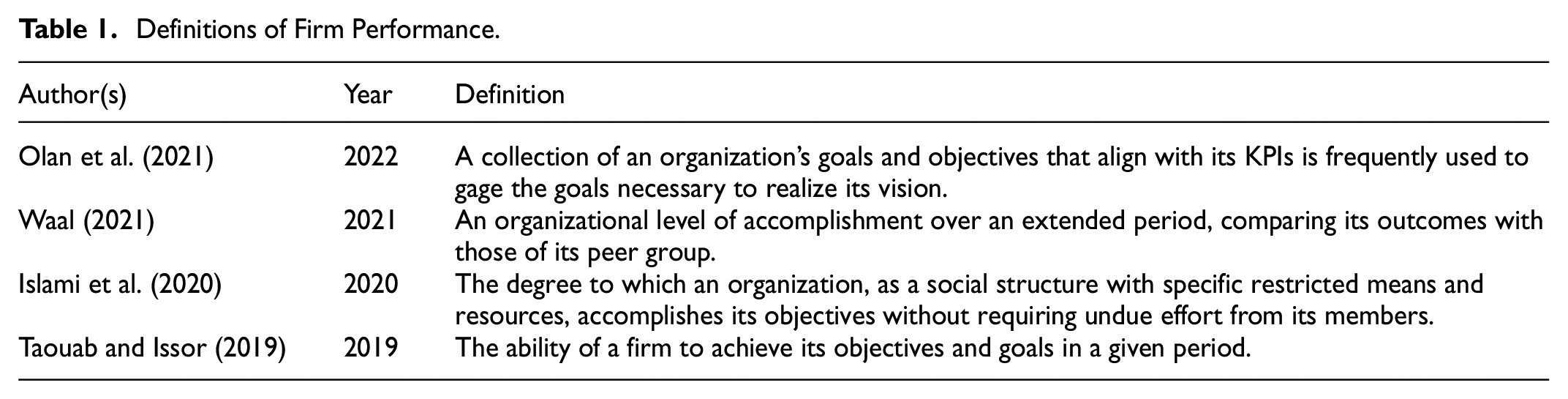
Firm performance has many definitions within the literature; Olan et al. (2021) describe it as a collection of an organization’s goals and objectives that are in line with its key performance indicators (KPIs), which are frequently used to gage the goals necessary to realize the organization’s vision. Waal (2021) defined firm performance as an organizational level of accomplishment over an extended period, comparing its outcomes with those of its peer group. Meanwhile, Islami et al. (2020) defined firm performance as the degree to which an organization, as a social structure with specific restricted means and resources, accomplishes its objectives without requiring undue effort from its members. Taouab and Issor (2019) defined firm performance as the ability of a firm to achieve its objectives and goals in a given period.
Based on the above definition, we can conclude that since the firms must improve their capacity for adaptation to deal with the increasing environmental difficulties they face, the definition of firm performance has developed from merely financial performance to sustainability. Businesses can only grow, advance, and sustain through their performance. Hence, better performance is now every company’s goal. In addition, the corporate landscape of the 21st century has changed significantly, increasing in complexity and unpredictability, which demands the firms to redefine their performance. Table 1 summarizes the definition of firm performance.
Definitions of Firm Performance.
Impact of Cloud Computing on Business Competitiveness and Performance
Recent scholarly investigations highlight the transformative impact of cloud computing on business competitiveness and innovation. For instance, research in 2023 demonstrated that cloud computing services significantly influence the competitive advantages of Jordanian commercial organizations, notably improving aspects like quality, cost, and responsiveness. However, its impact on innovation and reliability was minimal (Abusaimeh et al., 2023). Similarly, a 2019 study highlighted how digital innovation dynamics, particularly in cloud computing, critically support the competitive edge of SMEs by mitigating perceived innovation risks and barriers (El-Haddadeh, 2020). Moreover, integrating cloud computing with competitive strategies is suggested to enhance firm performance and sustain competitive advantages by leveraging its capabilities (Luo et al., 2018). This strategic melding of cloud capabilities with business innovation practices is crucial for enduring business success and reshaping how organizations compete in the digital era.
Determinants of Firm Performance
Recent research delves into the complex and interwoven determinants of firm performance, suggesting that understanding these factors requires a nuanced and multifaceted approach. Kourtzidis and Tzeremes (2019) applies complexity theory to uncover various paths leading to high firm performance, emphasizing the significance of CEO compensation and company age, thereby illustrating the intricacies, and interdependencies of internal factors within firm performance determinants. In a parallel, Wijeweera et al. (2020) identify vital variables such as executive compensation, institutional ownership, and board practices as influential in firm financial outcomes across different economic conditions, shedding light on the role of governance and executive incentives. Furthermore, Vieira et al. (2019) highlight that firm performance in Portuguese companies is shaped by internal, external, and institutional factors, indicating the relevance of both firm-specific attributes and broader economic contexts. Additionally, Dinda Mulyadi and Dinda Mulyadi (2022) examination of the Indonesian consumer goods sector elucidates how financial strategies regarding liquidity, leverage, and risk management interplay with profitability to affect firm value. Ramli et al. (2019) who explores the interplay between capital structure determinants and firm performance in Malaysia and Indonesia, revealing how strategic financial decisions are mediated through firm leverage to impact performance outcomes. Some of the common determinants mentioned here are illustrated in Figure 1.

Common determinants of firm performance from the reviewed literature.
Impact of Financial and Non-Financial Factors on Firm Performance
According to the literature, there are two main types of firm performance. Kristi and Yanto (2020) Explored the impact of various financial and non-financial factors, including firm size, profitability, leverage, liquidity, and CSR disclosures, on firm value. Their findings suggest that while specific financial metrics like profitability and activity ratio positively influence firm value, non-financial factors such as CSR disclosure and environmental performance do not significantly impact. A study by Miah et al. (2021) focused on the environmental aspect by examining the effects of carbon emissions on firm performance in emerging economies. Their analysis revealed that higher carbon emissions adversely affect key performance measures such as return on equity and Tobin’s Q, particularly in non-financial firms.
Adding to the discourse on non-financial indicators, Khan (2019) investigated the relationship between ESG metrics and firm performance. The research demonstrated that strong ESG performance could predict higher stock returns, suggesting that investors value companies that maintain high environmental, social, and governance standards. This study aligns with the broader trend of integrating sustainability into financial analysis, illustrating that responsible business practices can enhance shareholder value.
Impact of Digital Transformation on Firm Performance
Recent research highlights the significant impact of digital business capabilities on firm and customer performance, demonstrating various aspects and outcomes of digital transformation within organizations. Wielgos et al. (2021) Emphasized the crucial role of digital business capability in driving both firm and customer performance, revealing a complex U-shaped relationship with internal dynamism. Their findings underscore the importance of establishing a robust digital infrastructure to leverage the full benefits of digital capabilities. Similarly, Joensuu-Salo and Matalamäki (2023) identified that digital capability significantly correlates with firm performance and growth, especially highlighting the dynamics in SMEs, suggesting that digital proficiency can be a critical growth enabler regardless of firm size. In terms of business sectors, Wang et al. (2022) found that in the manufacturing sector, digital capabilities enhance company performance through digital innovation and value co-creation, illustrating the transformative power of digitalization in traditional manufacturing settings. Additionally, Saputra et al. (2022) explored how digital capabilities enhance business agility and firm resilience, particularly emphasizing the mediating role of agility in crisis navigation and long-term organizational sustainability. Y. Liu et al. (2020) found that both technical and social attributes of cloud computing impact firm performance, with effects varying by sector (service vs. manufacturing) and use type (primary vs. support).
All these studies indicate the positive effects of financial metrics, such as profitability and activity ratios, on firm value, while non-financial factors like CSR disclosures, and environmental performance show mixed impacts. While CSR disclosure does not significantly influence firm value, the adverse effects of carbon emissions on performance metrics in emerging economies are noted, particularly in non-financial firms. Furthermore, the positive correlation between strong ESG performance and higher stock returns underscores the growing importance of sustainability in financial analysis. Research in digital transformation underscores its significant impact on firm and customer performance. Digital capabilities, particularly in SMEs and the manufacturing sector, are linked to performance enhancements through innovation and value co-creation. The role of digital proficiency in fostering business agility and resilience, especially in navigating crises, is highlighted, with the effectiveness of digital tools like cloud computing varying across sectors, and applications. This body of work collectively suggests that while financial metrics remain crucial, non-financial and digital factors are increasingly vital in determining firm performance and shareholder value. An overview of the impacts is found in Table 2.
Overview of Studies on the Impact of Financial and Digital Factors on Firm Performance.

Cloud Computing Adoption
Cloud computing has become integral to the modern business landscape, revolutionizing how IT resources are utilized and providing substantial benefits to organizations and individuals. The recent research sheds light on various cloud computing adoption and usage dimensions, detailing how stakeholders influence these aspects.
The distinction between adoption and usage in cloud computing has been nuanced in the literature. While some scholars view these concepts as intertwined, others differentiate between them, with adoption often seen as an organizational decision and usage as an individual action. The research by Al Hadwer et al. (2021) emphasizes organizational factors impacting cloud computing adoption, highlighting the importance of top management support, relative advantage, and security concerns, suggesting these elements drive organizational attitudes toward cloud technology adoption.
Furthermore, Khayer et al. (2020), who examined how cloud computing adoption influences SME performance, identified factors like service quality and top management support as crucial for adoption, impacting organizational efficiency and effectiveness. Lee (2019) explores the firm-level perception of cloud computing risks and knowledge, suggesting that informed understanding can significantly mitigate perceived risks and foster adoption intentions.
Cloud Computing Definitions
Cloud computing encompasses a variety of definitions that highlight its multifaceted role in technology. As a distributed environment, it allows multiple organizations to access scalable and reliable computing resources on a pay-as-you-go basis, alleviating the need to maintain data centers and technical staff (Bisong, 2019). It is also defined as using the Internet to deliver essential computing services, such as storage and networking capabilities, offered from free to pay-as-you-use models (Bisong, 2019). Additionally, cloud computing provides on-demand resources that can be rapidly provisioned and released with minimal management effort, encompassing networks, servers, and applications (Sikka & Ojha, 2021). It facilitates access to computation, storage, and data services, offering a centralized but geographically independent platform for significant cost and business advantages (Singh, 2019). In business technology, cloud computing reshapes IT processes across the industry by enhancing scalability, reducing costs, and supporting higher collaboration, productivity, and disaster recovery levels (K.R. S, 2023). Furthermore, (Molo et al., 2021) discuss the integration of cloud computing with cloud federation, edge computing, and fog computing within the IoT, underlining its dynamic and flexible computing capabilities critical for sectors like healthcare. A summary of the definitions is found in Table 3.
Definitions of Cloud Computing.

Importance of Cloud Computing Adoption
Adopting cloud computing technologies heralds a significant change in how these institutions operate and deliver value to their users. Gandotra et al. (2019) highlighted that cloud computing offers libraries opportunities to expand and enhance their services, demonstrating cost-effectiveness, flexibility, and improved access to resources. This shift allows libraries to transition from traditional, localized infrastructure to more scalable and efficient cloud-based models, ultimately facilitating better service delivery to patrons.
Beyond libraries, cloud computing adoption has been instrumental in transforming industries such as manufacturing, SMEs, and healthcare. For example, Saputra et al. (2022) found that cloud computing significantly enhances business agility and resilience in public companies, helping organizations adapt to changes more effectively. Similarly, Wang et al. (2022) demonstrated how digital capabilities, including cloud computing, improve performance and innovation in the manufacturing sector through value co-creation. Khayer et al. (2020) highlighted the importance of cloud adoption in SMEs, emphasizing its role in improving operational efficiency, service quality, and organizational effectiveness.
Another example of the impact of cloud computing in academic settings was conducted by Tella et al. (2020), who conducted a study in Nigerian university libraries, employing modified theoretical models to identify factors that influence the adoption of cloud technologies. They discovered that perceived benefits, ease of use, and security concerns significantly predict libraries’ willingness to integrate cloud services, suggesting a nuanced adoption landscape shaped by specific technological and organizational factors.
The practical benefits of migrating to cloud platforms are underscored by Jayakanth et al. (2022) involving a research library’s transition to the Microsoft Azure cloud. This migration notably reduced service downtimes caused by various outages, showcasing cloud computing’s reliability and efficiency in supporting operations and services across different sectors. Additionally, Holland et al., discuss how cloud computing and smart technology are pivotal in automating and modernizing library services. Utilizing cloud-based applications optimizes library processes, significantly reducing the need for extensive physical infrastructure and lowering operational costs, fostering a more sustainable, and efficient service environment (Holland, 2020).
All these studies indicate that adopting cloud computing across different sectors significantly transforms their operations and enhances service delivery. This adoption provides cost-effective solutions, increases flexibility, and improves resource access, enabling industries to move from traditional infrastructure to scalable cloud-based models. Studies also highlight that perceived benefits, ease of use, and security concerns influence this shift. Additionally, cloud computing’s reliability in reducing service downtimes and its role in automating services through smart technologies are emphasized, demonstrating its potential to modernize services and reduce operational costs. This is illustrated in Figure 2.
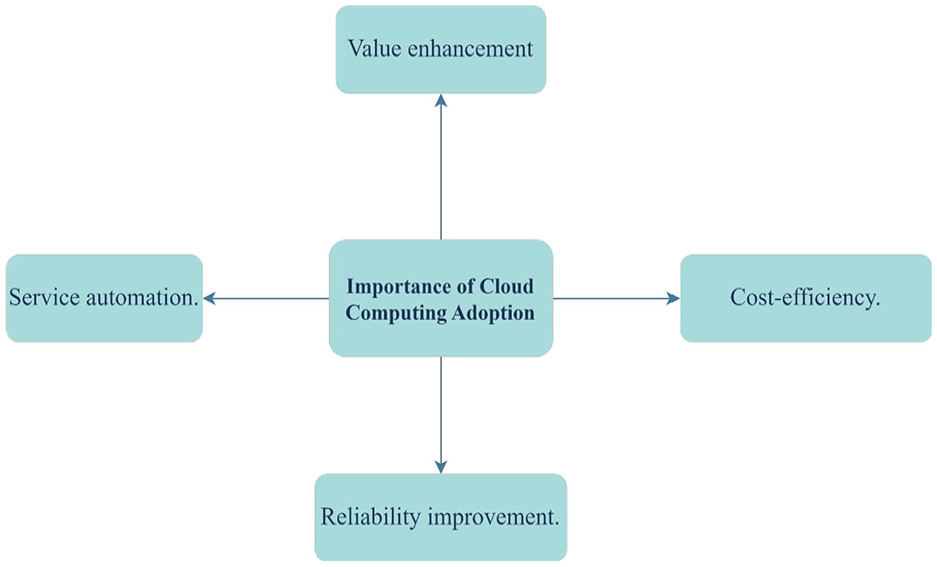
Importance of cloud computing adoption.
Cloud Computing Adoption Measures
Various recent studies have delved into different influential dimensions to gain a comprehensive understanding of cloud computing adoption without emphasizing cost reduction. Lee (2019) highlighted the crucial role of cloud computing knowledge in mitigating perceived risks and fostering adoption intentions, explicitly focusing on security, technique, and user risks. This suggests that awareness and understanding are fundamental to overcoming adoption barriers. In a systematic review, Al Hadwer et al. (2021) identified several organizational factors, such as top management support and cloud complexity, which significantly affect the attitude toward cloud technology adoption, pointing out the importance of organizational context in adoption processes. Khalil (2019) explored how cloud adoption influences firm strategies, finding that the imperative to maintain market competitiveness and innovate drives firms to adopt cloud computing, irrespective of cost considerations. Comparatively, Karunagaran et al. (2019) assessed adoption factors between SMEs and large enterprises, discovering varied perceptions regarding ease of implementation and complexity, indicating diverse adoption motivators across different firm sizes.
Cloud Computing Adoption and the Relation With Knowledge Management Process and Innovation
Recent research delves into the nuanced interplay between cloud computing adoption, knowledge management process (KMP), and innovation, highlighting the pivotal role of cloud technology in enhancing organizational performance and fostering a competitive edge. Various studies provide insights into how cloud computing catalyzes knowledge management and innovation, reshaping organizational dynamics and outcomes.
Gupta et al. (2022) conducted an in-depth study on adopting cloud-based software services in software development and innovation. Their research underscores the significance of the knowledge management process in cloud adoption, demonstrating that practices like knowledge accessibility, storage, application, and sharing significantly influence the adoption of cloud-based services. Their findings suggest that cloud computing can be a robust platform for distributed software development and innovation, highlighting the importance of integrating technology with organizational knowledge processes.
El-Haddadeh (2020) examines how digital innovation dynamics influence the organizational adoption of cloud computing, especially within SMEs. The study identifies several factors, such as IT capabilities and organizational innovativeness, that are crucial in shaping an organization’s propensity to adopt cloud computing. This illuminates the critical interplay between technological capabilities and organizational culture in driving cloud adoption, underscoring the strategic importance of cloud computing in the innovation ecosystem.
In their 2019 study, Nguyen et al. (2019) investigated the intersection of innovation and cloud-based enterprise resource planning (ERP) adoption. Their findings reveal a positive correlation between innovation and the adoption of cloud-based ERP, suggesting that innovation-centric perspectives can significantly enhance the adoption and effective utilization of cloud technologies. This study provides valuable insights into how innovation influences technology adoption, particularly in cloud-based solutions (Y. Liu et al., 2020; Nguyen et al., 2019).
Furthermore, Gkika et al. (2020) explore how cloud computing facilitates open innovation within university settings. Their research emphasizes cloud computing’s role in promoting efficiency, rapid innovation, and sustainable development practices. The study provides a nuanced understanding of how cloud technology can be leveraged to foster an environment conducive to innovation and collaborative knowledge exchange.
A study in Malaysia points to its potential to enhance teaching and learning quality and reduce costs, suggesting a model for its fuller adoption in E-learning (A. Hussein & Hilmi, 2020). Additionally, an examination in a developing country context identified socio-cultural factors as significant influences on the willingness of university staff to adopt cloud computing, which could improve teaching, research, and collaboration (Sabi et al., 2018).
Lastly, Noor et al. (2019) focus on the impact of cloud-based knowledge management in higher education institutions, illustrating how cloud technology supports innovative educational methodologies and knowledge dissemination. Their review highlights both the advantages and challenges of integrating cloud computing with knowledge management, underscoring the transformative potential of cloud technologies in educational settings.
All these studies indicate that cloud computing is critical in enhancing organizational innovation and performance. By fostering a knowledge management process, it supports distributed software development, influences the adoption of cloud-based services, and promotes efficient innovation, particularly in educational and SME settings. The research collectively underscores the strategic importance of integrating cloud technology with organizational knowledge processes to boost competitiveness and drive sustainable development. This is summed in Table 4.
Impacts of Cloud Computing Adoption on Knowledge Management Process and Innovation.

Cloud Computing Adoption as a Moderator
Cloud computing adoption is increasingly viewed not only as a direct determinant of firm performance but also as a potential moderator that shapes the influence of other organizational capabilities, such as Accounting Information Systems (AIS) and Knowledge Management Processes, on performance outcomes. (Alshawabkeh et al., 2022) Find empirical support in earlier works for the moderating role of cloud computing on the AIS performance relationship. Notably, S. Liu et al. (2018) highlight that firms with more substantial cloud capabilities leverage IT resources more effectively to enhance operations, while Tarani et al. (2021) provide evidence of a significant moderating effect of cloud adoption among SMEs. In the authors’ study, PLS-SEM analysis was conducted using a continuous measure of cloud computing rather than a binary classification, reflecting how strongly firms perceive cloud usage as benefiting their decision-making, operational speed, and system control. This approach captures the varying degrees of cloud-based AIS adoption. It shows how higher levels of perceived cloud usefulness amplify specific AIS components such as availability, confidentiality, and privacy in strengthening firm performance.
The study’s theoretical rationale aligns with the Resource-Based Theory and Contingency Theory frameworks, which suggest that cloud computing, as a valuable resource, can enhance the fit between internal systems, and an organization’s broader IT infrastructure (Alshawabkeh et al., 2022). This perspective is reinforced by the SysTrust framework, outlining AIS components such as system availability, security integrity, confidentiality, privacy, and system quality (Alshawabkeh et al., 2022). Cloud computing most strongly moderates the relationship between system availability and confidentiality & privacy with firm performance, thereby underscoring the nuanced way cloud services reinforce data accessibility and protection. These results confirm that firms with higher levels of cloud adoption stand to maximize the benefits of their AIS, ultimately improving both financial and non-financial performance.
Theoretical Frameworks and Methodological Approaches
Resource Based Theory (RBT)
Recent studies in Resource-Based Theory (RBT) research emphasize its strategic significance across various sectors, demonstrating how valuable, rare, nonsubstitutable, and inimitable (VRIN) resources drive firm performance and competitive advantage. Studies such as D'Oria et al. (2021) highlight the interplay between strategic resources and managerial actions, while others l (Mackey & Mackey, 2025; Mat et al., 2022) provide unique contextual analyses from SMEs in Malaysia to innovative educational methods using popular culture. Additionally, works by M. J. Chen et al. (2021) and Lubis (2022) explore the integration of RBT with competitive dynamics and its application in strategic capacity building, respectively. Kegode (2021) further connects RBT with organizational characteristics and strategic planning, collectively reinforcing the theory’s applicability in understanding and crafting firm strategies for sustained competitive advantage and performance enhancements.
Knowledge-Based View (KBV)
Recent Knowledge-Based View (KBV) framework research highlights knowledge as a critical strategic asset for firms across various contexts. Previous studies (Duarte Alonso et al., 2022; Fu, 2022; Martin & Javalgi, 2019) highlight the role of knowledge in enhancing marketing capabilities, export performance, and innovation processes, respectively, demonstrating its direct impact on firm performance. Concurrently, works by Miller (2019) and J. Chen et al. (2021) delve into the nuances of the resource-based and KBVs, illustrating how business models enriched with tacit knowledge can sustain competitive advantages (Scuotto et al., 2022). Further, it exemplifies the importance of individual and organizational knowledge competencies in adapting to and capitalizing on international market opportunities.
This study applied the RBT and the KBV to understand better how cloud computing adoption can be leveraged to improve firm performance in the digital age. It was identified that key assets such as technological infrastructure and strategic partnerships are crucial, as suggested by RBT. These resources enable firms to distinguish themselves competitively. Meanwhile, KBV underscores the importance of knowledge as a vital organizational asset. The successful adoption of cloud computing depends on the technological resources available and the extent to which it moderates the relationship between the knowledge management process and firm performance.
Empirical studies such as Y. Liu et al. (2020) and Nguyen et al. (2019) suggest that cloud computing adoption influences the effectiveness of knowledge-sharing mechanisms, thus moderating the impact of knowledge management on firm performance. When adopted strategically, cloud computing enhances knowledge integration, accessibility, and processing speed, improving firm performance. However, if adoption is misaligned with business needs, its effects can be neutral or negative. Therefore, we position cloud computing adoption as a moderating factor, shaping how the knowledge management process contributes to firm performance. Hence, these theoretical frameworks provide a robust basis for evaluating firm resources and capabilities and highlight the importance of strategic alignment between cloud computing resources and firm-specific competencies for enhanced performance in the digital era. A Summary of research on RBV and KBV is found in Table 5 and the full summary is found in Table S1 as a supplemental material.
Summary of Research on RBV and KBV.

Framework and Synthesis
After reviewing 4 mixed-methods, 22 qualitative, 35 quantitative, and 6 review studies, the framework in Figure 3 was developed:
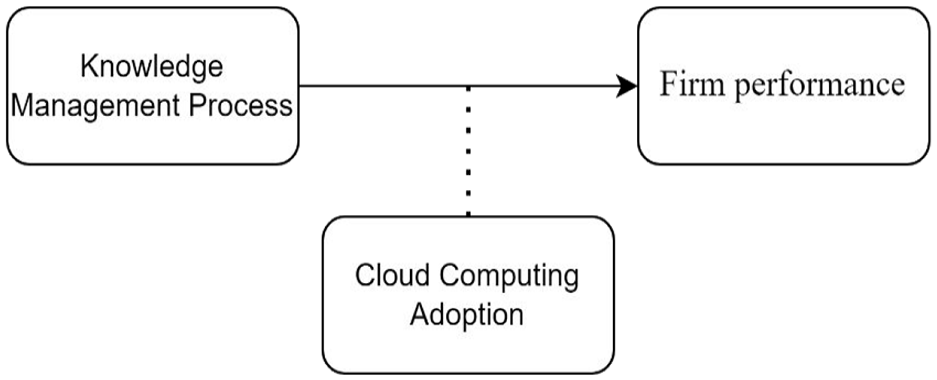
Theoretical framework.
Firm performance, cloud computing, and knowledge management processes intersect to create a dynamic business environment. Firm performance has evolved from merely reflecting financial success to a broader concept that includes strategic prowess, social responsibility, and sustainable practices. Firms are increasingly recognized for their capacity to leverage resources for societal and competitive gains, with performance tied to innovative capabilities and strategic acumen. This perspective is further enriched by the understanding that non-financial metrics such as CSR and ESG standards are critical in shaping firm performance and value, as they are increasingly factored into financial analysis by investors and stakeholders.
Cloud computing emerges as a prerequisite in this evolving landscape, with its adoption being a catalyst for business transformation and innovation. It provides scalable, flexible resources that can be accessed remotely, offering cost savings and strategic benefits that extend beyond the traditional IT paradigm. The literature indicates that top management support, perception of benefits, and concerns about ease of use and security are significant factors influencing the adoption of cloud computing. More importantly, cloud computing is a key enabler of organizational innovation, facilitating real-time data access, seamless collaboration, and enhanced knowledge sharing, which drive creative problem-solving and new product development. This technology is not just a tool for operational efficiency but a strategic asset that can enhance innovation capabilities and sustain competitive advantage in the digital economy.
Knowledge management processes are at the heart of these technological and strategic considerations, essential for capitalizing on cloud computing. Effective management and knowledge utilization empower firms to maximize cloud technologies’ innovative potential and performance enhancements. Literature aligns this interplay with foundational theories such as the RBT and the KBV. RBT underscores the importance of firm-specific resources like technological infrastructure for a competitive edge. In contrast, KBV highlights knowledge as a critical organizational asset, crucial for leveraging technological resources effectively.
The collective insights from research suggest that the synergy between cloud computing adoption, knowledge management process, and strategic resource utilization is vital for firm performance in the digital era. This holistic approach aligns with modern business’s complex and unpredictable nature and paves the way for sustained development and competitive advantage.
Future Opportunities for Empirical Research
Future empirical research on cloud computing and firm performance offers several promising avenues. Studies could benefit from integrating cloud computing with sustainability metrics to assess its environmental impact, conducting longitudinal analyses to track its long-term effects on firm performance, and performing cross-industry comparisons to identify sector-specific influences. Additionally, examining the impact of evolving regulations on cloud adoption, exploring the integration of artificial intelligence and machine learning in cloud platforms, and addressing ethical considerations and social responsibility aspects present critical areas for investigation. Furthermore, comparative global studies could provide insights into the varied effects of cultural, economic, and infrastructural factors on cloud computing adoption and its effectiveness in enhancing firm performance, offering a holistic understanding of its role in the digital era’s business landscape.
Managerial Implications
Integrating cloud computing into business operations presents actionable insights for managers aiming to enhance firm performance. Strategically, managers should view cloud computing as a pivotal asset in their digital transformation efforts, ensuring it aligns with broader business objectives for maximum impact. Therefore, recognizing the role of cloud computing in fostering compliance with evolving regulatory standards and advancing sustainability goals is crucial. Managers must prioritize robust risk management frameworks to address potential cloud computing vulnerabilities, emphasizing data security and privacy. Engaging stakeholders transparently with cloud computing initiatives can bolster support and facilitate successful adoption. Additionally, an organizational culture that values continuous learning and adaptability is vital to navigating the rapid advancements and shifts in cloud computing and its associated regulatory landscape. Lastly, linking cloud computing strategies with KM can drive innovation by fostering an environment where information is seamlessly shared, analyzed, and utilized to spur new ideas and solutions.
Limitations
This review operates within certain constraints. The selection of available literature inherently limits the scope, potentially omitting emerging research or niche studies that could provide additional insights into cloud computing’s impact on firm performance. Given the fast-paced evolution of cloud technologies and their applications, some findings might become quickly outdated or less relevant. Moreover, the applicability of these insights could vary significantly across different industries, organizational sizes, and cultural contexts, suggesting a need for context-specific interpretation. The interplay of cloud computing with diverse regulatory, environmental, and strategic dimensions adds complexity, potentially diluting the granularity of the insights in sector-specific, or region-specific scenarios. Finally, while we address the moderating role of cloud computing adoption, limited theoretical and empirical research confirms its effect as a moderator.
Conclusion
This review highlights how cloud computing adoption impacts firm performance in today’s digital era. Integrating the KM process is critical to maximizing the benefits of cloud computing, as KM enables effective knowledge sharing and utilization. By linking KM with cloud computing, businesses can better manage data, enhance decision-making, and meet regulatory requirements. Achieving these performance gains demands that firms remain adaptive to technological changes and potential risks, particularly data security and privacy. Adopting cloud computing, aligned with robust KM, can foster sustainable growth and resilience. Future studies should explore these relationships in specific industries, cultural contexts, and regulatory environments to deepen insights into cloud computing’s role in driving firm performance.
Supplemental Material
sj-docx-1-sgo-10.1177_21582440251357189 – Supplemental material for Exploring The Effect of Cloud Computing on Firm Performance in the Digital Era: A Scoping Review
Supplemental material, sj-docx-1-sgo-10.1177_21582440251357189 for Exploring The Effect of Cloud Computing on Firm Performance in the Digital Era: A Scoping Review by Rami Abu-El-Haija, Norazila Mat, Rosmah Mat Isa and Nur Atiqah Abdullah in SAGE Open
Footnotes
Ackowledgements
We would like to thank Ajman University for supporting this study.

Ethical Considerations and Consent to Participate Statements
This article has no human participants, and informed consent and ethical approval are not required.
Funding
The author(s) received no financial support for the research, authorship, and/or publication of this article.
Declaration of Conflicting Interests
The author(s) declared no potential conflicts of interest with respect to the research, authorship, and/or publication of this article.
Data Availability Statement
Data sharing not applicable to this article as no datasets were generated or analyzed during the current study.
Supplemental Material
Supplemental material for this article is available online.
References
Supplementary Material
Please find the following supplemental material available below.
For Open Access articles published under a Creative Commons License, all supplemental material carries the same license as the article it is associated with.
For non-Open Access articles published, all supplemental material carries a non-exclusive license, and permission requests for re-use of supplemental material or any part of supplemental material shall be sent directly to the copyright owner as specified in the copyright notice associated with the article.
