



Abstract
This article presents a bibliometric analysis of the field of Sufi Studies to reveal its intellectual structure and trends worldwide. In recent years, Sufism has become a focus of academic research and has been studied in many disciplines. The paper analyses the general status and intellectual structure of Sufi articles published in the WoS database between 1976 and 2024. Performance analysis and scientific mapping techniques were used to identify the most influential countries, journals, authors and publications. Analyses included co-occurrence and co-citation analyses to create a conceptual and intellectual portrait of Sufi literature. The results show that the United States and the United Kingdom are the countries with the highest number of publications and citations. The most influential authors include William C. Chittick, Annemarie Schimmel and Carl W. Ernst. The richness and diversity of Sufi literature is enriched by approaches from different disciplines. However, bibliometric analysis has limitations due to some data sources and language issues. For future research, it is suggested to use different databases, to include multilingual studies and to analyse different types of publications. Researchers can further enrich the Sufi literature by exploring the relationship of Sufism to psychology, art and other disciplines and by conducting studies that seek answers to current problems.
Introduction
Sufism is an Islamic spiritual and mystical dimension and is an essential tradition in the history of thought and religions. In recent years, Sufism has become a field of academic research that has attracted more attention due to its intense effects on society and individuals all over the world. Sufism courses have started to be given in universities or institutes worldwide, and master’s and doctoral programmes have been opened in this field. Academics working in various fields, such as religious sciences, Islamic thought, philosophy, history, literature, sociology, anthropology, psychology and political science, are increasingly interested in Sufism. Studies conducted in the United States of America, the United Kingdom, Iran, Turkey, Egypt, Indonesia, Malaysia, Canada and Germany have significantly contributed to the Sufi literature.
These studies reveal the religious, historical, social, theoretical, practical and cultural aspects of Islamic Sufism by using different perspectives and interdisciplinary approaches. The following main concepts stand out in academic research on Sufism:
History of Sufism: The origins and spread of Sufism and the thoughts of early Sufis.
History of Sufi orders: The establishment and institutionalisation of Sufi orders, their theoretical background, their rituals, their spread and impact, their relations with various groups of society, the Sufi orders that continue their activities in the modern world, the evolution of Sufi orders in the modern era, their impact on social, political, religious and cultural spheres.
Sufi biographies: The lives of Sufis, their spiritual experiences, their Sufi views, their works, the orders they established or represented, their followers, their contributions to the history of Sufism and their effects.
Sufi literature: The first written sources of Sufism, the publication of classical Sufi texts, translations, commentaries, ḥāshiyahs and taḥqīq studies.
Sufi thought: Ontological and epistemological foundations of Sufi thought, main concepts such as tawḥīd, maʿrifat, ʿishq, fanāʾ, akhlāq, Ibn al-ʿArabī and Mawlānā, the founders of Sufi thought.
Concepts of Sufism: Concepts, states and maqams that lay the theoretical foundations of Sufism.
Sufi literature: Sufi poetry, commentaries of poems, the world of meaning of poets and commentators.
Tekke culture: Various functions of tekkes, their socio-cultural impact, education in tekkes and tekkes in the modern world.
Comparative mystical traditions: Common themes and differences of mystical traditions such as Sufism, Christian mysticism, Kabbalism, Hinduism and Buddhism.
In addition to these central concepts, some interdisciplinary research has been conducted on Sufism. Comparative studies on Sufism and philosophy, economics, psychology, politics, sociology and art draw attention to this context. In recent years, with the social and political changes in the modern world, Sufi studies have taken a different approach by combining traditional and modern approaches. In particular, topics such as personal development, psychological well-being, minimalism, sustainability, social contribution and feminism have become new areas of interest in Sufi studies. This approach shows that Sufism is not only a practice of Islam but also an endeavour to explore the human spirit and personal experiences.
This article presents a bibliometric analysis to reveal the intellectual structure and trends of Sufi studies worldwide.
The article aims to contribute to the Sufi studies through the following approaches:
- Analysing the global distribution and regional concentrations of modern Sufi studies.
- Revealing and visualising the intellectual structure of the Sufi studies through performance analysis and scientific mapping techniques.
- To examine the potential for interdisciplinary studies by revealing the relationship of Sufism with disciplines such as politics, economics, art, psychology and architecture.
- To emphasise the topics that have the potential to become trends in the field of Sufism and the gaps in the literature and to bring them to the attention of researchers.
By applying bibliometric analysis to Sufi literature, we tried to answer the following research questions:
Which countries have the most publications in this field, and what is the historical trend?
Which university or institute has the most articles, and what is the historical trend?
Who are the authors with the most articles, and how many citations have they received?
What are the most influential documents and research topics?
What is the intellectual structure of Sufi literature?
The first section details the methodology used in the article, while the second section presents the findings of the bibliometric analysis in four categories: ‘affiliated countries and institutions’, ‘authors’, ‘citation and co-citation analysis’ and ‘keyword analysis’. The conclusion concludes the paper.
Method
This study uses bibliometric analysis to determine Sufi literature’s general outlook, trends and potential research areas. Bibliometric analysis is a method of investigation using mathematical and statistical methods to understand the development and nature of the scientific production of a discipline (Pritchard, 1969). This analysis provides in-depth information about scientific production and trends by systematically examining the literature.
The study consists of four main stages (Öztürk, 2021);
Inclusion and Exclusion Criteria.

We filtered all publications in the WoS database between 1976 and 2024 using the keywords ‘sufi’, ‘Sufism’, ‘tasawwuf’, ‘Islamic mysticism’, ‘tariqat’, ‘Rumi’, ‘Ibn al-Arabi’, ‘Attar’, ‘Hallaj’, ‘murid’, ‘Islamic mystics’, ‘Muslim mystics’, ‘mysticism in Islam’, ‘al-insan al-kamil’, ‘murshid’, ‘mutasavvif’, ‘akbar’, ‘akbariyya’, ‘Islamic spirituality’, ‘spirituality in Islam’, ‘wahdat al-wujud’, ‘walaya’. We analysed the documents obtained until June 2024. We found 2,077 documents with these keywords and performed the bibliometric analysis. Figure 1 provides an overview of the data.

Data overview.
Research Framework
The identified term pool was searched in the WoS database according to the inclusion and exclusion criteria. The 2077 data obtained were downloaded in text format in packs of 500. These data included author, country, institution, journal, keyword and bibliography information. Analyses were performed using Rstudio/Bibliometrix and VOSviewer (Aria & Cuccurullo, 2017; van Eck & Waltman, 2010). The performance analysis focused on the most published or cited countries, institutions, authors, studies and journals. In order to gain a deeper understanding of the intellectual structure of Sufi literature, scientific mapping was conducted and a network map of links between keywords, co-cited authors and studies was created. The research process and findings are summarised in Figure 1.
Finding and Discussion
Performance Analysis
Performance analysis evaluates the scientific output of actors (e.g., countries, universities, researchers) in a research area using qualitative and quantitative indicators. It measures scientific impact, compares performance and identifies research trends. Common indicators include the number of publications, citations, most-cited works, journals and prolific authors (Cobo et al., 2011; Gutiérrez-Salcedo et al., 2018). Often paired with science mapping, which visualises a field’s conceptual, social or intellectual structure, these methods provide a comprehensive understanding of research dynamics (Donthu et al., 2021; Linnenluecke et al., 2020).
The Most Productive Countries and Institutions
The map in Figure 2 shows the global status of Sufi studies. According to the data in Figure 3, the US ranks in the top 3 with 652 articles, the UK with 228 and Iran with 162.
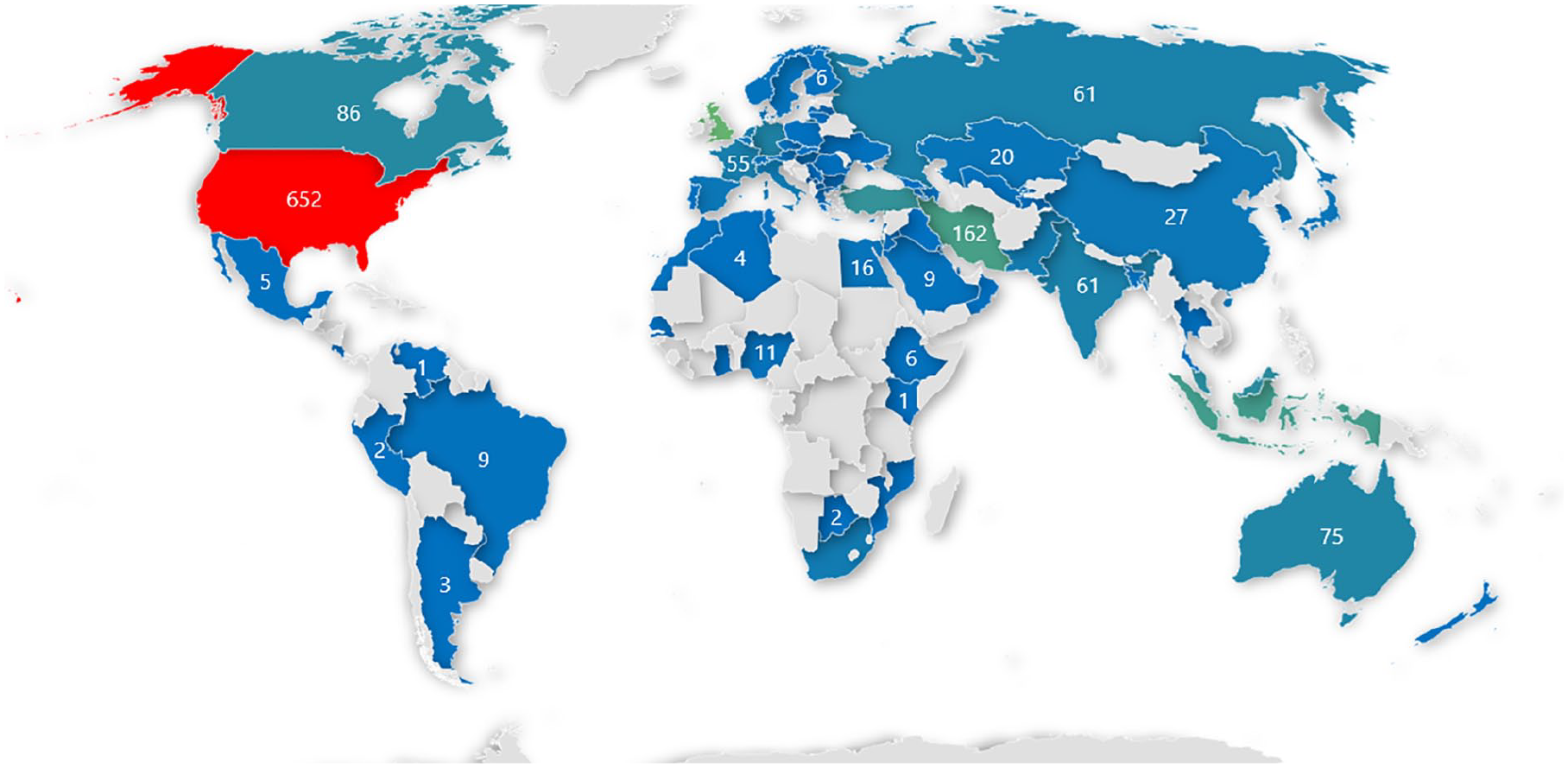
Countries’ scientific production.

Countries’ scientific production.
Figure 4 presents the top 10 institutions. The table shows that the top three institutions are from Iran, the UK and the USA. Islamic Azad University has 57 documents, the University of London has 43 and the University of California has 37. Generally, the publication performance of UK and Malaysian universities is higher than that of universities in other countries (Table 2).
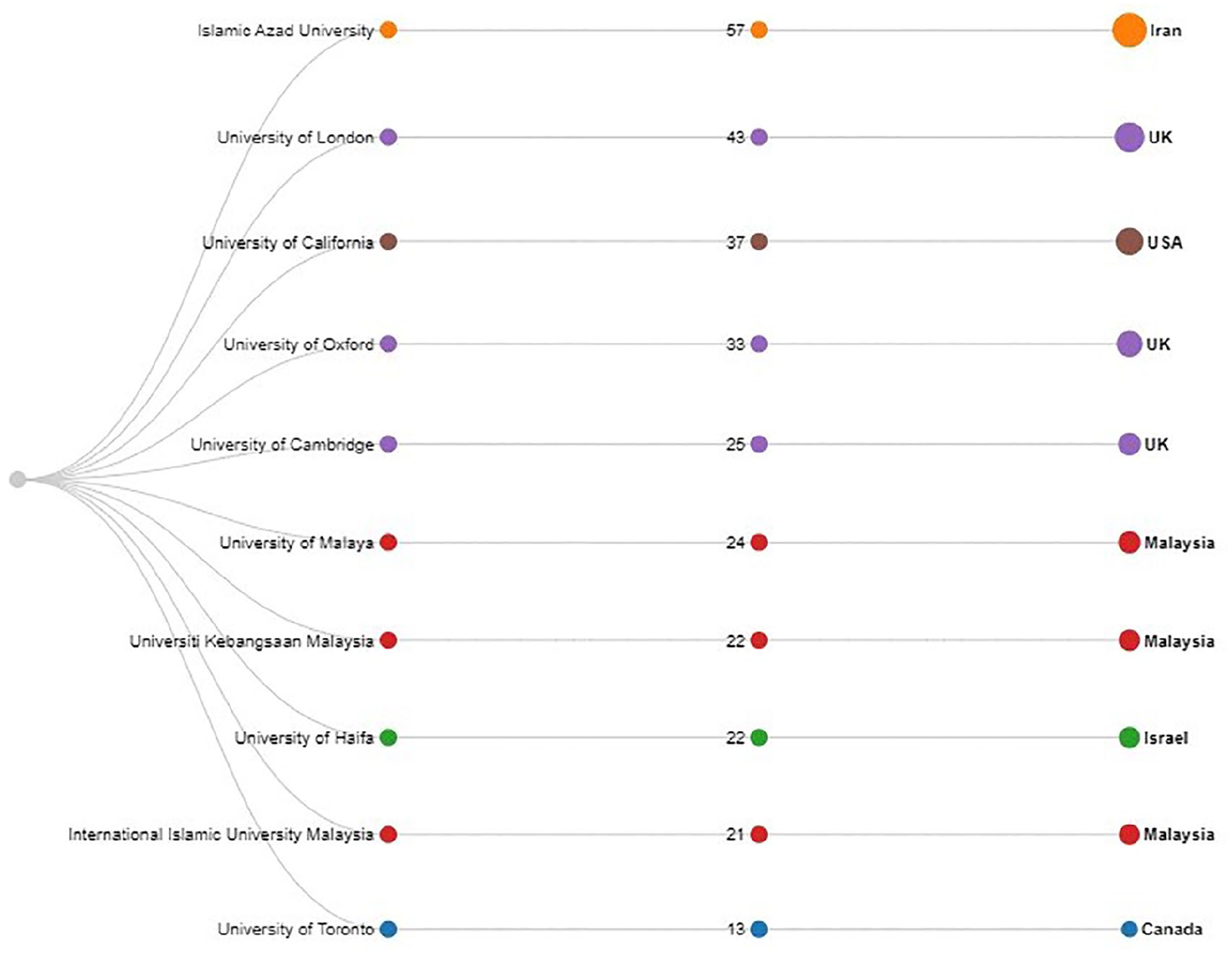
Most relevant affiliations.
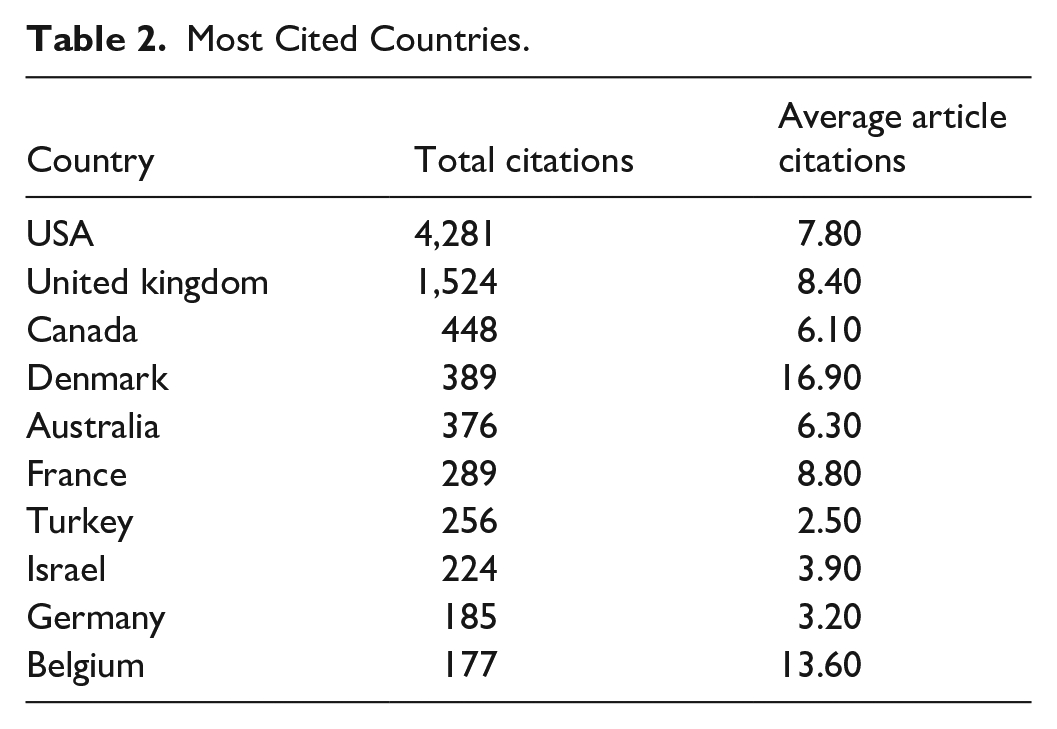
Most Cited Countries.
The Most Productive Authors and Journals
Table 3 provides valuable insights into the research areas, affiliations, publication counts and citation impacts of the most relevant scholars in Sufi studies. We ranked these researchers as a result of our analysis of the first author.
Most Relevant Author.

Note. Authors’ fields of expertise are taken from Google Scholar.
According to the table, there is no direct correlation between the number of publications of the researchers and their citation impact. Ismail Lala, Arin Salamah Qudsi and Bijan Bidabad, who have the highest number of publications, have relatively low citation numbers.
Although Joseph Hill and Mikkel Rytter have low publication numbers, their total number of citations is high. This shows the academic impact and competence of Hill and Rytter’s articles. The fact that the authors in the table are from various countries and universities again emphasises that Sufi studies are a field of worldwide interest.
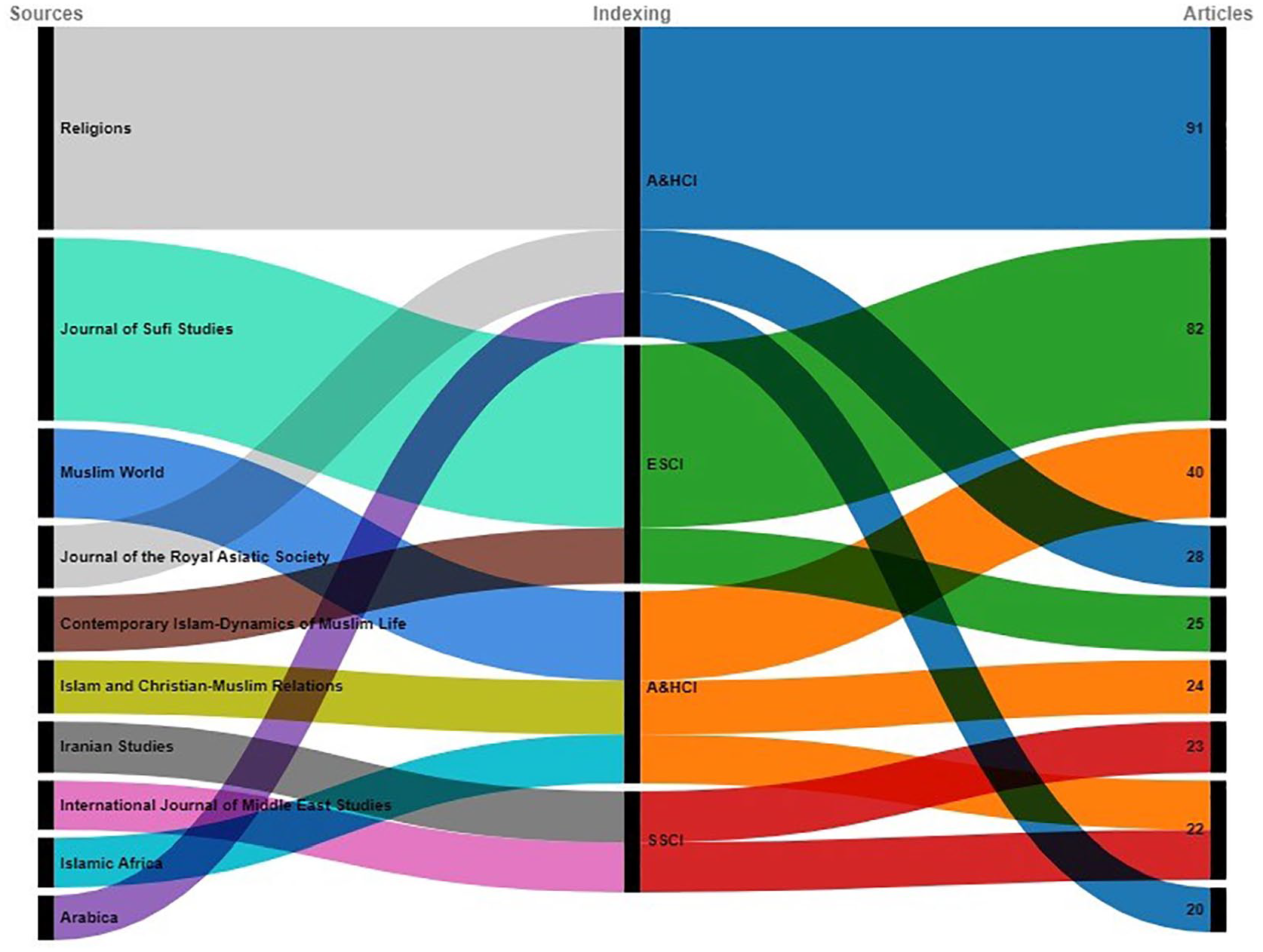
Figure 5 shows the top 10 journals with the highest number of articles on Sufism. Only Sufi Studies publishes directly in Sufism. When we look at the other journals, it is noteworthy that there are generally publications that emphasise Islamic thought and the religious, political and social practices of Islamic societies. These journals mainly focus on topics such as the relationship between Islam and modernism, Sufi movements and thought in Africa.
Most relevant sources.
Religions is the journal that publishes the most in Sufism, with 91 articles and is indexed in A&HCI. The Journal of Sufi Studies ranks second with 82 articles. Indexed in ESCI, the journal publishes only studies in Sufism. In third place is Muslim World, indexed in A&HCI, with 40 articles.
The Journal of the Royal Asiatic Society, Islam and Christian-Muslim Relations, Islamic Africa and Arabica contribute less to Sufi studies in terms of the number of publications. These are also prestigious journals indexed in A&HCI.
Iranian Studies and the International Journal of Middle East Studies, which are indexed in SSCI, also publish studies on Sufism, albeit in small numbers.
According to this table, most journals publishing Sufi studies are indexed in A&HCI. In conclusion, A&HCI is the most effective academic platform for Sufi studies.
The Most Influential Documents
Table 4 shows the most cited articles and journals in the dataset. This table shows the most influential articles in Sufism, their total number of citations and their annual and normalised citation rates. The most cited articles in Sufism are primarily articles on Sufism and anthropology. Also noteworthy are articles on Islamic movements in the modern period and their impact on politics and economics.
Most Global Cited Documents.

In Supplemental Appendix A, we analysed the titles of the articles on Sufism and showed the words used in the titles as a word cloud according to their frequency of use. In this word cloud we created with R Studio, we included the 100 most frequently used keywords. According to the word cloud, in the titles of the articles on Sufism, the authors frequently use the words ‘Sufi’ (f = 686), ‘Islam’ (f = 226), ‘religion’ (f = 139), ‘mysticism’ (f = 115), ‘spiritual’ (f = 113), ‘Muslim’ (f = 107), ‘politics’ (f = 71), ‘contemporary’ (f = 63), ‘tradition’ (f = 61) and ‘India’ (f = 60).
In Supplemental Appendix B, we present the most frequently used keywords in articles written on Sufism. In this word cloud, which we created with R Studio, we included the 100 most frequently used keywords. Accordingly, we have seen that ‘Sufi’ (f = 590), ‘Islam’ (f = 226), ‘mysticism’ (f = 81), ‘Ibn al-Arabi’ (f = 54), ‘religion’ (f = 38), ‘Senegal’ (f = 36), ‘spiritual’ (f = 33), ‘modern’ (f = 25), ‘Pakistan’ (f = 25) and ‘Rumi’ (f = 24) are frequently used in the authors’ keywords.
In Supplemental Appendix C, we analysed the abstracts of the articles on Sufism and presented the most frequently used words in the abstracts as a cloud. In this word cloud we created with R Studio, we included the 50 most frequently used words. When we analysed this word cloud, we found that the most frequently used words in article abstracts were ‘sufi’ (f = 2,825), ‘Islam’ (f = 1,966), ‘religion’ (f = 1,242), ‘Muslim’ (f = 887), ‘spiritual’ (f = 752), ‘tradition’ (f = 720), ‘Sufism’ (f = 598), ‘history’ (f = 538), ‘politics’ (f = 529) and ‘practice’ (f = 493).
These three-word clouds show us the frequent use of the terms ‘Sufi’, ‘Islam’, ‘religion’, ‘spiritual’ and ‘mysticism’. It is understandable that these terms, which are synonymous with the concept of Sufism, are frequently used. In addition, the frequent use of the terms India-Pakistan, Ibn al-Arabi and Mawlana shows us the most frequently used topics in the field of Sufism. Some of the concepts that are frequently found in the three-word clouds show that academics focus on Sufi metaphysics (epistemology, knowledge, philosophy), tariqa culture (practice, ritual, sheikh, movement, culture) and Sufi literature (Sufi poetry, love, text, Persian, Turkish, Arabic, literature).
In Figure 6, we present the trend of the most frequently used keywords by the authors in the keywords of the articles over the years. We created these trending topics, which show the period from 2009 to the present, with R Studio. This approach allows us to identify the topics that have emerged as trends in recent Sufism-related articles. According to the figure, the terms ‘Sufism’, ‘spirituality’, ‘mysticism’ and ‘modernity’ have the highest usage rate in 2017 to 2018, especially after 2013. Considering that the issues of faith, spirituality and modernisation are on the global agenda today, we can say that this agenda has also shaped academic studies.

Trend topics.
From Figure 6, we understand that the studies on ‘rituals of Sufis’, ‘love’, ‘Mawlana’ and ‘Ghazali’ were the most intensive in 2020 to 2021, and the studies on these topics continue today. Since 2012, we see that the studies on Ibn al-Arabi have reached the highest intensity, especially in 2015, and the topic has continued to be popular until today. Another point that draws attention to the figure is that regional studies started in 2014, especially in Egypt, Senegal, Pakistan, Morocco and Indonesia, and have remained popular until today.
Scientific Mapping
Scientific mapping uncovers the social, conceptual, and intellectual structures of research fields through methods like co-authoring, co-occurrence and co-citation, offering insights into bibliometric networks and trends (Aria & Cuccurullo, 2017; Börner et al., 2003). Key steps include data collection, preprocessing, network extraction, normalisation, mapping and interpretation (Cobo et al., 2011; van Eck & Waltman, 2010). Techniques like co-occurrence, co-citation and co-authorship analyses visualise research structures, identify key actors, and track field evolution. This method aids researchers in contextualising work, identifying gaps and exploring future directions, particularly in interdisciplinary areas (Glänzel & Schubert, 2005; Schröder et al., 2021).
Co-Occurrence Analysis
Co-occurrence analysis is a content analysis technique linking keywords that appear together in titles, abstracts or keyword lists to reveal the conceptual structure of a research domain. By mapping themes and their relationships, it visualises the cognitive structure of a field and tracks its evolution over time (Hu & Zhang, 2015). The method relies on keywords to extract underlying themes, identify frequently used terms and reveal patterns and trends in a research area. Tools like BibExcel and VOSviewer facilitate this process by analysing document titles, keywords or abstracts (Jeong et al., 2014; van Eck & Waltman, 2017).
While effective in synthesising knowledge and identifying future research directions, co-occurrence analysis depends on the quality of keywords, database scope and statistical methods. Challenges include the ‘indexer effect’ and misinterpreting general terms or ambiguous keywords (De Bakker et al., 2005; Zupic & Čater, 2014). Despite these limitations, the method successfully visualises research structures, identifies intellectual trends, and explores complex phenomena through thematic co-occurrence analysis.
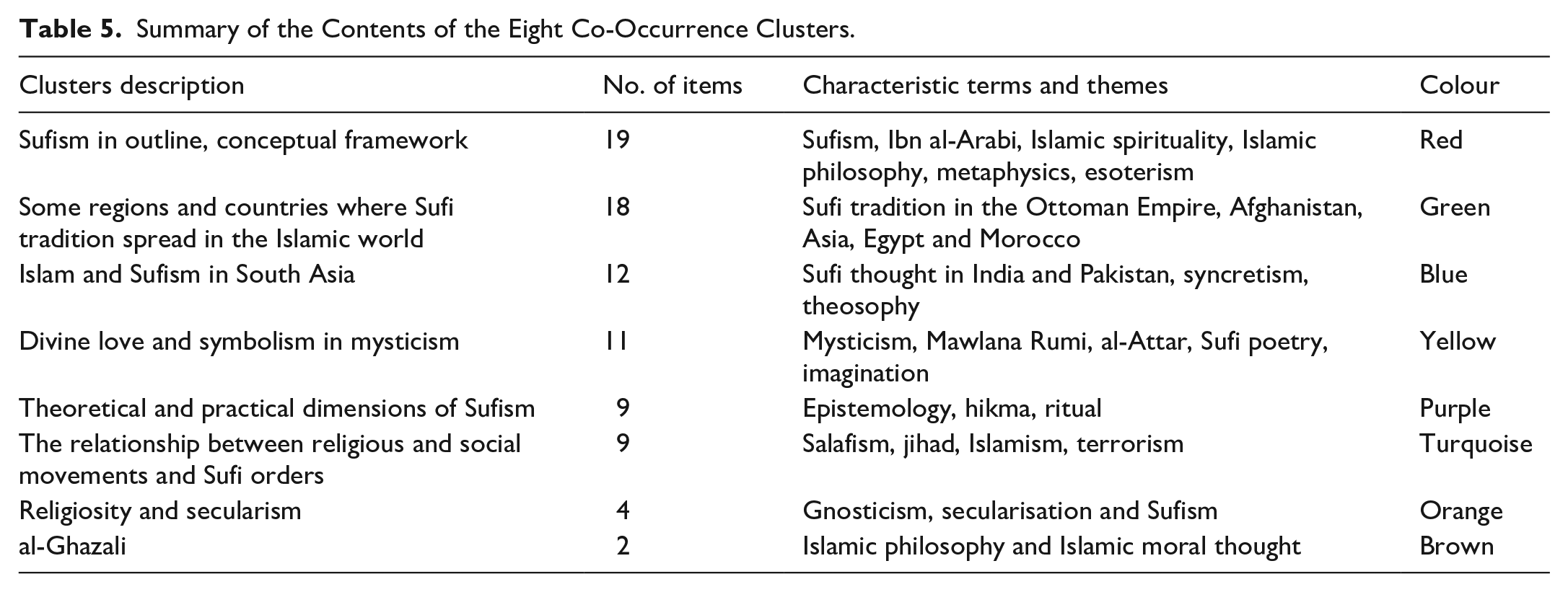
In Figure 7, we visualise the co-occurrence of the keywords the authors gave in the articles with Vosviewer. In the co-occurrence analysis, we set the minimum threshold as 8. According to this criterion, 84 out of 5,152 keywords exceed the threshold, so 84 keywords are included in the matching. In this network created by Vosviewer, we group the keywords of articles written on Sufism into eight clusters: red, green, blue, yellow, purple, turquoise, orange and brown. The concept of ‘Sufism’ in the first cluster, the red cluster, is the most frequently used and has the densest network link among all concepts. In the red cluster, concepts such as Islamic spirituality, Islamic philosophy, metaphysics, esotericism and Ibn al-Arabi, which define the outlines of the field of Sufism, come to the fore. These are the main concepts that should be used to determine the conceptual framework of Sufism. In this context, the most frequently used keywords in Sufi studies are ‘Sufism, Islamic spirituality, Islamic philosophy, metaphysics, esotericism’.

Co-occurrence.
The prominent concept in the green cluster is ‘sufi’. The concepts in the green cluster focus on Afghanistan, Asia, Egypt, the Ottoman Empire and Morocco, which are some of the regions and countries where the Sufi tradition is prevalent. This focus shows us that Sufi studies are focused on regional studies. In the blue cluster, where we find various keywords related to Islam and Sufism in South Asia, the focus on India and Pakistan is particularly striking. Sufi studies in India and Pakistan, where we can see the most varied and richest examples of Sufi tradition, are also crucial in providing information about religious beliefs, cultures, traditions and ethnic groups in the region.
In the yellow cluster, we find the keywords Mawlana, Attar, love, symbol, music and imagination around the concept of ‘mysticism’. This shows us that divine love and symbolism in poetry are important in Sufi studies. Love is the only way to God in Sufism, which is the desire to reach God. In Sufism, one of the mystical traditions, divine love is described through metaphors or symbols in poetry.
The keywords related to secularisation, Salafism, jihad and sects in the orange cluster show that Sufi literature discusses the relationship between Sufism and social movements with an interdisciplinary approach. Finally, the concept that draws attention in the brown cluster is Ghazali. His works on Islamic philosophy, Islamic moral philosophy and Sufism show that al-Ghazali is a vital intellectual who has made a significant place in Sufi studies.
Based on the links of the keywords in Figure 7, we can see that Sufi studies focus on the regions where the Sufi tradition spread, Sufi literature, the theoretical and practical dimensions of Sufism, and the relations of religious and social movements with Sufi orders.
Co-Citation Analysis
Co-citation analysis is a bibliometric method that measures how often two or more publications, authors or journals are cited together, revealing thematic similarities and the knowledge network of a research field. It can map intellectual structures and identify key works, leading authors and journal relationships. Cluster analysis groups co-cited items into thematic categories, while network analysis illustrates relationships and the flow of information, providing valuable insights into a field’s structure. This thorough, unbiased, dependable approach allows researchers to explore prominent trends and overlooked studies. Time series analysis of co-citation patterns helps track the rise or decline of topics and predict future trends, making it a valuable tool for understanding research trends and knowledge networks (Kessler, 1963; Small, 1973; Trujillo & Long, 2018).
Figure 8 shows the co-cited authors of the articles on Sufism and their links to each other. In this network map visualised with Vosviewer, we set an author’s minimum number of citations as 26. According to this criterion, 101 of 42,054 authors passed the threshold, and 101 authors were included in the mapping. This figure has six clusters coloured red, green, blue, yellow, purple and turquoise. When we look at all clusters, William C. Chittick, Annemarie Schimmel and Henry Corbin in the blue cluster, Alexander D. Knysh in the green cluster and Carl W. Ernst in the purple cluster stand out as the primary linking authors. In other words, the first five authors who are most frequently co-cited in the articles written in Sufism and who have the highest network of links are William C. Chittick, Annemarie Schimmel, Carl W. Ernst, Alexander D. Knysh and Henry Corbin, respectively.

Co-cited author.
William C. Chittick, professor of Comparative Literature and Cultural Studies at Stony Brook University in New York for many years, has authored and translated many works in the fields of Islamic thought, Mawlana Rumi, Muhyiddin Ibn Arabi and Sufi metaphysics. The Sufi Path of Love (Chittick, 1983), The Sufi Path of Knowledge (Chittick, 1989), Imaginal Worlds: Ibn al-Arabi and the Problem of Religious Diversity (Chittick, 1994), The Self-Disclosure of God: Principles of Ibn al-Arabi’s Cosmology (Chittick, 1998), Sufism: A Short Introduction (Chittick, 2000), Divine Love: Islamic Literature and the Path to God (Chittick, 2013), he has made significant contributions to the literature of Sufi studies.
German academic Annemarie Schimmel, known for her studies on Sufi history, literature, women in Sufism and Mawlana Rumi, has produced over 100 works on these subjects. Among these, she is primarily known for Mystical Dimensions of Islam (Schimmel, 1975), The Triumphal Sun: A Study of the Works of Jalaloddin Rumi (Schimmel, 1980), The Mystery of Numbers (Schimmel, 1993), Deciphering the Signs of God: A Phenomenological Approach to Islam (Schimmel, 1994) and My Soul is a Woman: The Feminine in Islam (Schimmel, 1997).
Carl W. Ernst researches and lectures at various universities worldwide and has a dense network of citations and links. In particular, Carl W. Ernst’s Words of Ecstasy in Sufism (Ernst, 1985), Eternal Garden: Mysticism History and Politics at a South Asian Sufi Centre (Ernst, 1992), Teachings of Sufism (Ernst, 2004), Sufism: An Introduction to the Mystical Tradition of Islam (Ernst, 2011), Refractions of Islam in India: Situating Sufism and Yoga (Ernst, 2016) are prominent studies in the literature on Sufism. These works are among the reference sources on Sufi thought, comparative mystical traditions and South Asian traditions.
Alexander D. Knysh, who focuses his studies on the history of Sufism and Islamic movements in Russia and the North Caucasus, is the author of Ibn Arabi The Later Islamic Tradition: The Making of a Polemical Image in Medieval Islam (Knysh, 1999), Islamic Mysticism: A Short History (Knysh, 2000) and Sufism: A New History of Islamic Mysticism (Knysh, 2017), he has made remarkable contributions to the literature on the history of Sufism. Knysh fills an essential gap in the literature with his contributions to Sufi movements in the Caucasus and the Muslim West, often neglected in Sufi history studies.
The French orientalist Henry Corbin, known for his work on Islamic philosophy and thought, has been the source of many studies in the field, especially his Creative Imagination in the Sufism of Ibn Arabi (Corbin, 1969), which deals with the doctrine of imagination in Ibn al-Arabi.
Based on all these, we have understood that the academics at the central point in the analysis of co-cited authors have published on the history of Sufism, Ibn al-Arabi and Mawlana.
In Figure 9, we show the sources that articles in Sufism co-cite and their links with each other. Vosviewer calculates the co-citation links. When we set the minimum number of citations of a cited reference as 7, 321 out of 71,685 references exceed this threshold. In the co-citation network created by Vosviewer, there are five main link clusters: red, green, blue, yellow and purple. The green cluster is the central point among the primary sources cited by articles on Sufism. The sources in this cluster include works that focus on various periods in the history of Sufism. German academic Annemarie Schimmel’s Mystical Dimensions of Islam (Schimmel, 1975) stands out with the highest number of citations and the densest links to other clusters. Schimmel’s work is followed by two works by American scholar William C. Chittick, Sufi Path of Knowledge (Chittick, 1989) and The Self Disclosure of God (Chittick, 1998), which discuss epistemology and cosmology in Ibn al-Arabi.

Co-cited references.
Other prominent works in the green cluster are by Ahmet Karamustafa. Sufism: The Formative Period (Karamustafa, 2007) and God’s Unruly Friends: Dervish Groups in the Islamic Later Middle Period (Karamustafa, 1994), which are highly cited and have strong links with other sources in the field. These works of Ahmet Karamustafa focus on the formative period of Sufism and examine the classical period of Sufi history.
From this perspective, the principal sources of Sufi studies are the works on the formation of Sufism, the history of Sufism, Ibn al-Arabi and Sufi metaphysics. These works are primary sources that should be cited in future studies in the field.
In the red cluster, J. Spencer Trimingham’s Sufi Orders in Islam (Trimingham, 1971) has a central position. This work is followed by several studies by Nile Green, Mark Sedgwick, Itzchak Weismann and Alexander D. Knysh, which focus on the systematisation and spread of the Sufi tradition around the world and the status of Sufism and Sufi orders between modernism and traditionalism. Trimingham’s Sufi Orders in Islam (Trimingham, 1971) and Itzchak Weismann’s The Naqshbandiyya: Orthodoxy and Activism in a Worldwide Sufi Tradition (Weismann, 2007) focus on the history of the order, while Nile Green’s Sufism: A Global History (Green, 2012) and A. D. Knysh’s Sufism: A New History of Islamic Mysticism (Knysh, 2017) analyses the history of Sufi thought. Mark Sedgwick’s Against the Modern World: Traditionalism and the Secret Intellectual History of the Twentieth Century (Sedgwick, 2004) examines the traditionalist school with a Sufi approach, especially in 20th-century Europe.
In the blue cluster, Pnina Werbner’s Pilgrims of Love: The Anthropology of a Global Sufi Cult (Werbner, 2003), K. P. Ewing’s Arguing Sainthood: Modernity, Psychoanalysis and Islam (Ewing, 1997), Carl W. Ernst’s Eternal Garden: Mysticism, History, and Politics at a South Asian Sufi Centre (Ernst, 1992) and Sufi Martyrs of Love: The Chishti Order in South Asia and Beyond (Ernst, 2002), R. M. Eaton’s Sufis of Bijapur: 1300-1700: Social Roles of Sufis in Medieval India (Eaton, 1978) focus on the Naqshbandiyya and Chishtiyya orders, which had a large number of followers in India and Pakistan. These studies provide anthropological analyses of the impact of these orders on the religious rituals and social and cultural life of Muslims in the region. The works in this cluster focus on the India-Pakistan region and are the primary source of reference for future studies in the field. It is also understood that in the field of Sufism, studies on Sufi movements in the India-Pakistan region and their effects on social life are one of the most popular areas of research.
The works in the yellow cluster have a specific focus. These works, which provide information about Sufi orders and groups active in West African countries such as Senegal, Mali and Mauritania, especially since the 20th century, analyse Sufi teachings and practices in the region. In addition, these studies, which analyse the effects of Sufi orders on political movements, colonial regimes and economic issues in the region, constitute one of the important agendas of both African and Sufi studies. Especially in recent years, scholars in theology, history, religion, anthropology and political science have been interested in the African region. Essential reference works on this region are as follows: Rudiger Seesemann’s The Divine Flood: Ibrahim Niasse and the Roots of a Twentieth-Century Sufi Revival (Seesemann, 2011), C. A. Babou’s Fighting the Greater Jihad: Amadu Bamba and the Founding of the Muridiyya of Senegal, 1853-1913 (Babou, 2007), David Robinson’s Paths of Accommodation: Muslim Societies and French Colonial Authorities in Senegal and Mauritania: 1880-1920 (Robinson, 2000), Soares’s Islam and Muslim Politics in Africa (Soares & Otayek, 2007) and L. A. Villalon’s Islamic Society and State Power in Senegal: Disciples and Citizens in Fatick (Villalon, 1995) The works in this cluster focus specifically on Sufi movements and orders in West Africa. However, it is not strongly linked to the works with the highest citation and link density in Sufism.
In Figure 9, the works in the purple cluster focus on Ibn al-Arabi’s biography and metaphysical thoughts. In particular, Ian Almond’s Sufism and Deconstruction: A Comparative Study of Derrida and Ibn Arabi (Almond, 2004) and G. A. Lipton’s Rethinking Ibn Arabi (Lipton, 2018) make comparisons between the doctrine of Ibn al-Arabi and the ideas of various philosophers, are shaped around the concepts of marifat, wahdat al-wujud, walaya, and al-insan al-kamil. Toshihiko Izutsu’s Sufism and Taoism: A Comparative Study of Key Philosophical Concepts (Izutsu, 1984), A. D. Knysh’s Ibn Arabi in the Later Islamic Tradition: The Making of a Polemical Image in Medieval Islam (Knysh, 1999), H. E. Corbin’s Creative Imagination in the Sufism of Ibn Arabi (Corbin, 1969), Ismail Lala’s Knowing God: Ibn ʿArabī and ʿAbd al-Razzāq al-Qāshānī’s Metaphysics of the Divine (Lala, 2019), Claude Addas’s Quest for the Red Sulphur: The Life of Ibn Arabi (Addas, 1993), Michel Chodkiewicz’s Seal of the Saints: Prophethood and Sainthood in the Doctrine of Ibn Arabi (Chodkiewicz, 1993) and Stephen Hirtenstein’s The Unlimited Mercifier: The Spiritual Life and Thought of Ibn Arabi (Hirtenstein, 1999) provide comprehensive information about Ibn al-Arabi’s life, as well as his intellectual biography, especially the connection between his mystical life and his world of thought.
The Interaction Between Thematic Clusters in Sufi Studies, Islamic Studies and the Sociology of Religion
Among the dominant clusters in the study are ‘Sufi orders in South Asia’, modern Sufi movements, and the relationship between modernism and Sufism. These themes are directly related to Islamic studies and religion sociology. Especially in South Asia, where different belief systems such as Islam, Hinduism and Buddhism come to the fore, multifaceted social, cultural, and religious interactions have occurred. The syncretic doctrines that emerged have facilitated processes of social and religious dialogue. Some Sufi lodges in the region have become places where people of different faiths come together to build a shared world of meaning, strengthen a culture of coexistence and lay the foundations for social peace. The interaction of Sufis with local cultures and religions in the regions where they live has both theological and sociological dimensions. This situation brings new discussion topics to Islamic studies and the sociology of religion.
Among the prominent themes in the study, ‘modern Sufi movements’ have laid the groundwork for new discussions on the interactions of Sufi orders in the globalised world, individual and social development in modern life, ecology and women’s rights. The fact that religious and spiritual practices are now shared and made visible through social media and digital platforms, reaching broad audiences, also establishes a direct link with religious studies and the sociology of religion.
‘The relationship between modernism and Sufism’ is also one of the prominent themes in these research areas. Indeed, by questioning traditional thought, modernism has also turned the Sufi tradition into a subject of inquiry. While Sufi thought has tried to preserve its traditional structure in the face of modernism and secularisation, it has also attempted to integrate themes such as individualism, personal development, feminism and humanism into its doctrinal framework. Thus, Sufism, as a traditional teaching, has at times engaged with modernism, removing conflict and, through a reconciliatory approach, developing new interpretations that respond to the needs of the modern individual.
Conclusions
In this article, we examined and evaluated Sufi studies in the world. Through bibliometric analysis, we revealed the general status and intellectual structure of Sufi articles published in the WoS database between 1976 and 2024. We applied performance analysis and scientific mapping techniques to achieve the aim of our research. With performance analysis, we identified the most influential countries, journals, authors and publications. Scientific mapping enabled us to create a conceptual and intellectual portrait of the field of Sufism with co-occurrence and co-citation analysis. By analysing the data, we answered our research questions. When we examined the literature, we noticed that no other studies examine the status, trends and intellectual structure of Sufi studies with the bibliometric analysis method; therefore, our article may be the first attempt and effort in this field.
Performance Analysis
According to the results we obtained from the dataset, the USA and the UK are the countries with the highest number of publications and citations in Sufi studies between 1976 and 2024. Regarding the number of publications, the USA stands out with 38.19% of the total publications of the top 10 countries. The United Kingdom and Iran follow the USA with 13.35% and 9.49% respectively. Table 2 shows that the USA and the UK, countries with extensive institutional and research facilities, have the highest number of publications. There is a growing academic interest in the field of Sufism in these countries. Although Iran ranks third in the number of publications, it is not among the top 10 countries with the most citations. In general, the contribution of different countries to Sufi studies varies in terms of the total number of citations and the number of citations per article. These data reveal that the impact of research and scientific interaction varies by country.
The USA is the first country in the number of publications and citations. However, in terms of citations per article, the UK (8.40) and France (8.80) surpass the USA (7.80). This indicates that research in the UK and France is more influential than in the US. Denmark has the highest citation rate per article (16.90). Belgium follows Denmark with a rate of 13.60. Denmark and Belgium stand out from the other countries with high-impact research. Although Turkey is in the middle level in the number of studies, it is shallow regarding citation rates. With a citation rate of 2.50 citations per article, it is clear that the academic impact of Sufism research in Turkey needs to be improved.
The dataset shows that the universities with the highest number of publications are Islamic Azad University in Iran and the University of London in the UK. Among the top 10 universities, the University of London, the University of Oxford and the University of Cambridge from the UK, and the University of Malaya, Universiti Kebangsaan Malaysia and the International Islamic University of Malaysia, each with three institutions stand out. This shows the substantial contribution of universities in the UK and Malaysia to Sufi studies.
Ismail Lala and Arin Salamah Qudsi are the most published researchers. Religions and the Journal of Sufi Studies are the journals with the highest number of publications. Religions is an open-access international journal on religious thought and practice that covers a wide range of topics. Journal of Sufi Studies is an international academic journal that publishes only Sufi studies.
As a result of the citation analysis, Amira Mittermaier (Mittermaier, 2012) and Julia Day Howell (Howell, 2001) have the most cited documents.
Notably, these documents are researches that include the fields of anthropology and sociology in addition to the classical discussion topics of Sufism. This situation showed that sub-research topics have become one of the trends in Sufi studies in the world.
In the performance analysis, we examined article titles, keywords and abstracts and visualised them as three-word clouds. In these word clouds, we identified the concepts of Sufi, Islam, religion and mysticism as the most common concepts. These words highlight the religious and practical dimensions of Sufism and draw attention to the broad spectrum of studies in the field.
Scientific Mapping
In this section, we mapped and visualised bibliometric networks by science mapping and mapped the co-citation data by word, author and references to demonstrate the research’s purpose. Co-occurrence analysis played an essential role in identifying this field’s main concepts and topics. By identifying the most frequently used keywords in Sufi studies and their relationships with each other, we have enabled researchers to identify the most important concepts in the field. This analysis shows that the concepts and themes related to the conceptual framework of Sufism are at the centre. These concepts are Sufism, Islamic spirituality, Islamic philosophy, metaphysics and esotericism. We have also found that regional studies on Sufism have become popular. Thus, we have determined which topics are studied more in Sufi studies and which regions are the research focus in this field. This contribution is significant in revealing new research focuses and interdisciplinary approaches.
In the map of co-citation analysis, authors who are cited on the history of Sufism, the regions where the Sufi tradition spread and Sufi metaphysics came to the fore. William C. Chittick, Annemarie Schimmel, Carl W. Ernst, Alexander D. Knysh and Henry Corbin are the most influential authors in Sufi literature. These five authors are recognised for their contributions to the history of Sufism, the thought of Ibn ‘Arabi, Mevlana Jalaluddin Rumi and Sufi metaphysics. Ibn al-Arabi and Rumi are influential Sufi theorists who have attracted attention in academic circles around the world. This result is consistent with the current trend in the world. The authors on this map have written highly cited works in Sufi studies and have greatly influenced the literature in this field. It is important to refer to the works of these authors in Sufi studies to increase the knowledge in the field and fill the knowledge gaps in the literature. Co-cited author analysis helps to identify the primary sources and main topics in Sufi literature and has the potential to guide new research.
In the map of co-cited references, we showed the primary sources in Sufi literature and their relationships with each other. This analysis determined how sources are grouped in Sufi studies and the connections between these sources. Annemarie Schimmel’s Mystical Dimensions of Islam and William C. Chittick’s Sufi Path of Knowledge occupy this citation network’s central position. This result is not surprising when considered together with the result we obtained in the co-cited author analysis. In line with the findings of the co-cited author analysis, the analysis revealed that the history of Sufism and Sufi orders, regional studies and Sufi metaphysics are the main research topics in the field. This analysis helps to identify the primary reference sources in Sufi studies and to understand how these sources are used in the studies. The sources in the map of co-cited references and the themes we identified reveal the interdisciplinary character and versatility of Sufi studies and show the richness and diversity of this literature. Understanding the broad and diverse structure of Sufi literature will also shed light on future studies and contribute to developing strategies for research in the field.
Limitations
Although bibliometric analysis provides effective tools for understanding the state and intellectual structure of Sufi studies, it has some limitations because of data sources and language and terminology problems.
Data source limitations: In this analysis, we used only the Web of Science Core Collection (WoS) database and analysed only articles in the WoS database, excluding other types of publications other than articles and review articles. We also analysed only articles in English and filtered out publications in other languages. These limitations may cause the analysis results to be incomplete in some aspects. There are many articles related to the field of Sufism that are not in the WoS database. In addition to articles, there are books, conference proceedings and book chapters on Sufism. There are many publications in Sufi literature in languages other than English, such as Turkish and Persian.
Although Web of Science provides extensive data, it would be helpful to use Scopus, Google Scholar, JSTOR, EBSCOhost and similar databases in the future to make a more comprehensive analysis. These databases offer the opportunity to evaluate the Sufi literature from a broader perspective. Moreover, including different types of publications and languages enables a multidimensional examination of Sufi studies and increases the content validity of the analyses. A larger dataset covering publications in various languages and types would enable a more accurate and comprehensive analysis of Sufi literature.
Differences in translation, transcription and terminology: The first problem is the diversity of translation and transcription. Sufi terminology is mainly composed of terms of Arabic and Persian origin. There are some problems with the translation and transcription of these terms. Sometimes, a term is translated in different ways or transcribed differently. This situation may cause some problems in the scans. The second problem is the high number of synonymous concepts in Sufi terminology. This diversity of concepts also makes it difficult to define and relate the concepts correctly.
Recommendations
This article, in which we examine the status and intellectual structure of Sufi studies, recommends the following for researchers:
To focus on interdisciplinary research and to research topics such as the relationship between Sufism, psychology and art. Indeed, our findings reveal that keywords related to fields such as art and psychology appear with low frequency (see Supplemental Appendices A, B and C). Conducting interdisciplinary studies on Sufism, particularly focusing on its relation to psychology and art, would help overcome this limitation in the literature and fill a significant gap.
Focus on research that responds to current problems and trends and identify Sufism’s perspective on digitalisation, ecology and sustainability. Our analysis shows a clear gap in the literature concerning modern global issues such as digitalisation, ecology and sustainability. These keywords appear either very low frequency or not in the trend topic and co-occurrence analyses (see Figures 6 and 7). This indicates that the intersections between Sufism and current global challenges have been largely neglected in the existing literature.
Expanding the literature on regional studies, analysing the Sufi movements in different regions and the impact of Sufism on the relations between regions. Our analysis reveals that Sufi studies are predominantly concentrated on South Asian countries such as India and Pakistan. In contrast, regions like Central Asia, Africa, and the Balkans are significantly underrepresented in the dataset (see Tables 5–7). Therefore, focusing on Sufi movements in different regions would allow a better understanding of how Sufism manifests across diverse geographies and its influence on religious, social, and cultural dynamics.
Incorporate innovative methodologies such as social network analysis and scientific mapping into Sufi studies to make the researchers more qualified. Examining impactful studies in Sufism reveals that traditional research methods and approaches still dominate (see Tables 4 and 7). Introducing methodological diversity and integrating innovative research techniques into Sufi studies would enhance the analytical depth of the field and contribute new dimensions to the discipline.
Care about international cooperation, sharing knowledge and experience and creating a network with researchers in the field.
All these suggestions can contribute to expanding the academic perspectives of researchers, developing more innovative approaches and enriching the Sufi literature.
Summary of the Contents of the Eight Co-Occurrence Clusters.
Summary of the Contents of the Six Co-Citation (Co-Cited) Author Clusters.

Summary of the Contents of the Five Co-Cited References Clusters.

Supplemental Material
sj-docx-1-sgo-10.1177_21582440251357164 – Supplemental material for Understanding Global Trends and Key Influences in Sufi Studies: A Comprehensive Analysis
Supplemental material, sj-docx-1-sgo-10.1177_21582440251357164 for Understanding Global Trends and Key Influences in Sufi Studies: A Comprehensive Analysis by Büşra Çakmaktaş and Abdullah Özçelik in SAGE Open
Footnotes

Ethical Considerations
This study did not involve human participants, animals, or data derived from identifiable individuals. All stages of the research adhered to established academic and ethical standards, including the APA Ethical Principles of Psychologists and Code of Conduct (Section 8.05).
Consent to Participate
Informed consent was not required because the study involved neither human participants nor identifiable personal data.
Funding
The author(s) received no financial support for the research, authorship, and/or publication of this article.
Declaration of Conflicting Interests
The author(s) declared no potential conflicts of interest with respect to the research, authorship, and/or publication of this article.
Supplemental Material
Supplemental material for this article is available online.
References
Supplementary Material
Please find the following supplemental material available below.
For Open Access articles published under a Creative Commons License, all supplemental material carries the same license as the article it is associated with.
For non-Open Access articles published, all supplemental material carries a non-exclusive license, and permission requests for re-use of supplemental material or any part of supplemental material shall be sent directly to the copyright owner as specified in the copyright notice associated with the article.
