




Abstract
Despite the rapid development in digital technology, the influence of taxation on firm-level digital transformation in global value chains (GVCs) remains unclear. To empirically test this impact, this study uses a logit model with a sample comprising 1,742 Chinese listed firms in the period 2003 to 2016. The results indicate that higher tax burdens hinder firms’ participation in the digitalization of GVCs, especially in less developed regions and non-high-tech industries. Furthermore, the results regarding the mediation effects highlight that tax incentives for firms positively impact their ability to invest in research and development and adopt digital technologies, thereby enhancing their potential to participate fully in the digitalization of GVCs. These findings offer valuable insights that deepen the understanding of the role of tax incentives in promoting digital transformation and reshaping firms’ participation in GVCs.
Keywords
Introduction
Over the past three decades, the rise of global value chains (GVCs) has fundamentally reshaped global production and trade. Firms that fragment their production activities across various countries can optimize their operations by exploiting comparative advantages, ultimately enhancing productivity and innovation (Gopalan et al., 2022; Y. Zhang et al., 2023). This facilitates critical cross-border linkages that drive global output and economic growth (Jithin et al., 2023; Timmer et al., 2014). As Taglioni and Winkler (2016) note, GVCs are essential for understanding how countries can achieve sustained economic growth in a globalized economy. These insights inform policy decisions and highlight the transformative potential of GVCs in driving structural economic change and fostering sustainable growth.
Emergent digital technologies, such as artificial intelligence, robotics technology, and quantum computing, are pivotal drivers of new business patterns (Artuc et al., 2023; De Backer & DeStefano, 2021). Adopting digital technology could significantly impact countries’ trade competitiveness. It could reshape the existing topology of GVCs and enhance their sustainability (Nasser & Ouerghi, 2023). Furthermore, new smart technologies affect GVC management, owing to their potential involvement across all stages of the value chain (Banga, 2022). This pervasive integration drives the digitalization of GVCs, a phenomenon that has gained increasing theoretical and practical significance with the evolution of digital technology. Specifically, the theoretical exploration of the digitalization of GVCs provides new perspectives for understanding global economy. Additionally, the practical implications of such research offer companies insight into how to effectively use digital technologies to optimize and innovate their cross-border operations (Y. Zhang et al., 2023). Similarly, policymakers can build a foundation for formulating new policies related to the digital economy and cross-border operations (Gereffi, 2018). As digital technologies continue to develop, digital GVCs are expected to play an increasingly critical role in economic development, transforming traditional value chains and requiring firms to innovate and adapt to the new economic environment (Görlich, 2021).
In this transformative process, taxation emerges as a critical factor influencing business decisions (Lu et al., 2023). Tax incentives have long been recognized as a powerful tool to attract corporate investment and enhance economic growth (Devereux et al., 2002; Hines, 1993). Developing countries often use such incentives to attract much-needed capital and technology (Desai et al., 2004; Devereux et al., 2002). Tax factors shape the structure and efficiency of GVCs in the digitalized economy (Devereux & Vella, 2017).
However, as Foss et al. (2019) note, tax incentives may lead multinational enterprises to shift activities to low-tax jurisdictions, as opposed to locations where these activities could maximize their contributions to global value creation. This raises important questions about the optimal use of tax incentives in developing countries, especially in the context of emerging digital technologies. How does taxation influence firms’ decisions to integrate into GVCs, particularly in the context of digitalization? Additionally, should developing countries implement tax incentives to attract investment and promote the integration of domestic firms into the digitalization of GVCs, or could alternative strategies result in more sustainable and long-term outcomes?
Firms that adopt digital technologies (e.g., online platform or high-speed Internet) are more likely to participate in GVCs (Gopalan et al., 2022; Reddy & Sasidharan, 2023). This study attempts to address the above questions by exploring the impact of tax incentives that specifically target digital investments and development. By offering tax breaks or credits in exchange for investments in digital infrastructure, research and development (R&D), and digital skills training, not only can governments support the enhancement of firms’ competitiveness in global markets (Devereux & Vella, 2017), they can also enable firms to effectively leverage these technologies (Shao & Xiao, 2019). Therefore, exploring the interplay between tax policies and digitalization of GVC is crucial for understanding how fiscal measures can shape digital transformation and firms’ international competitiveness in the digital economy. Despite its academic and policy relevance, the impact of the tax burden on the digitalization of GVCs remains a complex issue that lacks a comprehensive understanding. Academic work that attempts to understand how taxes influence firms’ digital strategies concerning their positioning and activities in GVCs remain limited.
To address these research gaps, this study examines the impact of corporate tax on the participation of Chinese firms in the digitalization of GVCs. Our theoretical framework centers on the mechanism through which tax incentives for digital technology and investment can catalyze firm-level digital transformation, thereby enhancing firms’ integration into GVCs. To rigorously test the proposed theoretical hypotheses, we extend the logit model of Reddy and Sasidharan (2023) to incorporate the role of the tax burden, using data from a sample of Chinese listed firms during the period 2003 to 2016.
The reason underlying our selection of this sample set is as follows: China’s unique position presents an ideal case for examining how tax policies influence firms’ participation in GVC digitalization. As the world’s second-largest country, the central hub of East Asia, and the “factory of the world,” China has established itself as a global leader in digitalization (Guo et al., 2023; United Nations Trade and Development (UNCTAD]), 2021; Y. Zhang et al., 2023). The scale of China’s digital economy reached 53.9 trillion yuan in 2023, accounting for 42.8% of the national gross domestic product (China Academy of Information and Communications Technology, 2024). Moreover, to prepare for the digital future, China has launched significant initiatives related to the development of digital economy in the 14th Five-Year Plan period (2021–2025), as well as an additional plan to promote common prosperity during the period 2025 to 2030. Hence, China has created a policy environment that favors corporate digital development, which is likely to strengthen the positioning of Chinese firms’ in GVCs through digitalization. The Sustainable Development Goals Report 2023: Special Edition highlights China’s importance regarding this achievement, especially in terms of promoting sustainable economic growth, industry innovation, and the reduction of inequality. Therefore, comprehensively examining the implications of tax policy for Chinese firms’ participation in GVC digitalization is crucial to achieve the sustainable development goals and share valuable insights on tax policy adjustment with other developing and emerging economies.
Against this backdrop, our study contributes to the literature in multiple ways. First, we extend the tax literature on digital transformation. While recent research increasingly emphasizes the challenges that digital development poses for tax authorities (Geringer, 2021; Mpofu, 2022; Organisation for Economic Cooperation and Development [OECD], 2019a), the theoretical and empirical literature on whether taxation can spur digital development, specifically with respect to GVCs, remians limited. This study provides evidence on how tax policies may foster digital innovation, enhance firms’ competitive positioning in GVCs, and more deeply integrate countries into the global digital economy.
Second, we examine the relationship between tax incentives and low-technology industries, focusing on how such incentives encourage firms in these sectors to deepen their engagement in GVC digitalization. Prior studies have primarily explored the implications the roles of information and communication technology in GVCs (Laplume et al., 2016; Mateo & Redchuk, 2021; Strange & Zucchella, 2017).
Third, our empirical results support that firm-level digitalization positively affects firms’ GVC participation (Gopalan et al., 2022; Y. Zhang et al., 2023). However, despite the transformative effects of digital technologies, the exiting literature has yet to adequately explore the relationship between the tax burden and firms’ participation in the digitalization of GVCs. By highlighting the dynamics of this relationship across different regions and industries, our study provides deeper understanding of the multifaceted factors that influence firms’ organizational decisions and their engagement in GVC digitalization.
We select the case of a developing economy such as China’s to advance the literature from the Asian economy perspective. Asian economies have been seeking to acquire a greater presence in GVCs, and Chinese firms have assumed a leading role in reshaping trade dynamics (Reddy & Sasidharan, 2023). Therefore, by providing an understanding of the factors that facilitate GVCs, our study yields tax policy insights toward promoting the greater global presence of Asian firms.
The remainder of the paper is structured as follows. The next section briefly summarizes the related literature. The subsequent two sections describe the theoretical framework and research methodology and data selection, respectively, followed by the results. The last two sections discuss further research on related heterogeneous effects and the conclusions of this study.
Literature Review
Digital Technology and GVCs
Digital technologies are progressively emerging as prerequisites for GVCs (Agarwal et al., 2018). Specifically, digital platforms drive the emergence and development of online scientific research, cross-border delivery, and electronic logistics, thereby enhancing supply chain efficiency and fostering business model innovation (Guo et al., 2023). In the pre-production phase, companies can leverage data to predict malfunctions and damage, as well as consumer reactions and preferences (Chen, 2019; Gunasekaran et al., 2017). Hence, the ability to harness large datasets is an indicator of a company’s competitiveness in GVCs (Nedelcu, 2013). Furthermore, digitized networks can be used to monitor actions without relying on human intervention and cope with unexpected environmental challenges during firms’ production operations, thereby supporting the entire supply chain (Erol et al., 2016; Ojra, 2018). In the post-production phase, digitalization shifts value creation from mass production to mass customization while maintaining cost efficiency (Glas & Kleemann, 2016; Lu, 2017). Integrating diverse information technology systems across the GVC helps companies manage unusual disruptions effectively, thereby ensuring the efficient production of products that are tailored to customer requirements (Bartodziej, 2017).
Such capabilities have significantly optimized global outsourcing, production, and distribution activities, leading to more effective GVC integration and amplifying its benefits (Strange & Zucchella, 2017). Previous studies have shown that firm digitalization enhances efficiency and competitiveness and is positively correlated with increased GVC participation, suggesting that engagement in GVC digitalization expands market reach and optimizes operations (Gopalan et al., 2022; OECD, 2019b).
Digital transformation has varying effects in developing and developed countries. In developing countries, environmental sustainability in GVCs improves only when digitalization exceeds a certain threshold (e.g., 10.23%). In developed countries, strong institutions amplify the positive environmental impacts of digitalization in GVCs, distributing benefits more evenly (Elmassah & Hassanein, 2023). Non-price factors contribute to unbalanced GVC development during digital transformation (Kano et al., 2020), highlighting the need for tailored policies to support developing economies. Y. Zhang et al.’s (2023) case study of Chinese manufacturing industries illustrates how digital transformation significantly increases GVC in medium-technology sectors but exerts limited effects in high-tech industries. Moreover, participation in GVC digitalization mitigates firms’ output volatility more effectively than traditional GVC participation and shows a pronounced uplift effect in complex GVCs (Yu & Fang, 2022).
Tax, Digitalization, and GVCs
Earlier research argues that to maintain competitiveness in an intensely digitalized global economy, countries must stay ahead or at least keep pace with their counterparts in the digital race (Banga, 2022). Taxation, as a critical tool that governments use to regulate domestic economies, is vital for achieving macroeconomic goals. In particular, supportive tax policies can significantly enhance the ability of digitalization to foster innovation through the facilitation of more precise R&D activities (Mukherjee et al., 2017).
Although there exists a wealth of literature on the advantages of GVC participation and the factors that influence the degree of country-level participation (Alfaro et al., 2015; Antràs, 2019; Koopman et al., 2014), the link between corporate tax and firms’ GVC participation is less well-discussed, especially regarding the role of the growing significance of digital technologies. Quentin (2017) argues that corporate tax reform should focus on GVCs rather than on specific entities or groups of firms. This approach could fairly include low-income economies in the receipt of the benefits of global economic activities, thereby reducing global wealth inequality. Foss et al.’s (2019) qualitative study results indicate that multinational enterprises geographically segment and decentralize their value chain activities according to their preference for countries with lower tax burdens—a practice that influences the structure and efficiency of GVCs.
Given China’s rapid rise to its status as a dominant player in global trade, the country’s deep integration into GVC networks has significantly redefined the global production and trade landscape (di Giovanni et al., 2014; Y. Zhang et al., 2023). Chinese firms are key exporters and actively participate in GVCs by extensively using imported inputs (Defever et al., 2020). Their increasing integration into GVCs has been driven by factors such as China’s technological advancements, alongside the liberalization of the nation’s trade and investment policies (Mercer-Blackman et al., 2021; Wignaraja, 2012). Lower tax burdens can incentivize investments in digital technologies and related R&D, thereby improving firms’ competitiveness in global markets (Devereux & Vella, 2017). Additionally, tax incentives for digital infrastructure and related training are necessary to ensure that firms can effectively leverage these technologies (Shao & Xiao, 2019).
Empirical studies based on Chinese firms provide further insights into the relationship between corporate tax and GVCs. J. Wen and Zhang (2019) find that relatively high domestic corporate taxes inhibit GVC participation, but higher firm-level productivity can moderate the negative effects of the corporate tax burden on firms’ GVC participation. As digitalization progresses, the effects of taxation on GVC participation may evolve or become more pronounced. Thus, targeted tax incentives are critical to optimize the benefits of digital transformation within GVCs.
Theoretical Framework and Hypothesis Development
Taxation and Digitalization of GVC
Digital technologies have greatly enhanced the efficiency and transparency of GVCs (Leão & da Silva, 2021). From a corporate perspective, firms can use information communication technology to facilitate the exchange of data on production procedures, inventory management, and quality assurance protocols, ultimately strengthening trade growth (Buckley & Strange, 2015; Nath & Liu, 2017; Xing, 2018). From a market perspective, digitalization is likely to attract more participants and result in broader coverage (Porter & Heppelmann, 2014). Moreover, digitalization enhances the ability of small businesses and emerging markets to access the global market, particularly when digitalization levels exceed a critical threshold (Elmassah & Hassanein, 2023). Small and Medium-sized Enterprises (SMEs) may benefit from the inclusive nature of GVC digitalization regarding global market access (Ganne & Lundquist, 2019). This shift allows SMEs to enjoy the various opportunities GVCs afford, which were previously accessible only to large companies and developed countries.
However, taxes are a vital environmental variable that influences multinational corporations’ investment and global market decisions (Desai et al., 2004; Hines, 1993). High tax burdens can increase operational expenses and lead to poor financial performance (Gatsi et al., 2013), potentially prompting firms to reconsider their participation in GVC digitalization. Such firms will prioritize maintaining their profit margins and achieving the desired revenue levels by, for example, outsourcing their production processes to regions with lower tax rates to reduce costs (Mauro et al., 2018). These strategic adjustments will likely influence firms’ decisions regarding GVC digitalization, as they seek to optimize their cost structures while embracing digital transformation.
Competitive tax rates can attract foreign direct investment (FDI), enabling companies to expand their operations and participate in GVCs more actively (Devereux & Vella, 2017). GVC digitalization further enhances this process by providing technological infrastructure that facilitates seamless cross-border integration and coordination. Conversely, high tax burdens can constrain a firm’s ability to allocate resources efficiently and respond swiftly to market changes (Patel et al., 2022), further hindering its participation in GVC digitalization. Moreover, Gao and Liu (2021) find that high tax burdens significantly negatively affect FDI in small markets and low-income countries, whereas tax burdens have relatively weaker negative effects in large and high-income countries. This suggests that in less developed regions (i.e., low income areas) or sectors with lower technological capabilities tax incentives could play a more crucial role in fostering the digital transformation of GVCs. In these regions, low digitalization levels can impede the favorable environmental impact induced by higher GVCs values (Elmassah & Hassanein, 2023). Thus, the following hypothesis is proposed:
The Impact of the Tax Burden on R&D Investment and GVC Digitalization
When exploring the mechanisms by which taxation impacts digitalization, the significant indirect effects of R&D investment need be considered since tax incentives can substantially enhance corporate innovation and technological advancement (T. Li & Yang, 2021). R&D investment is a crucial driver of firms’ internal innovation (Bloom et al., 2002; M. He & Estébanez, 2023). R&D activities help firms enhance their technological capabilities through digital transformation, thus facilitating their better integration into GVCs (Baldwin & Venables, 2013; OECD, 2019b). Moreover, R&D investments assist firms with optimizing their business models in terms of digitalization and networking (Nambisan et al., 2017), including the development of new e-commerce platforms, data management systems, and smart manufacturing technologies, which are integral components of GVC digitalization. Increased digitalization allows firms to enhance their competitiveness in the global marketplace more effectively.
However, higher tax burdens directly affect firms’ cash flows (Graham, 2000; Poterba, 2004). Both turnover and income tax burdens significantly negatively affect enterprises’ innovative R&D investments, but the turnover tax burden exerts a more pronounced impact (Q. Wu & Liu, 2021). When a firm faces a high tax burden, the financial resources it has available for R&D investments in digital technologies are constrained. To maintain profitability and ensure cash flow stability, firms with higher tax burdens may prioritize short-term, low-risk projects that yield quicker returns (Lu et al., 2023). This shift in investment focus can hinder long-term efforts to adopt digitalization, particularly those aimed at integrating into digitalized GVCs, because such initiatives typically require a substantial upfront investment and may not yield immediate financial returns. Thus, we propose the following hypothesis:
Research Methodology
Method
This study employs a variety of analytical methods to comprehensively assess the impact of the corporate tax burden on firms’ participation in the digitalization of GVCs. We first conduct a primary regression analysis using a logit model, given that the dependent variable is binary, to ascertain whether firms participate in GVC digitalization. We then perform panel data analysis to leverage the mixed characteristics of time series and cross-sectional data, thereby capturing the dynamics of different firms over time. Several robustness and endogeneity tests are carried out to control potential biases and ensure the reliability of the results. Finally, we design a heterogeneity analysis to explore variations in the impact of tax burden across regions and industries.
Experimental Models
Based on G. Zhou et al. (2022), we use a sequential test to analyze the mediating effects. A three-step regression is performed sequentially, as follows:


We employ the above logit model to conduct a regression analysis of the probability of firms’ participation in GVC digitalization. Equation 1 represents our baseline model, which tests the relationship between the tax burden and GVC digitalization. In the model, i and t denote firms and years, respectively; Dgvc i,t is a binary indicator equal to 1 if the firm participates in GVC digitalization, and 0 otherwise; ETRi,t represents the effective tax rate applicable to a firm; X represents the control variables; ϵi,t is the model’s unobservable random error term. Equation 2 tests the impact of the independent variable, the tax burden, on the mediating variable, R&D investment. Equation 3 examines the mediation effects of the tax burden on participation in GVC digitalization after adding the R&D (lnrnd) and interaction term (ETR*lnrnd). α0 is the constant. α1, β1, β2…, β5 denotes the estimated parameters.
Following Wen and Ye’s (2014) approach, we undertake the following steps to analyze the mediating effects. The first step entails verifying the significance of the coefficient β1 in Model 1. If it is not significant, no mediating effect is present. Conversely, if significant, we then test the significance of β2 in Model (2), represents the effect of the independent variable ETR on the mediator lnrnd, and β4 in Model (3), represents the effect of the mediator on the dependent variable. If at least one is significant, further analysis is conducted. When β1, β2, β3 and β4, are all significant, a partial mediating effect is confirmed.
Variable Selection and Measurement
Dependent Variable
Few extant studies measure corporate GVC engagement and digital transformation, and another notable gap exists regarding merging these two indicators to develop new ones. Following P. Zhang and Zhang’s (2022) methodology, this study defines participation in GVC digitalization using a dummy variable that takes a value of 1 if a firm participates in the digitalization of GVCs and 0 otherwise. Thus, the following formula is established:

The GVC index is the main indicator for measuring a firms’ position in international production and trade networks. The formula to determine this index is as follows: GVC = ln (1 + DVAR) − ln(1 + FVAR). FVAR represents the foreign value-added rate, derived from China’s customs trade statistics. DVAR is the domestic value-added rate, calculated as 1 − FVAR. If GVC ≠ 0, the firm is engaged in GVCs. Dig denotes a firm’s digital transformation level; that is, it indicates whether a firm embodies the characteristics of digital transformation. This can be assessed by examining the proportion of digital transformation in intangible assets, which is detailed in the appendix sections of the financial reports of the listed companies’ financial reports. If Dig ≠ 0, the firm has undergone digital transformation.
An enterprise is defined as participating in GVC digitalization (Dgvc = 1) if neither GVC nor Dig is zero, indicating that the enterprise participates in GVCs and has implemented digital transformation. If GVC is not zero but Dig is, the enterprise participates in GVCs but has not undergone digital transformation (Dgvc = 0). If the GVC is zero, the firm is considered to be a non-participant in GVCs (Dgvc = 0) regardless of whether the Dig is zero. This indicates that the enterprise is not participating in GVCs; in this case, the presence or absence of a digital transformation does not affect the determination of the firm’s participation in GVC digitalization.
Independent Variable
A firm’s effective tax burden reflects the actual tax pressure it experiences during a certain period (Dai et al., 2022; Porcano, 1986; Spooner, 1986). The effective tax rates that are published in databases are typically expressed as income tax expenses divided by total profit before taxes. However, corporate income tax constitutes a relatively small percentage of Chinese firms’ total tax expenses (Table 1).
Percentage Tax Expenses.

Note. Based on tax data from the China Research Data Service Platform for selected companies.
Hence, relying solely on income tax expenses may not accurately reflect a firm’s overall tax expenditures. Therefore, with reference to previous research, including Liu and Huang (2018), we adopt the firm-level overall tax burden rate (ETR1) as a widely used indicator to measure the actual corporate tax burden. ETR1 is calculated by dividing a firm’s taxes and surcharges by its revenue from its principal activities. Since this method considers both direct and indirect taxes, the result comprehensively reflects a firm’s tax situation. To ensure the robustness and reliability of our results, we use another net tax burden rate (ETR2; Hanlon & Heitzman, 2010) and the income tax burden rate (ETR3; Baldwin, 2013; Garcia-Bernardo et al., 2023) as additional measures of the corporate tax burden. ETR3 measures a firm’s tax burden using an income tax rate calculated based on accounting standards. Following Dyreng et al. (2008), the results are maintained within the range of [0, 1]. The lower the ETR3, the smaller the corporate tax burden. The formulas for the three tax burden indicators are as follows:


Intermediate Variable
A firm’s R&D investment intensity is measured as its percentage R&D investment relative to its operating revenue (F. He et al., 2020), with a logarithmic transformation applied to the resultant percentage.
Control Variables
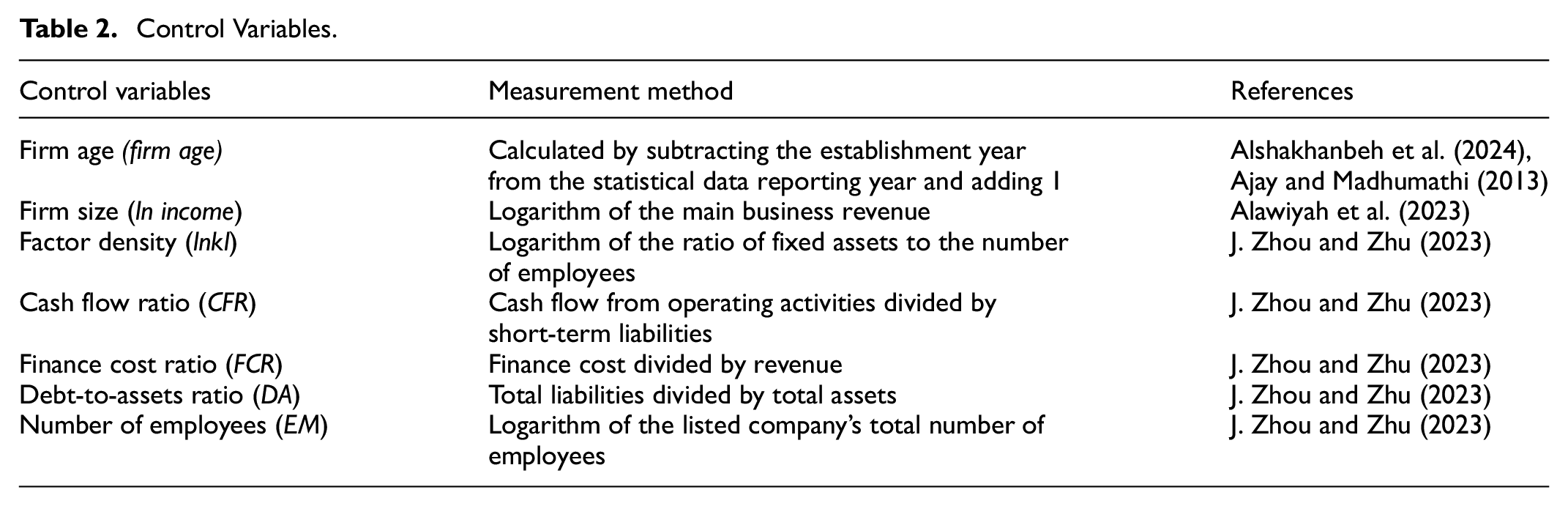
To minimize potential endogeneity problems in the model, we follow J. Zhou and Zhu (2023) and select a series of control variables (Table 2) designed to comprehensively account for factors that could affect the corporate tax burden and participation in GVC digitalization, namely firm age (firm age), firm size (ln income), factor density (lnkl), cash flow ratio (CFR), finance cost ratio (FCR), debt-to-assets ratio (DA), and number of employees (EM).
Control Variables.
Data Sources, Matching, and Processing
To investigate the effect of corporate tax on firms’ participation in GVC digitalization, we merge two databases comprising (1) firm-level financial and (2) firm–product trade data, respectively. Database (1) shares the source on which the firms’ own databases are based, namely the China Stock Market and Accounting Research Database, which provides detailed data on listed firms’ financial, operating, and corporate governance information. This database is widely used in previous studies on Chinese listed firms’ GVC participation (F. He et al., 2020; Lu et al., 2019; Meng et al., 2022). Therefore, we derive a digital indicator that assesses enterprises’ level of digital transformation, along with independent and control variables. The international trade data comprising Database (2) are from China’s customs database, which contains enterprises’ import and export trade data up to 2016. After 2016, the statistical caliber changed, and China’s customs database no longer provides some pieces of information, such as enterprise names. Instead, it contains aggregated data on enterprises’ import and export trade, segmented by province. Thus, the sample data derived from both databases is confined to the period 2003 to 2016.
To calculate firms’ level of GVC participation, we match Databases (1) and (2). Following Upward et al. (2013) and Han et al. (2020), we first match business names to legal representatives, then refine the matches using zip codes and telephone numbers; lastly, we integrate each firm’s security code and year. Following F. He et al. (2020) we exclude firms from the financial sector, firms with abnormal financial conditions, those with missing data, and those with severe losses (ST and *ST). Continuous variables are trimmed at the 1% and 99% levels to minimize outliers. Our final sample comprises 1,742 firms in China in the period 2003 to 2016. Table 3 shows the numerical distribution of firms by year. These statistics clarify the imbalanced sample and allow us to consider its impact on the regression results comprising subsequent analyses.
Distribution of the Number of Firms by Year.

Table 4 provides descriptive statistics of the variables. Approximately 56% of the sampled firms are involved in GVC digitalization, which is a notable participation level. However, the low mean cash flow ratio implies that these firms are experiencing liquidity constraints. Furthermore, the average finance cost ratio suggests low dependency on debt financing among the sample firms, indicating that they generally maintain less leverage in their financial structures.
Descriptive Statistics.

Empirical Results
Benchmark Regression
Table 5 reports the baseline logit estimation results. The coefficients of the tax burden variables are negative and statistically significant across the models of participation in GVC digitalization. The results regarding the core explanatory variables remain unchanged when the controls are added. The results indicate that the absolute value of coefficient of ETR3 is smaller than those of ETR1 and ETR2. Consequently, income tax burden which correlates with a firm’s net profits and its capacity to reinvest has a relatively minor impact on participation in GVC digitalization. Contrastingly, the overall tax burden, which reflects the taxes and surcharges related to a firm’s economic activities, shows a more pronounced effect. To provide additional insights into the logit model results, we calculate the marginal effects, which represent the change in the probability of firm participation in digitalization of GVCs for a 1% change in the tax burden rate. The results show that overall tax burden decreases the probability of firm’s participation by 1.24 percentage points, the net tax burden by 0.58 percentage points, and the income tax burden by 0.18 percentage points. These findings indicate that firms with lower taxes on their daily operations are more likely to participate in GVC digitalization, which is consistent with the first part of H1.
Baseline Regression: Logit Estimates.

Note. Standard errors and z-values in parentheses.
p < .01. **p < .05.
We also compare the relationship between ETR1 and GVC embeddedness. The corresponding regression model is introduced as follows:

The regression results in Table 5 Column (7) reveal that the tax burden hinders a firm’s GVC participation. A higher tax burden is associated with reduced integration in GVCs, which is consistent with the findings of J. Wen and Zhang (2019). Firms often raise their prices to maintain profitability when facing a high tax burden. However, price hikes can diminish firms’ competitiveness in the international market, making their products or services less attractive globally and lowering the likelihood of their participation in GVCs (J. Wen & Zhang, 2019).
The advent of digitalization has fundamentally changed how firms participate in GVCs, reshaping the role of tax policies in influencing firms’ involvement in these global networks. Since GVC digitalization relies heavily on digital technology and data management. High tax burdens can hinder firms’ investment in these areas, thereby reducing their overall competitiveness (Devereux & Vella, 2017).
Therefore, tax incentives can effectively alleviate these negative effects. For example, including fixed assets in value-added tax input tax credits encourages investment in equipment upgrades and productivity improvements. Such investments enhance firms’ positioning in GVCs and alleviate financing constraints, facilitating further GVC participation (D. Wu & Wang, 2023). Specifically, tax incentives that promote digital technology investments would stimulate innovation and accelerate firms’ integration into GVC digitalization.
Robustness Checks
We conduct further robustness tests to verify the significant negative relationship between the corporate tax burden and GVC digitalization. We re-estimate our empirical results using a probit model instead of a logit model. Table 6 presents the findings, where both the baseline regression without control variables and the model with control variables yield significant and negative coefficients for ETR1, ETR2, and ETR3. These results are consistent with those of our baseline model and thus verify the robustness of our results.
Robustness Test Results: Probit Estimates.

Note. Standard errors and z-values in parentheses.
p < .01.
Endogeneity Testing
To address the endogeneity issue, this study employs the instrumental variable probit method, using the tax burden one period lagged as an instrumental variable, to ensure the reliability of the regression results (Zhan et al., 2022). As reported in Table 7, the first-stage estimation indicates that the tax burden in the lagged period is significantly and positively related to the current period tax burden. The second stage estimation shows that the tax burden significantly inhibits firms’ participation in the digitalization of GVCs. Additionally, the Wald F statistic is significant in all models, indicating that the instrumental variables are of sufficient strength to effectively identify endogeneity issues.
Endogeneity Test Results.

Note. Standard errors and z-values in parentheses.
p < .01. **p < .05.
Mediation Effects
This study investigates the mediating role of R&D investment in the relationship between the corporate tax burden and participation in GVCdigitalization. The results in Table 8 indicate that the tax burden negatively affects R&D investment. While, R&D investment positively affects corporate participation in the digitalization of GVCs, corroborating theoretical insights from previous studies (Baldwin & Venables, 2013; Nambisan et al., 2017; OECD, 2019b). Despite the disincentivizing effect of a high tax burden, which can hinder participation in GVC digitalization, firms that invest in R&D are better positioned to integrate into digital networks. This suggests that R&D investment can effectively mitigate the adverse effects of the tax burden on participation in GVC digitalization. By channeling resources toward new technologies and product development, firms enhance their competitiveness in global markets, which in turn facilitates more effective digitalized integration into and upgrading of GVCs.
Mediation Effects.

Note. Standard errors and z-values in parentheses.
p < .01. **p < .05.
To assess the mediation effect, we compute asymmetric confidence intervals for the product of the coefficients Za*Zb using the R Mediation package in R (Tofighi & MacKinnon, 2011). If the confidence interval for Za*Zb does not include 0, the mediation effect is significant (Iacobucci, 2012; Z. Wen & Ye, 2014).
As shown in Table 9, none of the 95% confidence intervals for Za*Zb contain 0, indicating a significant mediating effect of R&D investment. This analytical approach provides robust support for H2 and underscores the role of R&D investment in mitigating the negative influence of high tax burdens, thereby fostering firms’participation in GVC digitalization.
Summary of Mediation Effects.

Discussion: Heterogeneity Analysis
The extant research suggests that the level of digitalization varies significantly across countries and regions (Kurilova & Antipov, 2020) These differences in digitalization levels can lead to varying environmental impacts of GVCs across regions (Elmassah & Hassanein, 2023). Additionally, higher tax burdens can significantly negatively affect investment, particularly in small markets and low-income countries (Gao & Liu, 2021) where digital infrastructure and technological adoption are less advanced. Digitalization can play a significant role for firms in facilitating GVC integration for firms from low-tech industries (Reddy & Sasidharan, 2023). To explore these heterogeneous effects, we categorize the research samples into three regional groups (east, central, and west China) and two types of enterprises (high-tech and non-high-tech firms) and focus solely on the impact of tax burden on participation in GVC digitalization. Rather than assessing the mediating effect, we exclude the R&D mediating variable with the primary goal of examining the direct effect of tax burden across regions and industries to highlight its variability among different groups.
Regional Heterogeneity
Table 10 shows the results regarding regional heterogeneity, which are consistent with the last part of H1. The corporate tax burden significantly affects participation in GVC digitalization in the western region, followed by the central region, but the results for the eastern region are not significant. The economic development in western China lags behind that of the east and central regions, as evidenced by the lower total GDP, lower per capita income, less advanced industrial development, and poorer infrastructural improvement (Fan et al., 2011). Firms in east China have stronger capital accumulation and broader market exposure, which enable them to absorb financial pressures and utilize technological development to offset tax costs (Zhong & Jin, 2024) more effectively. Such firms are less sensitive to tax burden changes and can use technological innovation and market expansion to mitigate the effects (Zhao et al., 2024). Contrastingly, firms in the western region are extremely sensitive to tax policies. If tax burdens increase, enterprises in the western region may struggle to withstand the additional financial pressure owing to insufficient capital buffers.
Regional Heterogeneity Analysis.

Note. Standard errors in parentheses.
p < .01. **p < .05.
Industry Heterogeneity
Table 11 shows the results of industry heterogeneity, which are consistent with the last part of H1. With reference to Reddy and Sasidharan (2023), we categorize the study sample into high-tech and non-high-tech firms following OECD (2011), National Bureau of Statistics of China (2012) and China Securities Regulatory Commission (2012). The results indicate a negative effect of tax burdens on non-high-tech firms’ participation in GVC digitalization, but this effect is insignificant for high-tech firms. This may be because high-tech firms typically occupy higher positions in GVCs (Pietrobelli & Rabellotti, 2011) and thus engage extensively in design, R&D, and market innovation. These firms generally have higher R&D expenditures and investments in technology capital, which facilitate their digital transformation. Government innovation subsidies effectively stimulate high-tech enterprises’ enthusiasm for innovation investment and encourage them to allocate resources to R&D. Such investments enhance these firms’ innovative capacities and enable their digitalized integration into GVCs, thereby partially offsetting the impact of corporate tax burdens. Contrastingly, non-high-tech firms often focus on labor- or resource-intensive production, which makes them more sensitive to costs and tax burdens and hinders their ability to undergo digital transformation. Consequently, tax burdens have a more pronounced negative effect on non-high-tech firms.
Industry Heterogeneity Analysis.

Note. Standard errors in parentheses.
p < .01. **p < .05.
The study highlights significant regional and industry differences in firms’ ability to engage in the digitalization of GVCs. Firms in China’s more developed eastern region have stronger capital reserves and broader market access (J. Li et al., 2023) and are thus better equipped to absorb the financial pressures of tax burdens and use technological innovation to offset these costs (He et al., 2023; L. Zhao et al., 2024). Contrastingly, firms in less developed regions and non-high-tech industries are often constrained by limited resources and are therefore more vulnerable to tax burdens and susceptible to the greater challenges they face regarding adopting digital technologies. Competitive tax burden rates are particularly important for attracting investment to less developed regions or low-tech industries, which would enable such firms to invest in digitalization and improve their integration into GVCs. This would foster their competitiveness, bridge the technological gap, and facilitate disadvantaged firms’ participation in the higher-value stages of global production.
Conclusion
This study aims to contribute to the literature by deepening the understanding of the implication of corporate tax for firms’ participation in the digitalization of GVCs. We empirically select data from Chinese firms given the significant scale of China’s digital economy, which reflects its rapid growth and substantial influence on the global digital landscape. By employing a logit model on the data of 1,742 listed firms in China, we analyze the empirical association between tax and firms’ participation in the digitalization of GVCs and investigate how R&D investment mediates this relationship.
The research conclusions are as follows. First, the tax burden inhibits a firm’s participation in GVC digitalization. Specifically, reducing the overall corporate tax burden, rather than merely lowering income taxes, is more likely to facilitate firms’ integration into GVC digitalization. Second, the tax environment significantly affects a firm’s digital innovation capacity (Mukherjee et al., 2017). We find that a higher tax burden on firms negatively impacts their ability to invest in R&D and adopt digital technologies, thereby limiting their potential to participate entirely in the digitalization of GVCs. Third, firms in less developed regions and non-high-tech industries often face capital constraints and are consequently more sensitive to tax burdens and more susceptible to the greater challenges they face regarding deepening their engagement with the digitalization of GVCs. These findings maintain their robustness throughout a range of robustness checks and heterogeneity analyses. By exploring the causal effect of tax policies on firms’ integration into digital GVCs, this study provides a novel analysis of how taxation influences firms’ ability to leverage digital technologies to enhance their competitiveness and deepen their participation in the global digital economy.
The analytical findings of this study have several policy implications. Digitalization mitigates the negative impact of taxation on firms’ participation in GVCs. Effectively leveraging preferential tax policies during the digital development process will significantly enhance the efficiency of firms’ integration into GVCs, as such policies are essential for driving investment in digital technologies, boosting competitive and facilitating seamless integrated into the digital economy (Mukherjee et al., 2017; Shao & Xiao, 2019). Therefore, governments should encourage both domestic firms and those already engaged in digitalization to further invest in digital technologies, especially in less developed regions and low-tech industries. This can be achieved by offering tax incentives and subsidies to support digital R&D. Incentivization and subsidization will drive cost reductions and enhance firms’ competitiveness in global markets.
This study is limited in sample size due to the trade data being collected from China’s customs database, which provides firm–product trade data up to the year 2016 only. If the customs database discloses data containing the names of firms and other detailed information about firms in the future, further research could be undertaken using an expanded data sample. Additionally, this study focuses on Chinese listed companies because these firms represent the participation of the world’s largest developing economy. However, the institutional environment differs markedly between developing and advanced economies, and this discrepancy may cause diverse results. Future studies could compare sample sets from developing and advanced economies to theoretically augment our understanding of the impact of the tax burden on the firm-level participation in the digitalization of GVCs.
Footnotes

Funding
The authors disclosed receipt of the following financial support for the research, authorship, and/or publication of this article: This study was supported by the National Social Science Foundation of China (grant number 22CGJ019).
Declaration of Conflicting Interests
The authors declared no potential conflicts of interest with respect to the research, authorship, and/or publication of this article.
Data Availability Statement
Data sharing not applicable to this article as no datasets were generated or analyzed during the current study.