



Abstract
This study aims to develop a comprehensive framework to assess the level of satisfaction among students in their fourth year of undergraduate studies specializing in early childhood education in China during their practical teacher training (PTT). Drawing upon customer satisfaction theory and pertinent literature, the research employs factor analysis and structural equation modeling to discern and scrutinize pivotal variables contributing to student satisfaction. The framework encompasses seven core factors: university image (IMA), student expectations (EXPs), perceived quality (PQ) of administrative services, PQ of teaching services, teacher-student interaction, perceived value (PV), and student satisfaction. The findings reveal that IMA, PQ of administrative services, PQ of teaching services, and teacher-student interaction not only directly impact student satisfaction during PTT but also exert indirect effects through PV. While EXPs exhibit no significant direct influence on student satisfaction during PTT, they do manifest a positive direct impact on PQ of administrative services, PQ of teaching services, and PV. Notably, PV emerges as the most influential factor in determining student satisfaction during PTT among the identified variables. The framework successfully accounts for 43% of the total variance by considering constructs such as the reputation of the university, EXPs, interaction between teachers and students, PQ of administrative services, PQ of teaching services, and PV. Therefore, the present study endeavors to establish an evaluative framework that can be employed by early childhood teacher education institutions and policymakers for the purpose of assessing and augmenting PTT programs.
Keywords
Introduction
In the realm of education, PTT encompasses a series of educational initiatives aimed at augmenting the teaching skills and capabilities of prospective teachers through firsthand experiences within classroom environments, all while being guided by experienced educators. This training serves as a vital bridge, seamlessly connecting the theoretical knowledge acquired through university coursework with the practical realities encountered in day-to-day teaching (Karmakar et al., 2023; Onu et al., 2023; Smeplass, 2023). By engaging in PTT, aspiring teachers are afforded valuable opportunities to apply pedagogical principles, cultivate interpersonal aptitude, refine teaching methodologies, bolster self-assurance, and ultimately transition into proficient classroom facilitators (Chen et al., 2023; Li et al., 2021; Zheng et al., 2022). Consequently, practical training for teachers plays a crucial role in early childhood teacher education programs on a global scale. The level of satisfaction derived from the quality and outcomes of such training directly influences the motivation, learning encounters, and professional development of preservice teachers (C. Huang et al., 2023; Z. Liu et al., 2024; G. Yang & Xiangming, 2024). Moreover, it serves as a litmus test for the efficacy of teacher education institutions in equipping future educators with the necessary competencies (Andrews et al., 2019; Goodwin et al., 2014; Salunke, 2023).
In the current landscape of higher education, the significance of student satisfaction with services provided by Higher Education Institutions (HEIs) has been amplified due to factors like globalization, internationalization, and the competitive nature of student recruitment and retention (Buyukgoze et al., 2022; Zajda & Jacob, 2022). Consequently, universities have placed significant emphasis on ensuring student satisfaction throughout the higher education journey. Extensive research has been conducted to explore student satisfaction in various programs and services offered by HEIs (Schreiner & Nelson, 2013; Wong & Chapman, 2023). These studies have examined student satisfaction with training programs (Sultan & Yin Wong, 2012; Van Benthem et al., 2020), campus environment and ambiance (Martirosyan, 2015; Sabbah Khan & Yildiz, 2020), internships (L. C.-H. Liu, 2021; To & Lung, 2020; Zhai, 2023), and the availability of face-to-face or online courses (Glazier & Harris, 2021; Zein et al., 2023). Nevertheless, there is a scarcity of academic studies that specifically investigate the satisfaction of students undergoing PTT, especially in the context of early childhood teacher education programs worldwide (Sari Dewi et al., 2021; Vršnik Perše et al., 2015).
The practical training provided to prospective early childhood educators in undergraduate teacher preparation programs encompasses hands-on experiences and activities meticulously crafted to augment their pedagogical skills and practical proficiencies (Chong & Lu, 2019; X. Liu & Pange, 2015; W. Yang et al., 2022). This training affords students the opportunity to translate theoretical knowledge into real-world applications, hone their instructional and creative abilities, and nurture their interpersonal acumen (Boyd et al., 2022; Gong & Hsu, 2017). Ultimately, this program furnishes teacher trainees with the essential skills requisite for excelling as proficient early childhood educators (Matengu et al., 2021; To & Lung, 2020). Recognizing the paramount significance of student satisfaction as a metric of educational quality, it becomes essential for educational administrators and trainers to accord priority to enhancing student satisfaction to enhance the overall caliber of PTT programs (Jiang et al., 2023; Shen et al., 2021; S.-L. Wang et al., 2019).
Nevertheless, prevailing scholarly investigations on student satisfaction within instructional programs have predominantly focused on economically prosperous nations such as the United States (US), Australia, and the United Kingdom (UK), with minimal attention directed toward developing nations like China (Ammigan & Jones, 2018; L. Harvey, 2022; H. L. Harvey et al., 2017), specifically mainland China (Dou & Shek, 2021; Santini et al., 2017; J. Wang et al., 2021). Consequently, a scarcity of specialized assessment tools exists for appraising student satisfaction within Early Childhood Teacher Education programs in China (Dou et al., 2022; Subandi & Hamid, 2021). The absence of tailored instruments impedes the precise evaluation of the intricate determinants influencing student satisfaction during practical training. This lacuna in research assumes particular significance in light of the swift expansion and metamorphosis of China’s higher education landscape in recent times (Cai & Yan, 2017; Cai & Yang, 2016; Mok, 2022; Mok & Zhang, 2022). Practical training for prospective early childhood educators enrolled in undergraduate teacher preparation programs in China encompasses experiential learning opportunities and collaborative activities with local schools and educational institutions. The PTT program is designed to enrich the pedagogical skills and practical proficiencies of preservice teachers through direct engagement in authentic classroom settings, under the mentorship of seasoned in-service teachers from affiliated schools and university faculty members. This training functions as a crucial link, effectively bridging the gap between theoretical concepts gleaned from academic coursework and the tangible challenges encountered in everyday teaching within early childhood education contexts (Xu et al., 2024; Zhao et al., 2023; Zhu et al., 2023).
This research endeavor seeks to address knowledge gaps by introducing a new framework aimed at assessing student satisfaction levels with the practical training component in undergraduate programs specializing in early childhood education in China. While numerous studies have investigated student satisfaction in various areas such as campus facilities, academic programs, and internship opportunities, limited attention has been given to the specific context of satisfaction related to PTT, especially within the Chinese educational setting. Furthermore, existing assessment tools do not fully capture the contextual intricacies that influence Chinese students’ evaluations. To bridge this gap, the present study integrates dimensions from established customer satisfaction models while adapting variables to suit the unique environment of PTT in early childhood education programs in China. To bridge this gap, the present study amalgamates dimensions from well-established customer satisfaction models while adapting variables to suit the unique landscape of PTT. By employing factor analysis and structural equation modeling techniques, a unique model is developed in this study. This model incorporates essential factors including the reputation of the university, EXPs, the perceived quality of services, the interaction between teachers and students, PV, and overall satisfaction. This study seeks to examine the direct and indirect impacts of these factors by surveying 365 undergraduate students in China. The unique contribution of this research lies in the creation of a dedicated evaluation instrument that systematically assesses and improves the quality of PTT from the students’ standpoint. The findings of this study can provide a guiding framework for institutional reforms and the enhancement of training outcomes to address the evolving educational requirements in China.
Literature Review
Customer Satisfaction
In 1965, Cardozo introduced the concept of satisfaction to the field of marketing, characterizing it as the state of contentment or disappointment experienced by customers when assessing the perceived quality or outcomes of a product or service in relation to their expected value (Khosravani et al., 2021; Otto et al., 2020). Customer satisfaction primarily evaluates the quality of outputs from the customer’s perspective (Rajendran & Arun, 2019).
The global economy is currently undergoing transformations with an increasing focus on the ability to offer differentiated production and consumption of goods and services by industries and corporations (Hult et al., 2022). At the macro level, in the face of intensified international competition, industries must enhance product quality and adopt marketing strategies that attract consumers to expand their share in the global market. At the micro level, companies and enterprises must prioritize understanding customer attitudes to drive sales and profitability (Ahmed et al., 2020; Peppers & Rogers, 2016). In the new economy, there is a pressing need to improve existing methods for assessing the financial well-being of individual companies, not to mention the overall wealth of nations (Anderson & Fornell, 2000; Chi & Chen, 2021).
Customer Satisfaction Index (CSI) Models
The CSI is a quantitative measure that assesses the level of customer satisfaction for firms and industries (Fornell et al., 1996). Customer satisfaction serves as a crucial indicator for evaluating the quality of an organization or service, as well as a key metric for assessing the effectiveness of an organization’s management system and its impact on consumer purchasing intentions and loyalty (Khosravani et al., 2021). Given its significance in the economic and consumer services sectors, customer satisfaction is widely employed in national-level assessments (Bruhn & Grund, 2000; Burity, 2021). Compared to previous approaches that relied on product sales figures to evaluate a company’s strengths and weaknesses, customer satisfaction measurements offer greater accuracy and predictive power regarding a company’s future performance (Aksoy et al., 2008; Ngobo et al., 2012; O’Sullivan & McCallig, 2012; Othman, 2015).
Sweden, Germany, the United States, and the European Union were among the early adopters of national customer satisfaction index models, which were developed to assess customer satisfaction across various economic sectors, industries, enterprises, and institutions within the respective countries (Aydin & Özer, 2005; Fornell, 1992; Fornell et al., 1996; Kristensen et al., 2000; Vassileva & Campillo, 2017). The findings of these assessments have played a role in guiding macroeconomic policies, improving product quality, and enhancing business performance (Bruhn & Grund, 2000; Burity, 2021). The Swedish Customer Satisfaction Index (SCSI), American Customer Satisfaction Index (ACSI), and European Customer Satisfaction Index (ECSI) were among the pioneering models that exhibited strong stability, subsequently becoming classic frameworks in the field and serving as foundational models for research in numerous other domains (Ding et al., 2021; Eklof et al., 1999; Othman, 2015). This section provides a comprehensive discussion of these three seminal models to establish a basis for developing the model in this study.
Swedish Customer Satisfaction Barometer (SCSB)
Figure 1 presents the SCSB, a national index introduced in 1989 to evaluate customer satisfaction in terms of purchasing and consumer behavior (Fornell, 1992). The SCSB defines customer satisfaction as the overall evaluation of a customer’s entire experience with a product or service provider, emphasizing cumulative consumption rather than individual experiences. This concept laid the foundation for the subsequent understanding of customer satisfaction, akin to multiple interactions between the consumer and the store.

The SCSB model: constructs and relationships.
In Figure 1, the original SCSB model is based on Hirschman’s exist-voice theory (Johnson et al., 2002). It incorporates two key factors influencing satisfaction: the customer’s perception of the product or service experience and their expectations regarding performance (Fornell, 1992). Higher perceived performance, which equates to PV, results in increased satisfaction. Customer expectations, defined as what customers anticipate rather than a normative benchmark, serve as reference points and positively impact customer satisfaction (Boulding et al., 1993; Favero & Kim, 2021). These expectations are shaped by the customer’s previous interactions with the company’s products or services (Ilieska, 2013). Customer expectations not only contribute to satisfaction but also have predictive power for a company’s future performance. They positively influence satisfaction in the SCSB model and are associated with PV. Additionally, customer complaints are considered outcomes of satisfaction in the SCSB. When customers are dissatisfied with a product or service, their complaints provide an avenue for seeking compensation (Johnson et al., 2002).
The final variable in the SCSB model is customer loyalty, loosely defined as the psychological inclination of customers to repurchase a specific product or service. Loyal customers exhibit higher repurchase intentions (Fornell et al., 2020; Johnson et al., 2001; Shaikh et al., 2023), display lower price sensitivity (Tellis, 1988; Uslu & Huseynli, 2018), and require fewer promotional expenses (e.g., advertising expenses; Naeem & Sami, 2020). Customer loyalty serves as an indicator of an organization’s profitability (Khosravani et al., 2021; Naeem & Sami, 2020; Shokouhyar et al., 2018). Effective customer service and complaint handling systems can facilitate the transition from dissatisfied customers to loyal ones (Johnson et al., 2001).
American Customer Satisfaction Index (ACSI)
Figure 2 illustrates the advancements made to the ACSI model, which incorporate the latent variable of perceived quality, expanding upon the groundwork established by the SCSB (Anderson & Fornell, 2000). Perceived quality (PQ), a subject of extensive research (Cronin & Taylor, 1992), exhibits a direct positive influence on PV (Tuncer et al., 2021) and contributes positively to customer satisfaction (Aga & Safakli, 2007; Clemes et al., 2008; Hanif et al., 2010). Scholars have investigated the connection between quality, value, and loyalty (Cronin & Taylor, 1992). However, further empirical investigation is required to obtain a comprehensive understanding of this association (Parasuraman & Grewal, 2000).

The ACSI model: incorporating perceived quality and its impact on customer satisfaction.
The ACSI model has been rigorously tested in diverse projects, enabling comparisons across industries and organizations (Serenko, 2011). It stands as a well-established metric for measuring satisfaction (East et al., 2011). Researchers have directly employed this model or developed novel frameworks based on it to assess student satisfaction within the educational context.
The European Customer Satisfaction Index
The ECSI builds upon the original Swedish model and the ACSI model, demonstrating its success in reporting results for 11 countries across four industries within the European Union (Eklöf & Westlund, 2002). Figure 3 presents a comprehensive outline of the components and their interrelationships within the ECSI framework. A significant departure from its predecessors, the ECSI model eliminates the consideration of customer complaints. While addressing complaints can mitigate dissatisfaction, it does not directly contribute to customer satisfaction (Johnson et al., 2001). Research suggests that complaint handling has minimal impact on customer satisfaction or loyalty (Johnson et al., 2001). Furthermore, the ECSI introduces the concept of corporate image as a latent variable in the model (Liang et al., 2021; Revilla-Camacho et al., 2017). Corporate image pertains to the associations formed in customers’ memories regarding an organization, influencing their expectations and satisfaction judgments (Bertaccini et al., 2021). Within the assessment of all industries, the model differentiates perceived quality into hardware and software components (Liang et al., 2021; Revilla-Camacho et al., 2017). Moreover, customer loyalty is measured by indicators such as the likelihood of recommending the company or brand, customer retention, and the potential increase in purchase volume upon re-purchase (Thanabordeekij & Syers, 2020).

The model of customer satisfaction incorporating perceived quality and its influence within the ECSI framework.
Application of Customer Satisfaction Index in Higher Education
When considering education as a service industry, students play a dual role as both the product of education and crucial customers of higher education institutions. The degree of student satisfaction not only reflects the quality of higher education but also impacts various factors, including student enrollment rates, employability prospects, and government funding decisions. In response to market changes and to attract and retain students, universities and educational institutions have implemented measures to meet student needs and maintain student enrollment, thereby securing increased investments.
In recent years, heightened competition among colleges and universities, coupled with the increasing influence of students, has prompted a transition toward a “student-centered” approach in teaching and ancillary services within institutions of higher education. This phenomenon is observable not only in developed nations such as the US and UK but also in developing countries like China. Consequently, the evaluation of student satisfaction within higher education institutions has garnered significant attention. The assessment of student contentment typically draws upon student satisfaction models, frequently derived from established CSI frameworks, notably the ACSI and ECSI models. These models provide a basis for cross-industry comparisons and serve as valuable tools for researchers in the measurement of student satisfaction. The SCSB, introduced in 1989, laid the foundational understanding of customer satisfaction as the comprehensive evaluation of a customer’s complete experience with a product or service provider. This model underscores the significant impact of customer expectations and perceived performance (or perceived value) in determining levels of satisfaction. Expanding on this framework, the ACSI integrated the latent variable of perceived quality, acknowledging its direct influence on perceived value and customer satisfaction. Additionally, the ECSI model, tailored for the European context, introduced corporate image as a critical determinant of customer expectations and satisfaction assessments. In light of the distinctive features of the educational sector, particularly within the realm of practical teacher training for early childhood preservice educators in China, we have incorporated and adapted pertinent constructs from these established customer satisfaction models. Specifically, we have included university image, student expectations, perceived quality of administrative services, perceived quality of teaching services, teacher-student interaction, and perceived value as fundamental determinants of student satisfaction in the PTT program. The incorporation of these variables is underpinned by their empirical validation in educational contexts and their conceptual relevance to the specific context of our study. For example, university image has been identified as a pivotal factor influencing student satisfaction by shaping students’ overall perceptions and attitudes toward the institution. Likewise, student expectations have been widely recognized as a significant predictor of perceived service quality and satisfaction, serving as benchmarks for assessing the effectiveness of educational services. The inclusion of perceived quality of administrative services and perceived quality of teaching services reflects the multifaceted nature of service quality within the higher education landscape, as emphasized in the ECSI framework.
For instance, (Serenko, 2024) adapted the ACSI model to appraise student satisfaction with music programs at a Canadian university, assessing the overall satisfaction levels of the program. Temizer and Turkyilmaz (Turkyilmaz et al., 2018) applied the ECSI model to gauge student satisfaction within higher education establishments, formulating a tailored model specifically designed for this environment.
However, the utilization of the customer satisfaction index in the realm of PTT for early childhood education, particularly in developing nations such as China, has yet to be thoroughly examined. Additionally, there is a lack of agreement among scholars regarding the factors that impact student satisfaction, and the full spectrum of elements that contribute to student satisfaction is not encompassed by the existing models. Furthermore, many of these models fail to differentiate between the roles of consumers and students and do not consider the unique characteristics of students in the distinct “consumption process” of PTT. To address these gaps, an integrated approach is proposed that combines variables from three well-established consumer satisfaction models while adapting them to the practicalities of early childhood education professional PTT.
The conceptual model formulated in this study is rooted in the theoretical frameworks of the SCSB, ACSI, and ECSI. These extensively validated models have found widespread application across diverse industries and sectors, inclusive of the educational domain. The SCSB, originating in 1989, established the foundational concept of customer satisfaction as the holistic assessment of a customer’s complete interaction with a product or service provider. This model underscored the critical roles of customer expectations and perceived performance (or value) in shaping satisfaction. Expanding upon this groundwork, the ACSI introduced the latent variable of perceived quality, acknowledging its direct impact on perceived value and customer satisfaction. Additionally, the ECSI framework, tailored for the European milieu, introduced corporate image as a pivotal determinant of customer expectations and satisfaction evaluations. The specific characteristics of the educational sector, particularly within the realm of practical teacher training for early childhood preservice educators in China, prompted the integration and adaptation of pertinent constructs from these established customer satisfaction models. Key determinants of student satisfaction in the PTT program, such as university image, student expectations, perceived quality of administrative and teaching services, teacher-student interaction, and perceived value, were included. The rationale for incorporating these variables was founded on their empirical validation in educational contexts and their conceptual relevance to the study’s specific setting.
For example, university image was acknowledged as a critical influencer of student satisfaction, shaping students’ overall perceptions and attitudes toward the institution. Conversely, student expectations were widely recognized as a significant predictor of perceived service quality and satisfaction, acting as benchmarks for assessing the effectiveness of educational services. The inclusion of perceived quality of administrative and teaching services in the model reflected the multifaceted nature of service quality in higher education, as emphasized in the ECSI framework. Moreover, a distinctive feature of the model was the explicit integration of teacher-student interaction as a determinant of student satisfaction. This factor held particular relevance in the context of practical teacher training, as the quality of interaction between trainees and experienced educators was deemed pivotal in shaping learning outcomes and satisfaction. Finally, perceived value, as delineated in the SCSB and ACSI models, emerged as a central driver of customer (or student) satisfaction, reflecting the subjective evaluation of benefits relative to invested resources.
In particular, a differentiation between Perceived Administrative Service Quality and Perceived Teaching Quality is proposed as integral components within the construct of perceived service quality. Additionally, the significance of teacher-student interaction, which is often overlooked in the existing models, is emphasized. The result is a holistic framework for evaluating satisfaction with PTT in early childhood education programs. In particular, we propose a differentiation between PASQ and PTQ as integral components within the construct of perceived service quality. Additionally, we emphasize the significance of teacher-student interaction. The result is a holistic framework for evaluating satisfaction with PTT in early childhood education programs (see Figure 4).
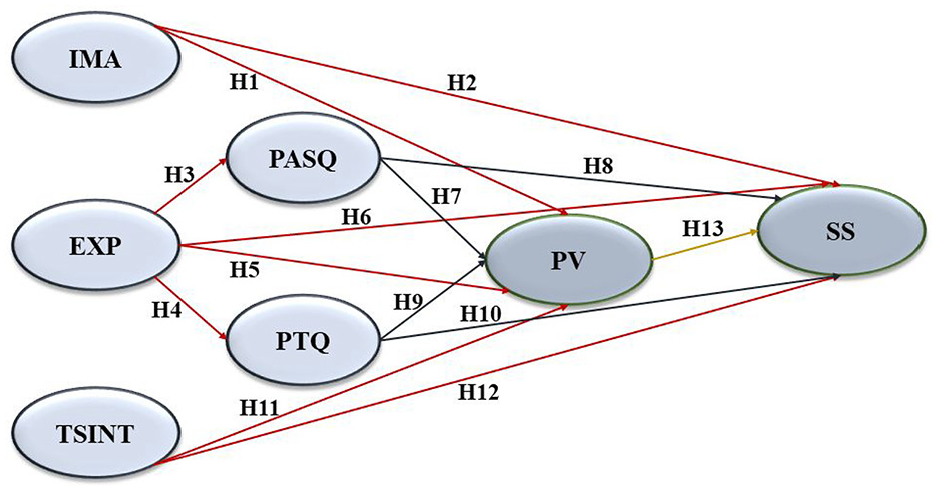
The conceptual model for evaluating the quality of PTT in early childhood education programs.
Definitions and Hypotheses for Student Satisfaction Model Variables
University Image
The notion of “image” pertains to the overall perception that an entity conveys to others, which includes their beliefs, attitudes, stereotypes, and corresponding behaviors (Eagly & Chaiken, 1998). In the context of universities, the IMA represents the collective perception individuals hold regarding the institution. It is influenced by factors such as the university’s academic reputation, geographical location, ranking, campus environment, and tuition fees. For the purpose of this study, IMA specifically pertains to the overall evaluation made by undergraduate students majoring in early childhood education regarding their impressions of the university. This evaluation will be measured through indicators such as the university’s academic reputation, overall prestige, societal recognition of obtained certificates, and relative advantages compared to similar institutions.
Similar to how a favorable brand image can enhance customers’ PV of a product or service, a positive IMA can cultivate a positive attitude among students toward the PTT services, thereby influencing student satisfaction. Previous research suggests that IMA not only directly impacts student satisfaction but can also exert an indirect influence through PV (Beerli Palacio et al., 2002; Özkan et al., 2020). In essence, a positive IMA fosters students’ sense of identification and belonging to the institution, thereby influencing their perceptions positively (Su & Wang, 2022; Yin et al., 2021). Consequently, the following hypotheses are proposed:
H1: IMA has a substantial positive influence on the PV.
H2: IMA has a substantial positive influence on student satisfaction.
Student Expectations
Expectation refers to the anticipations or hopes that individuals have prior to engaging in an activity, shaped by their personal learning and life experiences. In the context of this study, EXPs encompass the anticipated outcomes of university services, representing the desired quality of these services as perceived by students. Specifically, for undergraduate students majoring in early childhood education, EXPs relate to their hopes regarding the content and usefulness of PTT before their active involvement in the program.
According to the expectation confirmation theory, individuals experience satisfaction when the effectiveness of PTT services surpasses their initial expectations. Conversely, if the efficacy of PTT falls below their expectations, individuals will feel dissatisfied. Scholarly discourse regarding the impact of EXPs on student satisfaction varies, with some arguing that higher expectations lead to lower satisfaction (Zhang & Lin, 2020), while others affirm a significant positive relationship between EXPs and satisfaction (Geier, 2021; Paechter et al., 2010; Sun et al., 2016).
This study posits that individuals possess the capacity to learn from personal experiences and anticipate potential benefits. Accurate or higher expectations reflect a positive mindset characterized by active engagement, which in turn fosters greater involvement, heightened perceptions of service quality in PTT, and an increased likelihood of experiencing substantial gains and higher satisfaction. Consequently, this study puts forward the following hypotheses, suggesting that EXPs have a positive and significant effect on the perceived quality of administrative services, teaching services, PV, and student satisfaction in PTT:
H3: EXPs exert a significant positive influence on the perceived quality of administrative services.
H4: EXPs exert a significant positive influence on the perceived quality of teaching services.
H5: EXPs exert a significant positive influence on the PV.
H6: EXPs exert a significant positive influence on student satisfaction.
Perceived Service Quality (Perceived Quality of Administrative Services and Perceived Quality of Teaching)
Perceived service quality encompasses students’ comprehensive evaluation and perception of PTT services following their participation. University services are intricate and multifaceted in nature. Within the ECSI model, perceived service quality is categorized into software service perceived quality and hardware service perceived quality. However, in the context of PTT within early childhood education programs, perceived service quality is divided into two dimensions: perceived quality of administrative services and perceived quality of teaching services.
The concept of perceived quality of administrative services relates to the undergraduate students’ encounter with the caliber of services offered by the administrative management department within PTT for early childhood education programs. It is assessed through diverse indicators encompassing the organization of PTT schedules and venues, the service-oriented behavior of administrative personnel, and their promptness in addressing student inquiries. Conversely, the notion of perceived quality of teaching services pertains to the perception of the quality of teaching activities throughout the PTT program. It is primarily assessed based on the practicality of teaching outcomes, the appropriateness of content arrangement, teaching methodologies, and assessment methods.
Therefore, the concept of perceived quality of administrative services is linked to the experiences of undergraduate students with the level of services provided by the administrative management department within the PTT programs for early childhood education. This concept is evaluated through various indicators that encompass the organization of PTT schedules and venues, the service-oriented behavior of administrative staff, and their responsiveness to student inquiries. Specifically, the latent variable “Perceived Administrative Service Quality” consists of seven observed indicators, with the primary four indicators based on factor loadings including: the demeanor of administrative staff in addressing issues, the timeliness in resolving student inquiries, the arrangement of PTT activities, and the management and utilization of training facilities. On the other hand, the concept of perceived quality of teaching services concerns the assessment of teaching activities throughout the PTT program. This evaluation primarily focuses on the practicality of teaching outcomes, the suitability of content organization, teaching methodologies, and assessment techniques. By examining the factor loadings of observed indicators within the construct of “Perceived Teaching Quality,” the top three indicators include the relevance of teaching activities in terms of career readiness, the appropriateness of teaching content, and the efficacy of teaching methods employed by the instructors.
According to (Fornell et al., 1996), the initial determinant of customer satisfaction is the perception of the quality of a product or service. Similarly, in the field of education, a positive perception of quality can also contribute to students’ sense of accomplishment and satisfaction (To & Lung, 2020). Based on the above discussion, the following hypotheses are put forth in this study:
H7: The perceived quality of administrative services has a substantial positive impact on the PV.
H8: The perceived quality of administrative services has a significant positive effect on student satisfaction.
H9: The perceived quality of teaching services has a notable positive influence on the PV.
H10: The perceived quality of teaching services has a significant positive effect on student satisfaction.
Teacher-Student Interaction (TSINT)
TSINT delineates the dynamic and interactive relationship between educators and learners throughout PTT activities, encompassing behaviors that mold individuals’ cognitive processes, abilities, and values (Hall, 2017; Pennings et al., 2014). Effective teacher-student interaction assumes a pivotal role in fostering students’ comprehension of acquired knowledge and the practical application of theoretical principles (Sun et al., 2016). The efficacy of PTT is contingent not solely on its planning and structuring but also on the guidance, support, and assessment students receive during the training regimen. Prior investigations have affirmed that positive teacher-student engagement can bolster students’ motivation to learn. Learners engaged in meaningful dialogs with their instructors are more inclined to seek assistance when confronted with academic challenges, thereby yielding higher scholastic accomplishments (Hettiarachchi et al., 2021). Additionally, they are prone to encounter elevated levels of academic achievement and contentment with their learning journey. Consequently, this research presents the following hypotheses:
H11: TSINT significantly contributes to the PV.
H12: TSINT significantly influences student satisfaction.
Perceived Value
PV, from an individual standpoint, refers to the subjective assessment of whether the benefits obtained outweigh the personal investment made in comparison to what is received. It is rooted in the concept of fairness, where income aligns with expenditure (Athanassopoulos & Iliakopoulos, 2003). Within the scope of this research, the concept of PV refers to the individual assessment made by undergraduate students specializing in early childhood education. It entails their subjective judgment regarding whether the benefits derived from PTT outweigh the invested resources of time, finances, and effort. If the benefits exceed the investment, satisfaction ensues; otherwise, dissatisfaction prevails. Notably, in well-established consumer satisfaction index models such as the SCSB, the ACSI, and the ECSI, PV and customer satisfaction demonstrate a substantial positive correlation. This finding has also been supported by numerous studies in the field of education (Hunt, 1977; Temizer & Turkyilmaz, 2012). Therefore, this research presents the following hypothesis:
H13: The PV significantly influences student satisfaction in a positive manner.
Student Satisfaction
As per (Oliver, 2015), customer satisfaction refers to the evaluation made by customers regarding the characteristics of a product and the extent to which it fulfills their needs. It exhibits hierarchical, temporal, subjective, and relative qualities. Customer satisfaction serves as a metric to gauge the contentment of customers, representing their emotional response when their needs, desires, and expectations are met or exceeded during the consumption process (Chahal & Devi, 2013). In the context of this study, student satisfaction denotes the overall assessment of the “services” provided during PTT, based on the students’ firsthand experience. It is influenced by both institutional and individual factors. In the realm of economics, customer satisfaction leads to customer loyalty, which significantly predicts repeat purchase behavior and future business profitability. Therefore, it serves as a crucial indicator for optimizing and replicating successful business practices. Given that students are unlikely to repeat the entire process of PTT, student satisfaction becomes the focal variable in this study. It is shaped by six fundamental factors: the IMA, EXPs, the PQ of administrative services, the perceived quality of teaching services, TSINT, and the PV.
Methodology
Participants and Procedure
In the spring of 2021, this study involved a sample of 365 fourth-year students from four universities located in Shanxi province, China. These fourth-year students had successfully completed the entire PTT process and they are already seeking employment. The selection of four universities from Shanxi province, a region of importance for early childhood teacher education in China, was carried out to guarantee the representativeness of the target population. Moreover, the researchers’ established affiliations with these institutions streamlined the process of data collection. Although this study was executed within Shanxi province, the researchers recognize the necessity for additional validation of the proposed model across other regions in China to augment its generalizability.
Data collection was conducted through an online survey. The survey link, along with detailed instructions, was provided to the academic secretaries, who then distributed it to all fourth-year early childhood students enrolled in PTT programs. Participants in the study provided informed consent prior to their inclusion, and their participation was voluntary. The research assured the respondents of data confidentiality and anonymity.
Instruments
The evaluation IMA involved the utilization of a four-item version of the Perceived Social Support Questionnaire (Teeroovengadum et al., 2019). Participants were instructed to evaluate assertions like “In comparison to other universities, my university possesses a favorable reputation,” employing a 5-point Likert scale ranging from 1 (strongly disagree) to 5 (strongly agree).
Furthermore, EXPs were gauged through a four-item adaptation of the Student Expectation Questionnaire (Lin et al., 2023). Respondents expressed their levels of agreement with statements such as “The PTT program fulfills my academic requirements” on a 5-point scale varying from 1 (strongly disagree) to 5 (strongly agree).
Teacher-student interaction was assessed with six items. Four items were adapted from the Digital Capital Index (Adamou, 2019), while two items were taken from (Bailey, 2002). Participants rated statements such as “The teachers or trainers provide timely support” on a 5-point scale ranging from 1 (strongly disagree) to 5 (strongly agree).
The evaluation of the PASQ entailed the utilization of seven items, three of which were derived from the Digital Capital Index (Ali et al., 2017), while four items were taken from (C.-C. Huang et al., 2020). Participants were asked to provide ratings on a 5-point scale, ranging from 1 (strongly disagree) to 5 (strongly agree), for statements such as “My university promptly offers assistance or guidance when I encounter difficulties in my practical learning.”
PTQ was evaluated using eight items from the Student Expectation Questionnaire. Participants indicated their agreement levels with statements such as “I feel satisfied with the evaluation mechanism of PTT” on a 5-point scale ranging from 1 (strongly disagree) to 5 (strongly agree).
The measurement of PV entailed the inclusion of three items from the PV Questionnaire. Participants rated statements such as “In general, I believe that the PTT provided value for the money spent” using a 5-point scale ranging from 1 (strongly disagree) to 5 (strongly agree). Two items were adapted from (Teeroovengadum et al., 2019), and one item was sourced from (C.-C. Huang et al., 2020).
Student Satisfaction was assessed using five items from the Student Satisfaction Questionnaire. Participants indicated their agreement levels with statements such as “My satisfaction with PTT compared to my expectations” on a 5-point scale ranging from 1 (strongly disagree) to 5 (strongly agree). One item was adapted from (Teeroovengadum et al., 2019), and four items were taken from (C.-C. Huang et al., 2020).
The evaluation of the PASQ construct employs a series of seven items crafted to capture preservice teachers’ encounters with the administrative management and operational aspects of the PTT program. These items encompass the coordination and organization of PTT activities, the responsiveness and service-oriented approach of administrative personnel in handling student queries, and the administration and utilization of training facilities. Likewise, the assessment of the PTQ construct incorporates eight items that specifically scrutinize preservice teachers’ perspectives on the practicality and pertinence of instructional content, the suitability of teaching methodologies employed, and the efficacy of assessment procedures within the PTT program.
Given that the scale was newly introduced in this study, an exploratory factor analysis was performed utilizing the maximum likelihood estimation method. The findings unveiled a solitary factor with an initial eigenvalue of λ = 6.063, which accounted for 60.63% of the overall variability. This result suggests that the scale items converged onto a unidimensional construct, indicating that the items were effectively capturing the essence of student satisfaction with PTT programs. The high eigenvalue and the substantial proportion of variance explained by the single factor solution provide strong evidence for the scale’s convergent validity. This suggests a high degree of internal consistency among the scale items, converging onto a single underlying factor. However, the subsequent confirmatory factor analysis (CFA) and structural equation modeling (SEM) involved a more comprehensive evaluation of the measurement model, incorporating multiple latent variables aligned with well-established customer satisfaction frameworks, such as the SCSB, ACSI, and ECSI. The final conceptual model comprised seven key factors: university image (IMA), student expectations (EXP), perceived quality of administrative services (PASQ), perceived quality of teaching services (PTQ), teacher-student interaction (TSINT), perceived value (PV), and student satisfaction (SS).
Data Analysis
The collected data underwent a rigorous analytical process. Initially, descriptive statistics were calculated, and Pearson correlations were examined among the composite scale scores. Additionally, variance inflation factor (VIF) values were computed to assess multicollinearity among predictor variables. Subsequently, a confirmatory factor analysis (CFA) was conducted to establish a measurement model, utilizing the scale items as indicators for the latent variables. Lastly, structural equation modeling (SEM) was employed to evaluate the goodness of fit of the model and test the formulated hypotheses.
Results
Sampling Profile
In order to verify the representativeness of the sample, a comparison was conducted between the characteristics of the participants and those of the wider study population. Table 1 displays the distribution of various demographic attributes among the surveyed students, including gender, institution type, and parental educational level. The findings indicated a satisfactory alignment between the sample and the population. It is noteworthy that, similar to the overall study population, the majority of respondents in the sample were female (91.2%, n = 333), while male students constituted a smaller proportion (8.8%, n = 32). This observation is consistent with the real-world context where the number of female students pursuing early childhood education significantly surpasses that of male students.
Demographic Profile of Respondents of Actual Study (n = 365).

Examination of the Measurement Model
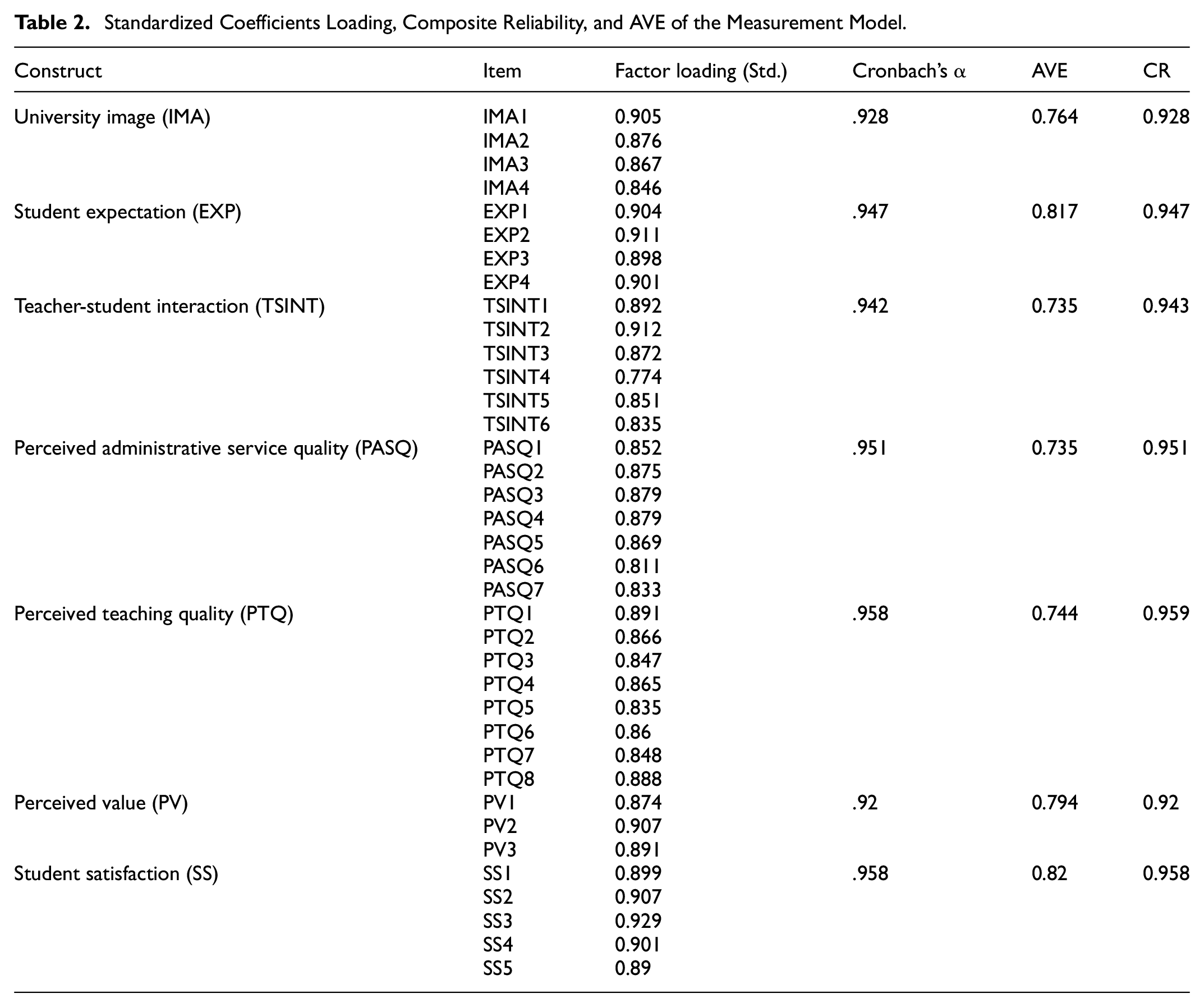
Before conducting empirical analysis, it is essential to assess the measurement model’s quality, including tests for reliability, convergent validity, and discriminant validity. Reliability tests involve examining the values of Cronbach’s α and Composite Reliability (CR), while convergent validity is primarily evaluated using the Average Variance Extracted (AVE) criterion. The evaluation results of the measurement model are presented in Table 2. Both Cronbach’s α value and CR exceed the threshold of .7, indicating good reliability of the questionnaire. Moreover, the AVE surpasses 0.7, indicating satisfactory convergent validity.
Standardized Coefficients Loading, Composite Reliability, and AVE of the Measurement Model.
To evaluate the discriminant validity of the measurement model, the analysis utilized the AVE and the squared correlation coefficients between the latent variables, which are illustrated in Table 3. The AVE values (diagonal entries) for each dimension of the questionnaire were found to be higher than the squared correlation coefficients between dimensions. This finding indicates that the measurement model exhibits good discriminant validity, confirming the distinctiveness of the latent variables.
Discriminant Validity Summary for Measurement Model.

Note. The table displays Pearson correlation coefficients and the square root of the AVE values. The diagonal entries in bold indicate the square root of the AVE value.
Evaluation of the Structural Model
After conducting the CFA and evaluating the reliability and validity of the measurement model, the goodness of fit of the structural model was assessed, and the results are presented in Table 4.
Model Fit Indices of the Initial Structural Model.

Examination of Hypotheses
Table 5 presents the results of the hypothesis testing, including the estimates, standard errors, critical ratios, p-values, and significance levels for each path in the model.
The Causal Effects of the Constructs and the Results of 13 Hypotheses.

Among the 13 hypotheses tested, the following were found to be significant: H1 (PV <— IMA), H3 (PASQ <— EXP), H4 (PTQ <— EXP), H5 (PV <— EXP), H7 (PV <— PASQ), H8 (SS <— PASQ), H9 (PV <— PTQ), H10 (SS <— PTQ), H11 (PV <— INT), and H13 (SS <— PV). The significant results indicate that these paths have a meaningful impact on the respective constructs.
However, the statistical analysis revealed that H2 (SS <— IMA), H6 (SS <— EXP), and H12 (SS <— INT) were not statistically significant, suggesting that IMA, TSI, and EXPs do not have a substantial impact on SS.
Based on these findings, the research hypotheses are not fully supported, suggesting the need for further refinement of the model and additional investigation (refer to Table 5 for detailed results).
Revision of the Model
As previously mentioned, there exists a debate regarding the impact of EXPs on student satisfaction, with conflicting conclusions reported by researchers. In light of this, an effort was made to revise the model by eliminating the direct path “student expectations → student satisfaction.” The fit indices for the revised model are presented in Table 6.
Model Fit Indices After Modification.

The evaluation of the revised model employed various absolute fit measures, including χ2 /df, GFI, CFI, NFI, TLI, RMSEA, and SRMR. The acceptable thresholds for these measures are indicated in the table.
The results of the revised model indicated a χ2 /df value of 1.886, which falls within the acceptable range. The other fit indices, including GFI (0.878), CFI (0.961), NFI (0.920), TLI (0.958), RMSEA (0.049), and SRMR (0.062), also met the criteria for acceptability.
Thus, based on the fit indices, the revised model demonstrated good acceptability, suggesting that the modifications made to the original model were successful. Please refer to Table 6 for a detailed summary of the model fit indices after the modification.
After the model revision, all the fit indices meet the required standards, indicating the practical analytical significance of the revised model. Subsequent path analysis was conducted, and all 12 paths in the revised model passed the hypothesis tests, as shown in Table 7. This led to the establishment of the student satisfaction index model for early childhood education programs. The finalized model is visually depicted in Figure 5.
Path Coefficients and Hypothesis Tests of the Modified Model.


Conceptual model of SS in undergraduate early childhood education programs with a focus on PTT.
Table 7 provides the path coefficients and results of the hypothesis tests for the modified model. Each hypothesis is labeled with a unique identifier and presents the estimated path coefficient, its standard error, critical ratio, p-value, and the overall result of the hypothesis test.
The results of the hypothesis tests indicate that all the hypotheses (H1 to H12) are supported. This suggests that there is a significant relationship between the constructs in the model and student satisfaction in early childhood education programs.
Figure 5 illustrates the conceptual model of SS in the undergraduate early childhood teacher preparation program in Shanxi, China. The model demonstrates that the constructs of IMA, EXP, TSINT, PASQ, PTQ, and PV collectively explain 43% of the total variance in student satisfaction.
Analysis of Influence Effects Among Model Variables
Table 8 provides a summary of the findings from an investigation into the factors influencing satisfaction among undergraduate students studying early childhood education. The study developed a satisfaction index model and examined several variables for their impact. The model considered IMA, EXPs, and TSINT as independent variables. Mediating variables included PASQ, perceived teaching service quality, and PV. The dependent variable was student satisfaction. The analysis employed Amos-syntax and Bootstrapping techniques to evaluate direct effects, indirect effects, and total effects among these variables.
Relationships between Latent Variables: Direct, Indirect, and Total Effects.

Discussion
Impact of IMA on Student Satisfaction: IMA Plays a Crucial Role in Influencing Student Satisfaction (H2) Both Directly and Indirectly Through PV (H1)
The study quantified the direct influence of IMA on SS, yielding a measurement of 0.123. Furthermore, IMA also generates an indirect positive impact on satisfaction through PV, with an effect size of 0.036. These results align with the previous study conducted by (Sun et al., 2016). IMA represents students’ beliefs and attitudes toward the institution, creating a halo effect on the evaluation of PTT. A positive IMA fosters a sense of pride and belonging among students, resulting in a positive attitude toward the process and outcomes of PTT, thus increasing their likelihood of being satisfied with the results. In the future, universities should focus not only on promoting their faculty and infrastructure but also on enhancing the content of PTT. By doing so, they can effectively leverage the positive effects of IMA.
Influence of EXPs: Although EXPs Do Not Directly Impact Student Satisfaction (H6 Removed), They Do Significantly and Positively Influence the Perception of Administrative Service Quality (H3), Teaching Service Quality (H4), and PV (H5)
The findings of this study indicate that EXPs do not directly and significantly impact satisfaction. However, it is noteworthy that these variables exhibit a substantial and favorable influence on the perception of administrative service quality, teaching service quality, and PV. The effect sizes for these impacts are recorded as 0.604, 0.601, and 0.247, respectively. These results are consistent with the research conducted by (Sun et al., 2016) and (Geier, 2021), suggesting that EXPs indirectly affect satisfaction through other mediating variables. The analysis suggests that students with appropriate expectations for PTT tend to exhibit more positive and diligent learning attitudes, perceive higher service quality in PTT, achieve greater gains, and have a higher PV. However, if PTT activities are not adequately promoted, students in early childhood education programs may develop excessively high expectations. When they encounter challenges or fail to meet their ideal goals, it can negatively impact their evaluation of student satisfaction.
Perceived Quality of Administrative Services: The Quality of Administrative Services is Directly Linked to Satisfaction (H7) and Also Indirectly Influences Satisfaction Through PV (H8)
The study results reveal that the perceived quality of administrative services exerts a standardized direct effect value of 0.174 on student satisfaction, along with a standardized indirect effect value of 0.055 through perceived value. This implies that, within the PTT context, students pursuing early childhood education emphasize the demeanor and timeliness of administrative staff in addressing concerns, with a subsequent focus on the organization of PTT activities and the management of training facilities. In light of these outcomes, it is advised that administrators overseeing early childhood teacher education programs in China prioritize the enhancement of administrative services by carefully considering the specific needs and preferences of preservice teachers. The direct effect is stronger than the indirect effect, which aligns with the conclusions drawn in (Ashraf et al., 2018) research. The latent variable “Perceived Administrative Service Quality” comprises seven observed indicators, with the top four indicators based on factor loadings being: PASQ3 (attitude in handling issues, 0.879), PASQ5 (timeliness in resolving issues, 0.875), PASQ2 (scheduling of PTT, 0.875), and PASQ4 (management of PTT facilities, 0.869). This suggests that, during PTT, students in early childhood education prioritize the attitude and promptness of administrative service personnel in addressing issues, followed by the scheduling of PTT and the management and utilization of training facilities. Based on these findings, it is recommended that administrators prioritize the enhancement of administrative services by taking into account the specific requirements and preferences of students.
Perceived Quality of Teaching: Similarly, the Perceived Quality of Teaching Significantly Impacts Satisfaction With PTT (H10) and Indirectly Affects Student Satisfaction Through PV (H9). The Overall Effect is Slightly Greater Than That of PASQ
Likewise, the perceived quality of educational services demonstrates both a direct impact (with a standardized direct effect value of 0.191) and an indirect impact (with a standardized indirect effect value of 0.044) on student satisfaction. This suggests that, in comparison to administrative services, the caliber of educational services holds a more substantial sway over the satisfaction levels of undergraduate students specializing in early childhood education within the PTT framework. Through an analysis of the factor loadings, it becomes evident that the satisfaction of preservice teachers is significantly shaped by the relevance of instructional content and the pedagogical approaches employed by educators during practical training sessions. Consequently, stakeholders are encouraged to prioritize enhancements not only in administrative services but also in the elevation of educational service quality within PTT initiatives. Examining the factor loadings of observed indicators under PTQ, the top three indicators are PTQ1 (the usefulness of teaching activities in terms of employability, 0.891), PTQ8 (the reasonableness of teaching content, 0.888), and PTQ2 (the teaching methods employed by the teacher, 0.866). This suggests that the PV and satisfaction of students in terms of teaching service quality are greatly influenced by the usefulness of teaching content and the teaching methods employed by the teacher in PTT. Therefore, stakeholders should prioritize not only administrative services but also the enhancement of teaching service quality in practical teaching.
Teacher-Student Interaction: Teacher-Student Interaction Has a Direct Positive Impact on Satisfaction (H11) as Well as a Positive Indirect Impact Through PV (H12)
The interaction between teachers and students has a significant positive influence on the satisfaction of undergraduate students specializing in early childhood education, particularly in terms of PTT. This impact is quantified by a standardized direct effect value of 0.124. Additionally, it generates a positive indirect impact through PV, with a standardized indirect effect value of 0.045. These findings align with the study conducted by (Zou et al., 2024), emphasizing the crucial role of TSINT quality in shaping their relationship and fostering satisfaction among undergraduate students specializing in early childhood education, particularly in the context of PTT. When examining the observed variables under this dimension, students show particular concern for the speed of feedback provided by teachers in teacher-student interaction (TSINT1, 0.912), the extent to which teachers pay attention to students’ emotions and feelings (TSINT2, 0.892), and the frequency of interaction (TSINT3, 0.872). Based on these findings, it is recommended that early childhood education managers focus on improving the satisfaction of undergraduate students engaged in PTT. This can be achieved by enhancing the speed of feedback, increasing the frequency of interaction, and demonstrating attentiveness to student emotions during TSINTs.
Interaction Between Teachers and Students: The Relationship Between Teachers and Students Directly Contributes to Satisfaction (H11) and Also Indirectly Influences Satisfaction Through PV (H12)
The direct impact of teacher-student interaction on the satisfaction of undergraduate students majoring in early childhood education and participating in PTT is evident, with a standardized direct effect value of 0.124. Furthermore, this interaction indirectly influences satisfaction through PV, with a standardized indirect effect value of 0.045. These findings align with the study conducted by (Zou et al., 2024), which highlights that fostering higher-quality interactions between teachers and students can enhance relationships and increase satisfaction among undergraduate students engaged in PTT in the field of early childhood education. Analyzing the factor loadings of observed variables within this aspect, students express particular concerns regarding the speed at which teachers provide feedback during teacher-student interactions (TSINT1, 0.912), the extent to which teachers pay attention to students’ emotions and feelings (TSINT2, 0.892), and the frequency of interaction (TSINT3, 0.872). These findings indicate that managers in the early childhood education field have the opportunity to improve the satisfaction of undergraduate students engaged in PTT. This can be achieved by prioritizing the enhancement of feedback responsiveness, increasing the frequency of interactions, and displaying attentiveness to the emotional needs of students during TSINTs.
Implications
This study builds upon customer satisfaction theory and existing literature to develop a comprehensive satisfaction model for fourth-year undergraduate students specializing in early childhood education in Shanxi Province, China. Employing factor analysis and structural equation modeling, the model integrates seven key factors: IMA, EXPs, PASQ, perceived teaching service quality, teacher-student interaction, PV, and student satisfaction. The research findings reveal that IMA, PASQ, perceived teaching service quality, and teacher-student interaction have both direct and indirect effects on satisfaction with PTT. While EXPs do not directly impact satisfaction with PTT significantly, they do positively influence PASQ, perceived teaching service quality, and PV. Among these factors, PV emerges as the most influential determinant of student satisfaction with PTT. Consequently, the proposed model accounts for 43% of the total variance, with constructs such as IMA, EXPs, teacher-student interaction, PASQ, PTQ, and PV contributing to this proportion.
The study has identified significant factors that influence the satisfaction of undergraduate students participating in practical teacher training programs. By comprehending the relative importance of university image, student expectations, perceived quality of administrative and teaching services, teacher-student interaction, and perceived value, administrators and trainers can strategically allocate resources and implement targeted interventions to enhance the overall quality of PTT programs. For example, enhancing the university’s reputation and prestige, aligning student expectations with the content and outcomes of PTT, and improving the quality of administrative and teaching services can contribute to heightened student satisfaction. Furthermore, the findings highlight the critical role of teacher-student interaction in shaping student satisfaction. By prioritizing the frequency, responsiveness, and emotional attunement of interactions between trainees and experienced educators, early childhood education programs can cultivate a more supportive and enriching learning environment, leading to increased student satisfaction levels and improved learning outcomes. The developed satisfaction model can also function as a valuable diagnostic tool for early childhood teacher education institutions. By consistently evaluating the key determinants of student satisfaction, institutions can pinpoint areas for enhancement and make data-informed decisions to improve the quality of their PTT programs. This methodical evaluation can guide policy decisions, curricular adjustments, and resource allocation, ensuring that preservice teachers are adequately equipped with the essential practical skills and competencies to excel in their future roles as early childhood educators.
Limitations and Recommendations for Future Study
The study has certain limitations that need to be acknowledged. Firstly, this study specifically targets fourth-year undergraduate students who are currently enrolled in early childhood education programs. Therefore, the generalizability of the developed model to other educational programs, such as graduate programs or diploma-level students, may be limited. Additionally, the sample used in the study consists of universities located in Shanxi Province, which introduces regional specificity. However, considering the diverse geographical landscape of China, it is essential to validate the model in other provinces for its broader applicability. Future research should aim to replicate the study in different educational contexts and provinces, allowing for adjustments that enhance the model’s adaptability and relevance.
Moreover, while the study delves into diverse factors that shape student satisfaction, the constructed model comprises merely seven factors, elucidating 43% of the total variance. This suggests that 57% of the factors influencing student contentment remain unaccounted for in the model, potentially constraining its applicability to broader contexts. Consequently, forthcoming research endeavors should aim for a more exhaustive scrutiny of the determinants influencing student satisfaction, endeavoring to encompass a wider spectrum of variables to enrich the comprehension of this intricate phenomenon.
Footnotes

Ethical Considerations
The proposed study was reviewed and approved by the SEGi Research Ethics Committee (Ethics Approval Number: SEGiEC/SR/FOELPM/88/2022-2023). The Committee determined that the study procedures sufficiently protected the rights and welfare of participants. The study also provided appropriate safeguards to protect participant confidentiality and minimize risks. Participants were given sufficient information to provide informed consent. The benefits of the research were deemed to outweigh any potential risks or harms to participants. Prior to their inclusion in the study, verbal informed consent was obtained from each participant, as obtaining written consent would have been logistically challenging due to the large sample size of 365 undergraduate students across four universities. Verbal consent was chosen to minimize potential risks to participants and to ensure their anonymity and confidentiality when responding to the online survey. This method was approved by the SEGi Research Ethics Committee, as mentioned previously.
Funding
The author(s) disclosed receipt of the following financial support for the research, authorship, and/or publication of this article: The authors would like to acknowledge the financial support provided by the “Shanxi Province Higher Education General Teaching Reform and Innovation Project: Exploration and Practice of Building a ‘Dual-Teacher Model’ Teacher Team for Labor Education in Primary and Secondary Schools in the New Era” (Award Number: J20231123), Shanxi Province Higher Education General Teaching Reform and Innovation Project: Practical Research on the 6C Teaching Model under the C-STEAM Concept in Teaching Methods Courses of Early Childhood Teacher Education (Award Number: J20241258), 2025 Annual Teaching Reform Project of Xinzhou Normal University: Design and Practice of Kindergarten Science Activities under the STEAM Education Philosophy, and 2021 Annual Teaching Reform Project of Xinzhou Normal University: Reform and Practice of Preschool Science Curriculum Based on the STEM Education Concept (Award Number: JGYB202128).
Declaration of Conflicting Interests
The author(s) declared no potential conflicts of interest with respect to the research, authorship, and/or publication of this article.
Data Availability Statement
The authors will make all data available upon reasonable request.