



Abstract
Building on prior research, this study utilizes insights from Saudi female elementary teachers to examine their experiences and perceptions of the feminization of elementary education. It explore their views, challenges, and proposed solutions for instructing male students. The research employs a mixed-methods approach, using interviews and classroom observations. The interviews were conducted with nineteen teachers, complemented by classroom observations. Thematic analysis and coding were performed, revealing several key themes. These include challenges related to male student discipline, gender-based learning differences, four distinct obstacles, and a comparison between male and female teaching approaches. It highlights the crucial role of teacher training in classroom management and the complexities of gender dynamics in elementary education. The findings emphasize the need for improved school facilities and have significant implications for policymakers, administrators, and educators. It is recommended that teacher training programs prioritize classroom management training and that schools invest in conducive learning environments.
Plain language summary
Purpose: To understand Saudi female elementary teachers’ experiences and insights on the feminization of elementary education, especially when instructing male students. Methods: combined interviews and classroom observations in a mixed-methods approach. We have interviewed nineteen teachers and then observed their classrooms. After collecting the data, we used thematic analysis and coding to identify key themes. The study highlighted several areas: Challenges with disciplining male students. Differences in how boys and girls learn. Four unique obstacles faced by teachers. Comparisons between how male and female teachers approach instruction. A standout point was the importance of teacher training, especially in classroom management. The results highlight the need for improved school facilities and emphasize classroom management training to enhance the teaching experience and learning environment. Limitations: While the study gives valuable insights, it’s based on a specific group of nineteen teachers in Saudi Arabia, so the findings might not be generalizable to all contexts. Also, the focus is primarily on elementary education, so insights might differ for other educational levels.
Introduction
Saudi Arabia’s Vision 2030 marks a new phase of transformation for the country’s educational sector. Among its key goals are the enhancement of national achievement scores for boys, promoting equal educational opportunities for both genders and optimizing academic resources by reducing expenditures on school infrastructure (Vision-2030, 2016). One notable initiative in line with these objectives is the feminization of teaching in grades 1 to 3. The Ministry of Education’s decision to feminize teaching in these grades was influenced by several factors. First, academic performance metrics indicated that girls consistently outperformed boys in math and science. Data from TIMSS 2019 (Mullis et al., 2020) and PISA 2019 (OECD, 2019) highlighted this academic disparity in the Kingdom of Saudi Arabia. This disparity in performance led the Ministry of Education to consider whether assigning female teachers to grades 1 to 3 could enhance boys’ academic performance and ensure equal educational opportunities. Another reason was the need to provide equal access to quality teaching. The Ministry of Education believes that coeducation in grades 1 to 3 will ensure that both boys and girls receive high-quality instruction. The third reason relates to economic considerations. The Ministry of Education projected that coeducation in these grades is anticipated to significantly reduce the education budget, particularly in terms of infrastructure costs, with estimated savings of $533 million in space alone (Obaid, 2019).
Gender dynamics, especially in the realm of education in Saudi Arabia, have historically been subjects of debate (Alsuwaida, 2016; Hamdan, 2005). Influenced by religious and cultural factors, the education of girls and boys has undergone significant shifts over time. Debates have ranged from the accessibility of education for girls to the appropriateness of women in teaching roles. Globally, the trend in countries such as the United States has shifted from single-sex educational institutions to co-educational models, though some schools still offer single-sex classes to enhance educational achievements (Franklin & Rangel, 2022; Goodkind et al., 2013; Gurian & Stevens, 2004; Gurian et al., 2008; McCreary, 2011).
Contrastingly, Arab nations present a different picture, especially with the recent trend of feminizing teaching in elementary education (Alkandri, 2014; Almalki et al., 2022; Alnahdi, 2013; Alsewedan, 2016; Dickson & Le Roux, 2013; Mahdi & Al-Arabawi, 2005). For instance, in the United Arab Emirates, public schools segregate students by gender from grades 1 to 12. This has led to a reliance on male teachers to address the shortage of male educators (Ridge, 2009). However, steps toward feminizing primary schools have been initiated, signaling a potential move toward coeducation in public schools. In Saudi Arabia, Riyadh’s public elementary schools introduced male students to grades 1 to 3 taught by female teachers in 2019. While this initiative aimed to improve in the educational sector, it was not without challenges. Various concerns have emerged, rooted in social, religious, and cultural factors, as highlighted by studies (Alkandri, 2014; Almalki et al. 2022; Alsewedan, 2016; Dickson & Le Roux, 2013; Mahdi & Al-Arabawi, 2005; Mulholland & Hansen, 2003; Ridge, 2009). Central to the discourse are issues related to the quality of teacher training, the significance of male role models in education, and the overarching need for gender balance and diversity.
In light of Saudi Arabia’s recent feminization initiative, this study explores the experiences of female elementary teachers instructing male students in grades 1 to 3. The primary objectives include examining these teachers’ perceptions, understanding the challenges they face, and assessing the initiative’s implications for academic outcomes and gender equality. While international literature (Drudy, 2008; Ehrenberg et al., 1995; Robinson-Cimpian et al., 2014) provides insight into the potential impact of teacher gender on student outcomes, highlights the declining numbers of male teachers, and examines the challenges and opportunities presented by a predominantly feminized teaching workforce, the Saudi context presents unique cultural and social challenges to this discourse. To date, only a few studies have addressed this topic within the Saudi context. For instance, Al-Anazi (2021) explored parents’ perceptions of female teachers instructing boys, uncovering a low level of parental involvement. Similarly, Al-Asimi (2021) highlighted challenges in first-grade teaching practices in Al-Kharj city, such as limited student-teacher interaction, classroom management issues, and a lack of resources for teaching first-grade boys. By building on these foundational studies, the current research aims to provide a more comprehensive understanding of the impact of feminization on the Saudi educational system.
Study Objective
The study explores the experiences and perceptions of Saudi female elementary teachers regarding the recent feminization of elementary education initiative. It aims to understand the challenges they face, within Saudi Arabia’s unique socio-cultural context and to identify their proposed solutions for more effective pedagogical practices.
Research Questions
RQ1: What are the opinions of Saudi female elementary teachers regarding the feminization of elementary education?
RQ2: What specific challenges do Saudi female elementary teachers face when introducing boys into their classrooms for the first time
RQ3: What solutions do Saudi female elementary teachers suggest to enhance their experience of teaching boys for the first time?
Literature Review
Feminization of Teaching and Vision 2030
Saudi Arabia’s Vision 2030 is a comprehensive national plan aimed at transforming the country into a modern, thriving, and diverse society. This vision encompasses various goals, including economic diversification, women’s empowerment, and the creation of an inclusive society. Education plays a pivotal role in achieving these goals and is regarded as a crucial tool for realizing the broader vision. The education-related goals of Vision 2030 include increasing women’s participation in the workforce, promoting entrepreneurship, and establishing a high-quality education system (Vision-2030, 2016).
A key pillar of Vision 2030 is women’s empowerment, which includes their increased involvement in education, science, and technology. The vision aims to enhance the quality and accessibility of education while ensuring equal opportunities for individuals of all genders and socioeconomic backgrounds. Vision 2030 also highlights the close relationship between education and economic development. A well-educated workforce is essential for fostering economic growth, driving innovation, and creating new industries and employment opportunities (Alharbi, 2022).
Vision 2030 places strong emphasis on investing in education and fostering innovation, entrepreneurship, and job creation to drive economic progress. Within its framework of women’s empowerment and equal opportunities, the feminization of teaching emerges as a significant step toward achieving these objectives. By increasing female participation in the education sector, Saudi Arabia not only aligns with Vision 2030’s goals but also supports the broader global push for gender equality across all sectors. While the feminization of teaching presents challenges due to the unique socio-cultural dynamics of Saudi Arabia, it also offers an opportunity to harness the potential of female educators, thereby enhancing the quality of education and fostering a more inclusive and diverse learning environment. This initiative is not only about gender equality but also about optimizing the nation’s human resources to achieve the broader economic and social goals outlined in Vision 2030.
Cultural Perspectives on the Feminization of Teaching
Historically, the discussion on gender roles and societal expectations has been shaped by the works of renowned authors. Virginia Woolf extensively explored the intricacies of gender dynamics and societal expectations, emphasizing the importance of women’s voices and their unique experiences in a predominantly male-dominated society (Woolf, 1929). Similarly, Jane Austen’s novels offer a subtle yet profound commentary on gender roles, societal expectations, and the limitations placed on women during the 18th and 19th centuries (Austen, 1813). Culture and feminization are interconnected concepts that significantly influence individuals and communities. Culture encompasses the shared beliefs, values, customs, behaviors, and artifacts that characterize a particular group or society. It shapes people’s thoughts, emotions, actions, and perspectives, profoundly affecting their experiences. Gender roles and expectations hold a central position in many cultures, as they define specific behaviors, activities, and characteristics deemed more suitable for men or women.
Feminization refers to the process by which women gain increased visibility and influence in areas of society and culture historically dominated by men. This process involves shifts in gender roles, greater representation of women in leadership positions, and evolving cultural attitudes and beliefs about women. Female educators play a crucial role in young students’ upbringing, as research has shown that their nurturing and support are particularly beneficial for early childhood development. Additionally, female teachers are more likely to foster positive student relationships and engagement (Sabbe & Aelterman, 2007), implementing practices that promote student success (Frenzel et al., 2021; Tariq & Zaman, 2022). Feminization can drive cultural change within a culture because the increased presence and influence of women can lead to shifts in societal norms and values. For instance, the feminization of the workplace may give rise to flexible work arrangements and a greater focus on achieving work-life balance. Similarly, the feminization of traditionally male-dominated fields can influence how these fields are valued. However, culture also shapes feminization, as societal norms and values determine the opportunities available to women and influence the definition and perception of femininity.
The process of feminization within a culture or society has significant consequences for individuals and communities, including changes in gender roles and expectations, shifts in power dynamics between men and women, and increased representation of women across various sectors of society (Ridgeway & Correll, 2004). For instance, the feminization of the workforce can create greater opportunities for women in traditionally male-dominated industries, such as science and technology, thereby fostering greater gender equality in terms of pay and benefits (Goldin, 2014). However, feminization can also face resistance from individuals who perceive it as a threat to traditional gender roles and norms. Such resistance often manifest in challenges for women, including gender-based discrimination and bias, unequal opportunities and pay, and limited representation in leadership positions (Goldin, 2014; Ridgeway & Correll, 2004). Culture and feminization are deeply interconnected, with cultural attitudes and beliefs playing a critical role in shaping women’s social experiences and the opportunities available to them. As feminization progresses, it remains crucial to challenge and transform harmful cultural attitudes and beliefs while promoting greater gender equality across all sectors of society.
Gender and Learning
Researchers have examined the impact of coeducation and single-sex classrooms on various educational aspects. Several studies have highlighted issues related to academic performance, behavior, learning processes, curriculum and instruction, classroom management, learning styles, school readiness, and teacher preparation (Bonomo, 2010; Burusic et al., 2011; Günther-Hanssen et al., 2019; T. G. Henderson & Graves, 2015; Houtte, 2004; McFarland et al., 2011; Sullivan, 2009).Günther-Hanssen et al. (2019) explored gender differences in scientific productivity and posited that these disparities significantly contribute to the observed achievement gap between boys and girls, even as early as preschool. This disparity is not merely about aptitude but also how foundational gender roles, expectations, and socialization can shape learning experiences and outcomes. Various scholars (Benson et al., 2011; Dee, 2006; Hadjar et al., 2014; Hedges & Nowell, 1995; Houtte, 2004; Hyde & Mertz, 2009; Mullis et al., 2020; Nasser, 2016; Shen et al,. 2020) have supported the notion of fundamental gender differences in scientific productivity, which could explain the educational achievement gap between boys and girls.
These perspectives suggest that men and women process and analyze information differently. In recent studies conducted in Saudi Arabia Hashem (2022) identified gender-based differences in learning styles among dental students at Taibah University. Concurrently, Stoeger et al. (2022) observed that girls in Saudi secondary schools are surpassing boys in academic performance. Such findings highlights the evolving gender dynamics in Saudi education and underscore the need for continued research. Nasser (2016) examined students’ cognitive processes and reported that boys and girls not only differ in their approach to acquiring information but also in how they organize and assimilate it. Moreover, Wight (2010) contextualizes cognitive and performance differences within a larger framework of gender construction. He argued that the formation of gender relations and identities is not isolated from academic settings but is deeply intertwined with them. The way students perceive their gender and that of their peers influences their interactions, both with their teachers and fellow students. These interactions, in turn, have profound implications for the learning process, shaping not only academic outcomes but also personal and social development.
Single-sex classrooms, where students of the same gender are taught separately, have been a subject of debate and research in elementary education. Advocates argue that gender-segregated learning environments can foster greater focus and effectiveness by catering to different learning styles and potentially improving academic outcomes (A. T. Henderson & Mapp, 2002). However, critics contend that single-sex classrooms may reinforce gender stereotypes and fail to prepare students for a diverse world. Research has shown that single-sex classrooms can perpetuate gender-based differences in behavior and academic performance (Sadker & Sadker, 1994). Additionally, they may limit students’ opportunities to develop essential social skills necessary for interacting with the opposite gender (Rippon, 2011). While some studies suggest that single-sex classrooms may lead to improved academic outcomes, others have found these benefits to be statistically insignificant (Lubienski & Lubienski, 2013).
The effectiveness of single-sex classrooms in elementary education remains a subject of debate, warranting further research. While some studies indicate that women in single-sex often experience higher self-esteem, greater intellectual achievements, and enhanced vocational aspirations, it is essential to weigh these benefits against potential disadvantages. Social norms play a crucial role in shaping gender behaviors, particularly within the framework of cognitive social learning theory. Educators should be equipped to employ gender-responsive teaching strategies that address the unique strengths and needs of both genders.
Method
The primary objective of this study is to gain a comprehensive understanding of how Saudi female elementary school teachers perceive the experience of teaching male students for the first time. In order to meet this objective, the research was developed under the interpretative-phenomenological paradigm since it allowed the observation and interpretation of a concrete and complex educational reality. Examining the feminization of primary education from the perspective of female teachers provides deeper insight into the demands that placed on them by both society and the educational system. In addition, the research explores the associated challenges and the benefits found during the implementation of teaching practices, focusing on understanding the constructed nature of individual and group experiences. A qualitative research methodology was adopted, as qualitative methods facilitate and exploration of how individuals interpret the world and make sense of it based on their ideas, emotions, and internal motivations (Creswell, 2007). A case study approach, as described by Creswell (2007) and Stake (1995), was used to examine the lived experiences of multiple individuals regarding a specific concept or phenomenon—namely, the feminization of Saudi primary education. The research design ensured a comprehensive exploration of participants’ perceptions and context-sensitive micro-perspectives on the topic.
Expanding on an earlier study (Almugren et al., 2023), this research employed purposive sampling to select participants familiar with Saudi Arabia’s feminization of primary education. Nineteen teachers participated in semi-structured interviews, providing in-depth perspectives on their experiences. Classroom observations were conducted using checklists to ensure a comprehensive analysis. Interview transcriptions underwent thematic analysis, allowing for the identification of clear themes and strengthening the study’s findings.
Instruments and Procedure
During the research process, interviews and classroom observations were used as primary data collection methods. The observation checklist was guided by a checklist adapted from Borich (2015).The data collection instruments included an interview protocol (Appendix 1) and an observation checklist, both essential for gathering comprehensive insights. The interview instrument consisted of nine open-ended questions inspired by Bhana and Moosa (2016) and Moreau (2018).
To ensure the validity of the data collection instruments, a content validity method was employed. Three experts evaluated the interview questions to ensure their relevance and representativeness for the study’s objectives (Ding & Hershberger, 2002). The validation process considered four criteria: coherence, clarity, relevance, and sufficiency, ensuring that the instruments captured all necessary information for the research. To enhance the internal consistency of responses to the open-ended interview questions, NVivo software was used for systematic transcription analysis. Initially, two researchers independently applied a deductive coding approach, drawing on key barriers and enablers identified in the literature review.
To check for reliability, the analysis of the study followed the analysis process used by Miles and Huberman (1984), the data was transcribed manually by two researchers where the date reduced, and the theme emerged. Using NVivo software after the manual process, the data was displayed which allowed identifying patterns and relationships through the clustering of responses. The themes were then further refined and classified as obstacles and challenges. Finally, by examining the findings and reviewing the consistency of the research, the conclusions were confirmed to guarantee the authenticity and dependability of the findings. This rigorous methodological approach reinforced the credibility of the qualitative analysis and ensured consistency in the interpretation of the data.
For the checklist tool, Cronbach’s alpha was calculated at .721 (Table 1), confirming that the tool has high reliability.
Internal Consistency for the Observation Checklist for Teaching and Learning and Classroom Management.

The interview procedure varied based on individual teachers’ preferences and included face-to-face and phone interviews. For teachers who expressed concerns about recording, the researchers documented the interviews directly during and after the sessions. All interviews were conducted in Arabic, the participants’ native language. Classroom observations were conducted during the teachers’ official working hours whenever possible, and audio recordings were used when feasible. The teachers’ performances were observed while they taught classes consisting of male students, using an observation checklist to assess two primary aspects. A three-point Likert-type scale was employed to evaluate the teachers’ performances. The scale was designed to evaluate two primary aspects:
Learning and Teaching—assessed through the first eight items.
Classroom Management—assessed through the subsequent ten items.
For each item in the tool, a transformation equivalent was established with an interval of 0.66. The scoring system categorized responses as follows:
Positive Items:
1.00–1.66 → Never
1.67–2.33 → Sometimes
2.34–3.00 → Always
Negative Items:
1.00–1.66 → Always
1.67–2.33 → Sometimes
2.34–3.00 → Never.
The use of both interviews and observations served as a form of triangulation, ensuring a more robust and comprehensive foundation for the research findings, thereby enhancing their trustworthiness and credibility. Building on our initial phase (Almugren et al., 2023), which relied on electronic surveys, we recognized the need for a deeper, multifaceted exploration in the current phase. Interviews were chosen for their ability to capture in-depth personal insights, while classroom observations provided tangible, real-time evidence of teaching dynamics. This combination was deemed most suitable based on our research objectives and the insights gained from the initial phase. The same teachers participated in both phases providing additional support and validation for the findings and conclusions derived from the interview data. Observing teachers in their actual teaching settings further confirmed and strengthened the insights gained from the interviews.
Participants
After obtaining ethical approval from the Ministry of Education, the study was conducted in Riyadh, the first city where the integration of boys and girls was implemented, serving as a pilot phase in 2019. Surveys were distributed across the city’s four main quadrants: North, South, East, and West. Based on the responses and alignment with the research objectives, six strategically located primary schools were selected to ensure a diverse representation within Riyadh. The study specifically targeted teachers instructing boys in grades 1 to 3 during the 2020 academic year. A two-phase sampling strategy was employed for participant recruitment:
Phase 1—Teachers from a prior study (Almugren et al., 2023) who had expressed interest in participating were approached.
Phase 2—Additional teachers from the Ministry of Education’s list were recruited, broadening the participant pool.
This process resulted in nineteen in-depth interviews with female teachers, providing valuable insights into their experiences and perspectives on teaching boys in a newly integrated setting.
Data Analysis
This study employed thematic analysis (Braun & Clarke, 2006) to analyze the data collected. The researchers engaged in a rigorous process of reading and rereading the interview transcripts, actively identifying similarities and discrepancies within and across the participants’ accounts. Manual analysis techniques were applied to extract key themes and subthemes from the data. To support and enhance the initial analysis, NVivo 11, a qualitative data analysis software developed by QSR, was used. This software facilitated data organization and management by aiding in the systematic coding and categorization of the responses. Careful coding and thematic grouping provided deeper insights into the data, contributing to the robustness and reliability of the analysis. Throughout the data analysis process, the researchers paid close attention to the content and structure of the interview transcripts, meticulously capturing details and nuances in the data. Ensuring rigor was deemed essential, with data triangulation (Miles & Huberman, 1994), employed through multiple data sources—interviews, and a checklist. This approach prevented the omission of critical categories, facilitated contrasts and comparisons, and optimized the validity and accuracy of the research findings.
This approach ensured transparency and rigor in interpreting and presenting the findings, allowing for clear connections between the identified themes and participants’ perspectives. The findings provide a nuanced understanding of the experience of teaching male students for the first time, along with its associated challenges. Additionally, practical suggestions are offered. based on these insights.
Findings
Interview Results
In this study, teachers consistently reported similar experiences when teaching male students for the first time. Through thematic analysis of the interview data, four distinct themes emerged. Additionally, a visual representation (Figures 1 and 2) illustrates the codes that contributed to these key themes and the corresponding findings.

Word cloud of the study’s codes.
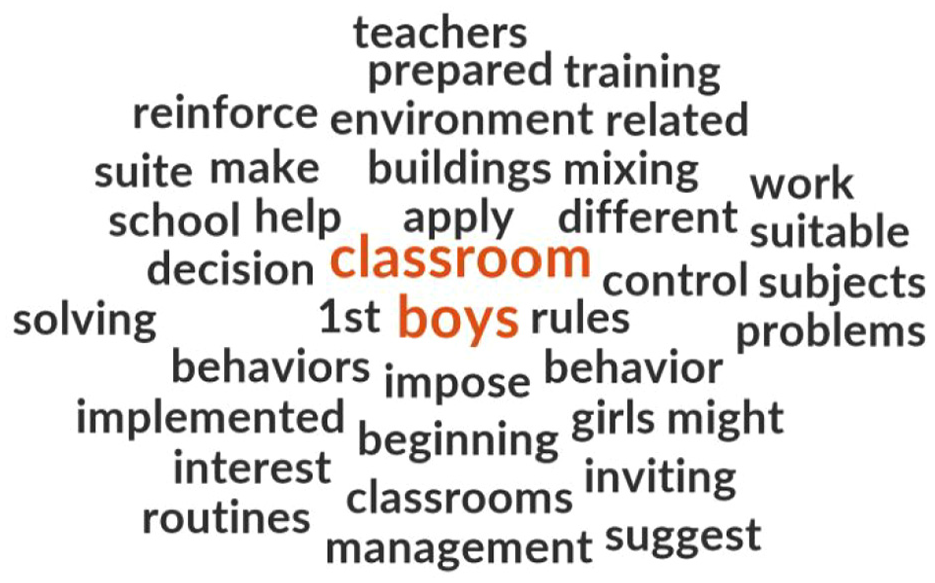
Word cloud of the study’s themes.
Theme 1: Lack of Male Student Discipline
One prevalent theme identified by the teachers was the difficulty in managing classroom discipline, particularly in their new experience with male students. Teachers frequently reported instances of disruptive behavior and a lack of respect toward their female teachers. Teacher Mona shared her experience: The boys are all over the place. They run around, play while I teach, fight, and get injured, and I honestly cannot control them … You cannot imagine how many of the kids I am dealing with are problematic; they are aggressive and violent, and they misbehave.
The teachers expressed their struggles to control the mischievous behavior of boys, attributing it to gender differences. They noted feeling inadequate in exerting firmness or authority, unlike male teachers, who are perceived as having greater authority in the classroom. Teacher Noor stated: Other boys are bullies; they are aggressive (punching and kicking) and they want to control everyone else. It is hard to keep an eye on them while teaching. I think this is where the male teachers’ strictness comes in handy!
While many teachers identified boys’ behavior and the consequent challenges in classroom management as significant issues, it is important to emphasize that a teacher’s gender should not indicate how a classroom is managed. In fact, research, such as that conducted by Ahmed et al. (2018), has concluded that female teachers often exhibit stronger classroom management skills than male teachers. However, this does not imply that all male teachers struggle with classroom management. Teachers’ capabilities should not be generalized or stereotyped based on gender. Effective classroom management depends on multiple factors, including teaching experience, professional training, individual beliefs, cultural backgrounds, and personal characteristics, as well as student-specific needs. This is evidenced by the fact that two of the teachers in the study did not encounter these challenges, as they possessed the necessary skills needed to effectively manage and control their classrooms. Teacher Sarah said: The behavior of the student depends on the teacher; if the teacher has the ability to control the class, then it does not matter if they are girls or boys. It is important to know exactly when to be strict and when to be nice.
Theme 2: “Why Female Teachers”; Male Teachers Versus Female Teachers
The Ministry’s decision to assign female teachers to teach young boys was based on the belief that these teachers were capable of effectively instructing them. This decision was influenced by societal norms suggesting that males are disciplinarians and authoritarians, while females are nurturing and motherly. While these norms are not entirely unfounded, they served as the guiding principle behind the Ministry’s decision. However, this raises the question: Why exactly was the decision made to assign young boys to female teachers? The reasoning behind this choice has been a subject of speculation among teachers. They offered their perspectives on why they were selected to teach young boys based on the above argument. One prominent rationale was the Ministry’s view of them as mother figures characterized by traits such as care, empathy, and nurturing. When asked why female teachers were chosen for this role, several teachers shared their views: Teacher Dalal stated, “The Ministry looked at us as mothers. As mothers, we are more lenient and more understanding of the psychology of youngsters.” Teacher Sarah mentioned, “Male teachers are more aggressive than female teachers. It is good for young learners to have a female teacher who teaches them and becomes close to them as their mother.” Sarah also added, “Students consider me a mother figure who takes care of them at school; we know what the students need and feel.” Teacher Munerra further added, “However, I do sometimes sympathize with some of the boys because they are sensitive and vulnerable. I think these students will not adapt with male teachers.” Yet she further explained that, “Despite their hyperactive and naughty behaviors, they want tenderness and sympathy, and you only find these things with female teachers.”
However, the teachers’ care extended beyond empathy and maternal instincts. They demonstrated a deep commitment to the boys’ academic growth, actively identifying and addressing developmental and behavioral challenges, particularly among students with lower academic performance. The teachers elaborated on their concern for student well-being: teacher Loloah stated, “I noticed that some of them have hyperactivity disorder (ADHD) and were neglected and undiagnosed in their previous schools. Their previous school did not provide any documents to inform us of the students’ condition.” She further explained “I asked him to stand up and face the wall (I was trying to measure his height, you know), and he started banging his head against the wall. That is when I realized that he was not normal.”
Despite uncertainties in diagnosis accuracy, it is evident that female teachers exhibited exceptional attentiveness toward their students’ individual needs. They demonstrated genuine concern by actively seeking explanations and solutions for their students’ challenges. Beyond regular parental communication, the teachers encouraged parental involvement to support their children’s academic progress. However, the parents’ responses varied—while some parents enthusiastically cooperated, others disregard the teachers’ proactive efforts. Teacher Loloah mentioned: When I noticed that the students can be very hyperactive during school hours, I advised the mothers to only send healthy food to school. The parents were very cooperative, and they started to provide healthy food for their children’s lunch time.
In addition, teacher Dalal concurs with her own experience saying: I told the mothers to take care of the boys, to teach them. Some said that they were fine with their boys’ [academic] levels and did not put in any effort. I told them to not give up on their boys, as they are smart, and to try to push them.
Teacher Loloah also stated, “I also communicate with the boys’ mothers on WhatsApp, and there were many participants who care about their children’s education and ask questions.” Teacher Reem provided an example of a parent’s response to her work with her son, stating, “The mothers supported me a lot. They were happy about what I was doing in general. They were monitoring their kids and following their progress, and I conversed with them through WhatsApp.”
However, despite the unwavering dedication and attentiveness to their students’ progress, female teachers often found themselves overwhelmed with multiple responsibilities, the need for additional support beyond the regular curriculum, and the demands of their teaching workload. Unfortunately, schools did not offer any incentives for teaching boys, leaving teachers to navigate these challenges without adequate recognition or support. Teacher Mona commented, “There were a large number of boys in one classroom,” while Dalal stated: They consider us machines. They give us the boys and they ask us to cope with the situation and adapt. This is a load for the teachers. You gave me 32 students at the same time; do you think that I will give all the attention needed to each student?
Yet Reem mentioned, “This is a big class; 18 boys in one class. Everybody is different and everybody behaves differently.” Teacher Hessah also said, “The total number of students in the class was about 53 or 58. Later, thank God, a teacher came and we divided the class.”
However, the teachers held contrasting beliefs, suggesting that assigning female teachers to instruct boys in elementary education, specifically grades 1 to 3, and possibly even beyond, could result in an insufficient male influence. They argued that the absence of male figures within the educational context might impact boys’ development and overall experiences. According to their perspective, boys should be placed in all-boys’ schools and taught by male teachers. From their perspective, boys should be placed in all-boys’ schools and taught by male teachers, as absence of a positive male figure in a coeducational setting would deprive the boys of valuable role models. The teachers suggested that boys require the presence of men to cultivate qualities such as courtesy and develop a sense of strength. Additionally, proponents of this viewpoint emphasized that male teachers would command greater respect from boys because of their perceived ability to enforce discipline effectively. Teachers supporting this perspective offered opinions ranging from what Dalal said, “Boys need hardship; men hit them sometimes,” and what Loloah said: “They need to be taught how to be tough and manly; women cannot teach them that,” and what Mona said: “I say that boys should go back to male teachers. Only men know how to deal with men” to what Munerra said “Unlike men, we do not have authority. I have no idea about men’s methods and how do they control boys” and what Teacher Farah said: “Boys don’t listen to female teachers because they see her like a mother, [and it is the] same thing; he does not have to listen to her [if] he does not differentiate between the mother and teacher.” Teacher Munerra further added, “Principles like pride and dignity. Boys admire these qualities” and “I only suggest that they emphasize masculine aspects such as bravery for boys.”
Theme 3: Gender and Learning
The boys who enrolled in girls’ schools came from various grade levels, including first, second, and third grade. These boys, who joined the classes of female teachers, had limited academic backgrounds. As a result, the female teachers faced the challenge of raising their academic levels to match those of girls in the same grade. This led to discussions about whether the teachers recognized learning differences between the genders and whether they needed to adjust their teaching methods to accommodate these disparities. The responses covered various aspects of this theme, but primarily emphasized boys’ weak foundational skills in basic literacy. In the following section, we summarize some of these key topics.
The teachers reported that the male students had low academic skills. For instance, teacher Sarah stated: I had two students in the second grade who could not write or read, but they are getting better now. In their previous files, all their grades were good. The male teacher just passed them so he would not have to deal with them. If a boy gets a low grade, the teacher has to set out a plan to improve the student, but that is too much work for the teachers, so they just pass them. I made them a plan for improvement, and they have been progressing well.
Noor also mentioned, “I realized that boys are worse than the female students in regard to learning levels and test results.”
Despite the boys being in second and third grade, the teachers remained dedicated to enhancing their fundamental literacy skills and improving their handwriting abilities. Teacher Loloah replied: They had bad handwriting and poor reading abilities. However, their writing eventually improved, and now they can read short words and do the exercises that I give to them in the Arabic language. Even their math teacher said that they are improving.
The teachers observed a noticeable improvement in the boys within just one semester. Although they still posed challenges in terms of classroom behavior and control, they had clearly grown and progressed academically. Teacher Reem stated, “Their academic achievements are better now than in the first semester.” She further added, “The ministry supervisor came and she supervised 16 students and noticed the improvement in their behavior and academic achievement.”
The teachers reported a recurring issue when answering questions related to whether they changed their teaching methods to accommodate boys. They mentioned that teaching boys did not require significant changes to the content or their teaching methods. While the curriculum remained the same, the teachers acknowledged the need for modifications to enhance the effectiveness of the teaching and learning processes. Some teachers opted to adapt their rewards and incentive systems to better suit the boys’ needs, whereas others customized their teaching techniques and activities for boys. Teacher Fatimah said, “No, I did not change my strategy of teaching; it is the same,” Teacher Sarah said: “The curriculum is fine for both genders,” she added: “Yes, it stayed the same, the strategies were the same. Nothing changed,” and Teacher Nawal said: “I am using the same assessment strategies. I give questions, worksheets, and coloring. The assessment tools are the same, but it takes more effort with boys than with girls.” However, some teachers had a different perspective and adjusted their teaching approaches: teacher Nawal said, “With the girls, I would use a doll, but with the boys, I would use a football,” teacher Sarah also said: “I used game competitions that are suitable for boys. Because boys need to play more often than girls do,” and teacher Mona concurred saying: “Of course I did. I cannot use the same strategies that I used with girls. With girls, I would use visual aids and games. With boys, once you try this strategy, they start disengaging and playing or fighting.”
Theme 4: Obstacles
Lack of Partnership in Decision-Making
The absence of teacher involvement in the decision-making process negatively impacted their preparedness and willingness to teach boys. When asked about their initial reaction to the decision, many teachers expressed feelings of surprise and being overwhelmed. Even the school administration staff encountered challenges in assigning teachers to boys’ classes. In some instances, teachers were compelled or coerced to teach the boys against their own preferences or inclinations. Teacher Noor commented, “The decision was surprising and overwhelming to all who were involved. Even the school administration staff faced difficulty in assigning teachers to the boys’ classes. Sometimes, the teachers were even forced or coerced to agree to teach the boys.” Mona specified, “I do not have the right to reject [it]. If I do, the head teacher will think I am uncooperative.” Yet teacher Loloah said, “You see, because the head teacher asked me to, I could not say no! I have great respect and admiration for her” and teacher Fatimah: “The decision was forced on us, and I had no voice or choice in it. I had to teach because I am the only art teacher for first grade.” Teacher Farah clarified: We were given short notice to teach the boys. The decision was random. It is not that it was bad or unsuccessful; it just came out of nowhere. They decided after two weeks of school to bring boys to the school.
Lack of Training in Classroom Management
Basic teacher training programs should incorporate essential classroom management skills and adequately prepare teachers to address behavioral challenges effectively. Recognizing this deficiency, some teachers acknowledged the importance of acquiring these skills and expressed their need for further training, teacher Sarah said: “I need to learn more about how boys learn, and I need to learn more about how to manage my classroom” and teacher Loloah said: “We should learn about boys’ development since boys are different from girls.”
The absence of effective classroom management not only affects the teacher morale, but also has a detrimental impact on the teaching and learning environment. As highlighted by some teachers, this results in valuable instructional time being wasted on managing behavior rather than focusing on teaching, as highlighted by some teachers. Such disruption hinders the overall learning process and creates an environment not conducive to academic growth. Teacher Nawal stated, “Actually, disciplining their behavior takes most of the lesson’s time,” and teacher Fatimah said: “Controlling and managing boys is the main obstacle that prevents me from doing and finishing what I need to finish,” adding: “You talk and nobody is listening; they don’t even know what you’re saying.”
Poor School Facilities
Well-equipped facilities create optimal learning environments. The interviewees recognized that boys thrive in environments that support their physical, emotional, and intellectual needs. Adequate facilities—such as spacious classrooms, science labs, libraries, sports facilities, and technology resources—provide opportunities for boys to explore and engage in various activities, thus fostering their curiosity and holistic development. Furthermore, well-maintained facilities contribute to a sense of pride and ownership among boys, enhancing their motivation and commitment to education. Teachers acknowledged that school facilities are not just physical spaces; they are also instrumental in creating an inclusive and enriching atmosphere that supports boys’ academic progress, social interactions, and overall well-being. Teacher Hessah said: Also, they should provide entertainment venues for the boys. There is a playing area that is not equipped with playing facilities, and we have to bring toys to keep the boys entertained. Physical education should be provided with all the equipment for the physical exercises to be safe and to prevent accidents from occurring.
Teacher Dalal stated, “School is not ready. It is only prepared for girls, not for boys. I feel that boys need a bigger space for playing.” Teacher Hana mentioned, “Boys have a lot of energy. We do not have playgrounds.”
Lack of Parental Involvement
Teachers alerted parents to the importance of their involvement and attention during this challenging transition, when the decision was made to enroll boys in girls’ schools. Regrettably, a significant proportion of parents displayed minimal interest. While a few parents provided assistance and support, the majority did not actively respond to teachers’ appeals. This lack of parental engagement dissatisfied and disappointed the teachers. Several teachers expressed frustration over the parents’ limited participation. Teacher Mona said: I talked to them through the principal, Miss Sarah, but it was of no avail. Most mothers do not listen; they would say, “Okay, everything will be as you say,” but nothing changes. Do you know what I am saying? There is no cooperation from the mothers.
Teacher Munerra said, “Their parents are not cooperative. I once texted the parents for a school project and they completely ignored me!”
Observation Results
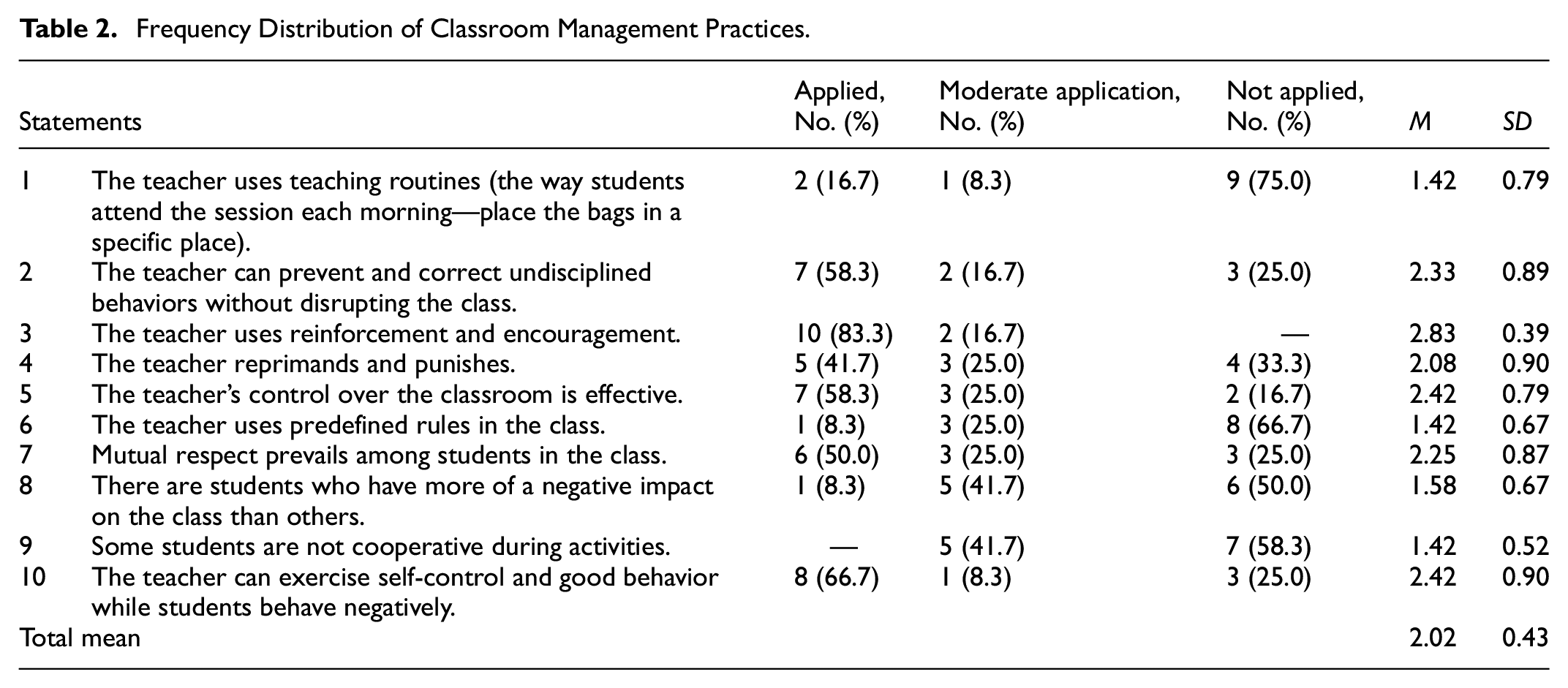
An observation checklist was used to assess the teachers’ readiness and ability to manage male students’ behavior, specifically in the context of classroom management, and their subsequent impact on teaching practices. The overall findings suggest a moderate use of classroom management strategies by the teachers, as reflected in the average score of 2.02 (Table 1). The most effective strategy was the application of various forms of reinforcement and encouragement, which had a relatively high average of 2.8. This was expected to improve students’ cooperation, however, cooperation received the lowest score (1.42). The teachers demonstrated moderate effectiveness in implementing predetermined rules, while their integration of classroom routines was the least effective strategy, with a score of 1.4.
The evaluation of the observed teaching and learning practices resulted in an overall average score of 1.36 (Table 2), indicating a pervasive weakness in the executed teaching methods. The practices were primarily teacher-centric, highlighting a notable absence of student-centered instruction. However, the use of illustrative examples emerged as a more prevalent practice, with a score of 1.50. However, this score still indicates mediocrity, bordering on ineffectiveness. The most concerning finding was the weak emphasis on students’ engagement in activities that promote higher-order thinking skills among students; which received the lowest score of 1.0 (Table 3).
Frequency Distribution of Classroom Management Practices.
Frequency Distribution of Learning and Teaching Practices.

Discussion
The experiences of female Saudi teachers teaching male students offer insight into the challenges and gender dynamics within the Saudi educational context. In addressing the first question, which explores Saudi female elementary teachers’ opinions on feminization of elementary education, the study found mixed feelings. While some teachers recognized benefits in creating a nurturing environment for young students, many felt unprepared for the sudden transition. They emphasized the need for better preparation and resources tailored to teaching male students. Although the identified themes align with existing literature, they highlight distinct nuances unique to the Saudi Arabian context.
The interviews and classroom observations revealed significant challenges in classroom management. In 70% of the observed classrooms, teachers employed various reinforcement methods to manage behavior. Teacher Fatimah remarked, “Managing male students was a new challenge, especially since they were not accustomed to school routines.” This observation was consistent with the classroom data, which showed that, on average, 15 min of a 45 min class were dedicated to behavior management. These challenges, particularly among novice teachers, align with previous research findings (Al-Asimi, 2021; Al-Anazi, 2021; Egeberg et al., 2021; Murphy et al., 2018; Stahnke & Blömeke, 2021).
For example, Al-Asimi’s (2021) study underscored first-grade teaching challenges in Riyadh, including limited student-teacher engagement and classroom management difficulties. These findings suggest that gender dynamics significantly influence teaching methodologies and classroom interactions, particularly in certain subjects. In the Saudi context, these challenges were more pronounced for female teachers new to teaching male students. Several studies indicate a persistent disparity between female and male teachers in terms of classroom management. Female educators often find it challenging to handle boys’ behaviors in the classroom, leading to feelings of frustration and being overwhelmed when teaching male students (Ahmed et al., 2018; Al-Sweedan et al., 2016; Oktan & Çağanağa, 2015; Shih & Wang, 2021). Specifically, in the Saudi context, Al-Enzi (2021) highlighted that parents perceive one of the main limitations of female teachers teaching male students to be their lesser capability in classroom management compared to male teachers.
This study’s findings suggest a need for educational policies that provide targeted support and training for female teachers navigating male-dominated classrooms. Such policies could draw from global best practices, as many countries grapple with similar gender dynamics in education. As Saudi Arabia continues its journey toward educational modernization, understanding and addressing these gender dynamics will be crucial. The experiences and insights of Saudi female teachers, as highlighted in this study, offer valuable perspectives that can inform future policy decisions, teacher training programs, and curriculum development, ensuring a more inclusive and equitable educational environment for all.
The Ministry’s decision to assign female teachers to primary male students has been a topic of considerable debate among educators and stakeholders. Historically, societal beliefs have often associated females with nurturing and caregiving traits, suggesting they might be better suited to teaching younger students. As Skelton (2003) points out, these gendered perceptions, while deeply ingrained, need to be critically examined in light of evolving educational paradigms and gender roles. A study by Tariq and Zaman (2022) supports this notion, highlighting that primary students feel more comfortable with female teachers due to their nurturing, caring, and loving nature. The research found that female teachers, because of their inherent caring attributes, are more satisfied with their roles in primary education, fostering a more conducive learning environment for young students. The findings indicate that female teachers are indeed capable of forging strong and effective relationships with young male students, echoing the observations made by Thornberg et al. (2022). Similarly, Al-Enzi (2021) found that many parents in the study sample favored assigning female teachers to elementary school students. They believed that female educators, drawing from their maternal roles, inherently comprehend the psychological needs of children and display nurturing behaviors. However, as these students transition from early childhood to adolescence, the dynamics change, introducing unique challenges for female teachers. These challenges emphasize the importance of continuous training and support for female teachers, ensuring they are equipped to handle the evolving needs of their male students. Furthermore, it emphasizes the need for educational policies that move beyond traditional gender stereotypes, focusing instead on the competencies and skills of teachers, irrespective of their gender.
The gendered differences in learning are align with broader academic discussions. In specific, the theme emerged from the interview which shows that boys often exhibited weaker foundational skills than girls in the same grade consistent with the findings of Abouzeid et al. (2021), Fonseca et al. (2023), Hyde and Mertz (2009), Hedges and Nowell (1995), and Iyamuremye et al. (2022). In specific, Fonseca et al. (2023) conducted a multicountry analysis examining gender differences in early grade reading and mathematics outcomes. Their report, published by RTI Press, reveals that both girls and boys exhibit distinct academic advantages in different areas. The comprehensive study provides insights into the nuanced gender disparities in foundational educational achievements across multiple countries found that girls consistently outperformed boys in reading, while in mathematics, the differences were more nuanced. Frgali and Abdeen (2017) also identified notable disparities in academic outcomes between Saudi male and female students in the areas of Arabic and mathematics. This observation also aligns with the TIMSS 2019 and PISA results, which showed Saudi Arabian girls outperforming boys in mathematics and science. However, despite male students’ academic gap, teachers observed noticeable academic progress in their male students due to their dedicated efforts. Even though the curriculum stayed consistent, several teachers indicated that they modified their instructional methods, activities, and incentive structures to better suit the requirements of male students. Al-Issa’s (2009) one of the first researches in feminization, found that primary students taught by female teachers showed improved skill development. This observation by the teachers reinforces the widely recognized notion that female teachers often bring a nurturing and caring approach, which likely contributed to the enhancement of the male students’ performance.
Several obstacles emerged from the interviews findings. A significant concern was the lack of teacher participation in decision-making, which affected their preparedness and willingness to teach male students. Several research works have emphasized the significance of involving teachers in decision-making processes, asserting that it enhances their sense of responsibility, motivation, and job contentment (Al-Ghaith, 2020; Lunenburg, 2010). In the context of Saudi Arabia, limited studies have delved into the degree of collaboration in decision-making. For example, Al-Ghaith (2020) discovered that both teachers and parents perceived their involvement in decision-making to be moderate. In a related vein, Al-Shammari (2023) investigated the impact of the three-class system on teachers and secondary school students, underscoring the importance of incorporating the views of teachers and parents when considering school reform. Effective collaboration among schools, teachers, and the community is vital for the fruitful execution of educational reforms (Özdemir et al., 2022). By uniting varied stakeholders, innovative solutions emerge from diverse viewpoints. Such joint efforts cultivate trust and promote collective decision-making, enhancing the relational dynamics between educators and parents (Mager & Nowak, 2012; Mati et al., 2016).
One of the challenges highlighted by female teachers was the limited parental involvement in their children’s educational progress, especially during new experiences or when faced with suboptimal academic results. As underscored by Cook (2021) and others, parental engagement is a cornerstone for positive student outcomes. Al-Wutaid (2022) noted that many parents tend to be less engaged in their children’s academics, often due to their schedules, which subsequently diminishes their active presence in school-related matters. While parents may perceive female teachers as more nurturing and capable of providing holistic support to their children, their limited involvement in educational decision-making might reduce their investment in the academic process. This could be further explained by a potential lack of awareness about the benefits of their active participation in their child’s schooling. These observations warrant further research for deeper understanding of the causes and implications.
Further, the teachers identified a significant challenge in the inadequacy of school facilities tailored for male elementary students. The school facilities, primarily designed for girls suggesting an urgent need to revamp and adapt these spaces to cater to the holistic developmental needs of male students. This ties back to the earlier discussion on the distinct developmental needs of boys and girls, both physically and cognitively. Such facility shortcomings can adversely affect male students in terms of behavior, academic outcomes, and overall well-being (Putra et al., 2020). Further, the lack of preparedness in schools to accommodate these male students restricts teachers from creating an optimal learning environment (Haverinen-Shaughnessy et al., 2011). Within the Saudi context, research by Al-Mansour (2019) and Al-Shahri (2022) emphasizes the necessity of equipping teachers with appropriate educational resources.
The observations also shed light on the teaching practices. A predominantly teacher-centric pedagogical style was evident, with teachers primarily occupied with managing disruptive behaviors. This often disrupted the flow of instruction Al-Asimi’s (2021). While teachers effectively used examples to enhance students’ understanding, there was a notable lack of emphasis on fostering higher-level thinking skills. This observation aligns with the interview findings, where teachers reported that students entered primary classes with weak foundational skills, especially in reading, writing, and math. As a result, teachers felt the need to focus on ensuring students acquired these basic skills, leaving limited opportunities to engage students in more complex cognitive tasks and critical thinking processes.
The combined insights from the interviews and observations provide a comprehensive understanding of the challenges. Classroom management emerged as a significant concern, with teachers employing various strategies to maintain discipline. Additionally, the emphasis on foundational learning, while necessary, limited the opportunities for fostering higher-order cognitive skills. These findings underscore the need for tailored training and resources to support teachers in this unique context, ensuring a balanced approach that addresses both foundational learning and critical thinking.
Recommendations
The current research focused on understanding teachers’ perspectives in participating in feminization of teaching at elementary level for the first time. Based on the study’s findings, the following recommendations are proposed:
One of the themes emerged in the study is the challenges female teachers faced when managing boys. To address this challenge, the study recommends direct professional preparation and support to help teachers with classroom management. Further, establishing a community of practice, where experienced teachers—particularly those who taught boys in private or international schools—can provide training and mentorship, will help support female teachers throughout this new experience.
Female teachers expressed concerns regarding the assumption about their role as mothers and the fact that was the direct motive behind the feminization decision. The study recommends that teachers who are involved in the new experience of teaching boys for the first time should receive comprehensive professional development tailored to different areas, including classroom management, teaching strategies, and support for learning practices.
Female teachers also reported obstacles related to heavy workloads, lack of resources suitable for boys, and weak parental involvement. These obstacles shed the light on school’s role in supporting teachers who take on the new experience.
Future research on the feminization of teaching should examine the long-term impact of female teachers on students’ scores and academic performance, particularly in subjects in math, science, and reading.
Future research should investigate the influence of professional development programs on female teachers’ perspectives, tracking changes over time.
Conclusion
This research offers valuable insights into the unique challenges encountered by female teachers instructing male students in elementary education within the Saudi context. Central to these challenges is the imperative for adept classroom management and the adoption of pedagogical approaches that prioritize the individual needs of students. The study underscores the pivotal role of teachers in decision-making processes, emphasizing their active involvement as crucial for shaping educational outcomes. Moreover, the findings spotlight an urgent necessity for targeted teacher training, especially in classroom management and contemporary teaching methodologies. There’s also a highlighted need to address infrastructural inadequacies in school facilities, ensuring they cater to the holistic developmental needs of male students. In essence, this study enriches the discourse on gender dynamics in education, advocating for enhanced teacher training and further research to optimize the educational experiences of male students under the tutelage of female educators.
Limitation
The study focused specifically on female Saudi teachers in Riyadh public schools during the academic year 2019 to 2020. Therefore, these findings may not apply to teachers in other regions or educational contexts. The possibility of self-reporting bias among the teachers should be considered, as their experiences and perceptions could have been influenced by personal factors or individual perspectives.
Footnotes
Appendix 1
Acknowledgements
We would like to thank Editage ( ) for English language editing and journal submission support. The authors have authorized the submission of this manuscript through Editage. And special thanks to all teachers who participated in the interviews, providing insightful perspectives that enriched and value of this research.
Ethical Considerations
This study was exempted from ethical review by the Institutional Review Board of Princess Nourah Bint Abdulrahman University (IRB Log No. 19-0240)
Funding
The author(s) disclosed receipt of the following financial support for the research, authorship, and/or publication of this article: Princess Nourah bint Abdulrahman University Researchers Supporting Project number (PNURSP2025R429), Princess Nourah bint Abdulrahman University, Riyadh, Saudi Arabia.
Declaration of Conflicting Interests
The author(s) declared no potential conflicts of interest with respect to the research, authorship, and/or publication of this article.
Data Availability Statement
Data sharing is not applicable to this article as no datasets were generated or analyzed during the current study.