




Abstract
This research examines the impact of European Union’s Generalized Scheme of Preference plus (GSP+) on agricultural exports of Pakistan to European Union (EU) countries. Using panel data for the period 2004 to 2022, the study employs an advanced technique Poisson Pseudo-Maximum Likelihood (PPML), which aligns with the gravity model and addresses issues in the trade data analysis. Agricultural exports are analyzed using both PPML and Negative Binomial Regression (NBR) to ensure robustness findings. The results indicate that GSP+ status has significantly boosted Pakistan’s agricultural exports to EU countries. Key EU markets, Italy, Netherland, Belgium, Spain, and France have experienced a substantial growth in export volume. The findings further revel that cereals, products of animal origin, sugars and sugar confectionery, and fish and crustaceans are among the top exported categories. Policy implication based on findings suggest that maintaining Pakistan’s GSP+ is crucial for sustaining the growth of agricultural exports to the EU. Policy makers should focus on strengthening diplomatic and trade relations with top performing EU markets to ensure continued access under the GSP+ framework. Additionally, efforts should be made to diversify the export portfolio by promoting non-traditional and high value agricultural products.
Introduction
Agri-food encompasses the entire journey from cultivation to the delivery of food to consumers. It involves the comprehensive cycle of cultivating, processing, and distributing crops for consumption. The dynamics of agri-food are influenced significantly by factors such as international trade, governmental regulations, and evolving consumer preferences, all of which play pivotal roles in shaping agri-food exports (Borsellino et al., 2020). According to standard International Trade Classification (SITC) agricultural products includes food, drinks, tobacco, and raw materials (Chen et al., 2000). Agricultural production also encompasses leafy vegetables and new varieties of fruits (Pedreño et al., 2014).
The agricultural sector plays a crucial role is the economy, being one of the main contributors to economic growth. In highly developed countries such as the USA and those within the European Union, the agricultural sector accounts for no more than 2% of the economy. In contrast, in developing nations, its share can be as substantial as 50% (Borowicz, 2015). Agriculture sector contributes to 18.9% to the gross domestic product of Pakistan. Approximately 60% population are living in rural areas of Pakistan and depending directly or indirectly on agriculture sector for their livelihood. 42.3% of labor force is directly linked with this sector. Furthermore, it serves as foundation of foreign exchange and helps other sectors in stimulation of economic growth. Pakistan ranks as the 10th largest producer of rice globally and consistently places among the top 10 producers of key agricultural commodities such as cotton, wheat, mangoes, sugarcane, oranges, and dates (Z. A. Khan et al., 2020). Products categorized as “least traded,” meaning those that were either not traded previously or traded only in small amounts, tend to experience accelerated trade growth following the signing of trade agreements (Baltagi et al., 2024).
Since the mid-1990s, the number of free trade agreements (FTAs) around the world has significantly increased. These trade agreements operate in conjunction with the multilateral trade pacts set by the World Trade Organization (WTO). Many countries favor economic regionalism over multilateralism, resulting in a significant rise in global trade volume through free trade agreements (FTAs; Bowles, 2000; Nelson, 2008). Free trade agreements (FTAs) enhance economic strength by eliminating trade barriers and promoting investment among member countries (Wong & Chan, 2003). Some scholars argue that free trade agreements (FTAs) hinder advancements in multilateral trade negotiations (Bhagwati, 1992; Krishna, 1998; Levy, 1997; Mayer, 1984), while others view FTAs as a stepping stone toward more open multilateral trade (Ethier, 1998; Freund, 2000; Hillman et al., 1995; Summers, 1991). The Generalized Scheme of Preferences Plus (GSP Plus) is a trade agreement established by the European Union aimed at assisting developing countries. It offers preferential trade benefits and eliminates trade barriers to support their economic development. Regional trade agreements (RTAs) have witnessed substantial growth worldwide, prompting a notable surge in literature examining their impact on bilateral trade flows (Wang et al., 2023). Different studies have examined the influence of these trade agreements on agri-food trade. The results of studies exhibit heterogeneity, which is very challenging for policy makers who seek to understand the effects of RTAs on agri-food trade (Afesorgbor et al., 2023). Under the umbrella of GATT, European Union lunched the GSP scheme in 1971. It is a distinctive system of trade agreement to developing countries. The fundamental goal of Generalized scheme of preferences was to encourage efficient use of resources in the production activities in developing countries. Its ultimate objective was to facilitate the transfer of international resources from developed countries to developing countries through the mechanism of international trade (Dowlah, 2008). GSP+ is the extension of GSP program and was introduced in 2014. Global trade agreements like General Agreement on Tariffs and Trade (GATT) implementation raises agricultural producer prices (PPI) in Asian countries, while World Trade Organization (WTO) membership lowers them. The Doha Round has no impact on PPI. Key positive influences on PPI include inflation, exchange rates, value-added, human capital, and irrigated land. Recommendations for increasing PPI involve enhancing fair trade, boosting agricultural value-added, offering education, and investing in agricultural infrastructure (Nugroho et al., 2024).
European Union (EU) grants the GSP plus status to Pakistan along with Armenia, Bolivia, Cave Verde, Magnolia, Kazakhstan, Sri Lanka, and Philippines in January 2014 for the period of 10 years. This special incentive is linked to implementing 27 international conventions, addressing human rights, labor conditions, environmental standards, legislation for vulnerable groups, and governance reforms. The GSP+ is seen as pivotal for boost economy of Pakistan through increase annual revenue from exports. However, Pakistan must implement conventions described in GSP+. It represents the European Union institutionalized, multidimensional approach linked with the trade philosophy for economic growth, human rights, and good governance in beneficiary countries. Pakistan became the third largest textile exporter to EU markets in Asia after receiving GSP plus status. From January to October 2014, exports of Pakistan to EU markets rose by US$ 1.08 billion compared to the same period in 2013. Additionally, 20% of EU imports came from Pakistan. In 2014, Pakistan successfully exported goods worth US$ 8.1 billion to EU markets. Among the GSP plus beneficiary countries, Pakistan has been recognized as having the largest potential to benefit from the status. The United Kingdom, Italy, Spain, Germany, and France are the top countries importing goods from Pakistan. The trade relationship between Pakistan and member countries of European Union witnessed substantial growth from 2004 to 2002. During this period, the total exports of Pakistan to European Union exhibited remarkable upward trend as shown in Figure 1. The export figure consistently increased but fluctuations occurred due to global economic dynamics and regional trade conditions. Despite occasional variation, the overall trajectory underscores a positive and strengthening trade partnership. This robust growth in export signifies the resilience and competitiveness of GSP plus policy.
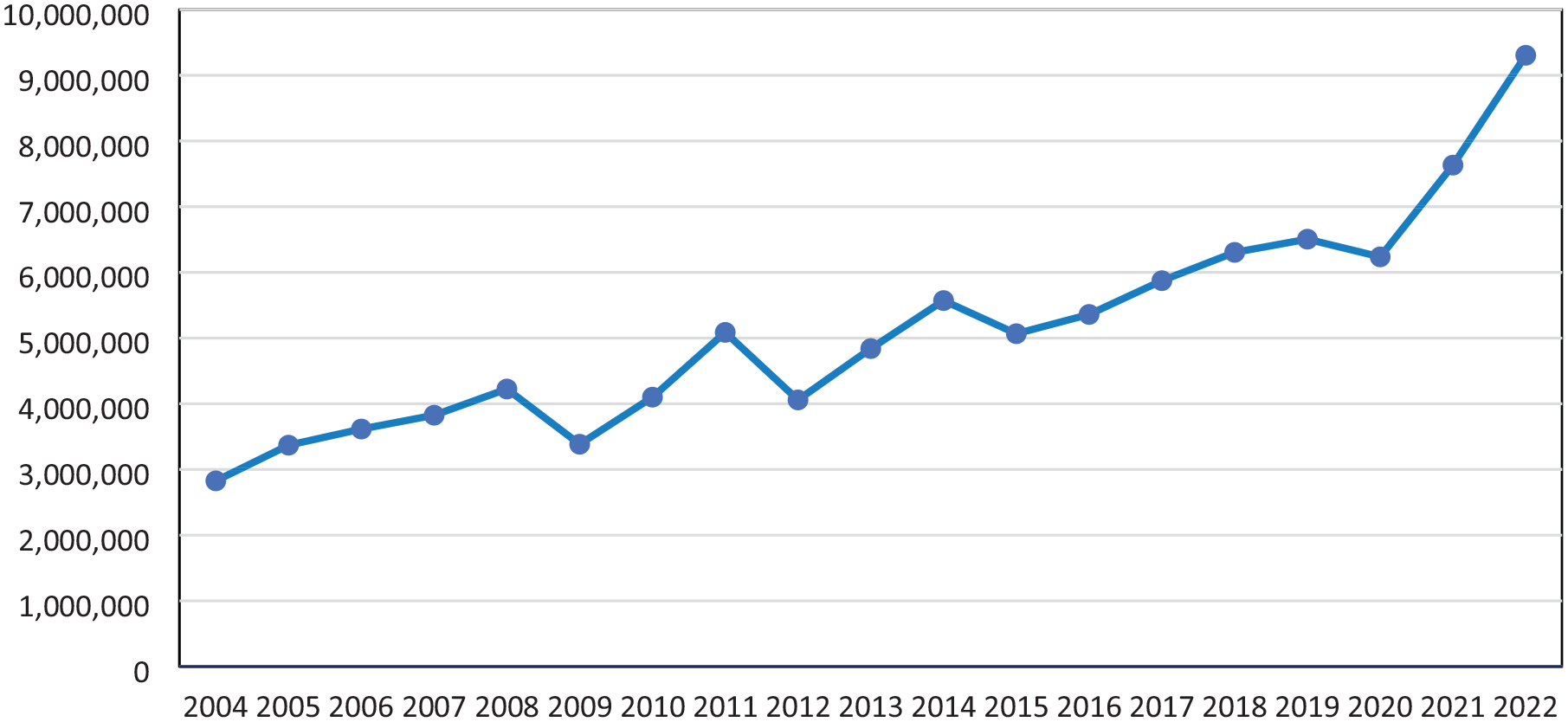
Trend in total exports of Pakistan to EU countries.
This study focuses on addressing a critical and unexplored research gap. There is no empirical study conducted in Pakistan that examines the specific impact of the Generalized Scheme of Preferences Plus (GSP+) on the Pakistan’s agricultural exports to the European Union. While the GSP plus scheme is widely acknowledged for its role in enhancing exports, existing research has primarily focused on other sectors, particularly textiles, leaving the agricultural sector underexplored. For example, Soomro and Ansari (2022) analyzed GSP plus beneficiary countries but relied on basic OLS techniques without specifically addressing Pakistan’s agricultural trade. Similarly, Awan et al. (2015) concentrated on the textile sector using basic estimation methods and primary data. Although studies such as Saydullo and Sharipova (2023) and Malik (2020) highlight the broader impact of GSP plus on exports, their findings do not focus on agriculture. Conflicting results from Kahn (2014) and Słok-Wódkowska and Folfas (2012) further show that the relationship between GSP plus and export performance remains inconclusive due to differences in data types, country-specific factors, and methodological approaches.
In response to the identified research gap, the study seeks to answer key research questions. Does GSP plus impact Pakistan’s agricultural exports to EU countries? Which EU country is the largest and smallest importer of agricultural goods from Pakistan under the GSP plus scheme? What are the primary agricultural commodities driving Pakistan’s exports to the EU? This study is the first in Pakistan to empirically examine the impact of the GSP plus scheme on agricultural exports to EU. Using the Poisson Pseudo Maximum Likelihood (PPML) method, it provides reliable insights by addressing trade data complexities such as zero trade flows and heteroscedasticity. To ensure robustness, the study also applies Negative Binomial Regression (NBR), Ordinary Least Square (OLS), and Log-linear models alongside the PPML estimation.
The primary objectives of this research are to evaluate the influence of GSP plus status on Pakistan’s agricultural exports to the European Union in terms of both volume and value. It also aims to examine how the scheme has changed trade patterns, including shifts in product types and destination markets. Additionally, this study identifies the agricultural commodities driving Pakistan’s exports to the EU and highlights the EU countries that exhibit significant trade volumes with Pakistan.
The novelty of this research lies in its exclusive focus on Pakistan’s agricultural sector. Previous studies on GSP plus have largely overlooked agriculture, leaving this vital sector unexamined. By providing the first rigorous empirical analysis of the impact of the GSP plus scheme on agricultural exports, this study makes a valuable contribution to the literature. It offers policymakers and stakeholders crucial insights into optimizing trade benefits under the GSP plus framework to support Pakistan’s agriculture-based economy.
The importance of this research extends beyond academic contribution, as it is crucial for Pakistan’s economy. Agriculture remains a cornerstone of the country’s export portfolio, and understanding how GSP plus influences this sector provides actionable insights for enhancing export competitiveness. The findings offer a vital foundation for policy decisions to maximize the benefits of GSP plus, fostering growth in Pakistan’s agricultural sector and strengthening its trade position within the EU market.
The overall results indicate that GSP plus status has positive and significant impact on agricultural exports of Pakistan to EU markets. Following the attainment of GSP+ status, average agricultural exports saw a notable increase, reaching their peak in Italy and recorded lowest level in Germany. Beverages, spirits, and vinegar were the leading commodities driving Pakistan’s agricultural exports to the EU and the smallest category of agricultural exports included vegetable plaiting materials and certain vegetable products.
The rest of the study is organized as follows: the review of relevant literature is presented in the next section. The third section consists upon the methodology. Results and discussion are presented in section “Data analysis.” Conclusion, policy recommendations, and limitation of the research are given in section “Conclusion.”
Literature Review
This study draws on two key trade-related theories to provide a foundation for the analysis. Akamatsu’s, (1962)“flying geese” model explains how latecomer economies to integrate into global trade. Similarly, the neo-classical perspective highlights the role of increasing returns and trade liberalization in driving export growth. These theories underscore how preferential trade agreements (PTAs), such as the GSP Plus status, enable developing countries to capitalize on their comparative advantage in agro-based products.
A deep review of existing research highlights the literature gaps that our study aims to address. Few researchers have investigated the potential trade of tangible goods like tea or rice (Kiani et al., 2018; Wei et al., 2012). Wei et al. (2012) noted that food safety and hygiene standards influence Chinese tea exports; however, the degree of impact remains uncertain due to the variation in consuming markets. Kiani et al. (2018) and S. Khan and Khan (2013) indicates that geographical distance has a detrimental effect on Pakistan’s exports and GDP. Conversely, exports benefit from factors such as increased production, a shared border, and the GDP of the partner country. The authors conclude that a common border with Pakistan is likely to enhance trade flows. In agricultural trade, many scholars have employed a gravity model to examine the movement of goods between the home country and its key trading partners or economic blocs (Erdem & Nazlioglu, 2008; Lohani, 2024). The most recent study on agricultural product exports from developing economies to the European Union (EU) was carried out by Abdullahi, Aluko, et al. (2021) and Abdullahi, Huo, et al. (2021). These studies employed a stochastic frontier analysis to explore the determinants, efficiency, and potential of Nigeria’s agricultural product exports to the European Union (EU) from 1995 to 2019. The empirical findings revealed that Nigeria’s agri-food exports to the EU were adversely influenced by factors such as the income levels in Nigeria and its EU trading partners, bilateral exchange rates, and the EU’s newer member states. Additionally, Nigeria demonstrated relatively low efficiency in its agri-food exports to EU countries, suggesting that there is considerable untapped potential.
The Generalized System of Preferences Plus (GSP+) has been instrumental in shaping the trade dynamics of various countries, including Pakistan. Research has shown that GSP+ plays a pivotal role in diversifying exports and facilitating access to international markets. For instance, Saydullo and Sharipova (2023) analyzed the impact of the GSP+ system on the diversification of Uzbek exports, highlighting its potential to change a country’s trade landscape by enabling duty-free access to European markets, particularly in sectors such as agriculture and processed foods. Such findings suggest a similar positive impact could be experienced in Pakistan’s agricultural exports. Studies have explored how regional trade agreements (RTAs) impact bilateral trade flows, including agri-food trade. Afesorgbor et al. (2023) conducted a meta-analysis and found robust evidence that RTAs significantly and positively influence agri-food exports. This is relevant to Pakistan’s situation as the depth of economic integration within RTAs can greatly affect agricultural exports. The differentiation between primary and processed agri-food products also plays a crucial role in shaping these effects. Comparative analyses, such as the study by Soomro and Ansari (2022) have indicated that Pakistan is one of the significant beneficiaries of the GSP+ scheme compared to other countries like Sri Lanka and the Philippines. This shift to the EU markets has resulted in a noteworthy change in Pakistan’s export destinations, demonstrating the impact of the GSP+ scheme on the agricultural trade of Pakistan However, challenges and constraints exist. Shad (2021) assessed the challenges and prospects of Pakistan’s GSP+ status and found that while the scheme has potential, Pakistan has yet to fully take advantage of the tariff reductions under GSP+ to diversify its exports and add value to its products. Concerns over human rights violations assessed by the EU suggest that Pakistan’s continued benefit from GSP+ could be contingent on its adherence to international conventions. Further analysis by Malik (2020) focused on the role of GSP+ in enhancing Pakistan’s exports to the EU and found that Pakistan’s exports, particularly in the textile sector, have benefited significantly from the scheme. This underscores the need for Pakistan to invest in the proper implementation of the GSP+ program to maximize the economic gains and address constraints such as public debt and balance of payment issues. Other studies provide insights into the broader impact of GSP+ and similar programs on international trade. For instance, Lubinga et al. (2017) examined the impact of GSP on fruit and vegetable exports from East African countries to the EU and found that while certain products like beans benefited, other products did not see similar growth. This highlights the variability in the effectiveness of trade agreements across different sectors and products. Hakobyan (2020) investigated the impact of expiration of US-GSP scheme on exports from developing countries toward United States and found that expiration of GSP had considerable impact on the level of exports toward US. Freres and Mold (2016) examined the role of EU-GSP to assist poor countries. The study found that GSP has not been effective in achieving its goal and there is no clear evidence that this program significantly reduced the poverty in developing countries especially in Latin America. Zia-Ur-Rehman et al. (2019) analyzed the impact of intellectual capital organizational capabilities and innovations of firm performance of textile industry by using GSP+ as a moderating variable. The study found that GSP+ moderates the relationship between intellectual capital, innovation, and firm performance. GSP+ has a positive and significant impact on firm performance as interaction term. Iqbal (2018) analyzed the GSP+ status of Pakistan through the number of simulation experiments on macro level by using standard GTAP. The study found that GSP+ status has positive effect in economic growth, real investment imports, merchandise, and term of trade of Pakistan in the presence of other competitors with same or different product mix. Awan et al. (2015) examined the effect of GSP+ status on textile exports of Pakistan. The study found that GSP+ status has significant and positive impact on Pakistan textile’s exports.
In contrast of above findings, Kahn (2014) estimated the equation of effects on exports flow for the members countries when changing from GSP to the more generous GSP+ program. The study used 52 countries over the period for 1988 to 2006 and found that there is insignificant overall effect of entering the GSP+ program while there is significant effect on product level. Some products groups have positive effect while some has negative effect. Cuyvers and Soeng (2013) investigated the impact of changes in the EU GSP on imports from beneficiary countries in ASEAN, Latin America, and China for the period of 1994 to 2007. The study found that changes in EU GSP has positive impact on industrial products imports and negative impact on agricultural imports. Słok-Wódkowska and Folfas (2012) examined that how EU GSP+ is effective tool to increase export from selected developing countries to the EU market through suspension of tariff and promoting good governance and sustainable development in beneficiary countries. The study concluded that GSP+ does not affect exports from developing countries to the EU. The study also found that free access to European markets did not weaken the trade decrease stemming from global crisis. The economic magnitude of GSP+ is also very low. Cirera et al. (2011) evaluated the impact of EU-GSP preferential regimes on exports from developing countries. The study found that preferences have little impact on trade and negative by considering scope of trade diversification. The study also found that GSP has a small effect of increasing exports while no effect of export diversification. Gabrielsson-Kjäll and Ädel (2010) analyzed the impact of GSP on exports from Andean Community to the European Union between 1995 and 2000 by using gravity model. The study concludes that GSP agreement has a positive impact on trade during 1995 to 2000.
To summarize, contradictory findings concerning the impact of GSP program, while domestic research employs various methodologies and examines different aspects of export activities including exports status, market factors, trade concentration, trade prospects, agricultural value added, and exiting export policies. These studies focus on the current state and trend in broader in scope. There is a gape in detailed analysis regarding the influencing the GSP+ status of agricultural exports of Pakistan to EU markets. This research makes notable contribution in comparison to earlier research. First, this research addresses a substantial gap in the existing literature by exploring how GSP+ affects Pakistan’s agricultural exports. Second, the study offers novel insights into the influence of GSP+ on the agricultural food sector, quantifying its impact on export volume and value. Third, the research identifies which agricultural products are most frequently exported and highlights which countries have the greatest potential for specific products.
Theoretical Background and Empirical Model
This research study employed quantitative approach and secondary data is use for empirical analysis. Exports of agricultural commodities is the dependent variable and GSP+ is the independent variable along with some other control variables including GDP, GDP per capita, population, and arable land for Agri products of both countries, distance from trading country to partner country, and historical common colony. Data pertaining to economic size of a country such as Gross Domestic Production (GDP), GDP per capita, Population, and arable land are sourced from the World Development Indicator (WDI). Distances are measured using data obtained from CEPII while the data of agricultural exports is collected from and Un-COMTRADE for the period of 2004 to 2022. For the existing composition of European Union, a total of 10 countries joined and became the member of EU in year 2004, consequently, the study used data from 2004 up to the available data as of 2022. The Generalized Scheme of Preferences plus (GSP+) is incorporated as dummy variable, with a value of 0 assigned for before the GSP+ status and 1 for after the GSP+ status. A comprehensive definition with measurement units of variables is provided in the Appendix.
Theoretical Background and Model Specification
A reduction in trade cost leads to increase in trade between countries (Krugman, 1985). GSP+ is a trade agreement implemented by the European Union by decreasing the trade barriers by providing free access to European Union markets. The gravity model is commonly applied in economics to forecast the trade pattern between countries. The conception foundation of gravity model is drawn by the economist Marshall (1890) and Warles (1954). Isard (1956) applied the gravity model to explain the trade flow between countries (Isard, 1954). Walter used the following equation.

Gravity model is applied to the trade was formalized by a Nobel laureate Tinbergen (1962) and Pöyhönen (1963) for the explanation of trade flow between countries and used the following equation.

After that, gravity model is a popular tool among economists for empirical analysis of foreign trade. According to this model, GDP used for the proxy for exports from country i to country j, population size, distance, and a set of dummies for common characteristics. Initially, the theoretical foundation of research in this field was very poor, but starting from the second half of the 1970s, there have been several theoretical advancements in the field of gravity model. Anderson (1979) made the first formal attempt to derive the gravity equation from the model that assumed product diversification. Bergstrand (1985) explored the theoretical determination of bilateral trade in a series of research papers where gravity equation were linked to the basic models of monopolistic competition (Anderson, 1979; Bergstrand, 1985). Krugman (1985) used the differentiated product framework with increasing return to scale to justify the gravity model. Gravity equation can be justified by many standard trade theories by characterizing many models (Brown et al., 1995). Anderson and Van Wincoop created a practical gravity model by working with the CES expenditure system. This model is straightforward to estimate and is useful in solving a problem known as the “border puzzle” (Anderson & Van Wincoop, 2003). The variation in these theories help clarify why there are different setups for the gravity model, and they account for some differences in the outcomes we observe in real world applications.
As per expanded gravity model of trade, total volume of exports between trading partners (X ij ) is the function of their size of economies, population of both countries, geographical distance between trading partners and set of dummies.

Where

When gravity model is applied to estimate bilateral exports for particular product then second specification is preferred (Bergstrand, 1989). The specification mentioned in Equation (1) is mostly employed for estimating aggregate exports (Endoh, 1999).
Model Specification
Anderson and Van Wincoop (2003) enhanced the traditional gravity equation by incorporating multilateral resistance variables. They contended that the traditional model is biased due to its failure to account for the influence of these multilateral resistance terms. Building on the conceptual framework proposed by Anderson and Van Wincoop (2003) and Helpman et al. (2008), we utilized the augmented gravity model for this study, structured as follows:

Expit is the agricultural exports of Pakistan direct to EU markets in time t. It is the dependent variable of the model. The data is collected from WITS-UN-COMTRADE for the period of 2004 to 2022 and the value of agricultural exports taken with and without log in PPML estimator.
(GSP+ijt) is the Generalized Scheme of Preferences plus. It is considered “0” in pre period of GSP+ status while “1” in post period of GSP+ status.
(Distijt) is the geographical distance between trading and partner country under consideration. It is the traditional proxy used in literature for all types of obstacles to trade over boarder. Only distance is not enough for measure the trade restrictions so I included traditional gravity variables.
Estimation Technique
There are many constraints dealing with time-series and cross-sectional data. Panel data consist of observation on same units across multiple time series. Panel data estimation has econometric advantage over time series data and panel data. Panel data estimation has more degree of freedom, less collinearity between or among variables, more informative, more variability, and more efficiency (Baltagi, 2003). Panel data possesses two crucial futures, “Fixed Effect” and “Random Effect.” Historically, the gravity model has been estimated through OLS estimation techniques, which is prone to inefficient parameters and asymptotic inefficiency (Baltagi, 2021). The estimation problem in panel data is compounded by the presence heteroscedasticity and zero trade flow. The present research work employed most recent advancement in the empirical literature on the gravity model proposed by (Piermartini & Yotov, 2016). OLS estimation technique extensively used by trade researcher. However, a drawback of OLS is the exclusion of zero trade flows, frequently present in gravity data especially when using logarithmic transformation. As a result, heteroscedasticity emerges as a major issue in the gravity model, introducing bias and inconsistency in the estimates. Santos and Tenreyro (2006) proposed the estimation of the multiplicative form of gravity model using the Poisson Pseudo Maximum Likelihood (PPML) estimator to overcome this issue. In Monte-Carlo experiment they found that, even in the presence of substantial number of zero trade values, this technique effectively address the issue of heteroscedasticity (Santos Silva & Tenreyro, 2011). Due to these characteristics PPML estimator approach is aligns consistently with gravity model, that can give robust empirical results. By introducing the dummy variables in this approach, we can interpret the results as simple as in OLS regression. In PPML, the dependent variable is taken at the level rather than log form, and explanatory variables which are taken as log can even be treated as simple elasticities, with dependent variable interpreted as a semi-elasticity.
Data Analysis
The main objective of this research work to explore and quantify the impact of GSP plus on the agricultural exports of Pakistan. As a developing country heavily reliant on agrarian activities, understanding the consequences of GSP+ on trade related activities is crucial for policy maker. This chapter presents the results of data analysis on impact of GSP+ on agricultural exports of Pakistan to EU markets. The analysis includes descriptive statistics, primary findings, and results of core regression analysis as well as robustness check. This research work focus on assessing to extent to which the preferential trade agreement under GSP+ influenced the exports dynamics of key agricultural food commodities, examining trends and providing empirical evidence of EU GSP+ program’s effects.
Overview of Agricultural Exports to European Union (EU) Markets
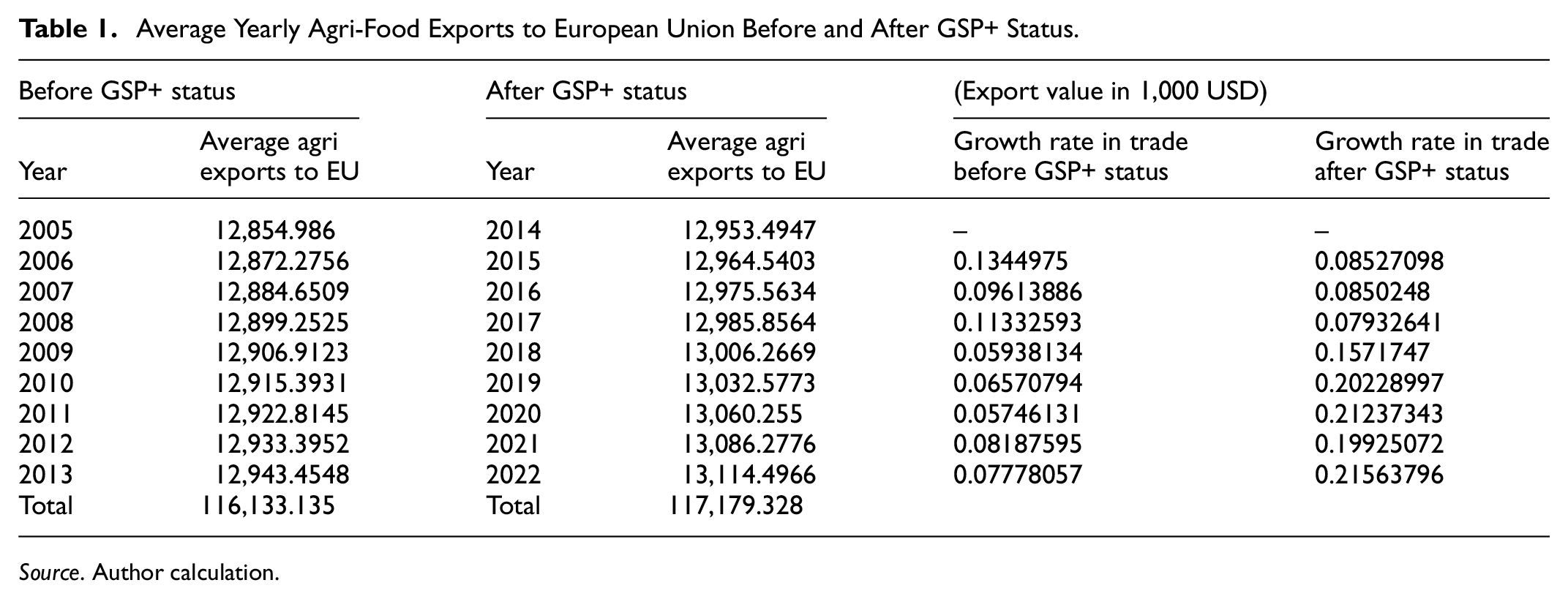
First, we examine Pakistan’s total agricultural exports to EU markets both before and after the implementation of GSP+ status. This analysis includes total agricultural exports of Pakistan in the years preceding GSP+ status (2005–2013) and the subsequent period after its implementation (2014–2022). The data is presented in Table 1.
Average Yearly Agri-Food Exports to European Union Before and After GSP+ Status.
Source. Author calculation.
During the Pre-period of GSP+ status, the growth rate in exports to words European Union exhibited fluctuations ranging from 0.05746131 to 0.1344975. The highest growth grate in exports to European Union occurred in 2006. The overall trend in pre-period has positive albeit with variation in the pace of expansion. In the post period, the growth rate in exports to European Union continued to show positive values ranging from 0.07932641 to 0.21563796. The highest growth rate in post period was observed in 2022. In the comparative analysis between pre and post period, it is essential to note that both periods demonstrate positive growth trend in agri-food exports to European Union but the growth rate in post period appear to be generally higher than to the pre-period as shown in Figure 2. This suggests a potential acceleration in the growth in agri-food exports in post period due to GSP+ status.

Average growth rate of agricultural exports of Pakistan before and after GSP+ status.
The above graph shows the trend in average growth rate in agricultural food exports of Pakistan to European Union before and after GSP plus status. The growth rate in agricultural exports in pre-period of GSP plus status has decreasing trend while the trend in post period is increasing and faster. The trend in post GSP plus period showing that GSP plus status increased the agricultural exports to European Union.
Country-Wise Analysis of Agricultural Exports to EU Markets Before and After GSP+ Status
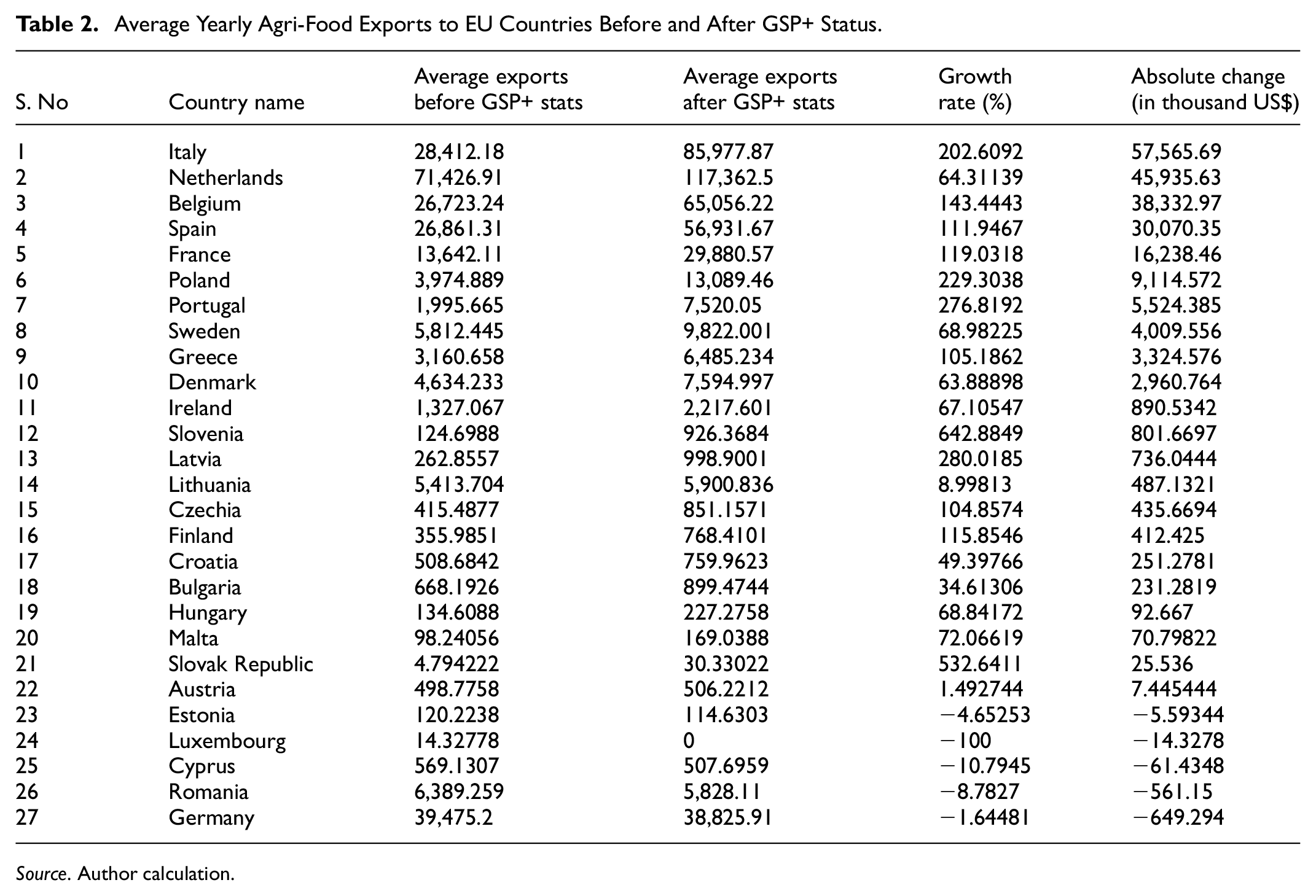
Analysis of the data reveals varying trends in agricultural exports of Pakistan to countries of European Union. While agricultural exports to most European Union countries experienced a significant increase, there were exceptions observed. Specially, agricultural exports to Estonia, Luxembourg, Cyprus, Romania, and Germany showed either minimal growth or declined. Notably, agricultural exports to Estonia, Luxembourg, and Cyprus experienced negative growth rates of −4.65%, −100%, and −10.79%, respectively, indicating decrease in agricultural exports. Conversely, exports to all other European Union countries demonstrated substantial increases, with the highest growth rate observed for Slovenia at 642.88% and the lowest growth rate was observed for Lithuania at 8.99%. The absolute highest change in exports was observed for Italy with 57,565.69, while Luxembourg recorded the lowest absolute change at zero.
Overall, due to GSP+ status, agricultural exports to most countries of European Union increased significantly. The table presenting the growth rate in exports and absolute changes in exports is located in the Table 2.
Average Yearly Agri-Food Exports to EU Countries Before and After GSP+ Status.
Source. Author calculation.
Product-Wise Analysis of Pakistan’s Agricultural Exports Performance
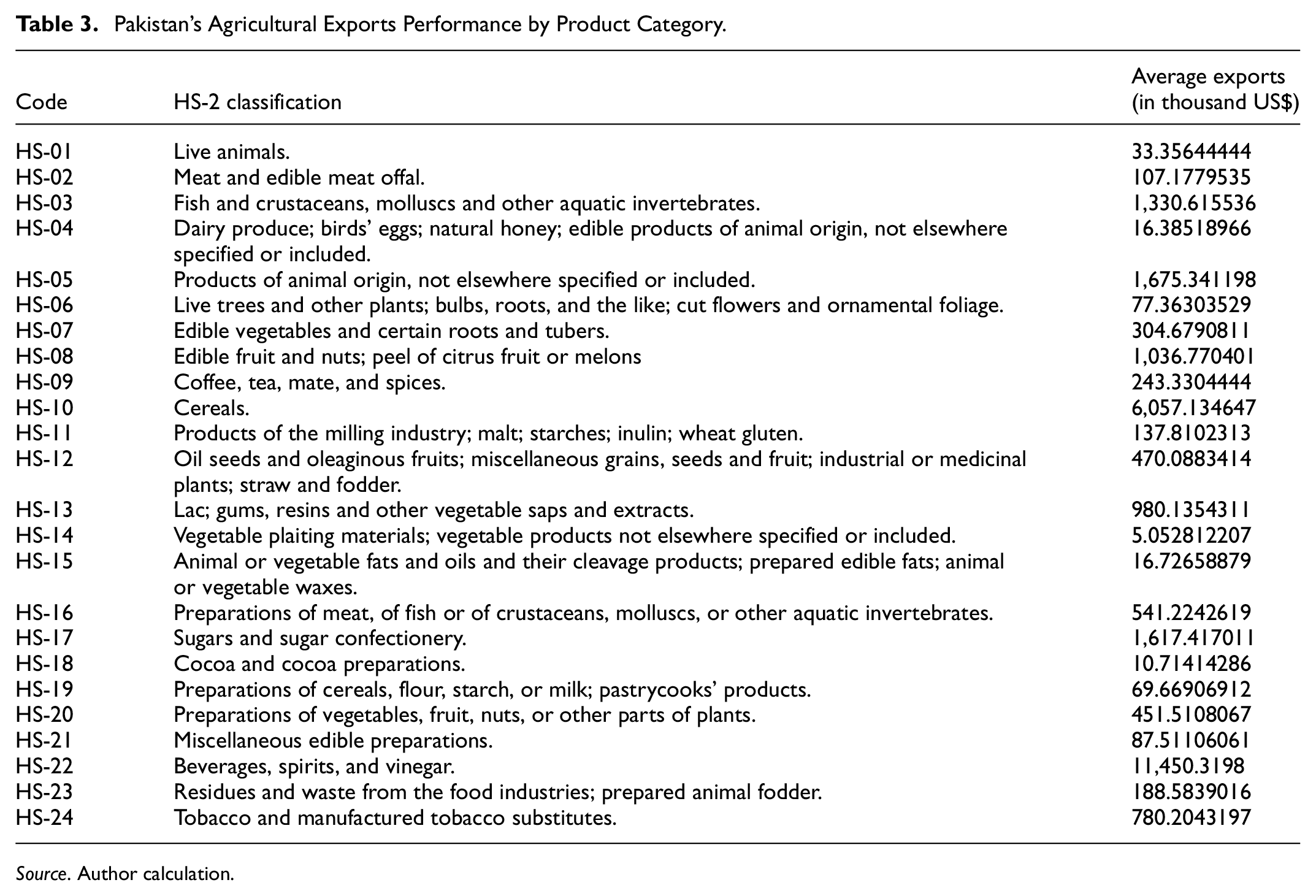
The following analysis provides insights into the export performance of various agricultural products of Pakistan. By examining the export values of different products categories, we can identify which product are contributing the most to Pakistan’s agricultural exports and which one is playing less role. This information offers a detailed overview of the agricultural trade landscape and highlights the key areas of strength and opportunity. The product category with the highest average export value is Beverages, spirits, and vinegar (HS-22) amounting to 11,450.32. This proves the strong demand and market presence of this category in the export market. Conversely, the product category with the lowest average export value is Vegetable plaiting materials; vegetable products not elsewhere specified or included (HS-14) with the export value of 5.05, indicating minor share in the total agricultural exports of Pakistan to European Union market. Among the top 10 exported products, the leading category include cereals (HS-10), products of animal origin not elsewhere specified (HS-05), sugars and sugar confectionery (HS-17), and fish and crustaceans, molluscs, and other aquatic invertebrate (HS-03). These are followed by edible fruits and nuts (HS-08), lac and other vegetable saps and extracts (HS-13), tobacco and tobacco substitutes (HS-24), and preparation of meant. Fish or aquatic invertebrates (HS-16). Additionally, oil seeds and oleaginous fruits (HS-12) play a significant role in the export portfolio. These top 10 products from the backbone of agricultural exports of Pakistan contributing substantially to overall exports value to EU markets. The average exports of all products is presented in Table 3.
Pakistan’s Agricultural Exports Performance by Product Category.
Source. Author calculation.
Empirical Analysis
The empirical presented in this study is aim to analyze the impact of GSP+ status on agricultural exports of Pakistan to EU markets. The statistical measure like mean, standard deviations, minimum, and maximum serve as a crucial tool for summarizing and elucidating the inheriting characteristics of the data set. By scrutiny these measures, we aim to unravel the nuances of central tendency, dispersion, and distribution with in the exports and other variables. Through this analysis we assess the robustness and implication of the research findings.
Descriptive Statistics
The basic descriptive statistics are presented in below Table 4.
Results of Descriptive Statistics.

Source. Author calculation.
In the dataset employed for the PPML estimation, key variables exhibit diverse characteristics. The mean value of agricultural exports of Pakistan is 8.205. The dummy variables indication their binary nature. Gross domestic product of the partner country has the mean value 52.435 with standard deviation 1.805. The population of the trading partner country has the mean value 35.467 with standard deviation 1.861. The Arab land of the partner countries has its mean value 31.860 with standard deviation 1.971. GSP+, colony, and common language are dummy variables. These summary provide a comprehensive snapshot of the data set’s central tendencies and dispersions, laying the groundwork for a detailed understanding of the variables involved I the passion pseudo maximum likelihood estimation technique.
Correlation Analysis
The correlation matrix provides relationships between variables in the Poisson Pseudo Maximum Likelihood model. The correlation coefficient between agricultural exports of Pakistan and GSP+ status exhibits a positive correlation .0527. Gross domestic product and population of displayed stronger positive correlation of .5878 and .7272, respectively. Distance from trading country and the partner country has negative correlation with −.3524 with agricultural exports of Pakistan. It is important to note that these correlation coefficients provide initial insights into the potential relationship between variables. Empirical analysis is necessary for the comprehensive understanding of the dynamics within the data set. The results of correlation matrix presented in Table 5.
Results of Correlation Matrix.

Model Estimation
The current study applied an advanced technique “Poisson Pseudo Maximum Likelihood (PPML)” to estimate the equation. In Monte-Carlo experiment Santos Silva and Tenreyro (2011) found that, even in the presence of substantial number of zero trade values, the PPLM estimation technique effectively address the issue of heteroscedasticity. Due to these characteristics PPML estimator approach is aligns consistently with gravity model, that can give robust empirical results. The results of PPLM estimator is reported in Table 6.
Results of Estimated Model on PPML Estimators.

The Poisson Pseudo Maximum Likelihood (PPML) estimation technique was applied to estimate the coefficients of the gravity model specified in Equation (5), where the dependent variable is the natural logarithm of exports
The regression results demonstrate that the combined GDP of the exporting (Pakistan) and partner (EU) countries positively and significantly affects agricultural exports, with a coefficient of 0.91, indicating a strong relationship between economic size and trade volumes. Similarly, the combined GDP per capita of both countries positively and significantly affects agricultural exports, with a coefficient of 0.98, suggesting that higher income levels enhance demand for agricultural imports. The combined population of the two countries also has a positive and statistically significant effect, as shown by the coefficient of 1.08, highlighting the role of larger markets in promoting exports. GSP+ status is another important determinant of trade, with a positive and statistically significant coefficient of 0.052, underscoring the role of preferential trade agreements in enhancing Pakistan’s agricultural exports to EU markets.
On the other hand, the distance between Pakistan and the EU countries negatively affects agricultural exports, with a coefficient of −0.25, reflecting the trade-impeding effects of geographical separation due to higher transportation and transaction costs. The availability of arable land exerts a small but positive impact on agricultural exports, with a coefficient of 0.058, indicating the role of agricultural resources in supporting trade. However, the shared colonial history between Pakistan and its trading partners has a negative impact on agricultural exports, with a coefficient of −0.45, suggesting that historical ties do not necessarily lead to increased trade flows in this context. Overall, the results highlight the significant role of GSP+ status, alongside structural factors such as economic size, population, and distance, in shaping Pakistan’s agricultural export patterns to the EU.
To clarify, while the dependent variable in this model is the natural logarithm of exports, the PPML estimator is particularly robust in handling the log-linear specification of gravity models when heteroskedasticity and zero trade flows are present in the dataset. This approach ensures that the coefficients for continuous variables, such as GDP, GDP per capita, and population, are interpreted as elasticities, while coefficients for dummy variables, such as GSP+ status, reflect percentage effects. The use of the PPML estimator aligns with the theoretical formulation of the gravity model in Equation (5) and ensures the robustness and consistency of the empirical results.
Robustness Check
To strengthen the validity and reliability of estimations, we conduct some robustness tests. These tests are crucial for confirming the robustness of our findings and provide additional support for the conclusions drawn from our analysis. These tests include, performing estimation through different model specification and employing alternative estimation technique. By applying these robustness tests, the study ensures the consistency and trustworthiness of the results from the primary regression analysis.
Through Different Model Specifications
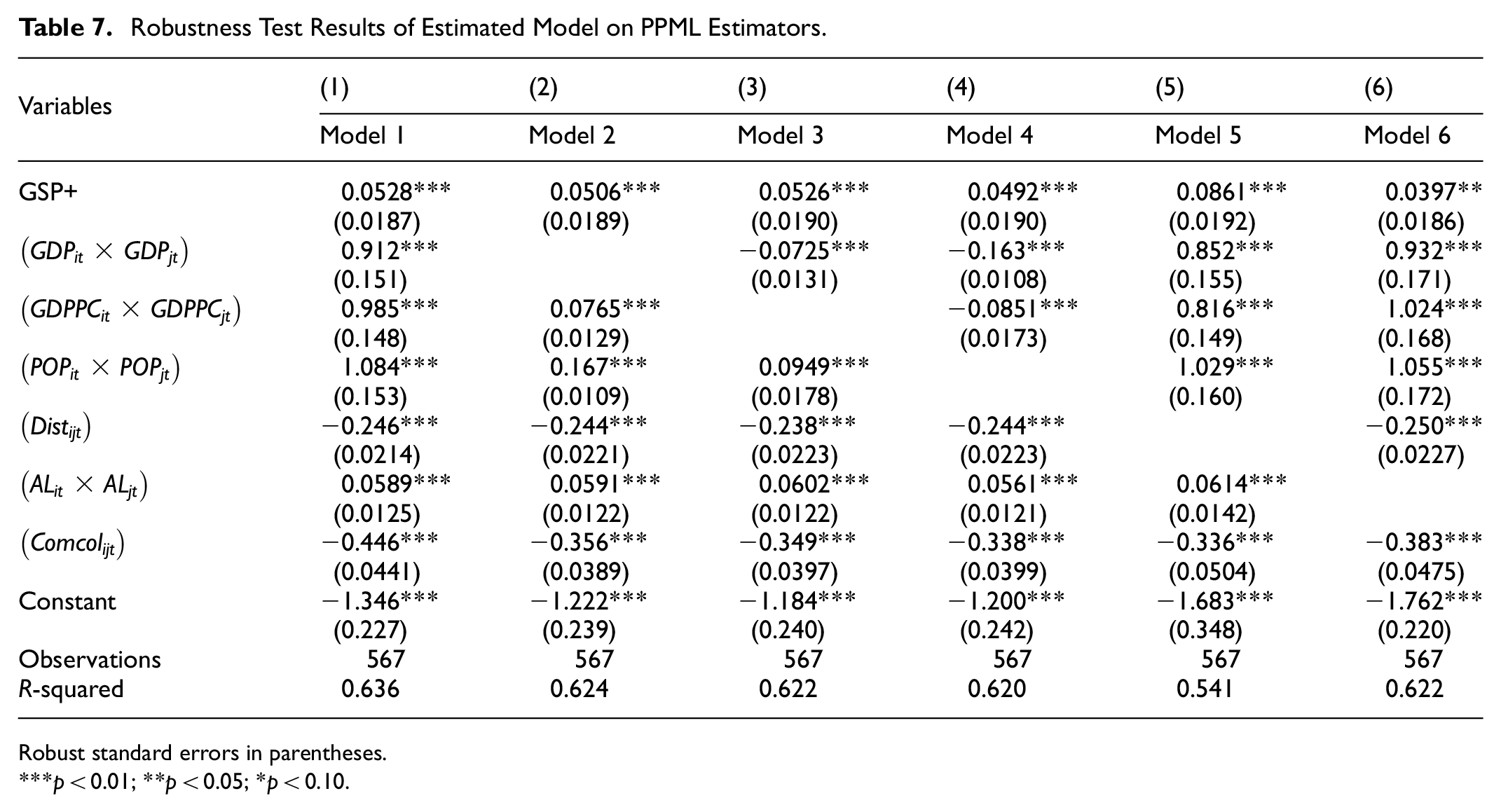
First, we check the robustness of our results by exploring different model specifications. We regress six different models by inclusion and exclusion of variables in different combinations of independent variables. Theses model specifications encompassed variation GDP and GDPPC while consistently including the variable of interest. Across all model specifications, GSP+ remained stable and consistently significant. This means the impact of GSP+ on agricultural exports of Pakistan is robust, even when controlling for changes in other independent variables. This consistency of the GSP+ strengthens our confidence in its importance and validity within the context of agricultural exports to European Union markets. The results of different model specifications are reported in Table 7.
Robustness Test Results of Estimated Model on PPML Estimators.
Robust standard errors in parentheses.
p < 0.01; **p < 0.05; *p < 0.10.
The Poisson Pseudo-Maximum Likelihood (PPML) estimation technique was employed across six different model specifications for robustness checks. The study assessed the impact of GSP+ across different model specifications to ensure the robustness and consistency of the results. The use of multiple specifications helps to address potential model misspecification and omitted variable bias, providing a more comprehensive understanding of the relationship within the data. It is clear from the results that, the GSP+ demonstrated statistical significance and a positive effect on agricultural exports across all model specifications. These consistent findings across different models provide strong evidence that the GSP+ has meaningful and reliable impact on the agricultural exports of Pakistan. The statistical significance indicates that the observed relationship is unlikely to be due to chance, and the positive effect suggests a beneficial association between GSP+ and agricultural exports of Pakistan. The robustness checks across multiple model specifications reinforce confidence in the conclusion, as the consistent positive effect of GSP+ across all models suggests that the observed relationship is stable and not sensitive to variation in model structure.
Changes to Estimation Technique
To check the robustness of our findings, we employed Negative Binomial Regression. This estimation technique is particularly useful for modeling over dispersed count data in international trade. By incorporating an extra parameter to handle over dispersion, Negative Binomial Regression provides a flexible and accurate approach to trade flow analysis. It is effectively managing zero-inflated data, which is common in international trade due to o-trading country pairs. This estimation technique offers reliable parameter estimates and robust standard errors, especially when paired with heteroscedasticity-robust methods. By using negative binomial regression as an alternative to Poisson-Maximum Likelihood (PPML), we can ensure the robustness of our findings and gain deeper insights into trade patterns and potential barriers to trade. The results of negative binomial regression estimation with different model specifications are reported in Table 8.
Robustness Test Results of Estimated Model on Negative Binomial Regression.

Robust standard errors in parentheses.
p < 0.01; **p < 0.05; *p < 0.10.
The robustness of the study was assessed using an alternative estimation technique with different model specifications. Negative binomial regression was employed across six different model specifications to perform robustness checks. Across all model specifications, the GSP+ was found statistically significant and exhibits a consistent positive relationship with agricultural exports. This consistent positive effect suggests that GSP+ plays a significant role in agricultural exports of Pakistan to European Union. The uniform positive effect observed across different models underscores the stability of the relationship between GSP+ and agricultural exports of Pakistan. This consistency suggests the potential for significant application of the findings in policy making and strategic decision making.
Using Multiple Estimation Techniques
We also assess robustness by using different estimation techniques. We estimate the model using various estimation techniques, including Ordinary Least Square (OLS), Poisson Pseudo-Maximum Likelihood (PPML), Negative Binomial Regression (NBR), and log-linear mode with PPML. This range of approaches allows to account for different data characteristics, such as heteroscedasticity, zero-inflated data, and over dispersion, while ensuring a comprehensive evaluation of the relationship between the variables. The results from all model specifications are presented in Table 9.
Robustness Test Results of Estimated Model on OLS, PPML, NBR, and Log-Linear.

Standard errors in parentheses.
p < 0.01; **p < 0.05; *p < 0.10.
Consistently demonstrating the robustness of findings. Regardless of the estimation technique or model specification, the results affirm the stability and reliability of relationship between GSP+ and exports of agriculture, providing confidence in the conclusions draw from analysis.
Discussion
This study aimed to examine the impact of the European Union’s Generalized Scheme of Preferences Plus (GSP+) on Pakistan’s agricultural exports to European Union, specifically identifying which EU countries import the largest and smallest volumes of agricultural goods from Pakistan, as well as the leading agricultural commodities driving these exports. Findings indicate that the GSP+ scheme has a positive and significant impact on Pakistan’s agricultural exports to the EU countries. By providing duty-free access to several key agricultural products, the GSP+ scheme has effectively reduced trade barriers and opened up markets for Pakistani exporters, which aligns with previous studies highlighting the positive influence of preferential trade agreements in facilitating exports from developing countries. For example, Sharma et al. (2019), Cipollina and Salvatici (2010), and Aiello and Demaria (2009) demonstrated that the EU’s preferential schemes significantly enhanced agricultural exports from developing countries, further supporting the idea that the GSP+ scheme serves as an effective tool for fostering export growth.
In terms of the EU countries importing the largest and smallest agricultural goods from Pakistan, Italy emerged as the leading importer, with significant growth in average yearly export volume, while Germany registered the smallest volumes. This disparity in export volumes may reflect the distinct agricultural needs and trade policies of these countries. Italy, with its strong demand for agricultural products like beverages and spirits, aligns well with the products Pakistan exports under GSP+, whereas Germany’s trade structure and focus on industrial goods could explain its relatively lower agricultural import volumes. These findings are consistent with research by Demaria et al. (2015), which noted that GSP reforms can reshape trade flows, often favoring specific sectors and products over others, thus benefiting countries whose agricultural exports align with EU demand. The study also found that beverages, spirits, and vinegar were the leading commodities driving Pakistan’s agricultural exports to the EU countries. Conversely, the smallest category of agricultural exports included vegetable plaiting materials and certain vegetable products, which may reflect challenges in meeting EU standards or competition from other suppliers. This disparity in export performance between product categories suggests that while the GSP+ scheme has created opportunities for certain agricultural sectors, other areas still face barriers to growth. This finding supports the work of Hakobyan (2020), who highlighted the role of preferential schemes in promoting export diversification but also pointed out that not all sectors equally benefit from such trade arrangements.
The results of this study generally align with the findings of other studies that have examined the effects of GSP+ on trade flows. However, one unexpected finding was the relatively low export volumes to Germany, despite its economic prominence. This could be due to Germany’s emphasis on sourcing agricultural products from other regions or its higher reliance on domestic production, thus limiting the volume of imports from countries like Pakistan. Non-tariff barriers, such as health and safety regulations or sanitary standards, may also be contributing factors that restrict Pakistan’s access to the German market for certain agricultural goods. This issue has been noted by Demaria et al. (2015), who emphasized the role of non-tariff barriers in shaping trade dynamics, particularly in sensitive sectors such as agriculture. While this study provides important insights into the influence of GSP+ on Pakistan’s agricultural exports, it does have certain limitations. The analysis primarily focused on aggregate export data from the EU, which may not fully capture the complexities of trade dynamics at the product or country level. Future research could benefit from a more granular approach, examining specific product categories and country-level trade flows to uncover additional insights. Moreover, non-tariff barriers, which can have a significant impact on agricultural trade, were not fully explored in this study. Cuyvers and Soeng (2013) have pointed out that these barriers, such as quality standards and customs procedures, often play a crucial role in determining the success of trade agreements like GSP+. Addressing these factors in future research could provide a more comprehensive understanding of the challenges and opportunities faced by Pakistan’s agricultural exporters in the EU market.
Conclusions
This study examines the impact of the European Union’s GSP plus scheme on Pakistan’s agricultural exports to EU countries over the period 2004 to 2022. Using the Poisson Pseudo Maximum Likelihood (PPML) estimation technique, which is consistent with the gravity model and addresses common trade data issues, the study provides robust insights into the dynamics of Pakistan’s agricultural exports under the GSP plus regime.
The analysis reveals that the EU GSP plus scheme has significantly boosted Pakistan’s agricultural exports to EU markets, with a noticeable shift from a negative pre-GSP+ trend to a positive and accelerated post-GSP+ trend. Empirical findings suggest that this preferential trade agreement has positively impacted both the volume and composition of Pakistan’s agricultural exports.
At the commodity level, beverages, spirits, and vinegar (HS-22) emerged as the highest export category in terms of average value, while other categories such as cereals (HS-10) and fish and aquatic products (HS-03) demonstrated significant contributions to export growth. The data also identified specific low-performing categories, such as vegetable plaiting materials (HS-14), which may require targeted support to improve their export potential.
Country-specific analysis highlighted Italy, the Netherlands, and Belgium as top export destinations, with Italy demonstrating the highest growth in absolute export values. Other EU nations, such as Poland and Portugal, also showed significant increases, presenting opportunities for further strengthening trade ties.
Policy Recommendations
To maximize the benefits of the EU GSP plus scheme and enhance Pakistan’s agricultural exports to the EU, the government must prioritize the continuation and expansion of this preferential trade arrangement. Efforts should focus on negotiating an extended tenure and inclusion of additional agricultural commodities to widen export opportunities. Awareness campaigns are crucial to educate exporters, particularly small and medium-sized enterprises, about the scheme’s advantages and compliance requirements, enabling them to fully utilize its benefits. Improving the competitiveness of Pakistan’s agricultural sector through productivity enhancement programs, better quality control, and reduced post-harvest losses should be a key priority. Investments in trade infrastructure, including logistics, certification systems, and adherence to EU standards, will help streamline the export process and reduce costs. Furthermore, diversifying export destinations beyond the EU and exploring similar preferential trade agreements with other regions can mitigate over-reliance on a single market. Lastly, aligning the GSP plus framework with national export promotion strategies will enable Pakistan to address its trade deficit, boost foreign exchange reserves, and solidify its position in global agricultural markets.
Limitations and Future Research
While this research sheds light on how GSP plus scheme effect agricultural exports of Pakistan, it is important to recognize its limitations. First, the analysis does not explicitly account for the effects of significant global events, such as financial crises, local policies, or external factors, which are known to influence international trade dynamics by disrupting supply chains and altering global demand patterns. Although such factors may have had an indirect impact on trade flows during the study period, incorporating them as control variables would require detailed event-specific data that lies beyond the scope of this research.
Second, the study does not consider the potential influence and error arising from other trade agreements, preferential treatments, or exogenous shocks, such as natural disasters, pandemics, global, or national economic crisis. These factors, while important, were excluded to maintain a focused analysis of GSP Plus status and its specific role in shaping Pakistan’s agro-based exports. Future research should explore these variables alongside trade policy changes to provide a more holistic understanding of the determinants of trade performance. Despite these limitations, the study offers a robust examination of the trade-enhancing effects of GSP Plus status, contributing to the literature on preferential trade agreements and their role in promoting exports from Pakistan.
Lastly, future research should focus on sustainability assessment to address environmental and social implication, thereby informing evidence-based policy decisions and maximizing the benefits of GSP+ for agricultural sector of Pakistan.
Footnotes
Appendix

| S. No | Variable name | Definition/explanation of variable | Measure | Data source |
|---|---|---|---|---|
| 1. | Agricultural exports | It is dependent variable. The data is collected under two digits HS code from 01 to 24 for agricultural products. | US$ | WITS-UN COMTRADE |
| 2. | GSP+ | Generalized Scheme of Preferences plus | 0 for before GSP+ status and 1 for after GSP+ status | Dummy created |
| 3. | GDPijt | It represents the economic size of exporting country and trading partner. | US$ | WDI |
| 4. | GDPPCijt | It also represent the economic size of exporting country and trading partner. | US$ | WDI |
| 5. | PoPijt | It represents the total population of member countries of European Union and trading county. “Total population is based on the de facto definition of population, which counts all residents regardless of legal status or citizenship. The values shown are midyear estimates.” | Total | WDI |
| 6. | ALijt | It represents total arable land for Agri products of Pakistan and trading partner. | Heacters | WDI |
| 7. | Dijt | It represents the distance between Pakistan and trading partner country of European Union. | Kilometers | CEPII |
| 8. | Comcol | 1 if countries share a common colonizer post 1945, otherwise 0 | Dummy | CEPII |
| 9. | Error term |
Ethical Considerations
Ethical approval and informed consent are not applicable, as the study employs publicly available secondary data.
Funding
The author(s) received no financial support for the research, authorship, and/or publication of this article.
Declaration of Conflicting Interests
The author(s) declared no potential conflicts of interest with respect to the research, authorship, and/or publication of this article.
Data Availability Statement
The data used in this study were obtained from publicly available sources, including the World Integrated Trade Solution (UN-Comtrade), the World Development Indicators (WDI), and CEPII (Centre d’Études Prospectives et d’Informations Internationales). These datasets can be accessed through their respective platforms: World Integrated Trade Solution (UN-Comtrade): https://wits.worldbank.org/, World Development Indicators (WDI): https://databank.worldbank.org/source/world-development-indicators and CEPII:  . No new data were generated during this study. All analyses were conducted using these publicly available secondary datasets. The authors do not have the authority to share proprietary versions of these datasets beyond the publicly available sources cited. As the datasets are already hosted on their respective platforms, no additional data deposition in external repositories is required. Authors encourage readers to access the data directly from the provided links.