




Abstract
Microfinance has become an increasingly important instrument in the global battle against poverty. However, its long-term success and the hurdles it faces require further critical examination. The goal of this research is to critically evaluate the influence of microfinance on poverty reduction through a thorough analysis that combines bibliometric tools with a Systematic Literature Review (SLR) using the PRISMA framework. This dual-methodology approach seeks to offer a more comprehensive view of the present state of microfinance research and its implications for poverty alleviation. The bibliometric analysis identifies leading countries, academic institutions, journals, authors, and keywords in microfinance research, providing a global, multidisciplinary perspective on the field. The SLR focuses on 26 carefully selected scholarly articles, offering in-depth insights into key themes, current applications, challenges, and future directions of microfinance in poverty reduction. The findings show that, while microfinance has great promise for driving economic growth and promoting social inclusion, it also confronts significant challenges. Key findings include identification of high interest rates, repayment difficulties, and sustainability concerns among microfinance institutions as major obstacles. These findings highlight the need for focused interventions and innovative strategies for increasing microfinance’s efficacy in poverty alleviation. Finally, the study provides a strategic framework for stakeholders, including academics, policymakers, and practitioners, to effectively leverage microfinance as a sustainable tool for poverty reduction.
Keywords
Introduction
Microfinance has emerged as a transformative tool in the global fight against poverty, particularly in regions with limited access to traditional financial services. Microfinance institutions (MFIs) empower low-income individuals and communities by offering small loans, savings accounts, and other financial services, enabling them to improve their livelihoods and achieve economic stability (Yunus, 2008). According to the World Bank, over 700 million people still live on less than $2.15 per day, highlighting the urgency of solutions like microfinance to promote sustainable development and poverty alleviation (World Bank, 2022).
The widespread adoption of microfinance has attracted the interest of scholars, policymakers, and development practitioners, eager to explore its potential for promoting sustainable development and eradicating poverty (Morduch, 1999).
In recent years, the function of microfinance has evolved beyond only providing financial services. It is increasingly being integrated into broader strategies aimed at enhancing financial inclusion, women’s empowerment, and economic growth (Armendariz & Morduch, 2005). Microfinance programs have contributed to boosting entrepreneurship, improving access to education and healthcare, and supporting small and medium-sized businesses (SMEs; Khandker, 2005). Despite its promise, microfinance’s ability to achieve poverty reduction aims faces significant challenges, including high interest rates, repayment difficulties, and the long-term viability of MFIs (Bateman, 2017). Trends like poverty alleviation, group lending, and the role of credit scoring have been extensively explored, and these critical themes highlight the depth of the impact microfinance can have (Akter et al., 2021).
This research aims to provide a comprehensive and critical examination of microfinance’s impact on poverty reduction by combining bibliometric analysis with a systematic literature review (SLR). The originality of the study lies in its unique integration of these two methodologies, allowing for an in-depth analysis of the global microfinance research landscape. The bibliometric analysis identifies key contributors, trends, and thematic areas, while the SLR delves deeper into specific applications, challenges, and future opportunities.
By merging these approaches, the study offers valuable insights for scholars, policymakers, and practitioners, highlighting the transformative potential of microfinance while also addressing the limitations that need to be overcome to maximize its effectiveness (Cull et al., 2009). The findings aim to guide future research and support the development of more effective and sustainable microfinance solutions for global poverty reduction.
To achieve these objectives, the review is structured into two main sections: bibliometric analysis and systematic literature review.
The Bibliometric Analysis Addresses the Following Question
What are the leading countries, educational institutions, journals, authors, and keywords associated with microfinance and poverty?
The Systematic Literature Review then Explores the Following Aspects
What microfinance applications and impacts are related to the influence of poverty?
What are the most important variables regarding the link between microfinance and poverty?
What are the most significant trends and findings concerning the influence of microfinance on poverty?
What challenges are associated with the influence of microfinance on poverty?
What are the future directions for microfinance’s impact on poverty?
To achieve the study’s aims, the paper is constructed as follows: First, a bibliometric study will be carried out to identify the top nations, organizations, journals, authors, and important phrases in microfinance and poverty alleviation. Following that, a comprehensive literature review will look at microfinance applications, its effects on poverty, important factors in the microfinance-poverty relationship, notable trends, problems, and future directions. These sections give a detailed review of the existing research environment and serve as a foundation for future initiatives for realizing microfinance’s potential in poverty reduction.
Materials and Methods
Research Design
This study’s objectives are achieved using a dual approach: a bibliometric analysis followed by a systematic literature review (SLR). The bibliometric analysis serves as an initial step, offering a comprehensive overview of the current literature on microfinance and its role in poverty reduction. By examining various publications, this analysis identifies key countries, institutions, journals, researchers, and trends within the field. This phase utilizes bibliometric tools such as VOSviewer to ensure an organized visualization of results. This data analysis procedure was validated using the framework proposed by Q. Ali et al. (2023), which has been widely applied in similar bibliometric reviews. This foundational work maps out the research landscape and guides the subsequent systematic review. This methodology has been applied in several studies, including those employing co-citation analysis, such as in A. Ali et al. (2023), which provides valuable insights into analyzing the landscape of microfinance research.
Building on the bibliometric findings, the SLR delves deeper, using a thematic analysis to examine microfinance’s impact on poverty alleviation. The central aim of this review is to uncover recurring themes, trends, challenges, and future directions in the field. A transparent and replicable methodology following the PRISMA framework ensures quality and validity. This process involves a detailed content analysis of academic studies, systematically organizing and classifying the key insights.
Through this structured analysis, the research seeks to identify specific barriers to microfinance implementation and effectiveness. These challenges include issues like loan repayment difficulties, high interest rates, and the long-term sustainability of microfinance institutions. Additional barriers, such as socio-cultural hurdles, regulatory complexities, and broader economic effects, are also explored to provide a holistic perspective.
The identified trends and applications are categorized based on their characteristics and frequency. For example, the role of microfinance in empowering women emerges as a critical theme, highlighting its significant contribution to improving women’s socio-economic conditions. Likewise, issues such as over-indebtedness and the sustainability of microfinance organizations surface as prominent obstacles within the sector.
The findings from this thematic analysis provide a well-rounded understanding of both the challenges and opportunities in the microfinance sector, especially concerning its role in poverty reduction. This knowledge guides future research and informs policy decisions, ensuring that microfinance initiatives are both impactful and sustainable in their goal to alleviate poverty and enhance financial inclusion.
Search Strategy
A thorough search for peer-reviewed articles on microfinance and poverty was conducted using the Scopus database on August 1, 2024. The search parameters were clearly defined to ensure methodological transparency. Initially, a bibliometric analysis identified 1,664 items. The researchers downloaded this dataset using Scopus’ analytical tools and visualized the mapping of results through VOSviewer.
This bibliometric tool highlighted leading nations such as the United States (75 publications), India (54), and Malaysia (45), reflecting their significant contributions. Visualization capabilities demonstrated the United States’ prominence, attributed to substantial financial resources and intensive research efforts.
In conclusion, VoSviewer’s application proved instrumental in uncovering the intellectual landscape of microfinance and poverty research. Insights derived from this phase underscore the potential for more targeted and efficient microfinance initiatives. A list of keywords, including terms like “Microfinance” and “Poverty,” was used to extract key data from the retrieved papers, ensuring more precise results. As an example, TITLE-ABS-KEY (microfinance AND poverty). (EXACTKEYWORD, “Microfinance») OR LIMIT-TO (EXACTKEYWORD, "Poverty") OR LIMIT-TO (EXACTKEYWORD, "Financial Inclusion”)).
The period of this research include the last 10 years between 2014 and 2023 for instance (LIMIT-TO (PUBYEAR, 2014) OR LIMIT-TO (PUBYEAR, 2015) OR LIMIT-TO (PUBYEAR, 2016) OR LIMIT-TO (PUBYEAR, 2017) OR LIMIT-TO (PUBYEAR, 2018) OR LIMIT-TO (PUBYEAR, 2019) OR LIMIT-TO (PUBYEAR, 2020) OR LIMIT-TO (PUBYEAR, 2021) OR LIMIT-TO (PUBYEAR, 2022) OR LIMIT-TO (PUBYEAR, 2023)).
Only articles in social science, Economics Econometrics and Finance, Business, Management and Accounting were included for instance (LIMIT-TO (SUBJAREA, “SOCI”) OR LIMIT-TO (SUBJAREA, “ECON”) OR LIMIT-TO (SUBJAREA, “BUSI”)).
Only articles were included however, conference papers, book chapters, Review, Book, Retracted, Short survey, Note were excluded for instance (LIMIT-TO (DOCTYPE, “ar”)).
Finally, articles written in English were included in this study, any other languages were excluded to make it more simple for the author to analyze for instance (LIMIT-TO (LANGUAGE, “English”)).
Data Synthesis and Analysis
Key themes, trends, challenges, and potential future directions regarding the impact of microfinance on poverty were identified and examined through the following process:
Inclusion and Exclusion Criteria
To carry out this study, a set of inclusion and exclusion criteria was applied. The Systematic Literature Review (SLR) was meticulously conducted to evaluate the quality and credibility of the selected research. The initial inclusion criteria were based on factors such as publication date, specific keywords, language (English), and the relevance of the content to the topic of Microfinance and Poverty. From the initial pool, 30 articles were successfully selected and downloaded for further review.
Our comprehensive quality review was critical in determining the final pick. Each study’s design was carefully assessed, with a special emphasis on the clarity of the research aims and assumptions. The appropriateness and representativeness of the sample size were assessed for each study. Furthermore, the data gathering procedures were evaluated to verify that they were consistent with the study objectives and capable of producing unbiased and thorough results.
The reliability and validity of the study findings were important factors in our assessment procedure. We evaluated how well the evidence supported the conclusions, ensuring that the findings were logical and the assumptions were sound.
This thorough screening process led to the final selection of 26 high-quality papers, each meeting our strict criteria, ensuring that the SLR is grounded in reliable and pertinent research. The selection procedure was well-documented, with a full analysis of each included study provided in the subsequent sections of this article. This approach ensured that our literature review was both comprehensive and based on the most credible and relevant studies on microfinance and poverty. Table 1 outlines the criteria applied.
The Inclusion and Exclusion Criteria.

Source. Author.
Critical Appraisal and Discussion
To provide insight into the current state of research on the topic, the synthesized data will be critically analyzed and debated. This will involve examining key findings and their implications, while also identifying gaps in the existing body of research.
Quality Assessment
The quality assessment in this study went through three phases.
The first phase was applied in scopus database as the first search revealed 1,664 documents. Second phase followed in Table 1. Inclusion and exclusion criteria then the documents were decreased to 406. The third phase started when the researchers download the 406, however 71 documents only were able to be downloaded. Moreover 335 were not able to retrieve for few reasons, few articles were closed, the other have no DOI.
Moreover 71 were downloaded, then the researchers checked these documents initially by analyzing the title, keywords, and abstract. Based on that 17 articles were excluded because they did not contain the necessary keywords in their titles, abstracts, or keywords, which are critical for the theoretical framework guiding this study. These keywords are essential to ensure that the articles align with the research’s focus, and their absence indicated that these articles were not relevant to the study’s theoretical foundation. So that 54 articles went through manual quality assessment. One article is written in a different language only the abstract was in English.
Moreover, 53 were left for this stage. About 27 articles were excluded because they did not align with the theoretical frameworks that underpin this study. Specifically, the research focuses on theories that directly connect microfinance with financial inclusion and poverty reduction. These theories are essential for analyzing the impact of microfinance on poverty. However, the excluded articles either did not discuss the relevant theoretical frameworks or approached the topic from perspectives that were not central to the focus of this research, such as unrelated economic models or non-financial interventions. As a result, they were not suitable for inclusion in the final analysis.
Finally, 26 articles were included in this research. Figure 1 illustrate the Prisma framework for this study.
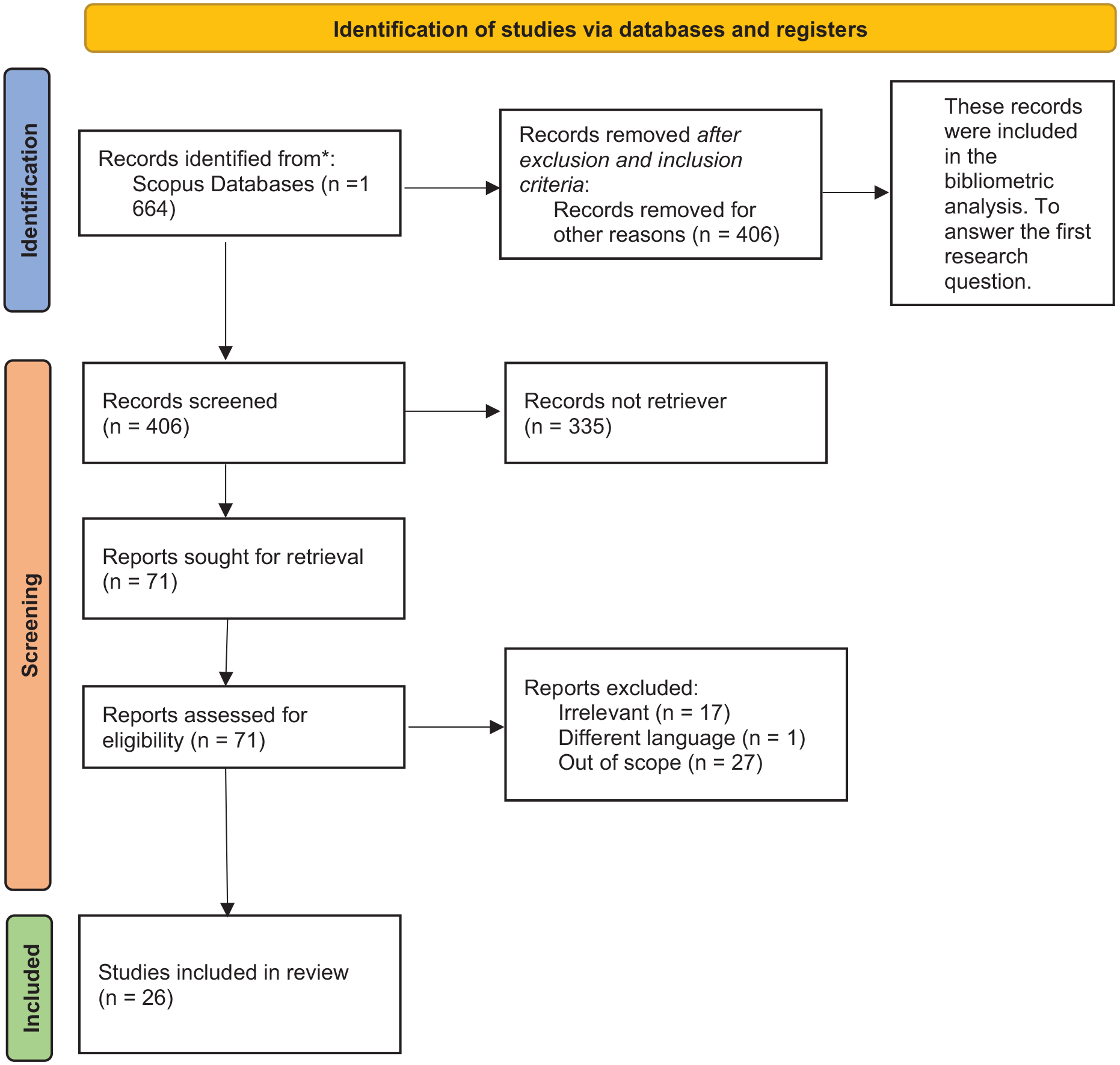
PRISMA framework.
To guarantee clear and thorough reporting in systematic reviews and meta-analyses, the Preferred Reporting Items for Systematic Reviews and Meta-Analyses (PRISMA) framework is a strict methodology. It is well known for taking an organized approach to research and is very helpful when assessing randomized trials and other kinds of intervention studies.
To improve the caliber and dependability of systematic reviews and meta-analyses, the PRISMA framework is essential. Researchers can contribute useful and reliable findings to the scientific community by following its criteria, which guarantee the greatest level of rigor in the conduct and reporting of their investigations.
Results
To gain a comprehensive understanding of our research topic, we employed a dual-method approach that combines bibliometric analysis with a Systematic Literature Review (SLR). This integrative methodology facilitates a broad yet detailed exploration of the role of microfinance in poverty reduction. The bibliometric analysis offers a wide-ranging perspective, identifying overarching patterns and trends, while the SLR provides in-depth insights into specific studies that explore these themes in detail.
To ensure narrative coherence, we smoothly transition between these two methods, aligning the broad trends identified in the bibliometric analysis with the detailed findings of the SLR. This structured approach enhances the logical consistency of our results, offering a holistic view of the research landscape.
Cross-referencing plays a pivotal role in reinforcing the connection between the two methodologies. While the bibliometric analysis highlights key developments and dominant themes within the field, the SLR delves deeper into the selected studies, offering critical evaluations and thematic insights. This cross-referencing ensures that the broader trends identified through bibliometric data are robustly supported by specific evidence detailed in the literature review.
The First Phase (Bibliometric Analysis)
In the rapidly evolving field of microfinance and its role in poverty reduction, bibliometric analysis has emerged as a crucial tool for assessing the academic landscape. By examining publications, citation patterns, and collaboration networks, bibliometric analysis offers a structured method for mapping the intellectual underpinnings of microfinance and its impact on poverty reduction. This approach provides essential insights into emerging trends, key contributors, and the dissemination of knowledge within this dynamic field, revealing critical pathways for future initiatives aimed at global poverty alleviation.
Number of Studies in the Field of Microfinance and Poverty
The study is converging on a trend where the number of publications in the field of microfinance and poverty alleviation has experienced significant fluctuations over the past decade. After an initial decline from 2014 to 2015, there was a sharp increase in research activity, peaking in 2017. This surge indicates a period of heightened interest or key developments in the field. However, the following years saw a decline, with the lowest point reached in 2021. Despite this, the study shows a gradual recovery in publication numbers from 2022 to 2023, suggesting that interest in the topic is stabilizing and potentially regaining momentum as researchers continue to explore and address the challenges and opportunities within microfinance and poverty alleviation (Figure 2).

Number of studies published each year.
The Leading Countries in the Field of Microfinance and Poverty
Bibliometric analysis maps the intellectual framework of microfinance research and its impact on poverty by evaluating publications, citation patterns, and collaboration networks. In this section, we explore how bibliometric analysis in the context of microfinance and poverty can uncover valuable insights to guide future efforts in poverty alleviation through financial inclusion.
Additionally, to gain more granular insights, the VOSviewer software was employed to identify the leading nations contributing to microfinance and poverty research.
The bibliometric analysis reveals that the United States, India, and Malaysia play significant roles in shaping the intellectual landscape of this field, as evidenced by their publication counts of 75, 54, and 45, respectively, as illustrated in the accompanying image. The leadership position of the United States in this field can be attributed to its substantial financial resources, intensive research efforts, and a well-established framework supporting both academic and practical advancements in financial inclusion and poverty alleviation. India’s prominence is bolstered by its strong educational system in economics and development studies, as well as emerging initiatives focused on financial empowerment in underserved communities. Malaysia’s contributions are noteworthy, driven by government support for microfinance initiatives aimed at poverty reduction.
Other nations such as the United Kingdom, Australia, and Bangladesh also contribute significantly, with each bringing unique perspectives and approaches to the field. The global distribution of research underscores a diverse and complex strategy for leveraging microfinance as a tool for poverty alleviation, indicating a future where financial services are more targeted, effective, and inclusive, driven by the continued evolution of microfinance practices (Figure 3).

The top 10 countries leading in publications underscore the global significance of microfinance research in addressing poverty.
The Leading Educational Institutions in the Field of Microfinance and Poverty
Bibliometric analysis identifies key academic institutions contributing to microfinance and poverty research. These institutions demonstrate diverse geographical and intellectual contributions, fostering a better understanding of financial inclusion and poverty alleviation (Figure 4).

The top 10 affiliations leading in publications underscore the global impact of microfinance research on poverty.
The Top 10 Authors in the Field of Microfinance and Poverty
The table presents the leading top 10 authors in the field of microfinance and poverty alleviation, showcasing their academic influence through key metrics such as total publication, H-index, total citations, affiliation, and country.
Table 2 showcases key authors in the field of microfinance and poverty alleviation, highlighting their contributions through publication counts, H-index, and total citations. Christopher E.C. Gan from Lincoln University, New Zealand, leads with 189 publications, an H-index of 30, and 3,314 citations, indicating his significant influence in the field. Niels Hermes from Rijks universiteit Groningen, Netherlands, is also highly influential with 65 publications, an H-index of 31, and 3,556 citations, reflecting the high impact of his research. Begoña Gutiérrez-Nieto from Universidad de Zaragoza, Spain, contributes with 28 publications, an H-index of 17, and 1,494 citations, making her a key figure in the Spanish academic community. Dale W. Adams from The Ohio State University, USA, has 46 publications, an H-index of 11, and 662 citations, showing consistent contributions with a moderate impact. The table reflects a diverse range of scholars, each bringing unique perspectives and significant research to the ongoing dialog on microfinance and poverty alleviation.
The Top Authors in the Field of Microfinance and Poverty.

TP = total publications.
TC = total citations.
The 10 Top Journals that Focus on Microfinance and Poverty Alleviation
The table highlights the top 10 journals leading research in microfinance and poverty alleviation, showcasing their contributions through total publications, total citations, CiteScores, most cited article, time cited, and publisher.
Table 3 includes the top journals that focus on microfinance and poverty reduction. The 10 most prolific publications in this subject act as vital centers for the transmission of critical research and information. Taylor & Francis’“Development in Practice” ranks first with 310 publications (TP) and 772 Citations (TC), with a CiteScore of 2.5. The journal’s most cited article, “There is still something missing”: comparing a gender-sensitive and gender-transformative approach in Burundi,” has been cited eight times. Another significant journal, “Applied Economics,” published by Taylor & Francis, boasts 1,678 TP, 6,423 TC, and a strong CiteScore of 3.8. Its most cited article, “Impact of ESG score on financial performance of Indian firms: static and dynamic panel regression analyses,” has been cited 30 times. These journals, along with others listed, are at the forefront of academic publishing in microfinance and poverty, driving the conversation and advancing our understanding of how financial inclusion can contribute to poverty alleviation.
The Top 10 Journals that Focus on Microfinance and Poverty Alleviation.

TP = total publications; TC = total citations.
The Most Frequently Used Keywords in Publications on Microfinance and Poverty Alleviation
Figure 5 illustrates the most common keywords in the research on microfinance and poverty alleviation. In the evolving landscape of microfinance, various themes have gained prominence, particularly in the context of financial inclusion and poverty reduction. The integration of microfinance strategies with broader socioeconomic goals has reshaped traditional approaches to development. Keywords such as “women’s status,”“income,”“poverty reduction,” and “sustainability” highlight the critical areas of focus within this research field. The map also emphasizes the importance of regional studies, with terms like “India,”“Bangladesh,” and “South Asia” indicating concentrated research efforts in these areas. The diverse connections between terms such as “microcredit,”“women empowerment,” and “savings” underscore the multifaceted nature of microfinance as a tool for economic development and social change. This visualization demonstrates the significance of microfinance in addressing the complex and interconnected challenges associated with poverty alleviation in various global contexts.

The most commonly used keywords in publications on microfinance and poverty alleviation.
The Second Phase: Systematic Literature Review (SLR)
In this phase, we systematically explore existing research to provide a comprehensive understanding of the synergy between microfinance and poverty. The review focuses on identifying key applications, impacts, and trends within the field, offering valuable insights for both academic and practical advancements.
Analysis of Applications Related to Microfinance and Poverty
The following section presents a detailed analysis of the various applications of microfinance in relation to poverty alleviation. To illustrate these applications clearly, Table 4 is provided, summarizes the key implementations and their corresponding impacts as reported in the selected articles.
Summary of Microfinance Applications and Their Impact on Poverty in Selected Studies.

Table 4 provides an overview of various microfinance applications across different countries, highlighting their impact on poverty alleviation. It shows that while microfinance generally leads to positive outcomes such as income improvement and business growth, the effects can vary depending on the context and specific implementation. This diversity underscores the importance of tailoring microfinance strategies to local conditions to maximize their effectiveness.
Key Variables Linking Microfinance and Poverty
We explore the critical variables that connect microfinance initiatives with poverty alleviation outcomes. These variables, ranging from income levels to social empowerment, play a significant role in determining the effectiveness of microfinance programs. The following table summarizes these variables, providing insights into how they are measured and utilized across various studies.
Table 5 provides a comprehensive overview of the key variables used in various studies to assess the impact of microfinance on poverty alleviation. These variables range from income levels and business growth to social empowerment and financial sustainability, highlighting the multifaceted nature of microfinance’s effects. By examining these variables, the studies offer insights into how microfinance influences different aspects of poverty and economic development across diverse contexts.
Summary of Key Variables in Microfinance and Their Role in Poverty.

Trends and Findings Microfinance and Poverty
Microfinance has been shown to significantly impact poverty reduction, particularly by improving livelihoods through increased income, better access to education, and enhanced health outcomes. For example, Chibbonta and Chishimba (2023) indicates that microfinance clients often experience stronger socio-economic indicators, demonstrating its potential to uplift communities. Similarly, at the village level in Indonesia, microfinance initiatives have been found to support job creation and business growth, which directly improves living standards (Ahmad et al., 2021). This aligns with broader findings in the literature, where microfinance has been linked to tangible improvements in household well-being and economic security (Hermes & Lensink, 2011).
A notable trend is the ability of microfinance to reduce income inequality, particularly in developing countries. For instance, a study across 57 nations revealed that higher microfinance intensity correlates with lower income inequality, highlighting its role in addressing economic disparities (Miled et al., 2022). This is further supported by findings in Ghana, where microfinance not only reduces poverty directly but also creates spillover effects that decrease spatial inequality at the district level (Oteng-Abayie et al., 2023). These outcomes reflect the potential of microfinance to contribute to inclusive economic growth, as emphasized by Beck et al. (2007).
However, the impact of microfinance is not uniformly positive. In some regions, such as Zimbabwe, the expansion of microfinance institutions has paradoxically been linked to an increase in poverty. This finding underscores the contextual nature of microfinance and suggests that in some cases, alternative strategies, such as SME development or agricultural growth, may be more effective (Chikwira et al., 2022). Critiques argue that microfinance can occasionally fail to reach the poorest or even exacerbate financial vulnerability, adding to the complexity of its impact (Bateman, 2017).
The relationship between microfinance and women’s empowerment is nuanced. While some studies indicate that microfinance can positively affect women’s socio-economic development, enhancing income and decision-making power (Abraham, 2018; Al-shami et al., 2021), other research highlights potential negative consequences, such as reinforcing traditional gender roles, thereby limiting its effectiveness (Parmanand, 2021). These mixed outcomes underscore the need for microfinance programs to be thoughtfully designed to address the specific challenges faced by women in various cultural contexts. This perspective is supported by studies that emphasize the importance of integrating gender dynamics into the design and implementation of microfinance programs (Kabeer, 2001).
Another notable trend is the shift from focusing on poverty alleviation to prioritizing financial sustainability within microfinance institutions. In regions such as North West Pakistan and India, the commercialization of microfinance has resulted in mission drift, where the initial goals of poverty reduction are sometimes compromised in favor of profitability (Ullah et al., 2019; W. Khan et al., 2017). This shift raises concerns about the long-term effectiveness of microfinance as a tool for poverty alleviation, especially when financial objectives begin to overshadow social goals (Beck et al., 2007; Cull et al. 2009).
Despite these challenges, some microfinance programs have successfully balanced the dual missions of serving the poor and achieving financial sustainability. In China, for example, localized models and reputation-based credit systems have enabled microfinance institutions to maintain this balance, ensuring that they can continue to serve their target populations effectively (Wang & Ran, 2019). These examples demonstrate that, with strategic alignment of goals, microfinance can achieve both social and financial objectives, as emphasized by Armendariz and Morduch (2005).
Finally, the structure and organization of microfinance institutions are critical to their success. Studies in Kenya show that informal microfinance institutions with strong organizational structures tend to perform better, with women participants demonstrating higher loan repayment rates and greater participation (Kaua et al., 2020). This finding emphasizes the importance of institutional design in ensuring the effectiveness of microfinance initiatives, which is a key factor in determining the sustainability and impact of microfinance programs (Ledgerwood et al., 2013).
While microfinance has demonstrated considerable potential in improving economic outcomes and reducing poverty, its effectiveness is highly context-dependent. The success of microfinance programs hinges on careful design, implementation, and alignment with the socio-economic environments in which they operate. Moreover, the challenges posed by mission drift and commercialization underscore the need for ongoing vigilance to ensure that microfinance remains a powerful tool for poverty alleviation rather than merely another financial product. The findings discussed here are in line with broader literature, highlighting the complex, and multifaceted role of microfinance in poverty reduction.
Challenges Associated with Microfinance and Poverty
Microfinance is recognized as a tool for poverty alleviation, but it faces significant challenges. One major issue is loan repayment difficulties, exacerbated by economic shocks like the COVID-19 pandemic, which can push borrowers deeper into poverty (Chibbonta & Chishimba, 2023). Misuse of loans, often due to poor financial literacy, can also worsen poverty, as seen in Zimbabwe (Chikwira et al., 2022), highlighting the need for integrated financial education (S. B. Banerjee & Jackson, 2016).
Operationally, microfinance institutions (MFIs) struggle to balance poverty alleviation with financial sustainability. Commercialization often leads to mission drift, prioritizing profitability over social goals, especially in competitive markets (Beck et al., 2007; Cull et al., 2009; Tamanni & Haji Besar, 2019; Ullah et al., 2019; Wang & Ran, 2019). Additionally, socio-cultural barriers can limit the effectiveness of microfinance, particularly for women, by reinforcing traditional gender roles and limiting their economic participation (Al-shami et al., 2021; Kabeer, 2001; Parmanand, 2021; Trokic et al., 2020). Geographic disparities also pose challenges, with rural areas benefiting less from microfinance due to limited access and infrastructure (Ahmad et al., 2021; Kasali et al., 2015; Niaz, 2022).
Weak institutional capacity and restrictive regulations, especially in countries like Nigeria, undermine the effectiveness of MFIs (Ledgerwood et al., 2013; Onoyere, 2014). Lastly, the increasing financialization of development risks deepening inequality rather than reducing poverty (Bateman, 2017; Mader, 2014).
In summary, while microfinance has potential, its effectiveness is hindered by challenges such as loan repayment difficulties, socio-cultural barriers, and institutional weaknesses. Addressing these issues requires financial education, better outreach to underserved populations, stronger regulatory frameworks, and a steadfast commitment to the social mission of MFIs.
Futures Directions
One of the key future directions for microfinance is enhancing financial literacy and education among borrowers. Many studies emphasize the need to ensure that clients can effectively utilize loans to achieve long-term poverty alleviation. Chibbonta and Chishimba (2023) highlight the importance of ongoing support and education, particularly for women entrepreneurs, to help them maximize the benefits of microfinance. Similarly, improving financial literacy is seen as crucial in avoiding issues like loan misuse, as recommended by several authors (Chikwira et al., 2022; Ginanjar & Kassim, 2020; Trokic et al., 2020).
Expanding microfinance services to rural and underserved areas is another critical focus. Authors like Oteng-Abayie et al. (2023) suggest that future efforts should aim at enhancing the spatial delivery of microfinance and eliminating institutional barriers to improve access in these regions. Ahmad et al. (2021) also stress the need for targeted support in underdeveloped areas and advocate for more robust impact assessments to guide policy and practice.
There is also a strong call for developing more inclusive and tailored microfinance products to better serve diverse populations. For instance, Ginanjar and Kassim (2020) recommend creating inclusive financial products that cater to various socio-economic groups, especially within the context of Islamic microfinance. Similarly, Trokic et al. (2020) emphasize the need for microfinance products that are specifically designed for women and other vulnerable groups to ensure broader access and impact.
Balancing the social mission of microfinance institutions with financial sustainability remains a significant challenge. Authors like Wang and Ran (2019) advocate for the development of localized microfinance models that are tailored to regional cultures and socio-economic conditions, which can help prevent mission drift. This aligns with broader recommendations to create frameworks that balance financial sustainability with outreach goals, particularly in challenging market environments (Tamanni & Haji Besar, 2019; Ullah et al., 2019).
Leveraging technology is another promising direction for expanding the reach and efficiency of microfinance services. Although not explicitly mentioned in every study, integrating digital financial services could significantly enhance access, particularly in remote and rural areas, and align with the broader goal of expanding microfinance services to underserved regions (Kasali et al., 2015).
Strengthening policy and regulatory support is also essential. Onoyere (2014) highlights the need for improved regulatory oversight, better capitalization, and enhanced roles in financial inclusion to ensure the success of microfinance institutions. Additionally, W. Khan et al. (2017) recommend adopting a welfarist approach, supported by subsidies and grants, to maintain the original mission of poverty reduction, and women’s empowerment.
Finally, addressing gender equity within microfinance programs is crucial. Parmanand (2021) suggests exploring alternative empowerment strategies beyond economic indicators, focusing on the social costs of microfinance on women’s lives. This focus on gender equality is vital for ensuring that microfinance serves as a tool for both economic and social empowerment.
The future directions for microfinance’s impact on poverty should focus on enhancing financial literacy, expanding access to underserved areas, developing inclusive products, balancing social missions with financial sustainability, leveraging technology, and strengthening regulatory support. Additionally, addressing gender equity and conducting further research are essential steps toward maximizing the effectiveness of microfinance in poverty alleviation.
Discussion
This study offers a thorough examination of the current research landscape on microfinance and its role in poverty alleviation by integrating both bibliometric analysis and a systematic literature review (Hermes & Lensink, 2011). The combined approach provides a broad overview of research trends and a detailed exploration of specific applications, challenges, and future directions in the field. By addressing key research questions individually, the discussion synthesizes findings from both phases, presenting a nuanced view of trends, contributions, and ongoing challenges in microfinance research. These insights are vital for guiding future research and informing policy decisions to enhance the effectiveness of microfinance as a tool for poverty reduction (A. Banerjee et al., 2015; Khandker, 2005). The findings from the systematic literature review highlights key factors influencing microfinance effectiveness, including financial inclusion, empowerment, and profitability. Studies emphasize the positive link between microfinance and women’s empowerment in poverty alleviation (Fonseca et al., 2024). Despite some successes, the profitability and sustainability of microfinance institutions remain central challenges.
Hypothetical Assumptions and Implications
Based on the findings of this study, several hypothetical assumptions can be proposed to guide future research and practical applications:
Microfinance and Women’s Empowerment: It can be hypothesized that microfinance programs that integrate financial literacy training and entrepreneurship support are more likely to achieve sustainable poverty reduction outcomes for women, particularly in underserved regions.
Digital Financial Services in Rural Areas: Another hypothesis is that the adoption of digital financial services tailored to rural populations could significantly improve the accessibility and effectiveness of microfinance, addressing challenges related to geographical barriers and operational costs.
Balancing Social and Financial Goals: Future studies could explore the hypothesis that a hybrid model combining non-profit and for-profit microfinance approaches might offer a sustainable solution to mission drift while maximizing poverty reduction impacts.
Technological Innovation: It can also be assumed that leveraging advanced data analytics and artificial intelligence for credit scoring and customer segmentation may reduce the risk of over-indebtedness and improve the overall efficiency of microfinance operations.
These hypotheses, grounded in the results of this study, provide a foundation for future investigations aimed at overcoming the challenges identified and enhancing the transformative potential of microfinance as a tool for poverty alleviation.
Conclusions and Recommendations
This study provides a thorough analysis of microfinance’s role in poverty alleviation by integrating bibliometric analysis with a systematic literature review (SLR). It highlights the major contributions of countries such as the United States, India, and Malaysia, as well as prominent institutions and influential authors in shaping the global discourse on microfinance.
Despite its potential as a transformative tool for poverty reduction, the study also uncovers challenges that limit its effectiveness, including inadequate financial literacy, difficulties with loan repayment, and the sustainability of microfinance institutions. The findings underscore the importance of tailored strategies and strong regulatory frameworks to maximize the impact of microfinance initiatives.
Propositions for Enhancing the Impact of Microfinance:
Improve Financial Literacy
Enhancing financial literacy among microfinance clients is crucial for ensuring effective loan management and avoiding over-indebtedness. For example, women-focused programs in Malaysia have successfully integrated financial education into loan disbursement processes, resulting in better repayment rates and economic independence (Nik Hussin & Aziz, 2021). Institutions should replicate such models globally.
Expand Access to Rural and Underserved Areas
To address geographic disparities, strategies should leverage technology, such as mobile banking, to reach underserved regions. For instance, localized microfinance models in rural China have effectively combined cultural sensitivities with reputation-based credit systems to increase access in remote areas (Wang & Ran, 2019). Expanding such practices globally can help bridge the financial inclusion gap.
Develop Inclusive and Gender-Sensitive Products
Microfinance products should be tailored to address the diverse needs of clients, especially women and other vulnerable groups. Flexible loan products and gender-sensitive approaches can address systemic barriers, as evidenced by Islamic microfinance programs in Indonesia, which align financial inclusion with cultural and religious values (Ginanjar & Kassim, 2020).
Balance Social Mission with Financial Sustainability
Developing frameworks that balance financial sustainability with outreach goals is essential. For example, hybrid business models adopted by MFIs in Bangladesh have demonstrated that social missions and profitability can coexist (Choudhury et al., 2017). These models should be studied and adapted in other regions to prevent mission drift.
Leverage Technology for Greater Reach and Efficiency
Integrating digital platforms can enhance service accessibility and operational efficiency, especially in remote areas. For instance, mobile-based microfinance services in Kenya have enabled informal MFIs to extend their reach significantly (Kaua et al., 2020). Leveraging technology can also reduce costs and improve data collection for impact assessments.
Strengthen Regulatory Frameworks
Policymakers should establish strong regulatory oversight mechanisms that balance innovation with accountability. Subsidies and incentives for MFIs operating in rural and underserved areas can ensure financial sustainability while maintaining a focus on poverty alleviation. For example, government-backed programs in Pakistan have shown promise in supporting MFIs through public-private partnerships (A. A. Khan et al., 2021).
Promote Gender Equity
Addressing gender equity within microfinance programs is essential. Programs should go beyond economic indicators to explore the broader social impacts of microfinance on women’s lives. For example, studies in Nepal reveal that microfinance has improved women’s decision-making power but has been less effective in addressing social norms (Abraham, 2018). Tailored approaches are needed to maximize empowerment outcomes.
Future Research Directions
− Explore the long-term impacts of microfinance on poverty reduction, particularly in developed countries where studies are limited.
− Investigate the role of technology in enhancing microfinance outreach and efficiency, particularly in rural contexts.
− Analyze the intersection of microfinance and gender equity in different cultural settings to identify best practices.
− Evaluate alternative models of microfinance, such as cooperative systems, and their potential for scalability.
− Incorporate more qualitative research to explore the contextual factors and mechanisms underlying microfinance initiatives, offering deeper insights into the lived experiences of beneficiaries and the cultural dynamics influencing outcomes.
In conclusion, while microfinance has made significant strides in addressing poverty, there remains considerable room for improvement. By implementing these propositions, stakeholders can enhance the effectiveness of microfinance initiatives, ensuring that they not only reach those most in need but also contribute to sustainable and meaningful poverty reduction. Ongoing research, innovation, and collaboration will be essential to unlocking the full potential of microfinance as a tool for global poverty alleviation.
Footnotes

Funding
The author(s) received no financial support for the research, authorship, and/or publication of this article.
Declaration of Conflicting Interests
The author(s) declared no potential conflicts of interest with respect to the research, authorship, and/or publication of this article.
Data Availability Statement
Data sharing not applicable to this article as no datasets were generated or analyzed during the current study.