




Abstract
With the progress of society and the improvement of women’s status, more and more women are beginning to enter leadership positions, showing both their leadership ability and potential. The increase in the number of women in leadership positions has sparked researchers’ attention and interest in female leadership research. The purpose of this article is to review the development of female leadership research, classify research themes, and identify research gaps for future research. Based on the Web of Science database, this paper comprehensively and systematically combs through and analyzes the research results in the field of female leadership over the past 10 years, searching and reviewing 277 relevant journal papers. VOSviewer is used to perform bibliometric analysis. Four research themes were classified: female leadership performance, female leadership stereotypes, female entrepreneurship, and female leadership styles. Based on content analysis, 11 research areas under these four themes are discussed, and seven potential areas are proposed for future research.
Plain language summary
With the progress of society and the improvement of women’s status, more and more women begin to enter leadership positions, showing their leadership ability and potential. The increase in the number of women in leadership positions has sparked researchers’ attention and interest in the study of female leadership. Therefore, in order to have a more comprehensive and intuitive understanding of current research hotspots and contents in the field of female leadership, we conducted a quantitative analysis on 277 papers in the field of female leadership, and identified four themes: female leadership performance, female leadership stereotype, female entrepreneurship and female leadership style. The content of 11 research areas under these four topics and 7 potential research areas in the future are discussed.
Introduction
With the development of society and the advancement of women, more and more women are becoming highly qualified people who demonstrate the important role they play in leading initiatives, organizations, and countries (Bin Bakr & Alfayez, 2022). Although the proportion of women in leadership positions has increased over the past few decades, women are still under-represented in leadership positions (e.g., Giacomin et al., 2022). According to statistics from MSCI ESG Research in 2023, only 9.1% of board chairs and 6.5% of CEO positions are held by women. This phenomenon has triggered academic interest in studying the issues involved in developing female leadership, which benefits companies and organizations in building female leadership (e.g., Dezsö & Ross, 2012; Ghaeli, 2019). However, due to the lack of systematic reviews of female leadership research, researchers need to make an effort to understand existing research and research gaps before embarking on designing the research on female leadership. This is an issue for researchers in undertaking female leadership research.
In the past 10 years, researchers have undertaken different studies on female leadership based on their interests. For example, Silva and Mendis (2017) studied female leadership styles. Brescoll (2016) investigated the issues in gender stereotypes for female leaders. Recently, Y. Liu et al. (2020) studied female leadership in improving firm performance through corporate social responsibility. S. C. Chen and Shao (2022) studied how female leaders can improve employees’ situational performance. Regarding female global leadership, Javidan et al. (2016) surveyed 600 male managers and 571 female managers from 74 countries to compare the strengths between male and female global mindset. Recently, Sueda et al. (2020) interviewed female leaders in global multinational companies and concluded that women are future-oriented, sustainable, and culture-sensitive global leaders. Researchers have shifted their interest from the personal level of women to the corporate level, and further to the global level. Understanding the changes and trends helps researchers plan their further research in female leadership. Therefore, it is necessary to conduct a systematic and comprehensive literature review to understand the research status of female leadership.
This article attempts to provide a systematic and comprehensive literature review of female leadership research with a view to helping researchers in the field understand the current state of research, major research themes, and research opportunities. Therefore, this paper adopts the method of bibliometric analysis to answer the following three questions: (1) What is the current research status in the field of female leadership? (2) What are the current hot research areas in the field of female leadership? (3) What other research can researchers carry out in the field of female leadership? This study contributes to female leadership research by providing a review of the literature on female leadership research for researchers to refer to and plan further research. In addition, this review promotes the United Nations Sustainable Development Goals (UN SDGs) SDG#5 to promote gender equality and empower females in career development.
This paper is divided into six parts. The introduction presents the research background, research gaps, and research objectives. The literature review section explains the concept of female leadership and the research on the field of female leadership. The methodology section outlines the research design, data collection process, and research tools of the paper. The results section provides an overview of the evolution of the research process in the field of female leadership, the journal distribution of the selected sample articles, the most influential researchers and the most frequently co-cited articles, as well as the institutions, regions, and countries to which these articles belong, and discusses the research clusters and the corresponding hot topics under these clusters based on the co-cited analysis results. A possible agenda for future implementation is then presented. The last part comprises the conclusions and discussion.
Literature Review
What is Female Leadership?
Leadership is the process by which leaders influence and motivate followers to strive to achieve common group goals through interpersonal behaviors (Kaiser et al., 2012). Therefore, female leadership refers to the characteristics and styles that female leaders show in the process of organizational management, which can make organization members strive to achieve common goals. The concept of female leadership has evolved in the context and theory of feminism (Turock, 2001). The research on female leadership began in the 1970s and was carried out from the perspective of gender differences. In the 1990s, after the third wave of feminism, more and more scholars began to pay attention to female leadership. Eagly and Karau (1991) draw on gender role theory concluding that the male role focuses on agentic behaviors, while the female role focuses on communal behaviors. Eagly and Karau (2002) proposed the role congruity theory of prejudice to explain why women are difficult to recognize as effective leaders. Women face a glass ceiling that makes it difficult for them to break through in the workplace (Cotter et al., 2001), and it is more difficult for them to be promoted to leadership positions than men (Badura et al., 2018).
Female Leadership Research
Initial research on female leadership mainly focuses on women themselves. This includes the problems they face, such as gender differences (e.g., Chapman, 1975), bias against female leaders (e.g., Eagly & Karau, 2002), and gender stereotypes (e.g., Madden, 2011). Later studies are about female leadership and organizations, such as female leadership on corporate performance (e.g., Nyeadi et al., 2021) and employee contextual performance (e.g., S. C. Chen & Shao, 2022). From the above, the research on female leadership not only focuses on women themselves but also extends to research on the relationship between female leadership and organizational performance. Concerning the literature review on female leadership, W. Shen and Joseph’s (2021) review was on gender differences in leadership, Franzke et al.’s (2022) review focused on women’s entrepreneurship in Asia, and Khushk et al.’s (2022) review was on female leadership in corporate innovation. These reviews have different focuses, so a comprehensive review of female leadership research is helpful for researchers in conducting further research in this area.
Methodology
Research Design
This study employed a systematic quantitative approach, with the research process design drawing upon the methodologies of H. Shen and Lai (2022) as well as J. Chen et al. (2023). This study used VOSviewer to construct extensive bibliometric maps to capture research domains. Content analysis was conducted to discuss each research theme (cluster), its subthemes, and the research agenda.
Data Collection
The Web of Science database, a citation database belonging to Clarivate Analytics that includes 254 disciplines, was selected as the source for the literature search. There are more than 74.8 million scholarly data and datasets and 1.5 billion citation references dating back to 1900. It is one of the most widely used databases in bibliometrics analysis because it covers multidisciplinary research fields and a huge amount of academic data (Singh et al., 2021). Once the literature database has been chosen, the search and screening process commences.
This review was conducted following the Preferred Reporting Items for Systematic Reviews and Meta-Analysis (PRISMA) guidelines recommended by Moher et al. (2009). Firstly, “female leadership” OR “women leadership” OR “women in leadership” OR “female leaders” was entered into the search box of the Web of Science, giving a total of 15,942 results. Secondly, the “2014–2023” time range was selected, resulting in a total of 13,296 records. Thirdly, only journal articles published in English were included, resulting in a total of 12,719 records. Fourthly, after removing 48 duplicate references, 12,671 records were obtained. Fifthly, conference papers and papers unrelated to the field of management were removed, and 799 records were obtained. Sixthly, the screening process was performed to exclude papers that only mentioned female leadership in the abstract and keywords but did not focus on female leadership, and 274 records were obtained. Following H. Shen and Lai (2022), the reference lists of 274 papers were examined to ensure that important papers were included; three papers were added. A total of 277 articles met the criteria for literature analysis. Figure 1 presents a flow chart outlining the selection criteria and the number of articles that were screened, included, and excluded.

A PRISMA flowchart about steps to identify and filter sources.
Research Tools
The bibliometric analysis tool used in this paper is VOSviewer 1.6.20. As explained in the paper published in 2010 by Van Eck and Waltman (2010), VOSviewer is a program that can be used to build co-cited data and view bibliometric maps of authors or journals or to build keyword maps based on co-occurrence data. The previous section presented query strings and criteria for searching articles about female leadership on the Web of Science, selecting the literature, downloading it in Tab Delimited File format, and then importing the filtered literature into VOSviewer. A network visualization displaying research clusters and topics can be constructed by following the criteria that guide the selection of data sources and the co-occurrence of keywords.
This paper uses the method of bibliometric analysis with a systematic review to explore the current situation of female leadership research, mainly analyzing the following areas: (1) in accordance with the changes in the number and content of published papers in the field of female leadership research in the past 10 years, the changing trend of this research is determined; (2) well-known journals, influential researchers and institutions, countries, and regions in the field of female leadership and their research contributions are identified through co-citation analysis and co-analysis; (3) key research areas in the field of female leadership are identified by analyzing the co-occurrence of terms in titles and abstracts; (4) the research themes are discussed and a research agenda is proposed based on a systematic literature review and content analysis.
Findings
Research Period and Progress
Figure 2 shows the number of articles published between 2014 and 2023. To understand the research focus, methods, and results regarding female leadership at different stages and grasp the changes in research trends, the reviewed articles were classified into three periods. In these three periods, the number of articles on female leadership gradually increased, and the research content and research methods slowly diversified. In the first phase (2014–2017), the scope of research was limited, with a similar number of articles each year. In the second phase (2018–2021), the number of articles remained stable at around 20 to 30, and topics became more diversified. In the third phase (2022–2023), the number of articles increased significantly, and the research areas became more and more extensive. Therefore, the research process of these three periods is discussed through the analysis of the change in research scope, research theme, and research methods.
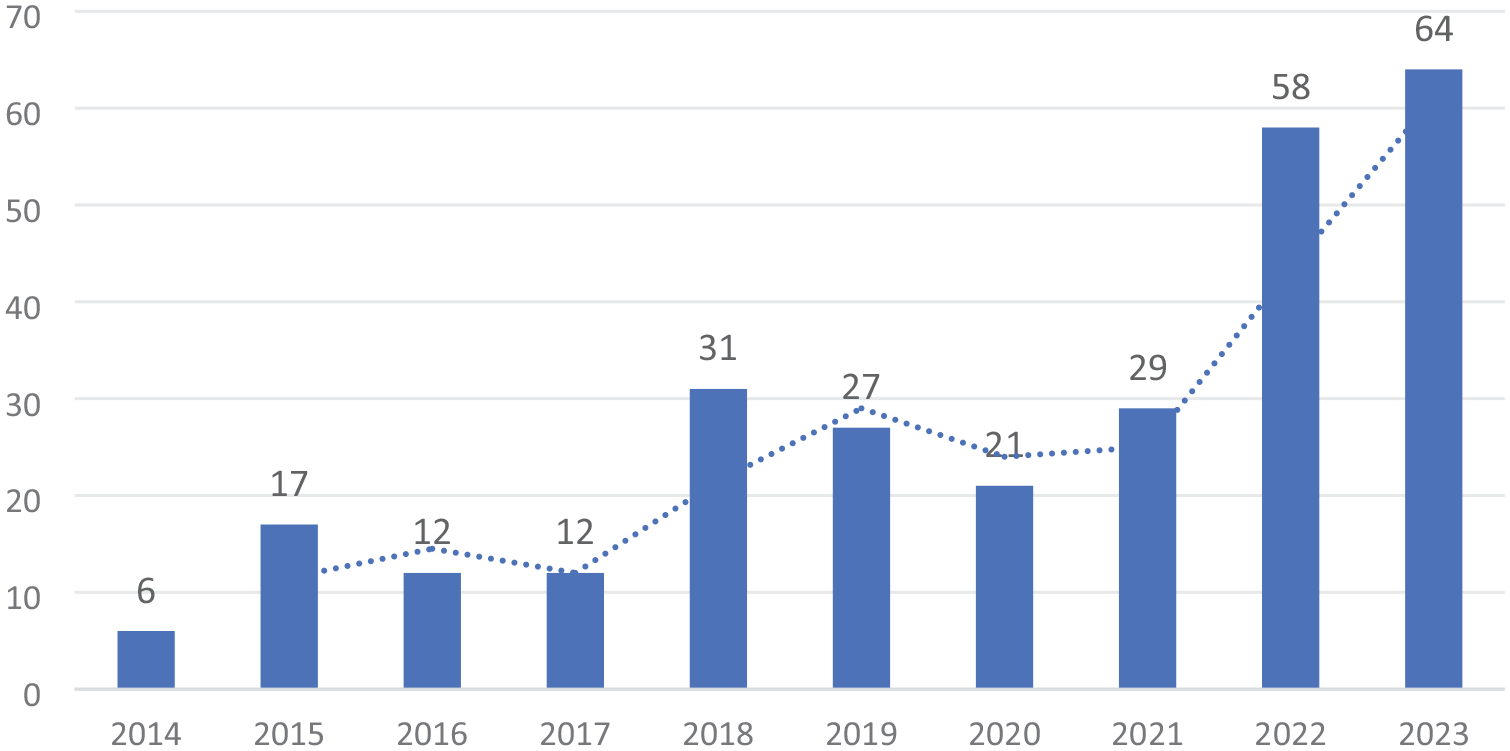
Number of papers on the topic of female leadership in business.
Period 1 (2014–2017)
There are fewer research papers on female leadership during this period. The research mainly focuses on the formation of female leaders, including the factors that influence women to become leaders (e.g., Cook & Glass, 2014), perceptions of female leaders in different countries and industries (e.g., Abdullah et al., 2016), challenges of female leaders in the workplace (e.g., Mulcahy & Linehan, 2014), and leadership styles of female leaders (e.g., Gipson et al., 2017). The main research method for articles during this period was qualitative research in the form of case studies.
Period 2 (2018–2020)
The research focus changed from the formation of female leaders to the performance of female leadership, including firm performance (e.g., Nekhili et al., 2018), corporate governance (e.g., Ghaeli, 2019), corporate social responsibility (e.g., Cook & Glass, 2018), and sustainable development (e.g., Atif et al., 2020). The research methods transitioned from case studies to empirical studies. These findings provide a theoretical foundation for promoting greater representation of females in management roles.
Period 3 (2021–2023)
At this stage, scholars’ research on female leadership expanded to different industries (e.g., high-tech industry: Al-Najjar & Salama, 2022; Collegial courts: Nie et al., 2022). The research objects were further refined (e.g., SME and family business backgrounds: Tran & Nguyen, 2022; South Asia market: Qureshi et al., 2021). In addition, due to the influence of COVID-19, research on female leadership under the topic of COVID-19 emerged during this period (e.g., Bruce et al., 2022). The research methods mainly included case studies and empirical surveys, and little experimental research was performed. During this period, the number of papers devoted to female leadership increased rapidly. Remarkable progress was made in the depth and breadth of female leadership research.
Prominent Journals of Published Articles
The 277 papers collected were published in 145 journals. Well-known journals were analyzed by research output ranking and Web of Science citation frequency ranking. The top 10 most productive journals are published in business and management journals. As shown in Table 1, the top five journals are: Gender in Management (26 articles), Leadership Quarterly (16 articles), Human Resource Management (8 articles), Corporate Social Responsibility and Environmental Management (7 articles), and Small Business Economics (6 articles).
Ten Most Influential Journals (2014–2023).

In terms of ranking by total citations, Leadership Quarterly (1,184 citations) is the journal with the most frequently cited papers, followed by Gender in Management (297 citations), Journal of Management (266 citations), Business Ethics: A European Review (245 citations), and Human Resource Management (205 citations). Numerous articles and citations show that female leadership has always played an important role in business and management.
Most Influential Scholars and Most Co-cited Articles in the Field of Female Leadership
With the setting of a minimum number of citations of an author at 20, a total of 89 authors reached this threshold. Table 2 lists the top 10 most frequently cited authors (scholars). Among them, A.H. Eagly (7,820 link strength) is the most influential scholar, followed by R.B. Adams (2778 link strength), M.E. Hailman (2,452 link strength), M.K. Ryan (2,257 connection strength), and D.C. Hambrick (1902 link strength).
The 10 Most Influential Scholars.

Table 2 also lists the authors of the 10 most cited articles. As shown in the table, Post and Byron’s (2015)“Women on boards and firm financial performance: A meta-analysis” is the most cited article. Through meta-analysis, this article analyzed previous papers published by scholars on female directors and corporate financial performance, helping to explain when and how board gender composition improves a company’s financial performance. It has been cited by many scholars, followed by C. Liu (2018), G. Chen et al. (2016), and Hoobler et al. (2018). C. Liu (2018) confirmed that companies with greater board diversity were less likely to be sued for corporate environmental violations. G. Chen et al. (2016) took listed companies in the United States as the research scope and studied the relationship between the number of female representatives on the boards of directors and the M&A field of corporate strategy. Hoobler et al. (2018) used a meta-analysis to study the relationship between female leadership representatives and corporate financial performance and pointed out the limitations of traditional business cases. These highly cited articles have laid the groundwork for further research on female leadership.
Research Contributions of Institutions, Countries, and Regions in the Field of Female Leadership
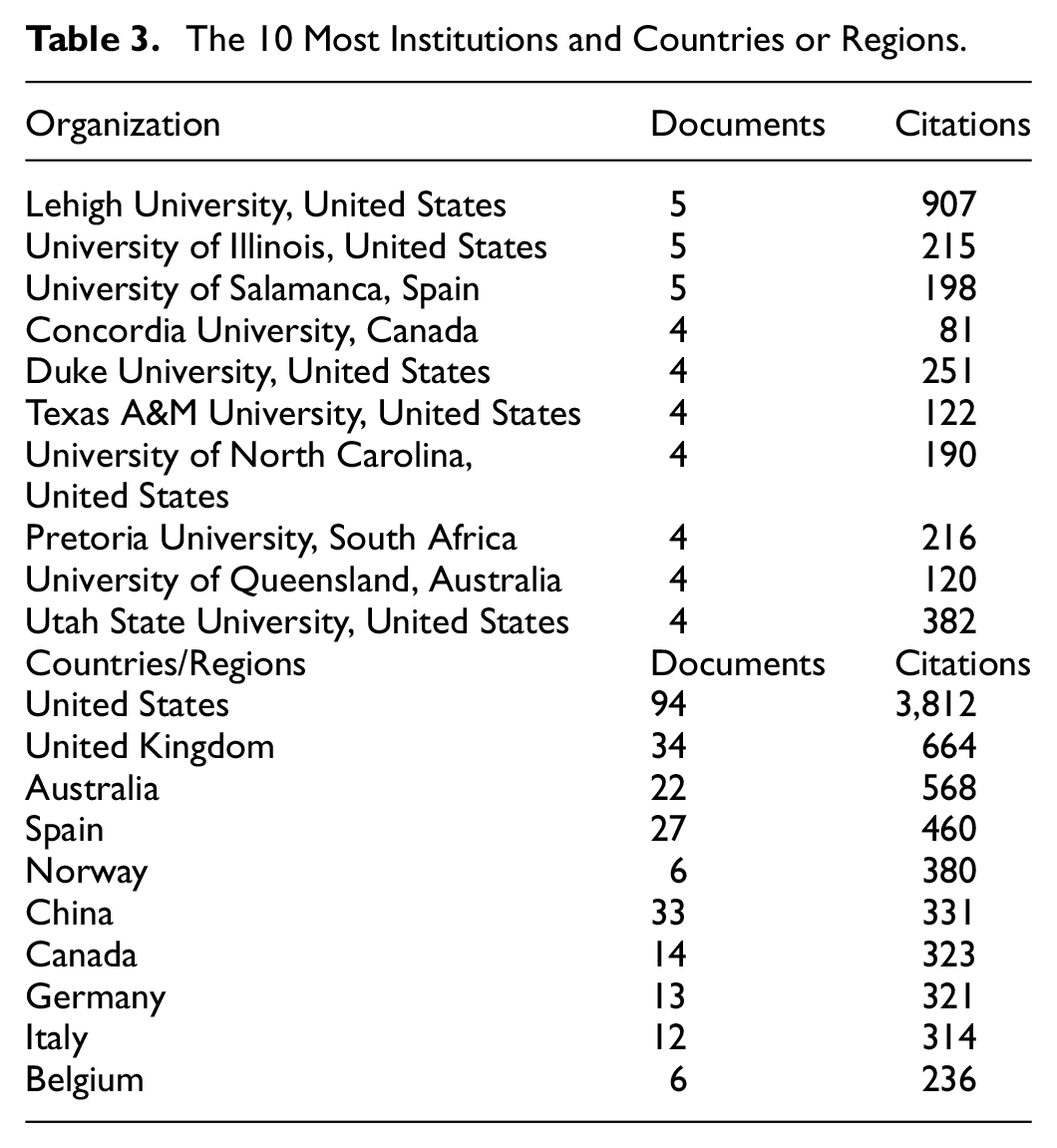
In terms of the ranking of research institutions, the top 10 institutions that published 277 publications are shown in Table 3. Among the top 10 institutions, there are six in the United States and one each in Spain, Canada, South Africa, and Australia. Researchers in the United States are more interested in this field and have published many papers. As regards the regional attribution of articles, the 277 articles analyzed were from 62 countries and regions. The United States, the United Kingdom, China, Spain, and Australia are the regions with the highest output of papers according to the number of published papers. Ranked by citations, the United States, the United Kingdom, and Australia are the most influential places. Of the 10 countries and regions, 80% are in Europe and the Americas, while China is the only Asian country on the list. This means that Asian researchers are less interested in the research on female leadership than Western researchers. In addition, Figure 3 shows international academic collaboration in the field of female leadership studies. The results show that researchers in the United States play a central role in leading research cooperation with China, the United Kingdom, Australia, Germany, and other countries.
The 10 Most Institutions and Countries or Regions.
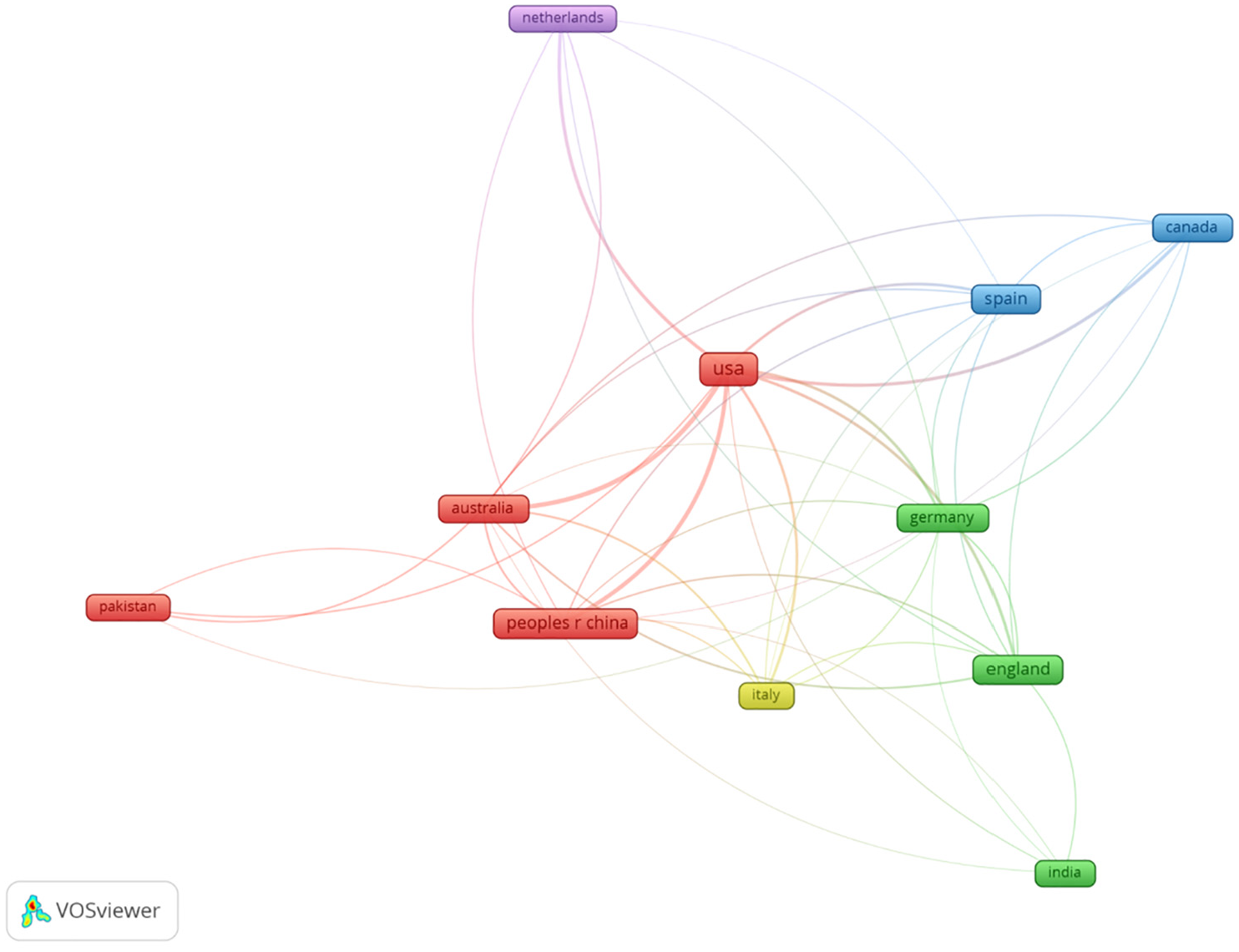
Iinternational academic collaboration in the field of female leadership.
Hot Topics for Research According to Co-occurring Analysis
The text mining function of VOSviewer can be used to analyze the number of concurrent occurrences of terms in article titles and abstracts and form a map to determine the research area. The correlation between two terms in a map is related to the distance between them. The shorter the distance between terms, the stronger their relevance (Van Eck & Waltman, 2011). The term map of research areas in female leadership studies can be determined by the simultaneous occurrence of terms in titles and abstracts. A total of 277 papers on female leadership from the Web of Science were imported into VOSviewer for processing. Based on the total count method, a threshold of at least 10 occurrences was set among 1,442 keywords, and 51 keywords met the threshold. Each item corresponds to a correlation score. Figure 4 shows the map formed by the 51 terms collected in the four clusters, and Table 4 shows the number and score of occurrences for each term. Each set of terms represents a research theme, and a total of four research themes are identified: (1) female leadership performance, (2) female leadership stereotypes, (3) female leadership entrepreneurship, and (4) female leadership styles.

A cluster of terms in the data set formed by article titles and abstracts. (network visualization).
Terms with Most Co-occurrence in Reviewed Articles.

To determine the characteristics of the research area over time, a superimposed visualization is presented in Figure 5. Compared to the visual terms in Figure 4, this map adds different colors for each term, which represent the year of release of the term. The earlier release period is represented by blue, the intermediate release period by green, and the most recent release period by yellow. These figures suggest that research on gender stereotypes and prejudice has declined, while research around gender diversity in the boardroom is rapidly increasing.

Term maps in titles and summaries for each time period in the data set. (overlay visualization).
Cluster 1: Female Leadership Performance
As shown in Table 4, in the first cluster, there are a total of 22 terms. According to the rules of the VOSviewer term co-occurrence network, the size of the display term circle and label is related to the importance of the term. The larger the circle and label, the more important the term (Van Eck & Waltman, 2009). According to Figure 4 (red color), terms such as “firm performance,”“corporate governance,”“corporate social responsibility,” and “diversity” stand out, indicating that these topics are the major studies in this cluster. These topics are about the performance of female leadership, so the first research theme of female leadership is named “Female leadership performance.”
Firm Performance
Research on this topic has focused on the impact of female leadership on corporate performance. Corporate performance can be financial performance – for example, return on assets (Nekhili et al., 2018). It can also be non-financial performance, such as market share (Nyeadi et al., 2021). Most articles on this theme found that female leadership has a significant positive impact on company performance (e.g., Dezsö & Ross, 2012; Moreno-Gómez et al., 2018; Nekhili et al., 2018; Nyeadi et al., 2021). The levels of impact depend on business settings, such as family and non-family businesses (Nekhili et al., 2018), and private and state-owned holding companies (Y. Liu et al., 2014). However, some studies indicated that the relationship between female leadership and corporate performance is not significant (e.g., D’Amato, 2017; Marinova et al., 2016), and even that female leadership has a negative impact on corporate performance (e.g., Darmadi, 2013; Wellalage & Locke, 2013). José Ibáñez et al. (2023) explained that the models of most studies did not account for endogenous bias, and once endogenous bias exists, the gender of managers has no significant impact on firm performance. Post and Byron (2015), in their meta-analysis of 140 studies, found that the impact of female leadership is affected by conditions of shareholder protection and the degree of gender protection. These findings may explain why not all studies showed a positive relationship between female leadership and corporate performance.
Corporate Governance
Wagana and Nzulwa (2017) found that corporate governance relates to female leaders’ relationships with company management, boards of directors, shareholders, and other stakeholders. Ghaeli (2019) found that companies with female employees seem to pay more attention to the greenhouse effect than other male-dominated companies. Areneke et al. (2023) explored the impact of female directors on the disclosure of ethical corporate governance and confirmed that female directors played an important role in strengthening the disclosure of ethical corporate governance. Overall, female leaders are more focused on ethical business practices.
Corporate Social-Responsibility
Corporate social responsibility (CSR) refers to companies meeting the needs of different stakeholders, such as workers, communities, and the environment, by implementing practices and investments in a range of areas, including ethical governance, environmentally sustainable practices, and support for a diverse workforce (Cook & Glass, 2017). Previous studies indicated that due to gender role expectations, functional differences, and experiences of discrimination (Cook & Glass, 2017), female leaders differ in their preferences for traits, values, and green issues, especially corporate social responsibility (Shaheen et al., 2023). For example, Cook and Glass (2017) found that the presence of female directors will lead to a stronger commitment to corporate social responsibility, even if there are only a few female directors. When female directors have more power to promote corporate social responsibility and the company has the motivation to participate in it, the impact of female directors on corporate social responsibility performance is most obvious (Y. Liu et al., 2020). This also applies to female independent directors (Jin et al., 2023). In summary, the existence of female directors will have a positive impact on the performance of corporate social responsibilities.
Gender Diversity
Gender diversity is one way of affecting corporate performance. Gender diversity can be seen in the board of directors (e.g., Y. Liu et al., 2014), senior executives (e.g., Dezsö & Ross, 2012), independent directors (e.g., Jin et al., 2023), and CEOs (e.g., Shaheen et al., 2023). Reddy and Jadhav (2019) mentioned that some countries have enacted gender quota legislation to guarantee the presence of female directors on corporate boards. Based on word frequency analysis results, most gender diversity studies have been conducted from the perspective of the board of directors.
Cluster 2: Female Leadership Stereotypes
As shown in Figure 4 (green color), the second term cluster is mainly about “gender stereotypes” and “prejudice.” Therefore, the second research theme of female leadership is named “Female leadership stereotypes.”
Gender Stereotypes
Giacomin et al. (2022) found that the existence of gender stereotypes may encourage women to hold leadership positions. People generally think that women are more emotional than men, which is a fundamental barrier to women advancing and becoming leaders (Brescoll, 2016); therefore, men are more likely than women to advance to leadership positions in companies (Badura et al., 2018). Researchers also found that gender stereotypes are also influenced by other factors such as history and culture (Madden, 2011), among other specific factors (Giacomin et al., 2022). On the other hand, gender stereotypes represent a favorable side to female leaders. For example, in some industries, such as cosmetics companies, people tend to prefer female leaders over men and believe that female leaders know more about the product (Giacomin et al., 2022). Researchers have suggested overcoming gender stereotypes and allowing women and men to have the same career opportunities (Tremmel & Wahl, 2023), because gender stereotypes are not conducive to gender equality and may also affect the selection of qualified managers, which is not conducive to the development of the company. Researchers are conducting research to solve the issue of gender stereotypes.
Prejudice
When the public’s stereotypical view of women is inconsistent with the attributes they believe that those in leadership positions must possess, there will be prejudice (Eagly & Karau, 2002). Researchers have done a lot of research on female leadership and prejudice. Rudman et al. (2012) stated that prejudice is evidenced by the status dissonance hypothesis, whereby surrogate women are punished for violating their status, thereby defending gender hierarchies. To address the prejudice issue, researchers have attempted to discover the causes of prejudice against female managers in the workplace (e.g., Brescoll, 2016). Stephenson et al. (2023) found that the causes of prejudice vary from industry to industry and that no one solution can eliminate gender bias against female leaders.
Cluster 3: Female Leadership Entrepreneurship
As shown in Table 4, the third cluster is mainly about “entrepreneurship,”“culture,” and “determinants.” Therefore, the third research theme of female leadership is named “Female leadership entrepreneurship” (blue color in Figure 4).
Entrepreneurship
Research on female entrepreneurship dates back to the 1970s when Schwartz (1976) first linked the field of entrepreneurship to women. In the past, research indicated that female entrepreneurship is mainly driven by low family income, sexism in the work environment, the lack of job opportunities, and the demand for flexibility in working hours (Ascher, 2012). Compared with men, women are faced with more difficulties in entrepreneurship (Alesina et al., 2013), including financial support. However, recent research shows that female entrepreneurship is not caused by the above reasons and outperforms men in terms of innovative environment and survival prospects (Ughetto et al., 2020). At this stage, gender equality and changes in the social environment provide more opportunities for female entrepreneurship (e.g., Ughetto et al., 2020). Researchers have studied the motivation for female entrepreneurship (e.g., Ascher, 2012), its difficulties (e.g., Alesina et al., 2013), and its characteristics (e.g., Ughetto et al., 2020).
Culture
Cultural background plays an important role in shaping the attitude and intention of entrepreneurs in the early stage of female entrepreneurship (Carmichael & Mazonde, 2016). Researchers found three main cultural factors that affect female entrepreneurship, namely gender role expectations and identity, sociocultural mechanisms, and entrepreneurial environment (Bullough et al., 2022), which have both negative and positive impacts on female entrepreneurship. Franzke et al. (2022) stated that the sociocultural system of a country or region has a significant impact on women’s entrepreneurial motivation, creativity, and the shaping of social norms and beliefs. In Asia, the culture of adventurism, secular feminism, and collectivism has a negative impact on female entrepreneurship (Aramand, 2012). Recently, researchers suggested providing a supportive startup environment to attract more females to invest in female entrepreneurs and thus create more gender equality (Bullough et al., 2022).
Determinants
Researchers have studied the external and internal determinants of female entrepreneurship. Mroczek-Dąbrowska and Gaweł (2020) argued that labor market factors determine female entrepreneurship. Cullen (2020) argued that social and cultural factors are important in determining the business strategy of female entrepreneurs. Akehurst et al. (2012) explored external and internal factors in female entrepreneurship and found that individual factors such as age, family, number of children, and self-cognition were related to the motivation, obstacles to success, and business performance of female entrepreneurs. In summary, determinants of female entrepreneurship cover a wide range of different stages of the entrepreneurial process, which are still under research.
Cluster 4: Female Leadership Styles
As shown in Table 4, the fourth cluster (yellow color in Figure 4) mainly consists of three terms: “leadership styles,”“transformational leadership” and “advantages.” Therefore, the fourth research theme of female leadership is “Female leadership styles.”
Leadership Styles
Leadership style refers to a relatively stable set of behavior patterns adopted by leaders in the process of management (Eagly & Johannesen-Schmidt, 2001) and is influenced by leaders’ immediate family, clan, and tribe (Nanjundeswaraswamy & Swamy, 2014). It is believed that in the past, according to gender stereotypes, female leaders were often regarded as relationship-oriented, while male leaders were often seen as task-oriented (Eagly & Johnson, 1990). For more than a decade, there has been controversy about whether there are differences in male and female leadership styles (Gipson et al., 2017). Silva and Mendis’s (2017) study found that female leaders exhibit more transformative leadership qualities than male leaders, driven by the dynamics of role incongruity and the natural influence of gender on behavior. Male leaders, on the other hand, show more transactional and free leadership qualities. However, a recent study by Eichenauer et al. (2022) on leadership writing and gender in the context of the COVID-19 crisis did not observe differences in perceived leadership gender in a control experiment. Their research concluded that female leadership correlates more directly with women’s display of communal behaviors.
Transformational Leadership
The concept of transformational leadership was first proposed by Burns (1978) and refers to the leader through idealized influence (charisma), inspiration, intellectual stimulation, or individualized consideration. By influencing followers to go beyond their immediate self-interest (Bass, 1985) and focus on higher-level values (Stempel et al., 2015), the morale, motivation, and morality of followers under transformational leadership are enhanced. Due to women’s sensitive, emotional, and social behavior characteristics, researchers support female leaders who have the elements of transformational leadership (Sharif, 2019) and even refer to transformational leadership as a “female leadership style” (Chao, 2011). Researchers have explored whether transformational leadership, transactional leadership, and free-spirited leadership behaviors were perceived to be more typical of female or male leadership and found that transformational leadership was perceived to be more typical of female leaders (Stempel et al., 2015). A recent study on gender differences in leadership confirmed that female leaders can improve the situational performance of employees through femininity (S. C. Chen & Shao, 2022). With the deepening of research, researchers have begun to pay attention to investigating how female transformational leadership affects followers’ behavior.
Advantages
Post (2015) found that the advantages of female leadership depend on the coordination requirements of the team, and when these requirements are high, a team led by women shows stronger cohesion, cooperative learning, and participatory communication than a team led by men. Through experiments, Post et al. (2019) found that female leaders have advantages related to trust in times of organizational crisis. Therefore, some researchers argued that women show more effective leadership than men (Eagly, 2007). Bruce et al.’s (2022) study reported similar findings in dealing with the COVID-19 crisis and confirmed that women outperformed male leaders. Not all researchers support the notion that female leadership advantage is a good phenomenon: some researchers argue that overemphasizing and exaggerating the advantages of female leadership is a continuation of gender inequality (Lammers & Gast, 2017). Therefore, researchers have suggested that if organizations want female leadership to work to their advantage, they must help female leaders overcome the obstacles they must face, such as gender discrimination, implicit bias, and unfair performance evaluations (Offermann & Foley, 2020).
Research Agenda
A research agenda is a plan that identifies the research gaps in different research themes. After reviewing 11 research areas of female leadership, seven potential areas are proposed for future research.
Corporate Performance
Although researchers have conducted numerous studies on female leadership performance (e.g., Darmadi, 2013; Marinova et al., 2016; Nyeadi et al., 2021), no consistent conclusion has been reached to explain under what circumstances female leadership has positive and negative outcomes. Researchers can use different indicators to measure the relationship between female leadership and corporate performance. Also, the scope of research can be expanded to more emerging economies to enrich the content of research, and to enable a more comprehensive understanding of the complexity and diversity of female leadership, to obtain more universal results.
Gender Diversity Advantages
According to previous studies, female leaders have advantages related to trust in times of organizational crisis (Post et al., 2019). In this regard, it is necessary to study further the advantages of female leadership in different situations in enterprises, in order to provide a more theoretical basis to support gender diversity in boards of directors and gender equality in society. In addition, following Offermann and Foley’s (2020) argument, how to leverage the advantages of female leadership on the one hand, and eliminate gender inequality on the other, is worthy of further exploration.
Culture and Subculture
Previous studies have confirmed that social culture has a multifaceted impact on female leadership, which can influence both the social stereotype of female leadership and female leadership entrepreneurship (Bullough et al., 2022). Therefore, in future studies, researchers can explore the influence of the inherent social culture of different regions on female leadership. For multinational corporations, researchers can examine the interactive effects of local national culture, organizational culture, and home country culture on female leadership. In addition, some female leaders may be members of subculture groups such as the queer subculture, and researchers can examine the effect of subculture on female leadership.
Developing Global Female Leaders
Given that female leadership has a positive effect on the development of various aspects of the company (Cook & Glass, 2017), researchers need to discover ways for the growth of female employees and female leaders, especially for multinational organizations. Researchers can study the impact of how global corporations promote fair work environments and promotion channels on building female leadership in different countries. Researchers can also study how international companies incentivize female staff in terms of compensation or future career development to become global leaders.
Female Leader-Follower Relationship
Previous studies have proved that female leaders can have an impact on the situational performance of employees through femininity (S. C. Chen & Shao, 2022), which is an embodiment of female leadership advantages. However, whether female transformational leadership leads to any negative outcomes for employees is still a question that remains unanswered. Future studies can examine the impact of different female leadership styles on employees’ attitudes such as satisfaction, happiness, and enthusiasm for work. Additionally, differences in relationships between female leaders and male followers and between female leaders and female followers can be examined. Furthermore, policies on employee welfare systems such as compensation that female leaders decide may also influence the female leader-employee relationship, which can be further examined.
Conflicts Among Work, Leisure, and Family
Women have multiple roles in society. When studying female leadership, it is necessary to consider not only women’s roles in leadership positions but also their roles in the family and work-life balance, as these factors will affect female leadership performance. Studies have proved that women’s entrepreneurial behavior (Yadav & Unni, 2016) and entrepreneurial motivation (Ascher, 2012) have an important relationship with the family. Therefore, future research can be carried out on conflicts among leadership work, leisure, and family. Although most female leadership styles are homogeneous, individuals may show different leadership behaviors and abilities due to divergent family cultures and living environments. In addition, women can play the role of daughter, wife, or mother in the family; they bear family responsibility, whether it is housework or children’s education, and other aspects of their time, energy, and psychological state will have an impact. Therefore, the influence of family factors on female leadership and entrepreneurship can be explored.
Sustainable Development and Growth
Previous studies indicated that female leaders support CSR practices more than men do (Cook & Glass, 2017). Future research can further explore the role mechanism of female leaders in corporate sustainable development and how they balance corporate and public interests. In terms of the sustainability of enterprises, future research can explore how female leaders achieve corporate sustainable growth such as enhancing a company’s ability to sustain innovation and profitability.
Conclusions and Discussion
Conclusions
This study systematically reviews the research status in the field of female leadership over the past 10 years. A comprehensive and systematic review is carried out on the aspects of the research period and progress, journals that publish more articles in this field, influential scholars and citation frequency, and the research contributions of major institutions and countries or regions. Then, through the analysis of titles, abstracts, and the term co-occurrence of the keywords of the sample literature, four research themes and 11 research areas are identified, and the research content under each area is discussed in depth. Finally, based on the analysis results, the research gaps in the field of female leadership and future research directions are discussed.
In the past 10 years, the research on female leadership has covered female leadership performance, female leadership stereotypes, female leadership entrepreneurship, and female leadership styles. Research not only focuses on traditional leadership effectiveness (e.g., Eagly, 2007), entrepreneurship (e.g., Franzke et al., 2022), and leadership style (e.g., Sharif, 2019) but also includes sociocultural fields such as corporate social responsibility (e.g., Cook & Glass, 2018), gender diversity (e.g., Y. Liu et al., 2014), and prejudice (e.g., Brescoll, 2016). This shows that the field of women’s leadership studies is also adapting to sociocultural changes. In addition, women’s leadership studies span different disciplines, including role consistency theory from a psychological perspective (e.g., Eagly & Karau, 2002), cultural influence from a sociological perspective (e.g., Bullough et al., 2022), and econometric analysis from an economic perspective (e.g., Nyeadi et al., 2021). The convergence of these disciplines provides a more comprehensive perspective on understanding the complexities of female leadership. Based on the systematic review, future research can involve corporate performance, gender diversity, female leadership subculture, female global leader development, female leader-follower relationships, work conflict, and corporate sustainable development.
Theoretical Contributions
This study mainly makes the following academic contributions. First of all, it is the first comprehensive and systematic literature review in the field of female leadership research, depicting the panorama of the field of female leadership research in the past decade. The research in this paper can provide a reference for the field of female leadership research and help researchers prepare and plan for the field of female leadership research. Secondly, it identified thematic maps, which helped researchers obtain a comprehensive picture of the current state of female leadership in terms of performance, stereotypes, entrepreneurship, and style. By reviewing previous studies, this paper identifies research gaps and provides a reference research agenda for future studies, providing some new perspectives for researchers to conduct research on female leadership.
Practical Implications
This article has several practical implications. Firstly, for the whole society, research on stereotypes, prejudices, and female leadership styles can help us to correctly understand female leadership and comprehend in depth the advantages and challenges of female leadership, to provide more platforms and opportunities for women to show their abilities and realize their values and promote gender equality, thereby achieving the UN SDG #5. Secondly, for enterprises and organizations, according to the research on female leadership in terms of performance, entrepreneurship, and leadership advantages, it can be found that the characteristics of female leaders, such as being good at collaborating and empathizing, are of great significance to the development of enterprises and organizations. Enterprises can train more leaders with these characteristics in a targeted manner to help businesses and organizations develop better. Finally, for women and for female leaders, understanding the overall research trend and status quo of female leadership can help them actively respond to challenges and experiences in the workplace and leadership, and give full play to their strengths and potential.
Limitations and Future Research
This study still has the following limitations. The first concerns the selection of sample articles. The data acquisition chapter describes the process of obtaining sample articles. On the one hand, it is mainly based on the papers on female leadership in the last 10 years of Web of Science. Therefore, some articles outside the sample range are not taken into account. In the future, other databases can be used or the time range can be expanded to a longer time interval. On the other hand, only papers published in English are considered in this paper, so the choice of languages can be enriched in future research. The second limitation concerns the analysis of hot topics. In the analysis of popular research areas, this paper only selected more important terms and related studies for in-depth analysis. Future studies can discuss more subtopics in the term cluster, so as to provide more research perspectives and more comprehensive insights for the field of female leadership research.
Footnotes

Funding
The author(s) received no financial support for the research, authorship, and/or publication of this article.
Declaration of Conflicting Interests
The author(s) declared no potential conflicts of interest with respect to the research, authorship, and/or publication of this article.
Data Availability Statement
Data are available upon request.