




Abstract
With the narrative theory being introduced into the field of social space, exploring the developmental direction of museum narrative in the new era has become a new focus of the academia. In order to explore the empathic interaction in museum narrative, this study analyzed the historical and cultural lyricism, tourists’ emotional feedback, and interactive responses between historical culture and tourists’ own culture. We drew the following three conclusions. First, based on the rich storyline, the historical and cultural lyricism in museum narrative could promote emotional expression, with the support of innovative technologies. Second, tourists’ emotional feedback in museum narrative is a way for cultural communication, which makes tourists shift from initial sensory experience to spiritual perception. Third, the historical culture of museum and tourists’ own culture are subjects of museum narrative, their interactive responses form the empathic interaction in museum narrative. Accordingly, we constructed the explanatory framework of the empathic interaction in museum narrative, which helps museum managers to make more detailed and tourist-oriented plans, and to further develop the infrastructures in museums.
Plain language summary
In order to explore the empathic interaction in museum narrative, this study analyzes the historical and cultural lyricism, emotional feedback of tourists, and interactive responses between history and tourists through qualitative and quantitative methods, and draws the following three conclusions: First, the historical and cultural lyricism in museum narrative is based on the rich storyline to promote emotional expression with the support of innovative technologies; Second, tourists’ emotional feedback in museum narrative is a means of cultural communication, which makes tourists evolve from initial sensory experience to spiritual perception; Third, the museum’s history and culture and tourists’ own culture are two subjects in museum narrative, and their mutual responses form the empathic interaction of museum narrative. Accordingly, the interpretation framework for the empathic interaction of museum narrative is constructed, which is conducive to museums to make more detailed plans according to emotional needs of tourists, and further promote the development of the public utilities of museums.
Keywords
Introduction
With the trend of “from objects to narrative” in the international museum academia, and the application of “narrative theory” in the field of social space, exploring the developmental direction of museum narrative in the new era has become a new focus. Museums are important cultural institutions for protecting, interpreting, researching, and displaying heritage (Guccio et al., 2020). The historical relics inside distinguishes the museum environment from other types of architectural environments (Sharif-Askari & Abu-Hijleh, 2018). Nowadays, cultural heritage connects with contemporary time more than ever before with the help of cultural history, making society its guardian through conscious preservation and passing down to the future generations (Pagán et al., 2020). Narrative is one of the ways to invigorate cultural heritage. Specific historical events represented by physical cultural relics could be a new direction to develop the modes of museum narrative, while historical stories filling the gap between tourists’ own knowledge and the culture embedded in museums (Ho et al., 2021), stimulating tourists’ participation, and making their museum experience livelier (Falomo Bernarduzzi et al., 2021). Tourists’ own cultural background make up their subjective perception, which means using existing knowledge system to construct the cognitive structure of historical narrative (Carnegie & Kociatkiewicz, 2019). In addition, Thanks to technological development, virtual reality (VR) has been continuously applied to modern museums, which derived different exhibition forms. Palombini (2017) used the narrative theory to establish a theoretical framework of cultural relics “story telling,” which can be referred to demonstrate the language tools matching the virtual museum in general. Based on this, Y. Jin et al. (2022) developed relevant narrative applications and demonstrated through empirical research that user presence and narrative engagement have a positive effect on user experience.
In academic research, there are diversified narrative subject on museum narrative. Dewdney (2017) proposed that museums in the 21st century needs to consider the participation of museum tourists. The research of Callanan et al. (2021) on family narrative dialog in museums found that narration and stories may provide a starter for science-related conversation. Guasco (2021) studied the role of storytelling and the power of narration in themed museum of solving non-human extinction. Recently, the research of museum narrative mainly analyzed the narrative process at the micro level from the single perspective of managers or tourists, but fell to systematically explore the empathic interaction logic from the perspectives of both museums and tourists with the narrative. The empathic interaction is the key to develop the museum narrative in the new era.
To answer the research questions mentioned above, we constructed and analyzed a big data corpus of narrative models, which included two qualitative research, one mixed qualitative and quantitative research, and one quantitative research. On the basis of existing literature and data analysis, we established the narrative mechanism in the interactive response between museum historical culture and tourists. Although existing studies have explored museum narratives, there are still gaps in the following aspects. First, existing studies often lack in-depth analysis of tourists’ emotional responses. Second, mechanisms of museums effectively stimulate tourists’ emotions through narratives have not yet been fully explored. Last, there is still lacking systematic research on how diverse media affect the interaction between tourists and museums.
To narrow these gaps, this study focused on the following issues: (1) The key role of profound and rich historical culture in narratives; (2) How tourists with different cultural attributes response emotionally to museum narratives; (3) How to categorize tourists’ emotional interactions and uncover the narrative mechanisms of empathic interactions. Our findings show that (1) the key of narration is to instill a long-standing historical culture, and the diversified media create more possibilities for emotional communication; (2) tourists tend to prefer museums that match their own cultural attributes and have a stronger emotional perception, which is more likely to stimulate tourists’ emotions; (3) in the empathic interactions between historical culture of museum narrative and the tourists’ own cultures, therefore tourists’ empathy can be categorized into prominent cognitive empathy, prominent affective empathy, and prominent emotional bias, which reflect the narrative mechanism of empathic interaction.
This study explored the theoretical model of empathic interaction between the subject (museum) and the object (tourist) in museum narrative, and described two linear logics of empathic interaction in museum narrative. On the one hand, museums pass the culture and emotion embedded in the story to the tourists through cultural narrative; on the other hand, the tourists accept and integrate the cultural information through cultural communication, which cause emotional changes in narrative experience. These subjects in two interactive linear logic influence each other with cultural interaction and emotional integration. The theoretical significance of this study lies in enriching the understanding of the empathic interaction of museum narratives, which could promote excavation and innovation of museums, tourists’ dissemination and inheritance of culture, as well as the integration of museums’ historical culture with tourists’ own cultures, providing a new perspective for the related fields. The practical significance of this study lies in providing specific suggestions for how museums promote their emotional connection with tourists and enhance the tourists’ experience through cultural narratives.
Literature Review
Cultural Narrative of History
Culture is the mark and symbol of human survival and development, as well as the source and power of social generation and evolution (Fanea-Ivanovici & Pana, 2020), As a space carries profound history and culture, museums also provide the soil for narrative to grow. Cultural sociologists and other social scientists increasingly use “narrative” as a theoretical tool to understand the relationship between the past, present and future of individuals (Harding et al., 2017). Culture needs a corresponding narrative form, which is not presented in science or facts, but expressed through stories (Tinworth, 2011). As the space carries culture, the relationship between museum and narrative has also attracted the attention of the academic circles. As Kidd (2012) said that museums should become the narrative space of collective memory and emotion, and narrative is the historical narrative of a group based on emotion and identity. Therefore, museums create a social space embodies the long-standing historical culture, emotion and memory for narrative, while narrative provides effective strategies for empathic interaction between cultural relics and tourists.
The American Museum Alliance suggested that there has been a structural change in museum cultural experience, which represented by the mode of cultural consumption driven by situational and narrative stories. The diversified narrative mechanism can help tourists gain concrete experience and free interpretation with cultural information (Marshall et al., 2016). The user-generated narrative can give tourists a stronger engaging experience (Lim et al., 2021). The interaction of rich narrative and tourists’ free choice can create rich personal experience (Not & Petrelli, 2018). Cultural narrative transmits the cultural information contained in cultural relics, landscapes and other entities to tourists through “storytelling,” and evokes tourists’ feelings and memories, by receiving and decoding information. Cultural heritage is always dynamic, never would be a single dimension or bound by time (Selim et al., 2022). Through the narrative framework, museums build a bridge connecting the specific historical events symbolized by cultural relics and tourists’ cultural experience, which ensures the culture can be inherited and innovated in this process. It is obvious that “telling stories” is important in exploring the mechanism of museum narrative to resonate with tourists.
Cultural Communication of Tourists
The cultural core of a museum is composed of the traditional culture and esthetic culture, which is contained in the cultural relics or landscapes in a specific historical period and local regional culture. Tourists from different regions gather into a same social space, would evoke differences between the tourists’ own culture and the local culture, even evoke the differences between the culture of specific historical periods. According to the environmental foam theory, tourists could avoid cultural shock with a series of strategies. Environmental foam is composed of social contracts and activated by tourists themselves (Cortini & Converso, 2018). Berry (2003) distinguished four cultural adaptation strategies including separation, marginalization, assimilation, and integration, according to the tendency of one culture to communicate with other cultures and maintaining their own differently. With the accelerated cultural communication, integration has become the best strategy for individuals to face cultural differences. Cultural communication has also become a way to resolve differences, while cultural mediation creates a bunch of tools to connect tourists’ culture and historical culture for museum narrative (Capuano et al., 2016). In addition, higher tourist satisfaction can effectively promote cultural integration and assimilation, and prevent cultural separation and marginalization (Zhang et al., 2018). Since the worldwide spread of the Internet, digital media have been used by museums to enhance their communication and interaction with tourists, to promote understanding, analysis and interpretation of cultural content (Caggianese et al., 2018), and to enhance the emotional resonance of the audience (Chen et al., 2021). It can be seen that cultural communication can ease the differences between the historical culture of museum and the tourists’ own culture, with communication and interaction. Understanding the dialog between museums and tourists enables museums to survive and transform to cultural places with social value (Murriello, 2015), which is also an important reason to incorporate tourists’ cognition into the research.
The research on tourists’ cultural communication demonstrated its consistency in promoting travel experience. Gomez-Oliva et al. (2019) established a communication channel to better integrate tourists with Spanish villages of high cultural value, and enhanced the dissemination of local culture. The research results of Zhang et al. (2020) indicated that although there is a clear boundary for communication between local people and immigrants in daily interaction, increasing objective opportunities for communication is still a key to promote interaction and integration between groups. Sinitò et al. (2020) implemented a new communication system based on tourists’ personal experience, which weakened the cultural barrier between tourists and museums, and brought a better tourism experience. From this point of view, we suggested that the cultural integration between tourists and travel destinations could be eased, by establishing and expanding communication channels.
Emotional Expression in Museum Narrative
Each cultural relic in the museum is a witness of history (Hogervorst, 2020) and the most reliable guide for tourists to understand history (Carnegie & Kociatkiewicz, 2019). However, the separation between exhibits and the original space-time coordinates could cause audiences’ difficulties to know the information behind the isolated cultural relics (Gazi, 2019). Therefore, the space atmosphere creation needs the translatable narrative language, according to the historical environment and cultural characteristics of the cultural relics (Sumartojo & Graves, 2018), and make sure it could be expressed in the space through a series of narrative designs (Dasu et al., 2020), which could provide conditions for the audiences to read and understand the historical culture. In the emerging field of literary research, scholars have proposed that emotional experience can create more lasting verbal verbatim memory than neutral experience (Kim et al., 2021). Therefore, for museum narrative, it is also necessary to build a similar emotional interaction channel to enhance the communicative effect of the storytelling (Augello, 2022; Cipresso & Riva, 2016). Nowadays, the development of new media technology has given the museum more possibilities (Fenu & Pittarello, 2018). Creating a series of digital three-dimensional scenes (Jiang et al., 2022) is a new way to communicate with the public (Shaby et al., 2019), and to enhance the interaction between tourists’ senses and experiences, such as vision, hearing, smelling, tasting, and proprioception (Laukkanen et al., 2022), thereby activating the emotional memory and resonance of tourists (Chen et al., 2021).
In brief, this study built a theoretical framework for empathic interaction based on the comprehensive analysis of previous literature and in combination with our own understanding (as shown in Figure 1).

Theoretical framework for empathic interaction.
Research Design
This study combined qualitative analysis, cluster analysis and structural equation modeling methods, in order to explore the path mechanism of empathic interaction in museum narratives, with the following four studies. Study 1 combined open-ended interviews and netnography, by interviewing 14 managers of historical museums in Nanchang and crawling “culture + museums” (museums here refers to historical museums in general) related comments on the internet to build a corpus, to explore the elements related to cultural lyricism in the narrative, to analyze an effective way to express emotions in historical culture and its related elements of cultural lyricism. Study 2 still combined open-ended interviews and netnography, by interviewing 26 tourists visiting historical museums in Nanchang, and crawling “Memory + Museums” (museums here refers to historical museums in general) related comments on the internet to build a corpus. We identified elements in the narrative related to tourists’ emotional experience, and understood the initial path of tourists’ emotional response, aiming to explore the expression of tourists’ emotional feedback and relevant elements of cultural communication. Study 3, on the basis of Study 1 and Study 2, further revealed the connection between historical and cultural lyricism and tourists’ emotional feedback, to sort out its internal logic. We conducted K-means cluster analysis on the questionnaire data of 288 participants (tourists visiting historical museums in Nanchang), and performed network text analysis on the interview texts of the 20 interviewees. Study 4 built the PLS structural equation modeling, based on the empathic interaction explanatory framework of museum narratives proposed in Study 3. We collected 169 valid questionnaires (from tourists visiting historical museums in Nanchang), and verified the empathic interaction explanatory framework of museum narratives in terms of cultural communication, cultural narratives, and cultural empathy, to further test the results of Studies 1, 2, and 3, and to enhance the practicability of the research conclusions.
Study 1: Historical and Cultural Lyricism in Museum Narrative
Methodology
Using “museum + culture” as the keyword, Study 1 combined open-ended interviews and netnography, aiming to explore in-depth the emotional expression of historical culture in the museum, as well as related elements of cultural lyricism. The specific process is as follows. First, in the open-ended interviews, Study 1 referred to the principle of sample saturation proposed by Robinson (2014), which indicated that interview studies aiming at uniqueness usually seek a relatively small sample size, and the number of participants in a single study is usually 3 to 16. Therefore, Study 1 ensured that all participants were fully aware of the purpose of the study, the process, and its possible implications, and volunteered to participate. We randomly selected 16 managers of a museum as the study participants, focusing mainly on topics related to the emotional expression of historical culture. The length of each interview was set between 30 and 60 min. However, the interviews of 15th and 16th participant showed no new content, thus further verified the validity of sample saturation. Study 1 subsequently focused on analyzing the interview content of the first 14 participants, whose basic information have been shown in Table 1. To protect the privacy of the participants, the content of the interviews has been anonymized.
Basic Information of 14 Museum Management Personnel.

Second, to make full use of the netnography, Study 1 crawled online text data related to “museum” and “culture” from August 2021 to June 2022, using the Opinion Pass tool. In the data processing, we strictly screened the collected data, eliminated duplicated, irrelevant and meaningless texts, and extracted a total of 39,504 valid and relevant text data. Researchers ensured that the collected data were stored in a secure environment to prevent unauthorized access and data leakage, and would be used followed relevant laws and regulations.
Last, Study 1 employed ROST Content Mining 6 for high-frequency word analysis, semantic network analysis, and sentiment analysis of the collected texts. For high-frequency word analysis, the high-frequency words in the text data were counted and categorized. In order to obtain the most concerned high-frequency words of “cultural lyricism in museum narrative,” in addition to the establishment of the scenic sub-word corpus, we filtered the deactivated words. We chose the authoritative stop list from Harbin Institute of Technology for filtering, and removed high-frequency but meaningless words. Then we analyzed the features of cultural lyricism in the museum narrative. For the network semantic analysis, we constructed the co-occurrence matrix according to the number of co-occurrences of high-frequency words between each other in the same text, and revealed the relationship between words graphically based on the co-occurrence matrix. The semantic network diagram presented the natural semantic structure of “cultural lyricism in museum narratives.” We analyzed the relationship between the features through visual mapping, to better extract the features of cultural lyricism in museum narratives from natural language. Sentiment analysis is a quantitative scoring of the emotional expressions in the text, which can obtain the emotional image of “historical and cultural lyricism in museum narratives.” We prepared an emotional lexicon, which contains words labeled with positive, negative, and neutral emotions, and then the software analyzed the proportion of each type of emotion, dug out the reasons for each type of emotion, to find out and improve the aspects that dissatisfy tourists in a timely manner.
Findings
First, we collected a total of 40 high-frequency words through word frequency analysis of the text data in the corpus (as shown in Table 2). Among them, “museum” and “culture” have been taken as the main body of cultural lyricism, connecting other words, such as “tourism,”“history,”“spirit” and “immersive.” It demonstrated that in the Internet era, museums create an immersive experience through interactive participation and optical effects to enable the tourists to deeply appreciate the spiritual connotation behind historical culture. As one of the participants said, “We create not only an immersive experience for tourists, but also a ‘travelling museum’… anyone visits is not only tourist but actor (interviewee M5).” Second, we conducted the semantic network analysis to form a double-layer structure (as shown in Figure 2), which consist of the core circle composed of “museum,”“culture” and “service,” and the external circle composed of words, such as “public.” It indicated that the museum, as a public cultural institution, could mobilize its available resources and expand its social service function to the fields of national education, economic growth and cultural exchange. There was another participant said, “Every year, schools organize academic visits to public cultural facilities such as museums and memorials, which is a special form of education and cultural immersion (interviewee M12).” Last, the emotional tendency of cultural lyricism in the text has been analyzed through sentiment analysis. As shown in Table 3, the public sentiments about historical culture in the museum narrative are mainly positive, which affirms the emotional expression in the cultural lyricism. Moreover, it is necessary to improve the insufficient elements to guide tourists to have a positive change, and make the emotional transmission of cultural lyricism more vivid and distinct.
Word Frequency of History and Culture Lyricism of Museum Narrative.

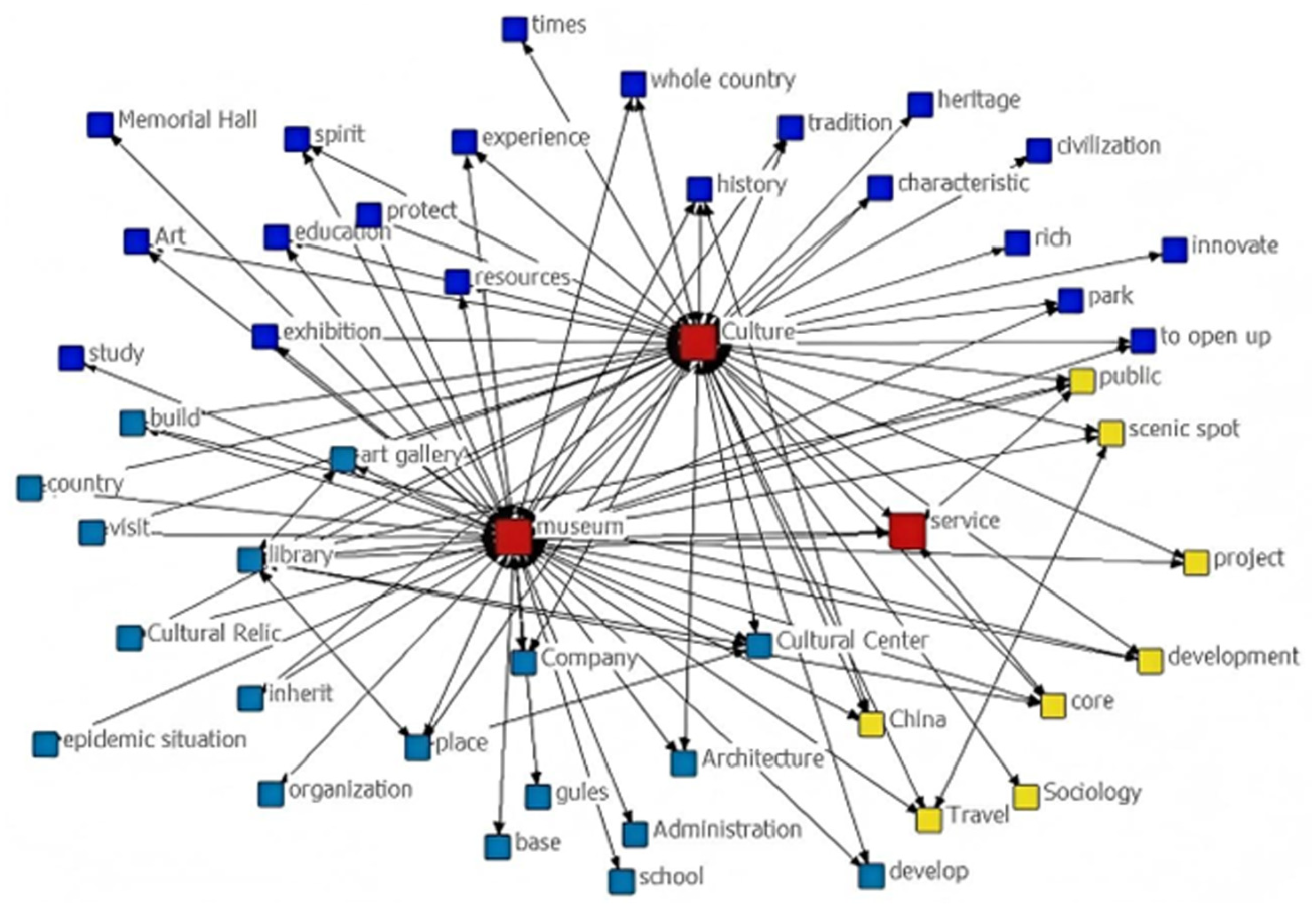
Network semantic diagram of “Museum and Culture.”
Sentiment Analysis of “Museum + Culture.”

Based on the above analysis, Museums undertake the important mission of spreading historical culture and providing public services. History and culture can be passed on through museums, which is also a kind of cultural consumption for public services. Public services through the construction of museum and their historical culture, to attract tourists to visit, and also to thrive the local tourism industry. That is how a closed loop field of cultural lyricism has been formed, with public service, museum and its historical culture as the main body. Based on it, the explanatory framework for cultural lyricism has been constructed (as shown in Figure 3). With the help of non-material factors such as stories, spirits and management, as well as material factors such as cultural relics, buildings, science and technology, the cultural narrative entered the cultural lyric field of “museum, historical culture, and public service” for its rich story connotation, and achieved the cultural lyricism through the innovative media in the field.

Interpretation framework for historical and cultural lyricism.
Study 2: Tourists’ Emotional Feedback in Museum Narrative
Methodology
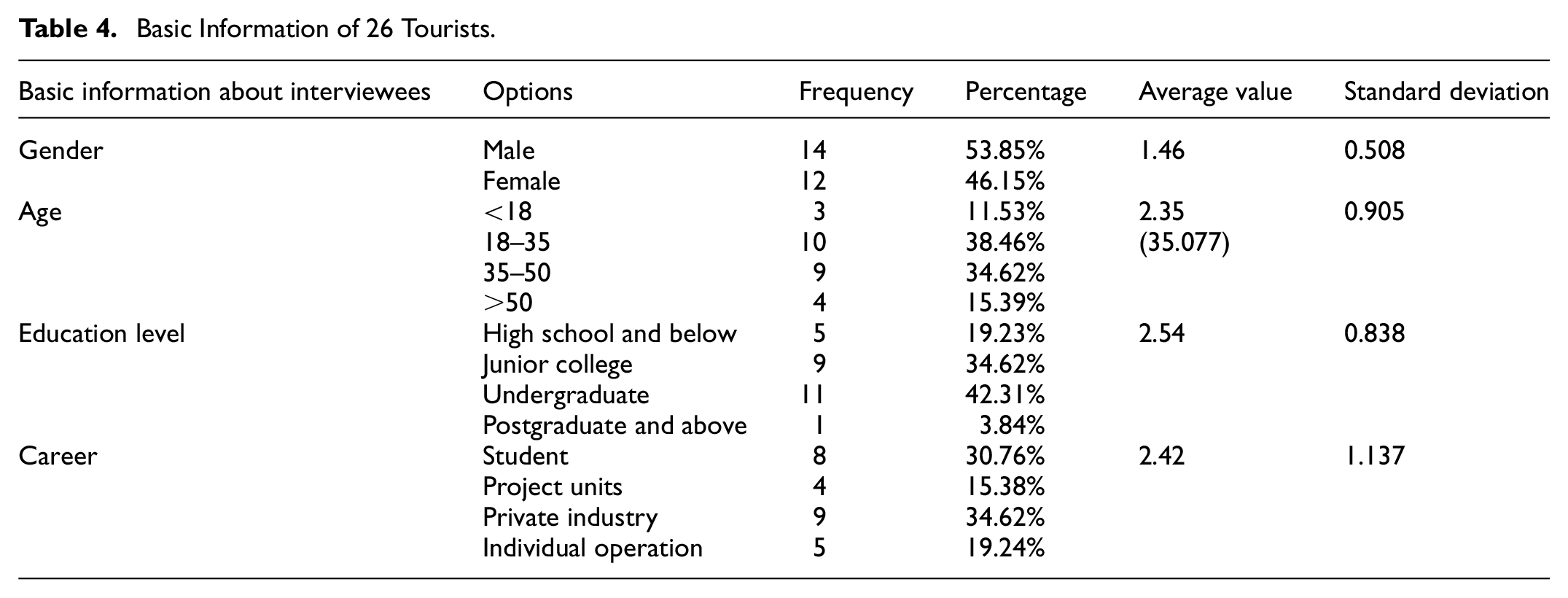
Study 2 took “museum + memory” as the keyword, and combined open-ended interviews and netnography, to explore the expression of tourists’ emotional feedback, and relevant elements of cultural communication. The specific process is as follows. First, the open-ended interviews still referred to the sample saturation principle proposed by Robinson (2014), which indicated that interview studies aiming at uniqueness usually seek a relatively small sample size, and the number of participants in a single study is usually 3 to 16. However, Study 2 required a relative larger sample of participants to the sample of managers in Study 1, and increased the sample size by a certain amount. We ensured that all participants were fully aware of the purpose, process, and its possible impacts of this study, and were voluntarily participated. By adopting a random sampling method, we chose 27 tourists went on a particular museum tour as the research participants, and questioned their responses to the museum narrative and other related contents, such as emotional feedback. The interview time was designed to be 30 to 60 min. However, the results of the 27th participant showed no new interview content, thus further verifying the validity of sample saturation. Study 2 subsequently focused on analyzing the interview content of the first 26 participants, whose basic information has been shown in Table 4. In order to protect the privacy of the participants, the content of the participants has been anonymized.
Basic Information of 26 Tourists.
Second, in terms of netnography, Study 2 systematically crawled the travelog data related to “Museum + Memory” from August 2021 to June 2022, using the Opinion Pass tool. We screened the collected data strictly, eliminated duplicated, irrelevant and meaningless texts, and harvested 65,203 relevant text data. The researchers ensured that the collected data were stored in a secure environment to prevent unauthorized access and data leakage, and would be used according to relevant laws and regulations.
Last, Study 2 employed ROST Content Mining 6 for high-frequency word analysis, semantic network analysis and sentiment analysis. From the high-frequency word analysis, we obtained the most concerned high-frequency words of “tourists’ emotional feedback in museum narratives,” and analyzed the characteristics of tourists’ emotional feedback in museum narrative. From network semantic analysis, we constructed a co-occurrence matrix, based on the number of co-occurrences of high-frequency words in the same text. With the co-occurrence matrix, we drew a semantic network diagram to show the natural semantic structure of “tourists’ emotional feedback in museum narrative,” and extracted the features of tourists’ emotional feedback in museum narrative from natural language. For sentiment analysis, we prepared a semantic network map to express the natural semantic structure of “tourists’ emotional feedback in museum narratives.” For sentiment analysis, we first prepared an emotional lexicon, which contains words with positive, negative and neutral labels, and then analyzed the proportion of each type of sentiment, so as to obtain the sentiment image of “tourists’ emotional feedback in museum narrative.”
Findings
We collected 40 high-frequency words through word frequency analysis of the text data in the corpus. The analysis results have been shown in Table 5. In particular, “museum” and “memory” have been used as and the main body of tourists’ emotional feedback. Words such as “red,”“memory,” and “blood” have been combined to indicate that the museum bridged the emotional interaction between tourists and revolutionary martyrs through narrative, to enable the tourists to experience red culture in tourism, visit revolutionary sites, and sustain the revolutionary legacy. As stated by another participant, “I can have a ‘one-stop’ understanding of the city’s red stories and memories of the War of resistance against Japanese aggression, leading me back to the revolutionary years, just like a red tour (interviewee T16).” Second, we conducted network semantic analysis to form a three-layer structure (as shown in Figure 4), the core circle composed of “museum” and “memory”; the sub-core circle composed of words such as “culture,”“experience,” and “education,” reflecting the original power of narrative and forming an integrated process of empathy between tourists and museums; and the external circle composed of words such as “protection,” reflecting tourists’ wishes for the continuation and promotion of historical culture, “…I still hope that our generation can carry on this culture and spirit, so that future generations can also feel the learning (interviewee T3).” Last, we analyzed the emotional tendency of tourists’ experience feedback in the text data through sentiment analysis. As shown in Table 6, among the emotional feedback attitudes of tourists, participants held a positive attitude toward museum narrative, accounting for 87.04%. But there is still a certain proportion held negative emotions and neutral emotions. It is necessary for the museum managers to further improve the narrative level and emotional experience, as well as stimulate the tourists’ visiting intention.
Word Frequency Analysis of Tourists’ Emotional Feedback.


Network semantic diagram of “Museum and Memory.”
Tourists’ Emotional Feedback Tendency.

Based on the above analysis, museum narrative showed tourists the specific cultural values and essence of the museum, promoted resonance in the tourists’ own cultural cognition and their communication, and influenced the tourists’ memories of their visit through its educational function. There are tourists perceives the museum narrative through interactions with historical artifacts, to establish an emotional connection with the museum and activating the memories of their visit. Culture itself does not have cognitive abilities, but could manifests itself through interactions between people and people, and between people and objects (Fanea-Ivanovici & Pana, 2020). Thus, the cultural narrative that tourists experienced in museums involves not only an understanding of the exhibits and historical stories, but also reflects the perceptions and empathy of their own cultural backgrounds. Through this interaction, tourists are able to feel more deeply the emotions conveyed by history and culture. A closed-loop field of emotional feedback based on museum narrative, tourists’ own culture and tour memory has been formed. Based on it, we constructed the explanatory framework of tourists’ emotional feedback (as shown in Figure 5). With the help of non-material factors such as cultural attributes and stories, as well as material factors such as exhibition, buildings and design, cultural communication can promote the operation of the emotional feedback field of “museum narrative, tourists’ own culture, and tourism memories,” which enables tourists to evolve from their initial sensory experience to spiritual perception, and promote emotional feedback.

Interpretation framework of tourists’ emotional feedback.
Study 3: Interactive Response Between History and Tourists in Museum Narrative
Methodology
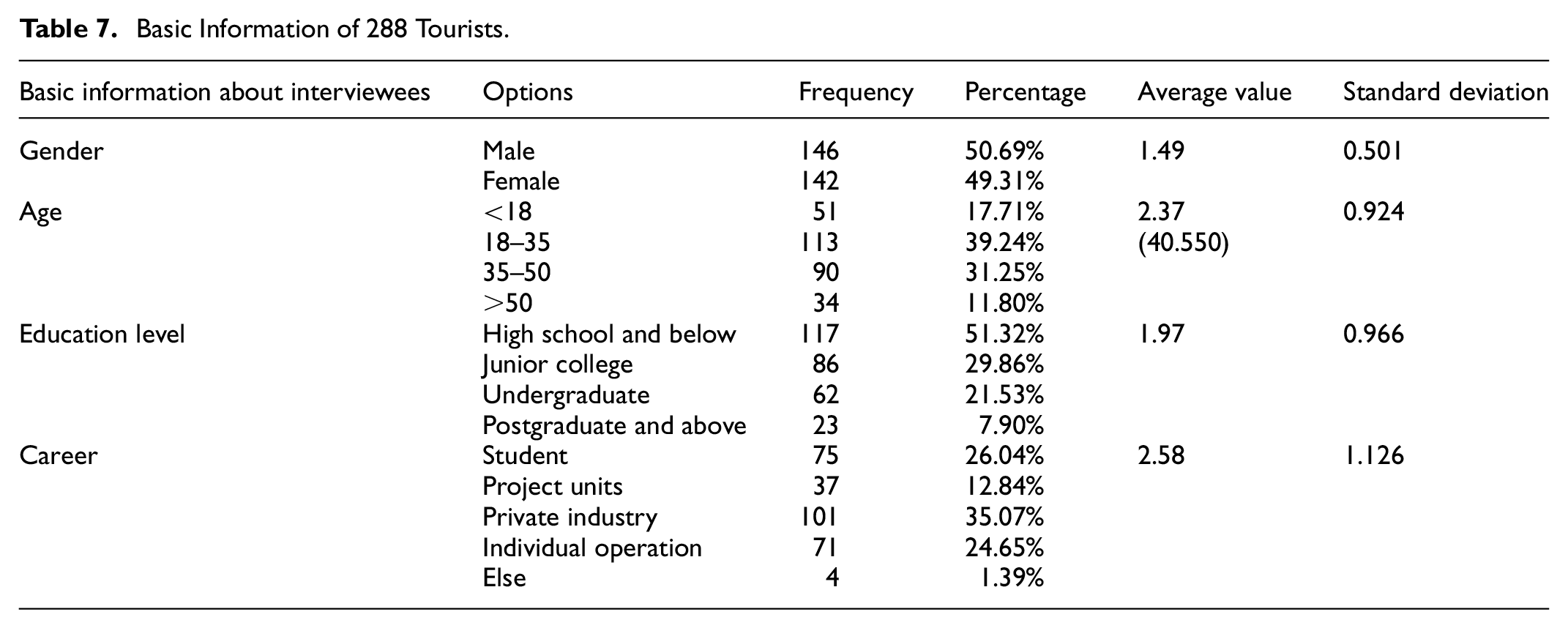
Study 3 combined qualitative and quantitative methods to reveal the internal logic of empathic interaction between cultural lyricism and emotional feedback in museum narratives. It is mainly divided into the following three steps. First, we employed a random sampling method, referring to the Affective and Cognitive Measure of Empathy (ACME) scale (Vachon & Lynam, 2016; Yi et al., 2021), and used measurements based on a 5-point Likert scale (1 = strongly disagree, 5 = strongly agree, higher scores indicating higher levels of relevance). The questionnaires were distributed to the tourists through a web link (we ensured that all participants were fully aware of the study’s purpose, process, and its possible implications, and participate in the study voluntarily). To protect the privacy of the participants, the researcher ensured that no information that could identify the participants would be disclosed. The questionnaire was designed with reverse scoring items to ensure the quality of the questionnaire recovery, which was also judged by factors such as the time of filling in the questionnaire. The items of the scale have been shown in Table 7. In terms of sample capacity, this survey in accordance with the statistical standard sample measurement method, set a confidence interval Z of 90% and a sample sampling error of 5%, with the estimated sample demand about 270. In the actual survey, Study 3 collected 302 questionnaires. In order to ensure that the quality of data could meet the needs of the study, after the questionnaire collection, the second author of this paper organized 3 to 4 trained graduate students to screen out those with insufficient filling time, missing content, similar answer, and inconsistency. Ultimately, we obtained 288 valid data. Subsequently, Statistical Product and Service Solutions (SPSS) 25.0 software was utilized to verify the reliability and validity of the research data, together with the rotation matrix suggestions to adjust the division of the questions. The overall reliability of the pre-research data was 0.934 (>0.9) and the structural validity was 0.955 (>0.9), which was basically in line with the projected objectives. Accordingly, we conducted K-means cluster analysis on the 288 valid data, and then combined with the empathy scale to classify the tourists into different empathy attribute types. The basic information of the tourists has been shown in Table 8. The clustering algorithm has been used to locate the best-fit centroid position (I. C. Chang et al., 2022; Swart et al., 2022; Tabianan et al., 2022). We analyzed the similarity of tourists within the same empathy category and the differences between different empathy categories of tourists, so that after identifying the characteristics of tourists in different empathy categories, the tourists can be classified and randomly selected for the interview, which ensured that the selection of interview participants is scientific, and further to construct the empathic interaction model between the historical culture in museum narrative and the tourists’ own culture.
Basic Information of 288 Tourists.
Scale Items of ACME.

Second, on the basis of cluster analysis, tourists were randomly selected from each category of empathic attribute samples for interviews. It was found that when the number of interviews reached 20, we could collect no new insights or themes, so the number of sampled interviewees was set at 20. In order to protect the privacy of the participants, the content of the interviews will be anonymized to ensure that no information that might identify the participants would be revealed. Last, based on the above two analyses, we constructed an empathic interaction explanatory framework for museum narrative.
Findings
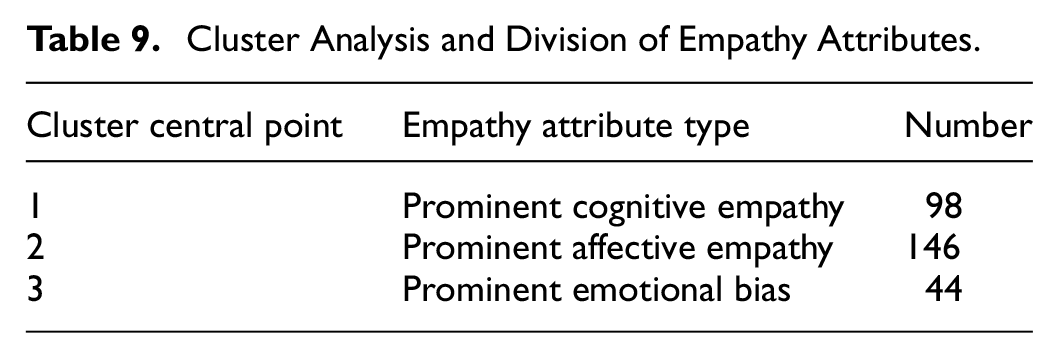
In this study, we employed SPSS 25.0 to conduct K-means cluster analysis, with the measured data of 288 tourists, and obtained three cluster central points, as shown in Table 9. In combination with ACME scale, empathic attributes have been classified into three types. Specifically, 98 tourists have prominent cognitive empathy, who tend to rationalize from other individuals’ perspective, could predict and understand the emotional changes of the characters in the story; 146 tourists have prominent affective empathy, accounting for the largest proportion, who could be easily affected by external emotions, and can empathize with the situation of the characters in historical stories; 44 tourists have prominent emotional bias, who cannot clearly perceive the emotions conveyed in the historical stories, and even remain indifferent. Therefore, among the three types, tourists with affective empathy were the target group in the museum narrative, while the other two types belong to the potential target group.
Cluster Analysis and Division of Empathy Attributes.
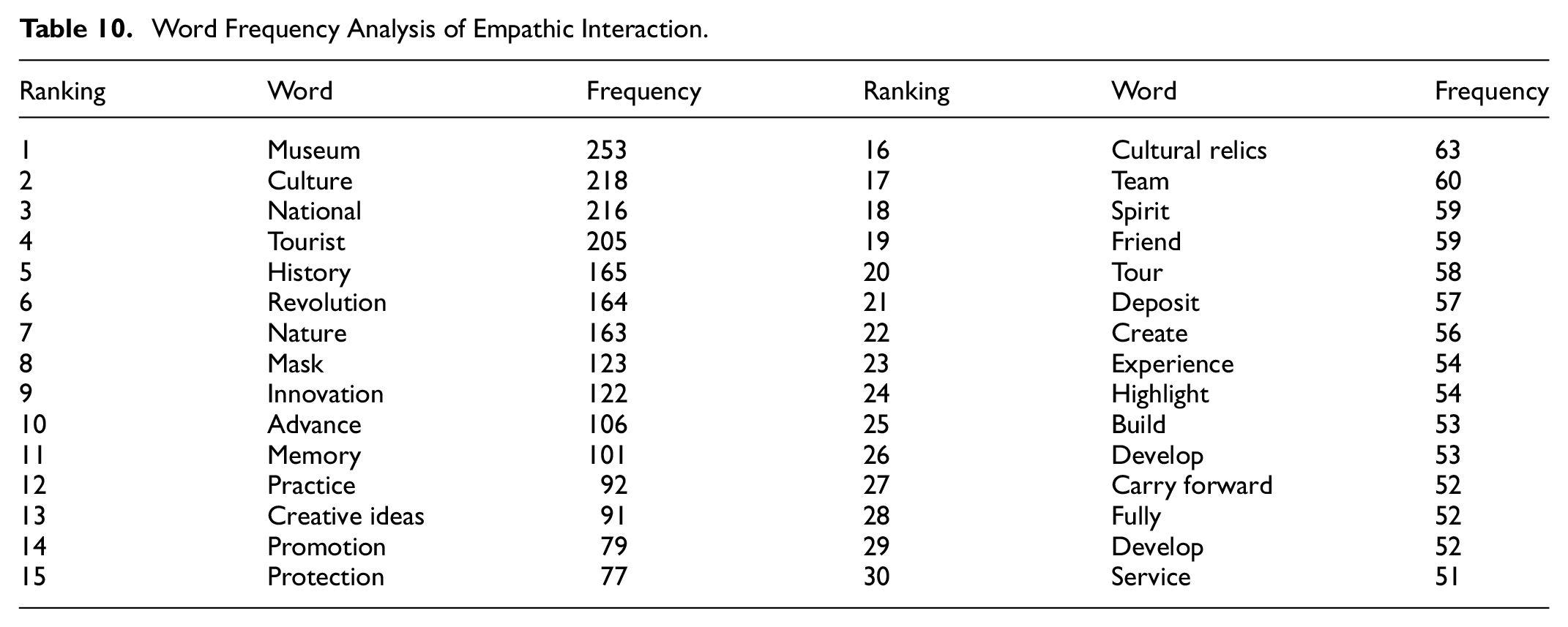
The interview results were transformed into texts for the following analysis. First, the word frequency analysis has been carried out to the interview texts, and we obtained 30 high-frequency words, as shown in Table 10. Among them, “museum,” as a symbol of cultural lyricism and emotional feedback, together with words such as “protection,”“deposit,” and “innovation,” demonstrated that how the museum should strengthen the protection of cultural relics by means of digital means, and enhance the interactivity and experience of the exhibition to promote the service upgrading, so as to meet diversified needs of tourists. As one of the participants said, “There are many innovations in the process of visiting, which expand the original traditional cultural space through digital and mobile presentation forms, such as video (interviewee S9).” Second, network semantic analysis has been carried out to the text data to form a three-layer structure (as shown in Figure 6). Specifically, the core circle composed of “museum,”“culture,” and “memory” representing the main body of historical and cultural lyricism expression and tourists’ emotional feedback in empathic interaction; the sub-core circle composed of words such as “inheritance,”“cultural relics,”“development,” and “China,” implying that museums play a very important role in cultural inheritance and development; and the external circle composed of words such as “feeling,” indicating that the museum narrative can promote the emotional integration of tourists and historical culture. As one of the participants said, “The relationship between me and the museum is connected through culture, and it also gives us a way to connect with the past, which awaken my emotional memory of that history.” Last, the emotional tendency in empathic interaction is explored through sentiment analysis. As shown in Table 11, positive emotions account for 88.06% and negative emotions account for 10.04% in tourists’ empathic interaction. It indicated that tourists themselves mostly have positive attitudes toward museum narrative, but museum managerial personnel should pay attention to and relieve negative emotions.
Word Frequency Analysis of Empathic Interaction.

Network semantic diagram of empathic interaction.
Sentiment Analysis of Empathic Interaction.

Based on the above cluster analysis and network text analysis, we constructed the explanatory framework of the empathic interaction in museum narrative, as shown in Figure 7. The museum’s historical culture and tourists’ own culture are two subjects in museum narrative. The former mainly carries out cultural narrative through connotation exploration and technological innovation, together with different story themes and media to express cultural feelings, passing the emotions contained in the stories to tourists to meet their emotional needs; The latter mainly carries out cultural communication through learning and education, and carries out emotional feedback in combination with the psychological changes of “visit, experience, and spirit” to decode historical and cultural information. Their interactive response forms the empathic interaction in museum narrative, inherits and spreads the historical culture of the museums, as well as activates and awakens the tourists’ own culture.

Interpretation framework for empathic interaction in museum narrative.
Study 4: Verification of Model for Empathic Interaction in Museum Narrative
Based on the research conclusions obtained from network text analysis, Study 4 constructed a structural equation model to verify the empathetic interactive explanatory framework of museum narratives, from dimensions such as cultural communication, cultural narrative, and cultural empathy. This research can be divided into two stages. First, we proposed hypotheses and constructed models through literature review. Second, based on variable selection scales, we designed and distributed questionnaires to verify the model for the interactive response between historical culture and tourists in museum narrative.
Hypotheses
Cultural identity is the basic form of national identity, which originates from the same historical cognition and is shaped by culture. The formation of tourists’ cultural identity, on the one hand, depends on long-term cognition, and stable emotion; on the other hand, can be formed through short-term cultural learning process (Yang et al., 2022). Cultural identity is formed based on the perception, understanding and experience of culture (Kranz & Goedderz, 2020). For example, participants who has been required to engage in complex conversations, are able to resist oppressive colonial narratives, to reconnect and strengthen their indigenous identity, and to work toward the realization of their ancestors’ vision of health and well-being (Fernandez & Beltrán, 2022). Museums provide a platform for tourists to communicate, allowing visitors to strengthen cultural and social ties, and are an important channel for tourists to perceive cultural identity (Kozinets et al., 2017). Cultural communication can reduce tourists’ sense of cultural distance, so as to improve their cultural heritage experience (Lee et al., 2018), so as to achieve the psychological state of cultural identity. Dialog and interaction among tourists and cultural learning in museum narrative, can effectively promote tourists’ understanding of culture and activate their own cultural memory, thus forming cultural identity of specific history. Based on this, Study 4 proposed the following hypothesis:
H1: Tourists’ cultural communication has a significant positive effect on cultural empathy
From the individual level, the interaction between personal narrative and cultural narrative can promote the development of comprehensive narrative identity and carry out the reconstruction of self-identity (Y. Guo et al., 2022). And cultural narrative that resonates with people’s personal narratives may contribute to the formation and identification of meaning (Moss & Sandbakken, 2021). From the perspective of museums, as an important material and symbolic place for ethnic history and heritage, museums are valuable contributors to ethnic cultural identity. By enhancing narration, the interaction and emotional exchange between cultural heritage and tourists have been enhanced, which contribute to the shift of tourists’ attitude toward cultural heritage from concern to emotional participation to emotional identity (Y. Guo et al., 2022). In addition, by presenting a culture-specific narrative perspective that strengthens and presents the image of the site in a cohesive way, museums could also enhance tourists’ understanding of the information and promote the “place identity” for the value of the specific cultural heritage. It can be seen that museum cultural narrative have a significant impact on cultural identity. Based on this, Study 2 proposed the following research hypothesis:
H2: Museum cultural narrative has a significant positive effect on cultural empathy
Empathy is the ability to understand and share the emotions of others (Zhao et al., 2019), which is presented in the form of multiple experiences by receiving, encoding and decoding information (Zaslavsky et al., 2019). In communication, we often share our feelings with others to arouse the resonance of listeners, and show empathy by showing sincere concern for listeners’ experiences, feelings and emotions (Y. W. Chang et al., 2021). And cultural identity plays an important role in “empathy” between listeners and speakers (Mauchand & Pell, 2022). Empathic interaction in museum narrative is a process from cultural communication and cultural narrative to cultural identity, and then to psychological empathy. It can be seen that cultural identity has a significant impact on psychological empathy. Based on this, Study 4 proposed the following hypotheses:
H3: Cultural empathy plays a significant mediating role in the relationship between tourists’ cultural communication and psychological empathy.
H4: Cultural empathy plays a significant mediating role in the relationship between cultural narrative and psychological empathy in museums.
Methodology
Based on the above research hypotheses, Study 4 constructed a structural equation model with cultural communication and cultural narrative as independent variables, psychological empathy as dependent variable, and cultural empathy as mediating variable. Among them, we borrowed five question items from Cultural Communication Identity Scale of Rodríguez-Rivero et al. (2020) for cultural communication; we combined three question items from Asian Self-Identity Cultural Adaptation Scale of Suinn et al. (1987) and Racial Identity Measurement Scale of Phinney and Ong (2007) for cultural narrative; we borrowed six question items from Psychological Empathy Scale of Vachon and Lynam (2016) for psychological empathy; and we designed five question items referenced to Cultural Identity Scale of Tu et al. (2019) for Cultural Empathy, all measured in a 5-point Likert scale (1 = strongly disagree, 5 = strongly agree, higher scores indicate higher levels of the relevance) to obtain a preliminary questionnaire. Subsequently, in order to ensure the quality of the questionnaires filled out by the participants, and the authenticity and validity of the data, we distributed a certain number of questionnaires (a total of 43) for pre-survey before the formal survey. The survey team first analyzed the possible problems in the questionnaire with the results of the collected questionnaires. At the same time, we communicated with the participants, listen to their questions and suggestions, to find out flaws in the questionnaire, and referred it for structural adjustment and revision. Furthermore, the results of the pre-survey questionnaire were summarized and preliminarily analyzed using SPSS 25.0 software, and the division of the questions was adjusted according to the reliability and validity of the pre-survey data, as well as the rotated matrix suggestions. The overall reliability of the pre-survey data was 0.873 (>0.8) and the structural validity was 0.802 (>0.8), which basically meets the projected objectives. The questions were combined, with careful deliberation and repeated modification, in order to form the final questionnaire, as shown in Table 12.
Scale Items of Museum Narrative.

In addition, we reviewed the past modeling methods of empirical research, especially the Covariance Base Structural Equation Model (CB-SEM). The algorithmic logic of CB-SEM is to construct relationships, by observing the covariance matrices of latent variables, and then connecting paths between each facet to reveal the interactions between the variables. However, the CB-SEM modeling technique is extremely demanding in terms of model fit, and is suitable for modeling large samples with normal distributions. CB-SEM has been developed to test the interactive strength of the structural relationships inherent in theoretical conceptual models, and is mostly used in path-testing studies to derive and validate such models. Hair et al. (2012) confirmed that when the data acquired for modeling are small-sampled, the CB-SEM modeling technique often fails to accurately predict the interrelationships among the variables because the data can only converge to a normal distribution, so it is difficult to complete the construction of structural equation models. In order to properly solve the limits of CB-SEM modeling technique in constructing non-theoretical models with small samples, we employed the Partial Lease Square Structural Equation Model (PLS-SEM) modeling technique, which is based on the method of least squares estimation and focuses on the verification of model paths rather than the overall goodness-of-fit. This method mainly verifies and predicts the strength of the relationship between observed variables and latent variables through linear equations, which is essentially general linear model. It has been widely used by positivist scholars in recent years, because it can effectively fix the problem of covariance between observed variables and the influence of regression unhelpful noise, and could greatly validate path hypothesis of general research. Compared to the huge amount of data in the macro database, the number of samples that can be obtained in Study 4 is generally small. The hypothetical model to be verified in Study 4 is mainly its hypothesis of the influence relationship between variables, which is not a purely theoretical modeling. Therefore, Study 4 chose Smart-PLS software to establish the PLS structural equation model of the tourists’ empathic interactions in the museum narrative, as shown in Figure 8.

Model for interactive empathy of museum narrative.
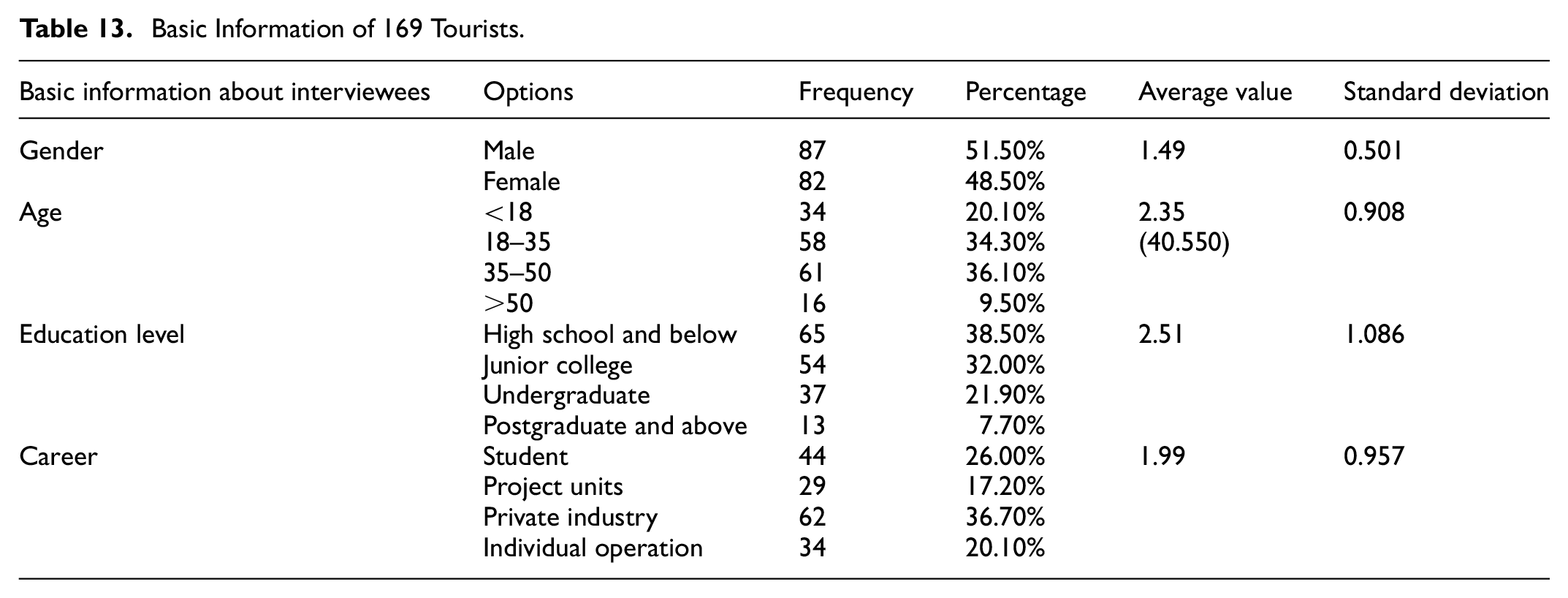
In conjunction with the above methodology, this part of Study 4 used random sampling to collect data through online questionnaire distribution. According to Kock and Hadaya (2018), the minimum sample size for PLS-SEM modeling should be greater than or equal to the greater one of the following requirements: (1) 5 to 10 times the maximum number of formative indicators used to measure a construct; and (2) 10 times the maximum number of structural paths in the structural model for a particular latent construct. The number of formative indicators in Study 4 was 19, and according to the minimum requirement of at least 5 times, the sample quota should be no less than 95. The maximum number of structural paths in the structural model for a particular latent construct is 6, and according to the requirement of at least 10 times, the sample quota should be no less than 60. In accordance with the principle of the greater of the two, the sample quota required for completing the statistical analysis for Study 4 should be at least equal to or higher than 95. We collected a total of 184 questionnaires. Questionnaires should be filled with more than 3 min and have sufficient key information, and there should be no obvious human errors before and after options matched, some of the missing data and outliers have been replaced by the mean value of the variables. We harvest 169 valid questionnaires, with a validity rate of 91.8%, and the basic information of the samples has been shown in Table 15. In order to protect the privacy, this study was conducted with the consent of the participants themselves. In terms of demographic indicators, we found that the male to female ratio of participants was 1.06, which is quite reasonable. In terms of educational composition, the main body of participants had a high-school education or less (65), followed by a bachelor’s degree (54). The age of the participants is aggregated between 15 and 35 years old and 35 to 50 years old, which is relatively in line with the characteristics of the contemporary museum tourism population, featured a certain learning and cognitive ability. The basic information of the sample has been shown in Table 13. In addition, because PLS-SEM analysis method can effectively prevent the occurrence of covariance between the observed variables, PLS-SEM analysis method can meet the main requirements of this study.
Basic Information of 169 Tourists.
Findings
In the PLS-SEM test, the Cronbach α of cultural communication, cultural narrative, cultural empathy, and cultural identity were .886, .772, .863 and .870, respectively, all greater than 0.7, indicating that each latent variable had good reliability. CR of each latent variable was 0.917, 0.868, 0.901, and 0.903, respectively, which were all greater than 0.7, further indicating that the model has high reliability. The AVE of each potential variable was 0.687, 0.687, 0.647 and 0.607, and the rho_A was 0.889, 0.774, 0.863 and 0.871, which were all greater than 0.7. Therefore, the various facets of the proposed model passed reliability and validity test. By the predictive power test, the R2 values for cultural empathy and psychological empathy were .626 and .609 respectively. According to the PLS-SEM modeling evaluation criteria proposed by Hair et al. (2019), the R2 values were all between .5 and .75, indicating that each exogenous latent variable has a strong explanatory power for endogenous latent variables; The Q2 values of cultural empathy and psychological empathy were .4 and .363 respectively, both greater than 0.35, indicating that the exogenous variables of this model have strong correlation with the prediction of empathy interaction in museum narrative as the endogenous variables. It is obvious that the PLS model has strong overall prediction ability for the occurrence path of empathy interaction in museum narrative.
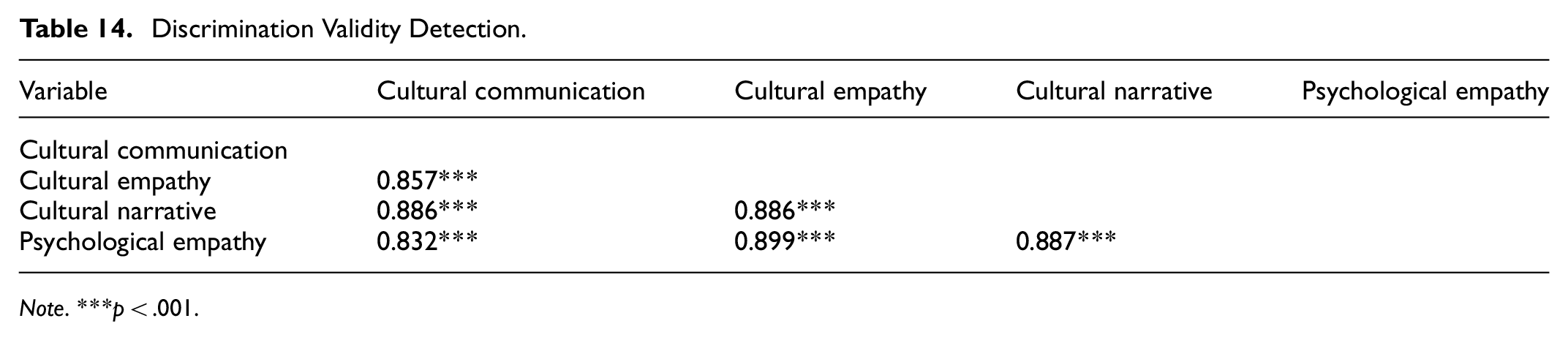
Based on a large number of social empirical studies, Voorhees et al. (2016) believed that researchers can check the upper limit of 95% confidence interval of HTMT to conduct discriminating validity test for the facet connection in the measurement model, which could check whether the upper limit of HTMT is lower than 0.9, or 0.85. We performed the discrimination-validity test to the relevant facet connection of the four measurement variables proposed in this study, their HTMT were all less than 0.9 (as shown in Table 14), indicating that the proposed measurement model has a high degree of differentiation.
Discrimination Validity Detection.
Note. ***p < .001.
As shown in Figure 8, the research hypothesis has been verified. The results showed that: The path coefficient of cultural communication and cultural empathy was 0.479, the path coefficient of cultural narrative and cultural empathy was 0.373, and the path coefficient of cultural empathy and psychological empathy was 0.782. In general, the path coefficient of each path is basically greater than or close to 0.3. The influence path structure model of cultural communication, cultural empathy, cultural narrative and cultural identity has been proved to be reasonable and effective, and the significance level p value of all paths is less than .05 (As shown in Table 15). Therefore, hypothesis 1, 2 and 3 have been all validated.
Model Path Coefficients.

In addition, Bootstrapping has been used in Study 4 to calculate the T-statistic for each path coefficient to test the significance level of the path coefficient (As shown in Table 16). There are two mediating effect paths in the empathic-interaction model of museum narrative, namely “cultural communication → cultural empathy → cultural identity” and “cultural narrative → cultural empathy → cultural identity.” The T-values in the two mediating effect paths were 4.981 and 3.911 respectively, indicating that each path coefficient has passed the significance test. It is further indicated that the model structure has high stability and significant indirect effect after repeated sampling.
Specific Indirect Effects Test Results.

Research Conclusions
Conclusions
Focusing on “empathic interaction in museum narrative,” this study collected and analyzed the text data of cultural lyricism, tourists’ emotional feedback, and empathy interaction response between historical culture and tourists’ own culture, to explore the construction logic of the empathic interaction, and drew the following three conclusions. First, as public cultural institutions, museums mobilize their material and non-material resources, to promote the upsurge of cultural consumption to form a cultural lyric field of the “museum, history and culture, and public service.” Moreover, cultural lyricism in museum narrative is based on the rich storyline, and makes the emotional expression more vivid with the support of innovative technology. The intergenerational inheritance of culture featured with distinct connectivity and interaction, which can effectively enhance the cultural and emotional value of tourists. Second, the museum narrative can interact with tourists’ own culture, wake up tourists’ visit memory, and form an emotional feedback field of “museum narrative, tourists’ own culture, and visit memory.” In addition, the emotional feedback of tourists in museum narrative promotes the field operation by means of cultural communication, so that tourists can evolve from the initial sensory experience to spiritual perception and to form positive emotional feedback. Third, the empathic interaction in museum narrative is based on the history and culture of museum and the tourists’ own culture. The former carries out cultural lyricism by combining different story themes and media, in the form of cultural narrative, and transmits the emotional information contained in the stories to the tourists. The latter carries out emotional feedback in the form of cultural communication and combines with the psychological changes of “visit, experience, and spirit,” to understand the information conveyed by history and culture. And among the three types of empathy, tourists with prominent affective empathy are the target group in museum narrative, while tourists with prominent cognitive empathy and emotional bias belong to the potential target group.
Theoretical Implications
This study made the following three theoretical contributions to research related to museum narrative.
First, the study revealed a new structure of cultural lyricism in museum narrative. Unlike previous museum studies that highlighted historical and cultural connotations (L. Jin et al., 2020; Johnson & Owens, 2023), embodied artistic and cultural qualities (Raimo et al., 2022; Trunfio et al., 2020), or addressed scientific and techno-cultural discoveries (Mihelj et al., 2019; Pesce et al., 2019), but only reached the surface of cultural features or patterns of influence, and rarely explored the emotional factors involved. It is clear that museum narrative can only evoke emotions to shape positive experiences. In this regard, this study took historical museums as an example and proposed an explanatory framework of cultural lyricism. Based on non-material elements such as story, spirit and management, as well as material elements such as cultural relics, architecture and science and technology, the cultural narrative enters the cultural lyricism field of “museums-history, culture and public service” with its rich story connotation, and uses the innovative media for field dissemination. This study proposed the cultural lyricism of material landscape, which integrated immaterial and material elements to reach media communication in the cultural public service field, not only emphasizing the significance of non-material elements, but also the significance of material elements in the tourists’ experience. It can be observed that material elements just like human beings, providing tourists with the contents and effects of “storytelling.” This fusion of non-material and material elements in the communication mechanism, standardizes the subsequent development and application of museum resources.
Second, the research has revived the communicative features of tourists’ emotional feedback (Akgün et al., 2020; Toral et al., 2018; Yan et al., 2018), and constructed an explanatory framework for tourists’ emotional feedback in museum narrative. Based on immaterial elements such as cultural attributes and stories, as well as material elements such as exhibitions, architecture, and design, this explanatory framework can facilitate the field operation of the “museum narrative-tourists’ own culture-visit memory,” so that tourists can evolve from the initial sensory experience to spiritual enlightenment, which promote their emotional feedback at the same time. This study proposed a push-back mechanism, emphasizing that tourists’ emotional feedback does not exist in isolation, but a positive response to the narrative, which in turn enhances the sensory effects, from experience to spirit and then to the cycle of positive feedback.
Third, this study proposed a logic of interactive response between historical culture and tourists in museum narratives. This study verified the interactive response relationship between history and tourists through the cultural lyricism in museum narrative and tourists’ emotional feedback, and constructed an empathetic interactive explanatory framework of museum narrative. The historical culture of the museum and the tourists’ own culture are the two main subjects of the museum narrative, and the former mainly carries out the cultural narratives through connotation excavation and technological innovation, then combines the themes of the stories with the different media for cultural lyricism, and passes the emotions embedded in the stories to the tourists to satisfy their emotional needs; the latter mainly carries out cultural communication through learning and education, then combines the emotional feedback with the psychological changes of “visiting-experiencing-spirituality,” and decodes the historical and cultural information. The two responses to each other to form the empathic interaction of museum narrative, thus passing on and spreading the history and culture of museum, and activating tourists’ own culture. This study emphasized the difference between material and non-material elements under the framework of empathy theory, and the findings of the study can help to understand what behind the material elements of museums. The material elements are influenced by designers, managers and other related subjects, in the form of historical “spokespersons,” they achieve the interactive response between the history, and the tourists. This study promotes the exploration of the “human-object” relationship of empathy theory, and further explains the meaning behind it.
Practical Implications
This study provided the following three practical inspirations for the development of museum narrative. First, for the long-term development of museums, as tourists pay more attention to the plot performance of the narrative and their emotional needs during the visit, museums can make more detailed plans for the design and construction of the museum exhibitions, combining with the empathic interaction framework constructed in this study. Second, as for the tourists’ experience and demand, museums need to take culture as a breakthrough point, make full use of the educational functions, improve the cultural heritage of tourists, and create immersive narrative scenes through digital technology. These measures mentioned above can give tourists a higher level of emotional experience and meet their cultural needs. Last, concerning social and cultural heritage, museums and tourists have established communication channels through culture. The interactive relationship between the museum and tourists, completes the dissemination and inheritance of cultural undertakings, indirectly facilitate cultural consumption, and drive the development of tourism economy.
Deficiency and Prospect
This study has certain limitations and needs to be improved in future research. First, it focused on the empathic interaction in narrative, and preliminarily discussed the elements of empathic interaction. Future research should better enrich the specific influence paths of each element in empathic interaction. Second, this study has been limited to a single perspective of emotions, to explore the experience of tourists in museum narrative. In future research, multiple factors (such as the type of tourists) should be considered to improve the empathic interaction in museum narrative. Third, although this study classified tourists into groups of cognitive empathy, affective empathy and emotional bias, the difference of their role in the museum narrative has not been discussed. In the future, we can explore this aspect to support the empathy interaction path of museum narrative. Last, it is worth to be further discussed whether the theoretical model of empathic interaction in museum narrative proposed in this study can be applied to cultural carriers, such as libraries and art galleries that have similar social attributes to museums.
Footnotes
Acknowledgements
We appreciate the time and effort that reviewers put into reviewing our manuscript and providing us with valuable comments and suggestions.

Author Contributions
Conceptualization, K.Y. and H.Z.; Methodology, Y.L. and Y.W.; Software, Y.W.; Formal analysis, K.Y. and H.Z.; Investigation, Y.L. and Y.W.; Writing—original draft, K.Y., H.Z. and Y.W.; Funding acquisition, K.Y. All authors have read and agreed to the published version of the manuscript.
Funding
The author(s) disclosed receipt of the following financial support for the research, authorship, and/or publication of this article: This project was supported by Special Project of High-level Talents in the Field of Publicity, Ideology and Culture in Jiangxi Province (Theoretical Research) (24ZXRC08), Gan Poyang Talent Support Program for Cultural Leaders Funding Project, National Social Science Fund Post-funding Project (22FXWB020), National Statistical Science Research Project (Key Project) (2024LZ030), Research and Reform Project on Degree and Graduate Education Teaching in Jiangxi Province (Key Project) (JXYJG-2024-046), Transportation Education Science Research Project of China Transportation Education Research Society (Key Project) (JT2024ZD031), Project of Ideological and Political Education Research Association of Higher Education Institutions in Jiangxi Province (General Project) (SYH24201), Nanchang Social Science Planning Project (XW202404), Jiangxi Higher Education Association project (ZX2-C-002), National Natural Science Foundation of China (Regional Project) (72362017), National Social Science Fund of China (General Project) (24BXW040), National Natural Science Foundation of China (72262014), General Project of Humanities and Social Sciences Research of the Ministry of Education (Planning Project) (24YJA860021), Major commissioned project of Jiangxi Social Science Youth Innovation Team (25WT06), Education Science Planning Project in Jiangxi Province (24SZZX020).
Declaration of Conflicting Interests
The author(s) declared no potential conflicts of interest with respect to the research, authorship, and/or publication of this article.
Data Availability Statement
All data relevant to the study are included in the article. In addition, the data that support the findings of this study are available from the corresponding author on reasonable request, but restrictions apply to the availability of these data, which were used under license for the current study, and so are not publicly available.