




Abstract
For several reasons, trust in science in recent years has eroded, throwing serious doubts on once-reliable scientific resources. Although multiple scientific disciplines try to explain the causes and consequences of this worrying decline, we have only scant knowledge about these disciplines’ interconnected arguments. Focusing on this niche, this study aims to bridge the literature from diverse academic disciplines and identify dominant themes by utilising a cutting-edge methodology. This attempt is crucial since we need a comprehensive understanding of the complex factors influencing public trust in science, allowing us to approach the problem from multiple angles and enabling the crafting of evidence-based policies that better resonate with the public and are more likely to be effective in restoring trust. Hence, this study contributes to the existing literature both substantially and methodologically. Substantially, we show that there are dominant recurring research themes across the disciplines, such as science communication, compliance with scientific advice, and public engagement. Methodologically, we contend that identifying these vital crosscutting themes can only be possible by combining state-of-the-art computational techniques with conventional qualitative content analysis.
Plain language summary
In recent years, trust in science considerably fluctuated, raising concerns about the reliability of scientific information. While different scientific fields have tried to explore why this is happening and what it means, there is limited understanding of how their ideas are connected. This study aims to bring together research from various academic areas to identify common themes related to public trust in science. By doing so, we hope to offer a clearer understanding of the many factors that influence trust. This approach will help create better, evidence-based policies that resonate with the public and can effectively rebuild trust. Our research highlights key themes, such as science communication, public engagement, and how people follow scientific advice. We also introduce a new method that combines advanced computational tools with traditional content analysis to uncover these important themes.
Keywords
If I listened totally to the scientists, we would right now have a country that would be in a massive depression instead —we’re like a rocket ship. Take a look at the numbers.
Introduction
Even though the above epigraph belongs to Donald Trump, unfortunately, it resembles a dominant and worrying understanding of science and scientists in the era that we live in. Although technical advancement and scientific knowledge are entwined with practically all of our daily practices, we, at the same time, observe absurd activities, such as the flat-Earth or anti-vaccine movements, which became components of the political discourses of several countries and global public debates. Moreover, the conspiracy-based beliefs that scientific institutions are engaged in secret plots or cover-ups, the spread of false information or misleading claims about scientific topics through social media and other channels, concerns about genetically modified organisms and biotechnology, instances of scientific misconduct or unethical behaviour by researchers or scientific institutions and scepticism towards public health measures and vaccine development, continuously fuel this worrying tendency. Significantly, the COVID-19 pandemic has boosted this process and revealed disputes among scientists, politicians and the general public. Accordingly, the demise of public trust in science is now recognised as one of the most pressing concerns confronting modern societies, which poses significant dangers to health and the long-term viability of civilisation itself. A rising body of literature exposes the causes and consequences of this erosion in domains as diverse as immunisations, tobacco sickness, and climate science, highlighting the limits of many contemporary methods and institutions that appear inadequate in the face of enormous complexity.
Despite the extensive body of work investigating the erosion of public trust in science, research in this area often remains siloed within distinct academic disciplines. Although specific reviews (Goldenberg, 2023) focus on public trust in science, they are not systematic, and studies integrating insights from different research strands and disciplines by identifying dominant themes and blind spots and limitations are needed. Scholars in fields such as communication studies, sociology, political science, philosophy, public health, and environmental sciences have each offered valuable insights into why trust in science declines or fluctuates and how these dynamics manifest themselves. Yet most of these investigations proceed independently, focusing on discipline-specific theories, methodologies, and questions. As a result, we are left with rich but disjointed understandings that fail to capture the full complexity of how and why trust in science erodes across multiple contexts. While each of these disciplinary sub-fields captures crucial pieces of the broader “trust in science” puzzle, there is a noticeable lack of integrative efforts that systematically connect their findings which limits our ability to understand the deeper, cross-cutting mechanisms that erode or destabilise trust in science. Without synthesising commonalities across disciplines, we risk overlooking significant overlaps in factors contributing to mistrust—such as perceived conflicts of interest, politicisation, misinformation, socio-demographic disparities, and scepticism of institutional authority. Furthermore, the siloed nature of existing research may prevent us from recognising how these factors intersect or reinforce one another in ways that transcend individual disciplines. In an era when challenges like public health crises and climate change increasingly demand collaborative responses, failing to see the entire picture hampers our capacity to design effective and consistent interventions.
Our study aims to map and synthesise research on trust in science across multiple fields, thereby revealing shared thematic patterns and neglected intersections. By employing both computational text-mining techniques and qualitative content analysis, we seek to unearth not only the distinct approaches each discipline brings to the table but also the threads that bind them together. This integrated perspective allows us to demonstrate how several domains—ranging from philosophy and communication studies to sociology and health sciences—can collectively contribute to a more holistic understanding of trust in science, and gaps in the field.
Accordingly, this work has two main objectives. The first objective is to present a concrete picture of research themes across the various scientific disciplines about eroding trust in science. Given that distrust in science or outright science denial has potentially drastic effects, we depict the body of research from different fields that explicitly or implicitly eliminate distrust and foster trust in science, such as sociology, psychology, environmental sciences, political science, and data sciences. By doing so, we hope to demonstrate the similarities among various scientific disciplines and provide a joint base for possible policy agendas. Our second objective is to offer a novel methodological approach to the subject. Although there are some literature reviews on eroding trust, we broaden the scope by including several scientific disciplines by employing a fresh approach. As we present in the related part, we show that identifying these vital crosscutting themes can only be possible by combining state-of-the-art computational techniques with conventional qualitative content analysis. Lastly, based on the study’s findings, we briefly revisit routes to policy plans for restoring trust in science.
The paper is structured as follows: First, in the following part, we present a broader rationale for studying trust in science in an interdisciplinary manner. Followingly, we present our methodology, data and findings. Third, we discuss our results, outline how to consider possible policy suggestions as future work and conclude.
Why Is It Important to Study Trust in Science in an Interdisciplinary Manner?
Trust in science is a fundamental component of modern society, shaping public attitudes toward scientific expertise, policy decisions, and technological advancements. At its core, trust in science implies that the public has confidence in scientists’ ability to produce reliable, evidence-based knowledge while simultaneously ensuring that such knowledge serves the broader societal good (Gundersen & Holst, 2022, Irzik & Kurtulmus, 2021). Hence, trust is a multifaceted concept that involves key dimensions such as competence, integrity, and benevolence (O’Neill, 2002; Rolin, 2020). Consequently, trust in science is not a monolithic or static quality; rather, it is a relational phenomenon rooted in the perceived epistemic reliability, ethical commitment, and communicative openness of scientific institutions, and it must be understood within a broader interdisciplinary context that spans philosophy, political science, and sociology (O’Doherty, 2022; Resnik, 2011).
In that sense, establishing trust in science is critical in fostering cooperation and facilitating the exchange of information, yielding substantial advantages for advancing scientific progress among various disciplines. Accordingly, establishing and maintaining trust within the scientific community is an indispensable prerequisite for advancing and progressing knowledge. Through trust, scientists can only effectively collaborate, build upon one another’s findings, and collectively contribute to the growth and development of scientific inquiry (Rolin, 2020). Without this fundamental element, the scientific enterprise would face significant impediments, potentially resulting in a stagnation of scientific progress and a hindrance to the overall scientific endeavour. So, the establishment and maintenance of trust hold paramount significance in fostering a symbiotic relationship between the realms of science and society. Indeed, as Hendriks et al. (2016b) state trust is both essential for scientists in conducting research and for the general public as they navigate science-related issues in their daily lives.
It is crucial to acknowledge that most individuals lack the expertise to independently assess scientific assertions, thereby necessitating their reliance on the competence and integrity of scientists. Nevertheless, it is imperative to acknowledge that the trust placed in the scientific community is a delicate construct that can be easily eroded and destabilised. In line with this perspective, Smith (2022) argues that the foundation of scientific endeavours lies in establishing public confidence in the methodologies and establishments of science rather than solely relying on the credibility of individual scientists. Gundersen et al. (2022) also note that empirical evidence in environmental science demonstrates how distrust in science is linked to distrust in the institutions that implement it into policy.
However, it is also critical to admit that these particular practices exhibit a certain level of opacity when observed by external entities, necessitating a fundamental reliance on interpersonal trust in the scientific community to elucidate and illustrate them. The susceptibility of science to contestation in manners that have the potential to undermine trust is a matter of concern. According to Whyte and Crease (2010), for example, it is imperative for philosophers of science to actively contribute to the establishment of trust by formulating comprehensive frameworks of expertise that elucidate the rationale behind placing trust in diverse forms of knowledge within distinct contexts. In this vein, Metzen (2024) argues that the nature of trust in science should be grounded in both objectivity and shared values.
Another point about the nature of trust in science is its contingency upon various factors encompassing individual and societal dimensions. At the individual level, factors such as education and personal beliefs are the pivotal determinants that revolve around the perceived level of expertise, integrity, and benevolence exhibited by the source (Hendriks et al., 2016b). However, it is also critical to note that trust judgements are contingent upon various contextual factors. In that manner, it is plausible to assert that individuals may exhibit a certain level of scepticism towards scientific findings that potentially challenge their personal interests or deeply ingrained beliefs. It is also imperative to note that the realm of science has historically encountered resistance (Oreskes, 2019). Yet, the prevailing sentiment of scepticism appears to be intensifying in light of the escalating urgency surrounding matters such as climate change. Some scholars (Gauchat, 2012; Hamilton et al., 2015) highlight that this scepticism is particularly high among conservatives on certain issues, including environmental regulations and public health interventions, along with climate change.
Based on the above arguments, it is possible to argue that to achieve the desired levels of trust in science, scientists must possess an interdisciplinary understanding of the underlying mechanisms of the erosion of trust in scientific inquiry. This is mainly because particular improvements within specific scientific disciplines are insufficient to build trust in science, as we have clearly seen during the COVID-19 pandemic: although the scientists managed to produce the vaccines in a very short time, due to the global anti-vaccine movement, there were delays in vaccination which hindered the combat against the virus seriously. As shown in a scoping review (Majid et al., 2022) vaccine hesitancy is influenced by various factors, including risk perception and trust in health authorities, which are deeply rooted in socio-cultural contexts. Emphasising the plurality of trust, Metzen (2024) uses the case of MMR vaccine (measles, mumps, and rubella) hesitancy to argue that addressing vaccine hesitancy requires not only presenting objective data, but also acknowledging and engaging with the values underlying parents’ concerns. Hence, to foster more robust compliance with scientific knowledge, it was imperative to advocate for the cultivation of discursive practices such as explanation and argumentation, which are within the domains of other scientific disciplines, like sociology, psychology, and political science, than medicine. For instance “Building Bridges, Earning Trust: The WHY and the HOW of Public Trust in Science” Report of the Aspen Institute’s Science and Society Program (Goud et al., 2023, pp. 19–20) highlights the importance of active and ongoing collaboration with fields including sociology, political science, communication, anthropology, history, psychology, theology, business in order to ask the right questions and communicate the findings in meaningful ways.
Only such practices serve as effective tools in facilitating comprehension of scientific concepts and enhancing individuals’ awareness of the boundaries of their own knowledge. In essence, the dynamics of trust in science are inherently intricate and desired trust is contingent upon the interplay between the perceived credibility of various scientific disciplines and the populace’s comprehension of the underlying mechanisms governing scientific inquiry. Accordingly, cultivating trust within science and society is crucial, albeit not without its inherent complexities and obstacles.
Utilising the above-explained logic and explanations of the pressing need for an interdisciplinary approach, we formulated the following research questions:
How is trust in science studied, and through which methods and techniques?
What is the disciplinary profile and structure of trust in science research?
What are the dominant research themes and contexts/cases of trust in science research among various disciplines, and how/if did they change over time?
Although our investigation primarily employs a descriptive and exploratory methodology, we integrate a central hypothesis to guide the framework and future research directions. Specifically, we hypothesise that multiple disciplines recognise the importance of the declining trust in science and examine trust in science within their respective domains, yet their perspectives converge around crosscutting themes that underscore the breadth and complexity of this phenomenon.
To elaborate, each discipline—ranging from communication studies and sociology to environmental sciences and public health—addresses trust in science through its own lenses and specialised methodologies. Communication scholars, for instance, frequently focus on how media narratives and information sources influence public attitudes. Sociologists and political scientists tend to highlight societal power structures, belief systems, and institutional credibility, while health sciences are more inclined to investigate compliance and public adherence to scientific guidelines. Despite these distinct angles, our study reveals recurring points of convergence, such as the significance of transparent communication, the interplay between social and political contexts, and the importance of engaging diverse stakeholders in scientific processes.
By positing this overarching hypothesis, we acknowledge that an interdisciplinary synthesis is not only feasible but also essential for comprehensively understanding the erosion of trust in science. Furthermore, while the present study does not engage in formal hypothesis testing—given its descriptive orientation—it lays a foundation for subsequent, more targeted empirical investigations. Researchers can build upon our findings to design comparative studies, meta-analyses, or cross-disciplinary frameworks that directly test the impact of these identified themes on public trust levels. Ultimately, articulating a unifying hypothesis helps integrate our descriptive conclusions into broader theoretical and practical discussions about restoring and maintaining trust in science across varied social, political, and cultural contexts.
Data and Methods
To answer our research questions and achieve our research objectives, we performed a database search containing the author keywords “trust,”“mistrust,”“distrust,” and “scienc*” on the Web of Science. We filtered only English publications indexed in SSCI, SCI-E, ESCI, and AHCI. Search results were not limited to any specific period. Our search yielded 436 results, with publication years varying between 1999 and 2022. After excluding editorials, letters and book reviews, we manually screened all publications for inclusion according to criteria that publications must investigate or focus on public trust toward science, scientists or scientific institutions. We removed inaccessible and non-English articles, resulting in 238 eligible publications (Figure 1).

Literature identification and screening process.
In terms of methodology, we opted for a semi-computational or hybrid approach in line with our second objective. While manual and computational methods may sometimes be seen as mutually exclusive, we agree with scholars arguing that they work best together and can balance each other’s strengths and weaknesses (Boumans & Trilling, 2015; Grimmer et al., 2022; Lewis et al., 2013). Consequently, this design leverages computational techniques’ capabilities for pattern recognition and visualisation while ensuring nuanced analysis through human interpretation, allowing for a more comprehensive and validated understanding of the data.
As the initial step, we employed a topic modelling strategy to analyse the content of the selected articles. Topic modelling is a powerful tool for identifying and extrapolating significant patterns from large amounts of unorganised data. Identifying latent themes or topics in a dataset is especially important when dealing with unstructured textual data as we have for uncovering clusters of interconnected information that may not be readily apparent to human analysts by determining the co-occurrence of words and phrases.
Although topic modelling has demonstrated its efficacy as a technique for doing exploratory analysis on a substantial volume of publications, its use in an exploratory literature review has been infrequent. Accordingly, we have chosen structural topic model (STM) approach, a latent Dirichlet allocation (LDA) variant, implemented as an R package with enhanced functionality and options (Roberts et al., 2019). This approach is widely utilised, considered state-of-the-art, and known for its simplicity (DiMaggio et al., 2013; Elgesem et al., 2015; Grimmer, 2010; Koltsova & Koltcov, 2013). Although alternative topic modelling approaches may exist, the implementation and understanding of STM are straightforward. It is an unsupervised probabilistic modelling technique to identify and extract themes from a given corpus of content. In this framework, a topic is a probability distribution over a predetermined set of words. Accordingly, this initial step of our analysis conducts a comprehensive examination of the words in each article and computes the combined probability distribution between the observable words in the paper and the unobserved underlying subjects. It is presumed that the most common terms associated with a topic will indicate the essence or subject matter of the issue. When determining the number of topics (K), we utilised measures of semantic coherence and exclusivity and asked for 10 topics to grasp a comprehensive picture of the field, as seen in Supplemental Appendix 1A.
After conducting the topic modelling, the research team validated and labelled the topics based on top and frex terms as well as reading most representative documents for individual topics. This served as an initial thematic categorisation scheme for later manual coding consisting of seven dimensions: Article type (empirical article, essay, theoretical article, literature review), methodology (qualitative, quantitative, mixed), method (survey, experiment, etc.), scientific case/context, research theme, variable operationalisation, and discipline. Discipline is coded based on affiliations of first authors as recorded by WoS. Using this coding scheme, three researchers manually coded the publications, distributing them equally among themselves, and made joint decisions on uncertain cases.
For network analysis of relationships between disciplines and research themes, we opted for bibliographic coupling technique to map the structure of the research field. Bibliographic coupling works on the assumption that two publications sharing common references are intellectually related in terms of research subject and scientific approach (Donthu et al., 2021). This technique has been demonstrated to be one of the most effective clustering methods for science mapping (Boyack & Klavans, 2010). For this, we created a co-occurrence matrix in R, set a minimum co-occurrence threshold of 3, and visualised the results using Gephi (0.10), a network analysis and visualisation software. To visualise the network structure of the field we utilised ForceAtlas 2 algorithm, a popular layout algorithm in network analysis, using a physics-based approach to position nodes (publications) in a way that reflects their relationships, with nodes (publications) sharing references being placed nearer to each other. Finally, we merged these networks with our manually coded data.
Results
General Profile of the Field
Based on the graph of yearly distribution of published articles (Figure 2), we can see a sharp increase around 2020, coinciding with the beginning of COVID-19 pandemic. So much that number of published articles in the last 3 years account for 62% of all articles published. Admittedly, increase in overall research output (Bornman et al., 2021) might also have played a role in the results but increasing academic attention towards trust in science in the context of COVID-19 pandemic is likely to be the biggest contributor.

Number of studies published by year.
Disciplinary Profile and Journals
Our study shows that trust in science is a highly inter-disciplinary or even trans-disciplinary research field. In addition to social science disciplines, we also see contributions from humanities, environmental sciences and health sciences. According to Web of Science classification of journals, most common categories on journal level were “History & Philosophy of Science” (11.8%), “Communication” (10.8%), and “Public, Environmental & Occupational Health (9.3%). “Environmental Studies” and “Environmental Sciences” categories together accounted for 7.1% of all publications. The rest were highly varied, and categories spanned from “Meteorology & Atmospheric Sciences” to “Cultural Studies.”
The majority of first authors were affiliated with departments in the Social Sciences, accounting for 58.5% of all first authors, followed by those in the Humanities at 11.2%, Health Sciences at 10.4%, and Environmental Sciences at 8.7%. In terms of countries, a total of 623 authors contributed to the studies in our sample and most of them were affiliated with research institutions from “Western” countries (Figure 3). Among these countries, United States was leading with 37% of all authors affiliated to an institution in the United States. Authors affiliated to non-Western institutions were quite rare, most frequent were People’s Republic of China (0.8%), South Africa (0.6%), India (0.5%), and Indonesia (0.5%). These findings indicate that the field is heavily biased towards the West.
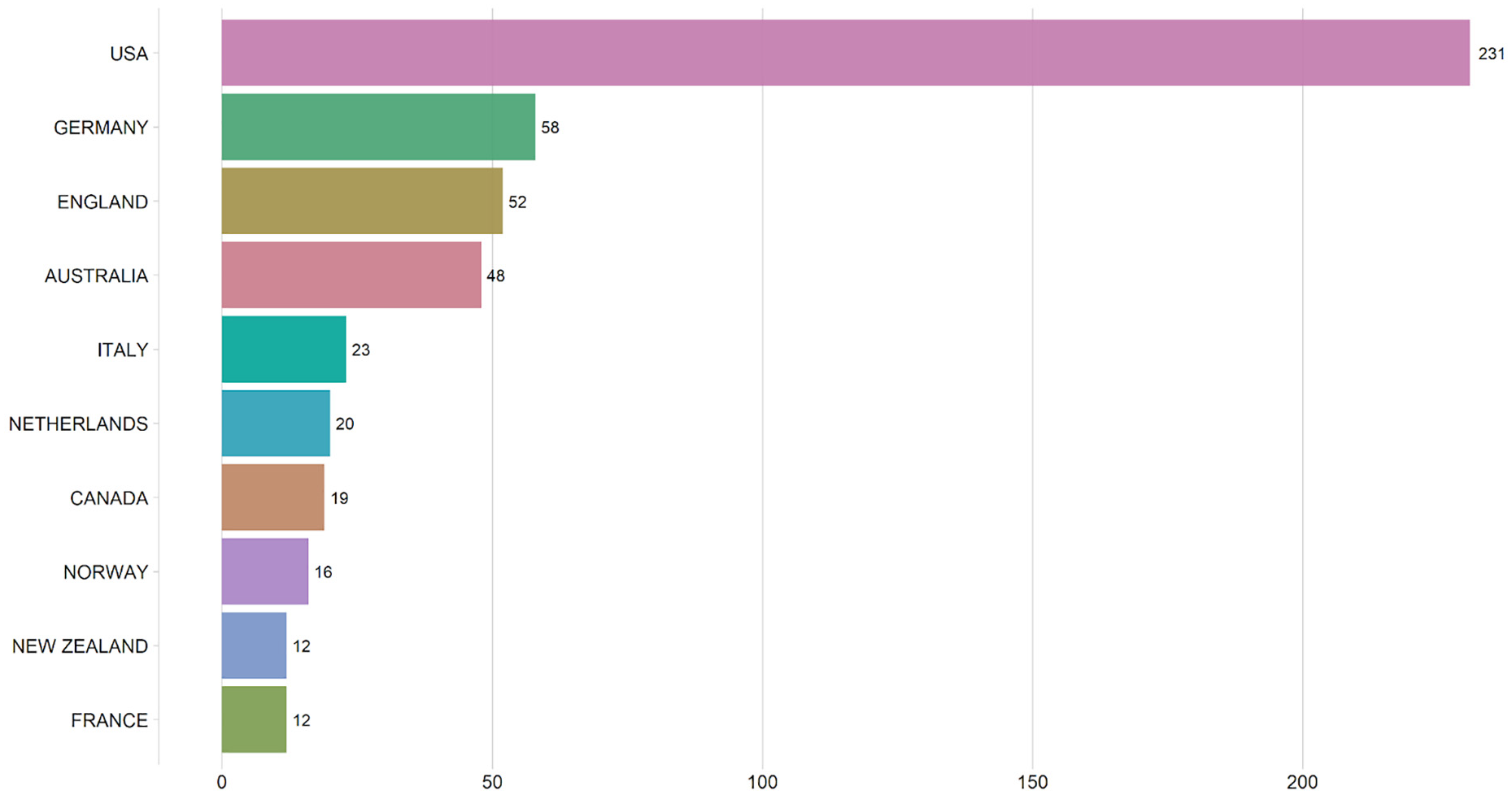
Affiliated countries of authors.
Methodological-Empirical Profile
In terms of methodology, the majority of empirical articles employed quantitative designs (78.3%), while a smaller proportion utilised qualitative methods (12%) or combined both qualitative and quantitative approaches (9.6%). Reflecting the diverse disciplines and traditions contributing to research on trust in science, methods were highly diverse, but surveys were most popular, utilised by more than half of the empirical studies (57.1%). Experiments were also relatively common (24.9%) generally applied via surveys. Most common qualitative method was in-depth interview, utilised by 60% of the qualitative studies and 12% of mixed methodology studies.
In terms of how trust in science and related variables are operationalised in quantitative and mixed methodology studies, 39.7% of studies utilised them as a dependent variable while 32.2% of studies as independent variable, that is, gave the concept an explanatory role. Due to the nature of their analysis methods we weren’t able to ascertain variable operationalisation of certain studies (Other category) (See Table 1).
Methodology and Methods of Empirical Studies (n = 166) in Addition to Variable Operationalisation of Quantitative and Mixed Method Studies (n = 146).

Contexts and Cases of Studies
Most studies have taken one of two approaches when researching trust in science: they either focused on trust in science in a general manner or they analysed trust in science with a particular focus on specific cases and contexts. The majority of the studies chose the latter approach (71.1%). Among studies with a specific focus, most of them focused on COVID-19 pandemic (33%), followed by other health-related cases (17.0%) such as Ebola (Gesser-Edelsburg et al., 2015), human immunodeficiency virus (HIV; Jaspal et al., 2022), and non-COVID vaccines (Hornsey et al., 2020). Second major context was environmental topics, specifically climate change (9.89%) and other environmental issues (12.1%), including diverse cases ranging from fisheries to lead pollution and natural resource management (Gray et al., 2012) (See Figure 4).

Research contexts and cases of publications over the years.
Network Analysis
The results of topic modelling and manual coding provided five dominant research themeson trust in science among various disciplines. Before going into the detailed analysis of these themes, it would be worthwhile to depict the analysis visually based on the interactions between umbrella disciplines, sub-disciplines, and themes. Figure 5 below shows the bibliographic coupling network of publications in various scientific disciplines based on their umbrella disciplines.
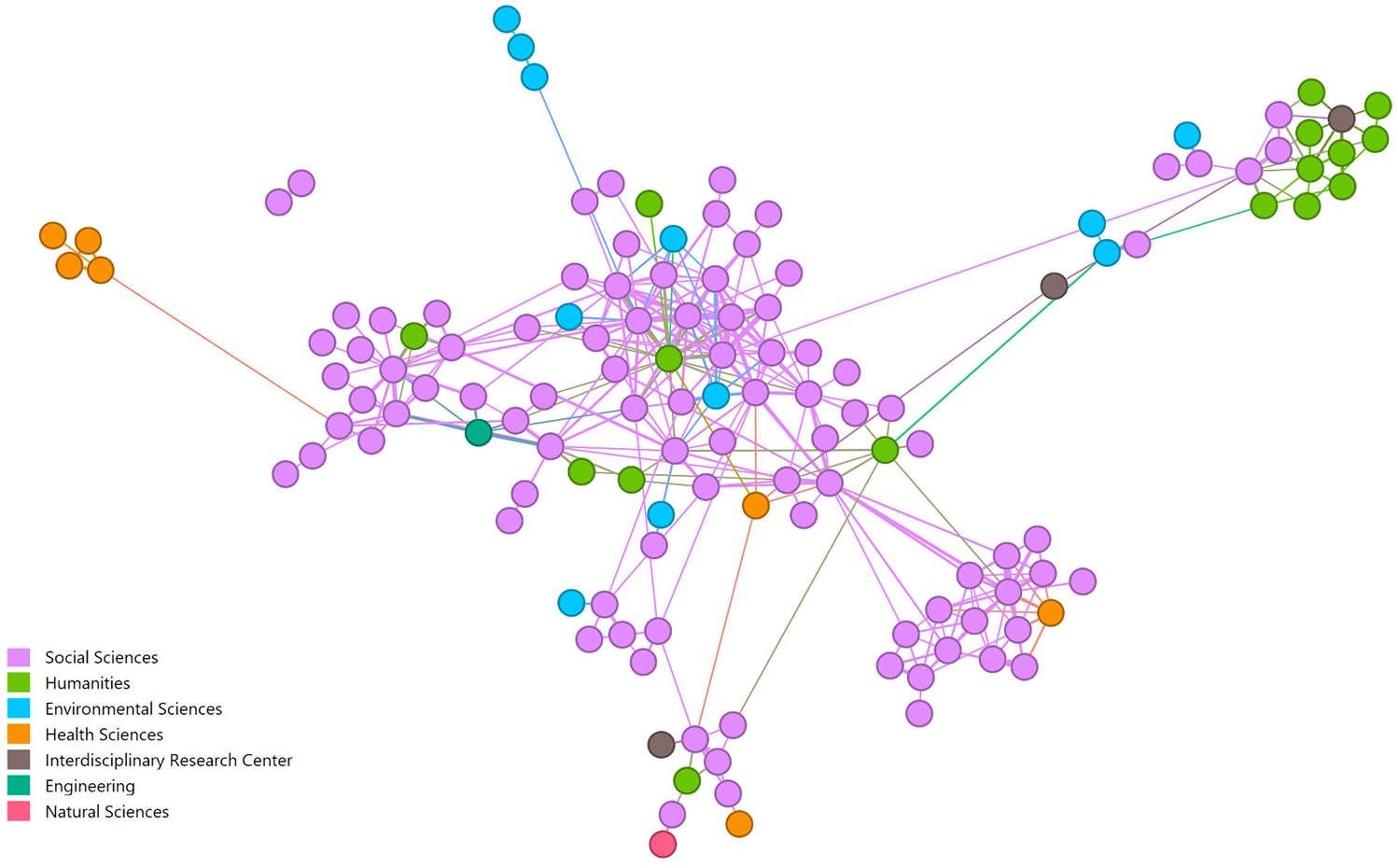
Literature on trust in science: umbrella disciplines.
The above figure shows that works from social sciences dominate the terrain of research on trust. It is also noticeable that the domain of social sciences is in interaction with other umbrella disciplines in separate networks. We also observe that humanities and health sciences constitute two visible sub-networks of natural and health sciences, respectively, as shown in the figure’s upper left and lower right parts, that only loosely interact with other main disciplines. It is also observable that their link as disciplines is handled via the works in social sciences. Figure 6 breaks down the above network into further sub-disciplines.

Publications on trust in science: specific disciplines.
Figure 6 shows essential evidence of the interdisciplinary nature of the phenomenon. The figure depicts psychology, philosophy and communication studies as dominant sub-disciplines, followed by sociology, business, and health sciences. Lastly, Figure 7 provides a graphical illustration of this study’s themes, which are discussed in the following section. The similar network maps showing the names and corresponding journals of the articles can be found in Supplemental Appendix 1B.

Publications on trust in science: themes.
Research Themes
Theme 1: Trust in Science/Theoretical Conceptualisations
A running theme among many studies in this category is related to ways of fostering or restoring public trust in science and scientific advice in the context of changing scientific institutions, research ecosystems and societal conditions. We also see that these works dominantly appear under the humanities and cover the areas of philosophy, political science and sociology disciplines regarding several crosscutting issues. For instance, Carrier (2022) discusses the limitations of the traditional model of trustworthy science associated with value freeness and objectivity and suggests an alternative strategy based on being more transparent about non-epistemic values in scientific advice. Similarly, Sztompka (2007) argues that Robert K. Merton’s model of science, characterised by four institutional norms, is inadequate in the face of the current state of commercialised, privatised, commodified and bureaucratised science and points to the need to return to Mertonian principles and reformulate them in the context of “post-academic” science. Wynne develops a powerful critique against public engagement strategy, which replaced the former strategy of educating the public and increasing “scientific literacy” (Cunningham-Burley, 2006) to foster trust, pointing out that most public engagement efforts imagine a particular type of “deficient” publics and “instrumentalise a relationship which is supposed to be based on trust” (p. 219) (cf. Ivani & Novaes, 2022).
Some researchers propose that science education should be rethought and structured differently to increase confidence in science (Develaki, 2022; Fensham, 2014; Solomon, 2021), while some defend the virtues of disinterestedness (Ziman, 2002), proper communication (Jamieson et al., 2019), and openness (Brown et al., 2022). As other suggestions, Gundersen and Holst (2022) propose three conditions to increase trust in scientific advice, “scientific competency,”“justified moral and political considerations,” and “proper institutional design,” while Irzik and Kurtulmus (2021) discuss shortcomings of Kitcher’s (2001) “well-ordered science” as an ideal model of trustworthy science.
Conceptually, a common criticism is the undifferentiated and overly broad use of terms such as “science,”“public,” and “trust,” pointing out that neither science, public, nor trust is monolithic (O’Doherty, 2022; Resnik, 2011). Similarly, other scholars attempt to conceptually clarify and develop different dimensions of the concept, such as social responsibility (Rolin, 2021), expertise (Whyte & Crease, 2010) and emotions (Furman, 2020).
Another strand of theoretical/conceptual research focuses on science communication. Studies call for incorporating values (Dietz, 2013) and emotions (Engdahl & Lidskog, 2014) into science communication, traditionally conceptualised as rationalistic communication of facts and evidence to the public. Two case studies on risk communication during the bovine spongiform encephalopathy (BSE) crisis in the United Kingdom argue that the government’s strategy to hide risks and uncertainties backfired and resulted in a loss of confidence in government and future attempts at communication (Jacob & Hellstrom, 2000; Jensen, 2004; see also Myhr & Traavik, 2003). From a more critical perspective, Weingart (2022) argues that science communication efforts to engage the public derailed and fallen into marketing, branding and public relations exercises (Meyer, 2006), which, according to Nerlich (2013), encourage hype, exaggeration and overpromising, leaving no room for honesty in modern academic life (see also Intemann, 2022).
Theme 2: Factors Associated With Trust in Science
This category consists of 46 articles, including studies focusing on socio-demographic factors, specifically on education, ideology and religion as predictors of trust in science, and studies utilising trust in science as the independent variable in different contexts. These articles mainly revolve around social sciences, focusing on sociology, political science, philosophy, and media and communication disciplines.
Education is frequently referred to as a demographic factor (Myers et al., 2017) but also as one of the predictors of the gap between trust in science and trust in science institutions (Achterberg et al., 2017). Education is also considered and utilised concerning scientific knowledge (Milošević-Đorđević et al., 2022), and if (individuals in terms of higher science literacy and education) display more (or less) polarised beliefs on several controversial science topics were also explored (Drummond & Fischhoff, 2017). Gender differences (in objective and subjective knowledge) were scarcely considered in the field (Denton et al., 2022). On the other hand, religion was discussed as a source of authority (Proctor, 2006) and found to coexist with science in common sense (Falade & Bauer, 2018). Religion was modelled as a predictor, especially in controversial topics like the embryo’s moral status (Pardo & Calvo, 2008).
The other predictors of trust in science include literacy, conservatism, and conspiracy ideation (Plohl & Musil, 2022). Political ideology as a predictor is frequently utilised (McCright et al., 2013; Nisbet et al., 2015), also referred to as ideological attitudes relating to authoritarianism and group dominance (Kerr & Wilson, 2021), political party preference (Saarinen et al., 2020), populist backlash (Zapp, 2022). The impact of attitudes toward government and corporations on trust in science (Pechar et al., 2018) is also relevant. A study focusing on the ideological basis of anti-scientific attitudes considers the effects of ideology on several aspects: authoritarianism, conservatism, religiosity, and system justification (Azevedo & Jost, 2021). COVID-19 introduces itself as a new source of direct and indirect determinants of trust in science. The future effects of COVID-19 on trust in science and scientists are discussed (Eichengreen et al., 2021). Similarly, the lockdowns’ impact on trust in science is studied in different countries (Oude Groeniger et al., 2021; Sibley et al., 2020).
Trust in science is also utilised as a measured independent variable. It is tested whether trust in science is a determinant of attitudes toward modern genetic science (Barnett et al., 2007), whether it is one of the social-psychological predictors of HIV stigma and HIV fear (Jaspal et al., 2022), or whether belief in COVID-19 experts influences distrust in unmasked individuals (Graso et al., 2022). It is considered for the introduction of a new survey measure to assess climate sceptics’ perspectives towards climate science (Sarathchandra & Haltinner, 2021). (Dis)trust in science is also among the predictors of conspiracy beliefs (Tonković et al., 2021).
Trust in science and media was found to mediate between identity centrality, institutional trust and voting (Blankenship & Stewart, 2019). It was displayed as a negative mediator between conservative ideology and willingness to participate in Alzheimer’s research (Gabel et al., 2018). Other predictors of science trust include scientists’ other-orientedness (Benson-Greenwald et al., 2023), attitudes toward science (Roberts et al., 2013; Wintterlin et al., 2021;) and the commercialisation of science (C. R. Critchley et al., 2013).
Theme 3 Compliance With Scientific Advice
This category consists of 41 articles focusing on compliant behaviours. The most recent discussion in this body of study primarily and unsurprisingly revolves around COVID-19 but is not limited to it. This theme sits at the interaction of psychology, business, political science, and sociology disciplines.
Since “decisions related to health, such as the decision to be vaccinated, are notoriously complex and influenced by many factors” (Plohl & Musil, 2022), among diverse disciplines, there are several studies and models to explain this behaviour. Most cited studies in the compliance category inevitably include the ones published before COVID-19, focusing on other health issues (Hornsey et al., 2020; Wiedemann et al., 2006). Vaccination is also frequent as a preventive measure, both before (Cadeddu et al., 2020; Sarathchandra et al., 2018), during and after COVID-19, referred to as attitudes toward vaccine (Kossowska et al., 2021; Stasiuk et al., 2021), perception of vaccination (Bucchi et al., 2022), vaccine uptake/acceptance (Agley, Xiao, Thompson, & Golzarri-Arroyo., 2021a; Bajos et al., 2022; Qiao et al., 2022; Sarathchandra et al., 2018; Viswanath et al., 2021), hesitancy (Cadeddu et al., 2021; Hornsey et al., 2020; Huang & Green, 2023; Palamenghi et al., 2020; Pivetti et al., 2021; Shahani et al., 2022; Winter et al., 2022) or anti-vaccine behaviour (Capasso et al., 2022; MiloševićĐorđević et al., 2021).
Regarding the disagreement about the harmfulness of the vaccines, the strongest predictor was trust in the scientific community before COVID-19 (Cadeddu et al., 2021). Trust in biologists and scientific reasoning were among the scales used to assess vaccine acceptance (Sarathchandra et al., 2018). The likelihood of getting vaccinated is reported to be related positively to trust in science (Agley, Xiao, Thompson, & Golzarri-Arroyo, 2021a) and high confidence in scientists (among other social determinants; Viswanath et al., 2021). Similarly, trust in the scientific community is reported to be the strongest predictor for already receiving at least one dose of the COVID-19 vaccine in the early pandemic (Bagasra et al., 2021) and willingness to get COVID-19 vaccine is correlated to trust in biomedical research and vaccines (Palamenghi et al., 2020). A longitudinal study also finds that the decrease in trust in physicians and science affects attitudes toward vaccination in the same direction (Stasiuk et al., 2021). Lack of trust in the government and scientists to curb the spread of the epidemic was found to be the factors most associated with refusing to be vaccinated (Bajos et al., 2022).
Conventional and alternative medicine’s associations with vaccine hesitancy were also investigated before COVID-19, in which vaccine hesitancy is strongly associated with distrust in traditional medicine and only weakly related to trust in alternative medicine (Hornsey et al., 2020). Anti-vaccine behaviour is studied in terms of conspiracy beliefs, vaccine knowledge and trust in the healthcare system and science (MiloševićĐorđević et al., 2021), in which “belief in conspiracy theories” is modelled as the predictor. A latent profile analysis of COVID-19 vaccination reports that those who reject the COVID-19 vaccine are largely distrustful, dissatisfied, and conspirational, indicating distrust in science is relevant (Lamot et al., 2022). Three responses of willingness to vaccinate are affected by trust in scientists and less favourable judgement of scientific experts’ public communication performances (Bucchi et al., 2022). Trust in science is found to mediate between paranormal beliefs and vaccine uptake (Corcoran et al., 2023), COVID-19 vaccine decisions and anti-vaccine conspiracy beliefs (Capasso et al., 2022), conspiracy theories, vaccine knowledge and trust (MiloševićĐorđević et al., 2021). Similarly, conspiracy theories were mediated by mistrust in science about COVID-19 (Shahani et al., 2022), while another experimental study about COVID-19 vaccines reports that its psychological effects were moderated by participants’ trust in science (Huang & Green, 2023).
Compliance with scientific advice or the relationship between preventive/mitigative/recommended/risky health behaviour and trust in science is empirically tested or modelled in various ways among disciplines. Compliant behaviours include preventive behaviours (Breakwell et al., 2022), prevention guidelines (Han, 2022; Plohl & Musil, 2021), individual action against climate change (Kwon et al., 2019) and specifically mask use (Goldfinch & Taplin, 2022; Winter et al., 2022), social distancing (Goldfinch & Taplin, 2022; Granados Samayoa et al., 2021; Koetke et al., 2021; Neureiter et al., 2021;), adherence to pharmacological, and non-pharmacological recommendations (Algan et al., 2021; Goldfinch & Taplin, 2022; Hromatko et al., 2021; Kuroki et al., 2022). Other types of behaviour addressed are panic behaviour, hoarding (Sailer et al., 2022), and panic buying (Matta et al., 2022).
Exploiting large-scale, longitudinal, and representative surveys for 12 countries, a study finds that “trust in scientists is the key driving force behind individual support for and compliance with nonpharmaceutical interventions (NPIs) and for favourable attitudes toward vaccination” (Algan et al., 2021). A cross-sectional study shows confidence in public health scientists relates to COVID-19 nonpharmaceutical interventions such as phone tracking applications, social distancing, and mask use (Goldfinch & Taplin, 2022). Confidence in public health scientists predicts compliance with government NPI directives, and confidence in scientific expertise can encourage compliance with health policy even when trust in government is low (Kuroki et al., 2022). Similarly, a study modelling compliance shows that COVID-19 risk perception and trust in science independently predict compliance with COVID-19 prevention guidelines (Plohl & Musil, 2021). Similarly, an analysis of a large-scale international survey dataset from 35 countries states that trust in the scientific research community predicts intent to comply with COVID-19 prevention measures, including vaccination (Han, 2022). Among conservatives, people reported stronger intentions to socially distance when they had high trust in science (Koetke et al., 2021). A study reports that “trust in scientists moderates the relation between COVID-19 knowledge and social distancing” (Granados Samayoa et al., 2021). It is also reported that trust in scientists moderates the concern about COVID-19 and panic buying behaviour (Matta et al., 2022). Aiming to reveal that partisan reactions to the pandemic are associated with trust in public health institutions, the collective impact of trust in public health institutions was found to be relatively large for three outcomes investigated (concern, mask-wearing and vaccination intentions; Hegland et al., 2022).
Theme 4: Science Communication
The most prominent thematic category includes empirical studies examining how and in what direction science communication affects public trust in science (n = 51). A significant feature of this theme is the intensity of experimental studies in research contexts such as health-related issues, predominantly COVID-19; environmental issues, mainly climate change; food and nutrition, mostly genetically modified food/organisms. The common goal of these studies is to make science more accessible, engaging, and relevant. Under the theme of science communication, the credibility of scientific information appears to be the central axis of the studies in the field. This major axis seems clustered under trusted sources such as agencies like scientific institutions, media, and scientists specifically related to epistemic trustworthiness.
Studies addressing the credibility of scientific information predominantly focus on the sources of communication. These works showed that alternative sources of information have various effects on credibility. For instance, scientific institutions and universities have higher credibility than the sources linked to businesses and governments (Sanz-Menendez & Cruz-Castro, 2019). Besides, people’s intentions to trust a communication environment in which people receive information is crucial, especially for complicated or controversial scientific issues such as genetically modified organisms (GMOs; Love et al., 2013). For example, user comments about scientific findings might negatively affect scientists’ perceived trustworthiness and credibility (Gierth & Bromme, 2020). In that vein, studies show that the use of traditional media and social media (Huber et al., 2019), exposure to media narratives (Ophir & Jamieson, 2021), media framing, and science reporting (Slater et al., 2021), disagreement and incivility in news coverage (Chinn & Sol Hart, 2022), the media’s role in shaping public opinion (Marques et al., 2015) corresponds with both fostering or undermining public trust in science and scientists.
Many studies analyse scientists as sources of information, focusing on the predictors of trust in scientists and acceptance of their scientific information. With the increasing visibility of scientists as communicators of their work, their communication style, for instance, using aggressive language (König & Jucks, 2019a), advocacy statements made by scientists (Kotcher et al., 2017), scientist’s perceived communicative motivation (to inform or persuade) and the style of scientific message (informative or persuasive style; Rabinovich et al., 2012) affect the trustworthiness of the scientists as well as the credibility of their scientific information. Correspondingly, self-correction (Altenmuller et al., 2021), successful or failed replication (Hendriks et al., 2020; Mede et al., 2021; Wingen et al., 2020), perceived scientists’ objectivity (Safford et al., 2020), discussing ethical implications of preliminary scientific results, for example, in a science blog (Hendriks et al., 2016a), appearance in traditional and social media (Reif et al., 2020), professional affiliation (König & Jucks, 2019b) appears as determinants of the scientists’ competence and integrity. Besides, research shows that open science practices positively affect the perceived credibility and trustworthiness of research and researchers (Song et al., 2022) and public engagement in science (Rosman et al., 2022). Overall, those studies in this cluster highlight scientists’ role as communicators for the public trust in science and public attitudes towards a scientific issue.
Uncertainty communication appears as a separate cluster. How to communicate science in cases of uncertainty such as health crisis like COVID-19 (Janssen et al., 2021), a scientific breakthrough like Zika vaccine (Hilgard & Jamieson, 2017), a complex and controversial issue like climate change (Hendriks & Jucks, 2020) stand out in the field. At this point, framing uncertainty in scientific news and the use of social media has come to the fore. Some studies investigate the effects of uncertainty communication on trust in communicators and its information, specifically on the trustworthiness of scientists (Steijaert et al., 2021) and intentions to comply with COVID-19 prevention actions (Schnepf et al., 2021).
Another cluster is scientific misinformation in which the dominant context of the research is health-related issues, especially COVID-19. The predominance of COVID-19 is not surprising as it is not only a pandemic but also an infodemic. “Fake news and rumours” dominantly define the term infodemic (Patwa et al., 2021) and since “various outlets and digital media portals shared false information and unsourced recommendations on health” (Mheidly & Fares, 2020), the case of COVID-19 is apt to label or discuss as “infodemic.” Under this cluster, some studies focus on endorsing conspiracy theories or pseudoscientific claims, which are common even for highly educated people (Vranic et al., 2022). Accordingly, T. C. O’Brien et al. (2021) highlight the importance of critical thinking and suggest fostering trust in the “healthy scepticism” inherent to the scientific process to protect against misinformation that contains pseudoscientific content. So, science literacy appears prominent in assessing the credibility of the information (Amit Aharon et al., 2021). Other studies have attempted to understand the effect of exposure to infographics to increase trust in science (Agley, Xiao, Thompson, & Golzarri-Arroyo, 2021b) or belief accuracy (van Stekelenburg et al., 2021) as well as to ensure intention of compliance with preventive actions for COVID-19 (Agley, Xiao, Thompson, Chen, & Golzarri-Arroyo, 2021) in the face of COVID-19 infodemic.
Theme 5: Public Engagement
This last thematic category relates to the science communication field and includes empirical studies addressing the active involvement of individuals, communities, or stakeholders in decision-making processes that affect them (n = 28). As public engagement aims to foster active and meaningful interaction between scientists and the public, understanding the perceptions, motivations, and engagement of citizen scientists is a primary axis of the field. In this sense, environmental issues dominate the scene, predominantly based on qualitative methodology. Researchers underline the importance of comprehending how people interact with science when coping with uncertain, risky and challenging environmental issues (Gustafsson & Lidskog, 2012). Some other studies focus on understanding the public perceptions of a scientific issue, like the risk of climate change (Cvitanovic et al., 2014) or new technology like unmanned aerial systems (Walther et al., 2019) and hydrogen energy (Flynn et al., 2011). In that vein, the level of citizen knowledge regarding environmental topics like large carnivores (Barmoen et al., 2021) and health topics like Ebola (Gesser-Edelsburg et al., 2015) appears also to be decisive to both develop effective communication with the public and increase public involvement. Public perceptions may affect the public attitudes towards citizen engagement and layperson trust in science, scientists/experts, and scientific institutions.
Many studies in this category reveal the determinants and ways of effective natural resources management, primarily for marine fisheries management. Some of these studies (Kelly et al., 2019; Leith et al., 2014) assess the interaction of social license and science for sustainable and effective marine fisheries management, while some others (Bailey et al., 2017; Gray et al., 2012) investigate trust among stakeholders and stakeholders trust in governing and scientific institutions. The studies in this cluster commonly emphasise the importance of public participation, focusing on the impact of citizen science (Bedessem et al., 2021) and the role of citizen scientists in fostering trust in science (Millar et al., 2023). Some other studies are interested in how this participation can be enhanced. For instance, Sankare et al. (2015) test some recruitment strategies to overcome the low participation of racial and ethnic minorities in medical research and the lack of trust between underrepresented communities and researchers. Critchley et al. (2015) also discuss how data sharing and the type of third-party access (public vs. private) affect public trust and, in turn, the intention to participate in biobank research. Herein, a few studies question the credibility of citizen data ( Gilfedder et al., 2019; Thornton & Leahy, 2012) as a determinant of trust in citizen science.
Discussion and Conclusion
As this study shows, while research on public trust in science is not new, there has been a significant increase in academic interest in the topic, particularly in the context of the COVID-19 pandemic, and we expect this trend to continue for the foreseeable future, given widespread concerns about a global crisis of trust in science. In line with our first objective, in this study, we presented a general overview of this emerging field in terms of disciplinary profile and structure, empirical-methodological perspectives, research contexts, and main research themes. To do so, in line with our second objective, we explored a semi-automated methodological approach combining qualitative analysis and computational methods that allowed us to discover patterns that are invisible to the human eye, as well as to triangulate our findings and results. In the rest of this section, we will present and discuss our main results, pointing out possible shortcomings and making suggestions for the future.
Regarding the general profile of the field, our study revealed that research on public trust in science is highly inter-disciplinary or even trans-disciplinary, with contributions from social sciences, humanities, environmental sciences and health sciences. Although the dispersal of research across many disciplines, fields, and journals might be considered as an issue of fragmentation, it can also be seen, to a significant extent, as a strength and a sign of “fermentation.” For instance, the amount of philosophical and conceptual-theoretical research indicates solid intellectual and theoretical backing and interest. Our bibliographic coupling analysis has shown that, as indicated by shared references among studies, most research in the field is connected, highlighting its multidisciplinary nature. However, there are signs of fragmentation, with theoretical and conceptual research, as well as experimental studies in science communication, appearing somewhat isolated and relatively disconnected from the broader literature. The isolation of these studies from the literature is unfortunate, as empirical research, for example, would greatly benefit from the theoretical and conceptual work conducted in the field of philosophy. Future studies for example can empirically test different models of trustworthy science proposed in this area.
Our study also revealed Western countries’ dominance in author affiliations and studied countries in empirical research, and empirical data and contributions from non-Western countries still seem too scarce. This is lamentable as developing and less developed countries can suffer the consequences of low public trust in science more severely than developed Western countries. Studies also show that socio-demographic factors such as education and religion can have specificities in non-Western settings (Alper et al., 2022; Falade & Bauer, 2018). To gain a deeper understanding of the cultural and contextual factors shaping trust in science, future research should place greater emphasis on non-Western countries, adopt comparative designs, and encourage researchers from these regions to investigate this subject more thoroughly.
Methodologically, the results revealed a dominance of survey-based quantitative approaches. Qualitative methods such as in-depth interviews, focus groups, and ethnography were relatively rare. We believe that qualitative studies have much to offer to the emerging literature, as commonly used “direct” and “generic” measures to assess trust in science have some known problems (Besley & Tiffany, 2023; Reif & Guenther, 2021). More inductive and qualitative studies might remedy this issue by exploring different aspects and dimensions of the phenomenon of trust in science.
Studies also tended to analyse public trust in science by focusing on specific cases and contexts, among which COVID-19 and other health-related issues were most common, followed by environmental issues, notably climate change. This finding is expected as questions of public trust in science gain the most practical importance in policy-relevant contexts. However, studies focusing on social science-related contexts/cases were almost non-existent, indicating a tendency to identify science with the natural and “hard” sciences, a known lacuna in fields such as Science and Technology Studies (Camic et al., 2011, p. 11). This neglect is noteworthy as humanities and social science disciplines such as history and economics also play a significant role in society. We believe studies on social sciences and humanities can be theoretically informative, particularly in the context of widespread concerns about politicisation of science, as the knowledge produced in these fields has been traditionally more embedded in social and political contexts.
In terms of research themes, beside the conceptual and theoretical research, the focus of empirical research was evenly distributed across science communication, factors related to trust in science, compliance with scientific advice and public engagement. There were some possible gaps for specific research themes; for example, studies on religion were rare, while we expected to find more studies on social media in the theme of science communication and more compliance studies outside of the context of the COVID-19 pandemic.
Concerning the findings and results of the reviewed studies, 1 studies in the first theme emphasise the need to rethink and reconceptualise basic concepts such as science, public, and trust, alongside traditional models of trustworthy science, in the context of changing scientific institutions, research ecosystems, and societal conditions. The second theme demonstrates how socio-demographic and ideological factors influence public attitudes towards both science, and its institutions and scientists. Research conducted under the third research theme, which examines the role of trust in science in compliance to scientific advice, particularly in contexts such as the COVID-19 pandemic, reveals that trust in science is a key factor in adherence to scientific guidance and advice. The fourth and fifth themes underscore the importance of tailored science communication strategies and active public engagement to bridge gaps in trust and facilitate informed decision-making amid complex scientific issues. Collectively, these insights point towards a need for a more nuanced and integrated understanding of public trust dynamics in science.
It would be a truism to argue that public trust in science is crucial for informed decision-making and policy formation in an era of scientific progress. However, as discussed above, building policies to establish trust in science in multiple scientific domains is crucial to underlying the commonalities among these disciplines. Although policy recommendations were put forth through several academic work focusing on the interfaces of science and society, and the scholarly field of science communication have dealt with the communication between specialist and non specialists, the new contexts (such as COVID-19) on a global scale will require considering science communication models adopted in times of crisis and their downfalls, such as stepping back to a deficit-model (see Scheufele, 2022). Furthermore, trust in science and their determinants vary culturally, across contexts and countries, depending on the countries’ engagement with science, institutional structures and other socially and culturally significant variables (Bicchieri et al., 2021; Cologna et al., 2025; T. L. O’Brien & Noy, 2018; Sulik et al., 2021). Thus any policy recommendation should also be contextually informed and take into account the political contexts in which science communication occurs (Scheufele, 2014).
Accordingly, future work on possible policy recommendations at least consider specific aspects: we think it is crucial to encourage research initiatives and collaborations among specialists from multiple domains of scientific research (Varda et al., 2025). By offering a holistic perspective, interdisciplinary collaboration will strengthen the legitimacy of scientific discoveries, leading to successful attempts to solve complicated social problems that need ideas from several fields. Such a collaboration will encourage transparency in research by requiring researchers to freely and thoroughly reveal their techniques, data, and outcomes. Eventually, transparency in scientific domains will foster trust by permitting inspection of research procedures and outcomes, and as stated before, open data dissemination will permit independent verification and promote trust in scientific discoveries (Rosman et al., 2022).
Lastly, future work on possible policy recommendations should also consider promoting diversity and inclusiveness in research teams and scientific organisations. Since inclusion stimulates innovation and creativity, when scientists from various backgrounds collaborate, they often approach problems and challenges in different ways, creating a variety of problem-solving strategies that can result in more effective and unique answers to scientific concerns. Moreover, diverse research teams are more likely to represent the populations better, especially historically underrepresented groups in science. This improved representation not only encompasses considerations of fairness but also guarantees the applicability of research findings to a broader spectrum of persons and groups. Furthermore, the credibility and trustworthiness of research are frequently perceived to be enhanced when done by varied teams. When the scientific community exhibits inclusivity, it serves as a symbolic representation to the general public that science is a domain characterised by openness and fairness, hence strengthening the notion that scientific investigations are pursued for the betterment of society as a whole rather than for the exclusive advantage of a privileged few.
As with all research, this study has certain limitations. The main limitation of this study lies in its data collection procedure, which is restricted to Web of Science and author keywords. We might have missed research on trust in science, not including our search keywords or covered in other databases. Thus, although we believe that our data collection procedure gives us the core of the field, this study may fail to represent the field as a whole. In addition, given the relatively broad scope, we had to balance depth and breadth to reveal the field’s leading trends and significant research themes. Future studies may adopt a more comprehensive data collection procedure, focus on theory or conduct in-depth reviews of specific research themes or contexts we discussed.
Supplemental Material
sj-docx-1-sgo-10.1177_21582440251352376 – Supplemental material for Bridging the Divide: An Interdisciplinary Analysis of Trust in Science
Supplemental material, sj-docx-1-sgo-10.1177_21582440251352376 for Bridging the Divide: An Interdisciplinary Analysis of Trust in Science by Gökçe Zeybek Kabakci, Umut Yener Kara, Gökçe Baydar çavdar and Emre Toros in SAGE Open
Supplemental Material
sj-xlsx-2-sgo-10.1177_21582440251352376 – Supplemental material for Bridging the Divide: An Interdisciplinary Analysis of Trust in Science
Supplemental material, sj-xlsx-2-sgo-10.1177_21582440251352376 for Bridging the Divide: An Interdisciplinary Analysis of Trust in Science by Gökçe Zeybek Kabakci, Umut Yener Kara, Gökçe Baydar çavdar and Emre Toros in SAGE Open
Footnotes

Ethical Considerations
Hacettepe University’s Ethics Committee approved the research on the ethical basis with the document number E-35853172-102.01-00002140032, dated 18.04.2024.
Funding
The author(s) disclosed receipt of the following financial support for the research, authorship, and/or publication of this article: This project is funded by TUBITAK (Scientific and Technological Research Council of Turkey) under the project scheme 1001 with the project number 122K368 “Turkey Trust Research.”
Declaration of Conflicting Interests
The author(s) declared no potential conflicts of interest with respect to the research, authorship, and/or publication of this article.
Data Availability Statement
The underlying dataset contains potentially identifying information and is currently under institutional embargo. In line with our ethical approvals and data-protection obligations, the full data cannot be made publicly available at this time. We will, however, share de-identified data extracts sufficient to reproduce the analyses, together with all analysis code and documentation (variable list, recodes, and model specifications), upon reasonable request to the corresponding author. Requests will be reviewed in consultation with the relevant ethics/data access body and may require a simple data-use agreement. Upon expiry of the embargo, the dataset will be deposited in an appropriate public repository with accompanying metadata and code.
Supplemental Material
Supplemental material for this article is available online.
Notes
References
Supplementary Material
Please find the following supplemental material available below.
For Open Access articles published under a Creative Commons License, all supplemental material carries the same license as the article it is associated with.
For non-Open Access articles published, all supplemental material carries a non-exclusive license, and permission requests for re-use of supplemental material or any part of supplemental material shall be sent directly to the copyright owner as specified in the copyright notice associated with the article.
