




Abstract
This study aimed to investigate the relationships between servant leadership (SL), Professional Learning Communities (PLCs), Trust, and Teacher Organizational Citizenship Behavior (OCB). A cross-sectional approach was employed, involving a diverse range of educators. Partial least squares structural equation modeling (PLS-SEM) was used for data analysis. Importance-Performance Map Analysis (IPMA) was also performed. The results indicated that there was no direct significant correlation observed between SL and OCB, suggesting the presence of other moderating or mediating factors. However, it should be noted that SL significantly enhanced Trust, particularly among administrators, thereby leading to an increase in OCB. This highlights the crucial role played by Trust as a mediator. PLCs contribute to the enhancement of OCB and Trust among peers but have a lesser impact within management. Their significance lies in fostering collaboration and support among colleagues. The study confirms that Trust acts as a mediator between PLCs and OCB, emphasizing the importance of social capital in promoting OCB. Recognizing the various contextual factors influencing the effectiveness of SL in educational settings is essential. Leadership strategies need to be tailored to educational environments to cultivate a supportive climate that enhances OCB.
Keywords
Introduction
OCB refers to behaviors that go beyond regular job duties and aim to assist customers, colleagues, or leaders (Deery et al., 2017). These behaviors have substantial importance in public organizations (Christensen & Whiting, 2009). In public educational service organizations, OCB encompasses not only teachers’ essential teaching responsibilities but also supportive and collaborative behaviors that play a crucial role in fostering a positive learning environment. By actively engaging in OCB, teachers can confidently inspire their peers while motivating them to unleash their potential and fully enhance their teaching effectiveness (Van Woerkom & Kroon, 2020).
The leadership style known as SL revolves around the principle of accountability and has a strong emphasis on inspiring, attracting, and nurturing employees as invaluable assets within the organization to drive organizational advantages (van Dierendonck et al., 2023). This approach to leadership places significant importance on empowering followers and expanding their influence (Zeeshan et al., 2021), ultimately fostering positive outcomes for the organization (Liu, 2019).
Trust plays a pivotal role in establishing successful relationships between leaders and followers by serving as the foundation for cooperation, management, knowledge sharing, and understanding (Saleem et al., 2020). In the meantime, it motivates teachers to engage in OCB within educational settings, encompassing activities (Azmi et al., 2016). When teachers perceive recognition and support from leaders, they are more likely to experience positive emotional responses and demonstrate an increased willingness to contribute further to the organization (Yang et al., 2022). Consequently, this fosters better integration into the organization while nurturing a sense of organizational support (Adil et al., 2023).
PLCs have gained increasing popularity as an effective approach to promoting teacher learning and professional development (Vangrieken et al., 2017). In addition to facilitating continuous growth for educators, PLCs also play a crucial role in fostering trust among teaching professionals (Yin et al., 2019). Through active participation in PLCs, educators can establish a more robust and effective communication relationship with school leadership (Liu & Yin, 2020), the concept of OCB, for instance.
Research Significance
Empirical evidence has consistently demonstrated the efficacy of SL in attaining various positive outcomes within organizations, such as fostering OCB. Moreover, OCB itself confers significant advantages for both employees and organizations (Hemakumara, 2020) and supports the importance of emphasizing collaborative processes while predicting cooperative results within China’s educational landscape (Yin & Zheng, 2018). However, despite some extant research exploring the motivational and supportive aspects of SL on teachers to a certain extent, there remains a dearth of studies investigating how this specific leadership style cultivates OCB among teachers. In terms of fostering OCB, SL places particular emphasis on cultivating positive mindsets and a sense of community among educators (Schaubroeck et al., 2011). Supporting teachers’ growth and development establishes a secure environment where they can confidently apply their expertise and focus on continuous improvement and education (van Dierendonck, 2011). The level of trust among teachers serves as a crucial indicator for evaluating the quality of internal relationships within educational institutions in China (Yin et al., 2019).
How can we enhance the quality of training services? What strategies can be employed to augment teachers’ OCB? What are the key determinants that need to be identified? Is the implementation of PLCs patterns effective? What factors influence trust? The issues have emerged as the primary focal points of this study and training.
Research Hypotheses and Innovation
This study integrated the theoretical model of SL and OCB proposed by Ruiz-Palomino et al. (2023), along with Cho and Kao’s (2022) investigation into the relationship between a sustainable workplace and OCB, as well as Engelbrecht and Hendrikz’s (2020) framework for assessing the impact of trust on OCB. In the field of Chinese education, the establishment of PLCs through collaborative efforts among teaching and research groups has demonstrated remarkable efficacy and long-lasting sustainability. Thus, the present study’s model was formulated based on these findings. The objective of this study was to investigate the impact of SL on teachers’ OCB, with a specific focus on the mediating variables of trust and PLCs. By constructing a comprehensive model incorporating these factors, this research contributes to the existing literature while offering a fresh perspective and strategy for enhancing teachers’ engagement in OCB.
In China, leaders must not only concentrate on team members but also provide essential support to ensure their collective well-being (van Dierendonck et al., 2023). This specific cultural backdrop presents both distinctive opportunities and challenges for SL in enhancing teacher OCB, given the limited direct interaction with faculty members. SL plays a pivotal role in supporting the establishment and maintenance of PLCs by fostering teamwork and facilitating transparent communication. As underscored by Caillier (2016), managers’ ability to provide explicit guidance is indispensable for enhancing employees’ performance and dedication. We put forward the following hypotheses:
H1: The implementation of SL is expected to significantly enhance teachers’ OCB.
H2: The implementation of SL is expected to yield a positive and substantial impact on the progress of PLCs.
H3: PLCs are anticipated to exert a beneficial and remarkable influence on teachers’ OCB.
H4: The establishment of PLCs is expected to amplify the constructive and significant impact of SL on teachers’ OCB.
In a meta-analysis conducted by Stein et al. (2020), they explored the relationship between SL and various workplace outcome variables in the Chinese context. Furthermore, Liu et al. (2016) examined how collaborative reflection and experimentation among teachers contribute to professional growth. Teacher trust holds particular significance within Chinese culture due to its emphasis on collective values and collaboration. This study posits the following hypotheses.
H5: SL has a positive and significant influence on teacher trust.
H6: The crucial role of teacher trust fosters teachers’ OCB.
H7: PLCs constructively and significantly impact teacher trust.
H8: Teacher trust facilitates the positive and substantial effect of SL on teachers’ OCB.
H9: PLCs enhance the positive impact of SL on teacher trust.
H10: Teacher trust enhances the positive and significant impact of PLCs on teachers’ OCB.
H11: Further promotion of the positive and substantial effect of SL through enhancing teachers’ trust with PLCs benefits teachers’ OCB.
This study utilized the IPMA to examine and interpret the importance and performance of dependent variables and intermediary variables based on hypothesis verification and model validation. By employing the four quadrants of IPMA, this approach identifies key influencing factors, thereby providing precise guidance for targeted action strategies in teacher training.
Literature Review
SL and OCB
Ehrhart (2004) was among the pioneering researchers to empirically investigate SL, and his findings unveiled the advantageous impact of SL on fostering an equitable workplace atmosphere and augmenting OCB. SL, as a leadership style centered on accountability, acknowledges employees as holistic individuals and confers significant organizational benefits by fostering their motivation, engagement, and development (van Dierendonck et al., 2023). The remarkable outcome of SL lies in its ability to foster employees’ OCB (Newman et al., 2017). This leadership approach not only facilitates favorable organizational outcomes (Liu, 2019; Newman et al., 2017) but also underscores the pivotal role of followers’ voluntary actions, thereby amplifying its impact (Zeeshan et al., 2021). The significant concern among service leaders regarding the development of their followers (Eva et al., 2019) gives rise to an asymmetry in the psychological contract between leaders and followers (Elche et al., 2020), thereby fostering their engagement in OCB (Guchait et al., 2016).
Despite the limited empirical research conducted in this domain, SL holds significant importance regarding OCB (Mahembe & Engelbrecht, 2014). In the domain of education, SL within a collective of exceptional educators has the potential to foster interdependence, facilitate meaningful connections, and stimulate reciprocal interaction and additional contributions beyond routine responsibilities. These are commonly referred to as OCB (Lu, 2014), which holds substantial significance. The significance of SL in teacher training programs is particularly crucial as it serves to inspire and enhance the OCB of exceptional educators, thereby not only facilitating teachers’ personal growth but also fostering a positive transformation and innovation within the broader educational context.
According to Christensen et al. (2014), SL is widely recognized as an ideal approach for advancing theories of organizational social responsibility. Within educational settings, this style emphasizes the leader’s obligation to serve others and prioritize their personal development. These principles align with enduring values found in Chinese philosophy (van Dierendonck et al., 2023). The implementation of SL significantly contributes to enhancing teacher satisfaction levels while also fostering collaboration and cultivating a positive school environment. SL in exceptional educators fosters behavior that goes beyond formal obligations (OCB), which is typically not explicitly and directly influenced by the regular compensation system (Yang et al., 2022), nor is it covered in the employment agreement (Kao, 2017). The 2012 Professional Standards for Primary and Secondary School Teachers issued by China’s Ministry of Education underscore the importance of teachers possessing ethics, a sense of responsibility, patience, and concern for students. Educators with a strong sense of responsibility not only fulfill externally mandated formal duties, but also exhibit internal drive, self-control, and a proactive approach to enhancing the school environment (Daniels et al., 2017).
The research findings by Piccolo and Colquitt (2006) established a positive correlation between leadership and voluntary contributions beyond job requirements, such as OCB. The adoption of SL not only reinforces educators’ commitment to achieving organizational objectives but also fosters personal growth and accomplishments (Zeeshan et al., 2021). Clearly defined objectives among public sector personnel encourage autonomous efforts to enhance OCB practices driven by self-motivation (Taylor, 2013). This explicit goal-setting approach further promotes the alignment of aspirations within teams while effectively fostering cooperation among colleagues (Bogaert et al., 2012).
The Moderating Role of PLCs
Most definitions of OCB are grounded in Organ’s (1997) research, while the initial conceptualizing based on the educational context was put forth by Dipaola and Hoy (2005). They suggested that teacher’s OCB encompasses voluntary behaviors exhibited by teachers that surpass their assigned responsibilities to provide support to students, colleagues, and other stakeholders within the teaching and learning domain. The definitions provided by subsequent researchers have demonstrated heterogeneity, albeit with a consistent emphasis on the significance of voluntary participation and cooperation (Bogler & Somech, 2023). The utilization of PLCs as a collaborative development model among educators has emerged as a significant approach for fostering professional growth since the 1990s, exerting a profound influence on enhancing schools’ capacity for sustainable improvement (Yin & Zheng, 2018). The findings suggest that employees’ OCB is influenced by the overall organizational climate (Cho & Kao, 2022), highlighting the significance of fostering PLCs that promote shared responsibility, collective learning, and collaborative practices. The Chinese culture of collectivism and the collective framework fosters a longstanding tradition where educators collaborate with their peers to achieve shared objectives, commonly known as PLCs in China (Chen, 2020). Employees who possess a strong inclination for collectivism demonstrate a heightened propensity to prioritize the welfare of the collective over individual objectives, thereby making valuable contributions to the efficient functioning of the organization (Jang et al., 2018; Xu et al., 2019). In the Chinese education system, there remains a lack of comprehensive investigation into the application of PLCs as a framework for enhancing teachers’ OCB, encompassing its impacts and implementation strategies.
The concept of PLCs entails educators collectively assuming responsibility, engaging in reflective dialogue, and collaborating to enhance student learning outcomes. PLCs represent a strategic approach aimed at guiding continuous improvement in student learning (Ho et al., 2016). As an effective professional development model for educators, PLCs provide a platform for teachers to engage in collaborative learning, share best practices, and offer mutual support. This approach is widely acknowledged as a sustainable means to promote school improvement (Yin & Zheng, 2018). The research focuses on investigating the robust connection between PLCs and teachers’ OCB. PLCs emphasize ongoing reflection and collaboration in teaching practice while fostering supportive interactions among educators (Stoll & Louis, 2007).
PLCs provide a platform for educators to exchange knowledge, collaborate on problem-solving, and actively contribute to school development. Consequently, professional learning is no longer an individual pursuit but increasingly relies on interpersonal relationships among educators (Yin et al., 2019).
PLCs have garnered significant attention as a valuable tool for teachers’ professional development, demonstrating the practical effectiveness of inefficient education systems such as China’s institutionalized teaching and research activities (Zhang et al., 2017). In China, PLCs are typically conducted at specific times and locations to state and school policy requirements (Qiao et al., 2018). However, there is limited research on the specific impact of PLCs on teachers’ OCB, highlighting the need for further exploration of PLCs within the context of Chinese culture (Hairon et al., 2017).
The education department in J City implemented a training initiative aimed at enhancing the overall educational and instructional excellence of a cohort of exceptional teachers. In this training program, teachers were grouped by subject, and a two-tutor system was implemented to ensure comprehensive and systematic training (See Table 1). The system facilitated four stages of training covering professional knowledge, teacher ethics, educational philosophy, on-site teaching practice, as well as post-study and delivery practice. The PLCs approach aimed to cultivate a cohesive teacher team while promoting professional dedication and teamwork awareness among teachers. It also focused on developing their ability for sustainable growth and encouraging initiative and creativity in transmitting education and training to nurture exceptional talents.
Teacher Training Arrangement.

The Moderating Role of Teacher Trust
In the realm of organizational literature, there has been a surge in interest regarding the concept of trust, particularly within the context of leadership, due to its substantial impact on employee performance outcomes (Lee et al., 2023). The pivotal role of trust in leaders has consistently been underscored in numerous studies as a fundamental determinant influencing employees’ OCB (Chen et al., 2008; Engelbrecht & Chamberlain, 2005; Newman et al., 2014). When leaders are perceived as trustworthy by their followers, there is an increased likelihood of them willingly assuming additional responsibilities (Engelbrecht & Hendrikz, 2020). The likelihood of employees engaging in OCB is enhanced when they perceive trust from their leaders and experience a reciprocal exchange of social and emotional benefits (Engelbrecht & Hendrikz, 2020). SL fosters trust through the demonstration of perceptive comprehension, compassionate consideration for followers’ welfare, and the embodiment of an ethical role model (Engelbrecht & Hendrikz, 2020; Miao et al., 2014; Sendjaya & Pekerti, 2010). The provision of equitable treatment and consideration of the needs of followers by leaders of this nature has the potential to foster relationships built on trust, thereby enhancing individual motivation to engage in OCB (Ye et al., 2019).
The establishment of PLCs provides an optimal setting for cultivating trust among educators, which serves as the fundamental basis for collaboration (Lee et al., 2011). The establishment of trust within the teaching community, as emphasized by Hargreaves (2007), plays a crucial role in fostering resilient and enduring PLCs. PLCs establish a platform for educators to exchange knowledge, collaborate on problem-solving, and collectively develop. This cultivates a supportive atmosphere that not only fosters trust among teachers but also motivates them to transcend their daily responsibilities and actively engage in school activities and projects. Consequently, PLCs make a substantial contribution to enhancing the overall quality of the educational environment.
Most research employs trust as a mediating factor when examining the relationship between leadership style and individual organizational behavior in each society (Lee et al., 2023). Numerous global studies have consistently demonstrated the capacity of workplace outcomes to predict emotions and behaviors across diverse cultural contexts, thereby confirming the significant impact of SL (Neubert et al., 2022). China’s teacher professional standards actively advocate for teachers’ active involvement in decision-making processes at schools to enhance overall school development (Ministry of Education, PRC, 2012). Employees are more inclined to engage in behaviors that go beyond their job requirements for the betterment of the organization (Tsachouridi & Nikandrou, 2016). To foster an environment conducive to mindfulness at work, educators should actively participate in systematic practices aimed at nurturing their professional roles and identities (Hargreaves, 2000). The three-path model of teacher trust, as established by Lee et al. (2023), validates that the enhancement of trust through transformational leadership leads to elevated levels of OCB. According to the research conducted by Dhiman and Sharma (2021), it has been proposed that enhancing employees’ organizational confidence can effectively foster their commitment to social responsibility, thereby yielding a favorable impact on OCB.
A positive employer-employee relationship has the potential to elicit employee responses, such as trust and job satisfaction, which can subsequently foster their engagement in favorable organizational behaviors, such as engaging in OCB (Greenberg & Scott, 1996). When educators feel acknowledged and supported, they are more likely to cultivate enthusiasm for their work, willingly contribute to schools and institutions, maintain organizational loyalty, and actively support the organization by making valuable contributions (Yang et al., 2022). This study’s training center aimed to enhance the trust of teachers and training managers by actively constructing PLCs and subsequently investing in guiding their training work.
Methodology
The assessment of studies adheres to established methodologies (Anderson & Gerbing, 1988). SPSS was employed for evaluating dimensionality, reliability, convergence, and discriminant validity. PLS-SEM was utilized for model analysis. Kloutsiniotis and Mihail (2020) applied PLS-SEM to measure OCB. PLS-SEM is a multivariate analysis technique particularly suitable for exploratory research and theoretical model development. The decision to employ PLS-SEM as the analytical tool in this study was primarily driven by its significant advantages in theory development and model construction (Zeng et al., 2021). It particularly excels in handling limited sample data (Chin, 1998; Wetzels et al., 2009; Wu et al., 2021) and effectively predicting and explaining complex associations between variables (Wetzels et al., 2009; Wu et al., 2021; Zeng et al., 2021). These factors are pivotal for our study’s investigation into the impact of SL on OCB, as well as the mediating role played by PLCs and Trust (See Figure 1). The IPMA was employed in the final phase of the study to evaluate the primary factors influencing the model. The integration of IPMA not only yields additional findings and crucial insights but also significantly enhances the value of the research (Sternad Zabukovšek et al., 2022). While path analysis reveals the importance of individual factors, IPMA further enriches this analysis by comprehensively considering their performance dimensions (Ringle & Sarstedt, 2016). This combination of methodologies renders the research more profound and comprehensive. The study initially examined the overall path relationship of the model, and subsequently focused on investigating how SL and PLCs influence two dimensions of teacher Trust: Peers Trust (PT) and Management Trust (MT). A more comprehensive analysis was conducted to examine the impact of specific variables on different aspects of teacher trust through formative and reflective connections (See Figure 2). Harman’s Single-Factor Test was employed to assess the potential presence of common method bias. According to Podsakoff et al. (2003), if the eigenvalue of the total variance explained before rotation exceeds 1, and the proportion explained by the first factor is less than 50%, it can be concluded that there is no significant common method bias.

The conceptual model.

Research design.
Sample and Data Collection
A cross-sectional survey was conducted to collect questionnaires from exceptional teachers in basic education in J City, China, following their training. J City is in the eastern region of China. According to the Statistical Bulletin of National Economic and Social Development for 2023, J City has a population of approximately 9.437 million individuals and boasts a gross GDP amounting to around 1.28 trillion yuan, highlighting its significant prominence among Chinese cities. The participants in this training program consisted of educators from 11 administrative districts falling under the jurisdiction of J City. The term “exceptional educators” used in this study refers to individuals meticulously selected by the J City Education Bureau based on a comprehensive set of criteria encompassing teacher ethics, educational and teaching performance, and overall literacy. By providing thematic group training to these exceptional teachers, it is plausible to significantly enhance their OCB, thereby fostering heightened effectiveness within the organization while concurrently promoting growth among other educators. The teachers participating in the program were selected from schools in J City, including kindergartens, primary and secondary schools, secondary vocational schools, special education schools, Children’s Palace, the Teaching and Research Office, and the Video Education Hall. Following the teacher training guidelines established by J City, they were classified as distinguished educators or exceptional educational administrators based on their personal application, selection, and recommendation by affiliated units, as well as evaluation conducted by superior supervisors.
Electronic questionnaires were distributed to 240 participating teachers from 52 teams (consisting of 4–6 teachers per team). All participating teachers provided their informed consent, having been fully briefed on the research objectives, methodologies, potential limitations, and privacy safeguards implemented. All questionnaires were voluntarily completed and returned. The participating teachers had the option to discontinue their involvement at any given moment. After a meticulous data review process, a total of 198 responses were obtained; however, 29 responses with missing data were excluded from the analysis. The presence of missing values can be attributed to non-response from the participants, resulting in incomplete answers. Ultimately, data from 169 participating teachers were included for analysis purposes, resulting in an overall response rate of 70.42%. In the sample, 3% of individuals held junior titles, while 62.7% possessed intermediate titles, and 34.3% had deputy senior titles or higher positions. The distribution of employment percentages was as follows: kindergartens accounted for 3%, primary schools for 33.1%, junior secondary schools for 29.6%, higher secondary schools for 25.4%, secondary vocational education for 7.1%, and research institutes for 1.8%. Regarding teacher roles, subject teachers constituted 40.8%, middle management comprised 32.5%, school-level leaders made up 18.9%, and teaching and research staff represented 7.7 %. Descriptive statistics are presented in Table 2.
Descriptive Statistics.

Measures
The evaluation of SL, teacher trust, PLCs, and OCB was conducted using a 7-point Likert scale ranging from 1 (indicating “very inconsistent”) to 7 (indicating “very consistent”).
SL
The management team of the teacher training center underwent evaluation by participating teachers using the SL scale developed by Ehrhart (2004), which is widely recognized as one of the earliest and most used measurement methods (van Dierendonck et al., 2023). This scale has been translated into 14 different languages, including Chinese, covering all seven dimensions of SL. For this study, we employed an adapted version of this scale based on Kaya and Karatepe’s research in 2020. A sample statement is: “Training managers allocate time to cultivating positive relationships with participating teachers.”
PLCs
The PLCs scale, developed by Yin et al. (2019), is utilized for the assessment of the five dimensions of PLCs. Illustrative items employed in this study encompass statements such as: “A majority of teachers within our team share a collective set of beliefs and values regarding the fundamental mission of education.”
Trust
The Work Interpersonal Trust Scale was developed by Cook and Wall (1980). This scale encompasses two dimensions, Faith in peers and Faith in management, which have been adapted to align with the specific context of participating educators. Significantly, this scale holds a prominent position within the field as it has garnered extensive citations in recent trust-related research (Akhmedova et al., 2021; Qiu & Dooley, 2022; Wu et al., 2022). An example statement employed in this study is: “When confronted with challenges during training, I possess the confidence that my coworkers will exert significant efforts to assist me.”
OCB
The OCB scale, developed by Farh et al. (1997), was employed in this study to compare the five dimensions of OCB between China and Western countries. These dimensions were specifically tailored to align with the unique cultural characteristics of China. This scale has gained considerable recognition in academic literature from studies conducted by Colquitt et al. (2013), Jiang et al. (2017), and Wang et al. (2020). Examples of statements used in this research include: “I am motivated to promote positive information about our teacher training center to external stakeholders and address any misunderstandings they may have.”
Assessment of the Measurement Model
The indicators in this study were assessed for their validity and reliability using the approach proposed by Al-Fraihat et al. (2020). The confirmatory factor analysis method proposed by Velarde et al. (2022) is utilized to evaluate the CR and AVE, specifically for higher-order and lower-order constructs, respectively. As presented in Tables 3 and 4, all factor loadings exceeded the threshold of 0.5, Cronbach’s α surpassed .7, AVE was greater than 0.5, and CR exceeded the recommended value of 0.70 (Nunnally, 1978), indicating the establishment of convergent validity. Moreover, both the Kaiser-Meyer-Olkin (KMO) test and Bartlett’s test of sphericity were deemed appropriate for conducting factor analysis. The KMO test yielded a result of 0.932, suggesting minimal partial correlation among variables. Additionally, Bartlett’s test of sphericity revealed highly significant correlations (p < .001).
Assessment of Higher-Order Components.

Assessment of Lower Order Components.

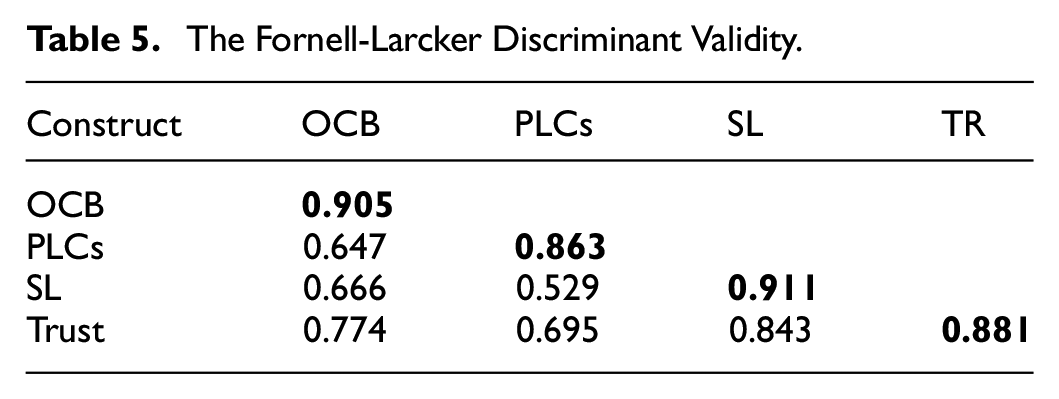
The correlation matrix obtained using the Fornell-Larcker approach is presented in Table 5. As suggested by Al-Fraihat et al. (2020), the AVE should exhibit a higher level of explanatory power for its corresponding construct compared to other constructs (The bold font in Table 5). In this study, the diagonal elements representing the same construct demonstrate larger values than the non-diagonal elements within each column.
The Fornell-Larcker Discriminant Validity.
The path coefficients representing the relationships between the structures in the model are illustrated in Figure 3.

The path coefficient of the model.
Results
The Pearson Correlation coefficient revealed a statistically significant positive relationship between SL and trust (p < .01), indicating that an increase in SL is associated with an enhancement in trust (See Table 6). Furthermore, SL demonstrates a significant association with PLCs (p < .01) and OCB (p < .01). Moreover, there existed a noteworthy positive correlation between trust and PLCs (p < .01), while the connection with OCB was even stronger (p < .01). Additionally, PLCs exhibited a significant positive correlation with OCB (p < .01). These findings established a statistically meaningful interconnection among the variables.
Pearson Correlations (N = 169).

Note: SD: Standard Deviation. *Indicates Significant (two-tailed).
p < .01.
The significance of the path coefficients was assessed using the Bootstrapping (5,000) algorithm of PLS-SEM, employing a 95% confidence interval. To support the hypothesis, statistical significance at a level of 5% requires a p-value < .05 and a t-value > 1.65 (Al-Fraihat et al., 2020). The results of this investigation are presented in Table 7.
Path Coefficients and Significance Levels (N = 169).

Note: Bootstrapping times = 5,000 (two-tailed).
The coefficient
Results of

The model’s predictive ability was assessed using Blindfolding in SmartPLS 4.0, and all obtained
The primary objective of evaluating model fit is to ascertain the degree to which the selected model accurately represents the fundamental principles of the underlying theory of Al-Fraihat et al. (2020). In PLS-SEM, three commonly employed indicators for assessing the quality of model fitting are Standardized Root Mean Square Residual (SRMR), Normed FIT Index (NFI), and Goodness of Fit (GoF). The SRMR is a reliable indicator for detecting potential errors in the model specification (Henseler et al., 2014). An optimal threshold for SRMR is ≤ 0.08, while a satisfactory threshold for NFI is ≥ 0.8. In this study, the SRMR value of 0.075 and the NFI value of 0.809 both meet these criteria, indicating a well-fitting model.
GoF encompasses both the precision of the measurement model and the overall performance of the structural model, thereby providing a holistic assessment (Henseler & Sarstedt, 2013). However, several scholars have proposed the incorporation of global GoF indicators in conjunction with the geometric mean of internally derived average commonality and average

According to the criteria established by Wetzels et al. (2009), a GoF value below 0.1 is classified as no fit, while values ranging from 0.1 to 0.25 are considered small, those between 0.25 and 0.36 fall under the category of medium, and any value exceeding 0.36 is regarded as having a large GoF classification. In this study, the calculated GoF value for the model was determined to be 0.685, indicating a significant level of GoF.
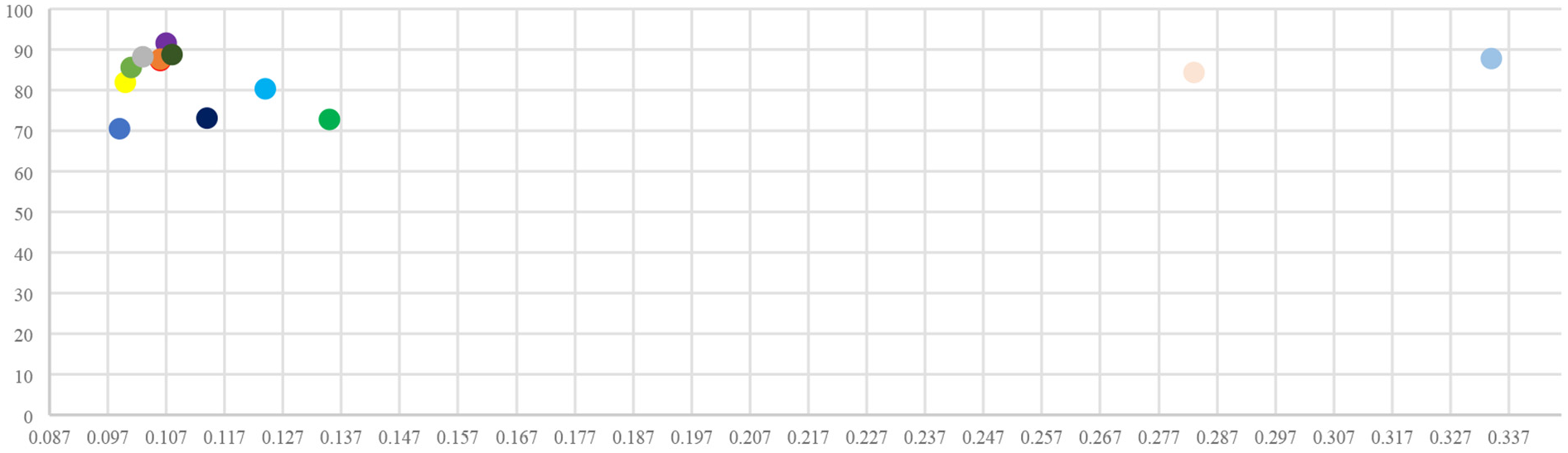
The IPMA tool plays a pivotal role in identifying potential areas for improvement (Hair et al., 2018), offering policymakers and managers a comprehensive roadmap to ensuring the continuous enhancement of quality (Ghasemy et al., 2020). It facilitates the efficient allocation of scarce resources to drive ongoing improvements in quality (Abalo et al., 2007). The IPMA graphically illustrates individual components on a map by plotting their predictive significance for non-standardized total effects, using estimates obtained from a PLS path model along the X-axis. This is contrasted with the mean rescaled score of latent variables along the Y-axis (Hair et al., 2017). Additionally, IPMA offers further practical insights by expounding on the findings of PLS-SEM (Teeluckdharry et al., 2024), which have been empirically validated in the field of education (Ting et al., 2020; Wook et al., 2019).
To determine the discriminant threshold for IPMA in this study, we adopted a data-driven methodology wherein each quadrant on the map was partitioned based on the mean scores of performance values and importance values (Teeluckdharry et al., 2024). The study adhered to the IPMA guidelines proposed by Hair et al. (2018) to ensure consistent measurement scales and scale directions for all indicators within the PLS path model. Furthermore, it ensured that positive estimated values were assigned to outer weights, thereby enhancing the credibility and reliability of the research findings. Figure 4 illustrates that SL and Trust demonstrate relatively high performance on OCB, suggesting that SL’s performance was likely achieved through an intermediary pathway. Therefore, IPMA of OCB was further performed (Figure 5), revealing the significant effectiveness and importance of Trust. Figure 6 illustrates the evaluation of the four quadrants of OCB.

IPMA of OCB (Constructs).
IPMA of OCB (Indicators).

The assessment of the four quadrants of OCB is conducted by IPMA.
The following provided a further analysis of Trust. Figure 7 illustrates that each dimension of SL exhibits a significantly high level of importance and performance to Trust, while each dimension of PLCs demonstrates a relatively high level of performance but low importance.

IPMA of trust.
Discussion
SL and OCB—Insights From H1 and H4
The integration of SL, Trust, and PLCs is well-executed but occasionally disjointed. H1 posits a positive correlation between SL and OCB; however, the findings indicated that this correlation was not statistically significant (p = .612), leading to the rejection of H1. While prior research established a link between SL and individual and organizational outcomes, such as OCB (Hunter et al., 2013), it is crucial to explore the mediating mechanisms underlying the effects of SL on diverse outcomes (Yang et al., 2017). Newman et al. (2017) emphasized that there remains an incomplete understanding regarding the individual-level mechanism driving the association between SL and OCB. The multitude of factors influencing teachers' OCB suggests that SL may be just one among several influential sources. Additionally, individual-level factors or organization-level factors could potentially exert a more substantial impact on OCB. The implementation and consequences of SL can vary across diverse educational contexts. In certain instances, SL behavior may already be perceived as customary, resulting in negligible motivating effects on teacher OCB. The forthcoming teacher training should prioritize the comprehensive enhancement of teachers' job satisfaction, school culture, and overall working atmosphere. It is crucial to consider these multifaceted aspects and foster a more supportive and stimulating work environment for educators through collaborative efforts across departments and strategic long-term planning. This will effectively encourage their engagement in positive behaviors that benefit the organization.
Additionally, the study investigated the influence of SL on OCB through PLCs (H4). Although the path coefficient for this relationship was statistically significant (β = .117, p = .017), it indicated a relatively small effect size, suggesting partial support for H4 and emphasizing the need to deepen our understanding of PLCs from a moral and obligation perspective, as noted by Liu and Yin (2020). Furthermore, existing literature on PLCs explores various leadership styles, such as principal leadership, ethical leadership, instructional leadership, transformational leadership, and distributed leadership (Liu & Yin, 2020; Seymour, 2017; Yin et al., 2019; Zheng et al., 2019).
The Mediating Effect of Trust—Insights from H5, H6, H8, and H9
Trust plays a pivotal role in fostering service leadership and PLCs to augment OCB. The results provide support for H5 and H6, indicating a significant positive impact of SL on trust (β = .660, p < .001), which subsequently leads to a substantial enhancement in OCB (β = .545, p < .001). These findings are consistent with the study conducted by Saleem et al. (2020). The leadership style of SL, grounded in robust moral principles and emphasizing the significance of individuals, places paramount importance on fulfilling the needs of followers (van Dierendonck, 2011). When followers perceive themselves as valued and receive adequate support, they are more inclined to reciprocate by actively engaging in behaviors that contribute to organizational betterment (OCB). H8 and H9 conducted further investigation into the mediating role of trust in the relationship between SL and OCB, as well as exploring the impact of SL and PLCs on trust. Both hypotheses received robust support (H8: β = .360, p < .001; H9: β = .183, p < .001), providing additional empirical evidence for the significant role of trust in facilitating the transition from SL to OCB behavior. Consistent with Linuesa-Langreo et al. (2018), this study suggests that by fostering trust and goodwill, SL can effectively enhance interpersonal relationships within a team.
The IPMA results also clearly indicated the significant role of Trust in teachers’ OCB. Although H1 was not established in this study, the results of IPMA (SL in the first quadrant) indicated that SL plays a significant role in enhancing trust through establishing PLCs. Consequently, it improves teachers’ OCB and provides valuable insights for targeted teacher training development. Therefore, it is crucial to consider other potential influencing factors to fully comprehend how teacher OCB is formed. Moreover, this study identified the dimensions of existing SL (Relationship, Empowerment, Assistance, Ethical Behavior, Skill Development, Attention to Individual Needs) that fall within the high performance and high importance quadrant and require sustained attention. Additionally, PLCs exhibit exemplary performance, and enhancing teacher training methods has emerged as a central focus for subsequent reforms.
Servant leaders firmly believe that through serving and supporting their followers, they can inspire team members to transcend self-interest and collectively strive toward achieving organizational objectives. Trust plays a pivotal role in the relationship between SL and OCB. These leaders exhibit unwavering trust in all employees within the organizational context, treating them with utmost respect and humility (Saleem et al., 2020). When managers demonstrate appreciation for employees’ accomplishments and acknowledge their value and contributions, employees will experience a sense of psychological safety and organizational belonging which is crucial for their overall mental well-being (Basit, 2019). In response to this respect and recognition, educators will attach greater importance to their affiliation with the organization, actively engage in meaningful social interactions, and exhibit a strong commitment to the advancement of the school (Liu & Yin, 2020).
The Mediating Effect of PLCs—Insights from H2, H3, H7, H10, and H11
The utilization of PLCs represents an effective training approach to enhance the promotion of teacher OCB. The results obtained from our rigorous verification process provide robust evidence supporting the direct positive impact of SL on leader-member exchanges as indicated by H2 (β = .529, p < .001), H3 (β = .221, p = .025), and H7 (β = .346, p < .001). Furthermore, the study reveals that these favorable interactions foster enhanced levels of trust among individuals while also promoting OCB (H3: β = .221, p = .025; H7: β = .346, p < .001). In addition, H10 was substantiated, suggesting an indirect influence of positive leader-member exchanges on OCB through their facilitation of trust development (β = .188, p = .001). Moreover, the empirical findings of H11 highlight how both constructive leader-member relationships and trust jointly serve as mediators in linking SL with OCB (β = .100, p = .002), underscoring their pivotal role in enabling a smooth transition from SL to OCB. Within the context of Chinese education, PLCs have been established through teaching and research activities, collaborative lesson planning, classroom observation, and demonstration lessons. These communities have become an integral component of teachers’ daily exchange of pedagogical experiences, which is widely recognized as a fundamental aspect of Chinese teachers’ professional competence (Yin & Zheng, 2018). PLCs are perceived as morally driven interpersonal phenomena that transcend formal roles and necessitate substantial time and effort investment (Liu & Yin, 2020). The presence of high-quality social relationships among stakeholders plays a crucial role in facilitating the successful implementation of PLCs (Yin et al., 2019).
The significance of establishing PLCs as a crucial avenue for teachers’ continuous professional development in teacher training and educational policy development is underscored by this discovery (To et al., 2023) while simultaneously emphasizing the need to cultivate and uphold trust within these communities. In future teacher training, education authorities and school leaders should actively promote the establishment of collaborative networks and professional communities (Fowler, 2022) to foster a supportive environment where teachers can exchange experiences, collectively address challenges, and progress together. Considering China’s educational context, the education administration must endorse and encourage the formation of PLCs centered on thematic teaching and research groups (Chen, 2020) to nurture a culture that fosters trust and transparent communication, thereby enhancing teachers’ professionalism and elevating education quality.
Examination of the Influence of Trust Dimensions
This study specifically examined two dimensions of trust, namely PT and MT, which exhibited distinct patterns of association (See Figure 8). The findings indicated that while SL did not significantly influence PT, it did have a substantial effect on MT (β = .890, p < .001). This underscores the pivotal role played by SL in enhancing teachers’ trust in management. Through genuine care for subordinates and prioritization of their interests, servant leaders motivate employees to transcend personal concerns and respond similarly. Opting to adopt a servant-leader approach is an intentional decision (van Dierendonck & Patterson, 2015). The results indicate that PLCs have a significant positive impact on fostering trust among colleagues, particularly in the context of PT (β = .662, p < .001). However, no statistically significant effect was observed on MT. Previous studies have demonstrated that trust in colleagues is positively associated with teachers’ professional engagement and reflects the quality of social capital within an organization (Yin et al., 2019). Therefore, it is crucial to further investigate the role of mutual trust in SL as it is considered a fundamental element of this leadership style (Saleem et al., 2020).
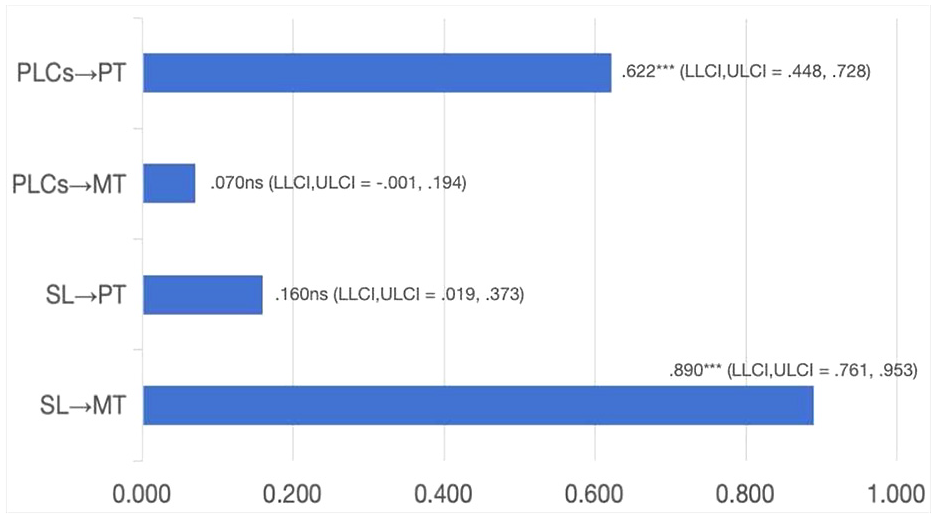
Diagram of trust dimension influences.
Conclusion
This study explored the interplay between SL, PLCs, and trust in driving Teacher OCB. The key findings suggest that SL indirectly influences OCB by enhancing trust, revealing a complex relationship between SL and OCB. Trust emerged as a critical mediator for the impact of both SL and PLCs on OCB, underscoring its significance in educational settings. While SL significantly affects trust among administrators, it has varying effects on trust among colleagues, highlighting the need for tailored strategies to cultivate different types of trust. On the other hand, PLCs effectively promote peer collaboration and trust but have limited influence on managerial trust.
This research provides insights into how SL and PLCs foster different aspects of trust and OCB, offering guidance for educational leaders to facilitate activities that build trust, and support PLCs. Educational leaders should prioritize the cultivation of an SL mindset, and adeptly establish versatile PLCs that encompass subject-specific cohorts, online platforms, and face-to-face interactions to enhance PT and MT and encourage teacher involvement for comprehensive educational development.
Limitations
The genera1lizability of this study is limited due to the homogeneity of its sample and its cross-sectional design, the sample is limited to exceptional teachers from J City of China, constituting a relatively small sample size, which hinders the establishment of causal relationships. Additionally, the educational culture in China places a greater emphasis on collective consciousness, potentially introducing biases into self-reported data that may be influenced by cultural and environmental factors. Although no significant direct correlation between SL and Teacher OCB was found in this research, consistent with some previous studies, other investigations have reported a significant association. These discrepancies might be attributed to variations in sample characteristics and measurement methodologies employed across different studies. Therefore, future investigations should consider these variables for a more comprehensive understanding and validation of SL’s impact on OCB, while employing longitudinal designs.
Footnotes

Ethical Considerations and informed consent statements
The questionnaire administered in the study explicitly emphasized the confidentiality of the information, and the participating teachers strictly adhered to the principle of voluntary withdrawal at any given time, ensuring a comprehensive comprehension of the provided information.
Author Contributions
Shanshan Cheng was responsible for overseeing the writing and collation of data in the article; Jirui Dong was responsible for compiling literature sources; Hui Sui had conducted revisions on the data section of the article; Peng Wang had provided English translation services for the article; Shu-Jing Wu had refined and revised the entire piece.
Funding
The author(s) disclosed receipt of the following financial support for the research, authorship, and/or publication of this article: This work was supported by a 2023 research project: “A Study on the Awareness and Improvement Approaches of Social Responsibility Practice among University Students in the Guangdong-Hong Kong-Macao Greater Bay Area” (Project No.: 2023GXJK147) by the Guangdong Provincial Department of Education, the People’s Republic of China.
Declaration of Conflicting Interests
The author(s) declared no potential conflicts of interest with respect to the research, authorship, and/or publication of this article.
Data Availability Statement
The datasets generated during and/or analyzed during the current study are available from the corresponding author on reasonable request