



Abstract
Tourism co-creation has attracted a great deal of academic interest in recent years due to its important role in promoting the image and economic development of destinations. The emergence of new technologies has significantly changed the relationship between tourists and destinations. The main objective of this article is to visualise the structure and trends of tourism co-creation research between 2008 and 2024. Using mapping techniques, our study shows the relevance of research related to Tourism Experiences and New Technologies and, to a lesser extent, Service Domain Logic (SDL) for the period 2008 to 2024. However, three new research themes have emerged since 2016: Loyalty and Satisfaction, Hospitality and Coronavirus and Sharing Economy. The findings contribute to a broad and diverse understanding of the concept of value co-creation in the tourism industry, which can provide important insights for destination marketing organisations (DMOs) and policy makers in formulating management strategies to enhance destination branding and competitiveness.
Introduction
Over the course of the last decade, we have witnessed a paradigm shift in the consumer realm due to technological advances (Tregua et al., 2020). This change has led to the development of a new theory in the field of marketing: co-creation. Value co-creation was first defined by Kambil et al. (1999): ‘Co-creation adds a new dynamic to the producer-customer relationship by involving customers directly in the production or distribution of value. In other words, customers can participate at virtually any stage of the value chain, p. 38’. Co-creation involves the active participation of consumers together with firms in the creation of value in the market (Gronroos, 1990; Zwass, 2010). Ramaswamy (2011) states that value co-creation is a concept that encompasses the mutual creation of value by different actors. According to the author, the market is a forum where customers are an integral part of the value creation process of firms. Therefore, value co-creation is the development of systems, products or services through collaboration between consumers, employees, managers and other power groups.
This process has intensified in recent decades, as new communication and information technologies have enabled people to be more informed and actively involved in the enterprise. Thus, co-creation takes place in a networked space where actors and companies are connected through online interactions (Neuhofer et al., 2012). However, the concept of co-creation has evolved over time to include the customer’s active relationship with other consumers, potential consumers and even the company’s employees (García Haro, 2018). This participation helps to discover the consumer’s needs, increase their satisfaction and loyalty towards the brand and, ultimately, improve the business’s results (H. Kim et al., 2018; D. Lee et al., 2024; S. Lee et al., 2024).
In the field of tourism, recent research has highlighted the new roles of the different stakeholders (tourism enterprises, tourists or local communities) in the joint creation of value in the provision of tourism services. (Cooper & Hall, 2016). Using the approach of Pine and Gilmore (1998) regarding the experience economy as a reference, Jensen and Prebensen (2015) indicate that the creation of value in a tourist product depends on the mental and physical participation of tourists, and not just the contribution of tourist operators and managers. The large participation of tourists is largely due to new information and communication technology (Heinonen et al., 2018; X. R. Li, 2014; Madi et al., 2024) through tourism blogs (Sigala & Gretzel, 2017), online platforms (Varkaris & Neuhofer, 2017) or social networks (Jayapal & Omar, 2018). Moreover, the recent crisis of the COVID-19 pandemic has increased the adoption of new technologies to avoid face-to-face physical interactions (Bagozzi et al., 2022; Foroudi et al., 2023). Zaman et al. (2024) highlight that hospitality companies and hotel guests have reshaped the interaction between service providers and travellers, particularly through the intrusion of virtual reality or the metaverse.
This study aims to contribute to the academic literature on how co-creation is addressed in tourism research using bibliometric techniques. Therefore, it provides a complete summary of the progress of the study topics from 2008 to 2024. This research shows the main performance indicators, collaborative networks, journals, countries, institutions, authors and articles. It must be noted that in the last decade, the number of articles based on bibliometric techniques has increased exponentially. Therefore, in the categories of Hospitality-Leisure-Sport-Tourism, the data provided by Web of Science (WoS) show a significant increase in the number of publications in terms of bibliometrics, with only one study in 2008 increasing to 275 in 2024, with a total of 1,292 articles. Nevertheless, there is a significant lack of bibliometric analysis within the framework of tourism co-creation. WoS and Scopus only allow the identification of two studies that have performed a bibliometric analysis regarding this topic, those corresponding to X. Liu et al. (2021) and Tregua et al. (2020).
However, these studies focus on content analysis and have gaps that this study aims to fill. Thus, this bibliometric review introduces co-citation as an analytical tool, which has allowed us to identify the theoretical foundations of tourism co-creation: the Service Dominant Logic (SDL), the Economics of Experience or the Consumer Behaviour Methods.
The main objective of this article is to analyse the structure and trends of tourism co-creation research between 2008 and 2024 using visualisation tools (VOSviewer). The search encompasses the aforementioned years, which coincide with the initial article to describe both concepts (Mossberg, 2008). From the collection of documents in WoS, VOSviewer has made it possible to visualise co-authorship networks, inter-university collaboration networks, co-citation reference networks and keyword co-occurrence networks. Feng et al. (2017) highlight the ability of VOSviewer to facilitate pragmatic data analysis through its robust graphical interface. This interface enables the creation of maps that visually represent the relationships between individual units of analysis (Donthu et al., 2021). These analyses make it possible to achieve the following intermediate research objectives:
(O1) Describe the state of research in tourism co-creation, identifying the most productive institutions and authors through co-authorship networks.
(O2) Identify the theoretical foundations on which the academic literature in tourism co-creation is based through co-citation analysis.
(O3) Identify current lines and future research opportunities in tourism co-creation through keyword co-occurrence analysis.
The contribution of the study is twofold. First, based on representative bibliographic data from the last 17 years, it provides results that allow a better understanding of the development of research on tourism co-creation. Second, the results identify current research topics, such as the sharing economy or hospitality and coronavirus, which can help future research and destination marketing organisations (DMOs).
Literature Review
The Concept of Co-creation of Value and Perspectives
The concept of co-creation was used first by Kambil et al. (1999) and Prahalad and Ramaswamy (2000) as a new management tool for business. Notwithstanding, some authors had already shown the need to modify the perspective of creating value in business through the active participation of the customer (Gronroos, 1990; Gummesson, 1987; Pine & Gilmore, 1998). According to Prahalad and Ramaswamy (2000), the value creation of a business is created by means of the collaboration and interaction between multiple stakeholders (companies, employees, consumers or other companies). This new tool of business management suggests that consumers are valuable co-creators during the process of purchasing and consuming services (Vargo & Lusch, 2016). This co-creation provides value and essential information to the company, allowing it to significantly improve its results (Blanco-Moreno et al., 2023; Grissemann & Stokburger-Sauer, 2012). After the original concept of co-creation, numerous studies have developed the concept, which has led to different approaches. Notwithstanding, there is consensus among academics that co-creation involves a new entrepreneurial view towards the customer. Among the approaches that we may find in the academic literature, the following are highlighted: co-creation through co-design (Lusch et al., 2007; Yen et al., 2023); co-production (Rihova & Alexander, 2024; Shaw et al., 2011); customer commitment (Brodie et al., 2011; Ng et al., 2024) or co-prosumption (Bouncken & Tiberius, 2023; S. Xie et al., 2008).
Co-design represents the collective creativity of the business together with its customers in the design process of the product or service (D. Lee et al., 2024; S. Lee et al., 2024; Roser et al., 2013; Visser et al., 2005) This collaboration allows for the transformation of the latent needs of customers into viable product ideas (Trischler et al., 2018). The academic literature shows that co-design benefits the results of business innovation when this is applied in the initial phase of the design process of a service (Hollebeek et al., 2022). Among others, the design of mobile apps (Kapinga et al., 2018), of healthcare services (Engström et al., 2022), of tourist experiences (Fragidis et al., 2022) or entrepreneurial management (Kohtamäki et al., 2020; Yu & Sangiorgi, 2018) should be mentioned.
Co-production involves the physical and mental participation of consumers in the production process, and in the supply process of goods and services (Ertimur & Venkatesh, 2010; Shaw et al., 2011; Twumasi Ankrah et al., 2024). This approach regularly occurs in business administration (Lember et al., 2020; Osborne & Strokosch, 2013), as it allows for the building of long-term relationships between companies and consumers (Bovaird, 2007; Osborne et al., 2021). Within the academic literature, we find relevant studies that display how co-production improves the economic results of the business and brings psycho-social advantages to the consumer (Ertimur & Venkatesh, 2010; Schneider & Bowen, 1995). Thus, Wu et al. (2022) display evidence of how co-production improves consumer satisfaction in banking services; for their part, Harrison and Waite (2015) analyse how co-production may improve information received from the consumer.
The customer’s commitment to the brand implies that the customer connects with it from a cognitive, emotional and behaviour dimension as a result of their interaction with the business (Brodie et al., 2011; Finsterwalder, 2018). This commitment, together with the joint value creation for the business, leads to an improvement in loyalty, satisfaction and the customer’s intention to purchase (Hsieh & Chang, 2016).
Co-prosumption, a concept formulated by Toffler (1980), implies that people create goods, services or experiences for their own use and satisfaction. According to Zeithaml et al. (1985), co-prosumption is present in those products in which production and consumption are found to be connected. For their part, Seran and Izvercian (2014) indicate that co-prosumption requires a level of commitment and creativity from the consumer. The existing studies show that co-prosumption brings a reconfiguration of the role of the consumer. Fabila-Rodríguez et al. (2020) analyses the role of prosumer in biodiesel consumers who, at the same time, actively participate in the production and distribution processes of the fuel. These authors show evidence of how prosumption allows the creation of value for the consumers involved, producing an increase in their affective and participatory commitment with the business, and, at the same time, reinforcing the commitment with sustainable local development. In turn, the study by Bouncken and Tiberius (2021) shows how co-working spaces among workers and consumers improves the competition and atmosphere of the business.
Tourism Co-creation
Co-creation of value in the tourist realm is a study area that is growing. The academic literature recognises its importance in strategic terms to improve the competitive performance of companies and tourist destinations (Buonincontri et al., 2017; Rachão et al., 2023). The tourism sector is increasingly focussing on customer experience, which involves closer interaction between the business and the consumers during each stage of their relationship (X. Liu et al., 2021). This interaction is most evident with the implementation of social networks and new information and communication technology, which enable co-creation between different parties (Mohammadi et al., 2020; Yin et al., 2023). Authors such as Pine and Gilmore (1998) highlight the importance of creating memorable experiences associated with the consumption of services and products. However, the creation of experiences should not be one-directional, which means that the experiences are created by the business for the consumer, but that they should be co-created jointly, with the customer being linked to the fact of the experience (Neuhofer et al., 2012). In summary, applying the suggestions of Grönroos and Voima (2013) to the realm of tourism, all the actors of the system should participate jointly in the creation of tourist experiences (Tussyadiah & Zach, 2013).
According to Campos et al. (2016), we may find two approaches to tourism co-creation in the academic literature. First, tourism co-creation is deemed to be an interactive process between the tourist and the other actors. In this process, the tourist has an active role in the creation of tourist experiences (Bertella, 2014; Grissemann & Stokburger-Sauer, 2012; Kraff & Jernsand, 2024). The interactions with tourism employees, guides, relatives, friends, other tourists or the local population (Chathoth et al., 2014; Prebensen et al., 2013a) create value for the parties involved (Potts et al., 2008; Ramaswamy, 2011), and place the tourist in the centre of the economic exchange (Vargo & Lusch, 2004). Using this approach, co-creation may occur before, during or after the trip (Rihova et al., 2015; Zaman et al., 2024), and the new information and communication technology plays a fundamental role in allowing a dynamic space for the co-creation of experiences (Tung & Ritchie, 2011). In the academic literature, we find various studies under the co-creation approach as an interactive process (Almeida-García et al., 2020; Buonincontri et al., 2017; H. Jiang et al., 2024; Massari et al., 2024; Obembe et al., 2021). The study by Buonincontri et al. (2017) analyses the interaction between tourists who visited Naples and tourism businesses and shows evidence of the positive effect of the co-creative experience, an effect that also in leads to satisfaction and affects the level of the tourists’ spending. A more recent study, corresponding to Massari et al. (2024), analyses the role of new information and communication technology in the museums of Taranto (Italy), and shows how the interactions between the museum and its visitors improve the tourist experiences and the sustainable development of the destination.
Second, co-creation focuses on the specific experience that the tourist has in situ (Prebensen & Foss, 2011; Zhao et al., 2024). The value that a tourist assigns to their trip is conditioned on the experiences lived, these being fundamental for satisfaction and future behaviour (Prebensen et al., 2013a). Using this approach, for the experience to be positive, higher levels of co-creation are necessary; that is to say, active participation and interaction with the companies and other tourists is required from the tourist (Blomstervik et al., 2021; Sugathan & Ranjan, 2019). In the academic literature, we find various studies that analyse the active role of the tourist during the trip experience, and how this enables allows value creation (Blomstervik et al., 2021; Prebensen et al., 2013a; Rachão et al., 2019). The study by Rachão et al. (2019) analyses tourists’ perceptions of their gastronomic and oenological experiences in the north of Portugal derived from their interactions with their surroundings, other tourists and the local population. These authors show evidence of how co-creation positively influences creativity, enjoyment, memorable experiences, social interaction, novelty, social sustainability and environmental awareness. Accordingly, Blomstervik et al. (2021) examine how co-creation in the tourist experiences of visitors to the Zoomarine park in the Portuguese Algarve region influences the attitude of loyalty. To do this, the authors measured tourist co-creation through physical staging (information provided by the tourist business) and human interaction (interaction with workers, other tourists and the local population). The results show that tourists with greater co-creative experience usually display greater intention to return to the marine park in the future, and to recommend their visit to friends or family. In this sense, this study provides a comprehensive overview of co-creation tourism based on empirical evidence through bibliometric data analysis. The network mapping would provide strong justifications for influential authors, network structure and a basis for future work according to the three analyses (co-authorship, co-citation and co-occurrence of keywords).
Methodology
Bibliometrics entails the statistical analysis of academic literature, objectively examining a particular area of knowledge (Aria & Cuccurullo, 2017; Carvajal-Trujillo et al., 2024; Pröbstl-Haider et al., 2023). Its indicators are of special use in identifying key elements of the knowledge of a scientific field, allowing an assessment of its growth, maturity and its future lines of research (Agramunt et al., 2020). Previous studies have adopted bibliometric analysis with the aim of analysing knowledge regarding tourism: among others, creative tourism (Galvagno & Giaccone, 2019), brand image (Oliva et al., 2022), tourism innovation (So et al., 2022), shared accommodation (La et al., 2021), management (Abdollahi et al., 2023), heritage tourism (Orts-Cardador et al., 2024), eco-tourism (Khanra et al., 2021), consumer behaviour (A. H. Alsharif et al., 2023a), neuromarketing technology (A. Alsharif et al., 2023) or neurotourism (A. H. Alsharif et al., 2023b). Despite the academic relevance of co-creation, there are only two studies that, by applying bibliometrics, analyse the current status and progress of knowledge in the tourist realm. These are the studies by Tregua et al. (2020) and X. Liu et al. (2021). Nevertheless, these research focussed its study on content analysis, omitting relevant analysis in the case of co-authorship or co-citation, which appears in other relevant bibliometric analyses (Caviggioli & Ughetto, 2019; Galvagno & Giaccone, 2019; Khanra et al., 2021; Ogretmenoglu et al., 2022).
This study consists of descriptive analysis, based on co-authorships, co-citations, the main journals and academic institutions; and content analysis using the main keywords words. In doing so, VOSviewer has been used, software that allows the building and visualisation of science networks and the analysis of its evolution over time (Van Eck & Waltman, 2022). According to the recommendations of Khanra et al. (2020), the procedure applied is divided into three sequential phases: planning the examination of data; performing the examination; and presenting the results (Figure 1). Identifying the right keywords is a critical stage in the selection of articles (Paul & Criado, 2020). The literature presents two alternatives for the selection of keywords: using a large number of keywords (Leung et al., 2017); or a more focussed search on very few words (Leung et al., 2013; Zeng & Gerritsen, 2014). In our case, we use the second alternative, following the recommendations of Molina-Collado et al. (2022), because it has a better direct relationship with the exact research topic. Therefore, we choose the papers with more academic relevance to select the criteria, following Pelit and Katircioglu (2022). Additionally, criteria for the inclusion and exclusion of data have been applied (Agramunt et al., 2020; Y. Jiang et al., 2019; Khanra et al., 2020, 2021; Leung et al., 2017; Terán-Yépez et al., 2020).
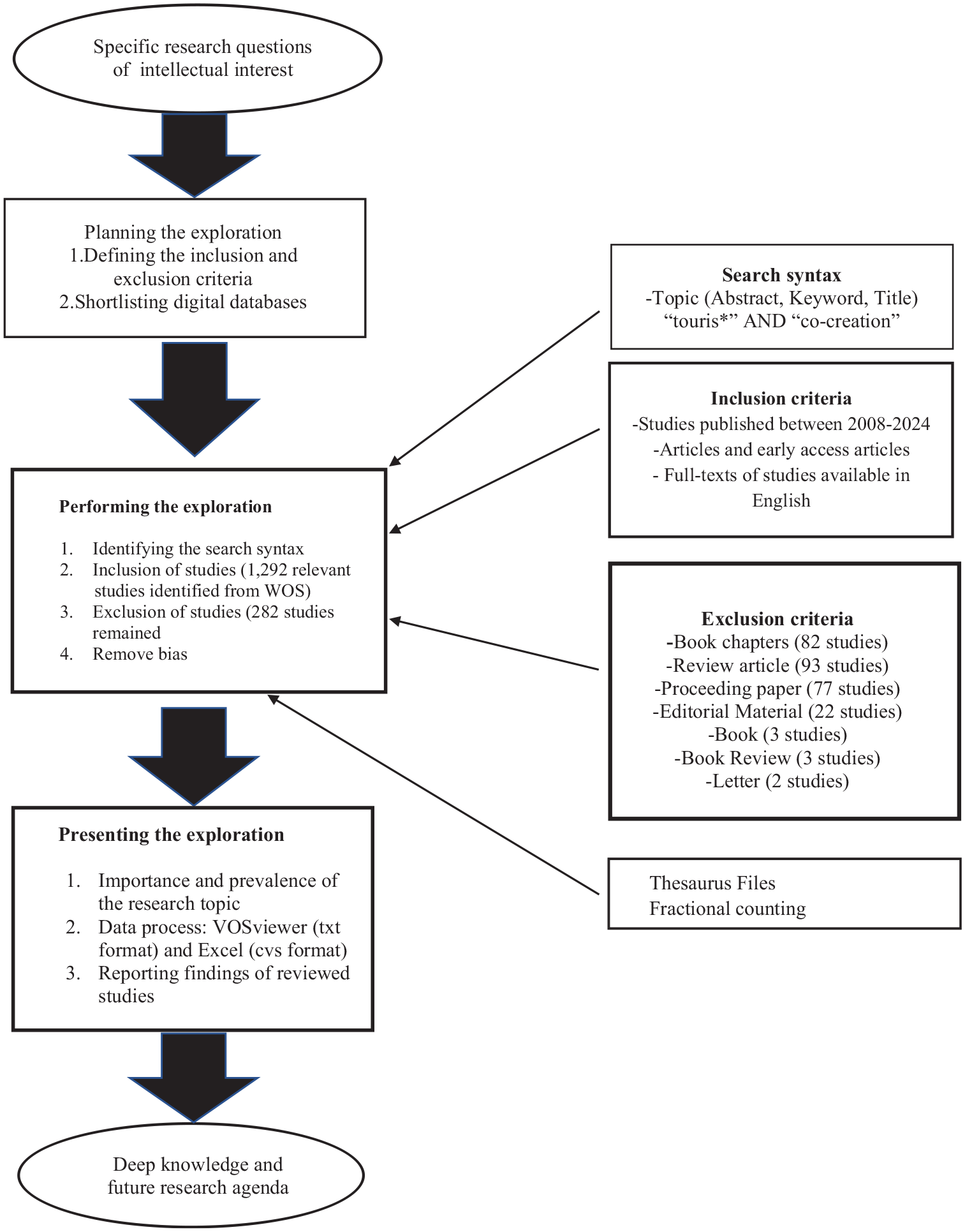
Protocol for systematic literature review.
Planning the Examination
Web of Science (Clarivate Analytics), Scopus (Elsevier) and Google Scholar (Microsoft), are the most commonly used information sources for the purpose of performing bibliometric analysis (Agramunt et al., 2020). These databases are characterised by providing sufficient literary coverage in the field of Social Sciences (Harzing & Alakangas, 2016; Martín-Martín et al., 2018). However, in this study, the Google Scholar database is removed due to it lacking the required transparency, presenting problems with the data quality, and the difficulty in using it in a large-scale analysis (Martín-Martín et al., 2018; Waltman & Noyons, 2018). The use of Web of Science (WoS) and Scopus allows access to the articles published by the main publishers: Elsevier, Emerald, Springer, MDPI, Wiley, Taylor and Francis, among others (De Oliveira et al., 2019). It also includes studies published in the most prestigious and rigorous scientific journals and contains more than 1 billion citation links (Donthu et al., 2021; Zulfiqar et al., 2024). WoS provides researchers with access to studies from different fields, providing information on results, dissemination, collaboration and impact (Johnson & Samakovlis, 2019). In addition, the database provides access to many sub-databases (Science Citation Index Expanded; Social Sciences Citation Index; Conference Proceedings Citation Index – Science; or Emerging Sources Citation Index, among others), thus including a wide representation of published articles (Garrigos-Simon et al., 2018). For these reasons, it is the main database used by tourism scholars (Ülker et al., 2023), which is evident in previous tourism reviews (Benckendorff, 2008; Çıkı, 2022; Ercan, 2023; Garrigos-Simon et al., 2018; J. Liu et al., 2024; Zulfiqar et al., 2024). Additionally, the examination of data was exclusively planned through WoS as this database contains a greater number of articles and the majority of these are present in Scopus (Zhu & Liu, 2020). Therefore, we compared the Wos and Scopus databases. In this sense, we do not choose Scopus because this database contains only 443 articles, of which 385 appear in Wos. In addition, the choice of more than one database makes the integration of information more complex, since they present different structures. To this complexity, we must also add the limitations of the tools currently available to compile information (De Oliveira et al., 2019). In this sense, the researcher can duplicate the information which appear in WOS and Scopus (Atsız et al., 2022). Finally, WoS helps to minimise duplication by providing cleaner data than Scopus (Strozzi et al., 2017).
Performing the Examination
In terms of the examination technique, unlike the previous existing studies (X. Liu et al., 2021; Tregua et al., 2020), the terms ‘co-creation’ and ‘tourist*’ were combined – with the result of joining ‘tourism’ and ‘tourist’–, which has allowed us to obtain a greater number of scientific publications. The search addresses the years between 2008 and 2024, coinciding with the first article that detailed both concepts (Mossberg, 2008). Following the recommendations of Terán-Yépez et al. (2020), the examination is restricted to publications in scientific journals, including early access articles. The search for the terms that are the subject of this study was applied to the title, abstract, author, keywords and keywords plus of the documents. With the aim of removing incorrect data, joining abbreviated terms with complete ones or synonyms the thesaurus files were applied (Van Eck & Waltman, 2022). Similarly, with the aim of reducing the influence of those publications that have a high number of authors, keywords, institutions or countries, fractional counting of bibliometric links was applied (Khanra et al., 2021). On the basis of these ideas, the examination in WoS was performed in the month of January 2025, obtaining a total of 1,292 articles.
Presentation of the Examination
The sample of this study is composed of 1,292 articles, resulting from the contribution of 2,906 authors affiliated to 1,355 academic institutions spread across 89 countries (Table 1). As has already been mentioned, the first study on WoS was published in 2008, which indicates that tourism co-creation is a relatively new topic. Even though the first theoretical studies on co-creation are located at the end of the 90s (Bettencourt, 1997; Kambil et al., 1999), the empirical studies applied began with the study by Prahalad and Ramaswamy (2000, 2004) and Vargo and Lusch (2004).
Summary of Data.

Source. Own elaboration with Web of Science data (2024).
Table 2 shows, among others, the evolution over time of the number of articles and citations by year of the topic that is the subject of this study (tourism co-creation). Its content reveals that the number of articles increases exponentially from 2016, a year in which the main scientific networks emerge. The growing scientific interest in tourism co-creation is explained by various factors, among those which can be highlighted is the increasing influence of technology and social networks in the tourist realm, and the changes in the consumer-business relationships (Fang et al., 2024; Grissemann & Stokburger-Sauer, 2012; M. J. Kim et al., 2020; Neuhofer et al., 2014). Even though the number of articles published before 2016 is somewhat lower, the average of citations per article is rather high, which shows the academic interest in the topic, to which the fact that, in general, the older articles usually have a greater number of citations (González-Betancor & Dorta-González, 2015).
Main Characteristics of the Data Used.

Source. Own elaboration with Web of Science data (2024).
Note. A = total number of articles published per year; C = number of article citations per year; C/A = average citation per article; AU = number of authors per year; AU/A = average authors per article; JA = number of journals that published at least one article in this year; COA = number of countries that published at least one article in this year; IA = institutions that published at least one article in this year.
Figure 2 shows the categories into which WoS classifies scientific production, the most relevant being ‘Hospitality, Leisure Sport and Tourism’ (44%), ‘Management’ (17%) and ‘Business’ (10%). In summary, they cover more than two-thirds of the studies published. Even so, the greater environmental awareness of travellers and the residents of tourist zones has brought with it the demand for an increasingly sustainable tourism, which translates to a growing relevance in other categories: ‘Environmental Studies’ (7%), ‘Green and Sustainable Science’ (5%) and ‘Environmental Science’ (5%).

Subject areas that stand out on co-creation and tourism research.
Results
Descriptive Analysis
The descriptive analysis focuses on two essential matters: identifying the scientific author networks that have published jointly on tourism co-creation and discovering the theoretical basis of tourism co-creation through the co-citation networks.
Co-Authorship Networks
Table 3 shows the main characteristics of the 10 most productive authors. Even though all of the authors have a high number of citations, it is necessary to indicate that the number of citations alone is not a valid indicator for assessing solidity, originality or the scientific value of the documents (Aksnes et al., 2019). To do so, the h-index has been introduced as a complementary indicator, which allows for the measurement of the greater or lesser success in the professional career of the authors (Díaz, 2014; Hirsch, 2005). Accordingly, five of the authors have a successful scientific career (h-index > 20). We add two other relevant indicators: Documents in Top Citation Percentiles, via Scopus, which indicates the percentage of documents in the top 25% of most cited documents worldwide; and Documents in Top Journals, via Scopus, which indicates the percentage of documents in the top 25% of journals. On an institutional level, it is observed that tourism co-creation is an academic topic with international relevance, with European and North American universities standing out. Therefore, the authors D. Buhalis of Bournemouth University (United Kingdom), E. Sthapit of Haaga-Helia University of Applied Sciences (Finland), P. Bjork of the Hanken School of Economics (Finland) and B. Neuhofer of Salzburg University of Applied Sciences (Austria) stand out due to the number of articles published and the number of citations received.
Most Productive Authors.
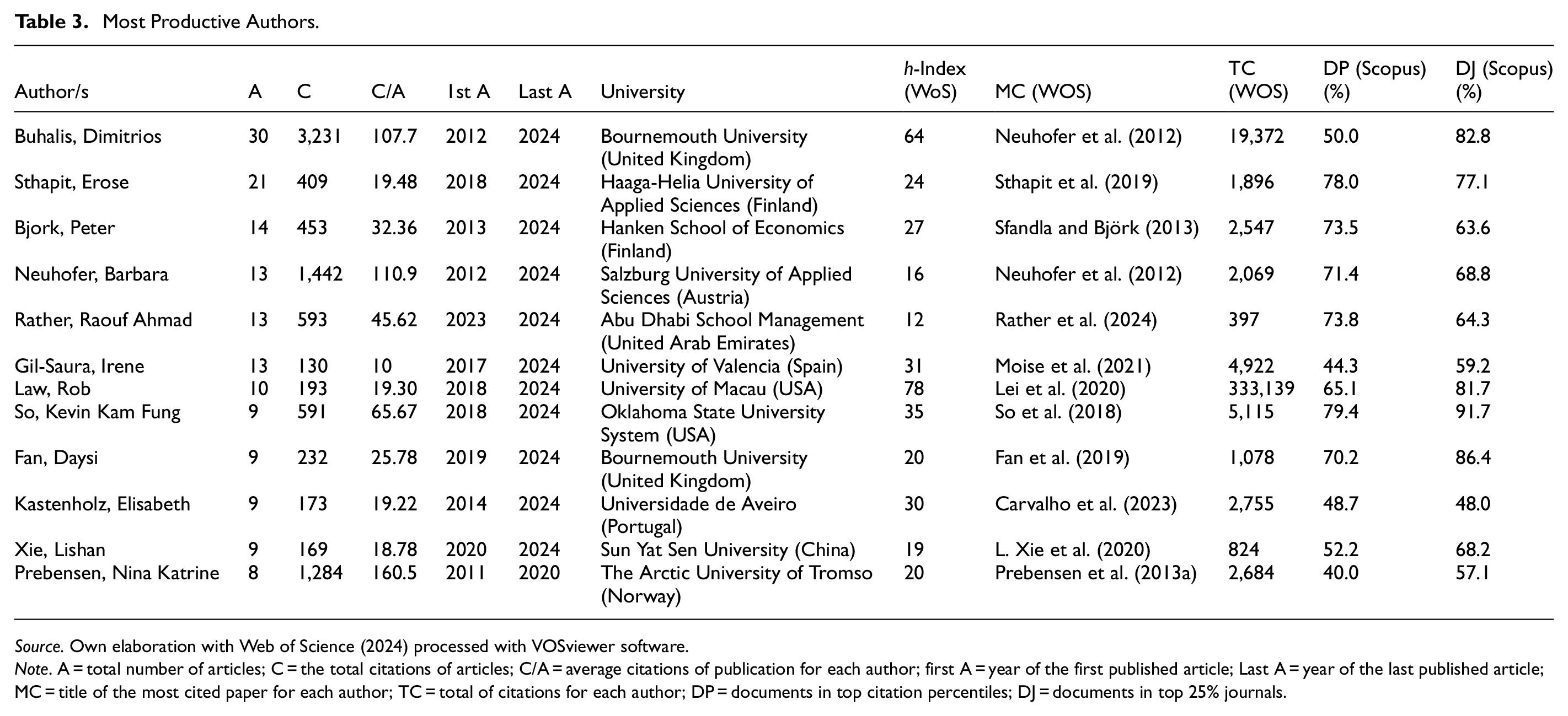
Source. Own elaboration with Web of Science (2024) processed with VOSviewer software.
Note. A = total number of articles; C = the total citations of articles; C/A = average citations of publication for each author; first A = year of the first published article; Last A = year of the last published article; MC = title of the most cited paper for each author; TC = total of citations for each author; DP = documents in top citation percentiles; DJ = documents in top 25% journals.
Table 4 shows the 10 most relevant articles regarding tourism co-creation. With the purpose of visualising their greater or lesser scientific impact, along with the number of citations, the citation-link is included – this allows the assessment of the number of relationships existing among the documents that form part of the database subject to study from the number of citations (Serrano-Leyva et al., 2021). Finally, we add the category normalised index (CNCI), via Web of Science, which is the ratio of the actual number of times a document is cited to the expected number of times for a paper within the same category and publication year. If the ratio is greater than 1, the citation performance of the document is above average. The most cited article is ‘Exploring consumer behaviour in virtual reality tourism using an extended stimulus-organism-response model’ by M. J. Kim et al. (2020). The authors analyse virtual reality as a tool to promote tourist destinations. The findings of the study show that the more realistic the virtual reality visualisation of the destination is, and the more it facilitates an emotional and hedonic connection with the destination and allows virtual interaction with other potential tourists, the more willing potential tourists are to visit the destination.
Top 10 Most Cited Papers.

Source. Own elaboration with Web of Science (2024) processed with VOSviewer software.
Note: C = number of article citations; CNCI = Category Normalised (CNCI) index.
The study by authors Juvan and Dolnicar (2014), entitled ‘The attitude-behaviour gap in sustainable tourism’, is the second most cited article. This study provides evidence that tourists are generally environmentally friendly in their daily lives, but during their holidays they adopt behaviours that have a negative impact on the environment. Among the implications for tourism management, the authors recommend the use of co-creation as a tool to improve tourists’ environmental behaviour. For example, hotels could provide their customers with information on the importance of environmental protection and on negative environmental attitudes. The third most cited article is ‘Customer Co-creation of Travel Services: The Role of Business Support and Customer Satisfaction with the Cocreation Performance’ by Grissemann and Stokburger-Sauer (2012). These authors analyse the role of travel agencies as a platform for co-creation among tourists. The authors show that a greater relationship and link between travel agencies and their customers leads to more positive one in terms of satisfaction and loyalty, and with that, an increase in their spending on travel.
The analysis of co-authorship networks for the joint period (2008–2024) allows the identification of five networks for scientific collaboration, three of an international and inter-institutional nature and two of a national and intra-institutional nature (Figure 3). The nature of these collaborations is purely academic, with authors working together to produce articles. According to Khanra et al. (2021), they have only considered authors that have published five or more papers as having a link strength ≥ 2.

Co-authorship networks 2008 to 2024.
The first network (green colour) emerges in the year 2012 with the researchers D. Buhalis of the University of Bournemouth (UK) and B. Neuhofer of Salzburg University Applied Science (Austria), to which D. X. F. Fan, of the University of Bournemouth (UK) is added in 2019. This network is characterised by being the oldest network, it is still active and is led by the most productive and cited author (Table 3). Similarly, it is one of the networks with greatest academic impact (428 citations and 61 in citation rate). Among the most relevant articles, ‘Conceptualising Technology-enhanced Destination Experiences’ and ‘A Typology of Technology-enhanced Tourism Experiences’ are highlighted. In both articles, the authors analyse the importance of technology and co-creation as management tools between providers and consumers for the development of improved tourist experience and they present a matrix and a typographic hierarchy of experiences (Neuhofer et al., 2012, 2014).
The second network (purple colour), which appears in 2015, is of a national and intra-institutional nature, and is formed by the researchers F. Sorensen and J. F. Jens of the University of Roskilde (Denmark). It was active until the year 2020. It is a scientific network with medium impact (151 citations and 30 in citation rate), with the paper with the most impact being ‘Value Creation and Knowledge Development in Tourism Experience Encounters’. In this study, the authors analyse the creation of experiences, through the interactivity between employees and customers in a hotel; it enables the creation of joint value and improves the knowledge of the business, which leads to greater profits in the future (Sørensen & Jensen, 2015).
The third network (red colour), which is of an international and inter-institutional nature, emerged in 2016 and was active until 2021. This network is characterised by having the largest number of authors, initially emerging with the researchers N. K. Prebensen (The Arctic University of Tromso, Noruega) and H. L. Kim (University of Nevada, USA), adding L. Shulga (University of Hawaii Manoa, USA) and J. A. Busser, (Universidad de Nevada, USA) in 2018. Another characteristic is its high academic impact (525 citations and 131 in the citation rate), with the most relevant paper being ‘The Effect of Co-creation Experience on Outcome Variable’. The results of this study reveal the need for the tourist sector to implement platforms that favour the joint creation of tourist experiences, as the greater involvement of tourists in the planning of trips leads to a greater commitment to the service provider (Mathis et al., 2016).
The fourth network (blue colour) is the network with the greatest scientific production (10 papers). Given its recent creation date (2018), its academic impact is still low (132 citations and 13 in citation rate). This network remains active and is formed by the researchers P. Bjork (Hanken School of Economic, Finland), E. Sthapit (Haaga-Helia University of Applied Sciences, Finland) and D. Coudounaris (Aalborg University, Denmark). Its most relevant article (Sthapit et al., 2019) shows evidence of how international tourists are more prone to co-create, as when they taste the food in a local restaurant they have better gastronomic experiences, and that co-creation is a good predictor of the memory of experiences.
The last network (yellow colour), also of a national and intra-institutional nature, is formed by the researchers P. Iglesias-Sánchez and C. Jambrino-Maldonado (Málaga University, Spain), and is characterised by its short existence and low academic impact (60 citations and 12 in citation rate). Its most relevant article (Iglesias-Sánchez et al., 2020) demonstrates the potential of Instagram as a tool to create and promote the image of a tourist destination. The results show that the content management of Instagram users provides a better promotion of the brand to create greater confidence, and as such, greater expectations of the destination, than publications by tourist managers.
Analysis by academic institutions (Table 5) shows that among the top 12 in terms of the number of publications, there is a representation of universities from five continents: five European, three Asian, two American, one African and another one from Oceania. It must be highlighted that the number of articles published is high, with an average of 17 articles per institution (a maximum of 35 and a minimum of 11), with the greatest academic impact corresponding to Bournemouth University (UK), the University of Central Florida (USA) and the University of Queensland (Australia). We use the Scimago Journal Rank (SJR) because Web of Science does not provide a ranking of universities, and moreover, SRJ stands out for its ability to present quantitative and qualitative indicators of scientific production (Jeremić et al., 2013).
The Most Productive Institutions.

Source. Own elaboration with Web of Science (2024) processed with VOSviewer software.
Note. A = total number of articles; C = number of article citations; First A = year of the first published article; Last A = year of the last published article; MCP = most cited paper; Ranking Scimago is based in Universities.
Figure 4 shows the connection between the academic institutions that have published at least 10 documents. Addressing the strength and number of links (Terán-Yépez et al., 2020), the green network is characterised as being the most influential. It is an international academic network, led by Bournemouth University (UK), and with relevant connections with the American (yellow colour) and Chinese (blue colour) networks. The USA network, led by the University of Central Florida, is the second most academically influential network; in addition to the aforementioned connection with the green network, it has links with the Chinese and red networks. This last network (red colour) is mainly formed by European institutions, even though it is the most numerous, it has had the least academic relevance until now.

Universities ‘collaboration networks 2008 to 2024’.
Co-Citation Analysis
The VOSviewer software allows us to perform an analysis of co-citations, enabling the identification of the theoretical bases of the topic that has been studied over time. The analysis of co-citations provides papers that form, to date, the scientific structure of tourism co-creation. In our analysis, papers cited at least 70 times have been considered, resulting in 23 co-cited articles and three different clusters (Figure 5).
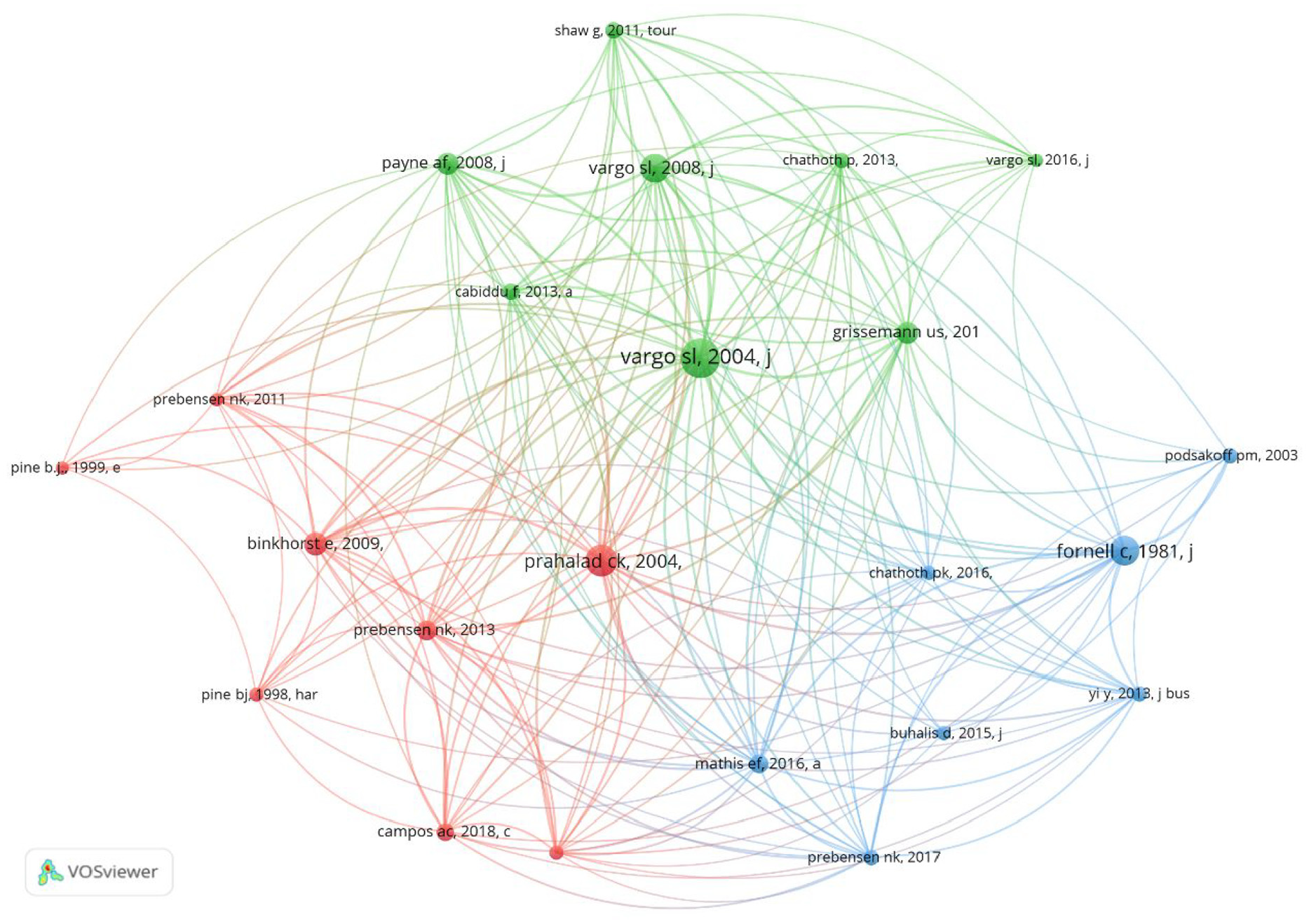
Co-citation references 2008 to 2024.
The green cluster is identified with the Service Dominant Logic (SDL) approach of co-creation, with the papers ‘Evolving to a New Dominant Logic for Marketing’ (Vargo & Lusch, 2004) and ‘Service Dominant Logic: Continuing the Evolution’ (Vargo & Lusch, 2008) being those with the greatest academic impact. The SDL approach involves a reorientation of marketing upon considering that the creation of value in the business is the result of the interaction among different stakeholders (customers, employees or members), creating new knowledge and skills. Tourism co-creation implies that the tourists are the nucleus of value creation, assuming new roles as collaborators in their service experiences. Shaw et al. (2011) analyse how co-creation in the hotel industry allows the improvement of the customer–business relationship through interaction with employees or Information and Communication Technologies (ICTs).
The red cluster is identified with the Experience Economy, with ‘Co-Creation Experiences: The Next Practice in Value Creation’ (Prahalad & Ramaswamy, 2004), this being the paper with the greatest academic impact. These authors were the first to suggest a paradigm shift in the consumer and not in the business within co-creation, and in the need to improve customer interaction and satisfaction through ICTs and the creation of personalised experiences. This new approach has been applied to the realm of tourism, thus Prebensen et al. (2013a) analyse the active participation of tourists who have a positive outcome in tourism experience and overall satisfaction.
Finally, the blue cluster is identified with Consumer Behaviour Methods, with ‘Evaluating Structural Equation Models with Unobservable Variables and Measurement Error’ (Fornell & Larcker, 1981) being the most academically relevant paper. These authors were the pioneers in showing evidence regarding the errors committed by researchers when constructing marketing models by applying structural equations. Similarly, Podsakoff et al. (2003) indicate the existing bias when researching consumer behaviour – for example, the selection of items, the length of questions and the survey or choosing the sample. These authors make recommendations regarding the appropriate procedural resources and statistics in terms of the types of research areas
Content Analysis
The keywords of the documents provide useful information regarding their main content, and they allow us to identify the main topics of research and future lines of study (Callon et al., 1991; Z. Liu et al., 2015). According to Z. Liu et al. (2015), the content analysis is applied through the ‘author keywords’ provided by WoS. The greater or lesser academic relevance of the keywords are analysed taking the number of occurrences, total link strength and strength of links to other keywords as reference.
Keywords Co-occurrence Analysis
The number of articles with the topic axis of co-creation and tourism has grown notably since 2016 (Table 2), displaying a close link with the key concepts: ‘co-creation’, ‘value co-creation’ and ‘tourism’ (Table 6). The cluster analysis of Figure 6 shows five groups of key heterogeneous words. Among them, the red cluster stands out; its most representative node is the word ‘co-creation’, and is linked in meaning to the nodes ‘tourism experience’, ‘tourism’ and ‘service dominant logic’ (link strength > 13). Within this cluster, the node ‘destination management organisations’ (link strength = 5) appears peripherally. The second cluster in importance is the purple cluster, with its most important node being the words ‘value co-creation’, displaying a greater strength in the link with the ‘co-creation’ and ‘service dominant logic’ (link strength > 12) nodes. Following this is the blue cluster, with its most relevant node being the word ‘loyalty’, linking it to a greater strength in ‘co-creation’ and ‘satisfaction’ (link strength = 10) nodes. The fourth cluster in importance is the yellow cluster, which has the word ‘hospitality’ as its most important node and this is significantly related to the ‘co-creation’ and ‘tourism’ (link strength = 5) nodes. Finally, we find the green cluster, with the word ‘Airbnb’ being the most relevant node and it stands out due to its link with the ‘sharing economy’ and ‘value co-creation’ (link strength = 5) nodes.
Top 20 Keywords from Co-word Analysis.

Source. own elaboration with Web of Science (2024) processed with VOSviewer software.
Note. C = occurrences; TLS = total link strength.
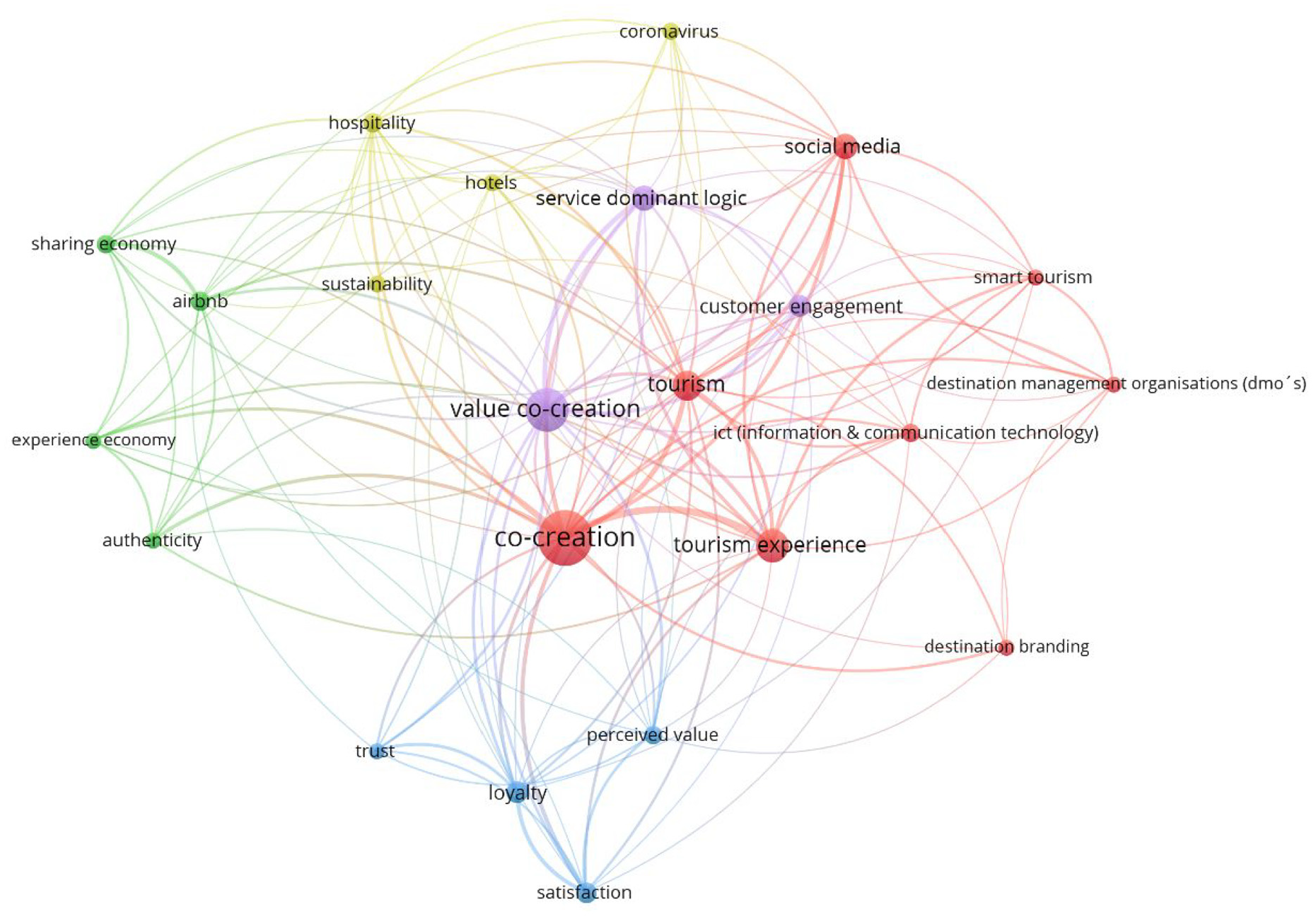
Keywords network 2008 to 2024.
In summary, the content analysis shows the relevance of the research related to tourism experiences and new technologies (red cluster) and, to a lesser extent, to service dominant logic (purple cluster) for the entirety of the period between 2008 and 2024. The analysis by sub-periods shows that the relevance is greater in the years 2008 to 2015 due to the three new lines of research appearing in the 2016 to 2024 sub-period: loyalty and satisfaction (blue cluster); hospitality and coronavirus (yellow cluster); and sharing economy (green cluster), the last two having a greater relevance and academic impact in the years between 2020 and 2024.
Keywords Cluster Analysis
Tourist Experience and New Technologies research analyses the role of co-creation in shaping the positive image of a tourist destination by creating memorable experiences for tourists through interaction with stakeholders and the use of information and communication technology (ICT). One of the most academically relevant studies is the work of Neuhofer et al. (2012); these authors explore technology’s transformative impact on co-creating experiences and propose a novel and holistic conceptualisation of Technology-enhanced Destination Experiences. This new conceptualisation implies the recognition of a wide space of co-creation of the destination experience (before, during and after the trip), the distinction of two levels of co-creation (physical and virtual) and the existence of several levels of engagement (the destination with the tourist, tourism providers, social networks and co-consumers). Subsequently, the same authors conducted empirical research on the application of Technology-enhanced Destination Experiences, in order to understand the ICTs used in the experience, and the extent to which their increasing use shapes and enhances the tourism experience (Neuhofer et al., 2014). Based on a case study of five tourism companies, the authors provide evidence that technology intensification and co-creation are relevant factors in the development of enhanced tourism experiences. Based on the intensity of both, they develop an experience typology hierarchy with four main levels, which helps tourism companies to know where they are in terms of experience creation and the level they can reach.
Other recent research of academic relevance is the work by Zaidi et al. (2022) and examines consumers’ attitudes and intentions to follow reviews in social media travel communities to inform their travel decisions. The results of the study show that users are co-creators of value in online travel communities. This value can be hedonic, functional or social, with functional value having the greatest influence on consumer attitudes and intentions.
Service Dominant Logic research explores the active role the consumer plays in co-creating value in the business. Among the most academically relevant papers is the work of Vargo and Lusch (2004), who were pioneers in describing the evolution of marketing thinking towards a new dominant logic. This new approach involves a vision of marketing as a customer-centric service, meaning that value is defined by and co-created with the consumer. This involves learning from customers, adapting to their individual and changing needs and collaborating with them. Years later, these authors clarify and highlight the main issues associated with SDL, update the original premises, and discuss future lines of work (Vargo & Lusch, 2008). In this regard, they make it clear that SDL is neither a theory nor a paradigm, as some authors claim, but a mindset to look at social and economic exchange phenomena more clearly, and that it could provide a philosophical and conceptual basis for reorienting social and economic theories. Similarly, they believe that marketing should be refocused on trying to interpret the whole process of utility creation.
Another referenced study on this topic is presented by Rather et al. (2022), in which the authors propose an S-D logic-based model linking customer engagement (CE), customer experience (CX), co-creation and destination loyalty. The findings suggest the strategic importance of CE and CX for tourism providers, as they have a significant and positive impact on co-creation and destination loyalty. They also reveal different CE, CX and co-creation dynamics between first-time and regular tourists.
Loyalty and Satisfaction research includes research that analyses the impact of customer co-creation on tourism services, destination image and future customer satisfaction and loyalty. Among the studies with the greatest academic impact is the work of Grissemann and Stokburger-Sauer (2012); the authors examine the extent to which greater firm–customer interaction has a positive effect on the level of co-creation, the impact of customer co-creation on customer satisfaction, on customer loyalty to the service firm and on customer spending, and the moderating effect of customer satisfaction with their co-creation performance on service spending. The results of the study show a significant and positive effect between company–customer interaction and the level of co-creation; that the more satisfied customers are with their own co-creation performance, the more money they spend on their travel arrangements; and finally, that customer satisfaction with their own co-creation performance is a moderating variable of customer satisfaction and loyalty to the service company.
Another referenced study on this topic is presented by Madi et al. (2024) which analyse the factors that influence Jordanian tourists’ intentions to visit and recommend certain destinations based on comments on the social networking app Jannah Jo. Among other findings, the authors emphasise that the greater the ease of use, usefulness and perceived value of the app, the greater the positive impact on the electronic intention to recommend a destination (e-WOM), which in turn influences the intention to visit and return to the destination.
Sharing Hospitality and Coronavirus research analyses the innovation of the business model in the hospitality sector during the COVID-19 crisis. One of the most academically relevant papers is the research by Breier et al. (2021). Through a case study of six companies in Austria, the authors explore how Business Model Innovation (BMI) can be used to overcome the COVID-19 crisis in the hospitality sector. Based on their findings, the authors suggest that a crisis can be a trigger event for the implementation of a new BMI in the hospitality sector, helping to reopen closed businesses; and that the new BMI can create new prospects and long-term profit potential for companies that seize the opportunity for change, and can give rise to new perspectives and profit potential for those companies.
The COVID-19 pandemic accelerated hotel companies’ adoption of contactless technology to provide a fully sanitised service environment and process through a combined package of self-service, robotic services and Internet of Things (IoT)-based devices. In this context, the study by Hao and Chon (2022) examines the impact of customer experience with contactless service along three dimensions of customer equity (value equity, brand equity and relationship equity), and the influence of customer equity on satisfaction and trust in hotels equipped with contactless service. The results of this study provide evidence that contactless services are a business model that helps build customer trust, create memorable experiences and improve customer satisfaction. Rezaei Hajiabadi and Mohammad Shafiee (2024) recommend the co-creation of value as a tool to minimise visitor contact and thereby avoid destructive impacts on tourist destinations in the context of a pandemic or health emergency. To this end, they suggest the use of technological applications or automated traveller reception.
Sharing Economy Research analyses the role of new digital sharing economy platforms, such as Airbnb, in the creation of tourism experiences or in the perception of the image of tourist destinations. Among the papers with the greatest academic impact is the study by Camilleri and Neuhofer (2017), in which the authors propose a theoretical framework that contributes to a better understanding of the co-creation and co-destruction of value in the sharing economy. Based on an online content analysis of user-generated reviews of Airbnb in Malta, the authors provide evidence of distinct macro- and micro-social practices that characterise Airbnb sharing and show that Airbnb host–tenant practices do not necessarily lead to positive value co-creation but can have value-destroying outcomes.
Discussion
Unlike other bibliometric studies on this topic (X. Liu et al., 2021; Tregua et al., 2020), this paper uses co-citation analysis as a tool to identify the theoretical underpinnings of value creation in tourism. Previous studies conclude that the academic literature on value co-creation in tourism has developed around the Experience Economics and the implications of Service Domain Logic (SDL), but without applying corroborating analytical tools. This study applies mapping techniques to provide evidence and corroboration of these theoretical foundations and also identifies a third foundation of relevance: Consumer Behavioural Methods. The present study covers a longer period of analysis, which implies a larger number of articles, and this has allowed us to identify two new lines of research that have become particularly relevant in recent years: Hospitality and Coronavirus and Sharing Economy. Finally, this study is not only more complete but also much more exhaustive, identifying the authors, co-authorship networks and institutions with the greatest scientific production and academic impact.
Conclusions
Tourism co-creation has attracted a great deal of academic interest in recent years due to its important role in promoting the image and economic development of destinations. The emergence of new technologies has significantly changed the relationship between tourists and destinations, allowing for greater interaction and enhanced tourism experiences. Co-creation is a dynamic and participatory multi-stakeholder process that uses innovative and technology-based approaches to create new tourism experiences (Tregua et al., 2020).
The main objective of this article is to visualise the structure and trends of tourism co-creation research between 2008 and 2024, which will help researchers, policymakers and destination marketing organisations (DMOs) to better understand existing studies and future research topics. The use of VOSviewer has several advantages over traditional methods of scientific literature analysis; this tool shows that visual analysis is essential for literature review in tourism co-creation. The use of clusters and their relationships has provided the theoretical underpinnings of the academic literature on tourism co-creation and the main research topics.
The description of the state of tourism co-creation research (O1) shows a growing academic interest in tourism co-creation, with scientific output tripling between 2017 and 2024 (Table 2). In the period analysed, China, followed by the UK, the USA and Spain, were the countries that contributed most to research on tourism co-creation, with Hong Kong Polytechnic University, the University of Bournemouth, the University of Central Florida and the Sun Yat-Sen University standing out (Table 5 and Figure 4). The identification of the theoretical underpinnings of the academic literature on tourism co-creation (O2) shows that the most cited publications rely on Service Domain Logic (SDL), Experience Economics and Consumer Behavioural Methods to explain the emergence and components of tourism co-creation (Figure 5). The identification of current lines and future research opportunities in tourism co-creation (O3) show that co-creation is a complex, dynamic and diverse topic. The co-occurrence analysis shows the relevance of research related to the topic of Tourism Experiences and New Technologies and, to a lesser extent, to the Service Domain Logic (SDL) for the period 2008 to 2024. However, since 2016, three new research topics have emerged: Loyalty and Satisfaction, Hospitality and Coronavirus and Sharing Economy, with the latter two having the greatest academic impact in the years 2020 to 2024 (Table 6 and Figure 6).
Practical Implications
This study has several management implications. First, the findings demonstrate the growing importance of co-creation as a factor contributing to the differentiation and competitiveness of tourism services and destinations (Gretzel, 2022). Similarly, the findings contribute to a broad and diverse understanding of the concept of value co-creation in the tourism industry, which can provide important insights for DMOs and policy makers in formulating management strategies in destinations to enhance destination branding and competitiveness. Second, research shows that tourists can be great allies or assets for businesses in creating tourism experiences. Therefore, tourism service providers should promote the use of new technologies and social media to encourage more and better interaction with tourists. A clear example is the new sharing economy platforms (e.g., Airbnb or Vrbo) and booking platforms (e.g., Booking or Trivago), which have shown great potential for creating positive tourism experiences and developing the image of destinations. Third, research shows a clear relationship between co-creation in tourism firms and tourist satisfaction. The ability of tourist firms to accurately understand the specific needs of tourists allows the development of a co-creative process that ultimately optimises the tourist experience (Buhalis & Foerste, 2015; Y. Li et al., 2024). In addition, this information that the tourism firm has helps to improve the image and competitiveness of the destination. Therefore, this can help tourists to return to a destination and spread positive word-of-mouth, which allows tourism service providers in the destination to develop more expensive offers and consequently increase tourist spending. For example, Grissemann and Stokburger-Sauer (2012) and Buonincontri et al. (2017) confirm the positive relationship between the degree of co-creation, the level of expenditure and satisfaction.
Future Research Agenda and Limitations
This bibliometric analysis shows that there is a need for further research on the factors influencing value creation processes in order to achieve a greater and better understanding of value creation processes in tourism. In terms of future research directions, residents’ engagement in value co-creation behaviours is an essential factor for the success of destination management and tourists’ travel experiences (Bimonte & Punzo, 2016; Lin et al., 2017). However, bibliometric analysis shows that few studies have explored the concept of co-creating value by residents and developed measurement tools to evaluate residents’ behaviour in co-creating value with tourists. Given the movements of criticism and protest against tourism development and growth in recent years in certain destinations, known in academic literature as processes of gentrification and touristification (Milano, 2017; Milano et al., 2024), it would be interesting to initiate and develop a line of research that analyses the value co-creation behaviour of residents with tourists.
Similarly, there are few studies that offer concrete insights into the outcomes of social media-driven value co-creation in tourism. In this regard, new insights may emerge from a focussed analysis of social media and their impact on multi-stakeholder interactions. In addition, the importance of new technologies in increasing tourist satisfaction, loyalty and spending shows the need to focus on the role of technology in co-creating experiences. Future research can analyse new technologies in the visit phase of the destination, for example, new virtual reality, which supports the creation of an intelligent environment where the real world and the digital world are combined. In this new environment, tourism service providers can develop new offers aimed at involving tourists more actively, allowing them to challenge their physical, mental and spiritual abilities and encourage their active participation, for example through virtual tours (Maziriri et al., 2023; Sujood & Pancy, 2024; Zhao et al., 2024). Another possible area for future research is to focus on the differences in the level of co-creation between domestic and international tourists. In addition, it would be interesting to examine the level of tourism co-creation from a gender perspective, exploring how the level of co-creation differs between men and women. It would also be relevant to investigate tourism co-creation from an accessible tourism perspective, considering how the Sustainable Development Goals (SDGs) can be applied to improve accessibility and inclusion in the tourism industry.
From a methodological point of view, it would be interesting to apply meta-analysis tools to enrich the bibliometric study of tourism co-creation. Meta-analysis is a powerful literature review tool that uses criteria other than the number of citations and the publication’s impact index to determine the relevance of information (Tinto, 2009).
Finally, like every study, this one has its limitations. First, the sample was limited to publications in WoS, but it is possible that there is relevant research that is not indexed in this database. It is well known that WoS is heavily biased towards English-language publications, which means that there is a significant lack of Spanish-language journals, among others. Although this database is widely used by tourism researchers for its transparency and for providing articles from the most prestigious journals and publishers, new studies using other databases (e.g., SciELO, Google Scholar) would be interesting in order to compare the results obtained and to explore new concepts and new research trends related to tourism co-creation. Second, the study uses publications and citations as indicators of the impact and visibility of authors, journals and institutions. Although there is no exact correspondence between the quality and use of a publication and its number of citations (Aksnes et al., 2019), it has been assumed that the more citations a publication receives, the greater its academic interest. On the other hand, this type of study is subject to a lack of synchronisation, so that more recent publications are less likely to show their academic impact. For this reason, it was not possible to properly assess the academic impact of two of the five scientific collaboration networks identified (the Spanish and the Finnish networks; Figure 3). Third, new bibliometric software such as SciMAT or Bibliometrix could be used in the future to enrich this analysis. For example, SciMat would allow us to realise a longitudinal and strategic chart for each period (Cobo et al., 2012; Gibbin et al., 2023). Finally, future studies could include other databases in order to enrich the sample and should also consider the use of other methods to explain the results.
Footnotes
ORCID iDs

Author Contributions
Jaime José Orts-Cardador: Data curation, Methodology, Validation, Visualization Preparation, Writing - original draft. Jesús Claudio Pérez-Gálvez: Conceptualization, Funding acquisition, Project administration, Supervision, Writing - original draft. Gema Gómez-Casero: Data curation, Formal analysis, Validation, Writing - original draft Carol Jara-Alba: Formal analysis, Methodology, Visualization Preparation, Writing - original draft.
Funding
The author(s) disclosed receipt of the following financial support for the research, authorship, and/or publication of this article: This research was supported by the Enrique Aguilar Benítez de Lugo Research Plan of the University of Córdoba (2023) through grants obtained by the SEJ-670 research group.
Declaration of Conflicting Interests
The author(s) declared no potential conflicts of interest with respect to the research, authorship, and/or publication of this article.
Data Availability Statement
Data sharing not applicable to this article as no datasets were generated or analysed during the current study.