




Abstract
Malaysian Good Agricultural Practices (myGAP) promote the environmentally friendly production of vegetables. However, consumers lack awareness and knowledge about myGAP-certified vegetables; thus, their willingness to pay for sustainably produced myGAP vegetables remains unknown. Hence, this research aimed to (a) identify the level of consumers’ awareness, knowledge and purchasing behavior when purchasing myGAP-certified vegetables in Klang, (b) determine the factors influencing consumers’ WTP for myGAP certified vegetables in Klang, and (c) estimate the consumers’ WTP for myGAP certified vegetables. Three hundred and fifty-seven respondents were selected using convenience sampling with a Double-Bounded Dichotomous Choice (DBDC) questionnaire. The result indicated that most respondents had high awareness and purchasing behavior levels and medium-level knowledge about purchasing myGAP-certified vegetables in Klang. Gender, income, and behavior influenced the consumers’ WTP for myGAP-certified vegetables. The findings revealed that the consumers were willing to pay, on average, an additional amount of RM 1.58/USD 0.34 using the logistic regression, while between RM 3.47/USD 0.76-RM 6.33/USD 1.40 using bivariate probit regression for myGAP vegetable as compared to the traditional vegetables using tomato as a representative. The findings of this study aimed to create awareness among consumers of the myGAP-certified products.
Plain language summary
Malaysian Good Agricultural Practices (myGAP) promote the environmentally friendly production of vegetables. However, consumers lack awareness and knowledge about myGAP-certified vegetables; thus, their willingness to pay for sustainably produced myGAP vegetables remains unknown. Hence, this research aimed to i) identify the level of consumers’ awareness, knowledge and purchasing behaviour when purchasing myGAP-certified vegetables in Klang, ii) determine the factors influencing consumers’ WTP for myGAP certified vegetables in Klang, and iii) estimate the consumers’ WTP for myGAP certified vegetables. Three hundred and fifty-seven respondents were selected using convenience sampling with a Double-Bounded Dichotomous Choice (DBDC) questionnaire. The result indicated that most respondents had high awareness and purchasing behaviour levels and medium-level knowledge about purchasing myGAP-certified vegetables in Klang. Gender, income, and behaviour influenced the consumers’ WTP for myGAP-certified vegetables. The findings revealed that the consumers were willing to pay, on average, an additional amount for myGAP vegetable as compared to the traditional vegetables using tomato as a representative. The findings of this study aimed to create awareness among consumers of the myGAP-certified products.
Keywords
Introduction
MyGAP
Sustainable agriculture guarantees profitability, environmental health, and economic and social equity. Implementation of Good Agricultural Practices (GAP) leads to sustainable agriculture and the achievement of the Sustainable Development Goals (SDGs) of the 2030 Agenda for Sustainable Development (UNEP, 2021). Additionally, its implementation enhances global food safety and security (Federal Ministry for Economic Cooperation and Development, 2015). Food safety, a vital component of food security, is crucial for safeguarding customers from foodborne disease hazards. Food security occurs when the entire population, always have access to adequate, safe, and nutritious food to satisfy their dietary requirements and food preferences for an active and healthy life (APEC, 2021). Food security includes food safety issues such as handling, storing, and preparing food to avoid contamination and guarantee that food provided to the population has adequate nutrients for a healthy diet (Ministry of Agriculture and Food Industry [MAFI], 2021b).
Global GAP is the world’s foremost farm assurance programme for agriculture, integrating consumer requirements into Good Agricultural Practices globally (Chan, 2016). The primary purpose of Global GAP is to promote safe and sustainable agricultural production globally by establishing voluntary certification standards for agricultural products (FAO, 2017). More than 30 European and 15 non-European retail chains need verification of GlobalGAP accreditation from their suppliers (primarily for fruits and vegetables) (GlobalGAP, 2018). Therefore, most countries have accepted the Good Agricultural Practice (GAP) standard to access high-value global markets and improve global food safety (Wysokiński et al., 2012). ASEAN GAP is designed to harmonize GAP programmes across the 10 ASEAN member states to promote regional and international commerce, guarantee the safety and quality of fruits and vegetables for consumers, and improve the sustainability of the agricultural sector in the ASEAN region.
The agro-food industry of Malaysia remains an essential sector for food security (Dardak, 2022). The agro-food industry generated 3.5% of the nation’s Gross Domestic Product (GDP) in 2019, intending to reach 3.6% (+0.1%) in 2025 and 4.3% (+0.8%) in 2030. Given the significant importance of the agro-food industry to national food security, the country’s food value chain must work in a safe, secure, and robust environment (Ministry of Agriculture and Food Industry [MAFI], 2021b). Malaysia has, thus, produced National Agrofood Policy 2.0 (NAP 2.0) for the agro-food industry (2021–2030). NAP 2.0 was designed with Shared Prosperity Vision 2030, the 12th Malaysia Plan, and Sustainable Development Goals in mind. The policy framework of NAP 2.0 is an Agrofood industry that prioritises food security and nutrition and is resilient, sustainable, and technology-driven (Ministry of Agriculture and Food Industry [MAFI], 2021b).
In the context of Self Sufficiency Level (SSL), it is a crucial indication of the nation's food security. Therefore, the Malaysian government has established SSL targets for significant crops (fruits, vegetables, fish, meat, and poultry) by 2030. The SSL for vegetable production in 2019 was 44.6% and projected to climb to 70.0% by 2025 and to 79.0% by 2030 (Ministry of Agriculture and Food Industry [MAFI], 2021a). SSL is essential for myGAP-certified vegetables as it tackles the availability issue for vegetable production by applying sustainable development in Malaysia's food production. This involves implementing good agricultural practices (GAP) such as myGAP and enhancing partnerships between food producers and consumers (Ministry of Agriculture and Food Industry [MAFI], 2021b). In contrast, the notion of Good Agricultural Practices (GAP) arose due to the widespread concern for food safety and quality and the environmental sustainability of agriculture. GAP gives farmers and consumers advantages that help them accomplish food security, food quality, production efficiency, livelihood, and environmental protection objectives (FAO, 2010).
MyGAP and myOrganic certificates were developed in compliance with the policy aim of NAP 2.0, which is to promote the food safety and nutritional well-being of Malaysians. Department of Agriculture (DOA), Ministry of Agriculture and Food Industry (MAFI) of Malaysia administer the myGAP certification programme. A certification programme is designed in accordance with Malaysia Standard MS 1784:2018 (second revision) for agricultural commodities. The standard is a document that outlines the guidelines and standards for agricultural operations in Malaysia throughout the chain of crop production. The certification programme recognizes farms that use Good Agricultural Practice (GAP), following an environmentally friendly philosophy, worker welfare preservation, and worker safety. This accreditation is essential for improving the quality and safety of consumable goods. MyGAP was formerly called Sijil Amalan Ladang Malaysia (SALM) and was designed to recognize farmers who embrace GAP. This programme, introduced in 2002 and renamed in 2013, offers a comprehensive certification system for agricultural products such as crops, livestock, and aquaculture.
The benefits of myGAP certification include the production of high-quality, safe-for-consumption agricultural products due to the permissible level of pesticide residue in the products, the reduction of environmental pollution, the prioritization of integrated pest management, the reduction of pesticide use, and the assurance of the safety and welfare of farm workers. In addition to producing a higher quality harvest, agricultural produce is easily identifiable and can compete on domestic and international markets, supporting the development of the National Agricultural Industry. It is unquestionably sustainable and environmentally friendly, and the myGAP logo on the product label reassures consumers of the product’s safety (Figure 1).

Malaysian certification scheme for good agricultural practices logo.
Many importing countries and domestic customers, notably organized merchants, require manufacturers to apply GAP as a requirement for procurement to ensure the quality and safety of their products (FAO, 2016). Implementing GAP may also help accomplish sustainable agricultural, national, and international environmental and social development goals. Therefore, Good Agricultural Practices (GAP) is an integrated system for managing the risks associated with the land, inputs, processes, and outputs of agricultural production in order to promote productivity, sustainability, quality, and safe products (DOA, 2021).
In addition, the demand and supply market for myGAP-certified products is export-oriented. Malaysian GAP farmers directly sell their agricultural products, such as fresh vegetables, to foreign clients. Nearly 60% of the farmers’ products are exported, while the remainder are supplied to local hypermarkets such as Tesco, AEON, and others. Vegetables with the myGAP certification are in great demand in Singapore, where customers are willing to pay for quality and safety assurance. Moreover, premium durian fruits, such as Musang King durians, have enormous potential in China owing to their superior taste and quality, which Chinese customers acknowledge and are willing to pay. Since gaining market access from the General Administration of Customs China, Malaysia has exported a large quantity of frozen Musang King to China (GACC). As one of China’s market entry requirements, imported Malaysian durians must be obtained from myGAP-certified farms (Department of Agriculture, 2020).
Problem Statement
The local market for myGAP-certified vegetables is modest (DOA, 2020). In addition, customers lack awareness and knowledge about myGAP-certified vegetables. The Klang District Agriculture Officer supported this assertion during a myGAP product marketing trip on 24 August 2021 (Nazri, Assistant Director of DOA Selangor, personal communication, 25 August 2021). This follows the high price of myGAP-certified vegetables compared to conventional vegetables. For instance, the current market price for 500 g of Lushious (Brand name) tomatoes is RM6.00, whereas the price for 500 g of conventional tomatoes is RM3.50. Hence, whether consumers would be willing to pay a higher price for myGAP vegetables remains or vice versa unknown. In fact, consumers need to have knowledge on understanding the significance of myGAP-certified vegetables and awareness on consumers’ consciousness about the benefits of purchasing myGAP-certified vegetables compared to conventional vegetables.
According to Dr Chubashini. S, Senior Research Officer, Socio-Economic Research, Market Intelligence and Agribusiness Centre (ES) Malaysian Agricultural Research and Development Institute (MARDI) (personal communication, 10 December 2021), there is no record of a study examining the willingness to pay for myGAP vegetables. Consequently, the findings of this study, especially on objective 3, are crucial for MARDI and Federal Agricultural Marketing Authority (FAMA).
As Malaysia’s principal agricultural research and development (R&D) organization, MARDI must estimate the consumers’ WTP for market intelligence reasons and provide MAFI with technical and economic assistance for this topic. As the leading authority on the marketing of food and agricultural products in Malaysia, FAMA will find the estimation of consumers’ WTP beneficial in determining affordable pricing for myGAP-certified vegetables, particularly for the B40 income bracket. This is because the current price of RM6 for 500 g of myGAP-certified tomatoes is based on the cost of production on the myGAP farm yet is deemed costly by customers.
Hence, this study aimed to determine Malaysian consumers’ WTP for myGAP-certified vegetables. The specific research objectives of the study are: (a) To identify the consumers’ level of awareness, knowledge, and behaviour in purchasing myGAP-certified vegetables in Klang; (b) To identify the factors influencing consumers’ WTP for myGAP-certified vegetables in Klang; and (c) To estimate the consumers’ WTP for myGAP-certified vegetables. The research hypothesis include:
Null Hypothesis (H0): There is no significant relationship between the identified factors and consumers’ willingness to pay (WTP) for myGAP-certified vegetables in Klang.
Alternative Hypothesis (H1): There is evidence to reject H0, indicating that certain factors significantly influence consumers’ willingness to pay (WTP) for myGAP-certified vegetables in Klang.
Null Hypothesis (H0): Consumers in Klang are not willing to pay additional amount for myGAP-certified vegetables.
Alternative Hypothesis (H1): Consumers in Klang are willing to pay more additional amount for myGAP-certified vegetables, indicating a higher perceived value.
Review of Literature
Regarding the literature gap, worldwide research on WTP for organic vegetables was undertaken in Africa, Nepal, Vietnam, India, and Indonesia. Bhattarai (2019), Etuah et al. (2021), Hai et al. (2013), Marda and Ayu (2021), and Nandi et al. (2016). However, it is essential to note that organic vegetables and myGAP-produced vegetables are not identical. In addition, the differences between myGAP certified vegetables and organic vegetables are based on different certification schemes and Malaysian standards; myGAP (MS 1784:2018) and myOrganic (1529:2018). A myGAP accredited farm prioritises an integrated pest control approach, whereas a myOrganic accredited farm is 100% organic and uses no pesticides (DOA, 2021).
Despite the rising production and consumption of myGAP Certified Vegetables in Malaysia, few empirical studies have been undertaken about Malaysian Consumers’ WTP for myGAP Certified Vegetables due to the lack of local studies and research data. From 2015 to 2020, the number of myGAP certificate holders (farmers) continuously increases from 535 to 1671. Until 31 December 2020, the overall number of myGAP certificate bearers is 6,792, and the total area of myGAP-certified farms is 32 201.34 ha (DOA, 2021). Therefore, this study was essential as it was the first preliminary study in the world to employ the WTP technique for myGAP-certified vegetables.
Other stakeholders, such as myGAP-certified farmers might profit from this study as it enables them to generate income with an optimal rate of return on investment. This might also convince conventional farmers to certify their farms as myGAP-certified farms, allowing them to reach local and international markets. Consequently, this study was pivotal to achieving SDG Indicator 2.4.1: Sustainable Agriculture in Malaysia. The findings of this study, particularly Objective 3, might be used to establish a marketing strategy for promoting myGAP-certified vegetables to local customers. The estimation of customers' WTP for myGAP-certified vegetables may impact the number of accredited myGAP-certified farms in Malaysia, improving sustainable agriculture’s land and soil quality.
In summary, socio-demographic factors, price, quality, food safety, level of awareness, knowledge, and behavior were the variables that have been examined in previous research on consumers' WTP for organic vegetables. Regarding the gap in the literature, it was found that no Malaysian or international research on consumers’ WTP for myGAP-certified vegetables has been conducted. This study was novel due to the lack of empirical research on the WTP of Malaysian consumers for myGAP-certified vegetables. In addition, there are no studies or research evidence done at the local level in Malaysia compared to worldwide studies on Consumers’ WTP for Organic Certified Vegetables. However, it is essential to note that organic vegetables and myGAP-produced vegetables are not identical.
Owing to the unavailability of data in the study of Consumer’s WTP for myGAP-certified vegetables, this circumstance creates market ambiguity about the reasonable pricing. Consequently, it will be challenging to execute any policy decisions related to the topic.
Utility Theory
In the realm of agricultural produce, consumer preferences are shifting towards safer and higher-quality options. Malaysian Good Agricultural Practices (myGAP) certification has emerged as a significant factor influencing consumer choices, particularly in the vegetable market. In this research, we delve into consumers’ willingness to pay (WTP) for myGAP certified vegetables, employing utility theory as a guiding framework. Utility theory, explain how consumers derive satisfaction from consuming goods and services. In the context of myGAP certified vegetables, utility theory offers insights into the perceived value and satisfaction associated with certification. As consumers increasingly prioritize safety and quality, understanding their preferences becomes paramount for producers and policymakers alike. Central to utility theory is the concept of marginal utility, which posits that the additional satisfaction gained from consuming each additional unit of a good diminishes over time. Applying this principle to myGAP certified vegetables, researchers can assess how consumers’ marginal utility changes with increased consumption, informing pricing strategies and demand forecasts.
Furthermore, the research explores consumers’ WTP for myGAP certification. WTP reflects the maximum price consumers are willing to pay for a particular product, offering valuable insights into the perceived value of certification. By gauging consumers’ WTP for myGAP certified vegetables, researchers can discern the importance of certification in shaping consumer behavior and market dynamics. In conclusion, this research endeavors to shed light on consumer preferences in the vegetable market, with a specific focus on myGAP certification. By leveraging utility theory and exploring WTP, we aim to provide actionable insights for producers, policymakers, and other stakeholders seeking to meet the evolving demands of discerning consumers.
Materials and Methods
Study Area
The study area for this study was concentrated in Klang, Malaysia, owing to the large population of Klang in Selangor (1,021,300 in 2020) compared to other districts in Selangor and the accessibility of myGAP certified vegetables due to the strategic placements of myGAP-certified farms in Klang.
Model Specification for Double Bound CVM
Logistic Regression
Estimation Method for Dichotomous Question Format
Parametric Approach

Where,
With the increase in the bid price for myGAP-produced vegetables, the utility difference and, the probability of a “yes” answer decreases. The fitting of the discrete response model can be interpreted as estimating the parameters of the distribution function GWTP(A). Therefore, the probability of acceptance can be written as follows:

And it makes no difference whether a distribution for η or whether a distribution for WTP directly is assumed.
Double Bound CVM

Table 1 below presents the dependent and independent variables used to determine the factors influencing the willingness to pay for myGAP-certified vegetables.
Analysis Variables.

Research Instrument
This study gathered data using quantitative methods via questionnaire administration. The questionnaires were administered to the targeted respondents. Primary data were collected by distributing questionnaires to 357 respondents in Klang. Effectively completing this study also required utilizing secondary data sources, such as libraries, books, journals, and DOA reports, to obtain data and information The questionnaires were available in both English and Malay. There were closed and open-ended questions on the questionnaires. The questionnaires were modified based on previous research. This study’s structured questionnaire was designed to gather data pertinent to the study’s objectives. The questionnaire has five (5) main sections with questions based on a five-point Likert scale. Section “ Introduction” comprises socio-demographic questions about respondents that include information on the respondents’ age, gender, race, level of education, marital status, and income. Section “Materials and Methods” focuses on the respondents’ level of knowledge of myGAP-certified vegetables in Malaysia. Section “Results and Discussion” focuses on the respondents’ level of awareness. Section “Conclusions” emphasizes the behavior level of respondents, while Section 5 concentrates mainly on techniques for eliciting WTP responses.
For the willingness to pay section of the questionnaire, Double Bound CVM elicitation techniques were used. A question format consisting of two options was utilized for the latter technique. Double-Bounded Dichotomous Choice (DBDC) is more efficient at estimating WTP than single-bounded choice because it elicits more information about each respondent’s WTP (Hanemann et al., 1991). The tomato was chosen as a proxy for other vegetables to reflect the novelty of the study on myGAP-certified vegetables in Malaysia. Furthermore, Joya et al. (2022) indicated in the study on tomatoes based on high consumption to improve the safety standard of fresh produce vegetables. Set A (RM2.50), Set B (RM3), Set C (RM3.50), Set D (RM4), and Set E (RM4.50) were utilized for Double Bound CVM in which the WTP price varied concerning the starting bid price for the CVM question (RM4.50). Due to the fact that the current price of 500 g of myGAP-certified tomatoes was RM6, the starting bid ranged from RM2.50 to RM4.50. Consequently, these values were valid for 500 g myGAP-certified tomatoes as respondents could compare their willingness to pay an additional RM2.50 to RM4.50. If the option “yes” was selected for Bid 1: RM2.50 (Set A), the WTP amount would be increased by RM0.50 for each bid. The bid's lower amount would be shown if the “no” option was selected, as indicated in Table 2. Respondents were given the following scenario of 500 g of myGAP-certified tomatoes: Example of a scenario: Klang is the third most populous municipality in Selangor. As Klang’s income has increased over the years, so have the challenges of ensuring that residents have access to safe, nutritious, and healthful products, such as myGAP-certified vegetables. Producing excellent, safe-for-consumption vegetables, lowering environmental pollution, decreasing pesticide usage, and being ecologically responsible are all advantages of myGAP-certified vegetables.
Respondents’ Awareness of myGAP Certified Vegetables.
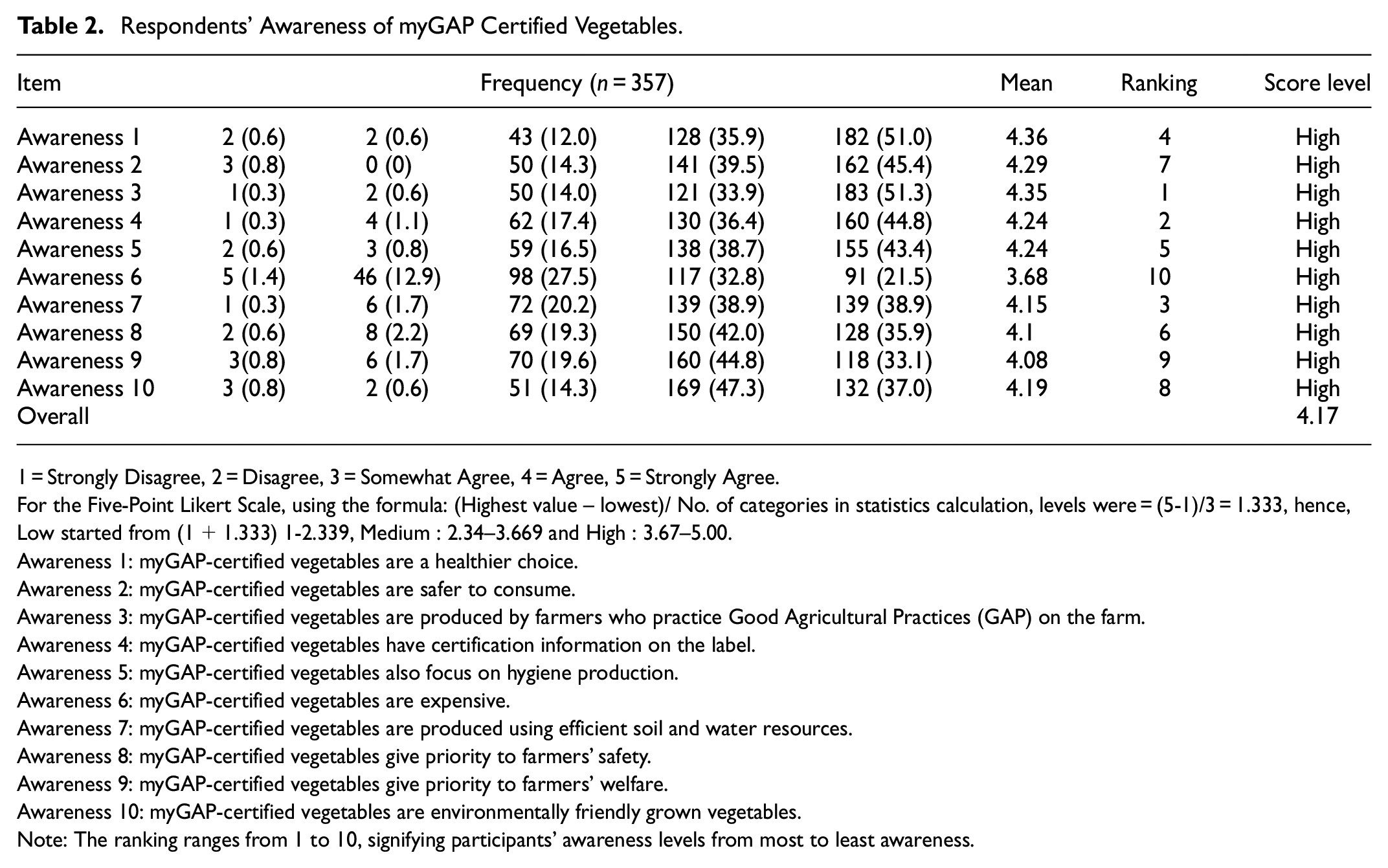
1 = Strongly Disagree, 2 = Disagree, 3 = Somewhat Agree, 4 = Agree, 5 = Strongly Agree.
For the Five-Point Likert Scale, using the formula: (Highest value – lowest)/ No. of categories in statistics calculation, levels were = (5-1)/3 = 1.333, hence, Low started from (1+1.333) 1-2.339, Medium : 2.34–3.669 and High : 3.67–5.00.
Awareness 1: myGAP-certified vegetables are a healthier choice.
Awareness 2: myGAP-certified vegetables are safer to consume.
Awareness 3: myGAP-certified vegetables are produced by farmers who practice Good Agricultural Practices (GAP) on the farm.
Awareness 4: myGAP-certified vegetables have certification information on the label.
Awareness 5: myGAP-certified vegetables also focus on hygiene production.
Awareness 6: myGAP-certified vegetables are expensive.
Awareness 7: myGAP-certified vegetables are produced using efficient soil and water resources.
Awareness 8: myGAP-certified vegetables give priority to farmers’ safety.
Awareness 9: myGAP-certified vegetables give priority to farmers’ welfare.
Awareness 10: myGAP-certified vegetables are environmentally friendly grown vegetables.
Note: The ranking ranges from 1 to 10, signifying participants’ awareness levels from most to least awareness.
WTP for myGAP is a better option for the customer considering myGAP products, such as myGAP-certified vegetables, provide several benefits to the consumers. This better option involves the respondents’ commitment and participation in providing their choices for improvement and stating their WTP for improvement.”

Why WTP for myGAP tomatoes?
Tomatoes were chosen for this questionnaire due to their high per capita consumption under Malaysia’s fruit and vegetable category.
Before answering the following question, think about:
•The willingness to pay is based on the ability to pay for myGAP-certified vegetables.
Based on the scenario above, please mark (√) how much you are willing to pay for myGAP-certified vegetables
Validity and Reliability Analysis
Six experts in the relevant field validated the questionnaire, including two technical officers in the industry: Plant Quality Control Division, DOA, one senior training consultant from INTAN, one senior research officer from MARDI, and two agricultural economic experts from the Faculty of Agriculture at UPM. Content validity refers to the extent to which the study instrument accurately measures all aspects of the structure (Heale & Twycross, 2015). This study only used content validity.
To evaluate the validation form scores, the six panels used a questionnaire with a four-point scale: 1 = not relevant, 2 = somewhat relevant, 3 = relevant, and 4 = very relevant. Scale-level-CVI (S-CVI) was calculated. For I-CVI, it is recommended that scales with excellent content validity have a value of 0.78 or above, and for S-CVI/UA and S-CVI/Ave, these values should be 0.8 and 0.9, respectively (Shi et al., 2012). The result revealed that the S-CVI for all sections was 0.97, indicating excellent content validity.
Next, a pilot study with 40 respondents was conducted to ensure reliability. For Section “Results and Discussion”: knowledge, the Kuder-Richardson coefficient assessed the reliability (K-R20). The obtained value for this section was 0.6561, rated as strong (0.61–0.79) (Kuder & Richardson, 1937). Next, Cronbach’s Alpha analysis was performed in Section “Materials and Methods” (respondents’ level of awareness) and Section “Conclusions” (Behavior level of respondents). The Cronbach’s Alpha value was .8 for only ten questions, indicating that the reliability level for Section “Materials and Methods” was good. The Cronbach’s Alpha value for Section “Conclusions” was .927, indicating that the level of reliability was very good (Pallant, 2007).
Sample Size and Sampling Technique
In 2020, the total population of Klang, Selangor was 1,021,300, while the population aged 15 and older was 795,700 (Department of Statistics Malaysia, 2020). According to the formula proposed by Yamane (1970), the total number of respondents required for this study was 400. However, the study had an 89% participation rate, thus resulting in 357 Klang respondents was obtained. Although the study failed to obtain the sample size proposed by Yamane (1970), a minimum sample size of 210 respondents was required to conduct a consumers’ WTP study (Baiyegunhi et al., 2018). Accordingly, 357 of the respondents were deemed sufficient for analytical purposes.
Convenience sampling was employed as the sampling method to reach the 357 respondents. The questionnaire was distributed using social media platforms like Facebook, Instagram, Twitter, and WhatsApp. In addition, the chain referral technique was used (Goh & Matthew, 2021), in which friends, family members, and relatives who reside in Klang may fill up questionnaires and recommend their friends, colleagues, and neighbors.
This study included both descriptive and inferential statistical analyses. The first objective was answered using descriptive analysis and analyzed using Statistical Package for the Social Sciences (SPSS) version 27. The second and third objectives were then analyzed using logit regression and Bivariate Probit for double-bound CVM. STATA software version 17 was used for single-bound CVM analysis, whereas NLOGIT Software was utilized for double-bound CVM analysis. Accordingly, both analyses addressed the research objectives and questions.
Results and Discussion
Respondent’s Demographics
Table 3 displays the socio-demographic profiles of the respondents with 58.8% of respondents are female, while the remainders are male. Female consumers are more likely to purchase certified vegetables than male consumers, according to Truong et al. (2021). Women are more likely to purchase organic food because they are the primary food purchaser in the household and are more concerned about the health of their family members. As for the age factor, the results indicated that 33.6% of respondents were within 36 to 45 years, while 7.8% are within 18 to 25 years. This was comparable to Adawiyah et al. (2021) that age was one of the determining factors when purchasing organic vegetables. In addition, the study indicated that 84.3% of respondents have a diploma.
Willingness to Pay (WTP).

Furthermore, 45.7% of respondents are in the M40 group based their monthly gross income, whilst 25.8% of respondents are in the T20 group. This was comparable to Nguyen et al. (2019), who found that the majority of respondents in Vietnam reported middle-to-high household incomes. The findings also indicated that 75.1% of respondents are married, while 24.9% are single. This was similar to the study by Gan et al. (2014), who found that more than half of the Chinese respondents who purchased organic products were married.
Respondents’ Awareness of myGAP Certified Vegetables
Table 4 illustrates respondents’ awareness of myGAP-certified vegetables. The overall mean score of 4.17 suggests that consumers in Klang have a high level of awareness of the willingness to pay (WTP) for myGAP-certified vegetables. Among the items, the highest mean score of 4.36 was observed for item 1, “myGAP-certified vegetables are a healthier choice.”Adawiyah et al. (2021) supported this, emphasizing the importance of health consciousness in consumer awareness of organic vegetables.
Socio-demographic Profiles.

Next, item 3, “myGAP-certified vegetables are produced by farmers who follow Good Agricultural Practice (GAP) on the farm,” garnered a mean score of 4.35, while item 2, “myGAP-certified vegetables are safer to consume,” received a mean score of 4.29. These findings align with Radulescu et al. (2021), who studied awareness of chemical-free, safer-to-consume organic vegetables.
Additionally, both item 4, “myGAP-certified vegetables have certification information on the label,” and item 5, “myGAP-certified vegetables also focus on hygiene production,” scored equally with a mean score of 4.24. Pancer et al. (2017) suggested that certification labels could boost product credibility and consumer awareness.
The analysis further revealed that item 10, “myGAP-certified vegetables are environmentally friendly grown vegetables,” received a high mean score of 4.19, consistent with findings from Gan et al. (2014), highlighting consumer awareness of the environmental benefits of organic products.
Moreover, item 7, “myGAP-certified vegetables are produced using efficient resources of soil and water utilization,” scored 4.15 on average, followed by item 8, “myGAP-certified vegetables prioritize the safety of farmers,” with a mean score of 4.10. Item 9, “myGAP-certified vegetables give priority to farmers’ welfare,” received a mean score of 4.08. These results underscore the importance consumers place on sustainability and farmer well-being in their purchasing decisions.
However, the lowest mean score of 3.68 was observed for item 6, “myGAP-certified vegetables are expensive.” This finding is consistent with Gan et al. (2014), indicating that consumers are generally aware of the higher cost associated with organic products compared to conventional ones.
Respondent’s Knowledge of myGAP Certified Vegetables
Table 5 provides insights into the knowledge of myGAP-certified vegetables among Klang customers and their willingness to pay (WTP). The findings suggest a moderate level of awareness among respondents. Notably, a significant majority (76.2%) recognized that myGAP-certified vegetables support sustainable agricultural practices, indicating a growing understanding of the importance of sustainable food production. Additionally, over half of the respondents (54.1%) were aware that these vegetables adhere to Malaysia’s agriculture sector standards, reflecting a reasonable grasp of the regulatory framework governing organic produce.
Respondents’ Knowledge of myGAP Certified Vegetables.

Knowledge 1: myGAP-certified vegetables promote sustainable agriculture practices.
Knowledge 2: myGAP-certified vegetables enhance the quality of the food supply chain.
Knowledge 3: The standard for myGAP-certified vegetables is per Malaysia’s Standard for the crop sector.
Knowledge 4: myGAP-certified vegetables can last longer in storage than conventional vegetables.
Knowledge 5: myGAP-certified vegetables are free from food contamination.
Knowledge 6: The pesticide residues in myGAP-certified vegetables are at a permissible level.
Knowledge 7: myGAP-certified vegetables have benefits to the consumer.
Knowledge 8: myGAP-certified vegetables are free from heavy metal contamination (from chemical fertilisers, pesticides, sewage sludge, and industrial waste).
Knowledge 9: myGAP-certified vegetables have a higher reputation for branding than conventional vegetables.
Knowledge 10: myGAP-certified vegetable production improves soil fertility.
Regarding specific attributes, around one-third of respondents (35.6%) knew that myGAP-certified vegetables have an extended shelf life when stored properly, while a majority (58.8%) understood their freedom from food contamination. However, awareness regarding pesticide residues varied, with a majority (57.4%) believing they were within permissible levels, in contrast to a smaller percentage (4.8%) who disagreed. This discrepancy suggests a need for clearer communication regarding pesticide usage and residue levels in myGAP-certified vegetables.
Despite these variations in awareness, a significant majority (77.6%) of respondents perceived myGAP-certified vegetables as offering consumer benefits, indicating a positive perception of these products. These findings underscore the importance of ongoing education and communication efforts to enhance consumer knowledge and understanding of myGAP-certified vegetables, ultimately supporting informed consumer choices and sustainable food consumption practices.
Respondents’ Purchasing Behavior for myGAP Certified Vegetables
Table 6 provides insights into the purchasing behavior of Klang consumers regarding myGAP-certified vegetables, revealing a strong engagement with these products, as evidenced by an overall mean score of 3.78. Notably, respondents exhibited a high level of confidence in the safety of myGAP-certified vegetables, with item 1 scoring the highest mean value of 4.05, indicating a clear preference for products with guaranteed safety.
Respondents’ Purchasing Behavior for myGAP-Certified Vegetables.

1 = Strongly Disagree, 2 = Disagree, 3 = Somewhat Agree, 4 = Agree, 5 = Strongly Agree.
For the Five-Point Likert Scale, using the formula: (Highest value – lowest)/ No. of categories in statistics calculation, levels were = (5-1)/3 = 1.333, hence, Low started from (1+1.333) 1–2.339, Medium: 2.34–3.669 and High: 3.67–5.00.
Behaviour 1: I would buy myGAP-certified vegetables because of the high guarantee of the product’s safety.
Behaviour 2: I would buy myGAP-certified vegetables at the supermarket’s trusted place only.
Behaviour 3: I will buy myGAP-certified vegetables if it does not have hazardous health effects.
Behaviour 4: I will buy myGAP-certified vegetables if it is recognized in the market.
Behaviour 5: I would buy myGAP-certified vegetables because they have a high guarantee of food safety.
Behaviour 6: I prefer to buy myGAP-certified vegetables, although the price is higher than the conventional vegetables.
Behaviour 7: I would search for information to identify the differences between myGAP-certified vegetables and conventional vegetables.
Behaviour 8: I recommend myGAP-certified vegetables to my relatives and friends.
Behaviour 9: I would buy myGAP-certified vegetables if I found the certified myGAP logo on the product.
Behaviour 10: I will buy myGAP-certified vegetables if they have a high-quality appearance.
Furthermore, respondents demonstrated a willingness to endorse myGAP-certified vegetables, as reflected in the high mean score of 3.93 for item 8, indicating a propensity to recommend these products to relatives and friends. The presence of the myGAP logo also played a significant role in purchasing decisions, with item 9 receiving a medium mean score of 3.91, underscoring the influence of certification logos on consumer choices.
Additionally, consumers prioritized factors such as product appearance and health safety, as highlighted by the mean scores of 3.88 and 3.85 for items 10 and 3, respectively. These findings emphasize the importance of safety, quality, and health considerations in shaping purchasing behavior. However, while consumers valued these attributes, their willingness to pay higher prices for myGAP-certified vegetables was moderate, as indicated by the mean score of 3.57 for item 6.
Single Bound CVM and Double Bound CVM Analysis
This analysis determined the factors influencing consumers’ willingness to pay for myGAP vegetables using three models (single bound using logistics, bivariate WTP1 and bivariate WTP2) (See Table 7). However, in this study, the Logistic regression model is the best model for Single Bound CVM based on the comparison of Log-likelihood. The Log-likelihood for logistic is −226.95, and for bivariate probit is −357.93. This interprets that the higher Log-likelihood value means the first model offers a better fit to the data.
The Estimated Parameters of the Models for myGAP Certified Vegetables.

Note.*Significant at 10% level of confidence; **significant at 5% level of confidence; ***significant at 1% level of confidence.
A logistic regression model was used for single-bound CVM because only for one dependent variable, WTP 1 can only be used for one dependent variable. Hence, to solve this situation, this study was conducted using the bivariate probit model whereby two dependent variables can be used; WTP 1 and WTP 2. Therefore, for single bound, the results obtained from logistic regression analysis were more precise and more significant. This section presents only variables found significant excluding of the awareness and knowledge variables. The result showed that all the variables were insignificant, except bid 1, bid 2, gender, income, and behavior, which were significant.
The bivariate probit model results indicated that gender (GEN) was statistically significant with a bivariate regression coefficient of .3332, and the p-value of .018 was significant at 5%. The logistic regression model results also indicated that gender (GEN) was statistically significant with a regression coefficient of .7646, while the p-value of .328 was significant at 1%. A positive coefficient indicated that female respondents were more willing to pay for myGAP-certified vegetables than male respondents. Both results were consistent with Nandi et al. (2016) and Owusu and Anifori (2013) that female consumers were highly motivated to purchase safe food products.
The bivariate result indicated that variable income was also statistically significant at the bivariate regression coefficient of .263, and the p-value of .008 was significant at a 1% level of confidence with a positive relationship with the consumers’ willingness to pay for myGAP vegetables. This means the higher the monthly gross income of the respondents, the more they are willing to pay for myGAP-certified vegetables. Marda and Ayu (2021) supported this statement that consumers with high incomes were willing to pay more as they had sufficient finances. Besides, logistic regression results showed a significant value for the income variable at the regression coefficient was .5934, and the p-value of 3.75 was significant at 1%. This indicated that a 1% increase in income would increase willingness to pay by RM0.59.
For logistic regression, the purchasing behavior is positively significant at a 10% confidence level. Hence 1% increase in purchasing behavior would increase willingness to pay by RM 0.31. The logistic regression model results also indicated that gender (GEN) was statistically significant at the regression coefficient of .7646, and the p-value of .328 was significant at 1%. With a bivariate regression coefficient of .2358 and a p-value of .035 significant at 5%, the purchasing behavior for this variable was a significant predictor of willingness to pay for myGAP-certified vegetables. This indicates that the higher the level of purchasing behavior, the greater the likelihood that consumers would be willing to pay more. Behavioral control significantly impacts customers’ willingness to pay for organic products (Baiyegunhi et al., 2018).
The coefficients for bids offered (BID1) and (BID2), were negatively correlated with the amount they would be willing to pay for myGAP vegetables, consistent with the demand theory. The higher the amount respondents were requested to pay, the less likely they would pay for myGAP-certified vegetables.
Estimation of Mean Willingness to Pay
Table 8 shows the mean WTP estimated for the sample using logistic and bivariate probit approaches. Referring to estimates obtained from positive WTP responses, the estimation of the mean WTP was RM1.58 for the logistic model. The mean WTP ranges from RM3.47 to RM6.33, higher than the logistic from the bivariate probit models. The highest estimated value was chosen for mean WTP in Bivariate Probit analysis (Mamat et al., 2013). The estimation of consumers’ WTP for myGAP-certified vegetables was RM6.33 based on the highest estimation value of WTP in Bivariate Probit analysis. The results showed that the consumers were willing to pay RM6.33 extra for 500 g of myGAP-certified tomatoes compared to conventional tomatoes. Osmani et al. (2021) substantiated the statement that the consumers in Albania were willing to pay a higher price for safe tomatoes than the current prices.
Mean WTP.
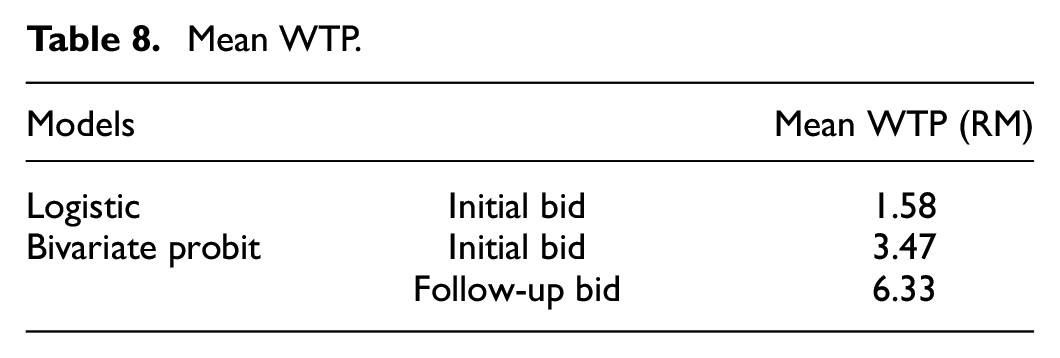
Table 9 summarizes the hypothesis result, where the hypothesis made in this research is consistent with the results. For hypothesis 1 there exists significant relationship among the bid price, gender, income and behavior variables with the consumer willingness to pay. Next, the findings on mean WTP values for logistic and bivariate models proves that the consumer are willing to pay extra for myGAP vegetables.
Hypotheses Testing.

Conclusions
This study assessed the awareness, knowledge, and behavior level and estimated the willingness to pay for myGAP-certified vegetables. The socio-demographic factors of the study revealed that female respondents aged 36 to 45 years, with a higher education level (degree), M40 and married, frequently purchased myGAP-certified vegetables. Moreover, most respondents ranked their awareness level high for myGAP-certified vegetables. Most respondents had medium knowledge of myGAP-certified vegetables in terms of knowledge level. Klang consumers’ WTP purchasing behavior level for myGAP-certified vegetables was high. The WTP analysis result showed that the variables that significantly influenced WTP estimation were gender, income, and behavior. Overall, the conclusion revealed that the consumers were willing to pay an additional RM6.33 for myGAP-certified vegetables.
The recommendations for this study were based on each of the objectives. As for Objective 1, agricultural stakeholders may execute focused awareness efforts to raise consumers’ understanding of the significance of myGAP-certified vegetables in Malaysia, even though only Klang customers have a high awareness level. By disseminating knowledge about related certified products, customers will participate in more myGAP initiatives that contribute to a sustainable environment. Campaigns may be undertaken utilizing multiple channels such as newspapers, social media, broadcasts, roadshows, and webinars to reach a varied audience. Thus, it will be comprehensively informational and readily available to all stakeholders.
Regarding knowledge, consumers seek information on collaboration through benchmarking with International Certified Organizations such as ASEAN GAP and GLOBAL GAP. This is significant because it might increase consumer awareness and reassure that myGAP-certified vegetables meet established safety and environmental standards. Government and private sector or GLC companies should concentrate on market segmentation to induce increased purchase activity among customers, despite the data indicating that only Klang consumers exhibit a high level of purchasing behavior.
For Objective 2, the agriculture stakeholders, DOA with FAMA and MARDI through MAFI, must make full use of social media to conduct live sessions with the targeted socio-demographic groups to encourage them to purchase myGAP-certified crops. Meanwhile, for Objective 3, based on the findings, consumers were willing to pay an additional RM6.33 for 500 g of myGAP-certified vegetables, such as tomatoes, above conventional vegetables. The findings of this study were essential for policymakers and MARDI to provide technical and economic support to MAFI. The Federal Agricultural Marketing Authority (FAMA) should establish reasonable pricing for myGAP-certified vegetables, particularly for the B40 income bracket.
This study had a limited scope because it was done exclusively on residents of Klang, Selangor. Therefore, it is suggested that further research be conducted throughout Malaysia. In terms of sampling, the study chose convenience sampling however it suffers from sampling bias and lack of diversity, findings from convenience samples may not be generalizable to the wider population. This limits the external validity of the research and makes it challenging to draw conclusions or make recommendations that apply beyond the specific sample. Future research also needs to be adopted in more diverse methodologies to broaden the possible scopes of findings and could facilitate the growth of the literature in the consumers’ willingness to pay for myGAP-certified vegetables in Malaysia. Thus, all diverse perspectives may be gathered in order to obtain more precise findings to increase environmentally sustainable agriculture in Malaysia.
Footnotes
Acknowledgements
The assistance provided by the six panels of experts who validated the research instrument is highly appreciated.
Declaration of Conflicting Interests
The author(s) declared the following potential conflicts of interest with respect to the research, authorship, and/or publication of this article: this paper is my original work except for quotations and citations which have been duly acknowledged.
Funding
The author(s) disclosed receipt of the following financial support for the research, authorship, and/or publication of this article: Research Management Centre, UPM.
Ethical Approval
An ethics statement (including the committee approval number) for animal and human studies not applicable in my paper.

Data Availability Statement
Data sharing not applicable to this article as no datasets were generated or analyzed during the current study.