



Abstract
The expansion of social commerce on a global scale has been remarkable, and this trend shows no symptoms of abating. Consequently, this market has witnessed an increase in the prevalence of impulsive purchasing. In this context, grounded in the Cognitive-Affective-Behavioral model and the theory of consumption value, the primary objective of this study is to investigate the antecedents of impulsive purchasing and determine whether impulsive purchasing tendencies are associated with the development of compulsive purchasing tendencies within the domain of social commerce. 366 participants whose nationality was Vietnamese and who had engaged in purchasing activities on social commerce platforms like Facebook, TikTok, and Instagram were included in the sample. A significant positive correlation was found between multidimensional perceived value, affective response, and impulsive and compulsive purchasing behaviors. These findings highlight the central role of perceived value in shaping users’ overall value perceptions in social commerce.
Plain language summary
The rapid growth of social commerce worldwide shows no signs of slowing down, and impulsive buying has become increasingly common in this market. This study explores what drives impulsive buying in social commerce and whether it can lead to compulsive shopping habits. We based our research on two key psychological models: the Cognitive-Affective-Behavioral model and the Theory of Consumption Value. To conduct the study, we surveyed 366 Vietnamese participants who had made purchases on social commerce platforms like Facebook, TikTok, and Instagram. Our findings revealed a strong link between perceived value, emotional responses, and impulsive as well as compulsive buying behaviors. These results suggest that how people perceive value plays a crucial role in shaping their shopping habits on social media platforms.
Introduction
Consumer purchasing habits have shifted in response to the rise of social commerce and the natural integration of m-commerce within social media platforms (Luceri et al., 2022). According to Gordon (2022) in Social Commerce Report, 76% of respondents across all industries believe social commerce is essential in their firm, and 99% have or will invest in it. Retail (82%) and CPG (79%) are the industries polled that value social commerce the highest. This change has given users many opportunities, including cultivating compulsive purchasing habits beyond their initial impulsive impulses. Users are exposed to a wide variety of products thanks to the pervasive nature of social commerce and the portability of mobile devices, increasing the likelihood that they will make impulsive, emotionally driven purchases (Wegmann et al., 2023). For instance, instant gratification from clicking the purchase button can lead to impulsive buying when a user scrolling through their social media feed and sees an influencer endorsing a trendy gadget (Bhattacharyya & Bose, 2020). Users’ impulsive actions are further fueled by the fear of missing out on limited-time offers, flash sales, and personalized product recommendations. Dopamine, a neurotransmitter associated with pleasure and reward, is released in response to these impulsive purchases and can reinforce the user’s desire to shop (Black, 2022). Small, impulsive buys add up and can lead to compulsive shopping habits, where consumers need to shop frequently and spend more than they can afford. When shopping becomes a coping mechanism to alleviate negative emotions like stress, anxiety, or loneliness, it can set off cycles of compulsive buying (Andreassen et al., 2015). Furthermore, social commerce platforms exacerbate compulsive buying tendencies through their ever-evolving algorithms and personalized content (Tarka et al., 2022). These sites use information about their users’ likes and dislikes to recommend products to them, luring them into a never-ending cycle of impulse purchases. Suppose users are unable to keep up with the latest trends. In that case, they feel inadequate, which further drives them to engage in compulsive buying behaviors due to the constant exposure to desirable products and the perceived social status associated with owning trendy items.
Due to the rising prevalence and potential consequences of this behavior in the digital era, understanding the fundamental factors and mechanisms that drive compulsive purchasing in social commerce is essential for consumers’ health and financial stability (Black, 2022; Tarka et al., 2022). Over the past decade, studies on social commerce have significantly expanded, primarily due to technical developments. The increased volume of research has resulted in the development of several major themes in the field of social commerce based on the existing literature. These include impulse buying, live streaming, community commerce, and Danmu culture (Huang & Benyoucef, 2013; Islam & Rahman, 2016). Most research on impulsive purchasing behavior has concentrated on elucidating the reasons behind impulse buying and how consumers can control their impulses (H. Lee & Cho, 2019; Molinillo et al., 2021). Therefore, the research on the impact of impulse buying on consumer behavior is limited, although we all know that repeated impulse buying attracts to form a habit that becomes irresistible. Irresistibly buying things without sense, understanding, or requirement is compulsive buying (Albertella et al., 2021; S. C. Lin et al., 2023). The knowledge space regarding compulsive buying and the relationship between impulsive buying and compulsive buying, especially in social commerce, is limited and thus needs to be explored.
In addition, by reviewing the prior literature on social commerce, most previous studies have focused primarily on using the Stimulus-Organism-Response (SOR) model for studying impulsive online purchases (Bhattacharyya & Bose, 2020; Molinillo et al., 2021; Qu et al., 2023). The SOR model may not adequately consider the distinctive dynamics of the social commerce environment, as it was originally developed for offline consumer behavior (Chan et al., 2017). Social commerce platforms create a unique ecosystem due to the intertwining of social interactions and online shopping (Al-Adwan et al., 2022; Islam & Rahman, 2016). Real-time social interactions, peer recommendations, and social proof are all critical factors in online impulse purchases in social commerce that the SOR model, which focuses on static marketing stimuli, does not fully account for (Wongkitrungrueng & Assarut, 2020). Moreover, unlike the more static SOR model, the rapidly evolving and interactive space created by constant engagement and viral content sharing characterizes social commerce (Simon & Tossan, 2018). More modern and specialized models have emerged to fully understand the drivers and mechanisms of online impulse-buying behavior in this socially driven landscape as social commerce has progressed with technological advancements and the widespread adoption of social media. As a result, this study used the Cognitive-Affective-Behavioral model, which provides a comprehensive framework for comprehending the complex mechanisms at work in both impulsive and compulsive purchasing by considering the consumer’s cognitive, emotional, and behavioral dimensions. The CAB model’s focus on emotions (such as flow state, enjoyment, and emotion involvement) recognizes the critical role they play in shaping these purchasing habits (Dang, Tan, et al., 2023), as impulsive purchases can be motivated by a desire for short-term satisfaction or emotional relief and compulsive purchases can be associated with emotional vulnerabilities or coping mechanisms.
The rapid expansion of social commerce platforms has enabled consumers to purchase on the impulse of the moment (Yu et al., 2022). This phenomenon is intriguing because it raises queries regarding the causes and effects of such impulsive purchasing (Akram et al., 2018). In social commerce, it is crucial to comprehend impulsive purchasing, given its potentially profound implications for consumers and businesses. Additionally, the relationship between impulsive and compulsive purchasing is a captivating and understudied topic (Black, 2022; Brunelle & Grossman, 2022; Neale & Reed, 2023). It is crucial to investigate whether impulsive purchases on social commerce platforms can lead to compulsive behavior, as this can have significant repercussions for consumers’ financial and mental health. Wegmann et al. (2023) strongly recommended the investigation of the relationship between impulsive and compulsive behavior in the context of social commerce. Our research contributes to the existing corpus of knowledge by shedding light on the role of perceived value, affective responses, and impulsive and compulsive purchasing behaviors in the context of social commerce in Vietnam, a developing nation. It is an effort to provide a deeper understanding of consumer behavior and its implications for academics and practitioners, not just empirical evidence. In conclusion, this study sheds light on the dynamics of consumer behavior in the digital age, ultimately aiding in developing strategies that cater to consumers’ unique requirements and behaviors in the ever-evolving social commerce landscape.
Besides considering the impact of feelings and actions on purchasing choices, the model also takes cognitions like multidimensional perceived value into account by extending the theory of consumption value (TCV), which is perceived as the cognitive component in the CAB model, contributing to a structured and insightful analysis (Dastane et al., 2020). The consumption value theory provides a holistic understanding of what motivates consumer behavior (Sheth et al., 1991). It acknowledges that consumers make purchasing decisions based on more than just the intrinsic value of a product, including gamification, information, function, credibility, economic, customization, and social value. This holistic approach is commensurate with the complexity and multidimensionality of impulsive and compulsive purchasing behaviors in social commerce. The use of TCV with higher-order constructs in the CAB model is also a new point of this paper. In previous studies, PCV was almost exclusively used first construct (Cocosila & Trabelsi, 2016; Dang, Tan, et al., 2023; de Kerviler et al., 2016). Additionally, the affective response construct was also used in this study to reveal the emotional triggers and repercussions of impulsive and compulsive buying, which are frequently rooted in the excitement of spontaneous purchases or using shopping as an emotional coping method (Dang, Tan, et al., 2023; Kowalczuk et al., 2021). From all the above, our research aims to answer the following: RQ1. What are the influencing factors of impulsive buying in social commerce based on the CAB model? RQ2. Does impulsive buying lead to compulsive buying in a social commerce context?
Literature Review
The Cognitive-Affective-Behavioral Model (CAB Model)
The Cognitive-Affective-Behavioral (C-A-B) model was introduced by Havlena and Holbrook (1986) as a framework to explain the consumer decision-making process. According to this model, consumer behavior follows a sequential process, beginning with the cognitive phase, transitioning to the affective phase, and concluding with the behavioral phase (Havlena & Holbrook, 1986). The C-A-B model postulates that consumers’ cognitive perceptions of products and brands significantly influence their affective feelings and attitudes toward these products and brands, thereby influencing their behavioral choices and purchasing decisions (Huang et al., 2018). The C-A-B model includes three independent variables. Initially, the cognitive variable represents consumers’ thoughts, beliefs, or product knowledge. Second, the affective variable encompasses consumers’ emotions, moods, attitudes, and feelings toward the products or brands. Lastly, the behavioral variable comprises consumers’ preferences or physical actions regarding consuming goods or services (Moon et al., 2022). Considering these three variables, the C-A-B model comprehensively explains how consumers process information, form attitudes, and make decisions. It is a helpful framework for analyzing and predicting consumer behavior.
The C-A-B model is the theoretical framework for investigating how key constructs relate (Huang et al., 2018). Six customer consumption values from the theory of consumption values (TCV) comprise the cognitive part. The affective component includes the flow state, enjoyment, and emotional involvement. On the other hand, impulsive and compulsive buying are examples of behavioral components. Authors think that different consumption values have a big effect on how people feel and that these feelings significantly affect impulsive buying, which in turn affects people’s tendencies to buy things repeatedly. Through this study, authors will unravel more about consumer behavior in impulsive and compulsive buying. This will help marketers, policymakers, and mental health professionals promote responsible consumer behavior and improve the well-being of consumers.
The Theory of Consumption Value (TCV)
The Theory of Consumption Value (TCV) is a comprehensive framework designed to explain how consumers perceive and evaluate products and services according to the value they derive from them. The TCV, introduced in 1991 by Sheth, Newman, and Gross (Sheth et al., 1991), emphasizes that consumers evaluate products regarding their functional attributes and the various values or benefits they obtain from the consumption experience. It identifies four fundamental types of consumption values: functional, social, emotional, and epistemic. These values influence consumers’ overall evaluation of a product or service, with each consumer prioritizing and weighing them differently based on their unique needs and motivations (Sheth et al., 1991). Applying the TCV in consumer behavior research and marketing studies provides valuable insights for marketers to develop effective strategies that align with consumers’ perceptions of value, thereby increasing customer spending.
According to research by L. T. Nguyen et al. (2022), consumers’ perceptions of a product’s worth reflect a two-way conversation between the two parties. Scholars have proposed various theoretical frameworks to decode consumers’ valuations of products and services (Sweeney & Soutar, 2001). Scholars have divided the concept of value into different dimensions’ convenience value, reflection opportunity, reward and recognition, information value, self-congruence, and monetary value (L. T. Nguyen et al., 2022). The review of relevant literature emphasizes the importance of incorporating benefits and costs into perceived value. Based on the division of dimensions by previous researchers, this study defines the perceived value to include information, gamification, credibility, functional, economics, and social value following the study of Dastane et al. (2020). Moreover, to better conceptualize perceived value according to Zeithaml’s (1988) structure, (C. Lin et al., 2005) proposed a more suitable specification: a formative second-order and reflective first-order approach, which has been supported by subsequent research (Dang, Tan, et al., 2023; L. T. Nguyen et al., 2022; Zhong & Chen, 2023). By treating each value dimension as an essential element within a hierarchical second-order model, the study gains a deeper understanding of the perceived value in social commerce. In this study, the seven distinct first-order value dimensions, namely information, gamification, credibility, functional, economics, customization, and social value, collectively influence the overall perceived value, which is perceived as the cognitive component in the CAB model, contributing to a structured and insightful analysis.
Impulsive Buying
In social commerce, impulsive purchasing refers to unplanned purchases made on social media platforms or social commerce websites (Williams & Grisham, 2012). Within this context are two primary types of impulsive purchasing: pure impulsive purchasing and reminder impulsive purchasing (Chan et al., 2017). Consumers engage in pure impulsive purchasing when they make unplanned purchases based solely on sudden urges or emotional impulses (Xiang et al., 2016). For example, a user scrolling through their social media feed encounters an enticing advertisement for a trendy fashion item and decides on the spot to purchase it. Reminder impulsive purchasing, on the other hand, involves purchases initially considered but subsequently prompted by social media reminders (L. Zhang et al., 2021). For instance, a consumer added an item to their online shopping cart but abandoned the transaction. Later, they receive a personalized notification reminding them of the item, prompting them to purchase it impulsively. The seamless integration of product displays and personalized prompts in social commerce environments can significantly influence consumers’ impulsive purchasing behavior (Redine et al., 2023).
Compulsive Buying
In social commerce, compulsive buying is the repeated and uncontrollable urge to engage in excessive and impulsive purchasing behaviors on social media platforms or social commerce websites (Moon et al., 2022). It is characterized by a loss of control over purchasing impulses, which causes individuals to make purchases outside their intended needs and budgetary constraints (Tarka et al., 2022). As users are exposed to a constant stream of product promotions, limited-time offers, and peer endorsements, social commerce platforms’ interactive and visually stimulating nature can exacerbate compulsive buying behaviors (Albertella et al., 2021). For instance, a compulsive shopper on a social media platform may constantly peruse various online stores, purchase items they do not necessarily need, and experience a temporary sense of satisfaction. Social validation from likes, comments, and shares on social media may also reinforce the behavior, resulting in a cycle of compulsive purchasing as users seek to relieve emotional distress or maintain a specific image in the virtual world. Compulsive purchasing in the context of social commerce can have negative financial repercussions and a negative impact on an individual’s well-being (Black, 2022), highlighting the importance of understanding and addressing this behavior to promote responsible and healthy consumer practices.
The study of Neale and Reed (2023) investigated the relationship between hypersensitive narcissism, anxiety sensitivity, and online compulsive purchasing in the U.K. It is one of the first studies to examine these personality characteristics in the context of virtual as opposed to real-world scenarios, specifically within visual and textual social media platforms for online shopping. There were 440 participants aged 18 to 37 in the study. According to the findings, visual social media platforms increased the risk of online compulsive purchasing. There were found to be positive relationships between hypersensitive narcissism, anxiety sensitivity, and online compulsive purchasing. In addition, anxiety sensitivity served as a mediator between hypersensitive narcissism and compulsive online purchasing, particularly when textual social media use predominated over visual media use. Another study on online compulsive purchasing was undertaken in Canada by Brunelle and Grossman (2022). Higher impulsivity and anxiety sensitivity, combined with lower mindfulness (specifically non-reactivity and awareness), predict online compulsive purchasing. Reduced awareness accounts for 30.77% of the correlation between high impulsivity and compulsive purchasing, whereas diminished non-reactivity contributes 7.93% to this correlation. These findings support the notion of compulsive purchasing as a behavioral addiction and suggest the potential usefulness of mindfulness interventions in preventing online compulsive purchasing. Wegmann et al. (2023) investigated the relationship between the frequency of viewing influencers’ posts and the subsequent desire to visit purchasing websites or social networks. Their findings in non-clinical samples of young adults indicate similarities and differences between online compulsive buying-shopping disorder (OCBSD) and social network use disorder (SNUD). This overlap merits additional research, especially in the context of social commerce. The studies mentioned above tend to focus on developed countries. Due to substantial cultural, economic, and societal differences, the findings of studies conducted in developed nations may not be explicitly applicable to developing nations. Moreover, participants in the sample were primarily female. This gender disparity can potentially limit the generalizability of the findings. Additionally, when investigating online compulsive buying, these studies lack well-defined hypotheses, and it may not be easy to draw precise conclusions from the research.
Hypotheses Development and Research Framework
Perceived Value (PEV)
Information value is a key component of perceived value in social commerce (Xu et al., 2020). Value, in this context, refers to consumers’ overarching evaluation of the advantages and practicality they gain from purchasing via social media or social commerce websites (Molinillo et al., 2021). Consumers’ estimation of the usefulness of the data made available by social commerce platforms is an example of information value. The quality, relevance, and completeness of content, like product descriptions, user reviews, and expert recommendations, all play a role in helping customers make educated purchases (Molinillo et al., 2021). Information on social commerce platforms is more valuable in the eyes of consumers when it is both timely and accurate, as in the case of in-depth product descriptions, high-resolution images, and genuine user feedback (Wongkitrungrueng & Assarut, 2020). Ultimately, this improved information value will contribute to a pleasant shopping experience and increased customer loyalty within the social commerce context by influencing customers’ attitudes, satisfaction, and intentions to engage in impulsive buying. Therefore, we propose the following hypothesis:
H1a: Information value (INV) positively affects perceived value (PEV) in social commerce.
Gamification value is a key component of perceived value in social commerce (Yu et al., 2022). Value perception in social commerce is the extent to which consumers rate the advantages and practicality of shopping on social media or social commerce websites (Fathian et al., 2019). Specifically, the value consumers place on incorporating game-like elements and interactive features into the social commerce experience is known as gamification value. Gamification value is increased when consumers take part in quizzes, contests, or interactive product demonstrations, all of which are examples of gamified shopping activities (L. Zhang et al., 2021). Consumers’ experiences on social commerce platforms are enhanced by the inclusion of elements of fun and competition, which encourages them to investigate products and brands. The rewards and incentives provided through gamified experiences also contribute to the perceived gamification value, encouraging consumers to take part and resulting in greater customer engagement and loyalty in the social commerce setting. Therefore, we propose the following hypothesis:
H1b: Gamification value (GMV) positively affects perceived value (PEV) in social commerce.
Value in terms of credibility is an essential concept in the context of social commerce (Dang, Nguyen, & Thuy, 2023). Consumers’ perceptions of the platform’s credibility and trustworthiness are at the heart of credibility value, a subset of perceived value (Ooi et al., 2018). Everything from the platform’s trustworthiness to the veracity of the reviews and suggestions it provides for products is a part of this (Bataineh, 2015). The trust consumers place in a social commerce platform grows as their confidence level in it, and the information it provides grows (Zhou et al., 2010). The platform’s credibility is bolstered, and consumers’ purchasing decisions are influenced for the better by positive user-generated content like reviews, ratings, and endorsements from influential users (Wegmann et al., 2023). Therefore, we propose the following hypothesis:
H1c: Credibility value (CRV) positively affects perceived value (PEV) in social commerce.
Social value is a key component of perceived value in social commerce (Molinillo et al., 2020). As a subset of overall perceived value, “social value” centers on customer satisfaction from interacting with others while they shop (Han et al., 2018). This encompasses the feelings of camaraderie, connectedness, and social interaction that online shoppers experience on social commerce sites (Ooi et al., 2021). Consumers may, for instance, be able to share their shopping experiences with friends and family or other users, as well as solicit feedback and suggestions from those in their social network. The platform’s value increased because of the social features that encourage communication and group buying. Consumers’ estimations of the social value provided by a social commerce platform can be affected by factors such as social validation and social proof, such as peer endorsements and favorable comments (Nadeem et al., 2021). Social commerce platforms can increase customer engagement and loyalty by enhancing the perceived value of the shopping experience by promoting social interactions and a sense of community. Therefore, we propose the following hypothesis:
H1d: Social value (SOV) positively affects perceived value (PEV) in social commerce.
Value, in terms of its function, is an essential component of perceived value in social commerce (Rasoolimanesh et al., 2020). As a subset of perceived value, “functional value” centers on social commerce platforms’ perceived usefulness and utility (Hew et al., 2018). This includes the ease of searching across a wide selection of products, reading extensive information, and consulting customer reviews, all from the same location. The convenience of social commerce stems from its ability to facilitate transactions with various payment methods (Visconti-Caparrós & Campos-Blázquez, 2022). The convenience and effectiveness of searching for, comparing, and buying products on the platform also contribute to its apparent usefulness. By supplying these useful features and improving the overall shopping experience, social commerce platforms can increase the perceived value of their offerings, encouraging more customer participation and spending (Erjavec & Manfreda, 2022). Therefore, we propose the following hypothesis:
H1e: Functional value (FUV) positively affects perceived value (PEV) in social commerce.
Customization value can be conceptualized as a significant aspect of perceived value in social commerce. As a subcomponent of perceived value, customization value focuses on consumers’ perceptions of the benefits they derive from the ability to personalize and tailor their shopping experiences to their specific preferences and needs (B. Zhang & Sundar, 2019). This includes how consumers can tailor product offerings, services, or content to their preferences and needs. In social commerce, for instance, consumers may customize their product recommendations, receive targeted advertisements, or select from various product variations or bundles (Molinillo et al., 2021). Creating personalized wish lists, receiving curated product recommendations, and even participating in co-creation activities can increase the customization value of social commerce experiences (Tajvidi et al., 2021). By providing personalized and customized experiences, social commerce platforms can increase the perceived customization value of their offerings, thereby fostering greater customer enjoyment and spending in the social commerce context. Therefore, we propose the following hypothesis:
H1f: Customization value (CUV) positively affects perceived value (PEV) in social commerce.
Economic value can be conceptualized as a significant dimension within perceived value in social commerce (Bouwman et al., 2007). What we mean by “perceived value in social commerce” is the customers’ general opinion of the advantages and usefulness they gain from purchasing through social media sites or e-commerce websites (Dastane et al., 2020). As a subset of overall value, economic value is concerned with how shoppers evaluate the transaction from a financial perspective (Yao et al., 2018). This includes weighing the benefits of using social commerce platforms against the costs of not doing so. The monetary value of social commerce is boosted by the possibility of consumers coming across exclusive promotions, flash sales, or special offers that provide substantial cost savings compared to conventional retail channels (Ashraf et al., 2021). The convenience of shopping around and finding the best deal possible, including considering shipping costs and return policies, also adds to the impression of value (E. Lee & Han, 2017). Social commerce platforms can increase customer engagement and loyalty by enhancing the perceived economic value of their offerings by providing appealing deals and cost-effective shopping options. Therefore, we propose the following hypothesis:
H7a: Economic value (EOV) positively affects perceived value (PEV) in social commerce.
There is a correlation between valuation and emotional reactions in online shopping (Bigné et al., 2008; Dang, Tan, et al., 2023; Yuan et al., 2020). In this context, value refers to consumers’ general impressions of the advantages and practicality of purchasing via social media or social commerce websites. Positive affect is elicited from customers when they have a positive perception of the value they receive from their shopping experiences. Affective responses are the customers’ emotional reactions and feelings, such as happiness, excitement, satisfaction, trust, and a sense of belonging in a community, occurring during a purchase (Han et al., 2011). A positive emotional response is more likely as consumers perceive higher value, such as finding products at competitive prices, receiving personalized recommendations, or enjoying interactive and gamified shopping experiences (Kowalczuk et al., 2021). As a result, in the ever-changing landscape of social commerce, businesses, and marketers can concentrate on elevating perceived value across multiple dimensions to encourage positive affective experiences, which leads to the hypothesis:
H2: Perceived value (PEV) positively affects affective response (AAR) in social commerce.
The Relationship Between Affective Responses (AAR) and Impulsive Buying (IMB)
In this study, According to Kim et al. (2020), the authors applied the affective response in second-order affective responses encompass the dimensions of enjoyment, emotional involvement, and flow state. Using second-order will can provide a more parsimonious and interpretable model, which has also been demonstrated in previous studies when it strongly impacts consumer behavior (Dang, Tan et al., 2023; Kim et al., 2020). Prior research (Dang, Tan et al., 2023; S. C. Lin et al., 2023) has been accepted by all parties that affective response is crucial in determining customer behavior like impulsive buying. Especially because of the pervasiveness of social commerce and the mobility of mobile devices, users are exposed to a wide range of products, increasing the possibility that they will make impulsive, emotionally driven purchases (Wegmann et al., 2023). The general gratifications derived from the overall shopping experience, product attachment, and subjective attachment to social actors in terms of personal proximity and intimacy also contribute to impulsive buying (Chen et al., 2019; Xiang et al., 2016). This is because a stronger affective response toward social actors increases their persuasive power, eliciting greater impulsive buying (Xiang et al., 2016). Furthermore, in the context of live-streaming, Lo et al. (2022) proved that the affective response was found to have a substantial effect on impulsive buying, indicating that impulsive buying is an emotionally driven process. Similarly, in the context of social commerce, we hypothesize that the development of positive sentiments toward social commerce platforms will likely contribute to the transition from impulsive to compulsive buying. Based on the preceding justification, the following hypothesis is formulated:
H3: Affective responses (AAR) positively affect impulsive buying (IMB) in social commerce.
The Relationship Between Affective Responses (AAR) and Compulsive Buying (COB)
Previous research only utilized impulsive purchasing as a first-order variable; therefore, to obtain a deeper understanding of impulsive purchasing, pure impulsive purchasing, and reminder impulsive purchasing were applied as sub-dimension of impulsive buying in this study (Chan et al., 2017). Similarly, compulsive buying involves cognitive, emotional, and behavioral components (Tarka et al., 2022). In the context of social media and online shopping, “impulse buying” refers to the practice of purchasing on the spur of the moment rather than carefully considering it (Floh & Madlberger, 2013). Consumers may experience fleeting happiness and contentment because of their impulsive actions (Yang et al., 2021). By viewing compulsive shopping as a higher-order construct with multiple dimensions (such as conflict, problem, mood modification, relapse, salience, and withdrawal), this study can better comprehend the pathways by which impulsive purchases can lead to compulsive behavior in social commerce. Consumers’ already strong emotional attachment to shopping may be further strengthened by the engaging and interactive nature of social commerce platforms, leading to compulsive buying tendencies (Moon et al., 2022) (Figure 1). Thus, the hypothesis was proposed as follows:
H4: Impulsive buying (IMB) will positively affect compulsive buying (COB) in social commerce.
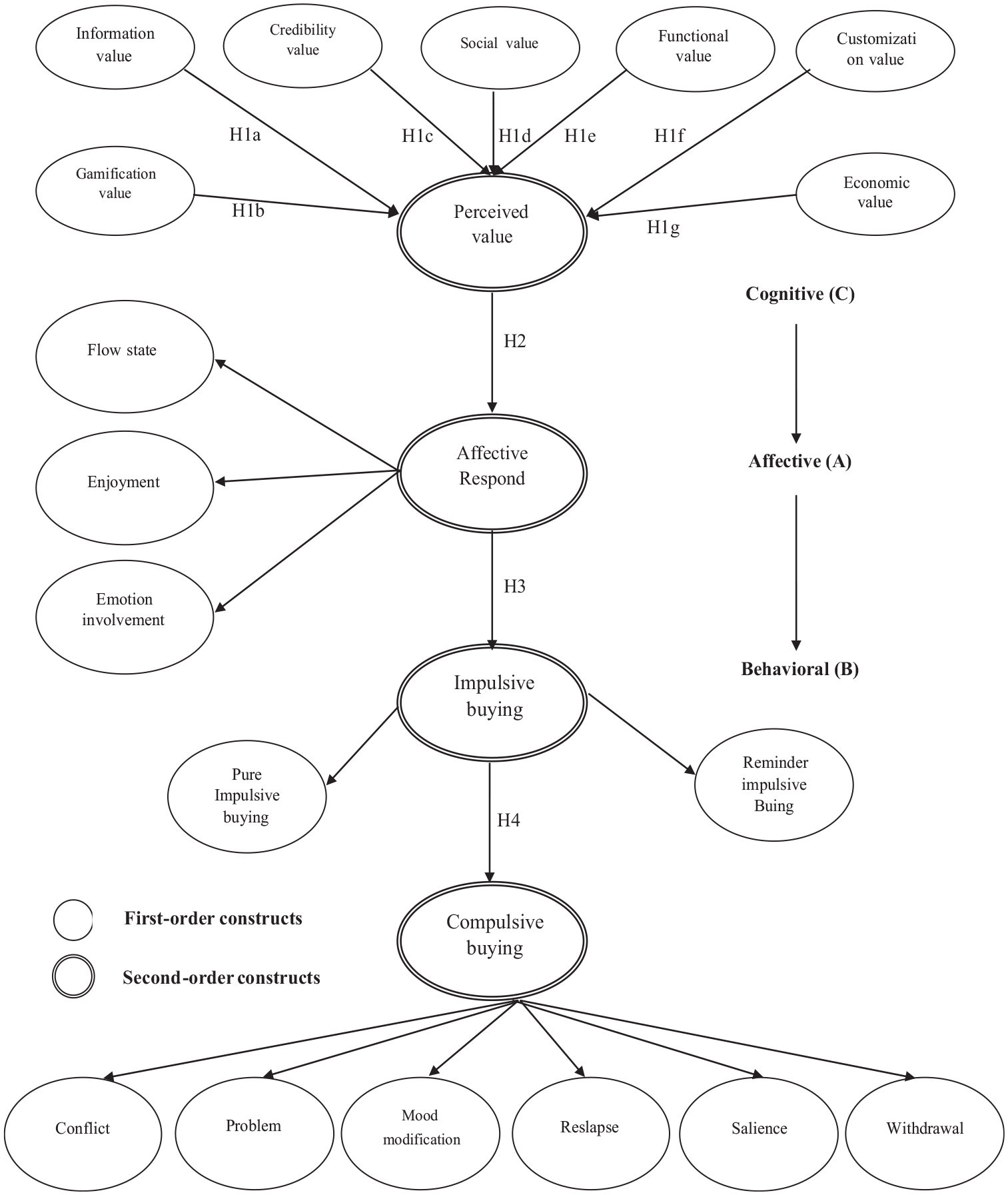
Conceptual framework.
Methodology
In the present study, respondents who fit the research’s purpose were recruited using judgmental sampling. To this purpose, two requirements were imposed: (1) the respondent must be a Vietnamese national and (2) respondents have purchased through social commerce platforms like Facebook, TikTok, or Instagram. Previous studies on mobile commerce (Dang, Tan, et al., 2023; Tien et al., 2023) have used a similar sampling approach because it is deemed appropriate when specific respondents possess the necessary information. Ho Chi Minh City was chosen for the study because it is the most advanced city in Vietnam regarding technology. It has a large population of people who regularly use smartphones and participate in social commerce (Tien et al., 2023). Google Forms were used to distribute and collect responses from an online survey that had been publicized through various channels. As the PLS literature suggests, a sample size 10 times the most complex relationship is required in a research model (Hair et al., 2017). Therefore, the minimum required sample size is 10 × 7 = 70. Additionally, the statistical software G*Power version 3.1 recommends a minimum sample size of 160 for an effect size of f2 = 0.15, a probability of error of =0.05, a power level of (1−β) = .80, and a number of predictors of 21 (Nguyen, Nguyen, et al., 2023). The final sample size was 366, well above the required minimum.
The study was designed to minimize risks by ensuring that participants’ identities and responses remained confidential. No physical or psychological harm was expected since the research involved self-reported data on impulsive and compulsive buying behaviors in social commerce. The survey questions were carefully designed to avoid triggering distress, and participants were given the option to skip questions they found uncomfortable. Additionally, participation was entirely voluntary, and respondents could withdraw at any time without any negative consequences. This study provides valuable insights into consumer behavior in social commerce, which can help businesses develop more responsible marketing strategies while promoting consumer well-being. By understanding the cognitive, affective, and behavioral drivers of impulsive and compulsive buying, the research can aid policymakers and e-commerce platforms implement ethical practices to prevent excessive spending habits. For participants, the study fosters self-awareness regarding their purchasing tendencies, potentially helping them make more informed financial decisions. Given that the risks are minimal and mainly limited to the time commitment for the survey, the benefits significantly outweigh any potential harm. The procedures conducted in this study with human subjects adhered to the ethical standards set by the Institutional Review Board at the University of Foreign Languages-Information Technology, HUFLIT (Reference number 14/ESSG). Before participation, respondents were verbally informed about the study’s purpose, procedures, potential risks, and benefits. They were explicitly told that participation was voluntary, their responses would remain confidential, and they could withdraw at any time without any consequences. If participants chose not to provide verbal consent, they were not required to continue the study. This approach ensured that participants fully understood their rights before proceeding.
According to the questionnaire results, females comprised 58.92% of respondents. Regarding age distribution, 61.89% of the participants were between 18 and 35, while 20% were between 36 and 50. When asked about their current occupation, nearly half (41.62%) of respondents said they were students, while just over a third (37.57%) said they were working. Participants with incomes between US$201 and US$400 (37.57%) were the most numerous, followed by those with incomes below US$200 (33.24%) and those with incomes of US$401 or more (29.19%). Regarding the frequency of use, 33.24% of respondents said they make mobile payments daily, while 50% said they do so between 6 and 15 times a month. Notably, 57.3% of respondents indicated that the typical transaction amount on the indicated social commerce platform ranged from $100 to $400. Finally, regarding the most popular social commerce platform, 67.3% of participants favored Tittok, followed by 11.4% and 10.0% on Facebook and Instagram, respectively.
To ensure the validity of the measurement structure, we adopted question statements from prior research and modified them slightly to fit the social commerce context. The Social value measurement was derived from Sweeney and Soutar (2001) and Liébana-Cabanillas et al. (2020). Functional value was taken from Cocosila and Trabelsi (2016), while information value and credibility value were taken from Bataineh (2015) and Karjaluoto et al. (2019). Economic value was adopted from (Omigie et al., 2017). Customization value was adopted from Srinivasan et al. The gamification value was obtained from Dzandu et al. (2022). In addition, we utilized Pure Impulse Purchasing (PUB) and Reminder Impulse Purchasing (RIB) from L. L. Zhang et al. (2021) and Compulsive Purchasing from Andreassen et al. (2015). Regarding the affective response, we viewed it as a second-order construct consisting of enjoyment, emotional involvement, and flow state, as suggested by Kim et al. (2020). Kim et al. (2020, p. 79) state that “second-order factor models can provide a more parsimonious and interpretable model when researchers hypothesize that higher-order factors underlie their data.” We modeled them as first-order constructs in the conceptual model because enjoyment, emotional involvement, and flow state are distinct but closely related subconstructs of the affective response. Compulsive buying, conflict, problem, mood modification, relapse, salience, and withdrawal are viewed as second-order constructs following the recommendation of Andreassen et al. (2015). Lastly, multidimensional perceived value will consist of seven constructs, namely Social value, functional value, information value, credibility value, customization value, economic value, and gamification value, following the recommendation of (Dastane et al., 2020). To ensure consistency, each measurement item was evaluated using a 7-point Likert scale ranging from 1 (“completely disagree”) to 7 (“completely agree”).
Results
Statistical Analysis
Given a large sample size of 366 and many latent variables and items, partial least squares (PLS) are deemed an appropriate method for data analysis (Ooi & Tan, 2016). PLS offers many benefits, such as its applicability to small sample sizes, its ability to handle multidimensional constructs, and its simultaneous analysis of structural and measurement models (Ooi & Tan, 2016). In particular, Ooi et al. (2018) note that PLS-SEM is especially useful when dealing with complex conceptual models containing second-order constructs, as it possesses strong statistical validity. In addition, PLS-SEM works well with non-normal data. Since the p-values for Mardia’s multivariate skewness and kurtosis were all less than 0.001, using PLS-SEM in this study is further validated (L. T.Nguyen et al., 2022).
Common Method Bias
The cross-sectional design utilized in this study was subjected to both procedural and statistical evaluations to address the possibility of common method bias (Lee et al., 2020; Tan & Ooi, 2018). Respondents were assured that there were no correct or incorrect responses and that their responses would be kept confidential and anonymous. Harman’s single-factor analysis was performed to assess further the presence of common method bias, which revealed that a single factor accounted for only 26.706% of the total variation. In addition, a full collinearity test was conducted with a random dependent variable, revealing that the highest variance inflation factor (VIF) value was 3.146, well below the threshold of 3.30 (Kock & Lynn, 2012). These results indicate that major common method bias did not significantly taint the data.
Measurement Model Assessment
Following Hair et al. (2017), construct reliability and validity were evaluated during the measurement model analysis. Composite reliability (CR), Cronbach’s alpha, and Dijkstra-rho Henseler’s (rh0_A) were evaluated as construct reliability measurements. CR and rh0_A values greater than 0.7 indicate a level of reliability that is statistically significant (Teo et al., 2015). According to Table 1, the CR, Cronbach’s alpha, and rh0_A values (both first-order and second-order) ranged between .794 and .970, exceeding the minimum threshold of .7 for both indices.
Average Variance Extracted (AVE), Composite Reliability, Factor Loading, and

Individual factor loadings and the average variance extracted (AVE) were evaluated to determine convergent validity (Lew et al., 2020). Generally, factor loadings should exceed 0.7, and AVE values should exceed 0.5 (Hair et al., 2017). In this study, all factor loadings were greater than 0.70, and the AVE values for all first-order and second-order constructs were greater than 0.5. Consequently, the outcomes confirmed convergent validity for all first- and second-order constructs.
By comparing the square root of Average Variance Extracted (AVE) to the inter-construct correlation coefficients, the discriminant validity of the model was determined (L. T. Nguyen et al., 2022; H.-B. Nguyen & Nguyen, 2021; Tien et al., 2023). The results presented in Table 2 indicate that the square root of the AVEs for the second-order factors is more significant than their respective correlation coefficients, respectively. Furthermore, Table 3 shows that there was no issue with discriminant validity because the results did not exceed the 0.85 threshold for reflective and formative first-order structures (Hair et al., 2017). This finding suggests that the model’s discriminant validity is adequate.
Square-Root AVEs (on Diagonal) and Correlation Coefficients (Off Diagonal) for Second-Order Constructs.

HTMT Assessment for First-Order Constructs.

Structural Measurement Assessment
The bootstrapping method with 5,000 subsamples, no sign change, and 99% bias-corrected confidence intervals was utilized for the inferential statistics. The results of the hypothesis testing are shown in Figure 2 and Table 4. All dimensions of perceived value, including information value (β = .825, p_value < 0.01), gamification value (β = .936, p_value < 0.01), credibility value (β = .904, p_value < 0.01), social value (β = .901, p_value < 0.01), functional value (β = .825, p_value < 0.01), customization value (β = .904, p_value < 0.01), and economic value (β = .961, p_value < 0.01), demonstrated significant correlations with perceived value. In addition, the perceived value had a significant impact on the affective response (β = .863, p_value < 0.01), the affective response had a significant impact on impulsive buying (β = .869, p_value < 0.01), and impulsive buying had a positive impact on compulsive buying (β = .895, p_value < 0.01). Therefore, each of the tested hypotheses (H1a, H1b, H1c, H1d, H1e, H1f, H1g, H2, H3, and H4) was confirmed.

Hypotheses testing results.
Hypotheses Testing Results.

To evaluate the structural model’s predictive accuracy, the Q2 value was determined using the blindfolded method. As the Q2 values were greater than zero in Tables 6, 7, it was determined that the research model’s predictions were more accurate than chance. In addition, to meet a minimum standard of explanatory power, the R2 values must exceed a predetermined threshold, typically greater than 0.01 (Leong et al., 2013; L. T. Nguyen et al., 2022). In Table 5, the R2 value for the outcome of impulsive buying (compulsive buying) was .755, indicating substantial variance explained and demonstrating the model’s ability to predict and explain compulsive buying in social commerce.
Predictive Relevance (Q2) and Predictive Accuracy (R2).

PLS Predict.

Effect size f2.
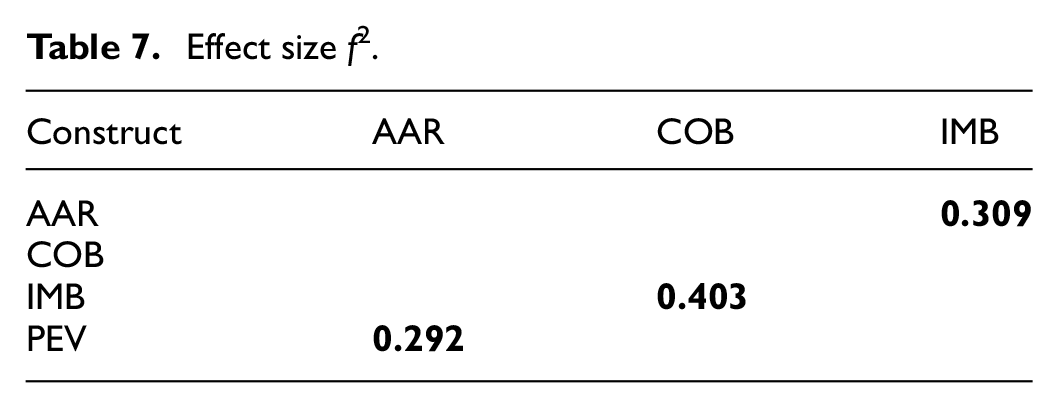
In addition, Table 7 contains the effect size (f2) calculations for each exogenous construct. This effect size quantifies the contribution of an external latent construct to an endogenous construct’s R2 value (Nguyen, Duc, et al., 2023). Hair et al. (2017) proposed that the threshold values of 0.02, 0.15, and 0.35 correspond to small, medium, and large effect sizes, respectively. The exogenous construct has no significant effect if the value is less than 0.02. In this study, PEV and AAR had medium effects on AAR and IMB, as measured by effect sizes of 0.292 and 0.309, respectively. In contrast, IMB significantly impacted COB with a value of 0.403.
Discussions and Implications
Discussions
Based on the Cognitive-Affective-Behavioral (CAB) model and the theory of consumption value (TCV), this study investigated the antecedents of affective response, impulsive buying, and compulsive buying among social commerce users, integrating the seven dimensions of perceived value as antecedents to second-order constructs of affective response, impulsive buying, and compulsive buying for the first time. A significant and positive association was found between multidimensional perceived value and affective response, as well as impulsive and compulsive purchasing. This study addresses significant gaps in the discipline. With the rapid expansion of social commerce, impulsive buying has become a noteworthy phenomenon worthy of investigation (Neale & Reed, 2023). Understanding the causes and effects of these impulsive purchases is crucial, as they have substantial implications for consumers and businesses alike. In addition, the relationship between impulsive and compulsive purchasing, a topic that has received scant attention, is a compelling area of research with significant implications for the financial and mental health of individuals (Wegmann et al., 2023). The following is a detailed discussion of these results:
In the context of social commerce, this study’s findings provide valuable insights into the relationships between various dimensions of perceived value, affective response, and impulsive and compulsive purchasing behaviors. Notably, the research reveals significant and positive correlations between all dimensions of perceived value, including information, gamification, credibility, social, functional, customization, and economic value, and the overall perceived value. These findings are consistent with prior research (Karjaluoto et al., 2019; Petrick, 2002; Zhong & Chen, 2023), highlighting the central role these dimensions play in shaping users’ holistic perceptions of value within the domain of social commerce.
In accordance with findings from a study by Dang, Tan, et al. (2023) in the context of mobile payment, the study also demonstrates a significant relationship between perceived value and affective response. This correlation suggests that users are more likely to experience positive emotional responses while purchasing if they perceive higher value in their social commerce interactions (Al-Adwan & Yaseen, 2023). The emotional component is of utmost importance, as it powerfully influences both users’ impulsive and compulsive purchasing tendencies.
In keeping with previous research conducted by Kimiagari and Asadi Malafe (2021) and L. Zhang et al. (2022), the results also disclose a substantial and positive impact of affective response on impulsive purchasing behavior. This suggests that when users derive positive emotions and enjoyment from their social commerce interactions, they are more likely to make impulsive purchasing decisions based on their emotional arousal and enthusiasm during shopping (Wegmann et al., 2023).
Lastly, the study illuminates the link between impulsive and compulsive purchasing behavior, replicating the findings of Williams and Grisham (2012) and Albertella et al. (2021). This finding suggests that impulsive purchasing behavior can become compulsive over time. The emotional satisfaction and transient relief derived from impulsive purchases may contribute to the development of compulsive buying habits, in which users engage in repeated unplanned and excessive shopping (Neale & Reed, 2023). These findings contribute to our understanding of the complex dynamics of social commerce and the interplay between emotional responses, value perceptions, and impulsive and compulsive purchasing behaviors.
Implications
Theoretical Implications
This study’s theoretical contributions are significant in multiple ways. First, by integrating the Cognitive-Affective-Behavioral (CAB) model and the theory of consumption value (TCV), this study provides a comprehensive framework for understanding the factors influencing affective response, impulsive purchasing, and compulsive purchasing in social commerce. This integrative strategy permits a more in-depth examination of the underlying psychological processes that drive users’ purchasing behavior.
Second, the study expands the understanding of perceived value in the context of social commerce by incorporating seven distinct dimensions: information value, gamification value, credibility value, social value, functional value, customization value, and economic value. By demonstrating the significant correlations between these dimensions and perceived value, the study demonstrates the multidimensional nature of perceived value and its influence on users’ overall perceptions of value (Dastane et al., 2020).
Thirdly, the findings shed light on the role of emotional response as a mediator between perceived value and impulsive purchasing behavior. This insight emphasizes the emotional component of social commerce and its impact on users’ impulsive purchasing decisions. This knowledge can confirm the findings of Dang, Tan, et al. (2023), which asserted the connection among perceived value, emotional response, and impulsive buying and recommended that designing strategies can enhance user experiences, elicit positive emotions, and stimulate impulse purchases.
Fourthly, the study contributes to the literature on compulsive purchasing behavior by revealing the relationship between impulsive purchasing and the emergence of compulsive purchasing tendencies in social commerce (Wegmann et al., 2023). This finding highlights the potential risks associated with impulsive purchasing behavior, which may eventually lead to the development of compulsive purchasing habits. Understanding this relationship can inform interventions to manage and reduce compulsive purchasing among social commerce users.
The study’s integrative methodology, all-encompassing framework, and empirical findings shed light on what drives impulsive and compulsive purchasing in online social markets. These improvements broaden our knowledge of how modern consumers behave online and provide guidelines for marketers and platform owners to create a more well-rounded and satisfying social commerce environment for their customers.
Managerial Implications
The findings of this study have significant managerial implications for businesses operating in the social commerce environment. Firstly, to enhance user engagement and satisfaction, the value of information, gamification, credibility, social value, functional value, customization, and economic value are all aspects that businesses should work to improve. Users’ perceptions of value can be improved in several ways, including through the provision of more detailed and helpful information, the design of more interesting and pleasurable experiences, the establishment of greater trust and credibility, the promotion of a sense of community and social interaction, the provision of more practical and useful benefits, the provision of more adaptable and flexible solutions, and the delivery of more cost-effective options.
Secondly, recognizing the power of affective response to influence consumers’ impulse purchases, companies should put effort into designing satisfying social commerce experiences that appeal to customers’ emotions. To this end, we provide tools for social sharing, gamification, user-generated content creation, personalized recommendations, and interactive features. Businesses can increase conversion rates and the likelihood of customers making impulse purchases if they can make them feel good about making those purchases.
Thirdly, businesses can benefit from customers making spontaneous purchases, but this behavior must be monitored and managed to ensure it does not become compulsive overspending. It is possible to find a happy medium between encouraging impulsive purchases and preventing excessive buying by implementing mechanisms for users to review and reconsider their purchases, setting spending limits, and providing clear and transparent return policies. Businesses should be aware of the potential dangers posed by social commerce users’ compulsive buying behaviors and take steps to mitigate them. Customers will have a better impression of a company that takes social responsibility seriously by helping its customers overcome any shopping addictions they may be experiencing. Addressing compulsive shopping can benefit from educating users on responsible shopping behaviors and providing tools for self-control and self-regulation.
Finally, leveraging social commerce platforms to foster brand communities and facilitate social interactions can further strengthen the emotional connection between users and brands, leading to enhanced customer loyalty and satisfaction. These sites provide a one-of-a-kind chance for brands to interact directly with their target customers. Businesses can take advantage of the social aspects of these platforms to promote user-generated content, build brand communities, and ease social interactions between customers. These communal features have the potential to raise the product’s perceived value and deepen customers’ attachment to the brand.
Businesses can better serve their customers and reduce the risks associated with impulsive and compulsive purchasing by learning to navigate the intricate relationship between perceived value, emotional response, impulse purchase, and compulsive purchase in the social commerce context.
Conclusions
In conclusion, the study contributes to the expanding literature on impulsive and compulsive purchasing behavior in social commerce. The study sheds light on the potential development of compulsive purchasing habits due to impulsive purchasing behavior by revealing the positive impact of impulsive buying on compulsive buying. This knowledge is essential for practitioners to identify and address potential problems associated with excessive and uncontrolled shopping behaviors among social commerce users, thereby promoting responsible and balanced consumer decision-making. Overall, this study’s theoretical contributions advance our understanding of consumer behavior in social commerce and provide valuable insights for academia and industry. Incorporating the CAB model and TCV, as well as investigating perceived value dimensions as antecedents, provides a solid foundation for future research in this dynamic and evolving domain.
The current study has several limitations. First, numerous studies utilize convenient samples of college students or specific age groups. Future research should strive for more diverse and representative samples to ensure the generalizability of findings to a broader population (Al-Adwan & Yaseen, 2023). Second, frequently, studies rely on self-report surveys, which are susceptible to response bias and recall errors. Future research could combine observational and behavioral data to understand online purchasing behaviors better. Third, the vast majority of research is cross-sectional, limiting the ability to draw conclusions regarding causality and changes over time. Longitudinal research is required to investigate the development and persistence of impulsive and compulsive purchasing behaviors. Finally, as technology advances, research in the future should adapt to examine the influence of new technologies, such as augmented reality (AR) and virtual reality (VR), on impulsive and compulsive purchasing in social commerce (Tan et al., 2023). In the ever-changing social commerce landscape, addressing these limitations and investigating these future research directions will contribute to a more comprehensive understanding of impulsive and compulsive online purchasing.
Footnotes

Author Contributions/CRediT
Tri-Quan Dang: Conceptualization, Validation, Writing—original draft, Writing—review & editing, Data curation, Validation. Thanh-Luan Nguyen: Software, Methodology, Investigation. Dang Thi Viet Duc: Conceptualization, Writing—review & editing, Supervision, Project administration.
Funding
The author(s) disclosed receipt of the following financial support for the or publication of this /or publication of this article: This research was supported by the Posts and Telecommunications Institute of Technology, Vietnam.
Declaration of Conflicting Interests
The author(s) declared no potential conflicts of interest with respect to the research, authorship, and/or publication of this article.
Data Availability
The data used to support the findings of this study are available from the corresponding author upon request.