



Abstract
The aim of this study is to examine teachers’ perspectives on enhancing the efficiency of the teaching process and to identify the challenges they face while offering potential solutions. The research was conducted using a qualitative narrative inquiry design to explore teachers’ experiences and perspectives deeply. The study group consists of 57 volunteer teachers reached through snowball sampling. A semi-structured interview form was used as the data collection tool to gain a comprehensive understanding of teachers’ views. The data were analyzed through content analysis. The findings reveal that an effective teaching process is based on elements such as planning and preparation, active student participation, the organization of the learning environment, and the diversity of teaching methods and techniques used. Factors negatively affecting the teaching process include student-related issues, physical deficiencies, low teacher motivation, an intensive curriculum, and insufficient parental support. As a result, it is recommended that teacher professional development should be supported, classroom environments should be better organized, and stronger cooperation with school administrators should be promoted to improve the teaching process. Additionally, making the curriculum more flexible and increasing the application of student-centered methods could enhance the efficiency of the process. The study suggests future research on the relationship between the physical conditions of educational environments and teaching efficiency, the impact of different teaching methods on student achievement, and how teachers’ motivation levels influence the teaching process.
Introduction
The teaching process lies at the center of educational activities and is deeply influenced by teachers’ in-class practices and professional experiences. Teachers play a dual role as facilitators of learning and reflective practitioners, shaping students’ academic, emotional, and social development. Their ability to improve teaching effectiveness depends on the integration of thoughtful planning, adaptive teaching strategies, and continuous reflection on their classroom experiences (Pekrun & Schutz, 2020). More than mere transmitters of knowledge, teachers act as guides who enable students to actively engage in the learning process, fostering deeper understanding and long-term achievement (Darling-Hammond, 2021).
Recent studies emphasize the importance of a student-centered teaching approach that promotes active participation, diverse instructional techniques, and technology integration to enhance learning outcomes (Hattie, 2020; Knight, 2021). While instructional strategies and classroom management are crucial, teachers’ experiences in managing challenges and their reflective practices are equally significant in understanding what makes an effective teaching process (Selwyn, 2022). Thus, exploring the lived experiences of teachers becomes essential for uncovering the nuances of teaching practice, including its successes, challenges, and areas for improvement.
The present research adopts a narrative inquiry approach to reveal teachers’ efforts to enhance the teaching process through their real-world experiences. Narrative inquiry is particularly relevant for capturing teachers’ stories, reflections, and actions as they navigate the complexities of classroom instruction and professional development (Clandinin & Connelly, 2000). By centering teachers’ voices, this study explores the characteristics of an effective teaching process, strategies for organizing instruction, and the factors that hinder its efficiency. It also delves into the challenges teachers encounter and the solutions they propose, offring a holistic perspective on improving teaching practices (Providing a comprehensive approach to enhancing teaching by considering multiple factors such as pedagogy, classroom management, and student engagement).
This study aims to contribute to the literature by highlighting the central role of teachers in shaping the teaching process and improving instructional quality. Through an in-depth exploration of teachers’ lived experiences, the research seeks to provide valuable insights for policymakers, educators, and researchers striving to enhance the quality of teaching and learning.
Literature Review
Structuring Effective Teaching Processes: A Student-centered Philosophical Perspective
The foundation of an effective teaching process is shaped by various philosophical approaches that provide unique insights into how teaching and learning should be conducted. Modern pedagogical practices emphasize that teachers are not merely transmitters of knowledge but are essential facilitators who guide students in their learning journeys. A well-organized teaching process ensures that students actively participate in constructing knowledge, fostering critical thinking, and engaging deeply with the content. Student-centered approaches take precedence in this context, drawing inspiration from educational philosophies such as pragmatism and progressivism. These philosophies emphasize the importance of creating dynamic and participatory learning environments where students take an active role in their education. By positioning the teacher as a facilitator, these perspectives highlight the collaborative and flexible nature of the teaching process, ensuring a tailored approach to individual learning needs. This revised perspective aligns with the new thematic focus of “Structuring Effective Teaching Processes,” emphasizing the role of both the teacher and the environment in fostering active and meaningful student engagement.
Constructivist theories, notably those of Piaget and Vygotsky, emphasize that learning is an active process where students construct understanding by building on prior knowledge and experiences (Piaget, 1972; Vygotsky, 1978). In this perspective, the teacher plays a crucial role as a facilitator who designs learning experiences that foster student engagement and critical thinking. Vygotsky’s concept of the “zone of proximal development” underscores the significance of teacher guidance in enabling students to accomplish tasks they could not complete independently but can achieve with appropriate support (Vygotsky, 1978). Research indicates that classrooms adopting constructivist principles often demonstrate enhanced academic outcomes and greater student motivation (Hattie, 2020; Schunk, 2020).
Pragmatism, a philosophy centered on learning through experience, highlights the importance of connecting education to real-world contexts. John Dewey, a leading advocate of pragmatism, emphasized that teaching should enable students to apply theoretical knowledge to practical scenarios (Dewey, 1938). In pragmatic education, teachers act as facilitators by introducing real-world problems for students to analyze and solve, fostering a meaningful and applied learning process. Research supports the effectiveness of this approach, indicating that pragmatic learning environments enhance students’ problem-solving and critical thinking skills (Biesta, 2022; Darling-Hammond, 2021). Additionally, the integration of educational technology has been shown to strengthen the impact of pragmatic methods, providing students with innovative ways to engage with learning materials and real-world challenges (Selwyn, 2022).
Progressive education emphasizes a flexible and student-centered learning process, tailored to meet individual learning needs and interests. Rooted in the ideas of John Dewey, this approach advocates for lesson designs that align with students’ unique learning paces and areas of interest (Dewey, 1916). The central aim is to empower students to take an active role in their education, promoting responsibility and fostering independent thinking. Research indicates that progressive classrooms nurture higher levels of student motivation and achievement (Knight, 2021; Means et al., 2021). Furthermore, students in such environments often develop greater self-confidence and autonomy, enabling them to take ownership of their learning processes (Schunk, 2020).
A well-organized teaching process is deeply rooted in student-centered philosophical approaches, emphasizing adaptability and engagement. By employing methods and strategies that prioritize active participation, educators create a dynamic environment where students can flourish. Constructivist, pragmatic, and progressive perspectives support the development of tailored lesson plans that respond to the unique needs of students, fostering autonomy and a sense of ownership in their learning (Darling-Hammond, 2021). Collaborative learning, problem-solving tasks, and project-based methodologies encourage peer interaction and critical thinking, facilitating a deeper and more meaningful learning experience. In this framework, the teacher transitions from being a mere knowledge provider to an active facilitator, empowering students to explore questions, seek innovative solutions, and overcome obstacles (Bransford et al., 2000).
The integration of technology into educational processes aligns seamlessly with the principles of an organized and effective teaching process. Digital tools and interactive platforms empower teachers to create engaging and participatory learning environments, enhancing the overall effectiveness of lessons. Studies have shown that technology-supported teaching methods significantly boost student motivation and active participation in the learning process (Means et al., 2021; Selwyn, 2022). When integrated thoughtfully, technology complements student-centered approaches by making learning experiences more dynamic, interactive, and enduring. By leveraging technology in alignment with students’ needs, teachers can foster deeper engagement and facilitate more meaningful understanding in the classroom.
In light of these perspectives, the teaching process should be organized to prioritize active student engagement and cultivate their independent thinking and problem-solving abilities. Teachers are encouraged to adopt student-centered approaches in lesson planning, ensuring that students play an active role in their educational journeys. By integrating the principles of constructivist, pragmatic, and progressive educational philosophies, the teaching process places students at the center, fostering deeper, more meaningful learning experiences. This approach not only enhances students’ understanding of lesson content but also develops critical skills such as analytical thinking, creative problem-solving, and self-directed learning. These competencies serve as a foundation for students’ academic achievements and support their lifelong learning trajectories, equipping them with the tools necessary to thrive in an ever-evolving world.
Preparing for Effective Teaching and Quality Instruction
Preparing for effective teaching and quality instruction encompasses distinct yet interconnected dimensions critical for achieving educational success. Preparing for effective teaching involves a systematic and long-term framework that includes the planning, execution, and evaluation of instructional activities throughout a lesson. This preparation begins with teachers designing lesson content and developing strategies to guide students in their learning journeys, ensuring that learning objectives are met (Garrison & Vaughan, 2013). Key elements of this preparation include feedback mechanisms, the selection of appropriate instructional materials, employing suitable methods, and adapting strategies to align with students’ individual learning needs (Mayer, 2020). This preparation requires flexibility and adaptability from teachers at every stage, supported by student-centered approaches that prioritize active participation and personalized learning experiences (Knight, 2021).
On the other hand, quality instruction is a more focused concept that emphasizes the teacher’s ability to effectively deliver content during a specific lesson or topic. Quality instruction involves the teacher’s expertise in the subject matter, pedagogical skills, proficiency in achieving the lesson’s objectives, and clarity in communicating with students (Darling-Hammond, 2021). This concept centers on the immediate success of a lesson by ensuring effective communication and student understanding. However, without being embedded in a well-prepared teaching process, the benefits of quality instruction may remain short-lived, potentially failing to support long-term learning goals (Biesta, 2022). While quality instruction concentrates on the performance of an individual lesson, preparing for effective teaching encompasses the broader cycle of lesson planning, implementation, evaluation, and ongoing refinement (Shulman, 2021).
The key distinction between these two concepts lies in their scope and temporal focus. Preparing for effective teaching entails a broader, long-term, and multi-dimensional structure, while quality instruction emphasizes the immediate success of a specific lesson. Effective teaching preparation requires educators to plan their lessons in advance, refine their approaches based on student feedback, and ensure active participation throughout all stages of instruction (Garrison & Vaughan, 2013). For instance, while a teacher might deliver a successful lesson through quality instruction, the sustainability of its impact and the students’ long-term learning outcomes rely on the foundation provided by a well-structured teaching process (Shulman, 2021). Quality instruction refers to the effective facilitation of a single lesson or topic, but without being integrated into a comprehensive teaching approach, this success may not lead to lasting learning benefits (Seidel & Shavelson, 2020).
Hattie’s (2020) meta-analysis underscores that teachers who implement an effective teaching process not only boost students’ immediate academic performance but also foster their learning motivation and long-term educational success. Similarly, Pekrun and Schutz (2020) emphasize that structured and purposeful teaching processes enhance the management of students’ emotional regulation and motivation. Mayer (2020) further highlights that a well-designed teaching process ensures alignment between teaching strategies and learning objectives, facilitating a cohesive and impactful educational experience.
Understanding the distinction between preparing for effective teaching and ensuring quality teaching enables educators to develop strategies that address both immediate lesson delivery and the broader structure of their teaching practices. Preparing for effective teaching requires educators to engage in long-term planning, continually adapt to feedback, and tailor their lessons to the individual learning needs of students (Garrison & Vaughan, 2013). This approach not only ensures success in specific lessons but also fosters sustainable learning strategies that account for the long-term effects of instructional plans (Seidel & Shavelson, 2020).
The Importance and Purpose of the Research
Improving the teaching process in education holds great significance in enhancing students’ academic success and developing teachers’ pedagogical competencies. The teaching process is based on the strategies employed by teachers during the stages of lesson planning, implementation, and evaluation (Darling-Hammond, 2021). However, research on which pedagogical approaches and methods teachers prefer to increase the efficiency of the teaching process, the challenges encountered in this process, and the proposed solutions to these challenges remain limited. While many studies in the field of education emphasize the importance of teaching strategies, there is still a need for a comprehensive and in-depth examination of how teachers optimize this process (Hattie, 2020).
The need for this research stems from the importance of understanding how teachers’ roles in preparing for effective teaching, organizing the teaching process, and overcoming challenges in teaching can be made more efficient through student-centered learning approaches and effective teaching techniques. Specifically, the development of solutions to overcome obstacles encountered in the planning, implementation phases, and overall efficiency of the teaching process should be more prominently addressed in the education sciences literature (Shulman, 2021). This research aims to fill this gap by examining how teachers structure their lesson planning and implementation processes, and how they manage the challenges they face throughout these stages.
Previous studies in education have primarily examined the impact of teaching strategies on student achievement, but there is a growing need for more research on the long-term planning and sustainable efficiency of the teaching process (Mayer, 2020). This research aims to explore teachers’ pedagogical strategies for improving the teaching process and to reveal the effects of these strategies on student achievement. The central research problem in this study is the question of which strategies teachers adopt to enhance the efficiency of the teaching process and how these processes should be organized. In this context, the following sub-problems are addressed:
What are the characteristics of preparing for effective teaching?
How should organizing the teaching process be structured?
What are the factors that hinder the efficiency of the teaching process, and what solutions can be proposed to address these challenges?
Method
In this study, a qualitative research method was employed to understand teachers’ experiences related to the teaching process and the efforts they make to improve it. Qualitative research offers an in-depth approach to exploring individuals’ experiences, perceptions, and the meanings they attribute to these experiences (Creswell & Poth, 2018). Since qualitative research aims to deeply examine human behaviors and the meanings behind them, the personal experiences of teachers are the focal point of this study. Merriam and Tisdell (2016) emphasize that qualitative research seeks to understand how people experience the world and the meanings they assign to these experiences. In this context, a qualitative approach was adopted to gain a deeper understanding of how teachers’ experiences in the teaching process are shaped individually. Additionally, the qualitative method used in this study allows for a more profound understanding of the challenges teachers face in the teaching process and the strategies they employ to overcome these difficulties (Denzin & Lincoln, 2018).
Research Design
This study employed a narrative inquiry design to explore teachers’ lived experiences and professional practices in improving the teaching process. Narrative inquiry, as defined by Clandinin and Connelly (2000), is a qualitative research approach that focuses on understanding individuals’ experiences through the stories they share. This method enables researchers to gain deep insights into how teachers construct meaning from their professional journeys and actions within specific contexts. Narrative inquiry allows for a detailed exploration of teachers’ reflections, challenges, and strategies, situating their experiences within both personal and institutional frameworks (J. H. Kim, 2016). By gathering and analyzing teachers’ stories, this study aimed to uncover their subjective experiences, actions, and professional perceptions related to instructional practices. Riessman (2008) emphasizes that narratives provide an effective lens for understanding not only what individuals do but also the reasons and values behind their actions. Through this design, the study captured the richness and complexity of teaching experiences, providing a reflective and contextual understanding of teachers’ roles in shaping effective instructional processes. The use of narrative inquiry ensured that teachers’ voices were at the center of the research, offering a deeper understanding of their lived realities and professional practices.
Working Group
In this study, a snowball sampling technique was employed to form the study group in order to understand teachers’ subjective experiences regarding the teaching process. Snowball sampling is a method where a group of individuals with knowledge or experience on a specific topic suggest other individuals with similar characteristics from their networks (Naderifar et al., 2017). The primary reason for choosing the snowball technique in this research was to reach teachers who are willing to contribute to scientific studies on the teaching process and who are eager to voluntarily share their experiences. Establishing a voluntary participation process allowed teachers to express their experiences more openly and freely.
In the first phase of the study, five teachers who were willing to contribute to scientific research and eager to share their insights on the teaching process were identified. These teachers were then asked to reach out to other teachers who shared similar interests and willingness to participate in the study, using their communication networks via phone and email. Through this process, the participant pool was expanded by leveraging the teachers’ networks. Snowball sampling, which is particularly effective in reaching hard-to-reach or dispersed populations, was chosen as the most appropriate method for this research, given that the teachers involved worked in different schools and regions (Sadler et al., 2010).
As a result of this process, a total of 70 teachers were reached. However, the analysis was conducted based on the responses of 57 teachers who completed all the questions in the data collection tool. The demographic information of the participants varied in terms of age, gender, seniority, undergraduate and graduate education status, teaching level, and the province where they worked, and this information is presented in detail in Table 1. The use of the snowball sampling technique in this study allowed for a more diverse evaluation of the teachers’ experiences, highlighting the variety in teaching processes from different regions.
Information About the Participants is Given in.

Data Collection Tool and Data Collection
In this study, a six-question open-ended survey was used to collect data from teachers. The primary reason for not conducting interviews was the need to gather data from teachers working in different cities and schools. Collecting data from teachers working in various geographical regions could have posed logistical challenges, making face-to-face interviews time-consuming. Therefore, the online survey method was chosen, allowing for faster and more convenient data collection. The survey consisted of six questions designed to explore teachers’ unique experiences regarding the teaching process and the challenges they face.
During the development of the survey, an initial pool of questions was created based on a review of the relevant literature. Initially, a pool of 13 questions related to the teaching process and pedagogical experiences was formed. However, based on expert feedback, the number of questions was reduced to six. To enhance the validity of the data collection tool, the survey was reviewed by two curriculum development experts and one assessment expert. Subsequently, a pilot test of the survey was conducted with five teachers outside the sample group, and the questions were finalized based on their feedback (Dillman et al., 2014). Additionally, any teachers who requested clarification on the questions were provided with the necessary explanations via phone or email. This process ensured that the teachers clearly understood the questions and contributed to the effectiveness of the data collection tool.
During the data collection phase, an online survey form was distributed to the teachers. The survey, conducted via Google Forms, facilitated voluntary participation and simplified the process of gathering data from teachers across different cities. The online format allowed participants to share their experiences in a comfortable environment, without time constraints, which is particularly important in qualitative research for capturing in-depth insights (Bryman, 2016). Throughout the data collection process, participants’ confidentiality and anonymity were maintained, and informed consent was obtained in accordance with ethical principles (Babbie, 2020).
Analyzing the Data
In this study, a narrative analysis approach was employed to explore and interpret teachers’ experiences regarding the teaching process. Narrative analysis allows researchers to examine the stories and lived experiences of participants, offering insights into how individuals construct meaning and organize their actions (Riessman, 2008). By focusing on the narratives shared by teachers, this study aimed to uncover their pedagogical strategies, challenges, and solutions within the teaching process.
To systematically interpret the narratives, content analysis was subsequently applied. Content analysis is a rigorous method used to categorize qualitative data into meaningful themes and patterns, enabling a deeper understanding of the participants’ perspectives (Krippendorff, 2018). This combination of narrative and content analysis facilitated the organization of the teachers’ accounts into coherent themes while preserving the richness of their lived experiences. Such an integrative approach is recognized for its ability to capture the nuanced aspects of educational practices (Schreier, 2012). By employing this dual method, the study ensured a comprehensive and structured interpretation of the data.
In this study, content analysis was chosen to analyze teachers’ views on the teaching process and the challenges they face in this process. The primary reason for using content analysis is to systematically categorize the complex and subjective data obtained from teachers’ experiences and make them useful for answering the research questions (Hsieh & Shannon, 2005). Content analysis serves as a powerful tool for organizing data and gaining in-depth insights into participants’ experiences. Through this method, meaningful themes and codes related to teachers’ pedagogical processes were identified.
The data analysis process was carried out by two independent coders. Each coder independently analyzed the data at different times and locations, conducting the coding process separately. During the coding phase, the participants’ responses were organized into themes, creating meaningful units. When comparing the coding results, a 77% agreement was achieved between the two coders (Miles et al., 2014). Discrepancies in coding were reviewed and resolved through discussion, leading to consensus between the coders and eliminating inconsistencies. This process was a critical step in enhancing the consistency of the coding and ensuring the reliability of the analysis results. The involvement of two independent coders helped reduce the subjectivity of the data and increased the trustworthiness of the findings (Schreier, 2012).
Validity and Reliability Studies
In this study, to ensure the validity of the data, direct quotations from the teachers’ statements were included. Each teacher was coded from T1 to T57 to maintain anonymity. The raw data obtained in the research were organized using Times New Roman font, size 12, with 1.5 line spacing and standard page margins (2.5 cm). The final dataset consisted of 33 pages and 9,715 characters. This comprehensive data set was analyzed through content analysis to gain an in-depth understanding of teachers’ experiences related to the teaching process.
To enhance the reliability of the data, the percentage of agreement between the two independent coders was calculated using a reliability formula. This process ensured that the data were systematically coded and that a high level of consistency was achieved between the two independent coders, thereby increasing the reliability of the study. Any discrepancies between the coders were discussed and resolved through mutual agreement, ensuring the accuracy and credibility of the findings.
Ethic
Ethical approval for this study was granted by the Ethics Committee for Social and Human Sciences. The committee convened on May 16, 2023, and following a thorough review, unanimously determined that the study met all necessary ethical principles. The application was approved under session number 08 and decision number 01–54. This approval affirms that all data collection tools and procedures utilized in the research adhere to established ethical standards.
Findings
Preparing for Effective Teaching
This section explores the themes associated with “Preparing for Effective Teaching,” alongside the corresponding codes (Table 2) and descriptive insights based on teachers’ perspectives.
Code List for Preparing for Effective Teaching.
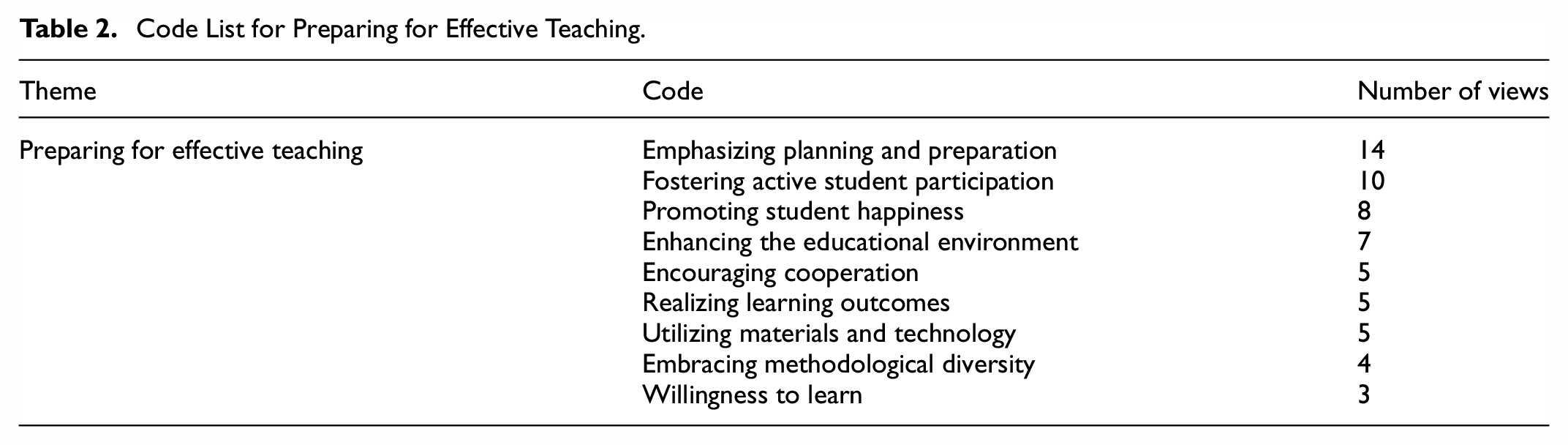
Table 2 outlines the themes reflecting teachers’ perspectives on what constitutes effective preparation for teaching. These codes serve to illuminate the multifaceted elements teachers prioritize when designing and executing their lessons. The themes range from foundational tasks, such as planning and preparing, to more nuanced areas, including fostering engagement, collaboration, and using diverse methods to address student needs.
Highlighting Key Themes in Preparing for Effective Teaching
Emphasizing Planning and Preparation
Planning and preparation were consistently highlighted by teachers as essential for creating an effective teaching process. Teachers acknowledged that meticulous planning facilitates the smooth progression of lessons and enables adaptability to unforeseen challenges. For example, T22 stated:
Selecting the appropriate teaching method, technique, and approach for the subject to be taught ensures that the teaching process progresses as desired.
This perspective is supported by literature emphasizing that planning not only guides the instructional flow but also equips teachers to handle unexpected scenarios effectively (Patton, 2015).
Fostering Active Student Participation
Teachers identified active student participation as a cornerstone of effective teaching. Structured lessons that ensure engagement and equal opportunities for all students were viewed as more impactful. T38 emphasized this by stating:
Where students actively participate, equal opportunities are provided, and their learning needs are addressed …
This finding resonates with the principles of student-centered learning approaches, which prioritize active involvement as a critical component of effective education (Creswell & Poth, 2018).
Promoting Student Happiness
The importance of fostering a positive emotional environment in the classroom was another recurring theme. Teachers noted that happy students are more likely to actively participate, leading to more efficient learning outcomes. T4 and T53 remarked:
When a student feels valued and senses that their opinions are taken into account, it yields positive outcomes in every respect …
This aligns with research highlighting the role of psychological well-being in enhancing learning and teaching effectiveness (Bryman, 2016).
Enhancing the Educational Environment
Organizing the educational environment to align with students’ needs and classroom dynamics was also underscored by participants. T6 shared:
The physical suitability of the environment for teaching …
This highlights the significance of a conducive learning environment in sustaining students’ attention and participation. The literature further supports the role of physical and contextual arrangements in fostering effective learning (Dillman et al., 2014).
Encouraging Cooperation
Teachers stressed the value of cooperation among educators, students, and parents to achieve better educational outcomes. As T31 stated:
Success comes with the harmonious, willing, and productive continuation of teaching by the three essential pillars of education: teacher, student, and parents,
Teacher-parent collaboration has been shown to significantly enhance student achievement and engagement (Babbie, 2020).
Realizing Learning Outcomes
Achieving learning objectives was described as a key metric for evaluating teaching effectiveness. T30 expressed:
Reaching the targeted outcomes and indicators positively impacts the teaching process.
This aligns with literature emphasizing outcome-based education as a means of assessing teaching success (Marzano, 2007).
Utilizing Materials and Technology
The integration of materials and technology was recognized as an impactful strategy for enhancing lesson effectiveness. T45 noted:
If the topics taught are supported with visual, auditory, and technology-based materials, the effectiveness and retention of teaching will increase.
This reflects the critical role of educational technology in modern teaching practices, fostering engagement and retention (Selwyn, 2022).
Embracing Methodological Diversity
Teachers acknowledged the importance of employing diverse teaching methods to accommodate various learning styles. T9 stated:
The richness of teaching and learning techniques positively impacts the teaching process.
This is consistent with Gardner’s Theory of Multiple Intelligences, which advocates for varied instructional approaches to meet diverse student needs (Gardner, 1993).
These key themes collectively illustrate the multi-dimensional strategies that teachers employ to enhance the teaching process, offering insights into how effective teaching can be structured and sustained.
Organizing the Teaching Process
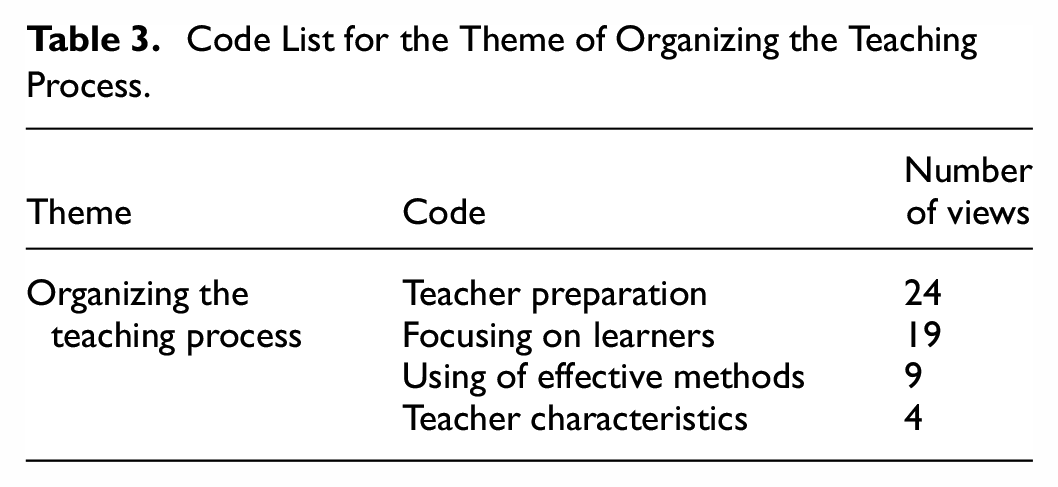
This section presents the themes, codes, and teachers’ perspectives related to organizing the teaching process. It explores critical elements such as teacher preparation, a focus on learners, the use of effective methods, and teacher characteristics.
When examining Table 3, it is evident that teachers’ views on organizing the teaching process are grouped around four main themes: teacher preparation, focusing on learners, using of effective methods, and teacher characteristics. These findings highlight the key elements that teachers should consider when structuring a successful teaching process.
Code List for the Theme of Organizing the Teaching Process.
Highlighting Key Themes in Organizing the Teaching Process
Teacher Preparation
Teacher preparation emerged as a foundational component in organizing the teaching process. Participants highlighted the importance of detailed planning, including the selection of methods, techniques, and materials tailored to lesson objectives. As T4 noted:
By planning the content, process, methods, and techniques that will be effective during the process and following a timeline, I organize the entire process. Planning is the foundation, the guide, the roadmap for everything …
This insight underscores the necessity of preparation in creating a structured and adaptable teaching process. Effective planning not only ensures the smooth delivery of lessons but also provides flexibility to address unforeseen challenges (Creswell & Poth, 2018).
Focusing on Learners
Teachers emphasized the need to center the teaching process around the individual characteristics of students. By considering factors such as developmental stages, interests, and learning needs, teachers can enhance engagement and learning outcomes. T3 described this approach succinctly:
A good teacher structures the teaching process by considering the needs and individual characteristics of the students …
This learner-centered approach aligns with research advocating for personalized educational strategies that respond to diverse student profiles (Patton, 2015).
Using Effective Methods
The application of diverse teaching methods was a recurring theme in the discussions. Teachers stressed the importance of employing techniques that encourage active participation and align with students’ abilities and interests. As T27 explained:
The process is structured through methods that support learning by considering children’s interests and abilities.
This reflects the pivotal role of method variety in addressing different learning styles and fostering a dynamic classroom environment (Bryman, 2016).
Teacher Characteristics
Participants also highlighted the critical influence of teachers’ personal and professional attributes. Establishing effective communication, serving as a role model, and creating a supportive learning environment were identified as essential teacher qualities. T1 remarked:
A good teacher knows the students, communicates well with them, … and maintains good communication and interaction with parents.
These attributes contribute significantly to classroom management and the overall effectiveness of the teaching process (Babbie, 2020).
Using Tools in the Teaching Process
Table 4 below presents the views of the participating teachers regarding the using of tools and materials in the teaching process, grouped around three main themes: the use of various tools, the use of technology, and student applications.
Code List for the Theme of Using Tools and Equipment in the Teaching Process.
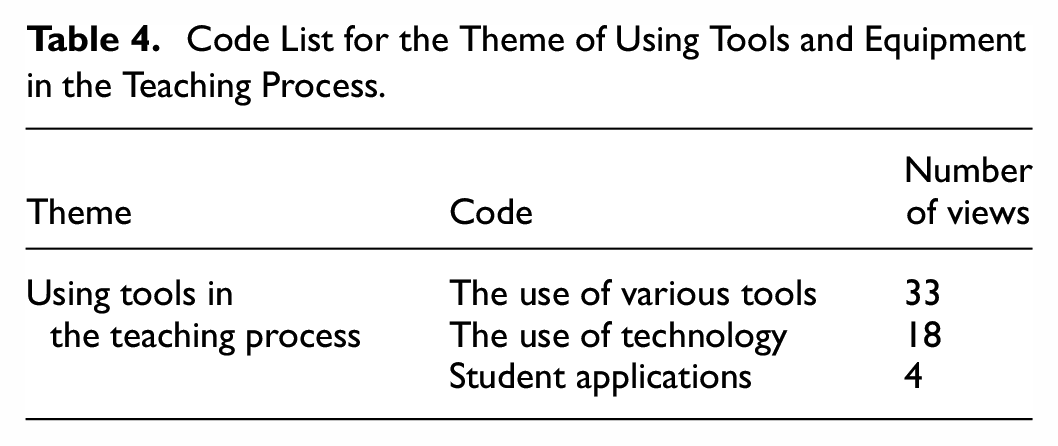
When examining Table 4, it is evident that teachers’ views on the using of tools in the teaching process are grouped around three main themes: the use of various tools, the use of technology, and student applications. These findings reflect teachers’ perspectives on how the use of tools in the teaching process enhances the quality of lessons.
The Use of Various Tools
Teachers frequently emphasized the role of visual and auditory tools in making lessons engaging and impactful. For instance, T2 shared:
It is necessary to use different tools to make the teaching process more efficient. … I enrich the environment by using tools and materials, creating opportunities for communication and active participation.
These tools enhance attention and retention by appealing to multiple senses (Schunk, 2012).
The Use of Technology
The integration of technology into the teaching process was another critical aspect. Participants highlighted the effectiveness of digital tools, such as smart boards and Web 2.0 applications, in enriching the learning experience. T18 noted:
I reinforce the learning outcomes of my lessons mostly through texts and post-text activities in books. … I support them with videos using smart boards.
This aligns with research demonstrating the transformative impact of technology in education (Selwyn, 2011). Technological tools provide students with opportunities to access lesson materials from different perspectives, making the learning process more dynamic and engaging.
Student Applications
Teachers emphasized the importance of engaging students directly with tools and materials to foster active learning. T1 explained:
I use tools and materials to ensure students are active. … I make sure students themselves use the experiment tools.
Active participation through hands-on experiences enhances understanding and retention (Vygotsky, 1978).
Methods and Techniques for Effective Teaching
The methods and techniques used by teachers to organize the teaching process are crucial for engaging students and ensuring optimal learning outcomes. Based on Table 5, teachers’ insights are grouped under five primary themes: student-centered approaches, diversity of methods, applied methods, outcome-based approaches, and group/collaborative methods. Each theme highlights specific strategies employed to enhance teaching effectiveness.
Code List for the Theme of Methods-techniques Used in the Effective Teaching.

When examining Table 5, it is observed that the teachers’ views on the methods-techniques used in the effective teaching are grouped around five main themes: student-centered approaches, diversity of methods, applied methods, outcome-based approaches, and group/collaborative. These findings provide detailed insights into the strategies teachers use to make the teaching process more efficient and effective.
Student-centered Approaches
Teachers emphasized the importance of tailoring teaching methods to the individual characteristics and needs of students. This approach involves designing activities that cater to students’ interests, developmental stages, and learning preferences. For instance, T6 remarked:
I design activities and methods by considering the children’s interests, needs, and developmental characteristics.
This perspective aligns with contemporary educational theories that advocate for individualized learning, emphasizing the need to adapt instructional strategies to support diverse learner profiles (Tomlinson, 2001).
Diversity of Methods
The use of a variety of teaching techniques was another key finding. Teachers reported employing multiple methods simultaneously or alternately to address the varied learning styles of students. T3 highlighted:
I try to use multiple methods and techniques together, if necessary, according to individual characteristics and needs.
This diversity ensures that the teaching process is inclusive and effective, reflecting Gardner’s Theory of Multiple Intelligences, which underscores the benefits of incorporating diverse instructional techniques to engage students with different strengths (Gardner, 1993).
Applied Methods
Hands-on and experiential teaching approaches were identified as integral to enhancing student participation and comprehension. Teachers highlighted their preference for methods that enable students to learn through doing and experiencing. For example, T37 stated:
The demonstration method is one of the techniques I use the most,
This approach is supported by Kolb’s Experiential Learning Theory, which emphasizes the transformative impact of direct, practical experiences on learning outcomes (Kolb, 1984).
Outcome-based Approaches
Another significant theme was the emphasis on aligning teaching methods with predefined learning objectives. Teachers underscored the importance of focusing on lesson outcomes to guide their instructional strategies. As T5 expressed:
When my planning is complete, the process is efficient, especially when teaching interdisciplinary lessons.
This finding reflects the principles of outcome-based education, which prioritizes achieving specific competencies and learning goals in instructional planning (Marzano, 2007).
Group and Collaborative Methods
The importance of fostering collaboration among students through group activities was frequently mentioned. Teachers noted that collaborative learning encourages active participation and enhances the overall learning experience. T47 explained:
I make the process more efficient by organizing group activities.
Collaborative learning approaches, as advocated by Johnson and Johnson (1999), highlight the benefits of teamwork in promoting deeper understanding and social interaction in the classroom.
These themes collectively underscore the multifaceted nature of organizing the teaching process (Johnson and Johnson, 2014). By employing diverse methods and aligning them with students’ needs and learning outcomes, teachers can create engaging and effective learning environments that support academic success.
Addressing Challenges in Enhancing Teaching Efficiency
This section delves into the key factors that hinder the teaching process’s efficiency and the solutions suggested by teachers to mitigate these challenges. The findings are presented in a structured manner to offer a detailed understanding of the issues impacting the teaching process and potential resolutions.
The findings presented in Table 6 comprehensively reveal the primary factors that hinder the efficiency of the teaching process. In addition to student- and teacher-related issues, factors such as physical deficiencies, an intensive teaching program, and low motivation stand out as the main challenges preventing the teaching process from progressing as planned. Moreover, inadequate parental support and limited involvement from school administrators further complicate the teachers’ ability to manage the process effectively. These findings demonstrate that various components within the educational environment have a direct impact on process efficiency, and addressing these issues is critical for improving the overall effectiveness of the teaching process.
Code List for the Theme of Challenges Hindering Teaching Efficiency.

Highlighting Key Themes in Addressing Challenges in Enhancing Teaching Efficiency
Student-related Issues
Challenges arising from student behaviors, readiness, and focus were frequently highlighted. Teachers pointed to the lack of readiness and disruptive behaviors as major hindrances. For instance, T25 stated,
The lack of student readiness, arriving unprepared for lessons requiring prior preparation, and failing to bring necessary materials negatively affect the teaching process.
L. E. Kim and Lawson (2020) also highlight that students’ readiness levels and interest in lessons directly influence the success of the teaching process. These findings demonstrate that student interest and attention span are critical to enhancing the quality of the teaching process.
Physical Deficiencies
Overcrowded classrooms, inflexible layouts, and poor facilities were cited as major concerns. T1 remarked,
The inflexibility of classrooms, meaning that desks and chairs cannot be easily moved, the lack of flexibility provided by education administrators, and complaints about noise even during the smallest activity make the process difficult.
This finding aligns with Barrett et al. (2015), who stress the importance of well-designed physical environments in enhancing teaching effectiveness.
Teacher-related Issues
Teacher dissatisfaction and inadequate preparation emerged as key challenges. T31 noted,
Factors such as teacher dissatisfaction, family issues, and low salaries directly affect teacher productivity.
T39 pointed out,
The lack of interaction between teachers and the diminishing value placed on teachers are among the most significant factors that reduce the quality of the teaching process.
Klassen and Chiu (2010) emphasize that teacher motivation and satisfaction are crucial for maintaining high-quality teaching processes.
Intensive Teaching Programs
Participants criticized overloaded curricula, which pressure both students and teachers. T3 observed,
I believe that the intense curriculum, which requires children to be in constant competition, reduces productivity.
highlighting the negative impact of pressure on students within the teaching process. Similarly, T38 pointed out,
The heavy teaching program, goals that are beyond the students’ level, and the obligation to use a single textbook reduce efficiency.
Dumont and Istance (2010) advocate for flexible, student-centered teaching programs to alleviate such pressures.
Low Motivation
A lack of motivation among teachers was identified as a factor negatively impacting classroom dynamics. T9 and T24 stressed,
The lack of professional motivation in teachers, student motivation issues, the failure to use appropriate strategies, methods, techniques, and materials, and the lack of structured teaching … The teacher’s motivation is very important; particularly the wrong attitudes of parents and colleagues can wear a teacher down.
Skaalvik and Skaalvik (2017) highlight the link between intrinsic motivation and successful teaching outcomes.
Parental Involvement
The absence of adequate parental support was cited as a barrier to student success. T39 remarked,
Students with indifferent families and low economic status are less interested in learning.
Epstein (2011) supports this, noting that parental involvement enhances academic outcomes and motivation.
Administrative Support
Ineffective school leadership and inadequate administrative support were deemed detrimental. T31 emphasized,
The negative attitude of school administration towards teachers and students.
Leithwood et al. (2020) highlight the importance of effective leadership in creating supportive learning environments.
Material Shortages
The lack of teaching materials and tools was another prominent issue. T5 noted,
The lack of necessary tools and materials, along with insufficient support from the administration, is one of the issues that directly affects the quality of teaching.
The OECD (2018) report echoes this, stressing the need for adequate resources to support both teacher performance and student outcomes.
Inadequate Planning
Finally, insufficient planning emerged as a critical challenge. T2 remarked,
The efficiency of the process depends on the correct use of goals, activities, and assessment. If the processes are not carefully planned, learning is disrupted, the teacher panics, and time management becomes weak.
Glickman et al. (2017) underscore the importance of meticulous planning in ensuring effective teaching processes.
The findings underscore that improving the teaching process requires addressing systemic, institutional, and interpersonal challenges. Effective collaboration among teachers, administrators, and parents, coupled with adequate resources and teacher support, can significantly enhance teaching efficiency and outcomes.
Addressing Challenges in the Teaching Process: Factors and Proposed Solutions
This section delves into the challenges that hinder the efficiency of the teaching process, along with proposed solutions, based on teachers’ insights. Table 7 presents the key themes and codes that emerged from the analysis, offering a detailed perspective on how teachers address these issues.
Code List for the Theme of Ways to Solve the Problems Experienced in the Teaching Process.

The findings presented in Table 7 demonstrate that teachers employ a wide range of strategies at both individual and systemic levels to overcome challenges in the teaching process. Key themes include teacher effort, general recommendations, curriculum adjustments, and the enhancement of instructional design and physical learning environments.
Teacher Effort
Participating teachers highlighted their individual efforts as pivotal in resolving teaching challenges. Efforts ranged from meticulous lesson planning and preparing materials to fostering student engagement and maintaining effective communication with parents. For instance:
I boost my motivation by attending in-service training and sharing what I learn with my class and colleagues. (T24). I come to my lesson well-prepared, and to prevent disruptive behaviors, I make the students enjoy the lesson. (T53).
These findings align with the literature emphasizing the significance of teacher initiative and leadership in addressing educational challenges (Day & Gu, 2014).
General Recommendations
Teachers proposed several general strategies, including integrating external resources, seeking support from experienced colleagues, and maintaining effective communication with parents:
I try to increase interaction and sharing by bringing books from the Z library and having students bring materials they use at home into the classroom. (T1). I make the process more flexible by seeking help from experienced individuals and considering the students’ requests. (T4).
Research by Harris and Jones (2019) supports the efficacy of collaboration and resource sharing in mitigating teaching challenges.
Lightening the Curriculum
A prominent recommendation was reducing curriculum intensity to alleviate pressure on both students and teachers:
Reducing the content of the curriculum and moving away from exam-oriented programs could make the educational environment much more successful. (T42).
Kärkkäinen (2012) underscores the importance of flexible, student-centered curricula in fostering motivation and improving educational outcomes.
Instructional Design
Effective instructional design was frequently mentioned as a key solution:
Teaching must be well designed. If the student is motivated, there won’t be any problems affecting the teaching process. (T10)
Merrill (2002) highlights the role of comprehensive instructional design in enhancing student engagement and motivation.
Using Different Methods
Teachers emphasized the benefits of employing diverse methods and techniques to maintain student attention and engagement:
When students lose focus, I can change the methods I use during instruction. I can frequently meet with parents and gradually increase responsibilities for students by starting with simple tasks. I also pre-determine alternative methods.
Dumitru (2020) advocates for the use of varied teaching approaches to create dynamic learning environments.
Improving Physical Facilities
The importance of enhancing physical and technological infrastructure was frequently highlighted:
The school’s physical features, such as ergonomic desks and chairs, can be improved. It is essential to organize schools that are technology-supported and meet the needs of the modern age. The technological infrastructure should be further developed, and in-service training for teachers should be increased. (T45)
Muñoz et al. (2021) emphasize the direct impact of physical learning environments on teaching efficiency and student outcomes.
Cooperation
Collaboration among teachers, parents, and school administrators was identified as essential:
The first step is to understand the problem. Then, I try to resolve it by collaborating with the school, family, and my colleagues. (T7).
Aubert et al. (2019) affirm that effective collaboration positively impacts student success and the teaching process.
Teacher Motivation
Low motivation was identified as a barrier, and improving teacher well-being was suggested as a solution:
We can ensure that teachers are more motivated and energetic in preparing for classes by improving their financial benefits. (T8)
Skaalvik and Skaalvik (2017) highlight the direct relationship between teacher motivation and classroom effectiveness.
Teacher Education
The significance of professional development was stressed:
Financial and moral improvements should be made to increase teachers’ professional commitment, professional dignity should be restored, and teachers’ professional knowledge should be updated through in-service training, (T6)
Darling-Hammond and Hyler (2020) emphasize the critical role of ongoing professional development in improving teaching quality.
Improving Learning Environments
Lastly, enriching learning environments was noted as crucial:
Making teaching environments suitable for using different methods and tools, and transforming the learning outcomes into practical, realistic expressions within the learning environment can increase the efficiency of the teaching process.
Schneider (2020) highlights the importance of well-designed learning spaces in fostering student engagement and success.
Discussion
The central research problem of this study focuses on understanding the strategies teachers employ to improve the efficiency of the teaching process and the ways these processes can be structured more effectively. Accordingly, the research addressed three primary questions: (1) What are the core elements of preparing for effective teaching? (2) How can the teaching process be successfully organized to maximize learning? (3) What are the significant barriers to teaching efficiency, and what solutions do teachers propose to overcome these challenges? The findings are discussed within the framework of these revised themes, emphasizing teachers’ perspectives and evaluating strategies to optimize the teaching process.
Preparing for Effective Teaching
Preparing for effective teaching is achieved by bringing together numerous critical elements in harmony. According to the findings of this study, teachers define the preparation for effective teaching based on planning and preparation, active and happy student participation, an appropriate learning environment, collaboration, achieving learning outcomes, the use of materials and technology, a variety of teaching methods, and students’ willingness to learn. These elements are supported both theoretically and practically to enhance the effectiveness of the teaching process, and they are consistent with the literature.
The participating teachers emphasized that one of the most fundamental elements of preparing for effective teaching is planning and preparation. Teachers stated that pre-lesson planning not only makes the teaching process more organized but also increases students’ interest in the lesson. These findings are supported by Järvelä and Hadwin (2013), who highlighted the importance of pre-lesson preparations for ensuring an efficient classroom teaching process and maintaining students’ attention. Similarly, Van der Walt and Maree (2017) noted that planning provides teachers with flexibility in unexpected situations and allows for more effective management of the process. Therefore, a well-planned and foresighted teaching process plays a crucial role in enhancing the success of the lesson.
According to the participating teachers, the concept of a happy student also plays a critical role in ensuring the efficiency of preparing for effective teaching. Teachers expressed that students who are eager and motivated to participate in lessons contribute directly to the success of the learning process. Seligman (2011) supports this by stating that happy and motivated students are more open to learning, which positively influences academic achievement. Therefore, having students who are both happy and motivated in the teaching process makes the learning environment more effective.
The organization of the educational environment has also been emphasized as a crucial factor by the participating teachers in preparing for effective teaching. They noted that the classroom setting should be arranged in a way that captures students’ interest. This finding is supported by Schneider (2020), who highlights that a physically and psychologically appropriate learning environment enhances students’ motivation and encourages their participation in the learning process. Classrooms supported by technological tools and suitable materials not only facilitate active student engagement but also increase the retention of learned information. In this context, the participating teachers emphasized that the use of materials and technology enriches the teaching process, capturing students’ attention and making the learning experience more effective. These perspectives are further supported by Muñoz et al. (2021), who state that the effective use of technology and materials in teaching enhances student focus and makes learning more permanent. The use of technological tools in the classroom, particularly for simplifying complex topics, helps to make them more understandable and enriches the overall learning process.
Teachers emphasized that cooperation is also a key factor in the success of preparing for effective teaching, particularly highlighting the importance of effective communication with parents and school administration. This perspective is supported by research from Aubert et al. (2019), which indicates that collaboration between families, teachers, and students contributes positively to learning processes and enhances students’ academic achievements. Teachers noted that maintaining regular communication with parents and collaborating with school management are essential in addressing any disruptions in the teaching process.
Organizing the Teaching Process
Organizing the teaching process is a critical element highlighted by teachers to ensure the success and effectiveness of educational practices. The findings of this study reveal that teachers believe well-organized classroom activities, carefully selected teaching methods, and the strategic use of instructional materials are integral to a productive teaching process. These elements, when planned and structured with a student-centered approach, go beyond the mere delivery of content. Instead, they focus on fostering a cohesive and engaging learning environment that facilitates active student participation and supports diverse learning needs.
Teacher preparation plays a pivotal role in organizing the teaching process effectively. The participating teachers highlighted that thorough preparation is essential for ensuring an efficient and impactful teaching process. A well-prepared lesson structure not only facilitates a seamless flow of teaching but also enhances student engagement and the optimal use of instructional materials. Merrill (2002) underscores the importance of comprehensive teacher preparation in achieving successful educational outcomes. Similarly, Gage and Berliner (1998) emphasize that robust teacher preparation bolsters classroom management and provides the flexibility needed to adapt to unexpected situations. Detailed lesson planning also enables teachers to address potential challenges proactively while promoting the efficient execution of student-centered activities.
The participating teachers emphasized that focusing on learners is central to the success of the teaching process. Structuring teaching processes around students’ individual needs and preferences contributes to more effective and enduring learning experiences. Tomlinson (2014) argues that student-centered approaches demand differentiation in lessons to ensure active participation from every student. Similarly, Hattie (2009) underscores the importance of student-centered teaching strategies in fostering deep learning and enhancing students’ motivation. By tailoring the teaching process to align with students’ interests, needs, and learning styles, teachers can significantly increase active student engagement, making the teaching process more meaningful and efficient.
The effective use of methods and technology is a critical strategy that teachers employ to enhance the teaching process and enrich student learning. The participating teachers highlighted that incorporating a variety of teaching methods and integrating technology into lessons not only increases student interest but also makes the learning process more engaging. Merrill (2002) emphasizes that diverse teaching methods provide flexibility and contribute significantly to the success of the teaching process. Similarly, Muñoz et al. (2021) assert that technology-supported teaching approaches enhance student participation and improve the retention of learned material. By employing multiple teaching methods, teachers can accommodate diverse learning styles, while the integration of technology creates a more dynamic and interactive classroom environment, further enhancing student engagement.
Teacher characteristics play a pivotal role in determining the success of the teaching process. The participating teachers underscored that the attributes and behaviors exhibited by teachers during lessons directly influence the quality of teaching and learning. A competent teacher not only delivers content effectively but also builds strong communication with students, motivates them, and serves as a guide throughout the learning process. Hattie (2020) highlights that the teacher’s pedagogical expertise and ability to establish positive relationships with students are critical determinants of the learning process’s success. Teachers with robust pedagogical skills are better equipped to manage lesson flow, foster engagement, and adapt to the needs of diverse learners. By understanding and addressing students’ needs, teachers can significantly enhance the teaching process’s overall effectiveness.
The integration of diverse tools is a significant factor in enhancing the quality and engagement of the teaching process. Participating teachers emphasized that incorporating visual and auditory tools into lessons captures students’ attention and makes learning more engaging. Schneider (2020) highlights that technological tools integrated into education not only boost students’ motivation but also make lessons more dynamic and interactive. The strategic use of technology and materials strengthens the teaching process by fostering greater student participation and engagement. Muñoz et al. (2021) further emphasize that technology-supported tools enrich the learning experience, making knowledge more permanent. The effective deployment of these tools by teachers supports student-centered learning and significantly improves the overall effectiveness of the teaching process.
Addressing Challenges in Enhancing Teaching Efficiency
Issues related to students have been consistently identified by teachers as major barriers to the efficiency of the teaching process. Teachers highlighted that low readiness levels, attention problems, and disruptive behaviors impede the smooth flow of lessons. Specifically, a lack of focus, disinterest in learning, and insufficient preparedness among students were frequently cited as critical challenges that diminish the effectiveness of teaching.
Hattie (2009) supports this perspective, noting that student disengagement and lack of motivation are pivotal factors that directly affect learning outcomes. When students fail to actively participate in lessons, even the most effective teaching strategies lose their impact, significantly reducing the efficiency of the learning process. Tomlinson (2014) further emphasizes that student-centered teaching approaches are essential for sparking students’ interest in lessons. By fostering active engagement, student-centered strategies create a more dynamic and successful teaching process. These findings underscore the importance of addressing student-related challenges to enhance the quality and efficiency of the teaching process.
Physical inadequacies significantly impede the efficiency of the teaching process. Overcrowded classrooms, unsuitable classroom arrangements, and the absence of adequate technological resources create challenges for teachers in delivering effective lessons. Participating teachers emphasized that the lack of flexibility in classroom design and insufficient equipment not only disrupt the teaching process but also hinder student engagement.
Schneider (2020) highlights the critical role of educational environments in influencing students’ motivation and academic success. Improvements in physical conditions, such as classroom arrangements and technological infrastructure, are shown to have a positive impact on students’ learning experiences. Similarly, Muñoz et al. (2021) underscore that inadequate physical resources diminish the feasibility of implementing dynamic and interactive classroom activities, thereby complicating the teaching process. To enhance the efficiency of the teaching process, it is imperative to organize educational environments to address students’ physical and technological needs. Modernizing classroom settings and integrating appropriate technological tools can significantly improve teaching effectiveness and student engagement.
Problems related to teachers are another significant factor that directly affects the teaching process. Participating teachers highlighted that low motivation, job dissatisfaction, and insufficient planning adversely influence the effectiveness of teaching. Teachers with diminished enthusiasm or lack of professional fulfillment are less likely to implement effective teaching strategies, which, in turn, hinders student engagement and learning outcomes. Hattie (2020) emphasizes the crucial impact of teacher motivation and pedagogical competencies on student achievement, noting that motivated teachers are more likely to foster positive learning environments. Similarly, Gage and Berliner (1998) stress that low teacher motivation can restrict the effective use of teaching methods and complicate classroom management, leading to decreased teaching efficiency. In this context, efforts to boost teacher motivation and enhance planning processes are essential. Providing opportunities for professional development, recognizing teacher contributions, and offering better support systems can significantly improve teacher satisfaction and performance, ultimately strengthening the teaching process.
The heavy teaching schedule is another critical issue frequently highlighted as a barrier in the teaching process. Participating teachers emphasized that the overly dense curriculum restricts their ability to delve deeply into subjects, often forcing them to prioritize coverage over depth. This compromises the quality of teaching and learning. Tomlinson (2014) underscores that overloaded curricula place undue pressure on both teachers and students, adversely affecting learning processes by leaving little room for exploration or creativity. Similarly, Schneider (2020) notes that dense teaching schedules limit the flexibility required for meaningful engagement and deep learning in the classroom. These findings reveal that excessive curricular intensity disrupts the teaching process, preventing teachers from delivering lessons effectively and making it harder for students to fully immerse themselves in the learning experience. To address this issue, a more balanced and student-centered curriculum design is necessary. Reducing the volume of mandatory content and focusing on essential skills and knowledge can create a more conducive environment for both teaching and learning.
Low motivation remains a prevalent challenge for both teachers and students, significantly affecting the teaching process. A lack of professional motivation among teachers hampers their ability to implement innovative teaching methods, while low student motivation diminishes engagement and interest in lessons. Hattie (2009) underscores the profound impact of teacher motivation on students’ learning outcomes, pointing out that environments with low teacher motivation are often associated with reduced student achievement. Similarly, Merrill (2002) emphasizes that highly motivated teachers are better equipped to employ creative and diverse strategies in lesson planning, thereby enriching the overall learning experience. These findings highlight the necessity of fostering both teacher and student motivation to improve the quality and effectiveness of the teaching process.
Insufficient parental support is a significant obstacle to the efficiency of the teaching process, as family involvement plays a pivotal role in fostering students’ academic success and engagement. Teachers reported that the lack of parental involvement complicates efforts to motivate students and maintain their interest in lessons. Desforges and Abouchaar (2003) emphasize that active family participation is strongly correlated with improved academic performance, while insufficient support can impede students’ success. Similarly, Hattie (2009) highlights the crucial role families play in shaping students’ learning experiences, stating that the absence of parental involvement negatively impacts students’ motivation, participation, and overall performance in the teaching process.
Insufficient administrative support represents a considerable challenge to the success of the teaching process. Participating teachers indicated that the lack of necessary backing from school administrators during instructional processes reduces teacher motivation and hinders the overall efficiency of teaching. Muñoz et al. (2021) underline that support from school leaders significantly enhances teachers’ classroom performance, resulting in more effective educational outcomes. Similarly, Gage and Berliner (1998) stress that robust school leadership fosters higher teacher motivation, which positively influences the teaching process. These findings highlight the critical role of administrative support in empowering teachers to deliver more efficient and impactful lessons.
Material deficiencies were identified by teachers as another critical issue negatively affecting the efficiency of the teaching process. The lack of adequate teaching tools and technological resources was highlighted as a barrier to delivering effective lessons. Schneider (2020) emphasizes that the use of diverse and innovative materials in the classroom enriches students’ learning experiences and boosts their motivation. Similarly, Muñoz et al. (2021) argue that insufficient resources hinder the implementation of interactive and engaging classroom activities, thereby reducing the effectiveness of the teaching process. Providing sufficient teaching materials and technological tools is essential for creating a more dynamic and student-centered learning environment.
Inadequate planning is one of the most critical factors hindering the effectiveness of the teaching process. The participating teachers emphasized that insufficient lesson planning leads to disruptions, creating challenges in conducting lessons efficiently. Merrill (2002) underscores the importance of planning as a cornerstone for success in teaching, noting that poor planning disrupts lesson flow and diminishes instructional quality. Hattie (2020) highlights that well-structured lesson planning enhances flexibility in teaching and fosters greater student engagement, allowing for a more dynamic and effective learning environment. These findings emphasize the need for meticulous preparation to ensure a seamless and productive teaching process.
Addressing Challenges in the Teaching Process: Factors and Proposed Solutions
Participant teachers emphasized that their efforts play a pivotal role in addressing challenges encountered in the teaching process. Teachers have demonstrated initiative in areas such as lesson planning, material preparation, fostering student motivation, and maintaining communication with parents to improve the overall quality of the teaching process. Hattie (2020) highlights that teacher effort and pedagogical competencies significantly impact student achievement, emphasizing the transformative role of proactive teaching practices. Similarly, Muñoz et al. (2021) assert that the personal efforts of teachers are indispensable for enhancing classroom success and ensuring the efficiency of the teaching process. Teachers’ dedication to continuous professional development and their adoption of innovative strategies contribute substantially to the success of the teaching process, ensuring a more engaging and effective learning environment for students.
Participant teachers proposed general strategies aimed at enhancing the teaching process. These include acquiring materials from external sources, consulting with experienced teachers, and fostering effective communication with school management. Tomlinson (2014) underscores the value of collaboration among educators, noting that sharing resources and experiences significantly improves the teaching process. Additionally, Schneider (2020) highlights the critical role that diverse and innovative materials play in increasing student motivation and engagement. By implementing these recommendations, teachers can better utilize available resources, making the teaching process more efficient and effective.
Once again, the participating teachers emphasized the need to simplify the curriculum to address challenges in the teaching process. They pointed out that overloaded curricula hinder the ability to delve deeply into subjects, limiting meaningful engagement. Tomlinson (2014) stresses that curricula should be tailored to students’ needs, noting that excessive content places undue pressure on both teachers and students. Similarly, Hattie (2009) emphasizes that overly dense curricula can disrupt learning processes and reduce their effectiveness. A more flexible and student-centered curriculum can pave the way for deeper, more meaningful learning experiences, enhancing the overall teaching process.
The participating teachers emphasized that a well-designed instructional framework is critical for effective teaching. A carefully structured teaching plan not only enhances students’ interest in the subject matter but also ensures that lessons proceed seamlessly. Merrill (2002) underscores that a thoughtfully crafted instructional design significantly enriches the learning experiences provided by teachers, thereby elevating the overall quality of educational outcomes. Similarly, Muñoz et al. (2021) highlight that an effective teaching design fosters active student engagement and contributes to a more streamlined and productive teaching process.
Teachers emphasized the significance of incorporating diverse teaching methods and techniques to resolve challenges encountered in the teaching process. In particular, student-centered approaches and collaborative learning strategies were highlighted as effective in making the teaching process more engaging and efficient. Tomlinson (2014) asserts that employing a variety of methods tailored to different learning styles enhances students’ interest in lessons. Similarly, Hattie (2009) emphasizes that using multiple methods and techniques promotes active student participation, thus improving the overall effectiveness of the learning process. Adapting teaching techniques to align with students’ needs and interests is recognized as a pivotal strategy for enhancing the quality of education.
Participant teachers emphasized the importance of improving physical conditions to overcome challenges in the teaching process. They stressed the significance of enhancing classroom ergonomics, upgrading technological infrastructure, and creating more adaptable learning environments to increase teaching efficiency. Schneider (2020) highlights that optimizing the physical conditions of learning spaces enhances student participation and positively impacts learning outcomes. Similarly, Muñoz et al. (2021) underscore that technology-supported educational environments not only boost student motivation but also foster greater engagement in lessons, contributing to a more effective teaching process.
Collaboration between schools, families, and teachers is pivotal in addressing challenges within the teaching process. Participant teachers emphasized the necessity of enhancing parent-teacher communication and fostering closer cooperation with school administration to promote student success. Desforges and Abouchaar (2003) underline the significant role of parental involvement in student achievement, highlighting how active parental support positively influences the teaching process. Similarly, Hattie (2009) asserts that collaborative efforts among teachers, students, and parents substantially improve the efficiency and effectiveness of the teaching process, fostering a more conducive learning environment.
Participant teachers highlighted that increasing teacher motivation is a critical factor in enhancing the teaching process. Hattie (2020) underscores that teacher motivation significantly improves classroom performance and positively influences student achievement. Similarly, Gage and Berliner (1998) observe that a lack of teacher motivation undermines the effectiveness of the teaching process and hinders the adoption of innovative approaches in lessons. Improving teachers’ job satisfaction and providing them with the necessary support can lead to more effective teaching processes, allowing educators to deliver lessons more efficiently and with greater enthusiasm.
Participant teachers emphasized that expanding in-service training programs and offering professional development opportunities are pivotal in overcoming challenges within the teaching process. Merrill (2002) stresses that continually updating teachers’ professional knowledge and skills enhances the effectiveness of the teaching process and positively influences learning outcomes. Similarly, Hattie (2009) highlights the critical role of ongoing professional development in improving student achievement. Supporting teachers’ professional growth through structured training opportunities and developmental initiatives will significantly contribute to the efficiency and success of the teaching process.
The participating teachers underlined the significance of creating conducive learning environments to enhance the teaching process. Teachers noted that designing classrooms to accommodate diverse teaching methods and providing spaces equipped with modern technological tools can significantly improve the efficiency of the teaching process. Schneider (2020) highlights that well-organized and resource-rich learning environments positively influence students’ academic performance and engagement levels. Similarly, Muñoz et al. (2021) emphasize that classrooms equipped with advanced technological tools not only capture students’ attention but also foster more interactive and engaging learning experiences. This perspective underscores the need for prioritizing the development and organization of learning spaces to facilitate better educational outcomes.
Conclusion
This study aims to identify the challenges teachers face in enhancing the teaching process and the strategies they propose to overcome these challenges. Based on the feedback from participant teachers, an effective teaching process begins with meticulous planning and preparation. The findings emphasize the importance of fostering active and joyful student participation, creating learning environments tailored to students’ individual needs, and supporting lessons with effective materials and diverse teaching methods. Furthermore, the study highlights the necessity of establishing a collaborative learning environment to strengthen students’ motivation and engagement in the learning process.
The research findings reveal that inadequacies in lesson planning, physical limitations in classroom settings, low teacher motivation, and challenges related to students’ attention and engagement significantly hinder the effectiveness of the teaching process. Conversely, teachers’ proactive efforts and the adoption of a student-centered approach were identified as pivotal in facilitating more effective lesson delivery. The study highlights that teachers’ integration of innovative approaches into lesson planning and the use of flexible methods tailored to students’ individual needs play a crucial role in improving the overall success of the teaching process.
Teachers highlighted several obstacles impeding the effectiveness of the teaching process, such as overloaded curricula, inadequate technological resources in classrooms, lack of student motivation, and low teacher job satisfaction. Furthermore, insufficient support from school administrators and poor communication with parents were noted to adversely affect the process’s overall success. The study underscores the importance of enhancing physical resources, offering teachers continuous professional development opportunities, and restructuring the curriculum to be more flexible as key strategies for improving the effectiveness of the teaching process.
Suggestions
Researchers can examine how students’ lack of motivation, readiness levels, and classroom behaviors affect the teaching process. Studies can also focus on interventions to mitigate the negative impacts of these factors, providing strategies to enhance teaching effectiveness and student engagement.
Research can investigate the connection between the physical conditions of educational environments and the efficiency of the teaching process. Emphasis can be placed on examining how ergonomic arrangements and technological infrastructure contribute to classroom success and enhance students’ learning experiences.
Research can delve into the effects of teachers’ motivation levels on the teaching process. Studies focusing on the implementation of motivation-enhancing programs and their role in improving teacher performance can provide valuable insights into fostering more effective teaching practices.
Research can investigate how curriculum intensity affects both teachers and students, including its influence on teaching efficiency and student engagement. Additionally, studies could explore the advantages of reducing curriculum load and adopting a more student-centered approach to foster meaningful learning experiences.
Research can investigate the impact of parental involvement on student achievement and explore ways to strengthen parent-teacher collaboration to enhance its contributions to the teaching process.
Research can examine the effects of diverse teaching methods, including practical and collaborative approaches, on student achievement, and investigate how method variety contributes to improved classroom learning outcomes.
