




Abstract
Tourism drives economic growth and impacts the environment. This study examines the nonlinear relationships among tourism development, economic growth, foreign direct investment, economic globalization, renewable energy consumption, and greenhouse gas (GHG) emissions in the Organization for Economic Co-operation and Development economies from 1995 to 2020. It also explores how green technological innovation (GTI) moderates and influences the link between tourism development and GHG emissions. We employ panel data analysis techniques, including fully modified ordinary least squares (FMOLS), dynamic ordinary least squares (DOLS), canonical cointegrating regression (CCR), feasible generalized least squares (FGLS), and the method of moments quantile regression (MMQR). We find an inverted U-shaped relationship between tourist numbers and GHG emissions and a U-shaped relationship between tourism receipts and GHG emissions. The moderating effect of GTI flattens the inverted U-shaped curve, thereby reducing the negative environmental impact of tourism to some extent. Our findings suggest that advancing GTI in the tourism industry is crucial for mitigating environmental degradation while promoting economic growth.
Plain language summary
Tourism drives economic growth and impacts the environment. This study examines the relationships among tourism development, economic growth, foreign direct investment (FDI), economic globalization, renewable energy consumption, and greenhouse gas (GHG) emissions in Organization for Economic Co-operation and Development (OECD) economies between 1995 and 2020. It also explores the moderating and threshold effects of green technological innovation (GTI) on the relationship between tourism development and GHG emissions. The empirical results reveal an inverted U-shaped relationship between tourist numbers and GHG emissions and a U-shaped relationship between tourism revenue and GHG emissions. We find that the moderating effect of GTI flattens the inverted U-shaped curve, thereby reducing the negative environmental impact of tourism to some extent. Consequently, advancing GTI in the tourism industry is crucial for mitigating environmental degradation.
Keywords
Highlights
Tourism boosts economic growth but raises environmental concerns.
The study shows tourism affects emissions nonlinearly in OECD countries.
FDI increases emissions, while globalization and renewable energy reduce them.
Green technological innovation is key in mitigating tourism’s environmental impact.
Introduction
During the COVID-19 pandemic and post-pandemic era, revitalizing green economic growth and promoting environmental sustainability have become crucial (Yousaf et al., 2023). Countries are seizing this opportunity to drive the green transformation of their economies (Shang et al., 2023; Werikhe, 2022), focusing on reducing carbon emissions, with ecotourism emerging as a key focus. In November 2021, at the 26th United Nations Climate Change Conference (COP26), countries reaffirmed their commitment to the Paris Agreement goals, emphasizing the need to reduce global carbon dioxide (
While the tourism industry has significantly contributed to economic development, it faces criticism for increasing GHG emissions and negatively impacting environmental quality (Koçak et al., 2020). Traditional perspectives suggest that tourism’s negative environmental effects primarily stem from tourists’ carbon footprint, associated with activities including hotel accommodation, shopping, dining, and transportation at destinations (Nepal et al., 2019; Y. Y. Sun et al., 2020). These activities typically lead to significant GHG emissions. However, international tourism can also enhance environmental quality by promoting economic growth in tourist destinations, encouraging environmentally friendly technologies, and supporting green infrastructure (Balsalobre-Lorente & Leitão, 2020; Erdoğan et al., 2022). Therefore, the relationship between tourism development and environmental pollution remains debated.
Similar to tourism expansion, which involves infrastructure development, foreign direct investment (FDI) encompasses infrastructure construction, production, logistics, and transportation, all of which consume significant energy and contribute to increased
This study focuses on OECD economies because of their well-established tourism industries and advanced infrastructure (Scott & Marzano, 2015). These countries lead in GTI, actively promoting sustainable technologies and contributing valuable experience to global emission reduction efforts (Z. Wang et al., 2023). As key participants in global
The study explores the impact of tourism development, GTI, FDI, economic growth, renewable energy consumption, and economic globalization on GHG emissions in the context of climate change and tourism. The key questions addressed are: (1) How does tourism development affect GHG emissions, what are the relationships among tourist numbers, tourism receipts, and GHG emissions? (2) What is the impact of FDI on GHG emissions in OECD countries? (3) How do economic globalization and renewable energy consumption contribute to emission reduction? (4) Do GTI and tourism development interact to slow the pace of GHG emissions?
This study enhances understanding of the tourism industry’s environmental effects by examining the following aspects. First, it investigates how tourist numbers and tourism revenue affect GHG emissions, to better understand tourism’s environmental effects. Second, it assesses the role of FDI in GHG emissions and explores potential challenges to ecological protection. Third, it analyzes how economic globalization and renewable energy consumption contribute to emission reduction. Fourth, this study incorporates GTI as a moderating variable in a nonlinear model and verifies its effects through threshold tests. This study examines whether GTI can moderate the impact of tourism development on GHG emissions, thus contributing to ecological and sustainable tourism development and improving environmental quality. These analyses offer new insights into the effects of various factors on GHG emissions and provide theoretical support for relevant policy formulation.
The remainder of the paper is organized as follows: Chapter 2 provides a literature review; Chapter 3 includes variable description, model specification, theoretical framework, and preliminary regression tests; Chapter 4 integrates empirical results analysis, asymmetry tests, robustness checks, the moderating effects of nonlinear relationships, and threshold tests; finally, Chapter 5 summarizes the research findings and presents policy recommendations.
Literature Review
Tourism and Environmental Sustainability
Tourism significantly contributes to economic growth, and job creation, making it vital for national economic development (Usman et al., 2020). However, it also impacts
Conversely, Voumik et al. (2023) posited that increased inbound tourism reduces
Scholars have increasingly examined the nonlinear relationship between tourism and environmental impact. Raza et al. (2021) noted an inverted U-shaped relationship in the top 20 global tourist destinations, where tourism initially increased environmental degradation but later reduced it. Zeng et al. (2021) observed an inverted U-shape for PM2.5 and a U-shape for industrial
H1: A non-linear relationship exists between tourist numbers/tourism revenue and GHG emissions in OECD countries.
FDI and Environmental Sustainability
Research on the impact of FDI on
Chen (2023) employed a nonlinear autoregressive distributed Lag (NARDL) model to examine the impact of policies on China’s tourism industry, finding that economic and tourism policies promote tourism growth, whereas environmental factors hinder sustainability. Abid et al. (2022) noted that FDI, financial development, and technological innovation significantly reduce
H2: FDI significant influences GHG emissions in OECD countries.
GTI and Environmental Sustainability
GTI is essential for achieving environmental sustainability by enhancing resource efficiency and reducing emissions (Hu et al., 2022; Hui & Choi, 2024; Xu et al., 2021; Yang et al., 2021). In the tourism industry, eco-friendly measures and green technologies can mitigate negative environmental impacts. Thus, advancements in sustainable tourism and technological innovation can significantly alleviate the pressure from environmental degradation (Ullah et al., 2023). Razzaq et al. (2020) found that in China tourism development reduces
Similarly, Yue et al. (2021) concluded that green innovation and tourism reduce
Conversely, Guan et al. (2022) argued that tourism, globalization, and economic growth increase the ecological footprint, whereas technological innovation alleviates environmental burdens. Ahmad et al. (2022) found that stronger technological innovation in more developed provinces leads to higher
Researchers have analyzed the interaction between technological innovation and tourism in reducing
H3: GTI moderates the relationship between tourism development and GHG emissions.
H4: Economic globalization and renewable energy consumption contribute to reducing GHG emissions in OECD countries.
Research Gap
This study analyzes OECD countries using advanced econometric methods, including FMOLS, DOLS, CCR and FGLS for regression analysis. Additionally, the MMQR model is employed for asymmetric analysis. Unlike many studies that typically use carbon dioxide as an environmental proxy, this study focuses on GHG emissions as an indicator, offering a comprehensive analysis of the effects of tourism development and other control variables on GHG emissions.
Furthermore, this study incorporates an interaction term between GTI and tourism development, employing a panel threshold model to re-evaluate whether their combined effect contributes to the GHG reduction process. The existing literature primarily overlooks this interaction, particularly in exploring how tourism development, in conjunction with GTI, influences environmental sustainability. By addressing this gap, the study provides a fresh and innovative research perspective.
Data and Methodology
Variable
This study examines the impact of tourism and FDI on GHG emissions, using tourism as the core explanatory variable and GTI as a moderating variable. We utilized balanced panel data over 26 years (1995–2020) for 37 OECD countries, excluding Costa Rica owing to the absence of GTI indicators. Data were sourced from the World Development Indicators (WDI), the KOF Financial Globalization Index (KOF), and the OECD. Table 1 details the variables used in this analysis.
Variables List.

Dependent Variable
We used total GHG emissions (LnGHG) as the dependent variable, measured in kilotonnes of
Independent Variable
We selected international tourism (number of arrivals; Lntourism) as the core explanatory variable because it directly reflects the scale of tourism activities and their ecological footprint. The number of international tourist arrivals accurately captures the influx of tourists, which is associated with increases in transportation, accommodation, and other tourism-related activities, that significantly affect GHG emissions. Additionally, using international tourism receipts (Lntravel) as a control variable provides a more comprehensive assessment of tourism’s economic impact, reflecting tourist consumption and the industry’s economic contribution (Rasool et al., 2021). Incorporating both variables into the model offers a more accurate evaluation of tourism’s overall impact on GHG emissions, thereby enhancing the analysis’s accuracy and credibility.
We incorporated green technology innovation (LnGTI) as a moderating variable in the model. Investing in green technology can transform the tourism industry and promote sustainable and eco-friendly tourism (Gavrilović & Maksimović, 2018). Understanding whether GTI influences GHG emissions through its impact on tourism is crucial for balancing economic growth with environmental sustainability.
This study includes the following control variables: GDP per capita (current US$) to measure economic growth; FDI net inflows (BoP, current US$) to capture investment levels; the KOF Economic Globalization Index to represent economic globalization; and the percentage of renewable energy consumption in total final energy consumption to account for sustainable energy use.
Variable Statistics
Table 2 presents the descriptive statistics of the variables, all transformed using natural logarithms. Except for LnGHG,
Summary Statistics.

Model Specification and Theoretical Framework
Econometric Model
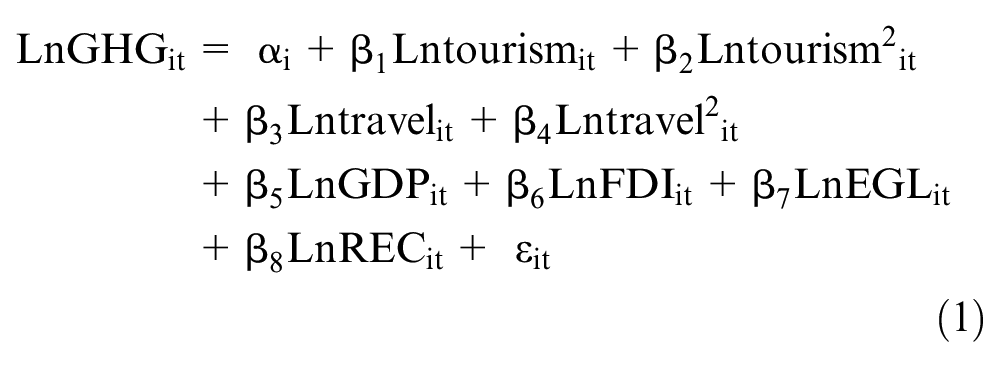
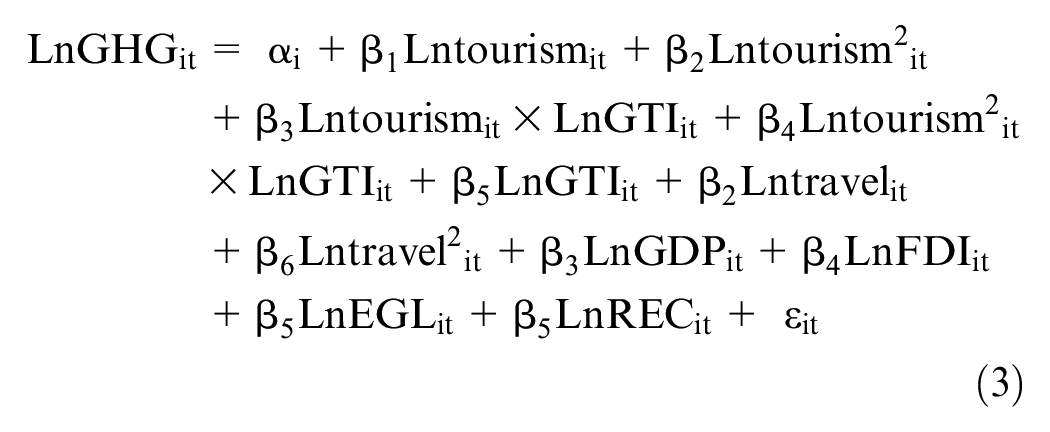
This study examines the nonlinear impact of tourism on GHG emissions in OECD countries. The number of tourist arrivals served as the core explanatory variable, while tourism receipts, GDP per capita, FDI, economic globalization, and renewable energy consumption were used as control variables. GTI was employed as the moderating variable. The basic econometric model is presented in Equation 1. To explore the heterogeneous impact of tourism on GHG emissions, Model (2) utilized MMQR. Additionally, the impact of GTI on the relationship between tourism and GHG emissions was analyzed by including GTI in the basic econometric model, as shown in Equation 3. Equation 4 represents the threshold effect model, with GTI as the threshold variable, where “


Theoretical Framework
This study’s theoretical framework is based on various econometric tests, as shown in Figure 1, which outlines the analytical process. First, we introduced the research background and hypotheses. We then conducted regression pre-checks, including slope homogeneity, cross-sectional dependence (CD), unit roots, and cointegration. Subsequently, we performed regression analysis using the FMOLS, DOLS, CCR, and FGLS methods. Additionally, we conducted an asymmetry test using MMQR and performed a robustness check with an alternative dependent variable. Interaction terms are added to analyze the moderating effect of GTI, and the panel threshold model is used for retesting. Finally, we draw conclusions based on the research findings and propose policy recommendations.

Conceptual framework of this study.
Regression Precheck
Before conducting the overall regression analysis, we performed several diagnostic checks to ensure data and model reliability: variance inflation factor (VIF) checks for multicollinearity issues and prevent inaccurate coefficient estimates, slope homogeneity tests for sample heterogeneity, CD tests for cross-dependence, and. panel unit root and cointegration tests to confirm data stability and long-term relationships between the variables.
First, the model was assessed for multicollinearity using VIF. Table 3 presents a mean VIF of 4.46, indicating that the multicollinearity level is low and acceptable (VIF < 5). Therefore, it does not pose a significant problem for estimation with these variables (Haldar et al., 2023).
Multicollinearity Check.

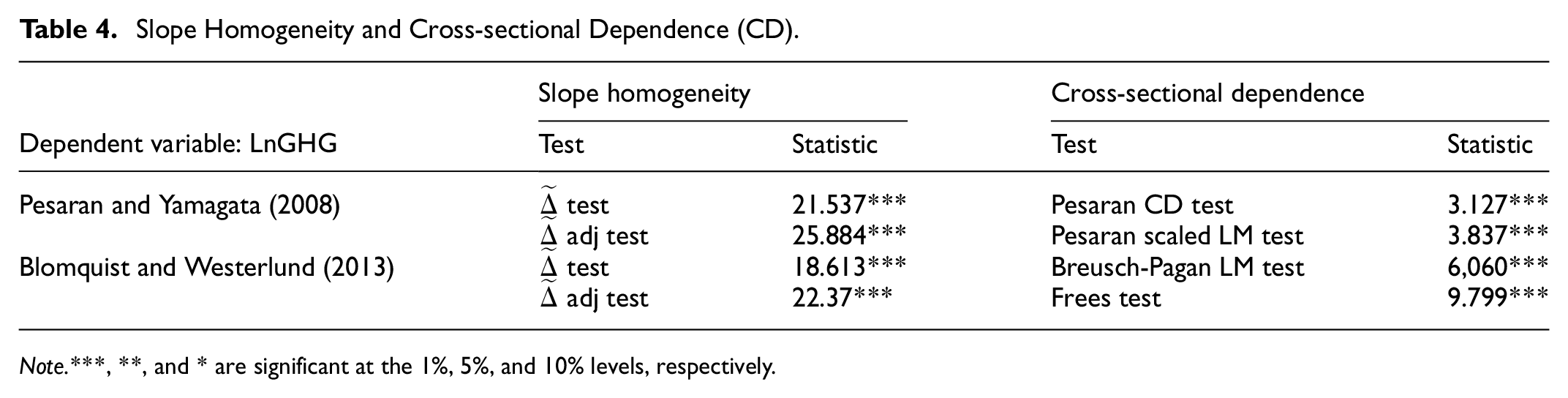
Table 4 presents the results of the slope homogeneity test (Blomquist & Westerlund, 2013; Pesaran & Yamagata, 2008) and the CD test results (Pesaran (2004) CD test, Pesaran (2004) scaled LM test, Breusch and Pagan (1980) LM test, and Frees (1995). The null hypothesis of slope homogeneity assumes that all slope coefficients are the same to determine whether the slopes are homogeneous. At the 1% significance level, this analysis led us to accept the alternative hypothesis, indicating that the coefficients of the model were not consistent and that the slopes varied across countries, suggesting the presence of heterogeneity in the model. The CD test results for CD indicate that the null hypothesis of no CD is valid across the entire sample.
Slope Homogeneity and Cross-sectional Dependence (CD).
Note.***, **, and * are significant at the 1%, 5%, and 10% levels, respectively.
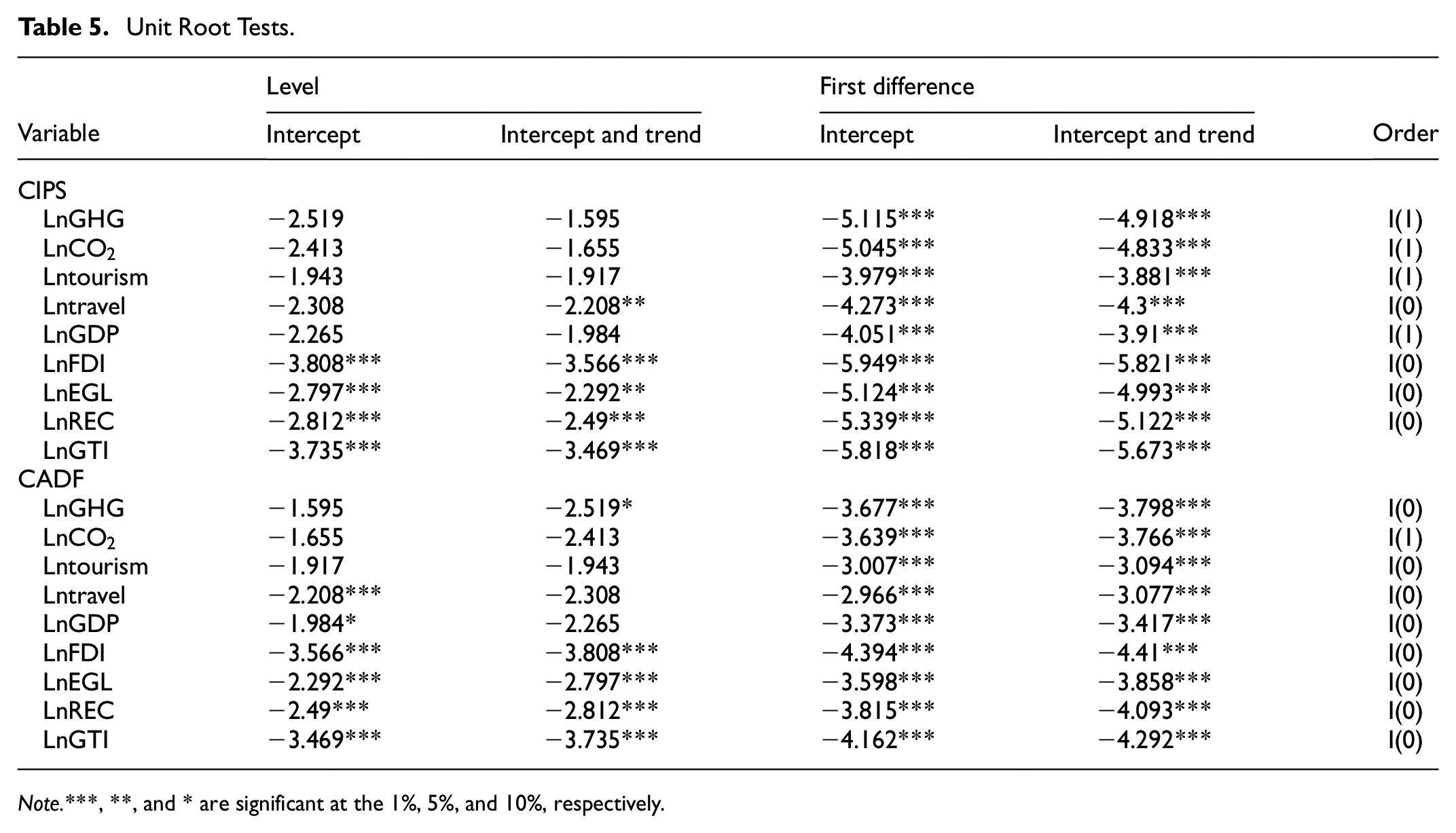
After confirming CD in the panel data variables, we employed the unit root test method to investigate whether a unit root existed in the panel data variables. The CIPS method effectively addresses heterogeneity and CD in panel data. The cross-sectional Augmented Dickey-Fuller (CADF) test, an extension of the traditional Dickey-Fuller unit root test, is designed for panel data analysis with CD. Table 5 presents the CIPS panel unit root test results: some variables are stationary at level (I(0)), while others are stationary at the first difference (I(1)). This mixed integration necessitates using Pedroni’s (2004) cointegration method to avoid potential biases in model building and estimation.
Unit Root Tests.
Note.***, **, and * are significant at the 1%, 5%, and 10%, respectively.
Pedroni’s (2004) panel cointegration test effectively addresses heterogeneity in panel data, allowing for the testing of cointegration among non-stationary variables while considering individual differences. The results presented in Table 6 are significant at the 1% level, indicating a strong cointegration relationship among the variables.
Cointegration Testing.

Note. All test statistics are typically distributed under a null hypothesis of no cointegration.
Benchmark Regression
FMOLS, DOLS, CCR and FGLS Regression
This study employs FMOLS, DOLS, and CCR methods to assess long-term relationships between variables and utilizes the FGLS model to address potential heteroscedasticity and autocorrelation issues. FMOLS, an enhancement of the ordinary least squares (OLS), corrects endogeneity by incorporating lagged values of explanatory variables and error terms, thus providing consistent and efficient estimations (Phillips & Hansen, 1990). DOLS addresses endogeneity by incorporating the first-difference terms (leads and lags) of explanatory variables in the regression equation (Phillips & Loretan, 1991; Saikkonen, 1991; Stock & Watson, 1993). Conversely, the CCR method employs a stationary transformation of the (
The results in Table 7 exhibit an inverted U-shaped relationship between the number of tourists and GHG emissions. Initially, an increase in inbound tourists leads to higher demand for energy-intensive activities, such as transportation (e.g., flights, cars), accommodation (e.g., hotels, resorts), and other related services (e.g., catering and entertainment facilities; Balsalobre-Lorente & Leitão, 2020; Razzaq et al., 2020). Additionally, rapid tourism development often outpaces environmental regulations, leading to increased GHG emissions (Zeng et al., 2021). However, as the industry matures, it adopts more efficient and eco-friendly technologies (Majid et al., 2023; Sustacha et al., 2023), and governments implement stricter environmental measures (Purwono et al., 2024; Raza et al., 2021). This results in decreased emissions per tourist and a decline in total emissions (Zhang et al., 2023). Conversely, the relationship between tourism receipts and GHG emissions follows a U-shape. Initially, as income from tourism receipts increases, the scale effect becomes evident, improving resource utilization efficiency and reducing GHG emissions (Zhang et al., 2023). However, beyond a certain level, consumption patterns shift toward high-energy and high-emission services (Pablo-Romero et al., 2023). As tourism consumption rises further, exceeding the ecological capacity of the region.
FGLS, FMOLS, DOLS and CCR Regression Results.

Note.***, **, and * mean significance at the level of 1%, 5%, and 10%, respectively.
The coefficient for economic development is not significant, indicating an unclear relationship with GHG emissions. Therefore, we used quantile regression. Our analysis shows that increased FDI leads to higher GHG emissions, thus supporting the pollution halo hypothesis. FDI introduces high-quality capital and expands industrial infrastructure and production, thereby stimulating economic growth and energy demand. This increase in fossil fuel consumption increases GHG emissions (Omri & Kahouli, 2014; Tariq et al., 2023). Therefore, while FDI promotes economic growth, it also stresses the environment, highlighting the need for energy structure optimization and enhanced environmental management. Conversely, globalization and renewable energy consumption have reduced GHG emissions. Globalization, a key driver of economic growth, enhances international market access and service availability, thereby promoting environmental improvement (Balsalobre-Lorente & Leitão, 2020). It facilitates technology and knowledge transfer, leading to more efficient and eco-friendly practices, thus reducing GHG emissions (Elfaki & Ahmed, 2024; Guan et al., 2022). Renewable energy consumption significantly contributes to mitigating environmental degradation by providing clean energy, reducing dependence on fossil fuels, and directly lowering GHG emissions (Cao et al., 2022; Naseem & Guang Ji, 2021; Shao et al., 2021).
While traditional regression models with a quadratic term can identify U-shaped or inverted U-shaped relationships, they have limitations (Lind & Mehlum, 2010). If the true relationship is convex but monotonic across the data range, the quadratic term might erroneously indicate an extremum point (Lind & Mehlum, 2010). Additionally, the strong correlation between the quadratic and linear terms can lead to misleading results when testing the quadratic term’s significance, leading to incorrect inferences of U-shaped or inverted U-shaped relationships (Sarkodie & Ozturk, 2020). To address these issues and examine the inverted U-shaped relationship between trade openness and GTI, this study employs the U-test algorithm (Sarkodie & Ozturk, 2020; Sarkodie & Strezov, 2018; Trinugroho et al., 2021) following the benchmark regression. The results of the U-test show that a statistically significant extreme point (at the 10% level) within the data interval rejects the null hypothesis, confirming an inverted U-shaped relationship between the number of tourists and GHG emissions, as well and a U-shaped relationship between tourism receipts and GHG emissions.
Asymmetric Analysis
Panel quantile regression models offer a more detailed analysis than traditional regression models by examining relationships across different conditional quantiles of the dependent variable. This approach reveals the conditional probability distribution of the dependent variable and provides specific insights into the relationship between independent and dependent variables. Given that the Shapiro-Wilk test indicates non-normal data distribution, this study employs the MMQR method proposed by Machado and Santos Silva (2019) for asymmetric analysis of the relationship between tourism development and environmental pollution. MMQR is advantageous because it distinguishes individual effects within panel data, thereby providing detailed insights into how regression coefficients affect the entire conditional distribution (Padhan et al., 2020). It addresses issues related to location, individual, and time factors, as well as endogeneity (Sultana et al., 2023).
Table 8 presents the MMQR model results, indicating that the relationship between tourist numbers and GHG emissions is inverted U-shaped at all quantiles, whereas tourism receipts and GHG emissions follow a U-shape. Economic growth exhibits asymmetric effects on GHG emissions, with the impact varying across quantiles. Specifically, the coefficient for economic growth changes from negative to positive as the quantile increases. At the 15% to 30% quantiles, economic growth shows a significant negative correlation with GHG emissions, while at the 75% and 90% quantiles, it shows a significant positive correlation. This suggests that countries at lower quantiles may have more effectively implemented environmental policies and technologies, while those at higher quantiles experience less effective environmental measures despite advanced technologies and financial support (Yu et al., 2023). FDI increases GHG emissions across all quantiles, with a more significant impact on emissions at higher quantiles (in countries or regions with higher emission levels). By contrast, both economic globalization and renewable energy consumption have a significant negative impact on GHG emissions across all quantiles, indicating that as the level of economic globalization and renewable energy consumption increases, GHG emissions decrease significantly. The effects of economic globalization and renewable energy consumption are more pronounced in economies with lower GHG emissions, suggesting that these factors directly and effectively reduces emissions. However, in economies with higher GHG emissions, although economic globalization and renewable energy consumption still have a negative impact on emissions, their marginal effects decrease as emission levels increase, leading to a smaller overall impact.
Method of Moments Quantile Regression (MMQR).

Note.***, **, and * mean significance at the level of 1%, 5%, and 10%, respectively.
Robustness Test
We replaced GHG emissions with
Robustness Test (Y =

Note.***, **, and * mean significance at the level of 1%, 5%, and 10%, respectively
Robustness Test (Y =

Note.***, **, and * mean significance at the level of 1%, 5%, and 10%, respectively.
Further Analysis
Moderating Effect of GTI
In today’s globalized world, the rapidly growing tourism industry is closely connected to climate change (Nazneen et al., 2023). GTI has emerged as an effective tool for reducing environmental impacts. The analysis indicates that the relationship between the number of tourists and GHG emissions follows an inverted U-shape. Further research is warranted to determine how to drive low-carbon effects in the tourism industry and achieve goals such as eco-tourism. GTI plays a crucial role in promoting economic growth and environmental protection. Investing in green technology within the tourism sector can contribute to developing sustainable, smart, and green tourism. Therefore, investigating the impacts of GTI on the tourism industry and its role in regulating GHG emissions is crucial. This study uses the number of tourists as a proxy for tourism development and incorporates GTI into the research framework to explore its moderating impacts of tourism on GHG emissions.
Based on Haans et al. (2016) and incorporating Model 3, when
Moderating Effect Testing Result.

Note.***, **, and * mean significance at the level of 1%, 5%, and 10%, respectively.
Threshold Effect
Based on a previous analysis of GTI’s moderating effect on the relationship between tourism and GHG emissions, we employed Hansen’s (1999) threshold model to examine how GTI influences carbon reduction in eco-tourism.
The threshold test results presented in Table 12 indicate that the single-threshold model, with GTI as the threshold variable, exhibits a significant F-statistic, confirming the presence of a structural break in the relationship between tourism development and GHG emissions at a threshold value of 5.3091. Figure 2 visually validates this structural change, reinforcing the existence of the identified threshold within the model. Table 13 outlines the effects of tourism development on GHG emissions across different GTI levels. When LnGTI is less than or equal to the threshold value of 5.3091, tourism development has a significant positive effect on GHG emissions (coefficient = 0.026**). However, when LnGTI exceeds this threshold, the positive effect remains significant (coefficient = 0.0201*), but the reduced magnitude indicates a weaker impact. According to the threshold effect theory, surpassing this critical GTI value significantly mitigates the positive effect of tourism development on GHG emissions. This implies that higher levels of GTI investment can effectively reduce the environmental pressure caused by tourism activities, highlighting the importance of technological advancement in promoting sustainable tourism development.
Results of the Threshold Tests.

Note.***, **, and * mean significance at the level of 1%, 5%, and 10%, respectively.

Single threshold LR graph.
Regression Results of the Threshold Model.
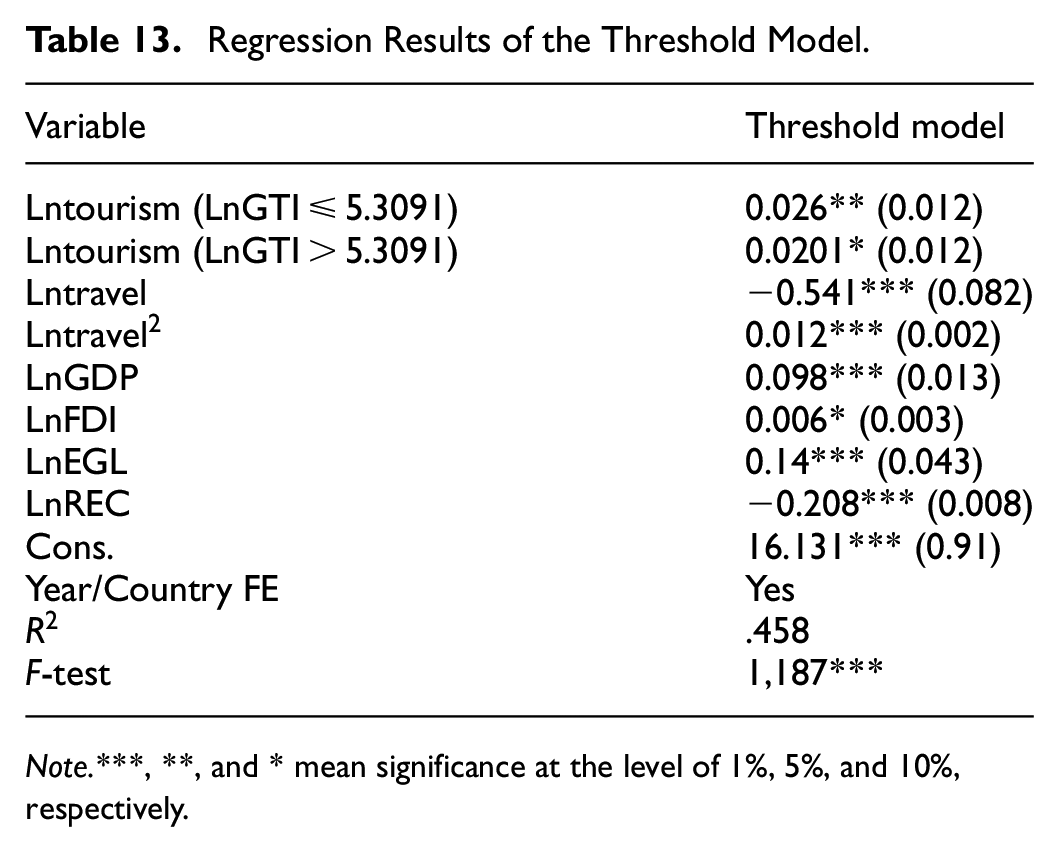
Note.***, **, and * mean significance at the level of 1%, 5%, and 10%, respectively.
Based on the moderating and threshold effects analysis findings, GTI not only delays the peak environmental impact of tourism development on GHG emissions but also flattens the inverted U-shaped curve, signifying its role in mitigating the negative environmental consequences of tourism. Specifically, the threshold effect results indicate that when GTI surpasses a critical threshold, the positive correlation between tourism development and GHG emissions significantly weakens. This highlights the significance of substantial investment in GTI to mitigate the adverse environmental impacts associated with tourism activities effectively.
GTI proves to be a critical mechanism for reducing
Conclusion
This study utilizes panel data from OECD countries spanning from 1995 to 2020 to explore the nonlinear relationship between tourism development and GHG emissions, with a particular focus on ecotourism and environmental protection. Additionally, it examines the moderating and threshold effects of GTI on this relationship. The findings reveal that tourism development significantly impacts GHG emissions. Specifically, the number of tourists exhibits an inverted U-shaped relationship with GHG emissions, while tourism revenue shows a U-shaped relationship.
FDI promotes GHG emissions, whereas economic growth has an asymmetric effect on GHG emissions. Furthermore, economic globalization and renewable energy consumption significantly reduce GHG emissions. The moderating effect of GTI flattens the inverted U-shaped curve, somewhat alleviating the negative environmental impact of tourism development. The threshold effect analysis confirms that when GTI surpasses a certain threshold, the positive impact of tourism development on GHG emissions is significantly reduced. This finding aligns with the literature that emphasizes the importance of technological innovation in mitigating environmental impacts (Erdoğan et al., 2022; Kumail et al., 2024).
Based on the research findings, we propose several policy recommendations to promote sustainable tourism development and mitigate environmental impacts. First, policymakers should focus on promoting sustainable tourism development. This can be achieved by formulating green tourism policies that encourage low-carbon tourism projects and establishing green certification standards. Tourism businesses should be incentivized to adopt environmentally friendly practices through various means, such as tax breaks or preferential treatment in licensing. Additionally, promoting eco-tourism projects can help protect the natural environment and raise public awareness of environmental conservation, thereby enhancing overall environmental protection. Second, efforts should be made to encourage green consumption in tourism. The tourism industry should actively promote eco-friendly options such as sustainable accommodations, low-carbon transportation, and eco-tourism initiatives. Governments can play a crucial role by implementing tax incentives for enterprises investing in green tourism facilities and environmental protection technologies. These measures can help guide tourism revenue toward environmentally friendly development and encourage tourists to make more sustainable choices. Third, there should be a strong emphasis on enhancing GTI in tourism. We recommend supporting and promoting advanced environmental technologies, such as renewable energy systems and pollution control mechanisms, by integrating them into tourism facilities and services. Investments should focus on green infrastructure, including energy-efficient buildings and low-emission transportation systems. Encouraging research and application of green technologies is crucial; this can be achieved by providing financial support and technical guidance to help tourism enterprises adopt current environmental innovations (Kumail et al., 2024; Lv et al., 2023). Furthermore, collaborating with international organizations and other countries to share green technologies and environmental practices will collectively reduce the tourism industry’s negative environmental impact and accelerate the adoption of sustainable practices globally.
This study has several limitations that provide opportunities for future research. First, the analysis is constrained by data availability, as it utilizes data only up to 2020. The post-2020 period, characterized by significant global events such as the COVID-19 pandemic and its aftermath, may have altered the dynamics between GTI, tourism development, and environmental impacts. Incorporating more recent data in future studies could provide a clearer understanding of these evolving relationships.
Second, the study focuses exclusively on OECD countries, which are predominantly developed economies, thereby excluding developing countries. This limits the generalizability of the findings to a global context. Future research should broaden the scope to include both developed and developing countries, enabling a comparative analysis that reflects diverse economic structures, policy priorities, and environmental challenges.
Third, while the econometric approach employed in this study yields robust results, it primarily relies on traditional quantitative methods. Future research could explore applying advanced econometric techniques, such as machine learning algorithms and nonparametric methods, to capture nonlinear and complex relationships.
Finally, the study does not fully account for emerging trends, such as shifting consumer preferences toward sustainable tourism or advancements in GTI. Future research could benefit from integrating these dynamic factors into the analysis, which may enhance the accuracy of predictions and provide valuable insights for developing more targeted and effective ecotourism strategies.
Future research will build on the current findings by addressing these limitations, aiming to provide deeper, more globally relevant, and practical insights into the relationships among tourism development, GTI, and environmental sustainability.
Footnotes

Funding
The author(s) received no financial support for the research, authorship, and/or publication of this article.
Declaration of Conflicting Interests
The author(s) declared no potential conflicts of interest with respect to the research, authorship, and/or publication of this article.
Data Availability Statement
Data sharing not applicable to this article as no datasets were generated or analyzed during the current study.