



Abstract
The recent explosive expansion of online buying has made it necessary to carefully identify the critical variables influencing customer behaviour and attitudes regarding online shopping. Although internet sales have increased globally since the pandemic began, little is known about the variables influencing this behaviour. This study aims to identify the variables affecting adults over 15 in Türkiye’s e-commerce use before and during the COVID-19 pandemic. The study used micro datasets from the Household Information Technologies (IT) Usage Survey conducted by the Turkish Statistical Institute in 2018 and 2021. Additionally, the multinomial probit regression analysis was employed. According to the study, it was concluded that as people age, their likelihood of engaging in e-commerce decreases. The study found that individuals with a higher level of education are more likely to use e-commerce. Furthermore, it found that individuals who use e-government services engage in e-commerce more frequently than others. The study’s findings may help inform academics and decision-makers about promoting e-commerce during emergencies, such as pandemics in developing nations, to increase the volume of e-commerce shopping in Türkiye.
Plain language summary
The recent explosive expansion of online buying has made it necessary to carefully identify the critical variables influencing customer behaviour and attitudes regarding online shopping. Despite a global increase in online purchases since the onset of the pandemic, uncertainties persist regarding the driving forces behind online purchasing behaviour. This study aims to contribute to the existing literature in this regard. Additionally, to our knowledge, the research topic regarding the Turkish sample is being addressed for the first time.
Keywords
Introduction
The information society is a transformative process that brings about radical changes in humanity’s economic, social, and cultural life. Undoubtedly, a significant portion of these changes originates from technological advancements (Kimiagari & Baei, 2022a, 2022b). Technological advancements, particularly digitalization processes, affect society’s economic status and welfare level and alter social life and habits, shaping individual behaviours accordingly (Kimiagari & Asadi Malafe, 2021; Shafiee et al., 2014; Shafiee & Bazargan, 2018). These changes, permeating every aspect of social life, naturally manifest in consumption patterns (Tabaeeian et al., 2023). Digitalization presents new opportunities for consumers and businesses (Dykha et al., 2021; Eyvazpour et al., 2020, 2021). This domain rapidly evolves, enabling consumers to easily access unlimited goods and services through digital platforms (Shafiee & Bazargan, 2019; Shafiee & Rahmatbadi, 2015). This new form of commerce is called electronic commerce, henceforth referred to as e-commerce (Braholli, 2022).
E-commerce uses computer-based, electronically networked technologies to launch new goods, services, or concepts and support and improve commercial operations (Erceg & Kilic, 2018). Online shopping, or producer-to-consumer e-commerce, is one of the most common internet-based activities (Hu & Deng, 2019). E-commerce is a contemporary business model where goods and services are bought and sold through electronic channels. It is one of the most important megatrends in the global economy (Çebi Karaaslan, 2022; Kawa & Zdrenka, 2016).
Thanks to the varied scope of e-commerce, including people, other businesses, the government, and other relevant institutions, it is possible to communicate quickly with any market or customer (Ünver, Aydemir, Alkan, 2023). Therefore, it is clear that e-commerce activities can be affected by various factors, categorized as economic, political, legal, institutional, cultural, social, etc. (Zhu & Thatcher, 2010). Assessing the extent of differences and understanding their underlying causes is vital, as e-commerce improves opportunities in many areas (Ono & Zavodny, 2007).
In an age where online users are tapping into convenient global services, e-commerce and cross-border data transfer have emerged as pivotal considerations. Notably, e-commerce and online shopping have rapidly accelerated in recent years, propelled by widespread access and utilization of new connected mobile and social applications (Cao et al., 2018). Online purchasing allows consumers to shop 24 hr a day and eliminates the need for consumers to visit the physical stores of sellers in another city or country (Gökmen, 2012).
In contrast to traditional shopping, online shopping significantly diminishes the time consumers spend scouring for products (Ünver & Alkan, 2021). Additionally, online shopping has lower search costs because it requires less energy to compare product prices. For this reason, online shopping makes it easier for consumers to obtain price and product information from multiple sellers (Shin & Biocca, 2017). Furthermore, online shopping gives customers greater control and negotiating power than traditional purchasing (Huseynov & Yıldırım, 2016).
However, despite all its advantages, some consumers need to be more cautious towards online shopping. These consumers, who avoid the potential risks of online shopping, find traditional shopping more reliable and prefer it (M. K. Chang et al., 2013). Various factors such as experiences, economic status, individual traits, demographic factors, habits, generational differences, and culture can influence this attitude (Park et al., 2012). Considering the present study’s sample, individuals affected by cultures with low tolerance for uncertainty, such as Turkish culture, may exhibit reluctance towards online shopping (Hallikainen & Laukkanen, 2018). In such a scenario, the primary objective of this study is to identify the conditions and factors that may influence the perceptions and attitudes of such individuals towards online shopping. The recent pandemic experience comes to the fore among the potential factors guiding this study. Sector reports and consumer surveys indicate that the pandemic accelerated the e-commerce trend compared to the levels observed before the crisis (Kim, 2020).
The COVID-19 disease emerged in December 2019, spread worldwide as a pandemic, and resulted in millions of infections and deaths (Alsaeed et al., 2024). Despite significantly disrupting commercial operations and consumer activities, the COVID-19 pandemic has profoundly influenced consumers’ perceptions of the economic and environmental benefits of e-commerce platforms (Guthrie et al., 2020; Tran, 2021). The existing literature supports this view. Some studies suggest that digitizing markets and habits learned during the pandemic could lead to structural changes in consumption, similar to those observed in China during the 2002 to 2003 SARS outbreak, as individuals continue their altered behaviours after the pandemic (Kim, 2020; Sheth, 2020; Watters, 2016). Thus, the present study aims to determine whether there is a difference in online shopping behaviours of consumers in Türkiye before and during the pandemic and to what extent demographic, economic, and personal factors influence this difference.
Despite a global increase in online purchases since the onset of the pandemic, uncertainties persist regarding the driving forces behind online purchasing behaviour. Further studies are needed to understand how online consumption evolved during the pandemic and the potential role of electronic commerce in the post-COVID-19 world (Barnes, 2020; Guthrie et al., 2020; O’Leary, 2020). This study aims to contribute to the existing literature in this regard. Additionally, to the best of our knowledge, the research topic is being addressed for the first time in terms of the Turkish sample. In line with the objectives above, the research seeks answers to the following questions.
Research Question 1: Does the usage of e-commerce in Türkiye differ between pre-COVID-19 and during COVID-19?
Research Question 2: Do demographic factors influence e-commerce usage in Türkiye before and during COVID-19?
Research Question 3: Do economic factors affect e-commerce usage in Türkiye before and during COVID-19?
Research Question 4: Do personal factors influence e-commerce usage in Türkiye before and during COVID-19?
To address the above questions, factors influencing individuals’ e-commerce usage were modelled for Türkiye using a rich dataset.
Literature Review
During the COVID-19 pandemic, lockdowns and curfews compelled businesses to turn to e-commerce. Throughout this period, shopping apps, online stores, and portals became more important in daily life than ever (Pejić Bach, 2021). Even consumers who had not previously experienced online shopping utilized e-commerce during this period. Online shopping gave consumers significant flexibility regarding time, location, and product variety. Consumers could access many products from any store anywhere in the world, compare prices, and make informed choices (Pantelimon et al., 2020; Tabaeeian & Mohammad Shafiee, 2023). Moreover, the advantages of e-commerce during the pandemic included consumers being able to access desired products and make payments without physical contact quickly (Kim, 2020). Therefore, the importance of e-commerce for consumers and businesses during the pandemic is evident.
During the pandemic, when individuals reduced social interactions and refrained from going out unless necessary to protect themselves and their loved ones, e-commerce provided significant convenience to consumers. Indeed, K. Sharma (2020) reported that e-commerce increased by 17% after the COVID-19 outbreak, with sectors such as fashion, accessories, electronics, health, pharmaceuticals, and fast-moving consumer goods experiencing an average growth of 133% in sales. Similarly, Bhatti et al. (2020) indicated the significant impact of COVID-19 on e-commerce, noting its rapid growth due to the pandemic. Similar conclusions can be drawn from studies carried out in different countries. For example, Yuan et al. (2021) found that shopping behaviours were greatly influenced during the COVID-19 pandemic, with an increase in the number of consumers using online shopping in China. Ghandour and Woodford (2020), in their study in the United Arab Emirates, stated that the COVID-19 process accelerated the e-commerce industry, positively influencing it as more retailers and consumers transitioned to online channels for trading activities.
The COVID-19 pandemic accelerated structural changes in consumption and digital transformation in the market (Kim, 2020). The research data provided by Guthrie et al. (2020) support this observation. Researchers showed that consumers’ e-commerce use significantly differed before, during, and after COVID-19. Moreover, Sivakumar and Anupriya (2021) noted the growth of e-commerce due to the COVID-19 pandemic and the differentiation in consumer behaviours accompanying the pandemic. These behavioural differences reflect shifts towards e-commerce and affect the variety and quantity of preferred consumer products.
With the emergence of the COVID-19 pandemic, people faced a significant level of uncertainty. Anxiety levels increased among those contemplating the possible outcomes of the pandemic. Therefore, during the pandemic, individuals’ anxiety levels and survival instincts were significant determinants of shopping behaviour. The heightened level of anxiety led to increased shopping and, consequently, increased e-commerce usage (Černikovaitė & Karazijienė, 2021).
Stockpiling was observed, particularly during the early stages of the pandemic. H. Chang and Meyerhoefer (2021) explained that COVID-19 cases increased e-commerce sales by 5.7% and the number of consumers by 4.9%, with the most significant increases observed in demand for grain products, fresh fruits, vegetables, and frozen foods. Similarly, Gao et al. (2020) reported increased online food purchases during the pandemic. A similar trend was observed in cleaning products. People started stockpiling food and cleaning supplies in response to uncertainties. Health-related concerns also influenced the use of digital platforms, leading to the emergence of the digital health sector. Seeking medical advice or ordering medications online are considered the most commonly used applications during quarantine (Galhotra & Dewan, 2020).
In light of the studies mentioned above and considering the present study sample, it is anticipated that consumers’ use of e-commerce will differ before and during COVID-19. The divergence in question has shaped the research hypotheses as another anticipation of the influence of demographic, economic, and personal factors on the research sample. Indeed, results reported in previous studies also indicate these anticipated effects.
For instance, Sohaib et al. (2019) drew attention to the differences in expectations and approaches to e-commerce between men and women. In contrast, Colley and Maltby (2008) found that women shop more online than men. In another study emphasizing the significance of gender in determining e-commerce usage, Dittmar (2004) determined that women exhibit stronger purchasing attitudes than men in the online environment.
Alqahtani et al. (2018) reported that factors such as age and computer proficiency, in addition to gender, play a role in the adoption and usage of online shopping. Angulo Espinoza et al. (2022), in their study, carried out in Peru covering the COVID-19 pandemic period, concluded that the consumption habits of Generation Y consumers have diversified. Rybaczewska and Sparks (2022), in their study on the online behaviours of elderly consumers, demonstrated that age and marital status influence e-commerce activities.
Regarding studies on socio-economic factors influencing Turkish individuals’ participation in electronic commerce, Köse and Arslan (2020) found that relatively young and elderly individuals have lower probabilities of participating in e-commerce activities. In contrast, middle-aged individuals have higher probabilities of participation. Although their study indicated higher participation rates of women in e-commerce, it also revealed a tendency for women to spend less on e-commerce activities when compared to men. Furthermore, the researchers stated that consumers’ educational levels are also a significant determinant of e-commerce usage.
Additionally, research on a Turkish sample revealed that the likelihood of utilizing e-commerce declines with increasing household size (Abar & Alkan, 2021; Alkan & Ünver, 2021). On the other hand, a different study using a Turkish sample examined how different characteristics in different locations affected people’s e-commerce use. They discovered that the factors influencing the use of e-commerce vary by location. The study concludes that to support the growth of e-commerce use in developing nations, the Internet must be expanded through improved information and communication technology infrastructure (Ünver, Aydemir, Alkan, 2023).
Therefore, it can be said that the demographic characteristics of the present research sample will affect e-commerce usage rates.
H1: There are positive or negative relationships between demographic factors and e-commerce usage.
H1a: There is a negative relationship between age and e-commerce usage.
H1b: There is a negative relationship between gender and e-commerce usage.
H1c: There is a negative relationship between education and e-commerce usage.
H1d: There is a positive relationship between household size and e-commerce usage.
H1e: There is a positive relationship between region and e-commerce usage.
It is anticipated that consumers’ economic resources will influence their e-commerce approaches. Indeed, J. K. Sharma and Kurien (2017) concluded in their study that income level has a significant relationship with perceived risk in e-commerce. Similarly, the results reported by Köse and Arslan (2020) indicate that income level, employment status, diversity of internet usage, technological skills, and trust in the internet are positively correlated with e-commerce usage and online spending. Therefore, it can be argued that professions closely linked to income level would also influence e-commerce usage. Similarly, it is believed that consumers having the necessary tools for e-commerce usage would have a positive impact.
H2: There is a positive relationship between economic factors and e-commerce usage.
H2a: There is a positive relationship between income level and e-commerce usage.
H2b: There is a positive relationship between occupation and e-commerce usage.
H2c: There is a positive relationship between desktop computer ownership and e-commerce usage.
H2d: There is a positive relationship between laptop ownership and e-commerce usage.
H2e: There is a positive relationship between tablet ownership and e-commerce usage.
Individuals spending significant time online during lockdown periods shifted their focus towards entertainment areas such as games, subscription-based platforms, and social media/YouTube channels. With the advancement of social networking platforms like Facebook, Instagram, and YouTube, consumers can gather information, provide recommendations, or seek advice from various sources before purchasing. All these factors can assist consumers in making informed decisions about their purchases. However, these platforms also influenced the online shopping approaches of many new and inexperienced consumers during the pandemic (Ho et al., 2021).
In this regard, social media facilitates word-of-mouth marketing. Sharing a positive experience by one individual can influence others in this regard (Bakhshayesh et al., 2023). Tabaeeian et al. (2023) found that gaming services on social networks have external and internal motivations that lead to consumer purchasing attitudes and intentions. Thus, significant developments occurred in new sectors and business models, such as e-commerce, during the COVID-19 pandemic.
Advancements in mobile applications and payment technologies increased the prevalence of e-commerce among Internet users (He & Liu, 2020). Indeed, Einav et al. (2014) stated that early adopters of mobile e-commerce applications are already relatively heavy users of e-commerce, but the use of mobile applications is increasing. These research findings are not surprising because individuals spend a significant portion of their time on their mobile phones. Therefore, the technological use and frequency of using specialized tools of the research sample are expected to influence e-commerce usage significantly.
H3: There is a positive relationship between personal factors and e-commerce usage.
H3a: There is a positive relationship between social media usage and e-commerce usage.
H3b: There is a positive relationship between mobile phone usage and e-commerce usage.
H3c: There is a positive relationship between engaging in the sale of goods or services and e-commerce usage.
H3d: There is a positive relationship between internet banking usage and e-commerce usage.
H3e: There is a positive relationship between e-government usage and e-commerce usage.
H3f: There is a positive relationship between conducting financial transactions online and e-commerce usage.
The research model designed for the present study, in line with the literature review provided above, is depicted in Figure 1.
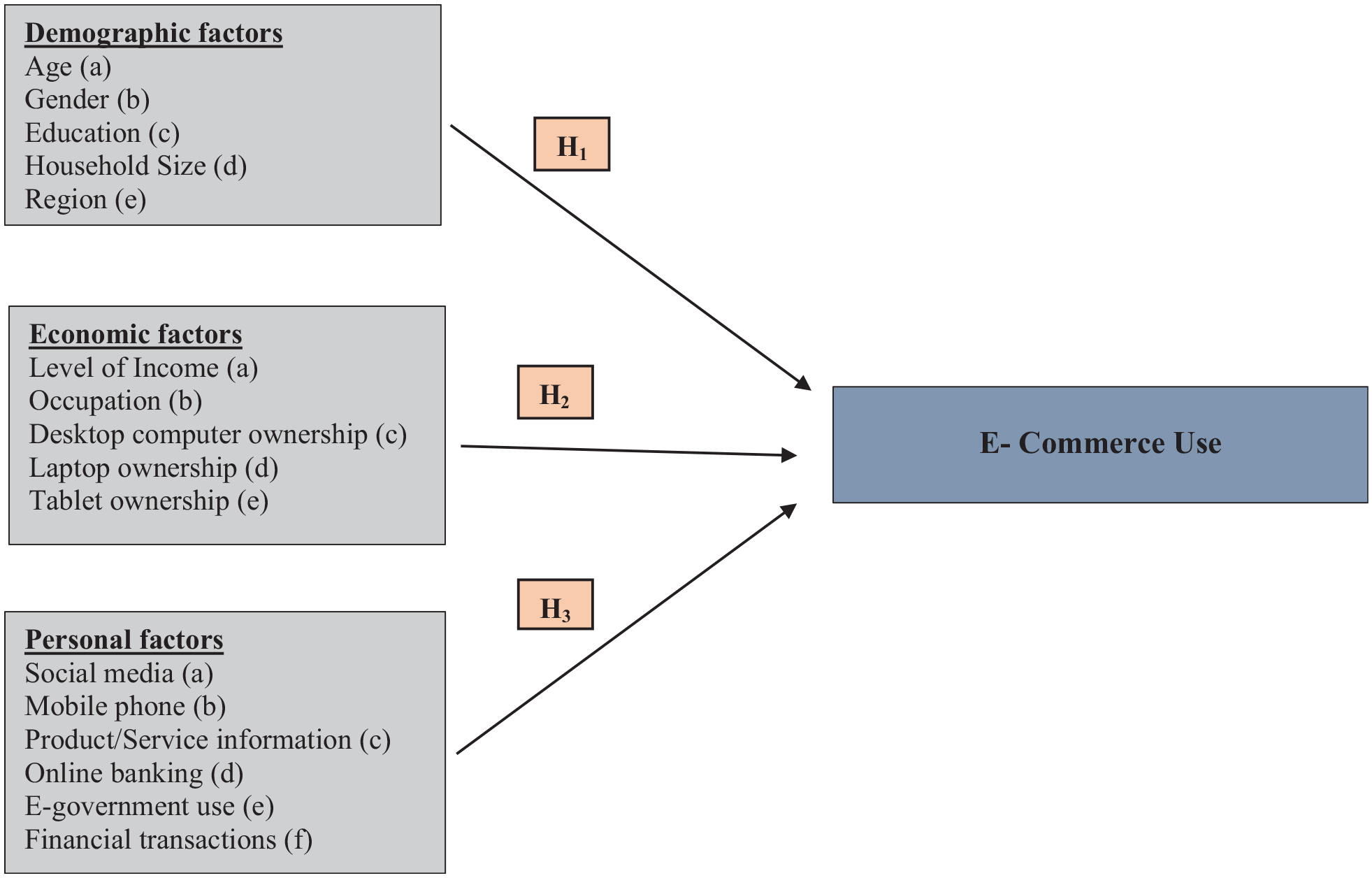
Research model.
Material and Methods
Data
This study utilized the microdata set from the Household Information Technologies (IT) Usage Survey conducted by TurkStat. The Household Information Technologies Survey aims to determine the criteria of the information society and generate relevant statistics. Due to the increasing importance of understanding the social, cultural, and economic developments in the information society, as well as tracking policies implemented in this regard, Household Information Technology Usage Statistics surveys have been regularly conducted since 2004 (excluding 2006) on an annual basis by EU regulations through close collaboration between the Turkish Statistical Institute (TÜİK), the European Statistical Office (Eurostat), the statistical offices of EU member countries, and the OECD. The model questionnaire created and suggested by Eurostat serves as the foundation for the survey questions. This questionnaire is structured to meet the needs of the institutions and organizations implementing the National Information Society Strategy, and it is tailored to Türkiye (TÜİK, 2021).
In this study, microdata sets of the Household Information Technologies (IT) Usage Survey conducted by the Turkish Statistical Institute in 2018 (before COVID-19) and 2021 (COVID-19 period) were used. Every settlement in Türkiye was included in the sample selection for the Household Information Technologies Usage Survey. The study examines every settlement within Türkiye’s boundaries. The population classified as institutional does not include people who live in barracks and army housing, schools, hotels, kindergartens, nursing homes, hospitals, or jails. Settlements (small villages, camps, hamlets, etc.) with a population of less than 1% are also omitted if a sufficient number of sample houses cannot be accessed. Participants in the study range in age from 16 to 74 (TÜİK, 2019, 2021).
The research methodology covered individuals aged between 16 and 74 years. The sampling method used in the study was two-stage stratified cluster sampling. In the first stage, clusters (blocks) consisting of an average of 100 households were selected for the sample using the probability proportional to size (PPS) method. In the second stage, sample addresses were determined using the systematic selection method from the selected clusters. The Statistical Regions Classification Level 1 was used as the stratification criterion. The study’s sample size was calculated to produce estimates at the Türkiye-total and Statistical Regions Classification Level 1. Due to the consideration of non-response rates in calculating the sample size, no substitution was used in the study. The dataset obtained from the sample was weighted due to selection probabilities in the multi-stage sample design.
The Computer-Assisted Personal Interview (CAPI) method was used as the data collection method since 2004, and the Computer-Assisted Telephone Interview (CATI) method was applied in 2020 and 2021. The study was carried out in April every year, and the reference period was determined based on the week the procedure was conducted. The study was carried out on 30,530 individuals aged 15 years and older, and the factors affecting the frequency of online shopping for personal use during the previous 3 months were investigated (TÜİK, 2021).
The Household Information Technologies Usage Survey conducted in 2018 was administered to 28,888 people aged 15 and over. In the study, participants were asked about their most recent internet use. A total of 9,243 people were excluded from the dataset because the questionnaire of those who selected “More than a year” or “Never used” on the most recent internet use question was terminated. As a result, the analysis included a total of 19,645 people.
The Household Information Technologies Usage Survey conducted in 2021 was administered to 30,530 people aged 15 and over. In the study, participants were asked about their most recent internet use. A total of 6,042 people were excluded from the dataset because the questionnaire of those who selected the options “More than a year” or “Never used” on the last internet use question was terminated. As a result, the analysis included a total of 24,488 people.
Participants
In the Household Information Technologies Usage Survey, respondents living within the borders of the Republic of Türkiye and aged 18 and over, including household members, are included. The demographic characteristics of the individuals who participated in the research are presented in Table 1.
Demographic Characteristics of the Participants.

Measures
The dependent variable in the study was e-commerce usage, both before COVID-19 and during the COVID-19 pandemic, as indicated by the question “When was the last time you purchased or ordered goods/services for personal use over the Internet (websites or mobile applications)?” The response categories were (i) In the last 3 months, (ii) before 3 months, and (iii) never used.
The independent variables included in the study were determined by conducting comprehensive literature research. Independent variables include age, gender, education level, profession, income level, household size, mobile phone use in the last 3 months, sharing content on social media (including mobile applications) in the last 3 months among the activities carried out on the Internet for private purposes, searching for information about goods and services (including mobile applications) in the last 3 months among the activities carried out on the Internet for private purposes, Internet banking, use of e-government services, financial transactions carried out over the Internet, having a desktop computer at the house, having a laptop at the house, having a tablet computer at the house, and region.
All of the independent variables used in the present study are categorical. Ordinal and nominal variables were specified as dummy variables to observe the effects of categories for all variables included in the multinomial probit model (Coşkun et al., 2023; Demir et al., 2022; Ünver & Alkan, 2023).
Statistical Analysis
First, the frequencies and percentages of individuals who participated in the study were determined according to their e-commerce usage status before and during the COVID-19 pandemic. The Chi-square independence test examined the relationship between e-commerce usage status and independent variables (Ünver, Tekmanli, & Alkan, 2023). Then, the factors associated with individuals’ e-commerce usage status were determined using the multinomial probit regression analysis. Using the multinomial probit regression model is feasible since the dependent variable in this study is a three-category qualitative variable measured on a nominal scale (Alkan & Yarbaşı, 2020).
Multinomial logistic regression or probit regression models are advised when the dependent variable contains more than two categories. Using the multinomial probit regression model instead of the multinomial logistic regression model is recommended if the assumption of the independence of irrelevant alternatives cannot be met. The multinomial probit regression model was used for this study because the primary premise of the multinomial logistic regression model could not be met (Greene, 2012).
Results
Descriptive Statistics
Tables 1 and 2 display the factors that affected individuals’ e-commerce use before and during the COVID-19 pandemic. While 25.6% of those who participated in the research before COVID-19 were between the ages of 35 and 44, 23% of those who participated in the study during the COVID-19 pandemic were between the ages of 25 and 34. 52.6% of the individuals who participated in the study in the pre-COVID-19 period were male, and 47.5% of the individuals who participated in the study during the COVID-19 period were male. While 25.3% of the individuals who participated in the study before COVID-19 were high school graduates, 27.4% of the individuals who participated in the study during the COVID-19 period were high school graduates. While 23.9% of those who participated in the study in the pre-COVID-19 period were at the fourth income level, 29% of the individuals who participated in the study during the COVID-19 period were at the second income level.
Frequencies and Percentages of Individuals According to Their E-Commerce Usage Status Before and During the COVID-19 Pandemic.

Model Estimation
In the study, multinomial probit regression analysis was employed to identify the variables influencing the use of e-commerce by individuals aged 15 and above. Tables 3 and 4 present the estimated model findings. The models used the “never used” category of the dependent variable as the reference category. The multinomial probit regression model’s independent variables were investigated for multicollinearity in the study. Those with variance inflation factor (VIF) values of 5 or higher are thought to cause moderate multicollinearity, and those with VIF values of 10 or higher cause a high degree of multicollinearity (Başkan & Alkan, 2023; Bayrakçeken et al., 2023; Güney et al., 2023; Kılıçarslan et al., 2023). The findings show that there are no variables that lead to issues with multicollinearity. Table 3 lists the VIF values.
Pre-COVID-19 and COVID-19 Period Model Coefficient Estimates.

*p < .01. **p < .05. ***p < .10.
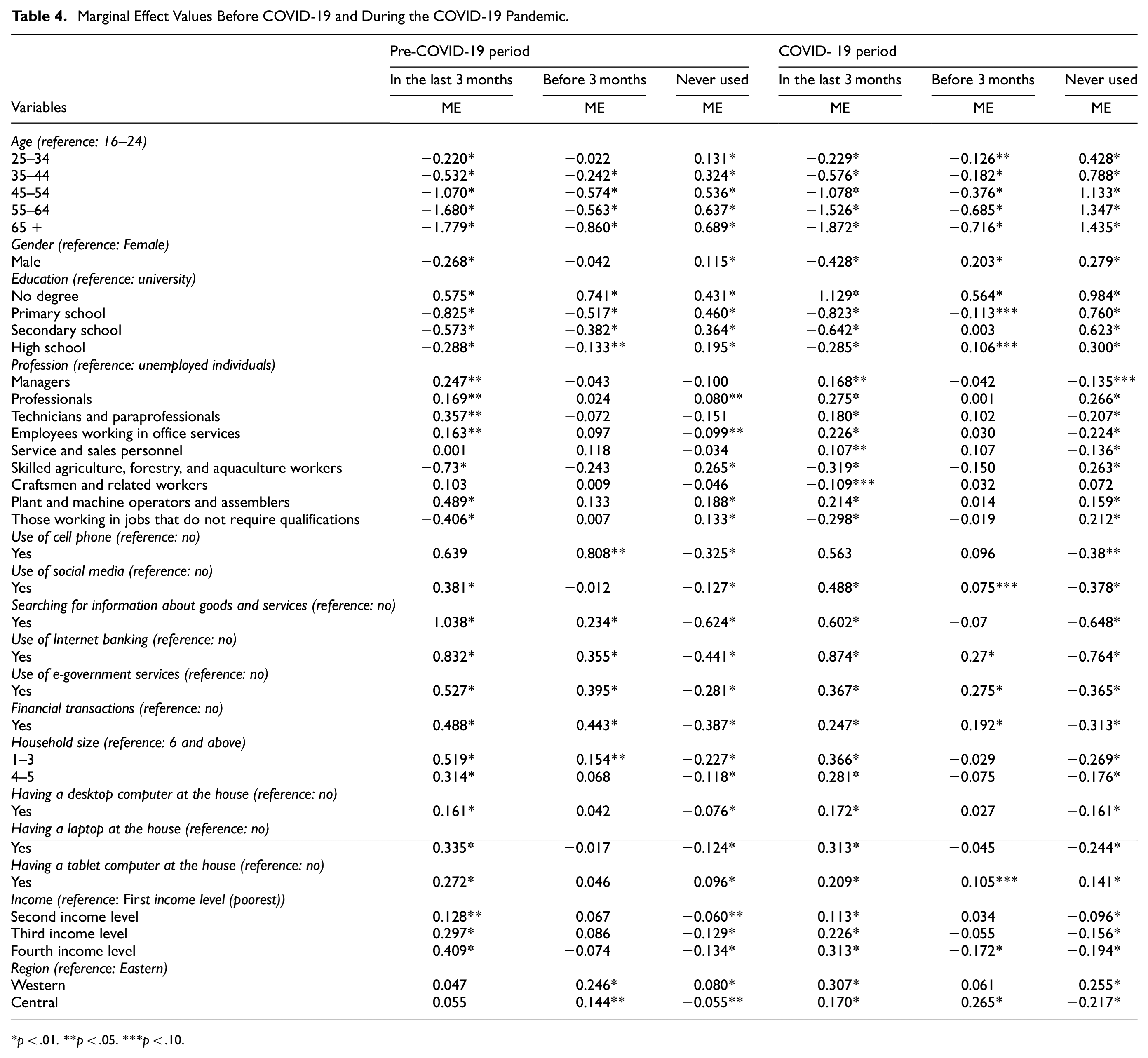
Marginal Effect Values Before COVID-19 and During the COVID-19 Pandemic.
*p < .01. **p < .05. ***p < .10.
It is observed that age, gender, education level, profession, cell phone use, social media use, searching for information about goods and services, internet banking use, e-government use, financial transactions, household size, having a desktop computer at the house, having a laptop at the house, having a tablet computer at the house, income level and region variables were statistically significant in the pre-COVID-19 period. Similarly, it is observed that age, gender, education level, profession, social media use, searching for information about goods and services, internet banking use, e-government usage, financial transactions, household size, having a desktop computer at the house, having a laptop at the house, having a tablet computer at the house, income level and region variables were statistically significant during the COVID-19 pandemic period.
The marginal effect values of factors related to individuals’ e-commerce use in Türkiye are given in Table 4.
In the pre-COVID-19 period, individuals in the age groups 25 to 34, 35 to 44, 45 to 54, 55 to 64, and 65+ are 22%, 53%, 107%, 168%, and 178% less likely, respectively, to have used e-commerce within the previous 3 months compared to those in the 16 to 24 age group. Similarly, individuals in the age groups 25 to 34, 35 to 44, 45 to 54, 55 to 64, and 65+ are 2%, 24%, 57%, 156%, and 86% less likely, respectively, to have used e-commerce before the previous 3 months than those in the 16 to 24 age group. Men are 27% less likely than women to have used e-commerce in the previous 3 months. Individuals with no formal education, primary school diploma, secondary school diploma, and high school diploma are 58%, 83%, 57%, and 29% less likely, respectively, to have used electronic commerce in the previous 3 months than university graduates. Similarly, individuals with no formal education, primary school diploma, secondary school diploma, and high school diploma are 74%, 52%, 38% and 13% less likely, respectively, to have used electronic commerce before the previous 3 months than university graduates. The parameter estimates show support for H1a, H1b, and H1c, that there is a negative relationship between e-commerce and age, gender, and education, respectively.
Individuals with 1 to 3 people and 4 to 5 people in their household are 52% and 31% more likely, respectively, to use electronic commerce within the previous 3 months than those with six or more people in their household. Individuals in the western and central regions are 25% and 14% more likely than those in the eastern region to use electronic commerce before the previous 3 months. The parameter estimates show support for H1d and H1e, that there is a positive relationship between e-commerce and household size and region, respectively.
Individuals with a household at the second, third, and fourth income levels are 13%, 30%, and 41% more likely, respectively, to use electronic commerce within the previous 3 months than those with the lowest income level. A professional individual is 17% more likely to have used electronic commerce in the previous 3 months than someone who is not working. A household with a desktop computer is 16% more likely to have engaged in e-commerce in the previous 3 months than households without one. An individual with a laptop in the home is 33.5% more likely to have engaged in electronic commerce in the previous 3 months than those without a laptop. An individual with a tablet in the home is 27% more likely to have used electronic commerce in the previous 3 months than those without a tablet. The parameter estimates show support for H2a, H2b, H2c, H2d, and H2e, that there is a positive relationship between e-commerce and income level, occupation, desktop computer ownership, laptop ownership, and tablet ownership, respectively.
Individuals who used social media in the pre-COVID-19 period are 38% more likely to use electronic commerce within the previous 3 months than others. Individuals who used mobile phone in the pre-COVID-19 period are 81% more likely to have used electronic commerce before the previous 3 months than others. An individual searching for information about products and services is 104% more likely to have used electronic commerce within the previous 3 months and 23% more likely to have used electronic commerce before the previous 3 months than others. An individual using Internet banking is 83% more likely to have used electronic commerce within the previous 3 months and 35.5% more likely to have used electronic commerce before the previous 3 months than those without. Individuals who have used e-government services are 53% more likely to have used electronic commerce within the previous 3 months and 39.5% more likely to have used electronic commerce before the previous 3 months than those who have not used e-government services. Individuals who carry out financial transactions online are 49% more likely to use electronic commerce within the previous 3 months and 44% more likely to use electronic commerce before the previous 3 months than others. The parameter estimates show support for H3a, H3b, H3c, H3d, H3e, and H3f, that there is a positive relationship between e-commerce and social media usage, mobile phone usage, engaging in the sale of goods or services, internet banking usage, e-government usage, and conducting financial transactions online, respectively.
Individuals who used social media during COVID-19 were 49% more likely to use electronic commerce within the previous 3 months and 7.5% more likely to use electronic commerce before the previous 3 months than those who did not. An individual searching for information about products and services is 60% more likely than others to have engaged in e-commerce within the previous 3 months. An individual who uses online banking is 87% more likely to have engaged in electronic commerce within the previous 3 months and 27% more likely to have engaged in electronic commerce before the previous 3 months. Individuals using e-government services are 37% more likely to have used electronic commerce within the previous 3 months and 27.5% more likely to have used electronic commerce before the previous 3 months than others. An individual conducting financial transactions online is 25% more likely to have used electronic commerce within the previous 3 months and 19% more likely to have used electronic commerce before the previous 3 months than others. A household with a desktop computer is 17% more likely to have engaged in e-commerce in the previous 3 months than households without one. An individual with a tablet in the house is 21% more likely to have engaged in electronic commerce within the previous 3 months but 10.5% less likely to have done so before the previous 3 months. Individuals with households at the second, third and fourth income levels are 11%, 23%, and 31% more likely to have used electronic commerce within the previous 3 months than those with the lowest income level. Individuals with a household at the fourth income level are 17% less likely to use e-commerce within the previous 3 months than those with the lowest income.
Discussion
This study was conducted to determine the influence of consumers’ demographic, economic, and personal factors on e-commerce usage in Türkiye before and during the COVID-19 pandemic. Considering the results obtained in this study, it was concluded that the likelihood of using e-commerce decreases as age increases. Various studies reported similar results (Akman & Rehan, 2014; Alkan et al., 2021; Alqahtani et al., 2018; Ünver, Aydemir, Alkan, 2023). Hwang et al. (2006) identified age as one of the factors influencing individuals’ e-commerce usage, emphasizing that individuals in different age groups may have other tendencies towards e-commerce usage. Indeed, another study conducted in Türkiye found that as men’s ages increase, the likelihood of engaging in clothing purchases online decreases (Ünver, Alkan, & Oktay, 2023).
Additionally, Ünver and Alkan (2022), in their study conducted in Türkiye, found that the likelihood of encountering problems with online shopping decreases as individuals’ ages increase. It is an expected outcome that e-commerce experiences are less prevalent in older ages, where catching up with technological innovations and rapid learning may slow down. However, contrary findings can also be found in the relevant literature. For instance, Koyuncu and Lien (2003) concluded that the likelihood of using e-commerce increases as individuals age.
Another study addressing the effects of consumer behaviours on e-commerce usage during the COVID-19 pandemic indicates that young women are more likely to use e-commerce (Alkan et al., 2023; Kawasaki et al., 2022). Similar results were obtained in the present study. It was observed that male consumers in the sample used e-commerce less when compared to female consumers. Many studies in the literature also support this finding (Escobar-Rodríguez et al., 2017; Ünver & Alkan, 2021).
According to the findings of this study related to demographic factors, individuals are more likely to use e-commerce as their education levels increase. Other studies have reached similar conclusions (Akman & Rehan, 2014; Tarafdar & Vaidya, 2006; Ünver, Aydemir, Alkan, 2023). A study conducted in Türkiye determined that the importance and impact of factors in e-commerce usage vary depending on the education level of the individual (Ünver & Alkan, 2021). The study emphasized that education significantly impacts how consumers make decisions while shopping online and that this impact is becoming increasingly important. In a study comparing the e-commerce behaviours of individuals in Poland before and after COVID-19, the educational effect was significant in both periods, even though some characteristics changed (Łukomska-Szarek et al., 2021).
The findings regarding economic factors in the research indicate that individuals are more likely to use e-commerce as their income levels increase. Similar conclusions have been reached by other studies (Cristobal-Fransi et al., 2015; Vicente, 2015). According to these studies, this can be attributed to higher-income individuals being more likely to possess advanced degrees and innovative technologies (Akman & Mishra, 2010). Some studies showed that a 1% increase in income increases the probability of the household engaging in first-group online shopping (Önder & Demirel, 2022; Özhan & Altuğ, 2015). Indeed, research results support this view, indicating that ownership of technological products increases e-commerce usage. In a report prepared by the Turkish Industrialists and Businessmen’s Association discussing the development of e-commerce during COVID-19, it was stated that the most preferred technological device of the baby boom generation globally in the relevant period was desktop computers other than mobile phones (TÜSIAD, 2022). According to some studies, when more technical devices are available, there is a higher possibility that people will use e-commerce (Cristobal-Fransi et al., 2015).
In addition to the ownership of technological products, the rate of using digital applications also determines e-commerce usage. Based on the study’s findings, people who utilize social media are more likely than others to engage in e-commerce. Some studies achieved similar results (Çera et al., 2020; Pucci et al., 2019). Especially considering the popularity of advertising and promotional activities conducted through social media, it can be stated that these platforms play a significant role in directing consumers towards e-commerce. In addition to these findings, the present study also determined that internet users who search for information about goods and services on the internet use e-commerce more than other individuals. Similar conclusions were reached by other studies (Stepanikova et al., 2010). Similarly, considering the results achieved here, e-commerce is practised more frequently by Internet banking users than others. Other studies obtained similar conclusions (Çera et al., 2020; Duroy et al., 2014; Kimiagari & Baei, 2022a, 2022b). Therefore, it can be stated that such social media and mobile applications increase technological adaptation in individuals and facilitate e-commerce usage.
Conclusion
The COVID-19 pandemic, which swept the world, began in December 2019 in Wuhan, China, and reached Türkiye on March 10, 2020. Medical research is still ongoing to determine the effects of this pandemic on people in Türkiye and around the world. The sociological, economic, and psychological impact of the pandemic on society are also of interest from the social sciences perspective. In this respect, using multinomial probit regression analysis, the present study attempts to contribute to the literature by determining the factors influencing individuals’ e-commerce usage in Türkiye before and during COVID-19.
In the pre-COVID-19 period, age, gender, education level, occupation, mobile phone use, social media use, internet banking use, e-government use, financial transactions, household size, having a desktop computer, having a laptop computer, having a tablet computer, searching for information about products and services, income level and region variables were found to be related to e-commerce use. During the COVID-19 period, age, gender, education level, occupation, social media use, searching for information about goods and services, internet banking use, e-government use, financial transactions, household size, having a desktop computer, having a laptop computer, having a tablet computer, income level and region variables were found to be related to e-commerce use.
The study’s findings offer valuable insights for academics and policymakers, providing recommendations on promoting e-commerce adoption in developing countries during crises like pandemics. This, in turn, aims to bolster e-commerce activity in Türkiye, enhancing social welfare and overall quality of life through heightened customer satisfaction facilitated by the operational efficiency of e-commerce applications. It can provide crucial information about how to proceed. Understanding how individuals perceive multiple risks and how significant crises affect individual behaviour is essential for identifying policy change windows, enhancing risk management strategies, and facilitating communication between decision-makers and the public.
First, governments should prioritize transparent, consistent, and regular communication to promote positive perceptions and reduce panic purchasing during crises such as pandemics. When addressing perceptions of scarcity, policymakers can consider strategies that carefully balance supply and demand without causing other problems, such as the underground economy. Furthermore, breaking self-perpetuating cycles of dread, such as toilet paper hoarding during the COVID-19 outbreak, is essential for reassuring the public about crisis management strategies (Islam et al., 2021; Taylor, 2021). Second, given the mediating role of anxiety in panic buying, governments need to include mental health strategies in crisis management.
This study, like almost any study, has a few limitations. First, it should be noted that the data in this study comprises secondary data, and the variables necessary for statistical analysis are derived from the variables present in the dataset. Additionally, since the data is cross-sectional, it is impossible to infer a causal relationship between factors associated with e-commerce use. Since participants provide their responses, the data collected using this method may be biased.
The present study aimed to identify consumer behaviours and habits before and during COVID-19. Therefore, considering post-COVID-19 data, future studies will contribute to the literature by determining the extent to which the factors influencing consumer behaviours and habits during the pandemic persist. Furthermore, conducting similar studies targeting different consumers in different countries will also contribute to the literature regarding the prevalence of these findings.
Footnotes
Acknowledgements
The authors would like to thank the Turkish Statistical Institute for its data. The views and opinions expressed in this manuscript are those of the authors only and do not necessarily represent the views, official policy, or position of the Turkish Statistical Institute.
