




Abstract
Due to the effects of the COVID-19 pandemic on people’s daily lives, individuals’ shopping habits have begun to change. This study investigates factors associated with citizens’ e-commerce shopping frequency, taking into account gender differences during COVID-19. The study utilized the Household Information Technologies Usage Survey microdata set conducted by TurkStat in 2021. Various factors related to citizens’ e-commerce shopping frequency, specifically considering gender differences during the COVID-19 period, were examined using the generalized ordered logit model. According to the research results, the frequency of e-commerce shopping inversely decreases with age for both men and women. The number of e-commerce purchases made by individuals, regardless of gender, increases in direct proportion to their education levels. Additionally, as individuals’ incomes rise, their engagement in e-commerce purchases increases. Men who actively search for information about products and services are more likely to participate in e-commerce compared to those who do not. This dynamic differs for women based on the quantity of their intakes. Regarding gender distribution, it was determined that, moving from east to west, women make more e-commerce purchases than men. For both local governments and service providers, developing healthier, sustainable, and more predictable policies and strategies for extraordinary situations such as pandemics is crucial. Businesses are recommended to build customer and supplier portfolios, focusing on areas such as platform accessibility, inventory management, distribution, transportation, and payment methods. Strengthening infrastructure and keeping systems up-to-date are also crucial for effectively responding to consumer demands.
Plain language summary
Due to the COVID-19 pandemic’s effects on people’s daily lives, individuals’ shopping habits have begun to change. In the literature, studies examining the impact of COVID-19 on purchases made on e-commerce platforms generally concentrate on risk, benefit, usability, anxiety, privacy, security, and dependability. There are insufficient studies examining the effect of gender, one of the demographic factors included in almost every scientific research, on e-commerce purchases, particularly from developing countries’ perspectives. Little is known about the online purchases made by Turkish citizens during the COVID-19 period. This is, to the best of our knowledge, the first study to determine the factors affecting the frequency of online shopping by citizens in Türkiye according to gender differences during the pandemic. This study examines various factors associated with the frequency of online purchases made by individuals, considering gender differences during the COVID-19 pandemic. For this purpose, a rich data set was used to model the factors affecting e-commerce purchases by Turkish citizens. According to the research results, during the COVID-19 pandemic, variables such as age, education level, income level, social media use, e-commerce use, e-government use, online financial transaction status, household size, and region affected individuals’ e-commerce purchases. It was determined that it was associated with delivery frequency. In terms of the future of e-commerce platforms, the development of strategies that focus on gender differences by closely monitoring all variables that affect consumer perceptions, habits and behaviors is critical for the future of the sector as well as providing ease of individual adaptation.
Introduction
The rapid advancement of communication technologies on a global scale has ushered in a new economic order distinct from traditional methods. Commercial activities have transitioned to web-based platforms, eliminating physical boundaries between buyers and sellers (Lightner, 2003). With the increasing rate of internet access and speed, coupled with the decrease in smartphone costs, this innovative method—known as online shopping or e-commerce—has significantly elevated the number of smart device users, making online shopping more accessible (Bhatt, 2019). The impact of digital transformation on shopping patterns and consumer behaviors reveals that various factors, including personal, environmental, economic, psychological, and social elements, play an essential role in influencing consumers’ purchasing experiences (Daroch et al., 2021).
One of the significant factors altering consumer behaviors is the unexpected emergence of the COVID-19 pandemic in the recent period. Measures taken during the pandemic led to changes in purchasing habits by abruptly and fundamentally changing people’s lifestyles, considerably increasing the demand for online shopping worldwide (Gopinath, 2020). Despite similarities with other disruptive events, the COVID-19 pandemic is considered a global event due to its scope, damage rate, and simultaneous occurrence with the advancement of various technologies (Brem et al., 2021). Despite its globality, experiences from previous natural disasters, levels of development, geographical and cultural differences, and demographic factors indicate that the impact of the pandemic might vary among individuals (Jang et al., 2020). Therefore, it is believed that, regarding the gender factor, which is examined as a significant demographic criterion, the COVID-19 pandemic led to differences in the online consumer decision-making process and purchasing behavior due to the interactions between psychological, individual, and social factors (Hou et al., 2020).
In studies examining online shopping, it is generally observed that the results regarding the role of gender differences in e-commerce usage are unclear. Particularly in studies focusing on consumers’ online purchasing decisions, there is a tendency to concentrate on personal and environmental factors that predominantly influence adoption and usage (such as risk, benefit, ease of use, social norms, anxiety, privacy, security, reliability, etc.) and/or the varying weights of these factors. However, demographic differences (age, gender, educational status, occupation, income, etc.) were superficially mentioned rather than specifically addressed. In regional-based studies, factors influencing consumers’ decisions to engage in online shopping during COVID-19 were generally statistically compared between regions. It is noted that there is a lack of sufficient research systematically examining the impact of gender on e-commerce purchases from the perspective of developing countries.
Within this framework, Türkiye stands out as a developing country with relatively high internet access and usage rates, a young and large population, and an e-commerce market with a high potential thanks to its geographical location—a unique blend of individualistic and collectivist cultures from Western and Eastern countries. In this context, the present study is the first known study that systematically investigates the role of gender differences in the frequency of e-commerce shopping during the COVID-19 pandemic from the perspective of a developing country. Moreover, the present study uses a rich and diverse dataset covering households from all regions of the country, ensuring inclusivity across almost all age groups and achieving generalizability by selecting individuals actively using e-commerce. Beyond its academic contribution, the study offers valuable insights for future studies to both public and private sector strategists.
This study aims to answer the following questions:
RQ1: What is the role of gender differences in the frequency of e-commerce purchases during the COVID-19 pandemic?
RQ2: What are the effects of other identified sociodemographic factors on the frequency of e-commerce purchases during the COVID-19 pandemic, and how do they relate to gender differences?
Literature Review
The increasing daily access of more individuals to the Internet is undoubtedly one of the primary reasons for the growing popularity of online shopping platforms. In particular, it can be stated that online shopping significantly increased when people stayed at home due to the measures taken during the COVID-19 pandemic. As the industry continues to proliferate, which is thought to continue, the studies on understanding consumer behavior in transactions conducted through these platforms and examining the effect of gender differences on decisions became increasingly important.
Following the onset of the COVID-19 pandemic, the closure of physical stores on a global scale resulted in traditional shopping methods being replaced by digital shopping platforms. During this period, businesses quickly chose to reach consumers via online platforms, whereas those not adapting to online commerce suffered significant losses (Jones, 2020). From the aspect of consumers, however, staying isolated at home led to changes in consumption preferences and fundamentally altered e-commerce purchasing behaviors (Deliçay, 2021).
In this context, the following charts provide statistical and visual details on how the COVID-19 pandemic affected the development of e- globally and in Türkiye:
Figure 1 illustrates the percentage of global retail sales conducted through e-commerce between 2019 and 2022. Online shopping constituted 13.6% of the total share in 2019, which increased to 18% in 2020, 19.5% in 2021, and 20.4% in 2022 (International-Trade-Administration, 2023).

Share of total global retail e-commerce sales.
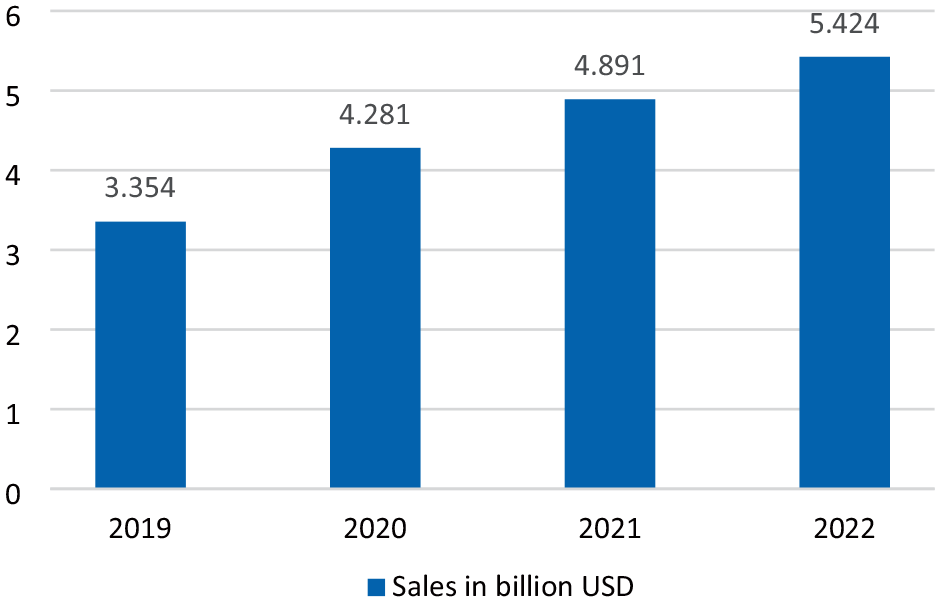
Figure 2 shows the continuous increase in sales in the global e-commerce market. The amount, 3.354 billion USD in 2019, increased to 4.281 billion USD in 2020, 4.891 billion USD in 2021, and 5.424 billion USD in 2022. The same report also revealed that the growth rate, which accelerated due to COVID-19, is expected to slow down in subsequent periods, but growth is projected to continue (Infomineo, 2021).
Amount of total global retail e-commerce sales.
Figure 3 presents the sales data of businesses operating through e-commerce before and during the COVID-19 pandemic. Even though China had the highest sales percentage overall, the most significant growth occurred in Brazil, Spain, and Japan in terms of growth rate (International-Trade-Administration, 2023).

Share of B2B companies selling through e-commerce.
The sales data of businesses engaged in online commerce before and during the COVID-19 pandemic are presented in Figure 4. It is indicated that Italy had the highest share in total sales amount, whereas the highest revenue increase was observed in the United Kingdom (International-Trade-Administration, 2023).

Share of e-commerce revenue of small and medium B2B companies.
Figure 5 illustrates the sectoral distribution of global e-commerce revenues before and after the COVID-19 pandemic. Accordingly, the highest spending was observed in the fashion & accessories sector (658–752 billion USD), followed by toys & hobbies (525–636 billion USD), electronics & media (505–601 billion USD), food & personal care (381–482 billion USD), and furniture & appliances (327–383 billion USD). Notably, the sectoral ranking remained unchanged when comparing before and after the pandemic (International-Trade-Administration, 2023).

Percentage of global e-commerce purchase.
Figure 6 presents the annual e-commerce order data for Türkiye. Accordingly, the number of orders, which was 1 billion 366 million in 2019, increased to 2 billion 297 million in 2020, 3 billion 347 million in 2021, and 4 billion 787 million in 2022, with a 43% increase. The same report states that the retail e-commerce volume 2022 is 458 billion ₺ (ETBİS, 2022).

Count of total Türkiye retail e-commerce orders.
Figure 7 illustrates the annual e-commerce volume data for Türkiye. The sales volume, 136 billion ₺ in 2019, increased to 226 billion 200 million ₺ in 2020, 381 billion 500 million ₺ in 2021, and 800 billion 700 million ₺ in 2022, with a 109% increase (ETBİS, 2022).

Amount of total Türkiye retail e-commerce sales.
Figure 8 depicts the distribution of businesses engaged in e-commerce in Türkiye by province. Accordingly, Istanbul has the highest number of companies with a 37.7% share (198,583), followed by Ankara with 8.5% (44,616), Izmir with 7.1% (37,272), Bursa with 4.6% (24,043), Antalya with 3.4% (17,738), Konya with 2.4% (12,694), Kocaeli with 2.3% (12,421), Adana with 2% (10,568), Kayseri with 1.9% (10,099), and Mersin with 1.5% (7,657) (ETBİS, 2022).

Share of Türkiye retail e-commerce businesses activities.
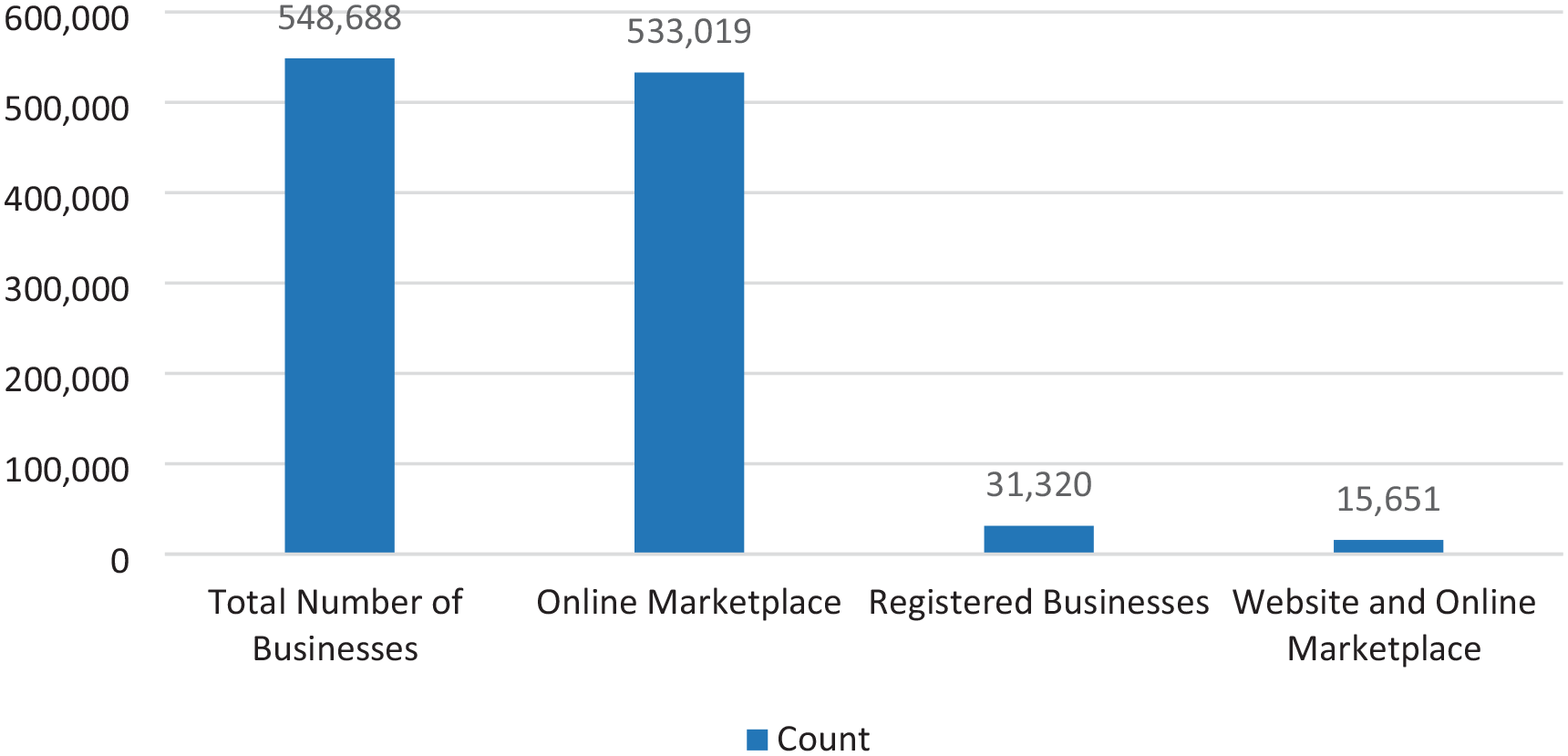
Figure 9 provides data on businesses involved in e-commerce in Türkiye in 2022. Accordingly, it was reported that there were a total of 548,688 firms in 2022, with 533,019 operating on e-commerce marketplaces, 31,320 registered on ETBİS, and 15,651 conducting sales on their own websites and online marketplaces (ETBİS, 2022).
Count of Türkiye e-commerce businesses.
Figure 10 presents sector-specific e-commerce sales figures for Türkiye in 2022. At the top is the furniture & appliances sector (96.7 billion ₺), followed by tourism & travel (80.6 billion ₺), fashion & accessories (54 billion ₺), food & personal needs (46.1 billion ₺), and electronics & media (45.9 billion ₺) (ETBİS, 2022).

Percentage of Türkiye e-commerce purchase.
Moreover, the report stated that the overall trade volume ratio of e-commerce in 2022 increased by 5% compared to the previous year and reached 18.6%. Furthermore, it was emphasized that 58% of those who shop through e-commerce service providers are women, whereas 42% are men. More than half of the purchases (36% Istanbul, 9% Ankara, 6% Izmir, 4% Bursa, 2.5% Antalya) are made by citizens living in metropolitan cities in terms of development level and population density (ETBİS, 2022).
Examining the literature, studies on e-commerce generally reported the effect of social media and tools, the desire for information access and sharing, and individual, societal, and regional differences in the adoption and usage of technological innovation (Svobodová & Rajchlová, 2020). Therefore, these variations, along with demographic factors, provide a suitable ground for multidisciplinary studies examining consumer attitudes and behaviors (Sheth, 2020). In particular, post-COVID-19 pandemic studies further examined the changes in consumers’ decision-making processes and purchasing behaviors due to the increased number of e-commerce platforms. In this context, studies focusing on the role of gender differences and other demographic factors in understanding shopping patterns during and after the COVID-19 pandemic became more prominent (Parlakkılıç et al., 2020).
Considering before, during, and after the pandemic on online shopping, it can generally be stated that personal, social, and psychological factors are influential in consumers’ decision-making processes and purchasing behaviors, and no clear conclusion can be made regarding the role of gender differences (Lin et al., 2019). For example, it was mentioned in a study investigating how gender differences affect online shopping preferences that women tend to shop more than men (Azad et al., 2019). In contrast, a similar study observed no significant relationship between gender differences and online purchase decisions (Daana & Da'na, 2023).
In a study on online shopping behavior, Chetioui et al. (2021) stated that women are more likely than men to have positive attitudes toward online shopping and have higher probabilities of making purchases based on recommendations. Pradhana and Sastiono (2019) revealed that, despite women shopping online more frequently, men tend to spend more than women. Studies measuring online consumer emotions and behaviors related to the pandemic have indicated that women are more concerned about health than men and, therefore, make more health-related expenditures (Alsharawy et al., 2021). In another study, male consumers were found to have a more positive view of technology usage and online purchase processes when compared to female consumers (Kanwal et al., 2022). However, another study on a sample of individuals who have been shopping online for at least the past 6 months concluded that there is no significant difference in online purchase frequency between men and women (Utami et al., 2021). Ashok (2021) emphasized substantial differences in gender and behavioral variations influencing online shopping, particularly in the attitudes toward convenience and time savings. Still, no meaningful differences were found in on-time delivery, product information, security, product availability, discounts, and price comparison. Koch et al. (2020) stated that hedonic motivation has a more substantial effect on young women when compared to men. Nair et al. (2022) observed that while men generally engage in need-based online shopping, women tend to shop more for entertainment.
The number of studies correlating gender differences with other demographic factors in online shopping is gradually increasing. Bhat et al. (2021) reported significant differences in consumers’ perceptions of online purchase intentions based on gender, age, marital status, and family structure. Sethi and Sethi (2018) stated that gender and marital status significantly influence online purchase intentions. Sharma and Parmar (2018) found significant differences in reported purchase intentions based on gender, education, occupation, and income. In contrast, Ünver and Alkan (2022) indicated that age, gender, education level, occupation, financial transactions, and the number of people in the household affect online shopping behaviors. In another study examining the influence of occupational groups along with gender differences, it was found that gender was a significant factor among university students and staff in online shopping (Mehrotra et al., 2020). Chen et al. (2021) mentioned that factors such as consumers’ gender, education level, and attitudes toward online commercial services, which are frequently used and confirmed to affect online shopping significantly, do not affect online purchase behavior. In another study examining the effect of demographic characteristics on online shopping, gender was observed not directly to affect online shopping but to influence shopping orientation partially (Khusaini et al., 2019). Two studies investigated how shopping orientation affects consumers’ purchasing decisions regarding gender, and it was concluded that customers exhibit different shopping-focused behaviors based on their genders (Mmari & Kazungu, 2019). Young consumers’ online shopping behaviors do not vary significantly based on gender (Do, 2019). In a recent study, Hossain et al. (2022) revealed that male consumers have higher intentions for e-shopping than female consumers. In contrast, Sun et al. (2020) stated that men are more pragmatic in online shopping, and women experience more pronounced concerns. In their empirical study on women’s online shopping behaviors over the years, Alkan, Güney, and Kılınç (2023) reported an increase in usage; they highlighted differences in attitudes between men and women and attributed these attitude differences to environmental, educational, and age-related factors. Ünver, Aydemir, and Alkan (2023) suggested in their study on individuals’ adoption of online shopping based on regional differences that gender could lead to variations in online shopping attitudes depending on the product.
Examining all these statistical data, it is evident that significant changes occurred in consumer shopping behaviors during the pandemic both globally and in developing countries such as Türkiye. This change led to a remarkable increase in purchasing frequency through e-commerce, emphasizing food, health, and electronic device sales. In the literature, results regarding the role of gender differences in e-commerce usage during and after the pandemic suggest that male and female users have different attitudes and behavioral habits in many criteria. Environmental, psychological, and demographic characteristics significantly influence these attitudes and behaviors.
Materials and Methods
Data
This study used the Household Information Technologies (IT) Usage Survey microdata set conducted by TurkStat in 2021. The Household Information Technologies Survey aims to determine the criteria of the information society and generate relevant statistics. Due to the increasing importance of understanding the social, cultural, and economic developments in the information society, as well as tracking policies implemented in this regard, Household Information Technology Usage Statistics surveys have been regularly conducted since 2004 (excluding 2006) on an annual basis by EU regulations through close collaboration between the Turkish Statistical Institute (TÜİK), the European Statistical Office (Eurostat), the statistical offices of EU member countries, and the OECD. The survey questionnaire is based on the model questionnaire prepared and recommended by Eurostat. This questionnaire is adapted to Türkiye and is also organized in line with the needs of the institutions/organizations implementing the National Information Society Strategy (TÜİK, 2021).
The sample selection for the Household Information Technologies Usage Survey included every settlement in Türkiye. This study examines households in every settlement within Türkiye’s borders. The institutional population, which excludes those residing in schools, dormitories, hotels, kindergartens, nursing homes, hospitals, and prisons, as well as barracks and army residences, is not included. In addition, settlements where a sufficient number of sample households (small villages, camps, hamlets, etc.) with a population below 1% of the total population cannot be accessed are excluded. The research covers individuals between the ages of 16 and 74 (TÜİK, 2021).
The research methodology covered individuals aged between 16 and 74 years. The sampling method used in the study was the two-stage stratified cluster sampling. In the first stage, clusters (blocks) consisting of an average of 100 households were selected for the sample by using the probability proportional to size (PPS) method. In the second stage, sample addresses were determined using the systematic selection method from the selected clusters. The Statistical Regions Classification Level 1 was used as the stratification criterion. The study’s sample size was calculated to produce estimates at the Türkiye-total and Statistical Regions Classification Level 1. Due to the consideration of non-response rates in calculating the sample size, no substitution was used in the study. The data set obtained from the sample was weighed due to the use of selection probabilities in the multi-stage sample design. The Computer-Assisted Personal Interview (CAPI) method was used as the data collection method since 2004, and the Computer-Assisted Telephone Interview (CATI) method was applied in 2020 and 2021. The study was carried out in April every year, and the reference period was determined based on the week the procedure was conducted. The study was carried out on 30,530 individuals aged 15 years and older, and the factors affecting the frequency of online shopping for personal use during the previous 3 months were investigated (TÜİK, 2021).
Participants were asked about their last internet use. The survey form was terminated for participants who selected “More than a year” or “Never used” options. Therefore, 160 individuals who selected “Between 3 months and 1 year” and 6,042 individuals who selected “More than a year” or “Never used” were removed from the data set. For the question, “When was the last time you purchased or ordered goods/services for private use on the Internet?” Fourteen thousand eight hundred ninety people selected “Between 3 months and 1 year”, “More than a year”, and “Never used” were also excluded from the data set. Since the last 3 months of transactions were considered when the survey was conducted, 21,092 individuals who did not fall within the scope of the study were removed from the data set, and 9,438 individuals who did fall within the scope of the study were included in the analysis.
Measures and Variables
The dependent variable of the study is the frequency of e-commerce shopping, as measured by the question “The number of purchases of goods or services for private use over the Internet in the last three months” (1–2 times, 3–5 times, 6 or more times). Sociodemographic and economic variables that may impact e-commerce use were identified as independent variables. These variables are as follows; age (16–24, 25–34, 35–44, 45–54, 55+), education level (did not finish school, primary school, secondary school, high school, university), sharing content on social media (yes, no) among the activities carried out on the internet for personal purposes (including mobile applications) in the previous 3 months, searching for information about goods and services among activities carried out on the internet for private purposes (including mobile applications) in the last 3 months (yes, no), internet banking (website or mobile banking applications) among activities carried out on the internet for private purposes (including mobile applications) in the last 3 months (yes, no), use of e-government services (yes, no), online clothing (including sportswear), shopping for shoes and accessories (bags, jewellery, etc.) (yes, no), problems encountered with the purchases via the website or mobile application in the last 3 months (yes, no), financial transactions carried out over the internet (yes, no), household size (1–3 people, 4–5 people, 6 people and above), having a desktop computer at the house (yes, no), having a laptop at the house (yes, no), having a tablet computer at the house (yes, no), income level (3,000₺ and below, 3,001₺–5000₺, 5,001₺–8000₺, 8,001₺ and above). One of the independent variables is the region variable.
In Türkiye, existing geographical regions were not considered when creating the Nomenclature of Territorial Units for Statistics (NUTS), and regional borders were determined based on very different criteria. Population size is the most important of these factors. In addition to population, the provinces’ cultural composition and development status were considered (Alkan et al., 2015). Under the name of NUTS, Türkiye is divided into 12 regions at Level 1. To obtain more meaningful results from the analysis, some regions were combined and expressed in 3 regions (Western, Central, and Eastern regions) (Alkan et al., 2021). The study grouped these regions as western, central, and eastern. These regions are given in Table 1.
Classification of Statistical Regional Units-Level 1.

Research Method
Survey statistics in Stata 15 (Stata Corporation) were utilized to account for the complex sampling design and weights, with weighted analysis conducted (Alkan, Bayhan, & Abar, 2023; Ünver, Tekmanli, & Alkan, 2023). Initially, the frequencies and percentages of factors related to the frequency of e-commerce shopping by men and women who participated in the study were determined. The generalized ordered logit model was employed to investigate the differences in e-commerce shopping frequencies based on gender during the COVID-19 pandemic.
Results
Descriptive Statistics and Chi-Square Tests
Sociodemographic and economic factors that affect e-commerce shopping frequency through gender differences are shown in Table 2.
Findings Regarding the Factors Affecting the E-Commerce Shopping Frequency of Individuals by Gender.

Estimation of Models
The generalized ordered logit model was employed to identify factors affecting e-commerce usage based on gender differences among the study’s participants. Ordinal and nominal variables were defined as dummy variables to observe the effects of all categories of variables included in generalized ordered logit model (Alkan et al., 2021). To assess multicollinearity among the independent variables in the generalized ordered logit model, Variance Inflation Factor (VIF) values were examined. VIF values of 5 and above are thought to lead to moderate multicollinearity, and those with VIF values of 10 and above have higher multicollinearity (Kılıçarslan et al., 2023; Ünver, Aydemir, & Alkan, 2023). According to Table 3, none of the model’s independent variables had a variance inflation factor of 5 or more. Therefore, it can be stated that there is no multicollinearity problem among the model’s variables.
Estimated Model Results of Factors Affecting E-Commerce Shopping Frequency of Individuals by Their Gender.

p < .01. **p < .05. ***p < .10.
Marginal Effects
Table 4 displays the marginal impact values of sociodemographic and economic factors that affect gender differences in the use of e-commerce in Türkiye.
Marginal effects of factors affecting e-commerce shopping frequency of people by gender.

p < .01. **p < .05. ***p < .10.
According to Table 4, a man in the age groups 25 to 34, 35 to 44, 45 to 54, and over 55 is 18.2%, 20.2%, 24.5%, and 47.5% more likely to make one to two e-commerce purchases compared to a man in the 16 to 24 age group, respectively. Similarly, a woman in the age groups 25 to 34, 35 to 44, 45 to 54, and over 55 is 12.3%, 13.1%, 20.1%, and 44.1% more likely to make one to two e-commerce purchases compared to a woman in the 16 to 24 age group, respectively. On the other hand, a man in the 25 to 34 age group is 12.1% less likely to make a three to five e-commerce purchase count than a 16 to 24-year-old. Similarly, a woman in the 25 to 34 age group is 11.8% less likely than the 16 to 24 age group to have three to five e-commerce purchases. Moving to higher purchase counts, a man in the 45 to 54 and over age group is 31.5% and 72.8% less likely, respectively, to make six or more e-commerce purchases than the 16 to 24 age group. Likewise, a woman in the 45 to 54 and over age group is 18.1% and 59.1% less likely, respectively, to make six or more e-commerce purchases than the 16 to 24 age group.
A man with a secondary school diploma is 21.5% more likely to make one to two e-commerce purchases than a university graduate. On the other hand, a woman who has not completed school or has graduated from elementary, secondary, and high school is 42.2%, 33.8%, and 23.9% more likely, respectively, to make one to two e-commerce purchases than a university graduate. Furthermore, a man who has not completed school or has a primary school degree is 16.2% more likely to make three to five e-commerce purchases than a university graduate. However, a man who has not completed school or has graduated from elementary, secondary, and high school is 45.6%, 35.7%, and 18.7% less likely, respectively, to make six or more e-commerce purchases than a university graduate. Similarly, a woman who has not completed school or has graduated from elementary, secondary, and high school is 53.4%, 37.9%, and 14.1% less likely to make six or more e-commerce purchases than a university graduate.
A man using social media is 17% more likely than others to make six or more e-commerce purchases. In contrast, a woman using social media is 15.6% less likely to make one to two e-commerce purchases than others. However, she is 22.4% more likely to make six or more e-commerce purchases than others.
A man searching for information about goods and services online is 23.1% less likely than others to make one to two e-commerce purchases, while 20.8% more likely to make six or more e-commerce purchases. On the other hand, a woman searching for information about goods and services online is 19.1% less likely than others to make three to five e-commerce purchases, but she is 22.5% more likely to make six or more e-commerce purchases.
A man using Internet banking is 25.3% less likely than others to make one to two e-commerce purchases, while he is 27.3% more likely to make six or more e-commerce purchases. Similarly, a woman using Internet banking is 38.1% less likely than others to make one to two e-commerce purchases, while she is 43.4% more likely to make six or more e-commerce purchases.
A man using e-government services is 22.8% less likely than others to make one to two e-commerce purchases, while he is 24.5% more likely to make six or more e-commerce purchases. In contrast, a woman using e-government services is 17% more likely to make six or more e-commerce purchases than others.
A man shopping for clothing online is 41.8% less likely than others to make one to two e-commerce purchases, 18.7% more likely to make three to five e-commerce purchases, and 40% more likely to make six or more e-commerce purchases. In comparison, a woman shopping for clothing online is 55.2% less likely than others to make one to two e-commerce purchases, 14.3% more likely to make three to five e-commerce purchases, and 62.1% more likely to make six or more e-commerce purchases.
A man who facing challenges with e-commerce transactions is 28.5% less likely than others to make one to two e-commerce purchases, while he is 41.6% more likely to make six or more e-commerce purchases. Similarly, a woman who facing challenges with e-commerce transactions is 26.1% less likely than others to make one to two e-commerce purchases, while she is 33.8% more likely to make six or more e-commerce purchases.
A man who conducts financial transactions over the Internet is 32.2% less likely than others to make one to two e-commerce purchases, while he is 11.8% more likely to make three to five e-commerce purchases and 25.5% more likely to make six or more e-commerce purchases. On the other hand, a woman who engages in online financial transactions is 18.3% less likely than others to make one to two e-commerce purchases, while she is 26.8% more likely to make six or more e-commerce purchases.
A man with one to three and four to five people in his household is 33.7% and 14.2% less likely, respectively, to make one to two e-commerce purchases than the reference group (6 people and above). Similarly, a woman with one to three people in her household is 15.4% less likely to make one to two e-commerce purchases than the reference group (6 people and above). In contrast, a man with one to three people in his household is 33.4% more likely to make six or more e-commerce purchases than the reference group (6 people and above). Similarly, a woman with one to three people in her household is 22.4% more likely to make six or more e-commerce purchases than the reference group (6 people and above).
A man with a desktop computer in his household is 10.9% less likely than others to make one to two e-commerce purchases, while he is 13.4% more likely to make six or more e-commerce purchases.
A man with a laptop in his household is 23.6% less likely than others to make one to two e-commerce purchases, while he is 24.3% more likely to make six or more e-commerce purchases. Similarly, a woman with a laptop in her household is 22.6% less likely than others to make one to two e-commerce purchases, while 18.5% more likely to make six or more e-commerce purchases.
A man with a tablet computer in his household is 15.3% less likely than others to make one to two e-commerce purchases, while he is 21.7% more likely to make six or more e-commerce purchases. Similarly, a woman with a tablet computer in her household is 17% less likely than others to make one to two e-commerce purchases, while she is 13.9% more likely to make six or more e-commerce purchases.
A man with a household income level of ₺3,001 to ₺5,000, ₺5,001 to ₺8,000, and ₺8001 and above is 9.6%, 13.4%, and 46.4% less likely, respectively, to make one to two e-commerce purchases compared to those with an income level below ₺3,000. Similarly, a woman with a household income level of ₺3,001 to ₺5,000, ₺5,001 to ₺8,000, and ₺8001 and above is 16.9%, 23.2%, and 35.3% less likely, respectively, to make one to two e-commerce purchases compared to those with an income level below ₺3,000. On the other hand, a man with a household income level of ₺8,001 and above is 42.6% more likely to make six or more e-commerce purchases than those with an income below ₺3,000. Similarly, a woman with a household income level of ₺3,001 to ₺5,000, ₺5,001 to ₺8,000, and ₺8001 and above is 23.6%, 26.7%, and 50.7% more likely, respectively, to make six or more e-commerce purchases compared to those with an income level below ₺3,000.
Finally, men living in the Western and Central regions are 41.3% and 15.3% less likely, respectively, to make one to two e-commerce purchases than those living in the Eastern region. Similarly, women in the Western and Central regions are 59.5% and 25.9% less likely, respectively, to make one to two e-commerce purchases than those in the Eastern region. On the other hand, a man living in the Western region is 16.9% more likely to make three to five e-commerce purchases than those in the Eastern region. In comparison, women in the Western and Central regions are 28.1% and 13.9% more likely, respectively, to make three to five e-commerce purchases than those in the Eastern region. Furthermore, men living in the Western and Central regions are 44.3% and 24.1% more likely, respectively, to make six or more e-commerce purchases than those living in the Eastern region. Similarly, women living in the Western and Central regions are 45.3% and 26.4% more likely, respectively, to make six or more e-commerce purchases than those living in the Eastern region.
Discussion
With digitalization, users’ shopping methods have undergone significant changes. Undoubtedly, the COVID-19 pandemic was one of the factors influencing users’ shopping preferences. The global impact of the epidemic led people to stay at home for an extended period, closely affecting their daily lives and, consequently, their shopping patterns.
This study examines the socioeconomic and demographic factors influencing online shopping among individuals in Türkiye, with a focus on gender differences. The generalized ordered logit model is employed to determine the effect of gender differences on e-commerce usage in Türkiye. According to the results of the analysis, it was observed that certain considered factors had an impact on purchasing transactions through e-commerce in terms of gender differences, establishing meaningful relationships.
According to the findings, it has been determined that as age increases, the frequency of e-commerce shopping decreases inversely in both men and women. When considering gender differences alone, the age-related decline is more pronounced in males. Similar results have been reported in the literature. A study in this context revealed that most individuals who shopped online before and after the pandemic were between 18 and 34 (Young et al., 2022). Similarly, a Japanese study concluded that young people are more likely to use e-commerce (Kawasaki et al., 2022).
A study of live e-commerce usage determined that younger individuals had a higher usage rate (Zhou et al., 2021). Another study in this field revealed an increase in grocery shopping, particularly among young people who are shopping more frequently (Brand et al., 2020). In a study conducted in Brazil by Dias et al. (2021), it was determined that individuals younger than 50 years of age used e-commerce more frequently. A study in Finland by Eriksson and Stenius (2022) found that individuals younger than 45 made online grocery purchases more regularly during the COVID-19 period. Contrary to these studies, another study stated that those who shopped via e-commerce were mostly individuals in the 30 to 59 age group, actively engaged in the working life (Bjerkan et al., 2020).
Regarding education, the number of e-commerce purchases made by both women and men increases directly in proportion to the education level. However, when comparing genders, it has been observed that as the education level increases, e-commerce purchases are higher in men than in women. Research indicates that individuals who frequently use e-commerce typically have at least 4 years of education (Bjerkan et al., 2020). In a different study, a higher rate of educated individuals was found regarding grocery shopping (Brand et al., 2020). In contrast, a study conducted in America found that as participants’ education levels increased, their online purchases decreased (Truong & Truong, 2022).
Men who actively search for information about products and services are more likely to engage in e-commerce compared to those who do not. This situation differs for women based on the quantity of intakes. According to a study in this field, the amount of time a consumer spends seeking information on a bank’s website is highly correlated with the desire to continue banking transactions through this website, indirectly lead to online shopping (Gounaris et al., 2010). Another study revealed that women pay more attention to social media interactions and comments than men in e-commerce, resulting in higher shopping rates (Hewei & Youngsook, 2022). A separate study found that women participated more in mobile marketing concerning perceived value, interpersonal influence, and impulsive purchasing, while males participated more in brand trust (Stefko et al., 2022).
Those who require assistance with online purchases are observed to make more e-commerce purchases transactions than those who do not seek help. Moreover, men facing challenges with online shopping are more likely to make e-commerce purchases than women. A study conducted within this framework determined that men tend to shop more than women despite encountering problems, emphasizing that this difference may arise because women have less confidence in shopping platforms than men (Fedushko & Ustyianovych, 2022).
It is observed that as individuals’ incomes rise, their e-commerce purchases increase. Concerning gender, it can be indicated that women make more e-commerce purchases than men as their income level increases. This study determined that those who frequently use e-commerce have a higher average household income than the general population (Bjerkan et al., 2020). A study conducted in Finland observed that individuals with a higher household income (50,000 EUR and above) made more online grocery purchases during the COVID-19 epidemic (Eriksson & Stenius, 2022). Similarly, in another study, individuals from higher-income groups were more likely to purchase groceries online than those from lower-income groups. Another study concluded that individuals from high-income groups are more likely to adopt live e-commerce than low-income individuals (Zhou et al., 2021). Another study concluded that individuals are more economically active in purchasing all product groups in grocery shopping (Brand et al., 2020).
Finally, when examined on a regional basis, it was observed that individuals living in the western and central regions make more e-commerce purchases when compared to those living in the eastern region, and this statistic progresses increasingly from East to West. Regarding gender distribution, it was concluded that moving from the East to the West, women tend to engage in e-commerce purchases more than men. Studies within this scope observed that individuals engaging in online shopping during and after the pandemic predominantly reside in areas such as capitals, metropolitan cities, and city centers due to their economic conditions and level of development (Bjerkan et al., 2020; Eriksson & Stenius, 2022; Ghita et al., 2022). In contrast, active e-commerce users decreased in areas with lower population density, such as villages and towns, due to limited access, and infrastructure needs to be improved (Kinal, 2022). Despite the motivation to adopt online shopping in rural areas, the conversion of this adoption into actual shopping behavior is limited due to restricted financial means (Wang et al., 2021).
Conclusion
The study found that the significance and impact of variables on individuals’ e-commerce purchasing frequency vary by gender. Consequently, gender-specific factors affecting e-commerce purchasing frequency were identified.
The results achieved in this study indicate that, in general, the rate and transaction volume of e-commerce purchases have been increasing in both women and men during the COVID-19 pandemic. Moreover, the significance and effect of variables in the frequency of e-commerce shopping vary depending on gender. Furthermore, factors such as age, education level, income, product knowledge, social media usage, use of digital service applications, internet banking, financial transactions, encountering online problems, having digital devices, household size, and regional variables were observed to be associated with individuals’ frequency of e-commerce shopping. In summary, it was concluded that the frequency of e-commerce purchasing decreases as age and household size increase. On the other hand, it was supposed that factors such as education level, social media usage, product and service knowledge, internet banking usage, e-government usage, engaging in clothing e-commerce, encountering problems in e-commerce, financial transaction activity, owning digital devices (PC, laptop, tablet), income level, and regional development level lead to an increase in the frequency of e-commerce purchases.
Considering the studies examining the effects of the pandemic process on e-commerce use via psychological, individual, and social factors, it is possible to conclude that gender differences affect consumers’ decision-making and behavior processes to purchase products on online platforms in various ways. Therefore, regarding the future of e-commerce platforms, it is crucial to closely monitor all variables affecting consumer perceptions, habits, and behaviors, develop gender-specific strategies, and provide ease of individual adaptation.
From the aspect of process management, it is evident, both in previous events and during the COVID-19 pandemic, that such extraordinary global events directly impact daily life, increasing general and specific consumption demands globally and expanding sales volume on a worldwide scale and increasing the number and frequency of usage of shopping platforms. In the last pandemic, the global e-commerce sales share of total sales increased by approximately 7% compared to the beginning of the pandemic, reaching around 20%. Sales figures increased to more than 5.5 billion dollars, with an increase of more than 60%, particularly in the food, personal care, electronics, furniture, home goods, cosmetics, clothing, and accessory sectors. It was reported that 9 of the top 10 e-commerce companies achieved double-digit revenue growth. Considering these statistics, local governments and service providers must develop healthier, sustainable, and predictable policies and strategies for extraordinary situations like pandemics. In this regard, businesses are advised to create a customer and supplier portfolio in areas such as platform access, stocking, distribution, transportation, and payment methods, strengthen their infrastructure, and keep their systems up to date. Governments, on the other hand, can facilitate the healthy functioning of the process by conducting awareness campaigns for extraordinary events, suggesting applications that promote healthy consumption habits, encouraging new business models, expanding virtual shopping environments, and ensuring the security of the entire shopping process through appropriate legal regulations.
This study has several limitations. The data applied in the study were secondary data. Thus, the variables required for the statistical analysis consisted of the variables in the dataset. The data obtained in the study consisted of the responses of individuals. Hence, the data obtained in this data collection method may be biased. Obtaining the data used only from consumers leads to one-sided comments from a sectoral and academic perspective. Therefore, it is possible to get more comparable results by conducting identical studies on service providers and users. In addition, since the survey was conducted exclusively in Türkiye, the participation of individuals from various geographies and cultures can be ensured in terms of the generalizability of the findings. In addition, the results can be enriched by differentiating the demographic, personal and environmental factors used in the study.
Footnotes
Acknowledgements
The authors would like to thank the Turkish Statistical Institute for its data. The views and opinions expressed in this manuscript are those of the authors only and do not necessarily represent the views, official policy, or position of the Turkish Statistical Institute.
Declaration of Conflicting Interests
The author(s) declared the following potential conflicts of interest with respect to the research, authorship, and/or publication of this article: The authors do not have any competing interests in reporting. Additionally, the authors had full access to all the data in the study and took responsibility for the integrity of the data and accuracy of the data analysis.
Funding
The author(s) received no financial support for the research, authorship, and/or publication of this article.
Ethics statement
This study was accomplished by using data from the survey titled Household Information Technologies Usage Survey conducted by the Turkish Statistical Institute. Therefore, ethical approval was not required for this study. We used secondary data for this study. In order to use the micro dataset from Household Information Technologies Usage Survey, official permission was obtained from the Turkish Statistical Institute. In addition, a “Letter of Undertaking” was given to the Turkish Statistical Institute for the use of the data subject to the study.

Data Availability Statement
Data sharing not applicable to this article as no datasets were generated or analyzed during the current study.