



Abstract
This study investigates the combined influence of privacy calculus theory (perceived risks, perceived benefits, perceived value) and social cognitive theory (mobile computing self-efficacy, exploitive technology adaptation) on the continuance intention of Gen Z m-commerce users in Vietnam. Using convenience sampling and a questionnaire-based survey approach, the study collected 385 responses from current Gen Z users. To validate the hypotheses, a SmartPLS technique was employed. The findings revealed that perceived value, exploitive technology adaptation, and mobile computing self-efficacy are positively influenced by continuance intention. Furthermore, the study not only highlights the significant role of privacy calculus theory within the benefits–risks–value construct but also underscores the social cognitive theory framework. Remarkably, this study is the first to unveil the significant moderating effect of personal innovativeness on the relationship between exploitive technology adaption and continuance intention. This study provides valuable insights and recommendations for businesses aiming to retain Gen Z customers by enhancing the factors that influence continuance intention.
Keywords
Introduction
In the digital world, especially in m-commerce, companies are increasingly gathering information from customers (Fernandes & Pereira, 2021; Wedel & Kannan, 2016). The continuous collection of digital data through online and mobile applications (m-apps) generates vast streams of information about consumers’ emotions, actions, and interactions with products and services, as well as their responses to various marketing initiatives (Wedel & Kannan, 2016). This exchange generates benefits for customers in the form of product improvement, discounts, and enhanced user experiences through personalisation, customisation, and socialisation (T. Wang et al., 2016). However, consumers view data analysis as a potential privacy concern due to technological advancements that allow for rapid and extensive information processing. According to Statista’s Digital Market Insights, m-commerce sales generated an estimated 1.7 trillion U.S. dollars in 2023, representing more than half of all retail e-commerce sales. Since 2018, the percentage of m-commerce transactions has increased rapidly, from 43% in 2018 to an anticipated 63% by 2028. In developing countries,
Consumers across various generations hold diverse perspectives concerning their online security and privacy. According to Euromonitor (2022), younger Gen Z customers are generally open to companies sharing their data with third parties, but they expect greater value in return. Only 23% of consumers globally believe they control their personal data. As consumer privacy concerns have increased, so has the development of technology that uses location data and facial recognition to identify individual shoppers. While most consumers are wary of these technologies, millennials and members of Gen Z are the most willing to share their personal information in exchange for a better shopping experience. In fact, 28% of young consumers actively seek customised shopping experiences. In Vietnam, a developing country and a representation of the growth of m-commerce, the privacy concerns (52%) are the second most significant barrier to e-commerce adoption among consumers, second only to product quality (68%), according to the White Book of E-commerce 2022 (p. 45). Furthermore, with the internet continuing to expand, m-commerce customers face increasingly complex privacy risks as they share personal details about their daily activities as well as location and time data. Therefore, the growing complexity of privacy risks associated with mobile technology highlights a need for deeper investigating into how trade-off between privacy risks and benefits influence consumer behaviours, particularly among younger generations in developing countries.
According to Laufer and Wolfe (1977), privacy calculus theory (PCT) is an integrated sociological theory that explains individuals’ perceptions of privacy and privacy invasion. The core aspect of PCT is the interpersonal interaction dimension, which is primarily concerned with the relationships between an individual and others. This aligns with the dyadic exchange that occurs between people using m-apps and information systems (Hoehle et al., 2019; Zhu et al., 2021). The success of any innovative m-app or service depends on personal data collection, which creates a privacy paradox: users benefit from customised services but risk losing some of their personal information (T. Wang et al., 2016). Despite increased privacy concerns, customers continue to willingly share their personal information in various contexts (Smith et al., 2011; Zhu et al., 2021). The privacy paradox persists as users continue to share personal information despite heightened privacy concerns, yet the evolving cognitive responses to new technologies in this context remain under-explored. In this study, we propose to extend PCT by incorporating social cognitive theory (SCT) to explore how customers’ cognitive responses evolve with the advent of new technologies.
SCT emphasises the reciprocal relationship between an individual’s cognitive perceptions and their environment (Bandura, 1977). IS research has indicated a strong link between self-efficacy and individuals’ reactions to computing technology, including both its adoption and usage (Compeau et al., 1999). This relationship also extends to adaptation, as increased technology usage is motivated by the psychological excitement linked to heightened self-efficacy (Compeau et al., 1999; Schmitz et al., 2016). By using new technology for customisation and personalisation through m-commerce, customers perceive a greater value in disclosing their personal information, which enhances their continuance intention (CI; Kang & Namkung, 2019). According to Lin et al. (2022), the perceived value of disclosing personal information and personal innovativeness are two important factors influencing the attitudes and actions of consumers, especially in the context of privacy concerns. While previous studies have addressed the perceived value of personal information disclosure and privacy concerns, none have performed an integrated analysis of these elements in conjunction with the cognitive factors of self-efficacy and technological adaptation. Based on the PCT (T. Wang et al., 2016; Xu et al., 2011) and SCT (Compeau et al., 1999; Schmitz et al., 2016), this study proposes a theoretical model that can help organisations understand their customers through five key factors: the trade-off between perceived benefits (PB) and perceived risks (PR), the perceived value (PV) of disclosing personal information, mobile computing self-efficacy (MCSE), exploitive technology adaption (ETA), and CI. Additionally, this study also examines the moderation effect of personal innovativeness (PI) on the relationship between PV and ETA towards CI.
This study aims to develop a theoretical model that investigates the factors contributing to CI of shopping online in m-commerce. Specifically, it aims to answer three research questions: (1) What are the antecedent factors of CI in m-commerce through the integration of PCT and SCT? (2) What are the mediating effects of PV and ETA on CI? (3) How does personal innovativeness moderate the relationship between PV and ETA on CI?
The current study contributes novel perspectives to the existing body of literature. First, it provides new insights into the disclosure of personal information and how it relates to adapting new technology for shopping experiences via m-commerce. As one of the first studies in this area, we propose a hierarchical research model that explores perceived value and technological adaptation. This study extends the work of Compeau et al. (1999) and Schmitz et al. (2016) on technological adaptation and mobile computing self-efficacy through the lens of SCT, and incorporates the PCT perspective to understand the disclosure of personal information and its impact on continued use intention. Second, in response to Delone and McLean (2014) call to focus on ‘system use’ – such as nature, level, and appropriateness of use – rather than frequency of use in measuring IS success, this study is the first to explore how personal innovativeness moderates the relationship between perceived value, technological adaptation, and CI in Gen Z users of m-apps in Vietnam. Lastly, this study breaks new ground by examining customer post-adoptive behaviour through the combined lens of psychology and sociopsychological theories, namely SCT and PCT.
The rest of this paper is divided into five sections. After the introduction, Section 2 outlines the proposed research model grounded in the privacy calculus and social cognitive theories. Section 3 details the research methodology. Section 4 discusses the empirical findings and model results. Lastly, Section 5 concludes the study, offering theoretical contributions, managerial implications, study limitations, and recommendations for future research.
Literature Review
Privacy Calculus Theory (PCT)
In the digital world, achieving a precise definition of privacy proves to be challenging. The PCT (Laufer & Wolfe, 1977) is regularly employed to explain the privacy perceptions and behaviour of consumers. This theory represents a calculus function illustrating how consumers make decisions regarding the disclosure of their personal information. These decisions are conditional upon the outcomes of an evaluation involving disclosure requirements and privacy concerns within a defined context of information disclosure. The privacy calculus functions as a mechanism by which consumers evaluate the anticipated positive and negative consequences before determining the nature and extent of information they are willing to disclose to others (P. Li et al., 2019). This concept can also be understood as the idea that rational internet users weight the benefits of sharing information and the costs of maintaining privacy (Dinev et al., 2006). When customers perceive significant benefit in a specific context, they are more likely to engage in self-disclosure, as the perceived advantages outweigh the perceived risks. Conversely, if customers anticipate higher risks in disclosing information in a particular context, they are less likely to share information, as the perceived risks are higher than the perceived benefits.
Previous research has identified the risks and benefits associated with various contexts, including location-aware technologies (Lin et al., 2022), online transactions (Bandara et al., 2020; Bol et al., 2018; T. Wang et al., 2016), government m-apps (Dinev et al., 2008; C. Wang et al., 2020), location-aware marketing (Hayes et al., 2021; Keith et al., 2015), and mobile health (m-health; Hassandoust et al., 2020; Zhu et al., 2021).
The relationship between PCT and SCT is key to understanding user behaviour concerning privacy decisions and technology adoption (Compeau et al., 1999). SCT emphasises the role of self-efficacy and observational learning in shaping behaviour, while PCT emphasises the cost-benefit analysis of data sharing. When integrating, these theories suggest that a user’s confidence in their ability to manage privacy settings (self-efficacy) and their interactions with technology can influence their privacy-related decisions (Ozturk et al., 2016; Schmitz et al., 2016). Moreover, this unique confluence explains how Gen Z users shape technology adoption and data-sharing behaviour by their cognitive processes.
Social Cognitive Theory and Technological Adaptation
According to SCT, behaviour, environmental factors, and personal factors interact reciprocally, though not always simultaneously or with equal strength. Behaviour is influenced by both the environment and personal traits in a cyclical manner. Personal traits are also shaped by behaviour, and behaviour and personality can eventually affect the environment. SCT has been widely applied in various fields, including health, communication, education, and business (Font et al., 2016).
The majority of perspectives, including the technology acceptance model (TAM) and the theory of planned behaviour (TPB), view causal relationships as essentially one-way, with the environment impacting cognitive beliefs, which in turn shape attitudes and behaviours. On the other hand, as stated by Bandura (1986), SCT recognises the ongoing reciprocal relationship between an individual’s environment, their cognitive perceptions (which include self-efficacy and outcome expectations), and their behaviour. Bandura (1986) defines ‘self-efficacy beliefs’ as individuals’ assessments of their abilities to plan and carry out the actions required to accomplish specific tasks (p. 391). Consequently, those demonstrating ‘self-efficacy’ perceive themselves as capable of performing in a particular way to reach a goal or shape circumstances that impact their lives (Bandura, 1977).
Self-efficacy also influences how individuals approach uncertainties, tasks, and goals. It dictates whether individuals will undertake a specific action and shapes how they tackle challenges that may emerge during the process (Keith et al., 2015). As a result, SCT offers valuable insights into the motivations behind individuals’ decisions to share their location data and personal information with m-app vendors. When a prospective user seeks out an app, they have a clear objective and a series of steps necessary to achieve it. Their goal is to acquire an app that meets their criteria for safety and usefulness while delivering the desired information or entertainment (Compeau et al., 1999).
Continuance Intention in M-Commerce
Continuance intention refers to an individual’s commitment to repeat a behaviour, often associated with repeat purchases. In the context of m-commerce, it can be defined as current users who keep using m-commerce apps (Dehghani, 2018; Susanto et al., 2023).Therefore, it represents a post-adoption behaviour, indicating a user’s intention to persist in using mobile commerce services (Oloveze et al., 2022). According to Franque et al. (2020), the factors that contribute to the IT service system’s long-term success are linked to continuance intention. The customer’s choice to stay connected to the m-commerce applications and carry on making purchases is what this study refers to continuance intention in m-commerce. W.-T. Wang et al. (2019) also defined continuance intention as a customer’s choice to remain with a particular mobile service over a lengthy amount of time. Because of how rapidly and widely mobile technologies are advancing, managers ought to have the ability to understand how customers behave when it comes to m-commerce. As a result, researchers and practitioners are eager to learn more about m-commerce’s intention to continue (Chauhan et al., 2022; Susanto et al., 2023). Notably, researchers have sought to predict continuance intention in m-commerce by enhancing a blend of foundational theories tailored to the evolving digitalisation landscape (Gao et al., 2015; G.-D. Nguyen & Thi Dao, 2024).
Perceived Value of Disclosing Information
Zeithaml (1988) characterised perceived value as ‘the consumer’s overall assessment of the utility of a product based on perceptions of what is received and what is given’ and further explained that ‘value represents a trade-off of the salient give and get components’ (p. 13). This study adopts the perspective of trade-offs between giving and receiving to examine customers’ perceptions of the value linked to disclosing personal information. It does so by meticulously analysing the delicate equilibrium between the perceived risks and benefits those individuals may face when using m-apps.
Perceived risk refers to customers’ negative perceptions of a service or product, leading them to anticipate uncertain and unwelcome outcomes from sharing personal information (Ashrafi et al., 2024; Zhou, 2013). When users engage with new technology to accomplish tasks, they often have heightened perceptions of risk (Lu, 2024; Ozturk et al., 2016), which can significantly influence their behaviour. In short, perceived benefit reflects the positive outcomes associated with disclosing personal information, while perceived risk pertains to the expected level of privacy loss resulting from such disclosure.
Individuals’ conflicting views on information provision are explained by perceived risks and perceived benefits (Hayes et al., 2021; Kang & Namkung, 2019). They engage in a cost–benefit analysis of information disclosure based on the specific circumstances of information system adoption. Perceived benefit is positively correlated with the perceived value of disclosure, while perceived risk is negatively associated with it, as shown in various studies (Bol et al., 2018; Hayes et al., 2021). Therefore, this study proposes the following hypotheses:
H1: Perceived risks negatively impact the perceived value of disclosing personal information in m-commerce.
H2: Perceived benefits positively impact the perceived value of disclosing personal information in m-commerce.
H3: The perceived value of disclosing personal information positively impacts CI in m-commerce.
Mobile Computing Self-Efficacy (MCSE)
Recent research in e-commerce and information systems has utilised self-efficacy, a construct of SCT, to predict a range of outcomes, including attitudes towards systems as well as their usage and performance (Bartol et al., 2023; Vuong-Bach et al., 2023). Self-efficacy is defined and developed in various computing contexts. In particular, mobile computing self-efficacy (MCSE) highlights that ‘the connection between self-efficacy and the willingness to adopt new technologies early and to find innovative uses for new technology holds in other computing contexts, such as internet and mobile computing’ (Keith et al., 2015; Y. Wang et al., 2006). With the rapid development of the internet, Hsu and Chiu (2004, p. 369) introduced the concept of ‘internet self-efficacy’, which focuses on navigating skills related to web-based interfaces rather than simple computer use. However, the introduction of mobile devices has led to numerous technological advancements, including cell phones, global positioning systems (GPS), wireless internet, and personal digital assistants, to which individuals must adapt (Keith et al., 2015). Utilising the features of mobile devices demands a distinct skill set similar to that required for web-based applications. Therefore, MCSE offers a more effective lens for understanding computing self-efficacy in relation to the attitudes and usage habits of modern mobile device users.
Potential customers aim to acquire m-apps that ensure both safety and utility while providing them with the desired information and entertainment. The relationship between self-efficacy and technological adaptation grows as increasing self-efficacy leads to emotional arousal, which in turn stimulates greater interaction with the technology (Compeau et al., 1999; Shahzad et al., 2023). When a user experiences positive emotions about a technology, they are more likely to fully exploit the features of that technology (D. G. Nguyen & Ha, 2022; Schmitz et al., 2016).
This leads to the following hypotheses:
H4: MCSE positively impacts exploitive technological adaptation in m-commerce.
H5: MCSE positively impacts perceived value in m-commerce.
H6: MCSE positively impacts CI in m-commerce.
Exploitive Technology Adaptation (ETA)
Adaptation, much like learning, can be ambidextrous, often blending elements of both exploitation and exploration (Schmitz et al., 2016). This distinction has proven conceptually clear in the fields of organisational learning (van Wijk et al., 2012) and individual learning (Dam & Körding, 2009). This study examines exploitive technology adaptation (ETA) behaviour by focussing on how users modify technology features to align with their perceptions of the intended or standard use of the technology (Schmitz et al., 2016). ETA also encompasses customisation and personalisation through the configuration options available to the user (Desouza et al., 2007).
When consumers use personalised technologies, they may seek greater value, which encourages positive behavioural responses. Individuals often cognitively integrate their perceptions of what they can gain and what they must sacrifice when choosing an object (Kang & Namkung, 2019). Personalisation offers greater benefits to customers by matching customer preferences with service attributes. However, to offer personalisation, companies must be able to detect consumers’ needs. This requires consumers to disclose their private information, including personal profiles, locational information, and buying history. Based on the aforementioned literature, it is anticipated that technological adaptation may reveal a reciprocal relationship between the perceived value of disclosing personal information and CI in m-commerce (Figure 1). Thus, the hypotheses related to this variable are:
H7: ETA positively impacts the perceived value of disclosing personal information in m-apps.
H8: ETA positively impacts CI in m-apps.

Research model.
Moderation of Personal Innovativeness
Personal innovativeness is described as ‘the willingness of an individual to try out any new information technology’ (p. 206). It is associated with exploitive interactions where users draw on their existing knowledge (Schmitz et al., 2016). In the context of ETA, personal innovativeness reflects a user’s inherent inclination to engage with the core aspects of technology. Personal innovativeness has been described by some academic researchers as a moderating variable (Jeong & Choi, 2022; Lin et al., 2022; Senali et al., 2023). However, no research has studied its moderating effect in the link between ETA and the perceived value of disclosing personal information towards CI in the context of m-commerce.
Customers who exhibit higher levels of innovativeness, characterised by their willingness to take risks and their comfort in venturing into new areas (Rogers et al., 2014), are more likely to accept m-apps due to the customisation and personalisation of e-commerce. Consumers with lower levels of risk tolerance are less likely to integrate shopping experiences through mobile devices (Truong et al., 2017). As a result, it is anticipated that consumers would be more willing to accept the increased privacy risk associated with m-app adaption when they have a favourable attitude towards new technologies and a strong sense of personal innovativeness. This further suggests that innovative individuals with higher levels of awareness will be less vulnerable to the gathering of personal data. Therefore, we hypothesise:
H9: The effect of the perceived value of disclosing personal information on CI is stronger for consumers whose personal innovativeness is comparatively high.
H10: The effect of ETA on CI is stronger for consumers whose personal innovativeness is comparatively high.
Methodology
Data Collection and Sample
This study adopts quantitative method, and employs a survey-based strategy to collect primary data through a cross-sectional design. The target respondents are Gen Z consumers in Vietnam who have previously made purchases through m-apps on m-commerce platforms (e.g., Shopee, TikTok, Lazada, Tiki) and have shared their personal information to enhance their shopping experience. To validate the proposed hypotheses, this study designed at collecting 420 responses using the convenience and snowball sampling methods which were deemed appropriate considering the context of m-commerce (Sarstedt et al., 2017). Face-to-face interviews were employed in data collection (Ha, 2022). During the 3-month period from March to May 2024, 385 out of 420 distributed questionnaires (91.66%) generated valid answers. Respondents were asked to tick the consent box before the interview started and at any time during it to confirm that they knew the survey was voluntary and that their responses would be kept private. The questionnaire includes a screening question to ensure respondents fulfil the required conditions for this study, including experience with disclosing personal information, frequency of online shopping via m-apps, and the type of personal information they share during transactions. To maximise the response rate, a pre-test was conducted with 10 respondents to determine whether any sentence-level issues – such as anonymity, phrasing, or technical words – were particularly challenging. The results of the pre-test indicated an ambiguous understanding among respondents of the term ‘experience’ in the context of sharing personal information. To address this, a definition of ‘experience’ was provided along with several examples of sharing information and types of m-apps. Demographic information is provided in Table 1.
Demographic Information.

In addition, primary data were utilised in this study to quantitatively test the research model. The minimum sample size required for partial least squares structural equation modelling (PLS-SEM) analysis of the research model was determined using G*Power 3.1 software through a linear multiple regression test (Faul et al., 2009). We selected a medium effect size of 0.15 for our manipulation. A statistical power (1 − β) of 0.95 was required, with an error probability (α) of .05 and three predictors. We ran a linear multiple regression test with a fixed model to calculate the minimum sample size for the proposed model (Faul et al., 2009). G*Power showed that a total sample size of 119 was required to run PLS-SEM in the proposed model. All the test indexes are displayed in Figure 2.
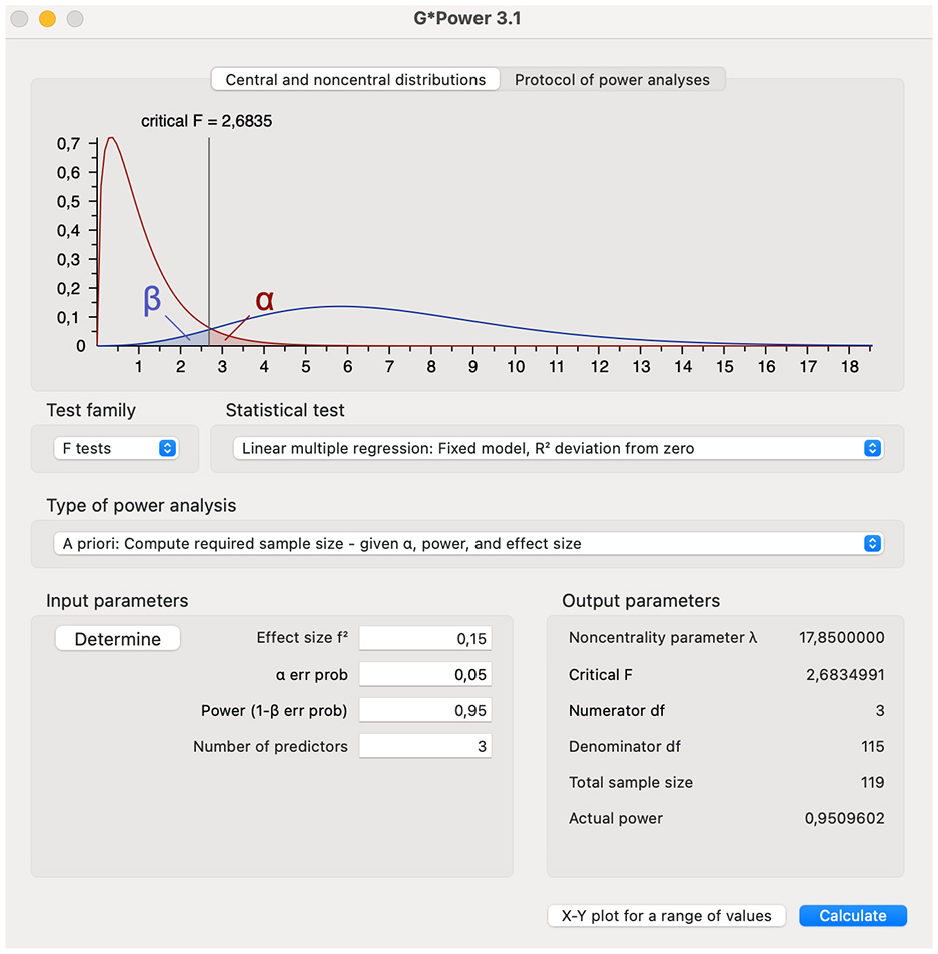
Minimum number of samples calculated by G*Power.
Measurement
Research instruments were adapted for practical use to obtain the targeted data. A 5-point Likert scale was constructed, ranging from 1 (strongly disagree) to 5 (strongly agree). The measurement scale for perceived value (PV), comprising three items, was adopted from Zeithaml (1988), Xu et al. (2011), and Kang and Namkung (2019). The measurement scales for perceived risks (PR) and perceived benefits (PB), each containing three items, were adopted from Xu et al. (2011) and T. Wang et al. (2016). MCSE was adapted from Keith et al. (2015). The measurement scale for ETA, comprising three items, was adopted from Schmitz et al. (2016). Lastly, CI was measured with three items according to Bhattacherjee and Barfar (2011) and Y. Li et al. (2018).
Data Analysis
In this study, data analysis was conducted using PLS-SEM version 4.0.9.2, which is a method particularly suited to the theory development phase of an exploratory investigation (Hair et al., 2013). PLS-SEM analysis is used to predict and explain the relationships among the relevant components, contributing to the primary objective of the study (Hair et al., 2019). PLS-SEM was selected for this analysis because it is generally adept at handling measurement errors and is better suited than covariance-based SEM for examining moderation effects like those examined in this study (Limayem et al., 2007).
Findings
Common Method Bias (CMB)
In the field of behavioural sciences, gathering data from various sources is considered the optimal research approach to mitigate the potential for common method bias (CMB; Y. J. Kim et al., 2019; Podsakoff et al., 2003). However, it is important to note that despite this approach, the study’s findings may still be susceptible to the influence of CMB. This is because all variables were measured using a self-administered technique from the same source within the framework of a cross-sectional research design.
To avoid CMB, this study utilised two statistical techniques. First, we utilised the conclusion of Bagozzi et al. (1991), which suggests that high correlations indicate CMB. A correlation analysis revealed that no correlation above the threshold of .9 existed between any of the variables. Second, we conducted a comprehensive assessment of collinearity within the PLS model. The findings revealed that the PLS model did not exhibit CMB because all variance inflation factors (VIFs) fell within the range of 1.00 to 3.03, which is lower than the threshold value (3.3) recommended by Kock (2015). Based on these results, the authors did not identify any substantial CMB issues in any of the three tests conducted. In summary, these results suggest that CMB is not a significant concern within the scope of this study.
Demographic Information
Evaluation of the Outer Model
Table 2 summarises the results of the outer model, including the outer loading, Cronbach’s alpha, Composite reliability rho_a (rho_A), Composite reliability rho_c (CR), and Average Variance Extracted (AVE). During a reliability test, all of the indicators were retained as they exceeded the 0.40 cut-off point (Hair et al., 2012), given the exploratory nature of our study. Table 2 demonstrates that CR values exceed the required value of 0.70, ranging from 0.861 (PI) to 0.936 (MCSE; Hair et al., 2019). Cronbach’s alpha and rho_A both exceed the .60 cut-off values, indicating that all constructs meet the criteria for internal consistency reliability.
Constructs and measures.

All AVEs show that convergent validity is achieved, ranging from 0.611 (PI) to 0.796 (CI). The heterotrait-monotrait (HTMT) ratio of correlations is a new method for evaluating discriminant validity (Hair et al., 2019). HTMT values (Table 3) should be lower than 0.85 (Hair et al., 2019). In this study, all HTMT values were below 0.85, demonstrating that discriminant validity has been achieved. Table 2 presents these findings. Based on these results, we can conclude that the constructs in the proposed model are distinct from one another, as well as reliable and valid.
Discriminant Validity Results.

Evaluation of the Inner Model
After assessing the outer model, the inner model was examined to confirm the hypothesised relationships in the proposed model. The path coefficients and R-squares for all variables are shown in Figure 3.

Smart PLS results.
Path coefficients indicate the strengths and weaknesses of the constructs’ relationships, while R-squared values indicate the degree of variation present in each construct within a model. The greater the R-squared value, the greater the explanatory power of the PLS structural model and the endogenous construct’s predictability (Hair et al., 2019). Hair et al. (2019) state that a value qualifies as substantial, moderate, or weak when the R-squared value is .75, .5, and .25, respectively. R-squared values, however, might vary based on the field of study. As indicated by the value R-squared (ETA) = .355, R-squared (PV) = .559, and R-squared (CI) = .525, as illustrated in Figure 2. The explanatory power of the research model can achieve a degree of moderation.
Moderation Effect
This study hypothesised that the PV–ETA–CI relationship is moderated by the presence of PI (H9, H10). We found a significant negative effect of PI (β = −.161, ρ = 0.001) on PV and CI. The slope of the line, displaying the association between PI, PV, and CI, CI, and PV is greater for a lower PI as compared to a higher PI (Figure 4). Therefore, with a higher PI, the relationship between PV and CI is weaker, and vice versa. However, we also found a significant positive effect of PI (β = .166, ρ = 0.002) on ETA and CI. Therefore, with a higher PI, the relationship between ETA and CI is higher, and vice versa. This provides empirical evidence for the moderating effects of PI (Table 4).

Moderating effects of PI on PV-ETA-CI relationship.
Bootstrapping Results.

Mediating Effect Tests
We evaluated indirect effects to determine the role of the PV and ETA constructs as mediators in the association between MCSE, PR, PB, and CI. The indirect effects are shown in Table 5.
Indirect effect analysis.

Discussion
The findings confirm that the study’s objectives have been achieved. The integration of PCT and SCT provided a robust framework for understanding CI in m-commerce, particularly in developing countries. The results directly address the research questions by uncovering the relationships between key variables, validating the mediating roles of PV and ETA, and exploring the moderating influence of PI.
To better understand the privacy calculus individuals apply when adapting to mobile technology for continued use in m-commerce, we extended the existing privacy calculus models by incorporating cognitive factors from SCT, such as MCSE and ETA. To the best of our knowledge, previous studies (Chen et al., 2024; Hassandoust et al., 2020; Zhu et al., 2021) have not investigated the cognitive factors affecting CI in an integrated framework. In terms of how PB outweighs PR in m-apps and affects the PV of disclosing personal information, we found that previous studies reported similar outcomes to those of this study (Kang & Namkung, 2019; C. Wang et al., 2020).
Interestingly, the findings from this study indicate a significant positive relationship between ETA and PV in disclosing personal information. A possible explanation is that when customers adapt technology in ways that maximise their personal benefits, they are more likely to perceive greater value in sharing their personal information and enhancing CI. This aligns with the integrated model of PCT and SCT, which posits that customers balance the benefits and risks of information disclosure while being influenced by their cognitive ability to utilise technology effectively. Compared with previous studies (Lin et al., 2022; T. Wang et al., 2016; Xu et al., 2011), these findings indicate that PB significantly influences users’ willingness to disclose personal information, supporting the idea that users perform a cost–benefit analysis as described in PCT. However, this study extends this notion by integrating SCT, emphasising the role of cognitive processes in technological adaptation, which previous studies have not explicitly considered.
Additionally, our study reveals that MCSE plays a crucial role in this dynamic. MCSE, defined as an individual’s confidence in their ability to effectively use mobile technology, positively impacts both PV and ETA, as well as increasing the PB of disclosing personal information. Similarly, prior research on MCSE by Keith et al. (2013, 2015) found that users with high self-efficacy are more likely to engage in m-commerce due to their confidence in handling mobile transactions securely (Mohammed & Rozsa, 2024; Shahzad et al., 2023). This aligns with our findings that higher MCSE enhances the PV of information disclosure by increasing users’ confidence in managing their personal information effectively and producing CI.
The Mediating Roles of PV and ETA
This study validates the mediating roles of PV and ETA in CI. While a reduction in PR may enhance PV, an increase in PB and MCSE will increase both PV and ETA, thereby influencing CI. Previous studies have examined the mediating roles of PV on the intention of disclosing personal information (see Afolabi et al., 2021; Hayes et al., 2021). Meanwhile, the mediating roles of ETA and PV in CI have been examined in m-apps (Kang & Namkung, 2019; Lin et al., 2022; C. Wang et al., 2020). This study contributes significant evidence on how PV, combined with ETA, influences CI. In other words, businesses are encouraged to reduce PR to enhance PV, while also increasing PB and MCSE to boost ETA and PV, thereby advancing CI in the context of m-commerce in developing countries.
The Moderating Roles of PI
This study is the first to examine PI’s moderating role in the ETA–CI relationship. A comparison of our findings with those of other studies confirms the moderating role of PI on other relationships, such as PI and intention to use (see Jeong & Choi, 2022; Senali et al., 2023). This study produced results that corroborate many previous findings regarding the ETA–CI relationship while controlling for PI. This result may be explained by the fact that customers with a high level of PI experience a stronger relationship between ETA and CI, and vice versa. Furthermore, it is noteworthy that PI negatively moderated the influence on PV and CI, a finding that, to the best of our knowledge, does not align with previous research. This may be explained by the fact that young customers are more likely to feel responsible, have more favourable views towards data management, and possess greater confidence in their ability to avoid potential information exploitation (Miltgen & Peyrat-Guillard, 2014). Another explanation could be that young consumers tend to feel safe online and take security measures, leading them to be less concerned about their safety (Agosto & Abbas, 2017). This implies that customers with high levels of PV for disclosing personal information are likely to have lower PI compared to those with lower levels of PI when proceeding with CI.
Conclusion and Implication
The research model provides valuable insights into the factors driving the PV of disclosing personal information, EAT, and PI. The integration of PCT and SCT, along with the inclusion of MCSE and PI, offers a robust framework for understanding user behaviour in the digital age. These theoretical contributions and practical implications can guide businesses, policymakers, and technology developers in creating more effective strategies for user engagement, information disclosure, and long-term retention.
Theoretical Contributions
Our study offers three theoretical contributions. First, it offers new perspectives on previous research regarding the disclosure of personal information in relation to using m-apps for purchasing. We present a research model focussing on PV and ETA, making this one of the first studies in this area. Most previous studies have primarily examined the privacy calculus mechanisms related to online platforms, customer characteristics, or information attributes (Kolotylo-Kulkarni et al., 2021). This study builds on the work of Compeau et al. (1999) and Schmitz et al. (2016) by integrating PV and ETA regarding the disclosure of personal information to enhance CI. By responding to the recent call for research into the disclosure of personal information in e-commerce (Kolotylo-Kulkarni et al., 2021) through the integration of PCT and a non-utility theory-based perspective, this study offers new and improved insights into the impact mechanism of PV on CI and provides important evidence regarding MCSE and ETA. By doing so, we highlight the increased complexity and nuanced nature of disclosure through cognitive processes, extend the research on m-commerce adaptation to CI, and contribute to the m-commerce literature on how to motivate CI based on value creation.
Second, by responding to the call of Delone and McLean (2014) to focus on ‘system use’ to measure IS success, our work is pioneering in exploring PV and ETA as mediators of CI in m-apps among Gen Z users in Vietnam, a developing country with significant issues related to privacy protection policies by the government and other stakeholders. Although existing studies indicate that PV is an important factor in investigating user responses in IS and m-commerce (H.-W. Kim et al., 2007; Y. Kim et al., 2017), most m-commerce research either overlooks the effect of PV on continuance usage behaviour or neglects the mediating effect of PV antecedents, with ETA often treated as an independent variable. Our findings provide a more comprehensive framework for understanding user behaviour in the digital age. This approach offers a nuanced understanding of the cognitive factors driving information disclosure and technology use. The cognitive aspects provide evidence that consumers frequently focus more on short-term benefits and weigh them against long-term outcomes, such as consumer experience and beliefs.
Finally, this study breaks new ground by examining customer post-adoptive behaviour through the lens of psychological (PCT) and sociopsychological (SCT) theories. This study contributes a holistic perspective to understanding human practices and behaviour by integrating and acknowledging the influence of both internal psychological and social-psychological factors, particularly in the context of a developing country like Vietnam. Prior research in the field of m-commerce has focussed on users’ initial intention to adopt technologies and has seldom investigated their post-adoption behaviours (Kee & Rubel, 2021; Schomakers et al., 2022). Our approach differs from typical reliance on IT-related models like the TAM (Venkatesh & Davis, 2000) and the expectation confirmation model (Bhattacherjee, 2001), which generally emphasise elements such as perceived usefulness, ease of use, and other related antecedents and continuance. Our study reinforces the explanatory power of PCT and SCT. Our findings complement prior recommendations by offering a systematic framework for examining the various factors influencing PV, ETA, and CI, and by comparing these findings with existing empirical research on each aspect.
Practical Contributions
The research findings have several important practical implications for businesses, policymakers, and technology designers. First, companies can increase user engagement by developing technologies and platforms that support and encourage exploitive adaptation. Features that allow users to customise and creatively personalise their personal data can make the disclosure of this information more appealing. By integrating options for personalisation, businesses can create a more engaging and user-friendly experience. Features such as advanced data management tools, customisable privacy settings, and tailored recommendations can foster a sense of ownership and control, addressing privacy concerns. For instance, data visualisation dashboards provide users with clear, graphical representations of how their data is being used, enabling greater transparency and control. These dashboards can include pie charts or timelines that showcase app usage patterns, shared data categories, and interaction trends.
Second, technologies that are designed to be adaptable and offer clear, tangible benefits can empower users. This empowerment, in turn, leads to a higher PV in disclosing personal information. For example, personalised services that cater to individual preferences – such as tailored recommendations, exclusive promotions, or customised content – demonstrate immediate and long-term advantages, incentivising data sharing. Adaptable systems can dynamically adjust features like interface preferences, notification settings, or product suggestions based on user behaviour and feedback, creating a seamless and rewarding experience. Additionally, platforms that transparently highlight how shared data improves service quality – such as faster transactions, better search results, or enhanced customer support – build trust and encourage users to engage more actively.
Third, policymakers can consider the positive impact of technological adaptation and MCSE on PV by designing regulations that promote transparency, user control, and digital literacy. The regulations could mandate clear data usage disclosures and intuitive consent mechanisms, enabling users to understand and manage how their data is collected and utilised. Policymakers can develop frameworks that support these advancements while ensuring user protection and offering meaningful benefits without compromising privacy rights. These measures not only foster trust but also encourage ethical technology development aligned with user needs and expectations.
Last, building trust is crucial in the digital landscape. By demonstrating that users can derive significant benefits from disclosing their information through adaptive technologies and by fostering high MCSE, companies can develop deeper trust relationships with their customers. This can lead to increased customer loyalty and long-term engagement. Trust is the cornerstone of any successful digital interaction, and it is especially vital in contexts where personal data is involved. Adaptive technologies that offer personalised and meaningful benefits can show users the value of sharing their information. When users see tangible improvements in their experiences – such as more relevant content recommendations, personalised services, or enhanced user interfaces – they are more likely to trust the platform. For instance, ‘Discover Weekly’ and tailored recommendations based on shopping habits, the m-commerce demonstrates the tangible benefits of disclosing personal information. Over time, this trust leads to increased customer loyalty and long-term engagement, as users feel confident that their data is being used responsibly to improve their interactions.
Limitations and Future Research
Despite the valuable insights gained, this study has several limitations that must be acknowledged. First, the cross-sectional nature of this study limits the ability to draw causal inferences. Future research could employ longitudinal designs to better understand the causality between ETA, MCSE, and the PV of information disclosure by investigating how the relationship between technological adaptation, MCSE, and PV evolves over time. Second, this study focussed on ETA, but future research could explore how different types of technological adaptations, including explorative types, impact the PV of information disclosure. The context in which technological adaptation occurs can vary widely. Third, this study has a limitation regarding the lack of consideration for demographic factors, particularly the educational level of Generation Z participants. Educational background may significantly influence their perceptions of data sharing, technology use, and privacy. Future research should explore these factors to provide a more comprehensive understanding of Gen Z behaviours. Moreover, future research should consider examining different contexts (e.g., social media, healthcare, e-commerce) or cultural settings (e.g., uncertainty avoidance) to understand how contextual or cultural factors influence the relationship between technological adaptation, MCSE, and PV.
