




Abstract
Much of the existing research on gender wage gaps in China is focused on a singular perspective, such as education, sector, industry, and urban–rural difference. This paper, however, discusses both returns to education and gender wage gaps from a sector perspective. Using Urban Household Survey of 2004 and 2013, this paper presents that the classic human capital theory cannot fully explain the gender wage gap and provides empirical research that multiple labor market segmentations in China exist based on segmentation theory. To investigate return difference among different education stages, we classify the Chinese education system into five categories. First, Heckman sample selection models are used to estimate male and female wages in two sectors. The study then applies quantile regressions to analyze different returns to education across wage groups. Finally, Blinder–Oaxaca decomposition is used to analyze the cause of wage gap by identifying characteristic effect and coefficient effect. Findings indicate that the gender wage gap in the private sector has shrunk but is still greater than that of the public sector; the returns to education are mostly positive for women and higher than that of men; women in the private sector with an educational background of vocational college and below have particular low returns to education; the public sector has a lower characteristic effect because of egalitarianism. The paper concludes by proposing matched policy suggestions centered around guaranteeing enrollment rate, upgrading skills, and protecting labor rights for women, especially those with low education and in the private sector.
Plain language summary
Purpose: Much of the existing research on gender wage gaps in China is focused on a singular perspective, such as education, sector, industry, and urban–rural difference. This paper will discuss both returns to education and gender wage gaps from a sector perspective as supplement. Theory: This paper presents that the classic human capital theory cannot fully explain the gender wage gap and provides empirical research that multiple labor market segmentations in China exist based on segmentation theory. Data: We use Urban Household Survey of 2004 and 2013. To investigate return difference among different education stages, we classify the Chinese education system into five categories. Methods: First, Heckman sample selection models are used to estimate male and female wages in two sectors. The study then applies quantile regressions to analyze different returns to education across wage groups. Finally, Blinder–Oaxaca decomposition is used to analyze the cause of wage gap by identifying characteristic effect and coefficient effect. Finding: We indicate that the gender wage gap in the private sector has shrunk but is still greater than that of the public sector; the returns to education are mostly positive for women and higher than that of men; women in the private sector with an educational background of vocational college and below have particular low returns to education; the public sector has a lower characteristic effect because of egalitarianism. Suggestion: The paper proposes matched policy suggestions centered around guaranteeing enrollment rate, upgrading skills and protecting labor rights for women, especially those with low education and in the private sector.
Keywords
Introduction
The wage gap between genders is one of the most common and substantial issues globally (Iwasaki & Ma, 2020; Kunze, 2018; J. Zhang et al., 2008). Some researchers have argued that an increase in women’s education could improve the wage gaps between the genders (Blau & Kahn, 2020; Miller & Vagins, 2018). However, this argument is challenged when considering the context of modern-day China. Today in China, women have, on average, a higher level of education than men (Alduais et al., 2020; Sinha Mukherjee, 2015), and yet a woman could still be discriminated against in employment. Indeed, men, particularly college graduates, are generally paid more and likely to obtain job opportunities than women who also have less promotion opportunities. There is still an apparent “glass ceiling” in female employment (Bjerk, 2008; de Jonge, 2014). It is not sufficient to purely consider education as gender wage differentials are the result of a combination of individual characteristics, institutional and socio-economic factors. One factor that many studies concerning the gender wage gap in China have overlooked is that, in addition to gender segmentation, there are multiple other segmentations in the labor market brought by institutional factors, which have lessened the positive impact of female educational upgrading. Thus, sectoral segmentation, as a representation of institutional factors causing wage distortion and gender wage gaps, must be considered alongside other factors when considering gender wage gaps.
In recent years, China has attempted to deepen its reform and opening up with the aim of being a market economy. Although the ratio of the public sector in the economy has been declining, the marketization process between different sectors in China has not been synchronized. The public sector tends to be characterized by egalitarianism, while workers in the private sector are exposed to a more competitive labor market environment. In addition, sectoral segmentation of the labor market brings two distinct advantages to employment in the public sector over working in the private sector in China. First, the wage determination between the two sectors is not the same. The wages in the private sector are determined more by in human capital itself, and exists more gender discrimination phenomena, while wages in the public sector relies more on government intervention (L. Wang et al., 2019; Xinxin, 2015). Second, the adjustment of wages in the public sector is determined largely by the government acting uniformly and is relatively insensitive to economic status compared to the private sector. For example, since the subprime mortgage crisis, both wages and the number of staff in the private sector have reduced significantly, whereas wages in the public sector have experienced much more stable growth. Workers in the private sector, meanwhile, are subject to a greater risk of earnings volatility (Dunford, 2022; Heitmueller, 2006; Qian & Fan, 2020). In fact, the positions in public sector, which are regarded as “Iron rice bowl” that means stability and anti-risk capability, are continuously attractive for the women China even who are well-educated (Meng, 2012).
Furthermore, the gender wage in two sectors may vary across wage groups. The private sector is still dominated by manufacturing and small business. As most industries in this sector is labor intensive, the workers, who are in the middle and lower wage groups and usually have less education years, may face larger gender wage gap (M. Li et al., 2024). In contrast, most positions in public sector are in government or state-owned enterprises (SOEs), and most industries are monopolistic industries (e.g., oil and electricity). With further consideration of the wage determinant, gender wage gap is smaller in public sector (Ma, 2018b). In the high-income group, since most of them are management positions and have a high level of education, the difference in human capital itself may be small, and it is more likely that the gender wage gap is due to discrimination or other factors. However, there is still a lack of systematic research in the literature to discuss the causes of the gender wage gap (i.e., human capital or discrimination) across wage groups.
This paper will examine the returns to education and its impact on wage inequality from a sectoral perspective against this contextual backdrop. The study uses data from the Urban Household Survey (UHS) to compare and analyze differences in individual educational levels and how they affect the gender wage gap in the context of labor market sector segmentation. Specifically, this paper will address the following two core questions: (1) What are the gender differences in the returns to education, at different levels of education, in the public and private sectors? (2) How do the returns to education differ across wage groups in the public and private sectors between the genders?
This study contributes to the literature concerning the gender wage gap in China in several ways. First, this paper builds upon existing analysis of the practice of labor market segmentation theory and finds that there exist multiple segmentations in the labor market. Though existing research on the wage gap has focused on labor market segmentation by exploring the various factors, most of the them observe the segmentation of the labor market solely from a single dimension, for example, gender (Iwasaki & Ma, 2020), sector (Ma, 2018a, 2018b), rural-urban area, (L. Zhang et al., 2016; Zhong et al., 2022) and industry (Qi & Liang, 2016; Shu et al., 2022), thereby overlooking the multiple segmentations of the labor market. This paper addresses this gap in the literature not only by exploring the dual segmentation of sectoral segmentation and gender segmentation. Second, this research utilizes quantile regression to discuss the different returns to education by gender across wage groups. Previous studies of the gender wage gap have regarded the workers as a whole and ignore the heterogeneity of wage groups, that is, do not consider the specific industry and skill differences among wage groups (M. Li et al., 2024). Third, to investigate the role of characteristics and discrimination in shaping wage gaps, wage decomposition methods is adopted to analyze both sectors. Lastly, almost all of the existing literature examining the gender wage gap in China uses years in education as a continuous variable in the regression, which disregards the education hierarchy and will blur returns to education in different education stages. Conversely, this research paper provides an overall review of the Chinese education system by categorizing it as an independent variable with five stratified levels.
The main findings of this paper are as follows. First, the study suggests that the increase in education, which is a representative of human capital, among women still plays a critical role in reducing the gender wage gap when considering women as a whole, as the regression results of the returns to education are always positive and are higher than those of men. Second, in both sectors women are paid less than men. In detail, although the gender wage gap in the private sector is improved, it is still larger than that of the public sector, which always has small and stable gender wage gap. Third, women have higher returns to education than men in most cases, but not always for those women with an educational level of vocational college and below. It suggests that the private sector is not friendly to women with less education as most industries are labor intensive and public sector with less discrimination and smaller wage gap is a better choice. Finally, the study indicates that other factors and individual characteristics, such as work experience, industry, and marital status, influence the gender wage gap differently between the two sectors.
The remainder of this paper is organized as follows. Section 2 comprises a literature review, while Section 3 introduces the Chinese education system to further contextualize this study. Section 4 introduces the data sources and framework of empirical analysis. Section 5 presents the empirical results. Section 6 discusses these empirical results. Section 7 offers a corresponding policy recommendation. Lastly, Section 8 points out the limitation and future direction.
Literature Review
Theory on Wage Gaps in Labor Markets
Most arguments on the importances of education to shrink gender wage gaps are based on human capital theory. Mincer (1974) observed that schooling and work experience have a direct impact on individual earnings and, based on human capital theory, constructed an earnings-generating function to illustrate the correlation between earnings, educational attainment, and work experience. Becker (2009) focused not only on school education but also on job training and the labor mobility of employees. Based on market rules, Becker argued that male and female workers are free to allocate their labor time, which explains why there is an unequal distribution of occupations by gender and why there are such differences in wages between male and female workers. With the further development of modern-day human capital theory, governments globally have begun to shift their attention to education in order to promote economic growth through increased investment in human capital and, in turn, solve various social problems (Goldin, 2024).
Nevertheless, the gender-based wage gap cannot be fundamentally altered or resolved because it may attribute to those factors beyond labor characteristics, such as discrimination. Therefore, the human capital theory does not provide a perfect explanation or answer to this problem. According to Becker (2010), bias is the most fundamental cause of discrimination. Becker suggested that discrimination could be solved by monetizing it and, as such, proposed the market-based preference coefficient theory, which states that the preference coefficient is equal to the difference between the group like gender. In addition to gender discrimination, scholars have examined discrimination with regard to several other factors like ethnicity (Carlsson & Rooth, 2007; Neumark, 2018) and religion (Banerjee et al., 2009; Khattab et al., 2019). Arrow et al. (1973) held a different perspective to Becker, believing that employment bias stems from incomplete access to information and the application of group characteristics to individuals, which, in turn, leads to a gradual amplification of certain individual characteristics and thus to discrimination. Phelps (1972) developed this theoretical model of statistical discrimination, which was subsequently refined by Posner (1993) to consider inter-group and intra-group biases. Statistical discrimination in reality suggests employers to acquire more detailed and complete information on female jobhunters thereby reducing discrimination instead of applying several samples as a whole (Bjerk, 2008; Fang & Moro, 2011; Lippert-Rasmussen, 2011).
Theories on Labor Market Segmentation
Contrary to the views of the neoclassicalism, the institutional school emphasizes the role of institutional factors in wages decision. The book Internal Labor Markets and Manpower Analysis written in 1971 by Doeringer and Piore (2020) is a pioneering work of labor market segmentation principles. Their study of Boston showed that the human capital principle does not provide a sufficient explanation when considering high and low earners. The segmentation of the labor market is imperative, and the labor market can be divided into primary and secondary markets depending on the level of employment.
Sectoral segmentation is a crucial element of labor market segmentation (Allen, 2016; Gray & Chapman, 2018; Svallfors, 2013). The public and private sectors can be used as an analogy to describe the primary and secondary markets. For instance, in the framework of the utility maximization of workers, the equilibrium wage in the private sector is determined primarily by the market, while the adjustment of wages in the public sector is influenced mainly by the government (Allen, 2016). That is, whereas the public sector is arguably protected more by its egalitarianism, workers in the private sector are in a more competitive labor market. Sectoral segmentation brings forth different mechanisms of wage determination; therefore, it can distort the employment choice and wage distribution of male and female workers, which results in gender wage gaps (Butcher et al., 2012; Doellgast et al., 2009; Ma, 2018a). Further, other reasons like stronger protection on laborer rights and less discrimination (Chan & Selden, 2019; Iwasaki & Ma, 2020) in public sector, will further highlight the larger gender wage gaps in private sector.
Empirical Study of the Gender Wage Gap
Human Capital and the Gender Wage Gap
Though most empirical literature recognize that currently the female workers have lower human capital overall than male workers (Blundell et al., 2016; L. Zhang et al., 2021) and the investment on education to the female will shrink the wage gaps (Bertocchi & Bozzano, 2020), there are two contradictions in the literature regarding the return on human capital. The first is that which gender will have higher returns to education. For example, while many scholars have observed that women have higher returns to education than men (Aslam, 2009; Hout, 2012), other studies have shown higher returns on human capital for men. Men are more likely to earn more, even if they generally have lower levels of formal education, because of the existence of the “glass ceiling” for women (Harb & Rouhana, 2020; Tverdostup & Paas, 2017). The second contradiction is the inconsistent returns to education for women and men in various education levels, as it may be highly related to their own skills, positions, and industries. One of the longstanding conclusions from the literature is that returns to schooling are highest at the primary education (Montenegro & Patrinos, 2023; Patrinos, 2024), but this is no longer considered true, as some scholars have argued that the female with degrees usually may possess higher returns to education (Gunderson & Oreopolous, 2020; Psacharopoulos & Patrinos, 2018).
Due to mandatory education and gender equality policies in China over the decades, gender inequality in educational achievement has generally narrowed over time, although women in rural areas still face barriers to further education (B. Chen & He, 2020; Yuxiao, 2012). The majority of literature shows that due to policy support and cultural changes, the return to education for women is higher than that for men, especially in urban areas, but there are some exceptions in specific industries and positions (L. Guo et al., 2019; Qing, 2020). Workers with fewer years of education often just complete compulsory education and are engaged in physical labor, so the in return to education are relatively large between genders (Jayachandran, 2015). Although longer years of education can increase employment and promotion opportunities for women, thereby increasing the return to education, gender discrimination and occupational bias in certain positions and industries can still be obstacles (J. Guo et al., 2024; Postiglione, 2015). Thus, the return to education for women at various education levels and the differences with men still need to be further investigated.
Labor Market Segmentation and the Gender Wage Gap
Empirical research on labor market segmentation originated from developed countries at the end of the 20th century. Since then, scholars have asserted that the gender wage gap is largely due to labor market segmentation, whether in terms of occupation (Cohen-Goldner & Paserman, 2011; Tejani & Milberg, 2010), industry (Ittonen et al., 2013; Srinidhi et al., 2011), or urban-area (Fan, 2019; Ma, 2018a). Nevertheless, the role sector segmentation plays in the gender wage gap appears to be inconsistent among scholars. For example, Gornick and Jacobs (1998) suggested that the effect of public employment on the overall gender gap in wages is limited in most countries, but Blau and Kahn (2000) and Anner (2011) showed that occupational segmentation has declined significantly in the United States. The intersectoral wage gaps in developing countries, particularly in Asia and Africa, have attracted increasing academic attention in recent years. For instance, Clark et al. (2021) used data from Malaysia to show that wages are higher for public-sector employees and that gender wage differentials have declined, while Kwenda and Ntuli (2018) examined the public–private sector wage gap in South Africa and found that the wage gap has an inverted U-shape in wage distribution.
In the Chinese research context, scholars have analyzed labor market segmentation from several perspectives, including industry (Bloom et al., 2016; Ma, 2018b), urban–rural differences (Gustafsson & Wan, 2020; S. Li & Yang, 2010; Ma, 2018a), party membership (Ma & Iwasaki, 2021), and the Hukou system (Ma et al., 2024; Song, 2016). Most research results of literature that focus on sectoral segmentation in China are contrast to the conflicting results found by scholars in developed countries, and found that sectoral segmentation enlarges the gender wage gap because of wage determination and mechanisms, as well as historical factors. Jong-Wha and Wie (2017), and Xue et al. (2010) examined factors affecting the gender wage gap in both the public and private sectors using wage decomposition models from different perspectives and showed that government and state-owned enterprise employees are privileged. Furthermore, Iwasaki and Ma (2020) conducted a large-scale meta-analysis to determine that the gender wage gap is more pronounced in rural areas and the private sector than in urban areas and the public sector. Meanwhile, after the impact of the opening-up policy leading to the two-child policy since 2015, an increasing number of Chinese studies have focused on a combination of education, fertility intentions, and sectoral wage inequality (Ma, 2022; H. Wang & Cheng, 2021).
Nevertheless, the returns to education and gender wage gaps in China still warrant further study from the perspective of sector segmentation. Indeed, most of the literature considers only the separate segmentation of the Chinese labor market without accounting for the possible multiple segmentation of gender and ownership (Iwasaki & Ma, 2020; Zeng et al., 2014). Moreover, some researchers have examined the in gender wage gaps and sectoral segmentation without considering specific positions and industries, such as skilled worked or labor-intensive industry (Chi & Li, 2014; X.-Z. Zhao et al., 2019). Further, most of the literature lacks a systematic discussion of wage distributions in the public and private sectors, which makes it infeasible to specifically analyze the gender wage gap across wage groups and give germane policy suggestions (Adda et al., 2022; Brussevich et al., 2021). Finally, the existing literature has measured returns to education using years of education, which can neither capture returns to education differentials across education stages nor propose matched policy suggestions (Iwasaki & Ma, 2020; Ma, 2021; Y. Zhang & Hannum, 2015; R. Zhao & Zhao, 2018). Therefore, this study will contribute to literature by focusing on the returns to education across education levels and wage groups from a perspective of sector segmentation in Chinese labor market.
The Chinese Education System
Context of the Chinese Education System
As shown in Table 1, the Chinese education system comprises four levels: preschool education, primary education, secondary education, and higher education.
Chinese Education System.
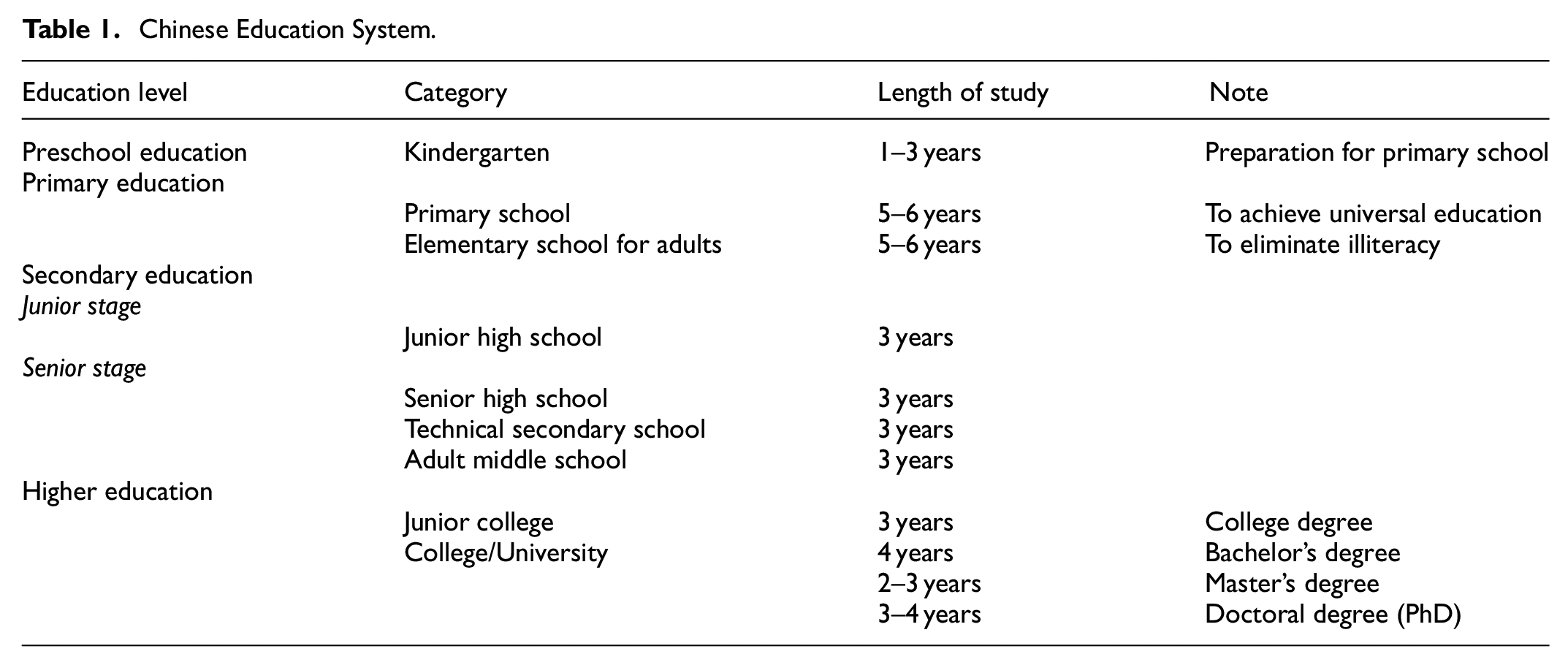
Preschool education, also known as early childhood education, refers to the planned education of children before they enter elementary school. Institutions implement early childhood education according to particular training objectives, the most fundamental of which is ensuring that children develop physically and mentally in a coordinated manner and are prepared for elementary school education (Tobin et al., 2009). From 1990 to 2010, the proportion of those who did not receive preschool education or who were illiterate in China decreased from 15.9% to 4.1% (Wu et al., 2015). Illiterate individuals, or those lacking pre-primary education, have scant representation in the data used for this paper, so no analysis is conducted for the pre-primary level in this study.
Secondary education encompasses the secondary general and vocational education that builds on primary education. Secondary education plays a momentous role in the entire school system and can be divided into two stages: junior and senior. In junior stage, there exists only junior high schools which is the end of compulsory education. Senior high schools and technical secondary schools constitute education institutions in senior stage traditionally (D. Chen et al., 2019). There are special secondary schools for adult training as well. The secondary education directly determine the quality of the workforce in a country; as such, secondary education has a substantial impact on overall economic and social development (X. Zhao, 2015). In the data used in this study, the population with a secondary education provides the greatest number of samples and represents the backbone of society.
Finally, higher education refers to various professional education levels that build upon secondary education, generally divided into occupational or vocational education, undergraduate education, and postgraduate education. Higher education is responsible for the myriad tasks of training specialists, conducting scientific research, and performing social services (Zheng & Kapoor, 2021; Zhu & Lou, 2011). The main institutions of higher education are colleges and universities. Degrees are classified into college, bachelor, master, and doctor. This study divides higher education into three categories: college, bachelor’s, and master’s and above.
Major Improvement in the Education of Women
The Chinese government has implemented a compulsory education policy, together with gender-equitable education policies, including strategic educational goals for the sustainable development of gender education and increased support for out-of-school girls. Consequently, the gap between the educational attainment of men and women in China has narrowed significantly in the 21st century, with the 2010 census showing that the proportion of women aged 18 to 20 with an undergraduate education is on a par with men of the same age, while women aged 22 to 25 with a postgraduate education outnumber men in terms of absolute numbers (Zeng et al., 2014). These results demonstrate the success of the education policy in China and the relative advantage of women at the higher education level.
However, although women in China have greater access and achievement in education than ever before, and the educational achievements between genders is rapidly decreasing, the returns to education remain inconsistent, and gender wage gaps continue to exist. This paper focuses on these phenomena and will offers further analysis based on sector segmentation.
Methods and Data Description
As this paper discusses both the public and the private sectors, the model will inevitably involve sample selection bias due to the personal choice. That is, the paper can only use the data which records individuals who participate in one sector instead of those who do not work in the same sector because whether an individual decides to participate in a specific sector may be related to other unresolved variables. As such, the study faces the potential for endogenous sample selection bias, and the simply using of least squares (OLS) regression might lead to biased parameter estimates in returns to education to analyze gender wage gaps. Therefore, this study uses the Heckman (1979) sample selection model in order to correct the sample self-selection bias.
The research methods of this study are as follows. First, the gender income function of different sectors will be estimated by kernel density, and a preliminary description of the income distribution will be provided. The first research question will be answered using the Heckman two-step selection model, based on the classic Mincer income function equation (Mincer, 1974), to examine how education affects the gender wage gap in the public and private sectors. The study will then use quantile regression to analyze gender differences in the return on investment in education for different wage quantiles to answer the second question. Furthermore, the paper will plot the educational regression coefficients in different wage quantiles to analyze the second question more intuitively. Finally, Oaxaca–Blinder wage decomposition will be used to determine the causes of the gender wage gap.
Estimate of Wage Structure by Gender and Sector at the Mean
Heckman Two-Step Selection Method
In the study of the factors influencing gender wage differences with cross-sectional data, the classical Mincer equation model (Mincer, 1974) was used. The general expression of the Mincer equation is:

where
The basic model of variable means was utilized to measure wage structure further by sector. The model is expressed as follows:

where
The study employed the selectivity bias-corrected wage function model (Heckman, 1979) to overcome sample selection bias, as shown by Equations 3 to 5. Equation 3 describes the probability that a worker chooses employment in the public sector or private sector and a probit model is used for analysis. A choice of employment in the public sector is expressed as



Quantile Regression
The idea of quantile regression was first introduced by Koenker and Bassett (1978). Quantile regression regresses the dependent variable on the independent variable

where
The equality test of education return coefficients of quantile regression was adopted to ensure that the return on education at different wage levels was not the same. The study also divided the total sample into two subsamples by gender for regression and comparison.
Blinder–Oaxaca Decomposition
Blinder–Oaxaca decomposition methods are used to decompose wage gaps and identify the relative importance of factors such as education. The Blinder–Oaxaca decomposition is based on variable means (Blinder, 1973; Oaxaca, 1973). In this study, wages are expressed as

where
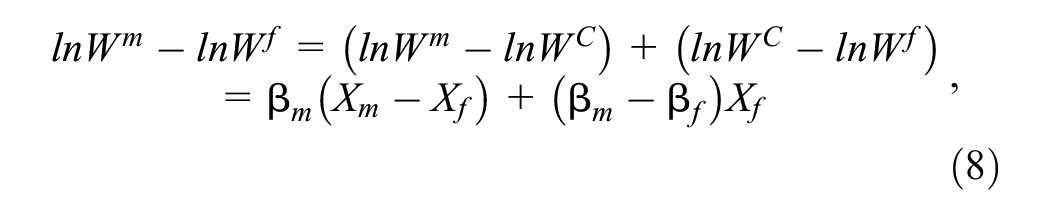
where the interpretable part (characteristic effects) is
Data and Description
Data Source
The data in this study were collected from the UHS, conducted by the Economic Survey Team of the National Bureau of Statistics of China and the China Trade Union Statistical Yearbook (CTUSY) compiled by the All-China Federation of Trade Unions. The UHS is a large-scale and comprehensive survey that conducted every few years to investigate households in four representative provinces, Shanghai, Liaoning, Sichuan, and Guangdong. CTUSY is one of the most credible sources conducted by a national trade union with detailed industry and province data. Since CTUSY was changed to into Chinese Trade Unions Yearbook in 2014 and did not provide statistical data, this study has chosen the two overlapping years based on UHS and CTUSY, that is, 2004 and 2013, with comprehensive data in an endeavor to provide convincing empirical results. After data cleaning and merging, more than 27,000 pieces of individual data were obtained from the 2 years. The key variables needed for the regression, are annual wages, education, and sector. The statistics included additional details, such as work experience, occupation, industry, marital status, and ethnicity. As the industry classifications for the 2 years are not consistent, this study has utilized the Industrial Classification and Codes for National Economic Activities (GB/T 4754-94) for calibration, drawing upon 15 industries.
Data Description
Figures 1 and 2 show the results of the kernel density distribution estimates of log annual wage by gender, education, and sector for 2004 and 2013. This paper has divided educational background into lower education (primary and secondary) and higher education (college, bachelor’s, and master’s and above) rather than using specific educational levels as regressions to make the figures easier to read.

Kernel density distribution of wage by gender, education, and sector in 2004.

Kernel density distribution of wage by gender, education, and sector in 2013.
Figure 1 presents the results of the 2004 estimates. In the public sector, the gender wage gap was small, and the difference in wages between those with higher and lower levels of education was not substantial. At the same time, all distributions showed a relatively high kurtosis. Conversely, in the private sector, the wage gaps between those with higher and other levels of education were very pronounced. The wage density distribution function for women with higher education had the lowest kurtosis.
Figure 2 displays the results of the 2013 estimates. Here, the wage gap in the public sector due to education and gender became minuscule, reflecting the special wage determination mechanism in the public sector; however, women with low levels of education still earned less in the public sector compared to others. Meanwhile, the hierarchy in the private sector is apparent. Those with higher education levels generally earned much more than those with a lower level of education, while the gap between genders persisted. In addition, the kurtosis of the lower-educated group remained higher than that of the higher-wage group in the private sector.
Figures 1 and 2 show that the gender wage gap has improved over the decade: the gender wage gap was smaller in the public sector than in the private sector and was more clearly differentiated by the presence of higher education.
Table 2 presents descriptive statistics by sector and gender for 2004 and 2013. In this table, the educational level of the workforce by educational system is grouped into five categories according to their highest degrees received to date: primary school, secondary school, vocational college, bachelor’s degree, and master’s degree and above. In addition to the logarithm of the annual wage as a dependent variable and education level as an explanatory variable, the other control variables included marital status, ethnicity, occupation, and province. Due to space limitations, this paper does not present detailed information on the 15 industry categories derived from the Industrial Classification and Codes for National Economic Activities in Table 2, but industry was included in the independent variables.
Descriptive Statistics of Basic Information by Year, Sector, and Gender.

Note. Marital status includes the following: unmarried, married, divorced, widowed, and others. According to statistical needs, it is divided into whether there is a partner.
Due to space limitations, the 15 industry categories derived from the Industrial Classification and Codes for National Economic Activities are not shown in this table.
The number in the bracket below the mean is standard deviation.
In 2004, both the public sector and private sector were dominated by people with secondary education, with more than 70% of those in the private sector having one. The number of people with a vocational college education was the second highest, and the level of education was higher in the public sector than in the private sector. In 2013, the number of people with no more than a secondary education in the public sector declined rapidly, and the proportion of vocational college and bachelor’s degrees rose to around 30%. Overall, women’s education levels were significantly higher than men’s in the public sector. In the private sector, secondary education remained the dominant level of education, and the education levels of men and women were largely similar.
While the earnings of men and women in both the public and private sectors increased from 2004 to 2013, wage levels did not change: the average incomes of both genders in the public sector were higher than that of their counterparts in the private sector, and the average male wage was higher than the average female wage within the sectors. Moreover, workers in the public sector showed a longer period of work experience and were more likely to get married, which reflects the economic transition in China, whereby private enterprises are booming and the younger population tends to work in the private sector. From the perspective of occupational structures, the proportion of workers in agriculture and manufacturing decreased sharply, and jobs in service industries became mainstream during these 10 years.
Table 3 depicts the wage levels of workers with different educational backgrounds by sector and gender in 2004 and 2013 to better illustrate the role and significance of education. First, all investments in education had increasing returns: that is, higher levels of education imply higher wages. Second, men earned more than women in both sectors. Finally, and very notably, public-sector earnings were higher than private-sector earnings in both years for those with low to secondary levels of education, while those with higher education levels showed higher returns to education in the private sector. In other words, those with a low- and mid-level education earned more in the public sector; those with a higher level of education earned more in the private sector, and women always earned less than men who shared the same background.
Log Wage Description by Year, Sector, Gender and Education level.

Empirical Results
Estimate of the Wage Structure by Gender and Sector Using Heckman Models
Tables 4 and 5 present the regression results of the Heckman selection model by gender and sector for 2004 and 2013 and show that most of the coefficients were significant. As described above, this study has divided education into five categories, and primary education was treated as the base group in the regressions.
Results of Wage Function Using Heckman Models by Gender and Sector in 2004.

Note. Standard errors in parentheses: *p < 0.1, **p < 0.05, ***p < 0.01. Due to space limitations, the regression of 8 occupations and the 15 industries are shown in Appendix Table A1.
Results of Wage Function Using Heckman Models by Gender and Sector in 2013.

Note. Standard errors in parentheses: *p < .1, **p < .05, ***p < .01. Due to space limitations, the regression of 8 occupations and the 15 industries are shown in Appendix Table A2.
In 2004, the returns to education for men in the public sector increased from 1.81% from secondary schooling to 50.1% for master’s and above, while for women, the returns to education increased from 4.76% to 80%, indicating that the greater the educational attainment of women, the higher their returns to education in comparison with men. Moreover, most of the coefficients were significant. In the private sector, men and women showed similar results to the public sector in higher education, but the returns to secondary schooling and vocational college were both low and insignificant as there is a considerable number of labor-intensive industries in the private sector and no intrinsic wage difference between elementary and secondary education for manual work. The private sector offered higher returns for the highly educated group, while the public sector was more beneficial to those grouped at the level of vocational college and below.
Most of the regression coefficients remained significant in 2013, with a reversal in the returns to education in the public sector: women showed lower returns to education than men. The returns to education for men increased from 34.1% at the secondary school level to 69.7% at the master’s level and above, while for women, it ranged from 9.32% to 65.9%. The returns to education in the private sector were similar to that of 2004, with women having a higher rate of returns to education, especially at the master’s level and above (reaching 85.4%)—much higher than men with the same education.
Both work experience and marital status played different roles in the groups’ wages. In 2004, the coefficients of both genders in the public sector were around 0.03, meaning that one additional year of work experience would attract a 3% higher wage. The results for men and women in the private sector were much lower. Although the work experience coefficient of men in the private sector caught up with those in the public sector in 2013, results for women in the private sector remained low, meaning that one additional year of work experience would not engender much of an increase in a woman’s wage. In 2004, married women had a wage disadvantage in the private sector. However, the coefficients were insignificant in 2013: instead, the wages of men with a partner were higher in the private sector.
Overall, the regression coefficients for different education categories (i.e., the returns to education relative to primary education) were positive and increased with increasing education levels. Furthermore, the coefficients and returns to education were higher for women than for men in both sectors in 2004 and in the private sector in 2013, indicating that policies that increase support for female education can be effective in raising female earnings and reducing the gender wage gap. Finally, other control variables, such as work experience, marital status, occupation, and province, all had more or less significant effects on wages, while regression results for ethnicity did not show any notable significance.
Estimate of Wage Structure by Gender and Sector With Quantile Regressions
Tables 6 to 9 show the quantile regression results by gender and sector for both 2004 and 2013. The seemingly unrelated regression test (SUEST) was carried out and revealed that the coefficients at 10%, 50%, or 90% quantiles were significantly different from the other two groups. The test results showed most p-values were lower than 0.01, especially for the public sector in 2004 and 2013, which means the coefficients at one quantile were significantly different in statistics from the other two. Further test results can be found in the Appendix in Tables C1–C8. In addition, Figures 3 to 6 depict the change in the returns to education at different quantiles; the shaded areas represent their confidence intervals at the 95% level.
Quantile Regression Results by Gender in PUBs and 2004.

Standard errors in parentheses: *p < .1, **p < .05, ***p < .01. Due to space limitations, the regression of 8 occupations and the 15 industries are shown in Appendix Table B1.
Quantile Regression Results by Gender in PRIs and 2004.

Note. Standard errors in parentheses: *p < .1, **p < .05, ***p < .01. 2 Due to space limitations, the regression of 8 occupations and the 15 industries are shown in Appendix Table B2.
Quantile Regression Results by Gender in PUBs and 2013.

Standard errors in parentheses: *p < .1, **p < .05, ***p < .01. Due to space limitations, the regression of 8 occupations and the 15 industries are shown in Appendix Table B3.
Quantile Regression Results by Gender in PRIs and 2013.

Standard errors in parentheses: *p < .1, **p < .05, ***p < .01. Due to space limitations, the regression of 8 occupations and the 15 industries are shown in Appendix Table B4.

Return of education in PUBs by gender in different wage quantiles in 2004.

Return of education in PRIs by gender in different wage quantiles in 2004.

Return of education in PUBs by gender in different wage quantiles in 2013.

Return of education in PRIs by gender in different wage quantiles in 2013.
Table 6 displays the regression results for the public sector by gender at different quantiles in 2004. From a gender perspective, at the bachelor’s and the master’s and above levels, women generally had higher returns to education than men at all quantiles, while men had higher returns to education at the level of vocational college and secondary schooling. Moreover, when considering Figure 3 specifically and the study as a whole, it can be found that in the public sector, women had higher average returns to education than men in all quantiles. Returns to education all tended to increase, decrease, and then increase again, indicating that the returns to education are higher for low-wage and higher-wage workers in the public sector.
Table 7 presents the regression results for the private sector in 2004 for different genders in each quantile. Much like in the public sector, women’s returns to education were higher than men’s in all quantiles at the vocational college and secondary school levels and in most quantiles at the bachelor’s and the master’s and above levels. Both Figure 4 and the regressions of this quantile regression show that the return on education in the private sector increased with higher wage levels for both genders: that is, the higher the wage, the higher the return on education. It is worth noting that for the low-wage group, the return on educational investment was much higher for women in the private sector than for men.
Table 8 shows the regression results for different genders in the public sector by quantiles in 2013. Unlike the 2004 regression results, these results showed that men had higher returns than women in the lower quantiles, while women had higher returns to education than men at the middle- and high-wage levels. As shown in Figure 5, it is interesting to note that in the public sector in 2013, the returns to education maintained a modest, downward trend as income levels increased. At the same time, the average return on education was higher for both men and women than in 2004. This indicates both that education as human capital brought increasing returns from 2004 to 2013 and that in the public sector, the returns to education did not differ much between workers in different wage tiers because wages in the public sector are more stable and are not determined by market mechanisms.
Table 9 depicts the regression results for the private sector in 2013 for different genders at different quantiles. The results show that the returns to education in the private sector were largely consistent across the genders at all three quantile points but were lower in absolute values than that of the public sector. In addition, Figure 6 demonstrates that, in contrast to the public sector, the returns to education in the private sector tended to increase slightly with wage level, which suggests that education is a crucial form of human capital in the private sector that can raise wage levels.
Based on the quantile regression results and figures, several characteristics can be summarized. First, the returns to education were positive regardless of the year, sector, or gender, indicating that education is a meaningful form of human capital. Second, the returns to education in the private sector always increased with the greater wage quantiles, and, in 2013, the returns were nearly identical between genders, although slightly higher for men. Furthermore, in most cases, women with higher education levels had higher returns to education, and finally, the returns to education in the public sector did not fluctuate as significantly as those in the private sector, which can be shown in Figures 1 and 2: namely, the distribution of wages in the public sector was narrower than that of the private sector.
Results of the Blinder–Oaxaca Decomposition Method
The wage decomposition results using the Blinder–Oaxaca decomposition method, which determines the importance of factors affecting gender wage gaps, are presented in Tables 10 and 11.
Blinder–Oaxaca Decomposition Results for Gender WGs by Sector in 2004.

Blinder–Oaxaca Decomposition Results for Gender WGs by Sector in 2013.

In 2004, the gender wage gap in the private sector was higher than in the public sector. The characteristic effect (i.e., the explainable part) in the public sector could explain only 3.70% of the gap, and the price effect (i.e., the unexplainable part) accounted for up to 96.26%. Work experience, industry, and education were found to be the most robust contributors to characteristic effects, while education, ethnicity, and province were the most influential factors in price effects. In the private sector, the characteristic effect could explain more (16.65%) of the wage gap, with industry, work experience, and occupation as the three most important factors. The most influential factors in price effects were province and marital status. Notably, the symbol of education in the public sector was negative but was positive in the private sector, which can be partially explained by the existence of egalitarianism in the public sector and because education as human capital functions more effectively in the private sector.
In 2013, although the gender wage gap in the private sector was shrinking, it was still higher than that of the public sector, with the latter remaining stable. In the public sector, the characteristic effect could explain only 3.90% of the gap, compared with 96.1% for the price effect. Education and work experience became the two most important factors for characteristic effect. For price effects, education and marital status ranked highest. In the private sector, the characteristic effect accounted for 5.76% of the gender wage gap, with industry, marital status, and work experience each being critical. Marital status, province, and education were most influential for price effect.
Although the gender wage gap decreased in the private sector and remained stable in the public sector between 2004 and 2013, the characteristic effect, which can be explained as wages determined by the market mechanism, was still at a low percentage (3%–16%). Meanwhile, the price effect, which can be explained as discrimination, accounted for most of the wage gaps. While higher education levels mean higher wages, as shown in previous regressions, the contribution of education as a factor was negative to the gender wage gap in the public sector, as wages in this sector are influenced by the government with a view to egalitarianism. However, in the private sector, education, as a major aspect of human capital, was shown to have a positive impact. Aside from education, industry, work experience, and marital status were also influential contributors. These results suggest that the gender wage gap in China remains largely due to gender discrimination through non-market mechanisms, although the private sector relies more on characteristic effects, and the returns to education are positive.
Discussion
The findings indicate that the increase in education for women positively in reducing the gender wage gap in China. As the Heckman selection model shows, the returns to education are always positive and higher than those for men in all regression results. This means human capital theory is still working regarding education as a guaranteed investment. This result is consistent to the findings of other studies in both developed and developing countries, that is, it is a general phenomenon of higher returns to education for women than for men (Bertocchi & Bozzano, 2020; Hout, 2012; Psacharopoulos & Patrinos, 2018). However, the quantile regression finds that the returns to education are different among education levels between the genders. Women with secondary school degree or above usually have higher returns to education, which challenges the long-held idea that returns to education for women are highest in primary school (Montenegro & Patrinos, 2023; Patrinos, 2024) and is similar to Gunderson and Oreopolous (2020) and Psacharopoulos and Patrinos (2018). Further, with the higher returns to education for women than for men and women currently have more years of education, human capital theory cannot fully explain the gender wage gaps.
Based on gender segmentation, this paper explores and highlights the multiple segmentation from the perspective of sector in the Chinese labor market. Results show that the gender wage gap was smaller and more stable in the public sector which again proofs its wages are determined less by market mechanisms (Iwasaki & Ma, 2020). While the gender wage gap in the private sector showed an improvement, it was still larger than that of the public sector. Furthermore, findings suggest that although women had higher returns to education, this was not always the case for the vocational college level and below in the private sector. The results trigger thought to future attention and policy support should be given to those women located in vocational college level or below group. These implications represent new ground, as previous Chinese research has merely promoted increasing the years in education (Iwasaki & Ma, 2020; Jong-Wha & Wie, 2017; Ma, 2021). A potential reason why the wage gaps between men and women with the same education levels (i.e., vocational college level or below) in the private sector are much wider than in the public sector is that a population characterized by less education can tend to be more engaged in labor-intensive industries, such as textiles and leather, where physical fitness might occupy a more central role, and women are always fall to the disadvantage.
The higher characteristic effect, shown in the Blinder–Oaxaca wage decomposition, shows the importance of market mechanism in wage determinant in the private sector and supports the notion that less discrimination against women and more egalitarianism in the public sector (H. Li et al., 2017). It is consistent with our regression results that the returns to education of both genders for private sector are higher than those for public sectors in most cases. It is intriguing because on the one hand, most previous studies have highlighted the public sector is less determined by market mechanisms and eulogize its egalitarianism (Cooke, 2020; M. Li & Zhang, 2022); on the other hand, the higher characteristic effect means higher returns to human capital in private sector and this study suggests some improvement in gender wage gaps in the private sector though it still slightly larger than that in public sector. As such, it is recommended that the Chinese government further deepen the public sector wage reform, allowing the market to take up more weight. Lastly, the regression and decomposition show similar results to those of other scholars that other factors, such as work experience (Blau & Kahn, 2020), industry (M. Li et al., 2022; Phizacklea, 2023), and marital status (Kapelle & Baxter, 2021; Ludwig & Brüderl, 2018), can also influence the gender wage gap to different extent.
Policy Suggestions
First, this study has shown that the women with an educational background of vocational college or below have lower returns to education, particularly in the private sector, which is the most crucial and urgent problem demanding attention. The proportion of unskilled women with low education is still high in China, and every year, millions of surplus rural female laborers, migrate to the cities and work mainly in private-sector industries such as trade, catering, and household services. The government should provide these women with greater opportunities to continue their education and undertake vocational training to facilitate their long-term career development. For example, government can set up special fund or subsidy to finance skills and degree programs, or establish vocational training center for technical and handicraft training. Further, government should provide sufficient social welfare to low education women, especially unemployment and maternity insurance. At the same time, fair wage and labor rights should be guaranteed as those women are often vulnerable groups in industrial relations.
Second, the gender wage gap in the private sector, while improving, remains persistently higher than in the public sector, which calls for more policy intervention within the private sector from legislation and administration. The legislature should enact anti-discrimination laws that clearly define the definition, criteria, and penalties for gender-based discrimination in employment, ensuring that women can make the best choices for positions based on their educational level and comparative advantages. At the implementation level, Chinese governmental departments and private-owned enterprises must conscientiously enforce labor-related laws and regulations to effectively protect the legitimate rights and interests of female workers, especially those with a low level of education. At the same time, the public sector itself should accelerate the marketization of wages.
Third, results show that the returns to education for women remain higher than for men in most cases, which suggests a necessity to the continuous improvement of their human capital through guarantee right for women to an education. The essence is to ensure their access to education is school enrollment. In the process of universalizing compulsory education in China, particularly in rural areas, insufficient attention is being paid to the educational development of the female population, which may be influenced by rural labor-intensive industries and traditional social attitudes. To guarantee women rights to long-term and stable access to education, on the one hand, the government can allocate more budget to support rural women, and on the other hand, public campaigns can be carried to raise family awareness of education in rural areas in case to achieve higher enrollment rate for women.
Limitations and Future Direction
Although the paper uses reliable data in the year 2004 and 2013 from UHS and CTUSY, the lack of the panel data may restrict the researcher from further tracing the accurate tendency of gender wage gaps during these years. The other limitation is that the data do not include the detailed annual wages constituting information as there exists certain hidden subsidies in the public sector in China. It needs a more comprehensive data on occupation and industry to further analyze why women have lower returns when they have fewer education years. Lastly and methodologically, as this research focuses on gender wage gaps between the two sector and only contains the employed, the future unemployed data can be combined to estimate the parameters of the main equation correcting for selectivity using multinomial logit (Bourguignon et al., 2007; Dubin & McFadden, 1984; L.-F. Lee, 1983).
The study could also consider the heterogeneity of schools horizontally. While this paper has vertically distinguished five categories within the Chinese education system, it does not consider horizontal education differences. For instance, there exist differences between senior high school and technical secondary school, but both are classified within the same education stage in this study. It should also be appreciated that there are numerous types of higher educational institutions. For example, in Germany, there are two channels of higher education: applied technical universities (Hochschule) and research universities (Universität) (S. J. Lee & Müller, 2019). As such, a global comparative analysis of education is another potential avenue for further research and discussion.
Supplemental Material
sj-pdf-1-sgo-10.1177_21582440251327015 – Supplemental material for The Return on Education and the Gender Wage Gap in China: A Sector Perspective
Supplemental material, sj-pdf-1-sgo-10.1177_21582440251327015 for The Return on Education and the Gender Wage Gap in China: A Sector Perspective by Mingming Li, Xinyun Hu and Keyan Jin in SAGE Open
Footnotes

References
Supplementary Material
Please find the following supplemental material available below.
For Open Access articles published under a Creative Commons License, all supplemental material carries the same license as the article it is associated with.
For non-Open Access articles published, all supplemental material carries a non-exclusive license, and permission requests for re-use of supplemental material or any part of supplemental material shall be sent directly to the copyright owner as specified in the copyright notice associated with the article.
