



Abstract
This systematic review to identify the distribution of articles from two databases using the science mapping method, and to investigate the preparedness of educators for the development of digital education in economics. The descriptive analysis is used to identify the research trends globally on the development of digital education in the scope of economics worldwide and ROSES (Reporting Standards for Systematic Evidence Syntheses) was carried out as a review protocol to conduct Systematic Literature Review (SLR). The frequency of the distribution of the articles based on two databases (Web of Sciences and Scopus). The review synthesizes research from a variety of disciplines, including education, psychology, and computer science, to identify key themes and trends in the literature. The thematic analysis was undertaken on 14 selected articles resulted in three main themes: (1) Adaptation of digital learning, (2) Practices of technological learning; (3) Effectiveness of digital learning. The development of digital education in economics has been driven by advances in technology and the need to prepare students for an increasingly digital and globalized economy. The review concludes with recommendations for future research and practice, emphasizing the importance of a holistic and collaborative approach to technological empowerment in education.
Keywords
Introduction
A smart society is one where digital technology promotes improvements in three key areas which are citizen well-being and living standards; economic strength and prospects; and the effectiveness of institutions, organizations, and businesses working in the society (Chakravorti et al., 2017) Digital technology’s place in a smart society is not an end in itself, but rather a tool for advancing other, more important social objectives. Governments, educational institutions, and families recognize the importance of technology in the educational process and make investments to reflect this (Bulman & Fairlie, 2016). Emerging disciplines like machine learning, big data, and artificial intelligence will probably intensify the impact of these technologies in the years to come, extending the already bewildering array of educational goods on the market and quickening cycles of learning and adjustment. Technological empowerment in education refers to the use of technology to enhance learning outcomes and increase access to education. It involves the integration of digital tools and resources into the teaching and learning process, to create more engaging, interactive, and personalized learning experiences for students (Gladilina et al., 2017).
Advances in technology have transformed the way we learn and teach, enabling educators to deliver content in more innovative and effective ways. The use of educational apps, online learning platforms, digital textbooks, and interactive whiteboards can help students learn at their own pace, access educational resources from anywhere, and receive personalized feedback and support (Qarkaxhja et al., 2021). In recent years, technological empowerment in education has gained momentum as a result of the increasing availability and affordability of digital technologies such as computers, tablets, and smartphones, as well as the growth of online learning platforms and educational software (Sebastián-López & de Miguel González, 2020). Technology can also facilitate collaboration and communication, enabling students to work together on projects and share ideas and resources. This can help to build a sense of community and engagement in the classroom, as well as develop important 21st-century skills such as critical thinking, problem-solving, and digital literacy. Technological empowerment in education refers to the use of technology to enhance teaching and learning practices, improve access to education, and promote student engagement and achievement. The concept has its roots in the early 20th century when various forms of educational technology, such as radio and film, were first introduced into the classroom.
By easing communication between educators, students, and families, enhancing access to high-quality education, and reducing tensions in a range of educational situations from early infancy through adulthood, these technologies can open doors and create bridges. For instance, educational software makers strive to give teachers the tools they need to introduce the most recent discoveries in learning to both distant and urban schools. The widespread use of cell phones and the ease with which they can be linked to internet-based information systems have made it possible to expand automated text messaging programs that aim to educate, elucidate, and inspire students and their parents as they navigate challenging educational roadblocks like the switch from high school to college. And students who would otherwise be restricted by employment, families, impairments, or other hurdles to traditional higher education may be able to receive degrees through online educational institutions (Ndlovu, 2019).
However, the quick uptake of new technology in education has turned out to be a double-edged sword. The capacity of policy scholars to keep up with reviewing new technology and intervention models has greatly surpassed how quickly they are being introduced to the market. A recent headline that reads “Edu-Tech Surges Internationally as Choices for Schools Become More Confusing” nicely sums up the problem (Molnár & Csapó, 2018). While most people concur, that educational technology may be useful in some situations, there is little agreement among researchers and educators as to which kinds of educational technology are most beneficial, in which situations, and for which demographics. However, there is evidence to suggest that some technological practices may be detrimental, and many parents are growing more worried about how screen time may impede students’ learning and development or replace the job of the teacher (Canadian Paediatric Society, Digital Health Task Force, Ottawa, Ontario, 2019).
The goal of technological empowerment in education is to provide learners with the tools and resources they need to succeed in a rapidly changing world. Technological empowerment can help to bridge the digital divide, providing learners from all backgrounds with equal access to educational opportunities. It can also help to improve the quality of education by facilitating personalized learning, increasing student engagement and motivation, and providing teachers with the tools they need to create more effective and engaging learning environments (Qarkaxhja et al., 2021).
Technological empowerment in education has been embraced by educators and policymakers around the world, with many countries investing heavily in technology infrastructure and digital learning resources. The COVID-19 pandemic has further accelerated the adoption of technological empowerment in education, as schools and universities have had to transition to online learning to comply with social distancing guidelines.
Additionally, there is significant and ongoing inequality present in the environment where ed-tech breakthroughs are taking place. Even while access to various technologies has increased, the digital gap is still very real and extremely large. Technology in education has the potential to either reduce or exacerbate existing disparities, depending on its design and application. There are legitimate worries about the opportunity costs of obtaining education online rather than from a teacher or tutor in person for at-risk adolescents in particular. Thus, the need for prudence while introducing technology-based education systems is increased by equity issues Magano et al., 2021). Overall, technological empowerment in education has the potential to transform teaching and learning practices, improve access to education, and enhance student achievement and engagement (Gladilina et al., 2017). As technology continues to evolve, it is likely that technological empowerment will become an increasingly important part of the educational landscape.
However, given the pace and extent with which many ed-tech programs are being implemented and the substantial effect they may have on the next generation, particularly in economics scope, a closer analysis of what we know is required. Economic education continues to be one of the most important prerequisites for a society’s economic growth, providing the development of educational potential for employed individuals as well as training for entrepreneurs and merchants. Education lays the groundwork for the growth of productive forces, the successful operation of any economic sector, and the settlement of economic crises. Today’s economic transition development takes into account changes and trends in enterprise investment activities, production technologies, the nature of their influence on professional and qualification structure relative to staffing, the influence of market conditions on the territorial redistribution of the workforce, and labor mobility (Vermeulen et al., 2018).
Education has an active role in building regional and national scientific and technological potential, and its achievements are reflected in new technologies and the most recent labor organization techniques, while also laying the groundwork for improving its performance and macroeconomic output. The rapid of the global knowledge economy and the information society emphasized the importance of education and professional training in ensuring economic prosperity. Economics is always evolving as a result of elements in the professional environment and the problems of today’s worldwide society (Benachio et al., 2020; Ndlovu, 2019; Vermeulen et al., 2018). While technological empowerment in education holds tremendous promise, there are also challenges associated with its implementation. These challenges include the need for adequate technology infrastructure and support, the need to provide teachers with adequate training and professional development, and the need to ensure that educational technology is used in an ethical and responsible manner. Additionally, there is a need to ensure that technology use in education is aligned with pedagogical goals and learning outcomes, rather than simply using technology for the sake of it. Despite these challenges, technological empowerment in education has the potential to transform education and provide new opportunities for students to learn, grow, and succeed in the 21st century (Ivanova et al., 2021).
As a result, the goal of this study, which tackles this issue, is to identify relevant topics for future research and identify insights into economics scope by reviewing rigorous studies on technology-based education interventions that have already been conducted. This study consists of two objectives, which is;
(i) To identify the distribution of articles from two databases using the science mapping method.
(ii) To investigate the preparedness of educators for the development of digital education in economics.
Materials and Methods
Descriptive Statistics Approches
The descriptive analysis is used to identify the research trends globally on the development of digital education in the scope of economics worldwide. It presented the frequency of the distribution of the articles based on two databases (Web of Sciences and Scopus) thru mapping using Map Chart software as recommended by (Mohammady et al., 2017). The world map was created to determine the number of publications based on the countries. As the results, based on the keyword of the study, 562 articles are appearing in the stage identification (see Figure 1).

Systematic searching data.
Systematic Literature Review Approaches
Review Protocol
ROSES (Reporting Standards for Systematic Evidence Syntheses) was carried out as a review protocol to conduct Systematic Literature Review (SLR). Haddaway et al. (2018) created ROSES intending to improve and maintain a good approach for creating an SLR via improved openness as well as to guarantee and manage the review’s quality. Although ROSES was specifically created for environment management and this review is primarily focused on disaster management, the review methodology is appropriate since it was created to account for the intricacies and variability across various scenarios and studies surrounding the synthesis approach (Haddaway et al., 2018). ROSES served as a guide for the SLR process, which started with the formulation of the research questions using the PICo technique, which stands for Problem or Population, Interest, and Context.
The next step was to create and carry out the strategy for document searching through three organized steps: identification, screening, and eligibility. Following that, a quality evaluation procedure was carried out using the modified criteria (Hong et al., 2018). Here, the caliber of each chosen item was evaluated before its inclusion in the review. The chosen papers were then put through several steps, including data extraction and data analysis. The core research topic served as the basis for the data extraction procedure, and the qualitative data synthesis (thematic synthesis) approach was used to analyze the gathered data. To make sure the review process served the review’s purpose, the authors followed the recommendations made in the review where it was appropriate by taking into account alternatives.
Formulation of the Research Question
This article uses two sources to create the study question: first, concepts from earlier works proposed by Fandino (2019), Bronfman et al. (2019), O’Connor and Joffe (2020). All the articles were related to the development of digital education in economics subject.
Second, using the mnemonic of PICo, which signifies “P” (Population or Problem), “I” (interest), and “Co” (Context; Lockwood et al., 2015). Based on these concepts, the authors included three main aspects as part of the review, the educators (Population), digital education (Interest), and preparation in economics scope (context). This enabled the authors to formulate the main research question of this study; “How do educators prepare for the development of digital education in economics scope?.”
Systematic Searching Strategies
Three systematic processes of identification, screening, and eligibility proposed by Mohamed Shaffril et al. (2020) were employed to retrieve the relevant articles. Implementing these processes allowed the authors to comprehensively locate and synthesize the studies in conducting a well-organized and transparent SLR.
Identification
Two core keywords-digital education and technological learning were determined based on the study questions that were developed. By using an online thesaurus like thesaurus.com, consulting previous research keywords, consulting Scopus’s suggested keywords, and seeking the advice of experts, the authors were able to further develop these keywords. These keyword combinations were analyzed in two databases, Scopus and Web of Science, utilizing search tools such as field code functions, phrase searching, wildcards, truncation, and Boolean operators (see Table 1). Additionally, a manual search method was used to search. In these databases, such as Science Direct, Emerald, Taylor Francis, Springer Link, and Sage Journals, “handpicking” was employed. A total of 562 possible articles were found in the chosen databases after extensive searching.
Search String Used in the Selected Database.

Screening
The second step, screening, involved including or excluding articles from the research based on a predetermined set of criteria, either with the use of the database or manually by the authors (see Table 2). This review restricted the screening method to only include the articles published between 2017 and 2022 in consideration of the idea of “research field maturity” emphasized by Kraus et al. (2020). Given that there were enough published papers to conduct a thorough evaluation, this time frame was selected. Since empirical research publications include primary data, the writers chose to review them. Notably, only those written in English were taken into account to prevent misunderstanding. Selecting social science research studies as one of the criteria was thought to boost the likelihood of getting more articles linked to community readiness because the SLR aim dealt with community preparation. In all, 6,764 articles were left out of the review at this point because they did not meet the criteria for inclusion, and 562 items were left after this for consideration in the following phase (see Figure 1).
Inclusion and Exclusion Criteria.

Based on Table 2 the inclusion and exclusion criteria for this Systematic Review on Technological Empowerment in Education, included peer-reviewed journal articles published in English from a specified 2017 to 2022 from Scopus and Web of Science databases. The focused of the review on studies that specifically investigate the concept of technological empowerment in education, examining the ways in which technology can empower students, educators, or educational systems. The review considered studies that examine the use of various technologies in education, such as learning management systems, educational software, mobile applications, virtual reality, augmented reality, gamification, digital media, and online platforms used in economic education. The review considered studies employing various research methodologies, including quantitative, qualitative, and mixed-methods approaches. Studies from various geographical locations, including international studies, included to capture diverse perspectives and contexts. Full-text availability will be a criterion for inclusion, ensuring that studies with accessible full-text articles are considered. Non-peer-reviewed articles, books, book chapters, opinion pieces, unpublished materials, studies published before the specified start date, studies in languages other than English, and studies focused solely on non-educational settings will be excluded from the review.
Eligibility
Partway through this stage, authors manually reviewed the remaining manuscripts to determine which ones met the predetermined inclusion criteria (by reading the title, abstract, or complete paper) as recommended by Shaffril et al. (2021). First of all, at the title screening stage, 18 articles were removed, while 25 articles were excluded at the abstract screening stage. While another 21 articles were excluded after the authors read the content of the selected articles. In total, 64 articles were removed in this stage since they did not focus on technology digitalization in economic education, and also in the form of a review paper. The final number of articles for the quality appraisal stage was 14 (see Figure 1).
Quality Appraisal
The quality evaluation step was carried out to ensure that the methodology and analysis of the selected studies were done successfully. The Mixed-method Appraisal Tool (MMAT) by Hong et al. (2018) was utilized for this purpose. MMAT enables researchers to assess a systematic mixed studies review and covers the appraisal of five types of studies: qualitative research, randomized controlled trials, non-randomized studies, quantitative descriptive studies, and mixed techniques studies (Hong et al., 2018). Before moving on to the quality evaluation, each selected study underwent two screening stages.
The quality of the selected papers was appraised using five primary criteria outlined in the research design. MMAT assisted in emphasizing criteria such as the suitability of the research questions to offer enough data, the sufficiency of qualitative data collecting to meet the research questions, and the coherence between qualitative data sources, data collection, analysis, and interpretation.
For quantitative research design, the authors relied on assessment criteria such as the relevance of the sampling technique to the research questions, the sample’s representativeness to its population, the appropriateness of the measurement, and the suitability of the analysis done. Meanwhile, for mixed-method research designs, MMAT assisted in providing guidance concerning the rationale for using the mixed-method to address the research questions, the effectiveness of the different research designs to answer the research questions, the integration of qualitative and quantitative, and the ability to address the divergence and differences between research designs.
Data Extraction and Analyses
This section discusses the process of data extraction, which is the criteria used to determine the rigor of the methodology, and the analysis used in selected articles. Since the review relied on a variety of study methodologies as advised by Whittemore and Knafl (2005), the papers were typically thematically reviewed to offer the most helpful strategies to reconcile the discrepancies. In addition, thematic analysis is a type of research that looks for patterns in previous studies by assessing any similarities or connections that may be present in the data (2006). The method promoted by Flemming and Briggs (2007), who emphasized the importance of theme synthesis in synthesizing data from diverse study designs due to its adaptive mode despite the possibility of performing numerous qualitative syntheses, served as the basis for the current review. These procedures were used as the basis for the topic synthesis in this study as recommended by Kiger and Varpio (2020).
Based on the data from the systematic procedure (see Figure 1), the author evaluated 14 selected articles based on several criteria adaption in the research approach as suggested by Hong et al. (2018) and Shaffril et al. (2021), namely (1) Qualitative; (2) Quantitative, and (3) Mixed methods design. The assessment criteria for this research approach, take into account several questions namely; (1) Is the approach appropriate to answer the research question? (2) Is data collection methods adequate to address the research question? (3) Are findings adequately derived from data? (4) Is the interpretation of results representing the research objective, and (5) Is the approach data sources, collection, analysis, and interpretation coherence? The results of the quality assessment represent in Table 3.
Results of the Quality Assessment.

Note. AC = assessment criteria; QA = qualitative approach; QNA = quantitative approach; MA = mix method approaches, NA = information not available; C = can’t tell.
The author initially carefully read through the data set numerous times to become comfortable and understanding with it. During this process, the author gained extensive knowledge about the raw data, and also laid the groundwork for subsequent steps. The next procedure generates the initial codes, as recommended by Braun and Clarke (2006), which is the data sorted by the researchers in a precise and narrow way. The authors reviewed each of the publications they had selected in this step and took note of any information that was related and used to achieve the research objective. This procedure specifically looks for potential theme development, and also leads to the last step for thematic analysis is a creating topic or category of suitable theme and also a sub-theme.
An inductive coding strategy was carried out, and the subjects for the synthesis were formed from the coded data. The developed themes connected to the initial data and included all of the data (2006). Next, axial coding was carried out to develop a sub-theme in the thematic analysis process. The author uses the Nvivo application to organize the data systematically analysis for qualitative approaches.
Results
Number of Published Articles
The Publishing Performance of Countries Based on Web of Sciences (WoS)
Data Based 10 different nations have placed a priority on this research. The countries of Russia, Germany, and Spain are shown in Figure 2 below as being the most productive nations in the world. These countries are located in the European area. 140 articles, or 44.0% of the total, have been published across this region. Other prosperous nations on the Asian continent are China, Indonesia, Japan, and also included is Malaysia. These nations combined to produce 117 papers, accounting for around 36.8% of the total. It was next followed by the American continent, namely the United States, which generated 8.8%, or 28 pieces, and finally Egypt, which contributed 6.9%, or 22 items. Within the period covered by this investigation, a total of 318 articles have been published in various parts of the world.

The number of publications for each geographic region in the world map based on Web of Sciences (WoS) data based.
The Publishing Performance of Countries Based on SCOPUS Data Based
The findings have been emphasized in nine different countries. As seen in Figure 3, the most productive countries in the world are located in Europe. This area is home to countries like Russia, the United Kingdom, and Germany. This region has seen the publication of 104 papers, or 42.6% of the total. Other prosperous nations on the American continent, such as the United States of America and Brazil. These nations collectively produced 56 papers, which accounts for around 22.9% of the total. It was subsequently followed by the Asian continent, which contributed 43 articles, accounting for 17.6% of the total, and then by the African continent, which produced 22 pieces, accounting for 9.0%. In conclusion, the Australian continent was responsible for 19 of the papers (7.7%). Within the period covered by this investigation, a total of 244 articles have been published in various parts of the world.
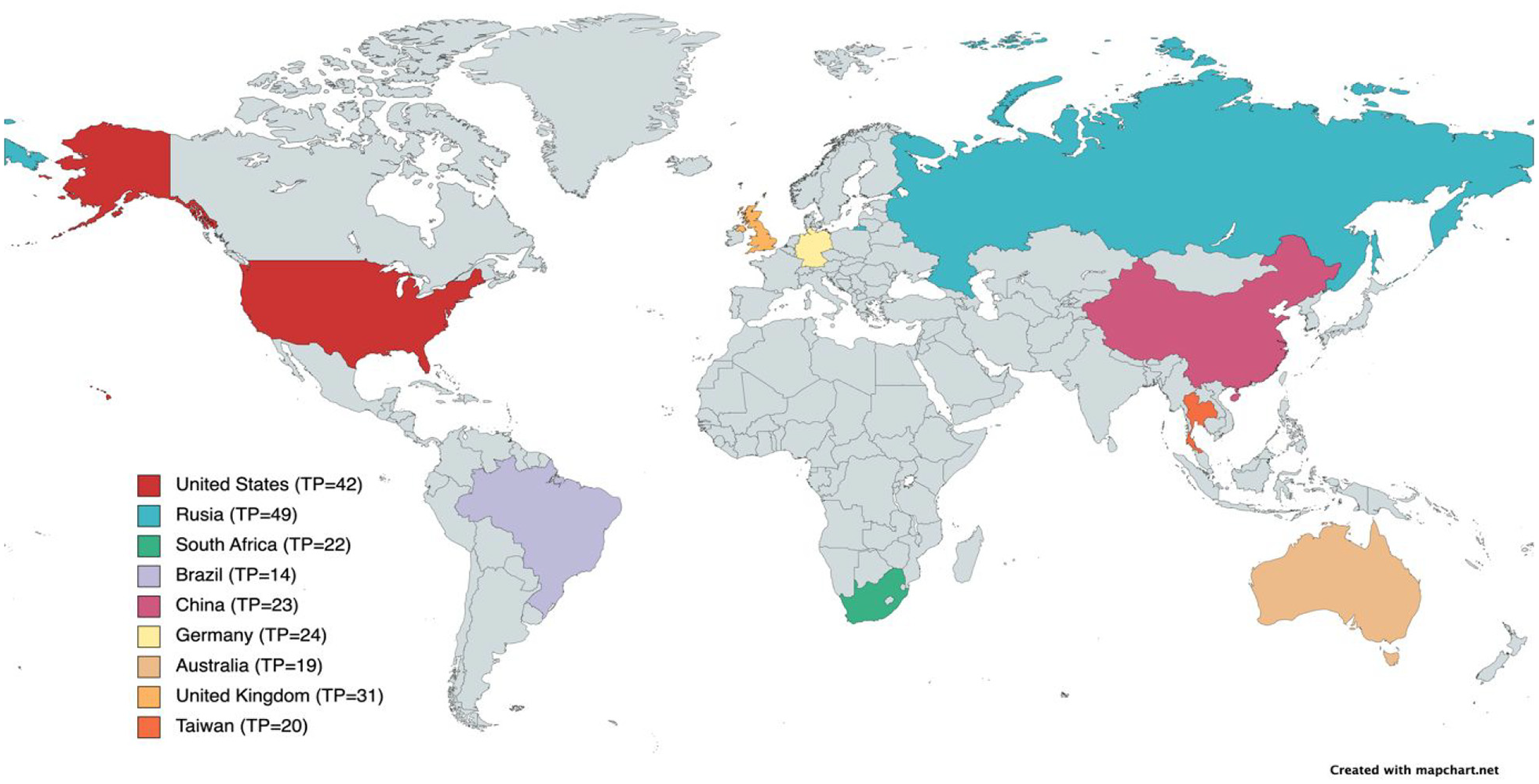
The number of publications for each geographic region in the world map based on SCOPUS data-based.
Based on Table 4 the selected research articles finding are based on the proposed search criterion such as journal name, country of publisher journal, years of publication, and the databases Web of Science index or Scopus index. The 14 selected articles have published three articles in International Journal of Emerging Technologies in Learning, two articles in Sustainability Journal, one article in European Research Studies Journal, one article in Informatics journal, one article in Journal of Economic Literature, one article in Electronic Journal of e-Learning, one article in Frontiers in Psychology Journal, one article in Zbornik Radova Ekonomskog Fakulteta u Rijeci, one article was published in Education Inquiry, one article was published in International Journal of Technology and Human Interaction and one article was published in International Journal of Environmental Research and Public Health. However, based on country of publisher journal five article was published in Switzerland, one article was published in Greece, two articles were published in United State of America, two articles were published in England, three articles were published in Germany and one article in Croatia. Based on year of publication criterion one article published in 2017, one article published in 2019, four articles published in 2020, five article published in 2021, and three articles published in 2022. Meanwhile, all the 14 articles selected in this study was under Scopus index and 13 articles under Web of Science index.
The Selected Research Articles Finding are Based on the Proposed Search Criterion.

The Themes Development
The thematic analysis was undertaken on 14 selected articles resulted in three main themes: (1) Adaptation of digital learning, (2) Practices of technological learning; (3) Effectiveness of digital learning. All articles were classified based on three key topics derived from the reading. Based on the results, three themes provided answers to the main research question of this SLR, “How do educators prepare for the development of digital education in economics education?.”
Based on Table 5 the main thematic results show based on the selected articles and it was three main themes one of the main themes in education today is the adaptation of digital learning. With the rise of technology and the internet, there has been a significant shift toward online and digital learning. This theme focuses on the ways in which educators and students are adapting to this new form of learning, and how they are using technology to enhance their educational experiences. Some of the key topics within this theme include the use of learning management systems, online collaboration tools, and digital textbooks. The adaptation of digital learning has been a major trend in education in recent years, with the COVID-19 pandemic accelerating this shift even further. Educators and students are increasingly using online platforms and digital tools to facilitate teaching and learning. This theme focuses on the ways in which educators are adapting their teaching practices to take advantage of these new technologies, and how students are adapting to the new learning environment (Magano et al., 2020; Qarkaxhja et al., 2021; Štemberger & Čotar Konrad, 2021). Another theme in education today is the practices of technological learning. Practices of technological learning focuses on the ways in which technology is being used in the classroom, and how it is changing the way that students learn. Some of the key topics within Practices of technological learning include the use of interactive whiteboards, educational apps, and online simulations. Additionally, this theme focuses on the pedagogical approaches that are being used to integrate technology into the classroom, such as blended learning and flipped classrooms. Overall, the practices of technological learning are designed to promote more effective and engaging learning experiences for learners. By leveraging the latest technologies and tools, instructors can create learning environments that are more personalized, interactive, and accessible, and that support learners in achieving their learning goals (Escueta et al. (2020). The final theme in education today is the effectiveness of digital learning. With the increasing use of technology in the classroom, there is a growing need to understand its impact on student learning outcomes. Effectiveness of digital learning focuses on the research that has been conducted on the effectiveness of digital learning, and the factors that contribute to its success or failure. Some of the key topics within this theme include the role of student motivation and engagement, the impact of digital technology on student achievement, and the effectiveness of different types of digital learning tools and approaches. Research has shown that digital learning can be effective when it is designed with student needs in mind and when it is integrated into a coherent pedagogical framework. However, there are also concerns about the potential for digital learning to exacerbate existing inequalities, such as the digital divide between students who have access to technology and those who do not. Effectiveness of digital learning also explores the policy implications of digital learning, including the need for investment in technology infrastructure and the development of effective evaluation measures to assess the impact of digital learning initiatives (Qarkaxhja et al., 2021; Rojo et al., 2019)
The Thematic Results.

Adaption of Digital Learning
The first theme, adaptation of digital learning, featured five articles: Qarkaxhja et al. (2021), Štemberger and Čotar Konrad (2021), Cicha et al. (2022), and Vodă et al., 2022, Magano et al., (2020)
Štemberger and Čotar Konrad (2021) made an important contribution by proposing personal innovation as a distinct factor that increases knowledge of how an individual’s attitude toward digital technology is created in today’s learning. Personal innovators are more likely to accept digital technology, act as role models and motivators in their communities, and motivate others to utilize and embrace innovation. A person is also considered innovative if they are willing to embrace innovation as it occurs in society or within a short period of time (Cicha et al., 2022). Domain-specific innovativeness, on the other hand, was found to predict innovative user behavior more accurately.
Furthermore, the introduction of new technology which is product or innovation plays a key role in creating a positive perception of technology use, that is, that the characteristics of the technology whose acceptance is investigated are a very important determinant in decision making for future technology users. Similarly, Qarkaxhja et al. (2021) claim that the perception of the qualities of the innovation and the adopter’s position heavily influence the adoption of innovation. Indeed, perceived utility and simplicity of use are seen as critical variables in technology acceptance and adaption, particularly in digital learning. The adaptation of digital learning refers to the integration of technology and digital resources into the teaching and learning process (Magano et al., 2020). Digital learning encompasses a wide range of approaches, from online courses and digital textbooks to educational apps and gamification. The adoption of digital learning has been accelerated by the COVID-19 pandemic, which has forced many schools and educational institutions to shift to remote and hybrid learning models. Digital learning has provided a way to continue education despite the limitations of physical classrooms and traditional teaching methods. Digital learning has several benefits, including increased access to educational resources, greater flexibility in learning schedules, and the ability to personalize learning experiences to meet individual student needs (Vodă et al., 2022). Digital learning also provides opportunities for collaboration, communication, and feedback, as well as the ability to track and monitor student progress. However, the adoption of digital learning also poses some challenges. Effective implementation requires adequate infrastructure, teacher training, and support, as well as ensuring equitable access to technology for all students. There is also a need to ensure that digital learning aligns with pedagogical goals and learning outcomes, rather than simply using technology for the sake of it. Overall, the adaptation of digital learning has the potential to transform education and provide new opportunities for students to learn, grow, and succeed in the 21st century.
Practices of Technological Learning
Four articles included in the second theme which is practices of technological learning which are Rodrigues (2022), Escueta et al. (2020), Pilav-Velić et al. (2021), Sundqvist et al. (2021).
The use of digital technology into educational settings has, over time, progressively superseded the conventional learning environment. In today’s world, educators have access to a plethora of technology tools and applications that they may implement in their classrooms. On an individual level, it is believed that the use of technology in education would boost students’ levels of motivation and engagement, both of which are critical to students’ academic growth and accomplishment. The use of technology learning to improve visualization and to emphasize significant knowledge can provide educators with a means to boost the motivation of their students (Pilav-Velić et al., 2021). Teachers need to take into consideration each student’s unique knowledge and learning processes in order to enable active involvement in educational activities. This will help them better engage their students (Pilav-Velić et al., 2021). Additionally, the use of technology enables educators to offer immediate feedback on the knowledge and learning of their pupils (Sundqvist et al., 2021). Learning through technology may boost differentiated and individualized education by expanding students’ access to a wider variety of educational materials (Sundqvist et al., 2021). At the group level, technology may be utilized to facilitate collaborative learning and to improve communication, knowledge sharing, and information exchange (Nisar et al., 2018; Singh, 2020).
It is necessary to make equivalent adjustments to teaching practices in order to provide students with the possibilities to study and develop important skills necessary for a digital environment (Escueta et al., 2020, p. 33). There are a number of factors that influence the degree to which educators integrate technological instruction into their pedagogical methods (Rodrigues, 2022). On the other hand, there is evidence to suggest that educators are not utilizing the full potential of digital knowledge to promote the knowledge production and efficient learning of their students. Practices of technological learning refer to the methods, strategies, and approaches used to integrate technology into the teaching and learning process. These practices are designed to enhance student engagement, facilitate learning, and improve educational outcomes. Some of the key practices of technological learning include: Personalized learning: Technology allows for personalized learning experiences, where students can learn at their own pace and receive individualized feedback and support, Gamification: Educational games and gamification techniques can be used to make learning more engaging and fun, while also promoting critical thinking and problem-solving skills, Collaborative learning: Technology can facilitate collaboration and communication among students, allowing them to work together on projects and share ideas and resources (Rojo et al., 2019), Blended learning: Blended learning combines traditional classroom instruction with online learning, providing students with a mix of face-to-face and digital learning experiences, Flipped classroom: The flipped classroom model involves students watching pre-recorded lectures or videos before class, allowing for more interactive and hands-on activities during class time, Mobile learning: Mobile devices such as smartphones and tablets can be used to deliver educational content and provide students with access to learning resources from anywhere (Qarkaxhja et al., 2021; Sebastián-López & de Miguel González, 2020) and Project-based learning: Technology can be used to support project-based learning, where students work on real-world projects that integrate multiple subject areas and promote creativity and innovation (Al-Abdullatif & Gameil, 2021). Overall, the practices of technological learning are designed to enhance the teaching and learning process, promote student engagement and collaboration, and improve educational outcomes. By leveraging technology in innovative ways, educators can create more effective and engaging learning experiences for students.
Effectiveness of Digital Learning
The effectiveness of digital learning is the third theme, which is covered in the following five articles: Gladilina et al. (2017), Sebastián-López and de Miguel González (2020), Rojo et al. (2019), Beer and Mulder (2020), Al-Abdullatif and Gameil (2021)
The application of digital technology is becoming an increasingly important component of the modern student’s educational experience because of its effectiveness (Al-Abdullatif & Gameil, 2021)The possibility of using a variety of digital technologies to facilitate, extend, and maybe even increase learning attainment and, as a consequence, students’ overall academic performance (Gladilina et al., 2017; Qarkaxhja et al., 2021; Rojo et al., 2019, conducted research on university students’ engagement with digital technologies. Specifically, they investigated the students’ actual experiences of making use of digital technology in the course of their academic studies. The findings of this research shed light on the students’ perceptions regarding significant aspects of digital technology when it comes to learning and studying.
According to Sebastián-López and de Miguel González (2020) findings, students’ perceptions of the significance and interest level of projects can be influenced by digital learning. Technology has the potential to increase the difficulty, variety, and options available to students by providing multiple levels of tasks to match their knowledge and proficiency; improving access to numerous sources of information that allow for breadth in project questions; and offering a variety of options for the production of products. In addition, the use of technology has the ability to boost student engagement and encourage active learning throughout the many phases of the projects (Beer & Mulder, 2020). Digital learning has become increasingly popular in recent years, especially with the COVID-19 pandemic forcing many schools and universities to shift to online learning. While there are certainly challenges to digital learning, such as lack of in-person interaction and potential technology issues, it can also be a highly effective way to learn (Beer & Mulder, 2020).
One of the benefits of digital learning is that it allows for flexibility in terms of when and where students can access course materials. This can be particularly helpful for adult learners or those with busy schedules who may not be able to attend in-person classes (Gilmanshina et al., 2019). Additionally, digital learning can provide a more personalized learning experience, as students can work at their own pace and have access to a variety of online resources (Al-Abdullatif & Gameil, 2021).
Overall, while digital learning may not be the best fit for every student or every subject, it can be a highly effective way to learn for many individuals. The effectiveness of digital learning depends on several factors that need to be carefully considered and addressed to provide learners with a high-quality learning experience. When done well, digital learning can provide learners with flexibility, personalization, interactivity, accessibility, and cost-effectiveness, making it an effective way to deliver education (Beer & Mulder, 2020).
Discussion and Recommendation
This systematic review aimed to identify the distribution of articles from two databases using the science mapping method and to investigate the preparedness of educators for the development of digital education in economics.
The development of digital education in economics has been driven by advances in technology and the need to prepare students for an increasingly digital and globalized economy. Here are some ways in which digital education has been developed in economics: Online courses: Online courses in economics are becoming increasingly popular, providing students with access to high-quality educational resources from anywhere in the world. These courses can be self-paced and tailored to meet the needs of individual learners. Digital textbooks and resources: Digital textbooks and resources provide students with interactive and engaging learning experiences, with multimedia resources, interactive quizzes, and other tools to enhance learning. Educational apps and software: educational apps and software can be used to provide students with real-world examples and simulations of economic concepts and principles, helping to make learning more engaging and relevant. Data analytics and visualization: Digital tools for data analytics and visualization can help students to better understand economic data and trends, and provide opportunities for hands-on learning and exploration. Online forums and collaboration: Online forums and collaboration tools can facilitate communication and collaboration among students and educators, allowing for the exchange of ideas and resources. Blended learning: Blended learning approaches, which combine traditional face-to-face instruction with online learning, can provide students with a more flexible and personalized learning experience.
Overall, the development of digital education in economics has the potential to enhance student learning outcomes, promote critical thinking and problem-solving skills, and prepare students for the demands of a rapidly changing global economy. By leveraging digital tools and resources in innovative ways, educators can create more effective and engaging learning experiences for students in economics and other related fields.
Based on the findings of the systematic review, it is clear that technology has the potential to greatly enhance learning outcomes for students, improve teacher practices, and shape institutional policies. However, it is also evident that there are a number of challenges associated with technology integration, particularly related to access, equity, and privacy concerns.
To address these challenges, it is recommended that institutions take a holistic approach to technological empowerment in education. This includes providing access to technology for all students and ensuring that teachers have the necessary training and support to use technology effectively. Additionally, institutions should prioritize the development of policies and procedures that protect student privacy and ensure equitable access to technology resources.
Another important recommendation is the need for collaboration between stakeholders, including teachers, administrators, parents, and students themselves. By working together, these groups can identify the most effective ways to integrate technology into the classroom and develop policies that support technological empowerment while addressing any concerns or challenges that may arise. Finally, there is a need for continued research into the impact of technology on education. By conducting rigorous studies, researchers can identify best practices and areas for improvement, ultimately leading to more effective and equitable use of technology in the classroom.
Conclusions
In conclusion, this systematic review highlights the potential of technological empowerment in education to drive economic growth and development worldwide. By leveraging digital technologies, educators can create more dynamic and responsive learning experiences that prepare students for success in the global economy. The review identifies a range of technologies that have been used successfully in educational set-tings, such as mobile learning, gamification, and adaptive learning. These technologies can be used to personalize learning, facilitate collaboration, and provide real-time feedback to students. Moreover, the review highlights the importance of teacher training and professional development in ensuring the effective implementation of technological empowerment in education. The findings of this review have important implications for policymakers, business leaders, and educators who are seeking to promote innovation and economic growth. By embracing the potential of technology and supporting teachers in their use of digital tools, we can create a more skilled and competitive workforce that drives economic growth and development worldwide.
To fully realize the potential of technology in education, it is clear that a holistic and collaborative approach is needed. This includes providing access to technology for all students, ensuring that teachers are trained and supported to use technology effectively, and developing policies that protect student privacy and promote equitable access to technology resources.
The development of digital education in economics has the potential to greatly enhance the learning experience and prepare students for the demands of the modern workforce. Digital education can provide access to a wealth of resources and tools that allow for more personalized and interactive learning experiences. It can also enable students to develop important skills such as data analysis, critical thinking, and problem-solving, which are increasingly in demand in the digital economy. However, the development of digital education in economics must be approached with care and consideration. Institutions must ensure that digital education is accessible and equitable for all students, regardless of their background or circumstances. Additionally, it is important to recognize that digital education is not a replacement for traditional pedagogical methods, but rather a complementary approach that can enhance student learning outcomes. Overall, the development of digital education in economics presents both opportunities and challenges, and requires careful planning and collaboration between educators, administrators, and students. With thoughtful implementation, digital education can serve as a powerful tool for preparing students for success in the digital economy. Ultimately, continued research into the impact of technology on education is necessary to identify best practices and areas for improvement. By working together, stakeholders can create a more effective and equitable educational system that leverages the power of technology to enhance learning outcomes for all students. However, this review provides valuable insights for educators, the findings emphasize the potential economic benefits of integrating technology in educational practices. Technology can enhance educational outcomes, improve student engagement, and develop critical skills that are essential in the modern workforce. Educators can leverage these findings to advocate for investments in educational technology, highlighting its long-term economic value in terms of increased productivity, innovation, and human capital development.
Policymakers can draw upon the review’s findings to inform economic policies related to education and technology. The review highlights the importance of creating an enabling environment that supports technology integration in schools and educational institutions. Policymakers can consider the economic implications of technology-enabled education, such as the potential for job creation, economic growth, and improved competitiveness in the global market. They can design policies that promote digital literacy, provide funding for technology infrastructure, and support research and development in educational technology.
For researchers in the field of economics, the review provides a foundation for further investigation into the economic aspects of technological empowerment in education. Researchers can explore the cost-effectiveness of different educational technologies and interventions, analyzing their impact on educational outcomes and economic indicators. They can conduct studies to assess the return on investment in educational technology and explore the economic factors influencing technology adoption in educational settings. Additionally, researchers can investigate the relationship between technological empowerment in education and broader economic indicators, such as income inequality, social mobility, and labor market outcomes. They can explore how technology-enabled education can contribute to reducing economic disparities and enhancing economic opportunities for individuals and communities.
Furthermore, the review highlights the need for interdisciplinary research collaborations between economists, educators, and policymakers. Collaborative research efforts can provide a more comprehensive understanding of the economic implications of technological empowerment in education and inform evidence-based policies and practices.
Recommendations for Future Research
Focus on conducting long-term studies to determine the long-term effects of technology integration on student learning outcomes.
Comparative studies should be conducted to compare the effectiveness of different technological tools and platforms in enhancing student learning outcomes.
Explore the attitudes and perceptions of teachers toward technology integration in education.
Focus on studying the impact of technology on student motivation and engagement.
Explore the impact of technology integration on equity and access in education.
Focus on exploring the pedagogical approaches that are most effective in integrating technology into teaching practices.
Focus on exploring the cybersecurity and privacy issues associated with technology integration in education
Footnotes
Acknowledgements
The authors would like to thank to anonymous reviewers for the detailed, insightful, and constructive comments. We also to thank to UKM Liberian for in advance services.
Declaration of Conflicting Interests
The author(s) declared no potential conflicts of interest with respect to the research, authorship, and/or publication of this article.
Funding
The author(s) disclosed receipt of the following financial support for the research, authorship, and/or publication of this article: This work was supported by the Universiti Kebangsaan Malaysia under the research grant of GG-2022-024.
ORCID iDs

Data Availability
No new data were created during the study.