




Abstract
This study employed a systematic literature review (SLR) to compare the applications of information technology, digital technology, and artificial intelligence in arts education and to explore their synergistic effects. The PRISMA process guided literature screening, and we combined quantitative analysis with visual representation to assess the strengths and limitations of these technologies across diverse cultural contexts and artistic disciplines. Findings revealed that information technology promotes resource sharing and interactive learning, supporting the personalized development of arts education. Digital technologies, especially virtual reality (VR) and augmented reality (AR), enhance students’ creative expression and learning experiences. Artificial intelligence optimizes learning and artistic creation through personalized guidance, real-time feedback, and creative support. The integration of these technologies has innovated teaching methods and laid a theoretical foundation for global collaboration in arts education. However, practical challenges remain, including infrastructure gaps, adaptability issues, and ethical concerns. Future efforts should focus on integrating emotional cognition with intelligent creativity and on fostering cross-cultural exchange. The proposed Triadic Synergy Model (TSM) offers a framework for intelligent and personalized development, guiding arts education toward a balance between technological advancement and humanistic values.
Plain Language Summary
This study examines the evolution of arts education technology by comparing the roles and impacts of information technology, digital technology, and artificial intelligence. It analyzes how each technological stage has influenced pedagogical approaches, learner engagement, and educational value in the arts. This study adopts a systematic literature review (SLR) to compare the roles of information technology, digital technology, and artificial intelligence in arts education, highlighting their individual impacts and synergistic effects. Using the PRISMA framework and visual analysis, the research reveals that IT enhances resource sharing and personalization, digital technologies enrich creative experiences, and AI supports intelligent learning and creation. While their integration fosters innovation and global collaboration, challenges remain in infrastructure, adaptability, and ethics. The proposed Triadic Synergy Model (TSM) offers a framework for future development, balancing technological advancement with humanistic values in arts education.
Keywords
Introduction
In recent years, the rapid development of the education sector has led to increasing attention toward the applications of information technology, digital technology, and artificial intelligence in arts education, making them important research directions. Information technology, through the popularization of online platforms and digital resources, enhanced the interactivity and openness of arts education (Collins & Halverson, 2009) and revolutionized traditional teaching methods (Laurillard, 2012). Digital technologies, based on advanced tools such as virtual reality (VR) and augmented reality (AR), provided students with immersive and personalized learning experiences (Milgram & Kishino, 1994). Artificial intelligence, by offering personalized learning paths, real-time feedback, and automated assessments, provided more precise and efficient teaching support for arts education (Holmes et al., 2019). The integration of these three technologies drove arts education away from traditional teacher-led models toward more diverse, interactive, and personalized teaching approaches (Sherman & Craig, 2003).
However, while these technologies demonstrated considerable potential in enhancing educational quality and innovating teaching methods, existing research predominantly focused on the application of individual technologies or their impact on specific aspects of arts education. There was a lack of systematic comparative analyses of the combined effects of these three technologies in arts education, and limited exploration of their synergistic impact. Therefore, this study aims to fill that academic gap by conducting a systematic review comparing the applications of information technology, digital technology, and artificial intelligence in arts education, and by exploring their effects on students' learning experiences, creative abilities, and educational outcomes. The study addresses the following research questions:
Literature Review
The Research Status of Information Technology in Arts Education
The application of information technology in arts education has a long history (Cutcliffe et al., 2024; Jonassen et al., 2008). In the 1980s, rapid computer-technology development led to computer-assisted instruction (CAI) becoming an important teaching aid (Krout, 1987; Sontag, 1987). After the 1990s, the internet facilitated online educational platforms, broke geographical barriers, and promoted resource sharing, popularization, and assessment (Bik, 1995; Dingle, 1996). In the 21st century, information technology has deepened: tools such as learning-management systems (LMS) have enhanced interactivity and personalization (Ju et al., 2024; Lebler, 2019; Wen, 2025). The rise of massive open online courses (MOOCs) shifted education from traditional classrooms to more open, flexible, and diverse formats (McFerran, 2016; Song & Lim, 2022). Today, information technology is indispensable in arts education and has significantly improved teaching efficiency, student engagement, and interaction.
The Research Status of Digital Technology in Arts Education
The application of digital technology in arts education began in the late 1990s (Paul, 2016). With the development of virtual reality (VR) and augmented reality (AR) (Mills & Brown, 2022; Roussos & Bizri, 1998), arts education explored new possibilities. VR offered immersive experiences, enabled intuitive and interactive artistic creation, and deepened understanding of art (Gong, 2021; Liu et al., 2021). Digital tools such as 3-D modeling and animation software diversified and personalized art creation and enhanced creativity (Onyejelem & Aondover, 2024; Wang & Li, 2024; Wang, 2025). Advances in digital technology—including immersive experiences and virtual galleries—overcame traditional education limits and provided new learning opportunities (Kuo et al., 2024; Soto-Martin et al., 2020; Wang, Mokmin et al., 2024). Research has extended beyond creation to art teaching (Bauer, 2020; Halabi, 2020; Song, 2020) and to cultural-heritage preservation (Gonzalez Vargas et al., 2020; Lin et al., 2024), fostering interdisciplinary arts-education development (Sclater & Lally, 2018; Zhou & Bakhir, 2025).
The Research Status of Artificial Intelligence in Arts Education
The application of artificial intelligence (AI) in education dates back several decades (Nwana, 1990; Pedro et al., 2019; Seidel & Park, 1994). In the 1970s, Harold Cohen developed the “AARON” program and used a robotic arm to create artwork, thus pioneering the use of AI in artistic creation (Cohen & Filipczak, 1971). While early intelligent-tutoring systems (ITS) were primarily used in basic education (Roll & Wylie, 2006), advancements in deep learning and natural-language processing have gradually introduced AI into arts education and opened new avenues for its application (Guo et al., 2021; Heaton et al., 2024; Ma et al., 2014). AI has analyzed student-learning data, provided personalized learning paths, and automated assessments, thereby improving the accuracy of arts-education delivery (Chiu et al., 2024; Zhang et al., 2022). Its automatic-feedback systems delivered real-time responses during the creative process, and data analysis provided teachers with insights into students' progress and facilitated more effective instruction (Liu, 2024). AI has also enabled personalized information retrieval, custom learning resources, and creative inspiration and has automated repetitive tasks, allowing teachers to focus on enhancing teaching quality (Chen et al., 2020; Zhang & Zhang, 2024). Its advanced data-processing and analysis capabilities have brought new innovation to arts education (Qin & Fang, 2024; Zou & Lin, 2024).
The applications of information technology, digital technology, and AI in arts education each have distinct roles. Information technology enhanced interactivity and resource sharing and transformed traditional teaching methods (Cotroneo & Hutson, 2023; Di Serio et al., 2013; He & Cao, 2021; Yu & Jiang, 2021). Digital technology—particularly virtual and augmented reality—offered immersive and personalized learning experiences (Beck, 2019; Chen & Liu, 2024). AI improved the precision of arts education by providing personalized learning, real-time feedback, and automated assessments (Fan & Zhong, 2022; Gong, 2021). The integration of these technologies has reshaped education into more diverse and personalized models. However, research on their combined use remains limited, and future studies should examine their synergistic effects and overall impact (Borges et al., 2021). For instance, Di Natale et al. (2020) pointed out that, although virtual reality has been applied in education, research on its integration with other technologies is still sparse.
Methods and Materials
Introduction to the SLR Methodology
This study adopted the Systematic Literature Review (SLR) methodology (Chen et al., 2024; Cronin et al., 2008), systematically reviewing and comparing the global applications of information technology, digital technology, and artificial intelligence in arts education. The SLR method, with its rigorous process and transparent reporting requirements, ensures comprehensive coverage of the literature and enhances the reliability of the study’s findings (Chen et al., 2025; Fan et al., 2022; Liu et al., 2024). The PRISMA screening process (Tranfield et al., 2003; Wang et al., 2025; Wang, Chen, et al., 2024) was employed for literature selection, using an established coding system to collect objective data, which were presented through quantitative statistics and visual representations. For text coding, qualitative analysis and visual charts were combined.
Bias Management
Systematic literature reviews are inherently susceptible to three principal forms of bias: selection bias, coverage bias, and interpretive bias (Whiting et al., 2016). Accordingly, this study implemented targeted control measures at the design stage to mitigate these risks. First, the screening process was conducted independently by two researchers, and any discrepancies were resolved through joint discussion, thereby ensuring consistency and fairness in judgment (Furlan et al., 2009). Second, in accordance with PRISMA guidelines, a standardized screening procedure was adopted with explicit inclusion and exclusion criteria to enhance transparency and traceability. Furthermore, a dual-screening mechanism was employed to strengthen analytical robustness and to minimize the potential influence of selection bias.
Taken together, these bias-management strategies—combining standardized procedures, researcher independence, and cross-checking mechanisms—have been validated in numerous social-science systematic reviews and thus provide a rigorous foundation for ensuring the credibility, transparency, and representativeness of the present study’s findings.
Initial Literature Search
In accordance with the PRISMA guidelines (Page et al., 2021), three major international English-language databases—Web of Science, Taylor & Francis, and ScienceDirect—were selected to ensure the rigorous collection of core literature data for this study. The inclusion criteria of these databases aligned with the quality standards required for systematic literature reviews (SLRs). To maximize the comprehensiveness of the search, the research team adopted a hybrid strategy that combined both single-query and composite-query approaches. Drawing on the methodological insights of Boell and Cecez-Kecmanovic (2014) and Godin et al. (2015), and considering the specific research objectives of this study, several rounds of trial searches were first conducted on the Web of Science platform. After balancing coverage and relevance, the final single queries were determined as follows: TS=(“Information Technology” AND “Art Education”); TS=(“Digital Technology” AND “Art Curriculum”); TS=(“Artificial Intelligence” AND “Art Education”). Additionally, the composite query was defined as: TS=(“Information Technology” OR “Digital Technology” OR “Artificial Intelligence” OR “Deep Learning” AND “Art Education”).
The search covered the period from January 1, 2000, to October 30, 2024, and was restricted to English-language publications. Eligible document types were limited to journal articles and conference papers, while preprints, book reviews, and other non-peer-reviewed materials were excluded. To account for field-specific differences across databases, minor adjustments were made to search fields before replicating the same logic on Taylor & Francis and ScienceDirect.
Following the initial search, Rayyan software was employed to remove duplicates across the three databases, including both exact duplicates (same title, author, and publication year) and near-duplicates (similar titles but different sources). After de-duplication, a total of 2,009 records were retained for further screening (see Figure 1).

PRISMA flowchart.
Manual Screening
The literature screening was based on a clear set of inclusion and exclusion criteria. The inclusion criteria were: 1) peer-reviewed literature; 2) research on the application of the three technologies in arts education; 3) studies related to teaching reform, learning outcomes, or educational technology; 4) publications after 2000; 5) open access literature with full-text availability. The exclusion criteria were: 1) conference abstracts, reviews, book reviews, and books; 2) studies unrelated to arts education; 3) papers whose topics were not aligned with the core issues of this study.
The screening process was conducted in two stages. In the first stage, team members reviewed the titles and abstracts to exclude studies that were entirely irrelevant. This stage lasted approximately 6 weeks and resulted in the retention of 600 studies. In the second stage, the full texts of the remaining studies underwent a primary screening followed by a secondary, more detailed review, leading to a final inclusion of 97 studies. This process also lasted around 6 weeks. The complete screening procedure is illustrated in Figure 1, while Appendix A provides the full citation details of all included studies.
Coding and Data Extraction
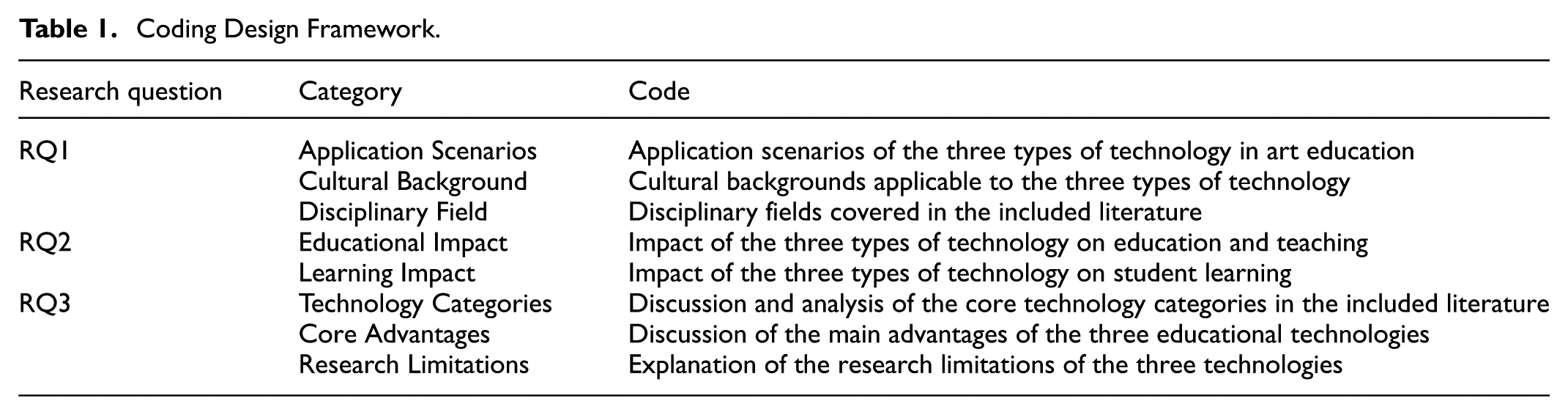
A standardized coding and data extraction process was implemented to ensure systematicity and consistency. Based on preliminary reading and the study objectives, the research team developed a structured coding scheme covering application contexts, disciplinary domains, technology categories, educational impacts, core advantages, and research limitations. Two coders received training with a coding manual, and a pilot test on 10 studies was conducted to refine the scheme. The finalized scheme was applied through content analysis (Kolbe & Burnett, 1991) to categorize data and identify patterns in the application of the three technologies in art education.
Although statistical inter-coder reliability (e.g., Cohen’s Kappa) was not calculated due to study heterogeneity, reliability was ensured through double coding, cross-checking, consensus discussions, and expert consultation. The procedure strictly followed systematic review standards and established a solid foundation for visualization and thematic analysis. Operational definitions and category boundaries of information technology, digital technology, and artificial intelligence were specified in Appendix B, serving as both coding references and methodological support for the proposed TSM model. The coding framework is presented in Table 1.
Coding Design Framework.
Analysis of Application Scenarios, Cultural Backgrounds, and Disciplinary Fields (RQ1)
Analysis of the Application Scenarios
Open Coding
The application of information technology, digital technology, and artificial intelligence in art creation, educational management, and cultural dissemination exhibites distinct characteristics. By analyzing these application scenarios, we gain a clearer understanding of their roles in art education and creation, driving innovation in educational models and artistic production. The following section analysis of the application scenarios of these three technologies (Table 2).
Application Scenarios of the Three Core Technologies.

The three technologies clearly interact across application contexts, collectively drive innovation in art education and creative practices. IT primarily supports art instruction in both primary and higher education, enhances teaching effectiveness, and enables the digital exhibition and global sharing of artworks. DT is extensively applied in creative industries and online education, facilitates the digitization of artistic production and cultural heritage preservation, and also supports remote learning. AI demonstrates strengths in creative assistance, educational support, psychological health assessment, and ethical–legal considerations, enabling personalized creation while raising issues related to copyright and originality in AI-generated artworks. Together, the integration of these technologies is transforming art education and opening new opportunities for future development.
Axial Coding
Next, we analyzed the applications of information technology, digital technology, and artificial intelligence in art creation and education, exploring their similarities and differences. These technologies interact within their respective fields, collectively driving innovation and development in art education and creation (Table 3).
Commonalities in Application Scenarios of the Three Technologies.

The application of IT, DT, and AI in arts education primarily encompasses three areas: online education, artistic creation, and classroom interaction. IT supports remote education platforms, DT enables the processing and dissemination of artistic content, and AI facilitates teaching and personalized creation. Their shared application scenarios reflect contemporary trends in arts education toward digitalization and interactivity, opening new possibilities for instructional methods and learning experiences (Table 4).
Differences in Application Scenarios of the Three Technologies.
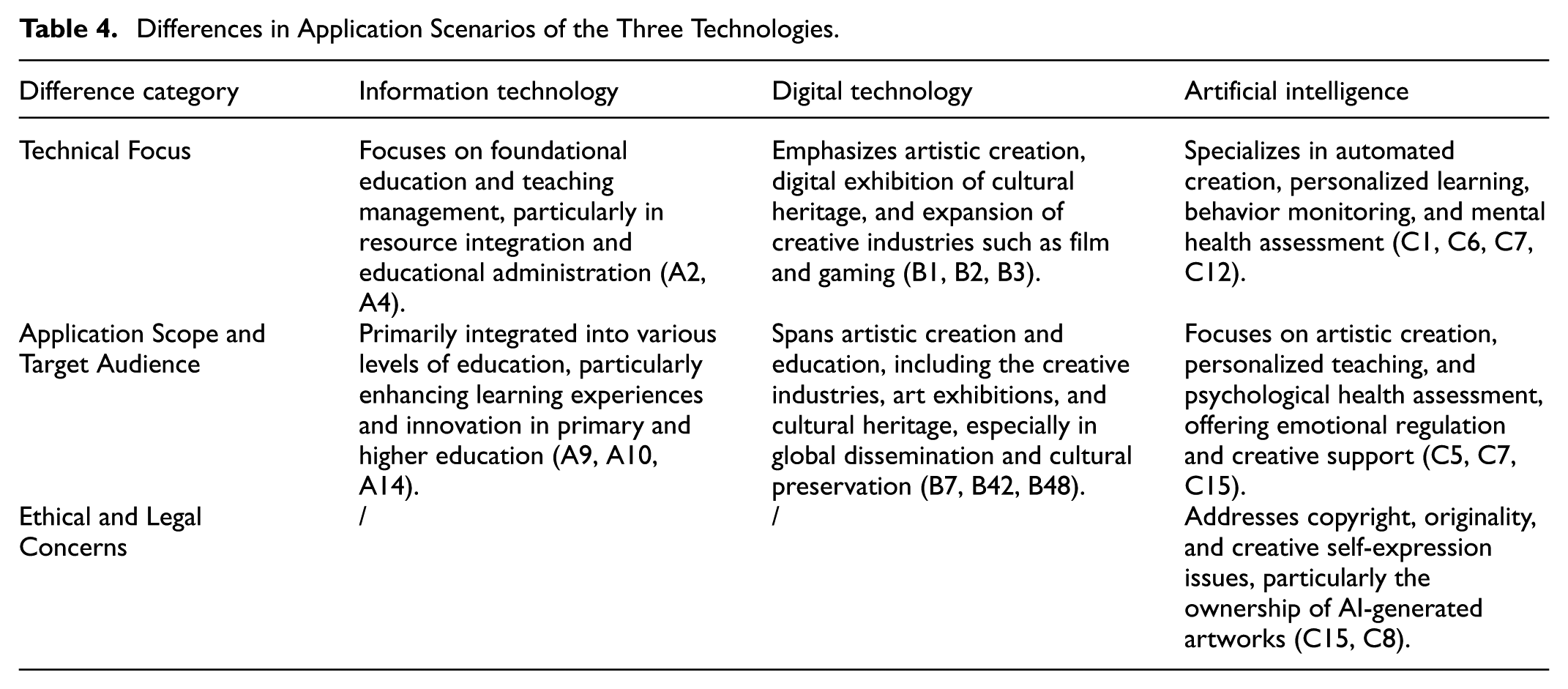
IT, DT, and AI demonstrate diverse applications in art education, driving innovations in teaching models and enhancing learning experiences. However, they also present potential challenges: IT may exacerbate the digital divide, making it difficult for students in resource-limited regions to access equitable education; DT’s high cost and technical complexity may constrain large-scale implementation; and AI raises ethical and legal concerns related to originality, copyright, and technological dependency. Therefore, the deployment of these technologies requires careful consideration of potential negative impacts and the development of mitigating strategies to ensure educational equity and the sustainable advancement of art education.
Analysis of the Cultural Contexts and Disciplinary Fields Applicable to the Three Types of Technologies
Open Coding
IT, DT, and AI exhibit distinct patterns of application across different cultural contexts and disciplinary domains. To understand their global adaptability and impact on art education, this section analyzes the use of these three technologies within various cultural settings and art disciplines, highlighting their roles in interdisciplinary integration and innovation (Table 5).
Analysis of Applicable Cultural Contexts.

Collectively, IT, DT, and AI facilitate cross-cultural communication under the context of globalization, transcend geographical and cultural boundaries, and promote the sharing of art-education resources as well as cultural integration. Simultaneously, they address local cultural and psychological development needs in specific regions and specialized educational settings, and contribute to cultural preservation and transmission (Table 6).
Analysis of Applicable Disciplinary Fields.

These technologies drive interdisciplinary integration within the arts, covering visual arts, music, dance, and design. They play a significant role in artistic creation, education management, and cultural heritage preservation, expanding the forms of arts education and artistic expression.
Axial Coding
The impacts of IT, DT, and AI on art education under the context of globalization exhibit distinct characteristics. This section analyzes their commonalities and differences across cultural contexts and disciplinary domains, examined their roles in promoting artistic creation, cultural interaction, and the sharing of educational resources, and pays particular attention to adaptability across cultures and interdisciplinary integration (Table 7).
Commonalities in Cultural Contexts and Disciplinary Fields.

Information technology, digital technology, and artificial intelligence, when applied in globalization, promote resource sharing and cultural integration in arts education, breaking geographical and cultural boundaries. In multicultural environments, these technologies modernize arts education and are locally adapted to meet cultural needs, fostering the development of regionally distinctive arts education (Table 8).
Differences Among the Three Technologies.
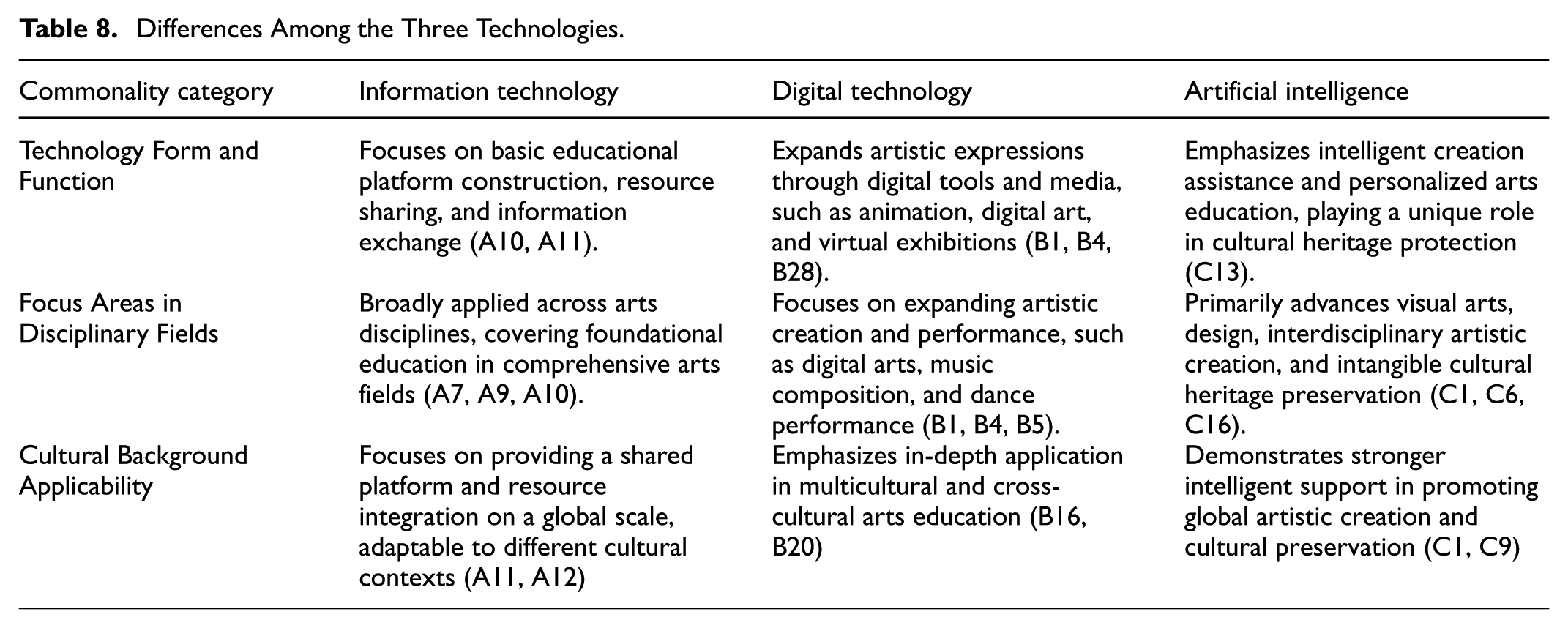
IT, DT, and AI demonstrate flexibility and broad applicability in different cultural settings and art disciplines; however, they also entail potential risks. For instance, globalized applications may lead to cultural homogenization, undermining the uniqueness of local artistic traditions. Uneven disciplinary applications may exacerbate internal educational inequalities. Moreover, technological deployment can be constrained by cultural values and socioeconomic factors, affecting both implementation and outcomes. Therefore, it is essential to consider cultural contexts and disciplinary characteristics, adopt context-sensitive strategies, safeguard and promote cultural diversity, and achieve balanced development across art disciplines.
Application Effects of the Three Technologies in Art Education and Analysis of Student Learning Experiences
Analysis of Educational Effects of the Three Technologies
Open Coding
With the rapid development of educational technologies, IT and DT are gradually reshaping teaching models and student learning experiences in art education. This section examines how they affect student learning by enhancing interactivity, personalized learning, and creative innovation (Table 9).
Impact of the Three Technologies on Art Education.

IT fosters open, interactive teaching that encourages active engagement. DT reshapes course design through immersive and participatory experiences, while AI optimizes learning efficiency via personalized feedback and creative assistance. Collectively, these technologies transform traditional teaching models and enhance educational flexibility, participation, and creativity.
Axial Coding
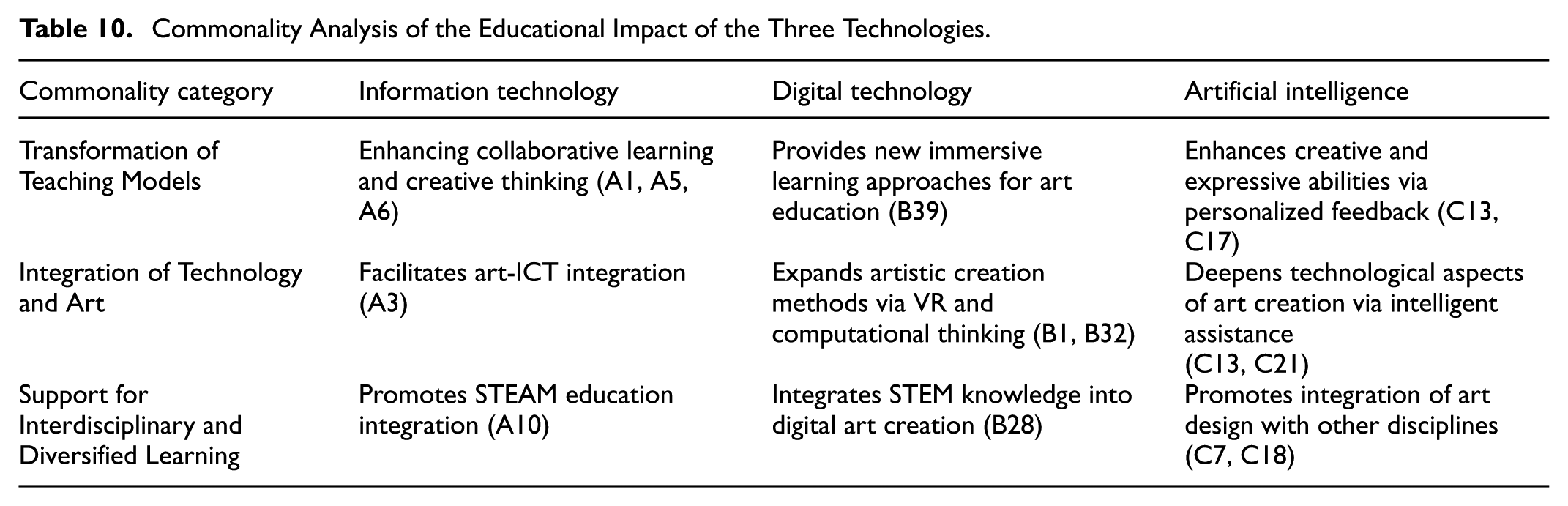
Building on the previous analysis of the applications and effects of the three technologies, this section further examines their commonalities and differences, focusing on how they drive teaching innovation, enhance students’ creative abilities, and facilitate interdisciplinary integration
Table 10 demonstrates that these technologies collectively reform teaching models, improve curriculum design, and enhance effectiveness. These technologies enhance classroom interactivity, stimulate student engagement, and offer personalized learning paths, driving profound changes in art education. Each technology supports the others: IT provides platform support, DT enriches teaching content through immersive experiences, and AI improves learning efficiency through personalized feedback and creative assistance. The synergy of these technologies addresses diverse educational needs, expands students’ creative spaces and learning choices (Table 11).
Commonality Analysis of the Educational Impact of the Three Technologies.
Differentiation Analysis of the Educational Impact of the Three Technologies.

Although IT, DT, and AI share the common goal of improving art education quality, differences exist in their implementation and educational outcomes. IT provides platforms and resource support, promoting shifts in teaching models; DT extends curricular content through immersive experiences and interactive tools; AI optimizes course design and assessment through personalized feedback and creative assistance. However, attention should be paid to potential risks, including technology dependence, creativity constraints, and limited applicability across disciplines and stages. Addressing these issues is essential to ensure holistic student development and the cultivation of artistic literacy.
Analysis of the Impact of Three Types of Technologies on Student Learning
Open Coding
IT, DT, and AI in art education influence not only teaching practices but also significantly transform students’ learning experiences. The following analysis examines how they affect student learning, focusing on their roles in enhancing creative abilities, learning motivation, and self-directed learning. Particular attention is given to how these technologies provide personalized and diverse learning support.
As illustrated in Table 12, IT, DT, and AI play crucial roles in education. IT contribute to improved academic performance, heightened learning motivation, and engagement, while promoting higher-order thinking, creativity, social skills, and aesthetic abilities. DT enhance learning outcomes and artistic creation skills, enriched learning modalities, optimized curriculum design, and fosters interdisciplinary understanding and sociocultural cognition. AI strengthens critical thinking, social cognition, and emotional development, while also improving academic performance, creative capacities, and the quality of online art instruction. It further elicits positive student emotions. Collectively, the widespread adoption of these technologies provides significant support for cultivating versatile talent and driving educational innovation.
Impacts of the Three Technologies on Student Learning.

Axial Coding
To further explore the commonalities and differences in the impact of information technology, digital technology, and artificial intelligence on student learning, the following table presents a comparative analysis of their effects in various aspects. This analysis helps to clarify the role of each technology in enhancing student learning experiences, creative abilities, and autonomous learning, as well as their complementary relationships in different teaching contexts (Table 13).
Comparative Analysis of the Commonalities in the Impact of the Three Technologies on Student Learning.

Comparing the impacts of IT, DT, and AI on student learning reveals that, despite differing application methods, all three technologies clearly improve academic performance, creativity, motivation, and engagement. Together, they promote the comprehensive development of students in art education.
Table 14 illustrates the differentiated roles of IT, DT, and AI in arts education. IT primarily enhances academic performance, higher-order thinking skills, and aesthetic creativity, thereby supporting overall student development. DT strengthens students’ comprehensive abilities by improving learning achievement, self-regulation, and artistic creation skills. AI contributes to the enhancement of artistic creation skills by improving academic performance, task completion efficiency, and providing real-time feedback. Overall, IT emphasizes foundational skills and creativity cultivation, DT prioritizes learning outcomes and critical thinking, and AI highlights creativity and artistic expression.
Comparative Analysis of the Differences in the Impact of the Three Technologies on Student Learning.

Despite their significant benefits, these technologies may also pose potential risks. Overreliance on technology can weaken fundamental artistic skills and reduce face-to-face communication abilities. Unequal access to technological resources may exacerbate educational inequities, particularly for students in underprivileged regions. Technical failures or misuse may compromise learning experiences. Therefore, implementation should balance technological and traditional teaching methods, ensure equitable access for all students, and support their physical, mental, and holistic development.
Analysis of the Three Technologies’ Categories, Core Advantages, and Limitations
Analysis of the Three Technology Categories
Open Coding
The application of IT, DT, and AI in arts education has driven teaching innovation and enriched artistic creation and learning through online platforms, multimedia tools, and generative models. The following table summarizes their core technology categories (Table 15).
Core Technology Categories of the Three.

In summary, each of the three technologies exhibit distinct core characteristics while playing a pivotal role in arts education. They provide diverse tools for artistic creation and instruction, and their integrated application enhances teaching effectiveness and expands modes of artistic expression. Collectively, these technologies open new avenues for the continued development of arts education.
Axial Coding
To clarify the roles of the three technologies, Table 16 analyzed them across technological functions, application fields, and innovation promotion. While they shared common features, each technology also demonstrated unique contributions to teaching methods and learning experiences.
Commonality Analysis of Core Technology Categories.

Overall, the three technologies share common features in enhancing interactivity, promoting interdisciplinary integration, and optimizing personalized learning. Their combined application offered new possibilities for educational innovation and the advancement of arts education (Table 17).
Difference Analysis of Core Technology Categories.

The differences among IT, DT, and AI further reveal their multifaceted value in arts education. As these technologies evolve, they increasingly emphasize intelligence, personalization, and interactivity, driving continuous innovation and transformation in the field. Nevertheless, addressing the challenges associated with technological integration and achieving widespread application across diverse educational contexts remain critical directions for future research.
Core Advantage Analysis of the Three Types of Technologies
Open Coding
Information technology, digital technology, and AI each demonstrate unique advantages in arts education. Table 18 summarizes their contributions to learning efficiency, innovation, accessibility, and personalized support.
Core Advantage of the Three Technologies.

Overall, these technologies complement each other. IT enhances efficiency and student-centered learning. DT promotes creativity, interdisciplinary application, and flexible learning. AI advances personalized support, generative creation, and analytical capabilities. Together, they drive innovation, equity, and development in arts education.
Axial Coding
Building on their individual strengths, the three technologies collectively support innovation, improve learning experiences, optimize assessment practices, and enable remote learning. Table 19 illustrates these shared functions.
Core Advantage Commonality Analysis of the Three Technologies.

In general, the three technologies demonstrate notable commonalities in improving learning efficiency, fostering student engagement, optimizing resource management, and promoting innovation. They enhance educational quality through personalized support and emotional engagement while expanding the boundaries of artistic creation and expression. Simultaneously, all three contribute to the democratization of arts education, increasing accessibility and equity (Table 20).
Core Technology Difference Analysis of the Three Technologies.

Despite similarities, differences exist in focus and application. IT prioritizes student-centered learning and classroom efficiency. DT emphasizes flexible learning, interdisciplinary innovation, and resource optimization. AI enhances creative potential and educational quality through personalized, generative approaches. These distinctions highlight each technology’s targeted value.
Analysis of Research Limitations of Core Technologies
Open Coding
While these technologies offer significant benefits, they also present limitations. Constraints reflect gaps in educational application and indicate directions for future research. Table 21 summarizes key limitations in resource dependency, adaptability, cost, and remote education support.
Analysis of Limitations of Core Technologies.

IT faces challenges in infrastructure availability and teacher adaptability. DT shows limitations in resources and interactivity. AI is constrained by data quality, computational demands, and ethical concerns. Addressing these challenges is essential for advancing arts education.
Axial Coding
Table 22 refines common limitations across the three technologies, including resource dependency, adaptability issues, high costs, and remote education constraints.
Common Limitation Analysis of Core Technologies.
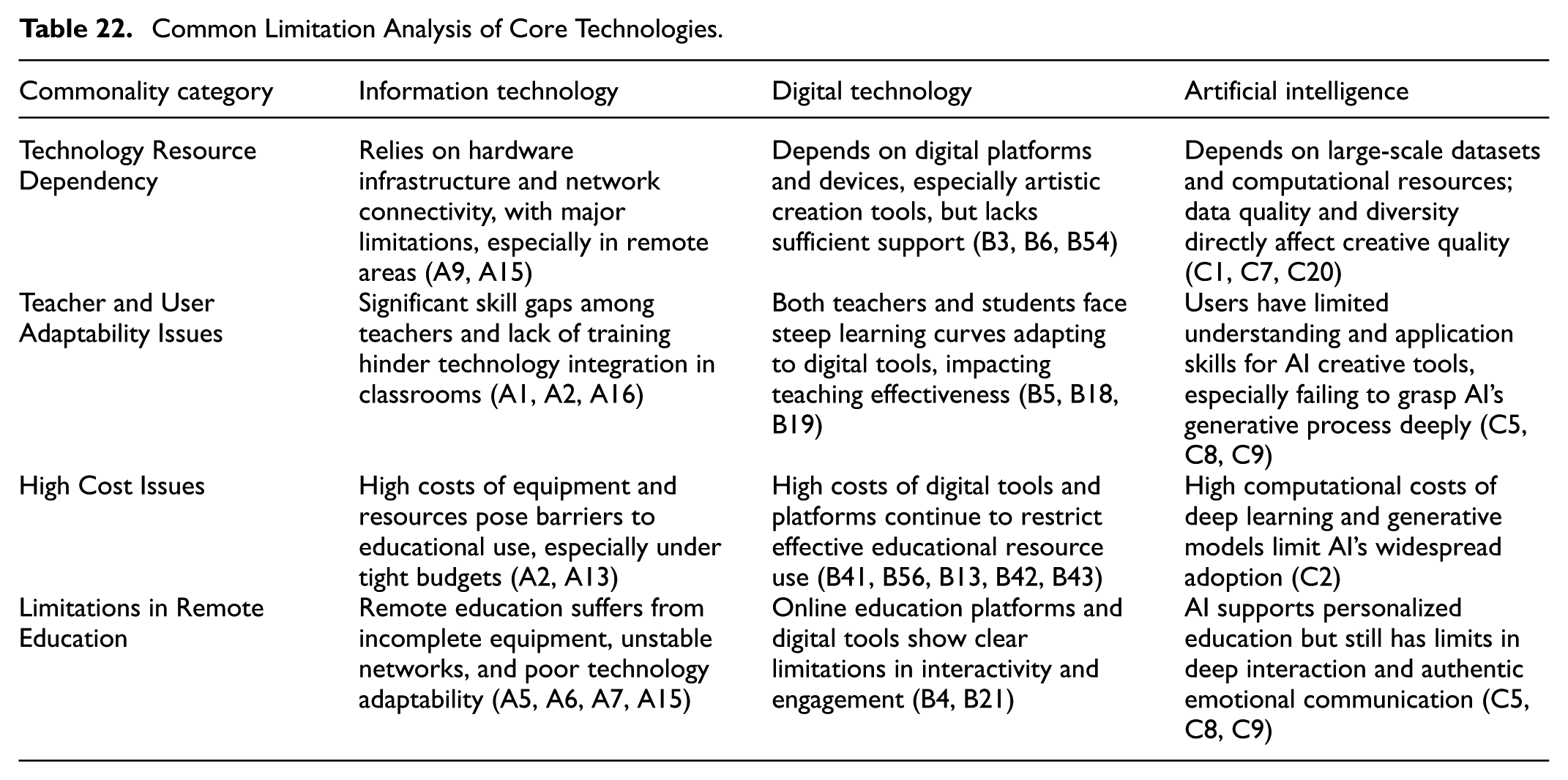
The evolution of IT, DT, and AI shows a progressive deepening trend. IT primarily focuses on infrastructure development, DT emphasizes platform and tool requirements, and AI drives personalized teaching and creative processes while introducing higher demands for computation and data processing. All three technologies face challenges related to teacher skill gaps and cost pressures, with AI additionally involving ethical and adaptability concerns. Overall, educational dependence on technology has gradually shifted from hardware to data processing and computational capabilities (Table 23).
Differentiation Analysis of Core Technologies.

By analyzing the evolution of these technologies in arts education, we observe their gradual progress in both technology and application. IT lays the foundation for arts education, advancing digitalization despite challenges in infrastructure and digital literacy. Building on this, DT drives innovation in creative tools and platforms, excelling in remote education but limited by cost and lack of personalization. AI surpasses traditional limitations, transforming education and art creation, yet faces challenges in data dependency, computational resources, and ethics.
Overall, these technologies evolve from infrastructure to intelligent creation, each addressing prior shortcomings and deepening their application in arts education. However, specific limitations remain, and future advancements must tackle these to promote further innovation and development in the field.
Research Conclusions and Limitations
Research Conclusions
This study shows that information technology, digital technology, and artificial intelligence play diverse and complementary roles in arts education, forming a new ecosystem for cross-cultural interaction and resource sharing. Information technology, through online platforms and digital tools, supports personalized learning and management, lays the foundation for global dissemination of artistic works, and transforms educational paradigms. Digital technology, via virtual reality and immersive experiences, drives artistic creation, research, and cultural preservation, and advances global arts education and cross-cultural exchange. Meanwhile, artificial intelligence, with generative tools and intelligent feedback, enables personalized instruction and automated creativity, while raising concerns about copyright, originality, and ethics. Together, these technologies support an innovative, interdisciplinary model of arts education (RQ1).
In practice, they improve teaching outcomes and enrich students’ learning experiences. Information technology enhances classroom interactivity and critical thinking. Digital technology expands artistic expression and interdisciplinary learning through immersive experiences. Artificial intelligence optimizes instruction and stimulates creativity via personalized feedback. Collectively, they push arts education beyond traditional models toward a more personalized, interdisciplinary, and interactive learning environment (RQ2).
Despite distinct features, all three promote educational innovation, interdisciplinary integration, and better resource management. Information technology supports digital learning platforms; digital technology expands artistic creation; artificial intelligence offers personalized support through deep learning. Their integration enhances creativity, classroom interaction, and fosters global cultural exchange, offering new directions for arts education’s future (RQ3).
However, challenges like inadequate infrastructure, limited training, high costs, data quality issues, and ethical concerns hinder their full potential and risk worsening resource inequality. Future research should focus on optimizing the technological ecosystem, enhancing adaptability, and formulating supportive policies to build an open, shared, and cross-cultural educational platform—paving the way for deeper innovation and equitable development in arts education.
Research Limitations
Although this study strictly adhered to the technical standards of a systematic literature review, several limitations remain. First, the databases are limited to Web of Science, Taylor & Francis, and ScienceDirect, without including other language or regional databases, which may lead to the underrepresentation of certain regions or non-English studies. Second, the included literature is highly heterogeneous in terms of research methods, educational stages, and technological applications, and no formal quality appraisal tools (e.g., MMAT or CASP) were employed. As a result, a meta-analysis could not be conducted, and variations in study quality may affect the robustness of the findings. Third, gray literature (e.g., dissertations, project reports) was not included, which may introduce publication bias by overrepresenting positive results from published studies. Finally, the diversity of cultural contexts and educational stages covered in the literature presents challenges for direct comparison.
Taken together, future research could expand the scope to cross-language databases, incorporate standardized quality appraisal tools, include gray literature, and conduct in-depth analyses of specific subfields or regions to enhance the generalizability and robustness of conclusions.
Future Prospects
Triadic Synergy Model (TSM) in Art Education
The integration of information technology (IT), digital technology (DT), and artificial intelligence (AI) is reshaping arts education by transforming pedagogical models, fostering interdisciplinary collaboration, enabling intelligent creativity, and facilitating adaptive learning systems (Gligorea et al., 2023; Xu & Ouyang, 2022). Building on the findings of this study, we propose the Triadic Synergy Model (
Information Technology (IT) as the Foundation
IT provides the fundamental infrastructure, ensures access to educational resources, knowledge dissemination, and global connectivity. In the future, the application of blockchain certification and decentralized learning systems may enhance the transparency and security of outcomes in arts education (Delgado-von-Eitzen et al., 2021). IT supports DT deployment and AI’s data-driven functions by improving resource accessibility and data acquisition (IT → support/access). However, when infrastructure is limited or educators lack digital literacy, IT’s effectiveness becomes constrained, thereby weakening DT’s immersive potential and AI’s personalized feedback. Future studies could examine how IT accessibility moderates DT engagement and AI personalization. This logic aligns with Media Richness Theory, which emphasizes the role of media richness in shaping immersive learning experiences.
Digital Technology (DT) as an Immersive Medium
Extended reality (XR) technologies—including virtual reality (VR), augmented reality (AR), and mixed reality (MR)—are increasingly applied in arts education. Advancements such as haptic feedback systems and neural interfaces are expected to enhance learners’ immersive experiences, offering more authentic sensory interactions for artistic practice (Tang et al., 2024; Sun et al., 2022). DT’s immersive and interactive features foster learning engagement and contextual awareness, while also providing contextualized data to strengthen AI’s personalized feedback (DT → immersion/engagement → reinforcing AI effects). Teachers’ ability to transform immersive experiences into effective instructional designs, as well as cultural acceptance of immersive approaches, may constrain DT’s benefits. Future research could explore how teachers’ digital design capacity and cultural background mediate or moderate the relationship between DT immersion and learning outcomes. This mechanism corresponds to Constructivist Learning Theory, which underscores learners’ active knowledge construction in immersive contexts while supplying data to AI-driven personalization.
Artificial Intelligence (AI) as a Cognitive Enhancer
AI not only delivers real-time feedback, supports creative processes, and enables personalized learning paths, but also—through affective computing—achieves precise recognition of learners’ emotional states, thereby optimizing instructional interactions and enhancing learning experiences (Yadegaridehkordi et al., 2019). AI’s effectiveness is most evident in contexts with abundant data and rich interactive scenarios (AI → personalization/feedback). Nevertheless, its impact is constrained by data quality, algorithmic transparency, and teachers’ interpretative capacity. Future research could investigate how teachers’ interpretive competence influences AI-enabled personalization. Moreover, AI-driven learning analytics and personalized recommendations can optimize IT resource allocation and guide DT scenario design (AI → IT/DT). This reciprocal logic reflects Human–AI Collaboration Theory, which emphasizes the joint contributions of AI, educators, and digital media to triadic synergy.
Interdisciplinary Integration and STEAM Development
The TSM provides theoretical grounding for interdisciplinary integration: IT supplies foundational resources, DT creates immersive contexts, and AI offers personalized feedback, collectively advancing STEAM education. Interdisciplinary approaches not only enhance students’ creativity but also optimize curriculum design through data-driven personalization and dynamic adaptation.
AI-Assisted Computational Creativity
AI supports data-driven aesthetics and human–machine collaborative creation (O’Toole & Horvát, 2024), integrating artistic, scientific, and engineering elements in real time to strengthen students’ innovation capacity. Teachers may also leverage AI-generated data to identify gaps and opportunities in interdisciplinary teaching, thereby refining curriculum design. Future research could examine how AI influences creativity across disciplinary backgrounds and the moderating role of teachers.
Neuroscience and Art Education
Neuroscience and bioinformatics reveal the positive effects of arts learning on cognitive development (Magsamen, 2019). Within the TSM, DT creates immersive learning contexts, while AI collects cognitive data to enable personalized instruction. Variations in age, cognitive ability, and cultural background may influence interdisciplinary learning outcomes. Future research could explore how cognitive and emotional factors jointly shape the impact of interdisciplinary arts projects.
Intelligent Assessment and Learning Analytics
AI-driven learning analytics can optimize instructional strategies and enable precise assessment (Alfredo et al., 2024). Intelligent assessment not only quantifies outcomes but also identifies strengths and weaknesses, supporting differentiated instruction and dynamic curriculum adjustments. Future studies could explore how to achieve personalized interdisciplinary learning pathways while ensuring data ethics and privacy protection.
Addressing Ethical, Cultural, and Educational Challenges
While technological advancements are driving transformations in art education, their application also presents various challenges.
Ethical Considerations
The widespread use of AI in artistic creation raises concerns about authorship, intellectual property, and originality (Amanbay, 2023; Kamali et al., 2024). These issues may affect academic integrity and students’ creative motivation. Future research should develop actionable AI ethics guidelines, clarify responsibility, algorithmic transparency, and usage constraints to safeguard learners’ rights while fostering innovation.
Cultural Adaptability
The global diffusion of educational technologies requires respect for cultural differences (Barqun & Meador, 1979). Analyses indicate that technology acceptance and effectiveness vary according to culture, pedagogical traditions, and technological diffusion. Future studies should explore localized design and cultural adaptation strategies to foster technology–culture integration and support global STEAM education.
Teaching Innovation
Teachers’ roles are shifting from knowledge transmitters to facilitators of blended and human–AI collaborative learning (Atchley et al., 2024). Effective pedagogical innovation relies on teachers’ technological proficiency, interdisciplinary design capacity, and data interpretation skills. Future research could examine how teacher training, technology integration strategies, and classroom practices interact to optimize instructional experiences.
Vision for Art Education Development in the Next Decade
Future arts education will evolve through a balance between technology and humanistic values, cultivating hybrid talents who are both creative and technologically adept.
Neuroenhanced Creativity Tools
Neuro-enhancement tools for creativity will transform artistic practices, positioning technology as an indispensable facilitator in creative processes rather than a mere substitute (Liu & Zhu, 2025; Zhou & Lee, 2024).
Global Art Learning Ecosystem
Leveraging the Triadic Synergy Model (TSM), future art education is expected to promote a certain degree of educational democratization—particularly in narrowing access gaps in under-resourced regions—through improved resource accessibility, enabled by IT infrastructure and AI-driven open educational resources. Under ideal conditions, such as adequate infrastructure and successful cultural adaptation, the TSM has the potential to contribute to a more intelligent, personalized, and culturally inclusive learning ecosystem (Papadopoulou, 2019). However, its ultimate form and widespread adoption will remain critically constrained by complex factors including the digital divide, regional policies, and levels of cultural acceptance.
Adaptive Learning and Personalized Instruction
AI-driven adaptive learning systems will tailor instructional content to each learner, dynamically adjusting to cognitive styles and creativity levels, thereby enhancing learning experiences and artistic performance (Yekollu et al., 2024; Figure 2).
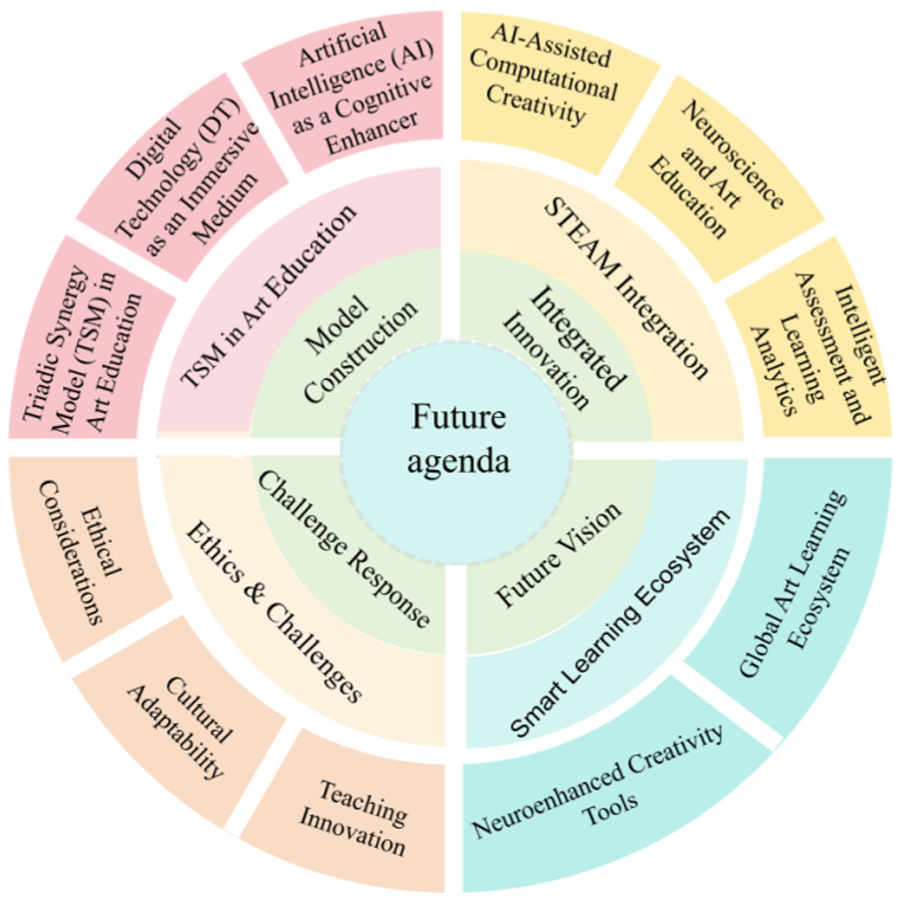
Comprehensive diagram of future prospects.
Footnotes
Appendix
Operational Definitions and Category Boundaries of IT, DT, and AI in Art Education.

| Technology category | Operational definition | Typical applications | Boundary clarification |
|---|---|---|---|
| Information Technology (IT) | Broad information processing and communication technologies, focusing on the use of hardware and general-purpose software in education. | Computer-assisted instruction, projection and multimedia courseware, early online learning platforms. | Distinction from DT: does not emphasize “digital transformation” or “intelligent features,” but highlights fundamental support and general-purpose functionality. |
| Digital Technology (DT) | Technologies based on data processing, network interaction, and visualization, emphasizing the digitalization, networking, and interactivity of educational processes. | Virtual reality/augmented reality, 3D modeling, digital content creation platforms, MOOCs/online collaboration. | Distinction from IT: places greater emphasis on “digital media,”“immersive experiences,” and the “digitalization of learning processes”; Distinction from AI: lacks adaptive and intelligent reasoning capabilities. |
| Artificial Intelligence (AI) | Educational technologies characterized by algorithm-driven autonomous learning, prediction, and intelligent feedback. | Intelligent recommendation systems, learning behavior recognition and feedback, generative art creation tools. | Distinction from DT: AI involves not only digital environments but also intelligent algorithms, adaptive learning, and generative capabilities; Distinction from IT: goes beyond tool functions, featuring “intelligent interaction.” |
Acknowledgements

Ethical Considerations
This study is based on a systematic literature review and does not involve any human participants or animals. Therefore, ethical approval was not required.
Ethics and Consent
This article does not contain any studies with human or animal participants informed consent is not required.
Author Contributions
Conceptualization, W.L.; methodology, W.L.; software, W.L.; writing-original draft preparation, W.L.; writing-review and editing, W.L, Z.W.; visualization, Z.W.; supervision, Z.W.; project administration, W.L. All authors read and approved the final manuscript.
Funding
The authors disclosed receipt of the following financial support for the research, authorship, and/or publication of this article: This research was supported by a grant from the Hunan Provincial Philosophy and Social Sciences Review Committee (Project Title: Practical Pathways for Technology Integration in Art Education within Hunan Province: A Cross-Cultural Comparative Perspective) (Project No. XSP26ZDYBC016).
Declaration of Conflicting Interests
The authors declared no potential conflicts of interest with respect to the research, authorship, and/or publication of this article.
Data Availability Statements
The datasets generated during and/or analysed during the current study are available from the corresponding author on reasonable request.