



Abstract
Deeper learning (DL) is firmly rooted in learning science and computer science. However, a dearth of review studies has probed its trajectory in DL in foreign languages(DLFL). Utilizing SSCI from the Web of Science Core Collection, we employ Citespace and Vosviewer to analyze the scientific knowledge graph of DLFL literature. Our analysis elucidates its geographical spread over time, highlights critical areas for further research, and identifies current trends in its evolution. The results show that DLFL research advances with the United States, China, the United Kingdom, Spain, and Australia ranking in the top five in terms of the number of articles published; the research hotspots focus on factors influencing DLFL, learners’ cognitive processes through language acquisition and information technology intervention in DLFL. The field of DLFL pertains to learning science, which is dedicated to enhancing learners’ performance, while computer science emphasizes utilizing advanced educational technologies as intervention tools. From learning science to computer science, both fields have followed distinct paths in their respective developments with a trend of integration, and the latter provided the former with a continuous supply of technology-mediated educational tools, including the future uses of computational thinking and ChatGPTs. As for future research directions, the development trajectory of DLFL will focus on natural language processing, cognitive neuroscience, and artificial intelligence. The findings will offer insights for future research on DLFL by enhancing the informational and computational literacy of both instructors and learners, empowering them to navigate and leverage the transformative potential of DLFL.
Plain language summary
Deeper learning is a concept familiar to learning science and computer science. Despite the growing interest in foreign languages’ deeper learning (FLDL), few literature review studies have focused on its landscape and trajectory in these two fields. To address the problem, we analyze the scientific knowledge mapping of FLDL literature by utilizing the Web of Science Core Collection as the key data source (deliberately selecting the high-quality SSCI) and explore the spatial and temporal distribution, hotspots, and development trends of FLDL research through Citespace and Vosviewer visualization software. The results show that FLDL experiences seven stages (language perception, students’ FLDL strategies, children’s classroom acquisition model, FLDL motivation and performance, the debut of computer science, computer science embedding learning science, and the fast development of computer science); FLDL related to learning science focuses on improving learners’ performance, while that of computer science highlights the intervention tools of advanced educational technologies; FLDL research advances with the United States, China, the United Kingdom, Spain, and Australia ranking in the top five in terms of the number of articles published; the research hotspots focus on factors influencing FLDL, learners’ cognitive processes through language acquisition and information technology intervention in FLDL. Both learning science and computer science have had their distinctive development paths. However, there is a current trend toward intermingling, and the latter has provided the former with a steady stream of educational technology-mediated tools, including the future use of computational thinking and ChatGPTs. The development trend of FLDL will concentrate on computer science. The result of the study will provide some insights into future research on FLDL by improving the informational and computational literacy of FLDL instructors and learners.
Keywords
Introduction
“Deeper learning,” a scientific learning behavior, is the windvane of school transformation in the 21st century. The technological revolution triggered by deeper learning has brought about changes and leaps in many fields, and it is increasingly prominent in education and teaching. More profound learning ability is crucial in measuring learners’“learning to learn” and “effective learning.” It is also a vital issue to solve in the era of open education. In today’s foreign language learning, surface learning methods, such as repetitive drills and mechanical memory exercises, remain prevalent among EFL learners, which can significantly hinder the development of critical and innovative thinking skills among language learners, and this situation needs to be changed and extended to deeper learning (Biggs & Collis, 1982; Goodfellow et al., 2016; He & Lai, 2015; Liu, 2016).
Deeper learning is a concept familiar to learning science and computer science. The former was first proposed by Marton and Säljö (1976), arguing that deeper learning is an active, connection-seeking, and understanding way of learning that enables existing knowledge to interact critically with the material’s content and explore the logical meaning of knowledge. Deeper learning is a learning state and learning process that is active, highly engaged, comprehends memory, involves higher-order thinking, and has high transferability of learning outcomes (Baeten et al., 2010; Biggs, 1985; Smith & Colby, 2007). Deeper learning of foreign language (DLFL) is a foreign language learning method of deep knowledge processing in which teachers complete educational projects through instructional protocols and accountability, with students making their own decisions and using multiple resources and language interactions (Benesse, 2006; Liu, 2016; Tochon, 2014). Deeper foreign language education, initially proposed by Tochon (2014), transcends conventional foreign language teaching methods that emphasize superficial learning of language knowledge. It aims to cultivate learners’ wisdom, foster a sense of global peace and courage, and enhance cross-cultural dialog among language learners. Foreign language education is both liberal and in-depth (Budzowski, 2009; Csizér & Magid, 2014; Long & Ju, 2020). As can be seen, scholars have defined this connotation as deeper learning, then deeper foreign language in learning, and then deeper foreign language education. While the concept of deeper learning related to computer science is a subset of machine learning, which is a neural network with at least two layers in essence, it originated from Hinton et al. (2006) more than three decades later than learning science (Miotto et al., 2018; Mishra et al., 2021; Zhong, 2022). It also focuses on neural networks to initiate the behavior of the human brain through “learning” from large amounts of data. Deeper learning, in this sense, advances many artificial intelligence (AI) applications and services that optimize automation, executing analytical and physical tasks without human intervention.
Scholars have extensively utilized the content analysis method to study the literature on deeper learning, primarily focusing on research methods. Eleftheriadis et al. (2023) and S. J. Zhang and Chen (2019) have discovered that the profound theoretical value of deeper learning and its dynamic evaluation models require in-depth exploration through content analysis. Mayer-Schönberger and Cukier (2013) and Shen et al. (2019) employed this method to review deeper learning empirical research in databases such as Web of Science and Springer. Their findings indicated that research topics converge on three critical aspects of deeper learning: strategies, approaches, and evaluation. These topics have been widely applied across various disciplines, including medicine, education, and psychology. L. N. Chang (2018) and Fan et al.’s (2015) research team also utilized content analysis and concluded that evaluation research should be a prominent focus within deeper learning. Vargas et al. (2017) chronologically reviewed the literature, illustrating the significant applications of deeper learning algorithms and their evolution over time. Furthermore, they compared the superiority and benefits of deeper learning methodology, particularly its layered hierarchy, and nonlinear operations, with more conventional algorithms in standard applications.
Some scholars have employed bibliometric software to conduct knowledge-mapping analyses of research tools in deeper learning. Wen (2017), for instance, utilized CiteSpace for a comprehensive review of domestic and international literature, highlighting the need for further exploration of deeper learning theory and dynamic evaluation research. Other researchers have used tools like BICOMB 2.0 and UCINET 6.0 to visualize and analyze deeper learning literature. Bu et al. (2021) concluded that research hotspots and trends in China’s educational field prioritize microlearning, catechism, and flipped classrooms. They suggest a need to refine the deeper learning theoretical system, establish a core research team, bolster empirical research, and intensify research under technological support (Fu, 2020; Grave et al., 2018).
Furthermore, Q. L. Wang et al. (2016) performed bibliometric and knowledge mapping analyses with SATI and SPSS software. They contended that deeper learning should also extend to practical applications, including teaching strategies, resource development, and the study of evaluation index systems. Hu and Sun (2019) conducted a clustering analysis of keywords in deeper learning-related literature using Citespace software. Their work explored the necessity for innovation and transformation in deeper learning research methods, further corroborating the findings.
Regarding research areas, the focus on deeper learning has gradually shifted from computer science to the education field (S. Q. Zhang et al., 2016). Scholars such as Dolmans et al. (2016) found that problem-based learning approaches in higher education promoted deeper learning among students. Some scholars have also reviewed the analytical perspectives and evaluation methods of deeper learning, deriving from multiple analytical perspectives such as the relationship between deeper learning and superficial learning, depth models of knowledge, and goal classification theory (Bhattacherjee, 2001; Dai & Wang, 2017). When the review of DL algorithms and architectures is concerned, a deep neural network (DNN) uses multiple (deep) layers of units with highly optimized algorithms and architectures (Shrestha & Mahmood, 2019).
Scholars have done many literature review studies and achieved specific research results on deeper learning (e.g., Ahmed et al., 2023; Alzubaidi et al., 2021; LeCun et al., 2015; Sarker, 2021). However, little review literature has explored the landscape of deeper learning in foreign languages, and few studies have focused on the trajectory of DLFL in both learning science and computer science. In addition, as far as the eye can see, no literature study combining the advantages of Citespace and Vosviewer software has been found on deeper learning for a specific discipline. As visualization tools for mapping scientific knowledge, both are informative and visually appealing. However, each has its characteristics, such as Citespace, which provides more analysis parameters and more complete graphs, as well as time series and time zone analysis, and Vosviewer, which avoids the mutual overwriting of essential nodes and labels and focuses on the display of the primary information of the dataset. Therefore, this study uses Citespace and Vosviewer to address the following three research questions:
RQ1: What is the developmental trajectory of DLFL in terms of its temporal and spatial distribution as well as research hotspots?
RQ2: What are the evolving and frontier tendencies of DLFL?
RQ3: How is DLFL in learning science connected to its counterpart in computer science?
This study aims to explore the current research status of deeper learning in foreign language disciplines, enrich the research content of deeper learning, and shed some light on the development of deeper foreign language education. To achieve the research goals, we divided the paper into six sections: introduction, research methodology and materials, results, discussion, limitations and implications, and conclusions. The following section is the research methodology and materials.
Research Methodology and Materials
Research Method
This paper uses the scientometric analysis to explore DLFL. The term scientometrics is first coined by Vassily Vassilievich Nalimov, the Russian mathematician, defining it as the application of quantitative methods to all scientific activities in all disciplines, with no distinction between natural sciences, social sciences, and humanities such as the humanities (Gingras, 2016; Meihami & Esfandiari, 2024; Sooryamoorthy, 2020). De Bellis (2009) briefly summarized scientometrics as “encompasses all quantitative aspects and models related to the production and dissemination of scientific and technological knowledge,” whose ultimate goal is to address “the quantitative and comparative evaluation of scientists’, groups’, institutions’, and countries’ contribution to the advancement of knowledge” (De Bellis, 2009, p. 3; Meihami & Esfandiari, 2024, p. 2).
Scientometrics approaches the scientific research data from multiple sources, including small and large databases like Socpus (e.g., Esfandiari & Sahar, 2023; Meihami & Esfandiari, 2021), and employs numerous units of analysis like journal articles, institutes, and countries or regions (De Bellis, 2009). Scientometrics also uses a variety of quantitative instruments including comparison, mathematical processing, classification, visualization, and advanced statistical procedures such as multi-level analysis to process the data (Ivancheva, 2008; Meihami & Esfandiari, 2024 ) and multiple techniques such as co-word analysis, co-citation analysis, network visualization, resonance analysis, and bibliometric coupling (see Sooryamoorthy, 2020, for an outline of these techniques) to serve varied research purposes (Meihami & Esfandiari, 2024).
Scientometrics is fundamentally quantitative (Meihami & Esfandiari, 2024). In this sense, it overlaps with bibliometrics, a term coined and defined by Pritchard (1969) as “the application of mathematics and statistical methods to the analysis of academic publications” (Pritchard, 1969, p. 348). However, as Gingras (2016) argued, bibliometrics is a subset of scientometrics in that the former is limited to the counting and analysis of published documents and their properties. After all, scientometrics applies bibliometric data and techniques to reinforce the science of communication (De Bellis, 2009).
In this way, this paper uses the scientometric analysis method and CiteSpace and Vosviewer software to explore the evolutionary paths, research hotspots, and development trends of DLFL. Vosviewer (https://www.vosviewer.com/download) and Citespace (https://citespace.podia.com/), scientometric visualization tools, were developed by Chen et al. (2015) of Drexel University and The Centre for Science and Technology Studies of Leiden University, respectively (van Eck & Waltman, 2010). The results of the analysis of these two software have their advantages. The time zone map of Citespace shows the panoramic view of scientific research and its evolutionary process, and mutation detection is used to discover the frontiers of scientific research; the analysis results of Vosviewer are closer to WOS (Web of Science) data (Song & Chi, 2016), which indicates the high or low importance of each cluster by the warm or cold color, and the density view indicates the focus and hotspot of scientific research. Therefore, we use CiteSpace software to analyze the evolution path and development trend of deep learning research while using Vosviewer software to analyze the focus and hotspot of deeper learning research and the distribution of its publishing countries and collaborative academic research.
We follow Sooryamoorthy’s (2020), C. Wang et al.’s (2024), and Y. Wang et al.’s (2024) research models to organize the research process, including data retrieval, literature screening, and data standardization.
Data Retrieval
The scientificity of any knowledge mapping is rooted in the database, that is, the critical issue is how to accurately and comprehensively retrieve the entire literature on the topic to be studied (Devlin et al., 2019; Xu & Yang, 2010). The high-quality literature, interdisciplinary topics, and scientific research considered, the data source of this study is the Social Science Citation Index (SSCI) in the core collection of the influential academic literature abstract index database Web of Science. All the documents were retrieved on May 29, 2024.
After fixing the sources of research data, a retrieval strategy has been determined based on the principle of encompassing all the literature about the research topic and simultaneously excluding irrelevant documents (C. Wang et al., 2024; Y. Wang et al., 2024). To increase the validity and reliability of the study, we followed C. Wang et al. (2024) and Y. Wang et al. (2024) model and selected keywords (“deep learning” AND “Deeper learning”) to target deeper learning; at the same time, foreign language was targeted based on the keywords (“foreign language” AND “second language learning”). In the first round, we retrieved 636 articles. To maximize the target articles, we conducted the second round of retrieval based on the relevant keywords (“deeper learning” OR “deep learning” AND “English”). This time, we obtained 523 articles. Altogether, we retrieved 1,159 ones. For the screening processes of the study, please read Table 1.
Summary of Data Source and Retrieval Processes (Based on C. Wang et al., 2024; Y. Wang et al., 2024).

Literature Screening
One thousand, one hundred fifty-nine articles retrieved through keywords may contain unrelated documents (C. Wang et al., 2024; Y. Wang et al., 2024). The researchers are supposed to perform a manual screening process to recognize the qualified and closely related literature and increase its relevance.
According to Page et al. (2021), C. Wang et al. (2024), and Y. Wang et al. (2024), the manual screening process is divided into three stages. In the first stage, the researchers read the titles and abstracts carefully and weeded out the irrelevant literature, resulting in 957 articles retained. As to the second stage, the researchers focused on the comprehensive review of the full texts of articles to enhance the relevance of the literature. Finally, the search results were duplicated and cleaned by Citespace software and manually filtered to obtain a total of 761 valid documents to ensure the accuracy of the data.
Data Standardization
Seven hundred sixty-one articles extracted from the databases may include multiple expressions of the same term. For example, “deeper learning” may refer to “deep learning”; “English” and “second language” may overlap with “foreign language." Therefore, to enhance the research reliability and validity, a data disambiguation process is required to standardize the data (Strotmann & Zhao, 2012; Van Eck & Waltman, 2019; C. Wang et al., 2024; Y. Wang et al., 2024).
This study followed the data standardization process presented by Taskin and Al (2019), C. Wang et al. (2024), and Y. Wang et al. (2024). The critical terms like “deeper learning,” “deep learning,” and “foreign language,” “second language,” “English” were first standardized; Then, the authors and source fields were corrected and checked to distinguish authors with similar names; Later on, the researchers focused on the names of the journals in the past 30 years to avoid the impact of the periodical name change on the analysis results (C. Wang et al., 2024; Y. Wang et al., 2024). Finally, to eliminate the redundant entries in the knowledge graph (C. Wang et al., 2024; Y. Wang et al., 2024, P. 4), the researchers standardized the keyword field by unifying parts of speech and singular/plural forms of the relevant keywords (C. Wang et al., 2024; Y. Wang et al., 2024, P. 4).
Results
Spatial and Temporal Distribution Characteristics
Temporal Distribution Characteristics
The changes in the number of publications can reflect the development status of a field and the future research trend. Figure 1 below shows the development trajectory of DLFL research publications in the past 30 years, with an overall trend of steady growth. There were only two publications in 1993, the initial stage of deeper learning research, and the development was slow until 2007. There was only one publication in 1994, 2001, and 2002, which may be related to the limitation of research methods and the need for more high-quality related literature during this period. With the enrichment of research methods and contents, the number of publications increased from 2008 to 2016, but relatively slowly; the annual number of publications between 2018 and 2022 increased steeply, reaching 102 in 2022, a period of rapid development in the field; it is predicted that the annual number of publications will still be higher than 100 in 2024 (it has been 46 at the beginning of May this year). At this stage, researchers in many countries are studying how to enhance students’ core literacy in subject teaching; for example, the China Institute of Educational Innovation and the Partnership for 21st Century Learning released a research report on the 5C model of core literacy in the 21st century (Deng et al., 2020), and deeper learning is an effective way of learning that points to core literacy coupled with the support of education policies, such as China’s 13th Five-Year Education Development Plan, which calls for classroom teaching reform and cultivation of students’ profound learning ability (Shao & Lei, 2021). Therefore, the number of articles published at this stage is quite large. The attention to deeper learning research in the field of education is increasing day by day.

Temporal distribution of the number of DLFL research publications.
Spatial Distribution Analysis
The results of spatial distribution are shown in Table 2. It demonstrates that from the distribution of countries (regions), the United States has the most extraordinary high-level research results in the field of DLFL research, with the number of publications accounting for about 25.9%, followed by China, the United Kingdom, Spain, and Australia, with the total number of publications in the five countries being 69.7%, which is far more than the sum of the half. Regarding the number of connections and frequency of citations, Spain and Germany are the most prominent, occupying the core of international research. They have conducted collaborative research with 41 countries or regions, respectively, and their research results are cited second and third. At the same time, the United States, the United Kingdom, Australia, Germany, and Italy all rank high, with at least 29 connections. Besides, the citation rates indicate that Sweden, Netherlands, Italy, and Germany rank in the top four, with figures exceeding 63. All these numbers show that America and Europe have become the leading centers in DLFL. Interestingly, according to the citation rates, China ranks second in the number of publications and connections, but the number of citation frequency ranks 17th. Iran, Japan, Taiwan, Korea, and other Asian countries and regions (except Singapore, where English is the official language) have similar situations.
Distribution of the Top 20 Countries (regions) in the Number of DLFL Research Publications (1993–2024).
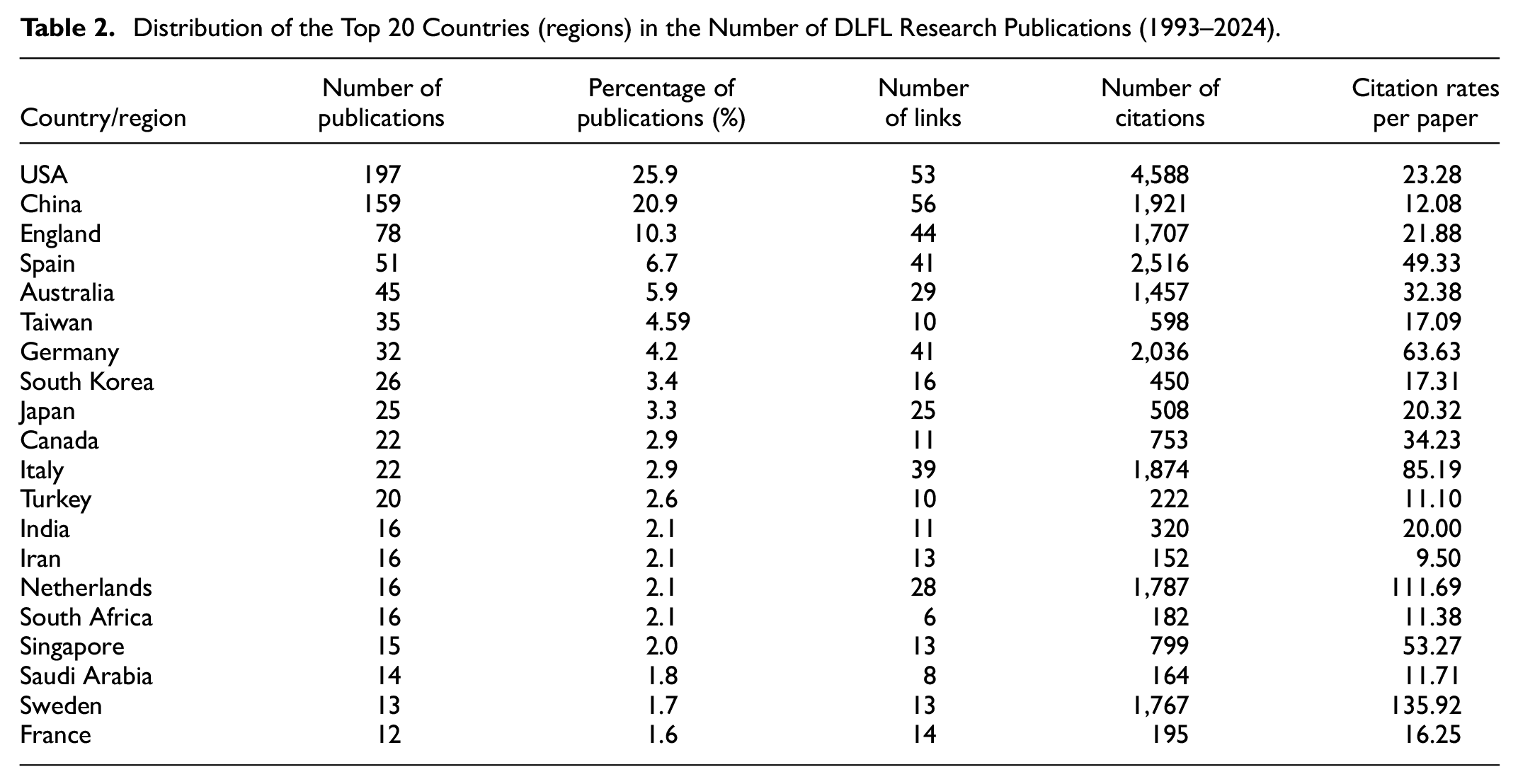
In addition, it can be seen from Figure 2 that the dense and complex connections between the nodes of the graph connecting lines indicate the existence of more collaborative relationships among different countries and regions. Six international academic circles have been formed in DLFL research, namely, the intellectual circle centered on the United States, China, the United Kingdom, Australia, Spain, and Germany. In addition, the number of lines connecting different countries and region(s) also denotes the connection and cooperation states between them, which agrees with Table 2.
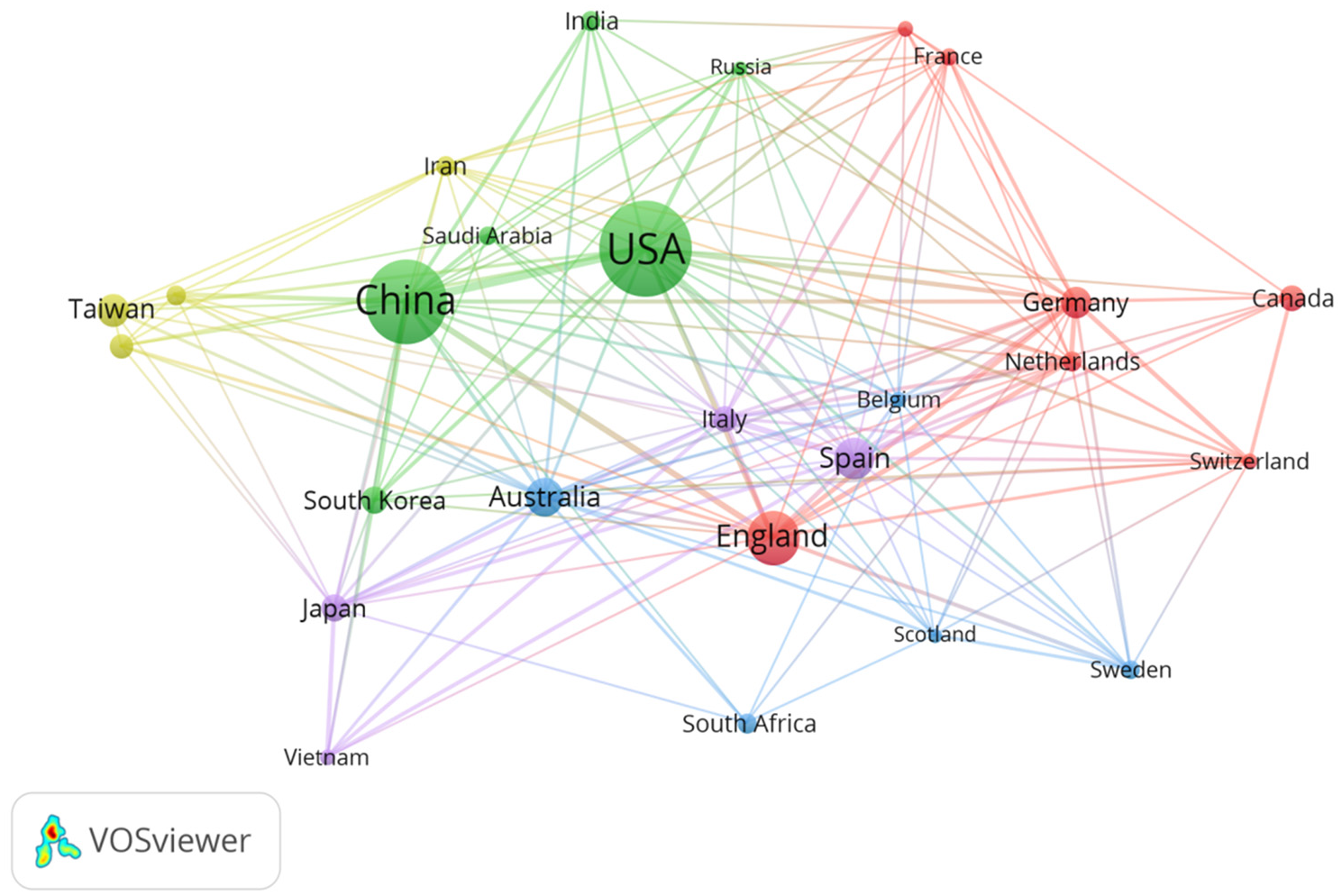
Scientific knowledge map of DLFL research country distribution.
Analysis of Research Hotspots
Keywords can express the content characteristics of the main body of the paper and have substantial significance (Elliot et al., 2023; Yang & Ding, 2013). The keywords of a field can be studied to grasp the research hotspots quickly (C. Ma & Chen, 2021; Zain et al., 2023). In this study, the keyword co-occurrence was visualized using Vosviewer software, and the temporal dimension of the research was visualized using Citespace software. The size of the circles in the plot indicates the frequency of keyword co-occurrence, and the larger the circle, the more often the keyword co-occurs. The thicker the line is, the stronger the relationship between the two keywords is. The higher the connection strength, the higher the centrality of the keyword, that is, the greater the influence in the co-occurrence network. In addition, in the Vosviewer graph, different colors indicate different clusters and the same color denotes the same cluster.
To better present the hotspots in DLFL research, this study used Vosviewer software, with the minimum keyword setting of 8 and the strength of the connection line set to 2, to draw a scientific knowledge map of keyword co-occurrence in DLFL research (see Figure 3). According to the map, three types of colors form three clusters.

Keyword co-occurrence mapping of DLFL research postings.
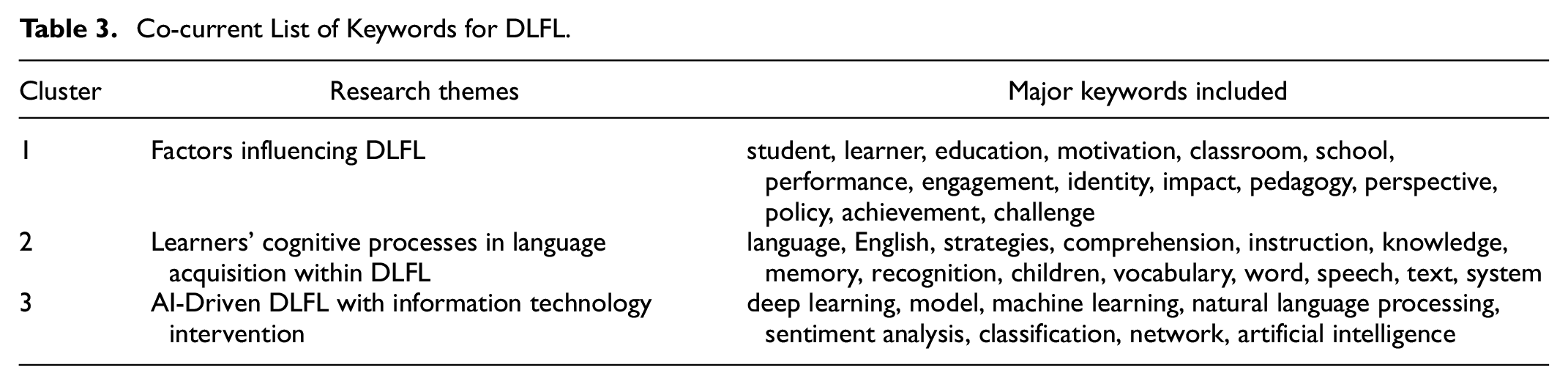
Figure 3 can be converted to a text table. The keywords from Figure 3 can be abstracted into three hotspots (see Table 3) based on the color of the nodes in the keyword co-occurrence mapping.
Co-current List of Keywords for DLFL.
Research Hotspot 1: Research on Factors Influencing DLFL
The “factors influencing DLFL” cluster encompasses keywords from the following three aspects: students’“learning,” teachers’“teaching,” and the educational environment. Student factors mainly include “student/learner, motivation, engagement, identity, performance, achievement, and challenge”; teacher factors mainly consist of “pedagogy, impact, and perspective,” which are the most critical elements affecting students’ deeper learning. The keywords related to the educational environment include “education, classroom, school, and policy.”
These keywords above are interrelated and together form the educational ecosystem for DLFL. Teachers’ teaching methods and the educational environment’s policies influence students’ intrinsic motivation and engagement. Teachers’ educational perspectives and methods will affect how they interact with students and how to stimulate students’ motivation and engagement. The educational environment provides the necessary resources and structure to support teaching and learning and provides standards and tools for assessing student performance and achievements.
For example, Zhan et al. (2021) and other scholars explored the interaction between learning motivation and self-efficacy in Chinese university students’ use of deeper language learning strategies. Blended learning, as a combination of face-to-face instruction and e-learning, facilitates deeper learning (Nikolaeva et al., 2019). Learning is “deep” only when it occurs with sufficient breadth, depth, and connectedness (Dörnyei & Ushioda, 2009; T. P. Wang et al., 2021; Wu et al., 2024). Teachers’ teaching beliefs, methods, evaluations, and teacher-student relationships affect students’ deeper learning. In brief, DLFL, related to learning science, focuses on improving learners’ performance.
However, these factors do not exist in isolation, and interaction in a specific educational environment requires a more nuanced understanding. For instance, the effectiveness of teaching methods may vary due to factors such as subject matter, student demographics, and cultural background. Although the cited studies provide valuable insights, it is also necessary to recognize their limitations and consider a broader range of research for a comprehensive understanding. Future research could benefit from more qualitative analysis, including case studies illustrating how these factors manifest and interact in educational settings.
In summary, Cluster 1’s theme focuses on the comprehensive development of students in the educational environment. It pays attention to students’ performance and engagement in schools and classrooms and how these factors interact with their motivation, identity, educational policies, and teaching methods. By examining these elements through a critical and interconnected perspective, we can better understand the multidimensional nature of deep learning and strive for more effective educational practices.
Research Hotspot 2: Learners’ Cognitive Processes Through Language Acquisition
The focus of Cluster 2 is on the process of language acquisition, specifically the learning of English as a second or foreign language. It encompasses cognitive processes such as language comprehension, knowledge acquisition, memory retention, and recognition. Furthermore, it delves into effective learning strategies and teaching methodologies for vocabulary enrichment, word usage, phonetics, and textual analysis (Songmuang et al., 2024; C. Wang et al., 2024; Y. Wang et al., 2024; Xue & Williams, 2024). Additionally, this cluster incorporates research on children’s linguistic development and language learning systems. DLFL refers to the learning process in which learners use higher-order thinking skills, including metacognition, to actively construct external information with the aim of deep processing and flexible use of knowledge (Gonzales, 2024; Halbert & Kaser, 2006; Z. Wang, 2019). Eric Jensen and LeAnn Nickelsen proposed the most usual deep learning route - DELC (Deeper Learning Cycle) of deep learning process theory, which is from “designing standards and processes—preparing and activating prior knowledge—acquiring new knowledge—processing knowledge in depth—evaluating learning,” which explains how teachers can guide and motivate students to deeper learning in classrooms (Jensen & Nickelsen, 2010). According to Hatami and Tavakoli (2013) and Q. Wang et al. (2022), the teaching and learning process that points to DLFL forms new language knowledge, language skills, and discourse knowledge based on the subject matter and students’ existing knowledge, experience, abilities, and attitudes, actively constructs meaning, expresses emotions and attitudes in new contexts, and exhibits complete cognitive structures, more appropriate language use, higher-order levels of thinking, and clearer value orientations and action. Some scholars have shown the need to train students in deep learning strategies, as well as to train teachers in deep teaching strategies and how to motivate students to learn internally to facilitate deep learning well (e.g., Fine & Mehta, 2019; Songmuang et al., 2024; Wittmann-Price & Godshall, 2009). The essence of Cluster 2 lies in highlighting the intricacy of language acquisition and underscoring the significance of employing deep learning strategies and methodologies to facilitate a comprehensive and efficacious language learning process.
Research Hotspot 3: AI-Driven DLFL with Information Technology Intervention
Cluster 3 focuses on techniques and models in deep learning, machine learning, and Artificial Intelligence (AI), specifically applied to foreign language acquisition. This encompasses fundamental methodologies such as Natural Language Processing (NLP), Sentiment Analysis, and Classification, which play a pivotal role in comprehending and processing human language. In deep learning for foreign language acquisition, these technologies improve learners’ language comprehension, communication skills, and knowledge acquisition through advanced AI tools. The applications of AI technology in education are diverse, such as adaptive learning systems, intelligent assessment tools, and interactive platforms for language acquisition (Guo et al., 2024; Sanabria-Navarro et al., 2023; Y. Zhang et al., 2024).
Scholars have explored how to realize personalized adaptive learning based on artificial intelligence, big data, and learning analysis technology. Adaptive learning refers to “collecting information from students in the process of learning with the system, analyzing the collected information, and then personalizing the user model for students to match their learning ability and cognitive level, to solve the problem of poor targeting in education” (Brusilovsky, 1996). Blair Lehman, a researcher at the Educational Testing Service, argues that the learning process cannot be separated from pedagogical and psychological support, such as using emotion as a mediator to achieve the renewal of the learning system (Zapata-Rivera et al., 2018). Some scholars explore the principle of human-computer interaction (Eloff & Eloff, 2002; Krishna Sankar & Shangaranarayanee, 2020; Sanabria-Navarro et al., 2023); students are immersed in continuous learning, practical learning, deep learning state, also known as “human-computer cognitive coupling state” (Dunlosky et al., 2013). The cognitive coupling state is a state in which the cognitive structure, personality, and ability of students match the learning content, context, and track designed by the teacher, and is a state in which students and machines depend on each other to form an efficient learning body (F. Y. Chen et al., 2014; Y. Chen et al., 2015; Schlegel, 2015; Y. Zhang et al., 2024). According to the hierarchical goals in Bloom’s cognitive goal classification, Fisher (2019) proposed a collection of 25 information tools for each level of goal, called “Digital Bloom,” such as YouTube at the level of literacy, TED at the level of comprehension, and Moodle at the level of evaluation, and other practical tools and platforms, which signifies that the “teaching and learning” of foreign languages in the information technology environment has become a hot research topic in the education field (D. Chen & Zhu, 2011). Likewise, DLFL, in terms of computer science, highlights the intervention tools of advanced educational technologies.
In summary, Cluster 3 explores techniques and models in deep learning, machine learning, and artificial intelligence and specifically focuses on their application and development in promoting deep learning in foreign languages. By integrating these technologies into foreign language teaching, educators can design more efficient and interactive learning environments that enable learners to practice and enhance their language skills through authentic language use situations. Additionally, technology such as sentiment analysis can assist teachers in understanding learners’ emotional responses and engagement levels, allowing for adjustments in teaching strategies to better cater to learners’ needs. This highlights the immense potential and prospects of AI technology within education.
Keywords can also show the hotspots of DLFL. The top 30 keywords were summarized as shown in Table 4. The keywords’ centrality reflects a keyword’s importance in the whole keyword co-occurrence network and shows the field’s hot research topics and themes in a certain period. The centrality of deep learning, language, English, student, natural language processing, model, machine learning, perception, neural network, teacher, and memory is more significant than 0.1, which indicates that these words are in a relatively core area in DLFL, and the related research influence is significant. In addition, natural language processing and modeling are related to computer science. Specifically, these two words/phrases are part of artificial intelligence (AI), which partly shows the function of machine learning.
Distribution of the Top 30 Keywords in Terms of Frequency of Occurrence of DLFL from 1993 to 2024.

Besides these 11 words/phrases, the other top 19 keywords cover learner, performance, knowledge, classroom, motivation, education, sentiment analysis, impact, classification, instruction, higher education, system, convolutional neural network, task analysis, children, acquisition, word, recognition, and artificial intelligence, which implies that DLFL focuses on classroom instruction to improve children’s EFL/ESL performance, increase their motivation, enrich their language knowledge, and enhance their deep learning literacy by applying specific learning models or employing deep learning strategies. Notably, machine learning, neural networks, systems, convolutional neural networks, and artificial intelligence imply that deeper learning aims to strengthen learners’ language acquisition dramatically through computer technologies. In addition, it also shows that the current research related to DLFL emphasizes the importance of computer science.
Although keywords such as “artificial intelligence” have become hot topics in recent years, their centrality of zero in the DLFL literature suggests that they may not have established extensive academic connections or have emerged relatively late in the analyzed dataset. This lack of centrality is also observed in other keywords like “impact,” “classification,” “system,” “convolutional neural network,” and “task analysis,” indicating that these terms may be less prevalent or less interconnected within the DLFL literature network. The need for more centrality for these keywords could be attributed to their limited research attention, specific application scopes, or a lower degree of integration with other research themes.
These different research hotspots jointly promote the pace of research in DLFL, which helps optimize and enhance its development.
Analysis of Evolutionary Trends
By visualizing the timezone layout of keywords through Citespace software, the temporal dimension of keywords and the evolutionary changes of research can be studied. The timezone mapping of keywords is composed of time axis clusters and keywords, and the keywords are distributed on the time axis by their first appearance.
As seen in Figure 4, the earliest research on DLFL is traced back to 1993. The timeline of scholarly focus is as follows: Before 1997, research predominantly centered on language perception. Between 1998 and 2002, there was a shift toward examining students’ learning strategies. The period from 2003 to 2007 saw a rise in interest in children’s classroom acquisition models of DLFL. From 2008 to 2012, the spotlight was on the interplay between DLFL motivation and performance.
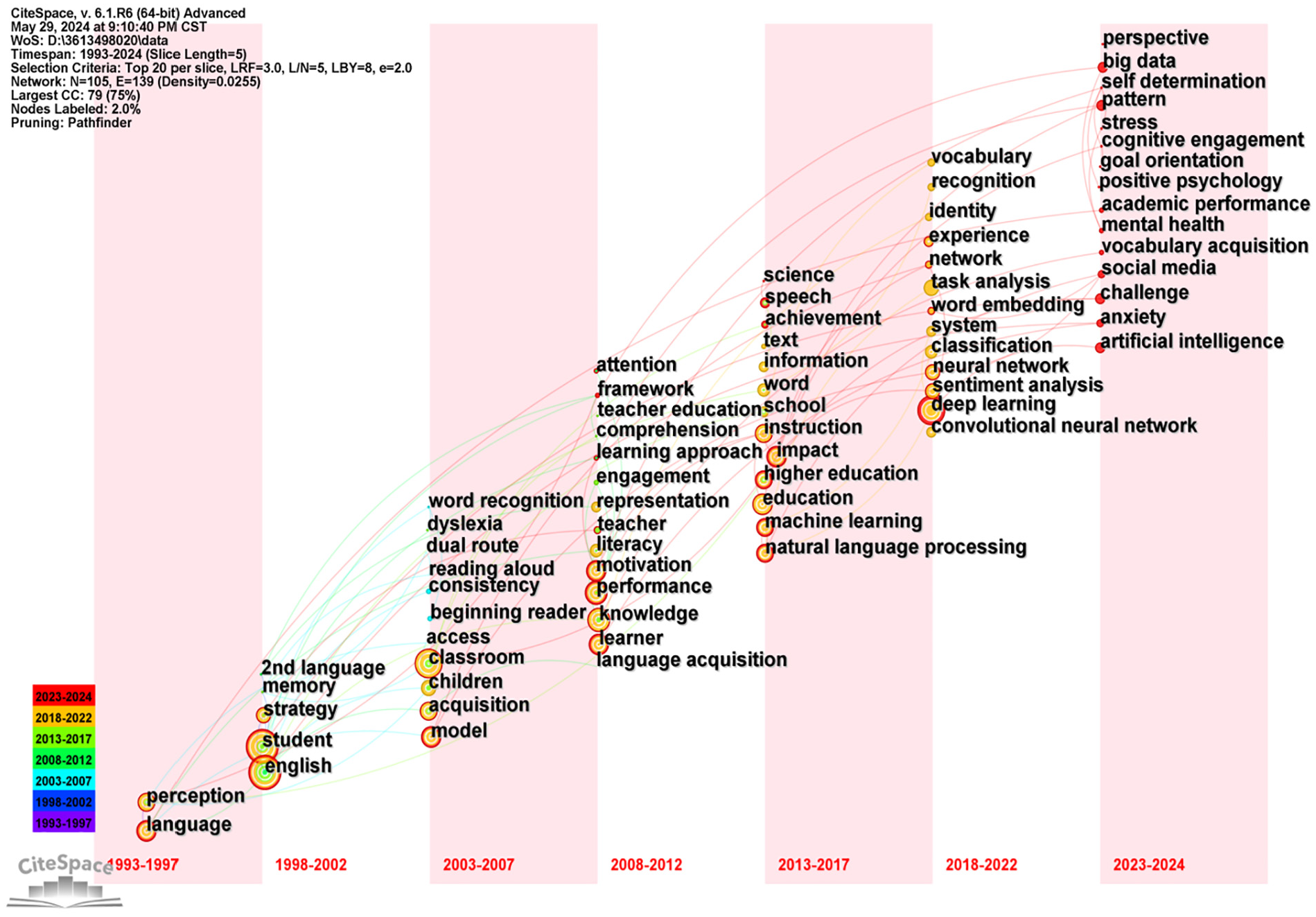
A timezone chart of DLFL research postings.
The years 2013 to 2017 marked a significant pivot, with researchers beginning to explore the integration of machine learning and natural language processing within higher education, signifying the entry of computer science into the DLFL domain. Between 2018 and 2022, the application of computer science-based technologies to enhance classroom language performance, including vocabulary acquisition and identity formation, became prominent. This period also reflects the concurrent evolution of computer science and learning science.
Incorporating big data, artificial intelligence, and social media in DLFL from 2023 to 2024 underscores the rapid advancements in computer science. These transformative shifts have steered the focus from initial learner performance to technology-driven support by computer science.
In summary, DLFL has traversed seven distinct stages: language perception, student learning strategies, children’s classroom acquisition models, motivation and performance in DLFL, the introduction of computer science, the intertwining of computer science with learning science, and the rapid progression of computer science within the field.
Analysis of Research Frontiers
Kleinberg (2002) proposed the Burst Detection (mutation) algorithm. The keyword surge index can summarize the keywords with relatively high-frequency changes to get the frontier content of DLFL development research. The data were imported into the software CiteSpace, and the time was chosen from 1993 until 2024. The top 20 research institutions (TopN = 20) were retained for each period. The graph for keyword surge was analyzed using the software, and then the top 20 surge keywords related to DLFL were plotted (see Figure 5).

Mutation detection analysis of DLFL.
The beginning and end in the plot are when the keyword starts to mutate and ends, respectively; the time difference in the middle is the duration of the keyword mutation, and strength indicates the mutation intensity. As can be seen from Figure 5, the keyword memory is the word with the most prolonged mutation duration (19 years), followed by second language and perception, with 14 and 13 years, respectively. The word with the highest mutation intensity is deep learning (15.09). The words with the most extended mutation duration until 2022 are instruction, school, student, deep learning, task analysis, classification, system, convolutional neural networks, and natural language processing. Moreover, artificial intelligence (AI), challenges, and anxiety are still under research, which means that AI will play a role in DLFL and challenge traditional teaching approaches.
Synthesizing Figures 4 and 5, the research frontier is to study DLFL in the classroom through methods or approaches such as natural language processing, cognitive neural, and AI. For future research, we can give a thought to the current literature. For example, the problem of fossilization in foreign language learning can be coped with through a cognitive-neurological perspective (Cui & Wang, 2020). Two approaches are suggested for its solution: strengthening learning motivation and intensifying learning training of declarative knowledge. A similar study can also contribute to future research in this field (e.g., Bassett & Mattar, 2017; Kolodkin & Tessier-Lavigne, 2011; N. Lee & Lee, 2004). Natural language processing also deserves attention. For instance, X. W. Ma (2022) applied a bidirectional Long Short-Term Memory Model based on deeper learning to detect English grammar errors. The results show that this model can significantly improve the performance of non-English majors in English grammar. A few other articles concerned with natural language processing can also highlight the research (e.g., Bryant et al., 2017; Caines et al., 2017; Chambers & Ingham, 2011; de Vries et al., 2014; Izumi et al., 2004; K. Lee et al., 2014; Rei et al., 2016; Yannakoudakis et al., 2011).
Discussion
RQ1: What is the Developmental Trajectory of DLFL in Terms of Its Temporal and Spatial Distribution as Well as Research Hotspots?
The Temporal and Spatial Distribution
The temporal distribution shows the interest in DLFL in the past few years. Notably, 2022 witnesses its peak with 102 articles. It may partly result from COVID-19 (Catelli et al., 2021). It occurs roughly in 2019 and ends in 2022. During this period, online teaching is the main form of education. Researchers focus on the new situation and study the quality of education in this mode. It explains why people are concerned about deeper learning and why it is a central factor in the increasing integration of educational technologies into foreign language education.
Regarding spatial distribution, America, China, the United Kingdom, Spain, and Australia have become the leading countries in DLFL, and Europe and America are the leading centers. China, ranking second in terms of the number of publications and connections, shows a lower average citation per paper, which agrees with C. Wang et al.’s (2024) and Y. Wang et al.’s (2024) article as to technology contribution. It may be due to the following reasons: (1) deeper learning from learning science and computer science originated in the United States and Europe, and (2) due to cultural, linguistic, national, and geographical factors, there is more collaborative research in Europe and the United States, and the research quality is also high; (3) Chinese research is still mainly the introduction of related theories and the application in specific disciplinary classrooms, which also indicates that the quality of Chinese research results still has a particular gap with Europe and the United States, and the originality needs enhancing. Of course, the “high output and low citation” may also be related to readers’ tastes and beliefs. The readers likely tend to prefer articles written by native speakers because they believe their language is more authoritative and persuasive.
Research Hotspots
Three research themes have been recognized through the co-current of keywords for DLFL. Factors influencing DLFL, learners’ cognitive processes through language acquisition, and AI-driven DLFL with information technology intervention result from the interaction between systematic elements, which constitute a system. DLFL includes students, instructors (two primary agents), and environmental elements (classroom as the micro-environmental element, society as the macro-environmental element for social mediation). All these elements work together and determine its performance (see Figure 6).
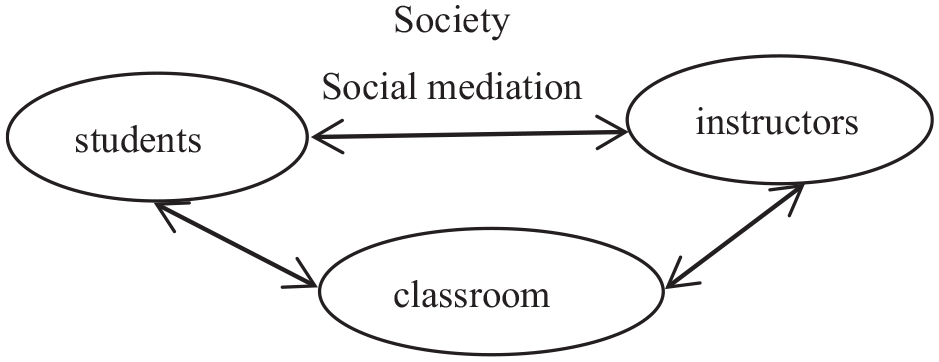
Systematical elements of DLFL.
Figure 6 shows the relationship between elements related to DLFL. Research hotspots emerge when the systematical elements interact, influence, and constrain with each other. Factors influencing DLFL illustrate that instructors apply specific pedagogy to improve students’ (learners) performance in the classroom. The researchers focus on learners’ motivation, engagement, and identity (C. Chang & Hwang, 2023). Though they may face challenges, achievement has arisen to show the impact and perspective of the instructors. This hotspot embodies the function of students and instructors; Learners’ cognitive processes through language acquisition reflect the process of transformation of the researcher from inter-individual internalization (between instructors and students) to intra-individual internalization (learners/students). In this stage, the individual’s (students’/learners’) strategies are concerned with the memory of knowledge, words, speech, and text comprehension of the English language through instruction. This hotspot still pays much attention to the students (one of the significant agents). The first two hotspots happen in the micro-environmental element (classroom). The third hotspot, “AI-driven DLFL with information technology intervention,” comes from the macro-environmental element (society-social mediation). Natural language processing (NLP), network, model, classification, and artificial intelligence reflect deeper machine learning. During the processes, information technologies like AI and NLP have developed into mediation tools to initiate deeper learning in learning science (e.g., Diemerling et al., 2024; Nakao et al., 2024).
What are the Evolving and Frontier Tendencies of Deeper Learning in a Foreign Language?
Evolutionary Trends
Over the past three decades, the evolution of foreign languages related to deeper learning has witnessed its development with the features of convergence, diversification, and transformation, following a development path based on the centrality of different system elements (students/learners/individuals, students and instructors, and environmental elements). This means DLFL starts with learning science and ends with computer science; from learning science to computer science, DLFL witnesses its evolving and frontier tendencies.
As the first decade (1993–2002) advanced, research focused on the mechanisms of language perception, acquisition strategies, and language learning patterns in cross-cultural contexts. Scholars try to reveal the psychological and social basis of language acquisition and the path of language development of learners at different ages. Researchers are committed to exploring effective teaching methods and learning strategies for learners of different backgrounds and ability levels. At the same time, analyzing individual learner differences, such as motivation, attitude, and learning styles, has become a key research point.
As to the second decade (2003–2012), the focus of research was further refined to the mechanisms of vocabulary acquisition and the role of memory in language learning. Scholars explored how children acquire new vocabulary through different memory strategies and analyzed the applicability of these strategies to adult language learners. During this period, research began to focus on the impact of the classroom environment on language learning, as well as the social and psychological factors involved in second language acquisition. Researchers analyzed how teaching methods, classroom interactions, and learners’ social identities work together in the language learning process.
The third decade (2013–2024) fully exhibits DLFL’s convergence, diversification, and transformation features. Research during this period began to incorporate a Positive Psychology perspective, exploring how psychological factors such as learners’ identity, self-efficacy, and motivation affect language learning (C. Chang & Hwang, 2023). Researchers sought to understand how these intrinsic factors facilitate or hinder learners’ language development. Research becomes more diverse and comprehensive during this period, covering multiple dimensions such as cognitive engagement, goal orientation, psychological well-being, and academic performance. Scholars focus on how learners’ emotional states, motivation, and personal goals interact with language learning outcomes. Recent research trends show that academics actively explore using artificial intelligence (AI), machine learning, and natural language processing (NLP) technologies in language teaching and assessment. Research has focused on the role of social media in language learning, web-based language learning platforms, and how sentiment analysis and text mining technologies can support language teaching and learning. There has also been increased research on advanced technologies such as deep learning and neural networks in education. The research content in these time zones reflects the evolution of language learning and teaching research, from early explorations of fundamental theories to the application of modern technologies in education and a deeper understanding of individual learner differences and psychological states. Academics are progressively combining traditional language teaching methods with emerging technologies in the search for more efficient and personalized language learning solutions.
Frontier Analysis
The keyword memory is the word with the longest mutation duration (19 years), followed by the second language, 14 years. Mutation duration is closely followed by perception, 13 years. The word with the highest mutation intensity is DEEP LEARNING (15.09). Words with mutation durations up to 2024 are artificial intelligence, challenge, and anxiety. The research frontier is the study of DLFL through methods or approaches such as natural language processing and cognitive neural. To be more specific, DLFL requires more advanced computer technologies, borrowing machine deeper learning paths to achieve the deeper learning goals of learning sciences.
RQ3: How is DLFL in Learning Science Connected to Its Counterpart in Computer Science?
Deeper learning (DL) is expected for learning science and computer science, but DL in learning science was first proposed by Marton and Säljö (1976). While the latter is a subset of machine learning, which is a neural network with at least two layers in essence, it originated from Hinton et al. (2006) more than three decades later than learning science (Miotto et al., 2018; Mishra et al., 2021; Zhong, 2022). In this sense, they are supposed to follow different paths.
According to its evolutionary trends and research frontiers, DLFL experiences seven phases, including language perception, students’ DLFL strategies, children’s classroom acquisition model, DLFL motivation and performance, the debut of computer science, computer science embedding learning science, and the fast development of computer science. This development path begins with learning science and ends with computer science, which means the DLFL related to learning science developed independently for the first two decades in that the keyword “machine learning” first emerged between 2013 and 2017 (see Figure 4). This also denotes that learning science and computer science developed side by side from 2013 to 2024. Keywords like natural language processing (NLP), artificial intelligence (AI), model, and convolutional neural networks simultaneously imply that computer science plays a significant role in DLFL in the form of providing learning science with more and more advanced educational mediation tools. In this way, DLFL in computer science has a late start and a short history. However, it has a promising future and continues to provide intellectual support and technologically mediated tools for DLFL development in the learning sciences.
Limitations and Implications
With the limited time of the latest literature retrieval considered, limitations of the study are unavoidable.
Research Limitations
First of all, the reliability and validity of the literature screening need to be enhanced. The latest literature retrieval is on May 29, 2024. The latest articles can highlight the quality of the literature, but the limited time hinders its screening processes. Besides, scientometric analysis software requires high-quality documents. So, articles from SSCI are considered, excluding conference papers, editorials, and other publications from other databases (such as SCIE and ESCI). It means the study may ignore some relevant scientific research and original viewpoints (C. Wang et al., 2024; Y. Wang et al., 2024).
Besides, some keywords need to be proposed as criteria for literature attribution. For example, “deeper learning” can be approached from both learning science and computer science. So the problem arises, “How can we judge an article’s attribution?” Therefore, more papers are needed to justify the study.
Lastly, scientometric analysis uses a specific framework, providing substantial objective quantitative data. However, the authors may present subjective opinions or intentions when analyzing and interpreting the data, possibly hindering scientific research.
As such, future research will focus on extending the screening time, broadening the scope of literature screening, and minimizing the negative impact of individual subjectivity on data analysis.
Despite the limitations, the study can contribute to some future implications.
Implications
The scientometrics analysis presents a vivid landscape of DLFL, leading to potential implications.
Promoting the Research on DLFL by Strengthening Communication
The visual analysis of scientific knowledge mapping shows that the number of articles published and the frequency of citations in some Asian countries and regions are negatively correlated. The reasons behind this are complex, including the country’s or region’s evaluation system, academic culture, and education management. The first and foremost reason is to improve the originality of research and strengthen academic communication and cooperation. Academic journals and search systems are the platforms for publishing and disseminating academic research results today, and they are also the leading media carriers constituting academic discourse. It is recommended to promote the country’s or region’s outstanding journals to participate in the selection and competition of internationally recognized databases and to build international cooperation and academic exchange channels with authority and frontiers to contribute to the effectiveness of high-quality international research on DLFL and to enhance the influence of academic discourse.
Simultaneously Improving Information Technology Literacy of Instructors and Learners Based on the Classroom DLFL
The “deep integration of information technology and classroom teaching” is the focus of education reform in the 21st century. The integration of information technology and subject curricula is being promoted to realize changes in how teaching contents are presented gradually, the way students learn, the way teachers teach, and the way teachers and students interact. It can be seen that the use of modern information technology has penetrated all fields of modern education. The spotlight function of the interactive whiteboard in modern information technology can detect students’ intuitive mastery of some vocabulary, and the cloud platform can reduce teachers’ workload and give students timely feedback. Integrating information technology and classroom teaching can better promote students’ in-depth learning. While we focus on improving learners’ deeper learning competency through information technology mediation, the instructors and learners should consciously improve adaptive ability and actively learn advanced information technologies. ChatGPT and computational thinking (CT) are very popular at present. It is high time that we explored the possibility of bringing about DLFL by applying brand-new technologies. More and more information technologies, including CT, have become vital social and cultural intermediary tools (Youjun & Xiaomei, 2022). All instructors and learners should keep learning to adapt to the new era of big data, the digital world, and the information age.
Resuming the Critical Role of Computer Science to Implement DLFL
DL also originated from computer science, and keywords like machine learning, convolutional neural networks, model, AI, and natural language processing imply that the trend in the future still highlights and confirms the critical role of computer science in DLFL. The transition claim should be supported by evidence/citation, such as changes in research methodologies, pedagogical approaches, or academic discourse over time. DLFL is also closely related to computers because computers have been the symbols of efficiency when dealing with complex problems. People are supposed to follow a computer’s working patterns to solve daily problems. Information technologies mentioned above work through computers. In this sense, we need to know how a computer works or how it thinks. In this sense, DLFL can be achieved by creatively imitating the working principles of computers. DLFL is also higher-level learning, which requires higher-order thinking from the learners. In this sense, DLFL should also concentrate on learners’ thinking patterns. Wing (2006), one of the most influential contemporary experts in computer science, promoted the concept of computational thinking (CT) and its broad application for problem-solving and stated that CT should be core to K-12 curricula while calling for research on effective ways of teaching and learning CT. According to Wing (2006), CT is a fundamental skill for everyone, not just for computer scientists. Although more consensus about the definition of CT and what it covers has yet to be reached, CT is increasingly acknowledged as a sophisticated approach to resolving complex problems. This method creatively leverages the principles of computer operations to simulate and acquire knowledge, as Youjun and Xiaomei (2022) noted.
Further research substantiates CT’s contribution to higher education, particularly in the context of English as a foreign language (EFL). Dolgopolovas and Dagiene (2022) and Youjun and Xiaomei (2022) have identified CT as a pivotal mediation tool in this domain. Besides, ChatGPTs, representing AI and language intelligence (LI), are currently computer science symbols denoting future trends.
DLFL transcends mere knowledge retention and surface learning; it demands higher-order thinking. Inspired by Wing (2008), we understand that CT and ChatGPTs, when combined with higher-order thinking and social mediation tools, can effectively catalyze DLFL.
Conclusion
This paper analyzed the scientific knowledge graph of 761 articles in the core set of Web of Science from the aspects of spatial and temporal distribution, research hotspots, evolutionary trends, and research frontiers of DLFL with the help of CiteSpace and Vosviewer software to explore the current research status of DLFL. The following contents have been found.
DLFL witnesses seven phases: language perception, students’ DLFL strategies, children’s classroom acquisition model, DLFL motivation and performance, the debut of computer science, computer science embedding learning science, and the fast development of computer science. Now, DLFL is a popular topic in learning and computer science. The former aims to improve learners’ performance; the latter highlights the intervention tools of advanced educational technologies. Regarding spatial and temporal distribution, scholars’ attention to DLFL is increasing daily, and there are more academic exchanges and cooperation among countries. At present, six international academic circles centering on the United States, China, the United Kingdom, Australia, Spain, and Germany have been formed in this field; from the analysis of research hotspots, factors influencing DLFL, learners’ cognitive processes through language acquisition and AI-Driven DLFL with information technology intervention have become research hotspots. In terms of evolutionary trends and research frontiers, natural language processing, Sentiment Analysis, and other aspects of research are using artificial intelligence, machine learning, and other information technologies to carry out deep multidisciplinary integration to promote the occurrence of DLFL. It also predicts that in the future, the development of computer science will be even more indispensable to DLFL. To promote DLFL, instructors’ and learners’ information and digital literacy needs enhancing. Learning science and computer science witness the development paths of DLFL and predict future trends.
Footnotes
Declaration of Conflicting Interests
The author(s) declared no potential conflicts of interest with respect to the research, authorship, and/or publication of this article.
Funding
The author(s) disclosed receipt of the following financial support for the research, authorship, and/or publication of this article: This study was conducted and supported by the Social Science Foundation of Shaanxi Province (Project No. 2022K026) and the Key Project of Education Reform in Shaanxi Higher Education (Project No. 23BG044). Any views, findings, suggestions, or conclusions written in this article are those of the authors and do not necessarily reflect the views of the project.

Data Availability Statement
The datasets generated during and analyzed during the current study are available from the first and corresponding authors upon reasonable request.