



Abstract
Preadolescents (10–12 years) are prolific media users, yet it is still being determined whether the different types of social media engagement are impacting their bodies. This exploratory study aimed to test a model of relationships between types of social media engagement, attitude to alter one’s physical appearance, dualism, and body satisfaction. A sample of 2,378 Italian preadolescents (Mage = 12.02 years; SD = 0.82; 52.81% boys) was recruited. Results showed that using filters/apps to alter one’s physical appearance and image-mediated interaction with peers and celebrities/influencers is negatively associated with body satisfaction. It also represents a new form of dualism between the real and the virtual body. This study aims to fill the gap in understanding the complex effects of social media use among preadolescents, providing insights into critical factors influencing their body satisfaction and identity in the era of digital technology.
Introduction
Contemporary society has witnessed the emergence of an existential dimension known as “onlife,” wherein individuals navigate a way of life where the demarcations between the real and virtual realms become increasingly ambiguous (Floridi, 2014, 2015). Younger generations have become increasingly intertwined with digital platforms, fusing online and offline identities (Arnd-Caddigan, 2015; Handyside & Ringrose, 2017; Meeus et al., 2023). Thus, the onlife paradigm denotes a state wherein individuals experience a transformative mode of living characterized by blurred boundaries between the real and virtual domains.
The pervasiveness of digital technologies, such as the internet, and the assimilation of virtual experiences into the fabric of daily existence underpin this phenomenon, necessitating an expanded scope of analysis and a deeper understanding. In today’s world, social media networks play a critical role in shaping our society by influencing the way people engage with one another (Turner, 2015; Yao et al., 2021; Zeng & Li, 2022). By posting text messages, information, and photos, users reveal various facets of their personality and behavior, ultimately enriching their emotional connections, social interactions, and social identity. The latest generation, often referred to as “digital natives,” is the first to have grown up with the internet and social media as a routine aspect of their lives (Turner, 2015). This exposure has given rise to an “onlife dimension” (Floridi, 2014, 2015) where technology is all-pervading and shapes their social interactions. The concept at hand pertains to an omniopticon, within which individuals are able to observe and subsequently influence one another (Sæle et al., 2021). This mechanism may precipitate the proliferation of idealized beauty models, and the passive consumption thereof.
The onlife phenomenon profoundly influences the formation of identity among the new generations. Individuals engage in online interactions and encounter many opportunities and challenges in shaping their sense of self. The virtual dimension—and its complex technologies—provides a platform for self-presentation, enabling individuals to construct and curate their identities carefully (Boyd, 2014; Bullingham & Vasconcelos, 2013). How individuals engage and communicate within the context of the present-day networked society establishes norms, behaviors, and anticipations encompassing what is commonly called digital culture. This phenomenon exerts an immediate influence, effectively transforming how people utilize and attribute significance to their lives in an ever-expanding interconnected environment that seamlessly merges physical and virtual realms (Deuze, 2006; Robards, 2018).
The primary aim of this paper is to delve into the digital culture surrounding preadolescents, addressing a gap in the existing scientific literature which predominantly focuses on adolescents aged 14 to 18. Furthermore, the paper seeks to enhance comprehension of the conflict between real-life experiences and virtual engagement. The hypothesis posits that despite measures in place to discourage early digital usage, the intense digital immersion experienced by preadolescents undermines the development of their identity and overall well-being.
Understanding the Interplay Between Real-Life Experiences and Digital Engagement Among Preadolescents
The available scientific evidence can provide a preliminary understanding of the effect of digital engagement among preadolescents. As part of their digital culture, people strategically manage their online identities, presenting different facets of themselves and engaging in impression management. They manage their online personas, positioning them to appeal to particular social situations, target audiences, or groups. Through the deliberate selection of online personas, people can create narratives emphasizing preferred qualities, successes, and affiliations while hiding or downplaying fewer desirable characteristics (Hollenbaugh, 2021). The interlink between the real and the digital life becomes a dynamic negotiation between self-expression, social expectations, and the desire for validation within the digital realm (Digennaro, 2024). This new process of identity construction raises questions regarding the authenticity and coherence of one’s self-perception. It also represents a potential problem for the correct development of the personal identity as it can lead to a fragmented sense of self, as individuals navigate various social contexts and personas across different digital platforms (Gergen, 2002).
Focusing on the youngest, the pervasiveness of online interaction significantly impacts the formation of identity in both boys and girls in a crucial stage in their lives. The developmental stages of childhood and adolescence play a crucial role in shaping an individual’s body image (T. Cash & Smolak, 2011). These transformative periods are marked by notable physical, emotional, and social changes, which can contribute to low self-esteem and exacerbate body-related anxieties (Rousseau et al., 2020). For instance, Fioravanti et al. 2024 investigated the role of perfectionistic self-presentation in the relationship between body shame and Problematic Social Networking Sites Use in adolescents and young adults. They found out that age was negatively associated with body image control in photos among both men and women, suggesting that younger people are more frequently engaged in photo-editing activities on Social Networks. Interestingly, Kakar et al. (2023) noted that the internalization of appearance ideals and comparisons among adolescent girls can be largely attributed to sociocultural sources prevalent in specific countries. The perceived pressures emanating from these sources significantly influence young girls’ minds and contribute to the development of distorted self-perceptions. The study found that different countries have varying perceptions of societal pressures related to appearance. Australians felt media pressures the most, Iranians perceived family pressures as the strongest, while Indians and Chinese felt high levels of pressure from family, peers, and media. Moreover, the findings suggest that there is a direct association between sociocultural factors and appearance satisfaction/disordered eating, with thin-ideal internalization and appearance comparisons serving as indirect paths in all countries.
Nevertheless, while extensive research has explored various aspects, there is a relative scarcity of empirical evidence highlighting significant gender differences in overall engagement and frequency of social media interaction between boys and girls (Livingstone & Helsper, 2008). Gender-related factors such as societal norms, expectations, and online experiences may influence how boys and girls interact with and navigate social media platforms. For example, research has suggested that girls may encounter specific challenges related to body image, self-esteem, and online harassment, whereas boys may face pressures related to masculinity, social status, and online aggression (Meeus et al., 2023; Wong et al., 2018).
Even though the onlife dimension is a result of a complex interaction involving technology, digital opportunities, and smart devices, it is undeniable that social media platforms play a crucial role in shaping this dimension as they represent one of the most significant elements of contemporary digital culture (Caba Machado et al., 2022; Robards, 2018) and a means that can impact individuals’ identity profoundly. The adoption and usage of social media platforms commence early in individuals’ lives, regardless of the age limitations that many providers have set. Recent research (Lacroix et al., 2023) has indicated that the preadolescent phase is a pivotal period regarding social media engagement and its subsequent impact on identity formation (Livingstone et al., 2011; Rideout & Fox, 2018). The available scientific evidence shows that shared interests, beliefs, or lifestyles mark communities online. As part of these communities, preadolescents receive considerable influence in shaping an identity, values, and beliefs, often surpassing the impact of physical social circles (Lüders et al., 2022). These dynamics profoundly affect self-perception, potentially contributing to body dissatisfaction and negative self-image. Exposure to seemingly flawless lives and experiences on social media platforms may instigate feelings of inadequacy and envy, adversely affecting an individual’s self-esteem and overall well-being.
Furthermore, the quest for validation online, such as through likes and positive feedback, can cultivate a reliance on external approval, intertwining one’s sense of self-worth with online validation (Lee et al., 2019). Social networking platforms empower users to actively shape their online presentation and self-perception through content creation and curation, influencing their digital identity (Robards, 2018). These dynamics are of particular concern for younger users, given adolescents’ and young adults’ susceptibility to social media’s influence during their formative identity development phase (Samari et al., 2022). Social networks blur the line between reality and virtuality, significantly shaping digital identities and affecting self-perception, including its impact on self-esteem and self-worth (Leggett-James & Laursen, 2022; Magis-Weinberg et al., 2021). A comprehensive understanding of these dynamics is essential for addressing potential challenges stemming from social media’s impact on self-perception, especially among younger users.
Extensive research focusing on preadolescents consistently demonstrates a notable correlation between their engagement with social networking platforms and heightened concerns regarding body image (Fioravanti et al., 2024; Kakar et al., 2023; Leggett-James & Laursen, 2022). These studies delve into the intricate dynamics unfolding as individuals in the developmental stages of preadolescence navigate the digital landscape of social media. The findings consistently underscore the nuanced ways exposure to curated images, social comparisons, and interactions within virtual spaces contribute to shaping preadolescents’ perceptions of their bodies. Moreover, the prevalence of social comparisons within these digital environments exacerbates the impact on body image concerns (Arjona et al., 2024; Phan & Dinh, 2023). Users are subjected to a continuous stream of meticulously crafted beauty standards, which may lead to unfavorable self-perceptions when contrasted with these idealized representations. The emphasis on esthetic presentation and the pursuit of approval through likes and comments further intertwine with notions of self-worth, fostering an environment where online validation becomes a crucial determinant of perceived value.
Under this circumstance, there is a need to investigate further the impact of social media usage on the youngest to establish a solid foundation for policy development and educational considerations to ensure individuals’ well-being and safety in the digital realm.
In this light, the present study seeks to contribute to a deeper comprehension of the nuanced relationships between digital culture, social media usage and identity formation by focusing on two specific but interrelated elements: body image and the dualism real/digital dimension. The study adopts a unique perspective by employing the body as both an observation point and a point of contact between individuals and society. The body is a tangible and visible entity reflecting cultural, social, and personal influences. In modern times, the interaction between individuals and technological artifacts is changing the role of the body, its relationship with the environment and the cognition of the one’s body and, more in general, its phenomenology (Digennaro, 2021). Perception is mediated by instruments that can alter reality, extend the sense of the body, and differentiate the real body—as a given of nature—from the virtual body. This body can be imagined and built with the use of technology. Consistent with this, Ihde (2002) suggests considering the technologically mediated embodiment as a battlefield of forces and powers that struggle incessantly to redefine the nature of the body. It may be involved in a feedback loop, where its disturbance may induce negative mood states likely to exacerbate dissatisfaction with body image (Gergen, 2002). In particular, by examining how individuals present and perceive their bodies in the digital realm, the study explores how online interactions and societal expectations shape and influence identity formation (Digennaro, 2023).
Within this conceptual framework, the first element of interest is body image, which encompasses how individuals perceive, evaluate, and feel about their bodies (T. Cash & Smolak, 2011). The definition of body image typically encompasses four key dimensions: perception, cognitive, behavioral, and affective (sentiment). These dimensions capture various aspects of an individual’s body image experience, including how they perceive their own body, the thoughts and beliefs they hold about their body, the behaviors they engage in related to body image, and the emotional responses and sentiments associated with their body image (T. Cash & Smolak, 2011; Smolak & Thompson, 2009). Social media platforms often serve as environments where individuals engage in self-presentation and compare their bodies to idealized standards (Digennaro, 2023; Digennaro & Iannaccone, 2023b; Iannaccone, 2023), with a potentially massive impact on body image formation. Available features such as photo filters, editing software, and carefully crafted captions allow individuals to curate their online appearance, further emphasizing specific aspects of their identity. The constant exposure to carefully curated and filtered images of others on social media can contribute to a distorted perception of one’s body and create unrealistic expectations (Fardouly et al., 2018). Especially the youngest generation may feel pressured to conform to narrow beauty ideals promoted on these platforms, which can lead to negative body image perceptions, increased appearance dissatisfaction, and a heightened focus on physical appearance (Perloff, 2014).
The early usage of social media might anticipate this influence. A growing body of research shows that excessive investment in social media is a precursor to a full range of unhealthy behaviors and body concerns, such as dieting, social anxiety, inactive lifestyles, and related behaviors that are risk factors for chronic body image problems (Digennaro, 2022; Holland & Tiggemann, 2016). Albeit adolescence appears to be a period of significant transition in body image (Fabian & Thompson, 1989), it has been demonstrated that in modern society, the phase of transition begins earlier, during preadolescence (Klump, 2013): the rapid transition from childhood to adolescence is associated with the onset of body image concerns, posing the risks for persisting health and social issues (Evans et al., 2017; Hughes et al., 2018). Hence, there is a pressing necessity to delve deeper into the dynamics of how this early transition is influenced by concurrent early engagement with social media platforms.
The second aspect of inquiry centers on what could be termed the dualism between the realms of the real and the digital. With the increasing integration of social media into daily life, individuals navigate between their offline (real) and online (digital) identities. Understanding how these dimensions intertwine and influence each other can provide valuable insights into how individuals construct and maintain their identities in the digital era (Digennaro, 2022). More in detail, the study aimed to test the following hypothesis: the use of social media will be positively associated with a greater desire to modify one’s physical appearance and achieve a body similar to the idealized representations found on social media. The constant modification of one’s physical appearance and the experience of dualism between the real and virtual body will directly correlate with dissatisfaction with one’s body. Engaging in physical appearance manipulation, exposure to idealized body models, and comparison with manipulated images will be associated with overall discontentment and dissatisfaction with the body, as well as the emergence of a dualism between the real and virtual body.
Methods
A total of 2,378 Italian preadolescents aged 11 to 13 years (Mage = 12.02 years, SD = 0.82) were recruited for this cross-sectional study from December 2021 to June 2022. The recruitment strategy adhered to scientific principles and included several critical methodological steps. A collaboration with schools was established through a public call targeting the preadolescent population to ensure a diverse sample from various school settings. By initiating a collaborative effort with schools, the overall scope was to gain access to a broad range of preadolescent participants from different educational environments. Ten schools expressed interest in participating in the study and agreed to adhere to the research protocol (Lamb et al., 2001).
Informed parental or guardian written informed consent was obtained, providing detailed information about the study, and allowing parents to make an informed decision about their child’s participation. Ethical approval was obtained from the Institutional Review Board of the Department of Human Sciences, Society and Health of the University of Cassino and Southern Lazio (Approval number: 3RA2.2022.06.1).
Participants and their parents or guardians were assured of their data’s strict confidentiality and anonymity, emphasizing that their responses would be treated confidentially and reported in aggregate form to maintain anonymity. The data collection took place during school hours, and further demographic information beyond gender and age was not collected to comply with the guidelines set by the head teachers.
The data collection strategy implemented in this study employed a sequential administration of two anonymous and self-administered questionnaires. The self-administered nature of the questionnaires allowed participants to complete the surveys independently at their own pace and convenience. This approach reduced potential interviewer bias or influence that may arise in face-to-face or phone interviews, ensuring a standardized administration of the questionnaires across all participants. The sequential design explored multiple dimensions and variables related to preadolescents’ social media use and engagement.
The study employed a cross-sectional approach to comprehensively understand preadolescents’ social media behaviors and their associated psychosocial variables at a single point in time. This method allowed for efficient data collection across diverse participants with varying demographic characteristics. Furthermore, these analytical tools are deemed valuable for ascertaining preliminary evidence and delving into novel theoretical constructs (Marengo et al., 2018). The use of anonymous and self-administered questionnaires ensured participants could provide candid responses independently, minimizing potential biases associated with interviewer-administered surveys. The cross-sectional design also facilitated comparative analyses across different demographic groups, leading to a nuanced understanding of social media use among preadolescents.
The first questionnaire provided a foundational understanding of participants’ general social media behaviors. In addition, the second questionnaire delved deeper into e body satisfaction and the level of dualism: this sequential approach allowed for a structured and in-depth exploration of the research objectives. This structured progression allowed for a comprehensive exploration of the research objectives. By first establishing a broad understanding of participants’ social media behaviors and then delving deeper into specific areas of interest, the study could uncover complex patterns and relationships, providing valuable insights into the interplay between online activity and self-perception.
Measurements
The first questionnaire aimed to describe the use of social media and assess the representation of bodies through social media and the relationship between natural and virtual bodies. An adapted version of the Italian version of the Instagram Image Activity Scale (IIAS) and the Instagram Appearance Comparison Scale (IACS) was employed (Di Gesto et al., 2020). Participants responded to 15 items that assessed the frequency of various image-related activities on social networks, focusing on self, friends, and celebrities. Response options ranged from never to very frequently. In addition, a specific section of the questionnaire was built to investigate social media use, including typology, intensity, image-based activities, and the type of profiles (public/private) preadolescents engaged in. The principal aim of this section was to conduct a comprehensive descriptive and analytical exploration of three distinct categories of use and engagement observed within the domain of social media. These categories were identified as, “VirtualMe,”“VirtualPEERS,” and “VirtualVIPs.” The first category, VirtualME, entailed preadolescents’ active virtual identity construction by proactively sharing pictures and videos. Within this mode of engagement, preadolescents sought social validation by accumulating likes and views on their content. This form of engagement underscored the profound importance of establishing and sustaining an appealing virtual persona. The second category, VirtualPEERS, encompassed both passive consumption and active interaction with peers on various social media platforms. It encapsulated the broad spectrum of behaviors ranging from merely observing others’ content to actively engaging in conversations and collaborations with peers within the digital realm. The third category, termed VirtualVIP, delved into the interactions between preadolescents and well-known celebrities and influencers within the sphere of social media. This category sought to examine the dynamics and nature of preadolescents’ engagement with influential figures, exploring how they were influenced, inspired, or inspired to emulate these prominent individuals. A series of specific close-ended questions were carefully formulated to describe these distinct types of use and engagement. These questions were designed to elicit detailed responses, facilitating a comprehensive understanding of how preadolescents interacted with social media platforms, their peers, and influential figures. The targeted approach aimed to capture a holistic view of preadolescents’ social media behaviors and shed light on the multifaceted nature of their digital engagement.
The second questionnaire aimed to measure body satisfaction and the level of dualism. The Body Figure Rating scale (BFR; Hoelscher et al., 2003) was used to evaluate desired and perceived body images as compared to actual body size. Additionally, an adapted version of the 6-item Body Image State Scale (Carraro et al., 2010; T. F. Cash et al., 2002) was administered to assess overall satisfaction related to physical appearance, body size, weight, physical attractiveness, and comparison with peers. Response options ranged from strongly dissatisfied to strongly satisfied. The level of dualism was investigated as the dichotomy between the real body and the digital representation of the body. Specific questions were used to examine this aspect to assess participants’ perceptions and experiences regarding their physical appearance in offline settings compared to their digital presentation on social media platforms. These questions aimed to capture the extent to which preadolescents perceive a dichotomy or distinction between their real-life selves and their virtual identities.
As a further element of analysis, with the second questionnaire, the level of physical activity was measured using the Italian version of the Physical Activity Questionnaire for Older Children (PAQ-C; Gobbi et al., 2016; Kowalski et al., 2004). It provided a summary physical activity score derived from nine items, each scored between 1 (low level) and 5 (high level), reflecting activities over the preceding 7 days. Participants were categorized as “active” or “non-active” based on a cut-off point of 2.75 for the activity summary score (Lupo et al., 2022).
A preliminary descriptive analysis summarizing critical aspects of the study variables was previously conducted and published (Digennaro & Iannaccone, 2023b).
Descriptive analysis summarized critical aspects of the study variables. For demographics, it provided an overview of participants’ age and gender composition. For social media use, it highlighted the frequency and patterns of engagement with different content types and profiles. Body satisfaction and perceived dualism were described in terms of desired body images, satisfaction levels, and perceptions of offline versus online identities. Descriptive statistics also summarized the distribution of physical activity levels within the sample. Overall, the descriptive analysis helped characterize participant characteristics and provided insights into their behaviors and perceptions.Non-parametric analyses were conducted for descriptive statistics due to the non-normal distribution of the data. The presence of missing data across each outcome was found to be generally moderate, ranging from 0% to 10%. Zero-order Spearman correlations were computed to explore the relationships between study variables. The 95% confidence intervals accompanied these correlations to provide a measure of the precision of the observed relationships.
The previously published research by Digennaro and Iannaccone (2023b) serves a markedly distinct purpose, concentrating primarily on descriptive analysis. In contrast, the present study is grounded in a comprehensive theoretical framework and adopts an expansive investigative approach to examine the phenomenon of dualism and its implications in the context of social media usage. Moreover, this research introduces an updated version of the Tripartite Influence Model and incorporates more advanced statistical methodologies, such as Structural Equation Modeling (SEM), to support the development of three novel indices: Virtual Me, Virtual Peer, and Virtual VIP.
Structural equation modeling (SEM) in R version 4.2.0 was employed to test the proposed model comprehensively (Swami et al., 2023; Yigitcanlar et al., 2023). Within this model, the types of social media engagement, attitude toward altering one’s physical aspect, and dualism were allowed to covary, with their associations estimated along with corresponding 95% confidence intervals. Age and sex were included as covariates for the type of social media engagement, and their effects were quantified using 95% confidence intervals. Additionally, body satisfaction was treated as a latent variable within the model. Its relationship with the level of physical activity was examined, and 95% confidence intervals were utilized to assess the potential mitigating effect of physical activity on the adverse outcomes associated with alteration of the physical aspect and dualism.
Results
Social Media Habits
Out of the total sample of participants (n = 2,378), 52.81% identified as male, while 47.19% identified as female. Turning our attention to social media habits, a remarkable majority (99%) of participants indicated that they engaged in daily browsing of social media platforms. This finding underscores the pervasive presence of social media in the lives of the subjects under investigation. Interestingly, the analysis revealed two prominent social media platforms that stood out in terms of popularity among the participants. Instagram and TikTok emerged as the most frequently utilized platforms within the studied population. These platforms have captured the attention and engagement of a substantial portion of the individuals included in the sample. Furthermore, the research sheds light on utilizing a popular multiplatform messaging application known as WhatsApp. Notably, this application was found to be widely used among the participants to share pictures and videos. This insight highlights the significance of WhatsApp as a communication tool for visual media sharing within our examined population. A noteworthy finding emerged when examining the time allocation of social media engagement. Specifically, approximately 44.20% of pre-teen participants self-reported dedicating two or more hours per day to social media activities. This observation indicates a substantial presence of these platforms within the daily lives of preadolescents, highlighting its significance as a time-consuming activity in this age group.
The administration of the adapted version of the Instagram Appearance Comparison Scale (IACS) allowed for an in-depth examination of activities on image-centered social networks. The analysis primarily focused on participants’ active usage of their preferred platform in relation to themselves. Interestingly, most respondents reported engaging frequently or consistently in specific activities. For instance, when sharing selfies or videos, a substantial number answered often (24.8%) or always (6.2%). Similarly, for posting stories or live stories, a significant percentage reported frequent (17.5%) or constant (8.8%) participation.
Furthermore, participants demonstrated a consistent interest in checking the number of likes and views on their videos or pictures, with some doing so often (19.2%) or always (19.2%). The findings also revealed that individuals maintained regular engagement with celebrities’ profiles, as evidenced by their frequent (36.7%) or constant (35.4%) viewing of pictures and videos. These responses highlight the active involvement of pre-adolescents on image-centered social networks, emphasizing their propensity for self-expression, content sharing, and interaction with celebrities (Digennaro & Iannaccone, 2023b).
Self-Representation, Image Modification, and Social Validation
Overall, the results of this study align with existing literature (Haferkamp et al., 2012; Vogel et al., 2014), which has consistently highlighted the prevalence of self-presentation, image modification, and seeking social validation on social media platforms. More in detail, when considering the activity of “taking several selfies and sharing the best” on social media platforms, it was found that 37.1% of the participants never engaged in this behavior, while 33.8%, 18.8%, and 10.3% answered rarely, often, or always, respectively.
In the context of the activity “modification of selfies and videos prior to sharing” on social media platforms, the obtained results revealed that within the entire sampled population, a majority of participants (53.9%) reported never engaging in this behavior. Conversely, 25.7% answered rarely, 14.5% answered often, and 5.8% answered always. Regarding the activity of “sending pictures or videos of oneself to friends for approval before sharing” on social media platforms, the findings indicated that among the total sample, 54.1% of participants reported never engaging in this practice. In contrast, 20.1% answered rarely, 16% answered often, and 9.8% answered always. In addition, the study examined the activity of “removing tags from pictures or videos with oneself that one does not like” on social media platforms. Results indicated that 37.2% of the participants reported never engaging in this behavior, while 23%, 22.1%, and 17.7% answered rarely, often, or always, respectively.
Lastly, the frequency of “removing pictures or videos if one does not receive enough likes” was investigated. Most participants (79.8%) reported never engaging in this behavior, while 12.4%, 5.1%, and 2.8% answered rarely, often, or always, respectively. These findings partially align with previous studies that have explored the relationship between social media engagement and the pursuit of social validation, suggesting that the number of likes received can influence one’s online behavior and self-esteem (Haferkamp et al., 2012; Vogel et al., 2014). In this specific case, this influence seems to have an impact only on a minority of the sample (Digennaro & Iannaccone, 2023b).
Body Satisfaction
To explore body satisfaction among preadolescents, the Body Image State Scale (BISS) and the Body Figure Rating scale (BFR) were used. This part of the questionnaire consisted of several items that assessed individuals’ feelings regarding their physical appearance, body size and shape, weight, physical attractiveness, and their looks compared to their peers. The findings revealed that the most common feelings reported by the overall sample were slight to moderate satisfaction with their physical appearance (see also Digennaro & Iannaccone, 2023b). However, there were notable gender differences in these feelings, with a higher proportion of males (59.9%) expressing satisfaction than females (33.8%). Similarly, when examining feelings about body size and shape, most participants reported slight to moderate satisfaction. In this regard, the proportions were more balanced between males (58.3%) and females (41.7%).
Regarding weight, the overall sample indicated slight to moderate satisfaction, with males aligning with the general findings (53.7%). At the same time, females exhibited lower satisfaction levels, with the most common feeling being moderately to slightly dissatisfied with their weight (48.9%). Regarding feeling physically attractive, most of the sample reported slight to moderate levels of attractiveness. This pattern was consistent across males (54.1%) and females (45.9%). A similar trend was observed when assessing feelings about looks in general, with the majority expressing slight to moderate satisfaction. This was true for males (55.3%) and females (44.8%). The final item of the BISS scale explored respondents’ feelings about their looks compared to their peers. The most common feeling indicated being slightly better than their peers regarding looks. Among males, the results mirrored the overall findings (61.8%), while females expressed lower satisfaction levels, with the most common feeling being moderately to slightly dissatisfied with their looks (53.4%). On average, the body satisfaction score measured by the BISS was 2.5 ± 0.9. Males scored slightly higher (2.6 ± 0.9) on average than females (2.4 ± 0.8), indicating a slightly higher level of overall body satisfaction among male preadolescents (Digennaro & Iannaccone, 2023b).
Virtual and Physical Identities
The study aimed to investigate the dichotomy between individuals’ virtual and physical identities. Preliminary findings were previously presented (Digennaro & Iannaccone, 2023b); however, this article provides an expanded and more comprehensive analysis. Overall, 46.4% of respondents stated they never considered altering their real-life selves using beauty filters. However, most female respondents (62.1%) occasionally contemplated using beauty filters to enhance their appearance. Similarly, 33.7% of participants expressed reluctance to share selfies or videos without beauty filters. Interestingly, a majority of females (58.6%) reported occasionally sharing unfiltered content, while a majority of males (55.3%) preferred not to. Respondents were specifically asked about their use of filters and applications to visualize alterations to their bodies and appearance in reality. Both females (48.7%) and males (51.3%) aligned with the overall trend observed in the entire sample (63.3%) by reporting no usage. Additionally, a significant proportion of respondents (87.8%) stated they never used filtered photos or videos to solicit feedback on potential physical appearance changes through social media surveys, with similar proportions among males (47.4%) and females (52.6%). The average dualism score, indicating the extent of differentiation between individuals’ virtual and physical selves, was calculated to be 1.2 ± 0.8. Notably, females exhibited slightly higher average scores (1.4 ± 0.7) compared to males (1.1 ± 0.8), suggesting a greater tendency among females to perceive a distinction between their virtual and physical identities. Regarding physical activity levels, the study found an average Physical Activity Questionnaire (PAQ) score of 2.57 ± 0.70 for the entire sample. Notably, males reported higher PAQ scores (2.73 ± 0.7) than females (PAQ-score: 2.40 ± 0.66), indicating a gender difference in reported physical activity, with males showing slightly higher levels of engagement.
The Linear Mixed Models (LMMs) for the whole sample estimated the standard deviation (SD) of the random intercepts to be 0.85 AU (95% CI, 0.82/0.89); SE = 0.16; and R2 = .03. When analyzing the female sample separately, the estimated SD of the random intercepts was 0.85 AU (95% CI, 0.80/0.89); SE = 0.22; and R2 = .04. For the male sample, the estimated SD of the random intercepts was 0.85 AU (95% CI, 0.81/0.89); SE = 0.22; SE = 0.22, and R2 = .007. Regarding the fixed part of the model, for the whole sample, the slope for dualism was -0.96 AU (95% CI, −0.015/−0.04); SE = 0.03; p < .001. For physical activity levels, the slope was 0.25 AU (95% CI, 0.19/0.31); SE = 0.03; p < .001. The intercept was 1.98 AU (95% CI, 1.81/2.16); SE = 0.08; p < .001). For the female sample, the fixed part of the model indicated a slope of -0.13 AU (95% CI, −0.21/−0.04); SE = 0.04; p < .05) for dualism, a slope of 0.22 AU (95% CI, 0.13/0.30); SE = 0.04; p < .001) for physical activity levels, and an intercept of 2.08 AU (95% CI, 1.83/2.32); SE = 0.12; p < .001). Similarly, for the male sample, the fixed part of the model showed a slope of -0.04 AU (95% CI, −0.11/0.03); SE = 0.04; p > .05) for dualism, a slope of 0.22 AU (95% CI, 0.12/0.31); SE = 0.04; p < .001) for physical activity levels, and an intercept of 2.05 AU (95% CI, 1.80/2.30); SE = 0.13; p < .001). The statistical analysis demonstrated a high level of model fit, as indicated by the scaled chi-square test result (χ2 (31) = 233.57, p < .001), along with satisfactory fit indices such as the Comparative Fit Index (CFI = 0.92) and Standardized Root Mean Square Residual (SRMR = 0.06). The Root Mean Square Error of Approximation (RMSEA) point estimation of 0.11 and the 90% confidence interval of 0.10 to 0.12 indicated an acceptable fit for the model (Digennaro & Iannaccone, 2023b).
Descriptive information and zero-order Spearman correlations between all variables are presented in Table 1.
Descriptive (Mean and Standard Deviations) Statistics and Zero-order Spearman correlations between variables.

p < .05. **p < .01. ***p < .001.
Several noteworthy observations can be made based on the zero-order Spearman correlation analysis conducted on the entire sample. Firstly, there is a positive correlation among the variables VirtualMe Active, VirtualMe Social Recognition, VirtualPeers Active, and VirtualPeers Passive. This indicates that these constructs are interconnected and tend to co-occur. Secondly, the variables Physical Appearance, Alteration, and Dualism show positive correlations with each other and with the VirtualMe and VirtualPeers constructs. This suggests that individuals who alter their physical appearance and exhibit a sense of dualism between their virtual and real selves are more likely to have stronger associations with the VirtualMe and VirtualPeers constructs. Thirdly, Body Satisfaction demonstrates negative correlations with all other constructs except for PAQ. This implies that individuals who experience lower levels of body satisfaction are more likely to exhibit higher engagement in virtual constructs and a greater sense of dualism. These findings indicate that the VirtualMe and VirtualPeers constructs may influence individuals’ body image experiences, with PAQ and Dualism acting as mediating variables.
Broadly, the findings supported a direct association between social media engagement and body satisfaction, mediated by the attitude toward altering one’s body image and the dualism concept (Figure 1).

A simplified representation of the path diagram for the Structural Equation Modeling (SEM). The output presents standardized coefficients. The standard errors are robust, meaning they are corrected for non-normality influences. All the coefficients are statistically significant.
Additionally, there was a positive association between the level of physical activity and body satisfaction (p < .5). However, the indirect associations between body satisfaction and social media engagement through the attitude toward altering one’s body image and the dualism were insignificant. Gender had a significant effect on several variables, including VirtualMe Active (p < .001), VirtualMe Recognition (p < .01), VirtualPeers Active (p < .001), Virtual VIP (p < .01), Body Satisfaction (p < .001), and the level of physical activity (p < .001). Age also had a significant effect on VirtualMe Active (p < .001), VirtualPeers Active (p < .001), Virtual VIP (p < .01), Dualism (p < .01), Body Satisfaction (p < .01), and the level of physical activity (p < .05).
Discussion
The present study sought to offer valuable insights into the interplay among social media usage, self-presentation behaviors, body satisfaction, and the dualism between the virtual and real self, and as well as their impact on preadolescents. The increasing anticipation surrounding the use of social media platforms has sparked considerable interest and inquiry within the scientific community regarding the potential consequences of early engagement. Researchers are required to understand better the dynamics of social media use among younger populations, such as preadolescents, and exploring its implications for their well-being, identity formation, and social relationships. The urgency to investigate these consequences stems from the widespread integration of social media into daily life, raising concerns about its influence on young users’ psychological and social development.
In this light, the study’s primary objective was to examine the hypothesis that social media usage would be positively linked to an increased desire to modify one’s physical appearance and strive for a body that aligns with the idealized representations commonly found on social media. Furthermore, the study aimed to investigate the direct correlation between the continuous alteration of one’s physical appearance, the experience of dualism between the real and virtual self, and the consequent dissatisfaction with one’s body. It was also expected that engaging in manipulative practices related to physical appearance, exposure to idealized body models, and comparison with digitally altered images would be associated with a general sense of discontentment and dissatisfaction with one’s body, as well as the emergence of a dualistic perception between the virtual and authentic self.
Drawing from prior research (Livingstone & Smith, 2014; Rodgers & Rousseau, 2022), the present study provides evidence of preadolescents’ frequent engagement with social media platforms, notably Instagram, TikTok, and WhatsApp. This finding aligns with the prevailing notion that social media has become integral to the daily lives of young individuals (Mingoia et al., 2017; Sæle et al., 2021), serving as a prominent avenue for socialization and developmental experiences. Contemporary online behaviors are significantly shaped by self-presentation and the pursuit of social approval, as evidenced by the study’s identification of prevalent self-presentation practices, such as capturing and enhancing selfies, coupled with the quest for social validation (Thompson et al., 1995). Gaining a positive reputation online is crucial for individuals as they enter preadolescence.
Nowadays, image-centered social media provide a novel context for forming identity, with their impact that remains to be fully understood. According to our model, using filters and dedicated apps to alter one’s physical appearance to build a better reputation on social media, along with image-mediated interaction with peers and celebrities/influencers, is negatively associated with body satisfaction. These findings may be attributed to the phenomenon of comparison and idealization prevalent in social media environments. The use and dissemination of altered images can create an idealized version of themselves that may not align with reality, resulting in unrealistic standards of beauty or perfection. Such idealization can foster feelings of dissatisfaction or inadequacy in individuals who compare themselves to these digitally enhanced images. These findings are consistent with the study conducted by (Cohen et al., 2019), which showed how social media platforms present a continuous stream of carefully selected physical images that promote a specific ideal body type, such as the thin ideal for women and the muscular ideal for men. This phenomenon has led to an increase in body image concerns among young adults, causing psychological distress and dissatisfaction with their own bodies. Further studies conducted by Fardouly and Holland (2018), Fatt et al. (2019), and Fatt and Fardouly (2023), have provided additional evidence of this issue.
Moreover, image-mediated interactions with peers, celebrities, or influencers can exacerbate these feelings of inadequacy. Social media often displays a curated and polished version of people’s lives, highlighting only their most glamorous or enviable moments. This constant exposure to seemingly flawless images can fuel a sense of dissatisfaction or inadequacy with one’s own life or appearance. Finally, it also represents the ground for the emergence of a form of dualism between the real and the virtual body.
The hypothesis that social media usage is positively linked to an increased desire to modify one’s physical appearance and strive for a body that aligns with the idealized representations commonly found on social media was primarily supported. The active curation of personal social media profiles with carefully selected images and videos and the desire to gain social recognition among peers drive the use of filters and specialized applications to conform to sociocultural ideals of desirability. The findings align with previous studies highlighting the prevalence of selfie-taking and self-presentation on social media platforms (Chua & Chang, 2016): preadolescents tend to compare themselves with their peers to form cognitive judgments about appearance in relation to others (Jones et al., 2004; Tatangelo & Ricciardelli, 2017). Additionally, passive exposure to images of celebrities and influencers further exposes preadolescents to filtered visuals that often reflect unrealistic sociocultural standards of body image, which are unattainable. Such exposure can have detrimental effects, including increased vulnerability to identity instability (Tremblay et al., 2021), insecurities, and health-related issues (Holland & Tiggemann, 2016; Steers, 2016).
Furthermore, the constant exposure to filtered images, coupled with the heightened interpersonal uncertainty experienced during preadolescence, increases the risk of creating a discrepancy between fiction and reality and between one’s authentic body and the virtual representation of one’s body image. Individuals construct online their bodies by amalgamating externally prescribed templates, drawing upon technical expertise to varying degrees in their attempts to emulate a model. However, there is scant regard for the compatibility of these borrowed models with their own unique identities.
Interestingly, the reverse association exhibited a poor fit. Consistent with these findings, previous research has demonstrated that body image concerns do not necessarily predict social media usage. The onset of body image disorders can be influenced by various precipitating factors, such as specific personality traits, traumatic life experiences, and other complex factors (de Vries et al., 2016).
Regarding body satisfaction, the study reveals that preadolescents generally reported moderate levels of satisfaction with their physical appearance, with some gender differences favoring males (Grabe et al., 2008; Slevec & Tiggemann, 2011). This suggests that various factors, including societal beauty standards and peer comparisons, influence preadolescents’ perceptions of body image. The findings are aligned with previous research in several aspects. For example, the prevalence of slightly to moderately satisfied feelings regarding physical appearance, body size and shape, and weight reported in the current study is consistent with existing literature (Heinberg et al., 2001; Jones et al., 2004; McCabe et al., 2002).These studies have consistently shown that many preadolescents exhibit relatively positive body satisfaction levels, with a majority expressing satisfaction or contentment with their physical attributes.
Additionally, the study uncovers the dualism between the virtual and real- selves, particularly in terms of beauty filters and self-image alterations, indicating that social media can blur the boundaries between preadolescents’ virtual and real identities (Thompson, 2001).
The second hypothesis was also supported, concerning the direct correlation between continuous alteration of one’s physical appearance, the experience of dualism between the real and virtual self, and dissatisfaction with one’s body. The constant alteration of physical appearance and the propensity to discriminate between the real and virtual bodies are inversely related to body satisfaction. Preadolescents are prolific media users, and regardless of the age limits set by several providers, social media is an essential element in identity formation today. A considerable investment of time and energy exists to create a solid virtual reputation. Contrary to what has been demonstrated by de Vries et al. (2016) or adolescents, it can be assumed that, while using social media, preadolescents are more focused on images and visual interactions (based on pictures, videos, etc.) to examine the models specific to body image. Thus, appearance-related feedback mediates the effect of the alteration of physical appearance in body dissatisfaction (Digennaro, 2023b). Creating an acceptable physical appearance image is crucial; thus, preadolescents spend time modifying their physical appearance to gain recognition and appreciation through social media. Filtered images are posted, commented on, shared, etc. At the same time, engagement with peers is mediated by the constant exchange of pictures and comments related to body image and appearance (Digennaro, 2023). The following body fixing—that is, the efforts to correct body parts that are perceived as flawed and/or not aligned with the sociocultural standards—is a maladaptive strategy that might reinforce body image dissatisfaction (Mancuso, 2016).
Notably, the model revealed intriguing findings highlighting the positive relationship between an active lifestyle, a proactive mindset toward physical activity, and body satisfaction. These factors were found to be inversely related to Physical Appearance Alteration and Virtual Me Active, indicating a potential reduction in body concerns. These findings align with prior research conducted among preadolescents, demonstrating that embracing an active lifestyle can mitigate body-related anxieties (Añez et al., 2018; Digennaro & Iannaccone, 2023a; Iannaccone, 2022). One possible explanation for this association is that engaging in daily physical activities such as walking, participating in sports, and more fosters a constructive connection between oneself and one’s tangible embodiment. This tangible dimension of the body plays a vital role in establishing a positive self-image and body perception. In this light, promoting physical activity as part of preadolescents’ daily routine may be considered as a strategy to contrast the adverse effects on body image related to the type of social media use. However, this premise should be taken cautiously, as the link is complex and multidimensional. Several studies showed body dissatisfaction as a possible barrier to the regular practice of physical activity (Miranda et al., 2021). Storch et al. (2006) have shown that individuals at risk for being overweight and obese consider their condition a barrier to engaging in physical activity, potentially related to psychological distress. Controversially, a low degree of dissatisfaction with body image may be related to greater adherence and practice of physical activity as it may be helpful to motivate individuals to engage in healthy behaviors such as exercise (Heinberg et al., 2001).
The associations between social media engagement, body satisfaction, and self-perception are complex and multifaceted. While the study suggests a possible association between social media engagement and body satisfaction, mediated by attitudes toward altering one’s body image and the concept of dualism, the indirect associations between altering body image and dualism were not significant (Holland & Tiggemann, 2016). These findings underscore the need for further research to understand better the nuanced dynamics between social media, body image, and self-perception. Moreover, the study identifies significant effects of gender and age on various variables, highlighting the importance of considering these factors when examining the relationship between social media and body image (Eshiet, 2020; Lee et al., 2019). Furthermore, the high model fit indices indicate that the statistical model used fits the data well, suggesting the consistency of the relationship between social media and body image across genders (Lee et al., 2019; Leggett-James & Laursen, 2022; Markey & Daniels, 2022).
Finally, the study provides further evidence supporting a distinct form of dualism that emerges between individuals’ real bodies and the multitude of digitally curated representations of bodies prevalent on social media. This dualism reflects the stark contrast between the authentic physical self and the carefully constructed virtual personas that individuals project online. In the digital realm, individuals could selectively present idealized versions of themselves, employing filters, editing tools, and sophisticated apps to create a desired image that conforms to societal beauty standards. The constant exposure to these digitally altered and meticulously crafted representations of bodies on social media platforms could foster a sense of detachment from reality. Individuals may find themselves striving to attain the unattainable, chasing an unrealistic and often unattainable standard of beauty perpetuated by these idealized digital personas (Digennaro, 2023). This detachment from the real body can lead to a range of negative consequences, including decreased self-esteem, body dissatisfaction, and an increased likelihood of engaging in harmful behaviors to try to attain the perceived perfection seen online. The dualistic nature between the real body and the virtual representations exacerbates individuals’ challenges during preadolescence. This transitional period is characterized by heightened self-awareness, identity exploration, and an increased emphasis on peer validation. The constant exposure to digitally manipulated images and the pressure to conform to these standards intensify the struggle to reconcile one’s true physical self with the idealized and often unattainable representations seen online.
The Tripartite Influence Model (TIM), a widely employed theoretical framework, provides a comprehensive understanding of the factors contributing to developing and maintaining body image. Grounded in a phenomenological perspective, the TIM integrates sociocultural, psychological, and biological factors that shape individuals’ experiences of their bodies, interactions with others, and perception of the world. The model could be considered as a framework for interpreting the data of this study, as it highlights the significant impact of three key influences on body image: peers, parents, and media. These influences are posited to affect body image, potentially leading to body dissatisfaction directly. Moreover, the TIM proposes two mediational pathways: the internalization of societal appearance standards and the process of comparing one’s appearance to others. These mechanisms play a role in shaping individuals’ body image perceptions and attitudes. The TIM has been widely utilized in empirical research. For instance, Shroff and Thompson (2006) applied the model to elucidate the processes underlying body dissatisfaction and eating disturbances among adolescent girls.
Similarly, the model has been employed to explore factors influencing body image concerns in boys (Smolak et al., 2005). Furthermore, the TIM has garnered additional support through studies conducted with young adult samples (van Den Berg et al., 2002) further validating its relevance across different age groups. Albeit the model is aligned with the current social dynamics, the digital world’s pervasiveness and the present study’s results suggest a potential revision of the model. Further development of the model (Figure 2) should consider the distinction between the influence of the peers through face-to-face interactions and the influence of the peers through social media (virtual Peers). In addition, considering the new form of dualism depicted in the study, the so-called Virtual Me represents a further dimension to be considered within the model. It represents a self-influence that the individual produces by building a virtual body identity on social media.
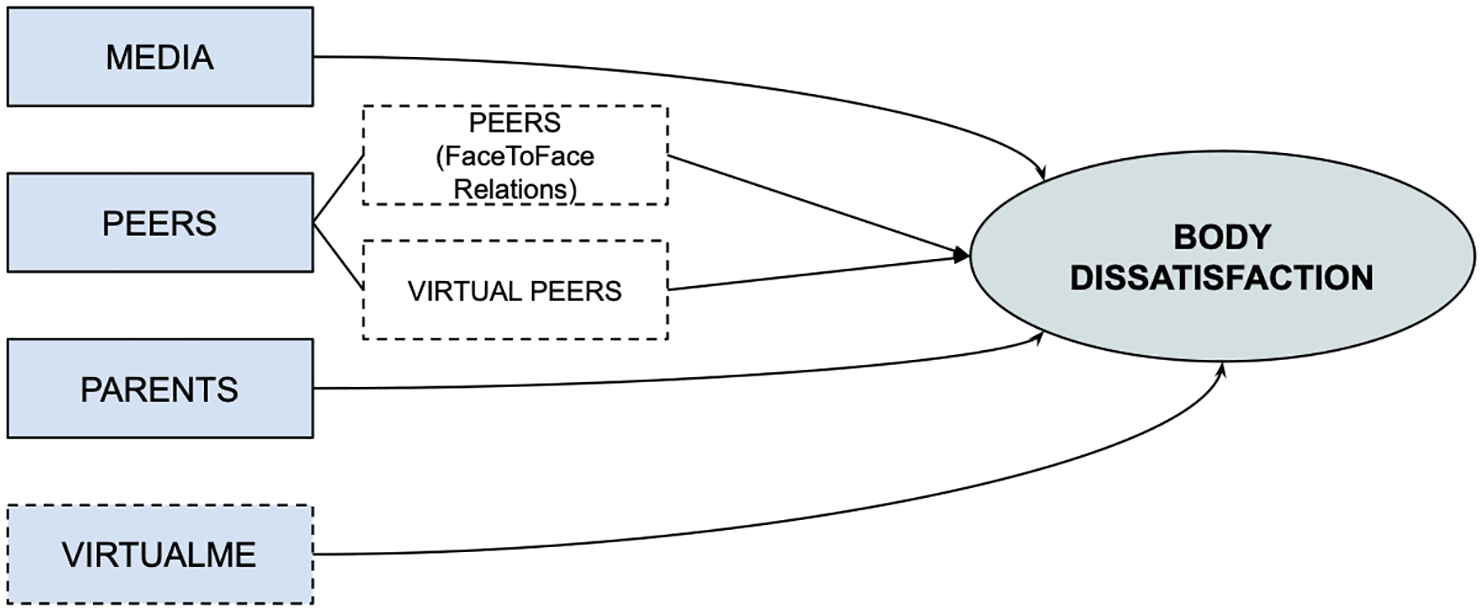
A proposed development of the tripartite influence model.
Conclusion
In conclusion, this study seeks to contribute to the growing body of research on the influence of social media on preadolescents and its body-related consequences. The findings highlight the widespread usage of social media platforms among preadolescents, the significance of self-presentation behaviors, and the moderate levels of body satisfaction reported by participants. Moreover, the study sheds light on the dualism between the virtual and real selves and emphasizes the complex associations between social media engagement, body satisfaction, and self-perception. It finally reveals the positive relationship between an active lifestyle, a proactive mindset toward physical activity, and body satisfaction. Subsequent investigations should persist in delving into these intricate dynamics as technology evolves and individuals embrace diverse modes of interaction on social media platforms. Achieving a comprehensive comprehension of the enduring repercussions of identity development necessitates further exploration, as the current understanding still needs to be completed. Pursuing future research in this domain can enhance the understanding of the complex interplay between technology and individual experiences, thereby illuminating the potential long-term effects on the development of one’s identity.
Regarding practical implications, the study’s findings indicate that preadolescents who exhibit a higher inclination toward manipulating their physical appearance and engaging in image-centric interactions on social media platforms are at an elevated risk of developing body-related issues and concerns. It is recommended that interventions be implemented to enhance preadolescents’ understanding of the influence exerted by social media on body image distortion. These interventions could include educational programs aimed at promoting media literacy and critical thinking skills, empowering preadolescents to navigate social media content more effectively and discern the unrealistic portrayals of body image. Additionally, promoting positive body image and self-acceptance through targeted campaigns and community-based initiatives may help mitigate the negative impact of social media on preadolescents’ body image and well-being. Furthermore, considering the role of family and peer influences on social media use and body image, collaborative efforts involving parents, educators, and mental health professionals are crucial. Finally, it is advisable to establish partnerships or collaborations with social media providers to leverage the strong engagement of the new generation and implement campaigns and informational initiatives aimed at raising awareness about the potential side effects of digital culture. By working closely with social media platforms, researchers, educators, and policymakers can develop targeted interventions and strategies to promote responsible social media use and mitigate the negative impacts on preadolescents’ well-being. This collaboration could involve the development of educational resources, tools, and features within social media platforms that facilitate positive body image, promote mental health awareness, and encourage digital citizenship.
Moreover, the study underscores the pivotal role of schools in fostering a protective environment, where open discussions about media ideals and their impact on self-perception of the body can occur, thereby reducing misconceptions. Additionally, promoting an active lifestyle should be considered a strategic intervention. Encouraging preadolescents to engage in offline activities that cultivate a positive sociocultural model of the body and foster an active lifestyle can contribute to their emotional well-being (Smolak et al., 2005) and enhance their social skills, thereby mitigating the adverse effects of social media use. In a broader context, to develop targeted and effective interventions, further investigation is warranted to comprehensively examine the influence of social media engagement on body image, identify the specific pre-teen population most susceptible to these effects, and ascertain the contextual conditions under which these effects manifest. Such research endeavors are crucial for developing goal-oriented and evidence-based interventions, ultimately fostering positive body image and well-being among pre-teen individuals.
Given the unique characteristics of the study, it is imperative to acknowledge several limitations. Firstly, the reliance on self-reported data collection methods introduces the potential for bias and inaccuracies. Respondents may be influenced by social desirability, leading them to provide responses that align with societal expectations rather than reflecting their true experiences. Additionally, participants may struggle to accurately recall their social media usage or other relevant variables, further compromising the reliability of the data.
Moreover, the study lacks comprehensive demographic information beyond gender and age. Factors such as socioeconomic status and cultural background can significantly influence both social media use and body image. The absence of these variables in the data limits the ability to fully contextualize and generalize the findings. Understanding the nuanced effects of these confounding factors on the relationships under investigation would be facilitated by their inclusion in future studies. Additionally, the study employs a cross-sectional design, collecting data at a single point in time. This design constraint hinders the establishment of causal relationships and the observation of changes over time. Longitudinal studies would be beneficial in providing more robust insights into the dynamic associations between social media use, body image, and other variables.
Lastly, it is essential to recognize that the study focuses specifically on Italian preadolescents. Therefore, caution should be exercised when generalizing the findings to other populations or cultural contexts. Cultural factors and social norms significantly shape social media use and body image, highlighting the need for careful consideration when extrapolating the results beyond the studied population.
Footnotes
Acknowledgements
Authors would like to thank all of the research assistants, inters and master’s Students who have contributed to this project. A special thanks to all schools that have been included in this study.
Authors’ Contributions
S.D. conceived of the study, participated in its design, coordinated the study, conducted the analyses, and drafted the paper; A.I. conceived of the study, participated in its design, coordinated the collection of the data and drafted the paper. All authors read and approved the final paper.
Declaration of Conflicting Interests
The author(s) declared no potential conflicts of interest with respect to the research, authorship, and/or publication of this article.
Funding
The author(s) disclosed receipt of the following financial support for the research, authorship, and/or publication of this article: Project ECS 0000024 “Ecosistema dell’innovazione -Rome Technopole” financed by EU in NextGenerationEU plan through MUR Decree n. 1051 23.06.2022PNRR Missione 4 Componente 2Investimento 1.5 - CUPH33C22000420001.

Data Availability Statement
The data presented in this study are available on request from the corresponding authors.