



Abstract
Understanding how the adoption of information and communication technology (ICT) interacts with years of schooling to impact labour market participation is crucial for developing inclusive digital job policies in emerging economies. Using a sample of 14,009 households from the Ghana Living Standard Survey (GLSS7), this study applies a recursive bivariate probit model to address the possibility of endogeneity between ICT adoption and labour market participation. The findings demonstrate that, after controlling for endogeneity, ICT adoption significantly decreases labour market participation by 24.3%, particularly among household heads with lower or no formal education. However, this negative influence diminishes with additional years of schooling and turns positive beyond roughly 16 years of education, underscoring the complementary influence of higher education. These findings support the Human Capital Theory, which emphasises productivity-improving effects of education, and the Skill-Biased Technological Change proposition, which posits that technical progress favours skilled workers. However, the results reveal that ICT-induced inequalities may worsen among household heads with lower education. Therefore, policymakers should prioritise investments in educational and digital skill training programmes, including expanded access to STEM and vocational ICT training, to guarantee that ICT adoption promotes inclusive and sustainable labour market participation in Ghana.
Keywords
Introduction
Information and communication technology (ICT), which encompasses the Internet, computers, and digital applications (Prasad & Rohokale, 2020), is reshaping global labour markets by transforming how work is accessed, organised and performed (Caparrós, 2021; Nübler, 2016; Tavip et al., 2024). While ICT boosts productivity and business efficiency (McGuinness et al., 2019), it also reinforces skill-based disparities by favouring highly educated workers and displacing mid-skilled workers (Di Battista et al., 2023; Michaels et al., 2014).
In Ghana, these dynamics manifest uniquely due to the economy’s dual structure of formal and informal employment (Adeniran et al., 2020; Caldarola, 2022), where the informal sector constitutes about 89% of total employment (Baah-Boateng & Vanek, 2020). Disparities in access to ICT are also glaring, where internet penetration stands at 20% in urban areas and 12.8% in rural areas (Ghana Statistical Service [GSS], 2020). Furthermore, educational quality remains uneven, with about 61% of rural children aged 7–14 lacking core reading and numeracy skills (Ministry of Education, Ghana, 2021). These disparities in education, ICT infrastructure, and income may impact how ICT influences labour market participation across regions and skill levels.
Despite recent studies (Atasoy et al., 2021; Pichler & Stehrer, 2021; Pusterla & Renold, 2022; Tüzemen et al., 2021) on ICT and employment, little is known about how years of schooling moderate ICT's labour market effects in emerging economies, particularly Ghana. Moreover, possible endogeneity arises because people who are already working may be more willing to adopt ICT, while ICT itself may simultaneously improve labour market participation decisions. Without accounting for this reciprocal relationship, econometric estimates may be biased.
To address these gaps, this paper employs a recursive bivariate probit model to account for endogeneity and explore the interaction effects of ICT adoption and years of schooling on labour market participation in Ghana. Specifically, the study investigates (1) how ICT adoption affects labour market participation, (2) how years of schooling influence labour market participation, and (3) whether years of schooling moderates ICT’s impact on labour market participation.
The study contributes to the Skill-Biased Technological Change (SBTC) literature by contextualising how technological change interacts with educational structures in emerging economies. The results further inform policy by identifying 16 years of schooling, equivalent to tertiary education, as the point where ICT’s effect shifts from displacing to enabling labour market participation. This insight supports targeted investment in digital literacy and higher education programmes that strengthen skills complementarity in Ghana’s emerging labour market.
The rest of the paper is written in the following manner: Section 2 reviews theoretical and empirical literature and hypotheses development; Section 3 outlines the methodology; Section 4 presents results and discussion; and Section 5 concludes with policy implications and limitations.
Theoretical Review
The Human Capital Theory (HCT) and the Skill-Biased Technological Change (SBTC) Theory provide a comprehensive framework for this study.
Human Capital Theory (HCT)
Schultz (1961) and Becker (1962) formulated the Human Capital Theory (HCT), which postulates that investments in education, training, and health boost an individual’s productivity and earning possibilities. Education empowers individuals with cognitive, technical, and analytical skills that enhance their ability to adapt to dynamic labour market conditions (Johnes et al., 2017). Empirical evidence shows that higher educational attainment is favourably linked with employment and earning levels (Auerbach & Green, 2024; Iremaut et al., 2023). However, critics argue that wage differences may represent innate skills, social privilege, or urban residence rather than purely acquired knowledge (Woodhall, 1987). In Ghana, education remains a critical driver of employment and income. Empirical evidence (Agyemang & Ronghuai, 2023) has linked investments in education and digital literacy to better job possibilities and earnings, particularly in industries such as technology and services. Thus, the HCT framework is critical to this study, as it underscores how years of schooling can impact both ICT adoption and labour market participation.
Skill-Biased Technological Change (SBTC) Theory
The SBTC theory suggests that technological advancements, particularly in digital technologies, increase demand for skilled labour while reducing demand for routine and manual work (Graetz, 2020; Maccrory et al., 2015). Several Studies (Hutter & Weber, 2021; Pi & Zhang, 2018; Wang et al., 2021) have shown that ICT-driven technology widens wage inequality by rewarding workers with advanced cognitive and technical know-how. However, the theory has weaknesses—it fails to recognise how ICT interacts with institutional and sectoral contexts, particularly in evolving economies where informal employment prevails.
In Ghana’s two-sector economy, the repercussions of SBTC differ distinctly from those observed in the advanced economies. The formal sector—including finance, telecommunications, and public administration—employs a small but increasing pool of ICT-driven works that reward tertiary-educated and digitally savvy workers. On the other hand, the informal sector, which engages a significant number of Ghanaians, remains encumbered with low-skilled, labor-intensive activities with constrained technological incorporation (Baah-Boateng & Vanek, 2020). This structural divide limits the dissimilation of technology-driven productivity gains and reinforces the inequality between skilled and unskilled workers. Inadequate investment in technical education and infrastructural deficits—such as unstable power and limited broadband—further deteriorate technology-skill complementarity. Therefore, testing SBTC in Ghana provides a critical empirical prospect to investigate how technological change operates within conditions of pervasive informality, uneven skill distribution, and infrastructural asymmetry.
Empirical Review and Hypotheses Development
The HCT and SBTC framework provide the methodical foundation for this study. HCT illustrates how education improves employment ability and efficiency, while SBTC explains how technology reshapes labour market demand in favour of skilled workers. Within Ghana’s two-sector economy, these frameworks jointly predict that education not only enhances labour market participation directly but also mitigates ICT’s influence by reinforcing individuals’ capacity to adapt to changes in technology. Therefore, the empirical review and hypotheses development focus on three interconnected channels: (a) the direct influence of ICT adoption on labour market participation, (b) the effect of years of schooling on labour market participation, and (c) the interaction effects between ICT adoption and years of schooling on labour market participation.
ICT Adoption and Labour Market Participation
Technological advancement has altered global labour markets, yet the effects of ICT adoption on employment remain variegated. In developing nations, ICT frequently improves efficiency and inspires job creation in technology-driven sectors (Abadie et al., 2016; Pichler & Stehrer, 2021; Surugiu et al., 2018; and Thomas, 2017). However, several studies (Goaied & Sassi, 2017; Samargandi et al., 2019) have shown that ICT can also substitute for workers performing routine tasks, leading to temporary job losses and structural unemployment. In developing economies, ICT integration tends to widen rather than reduce inequality. Evidence from Di Battista et al. (2023) indicates that automation largely affects low-skilled workers, while rewarding those with advanced education and digital skills. According to Samargandi et al. (2019), ICT’s positive employment effects mainly depend on financial sector development and infrastructural availability. In Ghana, this dynamic is shaped by a highly informal sector—where almost 89% of employment occurs outside the formal sector—and significant disparities in ICT access between rural and urban areas (Baah-Boateng & Vanek, 2020; GSS, 2020). Therefore, ICT adoption may be beneficial to wealthy, urban, well-educated households while plummeting participation among unskilled or rural folks. This study hypothesised that:
Years of Schooling and Labour Market Participation
Education remains one of the critical predictors of labour market participation and income. The HCT argues that investment in education builds productive capacities that improve employability and adaptability (Becker, 1994; Schultz, 1961). Empirical evidence shows that higher education increases the likelihood of employment in skilled work (Singh & Kapoor, 2022; Ukaj et al., 2023), while Bækgaard and Helsø (2023) observe that education fosters access to more stable and formal employment opportunities. Simultaneously, the effects of education vary by context. Diaconu (2014) notes that more years of schooling delay entry into the labour market but lead to better job quality, whereas Spielauer (2014) concludes that educational disparities create gaps in the labour market among people. In Ghana, Abekah-Nkrumah et al. (2019) observe that each additional year of schooling slightly increases the likelihood of formal employment, although Boahen et al. (2021) find declining returns beyond pre-tertiary education. Despite these nuances, the consensus is that education improves efficiency, competitiveness, and access to work. Therefore, this study hypothesised that:
Interaction Between ICT and Education
The interaction between ICT and education represents the concept of skill complementarity within the SBTC framework, which posits that technological advancement increases demand for skilled workers capable of leveraging ICT tools (Autor et al., 2003; Graetz, 2020). Education enhances digital literacy, analytical reasoning, and problem-solving capabilities, which are qualities critical for adapting to work environments influenced by technological change (Caparrós, 2021). Empirical evidence accords with this moderating relationship. Pusterla and Renold (2022) observe that ICT adoption raises employment among individuals with vocational or tertiary education, while Atalay et al. (2018) reveal that ICT intensifies demand for cognitive and managerial skills. Ngoa and Song (2021) also found that education enhances the favourable employment effects of ICT for women in emerging economies, underscoring that the rewards of technology depend on human capital endowments. In Ghana, disproportional education attainment and inadequate digital infrastructure create substantial heterogeneity in ICT’s employment effects. Workers with tertiary education are more likely to complement ICT, while less educated individuals are more susceptible to automation-induced displacement. Education thus functions as a buffer that mitigates ICT’s adverse effect on labour market participation and intensifies its potential to generate new forms of jobs. Consequently, this paper hypothesised that:
Summary and Research Gap
The literature review underscores that the relationship between ICT adoption, education, and labour market participation is multidimensional and context-dependent. While ICT can increase productive efficiency and create new opportunities, its rewards are often determined by the extent of education and digital skills. Years of schooling consistently enhance employability but also shape how individuals respond to technological change. However, studies on these dynamics within Ghana’s mostly informal and education-stratified sector remain scarce. Few studies have examined the moderating role of education in the ICT-labour market nexus while accounting for endogeneity. This gap motivates the present study, which employs a recursive bivariate probit model to estimate the interaction effects of ICT adoption and years of schooling on labour market participation in Ghana.
Methodology
Data
This study followed a quantitative research approach, which involved standardised procedures for data collection and analysis to ensure reliability and validity of the results. The Ghana Statistical Service (GSS) Act 2019 (Act 1003) enjoins the service to come up with ethically relevant, accurate, reliable, coherent, comparable, timely, and honest data to be used for research, policy, and planning purposes. Consequently, every participant gave their informed consent before they were recruited for this survey (Ghana Statistical Service [GSS], 2018). The seventh round of the Ghana Living Standard Survey (GLSS7) is secondary data on consumer spending conducted between 2016 and 2017. Using a two-stage stratified sampling design, a total of 1,000 enumeration areas (EAs) were selected as Primary Sampling Units (PSUs) with a probability proportionate to population size. Based on the 2010 Population and Housing Census, these PSUs were categorised into 10 regions and then again divided into urban and rural units. Secondary Sampling Units (SSUs) were created by compiling a list of households from each PSU. From 15 households methodically chosen from each PSU, a total of 15,000 households were sampled at the second stage. While with a 93.3% response rate, the sample size has declined to 14,009 households (GSS, 2018), the sampling strategy adopted enables us to generalise the results to the national level, providing a comprehensive understanding of the link between ICT adoption and labour market outcomes in Ghana. Besides, this sample size far exceeds the minimum thresholds recommended by Krejcie and Morgan (1970) and Cochran (1977) for large populations at a 95% confidence level. This ensures that the data used in this paper is statistically sufficient and appropriate for robust analysis.
The GLSS7 has information on various household expenditures, including non-food and food price indices, water, power, waste disposal, remittances, and rent. Particularly, it captures information on ICT overheads, including expenditures on audio-visual equipment, information processing equipment, telephone services, and internet services. The ICT overheads are characterised by zeros and positive values, indicating the extent of ICT adoption. Furthermore, the GLSS7 has a question on whether any household member worked for pay during the past 7 days before the survey. The response to this question provides the data for labour market participation (LMP) in this paper. The LMP concept employed is intentionally defined at the household level to reflect realised engagement in paid work, rather than intention to work. The use of household head characteristics, such as education, age, gender, and location, as explanatory variables aligns with household labour market studies, as the head’s socio-economic characteristics and decisions significantly impact the employment status of other members (Baah-Boateng, 2016). While this methodology does not capture the individual labour force participation construct, it effectively replicates household-level market engagement through wage-based activity. This framing is consistent with the study’s focus on modeling the impact of years of schooling on the relationship between ICT adoption and labour market participation. Table 2 provides summary statistics and distributions of the main variables used in this paper.
Econometric Method
The association of ICT adoption with labour market participation is complex and influenced by various factors. While ICT adoption can augment labour market participation by enhancing access to job openings, increasing efficiency, and aiding skill development, this adoption can also be influenced by labour market participation, as individuals who are employed or participating in the labour market may be more likely to invest in ICT. This presents an issue of endogeneity, which can influence the outcomes of this study if not properly addressed. Following Wooldridge (2006) and Bascle (2008), this paper considers an instrumental variable (IV) method to address the issue of endogeneity. The IV method is sufficient to resolve concerns of endogeneity as it focuses on the variants in the endogenous variable that are uncorrelated with the error terms, ignoring the changes in the endogenous factor that affects the Ordinary Least Squared (OLS) coefficients (Bascle, 2008). To address this, the following structural model is specified:

where LMPi is the ith observation on the dependent variable (labour market participation); ICTAi is the ith observation on the endogenous regressor (ICT adoption); YSCi is the ith observation on the exogenous variable (years of schooling); COV1i, …, COVri are the ith observations on each of the r covariates; and ui is the disturbance term. The intercept β0, β1, …β1+r are the parameters to be estimated. Since ICTA is endogenous, its correlation with u is not equal to zero, thereby violating the most critical exogeneity assumption under OLS estimation (Bascle, 2008; Wooldridge, 2006). Violating the OLS assumption may cause biased and erratic coefficients in the model (Bascle, 2008). However, there is no reason to believe that the correlation between YSCi and COV1i, …, COVri and u is nonzero, hence YSCi and COV1i, …, COVri are assumed to be exogenous in this paper.
Following the endogeneity in ICTA, there is a need for one or more additional variables that are correlated with ICTA but uncorrelated with u in (1). As a condition, these excluded exogenous variables must not directly influence LMP; otherwise, they should be included in (1) as covariates (Greenland, 2000). The GLSS7 data has an adult equivalence scale (ADES) and a non-food price index (NFPID). These variables theoretically correlate with ICTA decisions without directly determining labour supply. For instance, higher non-food prices may affect household budgets, thereby influencing ICTA decisions. Similarly, larger households, as measured by ADES, can spread fixed costs of ICT devices across more members, improving affordability and adoption likelihood (Dettling, 2017; Ziemba, 2016). While it is recognised that ADES and NFPID could, in principle, influence LMP through alternative roots such as care burdens, household-scale economies, or cost-of-living pressures, their dominant effect in this context is expected to operate through ICT adoption. Evidence supporting this hypothesis—including direct inclusion tests and robustness diagnostics—is presented subsequently in section on diagnostic tests. Thus, following Wooldridge (2006), YSC, COV1i, …, COVri, ADES, and NFPID constitute instruments. Like Lu et al. (2018), Wooldridge (2006) and Bascle (2008) have shown how a two-stage least squares (2SLS) regression analysis could be implemented.
However, since both the dependent variable (labour market participation, LMPi) and the endogenous regressor (ICT adoption,
Following Coban (2020), Cappellari and Jenkins (2003), and Maddala (1983), the RBP model can be formally expressed as:
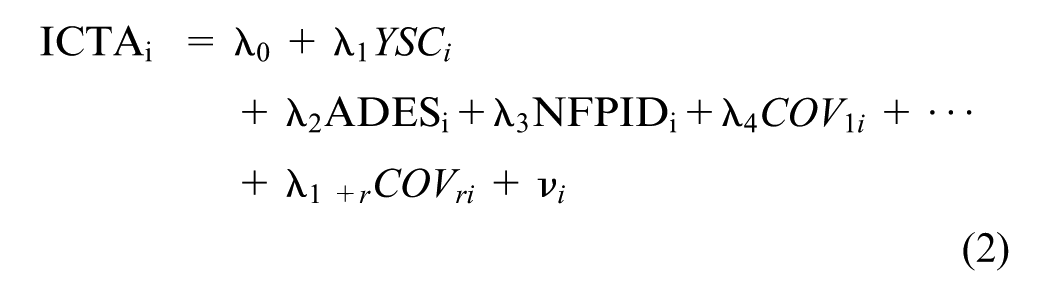

Where
Diagnostic Tests
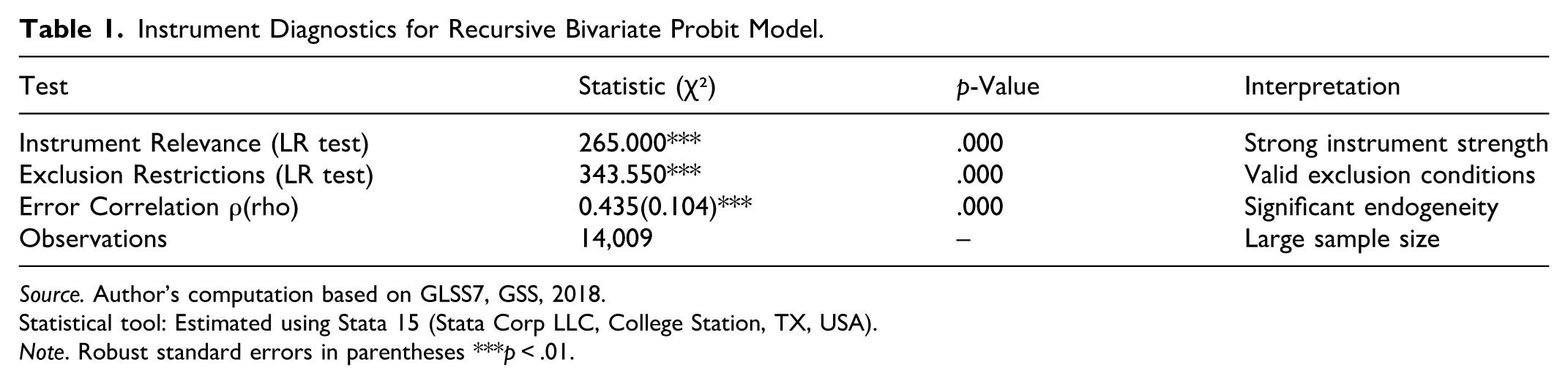
Table 1 shows fundamental diagnostic tests relevant for this study. The RBP model reveals a statistically significant error correlation coefficient (ρ = .435, p = .000) between the two equations’ disturbance terms. The significant positive correlation confirms endogeneity, underscoring the necessity of the RBP approach to ensure unbiased estimates (Stock et al., 2002). Likewise, the magnitude of ρ suggests a moderate correlation in the unobserved factors influencing both outcomes (Bascle, 2008). Furthermore, the diagnostic tests provide strong evidence supporting the validity of the instrumental variables and model specification. Specifically, the likelihood ratio test for instrument relevance yields a statistically significant chi-square statistic of 265.00 (p = .000), which confirms that the chosen instruments—the non-food price index and adult equivalent scale - have strong explanatory power for the endogenous regressor. This satisfies the critical first condition for valid instrumental variables that they must be sufficiently correlated with the endogenous explanatory variable (Bascle, 2008; Stock et al., 2002; Wooldridge, 2006).
Instrument Diagnostics for Recursive Bivariate Probit Model.
Source. Author’s computation based on GLSS7, GSS, 2018.
Statistical tool: Estimated using Stata 15 (Stata Corp LLC, College Station, TX, USA).
Note. Robust standard errors in parentheses ***p < .01.
Moreover, the likelihood ratio test of exclusion restrictions produces a highly significant chi-square value of 343.55 (p = .000). This result provides statistical support for the exclusion condition that these instruments affect the outcome variable only through their impact on the endogenous regressor and not through other channels. The significant result suggests that, conditional on the model specification, these instruments can be excluded from the second stage equation, a necessary condition for obtaining consistent estimates (Wooldridge, 2006).
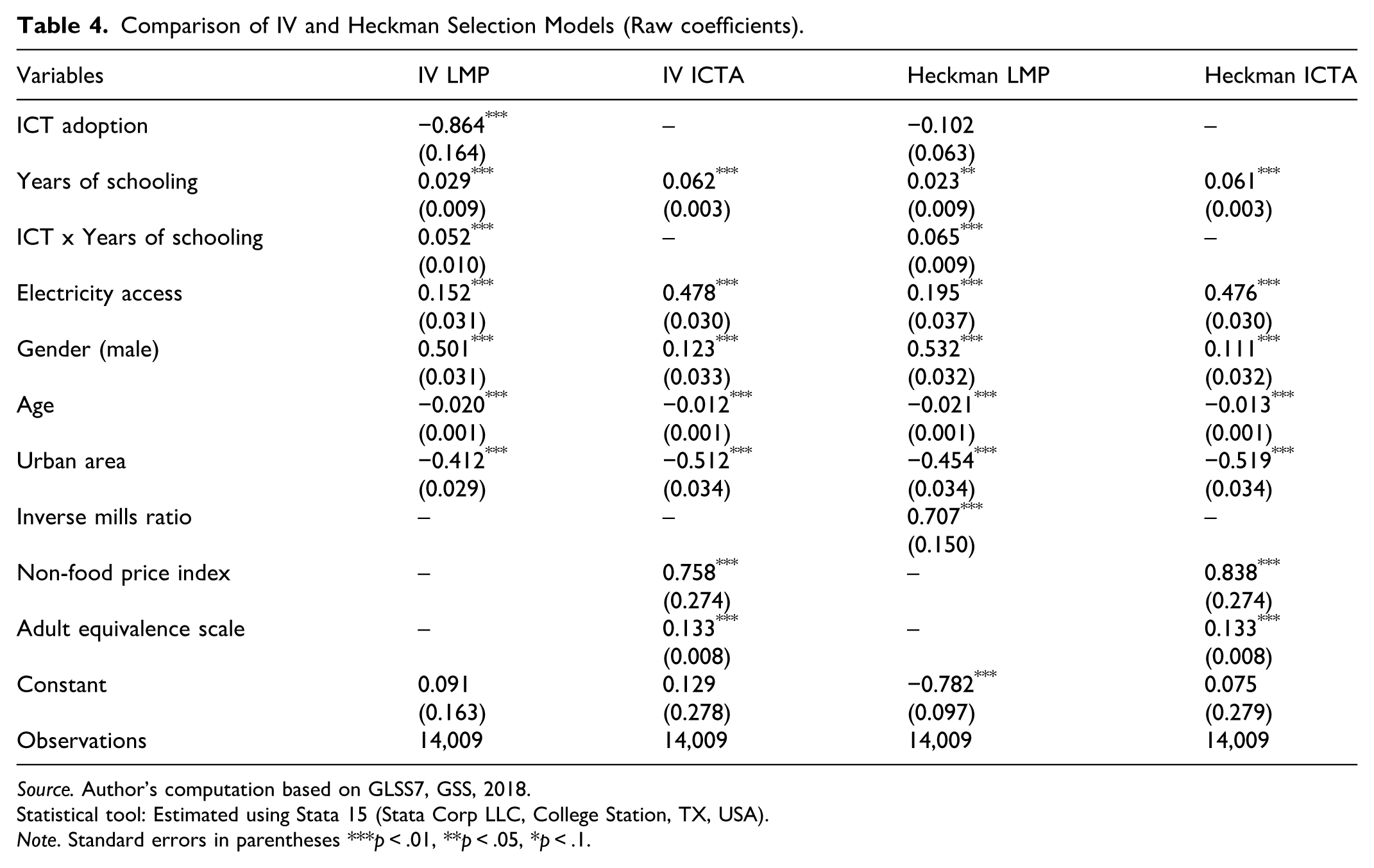
However, given possible theoretical concerns about direct channels linking the instruments to labour market outcomes, further robustness tests were performed to substantiate the validity of the exclusion restrictions. Specifically, the study included ADES and NFPID directly in the labour market participation equation to test for any residual direct influence. The results reveal statistically significant coefficients (ADES: β = −.026, p < .001; NFPID: β = .490, p < .05), although the economic magnitudes are modest relative to their indirect effects through ICT adoption. To also complement this test, a Heckman selection model, which identifies through linear selection correction rather than exclusion restrictions, was estimated. The convergence of the RBP and Heckman estimates (Table 4) reinforces the robustness of the main results. As Wooldridge (2006) notes, consistent estimates obtained under different identification assumptions provide persuasive evidence that findings are not driven by violations of specific model restrictions.
In addition, multicollinearity among independent variables was assessed using correlation matrices and condition indices. The highest correlation, −.3395 between urban and years of schooling (Appendix A Table A1), falls below conventional multicollinearity thresholds (Cameron & Trivedi, 2022), indicating no severe correlation issues. Additionally, condition indices for independent variables were below 15, further suggesting that multicollinearity is not a concern (Fiagborlo, 2020; Hair et al., 2019; Kramer & Weldon, 2023; Watkins, 2018). With a substantial sample size of 14,009 observations, the results are reliable due to sufficient statistical power (Coban, 2020). Overall, the RBP model's suitability is confirmed by the combination of strong instrument relevance, valid exclusion conditions, and significant error correlation, which provides confidence in the estimates’ ability to account for endogeneity and underscores the importance of using RBP over conventional single-equation models. The next section discusses the summary statistics of the main variables used in this paper.
Summary Statistics
Table 2 presents the descriptive statistics of key characteristics of households used in this paper. About 23.8% of households stated that at least a member was in a paid job during the seven days before the survey, representing a modest labour market participation. On the other hand, approximately 84.3% of households indicated adopting some form of ICT, revealing an uneven digital penetration in Ghana. Many households were headed by males (68.8%), while 62% had access to electricity, with 57% located in urban areas. This rural-urban gap and variances in access to electricity could primarily facilitate ICT use and formal job opportunities for people.
Summary Statistics.

Source. Author’s computation based on GLSS7, GSS, 2018.
Statistical tool: Estimated using Stata 15 (Stata Corp LLC, College Station, TX, USA).
Note. SD = Standard Deviation; N = number of observations.
The average household heads had 6.5 years of schooling, which is approximately a primary level of education. The data indicate that the average age of household heads was 46.24 years, with an average adult equivalence scale of 3.9, suggesting a moderate household structure. This household composition may affect both the affordability of ICT and labour market participation decisions through cost-sharing and caregiving responsibilities. The non-food price index averaged 0.997, showing limited standard deviation across Ghana, representing relatively stable cost-of-living among households. The descriptive measures provide summaries of socio-economic and demographic features of households, reflecting the reality of Ghana’s labour market where a significant spread of ICT adoption jointly exists with formal labour market participation.
Empirical Results and Discussion
This section presents the empirical results of the RBP model for ICT adoption and labour market participation in Table 3. The RBP model reveals several important characteristics about the estimation quality and statistical properties. Specifically, the log pseudolikelihood value of −11,186.466 represents the optimised value of the likelihood function at convergence. While the absolute value of this statistic is not directly interpretable, less negative values across model specifications indicate better model fit (Cameron & Trivedi, 2005). Moreover, the Wald chi-square (χ¹ = 3,692.93, df = 14, p < .001) tests the joint significance of all model coefficients, with the highly significant result confirming that the explanatory variables collectively contribute meaningfully to the model’s explanatory power (Wooldridge, 2006). The sample size of 14,009 is larger than the minimum threshold suggested by Krejcie and Morgan (1970), ensuring that the data is statistically sufficient and appropriate for robust inference.
Recursive Bivariate Probit Coefficient/Marginal Effect of LMP and ICTA Models.

Source. Author’s computation based on GLSS7, GSS, 2018.
Statistical tool: Estimated using Stata 15 (Stata Corp LLC, College Station, TX, USA).
Note. AME = Average marginal effect. Robust standard errors in parentheses ***p < .01, **p < .05, *p < .1.
First-stage Regression (ICT Adoption Equation)
Our RBP model addresses endogeneity in ICTA using NFPID and ADES as instruments. Both instruments are statistically and efficiently significant predictors of ICTA. Table 3 presents the results of the first-stage regression in the ICTA equation. The coefficients of NFPID and ADES are statistically significant at the 1% level, confirming that both instruments are relevant for ICT adoption (Wooldridge, 2006). The AME indicates that a 100% increase in NFPID raises the likelihood of ICT adoption by approximately 14.8%, possibly reflecting higher regional prices that signal greater household wealth and improved digital infrastructure (Chinn & Fairlie, 2010). Another plausible explanation is that rising non-food prices may prompt households to substitute non-essential goods and services with more essential or cost-effective alternatives, such as ICT products and services. Similarly, a 100% increase in ADES is associated with a 2.6% increase in ICT adoption, consistent with the cost-sharing advantages observed in larger households (Dettling, 2017; Ziemba, 2016). Specifically, larger households, as measured by ADES, may distribute the fixed costs of ICT acquisition across more members, making adoption more affordable and thus more likely. These findings are consistent with Abdul-Wakeel and Osabuohien (2022), who reported that household size positively influences access to ICT in emerging economies.
Other factors that explain ICTA are years of schooling, electricity access, gender, age, and the location of households. At the 1% level of significance, the results indicate that an additional year of schooling increases the ICTA probability by about 1.2%. This finding is plausible because additional years of schooling can lead to better job prospects and higher earning potential of household heads, which can increase their likelihood of ICT adoption. Additionally, schools can provide students with basic digital literacy skills, such as typing, using software applications, and navigating the internet, which can increase their confidence and ability to adopt ICTs. The result corroborates the finding by Abdul-Wakeel and Osabuohien (2022) that household heads with secondary education have an increasing chance of having access to ICTs.
Furthermore, the findings show that electricity access is positive and significant at the 1% level, indicating that it improves ICTA. Specifically, access to electricity improves the likelihood of adopting ICT by 9.9% compared to no access. The plausible reasons for these results are that electricity access can support the development of infrastructure that facilitates ICT adoption, such as internet connectivity, communication networks, and digital services, thereby increasing the opportunities for individuals to engage with ICTs. Moreover, access to electricity can also enable individuals to charge and power ICT devices such as smartphones, computers, and tablets, making it possible to use these technologies regularly. These findings align with the results by Houngbonon et al. (2021), who found that access to mobile connectivity for rural users, measured by mobile telephony subscriptions or smartphone ownership, increases with access to electricity.
In terms of gender, the results show that, at the 1% level of significance, gender has a positive effect on ICTA. Unambiguously, the results indicate that men are 2.5% more likely to adopt ICT than women, reflecting structural barriers to women’s adoption. For instance, in some societies, social and cultural norms may perpetuate gender disparities in technology access and adoption. For example, men may be more encouraged to engage with technology from a young age, while women may face more barriers or biases that limit their chances to learn about and use ICTs. Besides, men may have greater access to resources such as education, training, and economic opportunities that facilitate ICT adoption. Such circumstances can create a disparity in ICT adoption rates between men and women, mainly in contexts where women face more significant barriers to accessing these resources. This finding aligns with Acilar and Sæbø (2023), who found that differences in access to ICT in developing countries exist between women and men.
The findings also reveal that at the 1% level of significance, age has a diminutive effect on ICTA. Specifically, the result reveals that an additional year to the age of household heads reduces ICTA by 0.002%, signifying a small but statistically significant negative effect of age on ICT adoption. This result is conceivable because older retired household heads may have stable routines, reducing the need for ICT in work or education. The finding is moreover plausible because older individuals may have had less exposure to digital technologies earlier in life, making adoption more challenging. This result mirrors the results by Afzal et al. (2023), who found that younger individuals have higher levels of access to ICT devices compared to older age groups.
In Table 3, location shows a significant negative effect on ICTA at the 1% level. Urban dwellers are 9.6% less likely than their rural counterparts to adopt ICT. This finding is revealing, as urban areas often have higher levels of ICT penetration and adoption, which might lead to a saturation effect. In other words, urban residents may already have widespread access to ICTs, and the marginal benefit of adopting new ones might be lower, leading to lower adoption rates among urban residents who already have what they need. Furthermore, urban residents might have access to alternative options for communication, information, and services that reduce their need to adopt ICTs. For example, urban areas often have more developed infrastructure, such as public transportation, libraries, and community centres, which can provide alternative means of accessing information and services. However, the finding contrasts with Afzal et al. (2023), who discovered disparities between rural and urban areas, with rural areas experiencing lower connectivity.
Reduced-form Equation of Labour Market Participation
H1: Adoption of ICT Reduces Labour Market Participation in Ghana
The reduced-form equation results presented in the equation for labour market participation (Table 3) reveal that, after addressing endogeneity, ICT adoption has a negative and statistically significant effect on labour market participation. In particular, the AME of ICT adoption is −0.243, indicating that ICT adoption reduces labour market participation by about 24.3%. This result leads to the confirmation of the H1, suggesting that ICT adoption does not enhance labour market participation as hypothesised. Several plausibilities may account for this negative relationship. ICT adoption can automate certain tasks, thereby decreasing demand for labour or making certain skills obsolete, which may lead to job displacement or skill mismatches. This result aligns with Di Battista et al. (2023), World Economic Forum (2023), and Samargandi et al. (2019), who found that ICT may reduce work prospects. However, the result contrasts with Pichler and Stehrer (2021), Surugiu et al. (2018), and Thomas (2017), who found a positive work effect of ICT adoption.
H2: More Years of Schooling Increase Labour Market Participation in Ghana
According to Table 3, education has a positive and statistically significant effect on LMP. Specifically, the results indicate that for every additional year of schooling, the probability of participating in the labour market increases by about 0.76%. This finding supports H2, confirming that higher levels of education enhance an individual’s possibility of being active in the labour market. This finding reflects the human capital theory (Becker, 1994; Schultz, 1961), which posits that education improves productivity through the accumulation of human capital, including skills, knowledge, and competencies valued by employers. Furthermore, each additional year of schooling may act as a positive productivity signal to potential employers, improving employability prospects. The result is consistent with Bækgaard and Helsø (2023), Singh and Kapoor (2022), and Caparrós (2021), who found similar positive education effects on labour market outcomes. However, it contradicts Boahen et al. (2021), who revealed that making the pre-tertiary education cycle shorter may boost early labour market success.
Having access to electricity has a statistically significant positive effect on LMP, indicating that electricity access improves LMP. Specifically, household heads’ access to electricity increases the probability of LMP by about 3.9% compared to no access. The plausible reasons may be that access to electricity can enable household heads to use electric appliances and lighting, which can increase productivity and reduce time spent on household chores. These benefits can free up time for heads of household to engage in the labour market to earn income. Moreover, electricity access can enable household heads to use ICTs, such as computers and the internet, which can ease skills development, job searching, and access to information about labour market opportunities. These benefits can increase household heads’ chances of finding employment and participating in the labour market. The finding accords with Li et al. (2024), who found that electricity access reduces female unemployment. The finding also aligns with Djoumessi et al. (2021) and Tagliapietra et al. (2020), who found that access to electricity has a relevant influence on labour market participation.
Additionally, gender has a statistically significant positive effect on the likelihood of participating in the labour market. Specifically, being a male head of a household increases the probability of labour market participation by 12.4% compared to female heads. This outcome is conceivable because, in many societies, including Ghana, social and cultural norms often dictate different roles for men and women, with male heads naturally expected to be breadwinners. These customs influence female heads’ labour market participation, leading to lower participation rates compared to their male counterparts. Moreover, women often bear an uneven share of caregiving responsibilities, such as childcare and eldercare than their fellow men, which can limit their availability for salaried work. Such obligations can lower women’s participation rates in the labour market compared to men, who may have fewer caregiving responsibilities. The result aligns with Mohammad (2010), who found that women withdrew from the labour market to care for babies.
Age has a statistically significant negative effect on labour market participation. Specifically, an additional year to the age of household heads reduces LMP by 0.002%. This result is not surprising because as heads of household age, they may experience physical and cognitive decline, which can reduce their ability to perform certain jobs or work-related tasks. These conditions can make it more challenging for older heads to participate in the labour market. Moreover, many societies have traditional retirement ages or social norms surrounding retirement, which can influence older heads' decisions to exit the labour market. As household heads approach retirement age, they may be more likely to leave the labour market—either by choice or due to societal expectations. The finding is in line with studies by Fields et al. (2017) and Vodopivec and Arunatilake (2011), who found a negative impact of ageing on labour market participation.
The results reveal a statistically significant negative effect of urban residence on LMP. Specifically, urban household heads are 11.1% less likely to participate in the labour market compared to their rural counterparts. This finding is consistent with the study’s operational definition of LMP, which focuses on paid work within the 7 days preceding the survey, thereby excluding job-search activities. Several factors may contribute to this outcome. Urban areas' better access to educational institutions, for instance, may lead to higher enrolment rates, temporarily reducing participation in paid work, particularly among young household heads. Additionally, urban areas often have more developed social safety nets, such as unemployment assistance or family transfers, which can alleviate the necessity of labour market participation. Furthermore, certain urban economic activities, like gig work or home-based services, might not be captured in traditional LMP measures. This result is thus attributed to structural definitional differences rather than a data error. Notably, this finding diverges from Nor and Said (2014), who reported higher urban participation rates when using broader definitions of labour force activity.
Average Marginal Effects of Interaction Terms
H3: Years of Schooling Significantly Mitigate the Adverse Effect of ICT Adoption on Labour Market Participation in Ghana
This subsection discusses the link between the adoption of ICT and years of schooling in shaping labour market participation. Table 3 reveals that the AME of the interaction term (ICT adoption × years of schooling) is positive and statistically significant (0.014), suggesting that higher school attainment attenuates the negative effect of ICT adoption on labour market participation. This evidence supports H3, suggesting that schooling endows household heads with the capacity to effectively use ICT in employment settings. One probable reason behind this is that long schooling endows household heads with related skills like digital literacy, critical analysis, and problem-solving aptitudes, and hence enables the effective deployment of ICT. Moreover, household heads with higher educational qualifications are more likely to secure formal or technology-intensive jobs that require ICT proficiency. This finding is not inconsistent with the study by Goldin and Katz (2018), who reported the complementary association between education and advances in information and communication technologies and labour market skill development.
While Table 3 reveals that years of schooling mitigates the negative impact of ICT adoption on the labour market participation, the extent to which this moderating effect varies across different years of schooling deserves a closer investigation. Figure 1 reveals that ICT adoption exerts a generally negative effect on labour market participation across different years of schooling, although this negative effect diminishes with higher education levels. Specifically, the use of ICT reduces LMP among household heads with 1–15 years of schooling, consistent with technological substitution between non-routine and manual work. Conversely, among those with more than 16 years of schooling, equivalent to tertiary studies, it has a positive effect and shows that higher studies make workers qualified to be complements and not competitors against the backdrop of ICT.

Effect of ICT adoption on labour market participation by years of schooling.
A segmented RBP regression with a break at 16 years of schooling supports this observed pattern and reveals a statistically significant slope change to the ICT-education interaction (χ¹ (1) = 4.54, p < .03). Before the threshold, the adoption of ICT negatively impacts LMP (β = −.122, p < .05), but after 16 years, equivalent to tertiary schooling, the effect is positive (β = .361, p < .03). These findings empirically confirm the existence of the threshold to the skill-technology relationship consistent with the HCT (Becker, 1964) and SBTC framework (Autor et al., 2003; Graetz, 2020). Most skills before secondary school are procedural and would be easily automated, but tertiary schooling builds non-routine cognition, managerial, and problem-solving skills that raise ICT productivity and employment. Accordingly, the positive transition after 16 years is not an artefact but a genuine mechanism by which the skills help to complement the technology. Such results aligned with Pusterla and Renold (2022), Atalay et al. (2018), Caparrós (2021), and Ngoa and Song (2021), who report similar technology-skill complementarities.
Robustness to Alternative Specifications
Table 4 presents Heckman selection model estimates for robustness testing of the baseline results. Qualitative similarity of results by estimation strategy is strong evidence of robustness of the baseline inferences. Specifically, ICT adoption’s adverse effect on labour market participation persists across specifications, with a magnitude difference between models (IV: −0.864 and Heckman: −0.102). The high positive correlation between ICT adoption and education is supported by both techniques (IV: 0.052, p < .01; Heckman: 0.065, p < .01). The significant positive inverse Mills ratio (λ = .707, p < .01) for the Heckman model validates selection bias and thus requires the correction procedure.
Comparison of IV and Heckman Selection Models (Raw coefficients).
Source. Author’s computation based on GLSS7, GSS, 2018.
Statistical tool: Estimated using Stata 15 (Stata Corp LLC, College Station, TX, USA).
Note. Standard errors in parentheses ***p < .01, **p < .05, *p < .1.
The consistent urban coefficient (negative in each specification–Appendix B Table A2) likely picks up structural characteristics of the urban labour market in the study context, for example, higher unemployment, more competitive labour markets, and plural sources of income beyond traditional paid employment. The convergence of evidence across identification approaches, despite their divergent assumptions, points to the fact that the association of ICT adoption with labour market performance is not a statistical artefact but a robust empirical pattern.
Conclusion
Using a recursive bivariate probit method to account for the possibility of endogeneity in ICT adoption, this paper unpacked the nuanced effects of ICT adoption and years of schooling on labour market participation in Ghana. The results show that, after addressing the issue of endogeneity, ICT adoption exerts a negative and statistically significant effect on labour market participation, confirming H1 and indicating that ICT adoption can initially displace workers with minimal education or digital savvy. This finding mirrors the SBTC framework, which argues that technological change increases demand for skilled workers while reducing chances for low-skilled labour. However, the interaction between ICT adoption and years of schooling confirms H2 and H3. Years of schooling increase the probability of labour market participation and moderate the negative effect of ICT, implying that education empowers people with complementary skills required to adapt in the digital economy. This is consistent with HCT, which stresses the significance of education in augmenting efficiency and employability. Specifically, the finding reveals that the negative effect of ICT adoption weaken and eventually turn positive beyond about 16 years of schooling, underscoring tertiary education as a critical threshold where technology starts to support, and not to displace, employment. The findings further reflect the risk of gaping social and economic inequality. The substitution effect of ICT appears more evident among households with lower years of schooling, who are less likely to possess the know-how for digital-transition. This implies that, without targeted policy interventions, the vulnerability of these groups in the labour market may increase, fortifying existing educational and geographical differences.
The results underline the need for transformative digital education policies. First, to ensure ICT’s complementary benefits while mitigating its substitution effects, policymakers should prioritise investments in education and digital skill development, specifically at the second-cycle and university levels. Expanding access to STEM and vocational ICT training can help build the matching skills needed for driving technology and employment. Second, policy should focus on expanding broadband and access to electricity to bridge the gaps between urban and rural areas to guarantee equitable participation in the digital economy. Finally, to support continuous skills development among the current working groups and reduce technological exclusion among adults with limited formal schooling, policy should focus on promoting lifelong learning programmes.
This study has some limitations. The cross-sectional use of the study constraints the ability to establish changing causal relationship between ICT adoption and labour market participation. Additionally, the analysis does not account for likely heterogeneity across various sectors or occupations. Future research could use panel or sector by sector datasets to investigate how ICT influences work transition over time across employment categories. Longitudinal study could equally explore whether ICT exposure ultimately offsets initial substitution effects. While these limitations are not expected to impact this paper’s outcomes, the study underscores the double-edge effect of ICT in shaping labour market outcomes in emerging economies, that is, a determinant of opportunity for those with education, but a drive of vulnerability for the less skilled. Reinforcing human capital through investments in education and digital inclusion is the sincere channel to ensuring that ICT adoption mirrors inclusive labour market participation in Ghana.
Footnotes
Appendix A
Matrix of Correlations.

| Variables | 1 | 2 | 3 | 4 | 5 | 6 | 7 | 8 | Condition indices |
|---|---|---|---|---|---|---|---|---|---|
| ICT adoption (1) | 1.000 | 1.000 | |||||||
| Non-food price index (2) | .092 | 1.000 | 3.157 | ||||||
| Adult equivalence scale (3) | .080 | –0.107 | 1.000 | 4.656 | |||||
| Years of schooling (4) | .274 | .188 | –0.224 | 1.000 | 4.896 | ||||
| Electricity access (5) | .242 | .155 | –0.102 | .284 | 1.000 | 5.633 | |||
| Sex (male) (6) | .098 | –0.058 | .214 | .143 | –0.058 | 1.000 | 6.448 | ||
| Age (7) | −.203 | –0.033 | .147 | –0.058 | –0.033 | –0.134 | 1.000 | 7.362 | |
| Location (urban) (8) | −.216 | –0.142 | .184 | –0.033 | –0.058 | .077 | .082 | 1.000 | 12.769 |
Source: Author’s computation based on GLSS7, GSS, 2018.
Note. Statistical tool: Estimated using Stata 15 (Stata Corp LLC, College Station, TX, USA).
Appendix B
Comparison of IV and Heckman Selection Models (Ave.marginal effects).

| Variables | IV LMP | IV ICTA | Heckman LMP | Heckman ICTA |
|---|---|---|---|---|
| ICT adoption | −0.128** (0.061) |
– | 0.102*** (0.011) |
– |
| Years of schooling | 0.019*** (0.001) |
0.012*** (0.001) |
0.021*** (0.001) |
0.012*** (0.001) |
| ICT × Years of schooling | 0.014*** (0.002) |
– | 0.107*** (0.005) |
– |
| Electricity access | 0.039*** (0.008) |
0.099*** (0.006) |
0.049*** | 0.098*** (0.006) |
| (0.009) | ||||
| Gender (male) | 0.124*** (0.007) |
0.025*** (0.007) |
0.126*** (0.007) |
0.022*** (0.005) |
| Age | −0.005*** (0.000) |
−0.002*** (0.000) |
−0.005*** (0.000) |
−0.003*** (0.000) |
| Urban area | −0.111*** (0.008) |
−0.096*** (0.006) |
−0.118*** (0.009) |
−0.098*** (0.006) |
| Inverse mills ratio | – | – | 0.177*** (0.038) |
– |
| Non-food price index | – | 0.148*** (0.053) |
0.164*** |
|
| Adult equivalence scale | – | 0.026*** |
0.026*** |
|
| Observations | 14,009 | 14,009 | 14,009 | 14,009 |
Source: Author’s computation based on GLSS7, GSS, 2018.
Statistical tool: Estimated using Stata 15 (Stata Corp LLC, College Station, TX, USA).
Note. Standard errors in parentheses ***p < .01, **p < .05, *p < .1.
Acknowledgements
The author expresses his gratitude to the Ghana Statistical Service for providing permission to use the Ghana Living Standard Survey (GLSS7) data for this research. We also recognise the impact that the referees and the journal editors have had on improving the value of the paper.

Author Contributions
Funding
The authors received no financial support for the research, authorship, and/or publication of this article.
Declaration of Conflicting Interests
The authors declared no potential conflicts of interest with respect to the research, authorship, and/or publication of this article.