




Abstract
With the increasing popularity of big data technology, some enterprises use the massive amount of consumer data collected for the analysis of consumers’ purchasing power and preferences to implement discriminatory pricing and increase profits, with consumer rights infringed upon. Therefore, it is of great significance to study how consumers respond to big data discriminatory pricing (BDDP) behavior by enterprises. This article categorizes consumers into new and old users. In the strategy sets of whether consumers choose to purchase and whether enterprises engage in discriminatory pricing, the costs and benefits of consumer rights protection and enterprise compensation are considered, respectively. A new “government-consumer-enterprise” tripartite game model is proposed, along with an analysis of different behavioral strategy combinations of the three parties. The impact of key parameters on each party is studied through simulation analysis to provide a reference for cracking down on BDDP behavior. The experimental results indicate that increasing government punishment and credibility can effectively suppress the BDDP behavior by enterprises; however, increasing the compensation limit for enterprises will only have a certain effect in the early stage; the higher the evaluation value of products or services by consumers, the less effectiveness it is in suppressing the BDDP behavior by enterprises.
Plain language summary
Big data discriminatory pricing refers to enterprises setting different prices for different consumers based on the collected consumer information, which is a violation of consumer rights. Therefore, after reading relevant literature, this article adopts game theory methods to divide consumers into new and old users, constructs a tripartite game model of “government consumer enterprise,” calculates the profit matrix, replicates the dynamic equation, and Jacobian matrix of different strategies, Then, based on the eigenvalues, the stability and behavioral strategies of the three entities were analyzed. Through simulation analysis, the impact of several key parameters on the evolution and convergence of the game among each entity was studied, providing reference opinions for combating big data cheating behavior and safeguarding consumer rights.
Big data analysis technology has a substantial positive impact on innovation performance (Sohu et al., 2023). However, while big data technology provides convenience, it is often misused to harm the interests of others. Big data discriminatory pricing (BDDP) is one such misuse and has become a common phenomenon. With the increasing application of big data analysis techniques among small and medium-sized enterprises, concerns have arisen about their potential to maintain competitive and innovative performance (Hongyun et al., 2023). When enterprises gain a dominant position, the abuse of market dominance becomes an issue (Chai & Wang, 2023, p. 2094). BDDP refers to the use of big data technology by enterprises to collect and analyze consumer’s consumption level, purchasing preferences, browsed pages and other information according to certain algorithms, and sell the same product or service to different consumers at different prices, in order to obtain higher profits (Hu & Feng, 2022, p.161). This behavior is a serious violation of market fairness and consumer rights as enterprises take advantage of information asymmetry. Many countries have enacted legislation to protect consumer rights and interests (Z. Z. Li, 2022; Meng, 2023). The resolution of BDDP can help prevent the use of technology by enterprises to engage in unfair competition. It also contributes to market fairness and the sustainable development of the digital economy. Therefore, it is of important theoretical and practical significance to construct a tripartite evolutionary game model based on different decisions of the government, consumers, and enterprises. This game model can be used to study the stable strategy combination of the three parties and the impact of the impact of policy assumptions’ influencing factors on the convergence speed of stable points. Based on the results of evolution, it can be analyzed how to regulate BDDP behavior by enterprises to safeguard the legitimate rights and interests of consumers and provide reference suggestions for the healthy development of the trading market.
Related Work
The exposure of BDDP behavior by enterprises has attracted widespread attention and discussion among consumers and scholars, each presenting different perspectives. For example, several works (X. Lei, 2022; see also Huang & Song, 2022; Zhen, 2022) explore how to regulate the use of algorithms for BDDP from a legal perspective. Zheng and Long (2022) analyze the motivation of BDDP behavior from the perspective of transfer costs. From an economic perspective, BDDP is seen as an information property war caused by big data technology (Wang, 2021, p.52). Some studies (Q. Li et al., 2023) suggest that while price discrimination is beneficial to the economy, it may lead to exclusion and exploitation effects. However, these methods are more theoretical, without the in-depth discussion of practical strategic actions.
BDDP behavior by enterprises involves conflicts where multiple parties have different behavioral decisions. Game theory and game model simulation methods are also often used to analyze the evolutionary stable strategy (ESS) (Cao & Wu, 2021; see also Fan et al., 2022; Zhu et al., 2021). The aim is to regulate or optimize this behavior. Game theory is a standard analytical tool and a mathematical method for research on phenomena that involve struggle or competition, with a focus on the interaction between formulaic incentive structures and optimization strategies by considering the predictive behavior and actual behavior of individuals in the game.
Many scholars have established game models in different scenarios to analyze the game among consumers, enterprises, and the government in the context of BDDP behavior by enterprises. L. C. Lei et al. (2021) found that social benefits and supervision costs are key factors affecting consumer supervision strategies through a “government-consumer” collaborative supervision mechanism to avoid moral risks in enterprise pricing behavior. When government punishment is weak, consumer pressure can constrain BDDP behavior. However, the two-party game models constructed by scholars are, more often than not, too simple to reflect actual scenarios, and their strategic assumptions are not detailed enough. Bai et al. (2022) constructed a tripartite evolutionary game model that involves enterprises, consumers and government, concluding that active government regulation and consumers’ rights protection are key to the promotion of fair pricing on platforms. However, their formulation of consumers’ strategy of whether to protect their rights presupposes that enterprises will engage in BDDP, which obviously contradicts the enterprises’“whether to price normally” strategy.
M. K. Li et al. (2021) focused on the strategic changes of both parties in the transaction, concluding through repeated games between buyers and sellers that only consumers who are more sensitive to price are more likely to consume rationally and are less likely to encounter BDDP by enterprises. However, this research only considers the game relationship between enterprises and consumers and ignores the strategic impact of the government as a primary player. From the perspective of BDDP, with data property rights competition at the core, Hou et al. (2022) have found that data security and information protection can safeguard consumer rights but lack influence on the pricing strategies of enterprises. Only a more robust personal information protection system, flexible selection of regulatory strategy, and a governance system that involves multiple stakeholders can contribute to the resolution of data monopoly and price discrimination. In this study, the consumer’s policy assumption of “whether to accept the platform’s collection of personal data” is unrealistic because if consumers choose not to accept, they cannot register and log in to the software, rendering subsequent policy settings meaningless.
Wu et al. (2020) aimed to reveal the decision-making mechanism of various parties by combining psychological accounts and prospect value perception functions with evolutionary games. They found that the BDDP by enterprises can be suppressed through consumer reporting. Besides, this suppression can also be achieved through increased cost reference points, and reduced potency reference points, more robust penal policy and enhanced government commission coefficients. However, this approach only considers the game relationship between e-commerce and the government without sufficient comprehensiveness. Most literature (J. Li et al., 2023; Q. Li et al., 2023; Pan & Xie, 2021; Yu & Li, 2019; Zhao, 2022) believes that a more robust penal policy and increased consumer awareness of rights protection will curb the BDDP behavior by enterprises. However, the model construction and strategy design in these studies are relatively simple and do not deeply integrate with real-world situations.
In summary, existing research on BDDP based on game theory only focuses on the interactions between the government, enterprises, and consumers but ignores the role of government taxes, fines and other factors in decision-making. In reality, the actions of all three parties play an important role. Moreover, most research assumes that enterprises can collect a large amount of data from all consumers, with no consideration given to the fact that new users lack past browsing history, making it difficult to discriminate pricing through algorithms. Therefore, more refined differentiation of consumers with different attributes can contribute to more realistic model assumptions and comprehensive conclusions. Moreover, some established game models consider whether consumers accept data collection by the platform or whether they protect their rights. This assumption does not correspond to the actual situation, indicating that models based on such assumptions do not provide practical guidance. In response to these issues, this study divides consumers into new and old users, with the assumption that consumers who choose purchasing strategies have a certain probability of discovering deceptive enterprises’ and defending their rights. On this basis, a new and more reliable tripartite game model is constructed to address BDDP among the government, consumers, and enterprises. Simulation experiments are conducted using MATLAB to analyze the strategic changes of the three parties. According to the simulation results, this study provides reference opinions for the suppression of the BDDP and possible market monopolies behavior by enterprises. The aim is to prevent consumers from unknown purchase of products or services at inflated prices and thereby protect consumer rights. In addition, since BDDP also involves privacy issues, the conclusions of this study will also help improve relevant laws and regulations.
Assumptions and Model Construction
Assumptions
Assumption 1: Government, consumers, and enterprises are taken as the main players in the game. Among them, the government’s strategy set is (active regulation, loose regulation), the consumers’ strategy set is (purchase, not purchase), and the enterprises’ strategy set is (discriminatory pricing and normal pricing). The probabilities of various strategies are as follows:
Assumption 2: The cost of active regulation by government is
When the government actively regulates, the success rate of consumer reporting is
Assumption 3: The price raised by enterprises is
Assumption 4: The evaluation price for a product or service by consumers is
Assumption 5: When the consumer is a new user, due to the inability of the enterprise to adopt big data technology for the new user, normal pricing will be adopted. The growth rate of new users is
Model Construction
Based on the above assumptions, the mixed strategy game matrix of government, consumers, and enterprises is shown in Table 1.
The Tripartite Game Benefit Matrix of Government, Consumers, and Enterprises.

Evolutionary Game Analysis of Government, Consumers, and Enterprises
Evolutionary Game Equilibrium Strategies of Government
The expected returns for government to choose active regulatory strategies and loose regulatory strategies are respectively

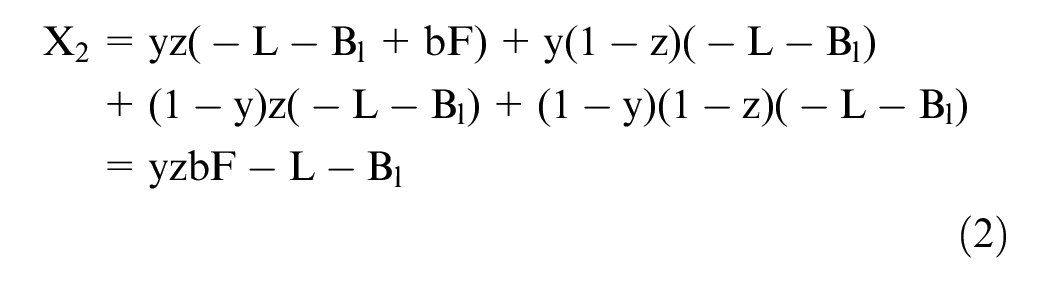
From the equations (1) and (2), it can be concluded that the replication dynamic equation for government is:

According to equation (3), when
Evolutionary Game Equilibrium Strategies of Consumers
The expected benefits of consumers choosing to purchase and not to purchase are respectively
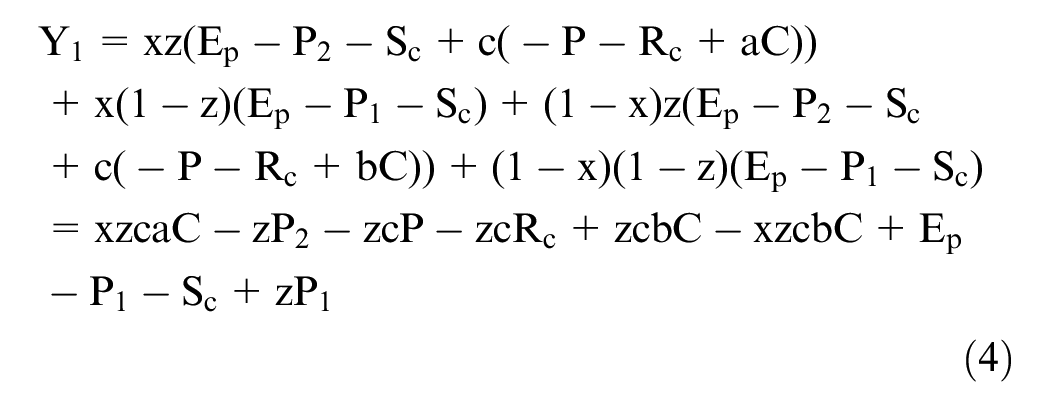

From the equations (4) and (5), it can be concluded that the consumer’s replication dynamic equation is:

According to equation (6), when
Evolutionary Game Equilibrium Strategies of Enterprises
The expected returns for enterprises to choose the strategy of discriminatory pricing behavior and normal pricing behavior are
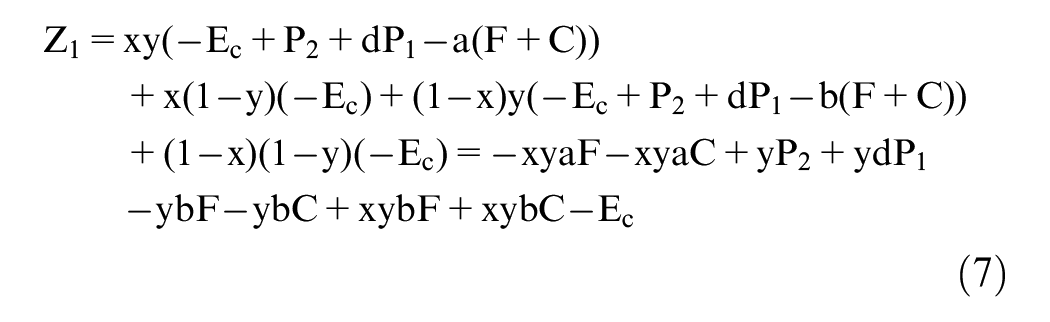

From the equations (7) and (8), it can be concluded that the replication dynamic equation of enterprises is:
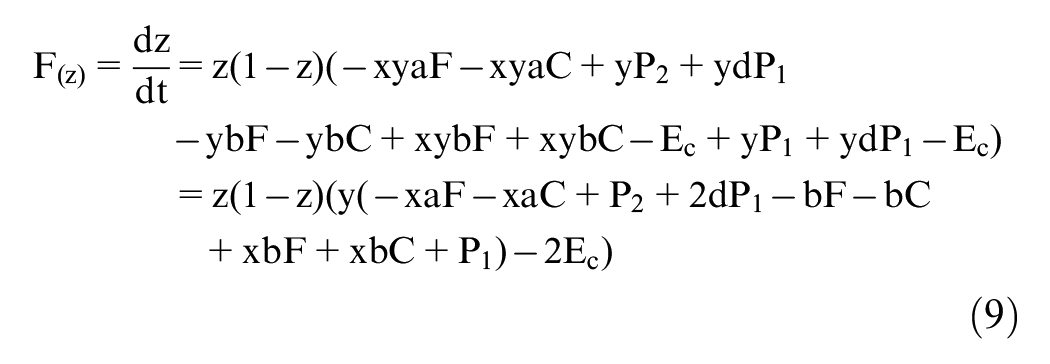
According to equation (9), when
Equilibrium Points and Stability Analysis of Tripartite Evolutionary Games
According to evolutionary game theory, the equilibrium points of the tripartite evolutionary game between government, consumers, and enterprises must simultaneously satisfy

Among them:









By substituting the values of the eight equilibrium points into the Jacobian matrix, the values of the three eigenvalues
Stability Analysis of Equilibrium Points.
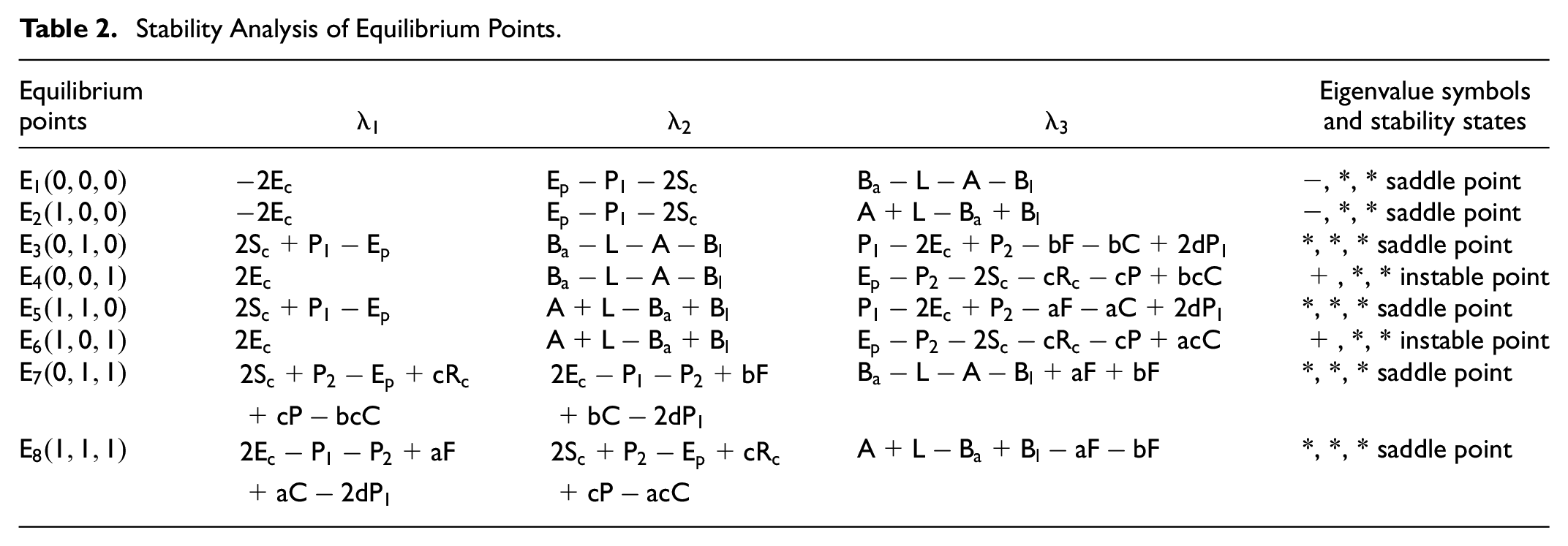
According to the theory of dynamical systems, the local stability of a system can be determined by the sign of the eigenvalues of the Jacobian matrix. Specifically, when the eigenvalues of the Jacobian matrix corresponding to a certain equilibrium point are all negative, the equilibrium point is locally asymptotically stable; in contrast, if at least one eigenvalue of the Jacobian matrix is positive, the point is unstable.
Stability analysis can reveal how the game situation changes and whether the equilibrium point remains unchanged. If the situation stays in equilibrium after a strategy change, the equilibrium point is considered stable.
From Table 2, if
If
If
If
If
If
Simulation Analysis
To verify the effectiveness of evolutionary stability analysis, the model is assigned numerical values based on values settings of previous studies and the actual situation, and numerical simulations are conducted using MATLAB2016a. The initial values are set as shown in Table 3, meeting the stability conditions of the points. Based on the initial values, the impact of
The Initial Values of Model Variables.

To analyze the impact of changes in
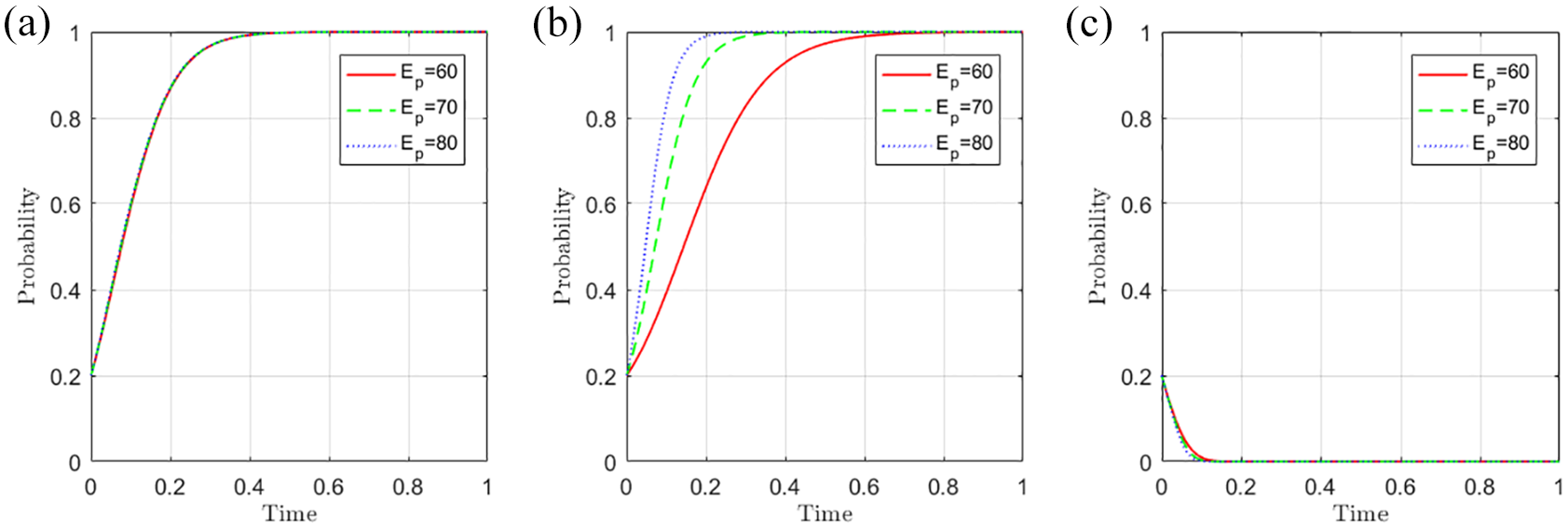
The impact of consumers’ evaluation price of products or services on: (a) government, (b) consumers, and (c) enterprises.
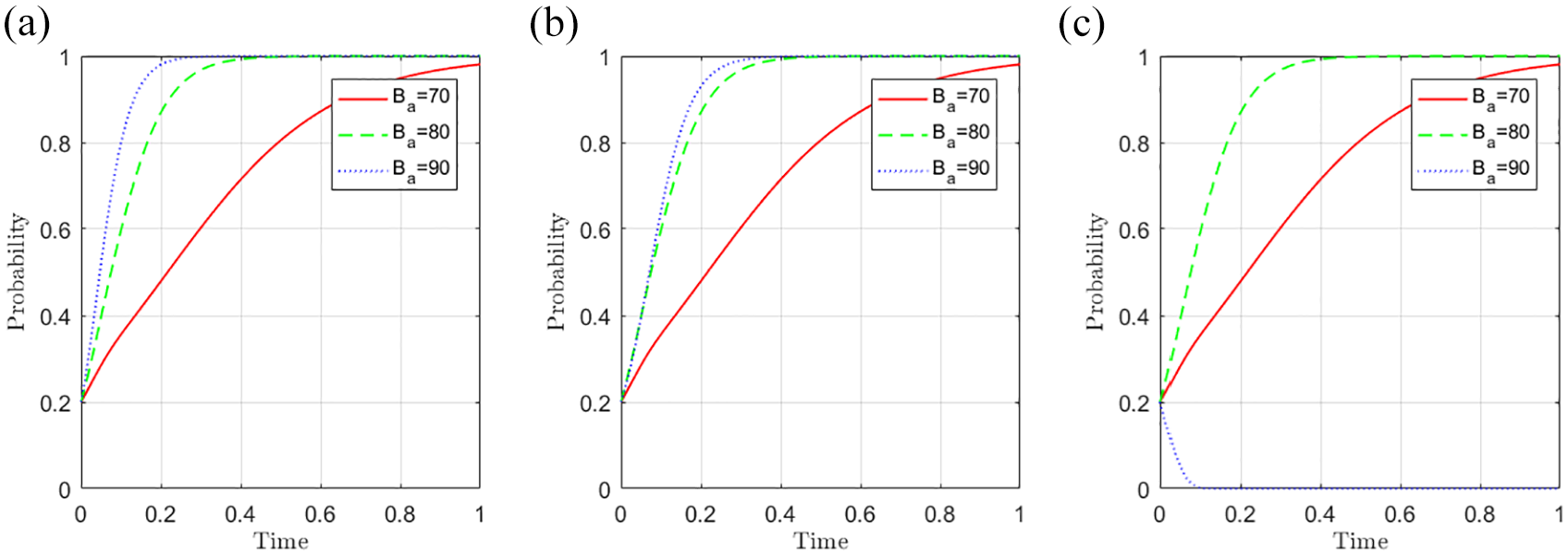
The impact of government’s benefits of active regulatory on: (a) government, (b) consumers, and (c) enterprises.

The impact of the fines imposed by government on enterprises on: (a) government, (b) consumers, and (c) enterprises.
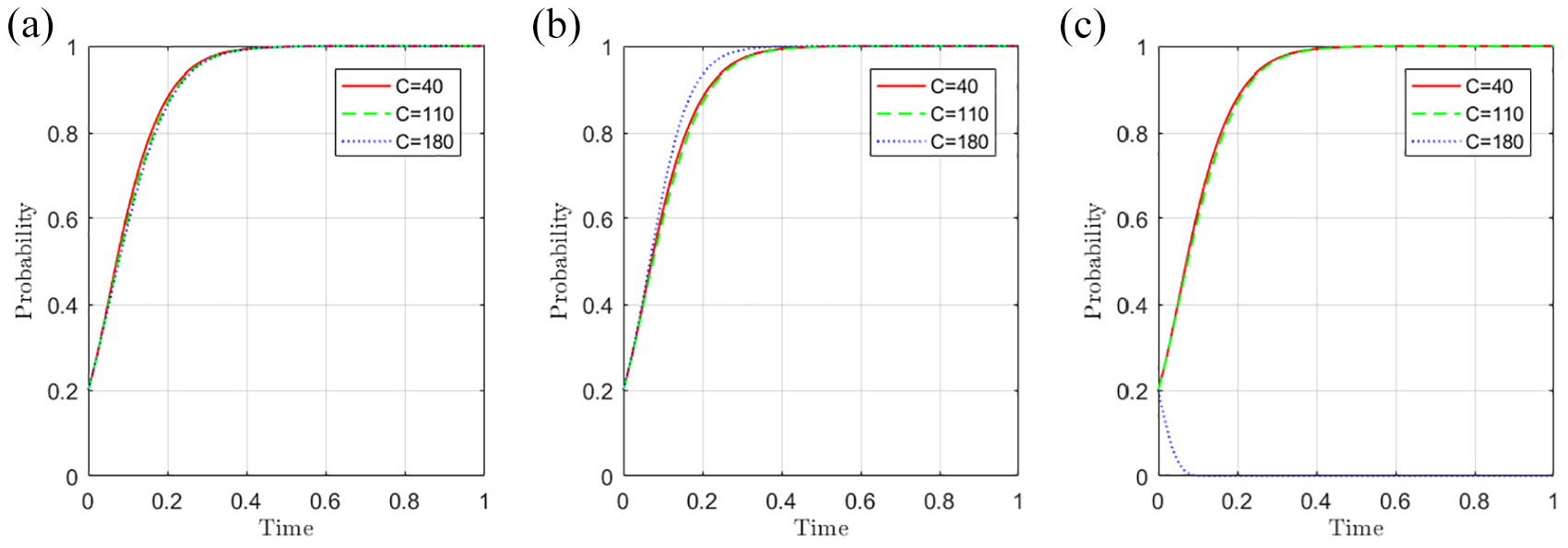
The impact of enterprises compensation on: (a) government, (b) consumers, and (c) enterprises.
From Figure 1, as consumers’ evaluation value
From Figure 2, as the government’s credibility
From Figure 3, the higher the value
From Figure 4, the evolution process shows that as enterprise compensation
Summary
Conclusion
In an environment where enterprises engage in BDDP, this study, based on the characteristics of the government, consumers and enterprises, as well as the frequent BDDP behaviors, introduces variables such as government regulation, enterprise pricing, and potential gains and losses caused by whether consumers make purchase, as well as penalties. Evolutionary game theory is used to construct a dynamic replication equation for the government, consumers and enterprises. It analyzes evolutionary equilibrium strategies for their behavioral choices. Using MATLAB simulations, the study identifies the stable strategy as (active regulation, purchase, normal pricing). The simulation results are consistent with the stability analysis results from Table 2, with the following conclusions obtained:
Firstly, increases in consumers’ evaluations of products or services do not significantly expedite the convergence of government and enterprises towards active regulation and normal pricing. However, these evaluations strongly influence consumer behavior and act as a factor that suppresses BDDP behavior by enterprises, thereby expediting enterprises’ adoption of normal pricing strategies. Enterprises must recognize that consumers are not only the source of profits but also their supervisor. Enterprises’ undertaking of social responsibility, upholding of market fairness, protection of consumers’ rights is important for long-term profit making.
Secondly, the credibility of government, the severity of penalties imposed by government on enterprises, and the compensation provided by enterprises to consumers are crucial factors influencing enterprises’ decision to adopt normal pricing strategies. Only when these factors are sufficiently robust do enterprises choose normal pricing strategies. Enterprises should develop a correct perception of revenue value and eliminate BDDP behavior. This approach encourages consumers to choose purchasing strategies and enables enterprises to sell products profitably. In doing so, consumers can enjoy the value of their purchases. This forms a mutually beneficial situation for both parties.
Thirdly, increased consumers’ evaluation of prices for products or services, enhanced government credibility, stricter penalties on enterprises, or greater compensation of enterprises for consumers can effectively suppress enterprises’ BDDP behavior. However, the impact of these measures varies. Moreover, for the model to converge towards (active regulation, purchase, normal pricing), the increase in compensation from enterprises to consumers can have a counterproductive effect by slowing down the convergence of the government towards active regulation. The higher the compensation amount, the slower the government converges to the active regulation strategy.
Countermeasures and Suggestions
Based on the above conclusions, to prevent enterprises from BDDP and promote a fair market environment, this study proposes the following suggestions from the perspectives of government, consumers, and enterprises:
(1) The government should exercise greater control over big data development by establishing a big data supervision platform that features advanced big data analytics functions. This platform can determine potential instances of BDDP by enterprise. It is crucial to provide consumers with accessible channels to safeguard their rights and cut related costs. It is also necessary to enact clear legal provisions that target big data fraud and impose huge fines on offending enterprises to increase the costs of illegal behavior. Besides, enterprises should be mandated to publicly disclose service agreements and payment rules.
(2) Consumers should enhance their awareness of their rights and promptly gather evidence when rights are infringed upon. Consumers should actively cooperate with authorities during investigations into BDDP behavior. It is crucial for them to adopt a rational consumption approach by critically evaluating products or services rationally before purchasing. They should avoid being deceived by inflated prices by comparing products from different providers.
(3) Enterprises should treat all consumers equally and uphold the principle of ethical management over short-term gains. Enterprises should maintain a positive brand reputation by abiding by the law and avoid price competition. They should maintain a long-term cooperative relationship with consumers and commit to normal pricing to create a marketplace that features integrity and fairness.
Future Work
This paper divides consumers into new and old users based on their attributes. It enriches the strategic assumptions to better reflect real-world scenarios and improve the effectiveness and applicability of the tripartite game model. Future research can delve deeper into the mechanism of BDDP and establish a signal game process between enterprises and users from the perspective of asymmetric information. This approach will enhance the strategic choices available to various subjects and improve the realism and usability of the simulation conclusions.
Footnotes
Declaration of Conflicting Interests
The author(s) declared no potential conflicts of interest with respect to the research, authorship, and/or publication of this article.
Funding
The author(s) disclosed receipt of the following financial support for the research, authorship, and/or publication of this article: This work was supported by the Projects of Jilin University of Finance and Economics (Nos: 2023YB021, 2024PY010), and Key Project of Jilin Provincial Education Science Planning (No. ZD23015).
Ethical Approval
The paper does not involve animal and human studies.

Data Availability Statement
Data sharing not applicable to this article as no datasets were generated or analyzed during the current study.