




Abstract
As one of the most unstable border areas, the China–Myanmar border has become a prevalent issue in international affairs in recent years, affecting a variety of policy debates from illegal immigration, illicit trade, geopolitical strategy, and continental bilateral cooperation. Baidu, currently the leading online search engine in China, has created the Baidu Index to gather and analyze internet search data. This study analyzed keyword searches on the Baidu Index related to the China–Myanmar border for the period 2011–2021. The study investigated search volume using trend research, demand mapping, and geographic and demographic distribution. The results showed steady growth throughout the 10-year research period for online searches on the China–Myanmar border, with a dramatic increase in 2015. Searches were mainly by men aged 20–39 years in southwest China. Baidu users were most interested in the trafficking of women and girls, followed by the 2015 Kokang conflict and ongoing COVID-19 cases in Ruili, Yunnan Province. Search trend data suggested that the fastest-growing topics of interest were maps of the China–Myanmar border, followed by militarized conflicts along the border. Policymakers can use the results of this study to understand the public concern about the China–Myanmar border in formulating more effective public governance measures.
Plain language summary
Based on a network perspective, this study uses the big data from the Baidu Index to analyze the keyword searches of Chinese netizens on the China–Myanmar border between 2011 and 2021. This approach provides a new angle in border security research. Motivated by the development of internet search trend gathering and analysis tools to provide a new batch of data for assessing public opinion about international relations and features of various border security issues, we draw on data to explore what Chinese netizens think about the China–Myanmar border. Simultaneously, we aim to establish whether the search trend data reflect real China–Myanmar border issues and to investigate the characteristics and priorities of people searching for information on the China–Myanmar border, which will facilitate more targeted border management and policies by government authorities. However, we do not acknowledge the factors shaping public attitudes about the China–Myanmar border. Although the Baidu Index is a reliable and novel data source for analyzing the border security issue from the public perspective in China, it does not reflect the uneven internet access concerns based on geographic regions.
Introduction
The China–Myanmar border, which stretches for 2,186 km through dense forest and mountainous terrain, is an unstable and geopolitically sensitive boundary. Since Myanmar’s independence in 1948, the border has witnessed conflicts between government troops, communist guerrillas, ethnic rebels, and a variety of militias, resulting in vast numbers of displaced people entering China (Han, 2020, p. 472). Myanmar’s side of the lawless border has led to such problems as insurgency, illicit drug flows, the transmission of HIV, sex work, and gambling (Liao, 2009). In Yunnan, the Chinese province adjacent to northern Myanmar’s Shan and Kachin states (Su & Li, 2021, p. 65), law-enforcement authorities have been enforcing rigorous border controls to prevent drug trafficking from Myanmar and the illegal flow of crossing into and out of Yunnan. Since the start of the pandemic, Myanmar has had severe outbreaks of COVID-19, compounded by escalating instability after the military government took over in February 2021. China is also tightening controls over the frontier as it seeks to limit the spread of COVID-19 in neighboring districts, particularly in Muse–Ruili, the main border crossing town between China and Myanmar. With the rise of China, there has been increasing competition with the U.S. for influence in East and Southeast Asia (Han, 2017, p. 64). Chow and Easley (2021) argue that it is critical for China, as a rising global power, to seize its control in the area, particularly the Bay of Bengal and the Indian Ocean, where Myanmar is located. According to Han (2017, p. 70), the geopolitical competition between the U.S. and China has given Myanmar more leverage to reduce its dependence on China. Significantly, the Chinese government proposed the concept of the China–Myanmar Economic Corridor under the umbrella of China’s Belt and Road Initiative on November 19, 2017 (Vineles, 2019). As Y. Sun (2020) notes, Beijing has viewed the growing U.S. presence in Myanmar as a potential threat to Chinese access to the Indian Ocean, oil, and gas pipelines, and even the security of its borders. As a result, China is keenly concerned with maintaining security and stability along its porous border with Myanmar. Beijing government needs to maintain its advantageous position within the strategically significant border area or prevent further deterioration of its current interest in Myanmar.
Vast research is derived from data from questionnaire surveys and government statistical reports, which are traditional ways to study public opinions. Nonetheless, government reports are often collected and released after incidents have occurred and are based on insufficient samples. Questionnaire surveys are susceptible to problems of variance in participants’ characteristics, which may lead to inconsistent results (Lu et al., 2018, p. 1,598). On the contrary, big data from user-generated material online is an alternative method for revealing the public perspectives of netizens. Search engines, such as Google, Bing, and Baidu, have expanded the effectiveness of the internet as tools for both work and life. In China, Baidu is presently the most popular search engine, with 90.9% of internet users choosing it as their primary and preferred search engine (Wang et al., 2020, p. 707). Baidu has launched the Baidu Index, which provides the attention frequency of a keyword in Baidu for a particular period. Therefore, at a population level, an investigation of these online search results can illustrate the interests of internet users and patterns of information-seeking behavior through search keywords. Significantly, analyzing the relationship between users’ level of attention to keywords according to the timeliness of internet search data can aid policymaking and promote sustainable development.
Despite the recent prominence of the China–Myanmar border in China’s national security and the fact that related issues like governance policy and defense spending have been extensively researched, there is surprisingly little research on the impact of public attention on China’s borderlands. The map image of nations and lines demarcating the border are imprinted on the public consciousness (Agnew, 2002, p. 14; Jones, 2012), and that concern about the porous border provokes public anxiety (Ackleson, 2005, p. 171; Andreas, 2003, p. 85; Newman, 2006, p. 155). A growing scholarly realization that these search engines can provide a window on public interest in any manner of issues. According to Li et al. (2021), search engine queries contain a critical mass of data about various topics of public concern. Although the issue of borders has not been a recurrent concern in public opinion research, several studies have investigated how the public thinks proximity to (or distance from) international borders shapes policy preferences in relevant fields (Gravelle, 2018, p. 112). For example, some western experts observed that Americans expressed enhanced concern over illegal immigration and criticism of the government’s response to the situation at the U.S. –Mexico Border as Border Patrol apprehensions once increased in the spring of 2021 (Pew Research Centre, 2022). Indeed, fortifying the U.S. borders, particularly the southern border with Mexico, has long been a crucial political issue for security and economic reasons. For public governance researchers, this kind of information from internet search data could also be valuable for understanding public concerns on border security issues (Wong, 2019). To address this, these studies, mainly using Google Trends, have focused on monitoring international migration, and quickly obtaining information on border migration flows (Wanner, 2021, p. 1,194).
Moreover, previous studies have demonstrated that there were connections between the vast amounts of data from internet searches and the reality of social behavior to improve the prediction efficiency of the model. This research method has been usually applied to epidemiological surveillance and prediction for public health policies when Aksoy et al. (2020) used Google’s search analytic functions and discovered a high correlation between the degree of the internet presence of some keywords related to infectious diseases and patients, such as public awareness of and policy responses to the COVID-19 pandemic. Meanwhile, a growing number of studies, such as those on the interaction between banks and clients, have conducted business analysis by employing data from online searches (Seçkiner Bingöl, 2022, p. 972). Consequently, internet search data can be used to track and predict socioeconomic phenomena, and it is possible to provide direction on policymaking through data analysis and identify effective ways to solve social issues.
However, no detailed research has focused on Chinese public concerns about the China–Myanmar border. Thus, this study endeavors to fill this gap by analyzing the keyword searches of Chinese netizens on the China–Myanmar border based on a network perspective. This approach provides a new angle in border security research. Motivated by the development of internet search trend gathering and analysis tools (such as the Baidu Index) to provide a new batch of data for assessing public opinion about international relations and features of various border security issues, we draw on data to explore what Chinese netizens think about the China–Myanmar border. Simultaneously, we aim to establish whether the search trend data reflect real China–Myanmar border issues and to investigate the characteristics and priorities of people searching for information on the China–Myanmar border, which will facilitate more targeted border management and policies by government authorities.
The rest of the paper is structured as follows. Section “Data and Method” introduces the data and method. Section “Results” presents the results, and Section “Discussion” discusses them. Section “Conclusion” provides conclusions, implications, and limitations of the study.
Data and Method
The number of internet users in China reached 1.051 billion, and the internet penetration rate was 74.4%, with 99.7% of users accessing the internet via mobile devices (CNNIC, 2022). Baidu (https://www.baidu.com) is the largest Chinese search engine, colloquially known as the Chinese version of “Google.” Baidu has developed its Baidu Index service using massive data to provide search trends for specific keywords, obtain insights into changing netizen demands, track media public opinion trends, and identify user preferences. Such data can be mined to make inferences about the public’s perceptions of the China–Myanmar border. We have found that big data sources contain rich detail, including perceptions, behaviors, and concerns, which provide a theoretical basis for research. Since June 2006, a PC search index has been added to the Baidu Index, and since January 2011, a wireless mobile search index has been included (Wang et al., 2020, p. 709). The search devices used are divided into three categories: PC, mobile, and PC + mobile. The Baidu company states that they respect and protect the privacy of Chinese Internet users when they use Baidu Index products or services. Each user’s search behavior in the Baidu search engine is a display of active will and therefore indicates their consent to the use of their personal data in accordance with the platform’s privacy policy.
It is important to note that the leading social media platforms in China, such as Weibo and WeChat, may resemble search engines in many situations. They also provide marketers with specialized Weibo and WeChat Index tools to understand the platform users search for. While this enables the Weibo index to collect a wealth of information that could be indispensable for marketers looking to tailor their message for particular audience, it is still primarily PC-based and marketing strategy (Hu, 2020). Similarly, although WeChat could record all users and search-related data, WeChat Index does not display any related keywords, audience analysis, or geographical distribution (Dudarenok, 2018). In contrast, it is easy to use the Baidu Index: it entails visiting the Baidu Index website; typing search terms into the Baidu Index box; selecting the searched period, scope, and location; clicking on “Baidu”; obtaining the trend line for the keywords for the corresponding period and area. The trend graph can show the daily search frequency for the searched topic within the region by sliding the mouse over the trend line. Each online query provides demand mapping and a demographic and geographic distribution map. With over 90% of the market share in China, Baidu is the most popular search engine in Chinese (CNNIC, 2022), and Chinese netizens cannot use Google search services in mainland China. Thus, it is suitable to apply search index data from Baidu instead of Google or another search platforms.
To examine internet users’ attention toward the China–Myanmar border, we queried the Baidu Index (https://index.baidu.com) using the Chinese search term “中缅边境” (“China–Myanmar border”) as a basic keyword within mainland China from January 1, 2011, through January 1, 2021. In other words, employing a Chinese search engine ensured that the results were not affected by variances in language spelling (Janc, 2015, p. 14) and reflected a normalized search volume rather than an absolute search volume for the chosen terms. Our core search term employed here almost captures all the interest in this issue, avoiding other ways to phrase a search that might be missed. Most Chinese users would typically type in the Chinese term “中缅边境” instead of “中国和缅甸边境.” In this way, we did not have to consider that some individuals would refer to the English term—Myanmar as Burma or China as the People’s Republic of China. Then, the search index webpage appeared with three types of classification at a specific time: trend research, demand mapping, and demographic/geographic distribution images.
(1) Trend research involved users setting the search time, search devices, and search areas to obtain the degree and variation trend of internet users’ attention toward the China–Myanmar border, reflecting the popularity of the China–Myanmar border at different times to a certain extent. A, B, C, D, and other letters were used to identify some points on the graph that can be connected to a specific event the Chinese netizens were concerned about. Policy researchers and makers can gain further insight into the variables that contributed to the peaks and valleys of the chart by viewing the pertinent content.
(2) Demand mapping was a segmentation of the demand for the most popular and most frequently searched related keywords based on the behavior of online users searching for information on the topic of the China–Myanmar border. Viewing snapshots of the related keywords at different time periods can be useful for gaining a sense of how the searches have changed over time.
(3) Demographic and geographic distribution images adopted the data mining method to conduct cluster analysis on network users searching for information on the China–Myanmar border topic. The map illustrated search volume distribution by province. Even more, the data can be further drilled down to the levels of area and city (Fang et al., 2021, p. 63). Meanwhile, audiences were broken down by gender and age distribution. Viewing the data series with the audience in mind can provide a wide range of possibilities for reaching people across various demographics and directing policy preferences.
Notably, the Chinese government’s “Great Firewall” is the most sophisticated internet censorship apparatus in the world (Moynihan & Patel, 2021). The content targeted for blocking, including significant search engine and social media platforms, usually contains criticism of controversial policies, individuals, or events that are considered against the Chinese one-party system or threaten national security (Xu & Albert, 2017). In addition to severely curtailing freedom of coverage, the scope of the impacted content is constantly expanding, leaving Chinese users with access to only a heavily filtered, manipulated, and monitored version of the internet (Moynihan & Patel, 2021). As required by the government, major internet platforms in China established elaborate self-censorship procedures. Consequently, the Baidu Company employed teams and invested in powerful artificial intelligence algorithms to regulate and remove illegal online content, as well as to assess internet posts using keyword searches and compile reports for decision-makers (Saiidi, 2018). For instance, the Baidu index could block some details pertaining to the reality of the ethnic disputes between the China and Myanmar border to combat disinformation and ideological infiltration. Just recently, the Chinese authorities asked Chinese online platforms, like Baidu, must be obligated to reveal users’ locations based on their internet protocol (IP) addresses, and users cannot turn off this function. If the IP address is situated outside China, the user’s nation or region will be displayed instead (J. Dong, 2022). Since different search intentions will have different effects on the degree of reflection of the social attention of the China–Myanmar border, our results from Baidu Index may, in this case, easily disregard the real motivation behind the crowd’s search behavior while gathering data by keyword input.
Additionally, given that the data source of the Baidu Index is the users of the Baidu search engine, the search engine cannot fully reflect all viewpoints. More obviously, the reliability of the Baidu data is an indicator of public sentiment that could be caused by, for example, uneven internet access based on wealth or geographic region. However, we can identify these factors from demographic and geographic distribution maps in the Baidu Index and then facilitate policy initiatives on target groups and regions. Even though it is uncommon to apply the Baidu index to research in emerging information border security studies, the data can reflect changes in public attention about the China–Myanmar border over time. Therefore, we use the Baidu index as a data analysis tool to establish a theoretical analysis model on public concerns, which serves as a tailored reference for formulating public policies by pertinent decision-making authorities.
Results
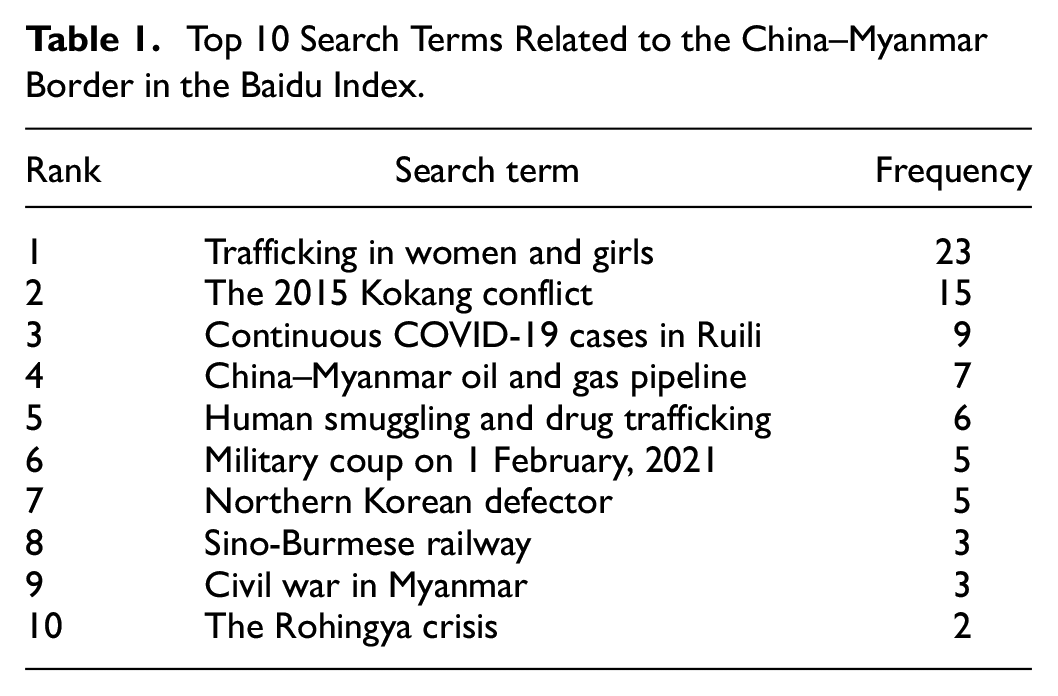
The online search trend for the keyword “China–Myanmar border” showed steady growth throughout the ten years but increased dramatically in 2015 (Figure 1). A similar trend was observed for both mobile devices and PCs. The ranking of top search terms related to the China–Myanmar border indicated that Baidu users were most interested in the trafficking of women and girls, followed by the 2015 Kokang conflict and continuous COVID-19 cases in Ruili, Yunnan Province (Table 1). Search trend data indicated that the map of the China–Myanmar border, followed by militarized conflicts along the China–Myanmar border, were the fastest-growing topics of interest among Chinese netizens (Table 2). A comparison of the Baidu Index-generated China map revealed geographic disparities in search volume pertaining to the China–Myanmar border, with bluer areas, provinces, and cities representing a higher search volume (Figure 2). These maps showed a broadly similar trend, indicating a significant degree of interest in the China–Myanmar border among internet users in southwest China. However, the highest number of search inquiries came from areas near the China–Myanmar border, where people were more interested in learning about the border than those who were farther away. In addition, the demographic profiles revealed that the majority (61.39%) of “China–Myanmar border”-linked search inquiries (Figure 3) came from men and that 61% of the whole sample (men and women) were aged 20–39 years.
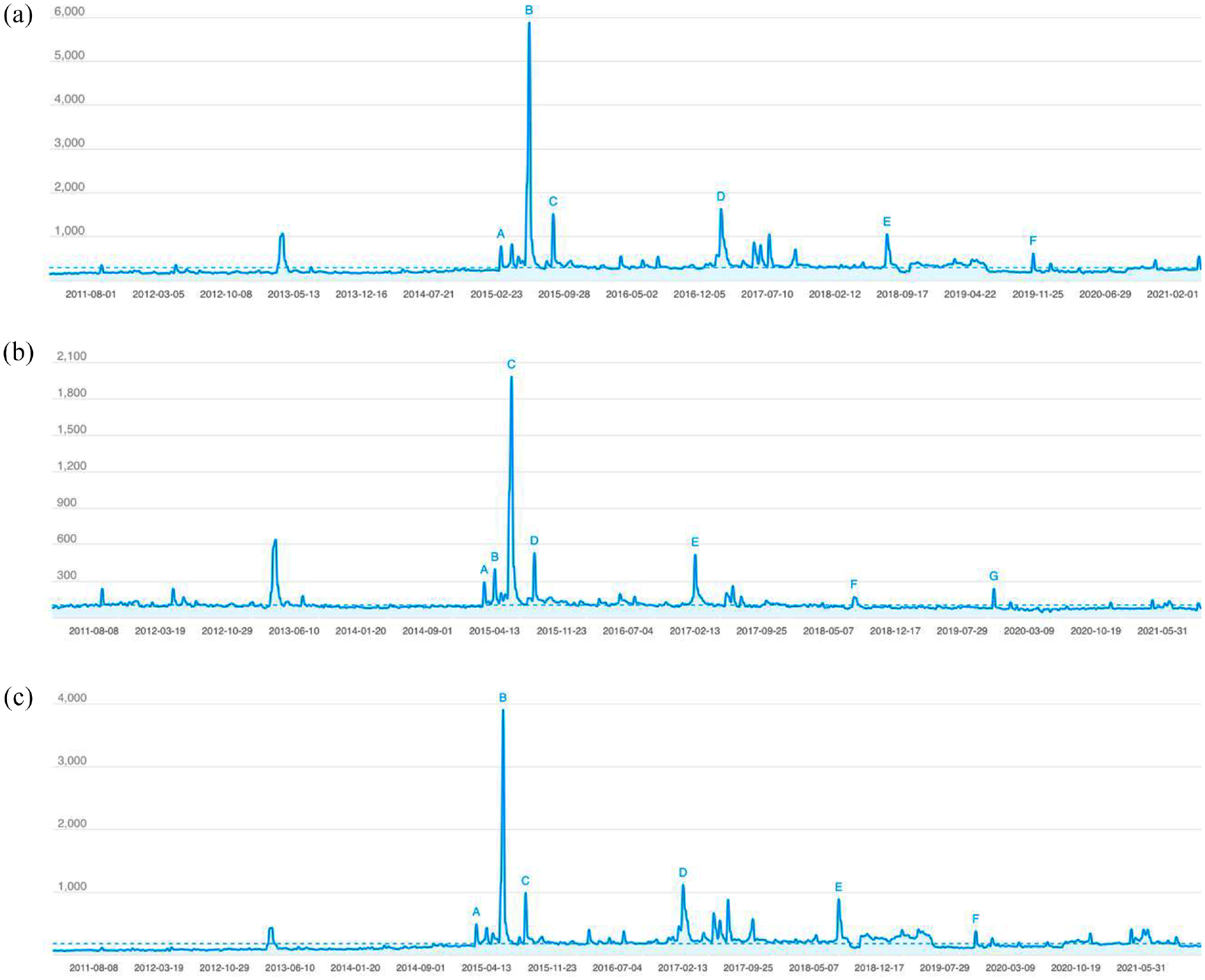
Baidu search volume index in China during 2011–2021 for “China–Myanmar border.” The average value of search volume: (a) the overall search trend index, (b) personal computer search index, (c) mobile wireless search index.
Top 10 Search Terms Related to the China–Myanmar Border in the Baidu Index.
Top 10 Rapidly Increasing Search Terms Related to the China–Myanmar Border in the Baidu Index.


Baidu index maps for “China–Myanmar border” by region (a), province (b), and city (c), 2011–2021.
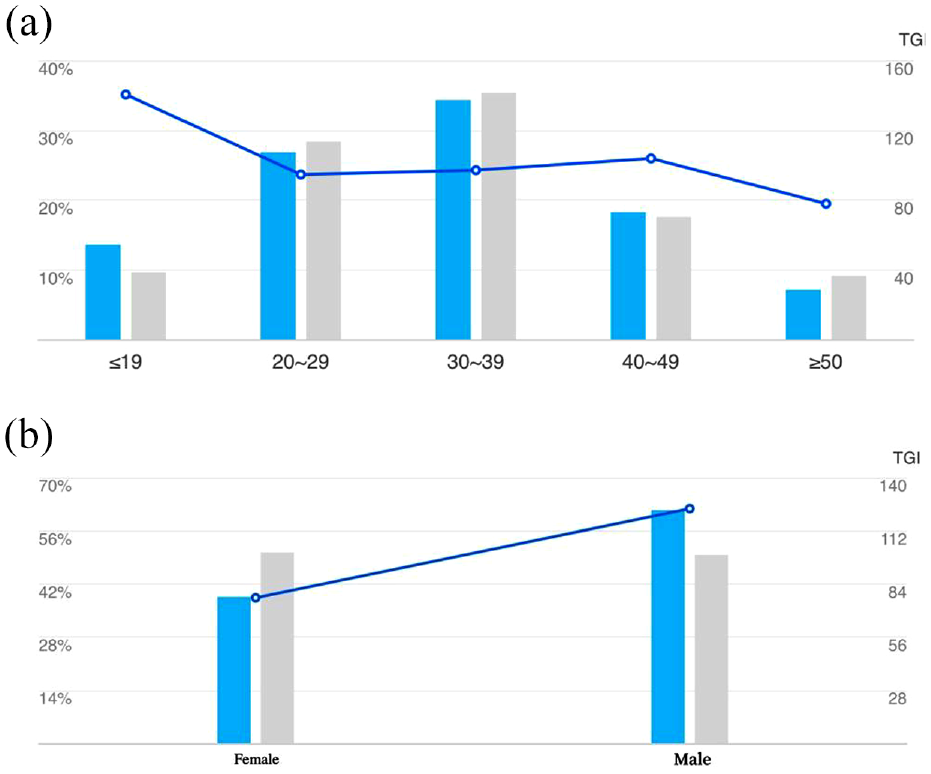
Demographic profiles by age (a) and sex (b).
Discussion
Due to China’s wide geographic variety and enormous population, border control regulations and public policies about border security are challenging to implement. Widespread internet usage and access to search engine query data provide a vital source of information for decision-making (Li et al., 2021). Indeed, search engine query data has been successfully applied in many research fields, such as public environmental appeal, tourist forecasting, prediction of disease trends, and university ranking. Likewise, analysis of such data for societal and behavioral understanding is becoming more prevalent (Mayer-Schomberger & Cukier, 2013, p. 251) in the social sciences and policymaking processes (Struijs et al., 2014). In this regard, our study highlighted the possibility of leveraging information about online search data from public concerns about the China–Myanmar border to facilitate targeted border management and policy preferences.
Trend Research
Our research illustrated that, despite some fluctuations, search volumes for the keyword “China–Myanmar border” have been rising steadily over the last 10 years, with a dramatic increase in 2015. This might be attributed to the development of China–Myanmar bilateral relations, high public awareness of national sovereignty, and increased internet penetration, especially with universal smartphone availability. For example, according to The Diplomat (2015b), with the landslide victory of Myanmar’s National League for Democracy (NLD) in the November general election, China expected a new chapter in Myanmar’s internal politics and foreign policy under the new Myanmar leadership at the end of March 2016. Meanwhile, Peng (2018) reported that Aung San Suu Kyi’s NLD government had made efforts to consolidate its relationship with China. Thus, they signed agreements to build a deep-water port in Kyaukpyu and create China–Myanmar border economic cooperation zones, as well as restarted the contentious Letpadaung mining project and reopened the China–Myanmar oil pipeline. Beijing provided the Myanmar government with economic aid and political support for the Rohingya crisis in 2017 and peace negotiations in northern Myanmar (Lambert, 2018). More importantly, Myanmar has been formally incorporated into Chinese President Xi Jinping’s Belt Road Initiative since 2018, boosting bilateral relations between the neighboring countries through planned economic cooperation zones, cross-border railway lines, and other mega development projects.
In addition, conflicts between the central government of Myanmar and the ethnic-Kokang Myanmar National Democratic Alliance Army were what caused the search volume to surge in 2015, resulting in an estimated 40,000–50,000 people fleeing to China from the Kokang area. Kokang had close relations with China, as evidenced by the fact that inhabitants used the Yuan as currency and spoke a dialect of Chinese (BBC News, 2017). As Chinese reports of bombing from the Myanmar side of the border started to spread, foreign ministry spokesperson Hong Lei expressed the Chinese government’s desire for Myanmar to stop such incidents (People. cn, 2015a). Meanwhile, five Chinese individuals were killed, and nine others were injured by bombs that fell on the Chinese side of the border (People. cn, 2015b). Clearly, the Kokang conflict in 2015 sparked massive public resentment against Myanmar in China because the deaths particularly upset nationalist internet users at that time. The escalating conflict in the borderlands has also increased the tensions between Myanmar and China. According to The Diplomat (2015a), with enormous numbers of refugees crossing the border and citizens being injured or killed, the conflict cannot be resolved via traditional diplomatic channels. Chinese citizens were calling for tougher responses. In the face of public outrage, the Chinese government retaliated with harsh rhetoric but avoided military engagement in favor of tighter border restrictions, dialog with Myanmar’s government, and participation in a seventh round of ceasefire negotiations (The Diplomat, 2015a).
As shown above, the development of China–Myanmar bilateral relations, military border clashes that threatened national security, and increased internet penetration could contribute to public concerns about the China–Myanmar border, which can provide a public understanding of border issues for the Chinese governmental and semi-governmental institutions. Correspondingly, Chinese policy decision-makers can conduct research and analysis to examine key dynamics in the China–Myanmar relationship and Myanmar’s foreign policy. Research on the implementation and consequences of China’s major investment projects in conflict-affected areas, such as the Belt and Road Initiative, humanitarian assistance, post-conflict reconstruction, and Beijing’s evolving approaches to play a mediator role in Myanmar’s domestic peace process, can be used to explain China’s bilateral diplomacy with Myanmar and even China’s proposal for a Global Security Initiative (J. Dong, 2022, p. 35). In terms of the great attention that the Chinese netizens paid to the Kokang conflict in 2015, the Chinese government can facilitate rigorous border controls along Kokang areas to maintain border security, since a prosperous and stable Kokang is advantageous for the Bangladesh-China-India-Myanmar Economic Corridor, oil and gas pipelines, and other transportation infrastructure, as well as the protection of the local ethnic Chinese population (Myers, 2020). Undoubtedly, as a resource-abundant country and a close neighbor, Myanmar has been a strategic destination for Chinese presence.
Furthermore, we found that mobile and PC searches were consistent for the China–Myanmar border, but the frequency of searches on mobile devices was higher than that on PCs, possibly due to technological advancements in mobile devices in recent years. Based on the rising usage of mobile devices among netizens to obtain information about the China–Myanmar border, the Chinese government’s desire to regulate the border by recognizing public concerns can be more effective in targeting audiences with the use of mobile social media.
Demand Mapping
Changes in search term information over time can identify variables of public concern about border security and, in certain cases, help find solutions to social security issues. In this study, the results showed that the top three search terms related to China–Myanmar border were the trafficking of women and girls, the 2015 Kokang conflict, and ongoing COVID-19 cases in Ruili. According to Johns Hopkins University & Kachin Women’s Association Thailand (2018), thousands of women and girls have been trafficked from Myanmar to China, where they were forced to marry and bear children. In four Myanmar districts (Kachin State and Northern Shan State) and one Chinese prefecture bordering Yunnan Province, approximately 7,400 women and girls were reportedly coerced into marriage, with over 5,000 being forced to bear children with their Chinese husbands (Hung, 2021, p. 8). There was a serious gender imbalance in China due to its formerly persistent one-child policy; this disparity created a demand for bride trafficking from China’s neighboring countries. In Myanmar, situations influenced by conflicts, forced relocation, land confiscation, and human rights violations have spurred massive landlessness and unemployment, leading to an increase in illegal immigration to China (Dholakia & Barr, 2020). At this point, human trafficking sparked the attention of Chinese netizens because it could indeed threaten the stability of the China–Myanmar border, and even national security.
Policymakers have long been concerned about security along the porous China–Myanmar border due to notorious security issues, such as drug trafficking, human trafficking, and illegal gambling (Han, 2017, p. 64). It seemed certain that China has been aware of the issue of human trafficking at its borders and has even committed to rescuing those who have been trafficked, some of whom were citizens of mainland China and Hong Kong (Naing, 2022). Influenced further by public awareness of human trafficking, officials can co-sponsor and participate in trafficking prevention training programs in collaboration with international organizations (Dholakia & Barr, 2020). Even more, the Chinese government can construct border fences as a pandemic-mitigation strategy while also curbing transnational trafficking.
While the COVID-19 pandemic appeared to be under control across much of China, Myanmar has seen a continuous spike in COVID-19 cases. As it attempted to control a COVID-19 epidemic in nearby areas, China was enforcing more control over its convoluted border with Myanmar. Due to a lackluster healthcare system and growing unrest brought on by the military taking control on February 1, 2021, Myanmar has been struggling with COVID-19 (The Diplomat, 2021). The authorities at Ruili, one of the main border crossings between China and Myanmar, were apparently afraid that the Myanmar people would attempt to flood into China across the border. The Chinese government tightened controls in Ruili, since it reported an increase in COVID-19 cases during mass testing (Griffiths, 2021). Consequently, Ruili went into lockdown for several months, with substantial economic damage, sparking attention from Chinese netizens. The pandemic has devastated Ruili, draining the city of life and hope (Kobayashi & King, 2022, p. 1,021). Given the situation, the Chinese government built a tighter border barrier than before. The long-standing concerns about the porous frontier have been heightened by the threat of COVID-19 returning to China via a back door (The Diplomat, 2021). The border has always been plagued by drug smuggling and human trafficking, and local governments faced the additional challenge of coping with thousands of people fleeing the threat of COVID-19 and military conflict (Zheng, 2021). Therefore, the COVID-19 outbreak and livelihood dilemma in Ruili can increase public anxiety about the China–Myanmar border.
In response to sporadic epidemic flare-ups and to alleviate public anxiety over the impact on local livelihoods, Ruili authorities can adjust its epidemic risk classifications. In response to public concerns, Ruili authorities can adopt measures to subsidize businesses and residents, which can assist them in temporarily addressing financial problems (Liu, 2021). To better execute the dynamic zero-case policy, more precise anti-epidemic actions that can achieve a balance between epidemic control and residents’ regular livelihoods are likely to be laid out in Ruili.
In the meantime, we found that maps of the China–Myanmar border, followed by militarized conflicts along the China–Myanmar border, were the topics of the fastest-growing interest among Chinese netizens (Table 2). To our surprise, the China–Myanmar border map (Figure 4) was the most rapidly growing search term related to the China–Myanmar border in the Baidu Index, which might be to show the exact location of the China–Myanmar border. Indeed, many Chinese people might know where Yunnan Province is, but they might not know where Myanmar is, or the precise location of the China–Myanmar border. Militarized conflicts along China–Myanmar border was another term searched for frequently, since the borderland area between Myanmar and China had a long history of military insurgency (Han, 2017, p. 61). The interest in militarized conflicts by netizens could reflect their growing awareness of international relations and security issues. It is noteworthy that the search volume about Northern Korean defectors by Chinese netizens has increased rapidly over the past decade (Hung, 2021, p. 9). Yunnan has historically been a destination for people seeking asylum because of its loosely policed border, while the region has also functioned as a conduit for refugees from North Korea (Sparke, 2018, p. 487). According to CNN (2009), some defectors were arrested in Myanmar in early December 2008 while attempting to flee to South Korea through China and Southeast Asia. As a result, although the Chinese government has developed strict policies to curb illegal immigration, especially refugees from Myanmar, and workers, defectors, and refugees from North Korea, internet users were concerned about the illegal refugee influx.

Map of China–Myanmar border.
Clearly, the Chinese public has long been anxious that their country’s porous borders with Myanmar have made it accessible for illicit capital flows and human smuggling, as well as offered an outlet to dissenting sentiments (Strangio, 2020). Yunnan has traditionally been a route for Uighurs and other individuals seeking asylum in the West (Sparke, 2018, p. 485). Also, the public has been concerned about ideological infiltration, which would be typically used to describe any anti-state operations to overthrow the Chinese Communist Party (Strangio, 2020). Hence, the public sector can strictly control the border fence to prevent the smuggling of ideologies it perceives as dangerous—not just opium, jade, and prostitutes. In this context, policymakers in public governance can better maintain border stability based on public concerns by employing the Baidu Index’s statistics of the top search terms and fast-growing search terms for the keyword “China–Myanmar border.”
Demographic and Geographic Distribution
In the analysis of the geographical differences, we found that interest search trends in the Baidu Index could reflect, to some extent, the actual border-security research trends at a national level. As expected, given the location of the border, the search volume for the China–Myanmar border in south China was considerably higher than in north China. To investigate the regional difference, this study delineated China into seven traditional geographic areas. As shown in Figure 2, the seven regions (east, southwest, north, south, south-central, northeast, and northwest) were descended and arranged according to the volume of search queries. Socioeconomic development gaps between regions may impact public perceptions about border security. People in China’s eastern and southern areas have a better economic situation than those in the northern and western sections; thus, their ability to acquire knowledge on border security varies considerably. Meanwhile, the varied Baidu Index search volumes among these seven geographic regions may reflect the focus of regional educational institutions on the China–Myanmar border and border security research. In research from J. Sun and Ding (2021, p. 22), the volume of Baidu Index searches in different regions was shown to be similar to the number of border security studies conducted by universities in each region. Like the regional distribution, the Baidu Index search volume on the China–Myanmar border showed significant disparities at the provincial and city levels.
With more significant search volumes, Baidu users from Guangdong and Beijing have higher socio-economic and education levels. Even though this may indicate that the Baidu Index lacks sufficient resolution to evaluate border security research trends, the two regions have larger populations, better internet infrastructure, better educational conditions, and higher levels of national security awareness, where people tend to focus on border security. Education level seems to be significant for overall public governance, political stability, and government performance. Higher levels of educational attainment can improve human capital, productivity, and income (Baluga & Carrasco, 2020); as a result, more educated individuals are produced throughout time who can better drive and monitor governmental operations.
In the ranking of provinces, Yunnan stably ranked first, followed by Guangdong. Notably, with Yunnan serving as a critical hub connecting South Asia and Southeast Asia, China has been utilizing the comparative advantages of various areas in the country to further its Belt and Road Initiative (Summers, 2021, p. 215). As a result, Yunnan might make the most of its location to create a land route connecting China with the South Pacific Ocean and the Indian Ocean, providing substantial job opportunities for people in Yunnan. Yunnan’s capital city, Kunming, has already made significant infrastructure investments to enhance the province’s external connectivity with neighboring nations, created a new center for economic cooperation in the Greater Mekong Sub-region, and turned the region into a fulcrum for China’s opening up to South Asia and Southeast Asia (Ferdinand, 2016, p. 952). The Kachin people, the main ethnic group in Kachin State located in northern Myanmar, were historically descended from the same ancestors as the Jingpo ethnic group in Yunnan province (New, 2017), and they share certain customs and a language. In this context, netizens in Yunnan would pay more attention to the socioeconomic development of the China–Myanmar border, and Yunnan universities could conduct more research on China–Myanmar border security.
The oil and gas pipelines from ports in Myanmar to Yunnan Province would be China’s most significant project in Myanmar. Yunnan Province drafted and presented a proposal to the State Council for the construction of the energy pipelines. In accordance with the central government’s strategy to diversify energy acquisition, Yunnan continued to propose to them the development of a Border Economic Cooperation Zone (Yoshikawa, 2022, p. 152). Evidently, Chinese internet users have been conscious that local governments have the capacity and obligation to engage in foreign economic connections to boost local socio-economic development, which could play a critical role in policy decision-making. Yunnan still, is the centerpiece of public concerns and public policy between the China–Myanmar border. There would be decent odds that Chinese local government proposals can be directly integrated into the central government’s policy, given Beijing’s priority on fostering connections with Southeast Asian nations.
As shown in Figure 3, the bulk of online search queries for “China–Myanmar border” (61.39%) came from men, and 61% of the whole sample (men and women) were aged 20–39 years, which meant that young men were more concerned about the China–Myanmar border than other demographics. The China–Myanmar border has been concerned with the state connected to traditionally masculine activities, such as war, conflict, defense, competition, weaponry, strategy, and geopolitics (Jesus, 2014). In public diplomacy scholarship, the number of men studying political science may be much higher than that of women (Maliniak et al., 2013, p. 911). Consequently, male internet users were more interested in border security research and international relations than female internet users. Meanwhile, young adults were more likely to learn about the China–Myanmar border than older people and children. Importantly, with the development of bilateral trade between China and Myanmar, the border regions could provide many job opportunities for young adults. Furthermore, the Target Group Index (TGI) can reflect the ability of a target group to be strong or weak within a specific research field (e.g., media audience, demographic area, geographic region, consumer product), making it possible to show differences in the attention of users with different characteristics (Evers, 2022, p. 395). A TGI of 100 is the average level, while a TGI greater than 100 shows that the user pays more than average attention to an issue. In our study, a higher TGI suggested a stronger interest in China–Myanmar border-related information among those aged under 19 years, despite a smaller search volume.
In this way, a good deal of demographic data is justified on the grounds that it can lead to improved population distribution in policy decision-making. Given the long-term demographic consequences of current population age and gender differences, policy researchers can sometimes make valuable predictions (Baluga & Carrasco, 2020) and detect attributes from demographic and geographic distribution maps in the Baidu Index, facilitating policy initiatives on target groups and regions. Our results highlighted the need to move toward a view of the effectiveness of public behavior in controlling border security and shaping governance performance.
Conclusion
Border security has become a prevalent issue in Chinese development in recent years, affecting a variety of policy debates, including illegal immigration, illicit trade, geopolitical strategy, and China’s bilateral cooperation in Asia. The results from this study show that online search rates about the China–Myanmar border have maintained steady growth alongside the increased border security of the past decades. As expected, given the border location, the search volume for the China–Myanmar border in south China was considerably higher than that in north China. People in Yunnan Province, to northern Myanmar’s Shan and Kachin states, made the highest number of searches on the China–Myanmar border. In terms of gender, men were more inclined to search for information on China–Myanmar border since they followed trends in social science more than women (Brewer, 2006, p. 95).
Our results reflected trends in public attention over time on China–Myanmar border, while applying the Baidu index to study emerging information border security studies is rare. This study identified the top three search terms related to the China–Myanmar border as trafficking of women and girls, the 2015 Kokang conflict, and ongoing COVID-19 cases in Ruili. These three security issues were the focus of Chinese netizens’ concerns over border security between China and Myanmar. A faster-growing search volume on the “China–Myanmar border” revealed a possible trend toward showing maps with the exact location. Changes in search term information over time can reveal factors impacting public concern about border security and can help recognize the border security issues that may cause public anxiety. Additionally, the findings highlighted the need for public opinions obtained from the Baidu Index to be incorporated into border policymaking. Policymakers in public governance can employ the statistics of the top search terms and fast-growing search terms generated from the Baidu Index. To sum up, we employ the Baidu index as a data analysis tool to build a theoretical analysis framework on public concerns that can be used as a targeted reference for relevant decision-making authorities when crafting public policies. At the same time, the utilization of digital technologies not only boosts policymakers’ understanding of the public interest but also enables targeted and tailored messages for the general public, making it possible to enhance the effectiveness of border security propaganda.
Limitations
Previous public opinion research has mainly examined possible mechanisms for shaping public attitudes, such as intergroup contact (Gravelle, 2014, p. 462; Kuhn, 2012, p. 110; Mirwaldt, 2010, p. 441), media exposure (Dunaway et al., 2007), spatial proximity (Branton et al., 2007, p. 891), and partisan and ideological polarization (Gravelle, 2018, p. 114) as possible mechanisms for shaping public attitudes. However, in our study, we focused on Chinese netizens’ concerns about the China–Myanmar border and identified the geographic and demographic characteristics of Chinese netizens on the China–Myanmar border via online search data. By contrast, we did not acknowledge the factors shaping public attitudes about the China–Myanmar border. Future work should specify more precisely the mechanisms that influence public concerns on the China–Myanmar border. Although the Baidu Index is a reliable and novel data source for analyzing the border security issue from the public perspective in China, it does not reflect the concerns of internet access being uneven based on geographic regions or those who use other search engines and information sources. Future research should consider integrating other internet-based data sources, such as the Weibo Index (Jiang et al., 2015, p. 149) and WeChat Index (Fan et al., 2021, p. 31). A combination of internet data and questionnaire data can provide more comprehensive information on public concerns about border security. It will be helpful to supplement the research with demographic data, such as ethnicity, educational background, and socioeconomic status.
Implications
In terms of the theoretical implications, the data collection techniques and rich data covered in this study comprehensively expand potential keywords to express widespread concern over China–Myanmar border security issues, deepening our understanding of the public perceptions of the border. Such data can be mined to make inferences about the public’s perceptions of the China–Myanmar border. Big data sources contain rich detail, including perceptions, behaviors, and concerns, which can provide a theoretical basis for research. Changes in search term information over time can identify variables of public concern about border security. Therefore, our study enriches the theoretical findings of the in-depth investigation of public concern over border security issues and governance references.
This study has practical implications as well. The findings further indicate the significant link between online public concern and border security in China, which can help improve public governance decision-making. Policymakers may better assist individuals in the China–Myanmar border region, particularly women and children, using the underlying patterns mined from online data. The correlations reveal directly from people’s keyword searches may reflect social sentiment, avoid distortions in public opinion and guide future policy development. The big data generated by China–Myanmar border is not only beneficial for public governance practice but also helps to improve the efficiency of public policy decision-making and research. Our study shows that policy experts in the national security field, through cross-field cooperation, can use the data processing methods of the Baidu Index to improve the efficiency of border management and establish tools for national security surveillance. The search trend data reflect real China–Myanmar border issues and the characteristics and priorities of people searching for information on the China–Myanmar border, which will facilitate more targeted border management and policies by government authorities. In addition, with the increasing dependence of the public on the Internet, big data monitoring of the collective wisdom of the population can track the trends of public concerns on border security issues faster than traditional questionnaire surveys.
Footnotes
Declaration of Conflicting Interests
The author(s) declared no potential conflicts of interest with respect to the research, authorship, and/or publication of this article.
Funding
The author(s) disclosed receipt of the following financial support for the research, authorship, and/or publication of this article: This research was supported by Fundamental Research Funds for the Central Universities of China (Grant No. SWU1909325).
Data Availability Statement
The data that support the findings of this study are publicly available from the Baidu Index platform ( ) and were accessed under its terms of use. The data pertain to keyword search queries for “中缅边境” (China–Myanmar border) spanning the period from January 1, 2011, to January 1, 2021. These data are aggregated and anonymized by the platform to protect individual privacy. For transparency, this study's dataset and analysis materials have been deposited in the Sage Open Access repository and can be accessed via the DOI link: 10.1177/21582440241303578