




Abstract
The rapid development of the Internet has made search engines the preferred way for people to obtain information. As the world’s largest Chinese search engine, Baidu Index developed by Baidu is an important data analysis platform. Similar to Google Trends, Baidu Index is a data tool based on data that provides the display frequency and related statistics of keywords or topics in different periods. This study uses the Baidu Index analysis tool to study the public’s attention, changing trends and geographical distribution of “school bullying.” School bullying is a social phenomenon with certain characteristics such as cross-regional, cross-cultural, and international. Many empirical studies have shown that school bullying has a very serious negative impact on the entire society and education system, threatening the healthy growth of adolescents. This study uses the Baidu index to obtain the attention of the keyword “school bullying” from June 2014 to June 2024, and analyzes the characteristics of attention from three aspects: trend research, demand map and crowd portrait. By analyzing the trend of search volume related to “school bullying” in the Baidu index, the study studied the degree of attention to school bullying in different time periods. Judging from the trend, the phenomenon of school bullying has gained significant attention in the past 10 years. Especially when a specific school bullying incident occurs, the search volume will reach a peak. The search trend of mobile and PC means is the same, but after 2016, the search volume of mobile is significantly higher than that of PC. From the perspective of the demand map, words related to “school bullying” also include “bullying,”“school violence,”“school bullying,” and so on. From the perspective of crowd portrait, East China (Guangdong, Jiangsu and Shandong) and Beijing, Shanghai, and Chengdu as city representatives have attracted more attention. Among them, women aged 30 to 49 have the highest search volume for “school bullying.” Therefore, the search trend of “school bullying” provided by Baidu Index provides an important reference for reflecting the hot spots of public netizens and further understanding of the problem of school bullying, which is helpful to promote the joint efforts of all sectors of society to build a safer and more harmonious school environment.
Plain language summary
The Baidu Index can be used to understand public concern about school bullying. Judging from search trends, attention to school bullying has been increasing since 2014. This is related to factors such as the development of the Internet, the education level of the public, and the expected awakening of legal awareness. At the same time, the search trends for “school bullying” are mainly related to Related to the occurrence of specific incidents, such as the Zhongguancun No. 2 Primary School bullying incident, Shanxi Datong school bullying incident, Hebei Handan school bullying incident, etc., which have attracted widespread public attention. Since 2016, the search volume on mobile devices has exceeded that of PC terminals. By 2023, the use of mobile devices has significantly surpassed PC data. According to the demand mapping, the public is very concerned about bullying in schools, and the top words include “bullying”, “school violence”, “safety”, and specific bullying incidents. The top terms include “bullying”, “school violence”, “safety” and specific bullying incidents. In terms of crowd profiling, the top terms include “bullying”, “school violence”, “safety” and specific bullying incidents. Judging from the crowd portraits, Guangdong province, with a large number of schools and students, and maintaining the top GDP ranking for multiple years, holds the highest level of concern among provinces. Beijing, as the capital of China, possesses substantial political, economic, and cultural resources and is the city most concerned about “school bullying.” In terms of demographic portraits, the search volume of women aged 30-49 is significantly higher than other age groups and men, correlating with their roles and gender characteristics.
Introduction
With the development of the latest technologies such as the internet, big data, and artificial intelligence, the demand for information provided by the internet is increasing (Wu et al., 2018). Therefore, search engines have brought great convenience to students, scholars, and researchers in accessing research results, learning resources, and daily life. They not only enable users to quickly and accurately find information but also keep them updated on news events and public opinion dynamics, catering to users’ in-depth needs in specific domains. As a result, search engines are gradually becoming an essential tool that everyone needs and will use. As China’s largest search engine, Baidu has many intelligent platforms for data collection and analysis, such as Baidu Index, Baidu Marketing, Baidu Baike (Baidu Encyclopedia), and Baidu Statistical Analysis Cloud. These resource data play an important role in predicting and guiding user behavior (Tan et al., 2022). The search data was initially proposed by Ginsberg et al. to forecast flu outbreaks, and it was found to be effective in predicting user behavior (Ginsberg et al., 2009). Therefore, this study will utilize the Baidu Index tool to analyze the spatiotemporal characteristics of public attention to school bullying issues.
Bullying involves an imbalance of power, where the bully holds more power than the victim, and the bullying behavior tends to be repetitive over time (Brank et al., 2012). School bullying has been a long-standing phenomenon (Hymel & Swearer, 2015) that is considered one of the most serious behavioral issues in schools, a pressing public health concern that parents, teachers, and all school stakeholders are deeply concerned about (Sahli et al., 2019). The attention to school bullying in the public eye started to significantly rise by the late 1990s, largely spurred by the abnormal deaths of many young people, with the Lena Vierke murder case and the Columbine school massacre of 1997 serving as landmark incidents. Bullying began to receive unprecedented attention in both domestic and international media and academic circles. The fusion of school and bullying was first introduced by Norwegian scholar Olweus in 1994, providing a comparatively authoritative definition for school bullying: a student being subjected to protracted exposure to one or more students’ dominant negative behaviors, a prolonged process rather than accidental incidents (Awiria et al., 1994). Bullying involves an imbalance of power, where the bully holds more power than the victim, and the bullying behavior tends to be repetitive over time (Brank et al., 2012). Characteristics of bullying include intentionality, repetitiveness, and power imbalance. The misuse of power is the primary differentiator between bullying and other forms of aggression (Catalano et al., 1999; Olweus, 1978, 1993, 2001). School bullying can manifest in various forms, including physical bullying, verbal bullying, and relational bullying (Gourneau, 2012). Academia, the Centers for Disease Control and Prevention, the American Psychological Association, among others, widely acknowledge the aforementioned characteristics of bullying. Today, in the context of a free market and capitalist society, bullying permeates daily life through forms such as reality TV shows, violent video games, online manipulation, among others.
Research data on bullying shows that children and adolescents in every country and region suffer to varying degrees (Brown et al., 2009). In January 2019, UNESCO released the report “The Behind the numbers: Ending school violence and bullying,” based on the results of a survey of 144 countries and territories, which found that more than 200 million children and adolescents around the world experience bullying every year, and the phenomenon of bullying in schools is on the rise. The report notes that physical bullying is the most common form of bullying in many regions, especially boys (Smith et al., 2019). In North America and Europe, psychological bullying is more prevalent, and girls are more likely to be subjected to psychological bullying (Cosma et al., 2020). However, the characteristics of the target of bullying are not fixed by gender, and children who are seen as different in any way are more likely to be bullied, with physical characteristics being the most common cause of bullying. Overall, bullying can have a significant negative impact on children’s mental health, quality of life, and academic achievement. According to the results of the 2015 Global School-based Student Health Survey in Nepal, the overall incidence of bullying among adolescents in Nepal schools is 51%. Among them, 55.67% were males and 46.17% were females. Teens who are bullied have a higher risk of mental health such as loneliness, anxiety, suicide, fear, and negative behaviors such as truancy, physical altercation, and tobacco use (Neupane et al., 2020;Srinivasan et al., 2022). In 2016, the number of bullying cases reported by the Japanese Ministry of Education exceeded 320,000, reaching a historical high, with the majority occurring in elementary, junior high, and high schools. In 2017, the cases of bullying increased by 43.8% (Yang et al., 2020). In 2020, a nationwide study on school bullying among Jordanian adolescents began, involving a representative sample of 1,083 adolescents aged 12 to 17. The study found that the prevalence of bullying behavior was consistent with international research. 7% admitted to engaging in bullying behavior, 7.6% reported being bullied, and 1.7% indicated experiencing both roles. The majority of students who had experienced bullying reported that bystanders, parents, and teachers had a negative attitude toward intervening or addressing their bullying experiences (Shahrour et al., 2020). In 2022, Germany analyzed the prevalence rates of school bullying and cyberbullying among 11, 13, and 15-year-old children based on data from the Health Behavior in School-aged Children (HBSC) study (N = 6,475). The results indicated that approximately 14% of the respondents reported experiencing direct bullying at school, and 7% reported being victims of cyberbullying (Fischer & Bilz, 2024). In 2014, a survey of 8,387 students in the fourth, sixth, and eighth grades in China found that nearly 30% of the students were involved in bullying incidents on primary schools (Zhang et al., 2014). According to data from the national prosecutor’s office in 2019, the total number of registered investigations into school bullying and violence exceeded 1,912 cases. A study conducted by the China Youth Research Center’s “Research on Legal Education for Adolescents” project team from 2020 to 2022 surveyed 3,108 underage students, revealing that 53.5% of students had experienced school bullying, with 1.9% never reporting it. Among both bullies and victims, there is a relatively high proportion of left-behind children, mainly due to their disadvantaged situation of lacking parental presence and family support. In 2022, a study on school bullying in rural junior high schools, with 990 students as subjects, indicated that the most common form of bullying was verbal bullying, accounting for approximately 70%, followed by physical bullying at 58%, and social bullying at 34%. Other forms of bullying made up 26% and 14%, respectively (P. Wang, 2021). Therefore, through analyzing the phenomenon of bullying in multiple countries, it is evident that school bullying is not a behavior exclusive to any particular country; it occurs in various countries and regions. Moreover, school bullying inflicts enduring and stable harm on the victims (Källmén & Hallgren, 2021), and power imbalances among those involved pose a significant risk to the health of children and adolescents.
Existing theories and empirical research have already demonstrated the association between being bullied and engaging in bullying behavior. Early-onset aggressive behavior in childhood is related to future antisocial and violent criminal behavior. The prevalence and harmful effects of bullying are underestimated by most people, and they have negative impacts on the victims, the bullies, and the school environment (Lee & Loh, 2015). Over time, students who have experienced high levels of bullying victimization have also been found to engage in high levels of bullying behavior (Nie et al., 2022). School climate, school belonging, happiness, peer acceptance, and gender have all been found to be predictive factors of bullying and victimization (Jan & Husain, 2015; Miragaya, 2018). Prevention programs, activity plans, peer group initiatives, and resilience programs are considered to reduce the incidence of bullying and its impact on students at school. Furthermore, they can also enhance students’ social skills and mental well-being (Yosep et al., 2022), such as Olweus Anti-Bullying Program (Olweus & Limber, 2010).
In China, school violence and bullying are considered to be serious educational and public health issues that significantly impact the physical and mental well-being of adolescents. To curb the occurrence of school bullying, the Party and the government have taken preventive measures from a legal perspective. In 2016, the Ministry of Education and other nine departments issued the “Guiding Opinions on the Prevention and Control of Bullying and Violence among Primary and Secondary School Students.” In 2017, the Ministry of Education and 11 other departments jointly issued the “Enhanced Comprehensive Governance Program for Bullying among Primary and Secondary School Students.” In 2021, the Ministry of Education issued the “Action Plan for the Special Governance of Bullying among Primary and Secondary School Students,” aiming to create a healthy environment for the growth of young people through the joint efforts of families, peers, schools, teachers, and the law. This demonstrates that countries worldwide are increasingly focusing on school bullying from various perspectives.
Materials and Methods
Baidu Index is based on the search engine of 1.092 billion users and is updated daily, collecting a vast amount of data on netizens’ interests. Baidu Index analyzes the popularity through keyword searches and also conducts in-depth exploration of data characteristics such as public opinion information, market demand, and user features. The PC version of Baidu Index can provide search indices for any period from June 2006 to the present, while the mobile version provides wireless search indices from January 2011 to the present. It can query keywords based on custom time periods and custom regions, the daily average of the search index in the selected time period, as well as its year-on-year and month-on-month change trends, and provide relevant news on the dates corresponding to the peaks of the trend chart to help users understand the relevant News hot spots provide the distribution, age and gender of keyword visitors in various provinces and cities. The steps are simple to use. First, open a web browser and enter “Baidu Index” in the search box to enter the Baidu Index official website. You can see that the main functional modules of Baidu Index include trend research, demand mapping, crowd portraits, and industry rankings, industry search trends, industry market segments, industry crowd attributes, search hotspots for this type of topic and my index, etc. At this time, you can enter a keyword in the search box of the official website, such as “school bullying,” and click the “View Index” button to search for the corresponding index data. Currently, Baidu Index supports comparative searches of up to five keywords and cumulative searches of three keywords. For more information about Baidu Index, you can directly log in to https://index.baidu.com.
In order to understand the public’s concern and development trends about school bullying, the author compiled data from Baidu Index and found that the search trend of “school bullying” has increased year by year since 2014, and the weekly search volume has increased from December 30, 2013 to 2011. From the first 46 times on March 6 to the peak weekly search value from March 18 to March 24, 2024, it was 1,143,232 times (the peak number of searches in the latest data). It can be seen from the data that the public is increasingly paying attention to “school bullying” incidents (Figure 1). Therefore, this article uses “school bullying” as the keyword, in order to obtain the latest search volume for the “school bullying” term, and summarizes the changes over time from July 2014 to July 2024. Online search trends, demand maps and crowd profiling data. In summary, Baidu Index provides fair and impartial information, making it one of the most important and authoritative statistical analysis platforms in China. Therefore, an increasing number of scholars have started to pay attention to the data collected by Baidu Index (T. Wang et al., 2020). However, the Baidu Index is generated based on the Baidu search engine. Based on the regional restrictions of the copyright agreement, the service is only open to users in mainland China. In addition, the Baidu Index collects attention data based on keywords and can analyze typical behavioral characteristics such as search index, crowd portraits, and demand maps, but it does not reflect the behavioral motivations behind users. Therefore, in the future, we need to understand the Baidu Index and school bullying in order to achieve further improvements.

Average search volume for “school bullying” in the Baidu index. (A) Search volume increased significantly in 2014. (B) The overall search trend index. (C) Personal computer search index. (D) Mobile search index.
Results
According to the data compiled from Baidu Index, it was found that the search trend for “school bullying” has been increasing year by year since 2014, with the weekly search volume starting from 46 times on December 30, 2013, and reaching its peak from March 18, 2024, to March 24, 2024, with a weekly search volume of 1,143,232 times. It can be seen from the data that the public’s attention to “school bullying” incidents is increasing (Figure 1A), and the search patterns are obviously related to specific school bullying incidents (Figure 8). Using Baidu Index as the analysis tool and “school bullying” as the keyword, it can be clearly seen from the figure that starting from 2014, the public’s attention to “school bullying” has gradually increased over the past 10 years (Figure 1A and B). From the search device perspective, the search trend on both the PC and mobile platforms is consistent, but prior to 2016, the daily average on the PC platform was higher than that of the mobile platform. However, after 2016, the search volume on the mobile platform exceeded that of the PC platform. As of December 2023, 99.9% of internet users in China used mobile phones to access the internet. This study reviewed and summarized the related keywords associated with “school bullying” on a weekly basis over the past year and found that “bullying,”“school violence,” and “school intimidation” were the most popular phrases of public interest (Table 1). Based on the geographical distribution of search interest from Baidu Index’s “crowd portrait,” the East China region ranks first. Among the provinces included in this region, Guangdong, Jiangsu, and Shandong are the most representative. Additionally, in terms of city rankings, Beijing has the highest level of concern for “school bullying” among all cities (Figure 2), followed closely by Shanghai and Chengdu. An analysis of the search trend distribution by geographical location indicates that the level of concern is closely related to the degree of economic and educational development. Finally, according to the demographic attributes of the crowd portrait, individuals aged 30 to 39 (41.53%) and females (60.79%) are the primary sources of searches for “school bullying” (Figure 3), which is consistent with the findings of previous studies (Arnett, 2000; Pew Research Center, 2023).
Top20 Search Terms Related to School Bullying in the Baidu Index.

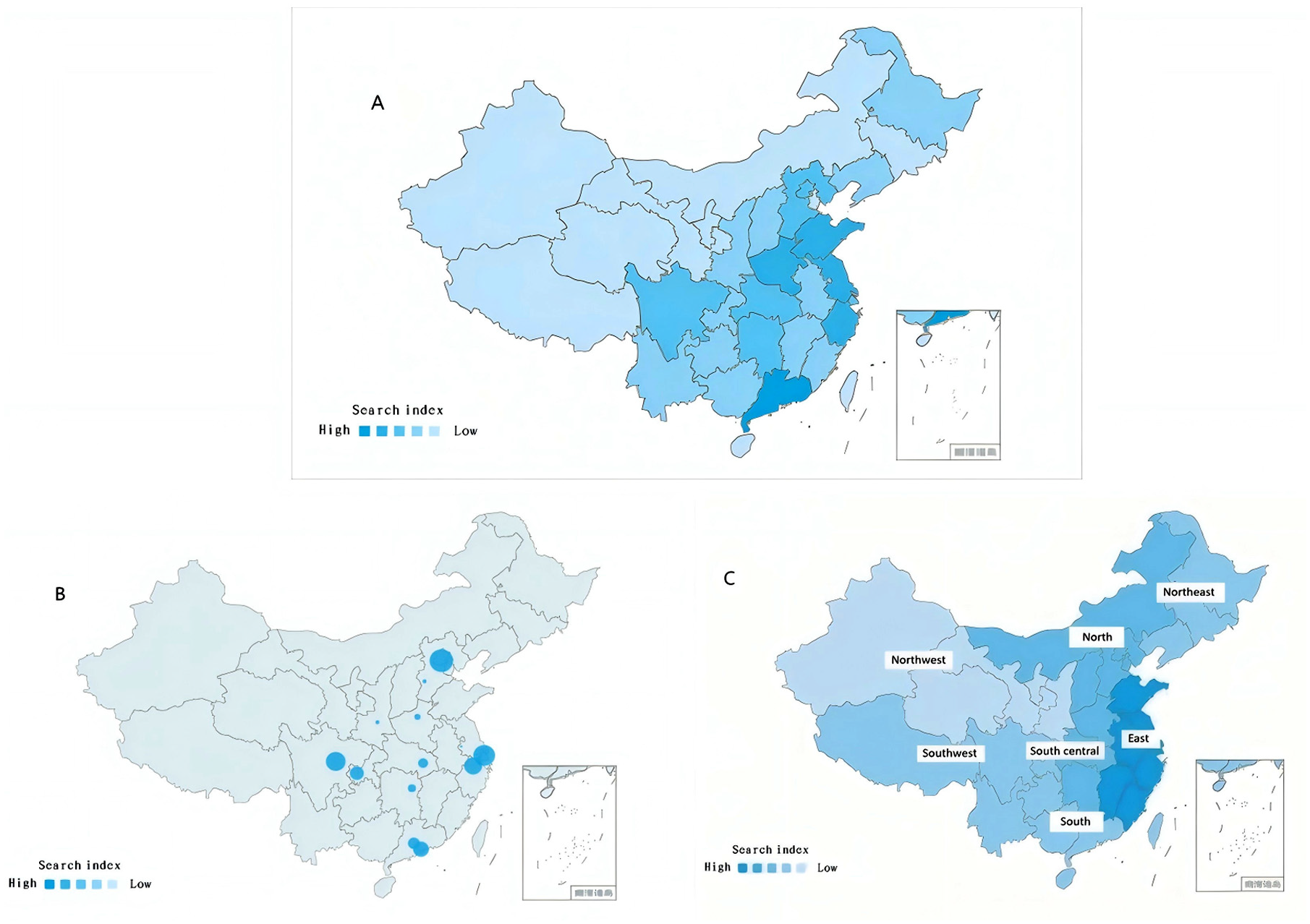
Population portrait of “school bullying” by province (A), city (B), and region (C).

Demographic profiles by age (A) and gender (B).
Discussion
Bullying experiences have a negative impact on the behavioral health, academic performance, and overall well-being of adolescents, whether they are perpetrators or victims (Evans et al., 2019). Therefore, creating a safe, harmonious, and healthy school environment is a necessary condition for all levels and types of schools to achieve comprehensive development and ensure the overall improvement of students’ comprehensive quality (Kutsyuruba et al., 2018; Tech & Theophilos, 2020). However, due to China’s vast territory, large population, and significant regional differences, it is challenging to accurately gauge the public’s attention to “school bullying.”
Baidu Index is an Effective Way to Understand the Publics Concern About “School Bullying”
With the widespread application of big data in the internet, the birth of Baidu Index provides data support to solve this problem. The international data company IDC released the “Digital World-From Edge to Core” white paper and “IDC: China will have the world’s largest data circle by 2025”. According to IDC’s forecast, the global data circle will grow from 33ZB in 2018 to 175ZB in 2025 (1ZB is equivalent to 1 trillion GB), and China’s data circle will have the fastest growth rate in the global data circle expansion process. The IDC report shows that from 2015 to 2025, China’s data circle will expand at 14 times the speed, and it is expected that by 2025, China’s data circle will account for 27.8% of the global data circle, making it the world’s largest data circle (IDC, 2018). In January 2024, IDC published the “IDC Future Scape: Top 10 Forecasts for China’s Data and Analytics Market in 2024,” pointing out that by 2027, spending on data and analytics software will grow at a compound annual growth rate of 16% (IDC, 2024). IDC DataSphere data shows that by 2027, global unstructured data will account for 86.8% of the total data volume, showing a stable growth trend. From the above data report, it is evident that we are in an era of explosive data growth. Additionally, according to the 53rd China Internet Development Status Report released by CNNIC, as of December 2023, the number of Chinese internet users reached 1.092 billion, with an increase of 24.8 million compared to December 2022, and the internet penetration rate reached 77.5% (Figure 4) (CNNIC, 2022). At the same time, the number of Chinese search engine users reached 827 million, accounting for 75.7% of the total internet users, with an increase of 25.04 million compared to December 2022 (Table 2). Baidu ranks first in search engines, followed by Bing, 360 Search, Sogou Search, Google Search, and Yahoo! etc. (Figure 5). As of December 2023, the average weekly internet usage per capita of internet users in China was 26.1 hr (Figure 6). Based on data such as the number of Internet users, search engine rankings, and average online time, it can be inferred that the Baidu Index provides a reliable basis for understanding the public’s attention to “school bullying.”

2020.3–2023.1 Internet user scale and Internet penetration rate.
The Scale of Users and Netizen Usage Rate of Various Types of Internet Applications From December 2022 to December 2023.


Industry penetration rate of monthly active users on all search engine platforms (PC + mobile) (2023.04).

Average weekly internet usage per capita in China.
Trend Research on School Bullying
From the trend (Figure 4), the search on school bullying shows a yearly increasing pattern, and the peak value keeps breaking through to reach a new high. It shows that with the pursuit of a better life the development of the Internet and the popularization of legal awareness, the public’s concern for school bullying continues to heat up. A comparison between PC terminals and mobile terminals shows that in 2016, the weekly search volume on PC was highest at 965 times, exceeding the mobile terminal’s weekly search volume of 157 times. Before March 2016, the search volume on mobile terminals surpassed that of PC terminals for the first time and has consistently maintained that trend. This is related to the series of policies in 2016 such as “Internet Plus” and “Artificial Intelligence Plus” in China, leading to the gradual increase in the popularity of mobile internet, rapid growth in the number of mobile phone users, and the convenience of internet access through mobile phones, to some extent replacing traditional computer internet access methods. As of December 2023, the proportion of internet users in China using mobile phones to access the internet reached 99.9%; the proportions using desktop computers, laptops, TVs, and tablets to access the internet were 33.9%, 30.3%, 22.5%, and 26.6%, respectively (Figure 7).
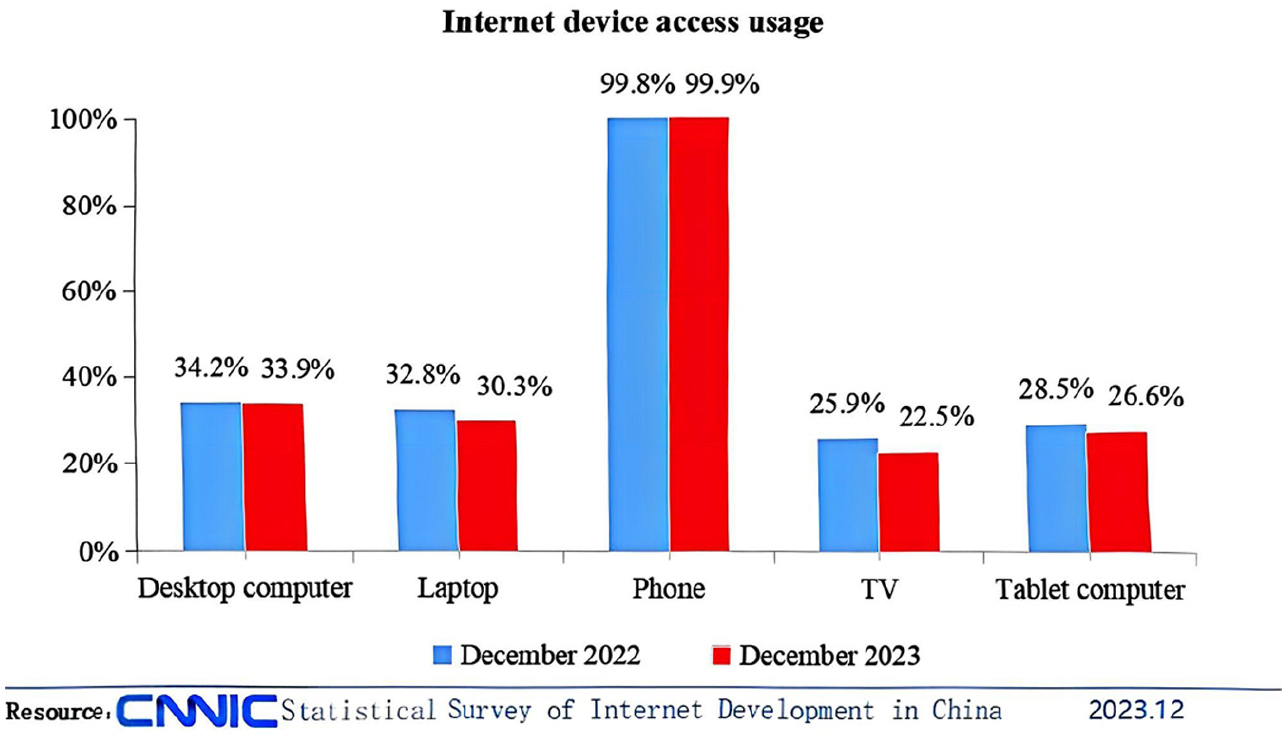
Usage of Internet access devices.
Each year does not show a clear pattern of search volume variations. Search volume is generally related to specific events (Figure 8). For example, in July 2015, the average weekly search volume about school bullying exceeded the search value in the past 10 years for the first time, reaching 1,094 times. In 2015, a survey by the China Youth Research Center of 5,864 primary and secondary school students in 10 provinces and cities showed that 32.5% occasionally experienced bullying, and 6.1% were frequently bullied by older students, drawing public attention. In early December 2016, as Beijing “Zhong guancun No. 2 Primary School” was reportedly involved in a student conflict (Xinhua News Agency, 2016), but parents and the school were not unanimous on the characterization of the incident, and in mid-December, China Youth Daily published an opinion on the matter, arguing that children shouldn’t be allowed to play evil roles indefinitely, which aroused the attention of society, and thus the weekly average number of searches reached 1,909, forming a small peak. search volume reached 1,909 times, forming a small peak. In October 2019, the film “teenage you” was released, the topic of school bullying was once again pushed to the public, the average weekly search amounted to 2,380 times, like the social call for the emergence of violent tendencies, we must intervene in a timely manner on the behavior of “micro-bullying,” this part of the students focus on helping and disciplining, the education of all parties to squarely face The only way to control the development of bullying in schools is to focus on “small frictions among classmates.” In April 2022, the incident of “the death of a student at Yugou Middle School” occurred (L. K. Wang, 2024), and the average weekly search volume of “bullying in schools” was 465,000 search results. The average number of searches per week was 4,658, reaching an all-time high. In November 2022, Sichuan police reported on bullying at Zizhou Middle School in Santai County, Mianyang City, attracting the attention of netizens (Tencent News, 2022), with the average number of searches per week reaching 3,293. After the “Three middle school students in Handan killed and buried a classmate” incident on March 10, 2024 (Baidu Baike, 2024), the weekly search volume related to “school bullying” reached an unprecedented high of 11,432 times. This event caused widespread shock and anger in society, prompting a deep reflection and discussion on the issue of school bullying.

Search for trend key point analysis.
Demand Map Analysis on School Bullying
The demand map is a distribution map that reflects the needs of internet users, based on the data sharing of massive internet users’ search behavior generated according to their subjective intentions, and then presented to users through semantic mining technology, showing the focus of attention reflected by keywords. It can inform users about the search scale of a particular keyword on Baidu, trends in search volume, changes in news and public opinion related to the keyword, and also provide information on related search terms. The demand map is mainly summarized on a “weekly” basis, reflecting a year’s worth of search data. In this study, the top 15 words with the highest number of keyword searches for “bullying in schools” were counted and analyzed weekly from June 2023 to June 2024 by EXCEL software, and a word cloud similar to the shape of a fist was presented to represent the meaning of bullying (Figure 9). The terms “bullying,”“school bullying” and “school violence” are the most common. In general, when people search for information, they tend to narrow it down, so “bullying” is searched for more frequently than “school bullying” and “school violence.” When people search for information, they tend to narrow it down.

Word cloud of search popularity of words related to “ school bullying.”
“School bullying” and “school harassment” have similar meanings in Chinese, both referring to misconduct within schools that may involve physical or psychological violence with severe repercussions for the victims, potentially leading to long-term mental health issues. However, “school harassment” has a broader scope, focusing more on harassment and teasing, while “school bullying” involves more serious episodes leading to tangible harm, with a high degree of recurrence and harm. In Baidu Index searches, the search volume for “school bullying” is significantly higher than that of “school harassment,” leading this study to focus on the analysis of “school bullying” search volume. Furthermore, the search volume for school bullying is closely linked to specific school bullying incidents, such as “Datong Elementary School bullying” and “School bullying in Handan, Hebei,” which spiked in search volume ranking after the incidents, involving primary and middle school students who are all minors, indicating the severity of these incidents. Additionally, words like “bully”“safety”“education”“murder”“crime” and “psychology” are repeatedly mentioned in searches, highlighting public concern about the causes, impacts, and subsequent measures to protect the healthy growth of teenagers in relation to school bullying. This underscores the supportive role played by network opinions and laws in safeguarding the rights of minors, promoting their healthy growth and development, and creating a harmonious environment for their growth.
Analysis of Crowd Portraits About School Bullying
From the perspective of demographic portraits, Baidu Index provides referential information. According to the data, it is evident that the provinces most concerned about “school bullying” are Guangdong, followed by Jiangsu and Shandong. In terms of regions, East China ranks first in search volume (Figure 2). When looking at cities, Beijing, Shanghai, and Chengdu rank in order of concern. As of 2023, annual data released by the National Bureau of Statistics shows that there are a total of 498,300 schools of all levels and types and 291 million students in China. Guangdong has a total of 38,200 schools of all types and 281.7434 million students. Jiangsu has nearly 15,600 schools of all types and over 16 million students, with 168 higher education institutions. Shandong has 38,700 schools of all types and 220.885 million students, according to the latest statistics. In terms of economic rankings, Guangdong has maintained the first position for 35 consecutive years, with Jiangsu and Shandong ranking second and third, placing them in the first tier of the economy, inevitably leading to their high concern for “school bullying.” Considering both the number of schools and economic rankings, the East China region, which includes Guangdong, Jiangsu, and Shandong provinces, has a stronger economic base and a forward-looking educational perspective. This leads to higher attention levels. In addition, Beijing and Shanghai have abundant resources and strength in politics, economics, science and technology, culture, transportation, and innovation, making them represent powerful cities focused on safeguarding children’s rights and nurturing youth health. Since 2019, Chengdu has made specific requirements for the prevention and control of student bullying and violence. In 2024, it issued the first relevant documents on anti-school bullying in terms of the examination system and comprehensive evaluation, marking the first effort against school bullying. For example, “Those who have engaged in school bullying behavior shall not be recommended as index students and shall not be included in the final admission selections.”
The demographic attributes mainly present the gender and age distribution of the users of interest (Figure 3). The data shows that the male-to-female ratio is 39.21% to 60.79%, with corresponding TGI (Target Group Index) scores of 76.63 and 124.49. The TGI index reflects the differences in focus among users with various characteristics; the higher the TGI index, the stronger the distinctiveness of the target group compared to all users. A TGI of 100 represents the average level, and a TGI above 100 indicates that the user’s attention to the issue is greater than the average. Consequently, women show a higher level of concern about the issue of “school bullying” compared to men. This may be because women are often seen as the primary caregivers of children and, due to their maternal roles and sense of family responsibility, they may be more sensitive to the safety and mental health of their children at school. A study by UNICEF (2022) suggests that women tend to be more proactive in protecting children from violence and abuse, including bullying. In terms of age distribution, the highest proportion is the 30 to 39 age group at 41.53%, followed by the 40 to 49 age group at 19.93%. (Arnett, 2000) Research shows that different age groups pay different attention to family and social issues. (Grimm et al., 2006) Most people aged 30 to 39 are already parents, and their children are in primary school or middle school, which is the peak period for school bullying. Because they are in the core stage of family life and have usually entered a stable career period, they have a strong sense of social responsibility and citizenship. They not only pay attention to personal family life, but also care about social issues. In addition (Global Web Index, 2022; Pew Research Center, 2023; Statista, 2024), people of this age are better at adapting to the digital age and using various types of Internet. They will be more actively involved in discussions on social media and hot news. Therefore, at this stage, they are not only the protectors of their children, but also hope to create a safer growth space for the next generation through better education and mental health environment. Additionally, individuals under the age of 19 are a key demographic that pays close attention to the issue of “school bullying.” Despite having a relatively lower volume of searches, they exhibit a very high TGI (Target Group Index). This suggests that this age group, being potentially the main targets of bullying, has a heightened level of concern. However, their online access and time spent online may be limited, which could potentially reduce the frequency at which they search for related information on the internet. Followed by the 20 to 29 age group, accounting for 14.93% of the lower attention. As age increases, the focus of this group often shifts from academics to career development, family life and other adult responsibilities. Sensitivity to social issues may be reduced. Only 6.52% of people in the age group over 50 pay attention. The reason is that fewer people are proficient in using the Internet to search, and they are not as quick to respond to news events, policy documents, etc. as young people. At the same time, the background of the times they live in and the level of education they receive are different, and there is even illiteracy. Therefore, personal perception will also make the age group over 50 years old not pay much attention to the phenomenon of school bullying.
The increased attention to “school bullying” in China is primarily indicative of heightened public awareness, with more people recognizing its existence and severity. Notably, the number of academic papers on “school bullying” published in high-level journals such as CSSCI has significantly increased, with over 400 additional articles compared to before 2014. These studies have revealed the characteristics of school bullying as involving dominance, intentional harm, and recurrence, and have clarified the long-term harm to students who suffer from it (Zhao et al., 2020), laying a foundation for future research. Some scholars have pointed out that the frequent occurrence of school bullying is related to the ineffectiveness of current laws and regulations, weak disciplinary measures against bullying in schools, and the fragmented efforts of various social entities in preventing and controlling bullying (L. K. Wang, 2024). The main reasons are the lack of specific legislation against school bullying, inadequate disciplinary and remedial pathways at the school level, and the absence of a social support system for bullying prevention and control. This research has gained widespread recognition.
Based on this situation, governments and schools may develop or strengthen relevant policies and measures according to public concerns and needs, promote the formulation or revision of relevant laws and regulations to prevent and deal with school bullying, and create a more harmonious and safe environment for students. For example, establishing a comprehensive school bullying prevention and intervention system (Huo, 2022). By clarifying the definition, classification, and corresponding legal responsibilities of school bullying, and by setting up school bullying prevention teams and conducting regular risk assessments. In terms of specific implementation, schools can invite legal vice principals or experts to conduct thematic lectures and other annual activities, and also carry out different educational and warning activities such as theme class meetings, anti-bullying propaganda posters, blackboard newspapers, and brochures in conjunction with specific incidents and key times (Zhao & He, 2021). From a family perspective, family and social participation is an extension of the system construction, and it is necessary to encourage family and social forces to participate in the prevention and control of school bullying. The “Family Education Promotion Law of the People’s Republic of China,” passed on October 23, 2021, states that “parents or other guardians of minors shall closely cooperate with primary and secondary schools, kindergartens, infant care service institutions, and communities, actively participate in the public welfare family education guidance and practical activities they provide, and jointly promote the healthy growth of minors.” In conjunction with the demographic data mentioned earlier, parents should also work with schools and other forces to pay attention to changes in students’ behavior, and to identify and deal with school bullying issues in a timely manner. Finally, it is known that adolescents, as the main body of school bullying, have a very high TGI index, so it is also very important to strengthen the cultivation of students’ social-emotional skills and psychological resilience. Schools and families should work closely together to teach students how to recognize and manage their emotions, using interactive teaching methods such as role-playing and situational simulation, so that they can maintain a positive attitude to face the setbacks and adversities in life.
Conclusion
The Baidu Index can be used to understand public concern about school bullying. Judging from search trends, attention to school bullying has been increasing since 2014. This is related to factors such as the development of the Internet, the education level of the public, and the expected awakening of legal awareness. At the same time, the search trends for “school bullying” are mainly related to Related to the occurrence of specific incidents, such as the Zhongguancun No. 2 Primary School bullying incident (Xinhua News Agency, 2016), Shanxi Datong school bullying incident (Baidu Baike, 2023), Hebei Handan school bullying incident (Baidu Baike, 2024), etc., which have attracted widespread public attention. Since 2016, the search volume on mobile devices has exceeded that of PC terminals. By 2023, the use of mobile devices has significantly surpassed PC data. According to the demand mapping, the public is very concerned about bullying in schools, and the top words include “bullying,”“school violence,”“safety,” and specific bullying incidents. The top terms include “bullying,”“school violence,”“safety,” and specific bullying incidents. In terms of crowd profiling, the top terms include “bullying,”“school violence,”“safety,” and specific bullying incidents. Judging from the crowd portraits, Guangdong province, with a large number of schools and students, and maintaining the top GDP ranking for multiple years, holds the highest level of concern among provinces. Beijing, as the capital of China, possesses substantial political, economic, and cultural resources and is the city most concerned about “school bullying.” In terms of demographic portraits, the search volume of women aged 30 to 49 is significantly higher than other age groups and men, correlating with their roles and gender characteristics. Based on the analysis, the validity of large population data is confirmed. Considering the long-term effects of current population structure, age distribution, and gender differences, policy researchers can sometimes make valuable predictions (Baluga & Carrasco, 2020). They can identify characteristics through demographic and geographic distribution maps from Baidu Index, which can then promote policy measures targeted at specific groups and regions. Overall, we use Baidu Index as a key data analysis tool to build a theoretical framework for understanding public concerns. This framework provides targeted reference value for decision-making bodies when formulating educational policies. This paper focuses on the specific social phenomenon of “school bullying” and suggests that legal responsibilities should be clearly defined at the legal level. It proposes that governments, schools, and families should work together to build a comprehensive school bullying prevention and intervention system. This would achieve a balance between education, punishment, and redemption in preventing and dealing with school bullying, with an emphasis on guiding the emotional values of young people.
Limitations
Utilizing Baidu Index to study “school bullying” offers a tool for quantifying public attention and trends; however, it has limitations. For instance, the representativeness of the data may be constrained by the search behaviors of Baidu users, which may not fully reflect the actual situations across all regions or groups. Moreover, search behaviors do not always correlate directly with actual incidents of school bullying, and data provided by Baidu Index might fail to capture long-term trends or historical changes, necessitating periodic data checks and archiving. Additionally, research could be limited by the selection of specific keywords, as different keywords can yield varying search outcomes. This necessitates considering multiple factors, such as the impact of social events, media coverage, and recent policy documents on search volumes, which increases the complexity of analysis.
Future Outlook
Research on “school bullying” will require more diversified and comprehensive approaches. This includes leveraging advanced data analysis technologies, such as machine learning and natural language processing, to gain deeper insights into vast amounts of data. Given that this article primarily employs Baidu Index as the main data analysis tool, which has certain representativeness, future studies should also integrate multiple data sources, including WeChat Index, Tencent Browsing Index, social media, and educational statistics, to achieve a more holistic perspective. Furthermore, combining qualitative research methods, such as in-depth interviews, case studies, and questionnaire surveys using scales, can provide a deeper understanding of the social causes and influencing factors behind school bullying. Additionally, focusing on differences among specific groups, such as left-behind children, children with disabilities, varying regions, genders, and educational stages, will aid in more profoundly understanding and addressing school bullying issues. Concurrently, future research should also focus on how to translate research findings into practical policies and intervention measures to effectively reduce the occurrence of school bullying incidents and provide timely support for victims. Through these efforts, we anticipate contributing to the creation of a safer and more inclusive educational environment.
Footnotes
Ethical Considerations
This study analyzes publicly available online data from Baidu Index. No human participants were involved, and no identifiable personal information was collected. Therefore, ethical approval and informed consent were not required for this research, in accordance with Section 8.05 of the APA Ethical Principles of Psychologists and Code of Conduct.
Funding
The authors received no financial support for the research, authorship, and/or publication of this article.
Declaration of Conflicting Interests
The authors declared no potential conflicts of interest with respect to the research, authorship, and/or publication of this article.
Data Availability Statement
The data are publicly available, and the datasets generated and/or analyzed in this study are available from the corresponding authors upon reasonable request. The data involved keyword searches for “” and spanned from July 1, 2014 to July 1, 2024. In addition, data related to the article can be accessed on the Baidu Index website ( ), and data about the Internet are also available at Ref.