




Abstract
The development of Artificial Intelligence (AI) has significantly influenced how consumers search for information. However, there is a lack of comprehensive models based on theoretical foundations that specifically address AI-powered information search behavior. This study draws on psychological motivation, information processing, and information economics theories to develop a theoretical model of consumer AI-powered information search behavior. The study aims to identify the main factors affecting consumer search behavior, offering a more holistic understanding of consumer behavior in the context of AI. Analyzing 512 valid questionnaires, the study shows that search motivation not only had the most significant impact on search behavior but also served as a mediator between other variables and search intensity. Additionally, perceived search ability had a direct and the greatest indirect impact on search behavior, while other variables such as perceived search costs and benefits also had indirect effects on search behavior. Practically, the study offers valuable insights for businesses and AI developers. Understanding the factors that drive AI-powered search behavior can inform the design of more effective AI systems and marketing strategies.
Introduction
According to global statistics from 2021, the number of internet users worldwide continues to grow exponentially, with an estimated 4.39 billion active users (Zhao et al., 2021). This widespread adoption of the internet, coupled with advancements in artificial intelligence (AI) technology, has transformed how users interact with online platforms and search for information (Androutsopoulou et al., 2019). AI-powered search engines have revolutionized the information retrieval process, offering users faster and more accurate search results. Through machine learning algorithms and natural language processing, search engines can better understand user queries, providing highly relevant and personalized information (Fostikov, 2023). This sophistication has significantly improved user experience and enhanced the efficiency of online searches on a global scale. Recent studies by leading research organizations show that internet users worldwide increasingly rely on AI-based search engines for various purposes (George & George, 2023). Searching for information remains the primary activity, with users seeking answers to their questions, researching products and services, and exploring various topics of interest (Luo et al., 2019). Additionally, AI-powered virtual assistants, such as voice-activated devices, have gained significant popularity, enabling users to perform searches and access information using natural language commands (Balakrishnan et al., 2024). The integration of AI into search engines has significantly reduced search costs for users worldwide. Previously, individuals had to invest substantial time and effort in gathering information, often sifting through vast amounts of data to find relevant results. However, AI-driven algorithms now provide users with highly targeted and contextually relevant information, reducing the time and effort required for effective searches (Necula & Păvăloaia, 2023). This has empowered users to make more informed decisions and explore a wider range of options.
The impact of Artificial Intelligence (AI) on user behavior transcends the realm of information search. E-commerce platforms utilize AI algorithms to furnish personalized recommendations, predicated on user preferences and historical browsing data. This degree of personalization has revolutionized users’ discovery of products and services, facilitating more informed purchasing decisions (Puntoni et al., 2021). Moreover, the proliferation of AI-driven chatbots and virtual assistants is notable, offering users real-time support and substantially enhancing their overall online experience. As AI technology continues to evolve, it heralds the advent of increasingly sophisticated and intelligent search experiences for users globally. The further integration of AI into search engines is anticipated to persistently influence user behavior, ensuring seamless access to information, tailored recommendations, and augmented decision-making capabilities. The continuous convergence of the internet and AI is poised to transform user interactions with online platforms, ushering in new potentials across diverse domains (Klaus & Zaichkowsky, 2020).
On the other hand, consumer satisfaction at each stage of the online shopping decision process affects their willingness to proceed to the next stage. Ensuring high levels of satisfaction for consumers at each stage of the shopping process is a key focus of online marketing strategies (Tandon et al., 2017). Turban et al. (2004) suggest that understanding consumer behavior at each stage of the buying process is crucial for successfully delivering products to customers and improving marketing strategies through online channels. The consumer purchase decision consists of a series of processes, including problem recognition, information search, evaluation of alternative solutions, selection of a solution, and the final purchase behavior (Engel & Roger, 1995). Information search, in particular, influences the choice process and is considered a critical factor (Maity et al., 2018). AI-powered engines have emerged as a significant channel for information search and shopping, making the study of consumer behavior online a focal point for future research (He & Zhang, 2023). Huh et al. (2023) suggest that researching consumer search behavior using AI-powered engines is an important research direction. Hodkinson et al. (2000) also argue that understanding consumer search behaviors and various online habits would benefit businesses. By understanding these behaviors, businesses can adjust their strategies to enhance competitiveness. Therefore, this study aims to explore consumer AI-powered information search behavior, drawing on the recommendations from other studies and the demands of the industry.
Based on a thorough review of the literature on information search behavior, it is evident that previous research has predominantly concentrated on consumers’ product search behavior in traditional channels (Dellaert & Häubl, 2012; Peterson & Merino, 2003). However, studies specifically examining consumers’ search behavior via AI-powered search engines have been relatively scarce. Although recent investigations into AI-powered information search behavior have emerged, these studies often present a myriad of complex factors without a solid theoretical foundation or cohesive synthesis (Chen et al., 2021; V. Kumar et al., 2019). Moreover, in practice, website operators typically monitor only the external aspects of consumer search behavior, neglecting the internal and external factors that significantly influence this behavior (Tajdini, 2021).
The need for a more robust, theoretically grounded approach is evident. Recent studies, such as Malodia et al. (2024), have begun to address this gap by examining the psychological underpinnings of AI-driven search behavior and exploring how factors like trust in AI and consumption values impact consumer search patterns. Similarly, J. Kim (2020) has contributed to this field by investigating the economic aspects of AI-powered searches, analyzing how perceived cost and value influence consumer engagement with AI search tools.
The intersection of AI technology and consumer behavior is a rapidly evolving field, necessitating ongoing research to keep pace with technological advancements (Ameen et al., 2021). While there is a growing body of research on AI-powered consumer search behavior, much of it remains fragmented and lacks a comprehensive theoretical foundation. Therefore, addressing the research gaps, this study endeavors to develop a comprehensive model of consumer AI search behavior, integrating the Psychological/Motivational Approach, Information Processing Approach, and Economic Approach. This approach is significant as it provides a multi-faceted and theoretically grounded perspective on consumer behavior in the context of AI-powered searches. By employing structural equation modeling, the study rigorously verifies the causal relationships between various factors within the AI search behavior model. The significance of this study lies in its potential to offer a deeper and more nuanced understanding of consumer behavior in the digital age, specifically in AI-powered search engines. This understanding is crucial for both academic researchers and industry practitioners, as it can guide the development of more effective AI systems and strategies that align with consumer needs and behaviors, ultimately enhancing user engagement and improving the overall effectiveness of online search platforms. Businesses can fine-tune their search algorithms and digital platforms, leading to increased user engagement, customer satisfaction, and potentially higher sales. In essence, these insights are invaluable for businesses looking to leverage AI technology effectively to connect with their audience and drive growth.
Literature Review
Definition of Consumer Information Search
Consumer behavior in the digital age is continually evolving, driven largely by technological advancements. A significant shift has occurred in the realm of information search with the introduction and integration of AI into search engines. AI-powered search engines leverage machine learning algorithms and natural language processing (NLP) to provide a more personalized and efficient search experience. Unlike traditional search engines that rely on simple keyword matching, these advanced engines understand the context and intent behind user queries, delivering highly relevant and tailored results (Johnsen, 2017). AI-driven search engines can sift through vast amounts of data at lightning speed, ensuring that the information presented to users is most relevant to their queries (Haleem et al., 2022). Furthermore, by utilizing past search behaviors and analyzing patterns, AI can predict and suggest searches even before a consumer finishes typing a query (Dixit et al., 2022). AI-powered virtual assistants like Siri, Alexa, and Google Assistant have revolutionized information search by enabling users to voice their queries and receive instant responses (Lopatovska et al., 2019). The sophisticated capabilities of AI-powered search engines significantly influence consumer decision-making. With efficient retrieval of information, consumers can make more informed and quicker decisions. Additionally, the personalized recommendations and insights offered by these engines can also sway consumers toward particular products or services, underscoring their pivotal role for marketers (Nazir et al., 2023).
Categories of Consumer Information Search
Consumer information search can be classified based on the purpose of the search. Zander and Hamm (2012) categorize information search into two types: pre-purchase search and ongoing search. (1) Pre-purchase search refers to the information search conducted by consumers to make a specific purchase. It involves seeking information to support the buying decision for a particular product or service. (2) Ongoing search, on the other hand, refers to information search activities that consumers engage in without a specific purchase intention.
Consumers may have a general interest in a product category or may continuously gather information about products and services even when they are not actively planning to make a purchase (Hawkins, 2020). In some cases, consumers may initially have a purchase intention but, after conducting the information search, may decide not to purchase due to various reasons. Conversely, consumers who initially have no purchase intention may develop a purchase motivation as a result of the information search and proceed to make a purchase (Solomon, 2018). Since the behaviors of pre-purchase search and ongoing search are very similar during the information search process distinguishing between pre-purchase and ongoing search based solely on observed behaviors can be challenging (Moorthy et al., 1997). The methods and channels used in both searches are often similar, blurring the lines between them. For instance, a consumer browsing an online store for the latest smartphones could be engaged in either a pre-purchase search for an imminent buy or an ongoing search driven by a general interest in technology (Han et al., 2022). Consequently, this study does not differentiate between the two in terms of the purpose of the information search.
Previous studies have classified consumer information search behavior based on information sources (Peterson & Merino, 2003). They categorized it into internal search and external search. Internal search encompasses the process where consumers draw upon their memory to retrieve relevant information about products or services. This information could be past experiences, knowledge, or feelings related to previous purchases. External search, in contrast, extends beyond the individual’s memory. It involves actively seeking out information from a variety of external sources. These sources can range from personal sources like family and friends to public sources such as advertising, media, and expert reviews, as well as experiential sources like handling or examining the product (Gligorijevic & Luck, 2012). The digital age has further expanded external search to include online forums, social media, and e-commerce websites, which offer a wealth of user-generated content and reviews (Han et al., 2022).
The fundamental assumption in this classification is the rationality of consumers—the belief that consumers are motivated to seek information to make informed decisions. However, this rationality is not absolute. The Information Processing Model suggests that consumers embark on an external search when their internal knowledge is deemed insufficient or when the perceived risk of the purchase is high (Savolainen, 2015). This transition from internal to external search is influenced by various factors such as the consumer’s prior knowledge, perceived risk, involvement level, and the complexity of the product or service in question.
Both internal and external information search behaviors are influenced by individual differences (i.e., demographics, personality traits, and past experiences) and environmental factors (i.e., market conditions, product diversity, and information availability) (Brucks, 1985). However, measuring internal information search behavior is challenging, so past studies such as Tajdini (2021) have primarily focused on exploring consumers’ external information search, which is more observable and quantifiable. Studies have examined aspects such as the extent of the search, sources used, duration of the search, and the sequence of information acquisition (Klein & Ford, 2003). Considering these considerations, this study aims to delve into consumers’ external information search behavior.
Research Directions of Information Search Behavior
Engel and Roger (1995) categorized consumer information search behavior into three dimensions: search intensity, search direction, and search order.
Search intensity refers to the amount of information searched, such as the number of product prices and attributes searched, the number of information sources used, the number of stores searched, and the amount of time spent on the search. Studies have conceptualized search intensity as a key indicator of active search behavior, emphasizing that higher intensity often correlates with a more informed decision (Fernández-Valera et al., 2020; Zikic & Saks, 2009).
Search direction refers to the content or focus of the information search, such as the specific products or services searched, the specific brand or attributes searched, and the choice of information sources or retail channels used. The direction of the search is often guided by the consumer’s initial preferences, needs, or questions, and is influenced by personal factors such as prior knowledge, perceived risk, and individual needs or wants (Zhuang et al., 2021).
Search order refers to the priority or sequence in which consumers consider different aspects of information search. For example, it includes the order of searching for relevant brands, retail channels, product attributes, and information sources. These dimensions help to capture different aspects of consumer information search behavior, including the overall search effort, the specific focus of the search, and the prioritization of information sources or attributes during the search process. The order of search can be influenced by factors such as the type of product, the urgency of the purchase, the consumer’s familiarity with the category, and the complexity of the decision (Sethuraman et al., 2022).
Although there are three categories in the research direction of information search, studies often measure consumer information search based on search intensity. This is because studying search direction and search order requires selecting a specific product and identifying all relevant brands associated with it. Only then can the consumer’s search direction and search order for that product be measured. However, in the market, brands of specific products often change, and studying the search direction and order of a single product cannot be generalized to the general population. Therefore, studies have focused on examining the intensity of information search behavior by consumers (Carlin et al., 2018; Q. Li et al., 2013). When businesses understand the differences in consumer information search intensity, they can determine the amount and direction of advertising and in-store information provision. Companies can use the intensity of consumer information search to segment the market and understand the differences in search behavior among various segments, allowing them to design more effective marketing strategies (Engel & Roger, 1995).
Research on consumer information search behavior using AI chatbots is still in its early stages. Previous studies focused on information search behavior in common channels for products (Branco et al., 2012; Ke et al., 2016). These studies did not consider consumers using AI-powered engines for information search, possibly because AI-powered engines were not yet widely accessible at that time. Thus, the use of AI-powered engines for information search has not been explored. Recently, studies have begun to investigate consumer information search behavior using AI chatbots (Stoilova, 2021; Zhu et al., 2022). Previous studies attempted to explain AI-powered information search behavior from different perspectives such as Chatbots and Conversational Agents (Laranjo et al., 2018; J. Li et al., 2016). Other studies focused on search strategies and AI chatbot technology (Guo et al., 2018), AI chatbots in customer service, and E-commerce (Jannach & Ludewig, 2017). Besides, Zhu et al. (2022) have recognized that consumers use AI-powered chatbots to search for product information. Their studies only considered direct factors influencing information search and did not explore the mediating factors between the research variables. Moreover, the proposed factors were numerous and complex, lacking theoretical foundations and appropriate summarization and organization. Therefore, this study aims to establish a comprehensive consumer AI information search behavior model based on a solid theoretical foundation.
Conceptual Model and Hypothesis Development
The current study explores consumers’ AI-powered information search behavior from the perspectives of psychology, economics, and information processing (Schmidt & Spreng, 1996).
The psychological motivation approach asserts that the psychological motivation approach argues that behavior, including information search, is driven by intrinsic motives (Kushwah et al., 2019; Roy Dholakia, 1999). In the AI context, these motives could be influenced by the personalized and predictive capabilities of AI systems (Ivanovic et al., 2022). Consumers may engage with AI-powered search tools driven by the desire for efficiency, accuracy, and personalized recommendations (Sharma et al., 2023). The AI’s ability to learn from consumer interactions and adapt its responses could further motivate and shape consumer search behaviors (Davenport et al., 2020).
The economic approach views consumer information search as a balance between search costs and benefits. In an AI-powered search environment, this balance shifts significantly. AI technology can reduce search costs dramatically by providing faster and more accurate information retrieval, thus potentially increasing the perceived benefits of the search (Bundorf et al., 2019; Dwivedi et al., 2021). However, there could also be considerations related to privacy and data security, which might add to the perceived costs from a consumer’s perspective (Nisar et al., 2019).
The information processing approach takes on new significance in the AI context. Here, the focus is not just on the consumer’s information processing abilities, but also on how AI systems enhance or complement these abilities. AI algorithms can process vast amounts of data far beyond human capability, presenting consumers with filtered, organized, and highly relevant information (Campbell et al., 2020). This enhancement can change the dynamics of how consumers perceive their search abilities and the limitations thereof (Fu et al., 2020).
In the past, studies on consumer information search behavior have been based on different theories, and there has not been a complete framework that encompasses all aspects. Schmidt and Spreng (1996), however, consolidated the theoretical foundations of the three major schools of thought: psychological motivation, information economics, and information processing. They proposed a comprehensive information search behavior model that includes 18 exogenous variables and 5 endogenous variables. The model also incorporates four mediating variables: perceived search costs, perceived search benefits, perceived search abilities, and search motivation. Search motivation is approached from the perspective of psychological motivation, perceived search abilities represent consumers’ perceived information processing abilities, and perceived search costs and benefits represent the viewpoint of information economics. The model explains how exogenous variables influence search behavior through these four variables. Specifically, perceived search abilities and search motivation positively influence search behavior, while perceived search costs decrease search motivation and perceived search benefits increase search motivation. However, in the context of AI-powered search, the role and impact of these four variables (perceived search costs, perceived search benefits, perceived search abilities, and search motivation) might be different. For example, perceived search abilities could be significantly amplified by AI’s data processing capabilities. Similarly, AI’s efficiency and personalization could increase search motivation while potentially altering the perceptions of search costs and benefits. In conclusion, the integration of AI into consumer information search behavior necessitates a reevaluation of the existing model. AI technology not only changes the landscape of information availability and accessibility but also influences the psychological, economic, and information processing factors that drive consumer search behavior.
Due to the extensive nature and complex inferences (Schmidt & Spreng, 1996), it has not been empirically validated but rather studied through meta-analysis. This is regrettable, as it would have been valuable to test the model directly. Therefore, this research builds upon the main ideas of their study and focuses on the core elements, namely perceived search costs, perceived search benefits, perceived search abilities, and search motivation, to examine their impact on search behavior. The research specifically investigates consumer AI-powered information search behavior in the context of online consumption, which is now prevalent and highly regarded (Yeo et al., 2022). The research model is presented in Figure 1.

Conceptual model.
A Perspective of Information Processing
The perspective of information processing focuses on consumers’ cognitive processing abilities, knowledge of search procedures, and knowledge of information sources to investigate search abilities (Fu et al., 2020). This approach is particularly pertinent in the context of AI, where search mechanisms and information retrieval processes are more complex and sophisticated than traditional methods (Chowdhary, 2020). Perceived search ability refers to consumers’ perceived competence in conducting searches and processing information (Bettman & Park, 1980). Research on consumer decision-making processes has found a positive relationship between perceived search abilities and the extent of search behavior. For example, consumers with higher perceived search abilities tend to engage in more extensive information searches (Loibl et al., 2009). Qazzafi (2019) examined consumers’ information search behavior before purchasing a car, and Rahman et al. (2023) investigated consumers’ AI-powered information search behavior before luxury brands, both finding a strong positive relationship between search abilities and search behavior. These findings suggest that when consumers believe they are capable of effectively using AI tools to search for information, they are more inclined to engage in extensive searches. This is likely due to increased confidence in their ability to handle the complex data and options presented by AI systems. Therefore, this study proposes:
H1: Consumers with a higher perceived search ability for AI-powered information search will engage in a higher level of search behavior.
A Perspective of Psychological Motivation
The psychological motivation perspective views motivation as the willingness to engage in a task, and the level of motivation depends on the anticipated rewards after completing the task. Motivation is an internal force that drives behavior and is the reason behind engaging in various activities. According to Kushwah et al. (2019), motivation is a form of arousal directed toward a goal. When consumers are motivated, they engage in specific behavioral activities. When consumers have a heightened desire for information, they engage in information search to satisfy their psychological needs, and this desire serves as the motivation for information search (Roy Dholakia, 1999; Tajdini, 2021). In AI-powered information searches, motivation takes on a nuanced dimension. AI search tools, with their advanced capabilities like personalization, predictive analytics, and efficient data processing, can significantly alter the reward landscape for consumers (Sharma et al., 2023). The anticipation of more relevant, accurate, and quick information can enhance the motivation to use AI-powered search tools. Furthermore, the interaction with AI systems can itself be a motivating factor. The novelty, sophistication, and perceived intelligence of AI systems can increase consumer engagement and curiosity, thus fostering a more motivated approach to information search (Davenport et al., 2020). Thus, this study proposes:
H2: Consumers with higher motivation for AI-powered information search will engage in a higher level of search behavior.
An Economic Perspective of Information Search
The economic perspective of information search argues that information itself has a significant impact on economic activities (Nisar et al., 2019). Taking price information as an example, consumers seek better prices in the market. They engage in comparison activities to find the lowest price. However, consumers do not engage in unlimited searches but rather stop their search when the search cost equals the expected benefits (i.e., lower price). The search cost includes the time, effort, and monetary expenses required for the search, while the search benefits refer to the acquisition of information that helps reduce purchase risk, improve decision-making accuracy, and find more satisfactory prices. These search benefits and costs are concepts in information economics. Information search is not only important for searching product prices but also for obtaining information about product or service quality, features, functions, and styles (X. Li et al., 2020). Consumers can use information search to gather relevant information that aids their decision-making process.
Bakos and Nault (1997) argue that search costs refer to the expenses incurred by buyers in obtaining product and price information. These costs can be categorized into quantifiable and non-quantifiable costs. Quantifiable costs include tangible monetary expenses, such as transportation costs and parking fees. Non-quantifiable costs, however, encompass opportunity costs of time and psychological costs, including frustration, fatigue, and interactions with rude salespersons. Although non-quantifiable costs may not be as immediately apparent, they can significantly impact consumer behavior. Search benefits refer to the advantages gained through information search, which can be either tangible or intangible. Tangible benefits include finding products at lower prices, in preferred styles, or of better quality. Intangible benefits, on the other hand, enhance decision-making quality, increase confidence, and facilitate knowledge acquisition (Schmidt & Spreng, 1996).
Indeed, previous studies have identified a positive influence of perceived search benefits on search behavior (Nisar et al., 2019). This finding indicates that when consumers perceive higher benefits from their search efforts, they are more likely to engage in extensive information searches. Conversely, an increase in perceived search costs leads to a reduction in information search activities (Tong et al., 2020). In the realm of AI-powered search, the evaluation of benefits and costs may shift. AI technologies have the potential to significantly reduce tangible search costs while offering additional benefits, such as faster, more efficient, and easily accessible information (Bundorf et al., 2019). This reduction in costs can transform the cost-benefit analysis from the consumer’s perspective, potentially influencing the intensity of search motivation. In essence, when the benefits of using AI for information searches are perceived as high, consumer motivation to engage in such searches intensifies. Conversely, if AI is perceived as increasing search costs—whether through complexity or concerns about privacy and data security—this perception may dampen the motivation to utilize AI for information searches. Therefore, this study proposes:
H3: Higher perceived costs of AI-powered information search will result in weaker search motivation.
H4: Higher perceived benefits of AI-powered information search will result in stronger search motivation.
Method
Data Collection
According to the 2022 survey conducted by Shopee in six Southeast Asian countries, the top product categories purchased by consumers online were Home and living, Health and beauty, and Fashion, followed by Electronics (Wai, 2023). The percentage of online purchases for electronic products has shown an increasing trend, highlighting the growing significance of online channels for acquiring electronic goods. Although home and living, as well as health and beauty products, rank highly in terms of purchase frequency, electronic products are characterized by higher product value, more complex attributes, and increased purchasing risks. Therefore, studying consumer behavior concerning the purchase of computer peripherals and other electronic items is of considerable value. In this study, we specifically focus on electronic products that are popular in the online market. We adopt the product classification used by well-known platforms such as Shopee and Momo. This classification encompasses a range of categories, including smartphones, laptops, digital cameras, personal digital assistants (PDAs), monitors, scanners, laser and inkjet printers, storage devices, network equipment, and peripheral components. By concentrating on these categories, our research aims to provide insights into consumer information search behaviors within the dynamic and critical sector of electronic product purchases.
The purpose of this study is to investigate consumer AI-powered information search behavior before making purchases. Vietnam is selected as the survey country due to its rapid growth in the Southeast Asian e-commerce market and high rate of internet and smartphone penetration (Singh et al., 2020; Van et al., 2021), making it an ideal setting for examining online shopping behaviors and the use of AI-powered tools.
Regardless of whether consumers purchase after searching, anyone who has used AI-powered chatbots to search for electronic products is eligible to participate in this study. Due to the potential sampling bias of online questionnaires, a paper-based distribution method was employed. In this study, users can be primarily categorized into two groups: students and employees since they are the most frequent online shoppers (El Moussaoui et al., 2023; C. Kim et al., 2012). These groups are pivotal in the online shopping landscape, with students often representing trend-driven, price-sensitive consumers and employees embodying a segment with potentially higher purchasing power and distinct priorities. Their inclusion ensures a comprehensive analysis across key demographic segments, each exhibiting unique behavioral patterns and engagement levels with technology, particularly AI-powered tools like chatbots. This approach not only enriches the study with a variety of use cases, reflecting different motivations and contexts for using AI in shopping but also enhances the generalizability of the findings. This methodological choice thus ensures that the findings are both relevant and applicable to a broad spectrum of the online consumer base.
The student group was sampled using convenience sampling from students enrolled at universities in different regions of Vietnam. The employee group, also using convenience sampling, involved distributing research questionnaires to employees working in various companies. These companies are in different regions across Vietnam, allowing for a more diverse sample. The number of questionnaires distributed depends on the size of each company. This distribution method is expected to obtain a sample that closely represents the general working population and ensures a more diverse sample source. By following these steps, potential biases associated with convenience sampling can be minimized, and the questionnaire response rate can be improved.
Variable Definitions and Measures
The variables in this study were derived from previous related research and modified to fit the specific context of the study. The questionnaire items were also based on previous studies. The variables include search behavior, perceived search ability, search motivation, perceived search cost, and perceived search benefit.
Search Behavior: In the current study, search behavior is conceptualized as the search intensity, which is defined as the amount of time and quantity of information consumers spend on searches before making a purchase. Search time refers to the time consumers are willing to spend in gathering decision-making information. Information search quantity is divided into price information quantity and non-price information quantity (including the number of stores and brands). The measurement of search intensity in this study is adapted from Srinivasan and Ratchford (1991). However, because their study did not consider price factors, this study also incorporates items from Urbany et al. (1996) to make the measurement of search behavior more comprehensive.
Perceived Search Ability refers to consumers’ self-perceived ability to use AI chatbots for information searches. The measurement of perceived search ability is derived from Maclnnis et al. (1991) for perceived search abilities and is adapted to the context of AI-powered information search.
Search Motivation refers to the perceived need of consumers to use AI chatbots for information searches before making a purchase. The measurement of search motivation is based on Maclnnis et al. (1991) for search motivation, with modifications to align with the context of AI-powered information search.
Perceived Search Costs refer to the perceived costs that consumers believe they need to bear when searching for information using AI chatbots before making a purchase. Perceived search costs include cognitive costs, time costs, and monetary costs. The measurement of perceived search cost is adapted from Srinivasan and Ratchford (1991). However, since their scale only includes time costs, this study incorporates additional items related to cognitive costs and monetary costs to enhance the measurement of perceived search costs.
Perceived Search Benefits refer to the benefits that consumers believe they can obtain by searching for information using AI chatbots before making a purchase. Perceived search benefits include obtaining products at lower prices, obtaining products of higher quality, increasing product satisfaction, and feeling satisfied with the decision-making process. The measurement of perceived search benefits is adapted from Srinivasan and Ratchford (1991), with modifications to align with the context of the study.
Pretest and Pilot Test
The questionnaire for this study was reviewed by two professors specializing in information management to ensure the accuracy of the questionnaire items and their alignment with the corresponding constructs. To further validate the questionnaire’s quality, a pretest was conducted involving a diverse group: four graduate students and three doctoral students from an institute of information management in Vietnam, along with five industry professionals, totaling 12 participants. All participants had prior experience in using AI-powered chatbots for searching electronic products. The pretest was conducted in an open format, allowing participants to voice any questions or concerns regarding the questionnaire content. Based on the feedback received, minor adjustments were made to the questionnaire before proceeding to the pilot test.
The pilot test aimed to re-evaluate the modified questionnaire items and to gather preliminary insights into the participants’ thoughts and perspectives. It targeted professionals from the industry and included a comments section for participants to provide feedback or express any concerns. This test involved participants from the Institute of Information Management, yielding 45 completed questionnaires. Given that no significant issues or objections were raised and the collected data met initial expectations, the results suggested that the questionnaire was ready for formal distribution.
Data Analysis
To investigate the relationships between variables and validate the proposed research model, this study adopts Structural Equation Modeling (SEM) for data analysis. Specifically, LISREL 11.0 is used to verify the proposed research model, and the estimation method employed is Maximum Likelihood. In general, SEM analysis consists of two stages: (1) Measurement Model Analysis and (2) Structural Model Analysis. The Measurement Model involves conducting Confirmatory Factor Analysis (CFA) to assess the internal fit of the research model. This includes evaluating the reliability and validity of the observed variables (i.e., questionnaire items) and the latent variables (i.e., constructs of the research model), as well as the significance of estimated parameters. The focus is on evaluating the internal quality of the model. On the other hand, Structural Model Analysis aims to examine the overall fit between the research model and the observed data, as well as the causal relationships between latent variables. Through the analysis of the structural model, standardized factor loadings of paths and t-values of path coefficients can be obtained. These values help determine the strength and significance of the relationships between latent variables. By conducting SEM analysis, the research model’s internal fit, as well as the strength and significance of the paths between latent variables, can be evaluated, providing insights into the relationships and overall model fit.
Regardless of the measurement or structural model stage, it is necessary to assess the model fit using fit indices. Model fit indices can be categorized into three types: Absolute Fit Measures: Examples include Goodness-of-Fit Index (GFI), Root Mean Square Error of Approximation (RMSEA), and others. Incremental Fit Measures: Examples include Tucker-Lewis Index (TLI), Normed Fit Index (NFI), and Incremental Fit Index (IFI), among others.
Parsimonious Fit Measures: Examples include Normed chi-square (χ2/df), Comparative Fit Index (CFI), and others. The current study refers to the recommended standards for these fit indices by Hair (2009). Once the model passes the assessment based on these fit indices, researchers can proceed with various data analyses. Evaluating the model fit using these fit indices helps researchers determine the goodness-of-fit between the proposed model and the observed data, as well as assess the suitability and explanatory power of the model. Only when the model fit indices meet the required criteria can we have confidence in conducting further data analysis and interpreting the results.
Results
Characteristics of the Sample
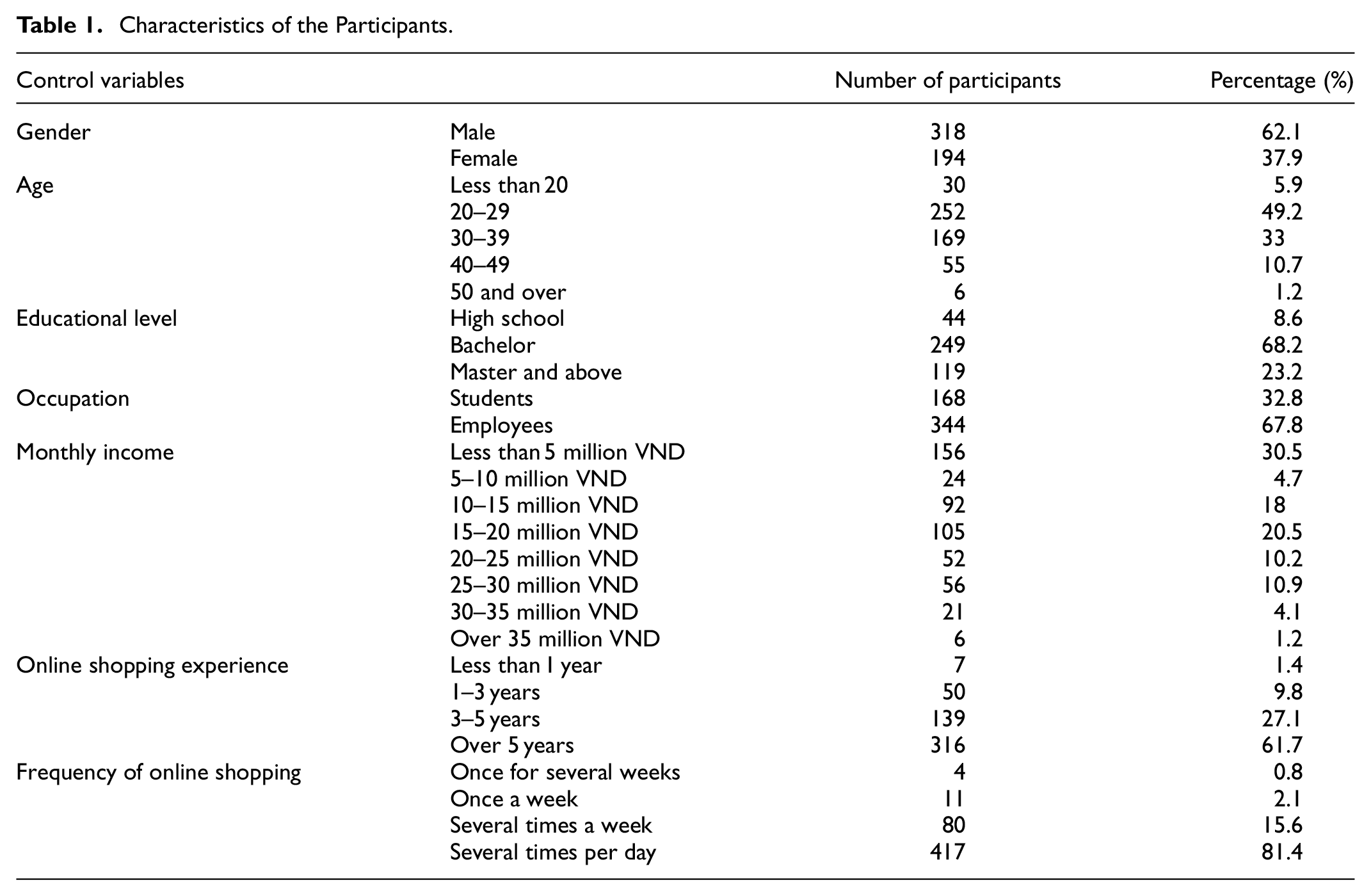
The sample for this study consists of two groups: students and employees. A total of 304 questionnaires were distributed to the student group, with 256 questionnaires returned. For the employee group, 840 questionnaires were distributed, and 486 were returned. In total, 1,144 questionnaires were distributed, and 742 were returned, resulting in a response rate of 64.86%. To ensure that the respondents are relevant to the study, the first question of the questionnaire asked whether they have experience in searching for electronic products online. 157 questionnaires did not meet the criteria, and 73 questionnaires had missing or inconsistent responses. After excluding these invalid questionnaires, a total of 512 valid questionnaires were obtained.
The student questionnaires were collected from three universities in the northern, central, and southern regions of Vietnam. The employee questionnaires were collected from a total of 47 companies in the northern, central, and southern regions. These companies represent various industries, including finance and insurance, traditional manufacturing, services, information technology, medical equipment, hospitals, and government agencies.
As shown in Table 1, there are slightly more male respondents than female respondents in online shoppers, accounting for 51.1%. The age group below 30 years old represents the majority at 55.1%. In terms of education level, the majority have completed college or higher education, accounting for approximately 68.2%. The student group comprises about one-third of the sample (32.8%).
Characteristics of the Participants.
Model Fit
According to the procedure of structural equation modeling analysis, it is necessary to establish the fit of the measurement model before assessing the reliability, validity, and significance of the observed and latent variables. In this study, all the relevant data for the SEM were obtained from the LISREL 11.0, and the fit indices for the measurement model are presented in Table 2. These fit indices are used to evaluate the adequacy of the measurement model and assess the overall fit between the observed data and the proposed model.
Model Fit Indices.

According to the procedure of structural equation modeling analysis, it is necessary to establish the fit of the measurement model before assessing the reliability, validity, and significance of the observed and latent variables. In this study, all the relevant data for the structural equation models were obtained from the LISREL 11.0, and the fit indices for the measurement model are presented in Table 2. These fit indices are used to evaluate the adequacy of the measurement model and assess the overall fit between the observed data and the proposed model.
Item Reliability
The reliability of individual items, which refers to the observed variables, can be obtained by subtracting the measurement error from each observed variable (Hair, 2009). Table 3 presents the item reliability in this study, and all individual items meet the threshold of 0.5 (Hair, 2009).
Results of the Measurement Model.

Composite Reliability of Latent Variables
The composite reliability of latent variables is calculated by considering the standardized loadings of each observed variable on the latent variable and the measurement error. It represents the internal consistency of all the measurement variables within each latent variable. Table 3 indicates that the composite reliability of each construct in this study exceeds the threshold of 0.5 (Hair, 2009).
Variance Extracted From Latent Variables
The variance extracted from latent variables measures the explanatory power of each observed variable on the latent variable. It represents the convergence validity and discriminant validity of the latent variables in the overall research model. From Table 3, it can be observed that the variance extracted for each latent variable in this study exceeds the recommended threshold of 0.5 (Hair, 2009).
The Significance Level of Estimated Parameters
This indicator tests whether the loadings of observed variables on the latent variables reach a significant level. It is a standardized value, and the t-value is used to determine the significance of the estimated parameters. In this study, all loadings of observed variables on the latent variables reach a significant level at p < .001 (Table 3).
Based on the above measurement standards, this study confirms that the research questionnaire has good reliability and validity. No further modifications or adjustments to the items are needed. Thus, the measurement model has passed the assessment and can proceed to the next stage of structural model analysis.
Based on the examination of the measurement model, the analysis proceeds to the structural model analysis. In the structural model analysis, apart from observing the path coefficients, attention should also be given to the overall model fit. The results of the structural model analysis in this study are depicted in Figure 2. The data displayed on the paths in Figure 2 are the standardized loadings, where higher values indicate a higher degree of explained variance.

The structural model.
From Figure 2, it can be observed that the standardized loading of perceived search costs on search motivation is −0.35, the standardized loading of perceived search benefits on search motivation is 0.50, the standardized loading of perceived search abilities on search motivation is 0.37, and the standardized loading of search motivation on search behavior is 0.61. These four hypotheses are also confirmed through t-tests, reaching significance at p < .001. However, the model fit indices GFI, NFI, TLI, and RMSEA are marginally below the predetermined threshold, as shown in Table 4. This indicates that the research model requires appropriate modifications.
Model Fit Indices of the Structural Model.

When the causal relationships of variables in a research model do not fit the observed data and model modifications are necessary, there are two principles to consider: (1) the augmentation principle, which involves adding causal relationships among latent variables to improve model fit when it is poor, and (2) the reduction principle, which involves reducing causal relationships among latent variables to increase the significance of the model’s relationships when model fit meets the standard (MacCallum et al., 1994). In this study, since there are four fit indices used to determine model fit, the augmentation principle is adopted to modify the model and improve its fit. The modification guidance is based on suggestions provided by LISREL 11.0. Therefore, the causal relationship between perceived search abilities and search motivation is added to the model. The modified model is depicted in Figure 3, and the fit indices after modification are shown in Table 5.
Model Fit Indices of the Modified Structural Model.

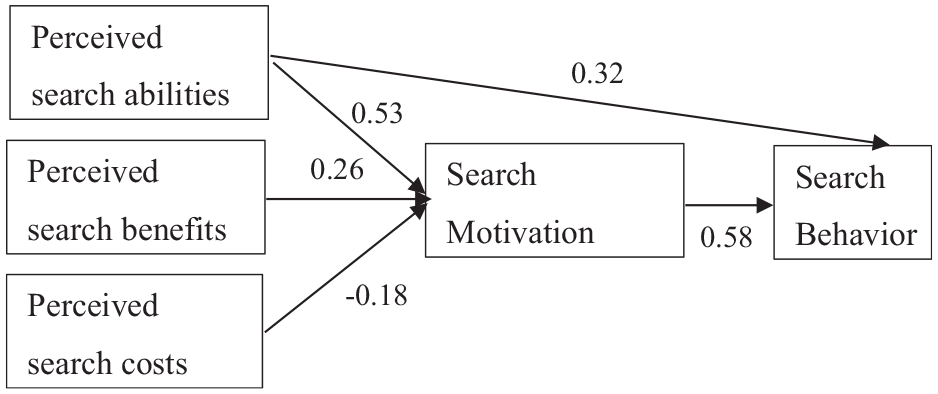
The modified structural model.
After the modification, all fit indices have significantly improved and met the predetermined criteria for model fit. The standardized loadings on each path have also changed, as shown in Figure 3. The addition of the causal relationship between perceived search abilities and search motivation (loading of 0.53) has influenced the standardized loadings on other paths. The loading of perceived search cost on search motivation has changed from −0.35 to 0.18, and the loading of perceived search benefit on search motivation has changed from 0.50 to 0.26. Therefore, perceived search ability, perceived search cost, and perceived search benefit all contribute to the explanation of search motivation. Furthermore, the direct effect of perceived search abilities on search extent has been replaced by an indirect effect through search motivation. As a result, the standardized loading of search motivation on search behavior has changed from 0.61 to 0.58, and the standardized loading of perceived search abilities on search behavior has changed from 0.37 to 0.32. Although the coefficients on each path have changed, all four hypotheses remain significant (p < .001). This indicates that the initial four hypotheses remain supported even after adding the path from perceived search ability to search motivation.
After the modification, the regression equations for the structural model are presented in Table 6. The multiple R-squared values (R2) for search behavior and search motivation are .53 and .45, respectively. This indicates that the model of AI-powered information search behavior can explain 53% of the total variance in search behavior and 45% of the total variance in search motivation. These values suggest that the research model has good explanatory power and aligns well with both theoretical and statistical aspects.
Regression of Modified Structural Model.

The structural model confirms that search motivation has a significant positive effect on search behavior. Therefore, the mediating effects of search motivation are further explored. The results indicate that the Sobel Test statistics for perceived search abilities (10.93, p < .001), benefits (8.55, p < .001), and costs (8.92, p < .001) are all significantly greater than 1.96, and the 95% confidence intervals obtained from 2,000 bootstrap samples do not include 0, indicating that search motivation serves as a mediator (Sobel, 1982). Moreover, stepwise regression shows that search motivation has a partial mediating effect on the relationship between perceived search abilities, benefits, costs, and search behavior (Table 7; Baron & Kenny, 1986).
Mediating Effects.

Note. PSA = perceived search abilities; PB = perceived search benefits; PC = perceived search costs; SM = search motivation; SB = search behavior.
p < .001.
Discussions
The present study employed SEM to validate the causal relationships among variables in online information search behavior. The data passed various tests during the measurement model stage, indicating good reliability and validity of the questionnaire items. Subsequently, the structural model analysis was conducted, and the results revealed that all four hypotheses of the study were supported. Specifically, perceived search ability positively influenced search motivation, search motivation positively influenced search behavior, perceived search cost negatively influenced search motivation, and perceived search benefits positively influenced search motivation. Furthermore, search motivation serves as a mediator in the relationship between perceived search abilities, benefits, costs, and search behavior.
During the structural model analysis, it was found that three out of eight fit indices were at marginal levels, indicating the need for necessary adjustments in the research model. Following the suggested model modification, the inclusion of the causal relationship between perceived search abilities and search motivation led to a significant improvement in the overall fit of the model. Notably, the influence of perceived search abilities on search motivation in this study, indicated by a notable standardized loading of 0.53, resonates with the principles of the Theory of Planned Behavior (TPB; Ajzen, 1991). TPB suggests that cognitive-behavioral control, including factors like ability, resources, and opportunities, directly impacts behavioral motivation.
In the context of this study, information search motivation (behavioral motivation) and perceived search ability (a form of cognitive behavior control) are intricately linked, supporting the notion that individuals’ belief in their capability influences their motivation to engage in specific behaviors. This concept has been similarly highlighted in research by Malik et al. (2023), where perceived search ability was a significant predictor of engagement in online activities. The improved fit of the model post-modification, meeting all predefined standards, is a testament to the robustness of this approach. Furthermore, the significant impact of perceived search abilities on search motivation underscores a key insight consistent with other studies: consumers who perceive themselves as capable are more likely to engage in search tasks (Rozenkowska, 2023). This reinforces the importance of enhancing user perception of their abilities in the design and marketing of AI-powered search tools, a conclusion similarly drawn in studies focused on user interface optimization (X. Li et al., 2020).
The multiple R-squared values for the regression equations of search behavior and search motivation are .53 and .45, respectively. This indicates that 53% of the variance in search behavior is explained by search motivation, and perceived search abilities, while 45% of the variance in search motivation is explained by perceived search ability, perceived search benefits, and perceived search costs. These findings demonstrate that the research model has strong explanatory power. The predominant influence of perceived search abilities on search motivation, over the combined effects of perceived search benefits and costs, aligns with the findings of Bandura (1986) in the realm of self-efficacy, highlighting that perceived self-efficacy, or belief in one’s capabilities, plays a critical role in determining how individuals approach tasks and challenges, including information search tasks. In the context of AI-powered information searches, these results suggest that consumers’ self-perceived competence in using AI tools is a pivotal factor in their motivation to engage in search tasks. This is consistent with the findings in other studies, which observed that users’ self-efficacy with technology significantly influences their willingness to use information systems (Bai et al., 2024; J. A. Kumar et al., 2020).
The findings of this study, emphasizing the greater influence of perceived search benefits over costs in AI-powered information search behavior, align with the trends observed in contemporary research. For instance, Akdim and Casaló (2023) highlighted the growing importance of perceived benefits in driving user engagement with AI technologies. This reflects a common observation in the field where the ease and efficiency of AI tools significantly overshadow the perceived costs (J. Kim, 2020). Therefore, the impact of search costs on consumers’ motivation to search is expected to be relatively lower, while the influence of search benefits is expected to be stronger. This suggests that the influence of perceived search benefits on search motivation is more significant than that of perceived search costs, which is reasonable in the current context. The high direct and indirect effects of perceived search ability observed in the research results can be attributed to the varying levels of consumers’ AI-powered search capabilities. As AI-powered search engines have not been universally accessible for a long time, consumers’ abilities to search for information still differ significantly. Such differences in AI-powered search ability have a substantial impact on information search behavior. The finding echoes Ratchford and Ratchford (2021), who observed significant disparities in user proficiency with high-tech tools. This aspect is crucial as it influences the overall search behavior, a correlation similarly drawn by Atoy et al. (2020). However, as AI usage becomes more widespread, the disparity in consumers’ AI-powered search abilities may diminish. It remains to be seen whether the influence of search ability on information search behavior will remain crucial in the future. Overall, while our study corroborates several existing findings in the realm of AI and consumer search behavior, it also provides unique insights into the evolving dynamics of how perceived search abilities and costs are balanced against the benefits in the context of AI-powered searches.
Theoretical Implications
Studies have focused on investigating the various factors that influence consumer AI-powered search behavior (Ashfaq et al., 2020; Jiang et al., 2022). These studies aim to identify the influencing factors on consumer information search. However, the question of how helpful it is to continually search for new influencing factors in understanding the patterns of consumer AI-powered information search behavior remains. Therefore, this study takes a different approach by focusing only on the core influencing elements of search behavior and their interrelationships. It is based on solid theoretical foundations, exploring consumer AI-powered information search behavior from the perspectives of information processing, psychological motivations, and information economics. The study does not further categorize and classify the exogenous variables that influence the core elements, as Srinivasan and Ratchford (1991) commented on information search behavior research: Understanding the relationships among variables alone creates an incredibly complex problem. Therefore, the challenge lies in how to categorize, organize, and summarize the exogenous variables identified in previous studies based on these theoretical foundations. This remains a complex task, and further discussions and future research are needed.
While the original conceptualization of this study was inspired by Schmidt and Spreng (1996) through empirical validation, we found that the AI-powered information search behavior model does not align entirely with previous studies such as Schmidt and Spreng (1996). The empirical results revealed that perceived search ability directly and significantly influences search motivation, emerging as the most important factor affecting search motivation. This indicates that Schmidt and Spreng (1996) overlooked this crucial relationship when conceptualizing their model. To strengthen the theoretical foundation, this study incorporates the Theory of Planned Behavior (Ajzen, 1991), which complements the existing theory and ensures better alignment between the theoretical framework and empirical data.
Practical Implications
The study on consumer AI-powered information search behavior offers profound managerial implications.
First, businesses need to recognize the impact of perceived search abilities on consumer behavior. Managers should focus on developing training and educational content that demystifies AI search tools, making them more accessible and less intimidating to the average user. This could involve creating tutorials, user guides, or interactive sessions that help consumers understand how to use these tools effectively. Additionally, designing user-friendly interfaces that simplify the search process can significantly boost consumers’ confidence in their ability to use these technologies, thereby increasing their engagement.
Second, the study highlights the significance of perceived search benefits in influencing consumer behavior. For managers, this means emphasizing the advantages of AI-powered search tools in their marketing and communication strategies. This could involve highlighting features such as speed, accuracy, and personalization, and how these contribute to a more efficient and satisfying search experience. Furthermore, continuous improvement and innovation in AI technology are vital to keep these benefits relevant and appealing to consumers.
Third, understanding and addressing the perceived costs associated with AI-powered searches is crucial. Managers should aim to streamline the search process, making it as efficient and straightforward as possible. This could mean optimizing algorithms for faster and more relevant results or redesigning the layout to make information more accessible. Transparent communication about any potential costs, such as data usage or privacy concerns, and providing clear solutions or assurances can also help in reducing perceived barriers to using AI search tools.
Finally, the varying levels of AI-powered search abilities among different consumer groups necessitate a more inclusive approach. Businesses should tailor their design and marketing efforts to cater to both tech-savvy consumers and those who are less familiar with AI technologies. This might involve creating different user paths or assistance levels within the AI tools to accommodate varying skill levels and comfort with technology.
Conclusions
The findings in our study underscore the pivotal role of perceived search abilities, benefits, and costs in shaping consumers’ search motivations and behavior. Particularly, the notable influence of perceived search abilities on search motivation, aligning with the Theory of Planned Behavior, highlights the importance of consumers’ self-efficacy in the use of AI tools. Additionally, the study reveals that perceived benefits outweigh the perceived costs in influencing search motivation, reflecting the evolving efficiency and user-friendliness of AI chatbots. This trend toward convenience and practicality in AI search tools is a crucial factor for businesses to consider in their digital strategies. The variations in AI-powered search capabilities among consumers suggest a future potential for more uniform proficiency as AI becomes more ubiquitous. In navigating the digital landscape, understanding and leveraging these insights can lead to enhanced user experiences, greater customer engagement, and the successful integration of AI technologies in consumer search processes.
This study, while not using random sampling, employed convenience sampling with strategies to diversify the sample across different sources and regions to reduce bias and enhance sampling effectiveness. It specifically focused on electronic products for consumer information search due to their high value and complexity, acknowledging that these findings might not apply universally across product categories. The research examined consumer AI-powered information search behavior through the lenses of information processing, psychological motivation, and information economics, without extensively categorizing external variables. Acknowledging the complexity suggests a need for future work to more comprehensively integrate and summarize these variables. Additionally, the results show partial alignment with the theory of planned behavior, suggesting a potential avenue for further investigation into the foundational principles connecting these theories.
Footnotes
Acknowledgements
The authors would like to thank Ho Chi Minh City University of Economics and Finance (UEF), Vietnam for funding this work.
Author Contributions
(1) Thuy Dung Pham Thi: Manuscript writing and formatting; (2) Nam Tien Duong: Data collection and analysis. (3) Van Kien Pham: Manuscript revision.
Declaration of Conflicting Interests
The author(s) declared no potential conflicts of interest with respect to the research, authorship, and/or publication of this article.
Funding
The author(s) received no financial support for the research, authorship, and/or publication of this article.
Ethics Approval and Consent to Participate
Ho Chi Minh City University of Economics and Finance (UEF) granted the authors permission to use the scale for this academic research.
Consent for Publication
All the authors declare their consent for publication.

Availability of Data and Material
The data that supports the findings of this study are available from the corresponding author upon request.