




Abstract
Food safety is a significant livelihood and critical social security issue. However, few people are aware of the interests of multiple actors in the voluntary disclosure of food safety information. In order to solve the “market failure” and “government failure” caused by information asymmetry in the Chinese food market, this study constructs a game model of voluntary food safety information disclosure consisting of food enterprises, consumers, and the government. Stable equilibrium points and optimal decision-making strategies under different constraints were analyzed using replicated dynamic equations. Matlab software was used to simulate the game model to examine the interaction of the three parties in strategy selection, and an econometric model was used for empirical testing to clarify the interaction between the interests and behaviors of each party. The study results show that the interests of food enterprises, consumers, and the government and the realization of their claims have become critical constraints on food safety. Food enterprises are responsible for the voluntary disclosure of food safety information. Consumers and governments should strengthen collaborative supervision and linkage mechanisms to actively guide them toward substantive information disclosure. Government penalties, consumer subsidies, and food enterprises rewards for substantive information disclosure strategies can effectively promote substantive information disclosure by food enterprises. Therefore, this study contributes to a comprehensive understanding of the micro-mechanisms and differential impact effects of voluntary food safety information disclosure and provides a reference for decision-making to improve the quality of voluntary corporate food safety information disclosure and promote the modernization of the food safety governance system and governance capacity.
Plain language summary
Food safety is a significant livelihood and critical social security issue. However, few people are aware of the interests of multiple actors in the voluntary disclosure of food safety information. In order to solve the “market failure” and “government failure” caused by information asymmetry in the Chinese food market, this study constructs a game model of voluntary food safety information disclosure consisting of food enterprises, consumers, and the government.
Introduction
Food safety is a social issue of global concern, and alleviating information asymmetry in the food market is an effective way to ensure food quality and safety and win consumer trust (Wang, Chao, et al., 2022; Wu et al., 2018). Market mechanisms and government regulations are the two standard methods for solving food safety problems. As early as 2004, the State Council of China issued the “Further Strengthening Food Safety Work” decision, which initiated the establishment of a traceability system for agricultural products. However, information asymmetry between producers and consumers and the opportunistic behavior of enterprises thus leads to food market failures (Gao et al., 2023). For example, food safety information in China must be completed in a timely manner, and the illegal use of food still exists. At the same time, the small scale, large number, and low degree of accumulation of food enterprises in China have resulted in high government regulatory costs, low operational efficiency, backward regulatory methods, and other problems, making it difficult for the Chinese government to implement comprehensive and effective regulations, leading to government failure.
Recently, the Chinese government has proposed strengthening risk and hidden danger investigations along with special treatment in food safety. However, the increasing complexity of food ingredients and supply chain systems has exacerbated the severity of the food safety situation. The frequent exposure to food safety incidents has become a microcosm of China’s livelihood issues during the colonial transition period (K. Zhou et al., 2016). The China Livelihood Survey 2019 General Research Report shows that food safety is an essential concern of respondents regarding the social environment (K. Li et al., 2023). As for the most concerned issues (anxiety and worry) in terms of social environment, 26.41% of respondents chose food safety as their first choice, with a weighted proportion of 36.85%, which was significantly higher than other items (Talari et al., 2022). The imbalance between supply and demand and the structural mismatch reflected in food quality issues pose a significant threat to public health, the survival of food enterprises, and the quality development of the social economy (Crovato et al., 2016; Röhr et al., 2005). Thus, food safety is an essential, practical issue in China. Previous research has examined voluntary food safety information disclosure as a quasi-public good, requiring a combination of government regulation and market mechanisms to internalize the externality problem (S. Y. Chen, 2017; Lev, 1992). Based on the unique properties of empirical food safety information, consumers and food enterprises are subject to “information constraints” and “cognitive constraints” that increase the degree of asymmetry in food safety information and lead to increased risk concealment. Addressing the root causes of food safety problems lies in curbing the self-interest motives of food enterprises and improving the quality and transparency of information disclosure. According to the stakeholder theory, voluntary food safety information disclosure results from the interaction of multiple stakeholders’ interest demands and conflicts. Only by realizing a balance of interests and a win-win situation for all subjects can we fundamentally solve the food safety problem (Ortega et al., 2012; R. Liu et al., 2023).
The topics of information disclosure and food safety supervision have attracted increasing attention from scholars. The current research mainly focuses on two aspects: On the one hand, there are related studies on the motivation and strategy choice of voluntary disclosure of food safety information. Under the influence of public opinion and reputational effects, food enterprises act as recipients of policy regulation and respond proactively to government and market demands (Fearnley, 2022). Increasingly, enterprises are voluntarily disclosing food safety information on their enterprise websites, in annual reports, and social responsibility reports to showcase their corporate image through visual information (Moser & Martin, 2012). Signaling theory suggests that because food safety affects transaction costs, enterprises are willing to implement quality assurance systems that are more stringent than public food safety standards. The desire to send more positive signals to stakeholders by disclosing private information brings irreplaceable resources, such as organizational reputation and corporate image, to the enterprise (Tsai et al., 2020). Legitimacy theory suggests that voluntary disclosure results from social and political pressure on enterprises and that enterprises whose legitimacy is threatened are more likely to implement self-serving disclosure to preserve their position (Naughton et al., 2019). In choosing a voluntary food safety information disclosure strategy, based on the intention of voluntary food safety information disclosure, “self-service” enterprises may implement a manipulative or substantive disclosure strategy and even have potential problems such as selective disclosure, false disclosure, or delayed disclosure (Cao & Zhang, 2020). High-quality enterprises tend to disclose substantive information that is verifiable and difficult to imitate. In contrast, poor-quality enterprises tend to disclose vague strategic information that cannot be easily verified, leading to the spread of information noise, causing “adverse selection” problems and disturbing the market order (X. Liu & Anbumozhi, 2009). J. Zhou et al. (2022) suggested that, based on consumer utility maximization, the optimal disclosure strategy is to disclose information separately; however, driven by profit maximization, enterprises may choose to disclose food safety information in combination with public relations information to avoid negative impacts on the enterprise. On the other hand, related studies on food safety regulation are from the perspective of evolutionary game analysis. Most of the recent studies have used evolutionary game analysis to explore the issues of agricultural product supply chains (Tan et al., 2023), green finance (S. Li et al., 2024), urban road transport networks (Ahmad et al., 2023), and other areas. Among them, most related studies on food safety regulation explore the evolution of behavioral strategies of two or three actors from the perspective of government regulation. For example, Fairchild (2008) study found that corporate spontaneous food control measures were adequate under the “dual control” of government environmental regulation and public scrutiny. Song et al. (2018) found the quality of food safety information in traceability systems and designed a game model for food enterprises and government regulators based on evolutionary game theory. Furthermore, the supervisory capture created by local government policy burdens inhibits the effectiveness of media scrutiny and induces a mass crisis of confidence in government regulators among consumers (J. Zhou et al., 2022). Zhu et al. (2021) constructed a three-way evolutionary game model of the central government, local government, and consumers to study food safety risk communication systems. Penalty costs, supervisory intensity, communication costs, and government reputation positively impact consumer food safety communication behavior (Bai et al., 2023).
Previous studies have explored the motivations, strategic choices, and complex interest relationships among multiple subjects in voluntary food safety disclosures and have made valuable attempts to apply dynamic game models to food safety regulation issues. However, in the study of voluntary food safety disclosure, less evolutionary game models are used to analyze the interests of food enterprises, consumers, and government regarding strategy choice. Therefore, this paper innovatively combines voluntary food safety disclosure with the three-party evolutionary game model to analyze the strategic decisions and stable equilibriums of food enterprises, consumers, and the government in the equilibrium of interests. It also utilizes numerical simulations to explore the influence of changes in the main parameters on strategy choices, providing a reference basis for the design of a voluntary food safety information disclosure system.
Using an evolutionary game model and empirical tests, we examine the interactions among food enterprises, consumers, and the government in their strategic choices and explore the regulatory decisions of the regulator. We make three contributions to the literature on voluntary food safety disclosures. Firstly, in contrast to the existing literature, which mainly focuses on mandatory food safety information disclosure by the government, we try to take food enterprises as the main body, focusing on information published on their official websites, in annual reports, in social responsibility reports, and on self-media platforms, and analyze in depth the voluntary information disclosure behavior of each subject decision making. Secondly, we extend the boundaries of food safety regulation research. While previous studies have focused on government regulation, traceability systems, and the safe production and operation of food enterprises, we confirm that voluntary food safety disclosure decision-making behavior results from a multi-actor game through a tripartite game analysis of food enterprises, consumers, and the government. Thirdly, numerical simulation is used to examine the dynamic changes among the subjects, which compensates for the limitations of static research and provides solutions to the subsequent dilemma of food safety regulation.
The rest of the paper is structured as follows. Section “Theoretical Framework” introduces theory and analysis. This is followed by evolutionary game modeling for voluntary food safety disclosure supervision in Section “Evolutionary Game Modeling for Voluntary Food Safety Disclosure Supervision”. Section “Parametric Analysis and Simulation” provides parametric analysis and simulation. Section “Empirical Design Based on Voluntary Food Safety Disclosure Regulation” provides empirical design based on voluntary food safety disclosure regulation. The final section concludes the paper and discusses the policy implications.
Theoretical Framework
Components of a Food Information Regulatory System
The food information regulation system is based on food safety legislation and is centered on allocating powers and responsibilities for food information regulation. Experience shows that the effectiveness of food safety regulation in developed Western countries is mainly attributable to their sound legal systems for food safety. In the food information regulation system, knowing what powers are given to the regulatory bodies and what responsibilities are imposed for their failures (Y. Kang, 2019). Establishing the information regulatory body and dividing its functions are central to the Food Information Regulatory System.
A mature model of food safety information regulation should include at least the following factors: First, the setting up of a food safety information regulation organization. The food industry is highly ethical. The realization of food safety requires the strengthening of industry ethics and enterprise self-discipline but also requires the “visible hand” outside the enterprise, that is, government supervision (Dreyer et al., 2010). A sound information supervision body is the organizational foundation for ensuring food information safety. Secondly, the distribution of food information regulatory powers. A clear and reasonable division of regulatory powers between regulatory bodies and effective coordination between them is essential to properly functioning the food information regulatory mechanism (Todt et al., 2009). Thirdly, the design of food information and regulatory tools. The rapid changes in information technology in modern society have enabled more ways and means of food safety regulation. The design of practical regulatory tools under the guidance of scientific regulatory concepts is essential to ensure food safety. Fourthly, the implementation of responsibility for food information regulation. Whether food information supervision and enforcement is strict is directly related to the effectiveness of food information supervision (Todt et al., 2007). Whether the regulated person bears the responsibility for food safety violations according to law and whether the supervisor bears the responsibility for inadequate food information supervision directly determines the effectiveness of the food information supervision systems (Su et al., 2022).
Analysis of the Co-Regulatory System for Food Information
The co-regulatory system for food information is an inevitable choice for modernizing food safety governance in China and has a profound theoretical logic and practical basis (Yang et al., 2022). In the context of the modernization of governance, the traditional single-government regulatory system has revealed more and more limitations. The role of the market, society, and the public in managing food safety risks has become increasingly prominent (Kowalska & Manning, 2022). The construction of a shared governance system in which multiple actors, such as “government-consumer-enterprise,” participate together, with multi-center embedding and multi-functional coordination, has become an inevitable choice for joint food safety regulation and governance. The segmental and the ministerial systems are structurally similar, being traditional mono-regulatory systems that ignore the social nature of food information and the functions of other social actors. Establishing a social governance mechanism for food information involving multiple actors is conducive to promoting the effective allocation of social resources, achieving compatible incentives and coordinated action, and improving the quality of information supervision and governance effectiveness (Jin et al., 2020). The core concepts of shared governance are pluralism of subjects, information sharing, and labor division. Food information regulation is “a process of promoting shared governance of food safety in a multicentre, pluralistic and collaborative structure,” with inherent characteristics such as pluralism of governance subjects, sharing of governance information, and diverse means of governance (Nardi et al., 2020). Therefore, in this paper, government regulators, food enterprises, and consumers are selected to construct a framework for the monitoring mechanism of voluntary disclosure of food safety information with the participation of three parties, as shown in Figure 1 (The dotted line refers to the impact of voluntary food safety disclosure on the outside world, and the solid line refers to the effect across subjects).

Framework of the supervision mechanism of voluntary food safety information disclosure.
Evolutionary Game Modeling for Voluntary Food Safety Disclosure Supervision
Basic Research Assumptions and Strategic Choices
Game theory is a mathematical theory and methodology for studying whether there is a most rational behavioral solution for the parties in a game and how to find this solution. In classical game theory, individuals play a static game in which each participant is assumed to be a rational individual who chooses the optimal strategy to maximize his or her payoff. However, evolutionary game theory combines the analysis of game theory and dynamic evolutionary processes, and its core research content is an evolutionarily stable strategy and replication dynamics (Zou et al., 2023). The methodology differs from game theory, which focuses on static and comparative static equilibrium, and emphasizes dynamic equilibrium.
Evolutionary game theory is based on the assumption of finite rationality, where participants are finite rational subjects. The participating subjects continuously adjust their behavioral strategy choices through the changes of time (Xi & Zhang, 2020), which can explain the behavioral evolution process of food enterprises, consumers, and the government in decision-making interactions in a more close-to-reality manner and can seek effective paths for voluntary food safety disclosure. In addition, based on the assumption of stakeholders’ interests, the users of annual reports, social responsibility reports, and internal control reports are investors and creditors, suppliers, sellers, consumers, and government regulators. Voluntary food safety disclosure not only reflects the attitude of corporate social responsibility but also shows the willingness of the enterprise to produce safe food for suppliers and convey food safety information to creditors, vendors, suppliers, and consumers. It can be seen that voluntary food safety disclosure is the result of the combination of compromise and conflict among multiple stakeholders, and each subject adjusts its decision-making according to different strategies to achieve a stable equilibrium state (Y. Sun et al., 2023), which is in line with the scope of the application of evolutionary games. Therefore, the research object of this paper satisfies the analysis conditions of the evolutionary games and simulates the random interference of the environment in which the game subject is located compared with the traditional game theory, thus opening up a new research perspective for the multi-party game problem.
Enterprise Disclosure Strategy
There are differences in enterprise information disclosure strategies based on the influence of corporate self-service intention and cost constraints (Cao & Zhang, 2020). Voluntary food safety information disclosure is mainly based on text information, quickly becoming a tool for managers to manipulate information. Enterprises are more willing to disclose good food safety strategies and growth visions and avoid unfavorable information, such as penalties for food safety incidents and legal proceedings. Regarding voluntary food safety disclosure, the number of food safety disclosure words issued by listed enterprises ranges from a few dozen words to several thousand words concerning the amount of information. Regarding information structure, some listed enterprises disclose more information on actual practices, such as the sampling of raw materials from suppliers, control of production and processing processes, and the monitoring of finished product quality. On the other hand, some listed enterprises only elaborate on their food safety philosophy and strategy if they address substantive information disclosure. Overall, enterprises with a good food safety performance tend to disclose substantive information that is quantifiable, verifiable, and difficult to imitate; enterprises with a poor food safety performance are inclined to disclose conceptual information that is qualitative, vague, and not easily verified (K. Kang et al., 2019). Therefore, food enterprises have two strategic options for voluntary food safety disclosure. The first is to adopt a substantive disclosure strategy by disclosing the food safety situation in the relevant reports “in a factual manner” based on the twin objectives of social interest and long-term corporate value growth. The second is a manipulative disclosure strategy based on the enterprise self-serving intentions. By manipulating the tone and readability of information in the text, the disclosure of positive food safety news is exaggerated to influence consumers value judgments and purchasing choices.
Assumption 1. The probability of a food enterprise choosing a substantive disclosure strategy is x (0 < x < 1), while the probability of a manipulative disclosure strategy is 1 − x; A11 is the underlying sales profit earned by food enterprises from the sale of products, while B11 and B12 represent the cost of the food enterprises substantive disclosure strategy and manipulative disclosure strategy, respectively; R denotes the government incentive subsidy received by the food enterprises that choose a substantive disclosure strategy under solid government regulation, and π denotes the probability that food enterprises would be found to have chosen a manipulative disclosure strategy under a weak government regulation strategy. When the government implements a strong supervisory strategy and food enterprises are caught choosing to manipulate disclosures, the fine is K. When a consumer chooses a purchase strategy and discovers that the food enterprise has chosen to manipulate the disclosure, the consumer stops buying, and the food enterprise loses sales of V11. C11 indicates the enhancement in benefits (reputation, stock price, etc.) to the enterprise as a result of the food enterprise choice of substantive disclosure strategy; F represents the loss incurred by food enterprises as a result of reduced or unmet sales volume when the food enterprises choose a substantive disclosure strategy, and the consumer chooses a no-purchase strategy.
Consumer Purchase Strategy
There is a complex pathway of influence between the voluntary supply of food safety information by enterprises and the “information seeking” to “actual purchase” by consumers. Food safety information is transmitted when enterprises consciously communicate food safety information to consumers. When consumers actively search for relevant information, the outcome of the signaling depends on the level of trust and the actual benefits of accessing the information (Gao et al., 2023; Nordhagen, 2022). Voluntary corporate food safety disclosure conveys an external image of corporate responsibility for food safety and positively influences consumers initial trust in products and purchasing strategies. However, after purchasing a product, consumers will also correct their perception of the enterprise food safety through the results of product use. Suppose a enterprise discloses food safety information based on a legitimate motive and exaggerates or falsely discloses food safety information. In that case, the consumer trust in the enterprise food safety may be weakened, creating doubt and hesitation about the enterprise food safety statements, leading to a negative attitude towards the brand or abandoning the purchase. Therefore, consumers have two strategic options concerning the voluntary disclosure of food safety information by enterprises: a purchase strategy and a non-purchase strategy. In the initial game of food enterprises, consumers are not able to discern the motivation for voluntary food safety disclosure and adopt a buying strategy for both substantive disclosure strategies, which disclose more substantive information based on signaling motives, and manipulative disclosure strategies, which disclose more conceptual information based on legitimacy motives. However, in the subsequent dynamic learning adjustment of the tripartite game, consumers will change their purchasing strategy and form a new equilibrium point in the game system.
Assumption 2. The probability of a consumer choosing the purchase strategy is y, and the probability of not purchasing the strategy is 1 − y. A21 denotes the benefit gained from the consumer purchase strategy when the food enterprise chooses substantive disclosure; A22 denotes the potential loss of consumer benefit resulting from the consumer non-purchase strategy when the food enterprise chooses substantive disclosure; and A23 represents the losses caused by biased purchasing decisions made by consumers who purchase products when food enterprises manipulate their disclosure strategies. B21 and B22 denote the time cost for consumers to identify the two disclosure strategies of food enterprises, respectively, and C21 represents the government subsidies received for consumer buying strategies under a strong government supervisory strategy.
Government Supervision Strategy
There are severe information asymmetries in food safety supervision, and food safety governance is an essential responsibility of the government (Noto et al., 2022; Y. Wang et al., 2023). In contrast to mandatory food safety disclosure, voluntary disclosure is a form of disclosure motivated by market incentives. If the government severely restricts voluntary disclosure, it may weaken its voluntary attributes to become mandatory disclosure and thus fail to fulfill the function of non-institutionalized restraint. However, the government does not regulate voluntary food safety disclosure. Therefore, based on signaling and legitimacy information, enterprises are willing to disclose a wealth of food safety information. The broad and ambiguous nature of voluntary disclosure may exacerbate market noise, making it more difficult for consumers and investors to identify food safety performance (Wang, Bouzembrak, et al., 2022). As a result, the government has two strategic options concerning the voluntary disclosure of food safety information by enterprises: supervision and no supervision. When the government chooses to supervise, it pays the cost of supervision. After government supervision, enterprises that disclose more substantive information based on signaling motives are rewarded with incentives for their food safety disclosure behavior. Corporate food safety disclosure practices that disclose more information about the concept based on legitimate motives are subject to punitive measures following government supervision. The result is that the signaling function of voluntary food safety information is strengthened, the value of voluntary disclosure information is realized, and the reputation and credibility of the government are enhanced. In contrast, if the government adopts a non-supervisory strategy, it does not have to pay the cost of regulation and does not gain reputation and credibility. As non-supervisory strategies are less common in real-life food safety situations, this paper focuses on the impact of solid and weak supervisory strategies on the strategic choices of the parties involved.
Assumption 3. The probability of a strong government supervision strategy is z, and the probability of a weak supervision strategy is 1 − z. A31 indicates the underlying benefits to the government (reputation, credibility, performance appraisal, etc.); B31 and B32 represent the cost of labor, the cost of equipment, the cost of issuing relevant policies when the government has a strong supervision strategy, and the cost of issuing relevant policies when it has a weak supervision strategy; C31 represents the benefit to the government when a food enterprise fulfills its substantive disclosure strategy; V31 denotes the loss of credit to the government caused by consumers discovering the manipulation of disclosures by food enterprises during the purchase process; and W indicates the overall improved social welfare resulting from consumer purchasing strategies and the identification of voluntary food safety disclosure status. Summarizing above, the model parameters used in this paper are listed in Table 1.
Description of Model Parameters.

In summary, we provide the following realistic explanations for three types of essential parameter strategies: food enterprise (substantive disclosure and manipulation of disclosure), consumer (purchase and non-purchase), and government (strong regulation and weak regulation) strategies as follows. The substantive disclosure strategy of food enterprises is the truthful, accurate, comprehensive, and non-misleading disclosure of food safety information to minimize uncertainty and enhance reputation, which in turn influences stakeholders decision-making. The manipulative disclosure strategy of food enterprises is a management strategy used to selectively express the enterprise performance, strategy, and outlook by adjusting the language, wording, and emotional coloring in the disclosure to influence the enterprise image, investor decision-making, and market sentiment. Consumer buying strategy refers to the behavioral strategy of consumers to purchase food enterprises products directly.The consumer no-buy strategy is a behavioral strategy in which consumers refuses to buy food enterprises products. The government’s strong regulation strategy involves investing more human, financial, and material resources, and adopting strict fine regulation strategies. Weak government regulations are a strategy for issuing relevant policies, education, training, and knowledge dissemination.
Evolutionary Game Modeling for Voluntary Food Safety Information Disclosure
Based on the above assumptions and analysis, referring to the evolutionary game models of Zhao et al. (2023) and Zhu et al. (2021), a tripartite game payoff matrix consisting of food enterprises (under substantive disclosure and manipulated disclosure strategies), consumers (under purchase and non-purchase strategies) and the government (under strong supervision and weak supervision strategies) is constructed. The tripartite subjects will continuously adjust their strategies to achieve an evolutionary steady state to obtain the maximum expected payoff. The evolutionary game payoff matrix is shown in Table 2. The replicator dynamic equation is constructed by calculating the expected revenues and average revenues of the tripartite game subjects.
Payoff Matrix of the Tripartite Game.
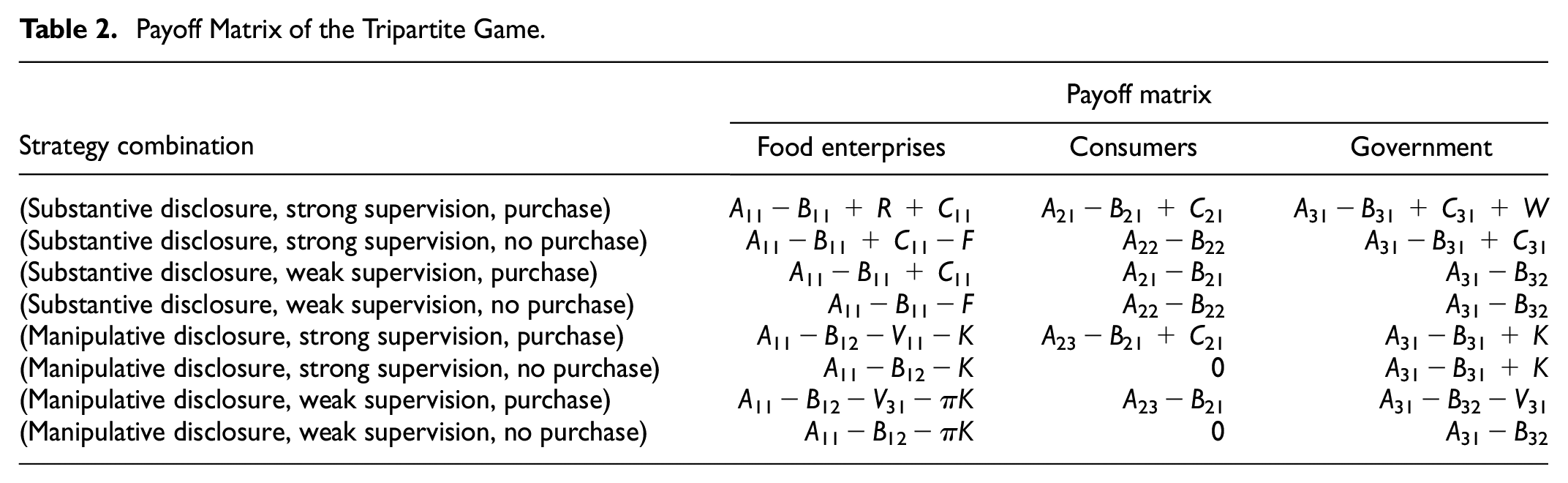
Based on the evolutionary game matrix for voluntary food safety disclosure by food enterprises in Table 2, the benefits of substantive disclosure and the manipulation of disclosure strategies by food enterprises can be derived. The expected revenue for a food enterprise choosing a substantive disclosure strategy is Ex1, and the expected revenue for a manipulative disclosure strategy is Ex2:


The average expected revenue of the food enterprise strategy is as follows:

According to evolutionary game theory (Friedman, 1991; X. Sun et al., 2021), the replicator dynamic equation for the voluntary food safety disclosure strategy of food enterprises is as follows:

Based on the evolutionary game matrix of the consumer purchase strategy or non-purchase strategy, the revenue of the consumer different decision strategies can be derived. The expected revenue of the consumer choosing the purchase strategy is Ey1, and the expected revenue of the non-purchase strategy is Ey2:


The average expected revenue of the consumer strategy is as follows:

The replicator dynamic equation for the consumer strategy is as follows:

The benefits of different government supervision strategies can be derived based on the evolutionary game matrix of the government strong and weak supervision strategies. The expected revenue for the government choosing a strong supervision strategy is Ez1, and the expected revenue for the government weak supervision strategy is Ez2:


The average expected revenue of the government strategy is as follows:

The replicator dynamic equation for the government strategy is as follows.

The replicator dynamic equations (4), (8), and (12) constitute a three-dimensional dynamic system as follows:

Where the concrete forms of Ex1 − Ex2, Ey1 − Ey2, and Ez1 − Ez2 can be expressed as follows:

Evolutionary Stability Analysis
According to the properties of the evolutionary game and the tripartite replicator dynamic equation, the probability of a food enterprise choosing a substantive disclosure strategy x(t), the probability of a consumer choosing a purchase strategy y(t), and the probability of a government choosing a strong supervision strategy z(t) all vary with time, and x(t), y(t), and z(t) lie between 0 and 1. The following is an analysis of the stabilization strategies and equilibrium points of the tripartite game subjects.
The Evolutionarily Stable Strategy of Food Enterprises
In equation (4), if Ex1 − Ex2 = 0, the solution of the equation is
When Ex1 − Ex2 ≠ 0, it follows that x = 0 and x = 1 are the two possible equilibrium points for F(x) = 0. By solving the partial derivative of the replicator dynamic equation (4), it follows that:

Situation 1: According to equation (14), if Ex1 − Ex2 < 0, it is known that y > y*,
Situation 2: If Ex1 − Ex2 > 0, it is known that y < y*,

Evolutionary phase diagram of food enterprise strategy selection: (a) y = y*, (b) y < y*, (c) y > y*.
The Evolutionarily Stable Strategy of Consumers
In equation (8), if Ey1 − Ey2 = 0, when
When Ey1 − Ey2 ≠ 0, it follows that y = 0 and y = 1 are the two possible equilibrium points for F(y) = 0. By solving the partial derivative of the replicator dynamic equation (8), it follows that:

Situation 3: According to equation (16), if Ey1 − Ey2 < 0, it is known that z > z*,
Situation 4: If Ey1 − Ey2 > 0, it is known that z > z*,

Evolutionary phase diagram of consumer strategy selection: (a) x = x*, (b) x < x*, (c) x > x*.
The Evolutionarily Stable Strategy of Government
In equation (12), if Ez1 − Ez2 = 0,

Evolutionary phase diagram of government strategy selection: (a) z = z*, (b) z < z*, (c) z > z*.
When Ez1 − Ez2 ≠ 0, it follows that z = 0 and z = 1 are the two possible equilibrium points for F(y) = 0. By solving the partial derivatives of the replicated dynamic equation (12), it follows that:

Situation 5: According to equation (17), if Ez1 − Ez2 < 0, it is known that z > z*,
Situation 6: If Ez1 − Ez2 > 0, it is known that z < z*,
Stability Analysis of the Equilibrium Point
Letting F(x) = 0, F(y) = 0 and F(z) = 0 in the three equations in the replicator dynamic equation (13) yields eight replicator dynamic local equilibrium points for food enterprises, consumers and government, namely (0, 0, 0), (0, 0, 1), (0, 1, 0), (1, 0, 0), (1, 1, 0), (1, 0, 1), (0, 1, 1), and (1, 1, 1). Based on Lyapunov theory (Friedman, 1998; Waldner & Klages, 2012), the equilibrium point is asymptotically stable when all the eigenvalues of the Jacobian matrix are negative. The Jacobian matrices for this system are as follows:
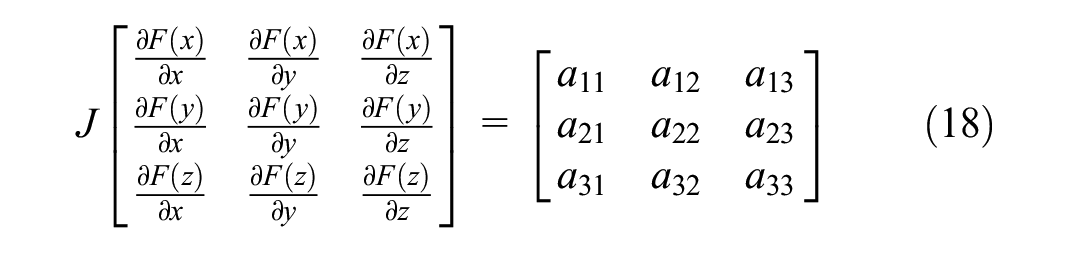

Taking E1 (0, 0, 0) as an example, the Jacobian matrix at this point is as follows:
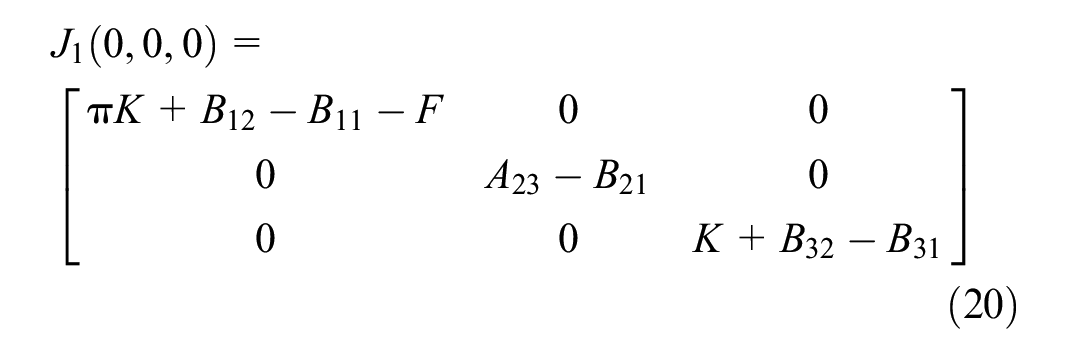
The eigenvalues are
Analysis of the System Equilibrium Points and Their Eigenvalues.

Parametric Analysis and Simulation
Simulation Analysis of Initial Strategy
According to the stable strategy of the tripartite game evolution, the influence of the relevant variables on the game outcome is analyzed through numerical simulation, and the specific path of the evolution of the tripartite game among food enterprises, consumers, and the government is simulated numerically using Matlab software. The trajectory of the evolving asymptotic stability strategy is obtained from the replicator dynamic equations (4), (8), and (12). Δt denotes the time step, and the tripartite dynamic system is formulated as follows:

Setting the time step Δt = 1, it follows from equation (21) that:
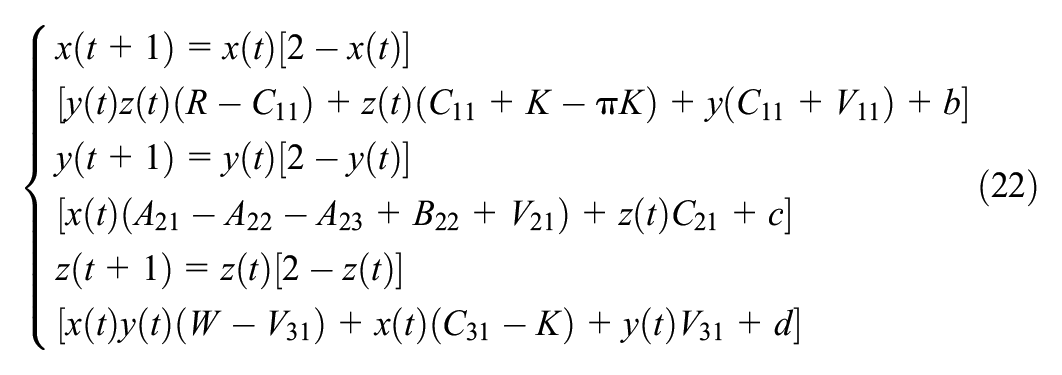
As shown in Table 3, the eight equilibrium points of the tripartite evolutionary game were obtained according to equation (18). To achieve the optimal equilibrium point E8 (1, 1, 1), the following conditions need to be met:
Parameter Initial Values.

From the replicator dynamic equation, it can be obtained that the final evolutionary game outcome of the parties game subjects will be influenced by the change in the initial value of the strategy in addition to the initial value of the parameters set in Table 4. Figure 5 shows the evolution of the initial values of the probabilities of different strategies chosen by food enterprises, consumers, and the government. As can be seen from Figure 5, the strategic choices of enterprises, consumers, and the government eventually converge to 1. The higher the initial willingness to choose the substantive disclosure strategy, the purchase strategy, and the strong supervision strategy, the faster they converge to 1, indicating that the proportion of initial strategy choices is crucial to the evolutionary trajectory. Therefore, the government should actively supervise corporate food safety information disclosure practices to enhance the substantive disclosure and information transparency of food safety information. At the same time, consumers are encouraged to identify the effectiveness of corporate food safety information and to enhance the feasibility of collaborative food safety management by multiple subjects.

Impact of initial changes in strategy on evolutionary outcomes: (a) food enterprises, (b) consumers, (c) government.
Simulation Analysis for External Variables
The stable strategy condition for the equilibrium point is
The Impact of Government Penalty Levels on Evolutionary Outcomes
Initially, holding all other parameters constant simulates the effect of the amount of fines for manipulative disclosure on the evolutionary outcome of the system under a strong government supervision strategy. The effect of government penalty levels on the dynamic trajectory of the system evolution is shown in Figure 6 for values of 5, 10, and 15 for K, respectively. Compared with the initial situation, as K increases, there is less time for food enterprise, consumer, and government strategic choices to stabilize and evolve. The larger the value of the fines for manipulation disclosures under strong government supervision, the more conducive it is for the system to move towards a steady state. Precisely, under the penalty mechanism, enterprises, as direct stakeholders, will adjust their voluntary food safety disclosure strategies to respond to government and consumer demands. For example, the Food Safety Law enacted in 2009 and the Law of the People’s Republic of China on the Quality and Safety of Agricultural Products amended in 2018 specifies the standards for food safety supervision, the penalties for food safety incidents, and punitive damages. This move significantly promotes the transparency and traceability of corporate food safety information and helps consumers access substantive information related to food safety. There is a reduction in the response time of the strategies of consumers and government, with a slight increase in their evolutionary trend, indicating a preference for buying and robust supervision strategies simultaneously.

Simulation results before and after the change of government penalty levels: (a) food enterprises, (b) consumers, (c) government.
The Impact of Consumption Subsidies on Evolutionary Outcomes
We simulated the effect of consumption subsidy C21 on the evolutionary results of the system by holding other parameters constant in the initial case. C21 takes values of 5, 10, and 15, respectively, and the specific evolutionary paths are shown in Figure 7. Consumption subsidies significantly affect the strategy choice of each game subject and the time of evolution to a stable state. Specifically, the strategic reaction time of food enterprises does not change, which is consistent with reality. A possible reason for this is that the core of the consumer subsidies policy tool lies in consumers and governments and is less related to enterprises. The strategic reaction time of consumers is slightly shortened, indicating that consumer subsidies have a lower impact on consumers strategic choices. However, consumers are more inclined to choose purchasing strategies during the same period. The reaction time of the government strategy has been shortened, the peak of the evolution trajectory has increased, and it is more inclined to choose a strong supervision strategy. Although consumer subsidies will increase the operating costs of the government, the actual benefits to the government, such as regulatory fines, social welfare, and credibility, are much higher than the costs, thus promoting the realization of the system evolutionary stability strategy. Therefore, the design of the incentive mechanisms can guide the government food safety supervision, food enterprise, and consumer strategy choice. Finally, it will promote the quality of voluntary food safety information disclosure.
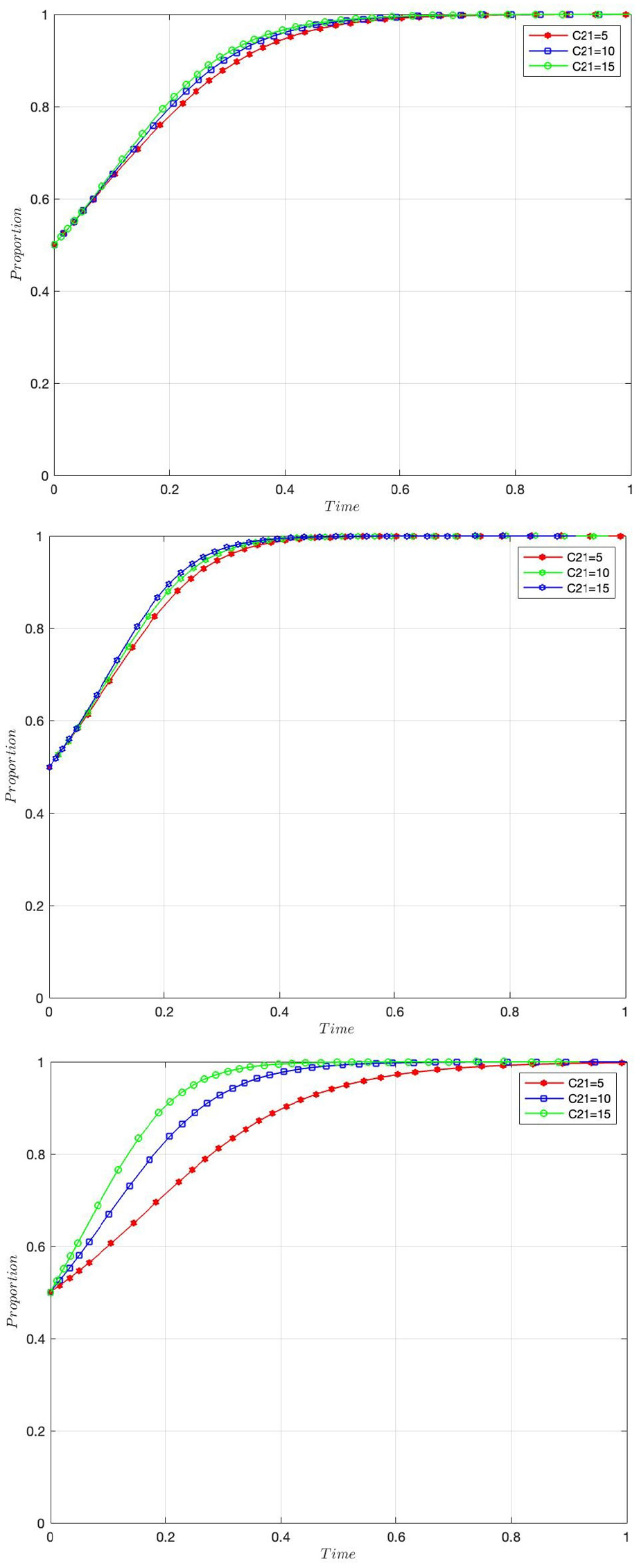
Simulation results before and after the change of consumption subsidies: (a) food enterprises, (b) consumers, (c) government.
The Impact of Consumption Subsidies on Evolutionary Outcomes
In the initial case, other parameters are kept unchanged, and the influence of the reward amount of the enterprise substantive disclosure strategy on the system evolution results is simulated. R is 5, 10, and 15, respectively, and the specific evolution path is shown in Figure 8. It can be seen from Figure 8 that the strategic response time of consumers and governments has stayed the same, and the strategic response time of food enterprises has decreased. As the primary beneficiary of the policy incentive mechanism, enterprises will adjust their food safety information disclosure behavior in combination with policy standards, which can prevent the risk of voluntary food safety information disclosure from the source. For the food safety supervision system, the formation and evolution of the practical operation mode of food safety information disclosure is a dynamic process in which the main elements, such as enterprises, consumers, and governments, constantly adapt to each other. For example, in Europe and the US, while implementing mandatory and market-based food safety risk management tools, they are also actively encouraging investment institutions and consumers to participate in collaborative food safety governance and developing guided and voluntary food safety governance tools. Actively exploring information tools that can fundamentally break down information barriers, including information and exhortation, internal controls, taxes, and user fees, information subsidies, safe and traceable chain production, and recall mechanisms is suggested (Wu et al., 2018). Therefore, the green support subsidy instrument linking food safety quality and food safety information can be implemented to reduce the cost pressure on food enterprises to share traceable food safety information. The ultimate goal is to trace and share information on the whole process, all aspects, and multiple dimensions of food safety.
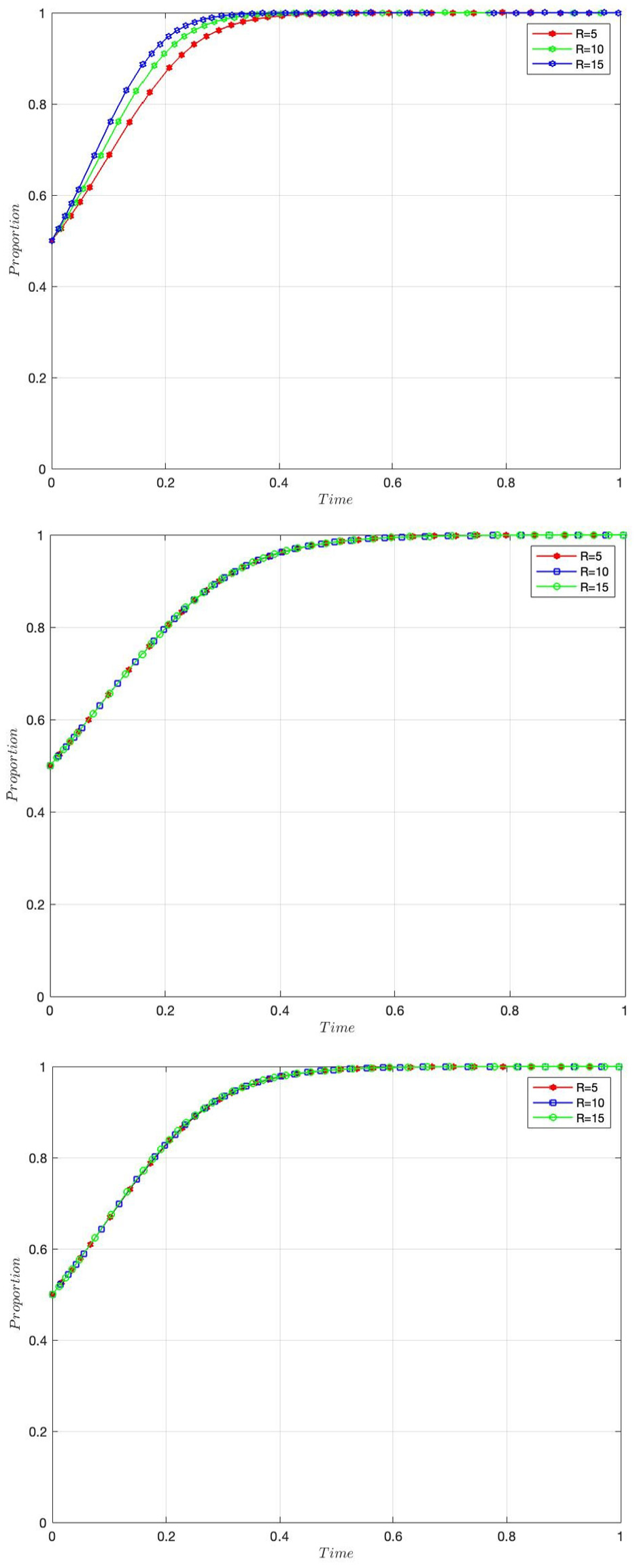
Simulation results before and after the change of substantive disclosure strategies: (a) food enterprises, (b) consumers, (c) government.
Empirical Design Based on Voluntary Food Safety Disclosure Regulation
The results of the evolutionary game analysis show that voluntary food safety disclosures can be influenced by government regulatory and consumer behaviors. Government regulators and consumers serve as makers and participants in the assessment rules. Government and consumers dominate the entire regulatory governance process, and it is of practical significance to explore their behavioral influences to improve regulatory efficacy and accurate regulation (Hu et al., 2023; Langsrud et al., 2023). Therefore, this study constructed an econometric model to analyze the regulatory behavior of voluntary food safety disclosures.
Research Design
Model Selection
In order to test the effects of government regulatory behavior and consumer behavior on voluntary food safety disclosure, the following panel regression model (23) is developed.

In the formula, the subscripts i and t represent individuals and periods respectively; Fsid denotes voluntary food safety disclosure by food enterprises; Sup denotes a government regulator’s disclosure of regulatory penalties for non-compliance; Pub denotes consumer oversight; Control denotes a set of control variables, includes corporate cash flow (Cash), enterprise size (Size), enterprise growth (Grow), enterprise profitability (Roa), current ratio (Cr), total asset turnover (Turnover), board size (Board), double-hatting (Both), ownership concentration (Shrcr), ε denotes random error.
Variable Definitions
Dependent variables: A key research design issue in this study is to develop a reliable proxy for a enterprise voluntary food safety disclosures. Following Clarkson et al. (2008) environmental disclosure scale (which highlights the concerns of investors and analysts, has comprehensive coverage, and is considered the most authoritative evaluation method in the field of information disclosure), content analysis is used to construct voluntary food safety disclosure evaluation Indicators. This was done by combining the voluntary food safety disclosures of food enterprises and searching for the words “traceability,”“product quality,”“ISO9001 certification,”“risk management,”“food safety,” etc. from the annual reports of the sample enterprises. The study was conducted to collect information on voluntary food safety disclosures from food enterprises by reading their annual and social responsibility reports in detail (S. Chen et al., 2020). The selected indexes cover the main aspects of food safety, including corporate food safety policies, production and distribution areas, quality, and safety control and internal industry evaluation. Of these, the strategic concept is considered a “soft” disclosure item and includes two primary indicators, Vision and Strategy Statement and Business Image, and seven secondary indicators. Actual behavior is considered a “hard” disclosure item that is difficult to imitate by enterprises with poor food safety performance. It mainly includes four primary and 12 secondary indicators including control of governance structure and management, control of suppliers and sellers, control of production process, and control of employee behavior. For each disclosure content assigned 1 point, while disclosing the substance of the information and details of the enterprise (for example, the physical quality of the product qualification rate of 99.35%), an additional 1 point, totaling 2 points. Food enterprises are scored on an item-by-item basis based on their actual disclosures, and the total is summed to obtain a score for voluntary food safety disclosure. To ensure the accuracy of the study data, 100 samples were randomly selected for manual review, and the rules were explained to the raters before the formal review to help them understand the assessment process and criteria. The results of the review showed that the consistency of the ratings is in line with objective reality and research needs, ensuring the objectivity and accuracy of the results. The voluntary food safety disclosure categories, evaluation indicators, and statistics of each indicator are shown in Table 5.
Raw Food Safety Disclosure Score Summary Statistics in 2013 and 2022.

Independent variables: government regulatory behavior (Sup). The logarithm of the amount of penalties imposed on enterprises for non-compliance is selected as a consideration for the regulator’s supervisory indicators. Consumer behavior (Pub). Media monitoring is selected as an alternative to consumer regulatory behavior because it is difficult for the public to understand voluntary disclosure, and it is difficult to measure the degree of monitoring of listed enterprises information disclosure. Drawing on the current methodology of most scholars in evaluating media monitoring, the number of news reports about listed enterprises in China’s economic news library is used as an indicator of media monitoring.
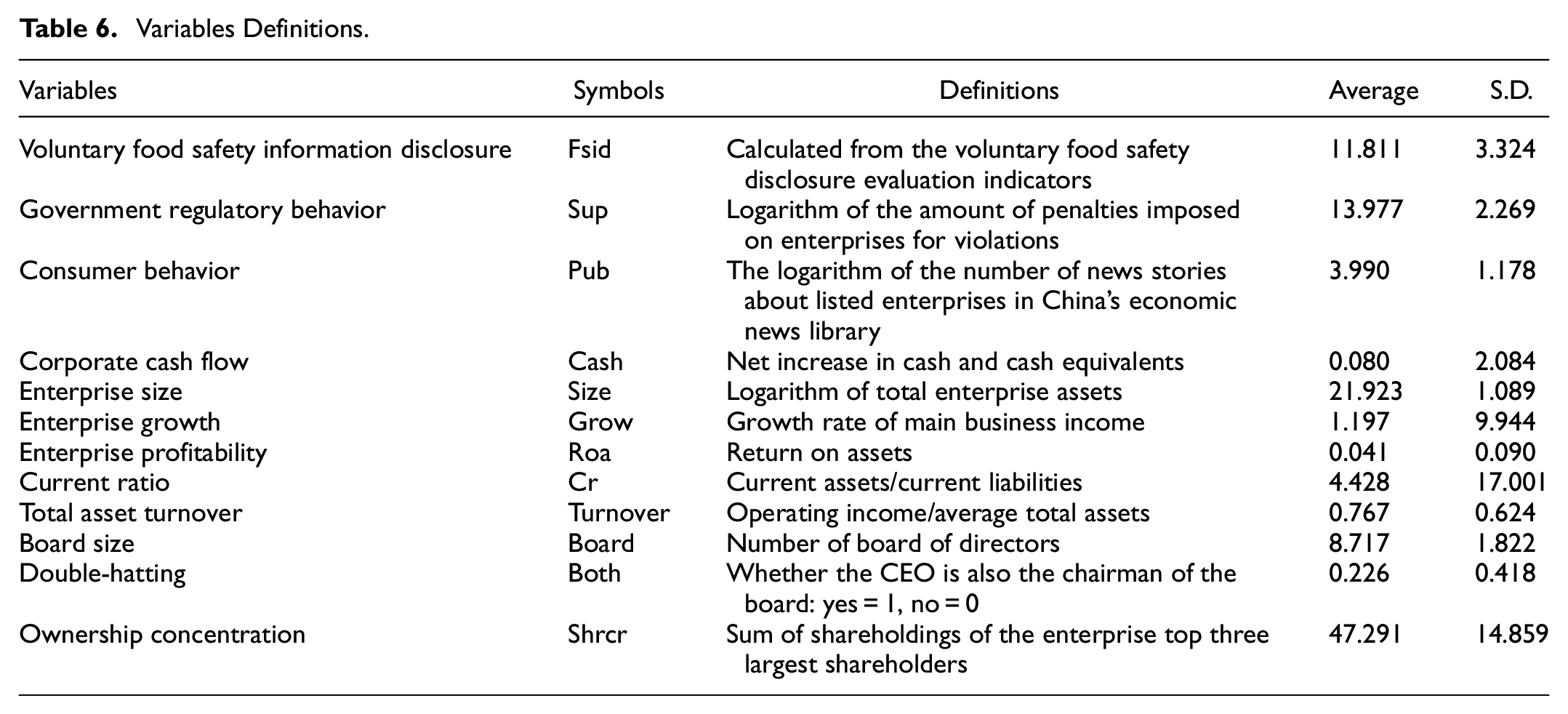
Control variables: Variables are selected based on previous studies regarding both enterprise financial characteristics and corporate governance attributes. They include corporate cash flow (Cash), enterprise size (Size), enterprise growth (Grow), enterprise profitability (Roa), current ratio (Cr), total asset turnover (Turnover), board size (Board), double-hatting (Both), ownership concentration (Shrcr). Specific descriptions of each of the above variables are shown in Table 6.
Variables Definitions.
Data Source
Data sources: Based on the classification of the China Securities Regulatory Commission (CSRC), this study uses the data from 119 food enterprises listed on the Main Board, SME Board, and GEM of Shenzhen and Shanghai over 2013 to 2022 period. On this basis, the samples are further processed as follows: (1) samples with missing values and extreme outliers for critical variables are excluded; (2) all continuous variables are shrink-tailed by 1% up or down; (3) samples with less than 3 years of listing are deleted. Finally, we get 119 listed companies with 1,168 valid observation samples. Relevant data for voluntary food safety disclosure were obtained from food companies annual reports, social responsibility reports, and through manual collection and collation. The data for the remaining variables are obtained from the China Stock Market & Accounting Research Database (CSMAR).
Empirical Results
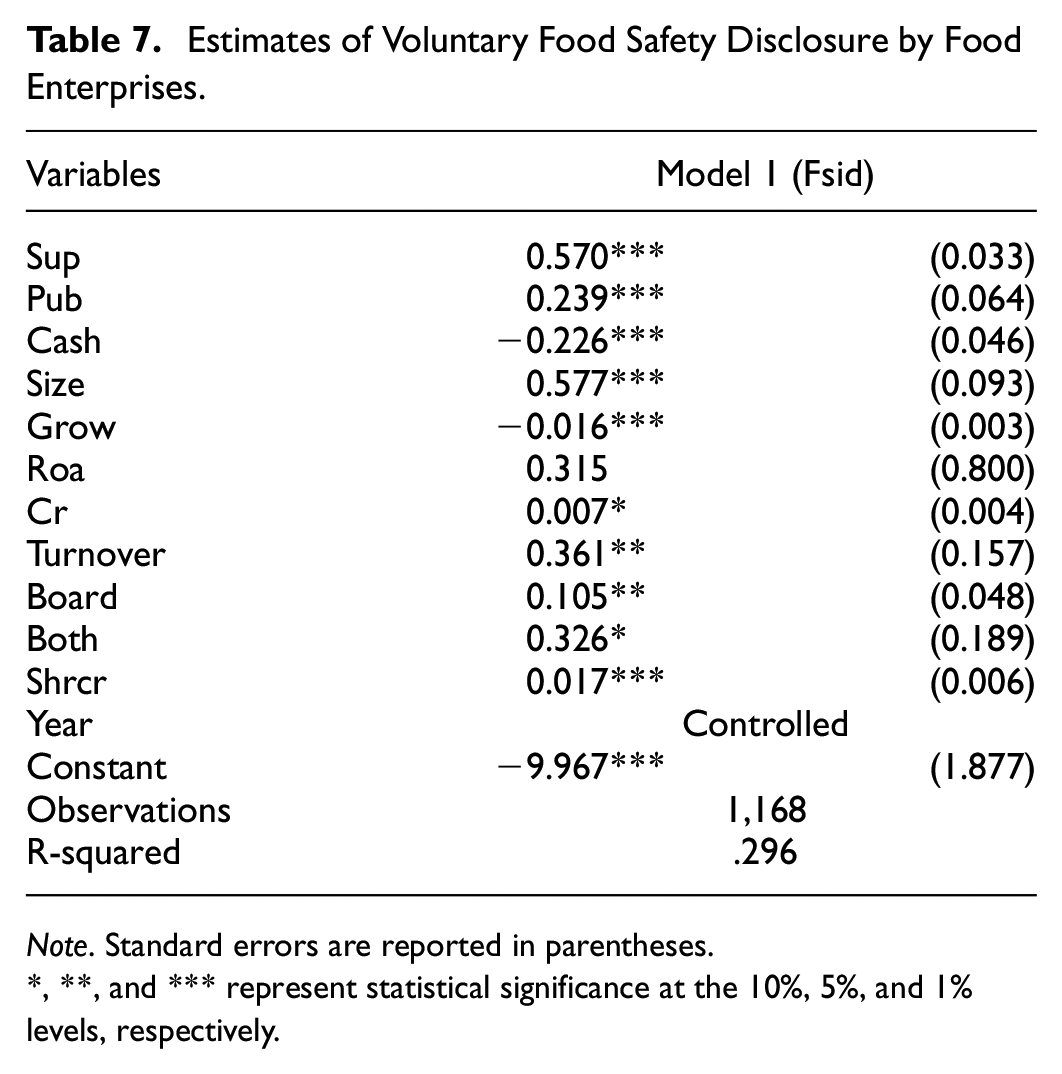
The effect of government regulatory behavior on voluntary food safety disclosure. As shown in Table 7, government regulatory behavior is significantly positive at the 1% level, indicating that government regulation promotes voluntary food safety information disclosure by enterprises. The assessment criteria for the quality of enterprises voluntary food safety information disclosure mainly lie in the truthfulness, accuracy, and compliance of the information content, the completeness and timeliness of the announcement documents, and the voluntariness and implementation of the disclosure behavior. Government regulators judge the quality of voluntary food safety information disclosure by enterprises based on the quality of the information and strengthen the supervision of enterprises that disclose in violation of the law or with poor quality. Targeted and precise regulation will enable regulators to control costs while obtaining sound regulatory effects. The influence of consumer behavior on voluntary food safety information disclosure. As shown in Table 7, consumer behavior is significantly positive at the 1% level, indicating that consumer supervision promotes voluntary food safety information disclosure by enterprises. When the level of consumer supervision increases, enterprises also adjust their voluntary food safety in formation disclosure strategies to improve the quality of information disclosure.
Estimates of Voluntary Food Safety Disclosure by Food Enterprises.
Note. Standard errors are reported in parentheses.
, **, and *** represent statistical significance at the 10%, 5%, and 1% levels, respectively.
Conclusions and Policy Implications
Conclusions
Regarding the disclosure strategy for food safety information, there has been significant controversy since China entered a period of high incidence of food safety incidents in the early 21st century. This study constructs an evolutionary game model for voluntary food safety information disclosure that includes three subjects: food enterprises, consumers, and the government. By solving the replicated dynamic equations, we obtain the strategic equilibrium point and stable strategy of each subject system evolution, discuss the impact of the strategy choice on the equilibrium results of the system, and perform numerical simulations. This study uses a panel regression model empirical analysis to verify the game results and obtains the following conclusions: Firstly, taking into account the real situation, through the analysis of the evolutionary game model and the stability analysis of the equilibrium point, it is concluded that the idealized evolutionary stable state is that the food enterprises choose the substantial disclosure, the consumers choose the purchasing strategy, and the government chooses the strong regulation strategy. The evolutionary game relationship among food enterprises, consumers, and the government can be constructed to balance the interests of the subjects with the modernization of the food safety governance system and governance capacity. Second, the construction and analysis of the econometric model show that government regulation promotes voluntary food safety disclosure by enterprises, and consumer regulation promotes voluntary food safety disclosure by enterprises. Third, by combining the analysis of the evolutionary game and econometric models, the improvement in the level of consumer supervision will promote the improvement of the level of supervision by government regulators. This point corresponds to the transformation of collaborative governance from an ineffective to a practical governance stage in the game analysis. In other words, only by establishing a stable and balanced relationship between the subjects, deepening consumers understanding of the voluntary disclosure of food safety information, and utilizing consumer subsidies can the cost of searching for consumer food safety information be reduced. Food safety incidents can be curbed by promoting a shift from government-led food safety regulations to collaborative governance and positive interactions among multiple stakeholders.
Policy Implications
Our findings are instructive regarding the impact of voluntary food safety information disclosure by food enterprises and the monitoring mechanisms. In terms of theoretical implications, this study strengthens the management of food safety information disclosure and optimizes the food safety information regulatory system. From the perspective of practical implications, this study is conducive to improving the food safety regulatory system and timely information disclosure system, and regulating and guiding the active participation of all subjects in the social governance of food safety. From the viewpoint of social significance, voluntary information disclosure is the most economical way to obtain information, and voluntary food safety information disclosure will reduce food safety risks while enhancing social welfare.
The findings of this paper have important policy implications for optimizing the regulatory mechanism of voluntary food safety disclosure in China and contributing to the high-quality development of food safety. The following recommendations are made to promote synergy among the various stakeholders in voluntary food safety disclosure. First, food enterprises must disclose food safety information honestly, frankly, and publicly. The government should build a computing information system platform for collecting, disclosing, and sharing food safety information resources to address the storage and sharing of food safety information. Food safety information transmitted by food enterprises must meet the needs of consumers. Food enterprises should identify the core food safety information acquisition group, provide high-quality food safety data, and realize the effective use of food safety information. Second, consumers should be actively guided to participate in the collaborative governance of voluntary food safety information disclosure. As the direct beneficiaries of substantive food safety disclosure, consumers identification costs and purchasing strategies are essential factors influencing the voluntary food safety disclosures of enterprises. Consumer access to food safety information should be broadened, the cost of information retrieval and time costs for consumers should be reduced, consumers should be motivated to monitor information disclosure by food enterprises, and the actual benefits and reputational premiums gained by food enterprises as a result of consumer purchasing strategies should be reinforced. Third, the government should make targeted and dynamic adjustments to its supervision efforts, establish a scientific and sound food safety governance system, and promote the voluntary disclosure of substantive food safety information by food enterprises. Consumers should be accepted as supervisory partners in voluntary food safety disclosure, and consumer concerns about food safety issues must be understood. The market mechanism for the independent choice of consumer food safety information is considered to achieve a functional interface among the different subjects.
Limitations and Future Research
Existing studies have mainly explored the roles of related subjects such as government regulators, food enterprises, and consumers in regulating voluntary food safety disclosure under shared governance. However, more research is needed to analyze the strategy choices, mutual influences, and stability of the strategy combinations of government regulators, food enterprises, and consumers as voluntary food safety disclosure stakeholders from the perspective of evolutionary games. Accordingly, we adopted the evolutionary game approach to construct an evolutionary game model of voluntary food safety disclosure regulations with the participation of the three parties. During the game, food enterprises are unknown to government regulators and consumers. Government regulators and consumers must be aware of the authenticity of voluntary food safety information disclosure, as each subject strategy choice lags behind that of the other. Therefore, the objective of this study is to meet the conditions of evolutionary game analysis. Compared with traditional game theory, the hypothesis of imperfectly rational subjects in evolutionary games is closer to reality. Analyzing an asymptotically stable strategy and evolutionary equilibrium conditions can yield an optimal regulatory strategy that guarantees the timeliness and accuracy of voluntary food safety information disclosure.
Although we conducted a preliminary study of voluntary corporate food safety disclosures, further microsurvey data must be employed to elucidate the potential mechanisms of shared food safety governance. Therefore, in future research, we should strengthen the investigation of consumer data and improve research related to the regulation of voluntary corporate food safety disclosure to optimize the quality of food safety risk governance information.
Footnotes
Acknowledgements
The authors thank editors and anonymous reviewers for their kindest help and guidance.
Author Contributions
W.B. conceived and designed the study. W.B. and Y.S. completed the original manuscript. W.B. and P.Z. analyzed data. Z.L. and Q.C. reviewed and revised the original manuscript and provided funding and resources. All authors have read and agreed to the published version of the manuscript.
Declaration of Conflicting Interests
The author(s) declared no potential conflicts of interest with respect to the research, authorship, and/or publication of this article.
Funding
The author(s) disclosed receipt of the following financial support for the research, authorship, and/or publication of this article: This research was funded by National Natural Science Foundation of China (Grant No. 72273039); Henan University Philosophy and social science innovation team (Grant No. 2022-CXTD-01). Bohai University Doctoral Initiation Project (052406201).

Data Availability Statement
The data that support the findings of this study are available from the corresponding author, upon reasonable request.