




Abstract
English as a Foreign Language (EFL) teaching holds significant importance in advancing the worldwide efforts towards promoting equity and justice in this transformative age. This study comprises a critical review of the equity and justice-oriented strategies (EJOS) implemented by EFL teachers within classrooms settings. By examining 20 studies published between 2013 and 2022 in Web of Science (WoS) and Scopus databases, four categories of EJOS (equalizing support for all, respecting the diversity of learners, creating a supportive learning climate, and fostering critical awareness for social change) and their varying effects on learners’ cognition, behavior, affection and social identity were identified. Besides, the study highlights challenges and gaps in the realm of EJOS, providing a solid foundation for future research in this domain. Drawing on the findings, this systematic review highlights the theoretical and practical implications for equity and justice-oriented EFL teaching and calls for researchers and social justice advocates to continue exploring effective strategies across diverse educational, national, and socio-cultural contexts to promote equitable education.
Keywords
Introduction
Teaching for social justice aligns with teaching for educational equity, as educators endeavor to foster a fair and inclusive society that benefits all individuals, irrespective of their social and cultural disparities (Chen, 2020; Köroğlu & Öz, 2023). Against the backdrop of moving towards a more sustainable and democratic future, English as a Foreign Language (EFL) teaching assumes a crucial role in advancing educational equity and narrowing social disparities around the globe (Köroğlu & Öz, 2023; Murray, 2020; Poteau & Winkle, 2021). Consequently, there exists a mounting demand for teachers to build educational environments that promote engaging teaching and learning methods and cater to learners’ diverse learning needs (Lindner & Schwab, 2020) while also guaranteeing equal opportunities for everyone (Lachance et al., 2019). Nonetheless, despite teachers aspiring towards the “pedagogical idealism” of achieving equity and justice for all (Dyches & Sams, 2018), this endeavor can prove challenging, especially considering the intricate dynamics of equity.
Increasing scholarly attention has been paid to investigating equity and justice-oriented strategies (EJOS) aimed at creating an equitable and just classroom. As Tanner (2013) defines these strategies as those that assist teachers in directing their attention towards the individuals whom they are trying to help. As such, teachers are encouraged to “value and acknowledge the struggles and contributions of marginalized communities” (Cothorne, 2018, p. 35) to maximize equal opportunities for all. Academic exploration often centers on approaches such as critical pedagogy (Freire, 2018), culturally responsive teaching (Gay, 2000), and collaborative pedagogy (Richards & Lockhart, 1994). These approaches prioritize learners’ cultural and linguistic strengths, fostering learning environments that acknowledge diverse backgrounds, experiences, and perspectives while addressing barriers to equitable, just, and inclusive education. Studies (e.g., Andujar & Nadif, 2022; Chen, 2023; Chiu et al., 2022) have highlighted the positive impact of EJOS on improving EFL teachers’ ability to cater to learners’ diverse learning needs and creating a sustainable environment, facilitating learners to appreciate their social-cultural reality and become advocates for change as well as enhancing their academic engagement, motivation, and achievement through meaningful learning experiences.
Despite the considerable benefits associated with implementing EJOS in EFL instruction, notable challenges persist. One constraining factor is the insufficient professional training in equity and justice themes, hindering teachers’ effective integration of EJOS into their teaching practices (Chen & Abdullah, 2023; Grudnoff et al., 2017). In addition, limited access to resources and opportunities can further exacerbate the pre-existing inequalities prevalent in EFL instruction (Chen, 2023; Subban et al., 2022). Additionally, negative attitudes held by teachers may impede their full engagement with culturally and linguistically diverse learners (Chen, 2023; Subban et al., 2022). To construct a more “democratic, participatory, equitable, professional, and egalitarian future” for learners (Hult et al., 2018, p. vi), a nuanced understanding of the challenges that can impact the effectiveness of EJOS in EFL teaching is essential.
While a growing body of literature has explored equitable social justice frameworks in the realm of EFL teaching, significant gaps still exist in the current research. Prior studies have primarily examined the efficacy of specific strategies within particular contexts, highlighting the necessity for a more rigorous and comprehensive analysis of strategies deployed across diverse sociolinguistic and sociocultural settings (Awada, 2021; Awada et al., 2021). Moreover, it is essential to incorporate the perspectives of learners and other stakeholders to encourage collaborative efforts for a support system (Chen, 2023; Wanti et al., 2022). Addressing these gaps can help illuminate the research trajectory of EFL teaching and advance the goal of moving toward equity. While various systematic reviews have addressed specific equity and justice concerns within educational settings, including student experiences of inclusive education (Subban et al., 2022), equity- and justice-centered teacher education (Liao et al., 2022; Mills & Ballantyne, 2016), and equity in higher education (Wanti et al., 2022), to date, there exists no comprehensive systematic literature review specifically focused on EJOS in EFL teaching domain. Therefore, conducting such a review holds significant importance for transforming education and fostering social change.
Taken together, this systematic review aims to enrich the expanding field of research concerning equity in EFL teaching by offering a thorough examination of the literature on EJOS in EFL teaching over the past decade. It seeks to identify effective strategies for cultivating equity and justice in EFL teaching while also exploring the potential challenges that teachers may face in implementing equitable and inclusive pedagogical approaches. Additionally, this review aims to pinpoint the gaps in the extant literature and recommend directions for future research and teaching practices.
Literature Review
Equity and justice are integral to English language education as it involves learners with diverse social and cultural identities and experiences (Hossain, 2018). Implementing equitable and just pedagogical practices in EFL teaching can effectively address social, cultural, and linguistic obstacles, thus promoting the sustainable development of all learners. This section provides a comprehensive review of the extant literature regarding the current research status on equity and justice-oriented teaching in the EFL context, along with the challenges educators face in implementing these strategies.
Equity and Justice-Oriented Teaching in the EFL Context
To tackle the equity issues in the EFL teaching context, some pedagogical frameworks have been posited for fostering EJOS within foreign language teaching. Notably, equity frameworks that consider cultural perspectives, such as culturally relevant pedagogy (Ladson-Billings, 1995), culturally responsive teaching (Gay, 2000), and culturally sustaining pedagogy (Paris, 2012) offer significant insights for advancing fair and inclusive teaching in multicultural settings. Drawing on these perspectives, Gorski (2016) emphasizes the cultural dimension and introduces the equity literacy framework, comprising four essential skills: identifying bias, addressing inequity, remedying bias, and cultivating a bias-free learning atmosphere, to assist educators in tackling issues of inequity. Apart from the cultural lens, critical pedagogy developed by Freire (2018), aiming to empower learners with critical consciousness for social justice, offers an alternative to traditional teaching methods by prioritizing critical thinking and learner-centered education (Ayoub Mahmoudi et al., 2014). Other explored pedagogies include Richards and Lockhart’s (1994) collaborative pedagogy, Tomlinson’s (2001) differentiated instruction, and Rose’s (2000) universal design for learning. However, as highlighted by Moyer and Clyme (2009), though these frameworks are grounded in equity and justice principles, many remain conceptual rather than practical.
Based on the equity-and-justice frameworks, valuable recommendations have been made for teachers to integrate EJOS in the EFL context. Chen and Abdullah (2022) and Cho (2018) suggest that teachers can foster equity and justice by acknowledging their role as equity agents in establishing a democratic and inclusive learning atmosphere. Correspondingly, the empirical evidence from the qualitative study conducted by Ruan and Zheng (2019) reports that cultivating learners’ critical thinking should be encouraged in building a supportive learning environment. Consistent with the principles of Banks’ (1995)“equity pedagogy,”Dyches and Sams (2018) propose a reflective pedagogical approach rooted in the theoretical philosophy of “pedagogical idealism” that seeks equity and justice for all learners to ensure them to be “intellectually, socially, and psychologically engaged” (Schreiner, 2014, p. 10).
Previous research has highlighted the positive impact of employing EJOS in enhancing EFL teachers’ ability to meet diverse learning needs and establish a sustainable learning environment. Ghodbane and El Achachi (2019) note that equitable and just practices among EFL teachers effectively address various barriers hindering learners’ academic potential. Moreover, through the incorporation of EJOS, teachers can create a more inclusive and equitable learning environment that enhances motivation, participation and achievement among learners with various identity markers (Cheah et al., 2023; Cockerill et al., 2021). Furthermore, by immersing learners in meaningful learning experiences that recognize and value their diverse backgrounds and perspectives, these strategies can facilitate learners to reflect on their social and cultural identities and empower them as agents of change to bridge inequality gaps (Ortega, 2019; Stevens & Martell, 2019), which, in turn, can contribute to greater academic success and personal growth.
Despite the mounting scholarly interest in examining equitable and just practices within EFL teaching, there remains a noticeable dearth of literature that presents comprehensive and systematic descriptions of EFL teachers’ equitable and just teaching and their direct impact on EFL learners. Just as Estaji and Zhaleh (2021) contend, this research gap signifies an overlooked area. Hence, to foster an equitable and inclusive learning environment that meets the requirements of all learners, it is imperative to conduct additional ongoing research aimed at clarifying the characteristics of EFL teachers’ practices that advance equity, justice, and inclusion.
Challenges in Incorporating EJOS into EFL Teaching
While existing literature confirms the positive influence of EJOS in EFL teaching (Cheah et al., 2023; Cockerill et al., 2021; Ghodbane & El Achachi, 2019), it is essential to identify and address the challenges that teachers may encounter during their implementation. In linguistically and culturally diverse classrooms, teachers’ reluctance to employ equitable and just practices may stem from their negative attitudes toward learners (Subban et al., 2022). As reported by Dimitrellou and Male (2020) and Stanforth and Rose (2020), English teachers tend to label or blame learners’ behavior. Worse still, EFL teachers may even exhibit bias against learners based on identity markers, with gender bias being particularly severe (Louiza & Hanane, 2020; Minasyan, 2017; Santosa, 2020). Besides, insufficient professional training on equity and justice, as highlighted by Grudnoff et al. (2017) and Wang and Gao (2013), presents a significant barrier to the effective implementation of EJOS. Without sufficient training, teachers may struggle to incorporate EJOS into their teaching due to a lack of requisite skills and knowledge in equity and justice principles. Furthermore, researchers such as Chan and Lo (2017) and Oranje and Smith (2018) have identified insufficient support from school authorities as a contextual factor hindering teachers from effectively integrating equity and justice into their teaching practices. This suggest that not all stakeholders have realized the importance of EJOS and are willing to provide support to establish an equitable and inclusive educational system. Additionally, as Chen (2023), Opie and Southcott (2018), and Ralejoe (2021) assert, limited access to learning resources and materials can significantly widen the achievement gap among learners from diverse social, cultural, and linguistic backgrounds.
Therefore, to gain deeper insights into EJOS and their effects on EFL learners, while simultaneously addressing challenges and gaps identified in previous studies, the systematic review was guided by three overarching research questions:
RQ1. What are the EJOS EFL teachers employ in their teaching and what are the effects of these strategies on EFL learners?
RQ2. What challenges do teachers face in incorporating EJOS into their teaching?
RQ3. What are the research gaps that need to be taken into consideration for future research on EJOS in EFL teaching?
Methodology
The systematic review aims to identify and synthesize prior studies concerning EJOS within the realm of EFL teaching. The review adhered to the PRISMA (Preferred Reporting Items for Systematic Review and Meta-Analysis) guidelines as outlined by Moher et al. (2009).
Selection Criteria
The review incorporated peer-reviewed empirical studies concentrating on teachers’ strategies to foster equity and justice in EFL teaching. To maintain the regency of the research, documents in article type published between 2013 and 2022 in English were selected. Exclusion criteria encompassed studies where EFL teachers’ strategies for social justice teaching were just a side note rather than the focal point of study as well as those solely discussing theoretical constructs lacking empirical evidence from a specific pedagogical intervention or any effect of the intervention.
Search Strategy
A comprehensive search was conducted using Web of Science (WoS) and Scopus databases. The search terms comprised a combination of keywords associated with EFL teaching and equity, they are TITLE-ABS-KEY (“strateg*” OR “pedagogy” OR “instructional practice*” OR “approaches” OR “techniques” Or “method*”) and (“EFL” OR “English as a Foreign Language”) AND (“*equity” OR “*equal*” OR “*fair*” OR “*egalitarian” OR “*justice” Or “inclusion”). The broad range of keywords ensured the inclusion of all relevant documents on the topic. A total of 827 documents were identified and screened for relevance through a four-step process, as depicted in Figure 1.
Identification: The initial search yielded 374 documents from WoS and 453 from Scopus.
Screening: Applying a ten-year timeframe from 2013 to 2022 and limiting the search to articles in English, 244 documents from WoS and 316 from Scopus were obtained. After filtering the 137 duplicates, a total of 423 records remained. Subsequently, two reviewers independently evaluated the titles and abstracts of these documents for relevance. In cases of disagreement, a third reviewer would be involved in discussion and consultation. Altogether, 346 articles deemed irrelevant to the topic were excluded.
Eligibility: Following the screening of titles and abstracts, 77 documents were assessed for eligibility. Two reviewers collaborated to assess each article, determining whether it met the inclusion criteria. Articles included should contain (1) a specific intervention involving strategies for enhancing equity and justice in EFL teaching and (2) the impact of this intervention.
Inclusion: After rounds of screening, a final pool of 20 documents was included in the systematic review. Table 1 presents the core information of the selected articles. The extracted data were synthesized and thematically analyzed, with a focus on examining the prevalent EJOS and their effect on EFL teaching, the challenges encountered by teachers in their implementation as well as the gaps for orienting future research.

PRISMA flow diagram.
Core Information Extracted from the Selected Studies.

Data Analysis
Thematic analysis, as described by Braun and Clarke (2006), was utilized to evaluate the content of the 20 studies. Acknowledged for its accessibility and flexibility for investigating qualitative data (Xu & Zammit, 2020), this bottom-up coding technique intending to capture latent meanings inherent in a specific context (Braun & Clarke, 2021) was employed. The coding was independently done by two researchers who centered on deriving themes from the process of data induction. To ensure the rigor of the coding results, inter-rater reliability was calculated using Miles and Huberman’s (1994) formula, yielding a score of 92% which indicates a substantial degree of consistency in the coding process.
Following the guidelines of thematic analysis, the specific coding process adhered to a systematic approach in alignment with the research questions. Initially, surface analysis during the data processing phase was conducted and initial codes to capture key concepts and ideas were generated. To ensure the integrity of the analysis, the emerging themes were reviewed, their relationships with each other were compared and they were refined into broader themes related to EJOS in EFL teaching. Meantime, a critical examination was conducted on how these themes addressed the research questions, thereby establishing a clear link between the identified themes and the overarching objectives of the study. Subsequently, themes were defined and named to facilitate the understandings among the researcher and readers. The interpretation phase contextualized findings within the theoretical framework which help draw meaningful conclusions regarding the implementation of EJOS in EFL teaching.
Findings
This section presents the synthesis and analysis of 20 studies published between 2013 and 2022 in response to the three research questions. Initially, the EJOS employed by EFL teachers and their effects were systematically categorized into distinct categories, as depicted in Figure 2, which represents a newly developed framework based on the findings. Subsequently, major themes representing the challenges encountered by EFL teachers in integrating EJOS were identified. Finally, the gaps that need to be taken into consideration for future research on EJOS in EFL teaching were also presented.
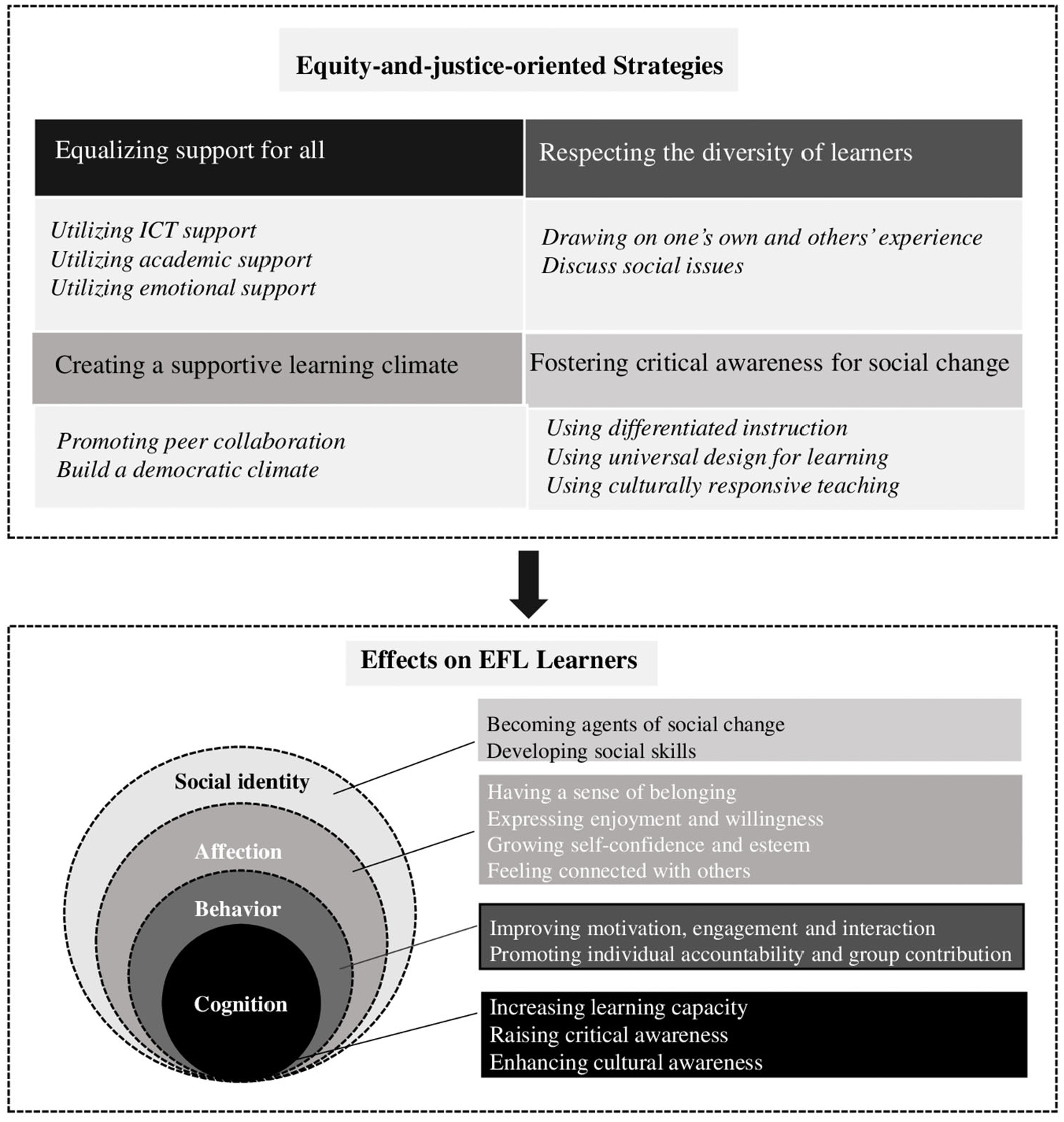
A framework of EJOS and their effects on EFL learners.
The EJOS EFL Teachers Employed in the Teaching
In total, four categories of EJOS have been identified in the reviewed studies. They are: equalizing support for all, respecting the diversity of learners, creating a supportive learning climate, and fostering critical awareness for social change (see Table 2).
EJOS Employed in the Studies.

Equalizing Support for All
This category of EJOS includes technological, academic and emotional support provided by EFL teachers. Eight studies (e.g., Andujar & Nadif, 2022; Awada & Gutiérrez-Colón, 2017; Barros del Río et al., 2021; Lintangsari & Emaliana, 2020) explored the utilization of information and communications technology (ICT) in providing equal access to create an inclusive, and stress-free class climate. For example, Awada and Gutiérrez-Colón (2017) implemented visual displays and computer exercises to facilitate learning. Glas et al. (2021) offered self-access materials to support students. Besides, teachers provided academic support, such as aiding in language production and interaction (Andujar & Nadif, 2022) and facilitating group discussions (Awada et al., 2021). Additionally, learners’ emotional needs were catered to, as demonstrated in Husin et al.’s (2022) study, where teachers used positive gestures and appreciation words to motivate learners with special needs.
Respecting the Diversity of Learners
Teachers applied differentiated instruction, universal design for learning (UDL) and culturally responsive teaching to respect and prioritize learner diversity. For instance, teachers offered choices and varied materials (Glas et al., 2021) to accommodate the academic needs of diverse learners. Furthermore, Glas et al. (2021), Husin et al. (2022), and Lintangsari and Emaliana (2020) all implemented UDL principles to establish inclusive and responsive learning environments. Additionally, culturally responsive teaching, a widely adopted strategy, was utilized to recognize and appreciate the diverse cultural identities and experiences of learners (Lin & Yang, 2015; Meléndez-Luces & Couto-Cantero, 2021; Saenz et al., 2018).
Creating a Supportive Learning Climate
Creating a supportive learning atmosphere emerged as a crucial strategy in EFL teaching. Eight studies (e.g., Chiu et al., 2022; De la Barra & Carbone, 2020; Ghodbane & El Achachi, 2019; Padmadewi & Artini, 2017) utilized the strategy of promoting peer collaboration. For example, Awada (2021) and Awada et al. (2021) implemented literature circle activities to encourage engagement. Besides, some teachers fostered a democratic environment by assuming a guiding role rather than a controlling one, which allowed for a negotiated syllabus (Abednia & Izadinia, 2013) and respected students’ voices (Saenz et al., 2018).
Fostering Critical Awareness for Social Change
Teachers concentrated on enhancing learners’ critical awareness for identifying patterns of injustice and inequality and taking actions to work toward positive social change. Awada et al. (2021) and Chiu et al. (2022) connected teaching content to learners’ personal experiences, facilitating their engagement and fostering a deeper comprehension of societal issues affecting them and their communities. Besides, in studies by Cho and Johnson (2021), Ortega (2019), and Tohidian and Taskoh (2020), teachers engaged learners in critical discussions on social issues to encourage learners broaden their perspectives, challenge assumptions, and develop critical thinking abilities.
The Effects of EJOS on EFL Learners
The aforementioned EJOS exhibit a span of positive effects on EFL learners. Through inductive analysis, four overarching categories generalizing from 11 sub-categories emerged, which consist of cognition, behavior, affection, and social inclusion. Cognition refers to the intellectual or mental abilities of learners, including their knowledge, comprehension, and critical thinking skills when exposed to EJOS. Behavior refers to the observable actions of learners when participating in equitable and just teaching practices. Affection involves the change in learners’ attitudes, values, beliefs, and emotional states after experiencing a secure and supportive classroom environment. Social identity refers to learners’ understanding of their positions in a particular social group and their connection with group members. Table 3 illustrates the reviewed studies on the categories of effects.
Effects of EJOS on EFL Learners.

Effects on Learners’ Cognition
The primary effects on learners’ cognition were observed in three dimensions: (1) increasing learning capacity; (2) raising critical awareness; (3) enhancing cultural awareness. First, 11 studies found that the implementation of EJOS contributed to learners’ learning capacity. As studies (e.g., Awada & Gutiérrez-Colón’s, 2017; Awada et al., 2021; Saenz et al., 2018) reported, equity and justice-oriented teaching could mitigate the language-learning weaknesses among marginalized EFL learners, thereby improving their language proficiency. Besides, five studies documented a noticeable development in learners’ critical awareness. By integrating critical literacy pedagogy into practical experiences, such as those outlined by Abednia and Izadinia (2013), Cho and Johnson (2021), and Tohidian and Taskoh (2020), learners could be able to cultivate their critical awareness. Ortega (2019) further highlighted that learners became more attuned to real-life conflicts and inequities when global and local issues were incorporated into the teaching content. Lastly, three studies reported a cognitive shift in enhancing cultural awareness. For instance, Lin and Yang (2015) and Meléndez-Luces and Couto-Cantero (2021) utilized culturally responsive teaching approaches to help learners, particularly those from diverse ethnic communities, develop a deeper appreciation for cultural heritage and foster respect for cultural plurality.
Effects on Learners’ Behavior
The second category of effect pertains to changes in learners’ behavior, specifically focusing on enhancing motivation, engagement, interaction, individual accountability, and group contribution. Altogether, 75% of the studies have documented the effects of EJOS on improving learners’ motivation, engagement, and interaction. For instance, Lintangsari and Emaliana (2020) observed that a visually impaired student, provided with equitable resources and access to various learning materials, demonstrated increased self-preparation and active participation in class activities. Similarly, Meléndez-Luces and Couto-Cantero (2021) noted that after the intervention, students of Roma-Gypsy origin stopped absenteeism and demonstrated a high level of motivation. In addition, six studies concluded that EJOS facilitated individual accountability and group contribution. By fostering a supportive learning environment, scholars such as Abednia and Izadinia (2013) and Glas et al. (2021) observed learners’ enhanced ability to give positive feedback and effective solutions to identified challenges.
Effects on Learners’ Affection
The third category involves the change in learners’ affective domains. Four specific effects have been identified, namely, fostering a sense of belonging, expressing enjoyment and willingness, growing self-confidence and esteem, and nurturing interpersonal connections. Firstly, three studies noted the positive impact of creating a sense of belonging among learners. As Andujar and Nadif (2022) and Saenz et al. (2018) revealed, learners’ sense of belonging which was highly relevant to their involvement in the classroom and success in academic development was enhanced in a supportive learning environment. Besides, three studies reported that learners expressed enjoyment and enthusiasm when exposed to the EJOS. For instance, Andujar and Nadif (2022) observed learners with disabilities displaying enjoyment and satisfaction in inclusive technology-based flipped classrooms. Likely, Cho and Johnson (2021) found learners expressed a sense of comfort when studying in the third space where individuals could socialize, collaborate, and build relationships with each other. Furthermore, three studies documented an increase in learners’ self-confidence and self-esteem due to EJOS. Ghodbane and El Achachi (2019) found that cooperative learning reduced learners’ anxiety and fostered independence. Awada (2021) observed that students became more inspired when engaging in student-centered activities. Finally, learners were found to feel more connected with others. Equitable teaching strategies not only enhanced trust between teachers and students, as demonstrated by Cho and Johnson (2021) and Lin and Yang (2015), but also mitigated alienation among students and thus helped build rapport.
Effects on Learners’ Social Identity
The final category concerns the impact on learners’ social identity, comprising two sub-categories: developing social skills and becoming an agent of social change. Eight studies indicated that learners enhanced their social skills after the use of EJOS. For instance, Awada et al. (2021) suggested an equitable and inclusive learning climate could facilitate learners’ social development. In Saenz et al.’s (2018) study, learners developed teamwork skills through participation in community-based learning environments. Through cooperative learning approaches, De la Barra and Carbone (2020) and Ortega (2019) observed an increased willingness among learners to collaborate with peers. Besides, three studies mentioned students raised awareness to become agents of social change for navigating an equitable and inclusive world following the intervention. De la Barra and Carbone (2020) and Ortega (2019) supported the idea that equitable cooperative learning strategies empowered learners to become more sensitive to the outside world and prepared them to advocate for change to address inequality in their communities. Similarly, Ghodbane and El Achachi (2019) observed that EJOS helped learners overcome social barriers that hindered their learning, such as social comparisons and anti-social behaviors.
The Challenges EFL Teachers Face in Incorporating EJOS into Their Teaching
Four challenges encountered by EFL teachers when incorporating EJOS into their teaching are identified: students’ inadaptability to the democratic atmosphere, teachers’ struggles in building an inclusive classroom, inadequate external support, unfavorable educational curriculum and social context.
Students’ Inadaptability to the Democratic Atmosphere
Research by Abednia and Izadinia (2013) and De la Barra and Carbone (2020) revealed that some students were not accustomed to equitable and just teaching since they held strong expectations for a traditional teaching approach and adherence to conventional learning habits. Besides, Awada and Gutiérrez-Colón (2017), Chiu et al. (2022), and Padmadewi and Artini (2017) reported students facing physical or academic challenges may encounter difficulties in feeling included in the classroom. Furthermore, studies by Awada et al. (2021), Lin and Yang (2015), and Reraki (2022) highlighted low student motivation as a significant obstacle to achieving an equitable and inclusive learning environment.
Teachers’ Struggles in Building an Inclusive Classroom
Abednia and Izadinia (2013), Awada et al. (2021), Reraki (2022), and Tohidian and Taskoh (2020) documented instances where teachers displayed reluctance towards inclusive educational practices. This reluctance was evident in their erroneous beliefs in using EJOS (Reraki, 2022), reliance on clichéd materials, and adoption of authoritative roles (Tohidian & Taskoh, 2020). Besides, some EFL teachers lacked the competency to effectively implement EJOS (Andujar & Nadif, 2022; De la Barra & Carbone, 2020; Husin et al., 2022). As in De la Barra and Carbone’s (2020) study, teachers encountered challenges in determining when to employ the cooperative strategies and how to combine them effectively with other instructional methods.
Inadequate External Support
Lack of resources (Awada & Gutiérrez-Colón, 2017; Awada et al., 2021; Lintangsari & Emaliana, 2020), limited infrastructure support (e.g., Andujar & Nadif, 2022; Awada et al., 2021; Glas et al., 2021), and insufficient training institution support (Husin et al., 2022, Lintangsari & Emaliana, 2020) emerged as notable challenges for teachers to effectively implement EJOS in the classroom. These challenges highlight the need for comprehensive support structures to facilitate the successful integration of EJOS in EFL teaching.
Unfavorable Educational Curriculum and Social Context
Awada (2021), Cho and Johnson (2021), and Tohidian and Taskoh (2020) have all noted the negative influence of unfavorable curricula on creating an inclusive and equitable learning environment. According to Cho and Johnson (2021), in the present scenario of EFL teaching in Korea and other countries, the English language curriculum had been increasingly narrowed down to solely focus on test preparation. Additionally, contextual factors such as conservative societal norms, including parental resistance to critical literacy activities (Cho & Johnson, 2021), an excessive emphasis on competitiveness (De la Barra & Carbone, 2020), the persistent neglect of minority cultures (Meléndez-Luces & Couto-Cantero, 2021), and instances of educational exclusion (Reraki, 2022) have further hindered the effective utilization of EJOS by teachers.
The Research Gaps for Future Studies on EJOS in EFL Teaching
Several studies have outlined the specific areas that warrant further investigation concerning EJOS in EFL teaching. These research gaps have been grouped into four distinct categories.
Generalizing the Findings to Similar Contexts by Diversifying the Research Methodology
Out of 20 examined studies, 13 studies adopted qualitative designs, five used entirely quantitative methods and only two employed mixed methodologies. Awada (2021) recommended conducting the studies on a broader scale in similar contexts to enable generalization of research findings. Abednia and Izadinia (2013) recommended incorporating longitudinal studies in future studies. Considering the predominance of qualitative research paradigms in existing literature, Husin et al. (2022) proposed the potential application of a mixed-method approach.
Involving the Roles of Any Stakeholders Concerned to Include All Voices
To better implement EJOS, the voices of students with diverse backgrounds should be heard (Andujar & Nadif, 2022; Chiu et al., 2022). Besides, collaborative efforts among various stakeholders, including policymakers, educators, teachers, and parents, are essential for promoting and disseminating the principles of equity, justice, and inclusion (Lin & Yang, 2015; Lintangsari & Emaliana, 2020).
Investigating the Impact of Technological Affordances on Equity and Justice-Oriented Teaching
Technology plays a vital part in narrowing the achievement gap by providing access to learning resources, tools, and opportunities that may otherwise be inaccessible. Andujar and Nadif (2022), Barros del Río et al. (2021), and Lin and Yang (2015) all advocated for more emphasis on the influence of online learning platforms in fostering an equitable and inclusive classroom environment.
Exploring Workable Approaches Especially for Marginalized and Disadvantaged Learners
Addressing the needs of marginalized and disadvantaged learners requires due attention. De la Barra and Carbone (2020) and Ortega (2019) proposed that different alternatives should be further explored to bridge the inequality gap and build a more socially just future. Awada (2021), Awada et al. (2021), and Cho and Johnson (2021) advocated for embracing a third space approach as a paradigm shift in meeting the literacy and emotional needs of marginalized and underprivileged youth. Additionally, Meléndez-Luces and Couto-Cantero (2021) proposed the formulation of educational laws to support equity and justice for all in education.
Discussions
This systematic review aimed to identify and synthesize existing research on EJOS in EFL teaching across diverse national and cross-national contexts during the past decade. The findings indicate that EFL teachers utilized four distinct categories of strategies to enhance equity and justice within EFL classrooms and these strategies were found to exert positive effects on learners’ cognition, behavior, affection and social identity to varying degrees. Besides, challenges and gaps were also identified to orient future studies.
To begin with, the review findings enrich existing literature by introducing a innovative conceptual framework elucidating the interaction between EJOS and their effects on students. As Figure 2 illustrates, the framework comprise two components: 10 strategies categorized under four EJOS themes (equalizing support for all, respecting the diversity of learners, creating a supportive learning climate, and fostering critical awareness for social change) and 11 specific effects across four dimensions. The identified EJOS strategies overlap with the 21 strategies proposed by Tanner (2013), such as establishing supportive classroom communities and providing equitable support to all students without distinction. Besides, they resonate with the equitable strategies outlined in Chen’s (2023) study, including adopting cooperative learning structures, utilizing emotional support, offering ICT assistance, and embracing cultural sensitivity. Among these strategies, cooperative learning strategies were highlighted to narrowing the achievement gap (Alzubi et al., 2024; Bsharat & Salah, 2024). It is notable that in these studies, learners’ critical thinking and cultural awareness are more highlighted. Recognizing the significance of culture in identifying bias and establishing a bias-free learning environment (Gorski, 2016), the specific strategy of culturally responsive teaching proposed by Gay (2000) has been reported effective by Lin and Yang (2015) and Meléndez-Luces and Couto-Cantero (2021) in enhancing learners’ cultural identity within multicultural contexts. Besides, the use of critical pedagogy in the studies (e.g., Cho & Johnson, 2021; Tohidian & Taskoh, 2020) demonstrated its impact on fostering learners’ critical consciousness and catalyzing transformative actions for social justice. In addressing concerns that teachers may employ only a minimal number of equity-related strategies (Maeng & Lee, 2015) or may lack awareness of their implementation (Al-husban, 2019), this framework can orient teachers to effectively implement EJOS and meet the diverse needs of their students.
Regarding the effects on EFL learners, 11 positive changes pertinent to learners’ cognition, behavior, affection and social identity have been identified. Comparatively, the review has delineated nuanced effects within each of the four overarching dimensions in EFL teaching concerning equity and justice. For instance, the findings corroborate the notion of a strong correlation between the implementation of EJOS and learners’ academic performance (Cockerill et al., 2021; Cothorne, 2018) as they stimulate learners’ cognitive skills (Jensen et al., 2021; Moore & Schleppegrell, 2020) and foster their engagement (Cheah et al., 2023; Poteau & Winkle, 2021). In addition to their effects on cognition and behavior, as Biondi (2021), Chen and Abdullah (2023), and Köroğlu and Öz (2023) contend, teachers also cater to learners’ affective needs to create a learning environment where learners could feel secure and included. Additionally, the results align with the effectiveness of strategies such as cooperative learning in enhancing learners’ social skills, as reported by Lenters (2014) and Sa’adah and Andriyanti (2019), and further empowering learners to challenge inequities (Stevens & Martell, 2019). Overall, the findings echo that equitable strategies EFL teachers use can enhance learners’ sustainable development (Penuel, 2019). Despite the positive changes, it’s essential to acknowledge potential limitation associated with the application of EJOS. These may include variations in individual learner responses, the adaptability of EJOS across different learner demographics, and potential resource constraints in implementing these strategies effectively, as evidenced in Chen’s (2023) research.
Taken together, the conceptual framework, which encompasses 10 EJOS categorized into four overarching themes and 11 positive effects across four dimensions, specifies the exact strategies for EFL teachers to enact to produce distinct impacts on their EFL learners. In response to the dearth of practical equity- and justice-centered frameworks, which are mostly theoretical in nature (Moyer & Clyme, 2009), this review presents a concrete framework of EJOS comprising essential components for fostering an equitable and just educational environment. Consequently, it serves as a valuable resource for future research to explore in-depth the connections between EJOS and their effects on EFL learners.
Moreover, the findings suggest that incorporating EJOS into EFL teaching can poses challenges for teachers, attributed to factors such as students’ inadaptability to the democratic atmosphere, teachers’ struggle in building an inclusive classroom, inadequate external support as well as unfavorable educational curriculum and social context. Regarding students, previous studies have linked their resistance to factors such as low motivation (Mo, 2020; Sa’adah et al., 2018) and poor academic performance (Philip et al., 2019), which can impede teachers’ instructional efforts. Besides, teacher-related factors align with previous findings suggesting that negative attitudes (Dimitrellou & Male, 2020; Stanforth & Rose, 2020; Subban et al., 2022) or biases (Louiza & Hanane, 2020;Minasyan, 2017; Santosa, 2020) hinder the implementation of EJOS. Moreover, the challenges related to inadequate external support have been documented, including inadequate training on equity and justice (Chen & Abdullah, 2023; Grudnoff et al., 2017), limited access to resources (Chen, 2023; Opie & Southcott, 2018; Ralejoe, 2021), and lack of support from school authorities (Chan & Lo, 2017; Oranje & Smith, 2018). Hence, the endeavor to promote equity and justice in EFL teaching cannot solely rest on teachers. Rather, it demands a collaborative effort between educators, students, school leaders, policymakers, and curriculum developers, as emphasized by Jensen et al. (2016).
Despite these challenges, this review contributes to the field by identifying several gaps in current research on EJOS in EFL teaching. Primarily, given that the majority of reviewed studies are qualitative in nature, there is a need to diversify methodologies to extend findings to similar contexts, as suggested by Awada (2021) and Husin et al. (2022). Besides, it is essential to solicit perspectives from various stakeholders beyond teachers to encourage deeper reflection and improvement (Jensen et al., 2016; Wanti et al., 2022). In addition, given the fact that the employment of technology in language education as a means to challenge the existing status quo and to promote justice in society has gained considerable attention, especially during the COVID-19 pandemic (Köroğlu & Öz, 2023; Yılmaz & Söğüt, 2022), further inquiry is warranted to investigate the impact of technology on transforming a teacher-dominated atmosphere into a more dynamic and positive learning and teaching context as posited by Aboud (2020) and El Khairat (2021). Finally, more feasible approaches should be investigated to support marginalized and disadvantaged learners. As underscored by Cothorne (2018) and Tanner (2013), teachers should strive to maximize equal opportunities for all students, not just those who are engaged already, but also those who are marginalized. By doing so, all students can feel valued and satisfied with their learning outcomes, regardless of their individual circumstances (Maeng & Lee, 2015).
Limitations
The systematic review is subject to limitations. One constraint is the relatively small sample size of documents reviewed (n = 20), restricted to articles published within a specific timeframe. Additionally, the exclusion of non-English language studies could have omitted valuable contributions to the topic. Lastly, the review only focused on EFL teachers while overlooking teachers from other disciplines. Future studies should address these limitations by covering diverse academic fields and contexts to provide a more comprehensive understanding of the topic.
Conclusion
Addressing equity and justice for all is a formidable challenge that demands collaboration and dedication from educational stakeholders (Lindner & Schwab, 2020). Starting from this premise, the review is aimed to synthesize existing research on EJOS and their effects on learners in EFL teaching and to uncover current research challenges and gaps. The study finds that various EJOS are utilized in EFL classrooms, including equalizing support for all, respecting the diversity of learners, creating a supportive learning climate, and fostering critical awareness for social change. These strategies positively impact learners’ cognition, behavior, emotions, and social identity. However, teachers also face challenges integrating these strategies due to factors such as students’ inadaptability to the democratic atmosphere, teachers’ struggle in building an inclusive classroom, inadequate external support as well as unfavorable educational curriculum and social context. Drawing on the literature reviewed, future research should generalize the findings of EJOS in similar contexts by diversifying methodologies and involving stakeholders concerned. Additionally, future studies should focus on leveraging technology and developing approaches for marginalized learners to promote equity and justice.
Notably, the findings hold valuable insights for global education stakeholders aiming for true equity. In light of the crucial role EFL teachers play in breaking barriers and fostering inclusivity, it is a good sign that equity has emerged as a shared concern in English language teaching (Erling et al., 2020). Additionally, the study highlighted the link between equity, justice, and sustainable student development, prompting a call for educational experts and policy-makers to reinforce the inclusion of learners with diverse cultural and linguistic backgrounds (Hossain, 2018; Riordan et al., 2019). Hence, it is imperative for researchers and social justice advocates both at home and abroad who aspire to promote equity through education to persist in exploring diverse strategies tailered to various educational, national and socio-cultural contexts.
Footnotes
Declaration of Conflicting Interests
The author(s) declared no potential conflicts of interest with respect to the research, authorship, and/or publication of this article.
Funding
The author(s) received no financial support for the research, authorship, and/or publication of this article.

Data Availability Statement
The datasets generated during and/or analysed during the current study are available from the corresponding author on reasonable request.