




Abstract
Students’ perceptions of the characteristics of effective language teachers vary from culture to culture and may also vary among students in different types of programs at the same institution. This study compares the perceptions from students of English language teachers in two distinct programs of a liberal arts college within a single Thai university: those of the students enrolled in an intensive English program (IEP) in the college’s language preparation center (n = 124) and those of matriculated students taking required English classes in their first year of studies at the university (n = 226). Responses were collected from both groups using a survey that measures perceptions of effective teachers in seven areas: general characteristics, affective variables, knowledge about students, pedagogical knowledge, content knowledge, knowledge about classroom management, and professional development. There was a statistically significant difference in students’ responses in the areas of knowledge about oneself-affective variables, knowledge about students, and content knowledge about teaching and learning. This study highlights intra-institutional differences in students’ perceptions of the characteristics of effective English teachers and will be of use to educators who wish to understand and manage their students’ expectations in the language classroom.
Plain Language Summary
This study examines the differing perceptions of effective English language teachers among two student groups within a Thai university: students in an intensive English program (IEP) and first-year matriculated students taking required English classes. Using a survey, the study measured perceptions in seven areas: general characteristics, affective variables, knowledge of students, pedagogical knowledge, content knowledge, classroom management, and professional development. Significant differences were found in the areas of affective variables, knowledge of students, and content knowledge. The study offers insights into how student expectations vary within the same institution and can help educators better manage classroom expectations.
Keywords
Introduction
Students’ perceptions of the characteristics of effective language teachers vary from culture to culture, and these perceptions may even vary among students in different types of language programs within the same cultural context. This study has investigated the perceptions of two distinct groups of English language learners within the context of a large government university in Thailand. A questionnaire regarding the characteristics of effective language teachers was administered to students in an intensive English program (IEP) at the university (n = 124), and matriculated university students (MUS) in their first-year English courses at the same university (n = 226).
This study addresses a gap in understanding how perceptions of effective EFL teachers differ within the same cultural and institutional context but across program types, one being an intensive academic English preparation course where graduating students gain admittance to the international university, and the other being students already matriculated into the international university. These differences have practical implications for tailoring teaching practices and professional development to meet diverse learner needs. By identifying valued teacher characteristics, the findings can inform teacher training, enhance alignment between teaching methods and student expectations, and improve outcomes in varied educational settings. Furthermore, while much research on effective language teaching draws on comparisons across countries or broad cultural contexts, fewer studies explore differences within the same institution. Highlighting these intra-institutional contrasts strengthens the case for this study’s significance and adds to the broader discussion of culturally situated pedagogy.
The study investigates the following research questions: (1) What are the characteristics of good English as a foreign language (EFL) teachers according to students of an intensive EFL program in Thailand? (2) What are the characteristics of good English as a foreign language (EFL) teachers according to international university students in Thailand? (3) What are the similarities and differences between the beliefs of intensive EFL program students and university students regarding the characteristics of good EFL teachers? The study then compared the responses of the two groups, and interpreted them within the Thai cultural context. The results of the study provide actionable insights for educators and contribute to the conversation surrounding culturally situated pedagogy.
Literature Review
The area of students’ perceptions regarding the characteristics of effective language teachers has received significant interest in academic research. This review highlights some of the most commonly desired attributes of effective language teachers as identified by college students across various countries. The review is organized according to the same subscales used in the survey, ensuring a direct comparison between the survey findings and existing literature. The subscales covered in both the questionnaire and this review include general characteristics, teachers’ affective skills, knowledge about the students, pedagogical knowledge about teaching and learning, content knowledge about teaching and learning, knowledge about classroom management, and knowledge about oneself–professional development (Al-Mahrooqi et al., 2015). It is important to note that not all categories have been equally explored in the literature; however, relevant studies for each category have been discussed in the subsequent sections to provide a comprehensive overview of the field.
Before reviewing the literature relevant to each subscale, it is useful to distinguish Al-Mahrooqi et al.’s (2015) survey from the Technological Pedagogical Content Knowledge (TPACK) framework. Mishra and Koehler (2006) created TPACK as an extension of Shulman’s (1986) Pedagogical Content Knowledge (PCK) framework (Mishra & Koehler, 2006) to address criticisms of the study of educational technology as lacking theoretical grounding. It has been widely cited since its inception and has been applied to relatively recent development such as artificial intelligence (Mishra et al., 2023). While TPACK is widely applicable, it is not as specialized as the survey created by Al-Mahrooqi et al. (2015), which focuses specifically on English language teaching. Furthermore, TPACK places significant emphasis on technology, which is not central to the investigation that this paper described. Al-Mahrooqi et al.’s (2015) survey allows deeper investigation of cultural and emotional factors that are not adequately captured by TPACK.
Knowledge About Oneself–General Characteristics
The first area to be discussed concerning teachers’ general characteristics is the preparedness for lessons and the clarity and effectiveness of their communication. One study found that a critical trait of teachers was that they were willing to teach and to prepare lessons (Turanli & Yildirim, 1999). This desire for teachers to be competent in preparing organized lessons was reflected in several studies (Febriyanti, 2018; Meksophawannagul, 2015; Shishavan & Sadeghi, 2009). Further to the teacher’s ability to prepare a lesson, the importance of teachers being well prepared to teach each lesson was also highlighted (Barnes & Lock, 2010, 2013; Hsu, 2024; Obeidat, 2020), as well as teachers’ being industrious and enthusiastic about teaching (Chen, 2012). In addition to lesson preparation, teachers were expected to possess effective communication skills (Febriyanti, 2018; Moradi & Sabeti, 2014) and have a good accent (Mahmoud & Thabet, 2013). Adding to the clarity of language, the need for teachers to be able to provide comprehensible explanations and clear instructions was also identified as important (Metruk, 2021; Turanli & Yildirim, 1999).
The need for teachers to communicate effectively extends to proficiency in English. Researchers found that students wanted teachers who could read, write, and speak English well (Shishavan & Sadeghi, 2009) and with good pronunciation (Banno, 2003; Chen, 2012; Hsu, 2024), a sentiment reflected by Obeidat (2020) regarding communicative competence in English. Chen (2012) stated that students also wanted teachers to be able to speak the local language as well as English, as this aids in the explanation of difficult concepts.
Teachers’ professionalism and attitude are also areas within teachers’ characteristics that receive considerable mention in the literature. Several studies stated students’ desire for teachers who were punctual to lessons (Febriyanti, 2018; Mahmoud & Thabet, 2013; Meksophawannagul, 2015; Shishavan & Sadeghi, 2009) and those who used class time effectively (Turanli & Yildirim, 1999). Moreover, teachers’ appearance received a notable mention, specifically being neat and tidy (Febriyanti, 2018; Shishavan & Sadeghi, 2009), with one study stating that effective teachers are well-dressed (Ghasemi & Hashemi, 2011), although no explanation was provided as to why this is so. Despite this, some students considered teachers’ appearance to be of less importance (Metruk, 2021). Furthermore, students also valued teachers who were flexible in their teaching (Moradi & Sabeti, 2014; Shishavan & Sadeghi, 2009) and were willing to accept student feedback (Meksophawannagul, 2015).
The final area to receive attention in the literature on general characteristics is personal qualities. Within personal qualities, male students, particularly, valued teachers having confidence and self-control (Metruk, 2021). Moreover, being upbeat and humorous were highlighted as desirable characteristics (Alzubi, 2022; Barnes & Lock, 2010; Çelik et al., 2013; Meksophawannagul, 2015).
Knowledge About Oneself–Affective Variables
One category mentioned in numerous studies was teachers’ affective variables, including items related to emotional intelligence, respect, and fairness. Students stated that they wanted teachers to be polite and respectful when interacting with students (Febriyanti, 2018; Shishavan & Sadeghi, 2009). Students also desired teachers who were kind, friendly, polite, and understood students’ feelings (Chen, 2012; Nurie Bogale & Wale, 2024), with some students expressing strong criticism of teachers who laughed at students (Turanli & Yildirim, 1999). Furthermore, various studies identified patience and understanding as desirable traits (Febriyanti, 2018; Moradi & Sabeti, 2014; Obeidat, 2020; Phothongsunan, 2014), along with teachers who are relaxed and do not get angry (Mahmoud & Thabet, 2013). Finally, students expressed negative views toward favoritism in the classroom (Turanli & Yildirim, 1999) and desired teachers to be fair and treat all students equally (Chen, 2012; Çelik et al., 2013; Metruk, 2021).
Two further aspects of language teachers’ affective characteristics deemed important by students are listening and expression, as well as motivation and positivity. Febriyanti (2018) and Shishavan and Sadeghi (2009) reported that students highlighted the importance of teachers’ ability to listen to them and allow them to express themselves. Although no correlation was directly drawn to this in the literature, it could be related to students desiring friendly and approachable teachers (Banno, 2003; Febriyanti, 2018). Furthermore, the desire for teachers to have a positive attitude is expressed by Meksophawannagul (2015) and Deng et al. (2023). A teacher’s positive attitude may then directly affect their ability to motivate the students to learn (Agustin et al., 2024; Nurie Bogale & Wale, 2024; Phothongsunan, 2014; Shishavan & Sadeghi, 2009).
Knowledge About the Students
Students’ perceptions of desired characteristics in language teachers are also strongly influenced by the teacher’s knowledge of the students. The first topic to be discussed in this category is related to knowledge of students’ proficiency levels. Importance has been placed within the literature on teachers' understanding of the different levels of the students, and equally so, a dislike has also been stated for teachers who lack this understanding (Barnes & Lock, 2010, 2013; Deng et al., 2023; Phothongsunan, 2014). Following the understanding of students’ levels, students have also stressed that teachers should adapt their lessons to the varying proficiency levels of the students (Moradi & Sabeti, 2014; Shishavan & Sadeghi, 2009).
Individualized support and personalization of teaching are additional qualities students’ desire in language teachers. In addition to understanding students’ needs, it has been stated that teachers should pay attention to the individual differences between students and that teachers need to identify any learning difficulties of individuals (Agustin et al., 2024; Bremner, 2019; Febriyanti, 2018; Meksophawannagul, 2015). Further to the understanding of students’ needs and learning difficulties, it has also been expressed that teachers should have an understanding of students’ lives, worries, goals, and interests so that they can further personalize their teaching to incorporate these (Bremner, 2019; Metruk, 2021; Moradi & Sabeti, 2014).
Pedagogical Knowledge About Teaching and Learning
Pedagogical knowledge about teaching has received considerable focus within the literature. The area with the most mention was the importance of using varied teaching methods. The complete list of studies where this was expressed is extensive and includes Alzubi (2022), Bremner (2019), Mahmoud and Thabet (2013), and Meksophawannagul (2015), to mention but a few. Furthermore, students also expressed a desire for teachers to use materials effectively to teach (Nurie Bogale & Wale, 2024), provide clear and detailed explanations within lessons (Barnes & Lock, 2013, 2010; Banno, 2003; Mahmoud & Thabet, 2013), and use technology and visual materials while teaching (Çelik et al., 2013; Febriyanti, 2018; Moradi & Sabeti, 2014).
Additionally, there is a clear emphasis on the value of teachers who actively encourage class participation and the expression of ideas and who develop student confidence. Regarding participation and expression, several studies expressed the view of students who valued teachers who encouraged students to participate in the class and also who encouraged them to express their ideas (Bremner, 2019; Meksophawannagul, 2015; Obeidat, 2020; Turanli & Yildirim, 1999). Moreover, it has also been stated that students value teachers who can integrate group activities into the class while actively encouraging participation (Barnes & Lock, 2013, 2010; Moradi & Sabeti, 2014). Additionally, students highlighted the importance of teachers who were able to build students’ confidence and increase their motivation (Agustin et al., Banno, 2003; Febriyanti, 2018; Nurie Bogale & Wale, 2024; Turanli & Yildirim, 1999).
The final area of pedagogical knowledge to be discussed is providing fair and constructive feedback and appropriate assessment strategies. Students from several studies expressed a preference for teachers to provide constructive feedback (Deng et al., 2023 and also be fair with their grading and assessment methods (Febriyanti, 2018; Meksophawannagul, 2015; Moradi & Sabeti, 2014; Turanli & Yildirim, 1999). In addition to being fair with grading and assessment, the importance of teachers having reasonable and clear assessment methods was also highlighted (Bremner, 2019; Phothongsunan, 2014; Obeidat, 2020; Shishavan & Sadeghi, 2009).
Content Knowledge About Teaching and Learning
In addition to pedagogical knowledge, English language proficiency, subject matter expertise, and cultural knowledge are also desired characteristics of language teachers. A high level of English proficiency has been expressed by students (Alzubi, 2022; Febriyanti, 2018; Metruk, 2021), along with teachers having a strong understanding of English vocabulary and comprehensive knowledge of English grammar (Barnes & Lock, 2010, 2013; Çelik et al., 2013; Febriyanti, 2018; Nurie Bogale & Wale, 2024; Obeidat, 2020; Shishavan & Sadeghi, 2009). In addition to this, students desire teachers to have a strong understanding of the subject matter (Banno, 2003; Benzehaf, 2018; Ghasemi & Hashemi, 2011; Mahmoud & Thabet, 2013) and appropriate teaching qualifications (Barnes & Lock, 2010,2013). Some students have also highlighted the importance of teachers being informed about English culture (Obeidat, 2020; Shishavan & Sadeghi, 2009).
Knowledge About Classroom Management
The perceptions of students regarding classroom management and discipline, as well as the classroom environment, also received attention. Students in one study stated that teachers should clearly outline the behavioral expectations within the classroom (Turanli & Yildirim, 1999), and others stated that they desired teachers to have a balanced approach to discipline, with the majority of the students stating a strict attitude toward discipline as undesired (Çelik et al., 2013; Febriyanti, 2018; Mahmoud & Thabet, 2013; Moradi & Sabeti, 2014; Shishavan & Sadeghi, 2009). Furthermore, several students stated a preference for teachers to adhere to administrative rules (Meksophawannagul, 2015; Shishavan & Sadeghi, 2009). In addition to managing discipline, many students highlighted the importance of a relaxed and supportive learning environment (Bremner, 2019; Chen, 2012; Febriyanti, 2018; Phothongsunan, 2014) that was free of authoritarian behavior from the teacher (Obeidat, 2020) and that was also entertaining and comfortable (Bremner, 2019; Chen, 2012; Febriyanti, 2018).
Knowledge About Oneself–Professional Development
Professional development was the least desired set of characteristics in the literature. Some students emphasized the importance of teachers’ maintaining up-to-date teaching methods, especially concerning using the internet and recent technologies in teaching (Shishavan & Sadeghi, 2009). Additionally, the value of continuous professional development was identified, with students expressing appreciation for teachers who show an interest in their careers and regularly assess their work (Shishavan & Sadeghi, 2009). Moreover, the practice of teachers observing other teachers as a form of professional development is seen as beneficial by one study (Moradi & Sabeti, 2014). However, Metruk (2021) indicates that staying current with teaching techniques is not a significant concern for many students.
Cultural Dimensions in Education and Thai Culture
Hofstede’s cultural dimensions theory (Hofstede, 1986) provides a framework for understanding how students’ cultural backgrounds shape their expectations of teachers. In collectivist societies like Thailand, students are often raised in hierarchical systems where teachers are regarded as authority figures, and classrooms are traditionally teacher-centered (Nguyen et al., 2006; Wang & King, 2008). This dynamic contrasts with individualistic cultures, where students may expect teachers to adopt a facilitative role, encouraging autonomy and critical thinking. Thai students, however, emphasize affective qualities in teachers—such as kindness, patience, and respect for hierarchy—which reflect deeply rooted cultural norms, particularly kreng jai (deference to authority) and jai dee (kindness) (Kainzbauer & Hunt, 2016; Komin, 1990).
Thai educational culture is notably distinct from that of the West, partly due to Chinese immigration and Confucian traditions that have shaped a hierarchical classroom structure where teachers are viewed as authority figures, and students typically play passive roles (Kainzbauer & Hunt, 2016; Nguyen et al., 2006). As a result, Thai classrooms tend to be teacher-centered (Deveney, 2005), with students seldom challenging or criticizing their teachers. This dynamic leads students to view their teachers as primarily responsible for their learning (Apfelthaler et al., 2006; Littlewood, 2000). This cultural difference can be challenging for teachers in Western-style liberal arts institutions working in Thailand, as they may expect students to take greater responsibility for their own learning. Therefore, it is essential for teachers to understand the cultural perspectives they bring into the classroom and adapt their teaching approaches accordingly (Banks & Lynch, 1986; Deveney, 2005).
Several cultural aspects significantly influence classroom dynamics in Thailand, including hierarchy (kreng jai), enjoyment (sanuk), compassion (jai dee), and the concept of saving face (Quieti & Nanni, 2022). The prominence of a teacher-centered classroom, where students follow instructions without questioning, stems from the cultural norm of avoiding situations that could embarrass the teacher by implying a lack of clarity in their explanations (Kainzbauer & Hunt, 2016). This reluctance to question authority can hinder learning in classrooms that follow more Western methodologies, where critical thinking and questioning are encouraged (Buripakdi & Mahakhan, 1980).
The concept of sanuk (fun) is also crucial for Thai learners. Creating a positive and enjoyable learning environment is important, as students may disengage from activities perceived as unenjoyable (Kainzbauer & Hunt, 2016). Incorporating sanuk into teaching is often associated with jai dee (kindness), which is particularly important in giving constructive feedback or managing discipline. Western teachers, however, may be perceived as more authoritarian or overly critical, which contrasts with the Thai cultural preference for kindness and empathy.
Lastly, the concept of saving face is central to Thai social interactions, emphasizing the avoidance of embarrassment for oneself or others (Komin, 1990). This norm often leads Thai students to prefer expressing their opinions in smaller, more familiar groups rather than in front of the entire class (Kainzbauer & Hunt, 2016). Students educated in international schools may exhibit less concern for saving face, showing different classroom behaviors than those educated in the traditional Thai system (Deveney, 2005). These cultural influences highlight the importance of understanding local educational values when teaching in Thailand.
Programmatic Influences on Teacher Perceptions
In addition to cultural factors, students’ educational contexts—specifically the nature of the program in which they are enrolled—can also shape their perceptions of effective teaching. The theoretical framework for this study refers to the concepts and theories that guide the analysis, particularly the interplay between cultural and programmatic influences. Biggs’ (1996) theory of constructive alignment highlights the importance of aligning teaching methods with the intended learning outcomes of a program. Students in IEPs often prioritize immediate language acquisition and support from teachers, as they are working under time constraints and require intensive feedback and scaffolding to achieve language proficiency quickly (Krahnke, 1987). On the other hand, students in matriculated university programs might expect teachers to incorporate more diverse instructional methods, critical thinking activities, and collaborative learning strategies that align with broader academic goals.
By situating the study within these theoretical frameworks, we can better understand how cultural and programmatic factors shape students’ expectations of effective teaching, leading to potentially divergent views between IEP and MUS.
Methods
This study investigated the following research questions:
What are the perceptions of the college’s intensive English students regarding the characteristics of effective English as a foreign language teachers?
What are the perceptions of the college’s matriculated first-year students regarding the characteristics of effective English as a foreign language teachers?
What are the differences in the perceptions of the college’s intensive English students and matriculated first-year students regarding the characteristics of effective English as a foreign language teachers?
An established survey on the perceived characteristics of effective English teachers was used to investigate these research questions.
Participants
With the goal of addressing these research questions, a questionnaire was distributed to all students enrolled in the intensive English program or first-year English courses. With the permission of the university IRB, the surveys were distributed via Google Forms in the LMS of each class. Approximately 400 students received the survey in the intensive English program, and approximately 800 students received the survey in the first-year English courses. A total of 124 students completed the survey in the intensive English program, and a total of 226 students completed the survey in the first-year English courses, yielding response rates of around 31% and 28%, respectively. Approval from the university’s institutional review board was obtained before conducting the research. At the suggestion of the institutional review board, students under the age of 18 were excluded from the study.
Instruments
The questionnaire used in this study was originally published by Al-Mahrooqi et al. (2015) and includes 68 Likert-scale items. Each item consists of a statement that begins “The language teachers should…” and invites respondents to select one of four choices indicating the level of importance of the characteristic described: “unimportant” (1), “somewhat important” (2), “important” (3), or “very important” (4). These 68 items are divided into seven categories: 1. knowledge about oneself–general characteristics, 2. knowledge about oneself–affective variables, 3. knowledge about students, 4. pedagogical knowledge about teaching and learning, 5. content knowledge about teaching and learning, 6. knowledge about classroom management, and 7. knowledge about oneself–professional development (Al-Mahrooqi et al., 2015). The questionnaire had previously been piloted and administered in diverse contexts, including in Thailand (e.g., Quieti & Nanni, 2022), among participants of comparable English language proficiency to the participants in this study.
Once the responses were collected, descriptive statistics were calculated, including Cronbach’s alpha of each subscale. The Cronbach’s alphas of the seven subscales of the survey are shown in Table 1 below. Cronbach’s alpha shows the reliability of a scale, and alphas of approximately .70 or higher are generally considered reliable. The alphas of the seven subscales were within an acceptable range.
Cronbach’s Alpha of Subscales.

Note. The standardized Cronbach’s alpha of the entire questionnaire was 0.98.
Source. The subscale items are taken from Al-Mahrooqi et al. (2015).
Procedure
Students enrolled in the university’s intensive English courses and first-year English courses were invited to complete the questionnaire using Google Forms. Once the responses were collected, descriptive and inferential statistical analyses were conducted. All respondents provided informed consent before participating in the study, and strict confidentiality of participants’ responses was maintained.
Results
The mean subscale scores for the university and intensive program students are included in Table 2. Visual inspection of the Q-Q plots indicated that the data were not normally distributed. The normality of each subscale for each group was examined separately. In all cases, the data were skewed towards the top of the scale, so parametric statistical tests (e.g., t-tests) could not be applied.
Mean Subscale Scores for University Students and Intensive Program Students.

Source. The subscale items are taken from Al-Mahrooqi et al. (2015)
To test whether the two groups’ results were stochastically different, the Mann-Whitney U test was applied, as shown in Table 3, which also indicates the median score for each group in each subscale. The test revealed a significant difference at the level of p = .05 between the two groups in the subscales of knowledge about oneself–affective variables, knowledge of the students, and content knowledge about teaching and learning. In all three of these scales, both the mean and the median scores of the students in the IEP were higher than those of the students in the university English courses. While the difference between the two groups’ responses regarding knowledge about classroom management was not significant at the p = .05 level, it was close to significance (p = .051). While the results of the test did not meet the requirement for statistical significance, the results show the possibility of an effect that could become significant with larger sample sizes. On that scale, the mean and median of the university students were higher than those of the students in the IEP.
Mann-Whitney U Test for University and Intensive English Student Responses.

Source. The subscale items are taken from Al-Mahrooqi et al. (2015).
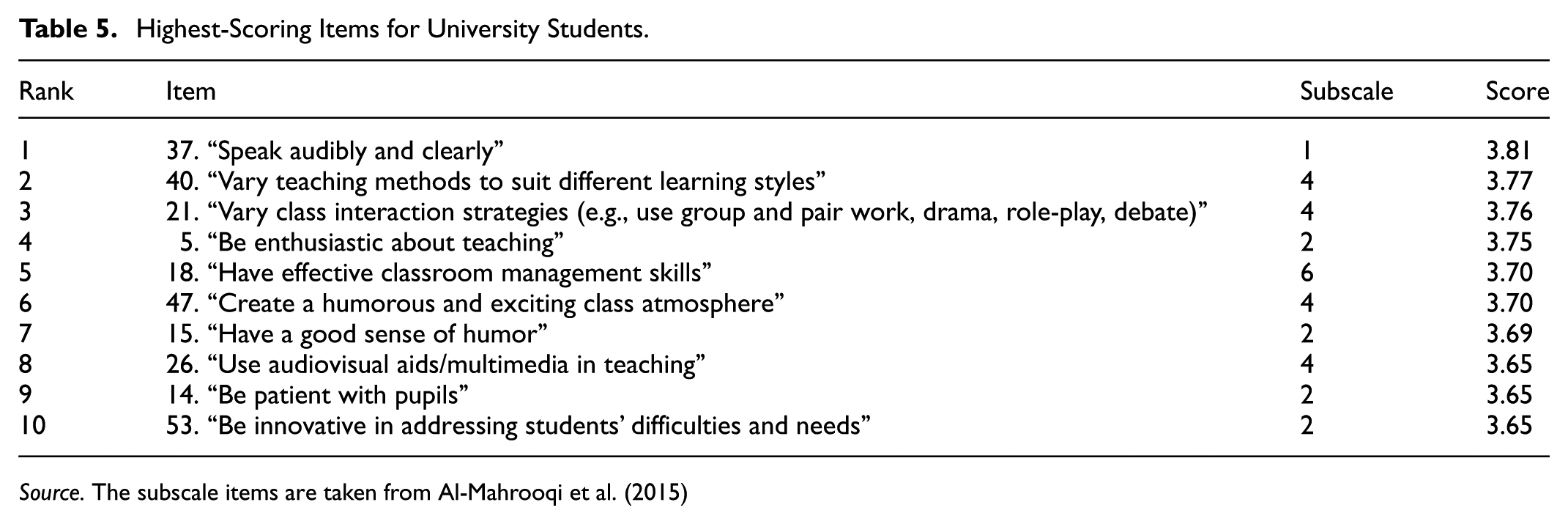
Tables 4 and 5 below show the highest-scoring items for each group. Eleven items are shown for the IEP students in Table 4, as two items were tied for the tenth-highest score. The highest-scoring items for intensive program students are associated with two different subscales: knowledge about oneself–affective variables (Subscale 2) and knowledge about students (Subscale 3).
Highest-Scoring Items for Preparation Center Students

Source. The subscale items are taken from Al-Mahrooqi et al. (2015)
Highest-Scoring Items for University Students.
Source. The subscale items are taken from Al-Mahrooqi et al. (2015)
Ten items are shown for the MUS in Table 5. The highest-scoring items for university students are associated with four different subscales: knowledge about oneself–general characteristics (Subscale 1), knowledge about oneself–affective variables (Subscale 2), pedagogical knowledge about teaching and learning (Subscale 4), and knowledge about classroom management (Subscale 6).
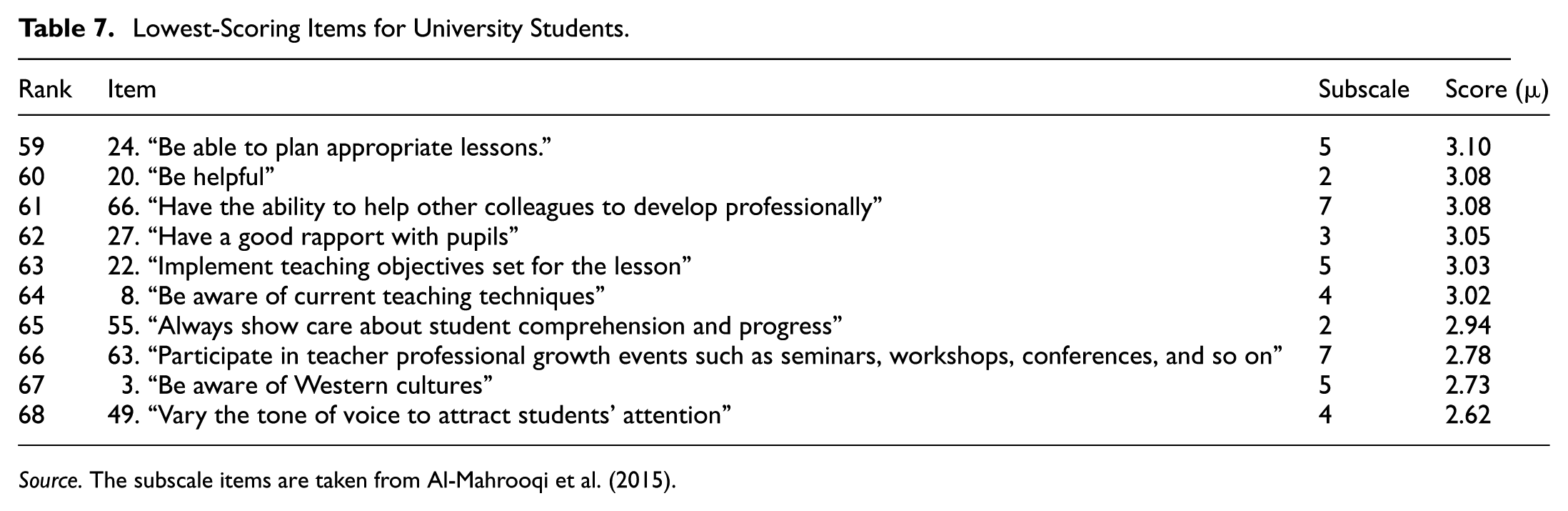
The lowest-scoring items for each group are presented in Tables 6 and 7 below. The lowest-scoring items for the students enrolled in the IEP are shown in Table 6. These items are drawn from five subscales: knowledge about oneself–general characteristics (Subscale 1), knowledge about oneself–affective variables (Subscale 2), pedagogical knowledge about teaching and learning (Subscale 4), content knowledge about teaching and learning (Subscale 5), and knowledge about oneself–professional development (Subscale 7).
Lowest-Scoring Items for Preparation Center Students.

Source. The subscale items are taken from Al-Mahrooqi et al. (2015)
Lowest-Scoring Items for University Students.
Source. The subscale items are taken from Al-Mahrooqi et al. (2015).
The lowest-scoring items for MUS are shown in Table 7 and were drawn from five subscales: knowledge about oneself–affective variables (Subscale 2), knowledge about students (Subscale 3), pedagogical knowledge about teaching and learning (Subscale 4), content knowledge about teaching and learning (Subscale 5), and knowledge about oneself–professional development (Subscale 7).
The trends emerging from the responses and the implications of these trends are discussed in the following section.
Discussion
In this section, the responses of the university students and intensive English students are compared and interpreted in the context of the relevant literature.
Knowledge About Oneself–General Characteristics
The first subscale, ‘knowledge about oneself in general characteristics,’ received a similar mean for both the intensive program and university students. Both groups assigned significant importance to this subscale, but only one item from this category appears in the top 10 for the college students, with no items from this category appearing in the top 10 for the intensive students. This finding somewhat contrasts with the literature. College students rated speaking audibly and clearly as the highest item, which aligns with studies by Mahmoud and Thabet (2013) and Turanli and Yildirim (1999). The remaining items in this category are frequently mentioned in the literature: ‘Be prepared for class’ (Barnes & Lock, 2010, 2013; Chen, 2012; Hsu, 2024;) ‘Write clearly and legibly’ (Shishavan & Sadeghi, 2009), and ‘Come to class on time’ (Febriyanti, 2018; Meksophawannagul, 2015; Shishavan & Sadeghi, 2009 ), but were not rated highly by either group. This suggests that while students value basic professional qualities, they may take them for granted and instead prioritize traits they perceive as having a more direct impact on classroom experience.
Knowledge About Oneself–Affective Variables
The subscale’ Knowledge about oneself and effective variables’ received the highest average rating from the intensive students and the second highest from the college students. In the intensive students’ top 10 items, seven align with the desired characteristics highlighted in the literature, including being helpful (Chen, 2012), treating students fairly (Çelik et al., 2013; Chen, 2012; Metruk, 2021), caring about all students, and treating students equally (Nurie Bogale & Wale, 2024; Turanli & Yildirim, 1999). Similarly, in the college students’ top 10 items, being enthusiastic about teaching (Chen, 2012; Deng et al., 2023), being patient with pupils (Moradi & Sabeti, 2014; Obeidat, 2020; Phothongsunan, 2014; Turanli & Yildirim, 1999), and having a good sense of humor (Alzubi, 2022; Barnes & Lock, 2010; Çelik et al., 2013; Meksophawannagul, 2015) are also frequently mentioned in the literature. These findings highlight the central role of affective teacher qualities in both groups, though IEP students appear to rely on them more heavily, reflecting their need for emotional support alongside academic instruction.
Knowledge About the Students
The category that received the second-highest mean from the intensive students and that was also rated highly by the university students was knowledge about students. This finding aligns with the literature, where it has received notable mentions. For example, the need for teachers to understand learners’ needs and learning styles has been emphasized by Barnes and Lock (2010, 2013), Deng et al. (2023), and Phothongsunan (2014). Additionally, the ability of a teacher to assess a learner’s strengths and weaknesses was mentioned in multiple studies (Bremner, 2019; Febriyanti, 2018; Meksophawannagul, 2015). Furthermore, taking students’ needs and interests into consideration when designing lessons was also highlighted as important (Agustin et al., Bremner, 2019; Metruk, 2021; Moradi & Sabeti, 2014; Shishavan & Sadeghi, 2009). However, although this category was identified as significant by both groups, only one item relating to ‘knowledge about the students’ was included in the top 10 for the intensive students, and there were no mentions of it in the top 10 for the university students. This discrepancy suggests that while students value teachers who understand their needs, they may not see it as immediately visible or impactful compared to traits that shape their day-to-day classroom experience.
Pedagogical Knowledge About Teaching and Learning
An area of disagreement between the groups was regarding pedagogical knowledge about teaching and learning. The intensive students included only one item from this category in their top 10, while placing four items in their bottom 10. Conversely, international university students included four items from this category in their top 10 and only one in their bottom 10. Regarding the top 10 items, the intensive students rated giving useful feedback on written work in appropriate ways in their top 10, a sentiment reflected in the literature regarding fair and constructive feedback (Febriyanti, 2018; Meksophawannagul, 2015; Moradi & Sabeti, 2014; Turanli & Yildirim, 1999). This suggests that feedback serves as a bridge between the affective support valued by IEP students and the academic rigor expected by university students.
For the university students’ top 10, the highest-rated item was varying teaching methods to meet different learning styles. Although this was not directly mentioned in the literature related to student needs, the perceived importance of varying teaching methods was identified by numerous studies (Alzubi, 2022; Barnes & Lock, 2013, 2010; Febriyanti, 2018; Ghasemi & Hashemi, 2011; Metruk, 2021; Mahmoud & Thabet, 2013; Nurie Bogale & Wale, 2024; Turanli & Yildirim, 1999). University students also valued teachers’ varying class interaction strategies, for example, through group work, which agreed with the studies of Barnes and Lock (2010, 2013), Meksophawannagul (2015), and Moradi and Sabeti (2014). Additionally, a humorous and exciting class atmosphere was also desirable, a sentiment echoed by Bremner (2019), Chen (2012), and Febriyanti (2018). Interestingly, the final item in the university students’ top 10 was using audiovisual aids and multimedia in teaching, also mentioned in the literature (Çelik et al., 2013). In contrast, this item was included as one of the least desirable items for intensive students. These contrasting views reinforce how program goals shape students’ expectations, with IEP students prioritizing immediate clarity and feedback. In contrast, metricated students focus on variety and long-term engagement.
In addition to audiovisual aids and multimedia in teaching, the intensive students also rated the use of a variety of instructional resources effectively as among the least desired items, which contrasts with the literature (Nurie Bogale & Wale, 2024) Also included in the least desirable items was using technology in teaching, which contrasts with the current literature where this received notable mentions (Çelik et al., 2013; Febriyanti, 2018; Moradi & Sabeti, 2014). The final undesired item for both the intensive students and the university students was being aware of current trends in English language teaching. Interestingly, the university students did value varying teaching methods but did not value keeping up-to-date with them.
Content Knowledge About Teaching and Learning
The category of content knowledge about teaching and learning received the lowest average rating from both groups. College students did not place a high value on implementing teaching objectives for the lesson or on the ability to plan appropriate lessons. This is unusual, given that some of the highest-rated items for college students involved varying teaching methods and varying in-class interaction strategies, such as group work. One would assume that planning appropriate lessons would be a prerequisite for this. Furthermore, this finding contradicts the literature, where several studies have emphasized the importance of appropriate lesson planning (Febriyanti, 2018; Meksophawannagul, 2015; Shishavan & Sadeghi, 2009). This may suggest that students notice and value the visible aspects of teaching more than the behind-the-scenes preparation, even though both are essential for effective instruction.
In addition, the intensive students found the aspect of a teacher being familiar with the social and cultural backgrounds of the learners to be less desirable, and neither saw the importance of the teacher being aware of Western cultures. The findings from various studies, including those by Chen (2012) and Meksophawannagul (2015), reveal a notable trend: students, particularly those from Thailand, often do not prioritize the importance of their teachers having knowledge of their culture despite having specific cultural expectations for how teachers should behave. Conversely, a study by Kainzbauer and Hunt (2016) emphasized that teachers of Thai students considered it crucial to comprehend the students’ cultural background in order to tailor their teaching methods effectively.
Knowledge About Oneself–Professional Development
Intensive and university students surveyed shared similar views regarding professional development, with university students assigning the lowest mean and intensive students the second lowest mean. This finding is reflected in the literature, where the majority of studies do not mention a student’s desire for teachers to engage in professional development. Only one study highlighted the importance of colleague observation as a method of professional development (Moradi & Sabeti, 2014), and a further study stated the desire for teachers to stay up-to-date regarding teaching practices (Shishavan & Sadeghi, 2009). This may not indicate that students do not recognize the importance of professional development. It could simply be the case that students do not understand the role that professional development plays in a teacher’s career or are not fully aware of its nature. This highlights a gap between what students perceive as valuable and what institutions expect of teachers, suggesting that professional development remains largely invisible to learners.
Cultural Influences in the Context of Thai Culture
Thai students’ emphasis on affective teacher qualities, such as helpfulness, fairness, and patience, aligns with the cultural norm of jai dee (kindness) and the hierarchical student-teacher relationship described by Hofstede’s cultural dimensions theory (1986). This cultural deference may explain why students in the IEP rated affective variables higher, as these traits resonate with their expectations of teachers as authority figures who should guide and nurture them. Traits such as tolerance and fairness are highly valued particularly in the IEP, where students require more linguistic and emotional support, reflecting Thai cultural values of harmony and respect (Kainzbauer & Hunt, 2016). Seven of the top 10 items for the intensive students pertained to these affective characteristics, which are central to the concept of jai dee (having a kind heart), a value emphasized in Thai culture (Chen, 2012; Meksophawannagul, 2015).
In contrast, MUS placed a higher emphasis on varied teaching methods and interactive strategies, reflecting their broader academic experiences. Exposure to more diverse and critical pedagogical approaches likely encourages these students to value instructional flexibility and interaction over the teacher-centered and affective traits favored by the students in the intensive program. This divergence underscores the influence of Hofstede’s dimensions, where students in more academic settings challenge traditional hierarchies and seek a more interactive, balanced relationship with their instructors (Hofstede, 1986). While four of the top 10 items for the university students involved affective traits, none focused explicitly on how teachers treated students, suggesting that these students prioritize varied pedagogical strategies.
The importance of sanuk (fun) in Thai classrooms is another cultural factor influencing students’ perceptions. Both groups ranked creating a humorous and exciting classroom atmosphere among their top 10 items, highlighting the importance of engaging activities in fostering a positive learning environment (Kainzbauer & Hunt, 2016). Thai students tend to disengage from lessons perceived as unenjoyable, making sanuk a crucial element in maintaining student interest. The absence of fun, alongside a lack of kindness and care, could pose significant challenges for non-Thai teachers, especially those who may appear overly authoritarian or critical in their feedback (Deveney, 2005). Raising cultural awareness among non-Thai teachers about these cultural dynamics can help bridge this gap and facilitate more effective teaching (Banks & Lynch, 1986).
The concept of kreng jai, rooted in the hierarchical structure of Thai society, also contributes to the preference for teacher-centered classrooms in the intensive program (Kainzbauer & Hunt, 2016). Intensive students, possibly influenced by their educational backgrounds in Thai schools, which typically adhere to a more authoritarian, teacher-centered model, appeared less interested in pedagogical diversity and innovation. This contrasts with the university students in the study, who showed a clear preference for varied instructional strategies and classroom interaction, possibly due to their broader academic experiences, including exposure to international schooling. However, further investigation into how different educational backgrounds shape these preferences could provide a more nuanced understanding of these perceptions.
Programmatic Influences on Perceptions of Effective Teaching
The programmatic differences between the IEP and the university curriculum also provide an explanation for the varied perceptions of teacher effectiveness. According to Biggs’ (1996) theory of constructive alignment, students’ expectations are shaped by the goals of the educational program. Intensive English students, focused on rapid language acquisition, are likely to value a teacher’s ability to provide constant feedback and linguistic support. Their preference for affective traits such as helpfulness and patience reflects the immediate and practical needs of their language learning journey. In this context, teacher-centered approaches may be perceived as more effective in ensuring students’ progress.
On the other hand, MUS are immersed in a broader, more academically oriented environment, which likely encourages critical thinking, self-reflection, and independent learning. As such, they placed greater importance on teachers who vary instructional strategies, use interactive techniques, and foster classroom participation. This aligns with Biggs’ theory, which suggests that the academic structure of their program demands more pedagogical flexibility to meet diverse student needs and learning objectives (Barnes & Lock, 2010).
Limitations
This study uses data collected from two groups of students at a single institution. While the number of respondents was relatively high, the use of data from a single context limits the generalizability of the study. While the study uses a questionnaire that had been previously applied in other cultural contexts, relatively little data about Thai students’ perceptions of effective English teachers has previously been published. Further studies could collect data from other institutions in Thailand, as well as collecting longitudinal data. Survey research itself has inherent limitations, such as the possibility of bias among the respondents to answer in ways that they perceive to be culturally appropriate. Further studies could use qualitative methods, such as interviews or focus groups, to give additional support to the findings of this study. Another limitation is that potential confounding variables, such as students’ prior educational background, teacher demographics, and individual proficiency levels, were not controlled for in this study. These factors may have influenced how students perceived effective teaching characteristics, and future research could examine their impact more directly.
Implications for Teachers and Students
The findings of this study suggest that teachers in Thailand need to adapt their approaches depending on whether they are teaching in Intensive English Programs (IEPs) or in matriculated university courses. While some characteristics of effective teaching are shared across both groups, each program type presents its own priorities that teachers should recognize in order to meet student needs more effectively.
For Intensive English Programs (IEPs), the findings highlight the importance of affective teacher qualities such as patience, kindness, fairness, and tolerance. These traits help reduce stress and sustain motivation for students working under tight timelines to meet proficiency requirements. In the Thai context, combining authority with jai dee (kindness) and kreng jai (respect) is essential for building trust and rapport. IEP teachers would also benefit from focusing on scaffolding, repetition, constructive feedback, and emotional support. Professional development for IEP instructors should emphasize these areas and provide practical strategies for managing the unique pressures of preparation programs.
For matriculated university students, the emphasis shifts to pedagogy and academic skills. These students place greater value on variety in teaching methods, interactive activities, and opportunities for critical thinking. Teachers should therefore move beyond lecture-based instruction and integrate group work, debates, and task-based learning. At the same time, they should remain sensitive to Thai cultural norms around participation and face-saving. University-level professional development should focus on equipping teachers to foster independence, critical thinking, and academic discourse. Balancing rigor with sanuk (fun) remains important in both contexts, as engaging lessons contribute directly to motivation and persistence.
This study also has implications for students of English as a foreign language. Students may benefit from recognizing that their teachers’ perceptions of the characteristics of effective English language teachers may differ from their own. This knowledge could help students to maintain objectivity as they interpret their teachers’ actions. For example, behavior that students interpret as relatively cold and impersonal may be meant as professional. Students who are aware of differences in the perception of effective English language teachers may also communicate their own expectations more clearly in the classroom, leading to productive dialogue.
Conclusion
To conclude, this study investigated the perceptions of intensive English language students and matriculated college students of a Thai University regarding their perceptions of effective EFL teacher characteristics. While both groups assigned importance to all characteristics, some were rated higher than others, such as the intensive students assigning more importance to the role that affective variables (e.g., tolerance, helpfulness, and fairness) play in the student-teacher relationship and the college students placing more value on diverse and adaptive teaching methods to address the different learning styles of the students and a more humorous and exciting learning environment. This study not only provides value to EFL teachers of Thai students looking to improve their teaching and learning but also contributes more broadly to the literature on desirable characteristics of EFL teachers.
Footnotes

Ethical Considerations
Ethics approval granted by Mahidol University Central Institutional Review Board: MU-CIRB 2020/359.0311
Author Contributions
The authors confirm contribution to the paper as follows: study conception and design: Adriano Quieti, Alexander Nanni; data collection: Adriano Quieti, Alexander Nanni; analysis and interpretation of results: Adriano Quieti, Alexander Nanni; draft manuscript preparation: Adriano Quieti, Alexander Nanni. All authors reviewed the results and approved the final version of the manuscript.
Funding
The authors received no financial support for the research, authorship, and/or publication of this article.
Declaration of Conflicting Interests
The authors declared no potential conflicts of interest with respect to the research, authorship, and/or publication of this article.
Data Availability Statement
The datasets generated during and/ or analyzed during the current study are available from the corresponding author on reasonable request.