




Abstract
In an era where managers are seeking to improve customer satisfaction and decrease customer response time, healthcare organizations are striving to increase patient satisfaction by improving communication channels, eliminating errors, and reducing patient waiting time. Job satisfaction plays a significant role in determining service quality and in providing high-quality service to customers. This study focuses on the importance of job satisfaction as a moderator of the service quality-customer satisfaction relationship in the Lebanese healthcare context. The importance of investigating this relationship lies in the fact that Lebanon has a service-based economy; thus, improving the service quality of this sector can significantly impact the country’s overall deteriorating economic performance. This can help to develop effective strategies to improve employee morale and customer/patient satisfaction despite poor financial and living conditions, while providing valuable insights to enhance the working conditions in a vital sector, ultimately leading to the economic growth of a country collapsing in an unprecedented manner. Despite the significance of service quality from the customer and employee standpoints in service quality literature, few studies have combined these three perspectives. A quantitative study was conducted with 1,128 healthcare providers confirming that the higher the job satisfaction, the higher the quality of the offered services, and the higher the customer/patient satisfaction even if job satisfaction had been slightly improved. This study is equally an eye opener for healthcare managers to motivate employees and boost their satisfaction despite a collapsing economy and degenerating living and health conditions.
Keywords
Introduction
The healthcare sector has been identified as one of the most important sectors to the world economy, mainly to a country like Lebanon (Khalifa & Alswailem, 2015), where it accounts for 12.32% of the country’s GDP especially after the outbreak of the Covid-19 pandemic (Sharma et al., 2021). Consequently, the importance of this field in Lebanon has rendered it the target of researchers who have been trying to investigate its ability to withstand the 17 years of civil war, to become one of the top healthcare providers in the Middle East (Ammar, 2003), and to maintain its high standards during the fierce economic downturn, the currency devaluation, and the Covid-19 pandemic that the country has been facing since 2019.
Studies show that although the linkage between employee satisfaction and customer satisfaction has been previously investigated, the obtained findings are inconsistent thus requiring further research to understand the role of employees’ job satisfaction in determining the satisfaction of their customers (Jeon & Choi, 2012). As to the impact of service quality on customer satisfaction, it has been broadly tackled in the literature (Caruana, 2002; Solomon et al., 1985; Taylor & Baker, 1994; C. A. Voss et al., 2004; Zeithaml & Bitner, 2003), but it has uncovered contrasting findings. On the one hand, many studies have unearthed a positive and significant correlation between service quality and customer satisfaction (Paraskevas & Souchle, 2013; Rashid & Khaing, 2016) highlighting that a high-quality service leads to increased customer satisfaction and loyalty. On the other hand, some studies have challenged this relationship and found no significant correlation between service quality and customer satisfaction (Bitner & Hubbert, 1994; Cronin & Taylor, 1992). Also, whereas the service quality literature highlights that it is paramount to oversee service quality from the employees’ and customers’ perspectives, hardly any research has been done by mutually employing an employee—customer research design (Gazzoli et al., 2010; Snipes et al., 2005). These findings suggest that service quality may not always be the main driver of customer satisfaction in the service sector and that other factors such as price, convenience, and product quality may equally play a significant role. Moreover, scholars worldwide have been investigating the outcomes of job satisfaction and advancing theories regarding factors that affect employee satisfaction and the resulting organizational performance (Fu & Deshpande, 2014; Haar et al., 2014; Karatepe, 2012; Kong et al., 2018). This study will try to answer the following research questions in the field of the Lebanese healthcare:
To be able to answer these research questions, this study will be based upon the SERVQUAL theoretical framework and will focus on the relationship between the service quality delivered in Lebanese healthcare organizations and the resulting customer/patient satisfaction. This study will equally account for the impact of the different facets of job satisfaction on this relationship in the midst of an unprecedented turmoil caused by the economic crisis-currency devaluation-Covid-19 struggles in a country where the human situation is degenerating by the second, where the purchasing power is deteriorating by the hour, and where the medical supplies are more often than not out of stock. In fact, the Covid-19 pandemic has created a new reality for service providers, with significant changes to the service quality and customer satisfaction levels (Akbari et al., 2020). The Covid-19 pandemic has equally resulted in the shift in customer expectations and behaviors, leading to a decline in overall service quality and customer satisfaction (Hossain & Islam, 2020).
The importance of this study stems from its relevance to the healthcare sector in Lebanon, particularly in light of the country’s difficult conditions, which include a continuous civil unrest, an economic crisis, currency devaluation, and the remnants of the Covid-19 epidemic. The healthcare industry is critical to the country’s economy, accounting for a sizable part of GDP. Given the present global health crisis, there is a greater need than ever for robust and efficient healthcare services. Furthermore, all those factors have brought about considerable changes in service delivery, job satisfaction and consumer expectations. This study recognizes the influence of the heavily detrimental circumstances on job satisfaction, service quality, and customer satisfaction levels, as well as the necessity to adapt and respond to those unfavorable conditions in the Lebanese healthcare sector.
Literature Review
Customer Satisfaction
Customer satisfaction is considered to be a paramount factor in the marketing and service quality context (Reynolds & Beatty, 1999). In fact, scholars have concluded that customer satisfaction directly affects a company’s position in the market (Fornell, 1992; Fornell et al., 1996; Wolfe et al., 2021) since satisfied customers are highly likely to buy from that company again and eventually become loyal customers (Hennig-Thurau et al., 2002). It is no secret that today’s firms are struggling to adjust with substantial economic unsteadiness resulting in market instabilities and changes in consumer behavior, thus rendering customer satisfaction even more vital than it has ever been (Fontoura & Coelho, 2022; Ivkovic, 2021; Smal & Sliwczynski, 2022; Yacoub et al., 2022).
Vertical and Horizontal Satisfaction
Given that customer satisfaction is the upshot of customers’ evaluation of consumption experiences, satisfaction can exist either horizontally (transactional satisfaction) or vertically (horizontal satisfaction) (Anderson, 1996; Anderson & Sullivan, 1993; Oliver, 1980). As per Anderson et al. (1994), transactional customer satisfaction is “a post-choice evaluative judgment of a specific purchase occasion” (p. 54). This type of satisfaction is investigated in studies that explore the drivers and upshots of satisfaction (Oliver, 1980; Westbrook, 1980). As to vertical (or cumulative) satisfaction, it designates the satisfaction derived from the accumulated consumption experiences. Anderson et al. (1994) define cumulative customer satisfaction as, “an overall evaluation based on the total purchase and consumption experience with a good or service over time” (p. 54). When compared with transactional satisfaction, cumulative customer satisfaction is able to better forecast the future purchase and consumption of a good or service (Anderson, 1996).
Cognitive Satisfaction
Some scholars have defined satisfaction as being a cognitive construct as it is a rational judgment. In fact, one of the pioneering definitions of cognitive satisfaction was that of Howard and Sheth (1969) who termed it as being “the buyer’s cognitive state of being adequately or inadequately rewarded for the sacrifices he has undergone” (p. 145). This definition was complemented by the disconfirmation of expectations paradigm Oliver (1980, 1997) positing the cognitive nature of satisfaction. The thoughts of various scholars such as Ofir and Simonson (2007), Parasuraman et al. (1985), and Wilkins and Forrester (2021) who stated that it is a favorable reaction primarily associated with benefits meeting or exceeding customer expectations. Oliver (1981) equally pointed that customer satisfaction is the outcome of the evaluation a customer makes of a certain exchange, knowing that this evaluation reflects the relation between the customer’s expectations and his/her perception of the services received. He equally postulated that satisfaction is “an evaluation of the surprise inherent in a product acquisition and/or consumption experience” (p. 27). This surprise being transient causes satisfaction to wane and give way to the formation of an attitude toward a given good or service, which is in line with the definition put forth by Anderson et al. (1994) who expressed that customer satisfaction is an overall rational appraisal taking place over a period of time concerning buying and using a good or a service.
Affective Satisfaction
When investigating post-purchase consumption, Westbrook and Reilly (1983) identified satisfaction as “an emotional response to the experiences provided by and associated with particular products or services purchased, retail outlets or even molar patterns of behavior, such as shopping and buyer behavior, as well as the overall marketplace” (p. 256). They also specified that this “emotional response is triggered by a cognitive process in which the perceptions of (or beliefs about) an object, action or condition are compared to one’s values (or needs, wants, desires)” (p. 258). As to Hunt (1977a), he termed satisfaction as being an “evaluation of an emotion” (p. 460) because it assesses if the consumption experience attained the minimum expected level, a definition that was corroborated by Cadotte et al. (1987) who claimed that satisfaction is “a feeling developed from an evaluation of the use experience” (p. 305). Fournier and Mick (1999) as well as Lv and Wu (2021) underscored the affective aspect of satisfaction by asserting that this facet of customer satisfaction has been highly understated in previous studies. Giese and Cote (2000) affirmed the affective nature of satisfaction by positing that it is “a summary affective response of varying intensity … with a time-specific point of determination and limited duration … directed toward focal aspects of product acquisition and/or consumption” (p. 15). This definition is in line with that of Babin and Griffin (1998) who define customer satisfaction as a positive affective reaction leading to the favorable appraisal of a consumption experience.
Cognitive-Affective Satisfaction
As per Oliver (1993) and Vanhamme (2002), satisfaction is a construct simultaneously incorporating cognitive and affective processes. In fact, Garbarino and Johnson (1999) integrated both aspects by defining satisfaction as being “an immediate postpurchase evaluative judgment or an affective reaction to the most recent transactional experience with the firm” (p. 71), a definition that was equally espoused by Fournier and Mick (1999) given that they equally emphasized the cognitive and affective aspects of satisfaction. Another scholar who recognized the dual aspects of satisfaction is Oliver (1980, 1997). Whereas he first asserted the cognitive nature of satisfaction and came up with the foundational theory, “the disconfirmation of expectations paradigm,” he subsequently revised his outlook by supplementing emotions to this paradigm, and thus corroborated the dual nature of satisfaction that he designated as a “hybrid cognition-emotion” (Oliver, 1997, p. 319). In fact, he defined customer satisfaction as “the consumer’s fulfillment response” (p. 13), which is considered to be a degree consumer-related judgment whenever delivering a service provides a pleasing level of consumption-related fulfillment.
Patient Satisfaction
While Dagger and Sweeney (2006) have suggested that customer satisfaction is influenced by the functional quality, technical quality, and the corporate image of the company, service quality has been broadly used in measuring the degree of satisfaction among customers and clients in the different categories of business such as the hotels, hospitals, and tourism (Akama & Kieti, 2003). In fact, several factors have an impact on patient satisfaction; for instance, Epaminonda et al. (2021) and Singh (1991) both concluded and in two different time frames that satisfaction judgments depend on and correlate with two main variables, the medical staff from one side and the facility from the other. Hence, top level managers and decision makers should interact with these two variables in a dynamic way in order to measure the degree of satisfaction or dissatisfaction among their customers or “patients” and hence act upon it which allows to enhance their healthcare service delivery (Chatterjee et al., 2021; Materla et al., 2019; Wong & Sohal, 2002). The management of hospitals and healthcare facilities needs to work on educating those human resources in direct contact with patients to satisfy the latter and adhere to their requirements, thus resulting in a competitive advantage (Hu et al., 2010; Yunike et al., 2023). Indeed, today’s patients believe that they are purchasing and consuming health services. Hence, the quality of the delivered healthcare services has to be underscored given that the success of healthcare providers hinges on patient satisfaction toward the delivered service (Sas et al., 2023).
Service Quality
A service is defined as any behavior that includes a contact between two different parties: a provider and a receiver (Filip, 2007). This definition is in line with that of Beer (2003) and Junior et al. (2022) who add that services are designed to meet the clients’ needs and values through interactions between the organizations and those clients. And although scholars have managed to define quality in general as having achieved consistency with fixed specifications that accord with product characteristics to meet the external clients’ needs (Brady & Cronin, 2001; Crosby, 1979; Kononiuk & Gudanowska, 2022; Oliva et al., 1992; Sleilati, 2023; Zeithaml et al., 1996), they have been unable to consensually agree on a definition of service quality. Nevertheless, they unanimously concur that the customer has to be at the heart of any service quality definition. According to Eiglier and Langeard (1987), no service can be produced without the direct involvement of the customer, an idea confirmed by Goudarzi and Eiglier (2006) as well as Font et al. (2021) who affirm that the customer co-produces the service throughout the service consumption experience rendering him one of the main players. Dinçer et al. (2019) and Parasuraman et al. (1985) have defined service quality as the global evaluation or attitude of overall excellence or services. Hence, service quality is the difference between the perceptions and expectations of firms on the one hand and the expectations of customers on the other (Uzir et al., 2021). And according to Dabholkar et al. (2000), service quality is constituted of a set of ten sub-dimensions through which service quality can be assessed; namely, reliability, competence, responsiveness, courtesy, communication, accessibility, credibility, understanding, tangibility, and security.
Later on, the above dimensions were restructured and integrated into the five dimensions that are of main interest to the researcher to investigate the expectations and perceptions of customers. This resulted in the creation of the SERVQUAL model, the combination between service and quality. The SERVQUAL model includes the dimensions of Reliability, Empathy, Tangibility, Responsiveness and Assurance (Chatterjee et al., 2023; Zhang et al., 2023).
The literature reveals two different approaches in measuring service quality: the directional approach and the gap approach. The first approach, SERVPERF, stresses that satisfaction is an intermediary factor between the previous and the present perceptions of quality (Cronin & Taylor, 1992), whereas the second approach, SERVQUAL, is based on the customers’ expectations of the service level and their actual perception of the delivered service (Parasuraman et al., 1988). Given that the latter is the most widely used model, it will be adopted in this study. The popularity of this model is due to the fact that the SERVQUAL instrument is widely accepted in the literature as a measure of the service quality dimensions thus contributing toward a deeper understanding of service quality (Babakus & Boller, 1992; Buttle, 1996; Caruana, 2002; Cronin & Taylor, 1992; Dabholkar et al., 2000; Dinçer et al., 2019; Kononiuk & Gudanowska, 2022; Lam, 1997; Midor & Kučera, 2018; Parasuraman et al., 1991).
Hence, the SERVQUAL model has been proven to be a paramount tool to study and test both service and quality. This test is the same in the field of healthcare as in any other field where customers are facing increasing stress levels (Benlian et al., 2011; Brady et al., 2002). Moreover, using the SERVQUAL model in healthcare was noted to have a great importance due to its ability to differentiate among service quality, customer satisfaction, and customer loyalty (Baker & Taylor, 1997; Caruana, 2002; Navjit et al., 2022; Shemwell et al., 1998).
Job Satisfaction
The Literature reveals that many scholars define job satisfaction in different ways; however, what is common to all definitions is that they all agree that job satisfaction is the psychological state of employees participating in the production of goods and services within an organization (Epaminonda et al., 2021). Job satisfaction is affected by the demographic, intrinsic and extrinsic factors, such as work location, job title, promotion, emotional exhaustion, which play an important role in measuring the degree of satisfaction among employees (Chaanine, 2017; Chaanine & Chaanine, 2017). In this context, Spector (1997) stresses that in order to measure employee job satisfaction, seven facets should be taken into consideration; namely, pay, promotion, supervision, benefits, contingent rewards, procedures, coworkers, work, and communication.
On the other hand, many scholars like Cunningham et al. (2023) and Robbins and Judge (2007) have stressed the difference between motivation and satisfaction emphasizing that while motivation is a behavior, satisfaction is an attitude. As to other scholars, they have emphasized the strong relationship between the motivational theories and job satisfaction thus supporting the importance of intrinsic and extrinsic factors at work claiming that those factors must co-exist and go hand-in-hand for job satisfaction to result (Ololube, 2006; Ritter, 2021). However, those correlations are not agreed upon by all scholars, thus highlighting the need to undertake additional investigation in this matter.
Research Model
Investigating the literature has revealed very limited results regarding the moderating effect of employee job satisfaction in the relationship between service quality and customer satisfaction in healthcare facilities internationally, while none has been conducted in the Lebanese context. According to Javalgi and White (2017), job satisfaction is a key factor that can influence the quality of the service provided by employees. This, in turn, affects customer satisfaction. In their study, the authors have found a positive relationship between job satisfaction and customer satisfaction, with higher levels of job satisfaction leading to higher levels of customer satisfaction. Similarly, Liu and Chi (2019) have uncovered that job satisfaction positively influences other factors that contribute to customer satisfaction, such as employee commitment and job performance.
The findings of these studies suggest that service organizations can improve the satisfaction of their customers by focusing on improving their employees’ job satisfaction. However, it is also important to note that other factors may moderate the relationship between job satisfaction, service quality, and customer satisfaction. For example, as noted by Javalgi and White (2017), employee demographic characteristics, organizational culture, and the nature of the service provided may play a role in shaping the relationship between these variables.
Hence, this study will be centered on testing this relationship in the context of the Lebanese hospitals. The proposed model is shown in Figure 1 below.

Proposed conceptual model.
This model consists of seven latent variables; namely, responsiveness, tangibility, reliability, empathy, assurance, employee job satisfaction and customer satisfaction. The first five variables are the independent variables consisting of the SERVQUAL; employee job satisfaction is the moderating variable, while customer satisfaction is the dependent variable. Previous studies conducted by Cronin et al. (2000), Olorunniwo et al. (2006), and Yang and Fang (2004) have suggested that high service quality is directly related to high levels of customer satisfaction. Moreover, previous results were oriented toward studying the relationship between service quality and customer satisfaction (Zhou, 2004). And as Zhou (2004) has posited, an aggregate approach is not the best idea especially when examining the relationship between customer satisfaction and SERVQUAL, a recommendation in line with the studies of other scholars (Arasli et al., 2005; Jamal & Anastasiadou, 2009).
Therefore, this study has found it useful to investigate the relationship between the subdivided SERVQUAL components and customer satisfaction while taking into account the impact of a moderating variable; namely, job satisfaction in order to fill the gap previously reported in literature. Thus, when performing the moderation test, the SERVQUAL model will be taken as a single variable—as recommended by many scholars—whereas the test between the independent and the dependent variable will be conducted individually. This study aims at understanding the impact of employee satisfaction on SERVQUAL → Customer satisfaction, if this impact exists, especially in the Lebanese healthcare sector (Ko & Chou, 2020; Zahari Wan Yusoff et al., 2008).
The Hypotheses to be Tested
This study will investigate six different hypotheses, as revealed in the conceptual model above, knowing that the first five aim at testing the relationship between the different factors of service quality and customer satisfaction in the Lebanese healthcare organization, whereas the sixth hypothesis will test the moderating effect of job satisfaction on the relationship between SERVQUAL and customer satisfaction. These tests will be performed using both SPSS and AMOS. The hypotheses put forth are as follows:
H1: There is a positive relationship between Tangibility and customer satisfaction in the Lebanese healthcare sector
H2: There is a positive relationship between Reliability and customer satisfaction in the Lebanese healthcare sector
H3: There is a positive relationship between Assurance and customer satisfaction in the Lebanese healthcare sector
H4: There is a positive relationship between Responsiveness and customer satisfaction in the Lebanese healthcare sector
H5: There is a positive relationship between Empathy and customer satisfaction in the Lebanese healthcare sector
H6: Job satisfaction moderates the relationship between the service quality (SERVQUAL) items and customer satisfaction; thus, a high employee job satisfaction moderation effect results in a stronger relationship between service quality and customer satisfaction
Methodology
Having reviewed the literature and identified the customer satisfaction, job satisfaction and service quality constructs and the SERVQUAL model, the next step is to conduct a quantitative study in the field of the Lebanese healthcare to answer the research questions of the study at hand.
The clearly formulated research questions and the well-defined sub-set of the population, the decision was to conduct descriptive research using a quantitative technique following the steps suggested by Zikmund et al. (2010). Accordingly, the positivism process has been implemented. The latter emphasizes the use of scientific methods to study and understand the natural world. Scholars stressed that positivist approaches are commonly used in research settings to develop and test theories and hypotheses, and to generate knowledge based on empirical evidence (Latham & Locke, 2007) in addition to analyzing the different segments of the proposed sample. This study thus aims at achieving high quality by applying well defined scientific steps and processes allowing to investigate the relevance, existence, and direction of the model under study. Thus, for the purpose of this study, a scale was developed to capture the responses of the sampled population. This scale was piloted and tested for validity readability and ease of use of the respondents as recommended by Churchill (1979) and Okpara (2004). The tool was then used in the final data collection process. The details of the process are highlighted below:
Sampling Procedure
To ensure the representativeness of the sample and to meet the criteria for choosing the population, the researchers decided to collect their data between February and May, 2022 choosing several cities in Lebanon, mainly the capital Beirut in addition to Tripoli, Jounieh, Jbeil, and Saida. The time duration and geographical distribution were selected to guarantee a thorough comprehension of service quality in various metropolitan settings around the nation. In addition, the choice was to select a large sample size of 1,500 respondents from the Lebanese healthcare sector. For this end, the sample population had to be diverse, including both in-patient and outpatient “customers” within healthcare facilities. Out of the 1,500 contacted respondents, a total of 1,128 responded, resulting in a response rate of 75.2%. Those respondents received adequate guidance because either the researchers or their assistants were present to answer any questions that may have arisen. The researchers took the recommendations of McClave et al. (2005) into account when conducting their study given that, as per McClave et al. (2005), the sample size, data variability, and sampling method employed can significantly impact the obtained results. With the aim of achieving a 99% confidence interval, the researchers chose to apply the Simple Random Sampling technique that included a large sample base, set at 1,500 questionnaires with an expected response rate of 60%; thus, the resulting response rate of 75.2% means the target has been achieved.
To ensure proper sampling and sample representativeness, the data collection process was conducted in various locations, the choice of which was influenced by several criteria. The researchers sought to cover a diverse range of geographical areas throughout the country to ensure the inclusion of a diverse sample of respondents. Hence, the researchers visited several hospitals in all the Lebanese districts. The second factor that was accounted for was the accessibility of and the permission to collect the data. With the support of two assistants, the researchers spent 3 days at each hospital to gather the data. The next step involved data entry, and the researchers aimed to achieve error-free data by entering the information into Excel and cross-checking each other’s entries with the help of their assistants. During this phase, a total of 372 questionnaires were found to be incomplete and were subsequently eliminated, resulting in 1,128 usable responses.
Exploring Measurement Validity
To attain the objective of the study, the researchers formulated the survey by utilizing an already tested and established questionnaire, which has been proven for its validity and reliability through various previous relevant studies. This was done by considering several contextual factors including the target audience and research objectives. Moreover, to ensure that the original scale’s integrity has been maintained, the researchers made small modifications and adaptations to align the questionnaire with the context of the research at hand. Customizing a survey instrument based on an existing questionnaire ensures accurate and efficient capture of desired constructs.
One of the key factors behind the success of the data collection was to have clearly expressed consent from the study’s participants, thus adhering to ethical principles. This was paramount to respect and protect the rights of the participants. Hence, an informed consent form was provided to participants openly indicating the aim of the study and outlining the procedures to be followed. The consent form equally highlights any potential risk by clearly stating that the survey will be preserving the respondents’ anonymity and confidentiality. Participants were offered an opportunity to read through and question the consent form as well as to provide their voluntary agreement before partaking in the study. By following these practices, the researchers ensured limiting the risk of infringing the participants’ rights and thus protecting the respondents and ensuring their rights are upheld.
After developing the consent form, the researchers selected scale measures that were implemented in a questionnaire made up of three pages, ensuring that its language was accessible and simple with high readability, thus being in line with the Churchill Paradigm (Churchill, 1979) and Okpara’s (2004) process. The developed questionnaire was composed of five sections. The first part included general information, mainly the demographic variables such as age, gender, and education. The second section included several subsections aiming at measuring service quality (four questions for assurance, four questions for responsiveness, five questions for empathy, four questions for reliability and four questions for tangibles). The third section included four questions to measure customer satisfaction, whereas the fourth section included predesigned and tested questions containing a 36-item scale designed by Spector (1997) aiming at measuring employee job satisfaction at work. Finally, the fifth and last section was made up of the respondents’ comments, if any. Several screening questions were used in the questionnaire aiming at filtering out those respondents who do not meet certain criteria necessary for the study. Among these screening questions was the question “Are you currently employed or have been employed within the last 12 months in the healthcare sector” that investigates the Affiliation with Healthcare Sector. Another question “Number of years of work experience in Healthcare” that tests the experience with healthcare services. In addition, another screening question investigated the degree of involvement with service quality within healthcare institutions.
On the other hand, the scale used for measuring the responses in parts 2, 3, and 4 is a 7-point Likert scale. The reason behind using a 7-point Likert scale was to assess employee job satisfaction and its influence on service quality. The scale varied from 1 to 7, enabling a detailed assessment of respondents’ opinions and perceptions, with 1 representing “Strongly Disagree/Rarely” and 7 representing “Strongly Agree/Always.” The survey comprised specific scale questions that covered several aspects of work satisfaction and service quality, customized to fit the unique study circumstances. The elements were meticulously chosen for their pertinence to the service sector and their capacity to encapsulate the core of staff happiness and its impact on client service experiences.
Basic Sample Description
The population of healthcare employees working inside Lebanon is reported to be comprised of 21,400 employees of different age and gender groups (Syndicate of Lebanese Hospitals, n.d.), whereas the total population of Lebanon is around 4 million residents.
The sample population consists of different categories as follows:
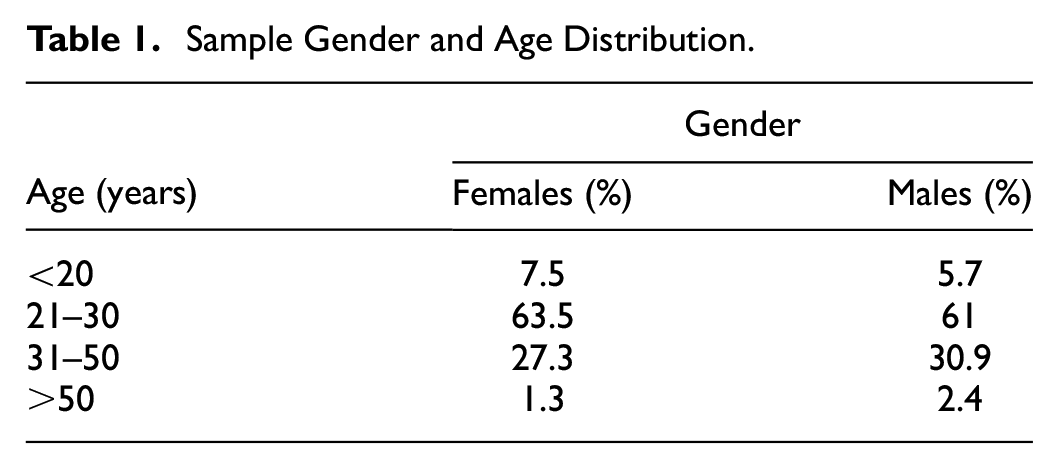
The respondents’ gender distribution consists of 43.6% male and 56.4% female with different age ranges.
Splitting the SPSS data file by gender reveals that the age distribution, occupation, salary scale, and geographic location of the respondents was as follow in Tables 1 to 4 below:
Sample Gender and Age Distribution.
Education.

Occupation.

Salary Distribution.

Moreover, a noticeable data feature among our population was that 51.1% of the respondents were BA/BS holders hence showing that almost half of the populations interviewed were university degree holders and were thus qualified and knowledgeable.
Scale Validation
To ascertain a high level of validity in this study, the choice was to use SPSS 25.0 with the collected data for the purpose of scale validation. This was done by conducting Confirmatory Factor Analysis to confirm that the factors used are capturing the same construct in the current context of the study. In addition, Principle Component Analysis was performed using SPSS 25.0, thus yielding satisfactory results. AMOS 22 was used to test the moderation effects and to check the model fit of the research at hand in addition to conducting Structural Equation Modeling.
First, Factor Analysis was conducted for each group using SPSS. During the first step, the data factorability was assessed through KMO test “the Kaiser-Meyer-Olkin” the index of which ranges from 0 to 1, noting that Tabachnick and Fidell (2007) emphasized that having an index of 0.6 is an acceptable good minimum. The index of the KMO test of the scale was 0.71 for Assurance, 0.766 for Responsiveness, 0.861 for Empathy, 0.741 for Reliability, 0.671 for Tangibles, 0.688 for Customer Satisfaction, and 0.812 for Job Satisfaction. Hence, these results are in line with the findings of Tabachnick and Fidell (2007) and are considered as good index for data factorability. The second step was to check the Bartlett’s Sphericity, knowing that it should be higher than (p < .05). The results of the Bartlett’s Test of Sphericity showed a significance at p = .000 and is hence acceptable.
The third step is the Eigenvalues test, and according to Hair et al. (2014), the purpose is to search for components with a factor above 1.0. The outcome showed very good results; for example, in the case of responsiveness, the Eigenvalues shows a cumulative of 57% with a total of 2.498 for Responsiveness, which is acceptable. As to Empathy, it shows a cumulative of 62% with a total of 2.133, and Job Satisfaction has a cumulative of 63% with a total of 3.221. As a result of the above, and as the level of significance is small, we can reject the null hypothesis that variables are uncorrelated and say that the data are factorable.
Estimating commonalities is the fourth step in evaluating a scale measure. This test helps in highlighting how the creation of the variables is affected by the different factors, that is, terms, “how much of the variance in each item is explained. Low values (e.g., less than 0.3) could indicate that the item does not fit well with the other items in its component” (Pallant, 2007, p. 196). Hence, the researchers will keep all the variables due to the fact that their commonality results exceed 0.5 (Hair et al., 2014). SPSS 25.0 was used to measure the commonalities of the components using the Extraction Method: Principal Component Analysis. The results show a Cronbach’s alpha value of .825 for Job Satisfaction, .748 for Assurance, .791 for Responsiveness, .867 for Empathy, .837 for Reliability, .810 for Tangible, and finally .776 for Customer Satisfaction. Hence, all variables were acceptable having a Cronbach alpha greater than 0.7, and thus based on the above-mentioned steps, we conclude that the scale used in this field study is internally consistent and well purified.
However, Churchill (1979) explain that these steps alone do not guarantee the validity of the construct, for this purpose, the researchers exerted every effort in meeting the proper requirements of the scientific research process as to scale construction and construct domain as guided by the reviewed literature. Finally, a pilot-test of the scale was conducted on a sample group composed of 25 respondents to test for language simplicity, scale coherence, and scale items’ clarity. As a conclusion to all of the above steps, the researchers were contempt that the object of construct validity, content validity, and criterion validity were satisfactory.
Research Results and Hypotheses Testing
To test the model at hand, the researchers have had to follow several steps using both SPSS and AMOS. The first step was to test the correlation between the different items of the variables at hand, and the results were as follows:
The correlation among the variables shows a strong correlation knowing that the results could be either negative or positive (Pallant, 2007). Moreover, the outcomes reveal a moderate positive relationship between responsiveness and customer relationship (r = .339; p < .001), whereas the correlation between Assurance and Customer Satisfaction shows a strong correlation with (r = .533, p < .001). As to the correlation between the Customer Satisfaction and Responsiveness, it also shows a strong correlation with (r = .513, p < .001). Concerning the correlation between the Customer Satisfaction and Empathy, the result indicates a good correlation with (r = .626, p < .001), while the correlation between Customer Satisfaction and Reliability is strong with (r = .418, p < .001). Finally, the correlation between Customer Satisfaction and Tangibility is very strong with (r = .735, p < .001).
Hence, all five hypotheses are validated; however, the main aim of the study at hand is to test Hypothesis 6. To do so, the researchers conducted a correlation between SERVQUAL (i.e., the summation of the five independent variables) and Customer Satisfaction, thus ending up with a correlation indicating a very strong relationship (r = .722, Sig. = .000). Moreover, to test the moderating impact of employee Job Satisfaction, a Linear Correlation was tested with the aim of checking Hypothesis 6. In the first step, the independent variable (Service Quality) and the moderating variable (employee Job Satisfaction) were entered into the first regression equation. In the second equation, the interaction (SERVQUAL × JOB_SAT) was added to the equation with Customer Satisfaction being the dependent variable. The results in Table 5 below show that the two variables Service Quality and Job Satisfaction explain 31% of the variance of Customer Satisfaction, while the interaction SERVQUAL × JOB_SAT increases the contribution to 51%. The regression coefficient of the interaction term is significant with (p = .047). Thus, Hypothesis 6 is supported.
Testing the Impact of Service Quality and Job Satisfaction.

Note. R2Step1 = .311, R2Step2 = .518, ΔR2 = .207, p < .05.
SERVQUAL = service quality; JOB_SAT = job satisfaction.
Constructing the model in AMOS to study the model fit and testing the relationship between the different variables in order to study the impact of the moderating variable, that is, employee job satisfaction on the relationship between service quality and customer satisfaction in Lebanese healthcare organization reveals the following:
First, the model was designed in AMOS 22 as follows (Figure 2):

Model load in AMOS.
While drawing the model, the researchers took into consideration that there exists a regression and covariance among the different variables of the model. Running the model shows a great significance among the different variables especially in the interaction effect between Service Quality and employee Job Satisfaction with p = .006, and this is in line with the results obtained from SPSS and described above.
Moreover, testing the model fit; that is, studying the goodness of fit of the model requires acceptable values of the CFI (Comparative Fit Index) that needs to be above 0.80, the RMSEA (Root Mean Square Error of Approximation) that should be equal to or less than 0.05, and the SRMR (Standardized Root Mean Residual) required to be equal to or less than 0.08 reveals that some standardized regression weights showed very low values ranging between 0.348 and 0.671. This suggests that it is an unreliable indicator of the two variables being tested, whereas the majority of the variables show moderate to very high results in their regression.
AMOS results show a CFI value equal to 0.821 that is considered acceptable, while the RMSEA is equal to 0.037 and the SRMR is equal to 0.023. This enables us to conclude that we have Goodness of Fit in our model and the overall model fit appears to be acceptable. Moreover, the PCLOSE equal to 0.602 is a good result. As to the p-values output, it is equal to 0.024 that is <0.05 which is good, while the CMIN, that is, the Chi square is equal to 9.1, and the various goodness of fit (GFI) is 0.9, NFI = 0.74. Hence, we can conclude that the relationship in AMOS is strong, and the SEM clearly shows the interaction between all the variables of the model.
Finally, plotting this interaction effect indicates that using the interaction plotter tool where the moderator is Job Satisfaction, the dependent variable is Customer Satisfaction and the independent variable is Service Quality, adding the effects (unstandardized estimates from AMOS into the excel file to study the interaction) reveals that for low moderation, there is an effect; however, when employees are satisfied, the interaction between customer satisfaction and service quality becomes stronger. Hence, employee satisfaction has a direct effect as a moderator on the impact of service quality and on the satisfaction of customers (also termed as patients) within the Lebanese healthcare facilities (Figure 3).

Moderator impact on the independent–dependent relationship.
Limitations and Implications for Future Research
Although the researchers worked on avoiding bias, this study still ended up with some limitations. First, this research was conducted during a period when Lebanon was facing many turbulences both health and economic. This negatively impacted all sectors in the country, and one of the most badly hit was the healthcare sector. This resulted in a scarcity of Lebanese healthcare providers, and the need to employ refugees and non-Lebanese. This might have resulted in biases results given the conditions of those employees and the high chances of a diversion between the system implemented in a country in turmoil and that implemented in their countries. Future studies can remedy to that by ensuring the respondents are either Lebanese or if they are not Lebanese, by ensuring that they have been in the Lebanese healthcare system for a long enough period to have gotten integrated.
Second, the healthcare institutions in Lebanon are classified as being class A, B, C, or D hospitals. Hence, the service quality differs among these hospitals depending on the class they belong to. In the case of the study at hand, the obtained responses might be affected by this disparity. So, future research could conduct four comparative studies based on the hospital classes to certify the degree of diversity in service quality, job satisfaction, and customer satisfaction in each class.
Third, when testing the moderating impact of job satisfaction, the researchers used the summation of Tangibility, Reliability, Assurance, Responsiveness, and Empathy to constitute the SERVQUAL model as an independent variable. Hence, the impact of job satisfaction was not tested on each one of them but was rather tested on their summation, this was used in both SPSS and AMOS. Thus, this limitation leads us to suggest that in order to be more accurate in future research, testing the moderation effect should be done on both the summation of SERVQUAL and on each one of the variables that constitute the SERVQUAL factor.
Theoretical and Practical Implications
The purpose of this study was to shed light on the importance of service quality on customer satisfaction taking into consideration the impact of employee satisfaction as a moderator on such a relationship in a country suffering from a severe economic crisis.
Theoretical Implications
From a theoretical standpoint, the findings bring forth various contributions. First, the attitude and degree of involvement of employees working in Lebanese healthcare organizations have shown a positive influence on the overall satisfaction of patients (customers) being admitted into these hospitals as well as on their relatives despite the less-than-ideal circumstances of hospitals and the country. Such a finding underscores the vital role played by healthcare employees in shaping the experience of patients and impacting their satisfaction. It reinforces the belief that motivated and satisfied employees are instrumental to customer/patient satisfaction irrespective of the circumstances surrounding them.
Second, Tangibility, Reliability, Assurance, Responsiveness, and Empathy are the variables that constitute the SERVQUAL model. They were split apart, and each one of them was tested as an independent entity in a separate hypothesis. The reason behind testing each dimension separately was to shed light on their respective influence on customer/patient satisfaction. All five hypotheses were supported and had a positive correlation with customer/patient satisfaction. Confirming the relevance of each variable in the healthcare Lebanese context contributes to the extant literature.
Third, the most important hypothesis to be tested was the moderating impact of job satisfaction on the relationship between Lebanese healthcare employees and customer/patient satisfaction. This resulted in the conclusion that the more satisfied the employees were, the higher the satisfaction of the customers/patients due to the enhanced services and quality offered by the Lebanese healthcare service providers. In fact, even a slight improvement in job conditions is able to yield a tangible improvement in the job satisfaction of those employees. Such a finding underscores the interdependence that exists between employee and patient satisfaction with job satisfaction playing a pivotal role. It equally emphasizes the sizable impact of incremental changes in job satisfaction.
Practical Implications
From a practical stance, this study can first be an alarm for healthcare managers urging them to react fast as it addresses the urgency of recognizing and solving the problem of declining healthcare employee motivation and thus satisfaction. Managers should not ignore those concerns and should work on motivating and increasing employee satisfaction despite a declining economy and deteriorating living and health conditions. This may entail putting in place strategies aiming at boosting employee morale by drawing for them clear career paths, improving work conditions, and providing them with fair remuneration.
Second, those managers can try to deal with the deteriorating economy by working on being proactive by overcoming the obstacles brought by the economic crisis. This may entail looking for alternate financing sources, improving resource allocation, and coming up with creative methods to offer high-quality healthcare services while working with restricted funds. Third, the study at hand highlights that it remains a serious challenge to investigate what the future will bring as more and more refugees immigrate to Lebanon hence leading to an ever-increasing number in the population while the capacity of the healthcare sector is increasingly limited. Healthcare managers must anticipate this demographic shift and its detrimental impact on the healthcare sector. They should thus work on coming up with capacity-building strategies, such as upgrading their infrastructure, leveraging technology, optimizing processes, and working on securing higher investments in the healthcare sector.
Conclusion
The relevance of service quality and its impact on customer/patient satisfaction in the healthcare context of a nation experiencing a grievous economic crisis have been highlighted by this study. The latter has emphasized the valuable and momentous influence employee involvement and attitude have on patient satisfaction, while validating the applicability of the SERVQUAL dimensions in the Lebanese healthcare context, and above all highlighting the moderating effect of job satisfaction. These findings should serve as a warning to healthcare administrators to address the dwindling motivation and thus satisfaction of their employees, especially in the trying conditions prevalent in Lebanon. This study offers insightful information to healthcare administrators and decision-makers working to raise patient happiness and optimize healthcare delivery in Lebanon.
Footnotes
Appendix A
Acknowledgements
We would like to extend our deep gratitude to all the respondents of this study for contributing to our research despite their hardships and limited time availability. We would equally like to thank our colleagues who provided us with insightful comments throughout our study.
Declaration of Conflicting Interests
The author(s) declared no potential conflicts of interest with respect to the research, authorship, and/or publication of this article.
Funding
The author(s) received no financial support for the research, authorship, and/or publication of this article.
Ethics Statement
An ethics statement is not applicable to this study.

Data Availability Statement
Data sharing not applicable to this article as no datasets were generated or analyzed during the current study.