




Abstract
Based on the theory of meaning construction, this research aims to examine the relationship between mindfulness-based instruction and job satisfaction among educators working in kindergarten settings. Specifically, this study will evaluate whether teachers’ self-efficacy mediates this relationship and explore the potential moderating impact of role maladjustment on this mediation process. A total of 531 kindergarten teachers, mostly females participated in the study by responding to self-administered questionnaires measuring their mindfulness in teaching, teachers’ self-efficacy, role maladjustment, and job satisfaction. The findings indicate that there is a notable and favorable correlation between the practice of mindfulness in teaching and job satisfaction among kindergarten teachers. Additionally, the analysis suggested that teachers’ self-efficacy partially mediated this relationship. These results remained significant even after controlling for demographic variables. Further examination using moderated mediation analysis indicated that role maladjustment did not have a moderating effect on either the direct or indirect links between mindfulness in teaching and job satisfaction. The results highlight the importance of teacher self-efficacy as a mediating factor, emphasizing the role of mindfulness in assisting preschool educators in effectively managing challenges and adversities. This, in turn, enhances emotional regulation and coping skills while cultivating a heightened awareness of personal strengths and abilities, ultimately resulting in greater job satisfaction.
Plain Language Summary
This study looks at how practicing mindfulness can make kindergarten teachers feel more satisfied with their jobs. Over 500 teachers took part in the study. It found that when teachers practice mindfulness in their teaching, they tend to feel happier at work. This is because mindfulness helps teachers feel more confident in their abilities, which leads to higher job satisfaction. The study also looked at whether feeling out of place in their role affects this relationship, but found that it doesn’t change the positive impact of mindfulness on job satisfaction. Overall, the research suggests that mindfulness can be a valuable tool for teachers to manage stress and feel more fulfilled in their work.
Introduction
In recent years, considerable attention has been given to the issue of teacher shortages caused by job dissatisfaction (Sutcher et al., 2016). A demanding workload frequently results in increased pressure on teachers, leading to a high turnover rate and overall dissatisfaction with their jobs (Madigan & Kim, 2021). This dissatisfaction can even result in a loss of confidence and enthusiasm toward the teaching profession (Skaalvik & Skaalvik, 2015). Kindergarten teachers face a range of complex responsibilities, including teaching, providing care, liaising with parents, and acting as social workers. They often encounter intricate, ambiguous, and constantly evolving situations where they have limited access to decision-making information and authority over the curriculum (Goldstein, 2007). These factors can create cognitive barriers, causing confusion, anxiety, and stress among teachers. Regrettably, many kindergarten teachers lack professional training in effectively coping with high levels of occupational stress, emotional involvement, and job engagement, posing challenges to their overall well-being and resulting in job dissatisfaction. This dissatisfaction not only affects their physical and mental health but also has adverse consequences for critical aspects of their professional roles. It can have a cascading effect, impacting the overall educational experience and outcomes for both teachers and students. For instance, when educators experience stress or dissatisfaction, it becomes challenging to maintain a positive and nurturing classroom environment, which affects teaching quality and teacher–student relationships (Jeon et al., 2019; Zinsser et al., 2013). Research suggests that kindergarten teachers are more prone to leaving the profession (Lambert et al., 2019). In fact, approximately 40% of Chinese kindergarten teachers desire to pursue alternative careers, exacerbating the issue of teacher attrition in early childhood education (Liu & Onwuegbuzie, 2012). Given the severity of the situation, it is necessary to explore the factors that can enhance job satisfaction among kindergarten teachers.
Job Satisfaction
Job satisfaction encompasses the extent of positive psychological and physiological feelings that individuals experience toward their working conditions (Hoppock, 1935). According to Locke (1969), job satisfaction is characterized by pleasurable emotional experiences resulting from positive emotional responses derived from the workplace. Davis and Newstrom (1989) define job satisfaction as the range of positive or negative emotional experiences individuals encounter within their work environments. Therefore, teacher job satisfaction can be comprehensively described as teachers’ emotional experience, attitude, and evaluation of multiple factors within the school setting. These factors encompass the nature of their work, the work environment, leadership capabilities, management styles, and other relevant aspects. Extensive research has shown that teacher job satisfaction significantly influences teacher enthusiasm, school educational quality, and teacher mental well-being (Burić & Moè, 2020; Lu et al., 2019; Toropova et al., 2021). Previous studies examining job satisfaction among kindergarten teachers have focused primarily on exploring factors such as job conditions and the environment (Abu Taleb, 2013; Lee & Quek, 2018), social support and cooperative relationships (Polishchuk et al., 2022; Yuh & Choi, 2017), career development(Stevens, 2022), growth opportunities (Banerjee et al., 2017), and work motivation (Hyseni et al., 2022; Wagner & French, 2010). However, there is a relative scarcity of research investigating the relationship between individual psychological resources (e.g., mindfulness in teaching) and job satisfaction among kindergarten teachers. In contemporary psychology, individual psychological resources, such as mindfulness, are recognized as crucial assets that contribute significantly to an individual’s well-being and functioning (Hascher & Waber, 2021), particularly in demanding environments such as teaching. Mindfulness, as an individual psychological resource, holds paramount importance due to its multifaceted benefits. Therefore, it is imperative to explore the significance of individual psychological resources, particularly mindfulness, in fostering job satisfaction among kindergarten teachers. Based on the aforementioned research, it is clear that while previous studies have extensively investigated various factors influencing teacher job satisfaction, there remains a significant gap in understanding the role of individual psychological resources, such as mindfulness, in this context, particularly among kindergarten teachers. Given the recognized importance of mindfulness in promoting well-being and functioning, especially in challenging environments such as teaching, further exploration of its significance is crucial. Such research endeavors have the potential to provide valuable insights for developing targeted interventions and support strategies aimed at enhancing teacher job satisfaction and overall educational quality in early childhood education settings.
Sense-Making Theory
Sense-making theory provides a rich and feasible theoretical framework to explain the influence of mindfulness in teaching on preschool teachers’ job satisfaction, which can help kindergarten teachers better cope with uncertainty and challenges in the teaching environment. According to this theory, individuals comprehend and interpret their environment through the process of meaning construction, which helps them determine their responses (Weick & Roberts, 1993; Weick & Weick, 1995). Drawing on their beliefs, mindset, habits, and internal factors, kindergarten teachers perceive and interpret environmental cues to better understand and address uncertainties and challenges (Datnow et al., 2023; Sandfort, 2015). Furthermore, mindfulness can serve as a protective mechanism for kindergarten teachers, assisting them in mitigating the influence of negative emotions and overcoming cognitive obstacles (Jennings, 2015). By cultivating mindfulness, teachers can observe their emotions and thought patterns, reducing their reactivity to negative emotions and enhancing their adaptability to difficulties and challenges (Flook et al., 2013). This integration of the theory of meaning construction and mindfulness provides a comprehensive approach to supporting kindergarten teachers in effectively managing their occupational challenges and fostering a positive teaching environment. Ultimately, this approach can potentially improve the overall well-being and satisfaction of kindergarten teachers, positively impacting the educational experience and outcomes for both teachers and students.
Mindfulness in Teaching
Mindfulness is recognized as a potential protective factor for fostering job satisfaction and promoting individual well-being among kindergarten teachers (Baltzell, 2016; Hülsheger et al., 2013). Over the past three decades, mindfulness has become widely acknowledged as a valuable psychological resource that effectively enhances negative emotions, reduces stress, and promotes individual psychological well-being (Kubzansky et al., 2018; N. Park et al., 2016). Kabat-Zinn (1994) defines mindfulness as the deliberate act of directing one’s attention to the present moment without judgment and with a purposeful intention. Individuals who possess elevated levels of mindfulness demonstrate an increased ability to intentionally cultivate awareness (Brown & Ryan, 2003). Mindfulness emphasizes being fully present at the moment, observing thoughts and emotions without judgment, and accepting them rather than avoiding, suppressing, or excessively engaging with them (A. M. Hayes & Feldman, 2004). Numerous studies have demonstrated that when teachers incorporate mindfulness into their teaching practices, they experience improved emotional well-being (Abenavoli et al., 2013; Jennings et al., 2017), reduced levels of occupational stress (Roeser et al., 2013), and increased job satisfaction (Reiser & McCarthy, 2018). Building on the investigation of mindfulness in education, Frank et al. (2016) introduced the concept of “mindfulness in teaching,” which emphasizes the crucial importance of teachers’ individual and interpersonal mindfulness within the teaching process. For instance, studies suggest that when teachers develop personal mindfulness, which involves being aware of their own thoughts and emotions in the classroom, they are more effective in managing their psychological well-being. Moreover, adopting an interpersonal mindfulness approach, which entails maintaining open and accepting attitudes toward students, has been shown to facilitate responsive teaching behavior and nurture positive teacher–student relationships (Gouda et al., 2016; Huang, 2022). Based on the aforementioned research findings, there are grounds to believe that mindfulness in teaching can enhance teachers’ emotional well-being, reduce stress levels, improve classroom management skills, and ultimately enhance teachers’ job satisfaction. By incorporating mindfulness in teaching practices, teachers can enhance their emotional well-being, reduce stress levels, improve classroom management skills, and ultimately experience increased job satisfaction.
Teachers’ Self-Efficacy
Although the connection between mindfulness and job satisfaction has been proven, empirical studies on the potential mechanism of how mindfulness affects job satisfaction are insufficient. Certain researchers have proposed potential mediating factors, such as self-efficacy and work engagement, in the relationship between mindfulness and job satisfaction (Aydoğmuş, 2022; Aslan Gördesliä, 2022). Abu-Tineh et al. (2011) emphasized that teachers’ self-efficacy refers to their overall confidence in managing classroom order. It directly or indirectly influences their effectiveness in promoting learning and student engagement (Sökmen, 2021). Teachers’ self-efficacy comprehensively impacts their attitudes, behaviors, and mindset when facing teaching challenges and their interactions with children (Y. C. Cheng et al., 2021). For instance, when early childhood teachers possess confidence in their professional knowledge and skills to handle daily teaching challenges, they demonstrate greater motivation and resilience to overcome obstacles, ultimately enhancing their job satisfaction. Research has consistently shown that when teachers lead high-performing classrooms, peer evaluation increases, and teachers’ job satisfaction and sense of educational accomplishment increase (Blase et al., 2010; Johnson et al., 2012). Additionally, teachers with a higher level of self-efficacy may receive more rewards, recognition, and promotion opportunities, leading to increased satisfaction with self-fulfillment (Bogler, 2001). Existing research also supports a positive correlation between teachers’ self-efficacy and job satisfaction (Emin Türkoğlu et al., 2017). Additionally, mindfulness, as a personal psychological resource, contributes to the enhancement of teachers’ self-awareness and confidence in their abilities by cultivating attention, self-awareness, and a nonreactive attitude. For instance, Pan et al. (2022) reported that trait mindfulness could increase kindergarten teachers’ emotional intelligence, thereby enhancing their self-efficacy and ultimately augmenting teachers’ subjective well-being. Furthermore, research based on mindfulness training has shown significant improvements in teachers’ levels of mindfulness, reduced perceptions of stress, and increased self-efficacy (Walker, 2017). Based on these findings, we posit a close association between mindfulness and self-efficacy. Therefore, we hypothesize that self-efficacy is an important mediating variable in the relationship between mindfulness and job satisfaction.
Role Maladjustment
Mindfulness in teaching has the potential to enhance teachers’ job satisfaction by improving their self-efficacy. However, it is essential to recognize and address potential negative factors that may arise during the implementation process. Exploring these factors and understanding their direct or indirect influence on the relationship between mindfulness in teaching and job satisfaction is crucial for a comprehensive understanding of this subject matter. One extensively researched category of negative factors is role factors that contribute to work stress (Moura et al., 2014). These factors are often referred to as “role incongruity,” which encompasses conflicts, obstacles, or failures individuals encounter while fulfilling their social roles. A wealth of psychological research and practical experience suggests that role maladjustment can serve as a significant contributor to work-related stress (Cooper & Marshall, 1976; Miles, 1976). Gaining an understanding of the role maladjustment encountered by teachers can offer valuable insights into the specific challenges they encounter and the potential implications for their job satisfaction (Yu, 2007). Role maladjustment, including role conflict, role ambiguity, and role overload, can manifest in various social groups as individuals assume specific social roles in their activities (Chen, 2019). In the context of this study, role maladjustment among kindergarten teachers pertains to the condition characterized by role conflict and role ambiguity experienced in their educational and instructional responsibilities. However, there is a lack of in-depth analysis regarding the significant impact of role maladjustment (i.e., role conflict and role ambiguity) on job stress among kindergarten teachers. The objective of this study is to fill this research gap by considering role maladjustment as a moderating variable and exploring its role in the relationships among educational mindfulness, teachers’ self-efficacy, and job satisfaction. Based on the aforementioned research, understanding the influence of role maladjustment, particularly role conflict and role ambiguity, on kindergarten teachers’ job stress is crucial for comprehensively examining the relationships among mindfulness in teaching, self-efficacy, and job satisfaction. By addressing this research gap, this study aims to contribute to the development of targeted interventions and support mechanisms to enhance teacher well-being and foster positive work environments in early childhood education.
Research Objectives and Hypotheses
Understanding the impact of mindfulness in teaching on teachers’ job satisfaction is crucial for improving their well-being and facilitating the development of effective interventions. This study aims to accomplish three primary objectives. First, we investigated the direct influence of mindfulness in teaching on job satisfaction. Second, this study investigated the potential mediating role of self-efficacy in the association between mindfulness in teaching and job satisfaction among kindergarten teachers. Additionally, the research explored the moderating effect of role maladjustment, specifically role conflict and role ambiguity, on the relationships among mindfulness in teaching, job satisfaction, and teacher self-efficacy. By elucidating the mechanisms through which professional experience influences early childhood teachers, valuable insights can be gained regarding the interaction between mindfulness in teaching and job satisfaction. Thus, this study proposes the following hypotheses: 1) Mindfulness in teaching positively predicts teachers’ job satisfaction; 2) Teachers’ self-efficacy mediates the relationship between mindfulness in teaching and job satisfaction; and 3) Role maladjustment moderates the direct and indirect relationship between mindfulness in teaching and job satisfaction through teacher self-efficacy. By comprehending the inherent complexity and interplay of role maladjustment in the teaching profession, a deeper understanding of the factors influencing job satisfaction can be attained. The conceptual model of the research is presented in Figure 1.

The conceptual model.
Method
Participants
This study employed convenience sampling to select 575 kindergarten teachers in Shandong and Heilongjiang Provinces in March 2023 as samples. While convenience sampling may not ensure random selection from the population, the decision to employ this method was made based on pragmatic considerations of time, resources, and accessibility to participants. Of the recruited teachers, 498 were female, and 77 were male, resulting in a predominantly female sample. Notably, 44 teachers were excluded from the study due to incomplete responses on key measurements or providing consistent responses across items that included both positive and negative phrasing. As a result, the final sample consisted of 531 participants, surpassing the minimum requirement of 314 participants necessary to adequately test moderate-sized effect correlations (r = .20, α = .05, 1−β = 0.95), as determined by G*Power software (Faul et al., 2007). Further details regarding the participants’ demographics can be found in Table 1, providing supplementary insights into the characteristics of the sample.
Demographic Information of the Participants (N = 531).

Measures
Mindfulness in Teaching
This study utilized the modified Chinese version of the Mindfulness in Teaching Scale (MTS-C) as a robust measurement tool. The MTS-C was initially developed by Frank et al. (2016)and later translated and revised by Ma et al. (2022) to adapt it to the specific context of Chinese kindergarten teachers. The scale used in this study consists of two dimensions—personal mindfulness and interpersonal mindfulness—comprising a total of 14 items. The personal mindfulness dimension includes nine items that assess teachers’ self-awareness and concentration during instructional activities. On the other hand, the interpersonal mindfulness dimension evaluates teachers’ attentiveness and receptiveness in their interactions with students and is represented by five items. The scale employed in this investigation utilizes a 5-point Likert scale ranging from 1 (never) to 5 (always applicable), with the personal mindfulness dimension being reverse scored. Elevated scores on the scale reflect increased levels of mindfulness exhibited by kindergarten teachers during the teaching process. It is noteworthy that the scale has consistently exhibited robust internal reliability in prior research, and this finding was replicated in the present study. Specifically, for the interpersonal mindfulness dimension, Cronbach’s alpha coefficient was .92, and McDonald’s omega coefficient was .88. For the personal mindfulness dimension, Cronbach’s alpha coefficient was .92, and McDonald’s omega coefficient was .89. Furthermore, the overall scale exhibited a Cronbach’s alpha coefficient of .89 and McDonald’s omega coefficient of .87, providing further confirmation of its internal consistency.
Teachers’ Self-Efficacy
In this study, the revised Chinese version of the Teachers’ Self-Efficacy Scale (TSES; short form) was utilized as a measurement tool. The scale was initially developed by Tschannen-Moran and Hoy (2001) and subsequently refined by Wu and Chim (2017) . The scale comprises 12 items and two dimensions: the efficacy of classroom management (ECM) and the efficacy of teaching and learning (ETL). Examples of items include “I possess the capability to establish effective classroom management strategies” (ECM) and “I possess the capability to employ diverse teaching strategies in the classroom” (ETL). The scale provides a quantitative assessment of teaching efficacy, with a higher cumulative score indicating a higher level of teaching efficacy. The internal consistency of the scale, assessed using Cronbach’s alpha in this study, was found to be strong (α = .85).
Job Satisfaction
In this study, the Job Satisfaction Index questionnaire (Tsui & Schriesheim, 1980) was used to measure job satisfaction among kindergarten teachers. This questionnaire is widely recognized for its reliability and validity (Sikander & Batool, 2021; Chaudhry et al., 2015; Zhu, 2018). The scale consists of six comprehensive dimensions that cover various aspects, including job intensity and stress, organizational leadership, colleague relationships, welfare benefits, promotion, professional development, and overall satisfaction. For instance, participants were asked to rate their satisfaction level regarding the intensity and stress of their work. The questionnaire utilized a five-point rating scale ranging from “very dissatisfied” to “very satisfied,” with all items positively scored. The questionnaire used in this study exhibited high internal consistency, as indicated by a Cronbach’s coefficient of .80.
Role Maladjustment
The Role Conflict Scale developed by Peterson et al. (1995) was used in this study to evaluate the frequency of role conflict experienced by kindergarten teachers. The scale is widely recognized for its reliability and validity(Colquitt et al., 2019; Wen et al., 2020). It consists of three meticulously designed items that aim to capture individuals’ experiences with conflicting demands in the work environment. Participants were instructed to indicate their level of agreement on a 5-point Likert scale ranging from 1 (strongly disagree) to 5 (strongly agree). During the preliminary analysis, the scale demonstrated a Cronbach’s alpha reliability coefficient of .58. However, after removing the third item, the reliability coefficient significantly increased to .87. As a result, the decision was made to include only the first two items in the subsequent analysis, as this adjustment enhanced the internal reliability of the scale.
In this study, the Role Ambiguity Scale, developed by Peterson et al. (1995), was employed to measure the level of role ambiguity experienced by kindergarten teachers in their work settings. The scale comprises five items: “I have clear work objectives,”“I am fully aware of others' expectations of me,”“I know what my responsibilities are,”“I can be certain about the amount of responsibility I have to assume,” and “My responsibilities are well defined.” Kindergarten teachers rated these items on a 5-point Likert scale, where a rating of 1 indicated “strongly disagree” and a rating of 5 indicated “strongly agree.” To ensure consistency, all the items were reverse-scored. The Cronbach’s alpha reliability coefficient for the scale was .85, indicating strong internal reliability.
Procedure
The data for this study were gathered from two different sources. First, the researchers conducted group tests directly in the kindergartens. Second, proficient kindergarten teachers from the provinces of Shandong and Heilongjiang conducted centralized tests within their respective educational institutions. Throughout the data collection process, examiners ensured that participants had a clear understanding of the research objectives. Strict measures were implemented to protect anonymity during questionnaire completion and maintain the confidentiality of the research findings, thereby preserving the authenticity and effectiveness of the study. To facilitate the smooth completion of the questionnaires, participants received comprehensive guidance and instructions from the examiners. The survey was administered using the online platform “Wen juan xing” (https://www.wjx.cn), which is similar to Amazon Mechanical Turk. This online platform allowed teachers from diverse regions to participate simultaneously by providing them with an online questionnaire link. On average, participants took approximately 20 minutes to complete the questionnaire.
Data Analyses
Descriptive statistics, including means, standard deviations, and correlations, were computed using SPSS 26.0 for the variables of mindfulness in teaching, teachers’ self-efficacy, and job satisfaction. To assess the mediating effect, a bootstrapping procedure with 5,000 samples was conducted using the INDIRECT function in the SPSS Process (A. F. Hayes, 2017; Preacher & Hayes, 2008). This procedure produced a 95% confidence interval to assess the significance of the indirect effects of the independent variable (mindfulness in teaching) on the dependent variable (job satisfaction) through the proposed mediator (teacher self-efficacy). If the lower and upper confidence intervals did not encompass zero and the p value was less than 0.05, the indirect effect was deemed significant. Follow-up tests of simple slopes were performed for significant interactions, with moderators classified as high (M + 1 SD) or low (M − 1 SD). All models included covariates such as gender, kindergarten type, kindergarten region, education level, teaching experience, and instructor age.
Results
Common Method Biases
In this study, the presence of common method bias in the data were assessed by examining the variance percentages of various factors obtained through factor analysis. Variance percentages and cumulative percentages exceeding 40% in factors indicate the potential influences of common methods on the data. To address this issue, the method proposed by Tang and Wen (Zhonglin, 2020) was employed. To ensure anonymity, participants’ identities were kept confidential, and some survey items were reverse-scored. The presence of common method bias was assessed using Harman’s single-factor test. The results of the test revealed that the first component accounted for only 29.625% of the total variance, which is well below the critical threshold of 40%. Thus, this study does not exhibit clear evidence of common method bias (Podsakoff et al., 2003).
Descriptive Statistics and Correlation Analysis
The correlation analysis in this study employed Pearson’s correlation coefficient to examine the relationships between continuous variables. After adjusting for demographic factors, Pearson’s correlations were calculated to examine the relationships between all the research variables, and the results are presented in Table 2. Correlation analysis revealed significant associations between several variables, indicating strong correlations. Specifically, there was a significant positive correlation between mindfulness in the classroom and teachers’ self-efficacy (r = .121, p < .01), work satisfaction (r = .375, p < .01), and role conflict (r = .140, p < .01). On the other hand, role ambiguity showed a negative association with mindfulness in the classroom (r = –0.048, p < .01). Additionally, role conflict and role ambiguity were negatively correlated with teachers’ self-efficacy (r = –0.069, p < .01) and positively correlated with work satisfaction (r = .688, p < .01). Both role conflict and role ambiguity negatively correlated with work satisfaction (r = –0.082 and –0.288, respectively, p < .01). These correlation findings support the assumptions of the study by highlighting significant relationships among the variables under investigation.
Summary of Correlations for the Study Variables.

p < .05. **p < .01. ***p < .001.
Relationships between Mindfulness in Teaching, Teacher Self-Efficacy, and Job Satisfaction
The present study utilized the PROCESS macro from Hayes (Model 4) to examine the mediating role of teachers’ self-efficacy in the relationship between mindfulness in teaching and job satisfaction. The findings revealed a strong and positive relationship between mindfulness in teaching and job satisfaction (β = .332, p < .001, 95% CI = [0.264, 0.399]). This suggests that higher levels of mindfulness in teaching are associated with increased job satisfaction among kindergarten teachers. Additionally, Table 3 displays a positive relationship between mindfulness in teaching and teachers’ self-efficacy (β = .098, p < .001, 95% CI = [0.018, 0.223]), indicating that teachers who demonstrate greater mindfulness in their teaching practices also exhibit greater confidence in their abilities to effectively fulfill their teaching responsibilities. Furthermore, teachers’ self-efficacy showed a significant association with job satisfaction (β = .671, p < .001, 95% CI = [0.425, 0.505]), even after controlling for demographic variables. These findings suggest that kindergarten teachers with higher levels of self-efficacy experience greater job satisfaction. Importantly, the residual direct effect of mindfulness in teaching on job satisfaction remained significant (β = .275, p < .001, 95% CI = [0.227, 0.324]). This suggests that mindfulness in teaching has an immediate positive impact on job satisfaction beyond the mediating effect of teachers’ self-efficacy.
Testing the Mediating Effect of Mindfulness in Teaching on Job Satisfaction.

Note. The criteria at the top of each column are predicted by a regression model in each column.
p < .05. **p < .01. ***p < .001.
Taken together, these findings suggest that teachers’ self-efficacy partially mediates the relationship between mindfulness in teaching and job satisfaction. Mindfulness in teaching has both a direct and an indirect influence on job satisfaction, with teachers’ self-efficacy serving as a partial mediating factor.
The mediation effect was evaluated using the bootstrap method with 5,000 iterations to calculate a 95% confidence interval. If the confidence interval does not include 0, it indicates a significant mediation effect; otherwise, it is considered non-significant. The results of the mediation analysis, presented in Table 4, demonstrate that teachers’ self-efficacy significantly moderates the relationship between mindfulness in the classroom and job satisfaction. Mindfulness in teaching had an indirect effect of 0.067 (p < .001, 95% CI = [0.018, 0.223]) on job satisfaction through teachers’ self-efficacy. However, since the mediation effect accounts for only 21% of the total effect (0.067 divided by 0.319), the mediation is partial. Hence, while teachers’ self-efficacy mediates the relationship between mindfulness in teaching and job satisfaction, it is important to acknowledge that other factors beyond self-efficacy also directly influence the impact of mindfulness in teaching on job satisfaction.
Direct, Indirect, and Total Effects for the Mediation Model.

Note. Bootstrap sample size = 5,000. Boot SE = Bootstrapping standard error; CI = confidence interval.
To summarize, the mediation analysis revealed that teachers’ self-efficacy significantly mediated the relationship between mindfulness in teaching and job satisfaction. However, this mediation is incomplete, suggesting the presence of additional factors that influence the connection between mindfulness in teaching and job satisfaction that are not captured by teachers’ self-efficacy alone.
Moderating Effect of Role Maladjustment
In this study, Hayes’ process model 8, the moderated mediating model, was employed to investigate the role of role maladjustment (role conflict and role ambiguity) in moderating the direct path between mindfulness in teaching and job satisfaction, as well as the first half of the model between mindfulness in teaching and teachers’ self-efficacy. Control variables such as gender, age, and educational attainment were considered in the analysis. The results, as shown in Table 5, indicate a significant primary effect of mindfulness in teaching on teachers’ self-efficacy. Furthermore, this effect is moderated by role maladjustment, specifically by role conflict and role ambiguity. The beta values for role conflict (β = .10, t = 3.23, p < .05) and role ambiguity (β = .12, t = 4.51, p < .001) indicate strong moderating effects. This suggests that when there is a higher level of role conflict or role ambiguity, mindfulness in teaching has a more pronounced positive impact on teachers’ self-efficacy. On the other hand, the findings reveal a significant positive correlation between job satisfaction and mindfulness in teaching. However, role maladjustment (role conflict and role ambiguity) does not moderate this direct relationship. The beta coefficients for role conflict (β = –0.01, t = –0.53, p > .05) and role ambiguity (β = –0.03, t = –0.17, p > .05) indicate that the moderating effects are not substantial. Thus, it is evident that role maladjustment does not have an impact on the direct effects of mindfulness in teaching on job satisfaction. Furthermore, the moderation analysis revealed no significant interaction effects of role maladjustment on the indirect relationship between mindfulness in teaching and job satisfaction through teachers’ self-efficacy. This finding implies that role maladjustment does not moderate the indirect impact of mindfulness in teaching on job satisfaction through teachers’ self-efficacy.
Testing the Moderated Mediation Effect of Mindfulness in Teaching on Job Satisfaction.

Note. Each column is a regression model that predicts the criterion at the top of the column.
p < .05. **p < .01. ***p < .001.
In summary, the findings suggest that while role maladjustment (role conflict and role ambiguity) moderates the relationship between mindfulness in teaching and teachers’ self-efficacy, it does not moderate the direct relationship between mindfulness in teaching and job satisfaction, nor does it moderate the indirect influence of mindfulness in teaching on job satisfaction through teachers’ self-efficacy.
Based on the provided information, the results of the simple slope tests confirm that role maladjustment, specifically role conflict and role ambiguity, moderates the direct effect of mindfulness in teaching on teachers’ self-efficacy. The findings indicate that the positive impact of mindfulness in teaching on teachers’ self-efficacy is significantly strengthened when there is a high level of role conflict (M + 1 SD), as depicted in Figure 2 and presented in Table 6 (βsimple = 0.1657, p < .001, 95% CI = [0.0769, 0.2546]). This suggests that as the frequency of role conflict increases, the positive influence of mindfulness in teaching on teachers’ self-efficacy becomes more prominent. Therefore, mindfulness in teaching plays a crucial role in mitigating the negative effect of role conflict on teachers’ self-efficacy in the context of early childhood education. Similarly, Figure 3 and Table 7 illustrate that early childhood educators who experience higher levels of role ambiguity (M + 1 SD) benefit more from the positive effect of mindfulness in teaching on their self-efficacy (βsimple = 0.1289, p < .05, 95% CI = [0.0487, 0.209]). These findings indicate that as the level of role ambiguity increases, the positive impact of mindfulness in teaching on early childhood teachers’ self-efficacy becomes more evident. Consequently, mindfulness in teaching plays a crucial role in assisting early childhood teachers in navigating the challenges associated with role ambiguity and strengthening their sense of self-identity. In summary, the findings of this study suggest that mindfulness in teaching has a significant direct impact on teachers’ self-efficacy, which is further amplified when teachers encounter higher levels of role conflict or role ambiguity. Mindfulness in teaching can assist early childhood teachers in addressing the challenges of role maladjustment and strengthening their self-efficacy in the context of early childhood education.
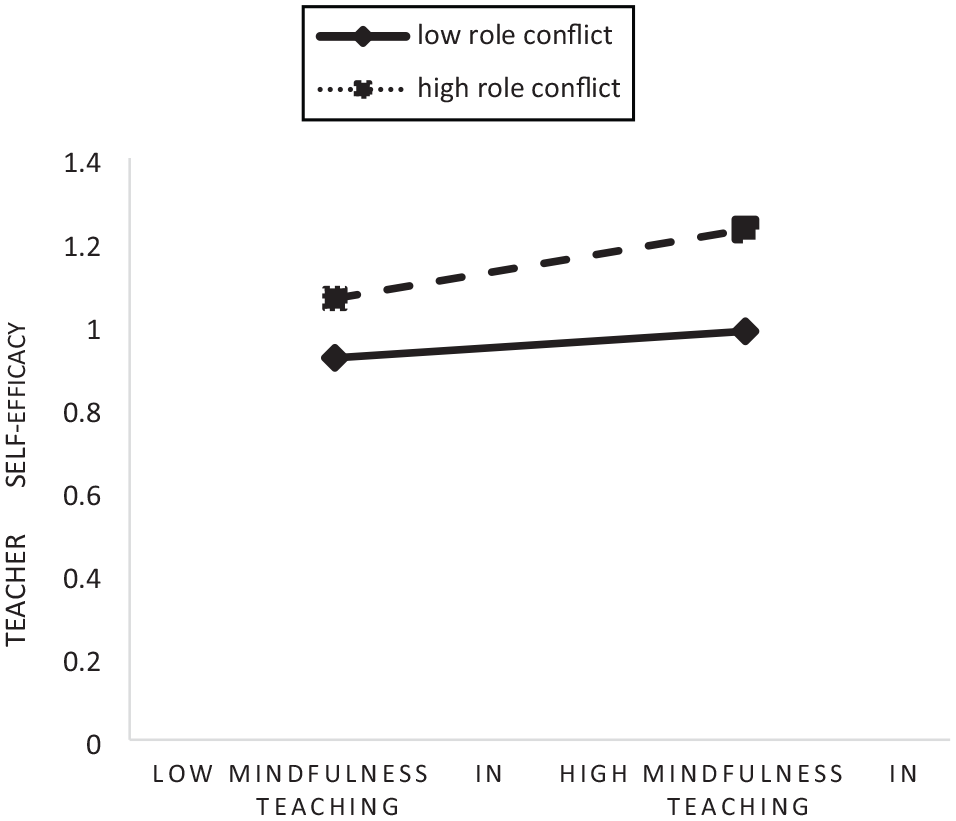
Moderation of role conflict in the relationship between mindfulness in teaching and teachers’ self-efficacy.
Moderating Effect of role Conflict on the Relationship Between Mindfulness in Teaching and Teachers’ Self-Efficacy.


Moderation of role ambiguity in the relationship between mindfulness in teaching and teachers’ self-efficacy.
Moderating Effect of Role Ambiguity on the Relationship Between Mindfulness in teaching and Teachers’ Self-Efficacy.

In conclusion, our study results suggest that the positive influence of mindfulness in teaching on teachers’ self-efficacy is magnified when there is a greater level of role maladjustment. However, when role maladjustment is low, this relationship lacks statistical significance. In other words, the influence of mindfulness in teaching on teachers’ self-efficacy is significant only when early childhood educators experience role maladjustment.
Discussion
An increasing number of researchers are recognizing the crucial role of job satisfaction in the field of early childhood education, which impacts the well-being of teachers, the quality of education, and students’ development (Grant et al., 2019; Hyseni Duraku et al., 2022; Xia et al., 2023). Therefore, conducting thorough investigations into early childhood teachers’ job satisfaction and exploring influencing factors and improvement strategies is of great theoretical and practical importance. In line with this, the present study adopts a moderated mediation model based on meaning construction theory. This model considers teachers’ self-efficacy as the mediating variable and role maladjustment (role conflict and role ambiguity) as the moderating variable. The research findings not only provide a clear understanding of how mindfulness in teaching influences job satisfaction through its mediation of teachers’ self-efficacy but also shed light on the complex interaction between mindfulness in teaching and early childhood teachers, specifically the moderating role of role maladjustment. By revealing the influence of individual psychological factors on job satisfaction, these findings offer valuable guidance for enhancing job satisfaction among early childhood teachers and improving overall educational quality through targeted interventions. Thus, they have significant theoretical and practical implications.
Direct Effects of Mindfulness in Teaching
In this study, we first examined the relationship between teachers’ mindfulness in teaching and job satisfaction. By conducting correlation analysis and testing model effects, our study revealed a significant positive effect of mindfulness in teaching on teachers’ job satisfaction (Guidetti et al., 2019). These findings align with existing research and provide support for Hypothesis 1, as the effects were observed independently of potential confounding variables such as years of experience, age, and type of kindergarten. This finding indicates that developing mindfulness among early childhood teachers can significantly enhance their job satisfaction, confirming the positive association between mindfulness in teaching and job satisfaction. Mindfulness in teaching is considered a beneficial psychological factor for early childhood educators. Therefore, it is recommended that the cultivation and practice of mindfulness be prioritized in the work of early childhood teachers. By incorporating mindfulness training and self-reflection, teachers can effectively manage their emotions, foster positive relationships with students, improve teaching effectiveness, and continuously enhance their professional competence. Thus, mindfulness in teaching should be integrated into teacher development and training programs to facilitate long-term progress in the field of education.
Mediating Role of Teachers’ Self-Efficacy
Furthermore, we conducted an additional analysis to investigate the mediating role of teachers’ self-efficacy in the relationship between mindfulness in teaching and job satisfaction. Our results revealed a significant positive association between mindfulness in teaching and self-efficacy among kindergarten teachers. Higher levels of self-efficacy were found to enhance job satisfaction for early childhood educators, supporting Hypothesis 2, which suggests that teaching mindfulness influences job satisfaction by enhancing teachers’ self-efficacy. Although the mediating effect of self-efficacy is relatively small, it has meaningful implications. On the one hand, mindfulness positively predicts self-efficacy among kindergarten teachers. Those with greater mindfulness levels are more attentive to their teaching practices and classroom dynamics. Therefore, as mindfulness increases, so does self-efficacy in student engagement and classroom management. This finding aligns with existing empirical research (Jennings, 2015). On the other hand, self-efficacy significantly predicts job satisfaction among kindergarten teachers, consistent with previous research (Zhang & Ge, 2013). Self-efficacy serves as a valuable mechanism for teachers to cope with work pressure and conflicts, influencing their stress response. Teachers with strong self-efficacy are typically confident and proactive when facing challenges and difficulties in their work. Thus, we recommend placing special emphasis on self-efficacy in teacher training and development programs. Targeted mindfulness training and self-reflection can effectively enhance teachers’ confidence, leading to increased job satisfaction. While this study established a positive relationship between mindfulness in teaching, teacher self-efficacy, and job satisfaction, it is important to acknowledge the potential for reverse causality. In other words, it is plausible that job satisfaction may also influence mindfulness and teacher self-efficacy in teaching. Therefore, additional research is necessary to ascertain the causal direction of these relationships.
Moderating Effect of Role Maladjustment
Additionally, this investigation identified role conflict and role ambiguity as moderating variables in the relationship between mindfulness in teaching and outcome variables. Specifically, role conflict and role ambiguity moderate the association between mindfulness-based teaching and teachers’ self-efficacy. According to the interaction effect, as the levels of role conflict and role ambiguity increase, the positive impact of mindfulness teaching on teachers’ self-efficacy becomes stronger. However, when there is less role conflict and role ambiguity, their influence on the relationship between mindfulness teaching and teachers’ self-efficacy is not significant. This finding aligns with sense-making theory, which suggests that kindergarten teachers construct their understanding of their work environment and the issues they encounter through sense-making processes (Weick & Weick, 1995). Hence, within the same teaching environment, different kindergarten teachers may perceive varying degrees of role conflict and role ambiguity. Therefore, it is crucial for kindergarten teachers to enhance their mindfulness in teaching (X. L. Cheng et al., 2022; Ma et al., 2021, 2022; Yang et al., 2023). By engaging in mindfulness practices, kindergarten teachers can develop a heightened awareness of the expectations and demands placed upon them, enabling them to reduce impulsive actions and, as a result, carry out their work more effectively. This enhanced performance can lead to recognition and appreciation from supervisors, parents, and students. Furthermore, continuous learning and reflective practices aimed at improving professional knowledge and skills are vital for kindergarten teachers to excel in their teaching performance. When faced with increased levels of role conflict and role ambiguity, it is particularly important for kindergarten teachers to engage in profound and systematic thinking, identify fundamental contradictions, and seek balanced solutions. They need to cultivate a positive teaching attitude and develop confidence in dealing with uncertainty. However, in situations with lower levels of role conflict and role ambiguity, such extensive thinking may not be necessary for kindergarten teachers. Conversely, teachers lacking mindfulness in teaching may struggle to perceive the connections among information, leading to narrow and one-sided thinking. Consequently, in the complex, dynamic, conflicting, and ambiguous environment of preschool education, they are more likely to experience feelings of overwhelm and perceive higher levels of role conflict and role ambiguity. This study highlights the moderating influence of role conflict and role ambiguity on the association between mindfulness in teaching and job satisfaction. However, it is important to recognize that other contextual factors, including organizational culture, educational policies, and social support, could impact the relationship between mindfulness in teaching and job satisfaction. These factors warrant consideration and further exploration in future research endeavors.
Moreover, previous research has indicated that role conflict and role ambiguity can contribute to unfavorable psychological states (Padmanabhanunni & Pretorius, 2023), and role conflict has been found to have a significant positive effect on turnover intention (Shahid et al., 2022). Surprisingly, our findings did not reveal any notable moderating effect of mindfulness in teaching on the dependent variables, particularly concerning the interaction between mindfulness and role conflict or role ambiguity, which did not significantly influence teachers’ job satisfaction (H. I. Park & Nam, 2020). The disparities in the results could be attributed to the relatively lower levels of interaction observed between mindfulness in teaching and role conflict or role ambiguity within the surveyed sample of teachers. Additionally, teachers’ job satisfaction may be influenced by various other factors beyond just the interplay between “mindfulness in teaching” and “role conflict/role ambiguity.” Factors such as the work environment (Toropova et al., 2021), support systems (Purwanto, 2020), and workload (Anees et al., 2021) may exert a more substantial impact on teachers’ job satisfaction.
These findings suggest that in the current study, mindfulness has an independent capacity to mitigate the negative impact of role conflict and role ambiguity on job satisfaction, which is unaffected by the level or frequency of such conflicts. Regardless of whether kindergarten teachers encounter role conflict or role ambiguity, the importance of mindfulness in teaching remains significant. It enables teachers to enhance emotional regulation, improve focus and attention, engage in self-reflection and personal growth, and cultivate positive teacher–student relationships (Ma et al., 2021, 2022; Yang et al., 2023). By strengthening their ability to cope with teaching challenges, enhance teaching quality, and ultimately increase job satisfaction, mindfulness plays a critical role in teaching. Consequently, our research findings do not support Hypothesis 3.
Practical Implications
In light of the positive correlation between mindfulness, self-efficacy, and job satisfaction among teachers, implementing mindfulness interventions within kindergarten teacher training programs presents a promising avenue for enhancing educational quality. For instance, integrating mindfulness-based stress reduction (MBSR) techniques, such as body scan meditation and mindful movement exercises, into professional development workshops can equip teachers with tools to bolster their confidence in their instructional abilities, consequently fostering greater job satisfaction. These workshops serve to deepen educators’ understanding of mindfulness principles while offering practical strategies for integrating mindfulness into pedagogical practices.
Moreover, the incorporation of brief mindfulness exercises into teachers’ daily routines can further reinforce these benefits. Initiatives such as starting and ending the day with short mindfulness exercises, integrating mindfulness into transitional periods, and employing mindfulness techniques to manage classroom disruptions or conflicts provide opportunities for continual reinforcement of mindfulness practices within the educational setting.
Additionally, integrating mindfulness training and self-reflection into teacher development programs can yield multifaceted benefits. By providing teachers with tools to effectively manage emotions, cultivate positive teacher–student relationships, and enhance teaching effectiveness and professional competence, these programs contribute to overall job satisfaction and educational quality. Furthermore, emphasizing the cultivation of teachers’ self-efficacy through targeted mindfulness training and self-reflection can bolster their confidence, equipping them with the resilience to navigate job stress and conflicts, ultimately fostering greater job satisfaction.
Addressing the effective management of role conflict and role ambiguity within teacher training programs is also paramount. By incorporating mindfulness practices aimed at enhancing coping abilities, fostering a positive teaching attitude, and boosting confidence in dealing with uncertainty, educators are better equipped to navigate the complexities of their roles. These initiatives contribute not only to individual teacher well-being but also to the overall enhancement of educational quality.
In conclusion, these research findings underscore the significance of integrating mindfulness and self-efficacy enhancement initiatives within teacher training programs to promote job satisfaction and elevate educational quality. By designing professional development plans that prioritize the cultivation of mindfulness and self-efficacy among educators, educational institutions can foster environments conducive to both teacher fulfillment and enhanced student learning outcomes.
Limitations and Future Directions
Despite employing rigorous research methods in this study to investigate the impact of teaching mindfulness on job satisfaction, it is important to acknowledge several limitations. First, the focus of this research is confined to job satisfaction among early education teachers and its influencing factors, overlooking the job satisfaction of teachers in other educational stages or different subject areas. Therefore, the generalizability of the results is limited, and future research should broaden the sample size to encompass diverse regions, school types, and teacher populations to obtain more comprehensive and representative findings. Second, the quantitative data employed in this study are cross-sectional and lack longitudinal data. As a result, the observed associations between teaching mindfulness and outcome variables are correlational rather than causal. To address this limitation, future research could incorporate longitudinal data to examine the causal relationship between teaching mindfulness and outcome variables.
Moreover, the data gathered in this study were based on self-reported responses, which reflect subjective evaluations provided by preschool teachers rather than objective data. Consequently, the measurement results may be influenced by individual characteristics. To mitigate this influence, future research could consider and control for these factors and utilize objective data to investigate the connection between teaching mindfulness and job satisfaction.
Moreover, this study only considered role conflict and role ambiguity as moderating variables that adjust the mediating variables without directly influencing the outcome variables. A detailed measurement and exploration of these two variables were not conducted. To gain a comprehensive understanding, future studies could comprehensively measure and explore role conflict and role ambiguity to discern their specific mechanisms of influence on teaching mindfulness, self-efficacy, and job satisfaction.
Additionally, further investigations could explore other boundary conditions that affect the manifestation of teaching mindfulness, such as role overload. Previous research has examined and validated the relationship between role overload and mindfulness in populations such as nurses and employees (N. Li et al., 2022; Stoddart, 2016) Therefore, in contexts characterized by demanding roles, preschool educators may experience heightened vulnerability to entering an automatic reactive state, which can hinder their ability to engage in mindfulness teaching practices. Furthermore, the specific attributes of the kindergarten itself contribute to this dynamic, as institutions that emphasize autonomy and inquiry-based learning are more likely to cultivate a greater emphasis on teaching mindfulness among preschool teachers. Conversely, in kindergartens that prioritize the transmission of subject knowledge, the importance attributed to teaching mindfulness may be diminished.
Conclusions
This study investigated the relationship between mindfulness in teaching among preschool teachers and their job satisfaction. This study explored the mediating role of teachers’ self-efficacy in this relationship, as well as the moderating effect of role maladjustment. The research findings indicate a significant positive correlation between teachers’ mindfulness in teaching and job satisfaction. Mindfulness in teaching positively impacts job satisfaction by enhancing teachers’ self-efficacy, while role conflict and role ambiguity act as moderators between mindfulness in teaching and self-efficacy. These results highlight the importance of cultivating teacher mindfulness to improve job satisfaction. Specifically, through mindfulness cultivation, teachers can enhance their self-efficacy in teaching practices and classroom management, thereby promoting job satisfaction. Additionally, by developing mindfulness, teachers can strengthen their self-efficacy and mitigate the negative effects of role conflict and role ambiguity, leading to increased job satisfaction.
Footnotes
Acknowledgements
Grateful acknowledgment is due to the four teachers of this study,D.S.,X.Y,F.Y.,S.Q.,without whom the kindergarten teachers’ job satisfaction would be less understood. As well, sincere thanks are offered to Professor Chao Huang, who remains generous with his support and encouragement as I persist in the work of uplifting Head Start teachers.
Declaration of Conflicting Interests
The author(s) declared no potential conflicts of interest with respect to the research, authorship, and/or publication of this article.
Funding
The author(s) received no financial support for the research, authorship, and/or publication of this article.
Ethics Statement
The participants were informed about the purpose of the study. Informed consent was obtained from all subjects involved in the study.The study was conducted in accordance with the Declaration of Helsinki, and approved by the Ethics Committee of Harbin Institute of Technology (approval number: 2024-19).

Data Availability Statement
Data will be made available upon request.