




Abstract
Based on traditional peace communication scholarship, this study, embedded in journalism studies and visual politics literature, analyzes photographs of conflict using war and peace frames and explores the role social media can play in digital peacebuilding practices. A content analysis of 674 visuals of the second deadliest terrorist attack in Pakistan posted on Twitter revealed the dominance of war photographs. The majority of the visual tweets were related to the afflicted victims and the visiting elites. Our analysis revealed that the visual narrative predominantly adopted a war approach. Results also showed significant variations in the war and peace narrative over time. Overall, this study challenges the views of peace journalism scholars that social media would lead to a more peace-oriented approach. We argue that peace narratives may be difficult to occur on digital platforms in securitized national conflicts where elites and a dominant public opinion oppose alternative perspectives.
Introduction
The academic field of peace communication has gained significant interest in recent years (Gouse et al., 2018; Youngblood, 2017). The concept is based on the idea that media can be used to promote peace, just as it can contribute to war and violence (Galtung, 2006). Several scholars have developed indicators to measure the prevalence of war and peace in the textual content of traditional media (Lee & Maslog, 2005; Orgeret & Tayeebwa, 2016) as well as in visual media (Fahmy & Neumann, 2011; Neumann & Fahmy, 2012). However, the potential for war and peace in digital platforms, particularly social media, has not been thoroughly explored.
While there have been studies on the visual politics of peace and war, no research has specifically examined the potential of photographs on social media to depict war and peace. To address this gap, we drew on traditional peace/war scholarship from journalism studies and visual politics literature to investigate all the photographs shared on Twitter following the Mastung blast on July 13, 2018. This terrorist attack that occurred during an election rally in Pakistan, resulted in the deaths of 149 people and was claimed by the Taliban. The attack was the second deadliest in the 14-year war between the Taliban and Pakistani security forces that began in 2004. The case of Pakistan is important to examine because its traditional media is controlled by a powerful military, making it difficult to assess public opinion. In this regard, Twitter provides a potentially free avenue for the Pakistani people to express their viewpoints regarding this violent event.
Our study was part of a larger project, but we will only present the variables relevant to our hypothesis and research questions. The initial project focused on textual information on Twitter and did not specifically examine the visual content. The results of the textual study revealed a predominantly war-oriented approach (Fahmy & Hussain, 2023), contrary to the optimistic perspectives of peace communication scholars (i.e., Youngblood, 2017), who suggested that social media would be better avenues for promoting peace due to the absence of elite-controlled commercial media.
To provide context, the paper discusses the significance of visuals on Twitter, the visual reporting of conflicts in journalism studies and visual politics literature, and the theoretical framework of war and peace frames. It then delves into a specific discussion on peacebuilding and visuals, followed by three research questions and a hypothesis. The research methodology is outlined, and the findings and implications of the study are explained.
Analyzing Visual Content on Twitter in Pakistan
The current study aims to analyze visual content on Twitter in Pakistan for several reasons. First, it seeks to expand on traditional visual peace/war scholarship by applying a peace communication approach to visually analyze Twitter accounts related to one of the deadliest terrorist attacks in Pakistan. Second, the focus on visual tweets is crucial because social media platforms like Twitter are free and offer alternative opinions on critical security issues, unlike traditional media which is controlled by the powerful military in Pakistan and often pressured to project a specific perspective (Fahmy & Hussain, 2023). Moreover, Twitter has emerged as a popular platform in Pakistan, making it an important space to study. Additionally, the existing literature on this topic reveals significant ambiguity, with social media being successful in promoting peace in some cases (e.g., images of Alan Kurdi) and used for propaganda purposes in others (e.g., Russia-West standoff; Bastos & Mercea, 2017; Freelon & Wells, 2020; Möller & Bellmer, 2023).
As noted by Author and Author (2023), it is imperative to monitor the perspectives of key stakeholders in a conflict situation in order to effectively examine the escalatory and de-escalatory potential of social media. Research conducted during international conflicts has revealed that state authorities often succeed in promoting a predominantly war-oriented discourse (Engelkamp et al., 2020; Hoskins & O’Loughlin, 2015; Ramsay & Robertshaw, 2018). In the case of the Mastung terror attack and border skirmishes with India, the online activities of the Pakistani military and political elites were more prominent compared to those of the general public (Fahmy & Hussain, 2023; Hussain et al., 2021).
The main focus of this study is to empirically examine the relationship between visual images and peace, specifically how the local context during a conflict situation influences the direction of visual communication on Twitter in terms of promoting war or peace. Additionally, we investigate the potential of social media, particularly visuals, to contribute to the de-escalation process in a conflict situation. We analyze the role of visuals in promoting peace and explore whether the effectiveness of communicating peace through visuals improves over time.
Literature Review and Theoretical Framework
Visual Representations and Framing of Conflicts
Entman (1993) defined framing as the process of selecting “some aspects of a perceived reality and make them more salient in a communicating text, in such a way as to promote a particular problem definition, causal interpretation, moral evaluation, and/or treatment recommendation” (p. 52). Visuals are never neutral, even if they are not staged, as they need to be selected to portray specific events and cannot capture the multifaceted reality we live in (Messaris & Abraham, 2001). Images are powerful framing tools because they are less intrusive than words and require less cognitive load (Hertog & McLeod, 1995).
Visual framing is often more powerful than textual framing, with visual frames winning in cases of conflict between the two (Parry, 2010). This may be because visuals, such as photographs, seem closer to reality and have the ability to create stronger emotional and immediate cues. Images seen on a page, website, or screen often give the first impression of a story and are readily remembered (Rogers & Thorson, 2000). Visuals are effective tools for framing and articulating ideological messages, capable of obscuring issues and overwhelming facts (Messaris & Abraham, 2001; Wischmann, 1987). For example, a study on the visual framing in an Islamic State digital magazine found that the terrorist group used a potent visual communication strategy to promote its ideology and increase support (Fahmy, 2010).
Visuals have become central during conflicts, with their power to shape public opinion and attention (Fahmy et al., 2014). For example, the pictures of Abu Ghraib in the context of the Iraq War confirmed the direct effect of visuals in shaping public opinion and bringing attention to the torture taking place (M. Griffin, 2004). Visuals have been used to accentuate and lend authority to conflict reporting since the early 20th century, with magazine depictions of the Spanish Civil War setting expectations for frontline visual coverage (R. E. Griffin, 2010). Studies have shown that different media outlets frame conflicts differently through visuals, emphasizing different aspects and shaping public perceptions (Fahmy, 2010).
While research on visual reporting of conflicts has mainly focused on traditional media, such as newspapers and television (King & Lester, 2005; Parry, 2010), there is a need to investigate the role of social media platforms in conflicts. Social media platforms offer opportunities for instantaneous production and consumption of content, wider reach, and interactivity.
In the field of visual politics, researchers have examined the relationship between visual representations, peace, and politics (i.e., Bleiker, 2015, 2018; Möller & Shim, 2019). Visuals are used by various groups, such as terrorists or civic rights campaigners, to challenge political systems, and the specificity of the image, strategies of depiction, and genres play important roles in how visuals are interpreted (Bleiker, 2015, 2018; Hansen, 2011).
In this study, we aim to extend this line of visual research by examining the framing of photographs of the Mastung terrorist attack as they appeared on Twitter from the perspective of Galtung’s (1986) war and peace frames. We also explore the role social media can play in digital peacebuilding practices.
Peacebuilding in the Context of Peace/War Frames
The domain of communication research focusing on war and peace has attracted the attention of communication and journalism scholars (Lynch, 2015). Scholars have explored the dynamics and nature of conflict and peace, with a particular focus on the potential of media in peacebuilding efforts (Bratic, 2016; Orgeret & Tayeebwa, 2016; Hussain, 2022).
In the field of journalism, Galtung (1986) introduced the concept of Peace Journalism (PJ), which argues that peace journalism is superior to war journalism because it encourages proactive coverage and nonviolent compromises. Peace journalism draws on conflict analysis and transformation to frame stories in a more comprehensive and accurate way (Lynch & McGoldrick, 2005). It involves framing stories to focus on peace initiatives, minimizing cultural and religious differences, and promoting conflict resolution (Lynch & Galtung, 2010). In contrast, war journalism focuses on reactive coverage of conflicts, emphasizing differences between opposing parties and promoting violence as a means to resolution (Lynch, 2015).
With the advancement of media technologies and the availability of online platforms, peace communication scholars predicted that digital media would complement peacebuilding practices. Scholars such as Lynch (2015), Youngblood (2017), and Mitra (2016) argued that social media platforms, like Twitter, have the potential to empower citizens and promote a culture of peacemaking. They anticipated that social media would facilitate and enhance the peacemaking process while promoting social transformation. In a comprehensive analysis of the literature, Bastian et al. (2019) argued that social media could play a crucial role in promoting constructive war coverage. They suggested that by utilizing social media platforms, journalists could overcome self-censorship and effectively incorporate the perspectives of all stakeholders involved in a conflict.
However, there are differing assessments of the role of social media in peacebuilding. Some studies suggest that digital media platforms are increasingly being used by state authorities (Kollanyi et al., 2016) and terrorist groups to promote their warring perspectives (Zeitzoff, 2017). Instead of promoting peace and reconciliation, these platforms are often used for the escalation of conflicts and spreading hatred.
Preliminary findings suggest that Twitter has been used as a tool for promoting violence and disseminating misinformation and propaganda (Comninos, 2013). Governments around the world have been found to use Twitter for propaganda purposes (Kollanyi et al., 2016). While social media platforms may offer alternative perspectives, the most popular accounts are owned by politicians and traditional media, limiting the diversity of voices (Bastian et al., 2019). Studies have found that while social media platforms like Twitter can help ward off online propaganda, they may not promote communal harmony or help resolve conflicts (Reilly, 2016).
In this study, we explore the existence of peace photography in social media using the visual peace/war frames developed in peace communication research. Visuals are powerful tools that guide our interpretation of conflicts, and the peace/war framing that occurs in visuals is an important aspect of peace communication research. Some scholars argue that visuals have the potential to promote peace by critiquing propaganda and rearticulating conflict perspectives (Allan, 2011; Mitra, 2016; Möller, 2019). Others have developed visual frames to empirically measure peace/war framing in photographs, considering factors such as age, physical suffering, and emotions (Fahmy & Neumann, 2011).
Fahmy and Neumann’s (2011) study focused on news photographs of the Gaza War (2008–2009) and found that the three news agencies analyzed provided more war frames than peace frames. The AP, for example, focused more on external events and international negotiations, while AFP/Getty Images highlighted the conflict itself and its belligerents. The authors concluded that the coverage was dominated by war frames, although each news agency emphasized different aspects of the conflict. A later study by Greenwood and Jenkins (2013) found similar results in the visual coverage of the Syrian conflict.
Overall, the literature suggests that while there is potential for media, including social media, to contribute to peacebuilding efforts, there are challenges and limitations to consider. The role of visuals, particularly in framing conflicts on social media, is an important area of study in peace communication research.
Research Questions and Hypothesis
Cognizant of Galtung’s (1986) classification of war and peace and the subsequent empirical studies that have examined the role of visuals in peace/war framing (Fahmy & Neumann, 2011; Greenwood & Jenkins, 2013), it is meaningful to investigate the depiction of the photographs of the Mastung attack—the second deadliest terrorist attack in Pakistan—on social media. Studies of visuals in traditional media have shown that war frames are characterized, in part, by victimization (with a particular focus on children), physical damage, and emotional suffering (Fahmy & Neumann, 2011). Therefore, we begin our investigation with the following general research question.
RQ1: What did the visual content of the tweeted photographs of the Mastung attack depict?
While the role of social media in peacebuilding is not clear-cut (Bastian et al., 2019; Comninos, 2013), some researchers have challenged the idealistic perspectives of certain peace scholars (i.e., Lynch, 2015). For example, Fahmy and Hussain (2023) argued that digital platforms do not lead to a strong peace framing approach. Therefore, we focus on whether the dominance of the war framing trend observed in textual content extends to visual content, specifically on the Twitter platform.
H1: The tweeted photographs of the Mastung attack reflect significantly more war frames as compared to peace frames and neutral frames.
Building on previous studies that have examined salient peace/war indicators to further understand the peace/war framing process (i.e., Lee & Maslog, 2005), we examine the frequency of peace/war indicators of the terrorist attack as portrayed by visual tweets.
RQ2: In the tweeted photographs of the Mastung attack, what is the frequency of salient indicators for peace/war frames?
Due to the dynamic nature of visual frames of news events, it is relevant to investigate how peace/war frames used to cover the terrorism attack may evolve over time. Author and Author (2023) found that war frames decreased over time during debates on Twitter. Despite an increase in peace tweets over time, they reported fluctuations in the trajectory. Therefore, our final research question focuses on the visual analysis of peace/war frames over time.
RQ3: In the tweeted photographs of the Mastung attack, to what extent do salient indicators for peace/war frames vary over time?
Method
To investigate the visual frames of peace and war on Twitter, we conducted a systematic analysis of tweets related to the deadly attack on a political rally in the Mastung district of Pakistan on July 13, 2018. We collected all photographs containing the #mastungblast hashtag over a one-week period, from July 13 to 19, 2018. We continued monitoring the hashtag for new tweets beyond this date, but no additional tweets were found. It is important to note that the context of the attack was significant, as elections were approaching in a few days, causing the attention to shift away from the incident in a remote area of the country. The data collection process began on the day of the attack (July 13) and continued for 6 days to allow for trend analysis (see Figure 1).

Total number of #mastungblast visual tweets and retweets from July 13 to 19, 2018 (N = 674).
For the first step, we utilized a custom Twitter analysis tool called Mecodify. This tool allowed us to conduct a retrospective search on the web to capture the visual content related to the #mastungblast hashtag. Since our study focused specifically on visual information, we excluded tweets that only contained textual content. 1 We captured and included all tweets that contained visuals in our dataset, except for nine tweets that included video content. In cases where a tweet contained multiple images, each image was coded separately (see Fahmy et al., 2022). This process resulted in a total of 674 visual tweets, which were then downloaded for coding.
Coding Visuals
Guided by past literature (Fahmy & Neumann, 2011), the researchers selected specific criteria and operational definitions for war and peace frames to analyze the photographic coverage. All visual tweets covering the Mastung blast were manually analyzed, with each photograph serving as the unit of analysis. Each photograph was coded according to the following categories:
Date: With this item, we tracked the evolution of the Mastung attack photographs on Twitter from July 13, 2018, to July 19, 2018.
Age: The majority of the tweeted photographs (89%) depicted humans (N = 600). We assessed the dominant age group represented in the visual frame. If individual(s) were shown, we coded for “Children/Adolescents,”“Adults,” or “Elderly.” If more than one age group was depicted, we selected the more dominant age group for coding.
Indicators for War and Peace Frames
Role
Based on the central message conveyed by the photograph, this variable was based on the work of Fahmy and Neumann (2011). It identified the roles of the individuals depicted. We coded for four different roles: “Victim,”“Aggressor/Belligerent,”“Negotiator,” or “Demonstrator.”B
– Victim: Photos showing people suffering and mourning (see Figure 2), as well as themes of destruction (e.g., photos of demolition and devastation).
– Aggressor/Belligerent: Perpetrators or war heroes who provoke and disturb peace, or individuals glorified and worshipped by followers in a way that does not substantially contribute to peace.
– Negotiator: Individuals engaged in peaceful attempts, peace talks, and other symbolic acts of negotiation and mediation.
– Demonstrator: Individuals participating in public manifestations, demonstrations, and protests calling for peace.
We also created two separate binary variables for the war and peace indicators based on the primary role. The war indicator focused on victims and aggressors/belligerents, while the peace indicator focused on negotiators and demonstrators (i.e., Figure 3). A value of 1 was assigned for each occurrence of an indicator found in the photograph (Fahmy & Neumann, 2011).

An example of the “victim” frame. In this image-tweet, an elderly man is shown mourning the death of his son in the Mastung attack.

An example of the “negotiator/demonstrator” peace frame. An image-tweet depicting young Pakistanis gathered to discuss the menace of terrorism and pressure the government to institute corrective strategies.
Physical Harm
With this category, we aimed to assess the extent to which the individuals depicted in the photographs suffered from visible physical harm. We categorized the photographs into three groups: “Loss of life,”“Injury,” and “No physical harm”
Photos were coded as “Loss of life” when they depicted bodies of the deceased or body bags. Photos were coded as “Injury” when there was clear evidence of physical damage, such as hemorrhaging, burns, or loss of extremities. Finally, photos that did not show any clear physical injury were coded as “No physical harm” (see Figure 4).
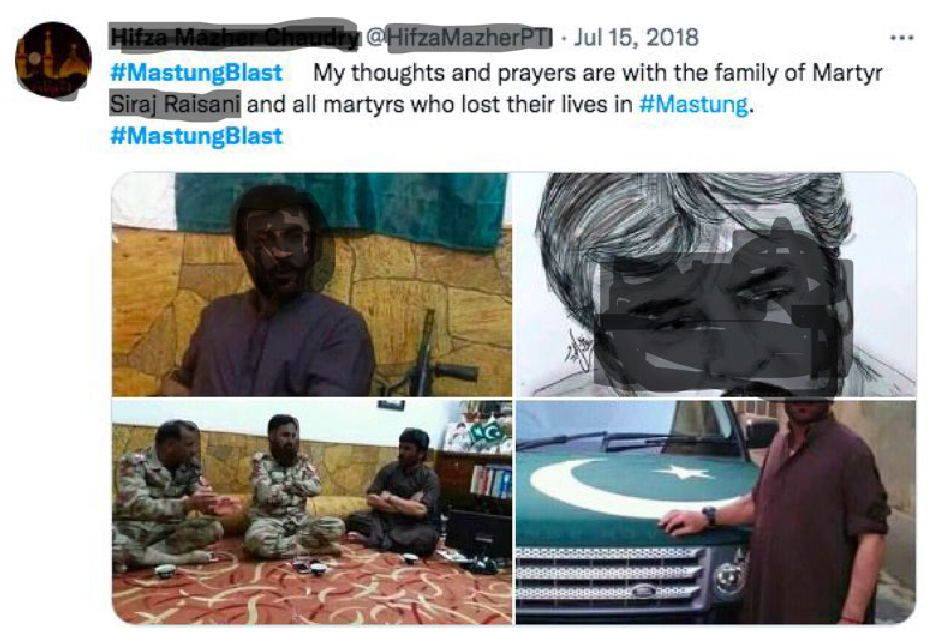
An example of “no physical harm”. In these image-tweets, the deceased tribal chieftain is shown. He was considered a pro-Pakistani politician in the restive Balochistan province.
Additionally, we created two separate binary variables for the war and peace indicators for physical harm. The war indicator focused on the presence of death and injury, while the peace indicator focused on the absence of physical harm. A value of 1 was assigned for each occurrence of an indicator found.
Emotional Harm
With this category, we aimed to assess the extent to which the individuals depicted in the photographs demonstrated negative or positive emotions. Specifically, we focused on photographs in which emotions of any kind were emphasized (Fahmy & Neumann, 2011). Close-up photos were particularly helpful in determining the presence of emotions. We then coded the photographs based on “Negative” and “Positive” emotions.
Examples of photos coded for negative emotions included those that showed anger, frustration, desperation, sadness, mourning, or a sense of demoralization. On the other hand, examples of photographs coded for positive emotions included those that portrayed hope, optimism, confidence, redemption, delight, or happiness (see Figure 5).

An example of positive emotions. This image-tweet depicts the funeral of the tribal chieftain in Quetta showing order and respect to the deceased.
Similar to the physical harm variable, we also created two separate binary variables for the war and peace indicators for emotional harm. The war indicator included negative emotions, while the peace indicator included positive emotions. Once again, we coded 1 for each occurrence of an indicator found.
De-Escalation/Escalation
Each photo was analyzed based on two categories to determine the level of de-escalation or escalation of the conflict. The de-escalation category focused on signs of progress and achievement, such as rehabilitation efforts, reconstruction of buildings, demonstrations of mutual understanding, and engagement in peace and anti-war activities (see Figure 6). On the other hand, the escalation category focused on indicators of deterioration and backlash, such as a continued focus on the ongoing war with no visible change or prospects for improvement. Photos that did not clearly fall into either category were considered neutral, depicting a status quo with no progress or relapse evident.
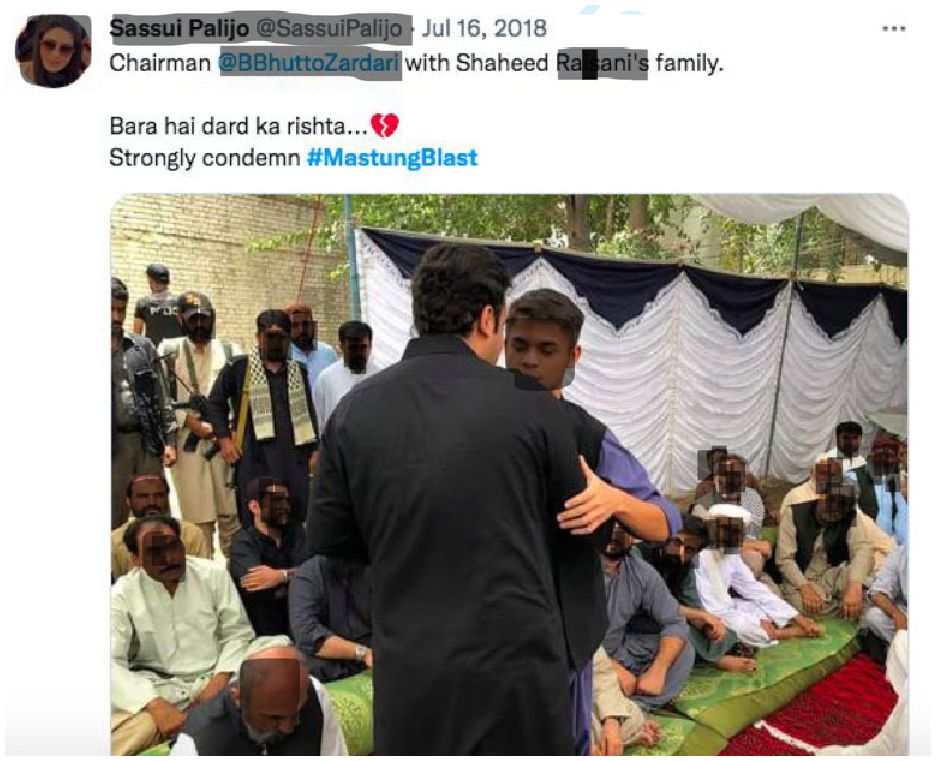
An example of a “de-escalation of conflict” peace frame. In this image-tweet, a prominent politician is consoling a bereaved family.
Similar to the previous variables, two separate binary variables were created to indicate war and peace. The war indicator included photos categorized as escalation, while the peace indicator included photos categorized as de-escalation. A value of 1 was assigned for each occurrence of an indicator.
Additionally, following previous research by Lee and Maslog (2005), cumulative indexes were computed for peace frames and war frames. Furthermore, the visual tweets were classified as visual war tweets, visual peace tweets, or neutral visual tweets based on the four categorizations mentioned above. Similar to Lee and Maslog (2005), a value of 1 was assigned for each occurrence of an indicator. If the total number of war indicators exceeded the total number of peace indicators, the tweet was coded as a visual war tweet. Conversely, if the total number of peace indicators exceeded the total number of war indicators, the tweet was coded as a visual peace tweet. If the numbers of indicators were equal, the tweet was coded as neutral.
For descriptive purposes, each tweeted photo was analyzed for four variables: location, type of shot (close-up, medium shot, long shot), group orientation, and whether the photo depicted celebrities and/or leaders. One of the authors coded all 674 photos, taking into account any accompanying textual tweets for additional context. To ensure reliability, a PhD student in media studies coded 10% of the photos. The overall agreement between the coders for all variables was acceptable at 0.89, with a controlled agreement of 0.77 after accounting for chance (Scott, 1955). 2
Results
The first research question examined the visual content of the tweeted photographs of the Mastung attack. Out of the 674 tweeted photographs analyzed, 26.3% were taken at the location of the incident, 24.6% depicted hospitals, and 41.7% depicted unspecified locations. In terms of the type of shot, the majority (86.2%) did not focus on facial expressions, with less than 20% being close-up shots. Approximately 41.8% of the photos depicted elites, while 39.3% depicted victims, which aligns with previous studies on conflict visuals (i.e., Fahmy & Neumann, 2011)).
Furthermore, the analysis revealed that four in 10 photos portrayed famous individuals, including Nawab Siraj Raisani, Army Chief General Qamar Bajwa, and Prime Minister Imran Khan. Table 1 shows that approximately one-third of the photos in our data set showed no physical harm, with 14.9% of adults and 17.8% of the elderly being categorized as deceased. Interestingly, no photographs depicted children or adolescents. A small percentage of adults (7.7%) and the elderly (3.5%) were shown as injured. In terms of emotions, the vast majority (95.8%) of the analyzed images depicted negative emotions, while 4.2% showed positive emotions.
Frequency and Percentages of Tweeted Images of the Mastung Attack Depicting Physical Harm (N = 594) and Emotions (N = 429) by Age Group.

Note. *Images of children and adolescents were missing and therefore, not included in this analysis.
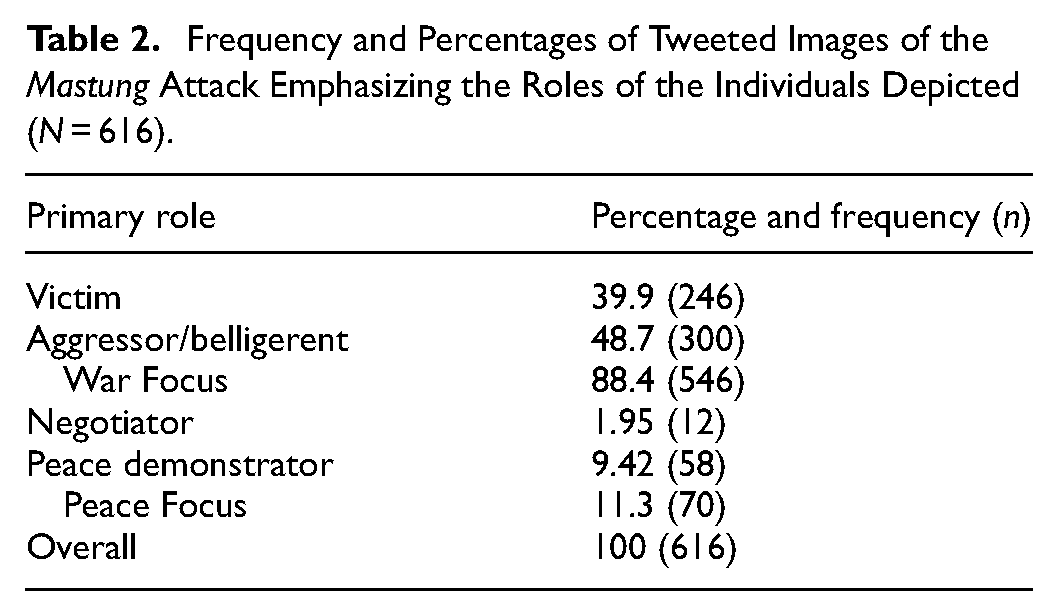
Table 2 shows the roles of the individuals depicted in our data set. As illustrated, the war approach dominated the visual narrative. Almost half of the photos (48.7%) depicted aggressors such as the Taliban fighters and military officials. The second most dominant category was victims (39.9%). This was expected because in this attack, apart from one tribal political leader Nawab Raesani, all of the victims were common people. After the attack, political and military leaders visited the area and the Twitterati turned towards them. On the other hand, the peace approach received minimal focus, with 11.3% of the visuals. The two leading roles appearing in this category were the visuals of demonstrators (9.42%) and negotiators (1.95%).
Frequency and Percentages of Tweeted Images of the Mastung Attack Emphasizing the Roles of the Individuals Depicted (N = 616).
Our hypothesis predicted that the tweeted photographs of the Mastung attack would reflect significantly more war frames compared to peace frames and neutral frames. The analysis revealed that 588 tweets (87.2%) were framed as war tweets, compared to 62 tweets (9.2%) framed as peace tweets, and 24 tweets (3.6%) that were neutral (see Figure 7 for an example of a war frame). The results of a chi-square test showed that in our data set, the war tweets were more dominant than peace tweets or neutral tweets, χ2 (2, N = 674) = 466.85, p < .001. In other words, overall, our results here echoed previous findings that focused on textual tweets (Author & Author, 2023) and on traditional media (Lee & Maslog, 2005; Mitra, 2016). Therefore, H1 is supported.

An example of a “death” war frame. These image-tweets depict a gory scene of covered dead bodies soon after the Mastung attack.
Research Question 2 examined the frequency of salient indicators for peace and war frames in the tweeted images analyzed. The analysis revealed that war frame indicators dominated, with 1,584 indicators compared to 594 peace frame indicators. A closer examination showed a focus on victims and aggressors, rather than negotiators and peace demonstrators. Interestingly, the frequency count showed that indicators related to no physical harm, which are associated with the peace frame, were more frequent than death and injury indicators. Additionally, negative emotions indicators were more prevalent than positive emotions indicators. 3 Overall, the indicators that could contribute to conflict escalation were proportionally higher than de-escalatory indicators (Table 3).
Frequency and Percentages of War and Peace Frames Used in All of the Tweeted Images of the Mastung Attack (N = 674).

The last research question explored the variation in salient indicators for peace and war visual frames over time. The timeline in Figure 8 illustrates that the amount of visual war indicators of the Mastung attack varied over the analyzed time period. An analysis of variance (ANOVA) showed statistically significant effects (F(6, 674) = 12.17, p < .001), with war frames dominating on the first day of the attack and a significant decrease in the subsequent 2 days. This decrease can be attributed to the focus on the sufferings of people and national mourning. However, there was a sudden increase in war frames on the fourth day when military and political officials visited the area and the focus shifted to the political aspects of violence in the context of national elections.
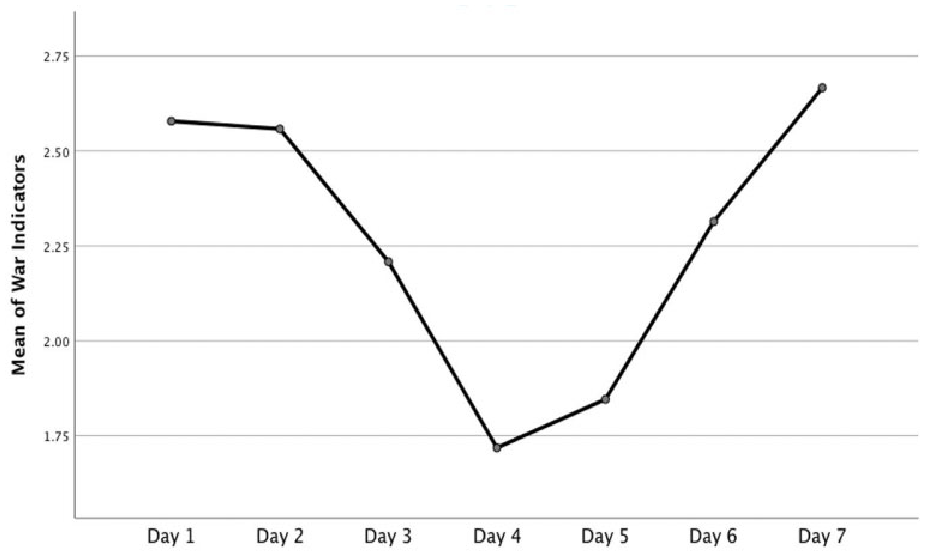
Timeline illustrating mean of war indicators in tweeted photographs of the Mastung terrorist attack over time (N = 674).
Similarly, as shown in Figure 9, the amount of visual peace indicators of the Mastung attack also varied over the one-week period. An ANOVA showed statistically significant effects (F(6, 674) = 17.53, p < .001), with a significant gradual improvement in peace frames in the initial 4 days followed by a sudden decrease for the remainder of the week. Visuals tweeted immediately after the attack highlighted people’s sufferings and called for peace and harmony. However, the visits by political and military elites on the fourth day successfully shifted the attention to the Taliban conflict, resulting in a significant decrease in peace frames during the last 3 days.

Timeline illustrating mean of peace indicators in tweeted photographs of the Mastung terrorist attack over time (N = 674).
Discussion and Conclusion
Our study builds upon the traditional field of peace communication and specifically focuses on the visual representation of conflict on Twitter. We aim to extend the peace communication framework to social media and explore how Twitter promotes war and peace through visual depictions of conflict. Despite the significant growth of social media in recent years, previous research has overlooked the visual narratives of conflict on social media platforms from a peace and war perspective. Therefore, this study contributes to the existing literature on the visual politics of peace and provides one of the first scholarly attempts to visually analyze Twitter coverage using the war/peace framework. It also offers researchers insights into visual practices on social media and highlights the role of visual communication in conveying war and peace in the digital age, particularly in non-western contexts.
To examine the visual narratives of conflict in Pakistan on social media, we focused on Twitter and analyzed the visuals following the devastating Mastung attack, which resulted in the death of 149 people. Our analysis revealed that the predominant visual narrative adopted on Twitter was war-oriented. This finding aligns with previous research on the visual coverage of conflicts in traditional media, which also showed a prevalence of war visuals (Greenwood & Jenkins, 2013). It is also consistent with recent studies that examined textual coverage of terrorism on Twitter (Author & Author, 2023). Overall, our findings challenge the optimistic views of peace communication scholars (Lynch, 2015; Mitra, 2016) who believed that social media, with its lack of elitist control and economic constraints, would be better equipped to promote peace. Instead, our findings suggest that powerful actors who dominate traditional media also dominate the Twitter debate, marginalizing alternative perspectives. While these findings may not be applicable to all contexts, they serve as a warning against the manipulation of social media, including Twitter, by powerful elites, which can hinder peace communication efforts.
Our analysis showed that the dominant visual narrative on Twitter following the Mastung blast was the war frame, with a large number of visuals depicting both elites and victims. The majority of the photos of victims depicted images of dead and injured individuals, while photos of elites mainly portrayed the military and political leadership. These findings align with previous scholarship that has found a preponderance of war frames, specifically an elite orientation and a focus on visible effects, in textual information on Twitter (Author & Author, 2023). They also support earlier visual communication studies that have found similar patterns of coverage in traditional media during conflicts (M. Griffin, 2004; Parry, 2010).
Our study also revealed that in the peace visual narrative on Twitter, demonstrators and negotiators received minimal coverage. This finding is consistent with previous research that suggests during conflicts, it is common for common people to protest for lack of amenities while elites focus on devising means to improve the situation (Fahmy & Neumann, 2011). Overall, our study did not find strong evidence for a visual appeal for peace that challenges the elitist perspective. The visuals of demonstrations and protests mainly related to the reactive part of the conflict.
Unlike other research that focused on traditional media, our study captured the uninhibited spirit of the social media platform. Uncensored graphic photos of dead and mutilated bodies were posted in high frequency (see Figure 10). However, by and large, photos with no physical harm were posted the most. Again, this finding matched the situation on the ground. After the initial 2 days following the attack, more coverage was given to the people attending to their loved ones in hospitals or shown engaged in funeral prayers.

An example of physical harm (injuries). An image-tweet showing a wounded person being transported to a hospital.
Regarding the types of emotions, adults were predominantly shown in a negative emotional state as compared to the elderly population. Understandably, positive emotions were negligible in the tweeted photos analyzed.
Overall, our analysis of the tweeted images of the Mastung attack revealed that the war frames were almost three times more prevalent than the peace frames. The visual narrative primarily focused on the roles of victims and aggressors, rather than negotiators and demonstrators. However, it is important to note that the majority of the images depicted no physical harm, which is associated with peace framing. At first, this may suggest a peace narrative approach. However, upon closer examination, we found that the blast occurred in a remote and impoverished district of Mastung, where the majority of attendees were elderly individuals who did not have access to smartphones to capture and share images. Additionally, the military quickly cordoned off the area, limiting the availability of images on social media to those that were approved by authorities. This may explain the prevalence of images related to mourning the deaths of loved ones and featuring elite army and political leaders on Twitter. Furthermore, our analysis indicated that negative emotions were more dominant than positive emotions in the tweeted images.
Further analysis focused on visual peace/war indicators over time. We found that the trajectory of war indicators fluctuated over the seven-day period. The first day produced a disproportionately large number of war indicators, followed by a sudden decrease in frequency. One plausible explanation for this could be the horrific nature of the blast and the high death toll. After the initial condemnation, the visual focus on Twitter shifted to the problems and issues faced by the common people, who were often depicted attending to their loved ones in hospitals.
However, there was a sudden spike in the frequency of war indicators mid-week when military generals and political leaders visited the area. Their photos were widely shared on Twitter, showing them with victims of the attack and announcing compensations to the bereaved families. This elite-oriented focus resulted in a more war narrative, which aligns with the findings of previous scholars who argued that state authorities and political parties can control social media for their own interests (Makhortykh & Sydorova, 2017; Neyazi, 2020).
Concomitant with the trajectory of war indicators, there was a significant increase in the frequency of peace indicators in the initial days following the attack. The focus was on outpourings of sympathy and grief over the loss of lives. The Twitter community also shared visual content criticizing the hospital and local administrations for not adequately addressing the needs of the affected people and their families. However, there was a sudden decrease in the frequency of peace indicators on day four and onwards, coinciding with the visits of ruling elites to the affected areas.
Overall, this fluctuation in the frequency of war and peace visual indicators over time illustrates the dynamic nature of conflict narratives on social media. This finding is consistent with a previous study that reported fluctuations in the trajectory of textual peace and war tweets over time (Author & Author, 2023). However, it is important to note the limited role of Twitter in constructing peace responses, as indicated by the visual patterns observed in this study. This conclusion has practical and theoretical implications.
Practically, the findings do not offer much support for peace communication scholars who hoped that social media would promote a variety of perspectives and result in a constructive visual peace narrative. This suggests that mobilizing digital peace efforts to improve peacebuilding practices on social media may be limited. However, caution is required, as Twitter has played a significant constructive role in various contexts in the recent past. For example, it played a major role in creating a huge online sympathy during the recent Israeli attacks on Gaza, the mass shooting in a religious congregation in New Zealand, and police violence against black people in the United States.
Theoretically, our investigation into this area is still ongoing, and we hope that our work provides peace communication scholars with a springboard for the theoretical understanding of visual peace and war narratives on social media. While digital media is poised to unsettle traditional media in a significant way, peace communication scholarship still largely focuses on the analysis of traditional media. In this regard, our study contributes to the understanding of the relationship between social media and peace practices, and we hope that researchers will build on these findings to better strategize for digital peacebuilding efforts.
However, this study has limitations. We recommend the use of software to analyze visuals, as it can enhance accuracy and efficiency. Additionally, it would be interesting to examine photographs of the Israeli/Palestinian conflict, which has a global audience, and incorporate their perspectives. Moreover, the war and peace indicators are mainly derived from traditional journalism practices, so we recommend developing criteria that closely fit social media practices.
In conclusion, our study on the visual narratives of conflict on Twitter following the Mastung attack in Pakistan sheds light on the role of social media in promoting war and peace. We found that the predominant visual narrative adopted on Twitter was war-oriented, with a focus on victims and aggressors. This challenges the optimistic views of peace communication scholars who believed that social media would be a platform for promoting peace.
Our findings suggest that powerful actors who dominate traditional media also dominate the Twitter debate, marginalizing alternative perspectives. This highlights the potential manipulation of social media by elites, which can hinder peace communication efforts. It also raises questions about the effectiveness of social media in promoting peace and the need for further research in this area.
While our study provides insights into the visual practices on social media and the role of visual communication in conveying war and peace, it is not without limitations. Additionally, it would be interesting to examine the visual narratives of conflicts with a global audience and incorporate the perspectives of different stakeholders.
Overall, our study contributes to the understanding of the nexus between social media and peace practices and provides a foundation for further theoretical exploration of visual peace and war narratives on social media. We hope that researchers will build upon these findings to better strategize for digital peacebuilding efforts and adapt peace communication scholarship to the evolving landscape of digital media.
Footnotes
Declaration of Conflicting Interests
The author(s) declared no potential conflicts of interest with respect to the research, authorship, and/or publication of this article.
Funding
The author(s) received no financial support for the research, authorship, and/or publication of this article.

Data Availability Statement
Data sharing not applicable to this article as no datasets were generated or analyzed during the current study.