




Abstract
Total Quality Management (TQM) is a way of managing everything in an organisation or institution to get the level of excellence. The study was conducted to investigate the implementation of TQM approaches in public and private universities of Pakistan, to compare the implementation of TQM approaches and results achieved by public and private universities. This study offers an in-depth exploration of the application of TQM approaches in Pakistani universities. Utilising a qualitative phenomenological methodology, the study drew upon qualitative data from interviews with Quality Enhancement Cells (QECs) leaders in public and private institutions. The population of the study was directors, deputy directors, assistant directors, managers and data analysts of QECs of public and private universities in Pakistan. Twenty quality leaders working at QECs of universities of Pakistan were selected purposefully through a maximum variation sampling technique. The findings of the study provided an overview of the TQM approaches employed by universities of Pakistan namely, continuous improvement, stakeholder satisfaction, teamwork, top management commitment and training and educational programmes. The findings further illuminated the distinctive ways of public and private universities in ensuring TQM, revealing stark differences in areas such as benchmarking, international rankings and funding. Private universities demonstrate a more competitive, market-driven approach, while public universities align closely with national standards and public accountability. The study adds to the body of knowledge on TQM in higher education, particularly in the context of Pakistan, and may inform more effective, contextually relevant TQM approaches for policy makers and practitioners.
Plain language summary
This study has provided significant insights into the nuanced application of TQM in higher education institutions in Pakistan. Drawing from a phenomenological methodology, the study delves into the lived experiences of QEC leaders within both public and private universities, revealing the subtleties and complexities of the quality leaders’ journey. The RQ1 aimed to explore the factors influencing TQM approaches with in the universities of Pakistan. The perceived level of TQM approaches by the QEC leaders of public and private university of Pakistan is very high. QEC leaders believe that TQM is central to quality assurance with in the universities. The factors that influence the TQM approaches as per the interviewees range from continuous improvement, stakeholder satisfaction, teamwork to top management commitment and training and education. Whereas, RQ2 aimed to explore the difference between the practices of public and private universities of Pakistan in employing TQM approaches. The research highlighted that TQM is not a one-size-fits-all approach; it is rather a malleable concept, moulded by the specific circumstances, resources, and strategic priorities of each institution. Public universities tend to benchmark their practices against national standards, focusing on meeting regulatory requirements, and serving the public interest. In contrast, private universities, driven by competitiveness and a need for differentiation, often pursue international recognition through rankings and memberships while also meeting the baseline standards set by regulatory authorities. The study also underscores the crucial role of funding sources in shaping TQM practices. Public universities, funded mainly by the Higher Education Commission (HEC) or other government agencies, follow TQM practices that align with the stipulations accompanying this funding. On the other hand, private universities, which rely on self-funding, have greater flexibility in their TQM approaches, albeit.
In the last decade higher education gathered special attention in Pakistan (Sain, 2023). The focus remained not only on quantity but also on quality of education. With improvements in the quality of education and better academic performance in public and private sector Universities of Pakistan, the need to evaluate and assess the quality of education has increased (Aziz et al., 2021). To serve this purpose Higher Education Commission (HEC) of Pakistan developed the Quality Assurance Authority (QAA) in 2005. The QAA made it obligatory for universities of Pakistan to develop infrastructure for QECs within the universities for direct communication between QAA and QECs for quality assurance purposes. The quality leaders within QECs of Public and private universities ranging from top managers to lower managers are responsible for assuring that the TQM practices made mandatory by QAA, HEC are employed efficiently within the premises of the universities (HEC, PK, 2022). Therefore, quality leaders are taken as subjects of this study.
According to Bwalya (2023), evaluations aimed at ensuring the quality of higher education require a thorough and deliberate assessment of academic values and cultural knowledge. Maintaining high standards in higher education is challenging (Sain, 2023). In recent years, quality of life, comprehensive quality management, quality products, and quality service are among the most popular catchphrases. The general population is becoming increasingly concerned with obtaining a quality education in addition to obtaining quality in other aspects of life (Mello Silva & Vargas, 2022).
Furthermore, to retain their competitiveness, universities must frequently evaluate their performance and policies, as well as the quality of the services they provide. Improving the quality of higher education has therefore become a critical goal (Brink, 2010). According to Khan et al. (2019), the concept of excellence in higher education encompasses a wide range of connotations, ranging from the most basic to the most complicated. Quality is evaluated at the most fundamental level in accordance with the norm-stated principles that reflect the opportunity at the earliest and most remote stages (Kwarteng, 2021).
The context of TQM in this study is taken as the organisation wide effort to make a permanent ambient in which organisation continuously improves its abilities. TQM accepts both the idea that quality should be consistent and the idea that quality should be appropriate for its intended use. By situating purposefulness within the framework of quality culture, Total Quality Management works towards the goal of reconciling quality as purpose-fitness and quality as perfection. TQM infers and on sometimes expressly asks quality improvement. This is one of the fundamental principles that the organisation upholds. Methods, procedures, arrangements and practices are all part of TQM’s toolkit for sustaining and enhancing the quality of an existing programme or institution (Aziz et al., 2021; Permana et al., 2021; Tajouri & Lakhal, 2024).
Few studies have investigated the nature of TQM approaches in Pakistani higher education, despite the proliferation of research on TQM in this context. Moreover, there is paucity of studies indicating the similarities and differences of TQM approaches implemented by public and private universities of Pakistan. Therefore, the nature of TQM approaches for QA of both public and private universities in Pakistan as observed by QEC leaders is the subject of this study, nevertheless it also sheds light on more fundamental aspects of ‘quality teaching’ and ‘quality learning’. The identification and classification of TQM approaches in Pakistani public and private universities based on the key characteristics of ‘quality teaching and learning’ has practical implications for the wider domain of policy and process development to improve the quality of higher education in Pakistan.
Literature Review
Defining TQM
From person to person TQM, can signify many things depending on the context (Ghaith et al., 2023; Nasim et al., 2020; Stensaker, 2019). TQM is not so much a way of thinking about quality as it is a strategy for dealing with difficulties in the workplace. Quality planning at the corporate level should be based on the idea that TQM is common sense (Dwaikat, 2021). TQM is defined as ‘university-wide effort to create a permanent ambiance in which university continuously improves its abilities by utilising different yet efficient approaches’ in this research. It is a philosophy with a lot of suggestions for keeping the idea alive and putting it into practise. It may be simplified to ‘doing things perfectly’, with the ultimate aim of increasing efficiency and productivity for greater competitiveness and financial gain.
TQM in Higher Education
The establishment of quality schemes in higher education is a response to growing external demands for accountability, as highlighted in the introduction section’s emphasis on the significance of TQM. The premise that HEIs are akin to businesses has been the driving force behind the external demands for accountability. This observation underscores the significance of acknowledging the impact of external pressures on higher education. Riad Shams and Belyaeva (2019) assert that quality systems for higher education were predominantly derived from the realm of business and industry. The discourse surrounding the emergence of quality in the realm of business and industry has sparked a fervent scholarly discussion regarding the fundamental nature of ‘quality’ (Shafqat et al., 2021; Yusuf, 2023). The appropriateness of utilising corporate business models for quality assessment in higher education, given the distinct nature and context of each institution, is a crucial inquiry that has arisen from this discourse (Nawaz, 2019).
The application of business models of quality assessment, such as TQM, in higher education is widely perceived to be primarily motivated by governmental regulatory accountability, as posited by Tahira et al. (2020). The complexity of models that rely on measurable objectives has been highlighted by Trang and Do (2020).
Mahmood and Noreen (2021) proposed the implementation of TQM in universities, despite potential reservations regarding industry-derived models. Their approach involves linking TQM to outcomes-based education (OBE). The authors contend that the implementation of a TQM methodology prioritises learners, while an OBE approach shifts the emphasis from teacher-centrism to learner-centrism. Divergent perspectives exist among scholars regarding the compatibility of industry-oriented performance metrics with the realm of higher education (Lavonen, 2018).
The concept of TQM embraces the dual tenets of consistency and appropriateness in the pursuit of quality (Andrade-Girón et al., 2023; Sain, 2023). TQM aims to reconcile the concepts of quality as purpose-fitness and quality as perfection by situating purposefulness within the framework of quality culture. TQM is a concept that implies, and at times explicitly demands, a focus on enhancing quality. Fundamental principle adherence is a cornerstone of the organisation’s ethos (Jermsittiparsert & Sommanawat, 2019). TQM has been likened to a religion (Thimmappa et al., 2019) and a way of life (Tight, 2020) due to its focus on the transformation of an individual’s mind-set.
TQM Approaches
What is TQM exactly, and what are the key strategies for making it effective? Many earlier studies have examined these topics (Asante & Ngulube, 2020; Reinaldo et al., 2021). These studies have provided a number of sets of approaches thought to be essential for the TQM implementation process. As a result, the pool of current data becomes inconsistent, making it more difficult to draw clear conclusions about TQM approaches (Bouranta et al., 2019; Trang & Do, 2020). There is not yet a standard operating procedure (SOP) for using TQM, according to studies (Al-Kahlan & Khasawneh, 2024; Tran et al., 2023). Examples of Quality Award frameworks that assist organisations in implementing TQM and assessing the outcomes of their business performance include the Deming Prize, the European Quality Award (EQA), the Malcolm Baldrige National Quality Award (MBNQA) and the Kanji Business Excellence Model (Riad Shams & Belyaeva, 2019). Leadership, vision, measurement and evaluation, process control and improvement, programme design, quality system improvement, employee involvement, recognition and award, education and training, student focus and other stakeholder focus are the critical success factors (CSFs) of TQM listed by Sfakianaki et al. (2021). Following a definition of TQM, Thimmappa et al. (2019) enlisted TQM approaches, including support from top management, customer-centricity, quality information, performance evaluation, human resource planning, staff participation, process management, quality assurance, defect-free output and open communication channels. Kebede et al. (2020) identified TQM practices as follows: Examples of top management commitment include customer service, employee involvement, training, empowerment, supplier quality management, process development, service design, quality improvement incentives, benchmarking and workplace cleanliness and safety.
The review of the TQM literature led to the identification of 10 TQM approaches in this study. Top Management Commitment (TMC), Customer Focus (CF)/Stakeholders, Training and Education (TE), Continuous Improvement and Innovation (CII), Benchmarking (BM), Employee Encouragement (EE), and Teamwork (TW), these best approaches were selected because they contribute to the achievement of the following objectives:
They have been employed frequently by service industry researchers (the most number of times; Hauptman Komotar, 2020).
Important TQM implementation strategies have been developed for both the industrial and service sectors (Naylor et al., 2021).
Significantly relates to delivering services and promoting service quality (Dwaikat, 2021).
Incorporate both the hard and soft components of TQM into your operations (Jamoliddinovich, 2022).
Continuous Innovation and Improvement
The term ‘continuous improvement’ is derived from the Japanese term ‘kaizen’, which was coined and popularised by Masaaki Imai, who is sometimes referred to as the ‘father of continuous improvement’. The Japanese term Kaizen combines two distinct concepts: Kai, which means ‘change’, and Zen, which means ‘to improve’. (Mihaela & Ştefania, 2020).
Quality Management (QM) practises have been investigated as one of the several internal aspects that have been addressed in study on what encourages or drives innovation (Agboola, 2024). This has been one of the several internal aspects that have been investigated as one of the several internal aspects that have been investigated. There is evidence that Total Quality Management, sometimes known as TQM, can serve as a springboard for innovation.
Stakeholder Satisfaction
Even with growing competition and the emergence of market niches, a ‘free market’ in education in which the corrective of customer satisfaction (Lagrosen, 2001) operates to change missions seems unlikely. As a result, quality assurance should include some kind of regulatory component.
According to Mark (2013), the level of student satisfaction can serve as a proxy for how well students think a university is performing. To put it more simply, this refers to the extent to which the ‘product’ satisfies or exceeds expectations. In actual situations, students are unable to establish definitive correlations between levels of satisfaction and levels of quality because they do not have sufficient evidence on which to base their evaluations. By meeting its own criteria, the course or institution acts as a mediator between the expectations of the students and the level of satisfaction the students report feeling (Naylor et al., 2021).
Even though students are aware of the demands they have at the moment, it is possible that they do not have the background information necessary to comprehend their need going forward. Because of this, it could be difficult for them to identify whether or not their requirements are being met. To get to the heart of the matter, meeting the requirements of students is fundamentally distinct from catering to their goals (Mehra & Ranganathan, 2008). Moreover, Naylor et al.’s (2021) assertion that student satisfaction serves as a measure of a university’s performance as an important facet of successful implementation of TQM approaches in educational institutions.
Teamwork
TQM necessitates both individual and group participation in procedures that heavily rely on each employee’s particular expertise, knowledge, talents and other personal characteristics. These procedures may also require collaboration between employees from different departments. Teams and teamwork are emphasised in a comprehensive quality environment that is regulated by cooperative links in order to break down silos, promote communication and cooperation across individuals, departments and organisational levels, as well as between line and staff operations. This is done in order to improve overall quality (Beddoes & Panther, 2018). Dale and Cooper (1994) found that the make-up of quality improvement teams might be different in different situations. The only way that stakeholders (including employees, customers, and suppliers) can profit from the relationships and interactions they have with one another is if they are well-prepared and work together as a team. This highlights the significance of teamwork and the role that management plays in the business (Fincham & Rhodes, 2005).
Top Management Commitment
According to Dubey et al. (2017), the top management of a company is one of the most important factors in determining whether or not TQM internalisation initiatives are successful. Top-management or Leadership commitment in quality management may be defined as the degree to which upper-level management determines QM objectives and strategies, acquires and utilises adequate resources, actively participates in QM efforts and analyses the effectiveness of these endeavours. Soltani et al. (2005) stressed the necessity of top-level management buy-in and leadership in the adoption of TQM.
One of the first things that must be done in order to improve a company’s performance using TQM is to win over the support of senior management (Fox et al., 2018). The assistance of senior management is essential in order to adopt quality management and increase performance. The majority of the duty for quality and TQM implementation support falls on higher management (Soltani, 2005). As a consequence of this, the top-level management of an organisation is the single most critical aspect in assuring that a TQM programme will be successful.
Training and Educational Programmes
According to Alimisis (2019), education and training are also essential success elements for TQM, and they have to be provided at all levels of the organisation (operative and administrative). If organisations want their product to have a high quality, they have to make sure that it satisfies all of the technical criteria that have been laid down (Gabr, 2007). Because of this, educational organisations need to have a solid understanding of the manufacturing procedure. As a consequence of this, managers need to set aside money in their budgets for activities like mentorship and training that will pass on these abilities. For TQM to be effective, both managers and employees must be well-versed in quality management ideas and practises. Consistent quality improvement necessitates commitment and behavioural changes, both of which may be obtained via training and education. Employees must be trained and educated so that they not only have the abilities required to do their jobs, but also the values, knowledge and skills needed to address and engage in TQM-related issues and activities (Aznar et al., 2018).
Benchmarking
The technique of comparing anything against another unit of measurement (Benchmark) is known as benchmarking. The CEOs believe that adapting to changing circumstances requires taking on new challenges, which can only be accomplished by utilising novel approaches. Companies who are moving in this direction have started to embrace the concept of Total Quality as well as the idea of aiming for excellence via on-going improvement (Mihaela & Ştefania, 2020). Management’s primary focus should be on ensuring the organisation’s capacity for on-going growth. Due to the fact that this is insufficient, the organisation utilises benchmarking in order to compare itself to competitors and the best in the world, and then modifies its applications in accordance with these comparisons. According to Polkinghorne et al. (2021), the benchmarking processes need to start with organisations that have a solid understanding of quality. When the process of comparison and emergence as a management tool is examined, it becomes clear that the development of this management tool has mirrored the growth of TQM applications (de Wit & Altbach, 2021). This becomes apparent as a result of the fact that the development of this management tool has mirrored the growth of TQM applications.
After thematic analysis using NVIVO 11 Plus it was observed that these practices are suitable and normative to be used in the Pakistani HEIs context and were explored through the perceptions of quality leaders working at QEC’s of public and private universities of Pakistan.
Research Questions
What are the factors that influence the TQM approaches of universities of Pakistan?
What are the similarities and differences in TQM approaches of public and private universities of Pakistan?
Research Methodology
In this study, qualitative research method and phenomenology research design was used to explore the perspectives regarding TQM approaches employed by QECs’ quality leaders of public and private universities of Pakistan. Researchers can gain a deeper understanding of their respondents’ viewpoints and recommend issues for future examination using a qualitative research technique. Moreover, literally, Phenomenology is the study of phenomena, or the appearance of objects in people’s experiences (Creswell, 2017). In context of the study, the phenomenon under consideration is employment of TQM approaches in public and private universities of Pakistan by quality leaders and the purpose of the study is to understand the lived experience of QEC leaders with TQM approaches. QEC leaders are the technocrats responsible for the employment of TQM approaches with in the universities. Leaders in the context of this study does not literally means the top management, it simply means the entire workforce within QEC as they are the leading personnel for implementing TQM and ensuring QA with in universities. Therefore, their perceptions provided the researchers with in-depth exploration to answer the research questions of this study. A research design such as phenomenology that was capable of accommodating new themes and concepts that evolved as a result of obtaining and evaluating data from the phenomenon that was the subject of the study was required because the primary focus was on the viewpoints of the quality leaders.
HEC, PK (2022) made it mandatory for the universities of Pakistan to establish QECs with in the universities as discussed in the introduction section. With in QECs as per HEC’s policy there should be at least a director, deputy director and assistant director. The universities were allowed to expand their QEC staff as per their requirements. Because of this reason the researchers were able to get perceptions of QEC leaders only because the majority of the universities had the minimum number of staff members as prescribed by the HEC. Nevertheless, the researchers were able to get insights of two to three middle managers as well (See Table 1). A total of 20 QEC quality leaders working in public and private universities were interviewed to achieve this study’s objectives. The QEC leaders were informed about the study’s background and objectives prior to interviews while formal consents were sought from them via electronic media such as whatsApp, calls and emails. They interviews were conducted at a later date as per the interviewees convenience of time and place. The study maintained complete anonymity of the interviewees identity throughout the conduct of the study so that their true reflections inform the findings. This surety provided them with a risk free and safe environment where they could share their true experience regarding the TQM approaches of their respective universities. Even the universities names have not been disclosed at any point to provide the organisations confidentiality. These rigorous ethical considerations enabled the researchers to design study in a way that limits the risk of harm to the interviewees to maximum capacity.
Interviewees’ Profile.

This research presents significant societal advantages and concrete benefits for participants because of its proven ethical safeguards together with its strong contribution towards enhancing educational quality throughout Pakistan. This study employs phenomenology as a method to collect first-hand experiences from QEC leaders thus obtaining crucial information about public and private university TQM implementations. The research findings will guide policies towards best quality assurance practices and help administrators and quality assurance bodies improve their mechanisms in higher education. Research participants faced zero risk due to influential data protections which included both the use of unidentified interviewees with protected institutional information. Participants received comprehensive information regarding the study purposes while granting full consent and maintaining self-determination regarding appointment selection to uphold ethical research standards (Creswell, 2017). Because this research holds significant influence on upcoming educational policies and quality improvement efforts it generates societal advantages which exceed negligible participant risks.
According to Creswell (2017), the data collection should be continued as long as saturation point is not achieved. Saturation point is like an instance where the researchers are unable to identify any new themes by continuing the data collection process. In this study the saturation point was achieved when the researcher completed data collection from 15 interviewees. The data collection was still continued and five more interviewees were interviewed to confirm the saturation point. The interviewees are at executive positions and a part of top management at QECs of selected universities. These participants were selected purposefully through maximum variation sampling technique. Selection from public and private universities enabled the researcher to gather maximum variation in data collected. The practices of public and private universities greatly differ in Pakistan (Amjad & Mahmood, 2024; Anwar et al., 2008; Iqbal et al., 2023). Through maximum variation sampling the researcher was able together a variety of insights from both types of universities in Pakistan.
The Table 1 below represents the interviewee profile of the individuals working at the QECs of selected public and private universities.
A semi-structured interview guide was utilised to gather the insights from the QEC leaders of Pakistani Universities. Data gathering and analysis using interview guide started straight away. To ensure the trustworthiness and dependability of the data analysis procedure, which started with a methodical approach, categories and subjects were defined after each interview session with the interviewees. This enabled the researchers to identify recurring themes and reach the saturation point. Manually, codes were identified at this stage. Later on, the interview transcripts were inserted in NVIVO 11 Plus and data analysis step started from here.
The thematic analysis was conducted using NVIVO 11 Plus. Each interview was recorded, and after each session, a list of the categories that emerged was created in NVIVO using auto-coding feature. This was the first step code identification and the auto-coded themes were cross verified with the manual coding. The transcribed notes were reviewed as individual cases in NVIVO and reread multiple times, and repeated patterns were found. The language in the transcribed notes generated through NVIVO can be verified as accurate by listening to the tapes and reading the interview transcripts. By listening to the interviewees’ voices, researcher was able to comprehend the ideas and vocabulary they utilised when addressing the phenomenon under investigation. The themes and categories for data analysis were verified one last time to generate final themes and sub-themes in relation to the research questions of the study (see Table 2).
Relationship of Research Questions with Themes and Sub-themes of This Study.

Findings
The Table 2 below illustrates the relationship of themes and sub-themes identified through thematic analysis with the research questions of this study.
R.Q.1: What Are the Factors That Influence the TQM Approaches of Universities of Pakistan?
TQM Approaches
The meaning of TQM approaches according to the context of this study is the practices or norms adopted by public and private universities of Pakistan to ensure total quality management. According to Iyer (2019), TQM is one of the most significant, cutting-edge, intellectual, and philosophical concepts that has piqued the interest of a large number of managerial specialists, professionals, researchers, and academics who are particularly concerned with the expansion and improvement of the production performance of a variety of organisations. The interviewees of this study also agreed that TQM approaches play a vital role in the educational organisations as well where students are the products. One of the interviewees gave an example while discussion about different TQM approaches utilised by their university by saying, ‘if an evaluation procedure was appropriate for management sciences it does not mean it was suitable for clinical psychology or architect, labs work, practical work. It cannot go the ground level to evaluate these disciplines as well… So if a programme’s quality is to be measured in its true sense then there should be specific TQM Techniques for different fields’. (QA). Similarly, rest of the interviewees also perceived that there should be separate TQM approaches for different programmes which can vary from university to university.
TQM is central to fulfilling the quality parameters given to us by HEC. I don’t think so QEC would even exist if TQM was not important for universities. (MN)
Interviewees ‘also discussed that a single framework cannot fit the context of all universities of Pakistan, SS expressed that, ‘HEC as provided as on size-fit-for all guide ti us but the practices of a private university are almost at a 180 degree angle as compared to the practices of the govt unis [universities]… the guide should be flexible enough to cater the diversity of both sectors’. That being said following are the TQM approaches perceived by the interviewees of this study:
Continuous Improvement
The meaning of continuous improvement according to the context of this study is meeting and exceeding the set standards of the public and private universities of Pakistan. According to Hilliger et al. (2020), there is evidence that TQM, can serve as a springboard for continuous improvement and innovation. The interviewees’ perceptions about importance of Continuous improvement were immensely recorded, ‘C.I. monitoring and improvement are crucial to quality’. (NA, asst. director. public)
All of the interviewees agreed that without C.I organisations move towards decline and quality assurance is not possible without, in this regard AS (Asst. manager International Rankings, QEC, private) said, ‘…we have to improve every year to pass the evaluation visits performed by HEC. If our progress would not be up to the mark of a program, then HEC will ban the program which will be a loss for university both financially and reputation wise’. Meeting and exceeding the standards of HEC’s QAA was a type of continuous initiative perceived by majority of interviewees. SS, also gave the same example as AS in the following words, ‘…the 6 HEC parameters are applied and reviewed against a score card each fiscal year…Doing it again and again helps us develop as we perform better each year’. Meeting and exceeding the standards of HEC’s QAA was a type of continuous initiative perceived by majority of interviewees.
Furthermore, a few interviewees, mostly from the private universities, gave different examples of C.I upon being asked to give an example of recent CI initiatives taken by the QEC. MR shared that they improved green metrics ranking as compared to the previous rank:
An example of this is the upgradation of university rank in UI Green Metric World University Rankings from the year 2022 to 2023. The rank among international and national universities has been improved from 731 to 579 globally. (MR)
The following chart (Figure 1) illustrates the number of times each of the interviewees talked about or mentioned this sub-theme at different occasions during the interview sessions. The aim of the graphical representation is to provide a visual comparison between the level of perceptions of public and private university QEC leaders for C.I. Overall, Quality leaders from both public and private university like, HZ, SS, QA and YJ have high level of CI perception as they have discussed CI many times at different occasions during their interviews. This implies that the level of perception of quality leaders of public and private universities is high; indicating their commitment to continuous improvement to assure quality education is being promoted with in the universities,
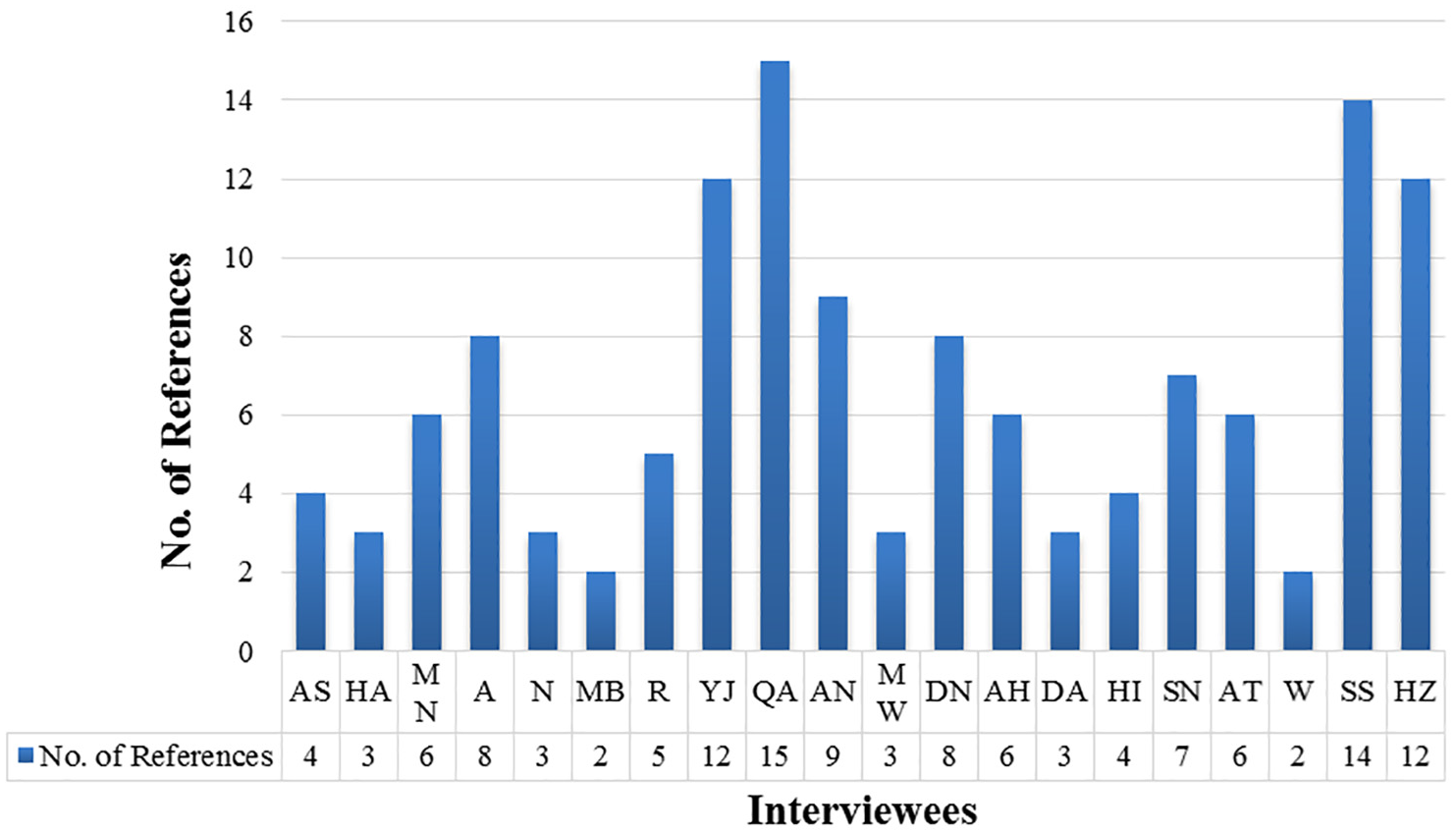
Number of responses used for continuous improvement.
Stakeholder Satisfaction
The meaning of stakeholder satisfaction in the context of this study is meeting and exceeding the needs of both internal and external stakeholders of the public and private universities of Pakistan. Mostly students are considering the main stakeholders of educational institutions. According to Degtjarjova et al. (2018), the level of student satisfaction can serve as a proxy for how well students think a university is performing. To put it more simply, this refers to the extent to which the ‘product’ satisfies or exceeds expectations. This sub theme was further classified into two categories, namely; internal stakeholders and external stakeholders, which will be elaborated after reporting the responses of interviewees regarding stakeholder satisfaction. All of the interviewees explained that it is highly important to satisfy the stakeholders, ‘Stakeholders are affected by any decision taken by the university and they contribute towards the quality improvement process…’ (AU, data analyst QEC, public university). They further shared that students are the main stakeholders who are the product of educational institution. MN, data analyst, QEC, private university shared that students should be provided with a good learning environment by saying, ‘Students pay us so we are able to give them facilities like good education, good atmosphere and an atmosphere in which they can polish themselves’. (MN).
The interviewees stressed that students are the ones who go into the market and represent their universities. So, it is highly important for the QECs to ensure that students and all other stakeholders who are associated with students must be satisfied at all costs.
The following chart (Figure 2) illustrates the number of times each of the interviewees talked about or mentioned stakeholder satisfaction at different occasions during the interview sessions. The aim of the graphical representation is to provide a visual comparison between the level of perceptions of public and private university QEC leaders for stakeholder satisfaction. Overall, Quality leaders from both public and private university like, AN, QA, YJ and YJ have high level of CI perception as they have discussed stakeholder satisfaction many times at different occasions during their interviews. This implies that the level of perception of quality leaders of public and private universities is high; indicating their commitment to continuous improvement to assure quality education is being promoted with in the universities.

Number of responses used for stakeholders.
Teamwork
The meaning of teamwork according to the context of this study is the extent to which QEC members of the public and private universities of Pakistan work in collaboration to achieve the goals (Goñi et al., 2020). The interviewees revealed that the most important factor in determining the overall quality is collaboration with in a team. The importance of teamwork appeared in the transcripts 13 times. MW, director QEC, public university explained, ‘Every member of the QEC team, from the director on down, plays an integral role in each and every step of the process’. Additionally, many interviewees explained that all of the activities performed by QECs are made successful by the utilisation of teamwork. HZ, from public university revealed that, ‘There is not a single activity of QEC in which all of the staff is not involved in it together’.
It was further observed by the researcher during interviews that some interviewees at different occasions talked about the importance of working individually as well.
We work in teams when we have to arrange events, seminars, round table conferences but we mostly work individually. We over look our responsibilities solely. For example, I am in charge of international ranking so it is only my responsibility nobody else’s. (AS)
The above quote describes that TQM necessitates both individual and group participation in procedures that heavily rely on each employee’s particular expertise, knowledge, talents and other personal characteristics.
The following chart (Figure 3) illustrates the number of times each of the interviewees talked about or mentioned teamwork at different occasions during the interview sessions. The aim of the graphical representation is to provide a visual comparison between the level of perceptions of public and private university QEC leaders for teamwork. Overall, Quality leaders from both public and private university like, HZ, SS, QA and YJ have high level of teamwork perception as they have discussed teamwork many times at different occasions during their interviews. This implies that the level of perception of quality leaders of public and private universities is high; indicating their commitment to continuous improvement to assure quality education is being promoted with in the universities,

Number of responses used for teamwork.
Top Management Commitment
The meaning of top management commitment in the context of this study is the degree to which upper-level management determines QM objectives and strategies, acquires and utilises adequate resources, actively participates in QM efforts and analyses the effectiveness of these endeavours (Yusliza et al., 2019) in the public and private universities of Pakistan. The top management commitment deemed important by all of the interviewees; they shared at various instances during their interviews that without the commitment and involvement of top management quality cannot be assured with in the university. YJ, director QEC private, university explained this perception in his own words as, ‘Where there is a dedication to quality from the top, it is executed and the results are visible’. Likewise, NA, deputy director QEC, public university told the researcher that the whole system jeopardises if top management does not pay attention, ‘If top management does not keep the management together then the whole system becomes jeopardize”’. (NA)
Furthermore, QEC leaders shared that they were involved in all of the activities of QEC, which was a clear indication of their commitment towards the goals of the QEC. Furthermore, at different instances, interviewees elaborated that their university’s high-quality performance and reputation is a proof of top management commitment. This was explained by HA, as, ‘If quality practices are ensured and are visible it is obvious that top management is highly committed’. It can be deduced from the transcripts of interviewees that the top management is one of the most important factors in determining whether TQM internalisation initiatives are successful.
The following chart (Figure 4) illustrates the number of times each of the interviewees talked about or mentioned top management commitment at different occasions during the interview sessions. The aim of the graphical representation is to provide a visual comparison between the level of perceptions of public and private university QEC leaders for top management commitment. Overall, Quality leaders from both public and private university like, HZ, SS, QA and YJ have high level of top management commitment perception as they have discussed top management commitment many times at different occasions during their interviews. This implies that the level of perception of quality leaders of public and private universities is high; indicating their commitment to continuous improvement to assure quality education is being promoted with in the universities,
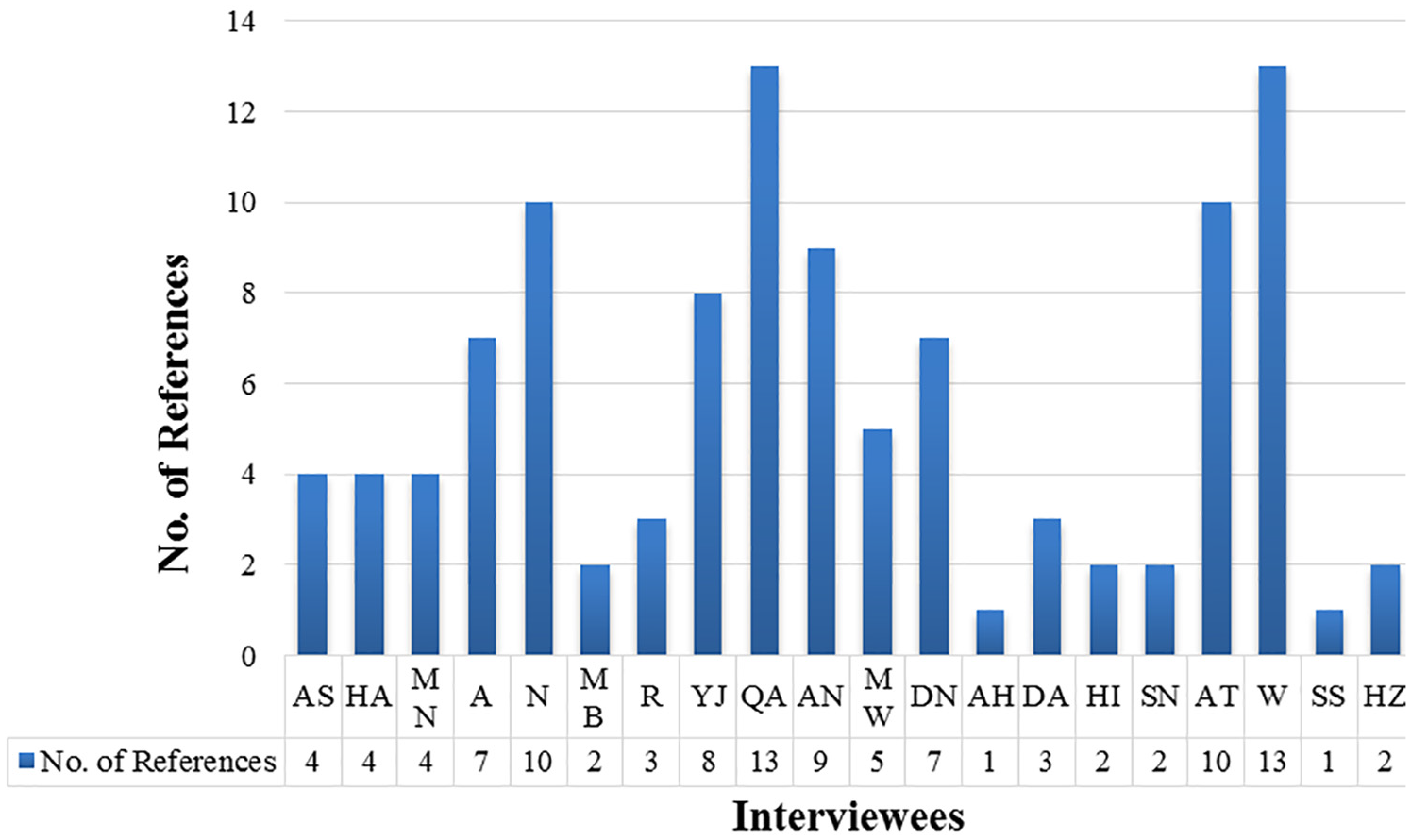
Number of responses used for top management commitment.
Training and Educational Programmes
The meaning of training and educational programmes in the context of this study is the seminars, workshops, conferences etc. arranged by QEC of public and private universities of Pakistan to train for implementing quality procedures and educate people about the importance of assuring quality in education sector. Interviewees revealed that they regularly arrange training sessions and educational programmes to educate, aware, prepare university’s workforce for implementing quality procedures in universities’ premises. At 14 different occasions seminars, conferences (national and international), workshops, trainings were mentioned by the interviewees.
There are many training programs that we arrange every now and then. Firstly, we arrange awareness seminars for implementation of various parameters like, self-assessment… Focal persons and program-team members are also trained. Secondly, National and International Conferences are conducted for awareness about importance of quality education. We also conduct training of curriculum development… Lastly, internal staff training is conducted in collaboration of HEC. We invited QECs personnel from 52 universities of Pakistan and provided awareness about quality assurance at university level. We also plan endorse and implement such trainings in the future as well. (SS)
Similarly, AT, also elaborated that they arrange seminars, trainings, conferences, workshops, furthermore she also shared that the director participates in all of these activities. QA also revealed that training and educational seminars are arranged by the QEC in liaison with HR offices like; centre of teaching and learning (CTL) arranges pedagogical trainings for teachers.
The following chart (Figure 5) illustrates the number of times each of the interviewees talked about or mentioned this training and educational programmes at different occasions during the interview sessions. The aim of the graphical representation is to provide a visual comparison between the level of perceptions of public and private university QEC leaders for training and educational programmes. Overall, Quality leaders from both public and private university like, HZ, SS, QA and YJ have high level of training and educational programmes perception as they have discussed it many times at different occasions during their interviews. This implies that the level of perception of quality leaders of public and private universities is high; indicating their commitment to continuous improvement to assure quality education is being promoted with in the universities,

Number of responses used for training and educational programmes.
R.Q.2: What Are the Similarities and Differences Between TQM Practices of Public and Private Universities of Pakistan?
Benchmarking
The meaning of benchmark according to the context of this study is the comparison done by the public and private universities against better performing educational institutions. All of the interviewees shared that in today’s competitive world benchmarking is highly important. They all highlighted that the QECs set benchmarks and work against it in order to continuously improve their processes and reputation of the university. Interviewees mentioned the importance of benchmark 18 times. In this regard YJ, director QEC, private university said, ‘Benchmarking is very important now…’ Interviewees explained that universities are striving to be better by taking many different initiatives and they try to benchmark good practices of universities and improve their processes. QA, deputy director, private university, also revealed, ‘We understand the context of university and the n we benchmark different practices”’. The interviewees transcripts described that management’s primary focus should be made to guarantee the company’s ability to expand in the future. While both public and private universities engage in benchmarking, private universities may tend to benchmark against more international or prestigious institutions due to their competitive and market-driven nature. Public universities, on the other hand, may primarily benchmark against national standards or other public institutions, driven by a need to uphold regulatory standards.
Better Performing Universities
The meaning of better performing universities according to the context of this study that universities make those universities a benchmark that are better than them and adopt their best practices in order to reach the benchmark. It was recorded at four different instances where the interviewees shared that they look up to those universities that is considered best in Pakistan. AS from private explained this perception while talking about national and international rankings as, ‘We compare ourselves with universities that are above us in those rankings. We observe their quality practices and try to learn from them…’ Similarly, it was reported by AS from private university that they benchmark top performing universities of Pakistan and learn from their best practices,
Any place from where we can learn from best practices is a benchmark for us. We adopt those best practices. Top performing universities of Pakistan like NUST and LUMS are our benchmarks… (AS)
At one instance an interviewee shared that they do not hesitate while adopting good practices even from universities that are lower in rank as compared to them,
…even if there is a down performing university but one on their practices are of high quality we don’t shy away from learning from them. We consider such down performing universities our benchmark as well.
However, it was explored during the interviews that the QEC leaders from public sector universities were only interested in meeting the standards of HEC. Showing their commitment to follow the rules and regulations of statutory bodies (see section 4. Meeting HEC standard). In this regard HZ from public university stated that, ‘… This university is a benchmark itself as it follows the standards set by HEC strictly…’
The following chart (Figure 6) illustrates the number of times each of the interviewees talked about or discussed benchmarking better performing universities at different occasions during the interview sessions. The aim of the graphical representation is to provide a visual comparison between the level of perceptions of public and private university QEC leaders for better performing universities as a benchmark. Overall, majority of the quality leaders from private universities have a high level of better performing universities perception as they have discussed benchmarking universities better than them to improve the quality of their universities, many times at different occasions during their interviews. This implies that the level of perception of quality leaders of private universities is high where as public universities is moderate as their main emphasis is on fulfilling the quality standards of HEC (see 4. Meeting HEC standards).
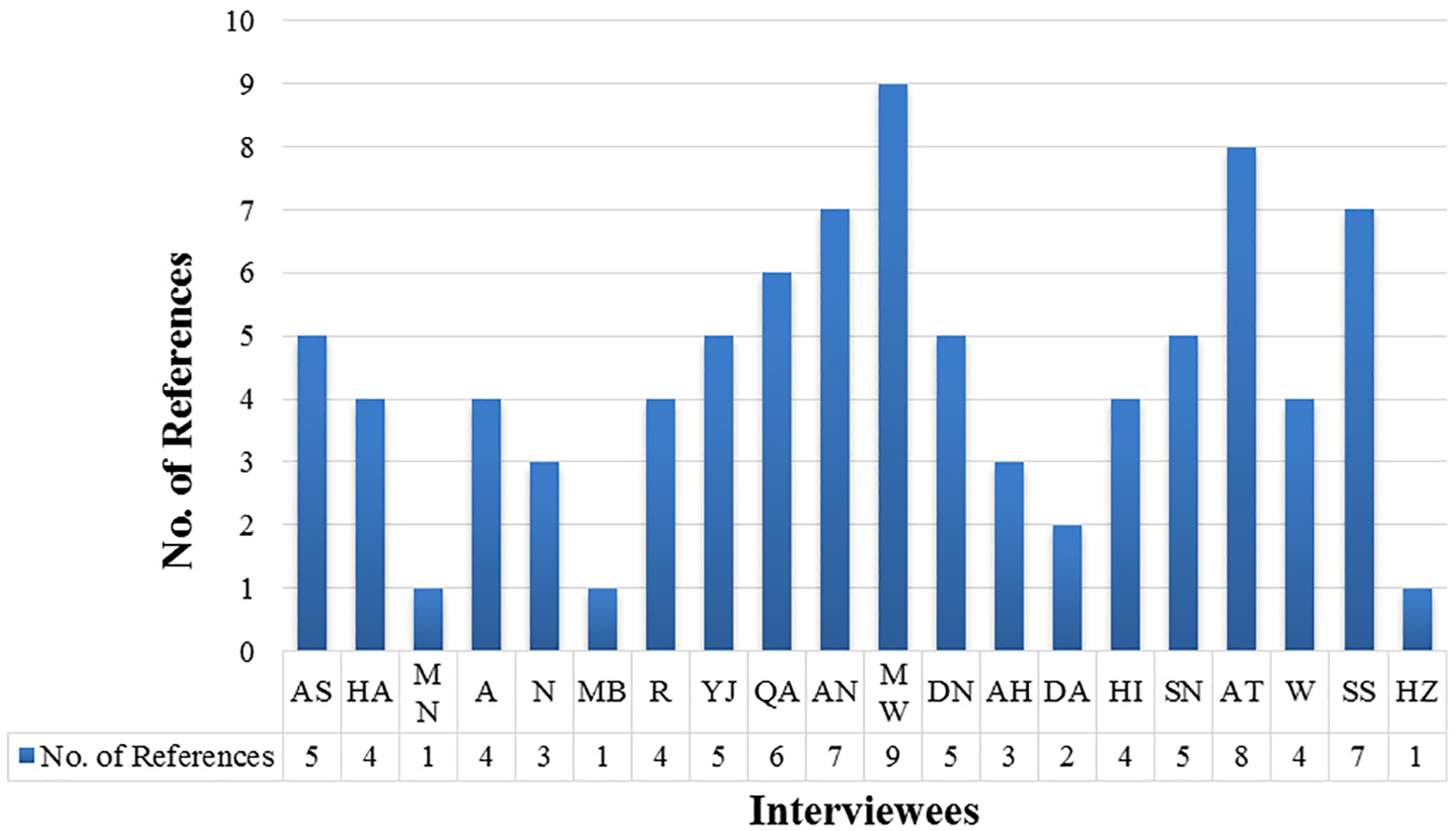
Number of responses used for better performing universities.
Based on the perceptions of participants private universities may have more flexibility in selecting and learning from better performing institutions, given their greater autonomy and less bureaucratic constraints. Public universities focus more on top-performing national public universities, reflecting their role and objectives within the national higher education system.
International Rankings
The meaning of international rankings according to the context of this study is the acquisition of rank in Quacquarelli Symonds (QS) or Times Higher Education (THE) rankings is considered a benchmark by public and private universities of Pakistan. AN from private university right away mentioned QS and THE rankings as a benchmark for the university upon being asked about what is a benchmark for QEC. She said, ‘QS and the Times Higher Education’. Similarly, AS from private university revealed, ‘International accreditations are the second type of benchmark for us’. It was reported at 6 different points in the transcripts of the interviewees that the acquisition of top 400 to 600 universities in QS or THE was a benchmark for them. While explaining the importance of benchmark YJ from private university elaborated that their first goal is to be in the top 500 universities in the following words, ‘…Basically the first target is to be in top 500 universities. If a uni comes in first top 500 unis then they focus on regional mean and median’. Furthermore, many interviewees shared there THE ranks with the researchers. MN, from private university shared they achieved, the rank of number one university among public and private universities of Pakistan and also ranked among the top 500 to 600 universities of Pakistan while explaining the importance of international rankings as a benchmark. On the other hand, public universities focus more on improving their rankings but within the context of national priorities and public accountability. AH from public university shared, ‘We are compiled to the rules and regulations of HEC and our goals are to be at the top among universities of Pakistan’. This was also seconded by SN in the following words, ‘We as a government university do not need to go after international rankings or memberships. Private universities need to work hard on this to attract more students. We simple provide affordable quality education to all types of students’.
The following chart (Figure 7) illustrates the number of times each of the interviewees talked about or discussed benchmarking international rankings at different occasions during the interview sessions. The aim of the graphical representation is to provide a visual comparison between the level of perceptions of public and private university QEC leaders for international rankings as a benchmark. Overall, Quality leaders from private university like, A, QA and YJ have high level of international rankings perception as they have discussed it many times at different occasions during their interviews. This implies that the level of perception of quality leaders of private universities is higher as compared to public university QEC leaders.

Number of responses used for international rankings.
International Memberships
The meaning of international memberships according to the context of this study is the acquisition of international memberships TQM organisations is considered a benchmark by public and private universities of Pakistan. International memberships were discussed at five different instances in the transcripts of interviewees. Upon being asked whether the QECs of the interviewees adopt any international model of quality management such as ISO, EFQM, Six sigma etc. they revealed that although, they do not use any other frameworks but they have acquired international memberships such as ISO certifications or European memberships etc. In this regard, AS from private university a, ‘We are getting international memberships to benchmark ourselves’. She revealed that to be a benchmark itself the university is subscribing to international memberships. Similarly, DA from public university revealed that along with AT received ISO certification, ‘I along with one of my quality manager acquired International Certification of Leader/ Lead Auditor, ISO 21001:2018, Educational Organization Management System’. The six interviewees considered acquiring international rankings highly important from Public universities, while also pursuing such memberships, might do so within the confines of public policy and government regulations. SS from public university clearly stated that, ‘The Higher Education Commission QAA has created a model for Pakistan’s public and private institutions, thus I do not think they need another framework or any kind of additional international memberships to apply TQM’.
Moreover, MW expressed that, ‘Academic programs at the University are evaluated by QEC to ensure they are up to the internationally recognized standards. It is the job of HEC to provide was parameters that follow the international standards. QEC follows a journey towards obtaining standards that are almost flawless, and the quality improvement process is what makes that possible by allowing us to establish new benchmarks and set new targets once we reach the old ones’. (MW)
The following chart (Figure 8) illustrates the number of times each of the interviewees talked about or discussed benchmarking international memberships at different occasions during the interview sessions. The aim of the graphical representation is to provide a visual comparison between the level of perceptions of public and private university QEC leaders for international memberships as a benchmark. Overall, Quality leaders from private university like, MN, SS and HA, have high level of international memberships as a benchmark perception as they have discussed it many times at different occasions during their interviews. This implies that the level of perception of quality leaders of private universities is comparatively higher.

Number of responses used for international memberships.
Meeting HEC Standards
The meaning of meeting HEC standards according to the context of this study is the fulfilment of HEC QAA’s six parameters, which are mandatory for public and private universities of Pakistan. The six parameters of HEC’s QAA are explained in detail under the theme ‘HEC QAA’s Quality Framework’. Another common thread among interviewees from public and private universities, mentioned in the transcripts, was the fact that meeting HEC’s criteria was a benchmark for them. Since HEC has made it compulsory for all the universities to abide by these parameters it would be against the norms of quality to not consider them as a benchmark and run after other things. The interviewees also expressed that HEC’s six parameters were enough for them to benchmark the university. MR from private university described this perception in the following words, ‘QEC of this university implements the standards benchmarked by HEC’.
Similarly, MW from public university also expressed the same perception about this sub-theme as,
Yearly Progress Report of HEC is our only benchmark. It has its own standards and sub standards. It has 100 plus activities which we have to perform.
The difference in the practices of public and private university practices employing TQM is that private universities, although also adhering to these standards, view them as a baseline, with their TQM practices also guided by market demands and international standards. QEC leaders are taking additional initiatives along with meeting HEC standards in the form of acquiring international rankings and memberships; whereas, public universities’ main emphasis is on acquiring HEC standards.
The following chart (Figure 9) illustrates the number of times each of the interviewees talked about or mentioned benchmarking meeting HEC standards at different occasions during the interview sessions. The aim of the graphical representation is to provide a visual comparison between the level of perceptions of public and private university QEC leaders for meetings HEC standards. Overall, Quality leaders from both public and private university like, SN, DA, HA and MN have high level of meeting HEC standards perception as they have discussed it many times at different occasions during their interviews. This implies that the level of perception of quality leaders of public and private universities is high; the reason behind this is the mandate of fulfilling the quality criteria set by HEC for universities of Pakistan. That being said private universities comparatively take additional initiatives apart from meet the minimum criteria set by HEC.

Number of responses used for meeting HEC standards.
Funding and Grants
The meaning of funding and grants in the context of this study is whether the public and private universities of Pakistan receive funding and grants from HEC and university to manage the functions of QEC. The transcripts revealed that all of the universities receive funding and grants but the financial resource providers vary. SS from public university elaborated that, ‘HEC funds QEC separately. If QEC needs funding for an awareness program, event, or conference, the university supply it’. However, MB from private university expressed a contradictory view on funding and grant provided by HEC,
As far as financial resources and financial grants are concerned we did not receive any by PHEC or HEC. Every funding is all in all the responsibility of university especially in private sector.
It was observed by the researcher that there are contradictory views of interviewees on the funding and grants provided by HEC. The interviewees from public universities namely; HZ, SS, N, AT, DS, HI AH, MW, DN revealed that they received funding and grants from HEC for QECs working. Whereas, interviewees from private universities namely; AS, HA, A, MB, MN, R, W, YJ, QA, AN revealed that only initial funding was provided by HEC to build QEC infrastructure after that they did not receive any funding however, they revealed that private universities receive research grants by HEC.
The following chart (Figure 9) illustrates the number of times each of the interviewees talked about or discussed funding and grants at different occasions during the interview sessions. The aim of the graphical representation is to provide a visual comparison between the level of perceptions of public and private university QEC leaders for funding and grants. Overall, quality leaders from both public like, HZ, SS, AT, and MW have high level of funding and grants perception as they have discussed it many times at different occasions during their interviews that HEC funds them to maintain the quality standards. Whereas, QEC leaders from private universities shared that they only received funding from HEC initially to build QEC infrastructure but later on no funding has been further received by HEC (Figure 10).
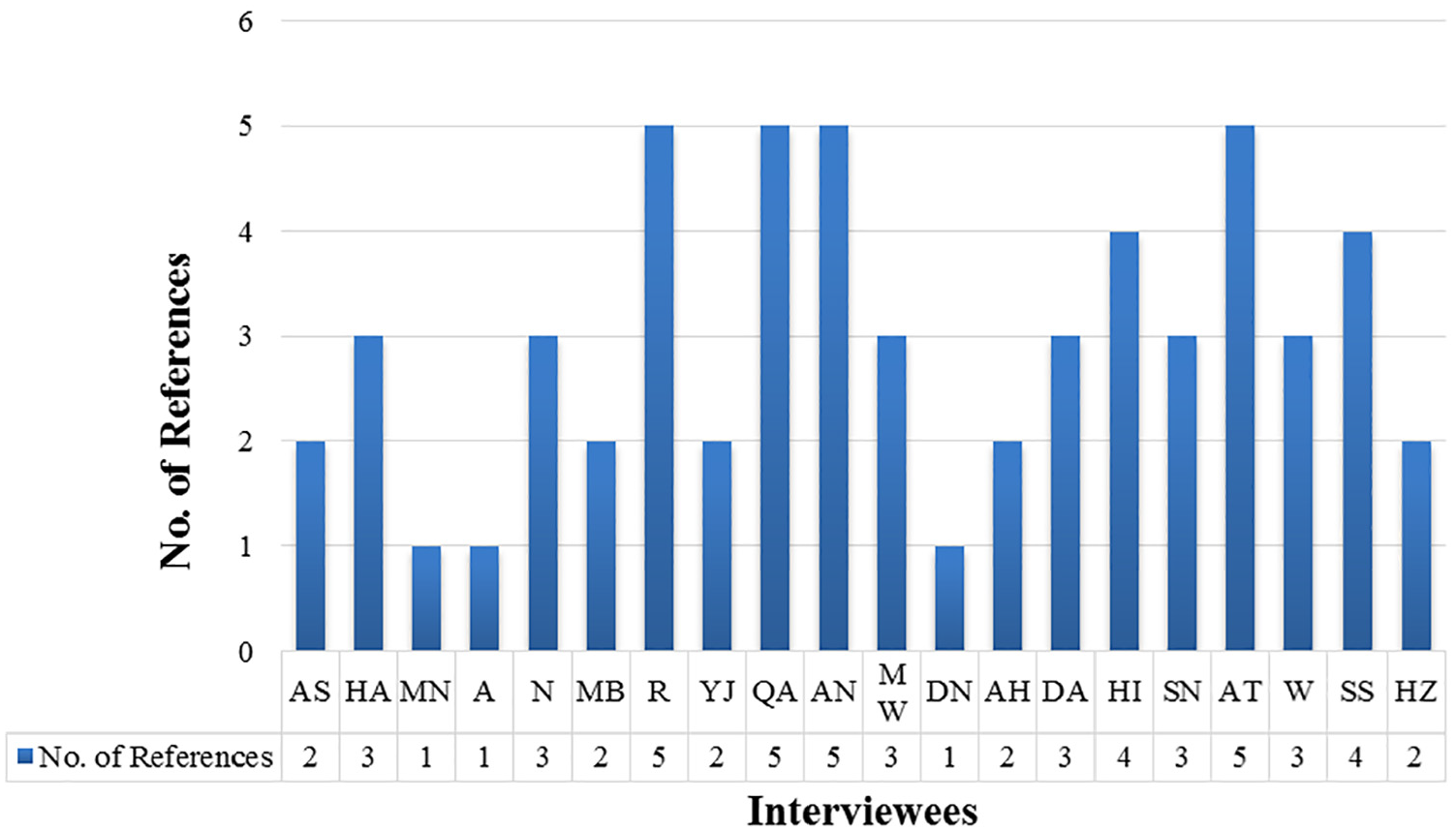
Number of responses used for funding and grants.
Discussion
The thematic analysis on the factor’s affecting TQM approaches at the university level in Pakistan reveals five key strategies employed by universities. These include continuous improvement, stakeholder satisfaction, teamwork, top management commitment and training and educational programmes.
Continuous improvement was identified as a critical element in TQM practices, corresponding to the literature where TQM is seen as a never-ending process of enhancement (Mihaela & Ştefania, 2020). This approach has been linked to the fulfilment of higher education standards set by the Higher Education Commission (HEC) in Pakistan, suggesting the influence of regulatory bodies on TQM practices.
Stakeholder satisfaction, primarily focusing on students, is another significant aspect that aligns with Naylor et al.’s (2021) assertion that student satisfaction serves as a measure of a university’s performance. The bifurcation into internal and external stakeholders adds a new dimension to the theme, illustrating the comprehensive nature of TQM in meeting various stakeholder needs.
Teamwork is considered essential for quality assurance, which supports the existing literature suggesting that collaborative work environments foster quality improvements (Beddoes & Panther, 2018). Interestingly, the inclusion of individual responsibility alongside teamwork presents a more nuanced perspective on how universities manage TQM practices.
The emphasis on top management commitment echoes the literature that suggests successful TQM implementation requires strong leadership commitment (Fox et al., 2018). This sub-theme underlines the role of leadership in setting quality objectives, providing resources and actively participating in quality efforts.
Finally, the role of training and educational programmes in facilitating quality assurance resonates with the literature asserting that continuous learning and training are pivotal in fostering a quality culture (Alimisis, 2019). This aspect also indicates the active role of Quality Enhancement Cells (QECs) in providing such programmes, thus aligning with the global trend of establishing quality units within universities to ensure TQM practices (Aznar et al., 2018).
In summary, the thematic analysis illuminates a comprehensive set of TQM strategies used by Pakistani universities, reflecting global trends and practices, yet also highlighting specific local adaptations, such as meeting HEC standards.
Typically, differences between public and private universities’ TQM practices arise due to differing funding structures, organisational culture, leadership styles, accountability mechanisms, and the level of autonomy each type of institution enjoys. For instance, private universities might have more flexibility in adopting and implementing innovative TQM practices due to less bureaucratic oversight. They also face higher pressure to perform well in international rankings due to competition for students and funding. On the other hand, public universities, being subject to more government regulations, might have a stronger focus on meeting regulatory standards such as those set by the HEC.
The observed distinctions between TQM practices of public and private universities in Pakistan align with contemporary research in quality management within higher education.
The focus on benchmarking in both types of institutions mirrors global trends in higher education quality assurance (Mihaela & Ştefania, 2020). However, the tendency of private universities to benchmark against more international or prestigious institutions may reflect their need to compete in the global education market, a phenomenon noted by Caeiro et al. (2020). Public universities’ benchmarking against national standards or other public institutions aligns with their mandates to uphold regulatory standards and their role within the national education system (Polkinghorne et al., 2021).
The pursuit of international rankings is increasingly common worldwide due to the growing influence of global university ranking systems (de Wit & Altbach, 2021). Private universities’ more pronounced emphasis on these rankings can be seen as part of their strategic efforts to attract students and maintain competitiveness. Public universities, while also concerned with rankings, are likely more focused on national priorities and public accountability, reflecting their role in serving the public interest (Altbach & De Wit, 2018).
International memberships represent another strategy to enhance reputation and competitiveness in higher education (Abbott et al., 2019). Private universities’ greater pursuit of such memberships may be attributed to their strategic positioning efforts and their greater resources and flexibility. Public universities, while also pursuing these memberships, do so within public policy and government regulations constraints.
The source of funding and grants significantly influences TQM practices, as suggested by Siahaan et al. (2022). Public universities’ reliance on government funds often comes with stipulations or requirements that influence their TQM practices. In contrast, private universities, with their financial independence, might have more flexibility in their TQM practices but also face the pressure of ensuring financial sustainability.
The focus on meeting HEC standards in both types of institutions reflects the strong influence of national regulatory bodies on quality assurance in higher education (Crăciun, 2018). However, private universities’ tendency to view these standards as a baseline indicates their additional focus on market demands and international standards.
Conclusion
This study has provided significant insights into the nuanced application of TQM in higher education institutions in Pakistan. Drawing from a phenomenological methodology, the study delves into the lived experiences of QEC leaders within both public and private universities, revealing the subtleties and complexities of the quality leaders’ journey.
The RQ1 aimed to explore the factors influencing TQM approaches with in the universities of Pakistan. The perceived level of TQM approaches by the QEC leaders of public and private university of Pakistan is very high. QEC leaders believe that TQM is central to quality assurance with in the universities. The factors that influence the TQM approaches as per the interviewees range from continuous improvement, stakeholder satisfaction, teamwork to top management commitment and training and education.
Whereas, RQ2 aimed to explore the difference between the practices of public and private universities of Pakistan in employing TQM approaches. The research highlighted that TQM is not a one-size-fits-all approach; it is rather a malleable concept, moulded by the specific circumstances, resources and strategic priorities of each institution. Public universities tend to benchmark their practices against national standards, focusing on meeting regulatory requirements and serving the public interest. In contrast, private universities, driven by competitiveness and a need for differentiation, often pursue international recognition through rankings and memberships while also meeting the baseline standards set by regulatory authorities.
The study also underscores the crucial role of funding sources in shaping TQM practices. Public universities, funded mainly by the Higher Education Commission (HEC) or other government agencies, follow TQM practices that align with the stipulations accompanying this funding. On the other hand, private universities, which rely on self-funding, have greater flexibility in their TQM approaches, albeit tempered by the need for financial sustainability.
In conclusion, this exploratory discussion reveals a diverse and dynamic landscape of TQM approaches in Pakistani higher education, shaped by a complex interplay of institutional type, strategic priorities, funding sources, and regulatory standards. It underscores the critical role of quality leaders in navigating this landscape and highlights the need for adaptive, context-sensitive approaches to quality management. This study’s findings offer valuable insights for policymakers, university administrators and quality leaders alike, aiding in the crafting of more effective, contextually relevant TQM strategies in higher education.
Footnotes
Appendix A
Ethical Considerations
The study was approved by Department Graduate Committee (DGC) at the University of Management and Technology (UMT) in Lahore as a part of first author’s thesis research under the supervision of the corresponding and second author.  contains data collection consent letter approved by the department. Informed consent was obtained from the participant both verbally and written via electronic media. Consent was also obtained from all participants before recording the interviews.
Funding
The author(s) received no financial support for the research, authorship, and/or publication of this article.
Declaration of Conflicting Interests
The author(s) declared no potential conflicts of interest with respect to the research, authorship, and/or publication of this article.
Data Availability Statement
The research data can be provided by the corresponding author upon request.