




Abstract
This study examines the evolving trend of virtual reality within the tourism industry by applying a bibliometric systematic review technique. Bibliometric analysis is harnessed for both performance and mapping analyses, while the review technique is employed to elucidate the nuanced landscape of virtual reality in the tourism sector. A comprehensive dataset of 472 articles retrieved from the Web of Science spanning 1995 to 2022 forms the basis of this investigation, with Biblioshiny and VOSviewer serving as bibliometric tools. The findings underscore the People’s Republic of China as the foremost contributor to publications in this domain. Particularly noteworthy is the preeminence of the Tourism Management journal, with an average citation of 78.82. Notably, the literature predating the COVID-19 pandemic predominantly focused on virtual tourism’s application, implications, and impacts. However, a discernible shift occurred in post-pandemic publications, emphasizing virtual reality in tourism to augment user satisfaction. Of paramount significance is the consensus within the research community highlighting the substantial benefits of implementing virtual reality, particularly in elevating users’ visualization experiences. This study holds the potential to provide invaluable insights for policymakers and funding agencies, elucidating the instrumental role of virtual reality in shaping the landscape of the tourism sector.
Introduction
The 21st century has witnessed the exponential growth of Information and Communication Technology (ICT), particularly in immersive technologies. With this technological surge outpacing global economic growth, developed nations responded by ushering in the fourth industrial revolution (IR4.0) to enhance the efficiency of sectors grappling with dynamic supply and demand trends (Sekaran et al., 2021). Among the indispensable technologies propelling this transition to IR4.0 is virtual reality (VR) (Akhtar et al., 2021). VR, a computer-instructed immersive three-dimensional experience, provides users with a tangible connection to the real-world environment (Guttentag, 2010). While virtual reality technology initially emerged as a research focus in the 1990s (Florek & Lewicki, 2022), it has since demonstrated efficacy in diverse applications such as online shopping (Billewear et al., 2021; Hsu et al., 2022) and gaming contexts (Lima et al., 2022). In the contemporary landscape, virtual reality has expanded its allure and assumed a distinctive role in various fields (Monteiro et al., 2020), including transportation, construction, and communication (Roman et al., 2022).
In recent years, the tourism sector has faced severe challenges stemming from the outbreak of COVID-19, negatively impacting its operations (Villacé-Molinero et al., 2021). The implementation of travel restrictions further exacerbated the situation (Gossling et al., 2020; U. K. Lee, 2022). In response to these movement limitations, new technologies, including virtual reality, have been introduced as a means to rejuvenate the tourism economy (Lu et al., 2022a; Roman et al., 2022). Virtual reality has emerged as a transformative alternative in tourism, providing both tourists and the industry with considerable benefits (Ranasinghe et al., 2021). This advanced technology allows consumers to explore new destinations and enjoy unique experiences without physical travel. As a result, virtual reality has become a pivotal tool in enhancing tourist satisfaction by providing immersive and visually appealing virtual tours. Integrating such immersive technology signifies a promising avenue for revitalizing the tourism sector in the face of challenges posed by global health crises (Loureiro et al., 2020).
Bibliometric analysis is a rigorous technique for unveiling emerging trends in a given field by systematically extracting and scrutinizing numerous documents using specialized tools. Compared to other review methodologies like meta-analysis, bibliometric analysis has demonstrated its appeal and effectiveness in scrutinizing vast bodies of literature (Donthu et al., 2021). This attractiveness is evident across diverse domains, including Mathematics (S. W. Phoong et al., 2022), business (Yang et al., 2022), and engineering (Amaliki, 2021), showcasing its versatility despite its inherent analytical complexity. The application of bibliometric analysis extends to diverse fields, highlighting its adaptability and robustness. For instance, Suban (2022) employed bibliometric analysis to assess wellness tourism, underscoring its utility in exploring niche areas. Furthermore, Viana-Lora and Nel-lo-Andreu (2022) utilized bibliometric techniques to scrutinize trends at the intersection of COVID-19 and tourism, emphasizing its relevance in addressing contemporary and dynamic research questions.
Researchers employ systematic literature review, a widely recognized and rigorous review technique. This approach is characterized by its methodical, transparent, and stringent procedures, aiming to mitigate bias issues and yield reliable outcomes. The systematic literature analysis methodology has found application across various disciplines, exemplified by its use in domains like medicine (Brown et al., 2022) and transportation (Ravensbergen et al., 2022). Since bibliometric and systematic analyses are robust tools for qualitatively and quantitatively analyzing existing literature, their combined application becomes particularly intriguing. This is especially relevant in the analysis of virtual tourism contexts, which have gained prominence in the aftermath of the COVID-19 outbreak. The synergistic use of these review techniques holds promise for providing a comprehensive and nuanced understanding of evolving research trends in this dynamic field.
While virtual tourism has experienced significant growth in recent years, there remains a dearth of studies delving into the latest developments of virtual reality in the tourism sector. Existing literature, such as Loureiro et al.’s (2020) work, has primarily focused on virtual and augmented reality in tourism over 20 years, from 1995 to 2018. However, this study aims to bridge this gap by spotlighting the evolution and application of virtual reality in tourism up to 2022. This approach offers a detailed and comprehensive perspective on the utility of immersive technology in related domains, particularly in the post-COVID-19 era. Notably, previous literature concentrating on virtual and augmented realities has provided limited insights into virtual reality. In contrast, the present study places a greater emphasis on virtual reality within the tourism field. Given the flourishing application of virtual reality in the tourism sector, discerning its current focal points becomes crucial for unraveling the ongoing evolution of virtual reality within this domain.
The study adopts a dual methodology, employing bibliometric and systematic review analyses. Initially, a bibliometric analysis is conducted to explore the landscape of virtual reality in tourism, succeeded by a systematic review. The overarching objectives of this study are to:
(i) To examine the current trends in virtual reality in tourism through bibliometric analysis.
(ii) To conduct a systematic literature review of virtual reality in tourism.
The present study yields significant implications by focusing on virtual tourism, or virtual reality in tourism, as the key term to scrutinize publication trends in the field. Employing performance and mapping analyses, the research identifies hotspots within the discipline and delves into the application of virtual reality in the tourism context. This comprehensive bibliometric analysis is valuable for researchers identifying research hotspots and influential journals. The study will benefit young researchers, postgraduate students, funding agencies, and policymakers in making informed decisions and allocations in the relevant field. Section “Analytical Framework” delineates the analytical framework, Section “Bibliometric Analysis” presents the outcomes of the bibliometric analysis, Section “Systematic Review of Virtual Reality in Tourism” details the systematic literature review of virtual reality in tourism, and Section “Conclusion” concludes the study and outlines recommendations.
Analytical Framework
This section outlines the procedures undertaken in the study, offering scholars a comprehensive understanding of the entire process. It covers the formulation of research questions, the study’s geographical focus, the data screening process, in-depth analysis, and the synthesis of findings.
The Development of Research Questions
Table 1 presents the research questions, their purposes, and their analytical methods. The study employs performance, conceptual, and review analysis to give academics a comprehensive understanding of virtual reality in tourism. Further details on the techniques utilized in the study are elaborated below:
(i) Performance analysis: It is an analysis that involves simple computation to summarize the datasets and present the findings in an organized manner. This analysis provides scholars with valuable information about the evolution of research from the publication volume and citation analysis. It also assists in finding the most productive countries, highly cited articles, and journals that have evolved over the years in the field (S. Y. Phoong et al., 2022).
(ii) Conceptual analysis: This analysis is applied to identify the hottest research topic in a field over time.
(iii) Review analysis: A detailed literature review analysis is used to uncover the work of existing literature. This analysis provides information about the use of virtual reality in tourism.
Moreover, specific techniques are outlined for each analysis, tailored to address the study’s questions. The rationale behind employing different analysis methods lies in their respective strengths in data analysis. A concise explanation of these methods is provided below:
(i) Publication counting: Analyze the authors’ performances and contributions in a related field that evolved over time.
(ii) Citation counting: Analyze the quality of publications through the frequency of being cited by other scholars. This counting method can measure the impact of the research work in a field.
(iii) Co-occurrences of keywords: Identify the recent hotspots presented in the field.
Research Questions and Analysis Methods of the Study.

Locating Study
The database serves as a centralized platform for collecting and presenting global research conducted by scholars. Commonly used databases in research include the Web of Science (WoS), Scopus, and Google Scholar. WoS, recognized for its scientific focus, is frequently employed for cross-disciplinary and institutional comparisons (Olavarrieta & Vargas, 2022). Scopus is a reliable database that amalgamates extensive abstracts and enriched data from citation databases, establishing links among scholarly publications across various disciplines (Scopus, 2022). Google Scholar, another widely used database, indexes a diverse range of documents in print and electronic formats (Olavarrieta & Vargas, 2022), encompassing over 389 million records (Gusenbauer, 2019). Notably, WoS stands out for its superior accuracy in the classification system compared to other databases.
WoS has been selected as the database for data collection to investigate current trends in virtual reality within the tourism domain. Recognized for its popularity and credibility, WoS is a widely-used multidisciplinary database encompassing numerous peer-reviewed journals and articles (Kawuki et al., 2020; S. Y. Phoong et al., 2022; Pranckute, 2021). Boasting thousands of high-quality publications with notable impact factors, WoS provides a robust foundation for comprehensive and reliable research analysis (Nasir et al., 2021).
Given the study’s concentration on virtual reality within the tourism domain, the keywords are “virtual reality” and “tourism.” Researchers employed the Boolean logical operator AND to enhance the search technique, ensuring the extraction of relevant literature in the field. The paper comprehensively reports all successfully extracted and pertinent publications.
Screening of Relevant Research
The application of virtual reality in tourism has emerged as a prominent topic among scholars, particularly in the post-COVID-19 era. To initiate the screening process of existing related publications, the Web of Science (WoS) was employed. The earliest publication in the WoS database with the keyword “virtual reality” dates back to 1995. Consequently, the timeline for analysis was set from 1995 to 2022, encompassing the complete trajectory of virtual reality trends in tourism.
Figure 1 illustrates the analytical framework employed in the study, delineating the fundamental methodology. The dataset, retrieved on September 9, 2022, initially comprised 1,084 documents. However, 588 documents were excluded from the analysis as they did not meet the criteria for articles. Subsequently, the screening process continued with a language filter, eliminating non-English articles. This refinement resulted in a final dataset of 472 articles for the study, ensuring a focused and relevant analysis—the subsequent step involved data analysis through bibliometric analysis to address the research questions outlined in Table 1.

The detailed analytical framework.
Analysis and Results Synthesis
After extracting pertinent literature from the database, a comprehensive bibliometric analysis is undertaken using VOSviewer and Biblioshiny with the R package. These widely recognized tools in bibliometric analysis are chosen for their distinct strengths, ensuring a robust and multifaceted examination of the data. Integrating these tools is deemed essential, as a singular analysis tool might be inadequate to fully support the research findings. Biblioshiny, coupled with the R package developed by Aria and Cucurrullo (2017), serves as an invaluable resource for non-coders, offering the ability to analyze extensive data through user-friendly interfaces. Its utility in providing non-coders with descriptive and counting analyses is noteworthy and contributes to the overall analytical framework. On the other hand, VOSviewer, introduced by van Eck and Waltman (2010), excels in analyzing bibliometric networks, facilitating the creation of visualization maps based on network data (Sánchez-Núñez et al., 2020). This capability extends to mapping countries, authors, articles, and journals, adding a layer of depth to the analysis and enhancing the visual representation of the bibliometric landscape (Shukla et al., 2020). Combining Biblioshiny and VOSviewer ensures a comprehensive exploration of the bibliometric dimensions, encompassing quantitative and qualitative literature.
Bibliometric Analysis
Bibliometric analysis is an effective technique to scrutinize an extensive corpus of publications extracted through bibliometric tools. This analysis encompasses two distinct approaches: performance analysis, also referred to as descriptive analysis, and mapping analysis (Donthu et al., 2021; Koseoglu et al., 2022; Mulet-Forteza et al., 2022; S. W. Phoong et al., 2022; Shukla et al., 2020). As outlined by Donthu et al. (2021) and Mukherjee et al. (2022), performance analysis encapsulates the research’s performance by calculating key metrics such as total publications, citations, and publication-citation ratios. This approach provides a comprehensive summary of the quantitative aspects of the research landscape. Conversely, mapping analysis, also known as science mapping, delves into the structural dimensions of bibliometrics, employing techniques such as citation analysis, co-citation analysis, bibliographic coupling, co-word analysis, co-authorship analysis, network metrics, clustering, and visualization. This technique offers a nuanced understanding of the interconnections and thematic patterns within the literature. In pursuit of the research objectives, the present study combines performance and mapping analysis techniques. The ensuing sections succinctly present and discuss the results derived from this comprehensive analytical approach.
Performance Analysis
Performance analysis is a common technique in bibliometric analysis, offering insights through production counting and citation analysis. This approach provides scholars with a panoramic understanding of the landscape within the related field. This subsection illuminates the performance metrics encompassing annual scientific production and citation, identifying the most prolific countries, influential journals, and noteworthy articles in the virtual reality tourism domain.
Annual Scientific Production and Total Citation
Figure 2 provides a graphical representation of the annual production and total citation trends in virtual reality in tourism from 1995 to 2022. The inception of research in this area dates back to 1995, marked by the publication in Tourism Management. Subsequently, from 1996 to 2009, the production in this domain remained minimal. However, a notable surge in virtual reality in tourism articles is evident, particularly from the 2010s onwards. The pinnacle is reached in 2022, with 106 articles, signifying a heightened academic focus on utilizing virtual reality in tourism, especially in the post-COVID-19 era.

Annual scientific production and total citation (1995–2022).
Figure 2 illustrates that from 1995 to 2009, citations were minimal, reflecting the limited production of relevant articles during that period. The trend shifted from 2010 to 2016, with a noticeable increase in citations. Subsequently, after 2016, there was a progressive rise in citations, reaching a peak in 2019 at 1,405, coinciding with the growth in the number of productions. However, citations experienced a decline from 2020, likely attributed to the shorter publication time in that year. The overall trajectory suggests an anticipated gradual increase in citations over time.
The Most Productive Countries
Based on the bibliometric analysis, 66 countries contributed to the research on virtual reality in tourism. Table 2 lists the top 10 most productive countries regarding the number of publications. Among 66 countries, the People’s Republic of China is the most productive, with 105 articles published. The USA and South Korea rank as the second and third leading countries, having recorded 75 and 68 articles published, respectively. The USA recorded the highest number of citations, at 1,866, followed by England (1,380) and South Korea (1,237). From another perspective, England ranked first with 40 average citations, followed by USA (24.88) and Spain (24.61). In summary, although the USA has fewer publications published from 1995 until 2022, it has double the number of citations compared to the People’s Republic of China. Further investigation on the most influential journals and articles was conducted to better understand the number of citations.
The Top 10 Most Productive Countries.

Note. TP denotes the total number of publications, TC refers to the total citations gained, and AC is the average citation.
Most Influential Journal
Table 3 provides insight into the top 10 highly cited journals in virtual reality in tourism. Tourism Management has the highest number of citations, totaling 1,734, followed by the Journal of Business Research (523) and the Journal of Destination Marketing & Management (309). Tourism Management and the Journal of Business Research maintain the highest average citation rates, with figures of 78.82 and 74.71, respectively. The Journal of Travel Research follows closely with an average citation rate 52.50. This citation analysis offers valuable information about the most influential journals in the domain.
The Top 10 Most Influential Journals.
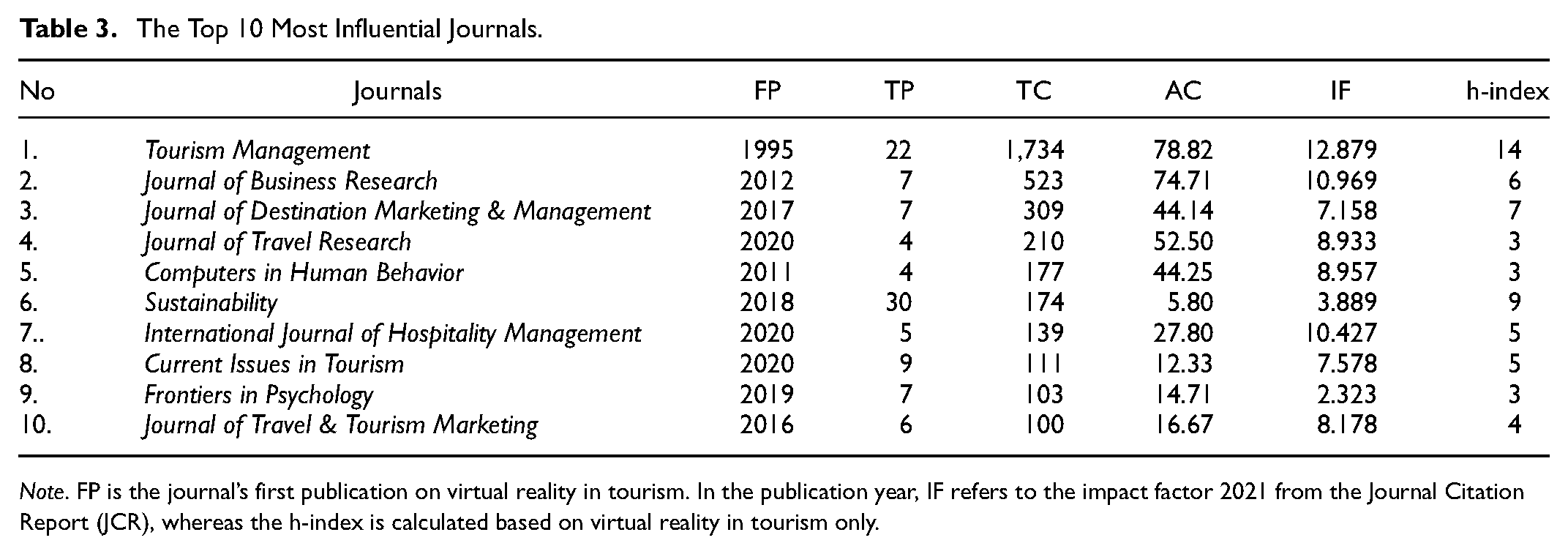
Note. FP is the journal’s first publication on virtual reality in tourism. In the publication year, IF refers to the impact factor 2021 from the Journal Citation Report (JCR), whereas the h-index is calculated based on virtual reality in tourism only.
Tourism Management reported the highest impact factor in the Journal Citation Report 2021, at 12.879. The h-index, as outlined in Table 3, sheds light on the journal’s influence in the field. With the highest h-index of 14, Tourism Management solidifies its dominant position, explaining its substantial citation count. Sustainability secures the second-highest h-index at 9, and the Journal of Destination Marketing & Management follows closely with an h-index of 7. These metrics further affirm the significant impact and scholarly contribution of Tourism Management in virtual reality tourism.
Most Influential Articles
Table 4 provides an overview of the top 10 most influential articles from 1995 to 2020, considering the 472 articles in the dataset. Guttentag’s (2010) “Virtual reality: Applications and implications for tourism” claims the top spot as the most impactful article, with 494 citations. Following closely, Tussyadiah et al.’s (2018) “Virtual reality, presence, and attitude change: Empirical evidence from tourism” secures the second-highest citation count with 270 citations. Flavian et al.’s (2019) article, “The impact of virtual, augmented and mixed reality technologies on the customer experience,” takes the third position, accumulating 248 citations. Remarkably, the first two most cited articles are published in Tourism Management, while the third influential article is published in the Journal of Business Research. This aligns seamlessly with the dominance of these journals in terms of citations and impact factors, as highlighted in Table 3.
The Top 10 Most Influential Articles.

Note. PY stands for the publication year of the article.
The analysis of average citations (the number of times the article is cited annually) unveils intriguing insights into the most influential articles. Kim et al.’s (2020) paper takes the lead with an impressive average citation count of 66.33, closely trailed by Flavian, Ibanez-Sanchez, and Orus (62), and Tussyadiah et al. (54). Notably, despite Guttentag’s (2010) article boasting the highest total citations (494) as shown in Table 4, it lags in average citations compared to the abovementioned recent works of Kim, Lee, and Jung (66.33), Flavian, Ibanez-Sanchez, and Orus (62), and Tussyadiah et al (54). This discrepancy suggests a surge in interest and popularity of virtual reality in the research community over the past decade, potentially driven by technological advancements. The evolution of virtual reality technology, from a 90-degree field of vision in 2010 to a smartphone-based headset allowing free movement of users within a defined space in 2016, to location tracking technology in 2017, the Playstation VR2 comprising of inside out tracking, higher resolution displays, controllers with adaptive triggers and haptic feedback, followed by a broader field-of-view technology in 2023 reflects a dynamic landscape that has captivated investors, the public, and researchers alike. This trend aligns with the increasing annual scientific production and citation findings depicted in Figure 2, especially the notable surge from 2019 (47) to 2020 (84), where the number of publications nearly doubled. The annual production increased in 2022, reporting 106 total publications. The heightened attention in recent articles underscores virtual reality’s growing significance and impact in the academic sphere (Buhalis et al., 2019; Hannam et al., 2014; B. K. Lee et al., 2012).
Network Mapping Analysis
Network mapping analysis provides a visually insightful representation of collaboration and relationships within the field. This section delves into the results of keyword co-occurrences and bibliographic coupling analyses to illuminate the interconnectedness of ideas and research within virtual reality in tourism.
Co-occurrence of Author’s Keywords
Author-generated keywords play a pivotal role in bibliometric analysis, offering insights into the current research hotspots. However, researchers often employ keywords strategically, potentially deviating from the study’s core objectives to capture public attention. This phenomenon is exemplified by Gao et al. (2022), whose article ostensibly focused on “COVID-19” keywords but delved into the occurrence and characteristics of microplastics. One of this study’s objectives is pinpointing the most popular keywords in the tourism domain during the sampled period. To grasp the research focus better, a minimum keyword occurrence of five was set, reflecting that all the presented keywords have appeared at least five times in all sample articles, leading to 37 keywords meeting this criterion out of 1,597. Table 5 illustrates the ranking of the author’s keyword co-occurrence based on the strength of total links. “Virtual reality” emerges as the predominant keyword in this area, with 162 occurrences constituting 10.14% of all articles. It claims the top spot in occurrences and secures first place regarding links (33) and total link strength (160). Its synonyms and abbreviations are also considered, reflecting variations in authors’ preferences based on previous studies. In addition to the selected keywords—“virtual reality” and “tourism”—the top 10 co-occurrence keywords include “augmented reality,”“presence,”“cultural heritage,”“COVID-19,”“mixed reality,”“VR,”“tourism marketing,” and “destination image.” The link number signifies strength, while total link strength reflects the publication volume linking two keywords simultaneously. These findings underscore the resilience of “virtual reality” in the field, which featured prominently in most publications during the sampled period. Notably, “augmented reality” claims the second spot in both occurrences and total link strength, with 55 and 53, respectively. Simultaneously, the keyword “tourism” has the same total link strength as the previously recorded 37 occurrences among all selected publications. In summary, the prevailing research hotspots revolve around technology applications in tourism. This aligns seamlessly with the contemporary trend, as the public increasingly favors virtual experiences, especially amid the global pandemic outbreak.
Co-occurrence of Author’s Keywords.

Note. FQ denotes the number of occurrences of keywords, while PCT refers to the frequency percentage. L stands for link number, whereas TLS refers to total link numbers.
Moreover, Figure 3 unveils a word cloud of author-generated keywords, excluding the first author’s keyword in virtual reality in tourism. This visualization aims to offer a clearer representation of other keyword occurrences. Notably, “augmented reality” takes precedence in size among all keywords, excluding “virtual reality,” closely followed by “tourism.” The prominence of “augmented reality” is unsurprising, given its frequent association with “virtual reality” in technological contexts. While virtual reality immerses users in entirely virtual experiences through headsets, augmented reality seamlessly blends virtual and physical environments in real time, often facilitated through smartphones or augmented-reality glasses (Al-Salami, 2022). Both technologies’ distinct yet complementary features, providing users with immersive virtual experiences, contribute to their consistent implementation in research studies.
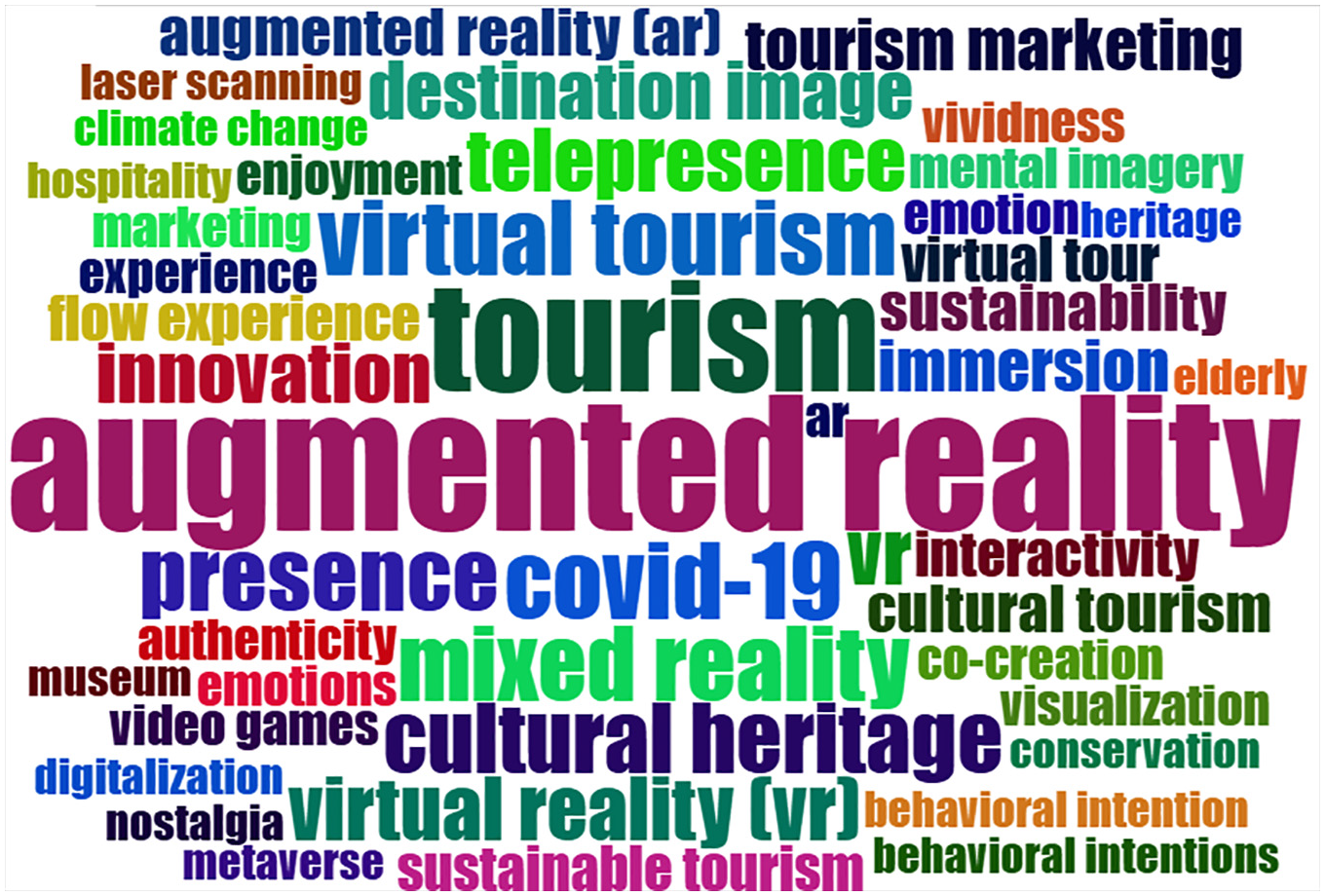
Word cloud of author’s keyword.
Figure 4 showcases the network mapping of author-generated keywords, providing insights into the interactions between keywords within the field. The node sizes in the visualization correspond to the volume of documents, with larger nodes representing a higher number of publications. Notably, the most significant node, “virtual reality,” occurs 162 times across all sampled articles. Furthermore, the visualization reveals five distinct clusters, each identified by a unique color—red, green, blue, dark yellow, and purple. The detailed composition of these five primary clusters, arranged by the number of items, is presented in Table 6.
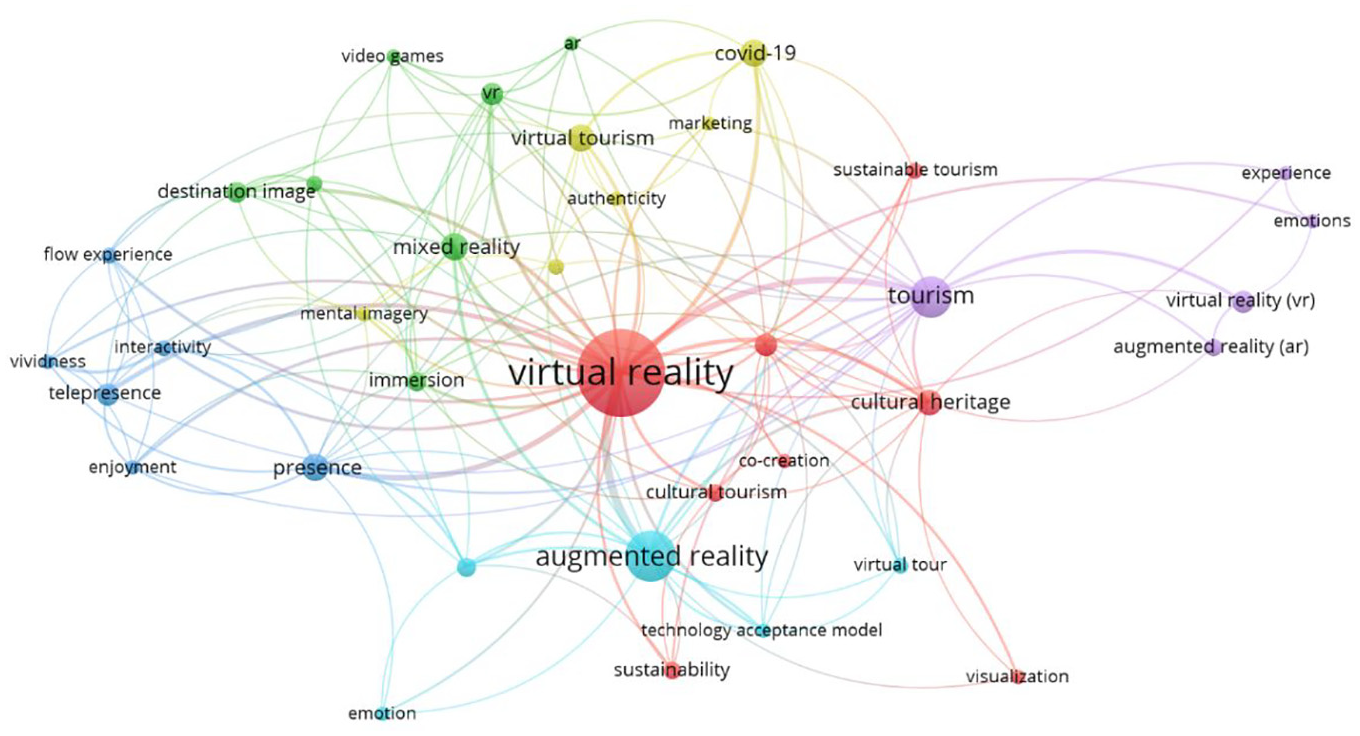
Network mapping of co-occurrence of author’s keywords.
The Top Five Main Clusters of Keywords Co-occurrence.
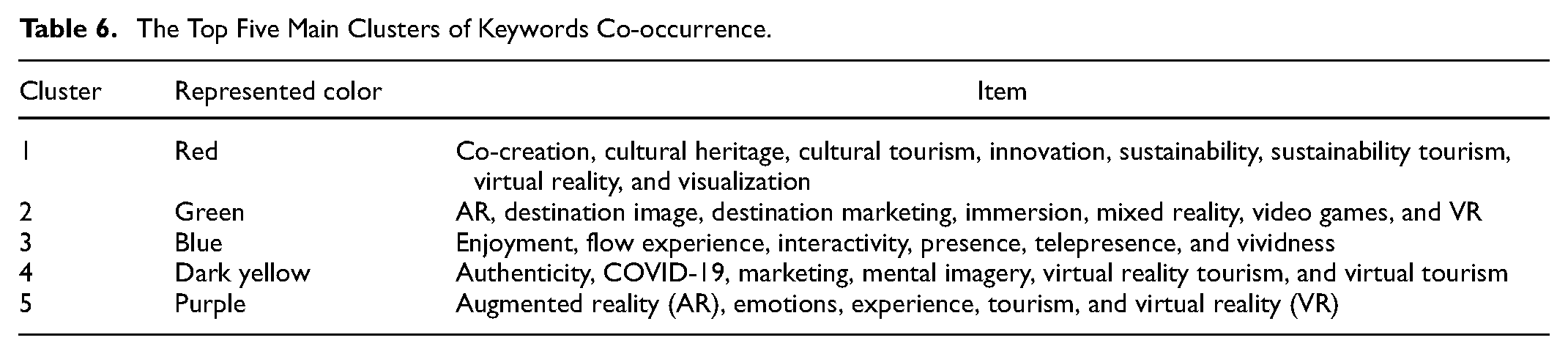
While all the keywords are closely tied to virtual reality in tourism, each cluster signifies a distinct avenue of researchers’ interests in this field. The red cluster primarily delves into the sustainability aspects of cultural heritage tourism through virtual reality. Virtual reality applications have been explored in various cultural heritage contexts, including museums (H. Lee et al., 2019), tourism destinations (Buonincontri & Marasco, 2017), wooden churches (Caciora et al., 2021), naturalistic sites (Bettelli et al., 2020), and cities (de la Plata et al., 2022). The green cluster revolves around the application of augmented and virtual reality in shaping destination images for tourism marketing. This includes studies on the influence of virtual reality on destination images (Chang, 2022; Chang & Chiang, 2022; Yung, Khoo-Lattimore, Prayag, & Surovaya, 2021) and the combined use of both virtual reality and augmented reality in enhancing destination images (Santoso et al., 2022). The blue cluster focuses on user enjoyment when interacting with technology. Factors such as interactivity, vividness (S. A. Lee et al., 2021; Lyu et al., 2021), and the flow experience (X. T. Huang et al., 2021) are explored within this cluster. The dark yellow cluster underscores the application of virtual tourism during the COVID-19 pandemic. This cluster highlights factors influencing people’s acceptance of virtual reality (Lu et al., 2022b) and the impacts of virtual reality on tourism during the pandemic (Manchanda & Deb, 2022). The purple cluster delves into users’ experiences with augmented and virtual reality in tourism, specifically focusing on the effectiveness of virtual tourism in eliciting emotions (Yung, Khoo-Lattimore & Potter, 2021). Overall, researchers are keenly interested in advanced technologies, such as virtual and augmented reality, within the tourism sector.
Bibliographic Coupling Analysis
Bibliographic Coupling of Countries
In this setting, the minimum threshold for a country’s inclusion is set at five documents, meaning that only countries with at least five articles on virtual reality in tourism are considered. As a result, 29 out of the 66 sampled countries are represented in Figure 5, mirroring the total publications outlined in Table 5. Unsurprisingly, the People’s Republic of China, the USA, and South Korea emerge as prominent contributors in this field, reflected in the larger nodes assigned to these countries.

Bibliographic coupling analysis of countries.
In this analysis, two clusters have been identified and color-coded as red and green based on the selected nations. The red cluster, comprising 18 items, stands out as the larger cluster, while the green cluster consists of 11 items. Further details for each cluster are provided in Table 7.
Main Clusters of Bibliographic Coupling Between Countries.

Figure 5 illustrates the strong collaboration between the People’s Republic of China, the leading contributor to virtual reality in tourism publications, and other highly productive countries such as the USA and South Korea. Italy emerges as a key influencer in the green cluster, alongside Australia and Spain.
Bibliographic Coupling of Journals
In the bibliographic coupling of journals, where the minimum number of articles produced by a journal is set to five, Figure 6 displays 20 out of 229 connected journals. The nodes are color-coded to represent three distinct clusters.

Bibliographic coupling analysis of journals.
The largest cluster, depicted in red, encompasses 10 journals and 88 publications. Sustainability stands out as the major contributor, publishing 30 documents and establishing connections with 19 journals in the field of virtual reality in tourism. In the green cluster, comprised of eight journals and 74 articles, the Journal of Hospitality and Tourism Technology takes the lead. This journal has produced 13 articles and is connected to 19 journals within this domain. Lastly, the blue cluster contains only two journals, with IEEE Access leading by establishing connections with 15 journals and publishing eight documents.
In the bibliographic coupling analysis, the red and green clusters are central, emphasizing their significance in virtual reality in tourism. Meanwhile, the blue cluster is situated in the southeast in the figure. This spatial arrangement highlights the importance of the red and green clusters. This significance is further supported by the total link strength, with the red cluster exhibiting a total link strength of 9,854 and the green cluster surpassing it with a total link strength of 22,258.
Systematic Review of Virtual Reality in Tourism
After an extensive set of bibliometric analyses, a systematic literature review is undertaken to explore the applications of virtual reality in both the tourism and education sectors. To achieve this, all articles are meticulously filtered and categorized into several key research areas, as depicted in Figure 7. This categorization aims to scrutinize the impact and utilization of virtual reality across diverse fields. Subsequently, the top five articles from each category, selected based on citation numbers, are thoroughly examined and discussed below.

The distribution graph of research areas of the existing literature.
Social Science
Guttentag (2010) focused on the application and implications of virtual reality technology in tourism. The study aimed to scrutinize the feasibility of integrating this technology into the tourism sector. Challenges associated with the swift development of virtual reality were also addressed in the study. Despite these challenges, the research yielded positive outcomes, highlighting the potential benefits of virtual reality in tourism across various facets such as planning, management, and entertainment. Furthermore, the findings underscored the crucial role of virtual reality in heritage preservation, emphasizing its capacity to provide users with substitute experiences.
Tussyadiah et al. (2018) addressed a research gap in virtual reality in tourism, focusing on examining the sense of presence in virtual tourism destinations and its impact on post-virtual reality attitude changes toward the destination. To achieve this objective, two separate studies were conducted, each involving different groups of participants, locations, and stimuli. The first study, with 202 participants in Hong Kong, utilized a virtual reality street view of Japan, experienced either through Google Cardboard or a video of Portugal viewed on Samsung Gear virtual reality. In the second study, conducted in the United Kingdom with 724 participants, all were provided with Samsung Gear virtual reality devices to view 360° virtual reality videos of the United Kingdom. The findings revealed that the presence experienced in virtual reality positively impacted both attitude and behavior.
Flavian et al. (2019) delved into the influence and application of augmented and virtual reality technologies on customer experience. The study meticulously outlined its methodology, commencing with a review of existing proposals to rectify terminological misconceptions. Subsequently, the researchers developed a three-dimensional cube that integrated various disciplines related to Information and Communication Technology (ICT) and customer experiences. In furthering their investigation, the study explored the impact of technology on customer experience. The cube, constructed using EPI concepts—”Embodiment,”“Presence,” and “Interactivity”—provided a framework to categorize current technologies and their potential to shape customer experiences. The study also delved into detailed implications, both theoretical and managerial, arising from the findings.
Martin-Gutierrez et al. (2017) underscored the feasibility of virtual and augmented reality technologies in education. The findings emphasized that educational institutions stand to benefit from these technologies, enhancing and facilitating learning processes.
Kim et al. (2020) delved into consumer behavior in virtual reality tourism, aiming to explore factors influencing tourists’ visit intentions as portrayed in virtual reality, considering both authentic experience and attachment. The study developed a theoretical framework based on stimulus-organism-response theory. The results indicated the pivotal role of authentic experience in virtual reality tourism. Cognitive and affective responses emerged as the main mediators in the relationship between attachment and consumers’ intention, with cognitive response exhibiting a stronger influence than affective response.
Science and Technology
Kohler et al. (2011) concentrated on co-creation systems in the virtual world, aiming to understand user experiences and derive design principles for co-creation through action research. The study spanned two cycles of action research over 20 months, involving phases of diagnosing, planning, taking action, evaluating, and specifying learning. The research led to the development and refining of a co-creation system named Ideation Quest.
Shin et al. (2014) introduced the concept of virtual reality into the rehabilitation system with the primary objective of aiding stroke patients. The study evaluated the usability and effectiveness of an upper extremity rehabilitation system using virtual reality. Participatory design and usability tests were conducted with RehabMaster, and two clinical trials were implemented. The first observational trial involved seven patients who received half an hour of RehabMaster for 14 days. The second randomized controlled trial included 16 patients who received either 10 sessions of traditional or traditional occupational therapy combined with 20 min of RehabMaster. The results indicated that RehabMaster is a safe and effective system for improving the upper extremities of stroke patients.
Kim and Hall (2019) formulated a hedonic-motivation model for virtual reality tourism to explore the impact of consumers’ hedonic behaviors on the sustained use of virtual reality tourism. The study demonstrated the substantial influence of users’ perceived enjoyment on flow and subjective well-being. Additionally, the continued usage of virtual reality tourism was influenced by both the flow experience and subjective well-being.
Martinez-Grana et al. (2013) introduced virtual reality technology to preserve geological heritage. The study developed a virtual tour for Las Quilamas Natural Park, featuring a 3-dimensional model incorporating geological layers, topographical data, and digital terrain systems. Integrating geomatics technologies, including QR codes, virtual globes, and augmented reality, played a crucial role in enhancing public awareness of geological heritage.
H. Lee et al. (2019) introduced virtual reality into museum settings to investigate the impact of absorptive experiences on immersion, the museum experience, and visitors’ intentions. The study also compared the proposed and rival models, assessing their fitness and the percentage of hypotheses. The findings revealed that the presented model outperformed the rival model, emphasizing the significant influence of absorptive experiences on immersion, the virtual reality museum experience, and visitors’ intentions to visit the museum.
Art and Humanities
Styliadis et al. (2009) explored the utilization of 3-dimensional modeling metadata in cultural heritage management, specifically emphasizing its functionality in e-learning. The study demonstrated the accuracy of the presented methodology in modeling, suggesting its suitability for application in various fields such as e-learning, virtual reality, architecture, and virtual tourism.
J. Lee et al. (2019) integrated historic building information modeling and virtual reality in risk management. The study developed two prototypes: on-site and remote virtual reality applications for managers and conservators. An experiment was conducted to assess the effectiveness of these virtual reality applications. The study concluded that the contextualized information offered through this approach in risk management could significantly reduce the time and effort spent by managers and conservators in searching for relevant information.
Okura et al. (2015) introduced a mixed reality application for exploration, where mixed reality denotes the fusion of the natural and virtual worlds. In this approach, virtual objects are overlaid onto the natural world in a photo-realistic manner through a generated framework. The study employed image-based rendering at the UNESCO World Historical Site in Japan, allowing users to freely and quickly alter their viewpoints. The experiment demonstrated outstanding performance, enhancing the appearance of virtual objects through offline image-based rendering.
Barrile et al. (2019) employed virtual and augmented reality technologies with a heritage application, integrating geomatics. The study’s main objective was the reconstruction of Africo Veccino village, which was devastated by a flood. The research began with a laser scan of the St. Nicholas church and Geo-radar analyses. MATLAB algorithms were incorporated into laser scanners and Geo-radar processes. The tourism applications developed in the study demonstrated the capability to provide users with a three-dimensional model visualization and access to information from various repositories.
Deliyiannis and Papaioannou (2014) presented a framework for applying augmented reality in archaeological environments. This framework assesses visitors’ experiences and interactively delivers targeted information on mobile devices. The methodology introduced several advantages, including the flexibility of using any device in various situations without requiring specific acquisitions.
Others
Luo et al. (2018) proposed a method for estimating crown base height using airborne LiDAR datasets. The study, conducted in California, United States, during the summer of 2007, utilized LiDAR data obtained in September 2007. The method consisted of three stages: tree segmentation, removal of understory and noise, and calculation of crown base height. The results indicated that the presented method could offer more accurate estimates of crown base height in mixed-species forests without requiring prior information compared to existing literature.
Baran et al. (2018) investigated the use of virtual environments to study individuals’ perceptions of safety in a park. The study incorporated eight immersive virtual environments with low, medium, and high spatial enclosure situations. The study was conducted in an urban park in Raleigh, North California, and 48 student volunteers were enlisted to experience the virtual environments. Participants used a five-point scale to indicate their perception of safety at the study site. The results revealed high enclosure situations were perceived as less safe than the other two environments.
T. C. Chen et al. (2012) introduced a process-based marine tourism information system and virtual reality panoramic views to enhance divers’ experiences during marine tours. The study focused on Green Island, Taiwan, and devised a framework with four phases to achieve its objectives. The process started with information sharing between divers organizations, leading to the development of a process-based model for system integration. The collaboration stage involved creating a relationship diagram and using a web-based platform in the implementation phase. The findings indicated that the proposed process-based virtual reality marine tourism system provided a more comprehensive understanding of marine tourism processes. Additionally, the system outperformed the existing one regarding detailed information, diving plans, and volume data.
G. Chen et al. (2012) developed a 3-dimensional virtual reality and visualization engine named VV-Ocean for marine environments. This ocean rendering engine was designed to recreate ocean scenes, visualize real datasets, and enhance the representation of marine life. VV-Ocean comprises five modules focusing on memory, resources, scene, rendering, and interaction. The study conducted an oil-spilling simulation experiment to assess the effectiveness of VV-Ocean. The results indicated that oil could blend with water, and the platform met real-time requirements while facilitating interaction.
Conclusion
In summary, this study comprehensively explored the research landscape of virtual reality in tourism from 1995 to 2022, employing a combination of bibliometric analysis and systematic literature review. The bibliometric analysis revealed a notable upward trajectory in publications on virtual reality in tourism, accompanied by a surge in citation numbers, particularly in recent years. The COVID-19 pandemic emerged as a pivotal factor influencing the tourism industry, fostering an increased demand for virtual tourism solutions. With its immersive 3D environments, virtual reality emerged as a transformative tool for users to interact with the real world, presenting novel challenges and implications for tourism. The examination of publication trends underscored the growing significance of virtual tourism within the scholarly community, particularly amplified in the post-COVID era, emphasizing the pivotal role of virtual reality in shaping the future of the tourism industry. Before the advent of the COVID-19 pandemic, virtual reality in tourism was not as prevalent as traditional tourism methods. The pandemic, however, acted as a catalyst, allowing the public to explore the world virtually without physical restrictions. An analysis of countries contributing to virtual tourism research revealed that the People’s Republic of China led in publications, with 105 articles. This surge in virtual tourism research output in China could be linked to implementing a zero-COVID strategy and stringent movement control measures in other nations. The study highlights virtual tourism’s growing importance during movement restrictions and travel limitations. As travel became restricted, the general public turned to virtual experiences as an alternative means of exploring new destinations. This shift has prompted travel agencies to engage in virtual tourism to sustain their business during travel restrictions. Consequently, virtual tourism has become crucial in countries where movement restrictions persist. Furthermore, the study delved into the most influential journals in virtual tourism through citation analysis. Tourism Management became the top journal, boasting an impressive average citation of 78.82. This aligns with the journal’s publication of the most influential article, “Virtual Reality: Applications and Implications for Tourism” by Guttentag (2010), which garnered 494 citations. The consistency between the influential journals and articles reinforces the significance of these scholarly contributions in shaping the discourse around virtual reality in tourism. Examining the publication trends before and after the pandemic revealed a shift in focus within virtual tourism literature. Before the pandemic, publications predominantly centered around the application, implications, and impacts of virtual tourism. This underscores the importance of understanding these aspects before transitioning from physical tourism to virtual reality. However, post-pandemic, publications began to pivot towards enhancing users’ satisfaction with virtual reality in tourism. This shift reflects the evolving perception of virtual tourism as a new societal norm, with a heightened emphasis on consumer experiences for businesses and practitioners. The co-occurrence analysis of keywords categorized them into five groups, each serving different intentions. Notably, the keyword “virtual reality” stood at the center, symbolizing its pivotal role in discussions within the research community. Virtual tourism emerged to address climate change concerns and preserve cultural heritage. The unintended consequences of mass tourism, such as ecological damage, carbon footprints, and energy-intensive operations, have fueled a growing interest in promoting sustainability through virtual tourism. The paper’s implications extend to assisting researchers in identifying current hotspots and emerging trends in the field, leveraging the pandemic as an opportunity to drive sustainability. The review analysis further categorized existing literature into research areas, including social sciences, science and technology, art and humanities, and other applications, providing a comprehensive overview of the diverse facets of virtual reality in tourism. The study has uncovered numerous benefits of implementing virtual reality in tourism, enhancing user visualization experiences. However, several limitations have been identified, including databases, keywords, and time constraints. Firstly, the reliance on the Web of Science (WoS) as the sole scientific database is acknowledged as a limitation. To provide a more comprehensive overview of how virtual reality is applied in the tourism sector, it is recommended to incorporate other reputable scientific databases, such as Scopus. Including multiple databases can ensure a higher number of related literature, thereby enhancing the reliability and validity of the bibliometric systematic review. Secondly, the study’s focus on keywords related to virtual reality in tourism may result in a neglect of its application in other industries. Given the widespread importance of virtual reality in various sectors, such as healthcare and architecture, broadening the scope of keywords to encompass diverse applications would offer a more holistic understanding of the technology’s benefits across industries. Lastly, the study acknowledges the impact of time constraints on the publications included in the analysis. The datasets retrieved on 9 September 2022 may not capture articles published after that date due to the continuous database updates. Researchers are encouraged to consider the dynamic nature of databases and conduct periodic searches to include the most recent publications, ensuring the study’s relevance to the latest developments in the field.
Footnotes
Declaration of Conflicting Interests
The author(s) declared no potential conflicts of interest with respect to the research, authorship, and/or publication of this article.
Funding
The author(s) disclosed receipt of the following financial support for the research, authorship, and/or publication of this article: This research was funded by SATU JOINT Research Scheme Program provided by Universiti Malaya International Collaboration Grant, grant number ST013-2022.

Data Availability Statement
Data sharing not applicable to this article as no datasets were generated or analyzed during the current study.