




Abstract
Memorable tourism experience (MTE) is currently a hot topic in academic research. However, there is few studies focus on exploring the knowledge infrastructure of the MTE of the existing literature. Thus, this study conducts an analysis of 279 articles indexed in the Web of Science database in the field of hospitality and tourism from 2009 to 2021. This review uses a mixed method including bibliometric analysis, citation network analysis, and content analysis. This study divides three research stages of MTE: initiation, consolidation, and application. Five research themes were identified: destination marketing and management, culture, information technology, hospitality, and special interest tourism. Finally, the research schemata and agenda are discussed. Overall, this study provides a guideline and comprehensive understanding of the existing literature of MTE for researchers. Besides, this review also indicates the potential directions for practitioners to develop strategies for the hospitality and tourism industry.
Plain Language Summary
Memorable tourism experience (MTE) has become an important topic in academia and practice. Given current research on MTE is fragmented. Thus, a comprehensive literature review is needed to present core content. In this study, 279 articles indexed in the Web of Science database in the field of hospitality and tourism from 2009 to 2021, was analyzed. This study divides MTE into three stages, and discovers five main themes, including 1) Destination marketing and management; 2) Culture; 3) Information technology; 4) Hospitality; and 5) Special interest tourism. The findings of this study not only identify the development stages and core themes of the MTE research, but also propose the schemata of MTE to provide trends and potential directions for future research.
Keywords
Introduction
With the popularity of the experience economy, memorable tourism experience (MTE) has become an important topic in the hospitality and tourism field (Cornelisse, 2018). Especially due to the homogenization of tourism products and services, MTE is deemed to be an effective way in the highly competitive tourism marketplace (J.-H. Kim, 2014). Some destinations, such as minority areas, have the advantage to bring distinct experiences into tourists’ memory (J.-H. Kim, 2014; Wong et al., 2019). Therefore, because of the crucial role of MTE, more research related to MTE has been conducted in the last decade. As in most research areas, MTE studies at the early stage mainly focused on determining the experiential components of concepts and general framework. After J.-H. Kim et al. (2012) identified seven domains of the MTE scale (including hedonism, refreshment, local culture, meaningfulness, knowledge, involvement, and novelty), scholars began to examine the relationships between the MTE construct and various psychological and behavioral factors, such as satisfaction, destination image, word of mouth (WOM), revisiting intention, and storytelling (Wong et al., 2019; Zhang et al., 2018; Zhong et al., 2017). In recent years, MTE scales in specific settings have also been gradually explored. For instance, researchers developed a measurement scale for the memorable food experience (Stone et al., 2018).
Given the evolution of concepts and diversification of application domains, the current research on MTE is fragmented (Jiang et al., 2019). However, there is no systematic review of existing literature on MTE, especially from the perspective of citation analysis, clarifying development stages, research themes, and formulating schemata to guide future research in the field of MTE. Therefore, a comprehensive literature review is needed to link the fragmented research, keep pace with the most updated research, and understand the knowledge development in MTE. The present study, therefore, attempts to fill up the research gap above and aims to: (1) present a systematic literature review in MTE; (2) identify research hotspots and development stages; (3) clarify core themes and contents of highly cited articles (HCAs); and (4) indicate research trends and issues in the future. The results of this study will help researchers to understand the core knowledge of MTE from a new perspective and fill in the gap in the literature review in the field of MTE. In addition, the result also provides implications to stakeholders including local governments and practitioners in the formation of the marketing, branding, or managing strategies with MTE and will therefore help increase the competitiveness of a given destination in the homogenous tourism market.
Methodology
This study used both quantitative and qualitative methods to review and analyze the existing literature in the MTE field. The mixed method of literature review has been widely used by tourism and hospitality researchers (Khoo-Lattimore et al., 2019; Yang et al., 2017). The quantitative section used a bibliometric analysis to systematically classify the articles in terms of publication year, journal title, citation score, countries and institutions, authors, and so on. And this section consists of three steps: literature search and collection, systematic classification, and citation network analysis (Cheng et al., 2018; Niñerola et al., 2019). The qualitative approach employed manual content analysis to identify research hotspots, themes, and schemata.
Researchers usually followed these four sequential steps in performing a tourism literature review (Cheng et al., 2018; Han & Bai, 2022; Kim & So, 2022; Lyu et al., 2020). The first step, the literature search, aimed to collect data from popular online databases (i.e., Google Scholar, EBSCOHost, and Web of Science). In this study, 279 articles were collected from the Web of Science database. Those selected articles were used to perform bibliometric analysis (mainly citation and co-citation analysis) using tools (i.e., HistCite and CiteSpace). This study used HistCite to perform bibliometric analysis. The outcomes of bibliometric analysis consist of systematic classification and citation network analysis (steps 2 and 3). Systematic classification is a publication analysis in terms of the number of papers per publication year, journal title, citation score, countries, institutions, and authors. Citation network analysis is a historiography compilation. The output of citation network analysis is a time-based network diagram of the highly cited papers and their citation relationships. The timeline (publication years) can be divided into different research stages. In this study, three research stages were identified. According to the number of citations, the top highly cited papers are used to form research hotspots. In this study, the top 30 highly cited papers were identified. Researchers then analyzed the content of the highly cited papers to identify the important research themes. In this study, five research themes were identified. Then, the final step was the content investigation of the research themes. Researchers based on the research themes manually review the relevant papers collected from the Web of Science database. It is a systematic analysis of texts that aims to uncover valuable information from each paper about each theme.
Literature Search
In order to review the whole picture of the MTE research, there is no time filter in the search phrase, so the data includes all the data up to the date of the search. According to the search results, clear and influential literature related to the concept of MTE began to appear in 2009. Therefore, this study covered the articles on MTE published in hospitality and tourism journals from January 2009 to December 2021. In this part, all full journal papers in the Web of Science database were selected in the field of hospitality and tourism management. Other forms of publication, such as book chapters, book reviews, conference papers, and working papers, were not included in the following influential retrospective literature reviews (Janjua et al., 2021). The literature search was conducted by setting the publication date range of 2009 to 2021 as well as using the search string “memorable tourism experience” on the title, abstract, and keywords to obtain the targeted articles in the database.
Systematic Classification
In the second step, the bibliometric analysis was used to carry out the key quantitative characters of the articles. The selected articles were imported into HistCite software to get a systematic classification in terms of publication year, journal title, citation score, countries and institutions, and authors. The results help researchers to have a general overview of past research on MTE, such as the time trend, research contents, and prominent personals and organizations.
Citation Network Analysis
In order to present the relationship between the most influential articles in the MTE field, this study used the citation analysis technique to plot the citation network graph of the 30 most pioneering documents of the existing literature (Table A1). The results highlight key research and analyze the sources and development routes in the field of MTE. At the same time, the background citation network itself also provides a general framework for the overall understanding of researchers.
Content Analysis
As content analysis is a systematic analysis of texts that aims to discover concepts, and themes in the dataset and reveal potential relationships about the data to produce valid and trustworthy inferences (Krippendorff, 2012). This study employed this analysis technique to extract the core content of objective highest citation articles to gain in-depth insights. To minimize the expectation bias problem embedded in manual text analysis techniques or expert-based reviews, the researchers carefully read the full text of each article to find common terms in keywords, primary/key terms, objectives, and research questions (Smith & Humphreys, 2006). After identifying the research themes, further content analysis was performed on articles from the literature search for each theme. The aim of content analysis was to evaluate research hotspots and stages, identify research themes, analyze existing research development of each theme, and develop research schemata and agenda in the field of MTE.
Results
Year of Publication and Classification of Articles by Journals
The number of articles published each year reflects a growing trend of MTE research in the academic field. Figure 1 shows that the first article related to the term MTE was published in 2009 and the field did not experience much growth until 2011. Since this field was still new and did not catch much attention, the annual publication in this stage ranged from 6 to 8 per year. Afterwards, from 2012 to 2015, the number of articles grew unsteadily from 7 to 17 per year. And the three growing points were in 2012, 2014, and 2016. It is worth noting that the outbreak stage of papers was from 2017 to 2021, the number of papers increased dramatically from 24 to 59, and it more than doubled in 5 years. The ascending number of annual publications points out that the MTE has become an area of interest for researchers. And the number of articles may increase at a constant rate or maintain this trend in the following recent years.

Number of articles published by year.
The distribution of the articles per source reveals the relevance of journals related to MTE. A total of 305 articles are found in the Web of Science database from Jan 2009 to Dec 2021. These articles were published in 113 journals. It shows the scattered distribution in a wide range. Although many journals published the MTE research articles, as shown in Table 1, the top 10 source journals accounted for 37.3% (114 papers) of the total manuscripts. Current Issues in Tourism was the one that published the most articles on MTE (16 papers, 5.2 %). Journal of Travel Research and Tourism Management Perspectives were next, both of which contributed 15 articles (4.9%) of total numbers, respectively. In addition, the number of articles in the remaining journals ranged from 7 to 12. The research areas covered tourism, hospitality, management, and marketing.
Top 10 Tourism Journals Publishing MTE Papers (Jan 2009–Dec 2021).

Total Local Citation Score (TLCS)
The local citation score (LCS) and the global citation score (GCS) were used to evaluate the significance of each publication by using HistCite. The former indicates the total citation number of a given publication by those literature that within a similar theme, while the latter represents those in the entire Web of Science database, regardless of the research areas. Therefore, the total local citation score (TCLS) can be used to measure the contribution of publications in the professional field.
As shown in Figure 2, the highest score articles were published in 2011 and 2012 (TLCS of 133 and 124, respectively). And the impact articles in their year were “Exploring the essence of memorable tourism experiences” (LCS of 97) written by Tung and Ritchie (2011) and “Development of a scale to measure memorable tourism experiences” (highest LCS of 108) written by J.-H. Kim et al. (2012). The former article sought to explore the essence of MTEs based on qualitative method research. And the later article used a quantitative method to develop a valid and reliable measurement scale to understand the concept of MTE. Furthermore, articles in 2014 and 2018 also obtained high scores (TLCS of 99 and 112, respectively). These pioneering articles were “The antecedents of memorable tourism experiences: The development of a scale to measure the destination attributes associated with memorable experiences” (LCS of 32) written by J.-H. Kim (2014) and “A model of perceived image, memorable tourism experiences and revisit intention” (LCS of 21) written by Zhang et al. (2018). All the above pioneering articles provided important referential impacts in the MTE field.
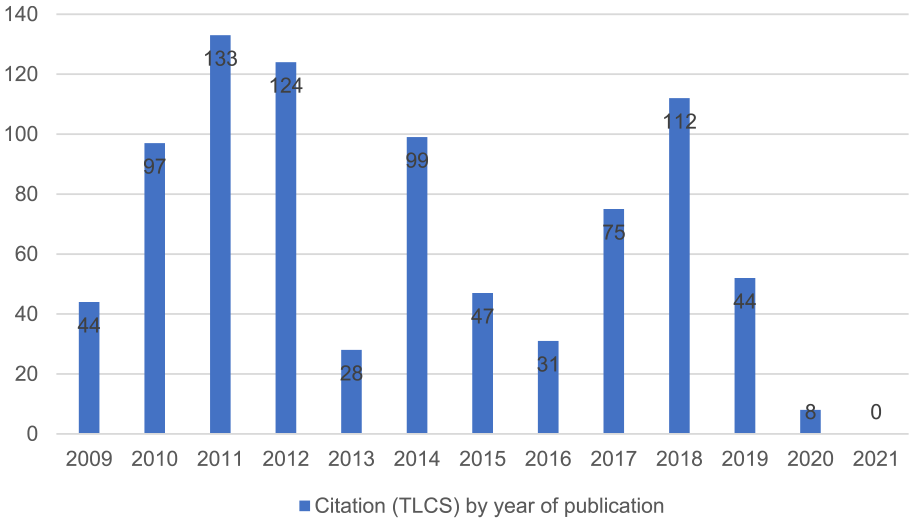
Citation (TCLS) by year of publication.
Research Outputs
Research outputs depend on the frequency of the author’s name in each publication, which covers all authors, not limited to the first author. For the geographic distribution, the United States (56 papers, 20.0%) and Mainland China (42 papers,15.1%) were two main contributors with the major portion of contributions of the total outputs. The other countries and regions in the most productive top 10 were Australia (40 papers), UK (30 papers), Canada (18 papers), Finland (15 papers), South Africa (15 papers), Spain (15 papers), Portugal (14 papers), and Taiwan (10 papers). These 10 countries and regions accounted for 91.4% (255 papers) of the total research articles in the MTE field.
For the research outputs of institutions, Hong Kong Polytechnic University topped the rank with 11 articles and a TCLS of 15. The second productive institution was Sun Yat Sen University, which owned 10 articles with the highest TCLS of 105. And the other institutions with a high number of research articles are as follows: North West University (10 papers, LCS of 6), University of Central Florida (9 papers, LCS of 11), University of Vaasa (6 papers, LCS of 28), University of Calgary (5 papers, LCS of 156), University of Sunshine Coast (5 papers, LCS of 2), Leeds Beckett University (4 papers, LCS of 2), 7(331), Purdue University (4 papers, LCS of 10), and University of South Carolina (4 papers, LCS of 6).
Among the prominent authors, Kim JH (now in Sun Yat Sen University) was the most influential researcher in the field of MTEs, who published 17 articles with a TCLS of 300 in the data set. The second and third impact authors were Sthapit E (University of Vaasa) and Saayman M (North-West University), who published 12 articles (TCLS of 41) and 10 articles (TCLS of 6) in the MTE field, respectively. The remaining major authors were Tung VWS (8 papers, TCLS of 156), Kruger M (7 papers, TCLS of 5), Ritchie JRB (7 papers, TCLS of 312), Bjork P (6 papers, TCLS of 14), Scott N (6 papers, TCLS of 5), Weiler B (5 papers, TCLS of 3), and Gosling MD (4 papers, TCLS of 5). It is worth noting that the influential author Tung VWS and Ritchie JRB ranked fourth and sixth in the number of articles. But they owned top three number of citations (TCLS of 156 and 312).
Research Hotspots and Stages
Through the citation network analysis of HCAs, the development stages over time are presented, and the categories of research can be identified. The top 30 most-cited articles of MTE research in the Web of Science were used to generate a citation network, as shown in Figure 1. According to the year of publication and the content of these papers, 30 articles are divided into three stages. In these three stages, changes of research focus and the genres of research over time were discussed (see Figure 3).
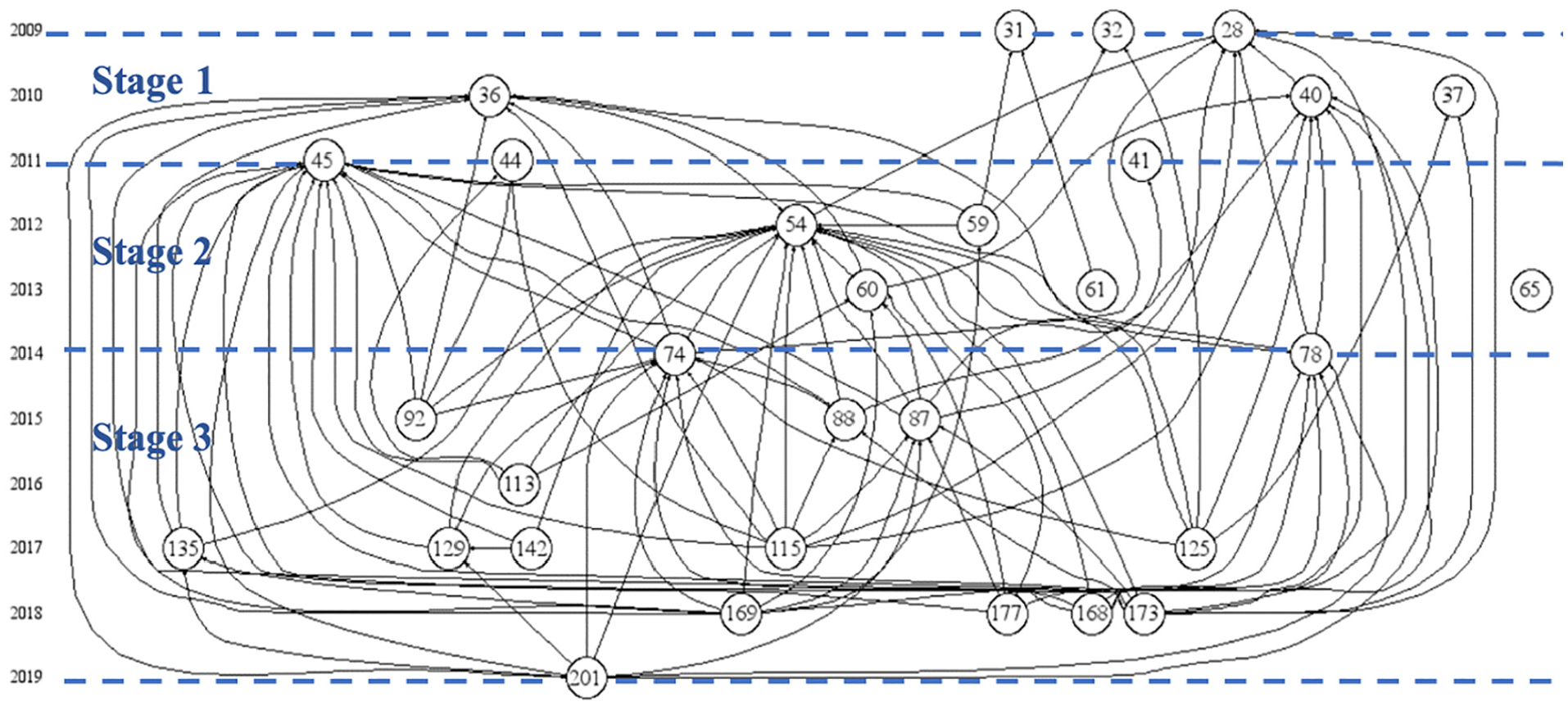
Research hotspots and stages of MTE.
Stage 1 is the initial stage, which represents the origin of MTE research. The period is from 2009 to 2011. As the citation network showed, few articles (nos. 28, 31, and 32) developed the concept of MTE in 2009 (Hudson & Ritchie, 2009; Morgan & Xu, 2013; Morgan et al., 2009). Later, several researchers applied the concept of MTE in their studies (J.-H. Kim et al., 2012; Tung & Ritchie, 2011). At that stage, there were two main genres origins. Genre one, (nos. 36, 40, and 54), represented by Kim et al., used quantitative methods to develop the seven dimensions of MTE (J.-H. Kim, 2010; J.-H. Kim et al., 2010, 2012). Another genre (nos. 45 and 41), represented by Tung et al., used qualitative methods to depict the development of MTE (Ritchie et al., 2011).
Stage 2 is the consolidation stage, and the period is from 2012 to 2014. The content of the research development can also be understood in two genres. The first genre (e.g., nos. 60 and 74) mainly verified the seven dimensions of MTE in cross-cultural contexts (J.-H. Kim, 2013; J.-H. Kim & Ritchie, 2014). The second genre (e.g., nos. 59 and 61) incorporated Tung’s concept in different qualitative studies (Bharwani & Jauhari, 2013; Neuhofer et al., 2012).
Stage 3 is the evolution and application stage, and the period is from 2015 to 2019. At this stage, MTE has undergone various degrees of improvement and evolution, a process of complete change from small to large. The current research was divided into the following three categories: The first category is the integration of seven dimensions into one construct, which is used to test the relationship with other factors, such as destination image, satisfaction, and revisit intention (J.-H. Kim et al., 2010; Lee, 2015; Zhang et al., 2018; Zhong et al., 2017). Researchers have directly appropriated MTE from generalized tourism to various forms of tourism, such as reuse heritage sites (no. 92), and cultural tourism (no. 168). The second category is the MTE scale development for different tourism (e.g., nos. 78, 87, and 88) and hospitality (e.g., nos. 115 and 177) research settings, generating whole new scales such as memorable travel blog narratives experience (Chandralal et al., 2015), and memorable food/culinary tourism experiences (Stone et al., 2018). In different settings, specific elements are explored, for example, under memorable food experience (MFE), local specialities and food attributes, authenticity, and servicescape are considered key elements (Sthapit, 2017). They are completely new to the seven elements of the MTE construct represented by J.-H. Kim (2010) in Category 1 (Adongo et al., 2015; Chandralal et al., 2015; J.-H. Kim, 2018). The third category represents the use of the MTE concept, which focuses on a deeper exploration of the concept’s connotation in the field of tourism (e.g., nos. 113, 129, 135, 142, and 201). For example, no. 129 explored the elements of different travel stages of MTE (Park & Santos, 2017), no. 201 examined the relationship between MTE and reminiscence functions (H. Kim & Chen, 2019). Meanwhile, no. 142 presented a framework of memory management and tourism experiences through the perspective of a long-term memory (LTM) system (Tung et al., 2017). The above studies mostly used a multi-mixed approach that contributes to the theory of MTE itself or empirical management rather than developing the scale.
Overall, the trend of MTE research development is to answer what will happen if there is MTE, what kind of MTE will be generated in different scenarios, and what are the differences in MTE generated in different scenarios.
Research Themes
Analysis of content was carried out to investigate the main themes covered in the 30 HCAs. Five research themes were identified: (1) destination marketing and management, (2) culture, (3) information technology, (4) hospitality, and (5) special interest tourism. There is not necessary to have a direct relationship between research stages and research themes. Because research stages are based on the timeline. It is the history of the research development. Research themes are research areas. However, the categories in the last stage are current research trends. Therefore, the research themes should be covered in the categories in the last stage. In this study, different research themes among the five themes appear in one or more of the above three categories mentioned above. For example, the applications of one construct of MTE in destination research (e.g., destination image: J.-H. Kim, 2018) the MTE scale development for special interest tourism (e.g., ethnic minority tourism: Wong et al., 2020), and a deeper exploration of MTE generation (e.g., how information technology shapes MTE: Chandralal et al., 2015). Each research theme can be subcategorized into contextual themes and theoretical themes. The details are reported below.
(1) Destination marketing and management
Nowadays more destinations used the memorable experience as a strategy for marketing and management to provide distinct products to obtain competitiveness. Among the highly cited studies of MTE, the contexts of destination marketing and management cover memory management (nos. 9 and 25), management and marketing strategy (nos. 2, 3, and 7), destination attributes (nos. 10 and 16), and tourists’ perception and behaviors (nos. 4, 6, 20, 27, 28, and 30). Among these, some qualitative/mixed method studies (nos. 7, 9, and 25) explored the cognitive system of memory management and the essence evolution of MTEs, which provide managerial guidance for the destination through using external cues, tangibilizing the intangible to help tourists create and distribute memories. Besides, other researchers (e.g., nos. 2 and 3) took in-depth interviews of practitioners to develop a four-stage model to build a destination experience brand with the staging, casting and performance, and strategies. Other quantitative studies (nos. 10 and 16) argued that destination managers should be able to manage their tourism resources and improve effective MTE management. Hence, the domains and antecedents of MTE (such as infrastructure and local culture/history) for most destination areas were identified. On the other hand, researchers also paid attention to what perceptions, emotions, and future tourist behaviors that MTEs lead to, which can guide the directions of destination marketing. The results of highly cited articles (nos. 4, 27, and 28) show that destination image and satisfaction are the most common tourists’ perceptions related to MTEs. On the other hand, revisit intention and WOM intention are the most common outcome variables that MTEs may lead to. These studies contribute to providing a concrete tool for the tourism industry to assess visitor experiences and allow destination marketers to better formulate their marketing strategies to gain a competitive advantage in the field.
From a theoretical perspective, several studies contributed to the understanding of the complex psychological cognitive processes of MTEs in destination marketing and management. Starting from Tung and Ritchie’s (2011) (no. 9) key dimensions of METs (affect, expectations, consequentiality, and recollection), Tung et al. (2017) (no. 25) highlighted the three stages (conscious, consolidate, and retrieve) of the long-term memory (LTM) system. For the measurement scales, starting from J.-H. Kim et al.’s (2012, p, 346) (no. 10) 7 experiential dimensions and 10 experimental dimensions (no. 16), J.-H. Kim (2018) (no. 28) consolidated the measurement of MTE into a single dimension. This change helped researchers (nos. 4, 27, and 28) to expand MTE research from studying the effects of MTE dimensions to studying inter-relationships between MTE and other key constructs, such as recollection and vividness (no. 40) and reminiscence functions (no. 201).
(2) Culture
Tourists with different cultural backgrounds have different perceptions of MTEs, and the cultural factors of cultural destinations also play different roles in creating MTEs. Therefore, researchers studied the different performances of MTE in different cultural settings such as the cross-cultural fields (nos. 12 and 15) and reuse heritage fields (no. 19). For example, J.-H. Kim (2013) (no.12) conducted a cross-cultural comparison to examine the performances of the seven dimensions of MTEs on college students from two regions: the United States and Taiwan. They found that hedonism, refreshment, novelty, meaningfulness, and knowledge learning were significantly different between the two groups. Lee (2015) (no. 19) also tested the differences in MTEs between the reconstructed heritage and other destinations. They found that knowledge learning cannot generate MTEs for reused heritage sites. Researchers have also studied different MTE’s pre-variables such as cultural contact (no. 26, H. Chen & Rahman, 2018) that leads to MTEs in cultural tourism sites.
From a theoretical perspective, J.-H. Kim (2013) (no. 12) have adopted the perceived value theory to examine how cultural variations differentiated by country make a distinguishment in the cultural value (such as the Confucian value) that influences the creation of MTEs. H. Chen and Rahman (2018) (no. 26) have applied the self-determination theory to explain why tourists with intrinsic regulation (engagement) and introjected regulation (cultural contact) motivations actively seek MTEs in cultural tourism. The above studies provided the contextual and theoretical foundations to support researchers to design their further research in cultural tourism as destination cultures and tourists’ cultural differences contribute to the generation of tourists’ MTEs in a destination.
(3) Information technology
Researchers have investigated how information technology can help to create MTEs through various activities (such as information search, intelligent service, communication, and post-sharing of experiences) on a wide range of online tools (such as websites, travel blogs, online communities, or mobile technologies; Chandralal et al., 2015; Neuhofer et al., 2012). For example, Chandralal et al. (2015) (no. 17) conducted a netnography investigation to explore the potential components of MTEs using a hundred travelers’ travel blogs. They found that such MTEs are often associated with themes including local people, life and culture, personally significant experiences, shared experiences, perceived novelty and so on.
From a theoretical perspective, Neuhofer et al. (2012) (no. 11) adopted the co-creation theory to explain how information technology can enhance destination experiences in the pre-/ during- /post-stages of travel. They concluded that (a) tourists are co-creating their own experiences, and (b) technology can be used to co-create enhanced experiences. They entitled the new experience creation paradigm as Technology Enhanced Destination Experiences. Although there is not much MTE research in information technology, current research in information technology such as social media platforms (as a travel tool) still provides important inspiration for future research.
(4) Hospitality
One key aspect of the competitive service sector environment is the effort of many hotel businesses to differentiate themselves by creating memorable customer experiences. For example, Walls (2013) (no.14) examined the effect of the physical environment and human environment (human interactions) on creating consumer experiences. Another research context is the memorable food experiences (MFEs) during the trip (nos. 18, 21, and 29). For example, Adongo et al. (2015) (no. 18) investigated the multiple dimensions of tourists’ MFEs (such as culture and education) in Ghana and their effects on intentions to recommend. Similar studies have also been conducted in Western countries, including both qualitative and quantitative methods. Sthapit (2017) (no. 21) undertook a study to explore the key components of tourists’ MFEs such as tastily, novel, and authentic food. Stone et al. (2018) (no. 29) investigated 1,000 respondents in four English-speaking countries (Australia, Ireland, the United Kingdom, and the United States) and identified five general elements leading to MFEs, including food or drink consumed, location/setting, companions, the occasion, and touristic elements.
From a theoretical perspective, Bharwani and Jauhari (2013) proposed a competencies framework and developed a construct of hospitality intelligence (encompassing mainly emotional intelligence, cultural Intelligence, and hospitality experiential intelligence dimensions) required by frontline employees to elevate guest experience from a simple interaction to a memorable experience. Their superior ability to manage themselves and proactively understand the guest’s aspirations would be instrumental in building meaningful guest interactions and memorable experiences. Although the above studies have different emphases in different contexts, they attempted to understand how to create memorable experiences for customers in the competitive service sector business environment.
(5) Special interest tourism
Despite the above common topics, special interest tourism (SIT) has also become an important branch of MTE research. The issues cover specific sample groups, such as students and youth (no. 1), backpackers (no. 23) and activity types, such as cruise vacation (no. 5), wildlife tourism (no. 8), leisure travel (no. 22), and distinct tourist activities (no. 24). Regarding SIT groups, Morgan and Xu (2013) (no.1) research on students travel in Mediterranean beach resorts showed the most commonly cited memory is of socializing with friends. Park and Santos (2017) (no.23) found that the most recalled post-travel experience for Korean backpackers in London and Paris were unique personal experiences that differentiated them from others.
In terms of special tourism activities, Hosany and Witham (2010) (no. 5) investigated the relationships among cruisers’ experiences, satisfaction, and intention to recommend. Ballantyne et al. (2011) (no. 8) revealed that tourists’ memories of wildlife tourism experience can lead to emotional affinity and long-term changes in conservation behavior. In the field of leisure travel, Zhong et al. (2017) (no. 22) examined supported relationships among MTE, satisfaction, affective commitment, and storytelling behavior, which expanded the overall nomological network related to MTEs. Knobloch et al. (2017) (no. 24) conducted in-depth interviews with participants of three distinct tourist activities (rafting, sky diving, and whale watching tours) in New Zealand. They found that memorable SIT activity experiences have significant differences in personal outcomes.
From a theoretical perspective, Hosany and Witham (2010) (no. 5) have developed a measurement scale to assess cruise travel memorable experiences. Ballantyne et al. (2011) (no. 8) adopted Kolb’s theory to explain four levels of visitor responses to the MTEs, implying a process involving what visitors saw and heard (sensory impressions), what they felt (emotional affinity), thought (reflective response), and finally what they did about it (behavioral response). Knobloch et al. (2017) (no. 24) employed the well-being theory to explain the impact of MTEs on tourists’ eudaimonic well-being and lives. The above studies provided researchers with literature to support their further MTE studies in SIT.
Besides finding out the popular topics of current studies, it is necessary to develop research schemata for exploring further studies from different domains. Knowing popular topics helps researchers understand the core concept in MTE and their relationships with other constructs. Developing research schemata helps to indicate potential research topics and directions in the gradually expanding research area.
Research Schemata and Research Agenda
The research schemata of MTE research were drawn from HistCite bibliometric analysis and content analysis, as shown in Figure 4. The MTE research covers four domains (tourists, stakeholders, impacts, and environments) and paths (the links between domains). And through the research schemata in this study, researchers can easily find the research gaps in the field of MTE.

Research schemata of MTE.
A research agenda is a research plan that summarizes specific issues and ideas in the field of study (Carlsen & Liburd, 2008). Unlike the above four steps of a literature review process which tools can be used to identify the research themes. There is no right way to organize a research agenda (American Institutes for Research, 2018). Some literature reviews produced research agenda by identifying the research gaps in different research themes resulting from the bibliometric analysis (e.g., Cheng, 2016; Lai et al., 2018). But this approach limits researchers’ creativity and flexibility in study design. This study follows Lyu et al.’s (2020) construction of research schemata that considers the combination of research subjects and objects to explore the research gaps. As with most tourism studies, the major research target is tourists. Therefore, tourist is a major domain of MTE research. Tourists would interact with other stakeholders such as residents and tourism practitioners to generate and enhance MTE (Tung & Ritchie, 2011; Wei et al., 2019). In other words, stakeholders can facilitate tourists to obtain MTE in different ways, such as exhibitors (Rai & Nayak, 2020) or casino operators (Wong & Lai, 2021). The five themes are research areas and were classified as a part of research environments. Regarding research opportunities, more MTE studies can be taken in special interest tourism such as theme parks (Zheng et al., 2021). The outcomes of MTE would affect tourists’ attitudes and behaviors (Lee et al., 2021; Zhong et al., 2017). Therefore, further studies can be designed around these four domains. That is, researchers can find research gaps through different combinations of these four domains in their future research directions. Therefore, the focus of the study is extended from the research themes. The following explores the research opportunities for researchers.
In the tourist domain, researchers have studied the relationship between tourists’psychological factors with their memorable experiences. These psychological factors include drivers and consequences in the conceptual mechanism of MTE. Psychological drivers include affect, expectations and so on (Tung & Ritchie, 2011). And psychological consequences are affective factors such as satisfaction (J.-H. Kim, 2018), emotions (Servidio & Ruffolo, 2016), hedonism (Wei et al., 2019), and affective commitment (J.-H. Kim et al., 2010). Researchers may consider other psychological factors such as perceived values, novelty, unique image, and well-being (Knobloch et al., 2017). Furthermore, researchers may include tourists’ personal traits in their research models. The personal traits include openness, conscientiousness, extraversion, agreeableness, and neuroticism (Leri & Theodoridis, 2020). Some personal traits may exhibit a moderation effect between psychological factors, attitudes, and behaviors. In the aspect of tourist types, researchers could study the MTE for a special group of tourists such as backpackers (J.-H. Kim, 2013; Park & Santos, 2017) and yoga travelers (Atsiz et al., 2023). It is because different groups of tourists may be looking for different types of MTEs. The MTE studies in family tourists, couple tourists, honeymoon tourists, or young generation tourists are still lacking. Researchers can develop the MTE measurement according to the characteristics and needs of the special group of tourists.
In the environment domain, it indicated the setting of research. Previous research settings have covered destinations, hotels, restaurants, festivals, cruises, heritages, and theme parks (Hosany & Witham, 2010; J.-H. Kim, 2014; Lee, 2015; Walls, 2013; Wood & Kinnunen, 2020; Zheng et al., 2021). The scope is relatively widely that researchers should have different interests to further explore. For example, the online environment has several emerging things, such as virtual reality (Leung et al., 2022), social media technology (Wong et al., 2020), and machine learning environment (Rezapouraghdam et al., 2023). Meanwhile, the areas with distinct characteristics are also related closely to the MTE and have the potential in trends such as outdoor adventure sites and ethnic minority areas (Liew et al., 2020). Researchers can develop their measurement scale according to the unique environment. Furthermore, with the focus on sustainable concepts (Akhshik et al., 2022), there is also a great potential for researchers to conduct research in sensitive protected areas, such as marine protected areas (Rezapouraghdam et al., 2023) and desert areas (Woyo & Amadhila, 2018). This is because MTE was examined to have a positive impact on tourists’ emotions and attachment to the place, and thus its impact and value on tourists’ pro-environmental behavior are irreplaceable (Buonincontri et al., 2017).
Other than tourists, residents, practitioners, destinations, and governments are major stakeholders in memorable tourism. Destination governments focus on branding the tourist experience of the tourism objects, such as theme park (Zheng et al., 2021), reuse heritage site (Lee, 2015). And the country or destination image is related closely to the government’s positioning of tourism policy (Hudson & Ritchie, 2009). The study can be how destination governments create marketing messages based on memorable experiences to appeal to potential travelers, such as arrange activities and official commercials (Hudson & Ritchie, 2009; Zhang et al., 2018). Tourism practitioners (e.g., hotel employees and tour guides) also play an important role in delivering memorable experiences. The study can be how hospitality operators make effort to manage employees to serve customers in order to enhance tourists’ memorable experiences. Previous studies showed that intelligence services and unique interactive can enhance customers’ memorable experiences (Neuhofer et al., 2012; Walls, 2013). Notably, in an age of tourists’ empowerment, where user-generated content (UGC) has become popular, such as TikTok (Bai & Hong, 2022; Du et al., 2022). Researchers can study how can UGC reflect the authentic MTEs that can motivate potential tourists to visit specific destinations (Bigne et al., 2020).
The memorable experience during travel has an impact on tourists’ attitudes and behaviors during and after the trips. The impacts can be short-term such as travel satisfaction (Zhong et al., 2017), word-of-mouth (Tham et al., 2013), recommendation (Hosany & Witham, 2010), and sharing on media (Wong et al., 2020). However, the impacts can be wide and long-term. For example, the impact of memorable wildlife tourism on tourists’ long-term conservation behavior (Ballantyne et al., 2011). Meanwhile, research also indicated that family tourism memories together can improve their well-being and quality-of-life in the long term (Jepson et al., 2019). Since most previous studies focused on the impact on short-term attitudes and behaviors, researchers can investigate more the long-term impacts from different types of MTEs. For example, the long-term influence of MTE on tourists’ meaning in life and their inheritance behaviors among family tourists (Jepson et al., 2019).
Because each domain is related to the others, researchers can try to combine the domains and pay attention to the relationship between them. For example, researchers could investigate how luxury hotels create memorable experiences for special groups, such as elder customers (Lahouel & Montargot, 2020). Besides combining the domains of environment and stakeholders, researchers can explore how can governments initiate memorable experiences for visitors in local festivals. This is because most previous studies focused on the government’s role in positioning a memorable destination, which ignored the vital function of government in creating memorable festivals and events (Todd et al., 2017). Furthermore, more new forms of tourism are emerging, such as astrotourism (Rodrigues et al., 2023), virtual tourism (Lu et al., 2022), or photogenic spot tourism (Y. Kim & Son, 2018). Researchers should take several domains into consideration using an integrated approach to exploring new tourism phenomena in the field of MTE. Thus, the cross-field is still worthwhile for scholars to input more efforts in the future.
Discussion and Conclusions
Conclusions
While MTE provides tourists with irreplaceable value, it has become an important topic in tourism research. In this paper, a systematic review of MTE studies was conducted based on 279 articles published from 2009 to 2021. The articles were retrieved and downloaded from the Web of Science database. The mixed method including bibliometric analysis and content analysis was employed to review the literature systematically. As s summary from key information of publications, this study is a useful reference guide to the existing literature in the field of MTE. This study also clarifies the development stage and core themes of MTE research. Moreover, research trends and potential directions in the future are provided based on the proposed schemata of MTE in this study.
Theoretical Implications
Because many tourists now emphasis obtaining memorable experiences as a core attraction for travel, there is an increasing number of articles related to the term. This systematic review contributes to tourism research by providing the core knowledge in the MTE studies. Firstly, through the quantitative method, this study summarized the key characteristics of the current studies. It helps researchers to have a clear overview of existing literature in the MTE field. Moreover, high citation analysis of articles presented a valuable citation network along with timelines was created. This network is useful for researchers to know the impact of studies and their relationships.
Secondly, through the qualitative method, the results of the content analysis identified the development stage of MTE studies based on timelines and their features. This study classified the main research genres that provide a clear guide for researchers to know the development condition of MTE studies. This study also extracted the main themes and depicted the detailed content of these impact articles. It is helpful for researchers to plan their further studies on different themes.
Thirdly, this study developed schemata that cover four domains (tourist, environment, stakeholder, and impact). The schemata are useful for researchers to identify the research gap(s) based on their research interests. The agenda provides potential directions and interesting topics for future studies.
Practical Implications
This systematic literature review provided important practical implications for destination organizations, practitioners, and individuals. First, this review research emphasized the implementation of MTEs in effectively distinguishing other homogeneous destinations and increasing business revenue. Therefore, destination organizations should focus on building an attractive destination image by providing MTEs to achieve the desired outcomes. One way to do this is to strengthen the unique and memorable destination attributes based on its own resources. For example, promoting special local cultural activities for tourists such as hotpot dining in Sichuan. To obtain tourists’ future sustainable behavior toward a destination, branding promotion would not only enhance an individual’s desire to visit but also contribute to creating MTEs for tourists.
Furthermore, this review indicated that the competitive business sectors obtain advantages by creating memorable tourist and guest experiences that accompany their products and services. These products and services can be designed to provide emotional and cultural interactions with tourists and residents since the interaction activities in a destination are a way to create MTEs (Wong et al., 2020). For instance, allowing tourists to be involved in their authentic lives through various programs to feel a sense of connection and group identity with local people. In addition, the role of the physical environment is also considered one of the crucial elements in leading to MTEs. Especially, the setting or servicescape of restaurants, such as an unassuming location, vintage style, or even wooden plates may contribute to better creating the destination’s culinary story for tourists and customers.
Finally, this review study showed the important effects of MTEs on tourists’ psychology (e.g., well-being) and behaviors (e.g., environmentally responsible behavior) that have positive sides in a lifetime. Regarded as a long-term and multi-stage process, MTE was considered to play an irreplaceable role in personal autobiographical memory. The profound and positive MTEs have a precious impact on one’s personal history and human well-being in a certain sense. Therefore, this review recommended that during travel, tourists and customers as individuals should fully immerse themselves to experience and learn new things, contact loved ones or different groups of people for an invaluable time, and enhance the possibility of understanding oneself, so as to create and enjoy their unique MTEs.
Limitations and Future Research
The research conducted a systematic review based on 279 articles published in hospitality and tourism journals. The MTE articles published in other sociological journals were not selected. Secondly, the contributions of some recent studies may not be fully reflected in the analysis of the citation network. Because most recent articles were not highly cited. For example, Su and Wu (2021) investigated the solo female travelers’ memorable experiences from a new perspective of positive encounters with male strangers. Thus, the citation network and domain schemata may change as time goes by, especially for an expanding rapidly research area like MTE. Furthermore, this study focused on the articles from the Web of Science database, thus it has limited data in the MTE field. Future studies are recommended to explore research articles from other databases and sources, and some software packages such as Vosviewer are recommended to further summarize the network data and confirm the study’s findings.
Footnotes
Appendix
Top 30 Highest Cited Article (HCAs) Nodes, Min: 7, Max: 108 (LCS).

| No. | Node | Source | LCS | GCS |
|---|---|---|---|---|
| 1. | 28 | Morgan M, 2009, J HOSP MARKET MANAG, V18, P216 | 22 | 87 |
| 2. | 31 | Morgan M, 2009, INT J TOUR RES, V11, P201 | 10 | 81 |
| 3. | 32 | Hudson S, 2009, INT J TOUR RES, V11, P217 | 12 | 107 |
| 4. | 36 | Kim JH, 2010, TOUR ANAL, V15, P637 | 32 | 63 |
| 5. | 37 | Hosany S, 2010, J TRAVEL RES, V49, P351 | 24 | 292 |
| 6. | 40 | Kim JH, 2010, J TRAVEL TOUR MARK, V27, P780 | 38 | 130 |
| 7. | 41 | Ritchie JRB, 2011, INT J CONTEMP HOSP M, V23, P419 | 15 | 118 |
| 8. | 44 | Ballantyne R, 2011, TOURISM MANAGE, V32, P770 | 16 | 243 |
| 9. | 45 | Tung VWS, 2011, ANN TOURISM RES, V38, P1367 | 97 | 480 |
| 10. | 54 | Kim JH, 2012, J TRAVEL RES, V51, P12 | 108 | 396 |
| 11. | 59 | Neuhofer B, 2012, J DESTIN MARK MANAGE, V1, P36 | 10 | 192 |
| 12. | 60 | Kim JH, 2013, ANATOLIA, V24, P337 | 9 | 22 |
| 13. | 61 | Bharwani S, 2013, INT J CONTEMP HOSP M, V25, P823 | 9 | 83 |
| 14. | 65 | Walls AR, 2013, INT J HOSP MANAG, V32, P179 | 7 | 73 |
| 15. | 74 | Kim JH, 2014, J TRAVEL RES, V53, P323 | 48 | 116 |
| 16. | 78 | Kim JH, 2014, TOURISM MANAGE, V44, P34 | 32 | 208 |
| 17. | 87 | Chandralal L, 2015, ASIA PAC J TOUR RES, V20, P680 | 20 | 33 |
| 18. | 88 | Adongo CA, 2015, TOUR MANAG PERSPECT, V15, P57 | 15 | 46 |
| 19. | 92 | Lee YJ, 2015, ANN TOURISM RES, V55, P155 | 8 | 31 |
| 20. | 113 | Servidio R, 2016, TOUR MANAG PERSPECT, V20, P151 | 8 | 35 |
| 21. | 115 | Sthapit E, 2017, ANATOLIA, V28, P404 | 17 | 31 |
| 22. | 125 | Zhong YY, 2017, TOUR ANAL, V22, P201 | 9 | 18 |
| 23. | 129 | Park S, 2017, J TRAVEL RES, V56, P16 | 10 | 55 |
| 24. | 135 | Knobloch U, 2017, J TRAVEL RES, V56, P651 | 10 | 71 |
| 25. | 142 | Tung VWS, 2017, J TRAVEL TOUR MARK, V34, P853 | 9 | 26 |
| 26. | 168 | Chen H, 2018, TOUR MANAG PERSPECT, V26, P153 | 13 | 68 |
| 27. | 169 | Zhang HM, 2018, J DESTIN MARK MANAGE, V8, P326 | 21 | 77 |
| 28. | 173 | Kim JH, 2018, J TRAVEL RES, V57, P856 | 17 | 75 |
| 29. | 177 | Stone MJ, 2018, J TRAVEL RES, V57, P1121 | 10 | 42 |
| 30. | 201 | Kim H, 2019, J TRAVEL RES, V58, P637 | 8 | 11 |
Declaration of Conflicting Interests
The author(s) declared no potential conflicts of interest with respect to the research, authorship, and/or publication of this article.
Funding
The author(s) received no financial support for the research, authorship, and/or publication of this article.

Data Availability Statement
Data sharing not applicable to this article as no datasets were generated or analyzed during the current study.